- A1: Brainville 4’12
- A2: Call For All Demons 5’11
- A3: Transition 3’38
- A4: Possession 4’55
- A5: Street Named Hell 3’36
- B1: Lullaby For Realville 4’40
- B2: Future 2’51
- B3: New Horizons 3’03
- B4: Fall Off The Log 3’56
- B5: Sun Song 3’38
Поиск:sun ra
Все
128 pages, 170 x 240 mm in size and printed on 140g Edixion paper with laminated 300g Invercote covers.
All articles presented in English. Includes a collection of Sun Ra pieces by Francis Gooding, Mats Gustafsson, Rui Miguel Abreu, Stewart Smith and Joshua Lane, rare Sun Ra Arkestra photos by Guy Stevens, Larry Stabbins by Dave Waller, Angélique Kidjo by Rob Garratt, Heli Hartikainen by Wif Stenger, Alan Wilkinson by Daniel Spicer, Black Artists Group by David Mittleman, Mike Stern by Rob Garratt, album reviews, book reviews, live reviews, photo essay & more.
Strut proudly presents a new edition of one of Sun Ra's most celebrated albums, Sleeping Beauty, reissued in its original artwork for the first time.
Originally released in 1979 on his independent Saturn label, Sleeping Beauty captures Sun Ra and his Arkestra at their most soulful and serene. A masterclass in cosmic jazz, the album blends lush grooves, celestial soul, and meditative funk with Ra’s singular spiritual vision — a sound both grounded and otherworldly.
The album emerged during an extraordinarily fertile period for Sun Ra in late-‘70s New York. Between 1978 and 1982, Ra “occupied” Variety Recording Studios on West 42nd Street, often staging marathon sessions following late-night Arkestra gigs around the city — from the Village Vanguard to Sweet Basil and even a wedding in Central Park. These were not just recordings; they were rituals. Ra and his core players — John Gilmore, Marshall Allen, June Tyson, Michael Ray, and others — would begin sessions mid-morning, often continuing past midnight, much to the dismay of the studio owner. Out of this creative whirlwind came some of his most enduring work, including A Fireside Chat With Lucifer, On Jupiter, and Sleeping Beauty.
Across its three tracks, Sleeping Beauty showcases the Arkestra’s gentler side. From the dreamy sway of “Springtime Again” to the funk-deep uplift of “Door Of The Cosmos” and the title track’s meditative drift, this is music that floats, beckons, and unfolds. It’s a record of hypnotic beauty and quiet power — cosmic jazz for dreamers and seekers alike.
This new edition features a selected version of the hand-drawn original cover, embossed with the Sun Ra logo and housed in a heavyweight card sleeve. Liner notes come courtesy of Arkestra member Knoel Scott and Sun Ra authority Paul Griffiths. Remastered by Technology Works.
“Music is a language. You see, it’s not notes — it’s a language of the spirit. That’s why it’s so important.” – Sun Ra
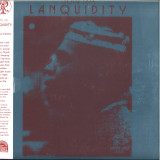
Strut proudly presents a special edition, deluxe repress of Sun Ra’s classic ‘Lanquidity’, for the 25th anniversary of the label. Housed in a tip-on sleeve with OBI strip, this new special editions features an A2 poster including a rare Veryl Oakland photograph of Sun Ra in his home, as well as liner notes by Tom Buchler (Philly Jazz), Michael Ray and Danny Ray Thompson (Sun Ra Arkestra) and Bob Blank. Originally released in 1978 on Philly Jazz, ‘Lanquidity’ was recorded overnight at Bob Bank’s Blank Tapes studio on 17th July 1978 following a performance on Saturday Night Live. “Most critics felt that it was more of a fusion-inspired record,” explains Michael Ray. “As the name suggests, the album is liquid and languid.” Bob Blank adds, “Musically, it was very ad hoc and freeform. There were horn charts but most tracks came out of improvised jams. Sun Ra just did his thing.”
The album 'Lanquidity' consists of five smooth tracks from the Sun Ra discography. It begins gently with 'Lanquidity,' a spontaneous composition by Sun Ra described by Danny Ray Thompson as reminiscent of an Ancient Egyptian Stargazing Ceremony, plotting the stars and planets. 'Where Pathways Meet' follows, featuring Sun Ra's funky interpretation of an Egyptian march, evoking the image of Pharaoh rallying his troops. 'That’s How I Feel' maintains a relaxed groove, featuring reflective trumpet lines from Eddie Gale and solos by John Gilmore and Marshall Allen, with Allen's oboe described as reminiscent of snake-charming. 'Twin Stars Of Thence' dances around Richard Williams' celebrated elastic bassline, while the haunting closer, 'There Are Other Worlds (They Have Not Told You Of),' epitomizes "space music," described by poet Mama Nzinga as 'The essence of light. Spirit takes a ride inside the deep dark space of just being.' Start to finish, Lanquidity remains an effortless, psychedelic pleasure and one of the strongest in the Ra 70's discography.
This new deluxe LP edition of ‘Lanquidity’ features the widely distributed version of the album originally released on Philly Jazz and reflects the album’s original packaging with a metallic foil / magenta sleeve, housed in a tip-on sleeve with OBI strip and featuring both liner notes and a limited edition poster, to celebrate 25 years of Strut records.
- 1: Kingdom Of Thunder
- 2: Space Mates (Abridged)
- 3: Star Bright
- 4: The Nile, Part 1
- 5: Eve
- 6: Tiny Pyramids
- 7: The Lady With The Golden Stockings
- 8: Paradise
- 9: New Horizons
- 10: Portrait Of The Living Sky
- 1: India
- 2: Ancient Aiethopia
- 3: Planet Earth
- 4: April In Paris
- 5: Island In The Sun
- 6: Africa
- 7: Friendly Galaxy
- 1: Interstellar Low Ways
- 2: The Conversion Of J.p. (Abridged)
- 3: Cha-Cha In Outer Space
- 4: Brazilian Sun
- 5: Lights On A Satellite
- 6: Somewhere In Space
- 7: Spontaneous Simplicity
- 8: Overtones Of China
Interdimensional exotica in the form of eccentric space jazz, sonic experimentation, Afro-centric rhythms, and ostinato electronic freakouts! Includes three platters worth of tunes pressed on orange vinyl, all curated by Irwin Chusid - who also co-wrote the liners with Brother Cleve - for all those with cocktail in hand and ready for a slice of Ra’s jetpack jetset recorded legacy!
Vinyl gatefold jacket includes a 12x12 insert reproduction of the original LP jacket art.Recorded in 1956 and released in 1957, Supersonic Jazz is arguably the first long-playing album by Sun Ra and His Arkestra on his Saturn label. However, it was not recorded as a debut. Rather, the album was assembled from tapes recorded during a number of sessions at two Chicago studios (RCA Victor and Balkan), and several tracks had been released as singles before their inclusion on this album. (Sunny's first fully realized commercial album was 1957's Jazz by Sun Ra, produced by Tom Wilson on his short lived/soon to be defunct Transition label.) Prior to these sessions, Sunny was still arranging for the Red Saunders Orchestra and singer Joe Williams, in addition to arranging for and coaching doo-wop ensembles. As Sunny's ambitions achieved liftoff, the Arkestra coalesced, began building a repertoire (mostly of Ra's originals), and making forays into studios. Deciding it was time for commercial releases, Sunny and business partner Alton Abraham launched Saturn (sometimes called El Saturn) as a record company in 1956. As a first offering, Supersonic Jazz is a pinnacle Sun Ra release. While reflecting many prevailing bebop, Latin, and R&B conventions of the mid-1950s, it's evident that Sun Ra's musical voice and vision were starting to propel him away from the jazz mainstream. Biographer John Szwed finds on these recordings "characteristics which seemed alien to swing, bebop, or the new, more soulful and hard-edged music which was coming to be called hard bop."
Jazz by Sun Ra, Vol. 2.
These albums are important because they are Sun Ra's first recordings before the Saturn sessions, made in 1956 when the Chicago musicians were searching for something more, something beyond.
In 1957, Transition Records gave us Volume 1, but before Volume 2 could be released, the label went bankrupt, and it took more than a decade for it to finally be released on the Delmark label. Today, for the first time, both volumes are available, as they were meant to be from the beginning.
Volume 2 is presented here for the first time with the silver cover originally planned by Transition!
- 1: The Others In Their World
- 2: Space Mates
- 3: Lights Of A Satellite
- 4: Space Loneliness
- 5: Somewhere In Space
- 6: The Blue Set
- 7: Distant Stars
- 8: Kingdom Of Thunder
- 9: Fate In A Pleasant Mood
- 10: Ankhnaton
- 11: Enlightenment
- 12: Tapestry From An Asteroid
- 13: Hour Of Parting
- A1: Retrospect - This World Is Not My Home
- A2: Hidden Fire Improvisation
- B1: Hidden Fire Blues
- B2: Hidden Fire Blues
- C1: My Brothers The Wind And Son #9
- C2: My Brothers The Wind And Son #9
- D1: Hidden Fire I
- D2: Hidden Fire Ii
Strut Records proudly presents the official reissue of Hidden Fire Volumes 1 & 2, the final album released by Sun Ra on his El Saturn label in 1988.
Captured live over three nights at the Knitting Factory in New York City, these performances mark the closing chapter of a 33-year odyssey of radical, independent music-making. Originally issued in tiny quantities with minimal packaging and cryptic artwork—often featuring hand-written labels or Ra’s own handmade designs—Hidden Fire was among the most elusive entries in Sun Ra’s vast discography.
Musically, these recordings stand apart from Ra’s other '80s compositions. Here, Hidden Fire plunges into darker, more dissonant territory. Ra performs exclusively on the Yamaha DX7 synthesiser, pushing its digital sound palette into alien dimensions. The Arkestra lineup is uniquely configured, featuring a rare and heavy string section with three violins, including the legendary Billy Bang, and the singular space vocalist Art Jenkins, whose eerie textures and vocalisations had not been heard so prominently since the early 1960s Choreographers Workshop sessions. The music is raw, unsettled, and often overwhelming.
“Retrospect / This World Is Not My Home” opens with a palindromic riff that evokes Ellington before unraveling into a stark sermon from Ra, warning of death’s dominion over Earth-bound minds. “Hidden Fire Improvisation” is a furious explosion of tone science, with Marshall Allen, Billy Bang, and John Gilmore delivering fire-breathing solos over relentless drumming and Ra’s cascading synth clusters. “Hidden Fire Blues” offers a warped, electrified version of Ra’s familiar blues feature, led by Bruce Edwards on guitar and Rollo Radford on electric bass, transformed through the haze of DX7 textures. “My Brothers The Wind And Sun #9” evokes the experimental weight of The Heliocentric Worlds with its crashing percussion, pulsing synth-vocal duets, and string- driven chaos that seems to spiral into oblivion.
Even the quieter moments—such as “Hidden Fire II,” a duet between Ra and Art Jenkins—feel thick with unease and shadowy beauty. These performances represent a Sun Ra less concerned with cosmic joy or outer-space swing, and more focused on conjuring portals to the unknown.
Remastered from original sources and presented with archival photos, new liner notes by Paul Griffiths, and restored artwork inspired by the original Saturn editions, this reissue offers a definitive window into the last creative surge of one of music’s most visionary figures across two Vinyl LP’s.
An F-bomb saturated hip-hop call & response club cut...from Sun Ra?!
While the most renown track in this omniversal opus is the atomic expletive-filled repartee “Nuclear War,” there is so much more to this dark mysterious journey through the mind of Sun Ra. The sprawling, suite-like 20-minute title track sustains a lyrical edge in spite of an open framework and textures, which encourage sonorities to surface and emerge from the band as if there was no human intention behind them. In opposition to “Nuclear War,” Ra's organ playing here was built less on bombast and sonic terror than it is on whispers, stutters, shivers, and swells. Fireside Chat offers a wide stylistic array, as was the artist’s intent, reflecting his eclectic, seemingly irreconcilable approach to compositional extremes. With Sun Ra you get everything... except predictability. Pressed on lime green vinyl!
- Astro
- Utopia
- Visions
- Constructive Neutrons
- Space Dance
Recorded in the summer of 1978 in Manhattan's C. I. Recording Studio this rare encounter of jazz's supreme instrumentalists and individualists Walt Dickerson (1928 - 2008) and Sun Ra (1914 - 1993) became an instant cult album among the followers of Avant Garde jazz of the '70s.
The author of the newly added liner notes Neil Tesser remarks, "Nearly a half-century after the fact, Visions now stands as a milestone of free improvisation". Almost half a century ago Trevor Tolley of Canadian jazz publication Coda enthused, "This is a tremendous record...outstanding collaborations throughout this beautiful record, as well as some gloriously sustained solo passages...it is the work of two masters in the full certainty of their powers."
Sun Ra: piano
Walt Dickerson: vibraphone
Recorded July 11, 1978
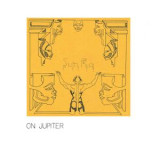
- On Jupiter
- Ufo
- Seductive Fantasy
A cosmic fusion of deep funk, interstellar jazz, and avant-garde soundscapes, On Jupiter stands as one of Sun Ra"s most iconic releases. Recorded in 1979 during a prolific period at Variety Arts Studios in New York, this album captures the Arkestra at the height of their creative powers, blending futuristic improvisation with infectious rhythms and otherworldly textures.
This novelty album, released in 1966 during the height of the Batman & Robin craze, was initially credited to the "The Sensational Guitars of Dan and Dale" and featured an album full of tracks based on the popular TV show like "The Batman Theme Song", "The Penguin Chase", and "The Batcave". The album is entirely instrumental, except for someone singing "Batmaaaan!" in the theme song. But the interesting thing about this album, and what makes it an absolute cult gem, are the musicians who are behind it all: basically a joint collaboration between Sun Ra's Arkestra and Danny Kalb's Blues Project (one of the first psychedelic rock bands as well as one of the world's first jam bands). "Dan and Dale" were actually blues guitarist Danny Kalb and Steve Katz (later of Blood, Sweat & Tears) on dueling guitars, while Sun Ra and Al Kooper take over organ duties (a Hammond B-3) and members of Ra's Arkestra play sax.
6LP Box Set, 24-page booklet & Original programme housed in a hardboard box. Across two nights in August 1970, these were the first concerts Ra and the Arkestra had performed outside North America and formed part of a stellar festival line-up alongside Albert Ayler, Cecil Taylor, LaMonte Young and Marian Zazeela.
Sun Ra was a master of misdirection. Tape boxes wrongly labeled—whether by accident or design—are legendary among Ra archivists. One can speculate about the artist's intent or carelessness, but source misinformation abounds on Ra tape cases, album jackets, cassettes, ephemera—as well as in interviews. It's as if Ra, in furtherance of his own mythmaking, wanted to keep historians guessing.
This project began as a misidentified tape discovered by Michael D. Anderson of the Sun Ra Music Archive. The 7-inch reel, which contained a live Ra solo piano performance of 11 works—some recognizable, others not—was of stellar quality, and was marked as a 1979 Carnegie Hall date. But the program on the tape did not align with known facts (e.g., titles played, concert duration) which were chronicled in a Newsday review of Ra's appearance at Carnegie in September of that year. With a prod from writer/historian Ted Gioia and further research by myself, the tape was eventually identified as a mostly unreleased July 1977 performance by Ra at a downtown NYC "jazz café" called The Axis-in-Soho.
Amongst the hundreds of recordings issued by Sun Ra and his Arkestra, under their various guises, the majority were recorded in concert or in makeshift studios such as their early 1960s set-up at NYC's Choreographer's Workshop. Beyond those, roughly 22 albums were recorded at Variety Recording Studio in New York's Times Square. However, on August 25, 1986, Sun Ra and cohorts entered Mission Control, a state-of-the-art 24-track studio north of Boston, which was teeming with electronic keyboards and otherworldly sound generators. Nestled within that arsenal was a brand-new digital ultra keyboard — the Prophet VS ("Vector Synthesizer").
Of all the keyboards Ra played throughout his half-century career, the Prophet was one of the most sophisticated. There's no evidence that he had played either of the instrument's earlier incarnations, the Sequential Circuits Prophet-5 and Prophet-10. Created using microprocessors, a then-new technological advance, under the auspices of engineer Dave Smith in 1978, the Prophet-5 revolutionized electronic music as the first polyphonic and, most importantly, programmable synthesizer.
Ra was intrigued by the Prophet (surely by the instrument as well as by the name). Recorded during a single day, it's about time that these once lost performances have now been found.
It was a joy and a thrill to be sitting at the console hearing this music for the first time, especially with my fingers on the faders and knobs of the mixing desk. We watched the oxide fly off the 2" tapes during playback, making this our one chance to digitize before they metamorphosed into dust. Welcome to the new Sun Ra album....35+ years after it was recorded. The Omniverse has expanded once again.
BACK IN PRINT ON BLACK VINYL
“To understand the significance of the word ‘featuring’ on Featuring Pharoah Sanders And Black Harold, consider how infrequently Sun Ra used it and the exact way it had been used.
“The October Revolution in Jazz, organized by Bill Dixon in the West Village in 1964, presented a vivid cross section of approaches to the new music, including a sextet led by Ra. For the October Revolution’s continuation, titled Four Days in December, held at nearby Judson Hall on the last days of 1964, the Arkestra performance presented Pharoah Sanders as well as a flautist (who was and remained obscure thereafter) named Harold Murray, nicknamed Black Harold.
“It wasn’t until long after Sanders had achieved worldwide acclaim with John Coltrane that Ra and manager Alton Abraham decided to issue the music they’d recorded at Judson Hall. After its first release in plain or hand-decorated covers in 1976, Featuring Pharoah Sanders And Black Harold remained an exceptionally rare item in the El Saturn discography, known to a few lucky collectors.
“We’re lucky to have this glimpse of what Sanders sounded like in such a different context, galvanizing the large group and in turn being inspired to make his first significant contribution on record.”
—John Corbett (excerpt from the liner notes)
signed by Marshall Allen & limited to 500
Auf „Lights On A Satellite“ ist der unnachahmliche Groove dieses Ausnahmeorchesters in der vollen Besetzung von 24 Musikern zu hören, aufgenommen in einer Qualität, die alle Stimmen zur Geltung kommen lässt und die Musik in ihrer ganzen Schönheit präsentiert.
Mit diesen Vorgaben und 24 Musikern als Produzent ins Studio zu gehen, war ein Wagnis. Frank Kleinschmidt von IN+OUT Records hat mit „Lights On A Satellite“ seiner über 40-jährigen Verbundenheit mit dem Sun Ra Arkestra den innigsten Ausdruck verliehen. Was für ein großartiges Projekt!
"When you wish upon a star… that turns out to be Saturn.
Previously unheard Ra culled from the archives and compiled based on their association to that children's film corporation with the cartoon rodent.
Jazz aficionados and Disney nerds alike will marvel at how seamlessly Sun Ra and his Arkestra put their own unique twist on both well-known and overlooked Disney songs. Pink Elephants on Parade takes nine songs from Disney’s storied catalog and recontextualizes them as beautiful, fun, and sometimes terrifying pieces of Afrofuturist jazz. The collection also shows further proof of how Ra was always willing to transcend conventions of jazz. Listen to the full album and you will likely never look at the Disney music catalog the same way ever again.
Originally known for accompanying Dumbo and Timothy’s colorful alcohol-induced hallucinations, this song is given a whole new life by Ra and the Arkestra in more ways than one. It also feels faithful to the original at the same time, with the cacophony of horns, drums, percussion, and cowbell resembling that of a marching band. However, the demented grandeur of the song is turned up to eleven with zany vocal lines (hence the high-pitched “What’ll I do” inflections) and other performances that somehow sound more evil and gruff here than they did on Oliver Wallace and Ned Washington’s version. Though the Sportsmen’s vocals from that particular arrangement had a certain creepiness to it, the Arkestra takes a previously innocent sounding song and makes Pink Elephants On Parade sound even more terrifying."
Recital presents a newly unearthed recording of an interview between Sun Ra and composer Charlie Morrow recorded at his New York studio in 1989. This voice-only recording develops more like a kaleidoscopic sermon than any standard interview.
Charlie Morrow recalls:
My 1989 Summer Solstice Celebration featured Sun Ra and his Arkestra. On March 29, 1989, ahead of this historical performance, Sun Ra came to New York to plan the performance and do an interview with me in the Charles Morrow Associates studio. There were members of the Sun Ra Arkestra, some of my team, and a photographer present. Once in the sound studio, Sun Ra wanted to record the discussion. What he says is so much more than anyone expected. I pushed record on the tape recorder, which quietly took it all in.
What Sun Ra recorded is a breathtaking expression of his feelings and strong convictions, illustrated with personal memories and stories. My few questions to him about the upcoming Solstice and about the sun and his thoughts about a dawn event triggered his mind. He launched into a nonstop journey of ricocheting stories and concepts, climaxing when I started jamming with Sun Ra on conch horn. Our duo drives to a climactic peak with explosive conch breath sounds giving line-by-line affirmations to Sun Ra’s points.
The 1989 Summer Solstice event brought together Sun Ra and his constellation of musicians and fans with my large-scale gatherings and work with the New Wilderness Foundation. Here in 2023 and beyond, the events live again. Sean McCann of Recital was drawn to Sun Ra’s words, which inspired the production of this edition. Sun Ra’s words seem to have an even greater resonance in present time. Ra is calling out the turbulence of the bad actions of the righteous and the good actions that an evil man, as he dubs himself, can perform, all the time believing that music has the possibility to bring all humans to a better place.
Charlie Morrow, 2023 / Helsinki, Finland
One-time pressing of 425 copies, includes 12-page booklet with rare photos and full transcription of interview, 24”x18” poster of Sun Ra 1989 Solstice performance photograph
Orange-Magenta Vinyl[39,20 €]
Black Vinyl[35,08 €]
*Full colour artwork coming soon, this is a digitally generated mock-up. Comes in a risograph sleeve featuring liner notes and original Saturn artwork. *
Recorded at the Choreographers’ Workshop in New York, 1963, Waaghals Records presents two songs from Sun Ra’s Continuation sessions on vinyl for the first time. Known for its lo-fi recording quality coupled with heavy use of echo and reverberation, the material recorded at the Choreographers’ Workshop holds a special place within the Sun Ra catalogue. This unique blend of avant-garde jazz and bold production methods is described as “low-budget musique concrete” by Sun Ra biographer John F. Szwed.
Taken from the 1970 Saturn album Continuation, side a features the complete unedited version of New Planet. A bouncy Ra track that somehow ends up in a sound-bath of low, throbbing frequencies and echoes. The b side, Meteor Shower, remained unreleased until 2014, making its first official appearance on vinyl here. The opening trumpet salvo warms us up for a micro trip through the vast cosmos, with more echoed percussion and a beautifully bowed bass solo. It is no surprise that in recent years this particular piece has been sampled, most recently by RP BOO and Armand Hammer.
Tape transfers and audio restoration by Michael D. Anderson and Irwin Chusid of the Sun Ra Archive.
Strut proudly presents a special edition, deluxe repress of Sun Ra"s classic "Lanquidity", for the 25th anniversary of the label. Housed in a tip-on sleeve with OBI strip, this new special editions features an A2 poster including a rare Veryl Oakland photograph of Sun Ra in his home, as well as liner notes by Tom Buchler (Philly Jazz), Michael Ray and Danny Ray Thompson (Sun Ra Arkestra) and Bob Blank.
One of the great enigmatic figures of jazz, Sun Ra's persona as philosopher, showman and space enthusiast often overshadowed his purely musical accomplishments as one of the most prolific and creative composers and big band leaders in the business. The current release contains one of Sun Ra's most exceptional and highly regarded albums of the 1950s: Jazz in Silhouette. Although the exact recording dates are unknown (no details were given on the original LP back cover, which included no liner notes at all) it was recorded in Chicago in late 1958. The Penguin Guide to Jazz would give Jazz in Silhouette the prestigious four stars accompanied by a crown, which is its highest rating.
Individually, Kronos Quartet and Sun Ra are two of the most groundbreaking names in contemporary music. The former is the legendary San Francisco-based string quartet that laid a blueprint for what concert music could become, working with the likes of John Cage, Tanya Tagaq, and Astor Piazzolla. The latter was a singular jazz and avant-garde bandleader, as well as a philosopher and poet, who honed an extraordinary strain of cosmic experimental music from the 1950s until his ascension in 1993. As a capstone to Kronos Quartet’s 50th anniversary, the group has joined forces with the Red Hot Organization for the new album Outer Spaceways Incorporated: Kronos Quartet & Friends Meet Sun Ra. It’s stacked with some of the most innovative artists active today — everyone from multidimensional electronic musician Jlin, to Moor Mother and DJ Haram’s radical noise / rap project 700 Bliss, to abstract hip hop luminaries Armand Hammer, to avant-garde hero Laurie Anderson, to minimalist pioneer Terry Riley.
"The outsized sounds emerging from the Excelsior Mill organ captured here constitute a unique chapter in the Sun Ra story, a dizzying phantasmagoria that offers a whole new view on what Ra could do. It might thrill you; it might unnerve you; it might strum your heartstrings; it might spook the living daylights out of you. Most likely you’ll experience all of the above before the jolting musical jeremiad is done. The CD includes the full uncut show with music not featured on the LP version!
When you’re Sun Ra, you don’t need synthesizers to evoke apocalyptic visions and interstellar excursions. You don’t even need a band.
Ra is most widely known for working with various iterations of his Arkestra, but he was no stranger to unaccompanied keyboard expeditions. His discography contains solo piano albums, solo Fender Rhodes records, and solo recordings on conventional organ, the latter going as far back as his home recordings from the 1940s. But none of those instruments ever offered Sun Ra the kind of sonic artillery that waited beneath his fingers and feet when he sat before the keyboards, pedals, and multicolored constellation of tabs controlling the Wurlitzer pipe organ.
Mystic and magisterial, Ra comes off here like a cross between a demonically riffing ‘50s horror movie villain and a futuristic congregation leader delivering the interplanetary gospel. Brassy stabs provide the kind of punctuation that could be graphically rendered as an endless string of exclamation marks in 500-point font. String-like swoops and swirls dance across the top of the carnage, cooling the flames just enough to keep the whole thing from combusting (for a while at least) but never dousing the fiery fury that Ra draws forth from the instrument.
An album of originally unreleased Sun Ra, over 50 years after it was recorded, back in print on lightning yellow vinyl! Sun Ra is still trying to get our attention 50 years after dispatching this transmission. Humanity's path since then makes his message even more urgent today. Years after Herman Poole "LeSony'r Ra" Blount "left the planet" he's still trying to reach us, to wake us up and to change our destiny. Sun Ra and the Arkestra weren't a traditional studio band, and every star in the vast galaxy of their discography reflects this. The origins of these records can be hard to pinpoint at times, but when it comes to Thunder Of The Gods, it's a bit easier. "Calling Planet Earth - We'll Wait For You" was discovered on tapes from Ra's, Universe In Blue, believed to be recorded in '71. The raucous title track and "Moonshots Across the Sky" are unearthed from the '66 Strange Strings sessions. Modern Harmonic has once again paired Ra's sonic art with the visual art of "The Father of Modern Space Art," Chesley Bonestell, whose 1952 work "Formation of the Earth's Continents" spralls across the front and back covers
- Gods On Safari
- The World Shadow
- Rocket Number Nine
- The Voice Of Pan
- Dawn Over Israel
- Space Mates
- Conversation With Saturn
Black Vinyl[25,42 €]
2024 REPRESS
To understand the significance of the word 'featuring' on Featuring Pharoah Sanders And Black Harold, consider how infrequently Sun Ra used it and the exact way it had been used. The October Revolution in Jazz, organized by Bill Dixon in the West Village in 1964, presented a vivid cross section of approaches to the new music, including a sextet led by Ra. For the October Revolution's continuation, titled Four Days in December, held at nearby Judson Hall on the last days of 1964, the Arkestra performance presented Pharoah Sanders as well as a flautist (who was and remained obscure thereafter) named Harold Murray, nicknamed Black Harold. It wasn't until long after Sanders had achieved worldwide acclaim with John Coltrane that Ra and manager Alton Abraham decided to issue the music they'd recorded at Judson Hall. After its first release in plain or handdecorated covers in 1976, Featuring Pharoah Sanders And Black Harold remained an exceptionally rare item in the El Saturn discography, known to a few lucky collectors. We're lucky to have this glimpse of what Sanders sounded like in such a different context, galvanizing the large group and in turn being inspired to make his first significant contribution on record.' —John Corbett (excerpt from the liner notes)
An F-bomb saturated hip-hop call & response club cut...from Sun Ra?! While the most renown track in this omniversal opus is the atomic expletive-filled repartee 'Nuclear War,' there is so much more to this dark mysterious journey through the mind of Sun Ra. The sprawling, suite-like 20-minute title track sustains a lyrical edge in spite of an open framework and textures, which encourage sonorities to surface and emerge from the band as if there was no human intention behind them. In opposition to 'Nuclear War,' Ra's organ playing here was built less on bombast and sonic terror than it is on whispers, stutters, shivers, and swells. Fireside Chat offers a wide stylistic array, as was the artist's intent, reflecting his eclectic, seemingly irreconcilable approach to compositional extremes. With Sun Ra you get everything... except predictability. First ever reissue of this iconic album!
A Fireside Chat With Lucifer by Sun Ra, released 2 February 2024, includes the following tracks: "Makeup" and more.
This version of A Fireside Chat With Lucifer comes as a 1xLP.
The vinyl is pressed as a yellow disc.
Sun Ra is better known to most as a musician than a poet, but he identified equally as both. My Words Are Music provides direct access to the sentiments of a poet who never called Earth home. The spoken word album hosts an inspired array of artists who personally chose their favorite Sun Ra poems to recite. Freed from the page, his poetry acquires an unexpected simplicity and poignance it possessed all along.
This all-star and intergenerational lineup of artists conjure wisdom from his words: spoken word elder Abiodun Oweyole of The Last Poets; rapper, and singer-songwriter Saul Williams; jazz experimentalist Melanie Charles; British-Trinidadian poet, novelist and musician Anthony Joseph; poet Mahogany L. Browne; poet, playwright, and conceptual artist Carl Hancock Rux; musician/digital composer L’Rain; singer, actor, and director Tunde Adibempe of TV on the Radio singer; British DJ and BBC radio host Zakia Sewell; ballistic hip-hop poet Jive Poetic; and longtime members of the Sun Ra Arkestra, Marshall Allen, Knoel Scott, and Tara Middleton.
Punctuated by impish electronic interludes composed and played by Marshall Allen, these voices bless Sun Ra’s poetry with new life My Words Are Music offers the opportunity to follow Sun Ra into a
better future. “Prepare for the journey,” he writes in his poem “The Cosmic Age”, “You have a rendezvous / With the living wisdom.” My Words Are Music is a project developed in conjunction with Living Sky, the all-instrumental Sun Ra Arkestra album released on Omni Sound in 2022
- Astroblack Orunmila Featuring Jazzmeia Horn + Orquestra Afro
- S God (Sun Ra Sam Ba) Feauring Meshell Ndegeocello + Munir H
- Nine Rocket For The Planet Featuring Meta Meta + Edgar 5:09
- O Csdigo (Black Prince Charming) Featuring Fabrmcio Boliveir
- When There Is No Sun (Intergalactic Version) Featuring Xjnia
- Eu Sou Um Instrumento Featuring Fabrmcio Boliveira + Jazzmei
- Interstellar Low Ways Featuring Hamilton De Holanda Trio 5:3
- Brainville Dazidiia Featuring Max De Castro + Bnegao + Arche
SOLAR: Sun Ra In Brasil is a Brazilian celebration of the music of Sun Ra. The album was recorded in 2022 in Bahia and São Paulo, Brazil, and highlights incredible talent in Jazz, Avant-Pop, Rap and poetry. It includes such Brazilian forward-thinking artists such as Metá Metá, Edgar, Xênia França, Tiganá Santana, Max De Castro, Hamilton de Holanda, as well as 3x Grammy nominated vocalist Jazzmeia Horn and world renown musician and songwriter Meshell Ndgeocello.