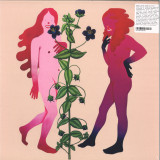
1STEP Process 180g 45rpm Double LP Pressed on VR900-Supreme Vinyl!
Mastered from the Analogue Mix-Down Tapes of the Original Digital Recording by Bernie Grundman!
Ultra-Luxe "Monster Pack" Jacket with a Deluxe 16-Page Booklet & Striking Outer Slipcase!
New lacquers cut after each run of 500 pressings!
Strictly Limited to 5,000 Numbered Pressings!
Impex 1STEP #5 celebrates Patricia Barber's 1999 "return" to The Green Mill, Chicago's fabled jazz club. Conceived as a "companion" to her Grammy-winning studio album Modern Cool, Companion finds Barber and her touring band in inspired form, playfully and energetically performing hits and deep tracks from her celebrated oeuvre.
The dynamic interaction between the artist and her reverent audience adds a palpable sense of space and community. At the same time, the fans' hushed attention creates a studio-like sense of precision and detail. The snap and crackle of Barber, her grand piano, and her onstage partners practically leaps off the groove into your listening room!
Companion's fan-favorite reputation is enhanced immeasurably by Jim Anderson's jaw-dropping, lifelike recording. Eschewing the crystalline sterility of digital recordings of the time, Anderson's sound is always warm, natural, and lacking unforced "hype."
Like Anderson, Impex aims to present great recordings that are as natural as possible. And we couldn't wait to put our favorite Patricia Barber release, using Jim's analog mix-down master tapes, on 180 grams of VR900 Super Vinyl. The deep, inky black backgrounds and absence of surface noise will pull listeners right into those three evenings in 1999, capturing a seminal modern jazz artist at a creative and professional peak and reveling in a perfectly rendered and joyous audio time capsule.
Finally, our deluxe Impex Treatment packages the whole party with a lovely outer slipcase, a booklet containing a new note from Patricia, and a dazzling array of photographs from the evenings by frequent Barber collaborator Valerie Booth, exclusive to our 1STEP. Heavy paper stock with spot gloss coating and a faithfully recreated exterior design will satisfy original fans and aesthetes throughout the music-loving world.
quête:super jim z
Bad Nerves, das uneheliche Kind eines One-Night-Stands zwischen den Ramones und den Strokes, spielen rasend schnelle, verzerrte Popsongs und
ernteten mit ihren bisherigen Veröffentlichungen "Dreaming", "Baby Drummer" und "Can't Be Mine" viel Lob. Kurz vor der Veröffentlichung ihres
zweiten Albums, dem brillant betitelten Still Nervous, sind die Jungs noch immer von ihrem Überraschungserfolg überwältigt.
Mit ihrem selbstproduzierten und selbstfinanzierten Debüt spielten sie sich 2020 in die Herzen und Köpfe der Crème de la Crème der alternativen
Musikszene; von Vordenkern wie Dan P Carter und Alyx Holcombe und von Gleichgesinnten wie Billie Joe Armstrong von Green Day und Stone
Gossard von Pearl Jam wurden Bad Nerves sofort als Retter einer Art von Punk angekündigt, die nie auszusterben verspricht. Sie sind mit Royal Blood
und The Darkness getourt und wurden mit Supergrass, den Ramones und Jay Reatard verglichen. Die Zukunft ist laut für Bad Nerves.
Bad Nerves, das uneheliche Kind eines One-Night-Stands zwischen den Ramones und den Strokes, spielen rasend schnelle, verzerrte Popsongs und
ernteten mit ihren bisherigen Veröffentlichungen "Dreaming", "Baby Drummer" und "Can't Be Mine" viel Lob. Kurz vor der Veröffentlichung ihres
zweiten Albums, dem brillant betitelten Still Nervous, sind die Jungs noch immer von ihrem Überraschungserfolg überwältigt.
Mit ihrem selbstproduzierten und selbstfinanzierten Debüt spielten sie sich 2020 in die Herzen und Köpfe der Crème de la Crème der alternativen
Musikszene; von Vordenkern wie Dan P Carter und Alyx Holcombe und von Gleichgesinnten wie Billie Joe Armstrong von Green Day und Stone
Gossard von Pearl Jam wurden Bad Nerves sofort als Retter einer Art von Punk angekündigt, die nie auszusterben verspricht. Sie sind mit Royal Blood
und The Darkness getourt und wurden mit Supergrass, den Ramones und Jay Reatard verglichen. Die Zukunft ist laut für Bad Nerves.
- A1: Jackie Opel – You're Too Bad
- A2: Johnny Osbourne – Murderer
- A3: John Holt – Hooligan
- A4: Keith Mccarthy – Everybody Rude Now
- A5: Owen Gray – Ballistic Affair
- B1: Roy Richards – Get Smart
- B2: Dillinger – Stop The War
- B3: Jim Brown – Love In The Dance
- B4: Desmond Baker And The Clarendonians – Rude Boy Gone A Jail
- B5: The Wailers – Good Good Rudie
- C1: Dennis Brown – Make It Easy On Yourself
- C2: Wailing Souls – Don't Fight It
- C3: Dub Specialist – Peace Theme
- C4: Mr Foundation – See Them A Come
- D1: Dudley Sibley – Run Boy Run
- D2: Dennis Brown – Johnny Too Bad
- D3: Bob Andy – Crime Don?T Pay
- D4: Soul Brothers – Mr Kiss A Bang Bang
Rude Boys are synonymous with Jamaican Dancehall culture from the present day going back to the very early days of Sir Coxsone Dodd and Duke Reid’s first sound-clashes in Kingston. Studio One Rude Boy features artists and songs about rude boys and rude boy culture from all periods of Studio One’s history.
The album features Ska, Rocksteady, DJs, Roots and Dub The album features classic tracks from Jamaica’s finest singers and groups such as The Wailers, John Holt, the Wailing Souls, Dennis Brown alongside super-rare tracks from artists such as Mr Foundation, Dudley Sibbley and The Soul Brothers all recorded under Clement ‘Sir Coxsone’ Dodd’s supervision at the legendary recording studio and record label. Musical backing comes from the legendary in house bands – The Skatalites, The Sound Dimension, Soul Vendors and Soul Defenders – who provide the classic Studio One rhythms so influential in the history of Reggae.
- A1: Freedom 3 26
- A2: Izabella 2 50
- A3: Night Bird Flying 3 50
- A4: Angel 4 21
- A5: Room Full Of Mirrors 3 30
- B1: Dolly Dagger 4 45
- B2: Ezy Ryder 4 07
- B3: Drifting 3 48
- B4: Beginnings 4 12
- C1: Stepping Stone 4 12
- C2: My Friend 4 36
- C3: Straight Ahead 4 42
- C4: Hey Baby (New Rising Sun) 6 04
- D1: Earth Blues 4 21
- D2: Astro Man 3 34
- D3: In From The Storm 3 41
- D4: Belly Button Window 3 36
«First Rays Of The New Rising Sun» wurde im April 1997 veröffentlicht und war das erste Album, das unter der direkten Supervision der Familie Hendrix entstand. Mit siebzehn Songs, deren Entstehung von März 1968 bis zu Jimis letzten Sessions in den Electric Lady Studios im August 1970 reicht, markiert das Album das letzte grosse Werk des innovativen Künstlers Jimi Hendrix. Es beinhaltet "Dolly Dagger", "Angel", "Ezy Rider" und "Freedom". Diese Veröffentlichung ist eine neue, komplett analoge Ausgabe, die von Bernie Grundman aus den originalen 1/4"-Mixes gemastert und auf schwarzes 140-Gramm-Vinyl gepresst wurde.
Composed by Jim O’Rourke and pieced together by Jim together with longtime collaborator and trumpeter Eivind Lønning at Jim and Eiko Ishibashi’s home in the Japanese mountains, this engrossing new album blows brass wails and tense fanfares across O'Rourke's manipulated Kyma tapestries for a deep, captivating trip into the aether.
Eivind Lønning has been sharing ideas with O'Rourke for several years: the duo collaborated on music for the Whitney's 'Calder: Hypermobility' exhibition, and Lønning played trumpet on O'Rourke's brilliant 2020 album 'Shutting Down Here'. For this new work, Lønning headed to O'Rourke and EIko Ishibashi's home studio in the Japanese mountains, where he teased unfamiliar, alien textures from his trumpet to open the labyrinthine three-part composition. O'Rourke took the material and subsequently funnelled it through his Kyma system, transforming it into a swirl of sound that hums alongside Lønning's original takes. The album was composed, mixed and mastered by O'Rourke, with everything's based on Lønning's virtuosic performance.
The album begins by cautiously introducing us to its sonic palette: wavering, bird-like horn wails that O'Rourke contorts around quiet synth oscillations and computerised swarms. Lønning's spittle-drenched blasts are given the spotlight, but O'Rourke's manipulations - often gentle and illusory, and sometimes utterly lacerating - lift the sounds into completely new territory. When Lønning begins to turn rhythmic cycles using the trumpet keys, popping with his mouth to compliment its leathery timbre, O'Rourke replies with dense, hallucinatory drones, juxtaposing unstable electronics with Lønning's breathy, sustained notes. All these sounds coalesce into a dizzy vortex, but O'Rourke is careful not to overwhelm the senses, dropping to near silence as the first act transitions into the second. O'Rourke pelts Lønning's vertiginous wails, steadily mutating them into Xenakis-like stabs until they sound like cybernetic strings and icy tones that extract the tension from Lønning's brassy harmonics.
The third act is more screwed, with O'Rourke allowing Lønning's improvisations wail into cathedral-strength reverb, accompanying the sound with glassy penetrations and throbbing subs. Here, Lønning sounds as if he's heralding the arrival of a celestial being, piercing the atmosphere with bright, sustained tones and muted, jazzy flourishes. O'Rourke hangs back, carefully spinning the notes into naturalistic fibres and orchestral drapery, before he allows the electronics to subside completely and the trumpet to echo into the imposing negative space.
'Most, but Potentially All' is a dumbfounding piece that shifts the dial on contemporary experimental music; dizzyingly complex but never showy, it's the kind of record you can spin repeatedly and hear something different each time. As an exploration of the trumpet, it's a unique expression, and as a progression of electro-acoustic compositional techniques, it draws a deep trench in the sand, setting a new standard.
- A1: The Piper
- A2: Into The Sea
- A3: Big Brass Buttons
- A4: Super Lekker Stoned (Richard Fearless Mix)
- A5: Saturns Pattern (Straightface / Young Fathers Remix)
- A6: Let Me In (Demo)
- B1: I Spy
- B2: Oranges And Rosewater
- B3: Praise If You Wanna
- B4: Mother Ethiopia Pt 1
- B5: We Got A Lot
- B6: I’ll Think Of Something
- C1: Devotion
- C2: Sun Goes
- C3: Alone
- C4: Lay Down Your Weary Burden
- C5: The Olde Original
- C6: Pure Sound
- D1: Landslide
- D2: Dusk Til Dawn
- D3: The Ballad Of Jimmy Mccabe
- D4: Rip The Pages Up (Vocal Version)
- D5: How Sweet It Is (To Be Loved By You)
- D6: Golden Leaves
- E3: I Work In The Clouds
- E4: Portal To The Past
- E5: Hopper (White Label Remix)
- F1: Cosmic Fringes (Pet Shop Boys Triad Mix)
- F2: Alpha
- E1: Birthday
- E2: Serafina
Handpicked by Paul himself, Will of The People is a carefully curated collection of 31 tracks from Weller’s extensive cornucopia of tunes that never quite made it to one of his 9 studio albums since 2002. Here is a collection which reminds us that there has always been a parallel narrative to the main recorded output of Paul’s albums and singles. The B-Side, and the remix, is a space in which to explore, experiment, or to flex a different set of artistic muscles.
The story begins back in the autumn of 2003, when the Fly On The Wall 3LP & 3CD collection brought together a wealth of Paul Weller solo recordings that stretched back to 1991. The B-sides, 12” EP tracks, single remixes and ‘live’ recordings featured all had one thing in common, namely that they hadn’t been included on any of his hugely successful solo albums. Furthermore, in many instances, they’d become highly sought after in their original formats and were fetching significant sums from fans and collectors. Will Of The People follows up Fly On The Wall and takes the listener through a similar mix of rarities, this time spanning the period 2002 to 2021.
From covers to eclectic remixes, Will Of The People delivers a scintillating array of songs which skirt across many genres. Here you will find such gems as Paul’s cover of The Beatle’s “Birthday”, released to celebrate Macca’s 70th, and the sparkling disco-ball banger remix of Cosmic Fringes by none other than the Pet Shop Boys. It also includes Paul’s first foray into film soundtracks with the sublime “Ballad Of Jimmy McCabe” from the film Jawbone. Scattered across the tracks are appearances from the likes of Primal Scream, Simon Tong & Graham Coxon.
Will Of The People is released on triple vinyl and 3CD. The album features sleeve notes written by writer and broadcaster John Wilson.
- A1: Sharkey - Someone Like Me
- A2: Lynne Ann Kingan - If You Love Me - Hate Me
- A3: James Thornbury - So Tan
- A4: Jim Huxley - Only A Song
- A5: Charlie Webster - Snodland
- B1: The Bob Hughes Band - You Broke My Heart
- B2: Goldrust - Going Yesterday
- B3: Jim Kennedy - You Are The Reason
- B4: Jon Betmead - Marie Elene
- C1: Charles Murphy - The Foot That's Holding Me Down
- C2: Remnant - I Will Set You Free
- C3: Fred Potts - Following Rainbows
- C4: The Superwomen - Lowlands
- D1: Robison Kaplan Ltd - Don't Say Goodbye
- D2: Gary Ramey - You Are His
- D3: John Agostino - Loss Of Love
- D4: Ritchie Tierney - Please Stop Breaking Me Down
A humanity-reminding suite of miracle moments, Someone Like Me unites a geographically unbound cast of real people in pursuit of a meaningful connection. Taping their lived experience in economic studios in quiet English counties, Pacific Northwest woodland retreats and the big city bustle of Sydney and Los Angeles, these kindred spirits rendered sheer beauty in the process. Custom pressed folk songs of love, loss and the lord saviour.
Illuminating minor works from seasoned players such as former Syndicate Of Sound chart-topper Sharkey and late-era Canned Heat lynchpin James Thornbury, the collection simultaneously honours the fleeting amateurism of hobby musicians. With their one shot at tangible vinyl, freshman Lynne Ann Kingan realised her loose bubblegum rocker on campus time, while U.S. Navy recruit Fred Potts cut his unconditionally serene ballad remotely stationed on a Spanish naval base. Spartan production continues to reign with Jon Betmead’s hair-raising gospel, howling into infinite space, and Goldrust’s stripped back garden hymn.
Throughout the hour-long reflection, faith has an intermittent yet revelatory presence, most overtly with the divine choral soul of Seventh-day Adventist quartet Remnant. More subtly, Gary Ramey and Jim Kennedy both turned to song in their spiritual quests, offering their all to a universal power. An irrefutable compilation cornerstone, the National Office For Black Catholics showcased Charles Murphy’s lionhearted account of the Black experience at a 1971 concert. Five years earlier, high school seniors The Superwomen would use their hauntingly angelic harmonies to address racial inequity with a breathless take on ‘Lowlands’.
Reaching the furthest corners, Someone Like Me secures the inaugural licence of three homespun masterpieces. Discovered by fluke in the digital haystacks of Youtube and Soundcloud, Jim Huxley’s bedroom pop earworm melds peacefully into Charlie Webster’s synthesized reverie. Meanwhile, Hollywood’s John Agostino introduces us to the bizarre world of tax scam records, with the artist only now learning that his tender psych-folk demos were leaked via a 1977 bootleg.
Compiled and lovingly restored by armchair digger Mikey Young (Eddy Current Suppression Ring/The Green Child), Someone Like Me pays due service to seventeen rarefied journals of truth and devotion. Adorned with visual artist Chris Fallon’s figure and flora dream extractions, the uniting songbook is further detailed by expansive track-by-track liner notes and a forward from San Franciscan poet Rod Roland.
From the outset this ad hoc quartet hit the gas, launching into a frenzied, high-octane set with alto saxophonist Rasmussen engaging in a furious tightrope-walk of upper register screams while O'Rourke unspools some of the most gnarly guitar noise this side of Masayuki Takayanagi. Of course, with such flinty, seasoned improvisers there are thrilling peaks-and-valleys, such as the extended hydroplaning guitar O'Rourke sculpts mid-way through the first extended piece, with the rest of the group taking a much-deserved pause. The pause sets the stage of a thrilling recalibration, with Corsano first diving in with an epic improvisation only to recede for one of Sakata's singular vocal improvisations, a throaty incantation as dynamic and visceral as his alto playing. Rasmussen returns, with Sakata picking up his clarinet, and suddenly the twinned reed blast that started the whole performance toggles into more spacious interplay, tapping into jazz orthodoxy without being held captive by it. - The entire recording is a testament to refined listening. Even at the most scorching peaks each player is deftly attuned to one another's sonic projections. Bridging generations, continents, and individual aesthetics, Rasmussen, Corsano, Sakata, and O'Rourke find common cause, convening for an evening of galvanic sound that's simultaneously exhilarating and spiritual. - Akira Sakata - saxophone, voice - Jim O'Rourke - guitar - Mette Rasmussen - saxophone - Chris Corsano - drums Coloured marble vinyl LP!
Don't judge a book by its cover. Judge a record by its cover.
And, perhaps, its title.
Cedar Walton's Mobius is as outrageously, disorientatingly brilliant as the stunning jacket design, featuring the legendary jazz pianist morphing into a mobius strip, set against a beautiful sky filled with cumulus clouds. A proper jazz-funk fusion slapfest, Mobius is a stellar electric set from - essentially - one *hell* of a SUPERBAND.
Yes, in addition to Walton's Fender Rhodes wizardry, Mobius is elevated by Ryo Kawasaki's stinging electric guitar, pristinely clear vocals by Adrienne Albert and Lani Groves, rootsy percussion by Ray Mantilla and Omar Clay, alto and baritone from Charles Davis, trumpet from Roy Burrowes, Gordon Edwards on bass and Frank Foster's tenor sax. Oh and did we mention STEVE GADD ON DRUMS?!?!
Gem after gem of looping, bliss-inducing gold, it's an incredibly revelatory album. It presents a thrilling synthesis of R&B, funk, blues and hard bop (with a hint of rock), all driven by an idiosyncratic electronic keyboard. Walton, a giant in the jazz world, got quite the workout every time he played, from piano to arp synthesizer to clarinet to electric piano to mini-moog and back again.
Mobius was Cedar Walton's debut for RCA in 1975. The versatile artist confirmed his abilities as a player, composer, interpreter and arranger with this stunning record, and his own bright compositions offered a springboard for the improvisations of the different soloists. Coltrane's "Blue Trane" is the first classic to be given the funkafied Mobius treatment, Ryo Kawasaki let loose all over neck-snapping Gadd-drum gold before the horns take a fiery turn and subsequently give way to Cedar's virtuosity. A sparkling b-boy break version of Thelonious Monk's "Off Minor" (featuring an absolutely *fire* solo from Walton) really sets proceedings alight. Of the three original pieces, the shuffling, percussive power of "Soho" is just absolutely mind bending Latin-influenced jazzy soul whilst the mellow vibes of "The Maestro" bring elegant, sumptuous soul. And then there's the effortlessly funky "Road Island Red". Just too, too good.
Cedar Walton was born in Dallas, Texas, on January 17, 1934 and began his professional career in 1959 when he began touring for several years with the J.J. Johnson Quintet. He later joined the Art Farmer-Benny Golson Jazztet and then Art Blakey's Jazz Messengers. Pretty solid credentials, right? While based in New York City, Cedar played with such luminaries as Donald Byrd, Eddie Harris, Blue Mitchell, Kenny Dorham, Lee Morgan, Freddie Hubbard, Jimmy Heath and Milt Jackson. Without question, he was one of the most complete and gifted musicians of his time and Mobius provides proof of that. The fresh, danceable tracks, all firmly rooted in the living tradition of blues and gospel, are skilfully presented by a master who enjoyed keeping abreast of contemporary tastes and was always keen to renew his language.
As the album notes state: “Mobius, which is the theoretical shape of the infinite universe, makes use of the most modern recording techniques and synthesizers. We mastered and mixed so that it’s hotter than the competition, which should help radio play and in-store demonstration.” Indeed. Mobius is really gorgeous mid-70s fusion, ranging from the funky to the ecstatic. It's an absolute MONSTER that will completely blow you away; and, yes, it's as wild and hypnotic as the cover. The audio for Mobius has been carefully remastered by Be With regular Simon Francis, ensuring it sounds better than ever. Cicely Balston's expert skills have made sure nothing is lost in the cut whilst the records have been pressed to the highest possible standard at Record Industry in Holland. The original, iconic sleeve has been restored here at Be With HQ as the finishing touch to this long overdue re-issue.
Superb 45 featuring two Hammond-led instrumentals! We caught up with Mr Guy Hamper for an insightful Q&A_ Q: What a cracking single this is! 'Instrument of Evil' in particular has a very eerie vibe. What was the inspiration for it? A: The track is the sequel to '7% Solution', which featured on the last Guy Hamper Trio LP with Thee Headcoats standing in as rhythm section. A 7% Solution being the amount of morphine Dr Watson administered to Sherlock Holmes. For 'Instrument of Evil' I took Sherlock Holmes' later designation of his syringe as "an Instrument of Evil". This is originally a quote from the bible: "Wicked men do at times reject God's purpose for the state, transforming the good of civil government into an instrument of evil." Point of interest: Morphine addiction happens to tie in with another aspect of the song. In the section that nods to Elmer Bernstein's main title theme to the film of the book The Man With the Golden Arm, in which the main character is also a morphine addict. Another ingredient - we added six-string bass to that section in tribute to Jet Harris - he formerly of top group The Shadows, who recorded a great version of Bernstein's classic. To top it all off the record sleeve references the fine graphics of the great Saul Bass. Phew! Q: The track features contributions from Tom Morley (trumpet) and Anna Jordanous (sax). What's it like working with them? A: They are great and easy to work with. I basically make a playground and let them loose in it with very little direction, apart from pointing out the swings and location of the roundabout. I told Tom "You're a Spanish trumpeter stood on a hill in Spain." For Anna, I think we said "go low and nasty." Q: On the flip side you have 'Incense Rising From a Censer'. A very evocative title for an evocative track. Do you have lyrics in mind for this for a possible later release? A: No lyrics have sprung to mind as yet - but it's always possible. The title is from The Elders observation in Dostoevsky's The Brothers Karamazov, a book I really recommend. Prayer rises to God on the smoke of the incense burning in the censer. I imagine this track being some kind of antidote to 'Instrument of Evil'. Q: This single marks your first time in the new premises of Jim Riley's Ranscombe Studio. What's the new place like? A: The studio is great - the sound - using my old Mighty Caesars drum kit, and Jim engineering, is pure, easy with a better sound than the old premises. Q: Any more Guy Hamper Trio releases in the pipeline? A third album perhaps? A: Again, anything is possible. Me and Jamie (James Taylor, Hammond organ) have talked of writing together in the future. Jamie is a truly great musician - the cherry on the cake if you will. We're just busted old eggs, sour milk, and some gunk. Q: A live Guy Hamper Trio show would be amazing. Any chance of that happening or will it remain a studio-based project? A: It could happen if someone came up with a very cunning plan.
Proudly presenting a new series of Mr Bongo reissues exploring the incredible back catalogue of Sonny Lester’s iconic Groove Merchant record label. First up, the spellbinding funk-fuelled, soul jazz album ‘Simba’, by guitar maestro O'Donel Levy.
Baltimore-born, Levy was already well regarded as one of the best up-and-coming jazz guitarists at the time of Simba’s release. Having toured with George Benson and Jimmy McGriff, as well as featuring on McGriff’s Black Pearl album on Blue Note, he went on to sign with Sonny Lester’s Groove Merchant. Produced by Lester himself and recorded over two back-to-back days of sessions in 1973, Simba features a who's who of ‘70s session players. The album features the legendary studio drummer Steve Gadd, Cecil Bridgewater on Flugelhorn, bass by Tony Levin and arrangements by Manny Albam.
A masterclass in tight yet effortlessly funk-driven rhythms, the tracks showcase these musicians at their zenith. Album opener 'Bad, Bad, Simba' wouldn’t have been out of place on a Lalo Schifrin ‘70s car chase soundtrack. Levy's playing is brilliant, bright and slick, with an infectiously exuberant energy that is complimented perfectly by Gadd's supreme drumming. ‘Playhouse' serves up another vibrant offering, Wah Wah guitars, horns and flutes duelling it out in a fast-paced fashion.
The cinematic thread continues throughout, yet with the tempo taken down a notch. 'Sierra Lonely' and ‘Sad, Sad, Simba’ head into lush ballad territory, with superb arrangements by Albam and beautiful playing by Collins and Bridgewater on Flugelhorn. Here Levy shines without taking any limelight, as the players synergize to a relaxed perfection. ‘Nigerian Knights’ closes the album flawlessly, showcasing once more Levy’s understated yet magnetic flow on the guitar.
Every track on ‘Simba’ is a winner. As with CTI Recordings of the same era, the feel and textures of Sonny Lester's productions have that pre-emptive, hip-hop aesthetic, which later producers would rework and reimagine. This album is expertly balanced, deftly arranged and magically executed, ebbing and flowing with a cool buoyancy that just grooves and grooves.
96kHz - 48-bit HD Audio with digital booklet including original photography by Christopher Kayfield and liner notes by Shaun Brady.
Pianist Kevin Hays, bassist Ben Street, and drummer Billy Hart reunite for a second, scintillating trio date, BRIDGES, featuring original compositions by Hays and Hart with classics by Wayne Shorter, Bill Frisell, The Beatles, and Milton Nascimento.
Hays Street Hart, the trio of pianist Kevin Hays, bassist Ben Street, and legendary drummer Billy Hart, recorded their acclaimed 2021 debut, ALL THINGS ARE, under less than optimal conditions. The album began life as a performance in honor of Hart’s 80th birthday in December 2020, live-streamed from an empty Smoke Jazz Club in the final weeks of that grueling pandemic year. Despite those adversities, the music they created that night was spectacular enough to convince all involved that it should be released.
Two years later, the trio has reconvened, this time fully cognizant that they were going to record an album at Sear Sound Studios in NYC. The captivating BRIDGES brilliantly spotlights the unique chemistry and shared spirit of exploration that emerged fully formed on that initial impromptu session. The title succinctly hints at some of the reasons why Hays, Street and Hart work so well together: this is a trio that bridges generations, certainly, as well as a wealth of diverse experience and inspiration. But it also sums up a mutual desire to bring people together through music.
“In this world that seems to be crumbling beneath our feet,” Hays explains, “we sense the need to make allies where there might be adversaries. On the most intimate level, interpersonally and inter-psychically we set out to overcome any number of misunderstandings and adversarial situations.”
Not that there was any antagonism to overcome within the trio itself. More than anything, Hays Street Hart is a mutual admiration society of the highest order. The esteem in which the pianist and bassist hold Billy Hart likely goes without saying. The drummer was ordained in 2022 as an NEA Jazz Master, just one of the many honors he has chalked up over a breathtaking career. He began his career with an apprenticeship under the revered vocalist Shirley Horn and went on to make notable music with such luminaries as Miles Davis, McCoy Tyner, Herbie Hancock, Wes Montgomery, Jimmy Smith, Stan Getz, and as part of the quartet Quest featuring David Liebman and Richie Beirach.
But Hart is if anything, even more laudatory toward his younger bandmates. Street has been a member of the drummer’s stellar quartet for two decades, alongside pianist Ethan Iverson and saxophonist Mark Turner, a tenure that speaks for itself. As for Hays, Hart is quick to place the pianist in the exalted company of some of his iconic former collaborators.
“I’ve been lucky enough to have the chance to perform with Herbie Hancock and McCoy Tyner,” says Hart modestly. “Each generation presents their own equivalent, and Kevin is an example of the latest innovations. There was Herbie and McCoy, then it was Chick Corea and Keith Jarrett, and then you have what's coming next. I think Kevin is definitely part of that continuum.”
Though Hays sticks strictly to the piano on BRIDGES, he is also an accomplished singer whose vocal instincts fuel his inventive and lyrical melodicism. Street points to those facets as key to the connection between the pianist and Hart, who has enjoyed several meaningful collaborations with vocalists.
“It always seems to me that Kevin has the capacity to sing in his mind and then accompany himself on the piano,” Street describes. “That makes for such a nice connection with Billy, who has played with and learned from so many singers. I don't even feel like we're playing as a piano trio most of the time; it feels more like a quartet.”
Those qualities are especially clear on Hays’ “Butterfly,” which opens the album. Though it’s performed here as an instrumental, the pianist has composed lyrics for the piece, and its gorgeous, song-like quality shines through. Hays also contributed the breathtaking ballad “Song for Peace,” highlighted by Hart’s gentle, embracing brushwork and Street’s sturdy, stentorian tone. The pianist’s third original, “Row Row Row,” is constructed on a twelve-tone row, but as the playful title suggests, it has none of the more stringent qualities of the serialist composers.
Hart’s stunning “Irah,” originally recorded on his quartet’s self-titled 2006 debut, is dedicated to the composer’s mother and was recorded at Street’s suggestion. The bassist also brought guitarist Bill Frisell’s reflective “Throughout” to the date, imagining Frisell’s Americana influences would resonate with the similarly inclined Hays, who approaches the tune with a harp-like beauty. Hays’ love of pop and rock music is also reflected by the inclusion of The Beatles classic “With a Little Help from My Friends.”
The trio pays tribute to the late, great Wayne Shorter with “Capricorn,” originally released on the composer’s 1969 Blue Note album SUPER NOVA and later included on the Miles Davis Quintet set WATER BABIES. Hart called Shorter one of a kind. I think of the many times I heard him excel – with the Maynard Ferguson Big Band, with Art Blakey's Jazz Messengers, with Weather Report. And in each case, he was innovative.”
BRIDGES closes with the title track, a dazzling piece by the great Brazilian singer and songwriter Milton Nascimento, which Hays calls “one of my favorite compositions ever, by anybody.”
BRIDGES was recorded under ideal studio conditions by a now-established trio with a weeks-long European tour under their belts. Perhaps what’s most remarkable about the album is not that Hays, Street, and Hart play so masterfully together – with three artists of their caliber, who could expect any less? – but that this second outing maintains the bold spirit of inquisitiveness and spontaneity that its predecessor naturally possessed. Credit that to a trio perpetually determined to discover new bridges worth building.
Miles Davis' A Tribute to Jack Johnson is the best jazz-rock record ever made. Equally inspired by the leader's desire to assemble the "greatest rock and roll band you have ever heard,” his adoration of Johnson, and Black Power politics, Davis created a hard-hitting set that surges with excitement, intensity, majesty, and power. Bridging the electric fusion he'd pursued on earlier efforts with a funkier, dirtier rhythmic approach, Davis zeroes in on concepts of spontaneity, freedom, and identity seldom achieved in the studio — and just as infrequently accepted by the mainstream.
Sourced from the original analog master tapes, pressed on MoFi SuperVinyl, and housed in a Stoughton jacket, Mobile Fidelity's 180g LP reissue brings it all to fore with startling realism. Benefitting from SuperVinyl’s nearly inaudible noise floor, superb groove definition, and clean, ultra-quiet surfaces, this 180g LP showcases everything — from the bold tonality of the headliner's white-hot trumpet solos to the decay of crashing cymbals, carry of wiry guitar notes, and echoes of the studio — in reference fashion.
Bristling with exuberance, Davis' high-register passages explode with authority and commanding presence. Around him, a barrage of urgent backbeats, knifing riffs, and supple bass lines emerge amidst black backgrounds. One of the most prominent differences long-time fans will notice is how much more aggressive, immediate, and vibrant the music sounds, with those aspects central to the composer's original desires.
Utilizing wah-wah and distortion, the go-to instrumentalist of the performances— guitarist John McLaughlin — attacks with a nasty edge, slashing style, and vicious streak that allows A Tribute to Jack Johnson< cross the until-then-impenetrable divide between rock and jazz. Davis puts both feet in the former camp and erases any gap. The stories of the record’s creation are nearly as legendary as the sounds within: Two sessions, multiple jams, different sets of musicians (several uncredited), and near-miraculous production perfectionism that made it all appear cohesive.
The least-well-known masterpiece of Davis' career, the 1971 record — seamlessly assembled and spliced together by producer Teo Macero — was a victim of limited record-label promotion. Audiences also didn’t immediately know what to make of its original cover art — faithfully replicated here. In addition, the powers that be at Columbia Records were directing the public’s attention to Miles at Fillmore, a completely different kind of album guided by two keyboardists. A Tribute to Jack Johnson practically lives in a different universe, one from the future. To many listeners who did manage to hear it — among them critic/musician Robert Quine, Stooges leader Iggy Pop, and renowned critic Robert Christgau — it surpassed everything that came before.
Indeed, Davis treated it as a personal manifesto: An opportunity to salute the Black championship boxer admired for his threatening image to the establishment and impeccable taste in clothes, cars, women and music. Davis explains in the liner notes his affinity for Johnson — a stance mirrored by the defiant music, which hits with a prize fighter's force and reflects the graceful elegance with which a pugilist navigates the ring — and closes the album with a Johnson quote read by Brock Peters.
Inspired not only by Johnson but by Jimi Hendrix and Sly Stone, Davis changed his approach and his band. He surrounds himself with a cadre of musicians in their 20s and, in the case of bassist Michael Henderson, a 19-year-old fresh from touring with Stevie Wonder. Henderson gives Davis what he requested: boogie-based grooves that don’t lose shape or direction. Soprano saxophonist Steve Grossman, drummer Billy Cobham, and organist Herbie Hancock adhere to a similar aesthetic that prizes brazenness, innovation, and energy.
In that vein, during a portion of “Yesternow,” Davis segues into a separate performance (which became known in its entirety as “Willie Nelson”) played by guitarists McLaughlin and Sonny Sharrock, bass clarinetist Bernie Maupin, keyboardist Chick Corea, bassist Dave Holland, and drummer Jack DeJohnette. Dig it!
Talking with jazz scholar Bill Milkowski — who himself noted how McLaughlin’s unrestrained style, decibel-forward volumes, and rapid-fire power chords engendered himself to the rock crowd at the same time that his harmonics and syncopation still definitely made him a jazz player — guitarist Henry Kaiser summed up part of the appeal of A Tribute to Jack Johnson as well as anyone, saying: “It’s a jazz record that way way more open than other jazz records at the time, but still not free jazz. McLaughlin’s rhythm guitar playing on ‘Right Off’ — the use of different chords in a rock shuffle than what anybody had used before — was revolutionary.”
And to think that’s just one aspect of a record that contains multitudes. “Never let them forget it.” Indeed.
Der großartigen Sängerin Billie Holiday nähert man sich immer sehr respektvoll, behutsam ihrem tragischen Leben gegenüber, aber auch voller Bewunderung der fantastischen Musik, die sie erschaffen hat. Die aktuelle Analogue Productions/Verve Edition in 45rpm, verteilt auf zwei super sauber gepressten Vinyl-Scheiben, unterstreicht dies akustisch mehr als deutlich. Dabei ist die Tatsache, dass die Aufnahmen in Mono sind, ein soundtechnischer Haupt-Gewinn. Der Klang gewinnt dadurch definitiv an Intensität, Tiefe und Druck. Die Scheibe erschien erstmals 1955. Eine geniale Band bannte damals 12 wunderbare Lieder auf die analogen Studiobänder. Neben Sängerin Billie Holiday agieren noch die Schlagzeuger Larry Bunker und Alvin Stoller, Harry „Sweets“ Edison an der Trompete, Barney Kessel an der Gitarre, Jimmy Rowles am Piano und Ben Webster am Saxophon. Den Bass teilen sich Red Mitchell und Joe Mondragon. Der Opener „Do NothingTill You Hear From Me“ ist maximal fesselnd. Holidays Stimme erfüllt den ganzen Hörraum. Kessel spielt dazu wunderschön bluesig-trockene und wohlklingende blue notes. Websters Saxophon ist so unendlich präsent, dass man unschwer meinen könnte, man säße inmitten des Ensembles. Mit Swing und Maxi-Groove kommt „But Not For Me“. Jazz as Jazz can! Herrlich perlen die Klavierfiguren von Rowles. Der Kontrabass kommt dabei so unendlich druckvoll und dynamisch. Das muss man hören, fühlen und spüren. Holidays Stimme hat dabei soviel Klangfarbe, dass man nur noch Schwärmen kann. Die zwei 180 Gramm schweren LPs kommen im ästhetisch gestalteten Klappcover. Dieser audiophile Edelstein gehört in jede gut sortierte Schallplattensammlung, und zwar definitiv schrankenlos Genre-übergreifend. wb
- A1: 007 Shanty Town
- A2: Israelites
- A3: It Mek
- A4: You Can Get It
- A5: Pickney Gal
- A6: Peace On The Land
- A7: I Believe
- B1: Look What They’re Doing To Me
- B2: Please Don’t Bend
- B3: My Reward
- B4: Little Darling
- B5: Life Of Opportunity
- B6: When I’m Cold
- B7: Archie Wah Wah
- C1: Hippopotamus
- C2: Warlock
- C3: Licking Stick
- C4: What Will You Gain
- C5: Trample
- C6: The More You Live
- C7: Go And Tell My People
- D1: Reggae Recipe
- D2: Yakety Yak
- D3: Where Did It Go
- D4: First Time For A Long Time
- D5: Stop The Wedding
- D6: Mother Nature
- D7: Life Hope And Faith
Desmond Dekker recorded some of his best known songs together with his backing group the Aces. Their single “007 (Shanty Town)” made him Jamaican music’s first outernational superstar, reaching the 14th place in the UK charts. The Leslie Kong produced Double Dekker was first issued in 1973 and consists of the best material Desmond recorded during his early years. In 1969 he scored a number one hit with the legendary song “Israelites”. You’ll hear how the Ska music from the mid-60s developed to the Rocksteady sound. This was “Ska” or “Blue Beat”—(or its new name for the slower tempo “Rock Steady”), and the lyrics come from the Calypso-Mento method of telling about current events in music. He was really at his prime from 1969 to 1971, and recorded classics such as “It Mek” (1969) and “You Can Get It If You Really Want” (1970), which you’ll both find on this record. Even before Bob Marley and Jimmy Cliff Jamaica already had their own international superstar, Desmond Dekker was his name.
Double Dekker is available as a limited edition of 750 individually numbered copies on orange coloured vinyl.
Repress.
Label Release Text:
ATTENTION! Jimmy Patrick Longfort's hit arising from Düsseldorfs cult hang-out Ratinger Hof in 1987 is now officially reissued for the whole universe. All three original tracks got remastered plus TAFS – the Netherlands best kept secret and part of the group Voertuig – produced a pushing, extra groovy instrumental rework of the title track. The 12" is housed in a full cover artwork based on the original with extensive liner notes by Rudi Esch (Electri_city, Die Krupps) on an extra insert.
The title track ATTENTION! is about a young man, waiting in vain for his love's return but instead of a reunion the distance even grows and she leaves him with destination America. For sure this causes a serious and hard to bear heartbreak. Scream it out loud on the dancefloor and dance the pain away!
On rework duty we got Offer Van Kesteren under his Tapedeck Adventures From Space moniker. Slick funk grooves and super galaxy sounds that will heat you up. Burning hot.
Side B starts off with Ma'mbaillé, French lyrics, funky keys and steel drums – a true feelgood song that will make you dance wherever you are. This one is followed by Do You Really Love Me a highlife love song that closes this record properly. Play it again.
This was the second studio outing by supergroup Cactus. Existing of ’Vanilla Fudge’ rhythm section Carmine Appice (drums) and Tim Bogert (bass), as well as former Amboy Dukes lead vocalist Rusty Day (vocals/mouth harp), and Jim McCarty (guitar) from Mitch Ryder & the Detroit Wheels and the Buddy Miles Express. The album offers eight tracks of which are six originals and two covers: Little Richard’s ’Long Tall Sally’ and Chuck Willis’ ‘Feel So Bad’.
You’d think a guy like Butch Walker (producer/ writer for such artists as Pink, Fall Out Boy, Avril Lavigne, Weezer, Green Day, Katy Perry, and Taylor Swift) wouldn’t be particularly unlucky in love, but on Readysexgo the torture never stops, as Butch recounts one failed affair after another in exquisitely painful detail. All set to Marvelous 3’s never less than hooky power pop/glam metal stylings, often placed in seamless segues from one song to another...Readysexgo is the catchy soundtrack to the love life of a hopeless but somewhat embittered romantic. We worked with the band to create a special Expanded Edition for the album’s first-ever vinyl release at music retail, adding the non-LP side “Fastboat” plus two covers from the album sessions, one of Naked Eyes’ “Always Something There to Remind Me,” and one of Steely Dan’s “Reelin’ in the Years,” which ended up in the Jim Carrey flick Me, Myself and Irene. And after looking at the red, white, and blue artwork (faithfully reproduced here on a gatefold album jacket with lyrics), we figured if you blend those all together, you get purple, so purple vinyl it is for this 2-LP set!
Amazing floaty modern soul / disco goodness out of late 70s Queens, NY. 'Love Is The Same' two brilliant and different versions, both dancefloor fire…
Mark Beiner met Ben Iverson in 1976 when I was 17 years old, at the time he was a junior at Newtown High School in Elmhurst, Queens. Mark had taken a part time job as a Produce Clerk at Walbaum's Supermarket on Northern Boulevard in Jackson Heights, Queens, where I met Ben Iverson, the "Frozen Food Manager."
Back then Mark remembers, 'I was going to work early just to talk to him about his musical background and his time spent in the 50's and 60's with the Ohio Doo Wop Group, "The Hornets", or better known as, "Ben Iverson and The Hornets."'
In 1978 after Ben and I discussed getting together and composing music, I started writing poetry and expressing in writing my break-up with my college girlfriend, Paula. Ben and Mark went on to writing two albums worth of material, which in turn gave us a lot of time and presence on stage at our live gigs.
The regular Coast to Coast Band members consisted of Ben Iverson on Lead Vocals, Rhythm Guitarist and Co-Executive Producer, Joe Crowley, who is known today as "New York Congressman Joe Crowley." Carl (Woody Wood) Morton on Bass Guitar, Jimmy Johnson on Keyboards. Lead Guitarist, Lou Jimenez, currently owns his own recording studio, Music Labs in Elmont, Long Island. On Drums, Eddie Byam, on Alto Sax, Jay Cohen, who in the 70's used to record for "Gary U.S. Bonds." Gary Pevols on Trumpet. On Bone, Scott Burrows, Trumpet player, Steve Becker, along side Neil Levine, Stan Stockley, Tom Russo.