Skyline recordings is proud to unleash a super funky new FLYING FISH
“Takin’ Over” 7” is a killer vocal up-tempo, sexy, club floor dancer, and a must have 45 for good music collectors.
The fantasy Flying Fish duo of Malachi Trout & Ed Morris have been making Flying Fish DJ tools for many years. This outstanding vocal, features the amazing Elliot May (lead singer on Do your thing – Basement Jaxx)
Cerca:super mal
Mali Hayes has been simmering to the surface for a while now. Emerging from a Manchester jazz community that's enjoying its own renaissance away from the much-reported on London scene, the vocalist and songwriter's bittersweet neo-soul sound is trans-Atlantic – think initial progenitors such as Erkyah Badu, D'Angelo and Jill Scott – but is rooted in Manchester's mixed communities and the different walks of life she encounters.
Forgive You / Come Closer – owes itself to Gilles Peterson and Brownswood Music's Future Bubblers programme, when Hayes met producers Cult Architect and Medikul while part of the mentorship scheme. Airplay from Gemma Bradley, Victoria Jane & Mo Ayoub on Radio 1, Jamz Supernova & Gilles Peterson on BBC Radio 6, Victoria Jane on BBC Introducing, Jamz Supernova on Selector Radio. Features in Clash Magazines 'Next Wave' playlist and Spotify's 'Rhythm & Groove by DJ Taro' playlist.
The two tracks come out as part of a new series of 7" releases from Manchester institution Band on the Wall and their new label Band on the Wall Recordings. Based out of the iconic music venue, charity and cultural hub, the label builds on a successful compilation released to raise funds during the Covid-19 pandemic
- 1: All I Need
- 2: Kiss Like The Sun
- 3: About Last Night
- 4: Downtown
- 5: Rabbit Hole
- 6: Lost
- 7: Scene
- 8: Lonely Hours
- 9: Maybe It’s Today
- 10: Screaming
- 11: Hold Tight
It may be his fifth album, but Saturday Night, Sunday Morning marks the start of chapter two for Jake Bugg. Arguably his most complete and coherent record to date, Saturday Night, Sunday Morning manages to combine a love of ABBA, the Beach Boys, Supertramp and the Bee Gees, with a contemporary pop sound: one that’s already spawned his most ubiquitous song in years via euphoric lead single, All I Need. “I knew what I was looking for this time around,” the 27-year-old says, firmly. “And I feel like I accomplished it.” It’s almost 10 years since a two-fingered Bugg burst onto the scene with his eponymous debut, one that topped the UK album charts and saw the then 18-year-old from Nottingham fêted as the next Bob Dylan. A Rick Rubin-produced follow up, Shangri La, quickly followed. But progress stalled with Bugg’s third, largely self-produced, record, On My One, in 2016. “I was having a hard time on that third record,” Bugg admits, five years removed. “The support from the industry wasn’t what it was. All those people telling you how great you are weren’t there anymore. It does feel like the rug’s been swept from under your feet.” What that record provided, however – along with its comparatively stripped-back follow up, Hearts That Strain (2017) – was a much-needed course corrector: one that set Bugg on the upward trajectory he finds himself on today. “When I came to terms with that was when I left the ego at the door,” he says. “It didn’t work out. But it led here. And this is probably my strongest record." It’s testament to Bugg’s rediscovered confidence that Saturday Night, Sunday Morning – a nod to the debut novel by Nottingham author Alan Sillitoe – sees him working with some of his highest profile collaborators to date, most notably American songwriters Andrew Watt and Ali Tamposi, best known for their work with pop heavyweights Post Malone, Dua Lipa, Miley Cyrus, Camila Cabello. “I was looking for how I can incorporate my sound for a more modern era. And I kind of struck gold working with Andrew Watt and Ali Tamposi,” Bugg says. Convening in LA, the first track the trio wrote together is the jealousy-inflected About Last Night, a song about the “insecurities you go through as a young person in a relationship with someone.” “It’s got such dark undertones, which I love,” Bugg says, of a song that showcases a newly discovered, Beach Boys-esque falsetto. “But it’s also very, very pop. That’s what I’ve always loved. With ABBA, with Supertramp. I love pop music. But when you can get it to be dark, I love it even more.” It’s a trick the trio repeated again on Scene, Bugg’s personal favourite from the album and a song that best encapsulates the combination of old and new: Watt’s George Harrison-esquire guitar brushing up against contemporary melodic choices by Tamposi. “I love writing with her,” Bugg says of the Havana hitmaker. “She brought that women’s perspective. And I knew that I’d got that balance of what I wanted. That old school chorus with contemporary verses. That to me was my favourite song when I wrote it, and it still is.” Perhaps the biggest example of Bugg’s newfound ego-less approach to writing, however, came in the shape of Downtown, a song that grew from an idea by Jamie Hartman (Celeste, Lewis Capaldi, Rag'n'Bone Man), and sees Bugg deploy the higher range of his voice to ethereal, ’60s Bee Gees effect. “Usually, the initial spark of an idea comes from me. And when it doesn't, it sometimes loses my attention,” Bugg admits. On Downtown, however, he relished his role as arranger: “Because there were a lot of moving parts and chords, it was almost like a puzzle,” he says. “I’d never approached a song like that before. “What I’ve been enjoying on this record is the collaborative process,” he continues. Working with people, writing with people. Because I’ve realised all I really want to achieve is to be the best writer I can possibly be. And I think by working with other people, it allows you to learn a lot as well.” It’s a theory Bugg has put to the test during lockdown, when he was approached by his manager about writing the soundtrack to an upcoming documentary, The Happiest Man In The World, about Brazilian footballer Ronaldinho. “It’s kind of a completely different experimental outlet,” Bugg explains of his first ever score. “I approach my own work quite professionally. But with this I can just switch off and go into a different world. And it’s been brilliant – I’ve had to learn different styles of guitar: bossa nova, samba. It’s a bit Vangelis, who’s probably my favourite artist – which may surprise people.” Possibly. But you get the impression that surprising is what Bugg likes to do. “I don’t like to be stuck doing the same thing,” he admits. “And that’s what this record Saturday Night, Sunday Morning was. I wanted to push myself. I’m always learning new influences. I’m careful not to get stuck on the same thing. “It’s not going to be right every time. It’s not going to be good every time,” he continues. “But if that’s the process it takes to get to this record, where people are loving the songs again, then that’s the journey we have to take.” For Jake Bugg, chapter two starts now. New album ‘Saturday Night, Sunday Morning’ is out August 20th on RCA Records
You have never heard of Janet Beat. She has been making beautiful electro acoustic work since the early 1960s. Loads of people tried to stop her making music, people like her parents and male musicians who probably felt threatened by a talented woman in their post war male dominated electronic field. Her music has not been issued before. It’s here now, you lucky people. And no, I have not made her up.
Janet Beat does not make beats. She makes sublime electro acoustic music, much of it sounds like the music from Forbidden Planet, or maybe music just beamed in from another planet. Her early 1960s tape work was all destroyed by her father when he used her tapes to hang up his tomato plants. What a bastard. Anyway, her late 1970s and 1980s work has survived, and here it is for the very first time. And before you start asking questions about the title of this LP, I asked Janet Beat if it was OK. I spent ages trying to think of a good title, but then looked at the superb photo of her in her front room (the one on the LP front) and my mind was made up.
- A1: Branko Over There (Feat. Miles From Kinshasa)
- A2: Branko - Movimento
- A3: Branko - Stand By (Feat. Umi Copper)
- A4: Branko & Sango - Hear From You (Feat. Cosima)
- A5: Branko & Pedro - Mpts (Chords Version)
- B1: Branko - Sempre (Feat. Mallu Magalhães)
- B2: Branko - Amours D'été (Feat. Pierre Kwenders)
- B3: Branko - Tudo Certo (Feat. Dino D'santiago)
- B4: Branko - Bleza
- B5: Branko - Agua Con Sal (Feat. Catalina García)
- B6: Branko & Dengue Dengue Dengue - Lucuma
The first thing that strikes you when hearing 'Nosso' is its feeling of intimacy and warmth. The title, which means 'Ours' in Portuguese, is apt since he sees the record as the result of letting a wild variety of people into his world. João notes that 'I didn't know most of the collaborators before meeting up with them in a studio somewhere in the world, so most of these songs are coming from a very immediate and honest sense of collaboration where you spend an afternoon with someone learning about each other at the same time as you're making music. It's a shared experience, a moment where two or more people came up with ideas together, that they probably wouldn't have had if they were in their comfort zone.' These meetings were turned into songs at home in Lisbon once the main ideas were created collaboratively elsewhere. 'On this album, like in everything else I did so far, the focus on the instrumental side of things was experimenting with rhythmic patterns and genres from the Portuguese-speaking universe while applying them to songs created with other artists from completely different backgrounds and places.' There's something in this process that has left the album sounding super fresh as this is a sound without borders that pulls you in. It's music everyone can be a part of, where even the most rugged up-tempo cut sounds welcoming. It's an overwhelmingly positive and joyous experience to immerse yourself in 'Nosso.' It's no wonder that the central motif of the album artwork shows a less common view of Lisbon, one where instead of looking at the historic city centre we face the suburbs, where these musical and cultural experiments have been and still are occurring, undeniably shaping the musical and cultural landscape of Lisbon in the process. As much a soul record as it is a record infused with the beats of the Portuguese-speaking world, 'Nosso' is a reflection of Branko's ongoing musical explorations and his vision of Lisbon as a privileged cultural hub for the Portuguese-speaking world and beyond. Branko fuses local rhythms from kizomba to baile funk and afrohouse through European electronic genres with a clear accessible pop sensibility and the aim of creating a unified sound that puts all these individual musical expressions in perspective as part of a greater whole. For João, this is the logical next step in his musical evolution.
If your brain has a shortlist of bands that instantly evoke New Wave, Suburban Lawns deserve a slot right next to the likes of Devo, Talking Heads and the B-52's. After putting out two singles on their own Suburban Industrial imprint, the Lawns signed to I.R.S. Records and released their debut LP in 1981. While the band gained cult status thanks in part to a Jonathan Demme-produced music video which aired on Saturday Night Live, their self-titled album would sadly be the five-piece's only full-length statement.
Suburban Lawns' asymmetrical aesthetic is personified by co-vocalist Su Tissue, whose mesmerizing stage persona was at once childlike and terrifying. Her unique style embodies the awkward/arty female singer of the Reagan era, while the group's male vocals – courtesy of Frankie Ennui, Vex Billingsgate and John McBurney – maintain the satirical themes of Southern California's postwar mirage of limitless sprawl.
Suburban Lawns' catchiness can be attributed to their drum-tight performance and taut songwriting. Listen to the vocal trade-offs on "Anything," which could have easily come out on any purely Punk label from LA at the time, while Tissue's deadpan delivery on "Janitor" glides into the best art-warble this side of Lene Lovich, broaching the possibility of nuclear annihilation with a murmured "Boom, Boom, Boom, Boom."
From a West Coast scene dominated by 7-inch singles and EPs, the Suburban Lawns' lone LP remains in a class with precious few. It's not surprising that they found acceptance in the Hollywood punk scene, despite their Long Beach roots, and would influence other bands such as Minutemen. This is not a disc that will get parked in your collection hoping to get pulled once in a while; this is a record you will play.
- A1: A Los Soneros
- A2: Brisa Mananera (Mambo Man Film Version)
- A3: Cada Vez Que Te Veo
- A4: Carretero
- A5: Como Las
- B1: De Cauto Cristo A Rio Cauto
- B2: De Cuba Vengo Y Cubano Soy
- B3: Descarga Cubana
- B4: Finca Santaelena
- B5: La
- C1: Maidel Mambo
- C2: Mambo Man (Also Known As Ella Es Asi) (Also Known As Ella Es Asi)
- C3: Nada De Ti
- C4: No Critiques Al Nene
- C5: Pa Apartar Lo Malo
- C6: Quiero Cantar Son Del Llano
- D1: Romance
- D2: Son Para Envidiosos
- D3: There Is Still Hope
- D4: Yo Quiero Gozar
Re-mastering by: Ray Staff at Air Mastering, Lyndhurst Hall, London
With the Buena Vista Stars, including Candido Fabre. Based on a true story and filmed in the exotic countryside outside Havana, this remarkable and engaging film will move both your spirit and your feet with its unforgettable passion and intoxicating music. The soundtrack and live performances in the film include some of the legendary Cuban artists who appeared in the box office smash, Buena Vista Social Club.
MAMBO MAN is packed with musical contributions from Cuban legends including; Candido Fabre, Maria Ochoa, Alma Latina, David Alvarez, Arturo Jorge, Omara Portuondo, Eliades Ochoa, Juan De Marcos Gonzalez and the Afro-Cuban All Stars.
REVIEWS Rome Prisma Independent Film Awards
“There is rather the mature and conscious gaze of two authors who want to represent Cuba, and the story of the protagonist, with truth and love. With this awareness, each shot conveys a charm superior to that of a good staging. This film, made with passion, penetrates the audience to the rhythm of music and tells us about a whole, small, precious universe, absorbing its beauty and misery. “Mambo Man” is a bit like Cuba: beautiful, kind and melancholic.”
J.B. Spins, Joe Bendel
“It’s a dynamic, colourful film, with bustling markets, lively clubs, friendly outdoor cafes, and—best of all—a remarkable soundtrack of classic Cuban music, which is a focal point of the film.”
Superb thinlace of sounds... defenitly chanting acid...
Mental, but very alive.
Precise and dancefloor.
Thanks to MarsAssault i disovered this superb sound, and defenitly wanted to share it with you :)
Superb progressive tribe / Trance / techno shouter !
3 magestics tunes opening a new way for Hashtek23... bring the peace
Born Bad continue their mind-expanding and totally essential series of library music ‘Space Oddities’ compilations with this set focusing on French musician and composer Sauveur Mallia.
In the ever-expanding universe of 70s and 80s French library music, Mallia holds a special place; his career, multifaceted work and the uniqueness of his talent have made him an exemplary figure in the unsung world of library musicians.
In those years a few of them, often for economical reasons, would set off on a
space conquest, taking along just a few synthesisers.
Their ambition well surpassed the modesty of their means; it was in turn the
condition to their experimentations with sound which were to create a new
sonic space: that of a nation tumbling into modernity. From French soil to the
farthest reaches of the cosmos, there were just a few steps to take. It’s with the
label Tele Music, boarding the spaceship Arpadys, along with the Voyage crew,
that Sauveur Mallia took the big leap.
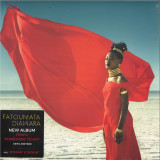
Fatoumata Diawara ist eine malische Singer/Songwriterin und Schauspielerin. Ihr Debüt "Fatou" (2011) und darauffolgende Aktivitäten machten die Künstlerin zu einer der wichtigsten Vertreterinnen moderner afrikanischer Musik. Sie sang auf Alben von Dee Dee Bridgewater ("Red Earth"), Oumou Sangaré ("Seya") und Herbie Hancock ("The Imagine Project"). Darüber hinaus kollaborierte sie mit Bobby Womack, Mulatu Astatke, Cheikh Lô, dem Orchestre Poly-Rythmo de Cotonou, Blick Bassy sowie Rocket Juice & the Moon. Diawara spielte bereits Glastonbury und andere große Festivals, trat in der Carnegie Hall auf und begab sich an Bord von Damon Albarns Africa Express, wo sie sich als Höhepunkt eine Bühne mit Paul McCartney teilte. Parallel setzte sie ihre Karriere als Schauspielerin fort, unter anderem in den Filmen "Timbuktu" (2014) und "Mali Blues" (2015). Ihr Album "Fenfo" (deutsch: "Etwas zu sagen") wurde in Mali, Burkina Faso, Paris und Barcelona aufgenommen und von Diawara selbst sowie dem französischen Superstar Matthieu Chedid alias -M- produziert. "Fenfo" geriet zu einem im besten Sinne grenzenlosen Album. Die elf Songs verbinden alte afrikanischen Saiteninstrumente wie die Kora und Ngoni mit elektrischen Gitarren sowie traditionelle Perkussion mit Kit-Drums. Diawara, die meist auf Bambara singt, wird unter anderem von -M- (Gitarre, Keyboards) dem brillanten Cellisten Vincent Ségal und dem Kora-Spieler Sidiki Diabaté begleitet.
For BRZ45087 we present a split release comprised of two tried-and-tested favourites from the Mr Bongo record bag.
Rio-born pianist and organist Lafayette’s career started in the mid-60s and saw him become a prominent member of the Brazilian musical movement entitled 'Jovem Guarda’. For his inclusion on this selection in the Brazil45 series we move things along a few years to 1982 and the Brazilian boogie gem 'Sol De Verão'. Taken from his album 'Edição Especial’ and originally released on Copacabana Records, 'Sol De Verão' was written by Jorginho Gomes from one of Brazil's greatest bands Os Novos Baianos. It's a superb slice of 80s boogie/funk brilliance with a super catchy ear-worm of a vocal - definitely one for the dancers!
For the flip, we include an absolute monster from the fantastic Marisa Rossi, who we featured previously on number 38 in the Brazil45 series. 'Quem Vem Lá’ is a heavy driving Samba Rock / MPB groove track with female and male call and response vocals. Originally released on a very rare and exclusive 7" also on Copacabana Records, but this time in 1971. Marisa would go on to work with the legendary Arthur Verocai in the 1980s.
Two very different slices and styles of Brazilian music, but both absolute gems.
Live album by the Swedish supergroup STORMWIND!
This epic and melodic `raw´ live album was recorded at Sweden Rock Festival and has been remastered at redmount studios in Stockholm
Features Sabaton member Joakim Brodén on keyboard!
This is one of the most classic artists in its genre
Crystal clear limited vinyl edition for RSD 2021 (x500 copies)
Featuring members that are/have been active in bands such as; Sabaton, Therion, Hammerfall,
Yngwie Malmsteen, Candlemass, Royal Hunt, Dionysos and more
Re-Mastered by Magnus Lindberg at Redmount Studios (Hellacopters, Alcest, Culf of Luna,
Imperial State Electric, Misery loves Co, Lucifer, Dool, Refused and more…)
- 1: The Gambler
- 2: Through The Years
- 3: Lady
- 4: Lucille
- 5: Coward Of The County
- 6: I Don't Need You
- 7: We've Got Tonight (With Sheena Easton)
- 8: Crazy
- 9: Islands In The Stream (With Dolly Parton)
- 10: She Believes In Me
- 11: Every Time Two Fools Collide (With Dottie West)
- 12: You Decorated My Life
- 13: Make No Mistake, She's Mine (With Ronnie Milsap)
- 14: Share Your Love With Me
- 15: All I Ever Need Is You (With Dottie West)
- 16: Buy Me A Rose (Featuring Alison Krauss & Billy Dean)
- 17: Daytime Friends
- 18: Love Or Something Like It
- 19: Love Will Turn You Around
- 20: Morning Desire
- 21: What Are We Doing In Love (With Dottie West)
21 Number Ones is celebrating it’s 15th Anniversary in 2021 and it will be available on vinyl for the first time! The album features 21 of GRAMMY Award-winning superstar Kenny Rogers’ number one hits including “The Gambler”, “Through The Years”, “Lady” and many more! Rogers sold over 120 million albums worldwide, making him one of the best-selling male artists of all-time according to the RIAA, with one Diamond album, 20 Platinum albums and 11 Gold. He recorded 24 No. 1 hits, 12 No. 1 albums and 25 Top 10 country albums. Miraculously, he charted a song within each of the last seven decades. His music has always crossed boundaries, with singles and albums finding frequent success on the Country, Top 40, and Adult Contemporary charts, and in a few instances, on the R&B and Christian charts.
2012 von den Balfour Brüdern in Belfast Nord Irland gegründet, konnte sich MAVERICK schnell in der Szene etablieren. Mit ihrem ersten Album„Quid Pro Quo“ waren sie bereits mit den schwedischen Hardrock Stars THE POODLES auf Tour. Das von Presse und Fans überschwänglich gefeierte zweite Album „Big Red“ brachte sie wieder zurück auf die Bühnen, diese Mal mit den schwedischen Superstars TREAT. Außerdem waren sie Gast auf vielen Festivals wie z.B. das H.E.A.T FESTIVAL (D), ICEROCK und ROCKNACHT TENNWIL (CH), WILDFEST (BE) und dem ROCKINGHAM in England, was ihnen half ihre schon große Fanbase noch weiter zu vergrößern. Ihr nächstes Album »Cold Star Dancer« aus dem Jahr 2018 bekam beste Kritiken in der internationalen Presse und die Band spielte ihre erste Headliner Tour in Europa gefolgt von einer Tour mit den schwedischen Glam Rockern CRASHDIET. Außerdem spielten sie das das schweizer ROCK
THE RING Festival zusammen mit WHITESNAKE, TESLA und DEF LEPPARD. Die Tour wurde wieder mit Gitarrist Ric gespielt, der die Band wegen persönlicher Gründe verlassen hatte. Sein Ersatz Steve Moore kehrte zu seiner Band STORMZONE zurück. Ihr H.E.A.T FESTIVAL Auftritt im Dezember 2019 war die letzte Show für ihren Drummer Jonny Millar. Für ihn konnte mit Jason-Steve Mageney,
einem guten Freund der Band aus Wuppertal, ein mehr als adäquater Ersatz am Schlagzeug gefunden werden. Die Aufnahmen für das Album begannen Ende 2019 aber Covid-19 geschuldet, dauerte alles länger als erwartet. Durch den Lockdown in der UK war es lange Zeit unmöglich Jason für die Schlagzeugaufnahmen einzufliegen. Dies gelang dann endlich im Sommer 2020. Mit »Ethereality« ist der Band ein Album gelungen, welches alle MAVERICK Trademarks enthält. So findet man catchy, Hookline-orientiertes Songwriting von »Big Red« kombiniert mit etwas härteren Einflüssen von »Cold Star Dancer«. Man muss nur die Songs «Switchblade Sister”, «Bells Of Stygian”, «Falling” oder die Fast-Ballade »The Last One« anhören, um zu wissen, dass »Ethereality« ihr bisher bestes Album ist. Denn
so muss Heavy Rock klingen!
- 01: A Higher Place
- 02: Hard On Me
- 03: Cabin Down Below
- 04: Crawling Back To You
- 05: Only A Broken Heart
- 06: Drivin’ Down To Georgia
- 07: You Wreck Me
- 08: It’s Good To Be King
- 09: House In The Woods
- 10: Honey Bee
- 11: Girl On Lsd
- 12: Cabin Down Below (Acoustic Version)
- 13: Wildflowers
- 14: Don’t Fade On Me
- 15: Wake Up Time
- 16: You Saw Me Comin’
Finding Wildflowers (Alternate Versions) - the latest offering of Tom Petty music, curated with help from his loving family, bandmates and collaborators - will be released on April 16 via Warner Records. The tracks, which were previously released on the limited-edition Super Deluxe version of 2020’s Wildflowers & All The Rest, will now be available on standalone CD & vinyl and digitally for the first time.
The first track to be released is “You Saw Me Comin’,” a previously unreleased song and recording from 1992 and the final track on the collection, which will be premiering alongside a video directed by Joel Kazuo Knoernschild and Katie Malia. Reflecting upon recording “You Saw Me Comin’” for Wildflowers, Heartbreaker Benmont Tench notes, “There’s this kind of longing in the song, in the way that he wrote the chord structure, the melody and the lyrics. It’s wistful, and it would have been the perfect way to end the disc.”
Finding Wildflowers (Alternate Versions) follows Wildflowers & All The Rest which was hailed by Rolling Stone as “the definitive artistic statement that newly illuminates one of the most fruitful, inspired periods of the American legend’s career,” and by Variety, who called it “the best and most justified boxed set of this kind since the Beatles’ White Album compendium.” In fact, the songs on Finding Wildflowers (Alternate Versions) first initiated the estate’s discovery and curation process for the larger project.
Finding Wildflowers (Alternate Versions) features 16 studio recordings of alternate takes, long cuts and jam versions of Wildflowers songs as Tom, band members and co-producer Rick Rubin worked to finalize the album in 1994. The release offers fans further deep access into the writing and recording of Wildflowers, as well as realizing the full vision of the project as Tom had always intended.
The collection was produced by Tom’s longtime engineer and co-producer Ryan Ulyate who listened to 245 reels of 24-track tape, revealing Tom and his collaborators’ evolutionary process and finding the group willing to do whatever it took to discover the essence and magic in the material.
Rich in musical associations yet utterly singular in its voice, joyous with an inner tranquility, the music of Natural Information Society is unlike any other being made today. Their sixth album in eleven years for eremite records, descension (Out of Our Constrictions) is the first to be recorded live, featuring a set from London’s Cafe OTO with veteran English free-improv great Evan Parker, & the first to feature just one extended composition. The 75-minute performance, inspired by the galvanizing presence of Parker, is a sustained bacchanalia of collective ecstasy. You could call it their party album.
This was the second time Parker played with NIS. Joshua Abrams: “Both times we played compositions with Evan in mind. I don’t tell Evan anything. He’s a free agent.”
The music is focused & malleable, energized & even-keeled, drawing on concepts of ensemble playing common to musics from many locations & eras without any one specific aesthetic realization completely defining it.
“The rhythms that Mikel plays are not an exact reference to Chicago house, but that’s in there,” Abrams says. “I like to take a cyclic view of music history, can we take that four-on-the-floor, & consider how it connects to swing-era music? Can we articulate a through line? I dee-jayed for years in Chicago & lessons I learned from playing records for dancing inform how I think about the group’s music. The listener can make connections to aspects of soul music, electronic music, minimalism, traditional folk musics, & other musics of the diaspora as well. It’s about these aspects coming together. I don’t need to mimic something, I need to embody it to get to the spirit, to get to the living thing.”
For jazz fans, the sound of Parker’s soprano & Jason Stein’s bass clarinet might evoke Coltrane & Dolphy, even though they didn’t necessarily set out to do that & they play with complete individuality. Abrams sees a bridge to the historical precedent, too. “Since we first met in the 1990s, one of the things that Evan and I connected on was Coltrane’s music,” he says. “I hoped that we would tap into that sound world intuitively. In this case, I think that level of evocation adds another layer of depth, versus a layer of reference.”
Indeed, this is a performance in which the connections among the ensemble & the creative tension between improvisation and composition build into a complex mesh of associations & interactions. While the band confines itself to the territory mapped out by Abrams’ composition, they are remarkably attentive & responsive, making adjustments to Parker’s improvisations. When Parker’s intricate patterns of notes interweave with the band, the parts reinforce one another & the music rockets upward. Sometimes, Parker’s lines are cradled by the group’s gentle pulse & an unearthly lyrical balance is struck.
Drummer Mikel Patrick Avery is locked-in, playing with hellacious long-form discipline, feel & responsiveness. Jason Stein’s animated, vocalized bass clarinet weaves in & out with Lisa Alvarado’s harmonium to state the piece’s thematic material; the pulsing tremolo on the harmonium brings a Spacemen 3 vibe to the party. Abrams ties together melody & rhythm on guimbri, a presence that leads without seeming to. Like his bandmates, he shifts modes of playing frequently, improvising & then returning to the composed structure.
“As specific as the composition is, the goal is to internalize it & mix it up,” Abrams says. “The idea is to get so comfortable that we can make spontaneous changes, find new routes of activity, stasis & byways every gig. It’s like a web we’re spinning. If someone makes a move, we all aim to be aware of it, make room for it. Experiencing & listening is what it’s about, & Evan supercharges that.”
& “supercharged” is the word for this album. With Parker further opening up their music, descension (Out of Our Constrictions) is the sound of Natural Information Society growing both more disciplined and freer, one of the great bands of its time on a deep run.
Aguirre edition: Mastered by Helge Sten, Audio Virus, Oslo. Lacquers by Dubplates & Mastering. Liner Notes by Theaster Gates. LPs pressed on premium audiophile-quality vinyl at Pallas Records. US 2xLP edition available thru Eremite records.
Superb unreleased soundtrack from British 1972 sex comedy starring Gabrielle Drake (Nick Drake’s sister) and Rchard O’Sullivan (Gilbert O’Sullivan’s brother!). Brilliant music on many levels, 17 sexy tracks of swinging jet-set jazz, groovy scatty vocals, hell it must be good because it’s on Trunk Records.
Take yourself back to the fleapit cinemas of the early 1970s. My home town of Aldershot had two - the ABC/123 (with three screens) and The Palace (just one screen, and anything but palatial). Au Pair Girls, released in 1972, was exactly the kind of soft porn “comedy” flick with a vague plot that would, without doubt, have been playing as part of a double bill to the regular “dirty mac brigade”. Such films and such establishments guaranteed the small crowd regular titillating wide screen visions of nude women in preposterous situations and fulfilling preposterous fantasies.
The title of Au Pair Girls suggests it all of course; yes, four young women fly into London from Europe and Asia, are sent to their new employers and find themselves in unexpected and unusual situations pretty fast. There is of course full nudity, crudity and a large slab of cheese on the menu.There is also no real comedy, a sprinkling of infamous character actors (Richard O’Sullivan, John Le Mesurier), and “UFO” actress Gabrielle Drake (sister of Nick Drake) wearing nothing at all. If anything, the film has maintained a vague middle aged male following because of Gabrielle.
But there’s little to save this film from contemporary criticism - its outdated view of life, rights, sex and taste sit uncomfortably today. But the jet set soundtrack by Roger Webb was worth saving.
By 1972 Roger Webb’s career in film and TV music was taking off. He was an established songwriter and live pianist with a jazz trio. He’d already penned a few British scores and was just starting on a formidable future with library companies including Chappell, de Wolfe and Capitol. His route to Au Pair Girls was accidentally through Norman Newell, one of the giants of the post war music industry.Actress and performer Dee / Deanne Shenderry had asked Newell to recommend an artist to arrange her up and coming album. New;ee recommended Roger Webb.The two worked together and some music was produced, but to my knowledge only got to acetate stage (possibly for Apple Records). Dee husband was Kenneth Shipman, a co-owner ofTwickenham film studios.And so when Kenneth Shipman started pre
production of Au Pair Girls, Roger Webb was an easy go-to for film music composition.
Many years ago there was an original reel / master for Au Pair Girls. It was transferred to CD, DAT and cassette circa 1990 and the rapidly degrading tape was subsequently misplaced, lost or just binned. So all we had to work with was a rather shaky transfer from nearly 30 years ago, one which included numerous wobbles as well as speeding up and slowing down moments.The job of rescuing all this was left to Jon Brooks, my hero for all such musical problems. The end result is what you hear on this album. It is by no means sonically perfect but it is all we will ever have.
It’s certainly not Roger Webb’s best ever score (I have more of his ace work coming) but it has a certain charm and relentlessness.The lyrics were written by Norman Newell, and I can imagine the pair having a huge amount of fun putting the score together and recording it, with - as you’d expect - a pretty tight band and lively vocal group.The main theme does, as one reviewer state, “go on a bit”, but there’s enough musically here for me to get excited about and really want to “stick it out”. So I have.
Remastered from the original tapes in 2004 for release on World Circuit, 2021 sees this classic album back on vinyl for the first time since its original 1984 release.
In 1982, the great Malian singer songwriter and guitarist Ali Farka Touré, then still in the early years of his recording career, teamed up with the brilliant percussionist Hama Sankare. Together, from a base in Ali’s home village of Niafunké they travelled through Northern Mali, refining a collection of new songs. When they were ready to record they followed the River Niger as it wound down through the desert, to the capital city of Bamako.
In one afternoon, the great Radio Mali house engineer Boubacar Traore captured these eight superb performances on two microphones: two voices so close it was thought they were double tracked, one guitar (the distinctive Bulgarian acoustic model that Ali treasured) and Hama’s calabash percussion making its first appearance on record. The album, which includes some of Touré’s best loved songs, was released self-titled with no sleeve notes, just an enigmatic group photo on the cover. It became known as the ‘Red’ album due to the colour of its original sleeve.
Vinyl and cassette copies of ‘Red’ began to circulate in West Africa, as well as making their way to Ry Cooder in the US and to specialist journalists and DJs in the UK and France. It was popular in Mali and the Tuareg refugee camps in Libya, where it became an influence on the musicians who came together as Tinariwen.
On a tip from Toumani Diabaté and with a copy of ‘Red’ in hand, World Circuit’s Anne Hunt travelled to Mali in the mid 80s to find Ali to invite him to record and tour. An appeal was broadcast over Radio Mali, and Ali, who by chance was visiting the capital Bamako, heard it. Thus began Ali’s incredibly successful international career which took him around the world and resulted in the release of eight acclaimed albums including three GRAMMY winning collaborations, with Ry Cooder (Talking Timbuktu) and Toumani Diabaté (Ali & Toumani; In The Heart of the Moon).
serpentwithfeet is not only imagining, but exploring a world wherein Black love is paramount. His new album, DEACON, is "a study rather than a story," delving into Black, gay love and the tenderness present in the best companionships, romantic or otherwise. Fully self-actualized and more devoted than ever to personal fulfilment, DEACON highlights his growth as a songwriter, which he credits to taking a more straightforward approach to expression. Spending time with pop songwriters and observing how they traverse language encouraged serpent to take more risks lyrically, resulting in more purity. Raised by religious parents in Baltimore, serpent's flair for theatrical themes and gospel sensibilities can be traced to the Black church, a place where the artist had his earliest experiences with glamour and the ornate. Well-executed vocal flourishes and the implementation of a quickening vibrato are just a few of the skills he picked up during his time in a Pentecostal choir. He proudly follows in the tradition of R&B artists whose gifts were helmed in the church, and he approached DEACON with an undeniable passion and reverence for the genre. In his love for love, serpentwithfeet is offering a look into the soul of a man who articulates his passion in a warmer, gentler way. He's become wholly confident in his gift and messaging on DEACON, which is to be expected when one gives vent to maturity. Through his music, he allows compassion to be the backbone of his art, as he communes with his most loving self.