
No en stock
Haga su pedido ahora y le encargaremos el artículo en nuestro proveedor.
10,71 €
Ültimo hace: 9 Meses
Haga su pedido ahora y le encargaremos el artículo en nuestro proveedor.

Following their groundbreaking collaboration with Art Ensemble of Chicago, Comme à la Radio, Areski and Brigitte Fontaine began recording almost exclusively together as a duo.
Deeply rooted in North African and European folk traditions, the album features evocative vignettes with breezy vocals and minimal accompaniment of classical guitar, strings and woodwinds.
As always, there is a mercurial quality to their lyrics. The title track (translated as "I Do Not Know This Man") suggests at once Apostle Peter's denial and a poetic acknowledgement. On "C'est Normal" Fontaine playfully questions the status quo while Areski offers satirical answers. What makes Je Ne Connais Pas Cet Homme one of their best-loved albums, though, is its remarkable sense of intimacy – as if Areski and Fontaine beckon listeners into their strange and beautiful world.
This first-time domestic release continues Superior Viaduct's reissue campaign of Fontaine's classic '70s catalog.
El artículo no se ha publicado. Tú puedes reservar ahora el artículo y después de ser pagado se te será enviado.

BACK IN PRINT ON BLACK VINYL
“To understand the significance of the word ‘featuring’ on Featuring Pharoah Sanders And Black Harold, consider how infrequently Sun Ra used it and the exact way it had been used.
“The October Revolution in Jazz, organized by Bill Dixon in the West Village in 1964, presented a vivid cross section of approaches to the new music, including a sextet led by Ra. For the October Revolution’s continuation, titled Four Days in December, held at nearby Judson Hall on the last days of 1964, the Arkestra performance presented Pharoah Sanders as well as a flautist (who was and remained obscure thereafter) named Harold Murray, nicknamed Black Harold.
“It wasn’t until long after Sanders had achieved worldwide acclaim with John Coltrane that Ra and manager Alton Abraham decided to issue the music they’d recorded at Judson Hall. After its first release in plain or hand-decorated covers in 1976, Featuring Pharoah Sanders And Black Harold remained an exceptionally rare item in the El Saturn discography, known to a few lucky collectors.
“We’re lucky to have this glimpse of what Sanders sounded like in such a different context, galvanizing the large group and in turn being inspired to make his first significant contribution on record.”
—John Corbett (excerpt from the liner notes)
El artículo no se ha publicado. Tú puedes reservar ahora el artículo y después de ser pagado se te será enviado.

Roberto Cacciapaglia is an Italian composer and pianist who started out in the fertile Milan avant-garde scene of the 1970s, which included Franco Battiato, Giusto Pio, Lino Capra Vaccina, Francesco Messina, among others. After studying at the conservatory, he worked at RAI's Studio of Musical Phonology – an electronic music laboratory similar to NDR/WDR in Germany, GRM/IRCAM in France or BBC Radiophonic Workshop.
Sonanze (Sonatas) is Cacciapaglia's debut album, a monumental work that was recorded over a two-year period and released in 1975 via seminal German label Die Kosmischen Kuriere (Ohr). While a "sonata" is traditionally performed by easily distinguishable instrumentalists (often soloist and accompaniment) and with repeated structural themes, Cacciapaglia flips this hierarchical form on its head – blending harpsichord, strings, brass and analog synths to create ambient mini-soundtracks.
As the composer writes in the original sleeve notes, "I am aware, unfortunately, that I am a few millennia late in how I would like music to be understood, which today I find diluted in its primary powers, in an era that is destructive of essential values. Precisely for this reason, I want to search for it in depth and not on the surface, perhaps alternating the knob of a synthesizer with a marranzano (mouth harp)."
Mixed in quadrophonic surround-sound under the auspices of Rolf-Ulrich Kaiser (celebrated producer of Tangerine Dream and Ash Ra Tempel), Sonanze remains on the fringe of Kosmische realms. Each movement explores hypnotic rhythms, intuitive arrangements, musique concrète techniques and a pure psychedelic awakening.
Haga su pedido ahora y le encargaremos el artículo en nuestro proveedor.
US version[44,33 €]
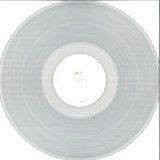
cLOUDDEAD's debut album, compiling six 10" EPs that appeared between 2000-2001, is aurally dense and obscured. A sprawling mass of miniature beat-suites and Dadaist lyrics, this strange and beautiful 3xLP would influence a myriad of sub-genres (cloud rap, hauntology, lo-fi hip-hop, etc.) in the two decades since its initial release.
Only the three members of cLOUDDEAD – Why?, Doseone and Odd Nosdam – can speak to the group's origins, but in the context of underground hip-hop towards the end of the 20th century, their arrival makes perfect sense. Cincinnati had a vital scene; home to Scribble Jam, an annual confluence of MCs, DJs, B-boys and graffiti artists. While the trio soon relocated to the Bay Area where they co-founded the Anticon collective, their Midwestern roots – in ramshackle basements of off-campus hovels, as the "cerberus of Southern Ohio" – would remain the atomic heart of their early recordings.
As Chris Martins writes in the liner notes, "The only reason we know their names today is because of how loudly and curiously they aired their insularity. They rewrote the entire world as they knew it through their own fucked perspective, and when those mysterious 10-inches started popping up in record shops, it wasn't just a puzzle to investigate: there seemed to be a whole cosmology hidden in those grooves."
Each side of the album represents one of those elusive 10-inches, each embodying a universe unto itself. Opening salvo "Apt. A" and "And All You Can Do Is Laugh" are perhaps most emblematic of the cLOUDDEAD experience. Why? and Dose create a new language through boundless non-sequiturs, sing-song non-choruses and call-and-response hooks, while Nosdam's dexterous production shifts from crackling ambience of Flying Saucer Attack to tight Ohio Players drum breaks and oblique film samples.
Taken all together, cLOUDDEAD is an original interpretation of hip-hop in the surreal Y2K glow – a bizarre meeting point between William Basinski's Disintegration Loops and MF DOOM's Operation: Doomsday. All it took was a Dr. Sample SP-202, Tascam cassette eight-track and cheap RadioShack mic. There's truly nothing like it.
This edition has been faithfully restored by Nosdam. European exclusive version comes on clear vinyl, incl. fold-out poster and liner notes insert.
Haga su pedido ahora y le encargaremos el artículo en nuestro proveedor.

Roberto Cacciapaglia is an Italian composer and pianist who started out in the fertile Milan avant-garde scene of the 1970s, which included Franco Battiato, Giusto Pio, Lino Capra Vaccina, Francesco Messina, among others. After studying at the conservatory, he worked at RAI's Studio of Musical Phonology – an electronic music laboratory similar to NDR/WDR in Germany, GRM/IRCAM in France or BBC Radiophonic Workshop.
Originally released in 1979, Sei Note In Logica (Six Notes In Logic) is Cacciapaglia's second album. While his debut, Sonanze, offers a series of ambient mini-soundtracks, Sei Note presents a singular, sinuous piece. The composition is based on a finite set of musical notes, yet this limitation is the point of departure for a grand tour of possible combinations and enthralling timbres (marimbas, strings, reeds and human voice).
Like Steve Reich's Music For 18 Musicians, the joyous experiment of Sei Note is grounded in constant variation. Often doubled by multiple instruments, non-repeating patterns are exquisitely layered, while electro-acoustic signals transform and further refract through visceral effects. Within this conceptual framework, Cacciapaglia does not so much juxtapose rigid dichotomies – acoustic vs. electronic, melodic vs. dissonant, simple vs. complex – as fuse them into an expansive whole.
What started as an inspired study in Minimalism becomes a bold feat of 20th century music. Sei Note In Logica is deeply sincere and, at the same time, quite playful. With one foot firmly planted in the past and the other steeped in technology, Cacciapaglia's influence can be heard in the work of Jim O'Rourke, Fennesz and Ben Vida.
debe ser publicado en 29.11.2024

Color Vinyl[27,52 €]
Originally released in 1996 as a limited fan-club pressing for Rockathon, Guided By Voices’ Tonics And Twisted Chasers has always existed as an anomaly in Robert Pollard’s vast discography. In many ways, the album serves as the tail of a creative comet that in just two years included the “classic line-up” trilogy of Bee Thousand, Alien Lanes, Under the Bushes, Under the Stars and countless singles that crammed endless hooks in their grooves. In the intervening space, Tonics And Twisted Chasers has taken on a mythic status. It’s arguably Pollard’s strangest, gnarliest, most enlightened record and also the fans first chance to see the stitches that bind his galaxy of songs. It’s like peering at the caliber inside a watch, responsible for making the whole enterprise tick. This nineteen-song collaboration with guitarist Tobin Sprout could be interpreted as spontaneous sketches, late-night improvisations, ideas that blossomed later in the timeline (“Knock ’Em Flyin’” and “Key Losers”), but as with anything in Pollard’s orbit, its intention is clear when heard as a cohesive whole. The Pollard tenet that “less is more” is on full display here. The songs rarely creep past ninety seconds and coalesce much like Pollard’s collage-styled visual art. Arena anthems in miniature (“158 Years Of Beautiful Sex”) bash up against eerie piano laments (“Universal Nurse Finger”) without any time to breathe, acoustic lullabies that sound like a Midwestern summer’s twilight (“Look It’s Baseball”) segue into monochromatic post-rock (“Maxwell Jump”). The euphoric joy and obtuse melancholy in Pollard’s voice is so palpable on the album’s standout, “Dayton, Ohio 19 Something & 5” (which has since become a live staple), that it’s impossible to find a more autobiographical yarn in his catalog. The album’s closest analog is 1993’s Vampire On Titus, as it contains that album’s prickly, dark and shimmering obfuscation that only reveals its beauty after repeated listens. Tonics And Twisted Chasers maintains the lore because the melodies are so strong. Using a primitive drum machine, Radio Shack effects, minimal instrumentation and the DIY spirit that guided them in the first place, Pollard and Sprout constructed a masterpiece of pop that could only come from a basement in north Dayton, Ohio. Anyone in that hallowed era who happened upon it, kept it as a secret.
debe ser publicado en 23.08.2024

Black Vinyl[27,69 €]
Originally released in 1996 as a limited fan-club pressing for Rockathon, Guided By Voices’ Tonics And Twisted Chasers has always existed as an anomaly in Robert Pollard’s vast discography. In many ways, the album serves as the tail of a creative comet that in just two years included the “classic line-up” trilogy of Bee Thousand, Alien Lanes, Under the Bushes, Under the Stars and countless singles that crammed endless hooks in their grooves. In the intervening space, Tonics And Twisted Chasers has taken on a mythic status. It’s arguably Pollard’s strangest, gnarliest, most enlightened record and also the fans first chance to see the stitches that bind his galaxy of songs. It’s like peering at the caliber inside a watch, responsible for making the whole enterprise tick. This nineteen-song collaboration with guitarist Tobin Sprout could be interpreted as spontaneous sketches, late-night improvisations, ideas that blossomed later in the timeline (“Knock ’Em Flyin’” and “Key Losers”), but as with anything in Pollard’s orbit, its intention is clear when heard as a cohesive whole. The Pollard tenet that “less is more” is on full display here. The songs rarely creep past ninety seconds and coalesce much like Pollard’s collage-styled visual art. Arena anthems in miniature (“158 Years Of Beautiful Sex”) bash up against eerie piano laments (“Universal Nurse Finger”) without any time to breathe, acoustic lullabies that sound like a Midwestern summer’s twilight (“Look It’s Baseball”) segue into monochromatic post-rock (“Maxwell Jump”). The euphoric joy and obtuse melancholy in Pollard’s voice is so palpable on the album’s standout, “Dayton, Ohio 19 Something & 5” (which has since become a live staple), that it’s impossible to find a more autobiographical yarn in his catalog. The album’s closest analog is 1993’s Vampire On Titus, as it contains that album’s prickly, dark and shimmering obfuscation that only reveals its beauty after repeated listens. Tonics And Twisted Chasers maintains the lore because the melodies are so strong. Using a primitive drum machine, Radio Shack effects, minimal instrumentation and the DIY spirit that guided them in the first place, Pollard and Sprout constructed a masterpiece of pop that could only come from a basement in north Dayton, Ohio. Anyone in that hallowed era who happened upon it, kept it as a secret.
debe ser publicado en 23.08.2024

Haga su pedido ahora y le encargaremos el artículo en nuestro proveedor.

Repress!
** Now available on vinyl* Steve Reich remains one of the most important figures in
20th century music. Though he studied at the prestigious
arts institutions Julliard and Mills College, by the mid-
1960s Reich set about dismantling the very orthodoxy that
he had been trained in. Forming a new musical language
based on repetitive processes, Reich became established
as part of the so-called 'Big Four' of New York minimalists
(along with La Monte Young, Terry Riley and Philip
Glass). Reich's influence can easily be seen today in both
the classical world and contemporary pop music.
'Four Organs' is the ultimate minimalist composition.
Performed by Reich, Glass, Art Murphy and Steve Chambers,
four identical Farfisa organs strike a single chord and
gradually lengthen each note to produce polyrhythms between
the players. Anchored by Jon Gibson's stoicallysteady
pulse on maracas, the piece deconstructs its opening
burst to a sustained mass of sound - stretching the tones to
create (in Reich's words) 'slow-motion music.'
Inspired by Reich's early training on drums, 'Phase Patterns'
treats the keyboards like tuned percussion instruments:
a basic rhythm pattern is played in unison and almost imperceptibly increases tempo to move out-of-sync.
Each progressive cycle emphasizes unique figures that are
not generated by an individual alone, but rather emerge
from the communal expression of the group.
Originally released on Shandar in 1971, Four Organs /
Phase Patterns is one of most highly regarded avant-garde
recordings in the past 45 years. This CD release features
cover photography by artist Michael Snow and is recommended
for fans of Neu!, Glenn Branca and Tim Hecker.
debe ser publicado en 12.07.2024

Steve Reich remains one of the most important figures in 20th century music. As part of the so-called "Big Four" of New York minimalists (along with La Monte Young, Terry Riley and Philip Glass), Reich influenced both the classical world and contemporary pop music.
Back in print ! Steve Reich remains one of the most important figures in 20th century music. Though he studied at the prestigious arts institutions Julliard and Mills College, by the mid-1960s Reich set about dismantling the very orthodoxy that he had been trained in. Forming a new musical language based on repetitive processes, Reich became established as part of the so-called "Big Four" of New York minimalists (along with La Monte Young, Terry Riley and Philip Glass). Reich's influence can easily be seen today in both the classical world and contemporary pop music."Four Organs" is the ultimate minimalist composition. Performed by Reich, Glass, Art Murphy and Steve Chambers, four identical Farfisa organs strike a single chord and gradually lengthen each note to produce polyrhythms between the players. Anchored by Jon Gibson's stoically-steady pulse on maracas, the piece deconstructs its opening burst to a sustained mass of sound – stretching the tones to create (in Reich's words) "slow-motion music."
Inspired by Reich's early training on drums, "Phase Patterns" treats the keyboards like tuned percussion instruments: a basic rhythm pattern is played in unison and almost imperceptibly increases tempo to move out-of-sync. Each progressive cycle emphasizes unique figures that are not generated by an individual alone, but rather emerge from the communal expression of the group. Originally released on Shandar in 1971, Four Organs / Phase Patterns is one of the most highly regarded avant-garde recordings of the past 50 years. This first-time vinyl reissue features cover photography by artist Michael Snow and is recommended for fans of Neu!, Glenn Branca and Tim Hecker.
debe ser publicado en 10.07.2024

The first signee to Conway The Machine’s Drumwork Music Group imprint, Jae Skeese helped usher in Drumwork’s 2023 Spring Takeover with his collaborative project with Conway, Pain Provided Profit, the labels first compilation album, Conway The Machine Presents: Drumwork The Album and Skeese’s own Drumwork debut album Abolished Uncertainties.
After releasing focus tracks “Skyscrapers” & “Cantonese Characters” featuring Rome Streetz and Ty Farris, Jae Skeese and Superior have officially released their new collaborative project Testament Of The Times.
Testament Of The Times is produced in its entirety by Superior and features guest appearances from Rome Streetz, OT The Real, Ty Farris and Kota Savia.
“Testament Of The Times is an encapsulation of my current plight in striving to carve out my own unique space in hip-hop; starting from ground level” Jae Skeese testifies. “Anyone that has accomplished anything had a starting point, and different things motivate individuals to push forward. I want to be the voice that helps guide people through the “figuring it out stages” by letting them know they are not alone; sometimes that’s all the reassurance you need to make it to the finish line.”
debe ser publicado en 05.07.2024
2024 Repress
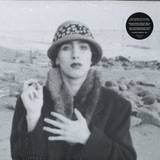
Niandra LaDes And Usually Just A T-Shirt is the first solo record by John Frusciante. Between 1990 and 1992 the guitarist made a series of 4-track recordings, which at the time were not intended for commercial release. After leaving the band Red Hot Chili Peppers in 1992, Frusciante was encouraged by friends to release the material that he wrote in his spare time during the Blood Sugar Sex Magik sessions.
Originally released on Rick Rubin's American Recordings label in 1994, Niandra LaDes is a mystifying work of tortured beauty. Frusciante plays various acoustic and electric guitars, experimenting with layers of vocals, piano and reverse tape effects. Channeling the ghosts of Syd Barrett and Skip Spence, his lyrics are at once utterly personal and willfully opaque.
Frusciante's rapidfire, angular playing shows how key he was in the Chili Peppers' evolution away from their funk-rock roots. His cover of "Big Takeover" perfectly deconstructs the Bad Brains original with laid-back tempo, twelve-string guitar and a fierce handle on melody.
The album's second part - thirteen untitled tracks that Frusciante defines as one complete piece, Usually Just A T-Shirt - contains several instrumentals featuring his signature guitar style. Sparse phrasing, delicate counterpoint and ethereal textures recall Neu/Harmonia's Michael Rother or The Durutti Column's Vini Reilly.
On the front cover, Frusciante appears in 1920s drag - a nod to Marcel Duchamp's alter-ego Rrose Sélavy - which comes from Toni Oswald's film Desert in the Shape.
This first-time vinyl release has been carefully remastered and approved by the artist. The double LP set is packaged with gatefold jacket and printed inner sleeves.
Haga su pedido ahora y le encargaremos el artículo en nuestro proveedor.

Given The Fall's penchant for iconoclasm, it's no surprise that they decided to say goodbye to the '70s with a series of gigs at Northern England's gruffest halls. The band's formidable live show was met with even more derision and disorder than customary during these late '79 and early '80 performances, and they skillfully amplified such sentiments back at the crowd. Totale's Turns, The Fall's first live album, was released on Rough Trade just prior to their pivotal third album, 1980's Grotesque. "The difference between you and us is that we have brains," shouts Mark E. Smith to open Totale's Turns as the band breaks into the rollicking "Fiery Jack," their latest single at the time. Each player is at their jagged best: Marc Riley and Craig Scanlon's splintering guitars, Steve Hanley's thunderous bass and Smith's combative sneer reverberate over "Rowche Rumble," "Choc-Stock" and "Spectre Vs. Rector" more than any studio would ever allow. Totale's Turns never panders to live-record conventions, serving instead as a gripping exhibit of The Fall en masse and arguably the most accurate document of the group to date. Superior Viaduct's edition is the first time that Totale's Turns has been available on vinyl domestically. Liner notes by Brian Turner.
debe ser publicado en 01.07.2024

“Joe McPhee’s first international release, Black Magic Man, was issued on the newly formed Hat Hut imprint in 1975. It was a watershed moment for the 35-year-old musician. Based in Poughkeepsie, New York, he was too far away from Manhattan to have participated extensively in the Loft Jazz happenings of the decade. European exposure, however, would give McPhee an alternative circuit, something of an escape route from the trappings of American cultural myopia. “In support of the new record for this Swiss label, McPhee invited John Snyder on a European tour in October 1975. Snyder was a synthesizer player with whom McPhee had made the duet LP Pieces Of Light, released a year earlier on CjR. The two musicians developed an extensive repertoire, playing diverse spaces in the Hudson Valley. Geographically close gigs were a plus, since it took extra energy to hoist Snyder’s ARP 2600. “McPhee and Snyder were invited to play at the Willisau Jazz Festival in Switzerland. If you compare this live record with Pieces Of Light, a studio effort, it’s considerably more open. South African drummer Makaya Ntshoko is rolling thunder on the choral ‘Voices,’ shuffling under Snyder’s bubbly beat on ‘Bahamian Folksong.’ It is quite a special combination, enough so that Hat Hut chose to release it as their next LP, Hat Hut B in their alphabetical series. The Willisau Concert represents the sound of Joe McPhee opening up, opening out, expanding his field of operations to include new figures, fresh experiences, new continents of sound.” —John Corbett (excerpt from the liner notes)
debe ser publicado en 30.06.2024

“Black Magic Man is arguably the pivotal Joe McPhee release. It bridged the span between the regional and the international, bypassing the national altogether. “Recorded in the same sessions that produced Nation Time, Black Magic Man consists of music not chosen for that LP. Like its much-feted sister, technically it falls under the domain of CjR, Craig Johnson’s herculean effort in support of McPhee. An erstwhile painter, Johnson became a self-taught audio engineer, acquiring equipment expressly to document McPhee’s music. In December 1970, five years after Johnson and McPhee had met, they recorded two days of activity —a concert followed by an additional day of recordings—at Vassar College where McPhee was teaching in the Black Studies department. About half of the material was used to make Nation Time. While they had planned to issue a follow-up, the money wasn’t there, so the tapes sat dormant. “Fast-forward five years—Werner X. Uehlinger, a Swiss businessman who worked for Sandoz Pharmaceuticals, contacted Johnson while on a trip to the US, and over dinner with McPhee, they discussed putting out some of the unused tracks from the Nation Time sessions. With this casual encounter in 1975, Hat Hut Records was inaugurated. The new label’s maiden release was Black Magic Man, dubbed Hat Hut A, the first in what would become Hat Hut’s letter series. Along the way, the series would feature seven Joe McPhee records, including the first four in a row.” —John Corbett (excerpt from the liner notes)
debe ser publicado en 28.06.2024

“There are lots of outstanding Joe McPhee LPs. Nation Time being chief among them, but there’s also Pieces Of Light, Oleo and Topology. The Poughkeepsie, New York-based multi-instrumentalist, by now an international star of free music, has amassed a daunting discography, no doubt. If you want to peer deeply into the soul of Joe McPhee, however, there’s no way around it, you need to spend some quality time with Tenor. “Tenor is McPhee’s first solo record. He did not set out to make it. It was an afterthought, quite literally, born of a gathering of friends at the Swiss farmhouse of cellist Michael Overhage. A beautiful meal, some drinks, warm conversation, and ... why not, an impromptu recital. Hat Hut producer Werner X. Uehlinger was there and a year later issued it as McPhee’s third LP for the label (Hat Hut C in their famed letter series). “The existential blues ‘Knox’ sets the stage, indicating that this will not just be a toss-off postprandial singalong. ‘Good-Bye Tom B.’ carries on with aching melancholy, through burred notes and hushed harmonics. The relatively jaunty ‘Sweet Dragon’ is also emotionally loaded with Ayler-esque vibrato, slurs, wipes, and blasts of tone. The side-long title track comes without a theme, as a kind of pure investigation of the horn, its potential, its limits, its expressive capacity. There have been few solo sessions as comprehensive and devastating as this spontaneous after-dinner diversion in rural Switzerland in 1976. We’re very lucky someone pressed record.” —John Corbett (excerpt from the liner notes)
debe ser publicado en 28.06.2024

Der Vinyl Set Holder Superior nimmt 25 LPs auf und ist ein richtig solider Luxus LP-Halter aus massivem Metall - einfach ein formschöner Einrichtungsgegenstand für den Vinylfreund. Die schönste Lösung um seine Lieblingsplatten in Szene zu setzen.
Features
für bis zu 25 Schallplatten
massives Metall
einfache Montage
Technische Daten
Inkl. Befestigungszubehör
Lieferung ohne Dekoration
The Vinyl Set Holder accommodates 25 LPs and is a real solid luxury record holder made of solid metal - simply a shapely fitment for all vinyl lovers. The most beautiful solution for presenting one''s records.
Technical Data
Incl. fixing accessories
Features
Holds up to 25 records
Solid metal
Easy assembly
Haga su pedido ahora y le encargaremos el artículo en nuestro proveedor.

Black Vinyl[25,42 €]
2024 REPRESS
To understand the significance of the word 'featuring' on Featuring Pharoah Sanders And Black Harold, consider how infrequently Sun Ra used it and the exact way it had been used. The October Revolution in Jazz, organized by Bill Dixon in the West Village in 1964, presented a vivid cross section of approaches to the new music, including a sextet led by Ra. For the October Revolution's continuation, titled Four Days in December, held at nearby Judson Hall on the last days of 1964, the Arkestra performance presented Pharoah Sanders as well as a flautist (who was and remained obscure thereafter) named Harold Murray, nicknamed Black Harold. It wasn't until long after Sanders had achieved worldwide acclaim with John Coltrane that Ra and manager Alton Abraham decided to issue the music they'd recorded at Judson Hall. After its first release in plain or handdecorated covers in 1976, Featuring Pharoah Sanders And Black Harold remained an exceptionally rare item in the El Saturn discography, known to a few lucky collectors. We're lucky to have this glimpse of what Sanders sounded like in such a different context, galvanizing the large group and in turn being inspired to make his first significant contribution on record.' —John Corbett (excerpt from the liner notes)
Haga su pedido ahora y le encargaremos el artículo en nuestro proveedor.

To understand the significance of the word 'featuring' on Featuring Pharoah Sanders And Black Harold, consider how infrequently Sun Ra used it and the exact way it had been used. The October Revolution in Jazz, organized by Bill Dixon in the West Village in 1964, presented a vivid cross section of approaches to the new music, including a sextet led by Ra. For the October Revolution's continuation, titled Four Days in December, held at nearby Judson Hall on the last days of 1964, the Arkestra performance presented Pharoah Sanders as well as a flautist (who was and remained obscure thereafter) named Harold Murray, nicknamed Black Harold. It wasn't until long after Sanders had achieved worldwide acclaim with John Coltrane that Ra and manager Alton Abraham decided to issue the music they'd recorded at Judson Hall. After its first release in plain or handdecorated covers in 1976, Featuring Pharoah Sanders And Black Harold remained an exceptionally rare item in the El Saturn discography, known to a few lucky collectors. We're lucky to have this glimpse of what Sanders sounded like in such a different context, galvanizing the large group and in turn being inspired to make his first significant contribution on record.' —John Corbett (excerpt from the liner notes)
debe ser publicado en 19.04.2024
