Suche:superior

Styles
Alle
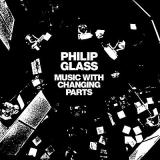
Philip Glass - Music With Changing Parts LP 2x12"

Philip Glass, the great American composer, was already in his mid-30s before his first album appeared, and then only because he produced the double LP himself. Music With Changing Parts was the inaugural release on his own Chatham Square imprint in 1971.

At this point, Einstein on the Beach, Glass' first opera, was still five years away. Yet in Changing Parts, one can already hear much of his vocabulary in full bloom: the buoyant arpeggios, the melding of electronic and acoustic instruments, the elongated drones of human voice, the primary emphasis on pulse (an interest he shared with fellow composer Steve Reich) and the ecstatic potential inherent in repetition.

The album features the original Philip Glass Ensemble – the composer himself, along with Jon Gibson, Dickie Landry, Art Murphy, Steve Chambers and Robert Prado – playing Farfisa organs and woodwinds as well as Barbara Benary on electric violin.

As Glass describes in his memoir Words Without Music, he secured a $500 interest-free loan for the recordings' initial release from the Hebrew Free Loan Society – an organization intended to help immigrants from the Old World upon arrival in the US. Though Glass was merely the grandson of immigrants, the venture wasn't far off the society's charter as Changing Parts helped usher in a new world of sound that would become known as Minimalism.

Chatham Square went on to release albums by other composers in Glass' circle, including Gibson and Landry. The label was named after the Manhattan intersection where Landry had a studio and the ensemble rehearsed.

Born in Baltimore in 1937, Glass first moved to New York to attend Juilliard at just nineteen, having already graduated from the University of Chicago. A staple of the Downtown scene, he can perhaps be appreciated as akin to the likes of sculptor Richard Serra or filmmaker Jim Jarmusch: mavericks who became major cultural figures entirely on their own terms.

This first-time vinyl reissue reproduces the original side-breaks and gatefold sleeve.

vorbestellen29.05.2026

erscheint voraussichtlich am 29.05.2026

35,92
Sonic Youth - Hold That Tiger LP 2x12"

In October 1987, four months after the release of their critically acclaimed Sister LP, Sonic Youth showcased their latest work in a blistering set at Cabaret Metro, Chicago. The concert was introduced by Big Black's Steve Albini (who at the time was banned from the venue) and subsequently released as a semi-official bootleg under the title Hold That Tiger on writer/provocateur Byron Coley's impishly Geffen-baiting label Goofin' (years later the band would use this nom de guerre for their own imprint).

Hold That Tiger's sterling reputation among the Sonic Youth faithful is well deserved. In fact, it isn't a stretch to suggest that the album is to the first handful of SY releases what It's Alive is to the first three Ramones LPs – a feral and liberatory public snapshot of a band's blossoming imperial phase. Indeed, HTT is the sound of a group at the peak of their powers, presenting new songs alongside a handful of older ones with the kind of wild, cathartic enthusiasm common to rock 'n' roll's most revered live albums.

Taking nothing away from Sister – inarguably one of indie rock's first true masterpieces – it is reasonable that many fans prefer the live versions heard on Hold That Tiger to their studio counterparts. On HTT, Sonic Youth is a spiky, pummeling and confident force, alternately mammoth and meditative. Sister and its predecessor EVOL notably added an airy, dreamlike reverie to the band's turbulent doom-lurch, a stylistic evolution that seems to crystallize on HTT. Throughout, Kim Gordon's sinewy, sumptuous bass and Steve Shelley's propulsive, tom-heavy percussion provide the bedrock groove for Thurston Moore and Lee Ranaldo's ferocious barrages of noise-guitar crunch.

By 1987, the band was confidently articulating their dual lexicon of punk-noir dissonance and supernal, psychedelic sonic calligraphy – bending their jagged, streetwise gnarl into balloon animals of dazzling and beautiful songs. This collision of splendor and chaos would become a hallmark of the group's singular alchemy as well as provide a blueprint for the post-SST American underground they would help invent and ultimately nurture.

Hold That Tiger's encore – four songs by the band's beloved Ramones, which Thurston would later astutely compare to "the perfect pudding after a hearty meal" – serves as a reminder that, like any true punks, Sonic Youth never could resist a good, rousing anthem to send the kids home with their ears ringing, their hearts hot-wired.

This first-time reissue with speed-corrected master comes in a gatefold tip-on jacket. Mastered by Bob Weston from the original tapes. Recorded by Aadam Jacobs. Audio repair/editing by Aaron Mullan.

Auf Lager

Bei uns am Lager und sofort versandfertig

26,01
SPACEMEN 3 - DREAMWEAPON LP 2x12"

Quality Gatefold sleeve.. absolute classic. TIP!

August 1988, Spacemen 3 embark on one of the strangest events in the band's already strange history. Billed as "An Evening Of Contemporary Sitar Music" (although consciously omitting the sitar), the group would play in the foyer of Watermans Arts Centre in Brentford, Middlesex to a largely unsuspecting and unsympathetic audience waiting to take their seats for Wim Wenders' film Wings of Desire. Spacemen 3's proceeding set, forty-five minutes of repetitive drone-like guitar riffs, could be seen as the "Sweet Sister Ray" of '80s Britain. Their signature sound is at once recognizable and disorienting – pointing as much to the hypnotic minimalism of La Monte Young as to a future shoegaze constituency. On this double LP reissue, Dreamweapon is augmented by studio sessions and rehearsal tapes from 1987 that would lead up to the recording of Spacemen 3's classic Playing With Fire album. "Spacemen Jam," featuring Sonic Boom and Jason Pierce on dual guitar, is a side-long mediation on delicate textures and psychedelic effects. Includes download card and new insert with liner notes by Will Carruthers.

Auf Lager

Bei uns am Lager und sofort versandfertig

21,43
La Monte Young / Marian Zazeela - 31 VII 69 10:26 - 10:49 PM / 23 VIII 64 2:50:45 - 3:11 AM The Volga Delta Superior Viaduct

La Monte Young was a primary influence on Minimalism, the Fluxus movement and performance art through his legendary compositions of extended time durations and the development of just intonation and rational number based tuning systems. With wife and collaborator, artist Marian Zazeela, they would formulate the composite sound environments of the Dream House. Seeing reissue for the first time since its initial 1969 release, Young and Zazeela's first full-length album is often referred to as »The Black Record« due to Zazeela's stunning cover design, complete with the composer's liner notes in elegant hand-lettered script.

Auf Lager

Bei uns am Lager und sofort versandfertig

25,63
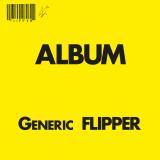
Flipper - Generic Flipper

Generic Flipper, the debut album by Flipper, remains the most absorbing full-length LP to emerge from the early San Francisco punk scene. A constant source of imitation for so-called "noise rock" bands, it has yet to be surpassed in its nihilistic glee.

Recorded between October 1980 and August 1981 and released in 1982 on the indispensable Subterranean Records, this album functions as a chaotic, sticky mass of individual personalities: the magma-like bass eruptions and dual vocals of Will Shatter and Bruce Loose, Ted Falconi's icy guitar scraping and the relentless beat of drummer Steve DePace. At times playful and taciturn, paranoid and absurd, Generic charts a deliberate path that willfully chances destruction.

In early '80s punk, when the hardening default was "faster-shorter-louder," Generic subverts the nascent hardcore scene with a strictly applied regimen of turgid-slower-heavier. The lyrics are bleak, yet unnervingly beautiful. "Ever" sets the tone with trademark restraint – "Ever wish the human race didn't exist? And then realize you're one too?" – while closer "Sex Bomb" is a churning, 8-minute epic with looping bass, saxophone accompaniment and electronic effects of dropping bombs.

Tons of indie bands have attempted to recreate Flipper's mix of acidic guitar, metallic bass sludge and sardonically brilliant lyricism, using the seemingly effortless template they pioneered; however, the effect usually drives listeners right back to Generic. While most of their contemporaries wilt under direct comparison, No Trend, the Butthole Surfers, feedtime and Church Police are a few who can stand the frigid heat.

nicht am Lager

Bestelle jetzt und wir bestellen den Artikel für dich beim Lieferanten.

26,47

Last In: vor 11 Tagen
Luciano Cilio - Dialoghi Del Presente

Luciano Cilio was born in Naples, Italy, in 1950. He studied music and architecture and, in the late '60s, collaborated with local artist Alan Sorrenti, American expat Shawn Phillips and various avant-garde theater groups. A virtuoso guitarist and self-taught composer, Cilio released only one LP before his untimely death at the age of 33.

Dialoghi Del Presente (1977) is a work like no other, one that sounds both ancient and ahead of its time. Produced by Renato Marengo, it features a series of muted tableaux for strings, woodwinds, guitar, chorus, piano and percussion. Cilio carves out a space where subtle, repetitive phrases yield – almost imperceptibly – to breathtaking silence.

As Jim O'Rourke writes, "These recordings sound as if they were to please no one but himself; they feel self-contained, introspective, and determined ... You can feel in the music a sort of necessity that can be rarely found, like in This Heat's debut or Nick Drake's Pink Moon."

While each subsequent "quadro" grows slightly more abstract, Cilio draws the listener into an expansive, pastoral soundscape. The closing piece, "Interludio," begins with a plaintive guitar, which is joined by haunting strings and woodwinds before concluding, poignantly, as the album began, with Cilio and his guitar, alone once more.

Superior Viaduct's edition reproduces the original sleeve design. Recommended for fans of Johann Johannsson, Talk Talk's Spirit of Eden, Arvo Part and Popol Vuh.

vorbestellen06.03.2026

erscheint voraussichtlich am 06.03.2026

26,47
Noah Howard - The Black Ark

In the pantheon of classic free jazz, Noah Howard's The Black Ark looms large. Recorded at Bell Sound Studios in New York City in 1969 – just prior to the alto saxophonist's relocation to Europe – the album was eventually released in 1972.

The Black Ark exhibits not only the power and imagination of Howard's playing, but also his breadth as a composer and bandleader. Listeners expecting unrelenting blasts of "energy music" might be surprised to find a cohesion atypical of free jazz; amidst the wild, impassioned solos, Howard weaves in Latin rhythms and fat-bottomed grooves.

The first side, consisting of "Domiabra" and “Ole Negro,” sets the album's tone. Both tracks sound as if they could have appeared on some of Blue Note's proto-spiritual jazz, groove-heavy releases – evoking the likes of Lou Donaldson or Horace Silver – before ceding the floor to the horn players' anarchic firepower.

As John Corbett writes in the liner notes, "Two players stand out. Bassist Norris Jones – who would soon consolidate his name into a one-word reversed amalgamation/permutation of the two, Sirone – is given ample room, largely unaccompanied; his corporal approach foreshadows later work with the Revolutionary Ensemble. But the secret weapon on The Black Ark is Arthur Doyle. Straight from basement rehearsal sessions with Milford Graves, whose ensemble he had joined and who remained a favorite of the drummer for decades, Doyle is a human flamethrower."

Trumpeter Earl Cross' guttural, vocal effects complement Doyle's take-no-prisoners approach, while the estimable combination of Muhammad Ali (Rashied's brother) on drums and Juma Sultan on congas adds an ever-shifting propulsion. The septet is rounded out by the enigmatic pianist Leslie Waldron, who anchors the group with imaginative accompaniment and occasional boppish flourishes.

Every bit worthy of its reputation as an "out-jazz" holy grail, The Black Ark only sounds better with age. It remains the ideal record to convert the remaining free-jazz skeptics.

vorbestellen06.03.2026

erscheint voraussichtlich am 06.03.2026

26,47
Julius Hemphill - Dogon A.D.

Julius Hemphill's debut record, 1972's Dogon A.D., was self-produced for his Mbari imprint, and it was issued with a beautiful black-and-white cover. Very DIY. The label's name writ large along the bottom edge, like it was the band's name. It's a quartet record featuring Hemphill on alto and flute, with Baikida Carroll on trumpet, Abdul Wadud on cello, and Phillip Wilson on drums – a classic jazz front line/rhythm section format, but nothing conventional about the way the music sounds.

The long track – from where the LP takes its title – is one of the key epic statements of new jazz in the era. Among its remarkable distinctions, it manages to draw on Wilson's schizoid experience having been a member of the Paul Butterfield Blues Band and the first drummer for the Art Ensemble of Chicago, in making an 11/8 rhythm into a staggeringly funky thing of joy. Over the course of fourteen and a half minutes, Hemphill builds a nearly continuous solo, his spiritual blood brother Wadud sawing the cello with a deep blues soulfulness that is raw and mantra-like in its repetitive incantation. It feels right and wrong in equal measure, the theme carrying its own piquancy with honked barnyard dissonances and some contrary motion between the horns and string. Most of all, it takes its own sweet time, in no hurry to get anywhere in particular, but out for a righteous stroll. – John Corbett (excerpt from the liner notes)

vorbestellen06.03.2026

erscheint voraussichtlich am 06.03.2026

26,47
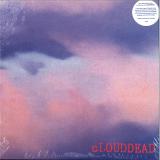
cLOUDDEAD - cLOUDDEAD LP 3x12"

cLOUDDEAD

cLOUDDEAD LP 3x12"

3x12inchSV200LP-US
SUPERIOR VIADUCT
18.02.2026

cLOUDDEAD's debut album, compiling six 10" EPs that appeared between 2000-2001, is aurally dense and obscured. A sprawling mass of miniature beat-suites and Dadaist lyrics, this strange and beautiful 3xLP would influence a myriad of sub-genres (cloud rap, hauntology, lo-fi hip-hop, etc.) in the two decades since its initial release.

Only the three members of cLOUDDEAD – Why?, Doseone and Odd Nosdam – can speak to the group's origins, but in the context of underground hip-hop towards the end of the 20th century, their arrival makes perfect sense. Cincinnati had a vital scene; home to Scribble Jam, an annual confluence of MCs, DJs, B-boys and graffiti artists. While the trio soon relocated to the Bay Area where they co-founded the Anticon collective, their Midwestern roots – in ramshackle basements of off-campus hovels, as the "cerberus of Southern Ohio" – would remain the atomic heart of their early recordings.

As Chris Martins writes in the liner notes, "The only reason we know their names today is because of how loudly and curiously they aired their insularity. They rewrote the entire world as they knew it through their own fucked perspective, and when those mysterious 10-inches started popping up in record shops, it wasn't just a puzzle to investigate: there seemed to be a whole cosmology hidden in those grooves."

Each side of the album represents one of those elusive 10-inches, each embodying a universe unto itself. Opening salvo "Apt. A" and "And All You Can Do Is Laugh" are perhaps most emblematic of the cLOUDDEAD experience. Why? and Dose create a new language through boundless non-sequiturs, sing-song non-choruses and call-and-response hooks, while Nosdam's dexterous production shifts from crackling ambience of Flying Saucer Attack to tight Ohio Players drum breaks and oblique film samples.

Taken all together, cLOUDDEAD is an original interpretation of hip-hop in the surreal Y2K glow – a bizarre meeting point between William Basinski's Disintegration Loops and MF DOOM's Operation: Doomsday. All it took was a Dr. Sample SP-202, Tascam cassette eight-track and cheap RadioShack mic. There's truly nothing like it.

This edition has been faithfully restored by Nosdam. European exclusive version comes on clear vinyl, incl. fold-out poster and liner notes insert.

nicht am Lager

Bestelle jetzt und wir bestellen den Artikel für dich beim Lieferanten.

44,33

Last In: vor 75 Tagen
Estee Nack & Superior - Baladas LP
  • A1: Sammysosacleancoca (Intro)
  • A2: Tellthetruthandshamethedevil
  • A3: Arockandahardplace (Feat. Eto)
  • A4: Poprockclassics (Feat. Daniel Son)
  • A5: Infiniteblackmind
  • A6: Balladsforthebrilliant (Feat. Ice Lord & Recognize Ali)
  • B1: Mangomarmalade
  • B2: Launchtheboatoffakeywest
  • B3: Wisdom (Feat. Codenine)
  • B4: Plegariaaunsicario (Feat. Ice Lord)
  • B5: Yola

International beat maker Superior is thrilled to announce the release of his collaboration album with Tragic Allies emcee Estee Nack, “BALADAS”. The 11 track album combines a satisfying mixture of grimy and melodic elements and features guest appearances by Eto, Daniel Son, Codenine, Recognize Ali and Ice Lord. Superior is a producer based out of Germany. Having loved Hip Hop for as long as he can remember, he decided to pursue his passion of becoming a DJ and producer at a young age. Superior released his first official project in 2015. While he’s previously worked with Verbal Kent and Eto, he is now adding Estee Nack to his resume. The Tragic Allies emcee hails from Lynn, Massachusetts, is a significant contributor to the elite non-commercial scene, and was recently featured on Westside Gunn’s HWH7 album.

vorbestellen28.11.2025

erscheint voraussichtlich am 28.11.2025

30,88
Paris 1942 - Paris 1942 LP 2x12"
  • Paris 1942
  • Hex
  • Headhunter
  • Radar
  • Damon
  • Ancient Time Foretold
  • Animale
  • Move Out Of Wichita
  • Catherine
  • Life Is A Killer
  • Conversation With My Girlfriend
  • Voodoo Blues
  • Pontius Pilate
  • Lions Paw
  • Boy From The North Country
  • Fossil In My Pants
  • What I Think I Mean
  • Lisa's Whip
  • Southwind

Difficult as it may be to imagine, there was a time when Sun City Girls did not exist. Prior to the Bishop brothers teaming up with drummer/shaman Charlie Gocher to form SCG's classic trio lineup, there were various ad-hoc assemblages of local Phoenix-area freaks and weirdos – groups which existed only long enough to play a single gig, open mic or house party before disbanding without a trace. Hatched from this milieu was Paris 1942, a short-lived band formed by guitarist Jesse Srogoncik that included Alan Bishop, Richard Bishop and former Velvet Underground drummer Maureen Tucker.

Paris 1942 would play only four shows in as many months, but between April and August of 1982, the band would gather several times a week in Tucker's living room, where the group feverishly wrote and rehearsed with a kind of quotidian discipline. While P42 didn't release anything during their brief tenure, a 7" EP and LP (both self-titled) surreptitiously surfaced on the Majora label in the mid to late '90s. Until now, those two titles – as well as an appearance on Placebo's Amuck comp in late '82 – would be the only documented evidence that this improbable, serendipitous and magnificent band ever existed.

While those expecting P42's music to sound like a tantalizing combination of Sun City Girls' iconoclastic hoodoo havoc and the Velvets' primal drug-chug certainly won't be disappointed, Paris 1942 more often than not transcends even these nearly impossible expectations. Srogoncik's songs, in particular, are a revelation, displaying as much in common with the exuberant raunch of The Gun Club and the chapbook punk of Peter Laughner as they do any of the more obvious touchstones.

The group's foresight to document and capture this meeting of musical minds – a meeting as unlikely as it was short-lived – provides a missing link between the Velvets and the Voidoids, between the Dead Boys and the Dead C, between ESP-Disk' and DNA. Far more than a historical curiosity, Paris 1942 provides a fresh perspective on an embryonic and sadly vanishing US underground. It is music that blinks at the past and anticipates a thousand possible futures.

– James Toth (excerpt from the liner notes)

vorbestellen31.10.2025

erscheint voraussichtlich am 31.10.2025

31,05
Devo - Hardcore Vol. 1

Devo

Hardcore Vol. 1

12inchSV024LP
SUPERIOR VIADUCT
10.10.2025

DEVO’s Hardcore documents the group’s beginning as pre-punk outcasts in the fertile Akron, Ohio, underground rock scene. Spawned at the nearby college of Kent State, site of the infamous May 4 Massacre, DEVO formed as a conceptual art project armed with the radical philosophy of de-evolution. Brothers Mothersbaugh (Mark, Bob and Jim) and Brothers Casale (Jerry and Bob) along with drummer Alan Myers soon whipped up an otherworldly brand of “devolved blues” that could hold its own alongside the beatnik groove of 15-60-75 (a.k.a. The Numbers Band) or the primal rock poetry of The Bizarros. Recorded on various four-track machines and in tiny studios, basements and garages between 1974-1977, Hardcore reveals their strikingly clear vision: rock ’n’ roll stripped bare of its collective cool and jerked back into propaganda fit for post-modern man. It’s no surprise that these transmissions would soon catch the eye and ear of Brian Eno, who later produced their landmark 1978 debut album. Noisy synth, strangled guitar chops and a primitive rhythmic thud power the early DEVO sound. Threaded beneath it all are lyrical themes of post-McCarthy paranoia, middle-class ephemera and DEVO’s long-running topic of choice: sex, or lack thereof. Few moments in pop music history can match the grinding, pent-up energy of “Mongoloid” and the spastic bounce and sputter of “Jocko Homo” (two anthems presented in their earlier and superior versions here). Cult favorites like “Mechanical Man” and “Auto-Modown” make Volume 1 essential listening. Superior Viaduct and Booji Boy Records are proud to present DEVO’s Hardcore to a new generation of spuds, lovingly packaged with Moshe Brakha’s stunning cover photography. As David Bowie said in 1977, DEVO is indeed “the band of the future.”

vorbestellen10.10.2025

erscheint voraussichtlich am 10.10.2025

22,65
Debris' - Debris'

Debris'

Debris'

12inchSV137LP
SUPERIOR VIADUCT
22.08.2025

Chickasha, Oklahoma is not a place known for producing a lot of original proto-punk bands. In fact, there is, to our knowledge, only one: Debris'. Formed in 1975 by bassist Chuck Ivey, guitarist Oliver "Rectomo" Powers and drummer Johnny Gregg, the trio created some of the most art-damaged outsider rock 'n' roll this side of MX-80 Sound.

When a local studio offered the package deal of ten hours for recording and mixing as well as pressing 1,000 LPs and two-color jackets, Debris' came in well-rehearsed – nailing all eleven of their songs in just one take. In April 1976, the same month as Ramones' debut album, Debris' would release their lone record onto the world.

Opener "One Way Spit" could easily be mistaken for a lost KBD single – from Chuck's bizarre count-in to the band's trashy start-stop rhythms, unfurling a Dadaist flag around Johnny's visceral vocals. On "Tricia," a reference to the then-current Patty Hearst trial, Oliver's gruesome groans are sardonically juxtaposed with an electric saw. These LSD-tinged tunes are a potent mix of Beefheart-ian controlled chaos and the genuinely weird avant-rock associated with the mid-'70s Cleveland scene.

Enhanced by analog synthesizers and electronic effects, the album sounds like Eno-era Roxy Music or Stooges' Fun House buried deep in the red Oklahoma dirt. While punk would spark a handful of bands who boldly straddled the line between the primal and the experimental, the relatively unsung Debris' were one of the first to do so.

Debris' had a standing invitation to play New York at Max's Kansas City and CBGB in 1976, although they never made it out of Oklahoma. The private-press edition of their self-titled album (also known as Static Disposal, which was actually the label name printed on the original front cover) has since become a collector's item and is even namechecked on the infamous NWW list.

vorbestellen22.08.2025

erscheint voraussichtlich am 22.08.2025

26,47
Harold Budd - The Pavilion Of Dreams

For five decades, Harold Budd stood on the forefront of the West Coast avant-garde. Born in Los Angeles, he studied with Schoenberg-pupil Gerald Strang and began teaching at CalArts in 1970. While searching for his own voice, he was influenced as much by abstract expressionist painters as by John Cage and Morton Feldman. In his work, Budd brought delicate, slowing-moving melodies to the foreground – creating a new musical language based on “eternally pretty music” and smooth surfaces.

In the early ’70s, Budd started an extended cycle of compositions that would comprise The Pavilion Of Dreams. For Budd, the album was a signpost for a new direction in thinking about music: “The Pavilion Of Dreams erased my past. I consider that to be the birth of myself as a serious artist. It was like my Magna Carta.”

Produced by Brian Eno in 1978, The Pavilion Of Dreams stands toe-to-toe with another minimalist masterpiece also released that year, Steve Reich’s Music For 18 Musicians. Budd’s gorgeous pieces reveal a lightness of touch that draws the listener in, while sublime voices float in and out as if in a recurring dream. Featuring saxophonist Marion Brown and multi-instrumentalists Gavin Bryars and Michael Nyman, The Pavilion Of Dreams remains a master class in exquisite timbre and shimmering texture.

The Pavilion Of Dreams was both the final release on Eno’s Obscure imprint and a transition point towards his seminal ambient series. This first-time reissue is recommended for fans of Ryuichi Sakamoto, Jon Hassell and Mark Hollis.

nicht am Lager

Bestelle jetzt und wir bestellen den Artikel für dich beim Lieferanten.

27,10

Last In: vor 6 Monaten
Glenn Branca - The Ascension LP

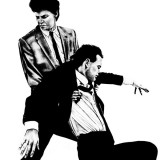
BACK IN PRINT! Glenn Branca’s first full-length album The Ascension is a colossal achievement. After touring much of 1980 with an all-star band featuring four guitarists (Branca, fellow composers Ned Sublette and David Rosenbloom, and future Sonic Youth member Lee Ranaldo) along with Jeffrey Glenn on bass and Stephan Wischerth on drums, Branca took his war-torn group into a studio in Hell’s Kitchen to record five incendiary compositions. Originally released in the summer of 1981, The Ascension effectively tears down the genre-ghettos between 20th century avant-garde and ecstatic rock ’n’ roll. On “The Spectacular Commodity,” chiming, shimmering tones unfold into sinister drone-territory à la Tony Conrad, while abrasive guitars and repetitive beats retain the raw primitivism of No Wave. The title track attains a densely packed, larger-than-life sound and (as author Marc Masters says best) “never stops climbing skyward.” With artist Robert Longo’s stark front cover that depicts Branca battling an unidentified man, The Ascension is a must-have record not only for fans of early Swans and Sonic Youth, but also of Steve Reich or Slint’s Tweez.

vorbestellen08.08.2025

erscheint voraussichtlich am 08.08.2025

26,85
Stove God Cooks & Superior - The God That Sat By The Stove 7"
  • A1: 161 (Feat. Stove God Cooks)
  • A2: 161 (Instrumental)
  • B1: Sweet Dreams (Feat. Stove God Cooks)
  • B2: Sweet Dreams (Instrumental)

Rising Syracuse, New York artist Stove God Cooks has teamed up with producer Superior for a maxi-single collaboration entitled "The God That Sat by the Stove". On his first offering since "Reasonable Drought", Stove God thrives over the sample-heavy productions by the German producer. With a distinctively East Coast attitude and a production style that perfectly matches the rapper’s gruff delivery, the two make a compelling pair.

vorbestellen18.07.2025

erscheint voraussichtlich am 18.07.2025

16,39
THE FALL - THE ROUGH TRADE SINGLES

The Rough Trade Singles collects The Fall's four singles recorded for this influential label in 1980 and 1983 – How I Wrote 'Elastic Man' / City Hobgoblins, Totally Wired / Putta Block, The Man Whose Head Expanded / Ludd Gang and Kicker Conspiracy – none of which appeared on any of the band's studio LPs. With 7-inches being the era's vehicle for buzzing communiqués, The Fall would use the format for short-form, standalone works rather than as mere promotional devices for forthcoming albums.

"Totally Wired" is often cited (and rightfully so) as The Fall's most infectious tune – an amphetamine-fueled anthem with stuttering nods to forebears, yet too incisive to have been made by anyone else. "How I Wrote 'Elastic Man'" is another mad hoedown, one reimagined for the post-punk age. While the playful rhythm machine on "The Man Whose Head Expanded" almost suggests danceability, Mark E. Smith's idiosyncratic shriek on "Kicker Conspiracy" pierces through the twin drumming of Paul Hanley and Karl Burns and the group's unpredictable / unmistakable racket. Together these songs remain some of the absolute best material The Fall would ever release.

Superior Viaduct's edition is the first time that The Rough Trade Singles has been available on vinyl domestically. Liner notes by Brian Turner.

vorbestellen25.04.2025

erscheint voraussichtlich am 25.04.2025

22,27
SPACEMEN 3 - PLAYING WITH FIRE
  • Honey
  • Come Down Softly To My Soul
  • How Does It Feel?
  • I Believe It
  • Revolution
  • Let Me Down Gently
  • So Hot (Wash Away All Of My Tears)
  • Suicide
  • Lord Can You Hear Me?

Spacemen 3 began assembling their third album, 1988's Playing With Fire, at perhaps the freest, most confident point in their career. Recording began with the band road-tested and rugged, even amidst the functional volatility that famously motivated their course. The sessions' first offering came in the form of "Revolution," a single of heroic Stooges-devotion and the most commercially successful release the group had to date. High expectations for the album were soon exceeded, as Playing With Fire would become Spacemen 3's crowning studio achievement and cement their rightful place on the vanguard of otherworldly rock 'n' roll.

An exquisite mix of stuttering tremolo guitars and wistful melodies, Playing With Fire sheds any trappings of revisionism and furnishes a nuanced grade of psychedelia. Epic entries like "Suicide" (named after the notorious NYC band) and the mesmeric "How Does It Feel?" catch Spacemen 3 at their celestial apex, the very point where their collective writing, performance and production would crest and wondrously splinter.

Includes download card and new insert with liner notes by Marc Masters.

vorbestellen25.04.2025

erscheint voraussichtlich am 25.04.2025

25,63
SPACEMEN 3 - RECURRING

1990's Recurring, the fourth and final studio album by Spacemen 3, is often considered the introduction of two brilliant solo projects (Spectrum and Spiritualized) rather than the work of a functioning band. While Spacemen 3's departing statement surely reveals a deep divide within the S3 camp – each side of the LP was written by Sonic Boom and Jason Pierce separately and, unlike previous releases, the two do not play on each other's songs – Recurring maintains a cohesive, dreamy feel with its chief sonic officers backed by fellow travelers Will Carruthers, Mark Refoy and Jon Mattock.

Opening saga "Big City (Everybody I Know Can Be Found Here)" marries ambient haze with narcotized indie rock, while "I Love You" manages to arrange a beautiful flute alongside a defiantly throbbing bass track. "Hypnotized," a reimagined fuzz-pop hymn, would become the group's first entry in the UK Singles Charts. Recurring lays bare the essence of Spacemen 3's persistent sound, rooted in both aural expansion and phenomenal songwriting.

Includes download card and new insert with liner notes by Marc Masters.

vorbestellen25.04.2025

erscheint voraussichtlich am 25.04.2025

27,31
Artikel pro Seite:
N/ABPM
Vinyl