The album features 15 tracks, showcasing Bastien’s truly cinematic sound while exploring new sonic territories. The album touches on the melancholic funk drifting between voiceovers of longing and hurt, through surreal, hallucinogenic folk ballads. It’s the juxtaposition of these genres sewn together with ambient synth skits that really makes the album a musical journey. Playful and serious, as the album title suggests, Bastien manages to induce a rye smile with a tear in the eye.
In Seb’s words, “The album tells the story of a failed relationship, as the man narrators missing his other. Whilst he imagines her comforting him, before accepting the end of the relationship, and feeling that the love he feels, she never did.”
Sharing common ground with luminaries such as David Axlerod, Kate Bush, Roy Orbison, Madlib and The Delfonics; Keb plays guitar, trumpet, bass, drums, piano, flute and more Keb’s writing and recording approach is slightly unique. He explains a little about how his records sound the way they do...
“I have a lo-fi approach to recording, for me it’s about the moment, all my records are time capsules of a certain time in my life, so the sound of the recording is secondary. It’s all about heart, that’s all I’m interested in. If I get a melody I have to record it asap, if the mic isn’t plugged in I use the macbook mic, if I’m not by the computer I’ll record into my phone.
For me personally using/sampling other peoples music isn’t making your own music, using your own soul, showing your own heart, it's just my personal opinion. It’s not right for me. No slur on those that do. If there are any samples on my records, it’s me sampling me. For me, this means the music is mine. It’s ‘of me’. That’s really important for me, because I feel that’s where the honesty is. If my music sounds ‘dusty’, that’s why”.
This approach provides us with a wonderfully inclusive record. The album feels almost ‘performed’ to us, live, on each listen. Coupled with Bastien’s capacity to write music which is almost visual, the album is quite enveloping.
Bastien returns to Def Pressé with this new album after the brilliant, Holy Mountain. Released under the name Grandamme, with friend and collaborator Claudia Kane.
Cerca:surreal
'‘Begin Again’ is the first single to be taken from The Mysterines’ forthcoming LP, and sees the four piece build on their signature introspective lyricism, stripping instrumentation back for an incredibly powerful set up and delivery. It’s the sound of a band truly refining and maturing their craft, and speaking further about the single Lia Metcalfe says: “Written during a full moon in a barn in the West Country, ‘Begin Again’ felt like finding a key to the spirit realm the evening it arrived. It felt like I was embarking on a surreal journey of self dissolution; think of the first verse as a set of instructions, and see how far reality stretches.”
Riding high on the success of their critically acclaimed, UK Top 10 debut album ‘Reeling’ released March 2022, The Mysterines have been achieving remarkable success since the release, including two tours of the UK, two of North America and one in the EU, and now a tour with their personal heroes Arctic Monkeys across UK stadiums this summer.
It’s been nearly eight years since the last Mondo Drag album came out. In that time, the Bay Area psych-prog band toured the US and Europe, performed at major festivals and—once again—reformed their rhythm section. But in the context of the band’s nearly two-decade existence, this period may have been the most fraught. Vocalist and keyboardist John Gamiño lost friends and family members. Meanwhile, humanity suffered the throes of a global pandemic. “It was a dark chapter,” he recalls. “I was going through a lot of stuff personally—there’s been a lot of death, loss of family members, and grief. Plus, the band was inactive. It felt like time was slipping away from me. I felt like I was wasting my opportunities. I felt like I wasn’t participating in my story as much as I could have.” This feeling of time slipping away is the prevailing theme on Mondo Drag’s new album, Through the Hourglass. “For me, Through the Hourglass really encompasses the quarantine/pandemic years,” Gamiño says. “But in a way that includes a couple of years before that for us, because the band was stagnant during that time. Living with that was really impactful on our daily lives. So, the album is reflective. It’s looking at time—past, present, future.” Luckily, Mondo Drag emerged from this dour period reborn. Freshly energized by bassist Conor Riley (formerly of San Diego psych squad Astra, currently of Birth), who joined in 2018, and drummer Jimmy Perez, who joined in 2022, Gamiño and guitarists Jake Sheley and Nolan Girard have triumphed over the seemingly inexorable pull of time’s passage. “Astra was the one contemporary band that we felt was on the same tip as us,” Gamiño says. “We saw the similarities and felt the same vibe. Conor moved to San Francisco in 2018 and heard we were looking for a bassist, so we got in touch. For us, it was like, ‘The synth player from Astra wants to play bass for us?’ We couldn’t think of anybody more perfect.” Perez, meanwhile, brings deep psych-prog knowledge and impeccable skill. “He’s an amazing drummer, and he allowed us to do what we’ve been trying to do,” Gamiño says. “Before he came along, it was like, ‘Where are the drummers who like psych and prog and can play dynamically?’ We ended up trying out metal drummers, but they couldn’t swing. Jimmy was the final piece of the puzzle.” The result is a dazzling and often plaintive rumination on the hours, days, and years—not to mention experiences—that comprise a lifetime. Two-part opener “Burning Daylight” smolders with melancholy, offering a whirl of multi-colored and hallucinatory imagery. “It’s about the California wildfires and a feeling of helplessness,” Gamiño explains. “There’s a juxtaposition between the dark lyricism and upbeat music which is meant to imply a sort of delusional state—and choosing our own delusion to overcome the crushing despair of reality.” Eleven-minute centerpiece “Passages” is a sprawling prog-rock adventure, festooned with lofty guitar melodies, sweeping organ flourishes and a delicately finger-picked outro. But the heaviest song, thematically speaking, might be the mournful and hypnotic “Death in Spring,” which borrows its title from the like-named Catalan novel. “In the novel, people are placed inside opened trees and their mouths filled with cement before they die to prevent their souls from escaping,” Gamiño explains. “The song is about three people I knew who lost their lives to gun violence, addiction, and mental health. It’s my way of cementing their souls in song form.” Mondo Drag fans might be surprised by this blend of hard reality with literary surrealism, but it’s a perfect example of how the last several years have impacted Mondo Drag—and Gamiño in particular. “On all of our previous albums, the lyrical content is more psychedelic and out there,” he acknowledges. “This is the most personal stuff I’ve ever done, so I’m definitely feeling vulnerable on this one.” The title Through the Hourglass comes from the opening of the long-running soap opera Days of Our Lives. It’s less inspired by a predilection for daytime TV than Gamiño’s connection with his late mother, who passed during the time since the last album. “I used to watch Days of Our Lives with her everyday growing up,” he explains. “The song is kind of a reinterpretation of the theme song, although it’s different enough that probably no one will catch it. Now that I’m getting older, I like to put these little Easter eggs in the songs for myself and for archival purposes—for memories.” Through the Hourglass was tracked at El Studio in San Francisco, with an additional ten days of recording at the band’s rehearsal space, which doubles as a hybrid analog-digital recording studio. The album was engineered and mixed by Phil Becker, drummer of space-punk mainstays Pins Of Light. “We’re still here,” Gamiño says. “We’ve been in the studio working on our craft and honing our skills. Now we’re re-emerging for the next stage of our life cycle.”
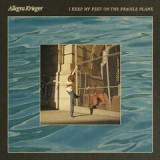
It contains all the signatures of her best lyricism: delicate and precise phrasings, moments that flicker between beauty and banality, meaning that forms through the accretion of observations, memories, and unexpected adages. This is an album that is at once post-theistic and devoted to a relationship with the divine, each song blinking in and out of "the fragile plane," a place Krieger describes as "a middle ground in the universe," both abstract and peaceful, where time, bodies, and names don't exist.
Krieger initially collaborated with Luke Temple and Jeremy Harris to record her vocals and guitar to tape at Panoramic Studios in West Marin, CA. As the album continued to form, Krieger envisioned instruments - like the French and English horn (Nancy Ranger and Priscilla Reinhart), electric guitar (Jacob Drab), and pedal steel (Kevin Copeland) - as characters which would walk in and out of the soundscape. What emerged from conversations with composer Sammy Weissberg, are brass parts that have a dark, almost surreal logic: horns arise to emphasize a word or phrase, fall out completely, only to rush back with dissonant orchestrations that gesture simultaneously toward deterioration and generation.
While Krieger takes inspiration from Elliot Smith's honesty, Judee Sill's cosmic reaching, and Joni Mitchell's sharp noticing, the dream-like association, harmonic dissonance, and angular melodic ascensions in each song are singularly and delightfully Krieger's.
"I Keep My Feet on the Fragile Plane" is a daring collection of songs by an artist who scries with both the cold glass eye of truth and the beating heart of empathy; who portrays life in all its twisted complexities.
- 1: Hello
- 2: A Love From Outer Space
- 3: Crack Up
- 4: Timewind
- 5: What's All This Then?
- 6: Snow Joke
- 7: Off Into Space
- 8: And I Say
- 9: Yeti
- 10: Conundrum
- 11: Honeysuckleswallow
- 12: Long Body
- 13: In A Circle
- 14: Fast Ka
- 15: Miles Apart
- 16: Pop
- 17: Mars
- 18: Spook
- 19: Sugarwings
- 20: Back Home
- 21: Down
- 22: Supervixens
- 23: Insect Love
- 24: Sorry
- 25: Catch My Drift
- 26: Challenge
A.R. Kive collates the three most astonishing works from that most miraculous of duos - A.R. Kane - comprising the ‘Up Home’ EP from 1988 that signified the band’s dawning realisation of their own powers and possibilities, their legendary debut LP ‘sixty nine’ (1988) and its kaleidoscopic, prophetic double-LP follow up ‘i’ (1989).
In founder-member Rudy Tambala’s new remastering, the music on these pivotal transmissions from the birth of dream pop, have been reinvigorated and re-infused with a new power, a new depth and intimacy, a new height and immensity. Vivid, timeless and yet always timely whenever they’re recalled, these records still force any listener to realise that despite the habits of retrospective myth-making and the
safe neutering effects of ‘genre’, thirty years have in no way dimmed how resistant and dissident to critical habits of categorisation A.R. Kane always were. Never quite ‘avant-pop’ or ‘shoegaze’ or ‘post-rock’ or any of those sobriquets designed to file and categorise, A.R. Kive is a reminder that those genres had to be coined, had to be invented precisely to contain the astonishing sound of A.R. Kane, because
previous formulations couldn’t come close to their sui generis sound and suggestiveness. This is music that pointed towards futures which a whole generation of artists and sonic explorers would map out. Now beautifully repackaged, remastered and fleshed out with extensive sleeve notes and accompanying materials, ‘A.R. Kive’ reveals that 35 years on it’s still a struggle to defuse the revolutionary and inspirational possibility of A.R. Kane’s music.
A.R. Kane were formed in 1986 by Rudy Tambala and Alex Ayuli, two second-generation immigrants who grew up together in Stratford, East London. From the off the pair were outsiders in the culturally mixed (cockney/Irish/West Indian/Asian) milieu of the East End, with Alex and Rudy’s folks first generation immigrants from Nigeria and Malawi, respectively. The two of them quickly developed and fostered an innate and near-telepathic mutual understanding forged in musical, literary and artistic exploration. Like a lot of second-generation immigrants, they were ferocious autodidacts in all kinds of areas, especially around music and literature. Diving deep into the music of afro-futurist luminaries such as Sun Ra, Miles Davis, Lee Perry and
Hendrix, as well as devouring the explorations of lysergic noise and feedback from contemporaries like Sonic Youth and Butthole Surfers, they also thoroughly immersed themselves in the alternate literary realities of sci-fi and ancient history (the fascination with the arcane that gave the band their name), all to feed their voracious cultural thirsts and intellectual curiosity.
It was seeing the Cocteau Twins performing on Channel 4 show the Tube that spurred A.R. Kane into being - “They had no drummer. They used tapes and technology and Liz Fraser looked completely otherworldly with those big eyes. And the noise coming out of Robin’s guitar! That was the ‘Fuck! We could do that! We could express ourselves like that!’ moment”, recalls Tambala - and through a mix of
confidence, chutzpah, ad hoc almost-mythical live shows and sheer innocent will the duo debuted with the astonishing ‘When You’re Sad’ single for One Little Indian in 1986. Immediately dubbed a ‘black Jesus & Mary Chain’ by a press unsure of WHERE to put a black band clearly immersed in feedback and noise, what was immediately apparent for listeners was just how much more was going on here - a
tapping of dub’s stealth and guile, a resonant umbilicus back to fusion and jazz, the music less a conjuration of past highs than a re-summoning of lost spirits.
The run of singles and EPs that followed picked up increasingly rapt reviews in the press, but it was the ‘Up Home EP’ released in 1988 on their new home, Rough Trade that really suggested something immense was about to break. Simon Reynolds noted the EP was: Their most concentrated slab of iridescent awesomeness and a true pinnacle of an era that abounded with astounding landmarks of guitar-reinvention, A.R. Kane at their most elixir-like.
If anything, the remastered ‘Up Home’ that forms the first part of ‘A.R. Kive’ is even more dazzling, even more startling than it was when it first emerged, and listening now you again wonder not just about how many bands christened ‘shoegaze’ tried to emulate it, but how all of them fell so far short of its lambent, pellucid wonder. This remains intrinsically experimental music but with none of the frowning orthodoxy those words imply. A.R. Kane, thanks to that second generation auto-didacticism were always supremely aware about the interstices of music and magic, but at the same time gloriously free in the way they explored that connection within their own sound, fascinated always with the creation of ‘perfect mistakes’ and the possibilities inherent in informed play.
‘sixty nine’ the group’s debut LP that emerged in 1988 had
critics and listeners struggling to fit language around A.R. Kane’s sound. As a title it was telling - the year of ‘Bitches Brew’, the year of ‘In A Silent Way’, the erotic möbius between two lovers - and as originally coined by the band themselves, ‘dream pop’ (before it became a free-floating signifier of vague import) was entirely apposite for the music A.R. Kane were making. Crafted in a dark small basement studio in which Tambala recalls the duo had “complete freedom - We wanted to go as far out as we could, and in doing so we discovered the point where it stops being music”. There was an irresistibly dreamy, somnambulant, sensual and almost surreal flow to ‘sixty nine’s sound, but also real darkness/dankness, the ruptures of the primordial and the reverberations of the subconscious, within the grooves of remarkable songs like ‘Dizzy’ and ‘Crazy Blue’. Alex’s plangent vocals floated and surged amidst exquisite peals of refracted feedback but crucially there was BASS here, lugubrious and funky and full of dread, sonic pleasure and sonic disturbance crushed together to make music with a center so deep it felt subcutaneous, music constructed from both the accidental and the deliberate, generous enough to dance with both serendipity and chaos. ‘sixty nine’ remains - especially in this remastered iteration - ravishing, revolutionary.
The final part of this ‘A.R. Kive’ contains 1989’s astonishing double-LP ‘i’ which followed up on ‘sixty nine’s promise and saw the duo fully unleash their experimental pop sensibilities over 26 tracks, plunging the A.R. Kane sound into a dazzlingly kaleidoscopic vision of pop experiment and play. Suffused with new digital technologies and combining searingly sweet and danceable pop with perhaps the duo’s strangest and boundary-pushing compositions, the album did exactly what a great double-set should do - indulge the artists sprawling pursuit of their own imaginations but always with a concision and an ear for those moments where pop both transcends and toys with the listeners expectations. Jason Ankeny has noted that “In retrospect, ‘i’ now seems like a crystal ball prophesying virtually every major musical development of the 1990s; from the shimmering techno of ‘A Love from Outer Space’ to the liquid dub of ‘What’s All This Then?’, from the alien drone-pop of ‘Conundrum’ to the sinister shoegazer miasma of ‘Supervixens’ — it’s all here, an underground road map for countless bands to follow.” Perhaps the most overwhelmingly all-encompassing transmission from A.R. Kane, ‘i’ bookended a three year period in which the duo had made some of the most prophetic and revelatory music of the entire decade.
After ‘i’ the duo’s output became more sporadic with Tambala and Ayuli moving in different directions both geographically and musically, with only 1994’s ‘New Clear Child’ a crystalline re-fraction of future and past echoes of jazz, folk and soul, before the duo went their separate ways. Since then, A.R. Kane’s music has endured, not thanks to the usual sepia’d false memories that seem to maintain interest in so much of the musical past, but because those who hear A.R. Kane music and are changed irrevocably, have to share that universe which A.R. Kane opened up, with anyone else who will listen. Far more than other lauded documents of the late 80s it still sounds astonishingly fresh, astonishingly livid and vivid and necessary and NOW.
Eight years after its original release in 2015, and sold out upon release, Umor Rex finally presents a vinyl repress of Sirens, by Kara-Lis Coverdale and LXV. This new edition is limited to 500 copies and comes with revised artwork.
Inspired by the link between seduction and violence, Sirens comprises a series of timbrally vast anamorphic pieces that poise the voice as a newly imagined tool of multiplicity. Processes of sample manipulation, signal processing, routing, and source design inform instrumental writing and performance in feedback until intertwined, flickering between states of conflict and consonance. Apparitions of the schizophrenic voice are at one moment fractured and cold and at the next full of warmth and vivaciousness, embodying velvet rituals of romanticism in the digital age.
Ultimately, Sirens is music for ambitious dreamers: surreal sound portraits sound like the warmth of the world laid over an ice cold virtual altar. LXV’s vocal truncations and fleshy sound palettes depict the archivation of the breath and aural fantasies of the flesh which Coverdale sets amongst a vast and unconfined landscape of deeper and unknown force. Harmonically active and dynamic orchestrations underpin post-sacred tonalities while brooding pipe organs, sphinx flutes, and hailstorms of metallic percussion characterize uniquely disjointed discussions between disparate compositional ontologies. At times violent and at others serenely peaceful and seductive, these pieces, at their most powerful moments illuminate a felt space between cybernetic energy and the body.
Composed and recorded by Kara-Lis Coverdale and David Sutton. Mastered by John Tejada. Cover photograph by Cody Cobb. Layout by Daniel Castrejón.
Re-mastered by Kramer in 2022. Recommend If You Like: Raymond Scott, Mort Garson, Joe Meek, Robert Moog, Perrey and Kingsley, John Cage, Brian Eno, Sun Ra, Karlheinz Stockhausen, Hawkwind, Pete Seeger, William Shanter, Fred Rogers. An electro-surrealist musical journey from the mind of Bruce Haack "The Captain" - capturing his inventive genius musically in tandem with tapping into the voice of his inner child, innovative story songs inspired by Bruce Haack's diverse musical interests and a love of Science and explorations of the Natural World, songs to excite the imaginations of listeners, both young and old. Ahead of his time and beyond categorization- Haack continued to create trying to find new platforms in order to promote his electronic music. He scored many commercials during the 1960s and promoted electronic music on TV, even demonstrating his inventions on Mister Rogers' Neighborhood in 1968. He self-released his first children's music album later that year. Haack constantly added new genres and inspirations to his compositions and was greatly influenced by the psychedelic rock of the era. He constantly created new work that reflected not only his varied interests, but his shifting musical horizons. He created multiple youth oriented albums, dipping into science fiction, psychedelia and electronica, using traditional song structures in order to capture children's attention to educate them, while wrapped in one of his many personas. Bruce Haack wanted people to know him through his medium: music. He dedicated his life to exploring, inventing and sharing his eclectic brand of humor and many musical points of view. In failing health, he never stopped pursuing his distinctive musical dreams.
Odd Nosdam really doesn’t need an introduction, unless you’ve been living under a rock for the last 20 years then undoubtedly you’ll know what’s up, and what an absolute humbling pleasure it is to now introduce Nosdam to the Where To Now? catalogue with two new cuts that flow from ethereal, meditative contemplation through to downtown abstracted machine damage..
The record opens with ‘End is Important’, A looping, spiritual lament which forces observation, or resolution around the concept of ‘Endings.’ Passages from Tsunetomo Yamamoto’s ‘Hagakure’ seep in and out of the mix throughout, where spiraling and glistening arpeggios dance across a glorious choral mantra, intended to elevate minds towards some kind of plume of awakening. This is a heady and deep cut which finds Odd Nosdam in full introspection mode.
‘Here to Know’ recalls the work of Patrick Cowley in his best downtown ultra slow swinging funk suit, or the more obvious nods to John Carpenter’s Assault on Precinct 13 OST. However, this is far from a straight up ode to creeping machine funk - Nosdam’s injection of energetic, pulsing synth stabs move the piece into a more surreal territory, creating a masterful and experimental injection of life and colour into an otherwise smoked out landscape.
“Where I found myself when Where To Now? reached out - asking if I'd consider a vinyl release with the label - was over in Barcelona spending time with loved ones at my family's apartment in the district of Sant Gervasi.
After my initial contact with WTN?, I ventured north to Cadaqués to visit Salvador Dalí's house in Port Lligat, where Gala & Dalí spent some 50 summers. While inspired asf touring the glorious property, I captured recordings from a looping video screening in an open air theater. These recordings became the foundation of Here To Know.
Sometimes there’s a break in the road. End Is Important was realized after re-watching the Jim Jarmusch film, Ghost Dog. Stealthy and evanescent, a familiar voice carries this slow-diver with a message to the world warped cruiser in all of us.” - Odd Nosdam
JAUZAS THE SHINING - MECHATRONICA, BROKNTOYS, SHIPWREC , SPECIMEN.
Jauzas the Shining was known as Adjust before taking that new alias - which is a salute to Kubrick's movie and the telepathy of his young character.
Since 2001, he's one of the most active electro producers in France, with several solid EPs released on Shipwrec, Last Known Trajectory, Transient Force, New Flesh, Minimum Syndicat, Mechatronica or Brokntoys and collaborate with iconic artists like Heinrich Mueller, Orgue Electronique, Ekman, Shemale, Faceless Mind, Specimen, and Ultradyne. He shared the decks with the hall of fame of electro music.
From the 90s IDM influences, Jauzas The Shining is a deep odyssey into the cold groove of electro sounds, using his sickness on skyzophrenic beats from his electronic dark side.
Hidden in the shadow of this room, Jauzas looks himself in a broken mirror but he doesn't recognise himself, he doesn't remember..the only thing he knowns is that he's now on board the nautilus ship, deeper and deeper is an ocean of sounds ...Artificial lights, mechanical noise and metallic walls..He starts hearing these voices but he doesn't know who they belong to? Utilising his sickness on skyzophrenic beats and abstract electronic dark side, he became "Jauzas the shining" The mysterious and miraculous journey of Jauzas who spent his nights and days on Formentera.
Here he conjures up a concoction of deep ocean meanderings and spellbound nights, underneath the shooting stars and radiant waters. Images of the past merged with future, becoming a collage of voices across projected shapes which make presence in their ghostlike form. This is another outing which explores the surreal and the abstract, which expressed though Jauzas's electro-musicalities with Specimen.
- A1: Clymhalio
- A2: Ffarout
- A3: Profion Moddion
- A4: Wyneb I Waered
- A5: Dilyn Fy Nhrwyn
- A6: Colli'r Goriad
- B1: Arwynebol Melyn
- B2: Sega Segur
- B3: Helo Traeth
- B4: Pelydr Secs
- B5: Ofn:cwn
- B6: Lluchia Dy Fflachlwch Drosda I
Reissue des dritten Albums der revolutionären DIY-Indierocker Ffa Coffi Pawb mit den jungen Gruff Rhys und Rhodri Puw, zu denen später Gruffs Super Furry Animals-Kollegen Dafydd Ieuan und Dewi Emlyn dazu kamen. Hei Vidal! destilliert die Besessenheit der Band mit Früh-1970er Power-Pop (Bowie, Bolan, Big Star) sowie Neu! und My Bloody Valentine zu einem Sound, der Oasis' verzogene Rückkehr zum Glamour einige Jahre später vorweg nahm. Motorische Grooves über sattem Shoegaze-Fuzz verbinden sich mit impressionistischen Studiomanipulationen, Orchester-Synth-Arrangements und brutalen, aber dennoch surrealen Bildern und Wortspielen in walisischer Sprache. Hei Vidal! erschien 1992 in kleinen MC-/CD-Auflagen, das (Clear) Vinyl wird erstmals erhältlich.
Next up in Veyl’s ever-evolving and diverse catalog comes of an experimental sonic experience from Llimbs.
The project of Hagen Ebejer, he began making music in the early 2000’s and started Llimbs in 2016, which allowed him to officially release music and perform live, making his debut at Berlin’s legendary Tresor. Now he arrives on Veyl with Midnight Amber, an 8-track album which fully realizes the Llimbs sound and vision. Inspired by dark and experimental sounds, Midnight Amber is a tour de force of genre-bending compositions, conjured using downtempo and dreamlike sounds which explore both the organic and digital.
The result is an undefinable affair which is both haunting and infectious at once. 'Unfold' commences the album with a soft yet powerful piece of melodic melancholy, inviting the listener through the gates and into the world of Llimbs. 'Divergent' picks things up with a ritual work of stirring chants which leads us to the evocative chords on 'Origin'. Finishing off side A is 'Absent', a slow burning rhythmic piece which encapsulates the listener, creating an almost nostalgic atmosphere for a time unknown.
'Phase' begins the B side with cinematic flair, creating a palpable tension which then evaporates into the ether. 'Eclipse' returns to a familiar dreamworld, traversing the skies which feel both familiar yet mysteriousbefore 'Fragment' dives deeper into a hidden universe of emotion, fusing ancient works with modern technology. Concluding the album is 'Midnight', a perfect end to a journey which exists at the intersection of the natural and mechanical, reality and surreality, marking a tremendous finale which can only lead to a new beginning.
ME LOST ME led by Newcastle-based artist Jayne Dent announces a new album RPG via Upset The Rhythm on 7th July, and is touring across the UK including support dates with Pigs x7. RPG (recorded in Blank Studios with Sam Grant of Pigs x7) is ME LOST ME’s fourth outing as a collective, having transitioned from an ambitious solo project in 2017, Jayne now regularly collaborating with acclaimed North-East jazz musicians Faye MacCalman and John Pope.
ME LOST ME delights in experimenting with songwriting and storytelling, creating a beguiling mix of soaring vocals and atmospheric electronics that playfully weave together disparate genres, drawing influence from folk, art pop, noise, ambient and improvised music. Hauntological in part, RPG is concerned with tales and with time - are we running out of it? Does insomnia cause a time loop? Do the pressures of masculinity prevent progress? Jayne Dent asks these questions and more on RPG, her homage to worldbuilding and the story as an artform, calling back to those oral traditions around a campfire, as well as modern day video games - bringing folk music into the present day as she does so.
ME LOST ME presents sound reaching in opposite directions, straddling time towards the archaic and timeless traditions of folktales, and towards the possible and potential futures of pastoral Britain and the world at large. Part speculation, part reminiscence, what results on the new album RPG is music that sounds ultimately displaced and yet omnipresent, adjacent to a hapless Vonnegut hero whose life is scattered throughout time and history, but full of wonder and curiosity rather than fear.
On track “The Oldest Trees Hold The Earth”, we see time stretched out between the branches of impossibly old beings in the woods. This track was co-written in Aarhus, Denmark with fellow Newcastle folk musician (with Danish heritage) Ditte Elly. The pair wordlessly passed a sheet of paper between each other to write the lyrics, inspired by Højbjerg and Mosegård, the woods they were sitting in. “How long should I wait/Before the moss grows?/On my skin, on my outstretched arms,” the lyrics are sung in a round, the close harmonies delicate and detailed.
A central thesis of this album is the joy of creation, something which is paid homage to in the album’s final track, “Science And Art” (Not because we need it to last/just because we needed to make it - so we invented the words/this language). It is also reflected in the definition that Jayne gives for “folk” itself. She comments, “To me, folk is quite an expansive idea. I think of it as creative work that's often made ad-hoc, with things that are at hand and more often than not it's born of a DIY ethos. It is songs and stories of the people, as in the traditional sense, but also creative coding, game design etc. Whatever outlet someone has for their creative expression could be described as folk. It's the things we make because humans need to make things, and the stories we tell about ourselves and the world around us.”
Crucially, on latest album RPG, Dent expands her songwriting and looks towards the unreal locations of worldbuilding in video games for inspiration. She comments, “I think the main similarity is the importance of a song's setting/environment to inform its narrative and textures, I'm often most inspired when out walking in the natural landscape, in cities and travelling to places I've never been before - the environment I'm in really impacts the work I make. While writing this album, however, I found myself inspired by imaginary landscapes, those in video games, paintings, etc. I was writing stories into these unreal locations instead. Even the songs inspired by real places, like The Oldest Trees Hold the Earth, have a very surreal quality to them in the songs, like they're being warped and turned into something not of this world. I think that's the main difference for me in terms of the thematic content and inspiration behind this album - I've been getting more and more interested in balancing surreal and fantastical environmental elements with ordinary and everyday settings.”
RPG upends the concept of the eternal return - we may be in the midst of inevitable repetition, but we tell stories whilst awaiting the passage of time.
"Being familiar with, and a fan of Jayne's earlier work, it was great to get the opportunity to work with her on the production of her new record. I had in mind a sense of what the record might be, but what came of the sessions, led by the vision Jayne had for the record, totally exceeded my expectations. As far as albums go, it has a breadth of writing and a sonic depth that made it a truly brilliant record. Having Jayne join us on a leg of the Pigs x7 tour in April is going to be ace. The creative nature, the sincerity and bold strokes of ME LOST ME put it in that space outside of any genre pigeonholes, and between our two sets I imagine the audience is going to have a proper sonic bath..."
Sam Grant, Pigs Pigs Pigs Pigs Pigs Pigs Pigs, 2023
“The music of Me Lost Me is beguiling, idiosyncratic and cinematic - or should that be video-game-omatic? This suite of songscapes often hits the sweet spot between ancient and modern with its masterful blend of stark folk, neon electronic burbling and unusual arrangements. Jayne's singing is refreshingly straightforward and nuanced - it's exquisite! - and perfectly punctures the nebulae of synths and brass which billow around the old wooden frames of the songs. Whilst listening I had images in my mind of what Northumberland might look like through the eyes of Simon Stalenhag - foggy moors, a robot looking across the sea to Lindisfarne, twinkling lights on metal towers.... that sort of thing. It's a really great album.”
Richard Dawson, 2023
On their sophomore effort Tusky, surrealist duet Robbie & Mona ascend beyond the lo-fi scrawlings of their debut album to something altogether more grandiose. Between the lights down drama of sprawling opener ‘Sensation’, to the ‘roll credits’ coda of closer ‘Always Gonna Be A Dead Man’, Tusky exists as a glitzy, lucid journey playing out before the listener.
While debut album EW captured William Carkeet and Ellie Gray as they were finding their feet with one another, creating Tusky was a wholly symbiotic process from day one. “We got better at knowing what each other wanted,” William offers. “This was the album that we were trying to make from the beginning.”
Simultaneously evoking multiple eras of music, the album drifts through worlds of synth pop, jazz, trap, drill, ballroom waltz and leftfield electronica, with the scatterbrain sound palette melded by a peppering of instrumental motifs and William’s addiction to sampling sounds across multiple tracks. “I wanted there to be this weird dimensional thing going on,” William explains, “where songs from the album are playing in multiple places.”
The record sees an expansive cast of musicians assembled, with a much heavier focus on live instrumentation than previous outings. Alongside the expected fare of crackly synths, samplers and drum machines, Tusky gets its glossy sheen from a rich tapestry of jazz drums, double bass, grand piano and saxophone.
Most of the tracks are laden with improvised saxophone from Campbell Baum (Sorry, Broadside Hacks) and Ben Vince (Housewives, Joy Orbison), much of which was scrambled by William in post-production, lifting scraps from one song and layering them atop an entirely different track. Elsewhere, session musicians were cherry picked, including Bingo Fury, his drummer Henry Terrett, and a string ensemble led by Caelia Lunniss and Jo Silverston (Spindle Ensemble).
Most surprising is a rap feature from Monika (of South-East London collective Nukuluk), who brings album centrepiece ‘Mildred’ to new heights with a fiery verse on pain. Aside from being the most unlikely addendum to a sombre piano ballad, it demonstrates Robbie & Mona’s natural state of playfulness, forever following emotions and sensuality over any notion of traditional compositional boundaries.
Many of Tusky's tracks owe their inception to cinema, be it the soundtrack to Betty Blue, the glowing films of Wim Wenders, or the surprising parallels between La Belle Et La Bete and Bad Boys. Equally, much of Robbie & Mona's new-found sense of tension and spectacle comes from William’s recent work soundtracking independent filmmakers, while Ellie gave greater priority to threading a narrative through her stream of consciousness writing style.
In all its majesty, Tusky celebrates creativity with creation. “If you begin to see fiction as real, you can reincarnate and become different things. You can grow,” Ellie implores. “Nothing stays the same. You can shed old characters in yourself. There’s great joy in that.”
What can't be said about Funki Porcini. From doing Film scores to the surreal live performances with his recent 'Laserium' tour.
An Incredible album of weird & wonderful ridiculousness. An exclusive first time on vinyl, collection of Funki's Famous Fat ones. A fusion of downtempo to eclectic jazz cuts & horns with b-boy latin funk breaks with elements of blissfull strings & melodies throughout.
Funki Porcini delivers his most Incredible vinyl, buffed & ready to play. The most joy you will have with a 12" since 'Lets See What Carmen Can Do'.
Marc Richter aka Black To Comm released his debut record 20 years ago. In 2023 he is still busy releasing music under various disguises and is currently signed to the Thrill Jockey label. To celebrate this anniversary his own Cellule 75 label is re-releasing some classic out-of-print vinyl albums that originally came out on the defunct Type and De Stijl labels. The LP will feature a full-colour printed inner sleeve exclusive to this edition.
In 2009 the Type Recordings label run by John Twells had just released seminal records by Grouper, Jóhann Jóhannsson and Yellow Swans when they signed Richter and put out his breakthrough Alphabet 1968 album. The LP sold out within two weeks, receiving a glowing full-page review in The Wire Magazine by the late Mark Fisher (later reprinted in his book Ghosts Of My Life), was selected for Boomkat's Top 10 releases of the year (alongside debut albums by Leyland Kirby, Demdike Stare and Oneohtrix Point Never) and was greeted with universal praise in the underground blog network as well as established magazines such as The New Yorker and Pitchfork.
The music itself played with the notion of nostalgia without being nostalgic itself. It's the sound of half-remembered dreams, a surreal distorted vision of the past, an aural polaroid of long forgotten musics, a ghostly voice from a non-existent era.
From the original Type one-sheet:
"The mission statement for Alphabet 1968 was to write an album of "songs" for want of a better word. Short tracks which represented genre points, the milestones which stuck in Richter's mind when he thought back to his favorite records. What we arrive at is a breathtaking 10-track album which, over the course of 45 minutes, explores world music, techno, noise, avant-garde, ambient music and even exotica. Each track is linked with a loose thread of radio static or environmental sound, dragging you through the album, as if tuning in to a stray broadcast or a particularly adventurous mix. Richter has pieced the album together from hours of recordings made at his studio with home made gamelan, small instruments and loops gathered from a collection of ancient vinyl and 78 records. The scope of the album is admirable, but ignoring this, it is simply a shockingly arresting collection of experimental oddities, with references ranging from Moondog to Basic Channel by way of Bernard Herrmann. It's not hard to fall in love with Alphabet 1968, far harder would be to place exactly where the record should fit into your collection."
Mark Fisher in The Wire:
"But what if we were to take Richter's provocation seriously - what would a song without a singer be like? What would it be like, that is to say, if objects themselves could sing? It’s a question that connects fairy tales with cybernetics, and listening to Alphabet 1968, I’m reminded of a filmic space in which magic and mechanism meet: JF Sebastian’s apartment in Blade Runner. The tracks on the LP are crafted with the same minute attention to detail that the genetic designer and toymaker brought to his miniature automata, with their bizarre mixture of the clockwork and the computerised, the antique and the ultramodern, the playful and the sinister. Richter’s musical pieces have been built from similarly heterogeneous materials - record crackle, shortwave radio, glockenspiels, all manner of samples, mostly of acoustic instruments. ….. JF Sebastian's apartment was itself an update of older spaces in which science and sorcery co-existed: the workshops of ETA Hoffmann's inventor-magicians, or of Pinocchio's creator, Geppetto. I think, too, of Auguste Villiers de l'Isle-Adam's astonishing 1886 tale The Future Eve in which Edison, using the expertise he has recently acquired from inventing the phonograph, sets himself the task of constructing an artificial woman. But if there are songs here, they are sung by the gramophone and other recording and playback machines. Richter so successfully effaces himself as author that it is as if he has snuck into a room and recorded the objects as they played (to) themselves. Rather than simply automating his music, as in the case of Pierre Bastien and his mechanical machines, Richter makes us feel that he has merely recorded the unlife of objects. ….. Indeed, the impression of things winding down is persistent on Alphabet 1968. Entropy has not been excluded from Richter's enchanted soundworld. It feels as if the magic is always about to wear off, that the enchanted objects will slip back into the inanimate again at any moment."
Debut Album Nottingham post-punks Do Nothing blend jerky, spidery rhythms with surreal, half-spoken vocals that recall the Fall 's Mark E. Smith . Do Nothing was formed in 2017 by four long-time school friends: frontman Chris Bailey, guitarist Kasper Sandstrøm, drummer Andy Harrison, and bassist Charlie Howarth. All had played in various acts around the city; the band got their start at the popular Maze Club. Bailey, whose father was a singer in an a cappella folk group, grew up listening to the sounds of Simon & Garfunkel , and his own biggest influence was Tom Waits . Initially attempting to copy big names like LCD Soundsystem (as heard on their first 7" single, "Gangs," released in 2019), they eventually became more confident about doing their own thing, and Bailey gave his stream-of-consciousness lyrics and outsider stage persona free rein. Associated with, but wary of, the then-popular post-punk revival, they made clear it was their intention to follow their own path. Their debut EP, Zero Dollar Bill, was released in 2020; another, Glueland, arrived the following year, with an album in the works.
Eaux proudly announces the second full length LP from Rrose, Please Touch, released on vinyl, CD, and digital download. The LP follows 2019's Hymn to Moisture in ways that are both subtle and striking: Please Touch further hones the artist's tensile sound while exploring new aesthetic vistas and basking in an undeniably erotic sense of play. Moving with undulating power, the album's nine tracks drift across tempos from a weightless 0 bpm to a crawling 100 to a lunging 140 and back, with a rich palette of sculpted noise and cross-talking microtones.
Rrose's compositional process, rooted in their studies with West Coast avant garde trailblazers at Mills College, centers on "seed" sounds being fed through elaborate webs of interrelated audio processing. The result is a world where changes in any one element have downstream implications for some or all the others. It's a rich interdependence that lets the tracks breathe, grow and mutate with uncanny organicism. Please Touch addresses in equal measure the perceptual and the corporeal: these are sounds that sink into the body, exhibiting a tactility that pushes, pulls, bends and yields with fearsome vibrancy.
The album splits its time between radical techno iterations and pieces which pare back the percussion, letting the synth textures uncurl in their own time and space. The quivering drone and rolling sub-bass of "Joy of the Worm'' set the tone for the record, while "Rib Cage," Spore" and "Spines " swing with stepping rhythmic underpinnings. Building with finely calibrated tension, they use their few elements to startling, snarling effect. "Pleasure Vessels" is a rare moment of becalmed introspection in Rrose's oeuvre, hinting at a melodic ambiance that is practically unseen in previous works. It glows with a soft, dawn-like light before dissolving into a tidal fizz. "The Illuminating Glass'' brings the tempo down to a languorous chug, nodding its way through a field of glistening chirps and leaden gasps. "Feeding Time," "Disappear" and album closer "Turning Blue'' meanwhile nod to the cerebral psychedelia of Rrose's forebears, with mesmeric, looping textures and long, magisterial tones not dissimilar to the spectral works of James Tenney (whose work Rrose regularly performs) and the deep listening pieces of Pauline Oliveros.
The title of the album refers playfully to the tactile quality of the music while hinting at a forbidden sensuality that is only permitted within the confines of this microcosm. The phrase is also another nod to Marcel Duchamp, who gave this title to a 1947 exhibition of Surrealist art. Across the nine tracks, Rrose follows the lead of the sound(s) rather than trying to impose on the flow of the sonic material. Each move changes the parameters of a track's evolution. Thus, a non-hierarchical, symbiotic relationship forms between the so-called "music-maker" and the music itself. Please Touch acts as a collection of limbs, organs, parasites, and growths which both devour each other and keep each other alive.
Laura Poitras’ Oscar-nominated film »All the Beauty and the Bloodshed« is an epic, emotional and interconnected story about internationally renowned artist and activist Nan Goldin. Told through intimate interviews, photography, and footage, central to the story is her personal fight to hold the Sackler family accountable for the opioid crisis. The film cuts to the bone with its incandescent celebration of life and condemnation of those who threaten it. Art and activism are one and the same.
Helping to interweave Goldin’s past and present, multi-disciplinary duo Soundwalk Collective soundtrack her personal and political struggles to sublime effect. The contemporary sonic arts platform of founder and artist Stephan Crasneanscki and producer Simone Merli, the pair work with a rotating constellation of artists and musicians, developing site-and-context-specific sound projects through which to examine conceptual, literary, or artistic themes. And for all the beauty and the bloodshed on show here, the duo strike the balance just right; their compositions in collaboration with Zacharias Falkenberg and Johannes Malfatti producing a trance that oscillates between grace and madness.
Within the score, Crasneanscki draws connections with the life and work of German poet Friedrich Hölderlin, who was removed from society through confinement in institutions. In his last poems, written as fragments while he was plagued by mental illness, Hölderlin renders nature, in all its fragility and ephemerality. Similar themes merge in Laura's portrait of Goldin and serve as an inspiration for the composition of the choral songs and cantus within the soundtrack. Through the repetition of words and the layering of voices, the lyric scansion operates like a language possessed, echoing various styles from sacred music to modern minimalist techniques. The music is characterised by quivering strings and swells, de-tuning and lingering, shifting around the surreal, and creating a spectrum of musical experience. Exerts of Nan’s narration are featured in two of the tracks, her powerful narration offering a more direct approach to the storytelling.
In »All the Beauty and the Bloodshed,« Poitras shows protest is really Goldin’s great artwork: Her entire life had been leading to this moment of passionate expression, an inspired situationist gesture which fused the personal and the political. Art can change the world, which Poitras and Goldin tell us with powerful results. While there are multiple threads in this remarkable portrait which could have carried entire films, the soundtrack provides a sonic identity that helps keep track of proceedings. Utterly unique in their approach, Soundwalk Collective have delivered a gripping and thoughtful score, helping turn Goldin’s personal pain into culture-rattling impact.
- 1: Bluebirds
- 1: 2 Hard To Be A Girl
- 1: 3 Jessica
- 1: 4 Musical Ladders
- 1: 5 The Prince's Bed
- 1: 6 Bunnyranch
- 1: 7 Friends Of Mine
- 1: 8 Frozen In Time
- 1: 9 Broken Joystick
- 1: 0 I Wanna Die
- 1: Salty Candy
- 1: 2 No Legs
- 1: 3 We're Not Supposed To Be Lovers
- 1: 4 Secret Tongues
- 1: 5 Bungee
- 2: 1 I Wanna Die (Demo)
- 2: Friends Of Mine (Fragment 1)
- 2: 3 What A Waster
- 2: 4 Hard To Be A Girl (Demo)
- 2: 5 Eating Nod Demix
- 2: 6 The Prince's Bed (Demo)
- 2: 7 Kokomo (With Ben Kweller)
- 2: 8 Born To Run
- 2: 9 No Legs (Demo)
- 2: 10 Jessica (Demo)
- 2: 11 Salty Candy (Live)
- 2: 1 Bungee (Demo)
- 2: 13 Were Not Supposed To Be Lovers (Demo)
- 2: 14 Friends Of Mine (Demo)
- 2: 15 Jessica (Live)
- 2: 16 Frozen In Time (Demo)
- 2: 17 Bluebirds (Demo)
- 2: 18 Friends Of Mine (Fragment )
Colored Vinyl[24,79 €]
Am 9. Juni 2023 wird Capitane Records Adam Greens "Friends of Mine" anlässlich des 20-jährigen Jubiläums des Albums neu auflegen. Für Fans von Green und seiner Band The Moldy Peaches mag es schwer zu glauben sein, dass es schon zwanzig Jahre her ist, dass in den frühen 2000er Jahren eine neue Generation von Künstlern, Interpreten und Songwritern die Indie-Rock-Welt in Flammen setzte. Innerhalb von gefühlt nur wenigen Monaten versorgten Bands wie The Strokes, The White Stripes, The Libertines und The Moldy Peaches das Indie-Publikum mit neuen Versionen und Interpretationen des Rock'n'Roll-Kanons, Mit Einflüssen, die sowohl Standards wie The Velvet Underground, Television, The Stones, The Doors, The Stooges, Leonard Cohen, The Modern Lovers und Bob Dylan als auch neuere Künstler wie Beck, Daniel Johnston, Nirvana, Sonic Youth, Will Oldham, Pavement und The Silver Jews umfassten. Die Ergebnisse variierten zwischen geradlinigem Rock'n'Roll und Punk mit einem vom Folk inspirierten Songwriting-Bewusstsein. Vorbei waren die zerrissenen Jeans und Flanellhemden von einst. Enge Hosen und Lederjacken regierten den Tag...und die Nacht. Nach erstem Solo-Album und dem Erfolg seiner Band The Moldy Peaches (die 2001 zusammen mit The Strokes bei Rough Trade Records unterschrieben und anschließend mit ihnen auf Tournee gingen) schrieb und nahm Adam Green Friends of Mine auf, das bahnbrechende Album, das eine neue Richtung in seiner Karriere einschlagen sollte. In Abkehr von den selbst aufgenommenen 8-Spur-Analogaufnahmen seiner früheren Alben wandte sich Green einem Sound zu, der zu dieser Zeit eindeutig als Hi-Fidelity-Sound bezeichnet werden konnte, komplett mit Band und einer Streichergruppe (mit Arrangements von Jane Scarpantoni). Friends of Mine orientierte sich an den Werken von Serge Gainsbourg, Scott Walker und Frank Sinatra, während der lyrische Inhalt wie von der symbolistischen Poesie und dem Surrealismus von Brecht und Dylan abgeleitet schien. Das Ergebnis war etwas völlig Neues, eine Platte, die sowohl rührend traurig als auch sardonisch, satirisch, lässig und sogar laut lachend komisch sein konnte. Songs wie "Jessica" oder das Titelstück wurden zu Hymnen für eine neue Generation junger Indie-Rock-Fans in Europa, in Deutschland wurde Adam Green besonders gefeiert, von Indiekids, der Musikkritik, im Feuilleton und auch fast sogar in der Klatschpresse. Capitane ist stolz darauf, Friends of Mine nun als Doppel-LP bzw. 2CD und limitiert erstmals als farbige Einzel-LP wieder zu veröffentlichen. Die Deluxe-Edition enthält auf einer zweiten Disc Outtakes, B-Seiten und Live-Versionen und Linernotes zu den Songs von Green, die neue Einblicke in seine oft kryptische lyrische Methodik sowie Anekdoten aus der Entstehungszeit der Songs bieten. Ebenfalls gibt es Auszüge aus einem Gespräch zwischen Green und Dan Myers (Produzent), Steven Mertens (Bassist), Matt Ramono (Schlagzeuger) und Larissa Brown (Zeit). Die fünf alten Freunde tauchen tief in die Produktion von Friends of Mine ein und tauschen Geschichten über die vergangene Zeit aus. Die 2023er-Ausgabe von Friends of Mine ist ein Fenster zu einem wesentlichen Teil unserer jüngsten Vergangenheit und ein Zeugnis für einen Künstler, der den Test der Zeit bestanden hat. Adam Green ist immer noch dabei - genau so sleazy, weird & funny wie vor 20 Jahren!
Doppel-LP, zweite Platte mit B-Seiten, Demos, Outtakes und Liveversionen, klassisch schwarzes Vinyl im Klappcover, bedruckte Innenhüllen mit neuen Linernotes plus 4-seitigem Insert mit Interview! Definitiv Deluxe!
Am 9. Juni 2023 wird Capitane Records Adam Greens "Friends of Mine" anlässlich des 20-jährigen Jubiläums des Albums neu auflegen. Für Fans von Green und seiner Band The Moldy Peaches mag es schwer zu glauben sein, dass es schon zwanzig Jahre her ist, dass in den frühen 2000er Jahren eine neue Generation von Künstlern, Interpreten und Songwritern die Indie-Rock-Welt in Flammen setzte. Innerhalb von gefühlt nur wenigen Monaten versorgten Bands wie The Strokes, The White Stripes, The Libertines und The Moldy Peaches das Indie-Publikum mit neuen Versionen und Interpretationen des Rock'n'Roll-Kanons, Mit Einflüssen, die sowohl Standards wie The Velvet Underground, Television, The Stones, The Doors, The Stooges, Leonard Cohen, The Modern Lovers und Bob Dylan als auch neuere Künstler wie Beck, Daniel Johnston, Nirvana, Sonic Youth, Will Oldham, Pavement und The Silver Jews umfassten. Die Ergebnisse variierten zwischen geradlinigem Rock'n'Roll und Punk mit einem vom Folk inspirierten Songwriting-Bewusstsein. Vorbei waren die zerrissenen Jeans und Flanellhemden von einst. Enge Hosen und Lederjacken regierten den Tag...und die Nacht. Nach erstem Solo-Album und dem Erfolg seiner Band The Moldy Peaches (die 2001 zusammen mit The Strokes bei Rough Trade Records unterschrieben und anschließend mit ihnen auf Tournee gingen) schrieb und nahm Adam Green Friends of Mine auf, das bahnbrechende Album, das eine neue Richtung in seiner Karriere einschlagen sollte. In Abkehr von den selbst aufgenommenen 8-Spur-Analogaufnahmen seiner früheren Alben wandte sich Green einem Sound zu, der zu dieser Zeit eindeutig als Hi-Fidelity-Sound bezeichnet werden konnte, komplett mit Band und einer Streichergruppe (mit Arrangements von Jane Scarpantoni). Friends of Mine orientierte sich an den Werken von Serge Gainsbourg, Scott Walker und Frank Sinatra, während der lyrische Inhalt wie von der symbolistischen Poesie und dem Surrealismus von Brecht und Dylan abgeleitet schien. Das Ergebnis war etwas völlig Neues, eine Platte, die sowohl rührend traurig als auch sardonisch, satirisch, lässig und sogar laut lachend komisch sein konnte. Songs wie "Jessica" oder das Titelstück wurden zu Hymnen für eine neue Generation junger Indie-Rock-Fans in Europa, in Deutschland wurde Adam Green besonders gefeiert, von Indiekids, der Musikkritik, im Feuilleton und auch fast sogar in der Klatschpresse. Capitane ist stolz darauf, Friends of Mine nun als Doppel-LP bzw. 2CD und limitiert erstmals als farbige Einzel-LP wieder zu veröffentlichen. Die Deluxe-Edition enthält auf einer zweiten Disc Outtakes, B-Seiten und Live-Versionen und Linernotes zu den Songs von Green, die neue Einblicke in seine oft kryptische lyrische Methodik sowie Anekdoten aus der Entstehungszeit der Songs bieten. Ebenfalls gibt es Auszüge aus einem Gespräch zwischen Green und Dan Myers (Produzent), Steven Mertens (Bassist), Matt Ramono (Schlagzeuger) und Larissa Brown (Zeit). Die fünf alten Freunde tauchen tief in die Produktion von Friends of Mine ein und tauschen Geschichten über die vergangene Zeit aus. Die 2023er-Ausgabe von Friends of Mine ist ein Fenster zu einem wesentlichen Teil unserer jüngsten Vergangenheit und ein Zeugnis für einen Künstler, der den Test der Zeit bestanden hat. Adam Green ist immer noch dabei - genau so sleazy, weird & funny wie vor 20 Jahren!
Doppel-LP, zweite Platte mit B-Seiten, Demos, Outtakes und Liveversionen, klassisch schwarzes Vinyl im Klappcover, bedruckte Innenhüllen mit neuen Linernotes plus 4-seitigem Insert mit Interview! Definitiv Deluxe!