On their seventh long player The Breaks - their second for Joyful Noise Recordings - SUUNS are lost in limbo. For some artists, being caught in flux may result in songs that are either naive, out of touch or both, simply as a consequence of being cut off from human civilization. But for SUUNS, a band who have grown more than comfortable in the oblique and the intermediate, it actually had the opposite effect. The Breaks marks the Montreal experimental rock outfit's most emotionally resonant and tonally rich collection of music to date. The trio of Ben Shemie, Joseph Yarmush and Liam O' Neill leans more zealously than ever into their pop instincts. Yet remarkably enough, with that same dauntless abandon, SUUNS have mined a more extreme sonic palette this time around, one that stretches far beyond their core fundamentals as a band. The Breaks finds Shemie, O'Neill and Yarmush gleefully experimenting with loops, synths, samples and MIDI-instruments like a post-millennial Tangerine Dream messing with downtempo triphop beats. O' Neill took point in the producer's chair for The Breaks, arranging, structuring and editing many of Shemie and Yarmush's ideas from sporadic rehearsal sessions into Pro Tools, reimagining the songs over and over during a two-year time frame. Forged between countless plane rides, road trips, van tours and text threads, The Breaks became a product of endurance and a lot of trial-and-error. It's a record forged in tight fissions of freedom, where spells of whispered intimacy - like on the stunning ballad "Doreen" - are allowed to branch out into the vast glacial dreamscapes of the album's majestic title track. It captures SUUNS at their most panoramic, curious and exuberant: a constant relay of being adrift and enlightened anew, geared up to eleven. And guess what: the wheels keep on spinning.
quête:suuns
- 1
"The Witness" markiert eine gewitzte, unkonventionelle Linkskurve und zeigt Suuns in ihrer angenehmsten, offensten Form. Selbst aufgenommen und selbst produziert über den Großteil des Jahres 2020, ein Jahr voller Streit, Einsamkeit und Reflexion, zeigt "The Witness" die Band mit einer Lupe über ihren eigenen Standardzustand des Spielens und Auftretens. Es ist eine rasche Abkehr vom Vorgänger-Album "Felt" und erfreut sich daran, zufällige Ideen in ihren embryonalen Demo-Versionen zu ernten, als ob man ein glorreiches Feuerwerk in den Himmel entlässt. Mit dem Ausstieg von Max Henry als Vollzeitmitglied im Jahr 2018 und dem Wohnort-Wechsel von Ben Shemie, der jetzt einen Ozean entfernt in Paris lebt, manifestierte sich eine neue Herausforderung für das Trio, sich wieder zu finden, sowohl sozial als auch kreativ. Mehr als jede andere Suuns-Platte verwendet "The Witness" eine Jazz-Mentalität, die einen kontinuierlichen Vibe über die Vorstellung von separaten Kapiteln stellt. Es gibt eine Ebene der Entspannung, des Akzeptierens der Urinstinkte der Band und einen konzentrierten Versuch, diese Instinkte zu maximieren und zu überarbeiten. Für eine Band, die für ihre kryptische Anziehungskraft bekannt ist, markiert "The Witness" das bisher großzügigste, reduzierteste und berührendste Werk von Suuns.
- Regresar / Recordar
- Ker
- Dilación
- Casi No Estar
- Palabra
- Riesgo
- Reanimar El Cuerpo
- Control
Lorelle Meets The Obsolete return with their seventh album. It's the Mexican duo's finest, most ferocious work to date which sees them turbo-charge their psychedelic post-punk with a new electronic engine. Mixed by Antoine Goulet (live sound engineer for SUUNS) and mastered by Mikey Young (Eddy Current Suppression Ring), the most obvious comparison in terms of mood and mode is Primal Scream's classic XTRMNTR, another record that processed personal and political conflicts and spat them out as distorted dance music. It shows the influence of the duo's DJ sets and last year's radical Remezcla remix collection on their way of thinking and why they are now namechecking the likes of Moor Mother, MF DOOM, Patrick Cowley, The Bug, Paula Garcés, Phil Kieran, Coby Sey, Run the Jewels and Anadol."Playing other artists' music is different," says Lorena Quintanilla about the change of direction towards the dancefloor. "You're not just listening, you're watching how energy flows and how it affects other people. It gives you the chance to witness what moves other bodies." And Corporal, as the title suggests, is all about the body. "The body is what carries the weight of stress, exhaustion, sadness. It's the body that the system breaks first," explains Lorena. "Unintentionally, while composing the album, our bodies were seeking joy in the songs. Reconnecting with pleasure became a way to open new dimensions - a way to escape, yet remain present." The theme is carried over into the lyrics which, according to Lorena, variously refer to "the bodies that disappear, the abused bodies, the bodies we miss, the bodies that march together in protest, the bodies that are being controlled".
- 1: Meimu
- 2: Visible Lights
- 3: Corpse Pose
- 4: Bankrobber
- 5: Chidori
- 6: Doppelganger (Version Francaise)
- 7: Jinzou Maria (Live In Concrete Version)
- 8: Gotoku Lemon (Sei Remix)
- 9: Onaji Heya (Holy Fuck Remix)
- 10: Yurei Zanmai (Suuns Remix)
Limited Indies “white split vinyl variant while supplies last. RIYL: Unwound, MBV, The Jesus Lizard, SUUNS, Preoccupations, METZ, Les Rallizes Denudes, The Dead C, Echo & The Bunnymen, Liars, This Heat, PIL. Sixth studio album from the Chicago trio. Features newly-rejoined original member Jonathan Van Herik. Recorded at Electrical Audio May 6 & 7, 2024 - final album recorded by Steve Albini. The duality of “man” is a subject that has been explored in art for centuries, from writings of the Bible to Descartes, all the way up to filmmakers like Lynch, Cronenberg, & Carpenter. Who is your “true self” & what do they want? With their sixth studio album “Wish Defense” (again for longtime home Trouble In Mind Records), Chicago trio FACS take a good, long look in the mirror to face themselves. The return of original member Jonathan Van Herik - who stepped away from the group just before their debut album “Negative Houses” was released in 2018 - replacing longtime bassist Alianna Kalaba brings renewed vigor & a marked angularity from the band’s more recent output. The songs still hit hard, but the approach is sideways - the roles have changed since Van Herik’s original tenure & his previous time with Case & powerhouse drummer Noah Leger in Disappears; now on bass, Van Herik was originally the group’s guitar player and features on the debut, while current guitarist Brian Case played bass. This role reversal has helped the band’s dynamic, offering up a different musical perspective than before, now revisiting the trio’s long-going collaboration with some distance and time. Case notes that the lyrics on “Wish Defense” revolve around doppelgängers or "doubles”, tackling the idea of facing yourself and observing your ideas and motivations. Look no further than the album’s title track; “Enter the mirror / Double walker / An intimate / Wish defense / Is it real? / You beside me / The detail / Terrifying / Abject self / Your grief / A public / Performance”. Case lays out the entire album’s theme in one stanza; Are your actions & emotions your true self? Or are they a performative aspect of that “other” person you put forward? Case says that ultimately the sentiment is “...don’t let the bastards get you down, there’s something beyond this moment, like hope - but not in the naive belief that ultimately people are good”. “Wish Defense”s artwork is also a subtle reference to “Negative Houses”’ art, returning to that album’s black & white starkness & minimalism. The album’s checkerboards everywhere are offset reflections of themselves, mirrored with the album’s lyrics printed front & center on the cover. Everything is out in the open. A final note; “Wish Defense” is the last album engineered by Steve Albini. Two days were recorded at Electrical Audio in early May of 2024 before Steve’s untimely passing, with renowned engineer & friend Sanford Parker stepping in to finish the session 24 hours later, tracking the last bits of vocals and overdubs. Longtime collaborator John Congleton mixed the album as Albini would have; in Electrical Audio’s A room, off the tape, using Albini’s notes about the session.
- 1: Talking Haunted
- 2: Ordinary Voices
- 3: Wish Defense
- 4: A Room
- 5: Desire Path
- 6: Sometimes Only
- 7: You Future
Limited Indies “white split vinyl variant while supplies last. RIYL: Unwound, MBV, The Jesus Lizard, SUUNS, Preoccupations, METZ, Les Rallizes Denudes, The Dead C, Echo & The Bunnymen, Liars, This Heat, PIL. Sixth studio album from the Chicago trio. Features newly-rejoined original member Jonathan Van Herik. Recorded at Electrical Audio May 6 & 7, 2024 - final album recorded by Steve Albini. The duality of “man” is a subject that has been explored in art for centuries, from writings of the Bible to Descartes, all the way up to filmmakers like Lynch, Cronenberg, & Carpenter. Who is your “true self” & what do they want? With their sixth studio album “Wish Defense” (again for longtime home Trouble In Mind Records), Chicago trio FACS take a good, long look in the mirror to face themselves. The return of original member Jonathan Van Herik - who stepped away from the group just before their debut album “Negative Houses” was released in 2018 - replacing longtime bassist Alianna Kalaba brings renewed vigor & a marked angularity from the band’s more recent output. The songs still hit hard, but the approach is sideways - the roles have changed since Van Herik’s original tenure & his previous time with Case & powerhouse drummer Noah Leger in Disappears; now on bass, Van Herik was originally the group’s guitar player and features on the debut, while current guitarist Brian Case played bass. This role reversal has helped the band’s dynamic, offering up a different musical perspective than before, now revisiting the trio’s long-going collaboration with some distance and time. Case notes that the lyrics on “Wish Defense” revolve around doppelgängers or "doubles”, tackling the idea of facing yourself and observing your ideas and motivations. Look no further than the album’s title track; “Enter the mirror / Double walker / An intimate / Wish defense / Is it real? / You beside me / The detail / Terrifying / Abject self / Your grief / A public / Performance”. Case lays out the entire album’s theme in one stanza; Are your actions & emotions your true self? Or are they a performative aspect of that “other” person you put forward? Case says that ultimately the sentiment is “...don’t let the bastards get you down, there’s something beyond this moment, like hope - but not in the naive belief that ultimately people are good”. “Wish Defense”s artwork is also a subtle reference to “Negative Houses”’ art, returning to that album’s black & white starkness & minimalism. The album’s checkerboards everywhere are offset reflections of themselves, mirrored with the album’s lyrics printed front & center on the cover. Everything is out in the open. A final note; “Wish Defense” is the last album engineered by Steve Albini. Two days were recorded at Electrical Audio in early May of 2024 before Steve’s untimely passing, with renowned engineer & friend Sanford Parker stepping in to finish the session 24 hours later, tracking the last bits of vocals and overdubs. Longtime collaborator John Congleton mixed the album as Albini would have; in Electrical Audio’s A room, off the tape, using Albini’s notes about the session.
- The Line
- Red Rainbow
- Mercy
- Falsetto
- Aegis
- Redeemer
- Doorstep
- Trick Of The Light
RIYL: Portishead, Thom Yorke, BEAK>, SUUNS, TR/ST, Radiohead. Solo project of Robert Toher who was the creator of ERAAS. Covered by Quietus,Pitchfork, NME, Stereogum, Earmilk, The 405, Clash, BBC Radio, Clash and more.... Public Memory is a mixture of damaged and dubbed-out percussion, unfurling synths and sparse sampling - all strung together by producer Robert Toher's spectral tenor. The project's sophomore LP, Demolition follows 2017's Veil of Counsel EP and 2016's Wuthering Drum LP with cinematic fortitude. While Public Memory's prominent krautrock and trip-hop rhythms are represented here, Demolition explores a greater range of tempos and an expanse of alien emotions with layers of electronic drums, live drums, Korg synths and samples from nature. Themes of rebirth and reflection imbue the album's atmosphere, rich in tape delay, spring reverb, and textures that conjure a sci fi and supernatural narrative. Opener "The Line" sets the album in motion with a driving energy and introspective unease, as if estranged from the world it was created in. A meditation on impending collapse, "Red Rainbow" begins with an arpeggiated melody that hints at a sense of dread. Like the darkness of night descends, the track unfolds with haunting atmospherics and howling synths, finishing with an unexpected climax that ominously builds until at last it falls apart, quickly, softly, without incident. The slowtempoed "Aegis" reflects on the banal reality of love lost, with shuffling rhythms, lingering inflections and a growling synth at its core. Toher's adept use of space and tension articulates the world of Demolition as eerie, emotive, and above all, narcotic. Each track is an existential procession. "Turning out the lights on your illusion," Toher sings to close the album, accepting that change is an inescapable condition of being.
Die in Montréal lebende schwedische Sängerin und Komponistin hat in den letzten 20 Jahren sechzehn unabhängig produzierte Alben vorzuweisen und ist zahllose Kollaborationen eingegangen. Sie ist eine poetische und kühne Kraft in der Musik, die sich dem Genre entzieht. Ihre Stimme wurde als "eine führende Präsenz" (Exclaim) beschrieben, die "den Unterschied zwischen dem Göttlichen und dem Dämonischen aufspaltet, gekonnt aus den Angeln hebt" (Under The Radar) und "neben den größten Indie-Künstlerinnen steht, die vor nichts Angst haben" (Le Devoir). Aufgewachsen auf einer Insel an der schwedischen Westküste, begann ihre musikalische Laufbahn, als sie 2004 nach Stockholm zog und Mitglied des renommierten Kollektiv-Labels und Veranstaltungsortes Fylkingen wurde (die älteste Organisation in Europa für experimentelle Musik und Kunst, gegründet 1933). Seit ihrem Umzug nach Montréal im Jahr 2012 erstreckt sich ihre Karriere über zwei Jahrzehnte und ist geprägt von einem unerschrockenen Streben nach Originalität, einem unerschöpflichen Wunsch, Genres zu überschreiten, und einem Engagement für künstlerische Zusammenarbeit. Angell verschmilzt musikalische Bereiche von Klassik, Folk, Rock und Pop bis hin zu Jazz, Elektronik, freier Improvisation und Avantgarde. Bekannt ist sie vor allem für ihr unkonventionelles künstlerisches Schaffen mit der gefeierten und für den Polaris nominierten Avant-Rock-Band Thus Owls, die sie seit 2007 gemeinsam mit ihrem Mann Simon Angell leitet. Zu ihren früheren Ensembles gehören das schwedische Vokal-Bass-Duo Josef & Erika und die elektronische Noise-Gruppe The Moth. Zur Unterstützung dieser und anderer Projekte unternahm sie ausgedehnte Welttourneen, bei denen Daníel Bjarnason (Ben Frost, Sigur Rós), Liam O'Neill (SUUNS), Karl Lemieux (Godspeed You! Black Emperor), Lisen Rylander Löve (Midaircondo) und Anders Jormin (ECM) zu ihren zahlreichen Partnern zählten. Ihre unverwechselbare und virtuose Stimme hat Aufnahmen und Live-Auftritte mit einem breiten Spektrum von Künstlern geziert, darunter Loney Dear, Patrick Watson, Leonard Cohen, Kim Myhr, Arve Henriksen, Land Of Kush, Wildbirds and Peacedrums, La Force und The Besnard Lakes, um nur einige zu nennen. Kürzlich gründete Angell zusammen mit Róisín Adams und Peggy Lee das Neue-Musik-Trio Beatings Are In The Body und vollendete ein Solo-Debütalbum mit uneingeschränkter stimmlicher Erkundung und expressionistischen avant-elektronischen Kompositionen, das Anfang 2024 auf Constellation erscheinen soll.
Boy Harsher, Portishead, Thom Yorke, Radiohead, Beak>, ERAAS, SUUNS. Over the past seven years, Public Memory's distinctive use of analog synthesizers, electronic beats mixed with organic percussion, lo-fi sound design, and gritty ambience has created a singularly eerie and shadowy world. The first seconds of Public Memory's new record, Elegiac Beat, thrust us immediately into that world. We are in media res, with a feeling of sudden movement from a sensible point A to B. Given some time however, we realize that there is something askew–a bit of brightness here, some shadows pushed aside, some jazz and funk amongst the dub and Krautrock. This is an unfamiliar, ambiguous mood that pushes Public Memory towards new ground. We still drift past the clouded lights and hollowed out buildings of previous albums, but with an occasional bounce in our step now, a bit of golden haze around the edges. First single "Savage Grin" cements this clearly. The track has a jazzy, trip-hop flavor, albeit filtered through Public Memory's narcotic, hazy lens. We could be in a hotel lounge in the alps somewhere on holiday, or out of time in a majestic, sparkling ballroom. But we still have the feeling of being haunted, or perhaps even hunted in some way. This feeling intensifies and comes to a head towards the ever-darkening end of the track, leading directly into "Afterimage", in which someone almost imperceptibly sings "I hear them coming" in a twisted, auto-tuned flail. Second single "7 Floor" begins with flanged drums and damaged synthesizer stabs, evoking a kind of apparition floating towards us in the mist. As the track moves on there is, similarly to "Savage Grin", a contrast in feeling between a cold exterior roaming and an interior, warmer, human place. This time however, we move from the colder to the warmer as the synths from the track's beginning make way for a Rhodes-style organ and backing string synth, infusing an unexpected sense of peace. But like "Savage Grin", the track moves to its end through an in-between place beyond the haze. Faded and distant synthesizers meld with voices–human, or perhaps otherwise–that beckon us, or perhaps warn us. We can't be sure which. Third single "Far End Of The Courtyard" brings us closest to classic Public Memory territory with hip-hop beats, chopped and screwed samples, lo-fi ambience, and ghostly electric pianos complementing the vocals. There is darkness, perhaps more here than in the previous two singles, but with a crucial moment of uplifting lightness so subtle it may be missed upon first listen. As an inverse to both "Savage Grin" and "7 Floor" we end with brightness, the jazzier side of the record pushed to the forefront as the track fades away on that golden haze. In the end though, the haze may be just that: a vapor, a mist, a slight dusting of some other world on top of the degraded one Public Memory so effectively portrays. Elegiac Beat is between two places, and as it straddles the line between the two, we are uncertain if the light it brings shines directly from the sun, or if it is dimly reflected through that majestic ballroom world. For fans of 1990s Bristol trip hop, coldwave, and Thom Yorke's The Eraser
Channeling his background in classical music, SUUNS' Ben Shemie combines string fractals, manipulated vocals, and synth-powered chaos to bridge the universes of past, present, and future. Over the course of ten tracks, Shemie chronicles a wandering soul tangled in its own dark orbit, searching for meaning in a world of stardust and astral mirages. Breathing life into Shemie's orchestral maneuvers was the Molinari String Quartet, one of Canada's most celebrated contemporary ensembles. Recording the album's ten tracks in two single-takes, the urgency and dynamism of these compositions can be heard as much felt. The listener can sense the stuttering pulse of Shemie, flanked by five amplifiers and wading in electronic bedlam, as the Molinari Quartet switchbacks measures of strings and chimes. Sometimes, the only way to make sense of the world is to travel to its absolute end. While Shemie's image of a faraway universe is equal parts inspiring and chaotic, he assures the listener _ everything and everyone is exactly as it should.
Featuring Squirrel Flower and Liam O’Neill (SUUNS). Recommended If You Like: Mount Eerie, Low, Richard Swift, the Weather Station, Lomelda, Fleet Foxes, Squirrel Flower, L’Rain. Cedric Noel is a songwriter, bassist, collaborator and producer currently based in Montréal, Québec. The newest longplayer from Tio'tiá:ke/Montreal staple Cedric Noel lands with a stunning sense of surety and self. Hang Time stands as a high water mark for a songwriter who's spent the past decade quietly expanding the borders of his music. Longtime fans will recognize the fluid elements of the album’s open-ended rock formations: reflective strumming, soaring choruses, searing guitar lines, subtle bass grooves; all occasionally dissolving into pools of pure ambience. New listeners will find surprises throughout: threads of folk pop, ambient and sound collage fasten the foundations of this expressive whole. However, what’s most striking on Hang Time is Noel’s newfound sense of voice, both literal and metaphorical. Written primarily in 2017-18 during an intense period of self-reflection, this collection of songs finds Noel wrestling profoundly with his sense of identity, self and place. The album’s material was captured faithfully at The Pines, a beloved downtown Montreal studio whose doors shuttered shortly after amidst the strain of the pandemic. Noel worked closely and patiently with friend and engineer Steve Newton, ensuring the songs had the time and space needed to come fully to fruition. Hang Time features subtle rhythm work from drummer Liam O’Neill (SUUNS) and guest spots from Brigitte Naggar (Common Holly) and Tim Crabtree (Paper Beat Scissors) among others. The album opens in mid-air with ‘Comuu’, a song that implores a becoming-more while hovering triumphantly. Then follows a suite of songs (‘Headspace’, ‘Keep’, ‘Stilling’) that recall the heart-rending power of y2k-era Low, albeit with a more vigorous beat. On ‘Bass Song’, an intimate duet with musician Ella Williams (Squirrel Flower) that explores the depths of interpersonal constriction. At the crux of the album sits ‘Born’, a deceptively pleasant-sounding song that explores the confounding emotionality of adoption before fading into a distended soundfield. Throughout the back half of the album, Noel double’s down on this commitment to his genuine, proud, Black self. The most confrontational track, ‘Allies’ finds him refraining “Are you on my side?” as a trailing guitar solo interweaves a Malcolm X soundbite, eventually engulfing the composition. Glorious lead single ‘Nighttime (Skin)’ traces the artist’s sense of ancestral dissociation through to a triumphant moment of pride in self-acceptance. Throughout Hang Time, Noel finds a way to ask hard questions (both of the listener and himself) in ways that are compassionate, open and honest. The ebb and flow of tension and tenderness that moves within these tracks helps to grow the heart and redefine what Black music can be in 2021.
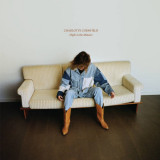
When the world shut down in March 2020, Charlotte Cornfeld was in the
middle of an artist residency in the Rocky Mountains, hunkered down in a
hut with a baby grand piano, sketching ideas for a followup album to her
Polaris-Longlisted 2019 LP The Shape of Your Name - In a matter of
hours, she found herself back home in Toronto with months of touring
cancelled and a wide swath of time ahead of her
She began to write feverishly, mining her memories and dreams and recounting
them with vivid detail. When the songs were fnished, she headed to Montreal to
record with producer/ engineer Howard Bilerman (Arcade Fire, Leonard Cohen),
drummer Liam O'Neill (Suuns), bassist Alexandra Levy (Ada Lea), and guitarist
Sam Gleason (Tim Baker). The group tracked the album in 5 days, mostly live off
the foor, seeking to capture the raw emotion of the songs. The result is Highs in
the Minuses, a memoir in fragments. Here Cornfeld fully embraces the role of
narrator, moving from one vignette to another in a colourful collage. We see her at
21, heartbroken and lost, carrying a friend's 3-legged cat back to her apartment in
a box; then as a teenager, playing a new song for a group of friends on a
trampoline. She sings of a magical frst date, an ex with a mean streak, two
skateboarders gliding in a lakeside parking lot. The brutal honesty in her lyrics
brings to mind writers like David Berman and Adrianne Lenker, while musically
she conjures a Zuma-era Neil Young, leaping from crunchy guitar rock to piano
ballads with effortless grace. Highs in the Minuses is Charlotte Cornfeld's
strongest offering to date, each song a gem in and of itself.
- A1: Abyad Barraq (With Greg Fox)
- A2: Sa'at (With Alexei Perry Cox)
- A3: Istashraqtaq (With Beirut)
- A4: Tanto (With Lucrecia Dalt)
- A5: Ana Lisan Wahad (With Farida Amadou & Pierre-Guy Blanchard)
- B1: Qalaq 1 (With Alanis Obomsawin & Diana Combo)
- B2: Qalaq 2 (With Roger Tellier-Craig)
- B3: Qalaq 3 (With Moor Mother)
- B4: Qalaq 4 (With Rabih Beaini)
- B5: Qalaq 5 (With Oiseaux-Tempete)
- B6: Qalaq 6 (With Viz Reka Csiszer)
- B7: Qalaq 7 (With Tim Hecker)
- B8: Qalaq 9 (With Mayss, Mazen Kerbaj, Sharif Sehnaoui & Raed Yassin)
The Acclaimed Arab-Levantine Contemporary Music & Art Project Returns With Its First New Album Since 2018. Led By Lebanese-Canadian Producer Radwan Ghazi Moumneh, Whose Many Credits Include Matana Roberts, Big | Brave, Sarah Davachi, Suuns. Featuring A Different Guest Collaboration On Each Track, Including Tim Hecker, Moor Mother, Beirut, Lucrecia Dalt, Greg Fox. Europe & Canada Tour In November 2021 With Experimental 16mm Analog Films By New Duo Member Erin Weisgerber.
One of the most renowned and uncompromising entities working in 21st century avant-garde Arab-Levantine art and music, Jerusalem In My Heart presents a new album of vital and haunting electronics and electroacoustics, framed by founder and producer Radwan Ghazi Moumneh’s spoken and sungArabic, buzuk-playing and sound design. Qalaq is the most distilled, variegated and finely wrought Jerusalem In My Heart album to date – featuring a different guest/collaborator on every track, yet as cohesive, emotionally resonant, sonically adventurous and narratively powerful as any release in JIMH’s celebrated discography. Guests across the album's 13 tracks include Moor Mother, Tim Hecker, Lucrecia Dalt, Greg Fox, Beirut, Alanis Obomsawin, Rabih Beaini and many more. “Qalaq” is an Arabic word with many shades of meaning but Moumneh particularly intends it as “deep worry” – on various obvious global levels, but also specifically with respect to Lebanon: its collapsing domestic politics, economy and infrastructure; the tragedy and aftermath of the 2020 Beirut port explosion; the intractable geography and geopolitics that continue to condemn the country to corruption, disruption, destabilization and violence. Moumneh writes: “The Side Two tracks are all named ‘Qalaq’ and then numbered, representing the degrees of layered and complex violence that Lebanon and the Levant have reached in the last couple of years, from the complete and utter failure of the Lebanese sectarian state that has driven the economy to a grinding halt, to its disastrous handling of the migrant influx from neighbouring failed states, to the endemic corruption that led to the August 2020 port explosion, to the latest chapter of Palestinian erasure and yet another brutally asymmetrical and disproportionate bombing campaign on Gaza.” Qalaq is shaped by a "dismantled orchestra" ofmusical collaborations, forged through long-distance file exchange during lockdown winter 2020-21 (and the inverted companion to JIMH's previous 2018full-length Daqa'iqTudaiq, which featured a 15-piece orchestra recorded live in Beirut). Moumneh initially through composed Qalaq in purposely stark and skeletal form, then gave each guest artist a section to decompose, edit, re-interpret and recompose as they desired, working their stems back into his own mixes for each piece/section and moulding newfound coherences in the overall work. The result is The album artwork with a front cover colour photograph by Myriam Boulous capturing a scene during the Beirut October Revolution of 2019.
k 11 Qalaq 6 (w/ VÍZ Réka Csiszér)
Featuring Squirrel Flower and Liam O’Neill (SUUNS). Recommended If You Like: Mount Eerie, Low, Richard Swift, the Weather Station, Lomelda, Fleet Foxes, Squirrel Flower, L’Rain. Cedric Noel is a songwriter, bassist, collaborator and producer currently based in Montréal, Québec. The newest longplayer from Tio'tiá:ke/Montreal staple Cedric Noel lands with a stunning sense of surety and self. Hang Time stands as a high water mark for a songwriter who's spent the past decade quietly expanding the borders of his music. Longtime fans will recognize the fluid elements of the album’s open-ended rock formations: reflective strumming, soaring choruses, searing guitar lines, subtle bass grooves; all occasionally dissolving into pools of pure ambience. New listeners will find surprises throughout: threads of folk pop, ambient and sound collage fasten the foundations of this expressive whole. However, what’s most striking on Hang Time is Noel’s newfound sense of voice, both literal and metaphorical. Written primarily in 2017-18 during an intense period of self-reflection, this collection of songs finds Noel wrestling profoundly with his sense of identity, self and place. The album’s material was captured faithfully at The Pines, a beloved downtown Montreal studio whose doors shuttered shortly after amidst the strain of the pandemic. Noel worked closely and patiently with friend and engineer Steve Newton, ensuring the songs had the time and space needed to come fully to fruition. Hang Time features subtle rhythm work from drummer Liam O’Neill (SUUNS) and guest spots from Brigitte Naggar (Common Holly) and Tim Crabtree (Paper Beat Scissors) among others. The album opens in mid-air with ‘Comuu’, a song that implores a becoming-more while hovering triumphantly. Then follows a suite of songs (‘Headspace’, ‘Keep’, ‘Stilling’) that recall the heart-rending power of y2k-era Low, albeit with a more vigorous beat. On ‘Bass Song’, an intimate duet with musician Ella Williams (Squirrel Flower) that explores the depths of interpersonal constriction. At the crux of the album sits ‘Born’, a deceptively pleasant-sounding song that explores the confounding emotionality of adoption before fading into a distended soundfield. Throughout the back half of the album, Noel double’s down on this commitment to his genuine, proud, Black self. The most confrontational track, ‘Allies’ finds him refraining “Are you on my side?” as a trailing guitar solo interweaves a Malcolm X soundbite, eventually engulfing the composition. Glorious lead single ‘Nighttime (Skin)’ traces the artist’s sense of ancestral dissociation through to a triumphant moment of pride in self-acceptance. Throughout Hang Time, Noel finds a way to ask hard questions (both of the listener and himself) in ways that are compassionate, open and honest. The ebb and flow of tension and tenderness that moves within these tracks helps to grow the heart and redefine what Black music can be in 2021.
Audiophile 180glp pressing includes eight 12"x12" art print reproductions of analog film stills by renowned experimental filmmaker Daïchi Saïto. The first purely solo record by Jason Sharp - where every sound is created by his saxophone, breath, heartbeat & modular synthesis rig. Sharp's customized electroacoustic biofeedback system utilizes a heart monitor to turn his pulse into signal & tempo responsively synthesized in real time during peformance & recording. Produced by Radwan Ghazi Moumneh (MATANA ROBERTS, SUUNS, BIG | BRAVE, ERIC CHENAUX, JERUSALEM IN MY HEART). For Fans of Fennesz, Christina Vantzou, Tim Hecker, Klaus Schulze, Ben Frost, Gas, Windy & Carl, Colin Stetson. Montréal saxophonist and electroacoustic composer Jason Sharp presents his third album on Constellation. The Turning Centre Of A Still World is Sharp's first purely solo record and his most lucid, poignant, integral work to date. Following two acclaimed albums composed around particular collaborators and guest players, Sharp conceived his third as an interplay strictly bounded by his own body, his acoustic instrument, and his evolving bespoke electronic system. The Turning Centre... is a singular sonic exploration of human machine calibration, interaction, expression and biofeedback. Using saxophones, foot-controlled bass pedals, and his own pulse - patched through a heart monitor routed to variegated signal paths that trigger modular synthesizers and samplers - Sharp paints with organic waves of glistening synthesis, pink noise and digitalia. Melodic strokes and harmonic shapes ripple and crest across ever-shifting seas, through an inclement cycle from dawn to dusk. The album's six main movements navigate a world where placid surfaces are always roiled and disquieted by a deeper inexorable gyre: the gravitational pull and tidal perpetuity of our bodies made of water, buffeted by terrestrial atmospheric pressures, wrung out by emotions, coursing with blood, sustained by breath, inescapably yearning for and returning to ground again and again. Sharp's heartbeat literally courses through these compositions - while only occasionally surfacing as a clearly audible pulse or rhythm, it physically feeds into a spectrum of generative synthetic processes that help constitute and conduct the music.
- A1: Marc Melià – Permanent Waves (04 26)
- A2: Pletnev – Marc O’polo (06 31)
- A3: Douglas Greed – Vancouver (04 11)
- A4: Middle Sky Boom – Missing Drive (05 13)
- B1: Thomass Jackson – Mithra (07 07)
- B2: Goldmoon - Bells (04 08)
- B3: Krikor – Sally Hardesty (05 34)
- C1: Morgan Blanc – Werde Der Du Bist (04 52)
- C2: Cora Novoa – Virtual Aesthetics (04 35)
- C3: Nsdos – Al-G (05 43)
- C4: Rebeka Warrior – Ich Komme Zurück (04 49)
- D1: Theus Mago – Idealistic Stone (07 33)
- D2: The Populists – Prehistoric Lemurs (05 19)
- D3: Acid Love Triangle – Instant Track (06 42)
Back in 2018, Lumière Noire celebrated its first anniversary with a compilation featuring thirteen exclusive tracks by an eclectic group of electronic musicians – a family portrait of sorts. A few months later, a second volume of From Above, compiled by the label's artistic director (and DJ) Chloé, once more brings thirteen established acts together with promising upstarts. The first compilation was the embodiment of the label policy advocating for both artistic excellence and a widening of electronic aesthetics – bopping from deviant house music to adventurous IDM and to the rigor of dancefloor techno, among other electronic explorations. Some of the artists featured are now closely associated with Lumière Noire, while others were more established performers such as Benedikt Frey, Lauer, Jonathan Fitoussi, Il Est Vilaine, Dave e Brun (half of Swayzak) and Frank Agrario, as well as upcoming artists such as C O N T R A (a side project by none other than Iñigo Vontier), Sutja Gutierrez, Théo Muller, Markus Gibb, Bajram Bili, and a sprinkling of UFOs circling the genre (Suuns' Ben Shemie, Drvg Cvltvre, and electro-acoustic combo Lumi). This group photo laid down a number of paths for a label in perpetual evolution.
Since then, the Parisian entity has continued to grow within the international electronic scene, releasing Local Suicide's Leopard Gum EP, Iñigo Vontier's first LP, and planning another slew of releases for 2020. The lineup for this second volume of From Above is once again equally intriguing, offering a crescendo-like track listing over a double LP format, which is a feat of sorts for a "Various Artists" compilation.
Marc Mélias' fascinating, unsettling Permanent Waves gets the proceedings going with a contemplative track that provides a serene opening to the odyssey on which From Above will be taking the listener. Pletnev continues on with the playful, hooky Marco O’Polo, a fundamentally techno track built over a seductive 90s-inspired breakbeat. Douglas Greed (whom Chloé remixed on BPitch a few years back, and had himself remixed track from her album Endless Revisions featuring Ben Shemie’s vocals), supplies Vancouver, a slice of ambiance à la Boards of Canada, supported by a gripping breakbeat. The rhythmic arpeggio of Israeli producer's Middle Sky Bloom makes his contribution a hypnotic, disconcerting slice of dark disco. Thomass Jackson, a safe bet in the new wave of the Latin-American electronic music blowing its sometimes hot, sometimes cold wind, proposes Mithra, a dancefloor incantation to the Antiquity's bull god. With Bells, Goldmoon delivers a track that is both melodic and nostalgic, tinged with rhythmic samples, Moog basses and solar backgrounds. Longtime friend of Chloé, Krikor, who has released two albums on L.I.E.S. Records (Pacific Alley and Saudi), offers a moment of respite with Sally Hardesty (a nod to fans of horror movies), a heavenly and bewitching track that, paradoxically, hints at the highly energetic second half of the compilation. Discovered with Confidences EP released on Lumière Noire, the young French producer Morgan Blanc asserts himself here with Werde Der Du Bist ("Become who you are"), a song with luminous chords and midtempo rhythms to start the second half of the compilation by raising the tension. Galician producer, DJ and designer Cora Novoa continues the rollercoaster's ascent with her Virtual Aesthetics, which once again brings those acid tones – this time without the vertigo. Equally corrosive, but tenser and more percussive, the uncategorizable NSDOS' AL-G attempts to give order to a chaotic electronic world full of violence and danger. Rebeka Warrior (half of the duo Kompromat alongside compatriot Vitalic), takes on a more nostalgic vibe with Ich Komme Zurück, a French/German techno chant evoking a secret dream of a track from a bygone era. Three years after the release by Lumière Noire of Moderna and Theus Mago's stroboscopic Dog Is Calling You, Theus Mago makes a solo comeback with Idealistic Stone, a most acid of club tracks, rattled by the modulations of the inevitable TB 303. French electro-rock saltwarth Yan Wagner's dancefloor alter ego The Populists' Prehistoric Lemurs gives an almost Orientalizing twist to Kraftwerk's techno-pop. To close things off, the collection's last track, the appropriately-named Instant Track by impromptu encounter between Hervé Carvalho (Acid Arab), Jacques Bon (Smallville) and Demian (Kompakt) Acid Love Triangle, releases the pressure with a long, bittersweet reverie that leaves the listener, at the end of these thirteen musical adventures, to rest languorously on an artificial and welcoming shore.
Genre: Electronic, World (Arabic). 180gram vinyl includes 12'x24' art print poster + 320kbps DL card. RIYL: Matar Mohammad, Pauline Oliveros, Nadah El Shazly, Lucrecia Dalt, Chino Amobi, Sote, Arca, Fatima Al Qadiri, Tacita Dean, Stan Brakhage. Jerusalem In My Heart (JIMH) returns with Daqa'iq Tudaiq, the third full-length album from the Montréal-Beirut contemporary Arabic audio-visual duo, following the acclaimed 2015 release If He Dies, If If I f If If If (ye ar-end li sts at The Wire (#39), The Quietus (#24) and A C loser Listen (Top 10), among other accolades).
Featuring voice, electronics, buzuk and other instrumentation from composer-producer Radwan Ghazi Moumneh (Matana Roberts, Suuns, Big Brave) and abetted by the 16mm analog film work of Charles-André Coderre in live performance, JIMH continues to expand the horizons of its profound conceptual and aesthetic engagement with Arabic/Middle-Eastern traditions. Daqa'i q Tudaiq translates as 'minutes that bother/oppress/harass'—which presumably needs no further explanation—and features two distinct album sides of music. Side One realizes a long-held dream of Moumneh's to record a modern orchestral version of the popular Egyptian classic 'Ya Garat Al Wadi' by the legendary composer Mohammad Abdel Wahab. JIMH assembled a 15-piece orchestra in Beirut, enlisting the celebrated Montréal-Cairo composer Sam Shalabi (Land Of Kush) as arranger and musical director for the session. Anchored by the stately hypnotic pace of mallet and percussion instruments (riq, santur, derbakeh, kanun), the piece unfolds with lush, languid, reverb-drenched manoeuvrings through virtuosic Maqam shifts (Oriental scales). Moumneh's melismatic lead vocals and electronic production sensibility pay homage to the genre's documented historical recording traditions, while pushing things subtly and respectfully into new territories of sonic distortion and noised, artefact-laden transmission.
The song's original title (with lyrics penned in 1928 by the poet Ahmad Shawqi) translates as 'Oh Neighbour Of The Valley', but JIMH takes a different line from the original lyric as the new title for its orchestral-electronic re-interpretation. 'Wa Ta'atalat Loughat Al Kalam' (' The Language Of Speech Has Broke Down') is an expression of wordless love and transcendent communication between two lovers' eyes in Shawqi's poem; JIMH re-titles the song with this line, exploding the sentiment with more complexity, tragedy and socio-political meaning - also prefiguring the formal aesthetic ruptures JIMH bring to the piece itself. Love in a time of politics, politics in a world conspiring against love, and the specificity of Arab diasporic experience in our brutish 21st century. Side Two comprises four tracks of non-ensemble 'solo' material by Moumneh which push rupture and decomposition/recomposition of tradition further into avant-garde territory - voice, buzuk and electronics take the lead on a suite of emotive and evocative songs, including the percussive loopdriven instrumental 'Bein Ithnein' ('Between Two' ) and the stunningly unsettling processed vocal track 'Thahab, Mish Roujou', Thahab' ('(The Act Of) Departing, Not Returning, Departing'). Daqa'iq Tudaiq is a masterful, mesmerizing artistic statement and confirms Jerusalem In My Heart as one of the most engaged and forward-looking avant-Arabic projects at work in contemporary music today. Thanks for listening.
- A1: Markus Gibb - Kuru
- A2: C O N T R A - Taurus
- A3: Ben Shemie - A Million Kinds
- B1: Drvg Cvltvre - Last Rites
- B2: Sutja Gutierrez - Allodoxaphobia
- B3: Théo Muller - Douce Transe
- C1: Dave E Brun Vs Frank Agrario - Grace
- C2: Benedikt Frey - Iaon
- C3: Lauer - Pythor
- D1: Bajram Bili - Restart
- D2: Il Est Vilaine - Fahrenheit 451
- D3: Jonathan Fitoussi - Cercles Polaires
- D4: Lumi - Izerditan
In just a year of existence, Chloé's Lumière Noire has brought emerging artists and promising newcomers together - and this first compilation of 13 brand new tracks expands the roster, exposing the label's eclectic vision in full daylight. When Chloé talks about her label, she puts forward the fundamental values that informed her own musical journey, her trust in her own musical taste - and, of course, the predominance of human relationships: 'I followed
my bliss and only commissioned tracks from artists that I respect and whose music I love. That to me is Lumière Noire's musical palette.' With this 13- track, unmixed compilation, Chloé makes a case for a label aesthetic that is based in open-mindedness. Familiar, elemental Lumière Noire artists are represented, as are new faces, producing a kind of group photo presaging what's next for the fledgling label. Lyon's Markus Gibb leads the track listing with Kuru with a deep chiaroscuro matching the label's ethos, followed by other mainstays Il Est Vilaine's Farenheit 451, which evokes Ray Bradbury's retro-dystopic angst with the
band's usual electro-pop elegance. Sutja Gutierrez, who released in debut EP, The Legend of Time on Lumière Noire in April, pursues his electro Shamanism with the ceremonial Allodoxaphobia, while Iñigo Vontier (whose EP Aluxes came out on the label in late 2017) brings his C O N T R A project
online with track Taurus, a further development in voodoo house. Elsewhere, Suuns lead singer Ben Shemie, who lent his fascinating art-rock croon to Recall, a single from Chloé's Endless Revisions LP, contributes A Million Kinds, a synthy, psych-pop debut that is as brilliant as it is surprising. On to the freshman class: Dutch producer Drvg Cvltvre (who gets personal kudos
from Chloé with each new 12') brings the uncompromising dark electro of his hypnotic and claustrophobic Last Rites. Jonathan Fitoussi's airy, minimalistic Cercles Polaires brings the respite of his recent Versatile Espaces Timbrés LP (a collaboration with Clemens Hourrières): 'I met him at Xavier Veilhan's
Studio Venezia at the Venice Biennale. He's a great guy, and his universe is unique,' says Chloé. Benedikt Frey's deep techno track Iaon, is on par with his smash 2017 album, Artificial, out on ESP Institute. First-timers are also part of the recruits: Bajram Bili with the ten cerebral minutes of Restart, Théo Muller with the ultra-deep Douce Transe, and Lumi, a Basque band that fuses
electronic sounds with acoustic instruments, brings the ompilation to a close with a track commissioned by Chloé. These audacious choices are anchored down with the likes of Permanent Vacation pioneer Lauer's hooky, 80s-infused Pythor ('Just like him, I was a resident of the Robert Johnson, and he was a guest of mine at one of my Lumière Noire nights at the Rex. He is one of these people whose music I highly appreciate'); Aergeworc & Franck Agrario, half of English duo Swayzak David Brown's project, weaves an ethno* mood into Grace's techno. Bringing together different generations, genres, and styles That may not necessarily be Chloé's MO. She invokes a more arbitrary, personal logic: 'I like to mix of-the-moment tracks and more timeless one, but the rule is above all 'do I love this or not'. That was my ethos when I started Lumière Noire.' In that way, the label is definitely in keeping with its time
The cornerstone track from Chloe´'s new album, an adventurously dark landscape dotted by Montreal rock band Suuns' singer Ben Shemie's vocals, Recall deserved this long-awaited quartet of astounding remixes, which serve as extensions of her latest full-length Endless Revisions' second single, released last October on Lumie`re Noire, the label founded by Chloe´.Moire´, Matthew Dear's latest signing to his Ghostly International label (which released the London artist's debut album in early 2017), retained a smattering of Ben's syllables, setting them to a captivating retro- futuristic remix that straddles two worlds, along the milestones of a restrained beat in a mesmerizingly ethereal and ghostly road trip that could last forever.German Crosstown Rebels signee Jonathan Kaspar's version is a more banging techno version, rounding out the EP's wide array of moods and genres. Over a formidably progressive build-up, the mood remains dark thanks to Ben's stretched-out vocals, and Recall's original universe is made more dynamic with a sped-up tempo, added percussions, and a concluding harmonisation finale that brings it all into the light. Douglas Greed, previously remixed Chloe´'s Driven (released on BPitch Control back in 2015,) similarly chops up the vocals, but takes them down a different road, reassembling the original's elements to create a different track, resulting in a fascinating free-form re-reading, an adroit upcycling, a long detour through the German producer's favoured poetic techno backroads - possibly inspired by the surroundings of Jena, Greed (a.k.a. Mario Wilms') hometown, and homebase of the Freude Am Tanzen label, the serious stable of geniuses directed by the incomparable Robag Wruhme.In a more motoric register, Autarkic's re-imagines Recall via a different narrative lens, re-populating and grounding it all at once. The Israeli Red Axes accomplice, who released an excellent debut album (I Love You Go Away) on Disco Halal last April, has a knack for propelling fanatics of rock urgency straight to the dancefloor. A gang of machines amplifies Shemie's voice, highlighting its minutiae of suffering and pleasure, leading the listener into dawn.
- 1