FullTime Production is honored to presents Kano "I'm Ready" featuring remixes by Mousse T. and FrescoEdits!
"I'm Ready" published in 1980 on FullTime Production, among the first
success, also peaked at #21 on the R&B and hip hop songs in the United States and at 8# on the most popular songs being played in nightclubs across the United States.
Kano combining elements of 1970s disco, funk and R&B while extensively using synthesizers and percussive handclaps as well as raw-processed and vocoderized vocals inspired by United States and European disco, from Chic and Giorgio Moroder.
The great producer Mousse T. gave us his great musical experience, he wanted to make the song a real hit in the house music and disco music genres.
The piano, the voice and harmony were transformed into something softer and less computerized and metallic. Mousse T. made us glimpse the immensity behind a remix and the most diverse musical facets that only an excellent producer can astound and leave the listener speechless.
The musical break of the "extended club remix" at minute 03:24 makes us raise our arms to the sky and clap our hands!
FrescoEdits introduced his more afro side to the remix by expertly
marking the percussion and resulting in a funk and tribal remix.
FrescoEdits is an artistic project that has based its success from the
love and art of sampling big hits as well as a label and a community, is
among the most highly regarded artists in the disco edits.
Search:sy us
Didattica is the first album from Zetas, a female rap duo coming straight out of the city of Salerno, on the south west coast ofItaly. Entirely produced by beatmaker, rapper and DJ/producer Tonico 70, a true veteran of Southern Italian hip-hop,the full-lengthdebut isreleased on DJ's Choice, a partner label of Four Flies Records.
Born between the 90s and 2000s, rappers Annarella and Miriade were exposed to the world of underground hip-hop from an early age, jamming and freestyling. Rather than going for the sounds of trap and auto-tune that are so popular in their age group, however, they immediately embraced the spirit of old school rap, withitsboom bap vibes. As suggested by the album's title itself (which translates as 'teaching' or 'learning') they view of rap as a school – that is, as an art form where constant training is key if you want to stay true to your values and identity.
With the help of producer Tonico 70, Zetas have created a record that is fresh and contemporary, while paying tribute to the past.They rap about everyday urban life in the exuberant dialect and slang of their native city, delivering raw rhymes with a tightand very expressiveflow, while Tonico70 uses a classic sampling approach but also incorporates real instruments into his beats–Antonio D'Apolito's guitar, Peppe Maiellano's keyboards, Giuseppe Desiderio's bass and Giuseppe Limpido's drums.
The result is an excitingcombination of funk, soul, dub, R'N'B, reggae, and even electronic influences,one where deep bass and syncopated rhythms blend wonderfully with the melody, urgency and authenticity of dialect rhymes.
Jdotbalance left the moon and the sky for a city that works. This is their first offering for the ESP Institute. On side A, 'Sublimate' combines two aspects of a digital pipe and mallet assortment—both as the percussive base for a groove, and as an interstitial layer where inherent resonances are massaged into melody. Bubbles and squeaks dance around the sound-stage periphery, occasionally pierced by high frequency statements, presenting as either ghostly yelps from the aether or as bursts of kaleidoscopic shards. A third of the way through the track, the instrumentation truly does sublimate, crystallizing into a new self—bolder and naughtier, abandoning its pensive optimism for a detour around the spectrum's dark end. On the flip, 'Precipitate' continues with its predecessor's primer of metallic percussion, but accelerates the pace to reveal Jdot’s attitude leaning toward cunty malice. The kick drum relentlessly pounds us as 16th note droplets metamorphose from chrome-dipped hail into full-blown acid wind. As intensity retreats beneath the digital rubble and the track draws to a close, so does our stream of Jdot’s consciousness. These two songs will accelerate your nervous system.
If you were to ask for a defining Habibi Funk track, there are a few that come to mind: from Fadoul’s “Sid Redad,” Dalton’s “Soul Brother” to Ahmed Malek’s “Omar Gatlato.” However, none are as widely connected with us at this point as Hamid Al Shaeri’s “Ayonha.” We heard the track for the first time when we were working on selecting tracks for your first compilation and we instantly loved it. We obviously had heard of Hamid El Shaeri’s music before, but only material from his Al Jeel phase when he was already the full-blown
superstar he is now.
Listening to his releases from the early 1980’s opened a whole new door for us. At the time, Hamid had just left Libya to pursue his career in Egypt via a detour in London, where he recorded his
first album. Hamid’s distinct sound of the sound is quintessentially reliant on heavy synths and so it was particularly important to purchase these synths in a timely manner. “Whenever a new one synthesizer would come out, we would have to buy it immediately, otherwise someone else would get their hands on that sound.” London also played an important role for Hamid as a musical epicenter.
He fondly reminisces about the many live shows he attended there, including some of the biggest international musicians like Freddie Mercury and Michael Jackson. After returning to Cairo where he also recorded his following albums, he connected with SLAM! for the
release of his debut, laying the foundation of a collaboration that lasted for 5 albums. Luckily, we were able to connect with Hamid through our friend Youssra El Hawary, whose extensive network has opened many doors for us within the Egyptian music scene. We met Hamid for the first time probably in 2016 at his office / rehearsal studio in the outskirts Cairo. We were expecting a larger-than-life
character in-line with his status as a certified superstar, yet the actual person turned out to be very approachable and super easy to connect with. He liked the idea of an effort to amplify his early works again,
which, when originally released, were far from an economic success.
While he was down to assist with an interview and his blessing for the project he also told us that for any license we needed to speak with the original label SLAM! who released these songs, still held the rights and also remained in business over the decades though they didn’t actively release any new music. Hany Sabet had started SLAM! records in the early 1980s and focused on cassette tape releases, the
format that expedited the success of a new generation of record labels in Egypt. By the mid 1980’s, SLAM! had become one of the most successful and economically dominant record labels in Egypt, with Hamid El Shaeri being just one of their key artists, alongside Mohamed Mounir, Hanan, Hakim, Mustafa Amar and many more. Luckily, Hany Sabet turned out to be a friend of our colleague Malak Makar’s father, which probably helped to warm him to the idea of licen- sing “Ayonha” to this - in the scale of his world - tiny label
from Germany. Eventually “Ayonha” ended up becoming a widely successful release and either Hany or we brought up the idea of a full album dedicated to Hamid El Shaeri’s work on SLAM!.
"Maktoub Aleina” is the first single and will be released January 14th. Following the massive success of "Ayonha,” “Maktoub Aleina” is another mid-tempo groover with a beautiful, synth-forward melody, that brings together a lovely combination of soul, disco and Arabic pop music of the highest order, giving a taste of full album. The second single, “Yekfini Nesma Sotak” will be released January 28th and combines Hamid’s unique formula of soul and pop, held together by a catchy synth melody. “Yekfini Nesma Sotak” picks up the
pace a bit, making the uplifting mood of the track even more powerful. Third single, arriving February 11th, is “Dari Demou’ek,” one of the stand out tracks of Hamid’s early recordings done for SLAM! in the early 1980s. Dominated by a disco infused bassline, the track offers a lot of space of the funky production to shine while Hamid inserts his vocals at all the right moments. A masterpiece of disco touched by Arabic pop music.
Full album arrives February 25th. This release is dedicated to Hany Sabet, the founder of SLAM! and his wife Rosemary Jane Sabet (who
took the photos we used for the cover and the booklet), who sadly passed away during the time it took us to prepare the release.
Vinyl comes with an extensive booklet with an interview with Hamid as well as unseen photos
After a longer break, Marko Nastic is back with a new Easy Tiger release that was surely worth the wait! This time, Marko is bringing us three banging tracks that are inspired by the comeback of the 90s club sound with a cosmic touch to it. The opening track, "How to Create the Vibe Around", is an old-school roller with a punchy drum and a heavy bassline. Dreamy and trance-inspired synths will push you to the dance floor, and the acid sound will make you move. While you're vibing, the vocal is sure to hit the spot and complete this journey. "An Ode to the Executioner" is the beast of this EP. Starting with crazy modulations, it creates an euphoric energy that is fulfilled with a fat bassline and a straight-on techno beat. Uplifting acid and trance vocals keep us in a rapture state of mind.Last but not least, "Cables And Rain" continues the party with an old-school drum loop and a groovy bassline that reminds us of Marko's recognizable older production. Coloring this banger is a refreshing flute melody and a repetitive vocal. And of course, the wrapper of the track, once again, is the acid sound that is sure to lock you in place.
- A1: Point Of No Return (7'' Version) - Expose
- A2: Don't Be Shy (Vocal/Radio Mix) - Janelle
- A3: Lover Girl - Meg
- A4: Two Of Hearts (12'' Version) - Stacey Q
- B1: Together Forever (Radio Edit) - Lisette Melendez
- B2: I Wonder If I Take You Home – Lisa Lisa & Cult Jam With Full Force
- B3: When I Hear Music - Debbie Deb
- B4: Let's Go (Radio Version) - Nocera
- C1: Funky Little Beat - Connie
- C2: Show Me - Cover Girls
- C3: Nightime - Pretty Poison
- C4: Fascinated (12'' Version) - Company B
- D1: Dreamin' - Will To Power
- D2: Baby Talk - Alisha
- D3: Take Me In Your Arms - Lil Suzy
- D4: Thief Of Heart - Cynthia
• Latin Freestyle was a dizzying, passionate, ultra-modern music. It was the aural equivalent of a can of thirst-quenching Quatro or a Spanish Harlem dance-off, and it became the electronically constructed bridge between disco and house.
• Freestyle grew out of the electro sound of the early 80s, combined clean staccato rhythms with morse code synth hooks, and topped them off with emotive, usually female, frequently Latina vocals. There was plenty more going on besides: proto-house piano lines, Cuban percussion, high emotion and synth hooks to die for.
• Put together and annotated by Bob Stanley (who also compiled the acclaimed “The Daisy Age” and “Fell From The Sun”), “Latin Freestyle” is the first compilation to cover the whole gamut of Freestyle from its early 80s breakthrough to its early 90s revival. So many classics… Lisa Lisa made the UK top ten with the 808 joy of ‘I Wonder If I Take You Home’. Stacey Q’s cosmically great ‘Two Of Hearts’ came out in 1986, while 1987 saw the likes of Company B’s ‘Fascinated’ and Exposé’s ‘Point Of No Return’ become huge UK club hits.
• Today, Freestyle is a scene with a solid collector’s market, and rarities like Janelle’s ‘Don’t Be Shy’ sell for hundreds of dollars. It’s a classic summer soundtrack, finally condensed in one Ace Records compilation – “Latin Freestyle”.
Hania Rani announces her new album, Ghosts, bringing her songwriting and beautiful vocals to the fore and featuring special guests Patrick Watson, Olafur Arnalds and Duncan Bellamy (Portico Quartet). Ghosts will be released via Gondwana Records, followed by Hania"s most monumental tour to date, with shows in the EU, US and Canada. Ghosts is the sound of an ever-evolving artist and, just as the album"s title suggests she passes repeatedly and gracefully between musical worlds: as composer, singer, songwriter, and producer. This album builds on Rani"s earlier successes Esja and Home with an expanded yet still minimal setup of piano, keyboards, synths (most importantly her Prophet) and features more of her mysterious, bewitching voice. Its spirit is warm, beckoning one into an ambitious double album that unfolds at an exquisite pace, informed by her revelatory, exploratory live performances. Ghosts is also an album of collaborations as Rani is joined by Patrick Watson, who breathes unearthly life into the ethereal "Dancing with Ghosts". "Whispering House"is written and recorded with her friend, Olafur Arnalds and casts a peaceful, ineluctable spell; and Portico Quartet"s Duncan Bellamy contributes vital loops to "Don"t Break My Heart" and "Thin Line".
The Mapendo album of the Mighty Cavaliers, up to today, has been shrouded in mystery. If you look at the original cover of this very rare Kenyan funk-infused album all you will find are the names of the engineer and the producer, as EMI Kenya omitted the names of the musicians and the songwriters. Digging deeper a rather sinister story of deceit develops whereby Mapendo becomes symbolic for all what was wrong about the Kenyan record industry in the 1970s, and the music industry in Africa as a whole. As this maltreatment of artists proved endemic throughout the continent, although little talked about.
One of the three surviving members of the Mighty Cavaliers, bass player Bonnie Wanda - who started his career in 1971 with Gloria Africana - vividly remembers participating in the recording of the two albums the band made in 1976 and 1977 - Fisherman and Mapendo - and how they, especially on the last album, got short-changed by shrewd record label executives. In the 1960s it was mostly Indian and European record bosses that called the shots and usually gave musicians the chance of a one-off payment for their session time and recorded songs or wait for - hopefully - a generous royalty check. In most cases records didn't sell more than a thousand copies with an occasional hit selling in the tens of thousands, so musicians were reluctant to register themselves with the Music Copyright Society of Kenya. Although without doing so one couldn't receive royalties.
'For two years the Mighty Cavaliers performed five nights a week at the Starlight Club for five hour sets.
The re-release of Mapendo, the first of the German Want Some Records label, is another exciting puzzle piece in the tapestry of groovy Kenyan music. It proves that there are still great gems out there to be re-discovered for audiences worldwide.
Text written by Michiel van Oosterhout
This Album is dedicated to the musicians
Bonnie Wanda, Rashid Salim, Vuli Yeni, Juma Waweru Njuguna and Athmani 'guitar boy'."
- 1: Chariots Of Pumpkins (Halloween Iii)
- 1: 269Th St. Bridge (Escape From New York)
- 1: 3The Alley (War) (Big Trouble In Little China)
- 1: 4Wake Up (They Live)
- 1: 5Julie's Dead (Assault On Precinct 3)
- 1: 6The Shape Enters Laurie's Room (Halloween Ii)
- 1: 7Season Of The Witch (Halloween Iii)
- 1: 8Love At A Distance (Prince Of Darkness)
- 1: 9The Shape Stalks Again (Halloween Ii)
- 1: 0Burn It (The Thing)
- 1: Fuchs (The Thing)
- 1: 2To Mac's Shack (The Thing)
- 1: 3Walk To The Lighthouse (The Fog)
- 1: 4Laurie's Theme (Halloween)
Blue Vinyl[24,79 €]
By now everyone should know, John Carpenter is not only a celebrated filmmaker but also a musical maestro whose soundtracks have become syn - onymous with the genres of horror, suspense, and science fiction. His innate talent for composition and his deep understanding of how music can elevate storytelling have left an indelible mark on the world of cinema, and a haunt - ing presence in people's record collections. Anthology II continues the celebration of his compositional genius via an ex - cellently sequenced collection of some of his most iconic pieces of music from his extensive filmography, all newly recorded with his musical collaborators Daniel Davies and Cody Carpenter . The compilation opens with "Chariots of Pumpkins" from Halloween III that perfectly captures the eerie essence of the cult classic film with its pulsating synths and haunting melodies. The listener is engulfed by a sense of unease and anticipation, before being thrust into "69th St. Bridge" from Escape From New York , a dynamic track that encapsulates the futuristic and gritty nature of the film via the use of throbbing bass lines, driving rhythms, and electronic textures. The record has also an isolating tone as it skulks through ambient leaning tracks such as "Fuchs" and "To Mac's Shack" from The Thing, and "Walk to the Lighthouse" from The Fog, all of which display a slower tempo, foreboding undertones and an ethereal atmosphere that feels like a distant whisper. All of which has been cautiously laid in preparation to the grand finale. The iconic and instantly recognizable "Laurie's Theme" from the original Halloween . Its simple yet menacing piano melody which has become synonymous with the horror genre, concludes the album by striking fear into the hearts of listeners. These tracks represent just a fraction of John Carpenter 's impressive musical repertoire. With each haunting note and pulsating beat, his soundtracks continue to resonate with audiences, forever etching his name in the annals of film music history.
- Chariots Of Pumpkins (Halloween Iii)
- 69: Th St. Bridge (Escape From New York)
- The Alley (War) (Big Trouble In Little China)
- Wake Up (They Live)
- Julie's Dead (Assault On Precinct 13)
- The Shape Enters Laurie's Room (Halloween Ii)
- Season Of The Witch (Halloween Iii)
- Love At A Distance (Prince Of Darkness)
- The Shape Stalks Again (Halloween Ii)
- Burn It (The Thing)
- Fuchs (The Thing)
- To Mac's Shack (The Thing)
- Walk To The Lighthouse (The Fog)
- Laurie's Theme (Halloween)
Black Vinyl[23,49 €]
By now everyone should know, John Carpenter is not only a celebrated filmmaker but also a musical maestro whose soundtracks have become syn - onymous with the genres of horror, suspense, and science fiction. His innate talent for composition and his deep understanding of how music can elevate storytelling have left an indelible mark on the world of cinema, and a haunt - ing presence in people's record collections. Anthology II continues the celebration of his compositional genius via an ex - cellently sequenced collection of some of his most iconic pieces of music from his extensive filmography, all newly recorded with his musical collaborators Daniel Davies and Cody Carpenter . The compilation opens with "Chariots of Pumpkins" from Halloween III that perfectly captures the eerie essence of the cult classic film with its pulsating synths and haunting melodies. The listener is engulfed by a sense of unease and anticipation, before being thrust into "69th St. Bridge" from Escape From New York , a dynamic track that encapsulates the futuristic and gritty nature of the film via the use of throbbing bass lines, driving rhythms, and electronic textures. The record has also an isolating tone as it skulks through ambient leaning tracks such as "Fuchs" and "To Mac's Shack" from The Thing, and "Walk to the Lighthouse" from The Fog, all of which display a slower tempo, foreboding undertones and an ethereal atmosphere that feels like a distant whisper. All of which has been cautiously laid in preparation to the grand finale. The iconic and instantly recognizable "Laurie's Theme" from the original Halloween . Its simple yet menacing piano melody which has become synonymous with the horror genre, concludes the album by striking fear into the hearts of listeners. These tracks represent just a fraction of John Carpenter 's impressive musical repertoire. With each haunting note and pulsating beat, his soundtracks continue to resonate with audiences, forever etching his name in the annals of film music history.
After a string of successful releases, Lenske regular AIROD is back on the label with a striking new single and subsequent EP.
A certified dance floor pleaser both in and out of the studio, AIROD's distinct sound has kept him at the forefront of cutting-edge underground techno as it continues to evolve rapidly. Circling back for another release on Lenske, his latest work is another bold statement of intent, staking his claim as one of the genre's most exciting talents.
Released first, on the 4th August is standalone single 'Meet Me In The Club', it teases with a wave of high-octane club-focused goodness. Building around a catchy vocal hook - the track comes in hot with racy grooves and riveting musicality. A core of thumping drums, fizzing hat sequences and erratic melodies flood the mix, twisted and pulled around with clever modulation and use of FX to carve out an energetic dance floor journey with hints of euphoric nostalgia throughout.
The title cut 'Golden Pills' emulates a progressively intensifying sprint. Ethereal melodies and unwavering drums create an ever-increasing sense of urgency, dissected by ominous vox chops, atmospheric breaks, and a sea of instrumental flare from start to finish.
'I Just Wanna Rave' has 'warehouse track' written all over it. Furious drum work and minimal accompanying percussion set the base of the track, paving the way for an onslaught of shuddering synth layers and electrifying bass tones that keep you stomping until the last beat.
'At All Costs' cuts a sinister line from the outset. Its striking selection of infernal musical layers make the perfect match for a potent beat structure and catchy vocals, leading into a continuum of peaks and troughs, steered by crescendoing snare rolls and huge throwdowns with gripping melodic progressions either side.
Owners Club call themselves a "pub rock four piece" - but they are so much more than that. There's a through line in their taut, visceral guitar sound going from British greats like Roxy Music and Marc Bolan, through The Buzzcocks and The Jam before taking a detour off to NYC and nodding towards The Strokes and The Walkmen. The Dorking-based four piece are a blistering live act, with songs that range from singing about the long discontinued Double Diamond beer to vampires, the occult and an England that feels like a distant memory.
This EP will be the band's debut release on vinyl. Recorded at Small Pond Studios in Brighton in April this year, and produced and mixed by Matt Gleeson of WELLY fame, it presents three songs that brilliantly demonstrate what a ferocious, tightly-wound sound this Dorking four-piece can produce.
The lead single will be Double Diamond - a song that came about after a chance purchase of a Double Diamond-branded ashtray from a car boot sale by Dorking train station. The song is a romantic and messy vision of the life the ashtray’s lived, the pub it came from, the punters who left their fag ends in it and the messy nights and bar fights it’s witnessed. With sprawling synths, punchy guitar lines and tongue-in-cheek lyrics, the song is an anti-advertisement for a drink which no longer exists, as well as a look through rose-tinted beer googles at what Britain's night life - for better or (almost certainly) for worse - was once like. As the advert used to state: you know where you are with Double Diamond. It works wonders.
"Tale Spinnin'" - Joe Zawinul (keyb, perc, voc); Wayne Shorter (ts, ss); Alphonso Johnson (b); Alyrio Lima (perc); Leon "Ndugu" Chandler (dr)
»We played music that people listened to every day just as they watch the news every evening, music which changed constantly - just like the weather«, reminisced Joe Zawinul when talking about coming up with a name for the group. This would probably frighten off listeners in today's mass market. But back in those days CBS was satisfied with the group's sound being somewhat similar to the Miles Davis Combo and offered them a recording contract without carrying out the usual sound check. The magic potion "Bitches Brew", which Zawinul and Wayne Shorter had conjured up with Miles Davis, was promising of exhilarating new things to come.
The heart-stopping mix of motivic fixed points and exciting improvisations, »the sketchy melodies, all that a synthesizer and other similar electronic devices could offer, combined with a Milky Way of rhythms« (Der Spiegel) was the pathway down which the group went - without ever becoming pure routine. The fifth album, "Tale Spinnin'", is captivating for its wealth of distinctive, often warm, synthesized sounds, which are further enhanced by Wayne Shorter's bright, twangy soprano saxophone, lending it a jazzy aura. To be sure, this gripping jazz fusion never progresses steadily all the time, but takes up snatchy, though seemingly familiar, melodic ingredients and combines them to produce a new mixture. "Badia", however, is completely different: a quietly flowing and totally rhythmic ethnic work, which today would be classified as World Music.
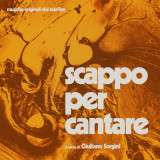
Another dream coming true! One of Giuliano Sorgini's finest and most sought-after titles is finally available as an official LP reissue – the first ever – remastered from the original tapes.
Originally released in 1971on the small library music imprint FAMA, which operated as a sub-label of RCA Italy, the record contains the original music written for Scappo per cantare, a small, pseudo-psychedelic 'musicarello' (musical comedy film) broadcast on RAI television and starring, among others, Italian singers Gianni Morandi and Mauro Lusini.
The only credited album artist is Sorgini, but it's impossible not to perceive, in this record, the hand of his close friend and colleague Alessandro Alessandroni.
This should not come as a surprise. In the early 70s, the two composers and multi-instrumentalists had a fruitful collaboration that saw them, under the monikers Braen (Alessandroni) and Raskovich (Sorgini), produce an abundance of works together, most of which have now gained the recognition they deserve. These include, among others, two 7" singles from their band The Pawnshop, three records in the series Alle sorgenti delle civiltà (Folkmusic), the crime/noir library albums Quarta pagina (Usignolo) and Inchiesta giudiziaria (Octopus Records), as well as the LP Tempo Libero (Panda Records), which was released shortly after the record presented here and in some ways drew rhythmic inspiration from it.
While their collaboration remained unacknowledged on the original release of Scappo per cantare (this was not uncommon at the time, especially in the field of library music), the record sounds perfectly in line with other works composed by Alessandroni in the early 70s, such as Complesso Gisteri's Mostra Collettiva (co-written with Oronzo De Filippi), or even a landmark album like Spontaneous, where Sorgini contributed to a handful of tracks.
So, yes, the sheer beauty of Scappo per cantare is the result of an incredible synergy between two heavyweights of Italian library music! Airy and sweeping melodies à la Zoo Folle, psychedelia à la Under Pompelmo, and various percussion instruments played by Sorgini seamlessly blend and fuse with elements and touches provided by Alessandroni.
More specifically, we find Alessandroni's signature, melancholy whistle in "Desolazione"; the peaceful and dreamy sound of his 12-string guitar in "Scogliere" and "Con Amore"; the trademark harmonies of his vocal ensemble Cantori Moderni in the last two tracks mentioned and in "Per cantare"; and his ingenious use of distortion on his Fender Stratocaster in the suspenseful transitions "Concentrazione" and "Fantocci", as well as in the frantic/hypnotic hippie numbers "Mordente" and "Fendente" (as a side note, it is worth remembering that Alessandroni experimented extensively with distortion in the rock-infused album Underground, co-written with De Filippi and released in 1971 under the moniker Braen's Machine, probably a reference to British psychedelic band Soft Machine).
The creative relationship between Sorgini and Alessandroni was so symbiotic that it would be useless to try to identify in more detail their respective contributions to the sound of Scappo per cantare. The alchemy between these two musical geniuses is the key to the album's exquisitely Italian mixture of cheerful lounge, sweet psychedelia and smooth easy listening.
To do justice to the quality of the music, this remastered reissue is enriched by a new artwork by Eric Adrian Lee, who drew inspiration from the psychedelic visual culture of the period in which the album was written and recorded.
- A1: The Leaves Are Turning
- A2: La Seine A Minuit
- A3: Gris Gris
- A4: Sayonara
- A5: Hearts Of Darkness
- A6: Fine Like Wine
- A7: Painted Skulls
- A8: The Grotto
- A9: Blackbirds
- A10: Spanish Moss
- A11: Black Coffee
- A12: Fly Swatter
- A13: Dawn Patrol
- A14: Muitas Caipirinhas
- B1: The Return
- B2: El Escorpion
- B3: Flooding
- B4: The Villa
- B5: Mojo Hand
- B6: Antenna Up
- B7: Flip Of A Switch
- B8: Snakes In The Walls
- B9: World On Wheels
- B10: Magnetic Fields
- B13: Paranoid Void
- B14: The Silver Queen
- B11: Mati Self Portrait
- B12: Air Zaire
The Madlib Invazion Music Library Series Entry #4: Dan Ubick (Connie Price & The Keystones, The Lions) explores the realms of Canyon Funk. This is the next up in a series of music library releases, with future volumes produced by DJ Muggs, Karriem Riggins and more. The Madlib Invazion Music Library Series was created by Madlib and Egon to give their creative friends a chance to stretch out and indulge in whatever type of music they wanted. This music was created for easy, one-stop clearance in film and television synchronization usage and for sampling. You can also enjoy these albums in the way that many do with the best of the best vintage library catalogs – listen, ponder, repeat.
"I imagine myself playing these songs in a small club that is slowly burning," says A. Savage of his second solo record, Several Songs about Fire. After more than a decade in New York, the co-frontman of Parquet Courts has left the city, marking his exit with a masterpiece of maturity and a worthy corollary to his first solo venture, 2017"s Thawing Dawn. "Fire is something you have to escape from. This album is a burning building, and these songs are things I"d leave behind to save myself." Produced by John Parish on a 1" 16-track in just ten days in Bristol and studded by the support of Cate Le Bon and Jack Cooper (Modern Nature, Ultimate Painting) as well as saxophonist Euan Hinshelwood (Cate Le Bon), drummer Dylan Hadley (Kamikaze Palm Tree, White Fence), and violinist Magdalena McLean (Caroline), Savage"s outsize gifts as a lyricist and observer - a quality Parish calls "an emotional openness guarded by a laconic wit" - shine. Worrying questions of wealth and poverty, self and other, Savage displays the poet"s gift of knowing when to narrate and when to vanish, leaving the listener to their own emotional privacy rather than instructing them how to feel. The end result is tantamount to psychic odyssey, with "Elvis in the Army" placing us in a subterranean venue where the livid, ratifying cymbal raises the room"s blood pressure and "Mountain Time", evoking an austere waltz playing in a desolate house, returning those listening to life. Influenced by Sybille Baier and Townes Van Zandt, Savage joins a canon of songwriters constantly dilating aperture and perspective. In rendering the signage of laundromats and threats of debt collectors as glistering and totemic as the scope of mountains, rivers, seas, and skies, Savage finds hopes and curses in equal measure.
The most potent memories I have of music are from my early childhood listening to the oldie's station, riding in the back of my Pops' 1975 Cadillac Seville to work alongside him moving plants in Sacramento at the now long gone Capitol Nursery during white hot summer afternoons, and then the drives back home in the purple twilights and oily blue-oranged nights. I'm talkin' The Temptations, War, Earth Wind and Fire, Al Green, Sly and the Family Stone, The Delfonics, Stevie Wonder, Chaka Khan...soul music. I loved the melodrama of it all. The world outside refracted and transmuted through the crackling speakers past Pops' thumping thumb and my tiny whirring mind and left whatever road behind us fundamentally changed in our wake. Through the years other sounds too left its imprint well before I picked up a guitar. Rap, Punk, hardcore, dub, R&B--and a little later in middle school, blues, folk and country. But those early Cadillac memories always remained the bedrock. With folk and blues music, I fell in love with the immediacy of it and found the acoustic guitar economical for all the solitary roaming of my early 20's. All the while I knew that one day, when I had something I felt like I could add, I wanted to incorporate the sound of those early Cadillac memories. But only after I felt established as a songwriter in its most simple form, banging on a wooden guitar and yodeling up some melody did I feel comfortable exploring other sounds and only recently did I find the time and space to do that. The pandemic trapped all the world in their rooms. While recording my last record in the height of it and at the behest of my friend and You, Yeah, You producer Brad Cook and his friend Justin Vernon, I bought my first keyboard. A Roland Juno DS. I started tinkering on it throughout the past couple of years and as I became more stationary started writing songs on different instruments that I accumulated. Layering sounds on garageband in my apartment writing bass and horn parts, making drum loops, adding synth... I became pretty obsessive with the endless possibilities it brought and got quicker and quicker at making songs that way. It was just so fun and limitless.
Following five years of improvised live shows, film scores and jams, Carl Brown and Josh Horsley align to offer a bittersweet record of shimmering noise and textured Fourthworld ambience set within a drenched and darkened, distinctly Northern context.
What began as sample-heavy collage music slowly shifted as the pair crafted new live sets to embrace classical and noise music, always treated with an experimental spirit and minimalist sleight.
Powders stripped back the set up for these album sessions, this time leaning more heavily on the use of granular synthesis with cello as the lead instrument and sound source.
‘Concede to Circumstance’ sees Powders exploring their hometown of Preston and it’s longstanding experimental underbelly - not as a location that demands elsewhere aspiration or an outward face but as a place to din to be.