Pink Vinyl
On Electro Records' ''Sci Fi Electro'' series, each artist has created a 15 minute track for each side of the record, taking you from pure electro tracks to very experimental compositions, sounds and atmospheres. Each side is divided in ''movements'' in a continuous morphing process without any pause between different tracks. The series is a collection of seven releases inspired by the following films created in the 20th century: THX 1138, 2001 A Space Odyssey, Blade Runner, The Thing, Akira, Terminator and Tron.
Buscar:synthesis
70s/80s influenced ambient mixed up with a healthy dose of UFO's, abduction, occultism, paranoia, astral flow, new age and long lost Atlantis. 2020 was the year when Albert Kuningas debut vinyl on Escape From Synthesis was released and now the second part of this ambient/
dark ambient masterpiece is available! Finally it's time to get physical vinyl copies of legendary Bandcamp-only release "Music for UFO document programs 2" with a never before heard bonus track called 'Sateenkaarisilta 2'! Don't sleep on this one as it's limited release of 200pcs only.
LP,180, 2018 REISSUE - REMASTERED FROM ORIGINAL TAPES, CAREFULLY REPRODUCED ORIGINAL ART
The 'vivid contemporary sounds for a fresh visual image' make up the now canonised Synthesis from Alan Hawkshaw and Brian Bennett. These two greats go deeper than usual on this collection, and the end result is a synth concept record of sorts. Released in 1974, it's an essential companion piece to
their Synthesizer and Percussion LP, released on Themes International Music in the same year.
Like most of our favourite library records, Synthesis has that gloriously funky, 'weird electronic music' vibe without ever being inaccessible. With the awesome ARP Odyssey at the fore, Hawkshaw and Bennett have created a blissed-out soundscape that, whilst laid back in all the right places, somehow remains heavy on the funk. It's a sort of throbbing, proto-G Funk sound and you can fnd it on many of these low-lit basement workouts.
Take the ice-cool 'Alto Glide'. It's a sunset-funk highlight with an electro-fute refrain that conjures those dreamier Dre / DJ Quick instrumentals from '91 to '92.
Stereolab, Koushik (again) and all those Ghost Box artists were clearly listening very closely in the years since. The equally relaxed 'Mermaid' glides efortlessly with soft, shimmering piano, understated percussion and kaleidoscopic synths.
It's a really beautiful piece.With these two soft-focus closing tracks allowing the LP to foat away over the horizon, the preceding ten tracks have a more insistent, neck-snapping rhythm
section to back the synth overload. Highlights include the head-nod funk of 'Getting It Together' and the synth break in 'The Executive', which informed classic video game soundtracks.
For once Be With really is stuck for words to describe just how good this record is.
Best just to listen. As with all ten re-issues, the audio for Synthesis comes from the original analogue tapes and has been remastered for vinyl by Be With regular Simon Francis. We've taken the same care with the sleeves, handing the reproduction duties over to Richard Robinson, the current custodian of KPM's brand identity.
Following the success of 'Stellar Tunes', Italian maestro A Credible Eye Witness and his partner in crime Ghost Ride have returned into the studios to bring you this very special phenomenon. Top notch 'Random Research' introduces four tracks of pure electro madness, starting off with well named 'Synthesis', a fusion of both producers creative talent into one of a kind track that celebrates their immoderate taste for mind blowing electro modulations! Pounding 'Magnetic Force' offers a powerful electro monster based upon hammering beats and hypnotic vocals. A pure Dj tool, perfect to drop in the middle of set exactly when you want to lead your crowd into harder areas. Textured 'Metis' on the flipside continues where 'Magnetic Force' stopped to offer more psychedelic and urban melodies. Combined to a groovy bass line, the track appears to be a real winner while 'Leda' slows down the rhythm for more relaxing and no-nonsense electro tinted with acidic loops. The 'Random Research' EP sees two uncompromised artists explore uncharted territories, unusual dancefloor paths to take the listener to a higher level of electro. A must have 12'' ahead of its time, even better than 'Stellar Tunes'. Are you prepared enough for that
One Instrument presents ""One Instrument Sessions", a new format on which each artist shows a more personal narrative of the sound experiments they compose.
Neel opens the series with a solo record including "Aria", a 20 minutes long piece made with the E340 Cloud Generator of Synthesis Technology, and "The Morning After", composed with the Roland SH-01A.
The E340 Cloud Generator is an oscillator which Neel says has always been a fan of. It has eight sines and sawtooth VCOs with unique modulation capabilities. "Aria" came to life while he was preparing for a live techno set: when he stopped the recording the oscillator kept running producing the sound and tones audible in the composition.
The Roland SH-101 is Neel's favourite synth. "The Morning After" is one of the 9 experiments he created while using the boutique version of the machine.
- A1: New Age Synthesis ( Unzipping The Zype )
- A2: Hurdy Gurdy Glissando (Live At Philips Halle )
- B1: Light In The Sky ( Live At Philips Halle )
- B2: Unidentified (Flying Being )
- C1: Radio ( Live At Philips Halle )
- C2: The Dervish Riff ( Live At Philips Halle )
- C3: Hurdy Gurdy Man ( Live At Philips Halle )
- D1: Motivation ( Live At Philips Halle)
- D2: 1988 Aktivator ( Live At Philips Halle )
- D3: Crystal City ( Live At Philips Halle )
- E1: Activation, Meditation ( Live At Philips Halle )
- E2: The Glorious Om Riff ( Live At Philips Halle )
- E3: Meditation Of The Dragon ( Live At Philips Halle )
- F1: It's All Too Much ( Live At Philips Halle )
- F2: Encore 1 : Electrik Gypsies ( Live At Philips Halle )
- F3: Encore 2 : Talking To The Sun ( Live At Philips Halle )
Some gigs are simply meant to be out there - even if they take decades to actually make it into our hands. This is without doubt one of those concerts, recorded at the Philips Halle, D sselsdorf on the 28th March 1979
during the Live Herald Tour. Includes the only known live recording of Talking to the Sun' Released following the AIM-nominated deluxe box set from Hillage, 'Searching for the Spark', this new 'Dusselsdorf' double CD showcases the Steve Hillage Band's prowess with excellent sound quality - a quality so high that you'll forget that it's a live recording until the applause. This is a band at the height of its powers, with Steve in great voice throughout, and most obviously utterly
enjoying themselves. The vibe is completely infectious and doesn't let up throughout the entire gig. Featuring Steve's own adventurous compositions and covers of Beatles and Donovan classics, all are approached with a joie-de-vivre and high sensibility. The trademark heady combination of vibrant psychedelic rock interwoven with an irresistible full blooded groove, interspersed with the smoothest of deepspace synth/guitar trips gathers all before it in a tsunami of up-lifting music.
With the benefit of hindsight, Steve's musical trajectory from the creative space riffs of Gong to the trance and techno of System 7 is made instantly clear. This version of 'Dusseldorf' will be released as a double CD presented in
mediabook packaging complete with a 24-page booklet and 3LP gatefold pressed on to 180g heavyweight vinyl.
“An irresistibly narcotic sonic palette… Low-lit sounds for blissed-out ravers.” FACT LA electronic artist Holodec debuts on Phantom Limb with hypnotic new album TRU FOLK, a subtle and environmentally sensitive documentation of everyday life for distant synthesis, interwoven field recordings, and urban haze. Described as “both a folk record and an audio document” by Holodec - aka West Coast producer Jieh - TRU FOLK draws from 15 years of field recordings that capture a range of environments from city life to the domestic everyday. These audio narratives form the foundation of the considerately textured representation of the same spaces that make up the record - full of earthen, grounding synthesis, semipresent melodies, and smogged-out tonal palettes. It occupies a zone somewhere between tangible and dreamlike, treating sound as evidence of living rather than an escape from it.
Guests is the home recording project of Jessica Higgins and Matthew Walkerdine. Vaguely named as such to avoid any problems with the poster if they pull out of a gig (which has only happened once, about a year and half before any songs were actually written to be fair) but also to capture a sense of reverse hospitality. That is, arriving at your door with a bottle of good wine (can’t turn up empty handed) or a fist full of savoury or sweet snacks (time of day dependant); oversharing at the afters (and then passing out on your couch); reading to your toddler while you make their lunch or put everything back where it was meant to go (only to get torn apart again). So, something about what happens when private worlds meet each other, making or having been made a space for. But at times, it’s a different kind of intimacy, a temporal or material one, like the feeling of crisp fresh sheets, and abundant and soft, body-part appropriate towels in a hotel in a city you’ve been to before and love to go back to.
Their debut record, “I wish I was special”, was variously described as “a collage of concrète experiments and outerzone pop gestures, music that sounds as if it’s been written from the depths of a dream”; “music for people who love music but also hate it too”; “something like chasing ghosts or befriending a wild animal”; “pulling apart nervous sensations with haphazard ease and requisite humour”; and “a melody of refusal, of being all-in (…) finding the exact right WRONG sound to express the discontent”. Common Domestic Bird continues in this vein, layering synthesiser, keyboards and samples over rudimentary drum rhythms and field recordings, which are in turn sung or spoken with to create nine new songs.
Written and recorded between autumn 2024 and summer 2025 in Reading, Berkshire, the music has matured since its last outing, in a way, leaning less into collage and more toward structured composition and melodic depth, yet retains a healthy dose of indeterminacy and off-kilter rhythms for the forever-amateur. The songs on Common Domestic Bird hint at some “about”-ness through a series of discrete vignettes which sound a bit like architecture or end of year lists, gossip or over-thinking subjectivity, like disappearances and impressions, the support structure of the spine, letters and signs offs, things you could really do without and where they should go, hoping you’ll see something that isn’t there, pretences and performance. At times they feel kind of funny, others kind of sad or a bit angry and annoyed, a bit like you really.
Phantasy transports back to 1982 for a faithful reissue of the highly sought after ‘Fools Are Friendly’ from Xclusiv, carefully re-mastered from the original tapes.
The alias of sisters Karen and Maxine Berlinski, Xclusiv emerged inconspicuously from the London borough of Croydon with a sophisticated vision of cosmic disco pop, linking the suburbs with Soho’s neon-tinted nightlife. Decades later, and in close collaboration with the sisters, this highly sought-after record arrives lovingly reissued by Phantasy in its original, sensuous form.
Originally self-released on Le Maitre Music, a record label spun-off from their family-run fireworks and pyrotechnics company, ‘Fools Are Friendly’ has the irresistible sense of a radio hit that never was. A brilliant DIY reflection of the disco and soul that dominated the charts of the time, its glossy, primitive electronics echo the synth experiments of Giorgio Moroder or Didier Marouani, pioneers that were transforming pop music.
The extended mix provides an overture to the sisters’ twinned vocals, unfolding with delectable disco drama. In contrast, the Instrumental Mix lets the record’s blend of elements truly breathe, a synthesised version of Xclusiv’s irresistible vocal hook holding court between timeless arpeggios and subtle modulation.
- Dreamt Person V3
- Everything About You Is Special
- Slightly Bent Fork Tong V2
- Magnificent Stumble V2
- Decembers
- Can't Vote For Yourself V1
- You And Shayna V1
- Goose And Gary V2
- Anxattack Boss Level19 V3
- She Married A Chess Computer In The End
- Health Card10
- Paganism Ratchets
- Everything About You Is Ambient
- You And Shayna Slow Funk V2
- Your Bounce V1
- Magnificent Stumble V1
- Can't Vote For Yourself Video Version
- Goose And Gary V1
- Slightly Bent Fork Tong V1
- You And Shayna Video Version
- Terrazen 1012Nc
- Resting Tongue
The tenth anniversary edition of Venetian Snares' Traditional Synthesizer Music adds ten more tracks and alternative versions previously available only on a limited edition compact disc from the artist's Bandcamp.Traditional Synthesizer Music is a collection of songs created and performed live exclusively on the modular synthesizer by Aaron Funk. Each sound contained within was created purely with the modular synthesizer. No overdubbing or editing techniques were utilized in the recordings on Traditional Synthesizer Music. Each song was approached from the ground up and dismantled upon the completion of its recording. The goal was to develop songs with interchangeable structures and substructures, yet musically pleasing motifs.
Many techniques were incorporated to "humanize" or vary the rhythmic results within these sub structures. An exercise in constructing surprises, patches interrupting each other to create unforeseen progressions. Multiple takes were recorded for each song resulting in vastly different versions of each piece, a number of which are released for the first time on vinyl and digital for this updated version of the album. BIO Aaron Funk, mainly known artistically as Venetian Snares, is a Canadian electronic musician based in Winnipeg, Manitoba who’s been working since the mid nineties. He is widely known for innovating and popularising the breakcore genre being something of its breakout star. His signature style features complex drums and unusual time signatures and a knack for making ultra-vivid music that takes listeners into unusual places, from the aggressive and extreme, to the surreal, comic and sometimes plain beautiful. His musical explorations extend out in many different ways, from the complex Hungarian, classical-inspired Rossz Csillag Alatt Született, to acid explorations as Last Step, to innovations with modular synths on Traditional Synthesiser Music.
As a collaborator, he’s made music using intimate recordings as musical elements with the artist Hecate as Nymphomatriarch, as Poemss with Joanne Pollock, where they both sing over strange delicate pop. He’s recorded an album of rich, edited improvisations with producer and guitarist Daniel Lanois and he’s also part of the sometime duo Speed Dealer Moms with John Frusciante. Most recently he features on Rosalia’s album Lux on the song Reliquia, providing drum programming and production input.
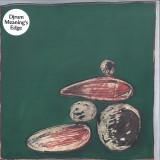
Djrum's first release since 2019, the Meaning’s Edge EP is an introduction to a whole new world. For the artist also known as Felix Manuel, it was created in the final stretches of six rather traumatic years work. Having carefully honed his techniques and aesthetics, and learned some hard-won emotional lessons over this time, finally he began to work in a quicker, lighter fashion – and to cleanse his palate a little by bringing in a fresh ingredient: his own flute playing. For listeners, though, it will serve as an appetiser, a way into the delights and complexities of this new phase of his creativity.
It’s a serious work in its own right, mind. The use of flutes – including Bansuri, Shakuhatchi, Western Classical, and synthesised all blending and blurring into one another – gives it a coherence and a sense of airiness that unites the five tracks over half an hour, however divergent their beats get. And as in all his music, Felix’s whole life is in here. Ethnomusicology studies, untold hours of DJing everywhere from the gnarliest squat raves to the most rarefied deep house clubs, explorations of his own neurological and emotional makeup, and the technical finesse of someone who is never not creating music or art, all roll into an experience that’s dazzling, delightful and keeps on giving.
Just the opening track ‘Codex’ alone touches on OG dubstep, Aphex Twin-like braindance, post-classical exploration, movie themes and more. The gentle tones and melodies that rise up out of it perfectly conjure Felix’s running theme of a protective bubble that provides a sense of safety and tranquillity even as the beats and acid gurgles and spurts all around it conjure up the slings and arrows of life’s difficulties.
The tone set, the EP moves through ultra-rarefied glass-like percussion in an almost ambient setting, hints of grime’s counterintuitive patterns, and even more hectic patterns influenced by Tanzania’s hyperspeed singeli style of dance music – but always with that perfect balance of chaos and control, unpredictability and protection. It rewards playing and replaying endlessly, it’s a profound and often joyous experience… and it’s only just the beginning. This is the return of a master craftsperson more focused than ever on his vision and vocation and ready to blow your mind all over again.
Mastered and cut on 140g black vinyl by legendary mastering engineer Matt Colton at Metropolis Studios, London. Pressed at optimal media, Germany.
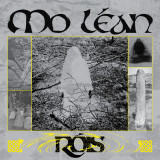
Rose Connolly has a beautiful voice with a wide melodic range, which she bends, twists, strains and warps through both her physical exertions and a sample-based granular synthesiser. The results recall both the Gaelic tradition of séan-nos singing, and the work of experimental artists such as Meredith Monk, Yoko Ono and Hatis Noit, while the beats meld folk with gothic, 4AD-era soundscapes unmatched since the glory days of This Mortal Coil.” – The Guardian (10 Best Folk Albums of 2024) “RÓIS is a composer, vocalist, multi-instrumentalist, and electronic artist from Fermanagh, whose songs breathe new life into a forgotten Ireland. Self-released, written and produced by RÓIS with additional production from John Spud Murphy (OXN/Lankum), 'MO LÉAN' is a concept album, taking the listener through the grieving process from start to finish, from the chaos that loss brings, to the intense emotional outpourings and finally, a cathartic release.
‘MO LÉAN' features several new original recordings and reworks of songs and hymns based around the concept of death, life, mourning and catharsis. RÓIS re-imagines the tradition of 'keening' in Ireland that goes back to pre-christian times, a practice in which women would 'keen' a lamenting wail at the side of a coffin during a wake. After discovering the last two recordings of keening songs, RÓIS was inspired by their ethereal melodies to give them a modern reworking yet honouring the original women by sampling them in her adaption. 'Keeners', through their voices, movements and laments, conveyed the communal expression of grief and allowed those suffering a way to release their sorrow and loss. RÓIS aspires to do the same with 'MO LÉAN', by expressing the power of the voice to transcend death and help us relinquish our fear of it
- 303: Eyelashes Out {16’52’’}
- Her Panties {11’31’’}
- Unwashed (105 Oven) {05’28’’}
- Another Stain {04’32’’}
'Tense from the first note and decisively uncompromising ‘GHSTING’ is the debut collaboration by Polish artists Alex Freiheit and Aleksandra Słyż, an incredibly unique piece of work that mixes fiction, spoken word poetry, theatrical antics, dense synthesis, acoustic ensemble and dark landscapes all set within the backdrop of a sinister Eastern Europe hotel. The resulting sound is menacing, humorous, harmonious, tumultuous, and at times quietly erotic.
Alex Freiheit, a poet and vocalist, is widely recognized for her captivating work with the SIKSA duo. Over the past decade, she has delved into the realms of personal feminist storytelling, postmodern fairy tales, and queer legends, crafting unique and thought-provoking narratives. In this groundbreaking collaboration with talented composer Aleksandra Słyż, they are now delving into the herstory of lies and exaggerations, extracting the raw essence of these tales filled with stench, stains, secretions, and torn organs. Eyeless Freiheit haunts the hotel guests while dressed in a binder and holding a bottle filled with a corrosive substance. She shares compelling stories about the hidden activities and other secrets that unfold within the walls of hotels when no one is watching. Her gripping narrative is complemented by equally haunting and eerie music. Słyż divides the text into four chapters, skillfully intertwining synthetic and acoustic elements. She combines the sounds of synthesizers, woodwind and percussive instruments with vocals, creating a tense, dynamic soundscape. Freiheit’s voice possesses an earnest quality, where a frightening cadence suspiciously flips into a meditative cycle.
Together, Freiheit and Słyż have crafted a bold and suggestive story that feels like the mesmerizing soundtrack to a contemporary Eastern European horror film, captivating an essence that is hard to pinpoint but instantly recognizable. This is abstractly powerful music that pushes listeners into a kaleidoscopic spiral that channels ecstatic over loss.
When a Russian missile struck the ground not far from my studio in Kyiv, I vividly remember how my body reacted to the explosion, milliseconds before my mind did. That traumatic explosion reduced my essence to a primal state. There existed nothing but dread—the kind that, in scripture, accompanies the appearance of angels announcing, ’Be not afraid’.
The visions of Abbess, composer and mystic Hildegard von Bingen were preceded by bright, excruciating flashes of light. Modern medicine reduces them to cluster migraines, one symptom of which is the retinal aura, often accompanied by blurred vision and blind spots. Hildegard’s music can place great demands on the bodies of its performers, emphasizing uncomfortable intervals and the wide distance between the lowest and highest pitch. In comparison, Gregorian chant, the liturgical standard of the time, represents a tempered attempt to grasp God intellectually; indeed, Hildegard’s music was once described as a stick of dynamite thrown into a Gregorian chant.
This album is not a historically informed performance. Hildegard’s persona and music are a starting point—a distant mirror, akin to the shield of Perseus, used to reflect Medusa. It allows us to reflect, comprehend, externalise, and transcend traumatic wartime experience, reinstating the embodied origins of Christianity, which contained suffering but also offered the promise of transcendence. Andriana-Yaroslava Saienko emphasises this physical aspect of Hildegard’s music by drawing on authentic Ukrainian folk singing, a form that survived despite efforts by the Soviet occupation to replace it with a simulacrum that is naive, harmless, and devoid of contradictions—an attempt to ‘civilise’ the body by disembodying it.
The musical approach is also informed by my ongoing practice of reimagining early music in modular synthesis. I accompany Andriana-Yaroslava’s fiery singing with drones—extended sounds that also occurred in medieval music. The drones alternate with improvisations, one taking its starting point in medieval polyphony, the other working with the concept of the interchangeability of sound and light, referring both to Hildegard’s visions and the space in which we recorded the album: the Cistercian abbey of Sylvanès in Occitania, known for contemporary stained glass windows whose patterns reference the dispersion of acoustic waves inside the church.
The album features two compositions by Hildegard von Bingen: O Ignis Spiritus Paracliti (O Fire of the Spirit and Defender), dedicated to the Holy Spirit, and O Tu Suavissima Virga (O Sweetest Branch), in honour of the Virgin Mary. Both pieces are performed radically slower than usual, expanding in time and space. On vinyl, the compositions are designed to reflect one another and can be listened to in either order. In the digital edition, there is a bonus track titled Zelenaia Dubrovonka (The Green Oak Grove). Based on a Ukrainian folk song from the Polissia region, Andriana Yaroslava adapted the lyrics to reflect our contemporary reality. The green oak grove does not rustle with the wind; instead, it resonates with a different sound—perhaps the missile that struck near my Kyiv studio.
In discotheques and dark rooms across Europe, Boys’ Shorts have earned the trust of the queer and wider clubbing communities as generous stewards of a timeless sound that, like themselves, never stops moving forward. The duo of Vangelis and Tareq initially met at an underground club in their native Greece. Sensing a rare sonic connection, the pair became friends, forming Boys’ Shorts to meet again and again, travelling from their adopted cities of Thessaloniki and London to appear as far afield as Berlin’s Panorama Bar and New York’s Le Bain, as well as supporting Goldfrapp and Hot Chip on tour. Their motivation? In their own words, “we make people dance!”
Following years of gradual, thoughtful studio sessions, and EP releases on tastemaking electronic labels including Phantasy Sound and Live At Robert Johnson, Boys’ Shorts establish their own imprint, ALL SORTS, in order to deliver a fantastically ambitious debut album, ‘What Does It Take To Make These Men Happy?’
The LP opens with the grandiose, cosmic vista of ‘The Space Between Us’, a classic passage of strings and synthesis, before the shared Boys’ Shorts vision falls back to earthier territory with deep groove of ‘Let’s Fall In Love’, mixing universal sentiment with a patient vision of human potential and the voice of Greek electronic pioneer, K.BHTA. ‘Come’ aligns with NYC’s Michael Cignarale, offering an excitable invitation to the mind and body sculpted by the way of a throbbing, warehouse-sized statement of nineties house sensuality. Channeling heroes Lowe and Tennant at their most introspective, ‘Short Life’ maintains the dance, yet dares to ask, “what if the parties aren’t enough anymore… Can you ask for something more?”
Out of the pet shop and straight into the strobe lights, ‘Disco Romantica’ makes true on the promise of its title, a lovelorn monologue giving way and slipping into rave stabs and whirring synthesis that looks forward to a memorable, emotionally-charged night ahead. Underpinning this feeling of anticipation, ‘Going Out Hoping To See You’ introduces the voice of Justin Strauss to Boys’ Shorts' musical world. A certified icon of club culture, spinning from The Mudd Club to modern day DJ booths, Strauss’s generation spanning experience of nightlife leans into the fundamentals of human connection and the pleasure of musical discovery, wrapped in irresistible chug.
Another transformative figure in club music, Fischerspooner’s own Casey Spooner dips into French for the Motorik cyber sleaze of ‘MECANIMAUX’, their own vocals pitching up and down with playful EBM abandon. ‘Montage’ offers a different kind of composition, conjuring an ecstatic club banger that finds inspiration in nineties indie rock motifs alongside the rave scene, while ‘Run’ promises to blow out sound systems before its weighty electro bassline succumbs to waves of glistening synths.
Such bombast into beauty perfectly sets up the record’s blissful conclusion; ‘The Stars Are Out For You’ is electro-pop so delicate as to heal aching feet (and mend broken hearts), while offering the final tender moments of the album as a form of tribute on ‘Untitled (For Mitsi)’. It’s a thoughtful ending to a thrilling trip through a shared passion for electronic and pop music in all its glorious potential. What does it take to make these men happy? It’s a pleasure to find out.
Superonda’s debut release, Aurora Spectralis, introduces the latest project from Mahatmos, a duo emerging from long-established practices in electronic music, sound design and composition for moving images. Released on 12” vinyl and digitally, the EP unfolds across four tracks of electronic ambient music shaped by atmosphere, con1nuity and restrained propulsion. Ambient textures open a broad emotional and spa1al field, while slow, insistent rhythms provide steady forward motion.
Superonda has created a space for Mahatmos to sharpen their focus on sound as material. Modular synthesis, analogue instruments and live processes techniques are balanced with precision and restraint, resulting in music that moves between progressive and hypnotic forms, informed as much by underground club culture as by cinematic composition.
Mahatmos is a Rome-based duo with complementary and deep-rooted practices. Gianluca Meloni brings a long-standing presence in techno and experimental music scene, with international releases and performances (as Laertes and as part of Modern Heads). Maurizio Loffredo contributes an extensive background in composition, production and sound engineering across popular music and film, with a refined sensitivity to timbre, structure and sonic narrative.
Superonda is a Rome-based label founded by artists engaged in deep sonic research and advanced technical exploration. Operating as an open platform, it connects collaborators working across recording, synthesis and composition, approaching music as a process-driven practice rather than a fixed genre. Each release stands as a distinct exploration, linked by shared sensibilities rather than formal constraints.
The physical edition of Aurora Spectralis is conceived as an extension of the work itself. Alongside a standard black vinyl pressing, a limited run of color and marbled copies has been produced, each one unique. Variability and tactility are embraced as part of the object’s identity, reinforcing the record as something to be experienced gradually, over time.
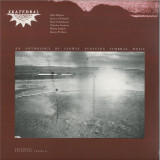
XKatedral Anthology Series II (An Anthology Of Slowly Evolving Timbral Music), featuring exclusive music from Kali Malone, Jessica Ekomane, Mats Erlandsson, Theodor Kentros, Wilma Hultén, and Maria W Horn.
"XKatedral Anthology II is the second instalment in a series of archival releases dedicated to presenting music by composers affiliated with XKatedral working within the realm of slowly evolving harmonic and timbral music. This double-vinyl set contains an array of pieces dating from 2018 - 2020. This collection of pieces focuses on the use of synthetic sound and algorithmic composition languages as tools for precise work within the realm of spectral exploration. In addition to this, the electronic instrumentation in many of the pieces is augmented by acoustic instruments.
The first piece on side A is Kali Malone’s Music for Low Quartet. This piece is an adaptation of the composition “Rose Wreath Crown” originally released on The Sacrificial Code in 2019. In this iteration, the music is scored for two double basses played by Vilhelm Bromander and Zach Rowden, and sine tone electronics performed by Malone herself. The recording of this piece was made at EMS in 2019.
Closing side A is Jessica Ekomane’s ‘First Light’. This computer music piece focuses exclusively on digital sound, layering razor sharp synthetic textures into an otherworldly dynamic weave. The music heard here is a reworked version of a piece originally commissioned by Semibreve in 2020.
Side B contains the work ‘Hands Melt In The Sun’ by Mats Erlandsson. This composition is built from electronically processed tuned zithers and synthetically generated tones arranged in a series of chordal inversions over a sustained fundamental tone. This music, written as a love-letter to the localized drone tradition of Stockholm in the years 2008-2012, was composed and recorded in seven days while in residence at Ställbergs Gruva in Bergslagen, in the summer of 2018.
Opening the second half of the collection is Rough Draft v.7 by Theodor Kentros. Kentros’ compositional practice usually combines acoustic and electronic source material and in this piece he molds the sound of the Buchla 200 and a collection of recorded wind instruments into a molten mass of sound. In its original form, this music was presented as a multichannel immersive work and even in the current stereo configuration it retains some of that enveloping sense of depth.
The second piece on side B, Inertia, is by Wilma Hultén, who makes her debut on record here. An exclusively synthetic piece, Inertia utilizes internal digital feedback in a sealed synthetic system to manifest a harmonic field that swells and abates throughout the length of the piece, interspersed by small gestural elements.
Closing Anthology II is Maria W Horn's work ‘Dies Irae’ for female vocal quartet, pitched glass and synthesis. ‘Dies Irae’ uses a modified form of traditional tonal harmonic language to invoke an uncanny and restless middle ground between the classical western polyphonic vocal tradition and contemporary electronic music. The version heard here is a live recording from Eric Ericssonhallen in Stockholm on May 30th 2020. Performing the piece here are the vocalists Katarina Henryson, Lisa Holmgren, Vilma Ogenblad and Paula Wegmann, as well as Maria herself on glass and electronics."