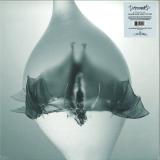
"Ensomheden Vi Deler" ("The Loneliness We Share") is the result of a dialogue between the collages and the music of øjeRum, initiated by IIKKI, between December 2024 and July 2025.
øjeRum is Copenhagen based musician and collage artist Paw Grabowski.
With his collages, the distinctive feature of øjeRum's works is their ability to combine different historical and artistic periods, such as ancient sculpture, medieval frescoes, classical painting and photography, and to make them interact with one another. øjeRum is also renowned for his work as a musician, where he stands out for his surreal, mysterious and poetic universe. His music and art are closely linked. These two sides of the artist's work are constantly intertwined.
In his øjeRum guise, he plucks and strums his treated acoustic instruments, sounding at times like church bells, at times like angelic harp, at time like drones, and suspends the listener in the magic of his melodies. With a deep back-catalogue of releases since 2014 - spanning labels such as eilean rec., Room40, Line, Opal Tapes and many more - he continues exploring his minimal, textural and deeply personal style of ambient music.
The collage and music project "Ensomheden Vi Deler" ("The Loneliness We Share") is an exploration of loneliness, closeness and distance. A meditation on the fragile architectures and hidden shapes of human connection. This is his second release on IIKKI.
Fine Art Book, Ltd. to 500 copies:
Hand numbered & hand stamped / first edition and only edition (no re-print) / hardcover book (15 cm x 21 cm) on Wibalin Natural Cotton White / 80 pages, 35 collages printed on Freelife Vellum 120g/m2 / Swiss Binding / Coloured edges with neon green pantone / Neon Green pantone on front and back cover (logo, slot and circle) / Sticker on front cover.
Cerca:t 35
Swan Song
The vinyl LP at the heart of this éthiopiques 31 tracks 2 to 11 was one of the very last vinyl records ever released in Ethiopia. But above all it represents, we felt, the absolute masterpiece of the Ethiopian Groove – the Swan Song of Swinging Addis. The album leaves a clear idea for posterity of the level of sophistication and mastery that modern Ethiopian music had achieved, before being crushed under the Stalino-military heel of the Derg – as the bloody revolution that was unfolding came to be called.
Ethiopia1976.
The Revolution that broke out in February 1974 rolled on in a ruthless march. The whole of Ethiopian society was utterly stunned. The bouquets of flowers handed joyfully to the first tanks of the coup d'état were to wilt very rapidly. From September 1976 to February 1978, 18 months of Red Terror (the name given by the junta itself) spilled blood throughout the country. This fratricidal conflict took its heaviest toll among students and youth. The shift from feudalism to a cruel and primitive Stalinism left the country's citizens deeply traumatised, and snuffed out any pretence of activism, whatever the sector of society. This ice age was to last for seventeen long years.
ሙሉቀን፡መለሰ Mulukèn Mellèssè Muluqän Mälläsä
It was three tracks by Muluken that served as the opener for éthiopiques-1 more than 25 years ago. Seven more tracks appeared on éthiopiques-3 and 13, all accompanied by The Equators, which was soon to become the Dahlak Band.
The first track, Hédètch alu, also the very first piece that Muluken ever recorded, left audiences both unsettled and amazed. Reflecting the singer's extremely young age (he was just 17 at the time), this angelic voice mystified many, who thought they were in fact listening to a feminine voice. He was not yet 22 when he released his last vinyl record in 1976 with Kaifa Records (KF 39LP), one of the very last to be issued in Ethiopia, before the cassette tape became the dominant medium for music distribution – and before the new revolutionary regime put a stop to all independent musical life, via an unspeakable barrage of prohibitions and other persecutions.
Mulu qèn, literally, “A well filled day”. This tender maternal intention wasn't enough to ward off the cruelty of fate. His mother's premature death drove Muluken to leave his native Godjam, in northeast Ethiopia, to live with an uncle in Addis Ababa. Born Muluken Tamer, he took his uncle's last name – Mèllèssè.
The spelling Muluken appeared in his administrative records. Transcription of Amharic to the Latin alphabet, both in Ethiopia and for scholars, gives rise to controversies and quibbles that can never be neatly settled. French allows for a closer approximation of the original pronunciation, thanks to its battery of accent marks, confusing as they may be to anglophones.
Between rather accommodating administrative record-keepers and the various versions that pop up in interviews given by the artist, Muluken's year of birth oscillates between 1953 and 1955…
1954? One thing is certain: the artist's talent made itself known very early indeed, because he got his start in 1966-67, at the age of 13 or 14. Photos from the period attest to his extreme youth. It's a strange sort of initiation for a very young teenager to become a sensation in the heart of Addis's nightlife at the time, Woubé Bèrèha – the Wilds of Woubé. And what's more, in the club of the Queen of the Night, the Godjamé Assègèdètch Alamrèw herself, the very same that was portrayed by Sebhat Guèbrè-Egziabhér in his novel-memoir Les Nuits d’Addis Abeba2… The legendary female club owner who is remembered to this day by the capital's ageing boomers.
Muluken first tried his hand at the drums, before he grabbed the microphone. He emigrated briefly to the Zula Club, across the street from the old Addis Post Office, one of the ground-breaking bars of the burgeoning musical scene, before joining the Second Police Band in 1968, for around three years. He spent a few months with the short-lived Blue Nile Band founded by saxophonist Besrat Tammènè. As the musical scene grew increasingly successful, and pulled slowly but decisively away from its institutional ties, Muluken released his first 45rpm single in February 1972 (Amha Records AE 440). It was included in two LP Ethiopian Hit Parade compilation albums in September of the same year. All in all, Muluken released eight two-track 45s and the same number of original cassette tapes between February 1972 and 1984, the year that he departed for permanent exile in the USA. After converting to Pentecostalism in 1980, Muluken gradually abandoned all secular musical activity. In 1985, at the end of a concert in Philadelphia, he decided to quit concerts and recording for good. Mèlakè Gèbré, the historic bass player from the Walias band who was playing with him that night, recalls that everything appeared so irredeemably diabolical in Muluken's eyes, that it was to be the end of his contribution to Ethiopian Groove.
The end of the story, the beginning of a legend.
Dahlak Band, forgotten by History
Aside from his personal history and vocal talents, it must be remembered that Muluken Mèllèssè was one of the biggest names in the musical innovations that marked the end of the imperial period. These éthiopiques aim to convince those who are just discovering this hidden gem... As for Ethiopians themselves, they are to this day captivated by this singular and atypical figure in the Abyssinian pop landscape – even though he withdrew from public life some 40 years ago. Incorrigible devotees of poetic twists, of more or less hidden meanings, Ethiopians appreciate above all the care Muluken took in choosing his lyrics and the writers who penned them, such as Feqerte Haylou, Alemtsehay Wodajo and, here, Shewalul Mengistu (1944-1977). Love songs, written by women, a far cry from the conventional drivel that pleases sappy sentimentalists.
Muluken is equally acclaimed for his perfectionism when it came to music, the opposite of the overly casual approach that is all too common. He remained a faithful partner of musicians who came from a lineage that borrowed from several inventive and pioneering bands (Venus, Equators, Dahlak). Amongst them were certain artists who began their musical lives with Nersès Nalbandian at the Haile Sellassie Theatre and who come of age in around 1973 – at just the wrong time, you might say. Among them were the pillars Shimèlis Bèyènè (trumpet), Dawit Yifru (keyboards) and Tilayé Gèbrè (sax & flute). Most notably Tilayé Gèbrè, certainly one of the most important musicians, composers and arrangers of his generation, of the end of the imperial era, and of the early years of the Derg.
It was only in 1981 that a miraculous opportunity arose for Tilayé to escape the Stalinist paradise of the dictator Menguistou Haylè-Maryam. Once again it was Amha Eshèté (1946-2021) who provided a solution. The spirited and courageous producer, who had been in exile in Washington since 1975, succeeded, thanks to his incredible perseverence, in bringing the Walias Band to the USA. It was, in fact an extended Walias Band comprising ten musicians3, six of whom chose to slip away after a few concerts and the recording of an LP (The Best of Walias, WRS 100). Tilayé Gèbrè was one of these. He has been living in the USA ever since. There he joined the then-nascent Ethiopian diaspora, which lived largely unto itself, and was making only very modest headway in the American musical market. It seems unfair that Tilayé Gèbrè and the Dahlak Band were not able to benefit earlier from the public recognition that they do deserve.
A similar draining away of the top-rate talents would lead to the reorganization of the major groups of the “Derg Time”. The remaining artists spread themselves around between Ibex Band (renamed Roha Band), Ethio Star Band and a remodeled Walias Band. That spelled the end of the Dahlak Band.
With this record, produced by the essential Ali Abdella Kaifa a.k.a. Ali Tango, we can appreciate everything that the Derg not only destroyed, but also prevented from flourishing. This gem of Ethiopian-style afrobeat came out in 1976 (and, by way of a parenthesis, before the FESTAC 1977 in Lagos, which was attended by an impressive delegation of Ethiopian musicians — although Fela was already personna non grata in his own country). Despite everything that might distinguish this ethio-groove from Fela’s music – no colonial axe to grind, no question of political confrontation with the authorities, no claims to negritude or Africanism for the Ethiopian musicians, and less extrovertion! –, this LP fits beautifully into the saga of intense and electrified soul of the new “African” groove that Fela and Manu Dibango embodied so well from that point onwards.
In restoring this record to its place in the afrobeat epic, it can be seen that, if nothing else, the timeline bestows a legitimate pedigree and a historical primacy to works that had no international impact when they were originally released.
Warning! Masterpiece!
- A1: Rich Vom Dorf - Only You
- A2: Rich Vom Dorf - What A Good Night
- A3: Rich Vom Dorf - Nightshore
- A4: Rich Vom Dorf - Law Of Series
- B1: Rich Vom Dorf - Weekender
- B2: Rich Vom Dorf - Faded Memories
- B3: Rich Vom Dorf - Too Much
- B4: Rich Vom Dorf - Closed Eyes
- C1: Rich Vom Dorf - That Glory
- C2: Rich Vom Dorf - Love Addiction
- C3: Rich Vom Dorf - Très Bien
- C4: Rich Vom Dorf - Reprise
- D1: Etziama - Mi Espada De Luz
- D2: Portl - Field
- D3: Lorence V / Determind - Em Di Chua Huong (Huong Pagoda)
- D4: Kuks - Esperanza
A Sonic Escapade Between Elegance, Chill and Laid-Back Electro Nach Compilations von Armen Miran, Dole & Kom und Christos Fourkis präsentieren Rich Vom Dorf und Ravin eine neue Klangreise zwischen Organic House, Downtempo und spirituellem Lounge-Sound. Rich Vom Dorf, ein aufstrebender Produzent aus Deutschland, bringt seine Handschrift in Form von sanften Grooves, subtilen Melodien und introspektiver Tiefe ein. Ravin, bekannt durch die Buddha-Bar-Reihe, ergänzt mit globalen Einflüssen und ritueller Atmosphäre. Die Doppel-CD bietet eine internationale Auswahl mit Künstlern wie Etziama, DJ Pippi & Willie Graff, SUBNESIA, Desert Dwellers oder Giovanna Zattar - perfekt für entspannte Tage und nächtliche Reisen. Die Doppel-Vinyl-Edition hingegen fokussiert sich auf Rich Vom Dorfs eigene Klangwelt - mit exklusiven Tracks wie "Only You", "Weekender" oder "Très Bien", ergänzt durch ausgewählte Stücke von Etziama, portl und KUKS. Zwei Formate, zwei Perspektiven - ein gemeinsames Ziel: Musik, die berührt.
- A1: Dick Dale & His Del-Tones - Misirlou
- A2: The Coasters - Down In Mexico
- A3: Keith Mansfield - Funky Fanfare
- A4: The Tornadoes - Bustin' Surfboards
- A5: Nick Perito - The Green Leaves Of Summer
- A6: Dee Clark - Hey Little Girl
- A7: Zarah Leander - Davon Geht Die Welt Nicht Unter
- A8: Joe Tex - The Love You Save (May Be Your Own)
- B1: Link Wray And His Ray Men - Rumble
- B2: The 5 6.7.8'S - Woo Hoo
- B3: Annibale E I Cantori Moderni - Trinity (Titoli)
- B4: Charlie Feathers - Can't Hardly Stand It
- B5: David Hess - Now You're All Alone
- B6: Joe Tex - I Gotcha
- B7: Elvin Bishop - She Puts Me In The Mood
- B8: Jim Croce - I Got A Name
- B9: Johnny Cash - I Walk The Line
RANDOM COLOR VINYL[17,23 €]
Entdecken Sie eine Auswahl der kultigsten Songs aus Quentin Tarantinos Kultfilmen auf einer atemberaubenden Picture Disc Vinyl. Diese exklusive Zusammenstellung umfasst legendäre Künstler wie Dick Dale, Johnny Cash, The Coasters, The 5.6.7.8"s und viele mehr - und deckt Tarantinos gesamtes filmisches Universum von Pulp Fiction bis Once Upon a Time in Hollywood ab. Ein Sammlerstück voller Surf-Rock, Soul, Rockabilly und Retro-Vibes - genau so, wie Tarantino es liebt.
- 1: At The End Of My Daze
- 2: The Wolf
- 3: Psychotic Reaction
- 4: A Sinner’s Fame
- 5: The Misery Shows (Act Ii)
- 6: R.i.p
- 7: Black Shapes Of Doom
- 8: Heaven On My Mind
- 9: E.n.d
- 10: All Is Forgiven
- 1: R.i.p
- 2: Black Shapes Of Doom
- 3: Psalm 9
- 4: The Wolf
- 5: At The End Of My Daze
- 6: Assassin
- 7: The Misery Shows (Act Ii)
- 8: Psychotic Reaction
- 9: Bastards Will Pay
- 10: The Tempter
- 11: All Is Forgiven
Trouble’s absolute classic: the legendary album from 1990 and the pinnacle of Trouble’s impressive career. Heavy Metal was never better than this! Includes a live bonus CD recorded in Dallas, Taxas (USA)! Trouble’s debut album did great things for Metal and remains one of the darkest, thrashiest Doom albums to date. A lot of things can change in six years, especially when you’re talking Metal and the dates are 1984 and 1990. The decade may have changed them, but not in a way that suggests decay or a decline in the quality of their resolve or their skill as musicians and performers. On the contrary, Trouble’s 1990 self-titled release is arguably their most mature, boasting a fleshed out sound with unparalleled songwriting, a great production, and the time-crafted vocals of Eric Wagner which had improved major in the years since their previous efforts. All of this culminates in what is my mind the most “complete” thing Trouble ever created. From the mid-paced chug of a killer opener in “At the End of My Daze” to the last notes of “All Is Forgiven”, I can’t see filler or anything resembling a weak link. The riffs here are some of the best ever written, by Trouble or anyone else; every song has a manically awesome main riff that demands a display of headbanging. Riffs are undoubtedly the point of focus here; they make the songs, and they’re a timeless variety of great. Also, the interplay between guitarists Bruce Franklin and Rick Wartell is some of the best lead work you will ever hear in Metal. Trouble basically reinvented themselves with this release, and while I think it was a fantastic rebirth, those who aren’t so keen on the laid back stoner vibe they chose to adopt may not see it as a rejuvenation, but a step back (they did go from doom and gloom to collectively embracing their inner acid dropping free love hippie, after all). But the Metal remained fully intact! And as I’ve said, I think this is Trouble at their best. This is originality and innovation at its best, it is supreme quality. A leader of bands paves the way and then steps aside to create something that will serve as an example of how to improve upon an established formula: that is, by doing it really damn well.
Saint Etienne kündigen mit 'International' ihr 13. und zugleich letztes Studioalbum an, das am 5. September 2025 bei Heavenly Recordings erscheint. Nach 35 Jahren Bandgeschichte, unzähligen Stilwechseln und Projekten jenseits der Musik ziehen Sarah Cracknell, Bob Stanley und Pete Wiggs damit einen Schlussstrich unter ihr gemeinsames Schaffen im Studio. International ist ein stilistisch vielseitiges Album, das von langjährigen Weggefährten, Heldinnen und Freundinnen mitgestaltet wurde – darunter Confidence Man, Vince Clarke, Erol Alkan, Paul Hartnoll (Orbital) und Nick Heyward. Die Songs spiegeln sowohl den nostalgischen Rückblick als auch die ungebrochene kreative Neugier der Band wider. Mit dem bewegenden Abschlusstrack Last Time verabschiedet sich das Trio endgültig von seinen Fans – aufrichtig, wehmütig und voller Wärme.
To celebrate the 50th anniversary of Profondo Rosso, Dario Argento’s masterpiece with its iconic Goblin soundtrack, comes a once-in-a-lifetime collector’s box set.
This box set, limited to 450 copies, includes:
GOBLIN - PROFONDO ROSSO / 2LP SET
Special double vinyl reissue with gatefold cover and brand new artwork including the original soundtrack, plus a bonus disc that contains a collection of tracks with the actual music used in the movie.
CALIBRO 35 - CANZONCINE PER BAMBINI / 12” LP
Exclusive 6-track LP featuring brand-new compositions by cinematic jazz-funk masters Calibro 35, blending their trademark sound with nursery rhymes sung by a real children’s choir.
The project is inspired by one of the film’s key scenes — a sort of MacGuffin around which the music playfully revolves — transforming that cinematic idea into a standalone concept full of irony, tension, and imagination.
FABIO CAPUZZO - NEL ROSSO PIÙ PROFONDO
LP-sized book, in English, containing one of the most detailed and thorough analysis on both “Profondo Rosso” movie and soundtrack ever written, courtesy of Fabio Capuzzo,one of the greatest Italian experts on the matter.
LENTICULAR IMAGE, revealing the film’s key scene, turning this edition into a true display piece.
A celebratory release of extraordinary cultural and collector’s value, blending cinema, music, and memorabilia into a total experience. An unmissable tribute to Profondo Rosso, fifty years on.
The roots of African music are always open to new possibilities. This is revealed in the music of this unprecedented quartet. Alongside the Malian singer Rokia Traore', Mamah Diabate, Malian griot and djeli ngoni player, has been playing for several years with Stefano Pilia (Afterhours, Massimo Volume). Now, their path intertwines with the artistic and human partnership between Jabel Kanuteh, Gambian griot and kora virtuoso, and percussionist Marco Zanotti(Classical Afrobeat Orchestra, Cucoma Combo). The union of these two pairs develops unusual geographies and architectures, where dual African and Italian identities merge into one universal sensibility. The predominant Malian and Gambian modes chase each other, but all is fused into a broader rhythm factory or embellished by more abstract and liquid experimental digressions. The curiosity and pliability of the individual musicians search for a language that is both current and contemporary, always poised between ancient and modern, landscape and narrative, with jazz, rock and folk influences.
- Mean Street
- Dirty Movies
- Sinners Swing!
- Hear About It Later
- Unchained
- Push Comes To Shove
- So This Is Love?
- Sunday Afternoon In The Park
- One Foot Out The Door
The song titles on Van Halen's aptly titled Fair Warning don't lie. The likes of "Unchained," "Mean Street," "Push Comes to Shove," "One Foot Out the Door," and more indicate the mood the band channels on its double-platinum 1981 record — the nastiest, darkest, and fiercest album of the group's storied career. For the fourth time in four years, Van Halen throws down the gauntlet to all challengers and emerges victorious.
Sourced from the original analog tapes, pressed on MoFi SuperVinyl at Fidelity Record Pressing, and strictly limited to 5,000 numbered copies, Mobile Fidelity's UltraDisc One-Step 180g 45RPM 2LP set plays with unfettered clarity, dynamics, and immediacy. Benefitting from superb groove definition, an ultra-low noise floor, and dead-quiet surfaces, this vinyl edition captures what went down in the studio with tremendous realism and involving presence.
Taking a more controlled approach in the studio and still completing everything in less than two weeks, Van Halen and producer Ted Templeman relied on studio amplifiers to direct the sound. Further diverging from the live-on-the-floor approach of its earlier albums, the ensemble also employed overdubs to great effect. The result: Dense, stacked architecture that underlines the hard-hitting tenor of the songs — and which comes alive like never before on this reference edition that looks as good as it sounds.
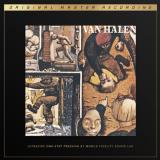
The premium packaging and gorgeous presentation befit the reissue's select status. Housed in a deluxe slipcase, it features special foil-stamped jackets and faithful-to-the-original graphics that illuminate the splendor of the recording. Aurally and visually, it is made for listeners who want to immerse themselves in everything involved with the album, including the iconic cover art adopted from William Kurelek's haunting painting, "The Maze."
Isolated frames from Kurelek's childhood-inspired work — including a man bashing his head into a brick wall, a guy pinning down an adversary as he delivers bare-fist blows to his face and others watch with apparent glee, a boy tied down on a conveyer belt and being sent through the equivalent of a meat saw — adorn the front and back covers. The sunnier visual disposition of Van Halen's prior efforts gives way to something sinister and tortured, traits reflective of the music within. The band members, too, are visually depicted not in glamorous shots but in a serious black-and-white portrait in which the quartet is clad in black leather jackets.
Tough, aggressive, stark: Fair Warning comes on like a series of bare-knuckled punches to the solar plexus and boasts lyrical narratives to match. Though not a concept record, the concise album revolves around themes of roughing it on the streets and struggling to survive amid dim prospects. Singer David Lee Roth reportedly penned many of the initial lyrics after traveling to Haiti and observing extreme poverty. The characters and situations populating Fair Warning reflect hardscrabble existence, last-chance desperation, and underlying danger.
Witness the crazies, poor folks, and hunters of “Mean Street”; the former prom queen turned pornographic actress on “Dirty Movies”; the menace and vice of “Sinners Swing!”; the streetwise hustle of “Unchained”; the isolation and alienation of “Push Comes to Shove”; the desire for escape on “One Foot Out the Door”: A carefree California beach party Fair Warning is not.
Having said he felt angry and frustrated during the sessions, guitarist Eddie Van Halen uses the forceful arrangements as a playground for his seemingly unlimited arsenal. Supported by a crack rhythm section and a hyped-up Roth, he performs with an almost impossible combination of punk-like intensity, technical finesse, lyrical fluidity, and unbridled emotion. The virtuoso was increasingly butting heads with Templeton and seeking a freedom in the studio he believed denied him.
No wonder he plays like a bat out of hell. Listen to the rapid-fire manner in which he slaps the high and low E strings on the 12th fret of his instrument on “Mean Street,” instilling the tune with funk flair and metal-spiked sharpness. For the pouty strut of “Dirty Movies,” Eddie Van Halen contributes slide guitar magic made possible after he sawed off the lower portion of a Gibson SG so he could reach further down the fretboard.
Related intensity, urgency, and daredevil momentum punctuate the surging “Sinner’s Swing!” A heavily flanged, delicately melodic introduction frames the attitudinal “Hear About It Later,” among the most creative arrangements of Van Halen’s career. And do riffs come any bigger or magnetic than those on the high-wire kick of “Unchained”? As for the out-of-left-field “Sunday in the Park,” an instrumental composed on an Electro-Harmonix micro-synthesizer: Who but Eddie Van Halen to supply creep factor in such an ingenious way?
Despite selling fewer quantities than Van Halen’s prior efforts, Fair Warning remains for many diehards the record that epitomizes all of the band’s immense strengths —Roth’s manic energy and tongue-wagging humor, Alex Van Halen’s rhythmic heartbeat-in-your-chest bombast, and Michael Anthony’s lucid bass lines included. Arriving when the New Wave of British Heavy Metal and new-wave movements were taking flight, it signaled a shot across the bow from a band determined to stay a step ahead and provide proof nobody could touch what it delivered.
More than four decades later, Fair Warning still sounds that alarm.
Nice and original breakbeat melodious overdrive 1 techno electro killer.
Coming straight from the Cozmo comes RudyLane with a debut EP The Return Of The Synth. Landing the ship on new imprint Drag Vader comes a four tracker from the heavenly isles. Leading the arrival we have ' The Goat' a low hung brooding affair which then builds into haunting territories twisting into funk infused techno awakenings. ' 2 yrs L8' slips us onto at first a desolate plaine, trying to find a signal, with stripped vocal stabs swung groove, smokey juno bass into a hook that the Dark Synth would be proud of. ' Thirsty Pool' on the flip is a more minimal workout weaved within hypno vocals driving us forward into hopeful waters. 'Protests Digital' closes out the party blending worlds of emotive melodies and gnarly walking basslines through arpeggiated mid riffs dusted with dub kissed filterness. Landing firmly on the ground RudyLane is off to a strong start.
Excited to hear what's next on this journey.
- 1: Fearless (Taylor's Version)
- 2: Fifteen (Taylor's Version)
- 3: Love Story (Taylor's Version)
- 4: Hey Stephen (Taylor's Version)
- 5: White Horse (Taylor's Version)
- 6: You Belong With Me (Taylor's Version)
- 7: Breathe (Feat. Colbie Caillat)
- 8: Tell Me Why (Taylor's Version)
- 9: You're Not Sorry (Taylor's Version)
- 1: The Way I Loved You (Taylor's Version)
- 2: Forever & Always (Taylor's Version)
- 3: The Best Day (Taylor's Version)
- 4: Change (Taylor's Version)
- 5: Jump Then Fall (Taylor's Version)
- 6: Untouchable (Taylor's Version)
- 7: Forever & Always (Piano Version)
- 8: Come In With The Rain (Taylor's Version)
- 1: Superstar (Taylor's Version)
- 2: The Other Side Of The Door (Taylor's Version)
- 3: Today Was A Fairytale (Taylor's Version)
- 4: You All Over Me (From The Vault)
- 5: Mr. Perfectly Fine (From The Vault)
- 6: We Were Happy (From The Vault)
- 7: That's When (From The Vault)
- 8: Don't You (From The Vault)
- 9: Bye Bye Baby (From The Vault)
- 10: Love Story (Taylor's Version)
- A1: 111 03 21
- A2: Sleeping With Ghosts 03 27
- A3: Beyond Heaven's Gate 02 59
- B1: Sacrifice Me 03 58
- B2: Snowlover 02 58
- B3: Terrestrial 03 47
- C1: Your Dress 04 35
- C2: Where I Left My Soul 04 57
- C3: Solara Feat. Zelli (Paleface Swiss) 03 25
- D1: First Tongue 01 33
- D2: Perfume 04 31
- D3: Head In The Clouds Ft. Jason Aalon Butler (Fever 333) 04 51
- D4: Dark, Silent And Complete 05 54
Deluxe Pop-Up Splatter Vinyl[33,57 €]
- Pyre Of Ash And Bone
- Gate Zero
- Womb Of The Hollow Earth
- Blissful Incineration
- Fallout Obliteration
- Nuclear Winter
- Transmission Beta
- The Hollow That Devours
- Sons Of Perdition
- Into The Crypts Of Rays
Black Vinyl
"Tief gestimmter, düsterer und brutaler Texas Death Metal", lautet die kompromisslose Antwort von Terror Corpse-Schlagzeuger Dobber Beverly, wenn er gebeten wird, sein neuestes Monstrum zu beschreiben.
Terror Corpse wurde 2025 gegründet, besteht jedoch aus Veteranen der US-Underground-Szene und ist aus den Überresten von Malignant Altar hervorgegangen, wo sie dort weitermachen, wo ihre Vorgänger aufgehört haben – immer noch in Zusammenarbeit mit Dark Descent Records.
Das Album wurde vollständig vom Schlagzeuger selbst produziert und hat einen ebenso unverwechselbaren wie vernichtenden Sound. Vom ersten hämmernden Kick-Drum-Schlag an, zu dem sich bald eine markerschütternde Bassline gesellt, lässt Ash Eclipses Flesh seinen unerbittlichen Griff nie locker.
„Ich wollte im Wesentlichen einen extrem tief gestimmten Celtic-Frost-Gitarrensound mit einer modernen und großzügigen, natürlichen Drum-Aufnahme. Großer Raum, große Drum-Sounds. Dazu noch ein paar höhlenartige, tiefe Vocals im Stil von Craig Pillard und Bassgitarre, und schon hat man unseren Sound.“
Die Verehrung der Band für das Erbe von Celtic Frost zeigt sich auch im letzten Song des Albums, einem Cover von „Into the Crypts of Rays“. Dobber macht keinen Hehl aus den Einflüssen von Terror Corpse: „Disciples Of Mockery, Incantation, Morbid Angel vor den 2000er Jahren; im Wesentlichen älterer böser amerikanischer Death Metal. Celtic Frost hat uns alle massiv beeinflusst. Von ihren primitiven und gewalttätigen Anfängen bis hin zur ultra-experimentellen und dunklen Ära ihrer späteren Alben.“
- A1: Beds Are Burning 4:14
- A2: Put Down That Weapon 4:38
- A3: Dreamworld 3:36
- A4: Arctic World 4:21
- 5: Warakurna 4:38
- B1: The Dead Heart 5:10
- B2: Whoah 3:50
- B3: Bullroarer 4:59
- B4: Sell My Soul 3:35
- B5: Sometimes 3:53
Midnight Oils Kultalbum "Diesel and Dust" ist zurück und jetzt erstmals seit Jahren wieder auf Vinyl außerhalb Australiens erhältlich!
Neu gemastert, auf schwarzem Biovinyl und nachhaltig verpackt, bringt das Album seine kraftvolle Botschaft über soziale Gerechtigkeit und Umwelt neu zum Klingen.Ein Meilenstein der Rockgeschichte, ausgezeichnet von Rolling Stone und als bestes australisches Album gelistet.
This album cover is quite mysterious, isn't it? Let's uncover what's behind it. The first notes of the opening track immediately set the tone: the journey begins. Take the album title literally and allow yourself to be comforted by the tenderness the British band is about to offer.
Dream pop is a genre of its own, characterized by a warm sound, enveloping bass lines, dreamy synths, and beautiful vocals. With "No Rush," Tokyo Tea Room guides the listener through an exploration of their emotions and an escape from everyday life.
Each of the 12 tracks on this project exudes the same tender energy, yet stands out with creative and meticulously crafted compositions. This project is poised to become a staple of the genre.
- A1: Rone - The Dolphin Ambassador
- A2: Mézigue & Swooh - Broken Roll To Venice
- A3: Kink - Give Me
- B1: Belaria & Madben - Into The Void
- B2: Oniris & Benjamin Rippert - Sonate
- C1: Legowelt & Cuften - Liar
- C2: Zaatar & Trunkline - Come Into The Light
- C3: Scan X & Electric Rescue - Lost In Time
- D1: Manu Le Malin & Kmyle - Little Big Man
- D2: Célélé & Théo Muller - Drum And Drift
Astropolis Records — the label born from the legendary electronic French festival — celebrates a decade of electronic devotion with a generous and deeply emotional anniversary compilation - a bit late, but never short on flair.
This double vinyl gathers the many faces of the Astropolis galaxy: in-house artists, long-time companions of the festival, and rising voices from a perpetually vibrant French scene. Across 18 artists, listeners are invited on a sonic journey where rave legacy, electronic dreamscapes, and collective fervor intertwine — true to the DNA of a festival that’s never known boundaries.
The record opens with grace and wonder courtesy of Rone, whose electronic touch channels both the intimate and the infinite. Between electronica and downtempo, The Dolphin Ambassador bathes in luminous melancholy, offering a moment of calm before the storm. In the same contemplative vein, we’re proud to unveil one of the first productions from Célélé alongside Théo Muller: Drum and Drift, a subtle blend of dubby vibrations and sunlit textures.
Astropolis has always thrived on happy collisions — and this compilation is proof of it. The unlikely meeting between Mézigue and Swooh sends house spiraling into a g-tech vortex on Broken Roll To Venice, a playful burst of groove, hybrid energy, and cheeky mischief. The same spirit of alchemy fuels Belaria & Madben, whose Into The Void burns bright as a 90s rave-meets-EBM anthem wrapped in hypnotic trance. Zaatar & Trunkline bring raw intensity to Come Into The Light, a sweaty, visceral banger at the crossroads of techno, dark disco, and EBM.
French techno pillars Scan X & Electric Rescue deliver a masterclass in elegant machine soul on Lost In Time. When Manu Le Malin teams up with Kmyle, the result is as sharp as it is cinematic: Little Big Man pulses with dramatic tension, balancing raw emotion and restrained fury. Elsewhere, Oniris & Benjamin Rippert reconnect with the melodic techno spirit of the label’s early days on Sonate, guided by a craftsman’s sense of harmony.
For the machine lovers, Legowelt & Cuften resurrect the spirit of early electroclash on Liar, a carnal fusion of analog synths and DIY attitude. And for the diehard dancefloor devotees, KiNK finally releases a cult track from his live sets: Give Me, a breakbeat-meets-vintage-house stormer tailor-made for those late-night sweats.
This anniversary compilation reaffirms the label’s openness to new generations and hybrid sounds, while paying tribute to the techno roots that shaped its foundation. Like the festival itself, it embodies sincerity and collective energy — a small manifesto linking generations, aesthetics, and territories, celebrating roots without nostalgia and the future without bending to trends.


![BUDDHA BAR PRESENTS - BUDDHA-BAR [BY RICH VOM DORF & RAVIN] LP 2x12"](https://www.deejay.de/images/l/9/9/1180699.jpg)