Suche:t mid

Styles
Alle
Various - Pure Wicked Tune: Rare Groove Blues Dances & House Parties, 1985-1992

Pure Wicked Tune is a mixtape-style collection of extracts & cut-ups, taken from DIY cassette recordings featuring rare groove and "soul blues" soundsystems playing at early morning house parties and blues dances - mostly in South & East London - between the mid 1980s & early 90s.

Sounds like Funkadelic, Touch of Class, Latest Edition, JB Crew, Manhattan, 5th Avenue (and the many more featured on this tape) originally began to form in the mid-1980s. With lovers rock dwindling, and the reggae scene becoming dominated by harder digital-style dancehall, these sounds provided a tight but loyal crowd with a potent alternative - playing a mixture of killer rare soul, funk and boogie records in an inimitably reggae soundsystem style, complete with toasting, sirens and effects aplenty.

They were most well-known for playing at house parties and blues dances, typically in small flats or warehouses, with timing of such events generally running from the early morning hours until late the next afternoon. Though the popularity of the sounds faded following the dance music explosion of the early 1990s, there has been continued demand for revival sessions ever since. Whilst the influence of key British reggae & dancehall soundsystems on subsequent UK sounds like hardcore & jungle is relatively well documented, a similar line can just as easily be drawn from these sounds and the aforementioned styles' tendency toward sampling popular rare groove cuts, particularly well evidenced in the work of Tom & Jerry, 4hero, Reinforced & LTJ Bukem among others.

This represents the first outing in a series of collections exploring the sounds of UK soundsystem culture, via extracts from archival DIY cassette recordings of blues parties, dances & clashes made between the late 70s and early 90s. Often duplicated and shared widely, these ruff and ready "sound tapes" provided keen ears with music that wasn't otherwise readily available on the airwaves or in the record shops, and would go on to leave a deeply-rooted but too often overlooked influence on the UK's musical landscape.

nicht am Lager

Bestelle jetzt und wir bestellen den Artikel für dich beim Lieferanten.

14,92

Last In: vor 6 Monaten
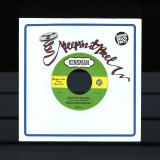
Bell Telephunk - Aint Not Tellin / Sister Moon

This is the second previously unissued release by Cleveland ohio group bell telephunk, who went on to become kinsman dazz/dazz band.

This is from 1976. "sister moon" being a sublime slice of lush produced mid 70's soul music.

nicht am Lager

Bestelle jetzt und wir bestellen den Artikel für dich beim Lieferanten.

11,35

Last In: vor 3 Jahren
Akae Beka - Beauty For Ashes LP

Akae Beka's inimitable style of rich, deep, multi-layered songwriting, uncompromising devotion to RasTafari and soulful healing melodies developed over decades performing with St. Croix based band Midnite and countless recordings. At the point of his untimely passing in 2019, he had released over 70LP's. He is without a doubt one of the most prolific reggae artists ever known.

The stellar production trinity that is Zion I Kings have been involved collectively and individually in creating some of the most highly regarded contributions to the vast Akae Beka catalogue. Beauty For Ashes was named as the best reggae album of 2014 according to iTunes. A monumental achievement for undiluted, uncompromising RasTafari roots reggae music this side of the millennium. Two of the LP's tracks, Weather the Storm and Same I Ah One, have been catapulted into global notoriety in part due to the viral success of the YouTube video of the 'Dub in the Rainforest' session organised in St. Croix by Tippy I in 2014. The video offered an unparalleled audio visual insight of the powerful, captivating, energy of Vaughn Benjamin, Pressure Buss Pipe, Ras Batch, and many of the bredrin and sisterin of St. Croix rallying around the I Grade Dub living dub experience.

Following 8 years of anxious anticipation, for the countless Akae Beka fans that are also vinyl connoisseurs, this LP is now being released on as a 12" vinyl LP courtesy of Before Zero Records. This offers the listener not only the chance to enjoy this LP in an analogue form, but also the chance to hold the artwork as a 12" square masterpiece, created by the hands of Ras Marcus, the artist who gave the powerful visual presence that became synonymous to much of the I Grade / Akae Beka works over the years.

nicht am Lager

Bestelle jetzt und wir bestellen den Artikel für dich beim Lieferanten.

20,97

Last In: vor 3 Jahren
Lee Tracy & Isaac Manning - Is it What You Want

As the sun sets on a quaint East Nashville house, a young man bares a piece of his soul. Facing the camera, sporting a silky suit jacket/shirt/slacks/fingerless gloves ensemble that announces "singer" before he's even opened his mouth, Lee Tracy Johnson settles onto his stage, the front yard. He sways to the dirge-like drum machine pulse of a synth-soaked slow jam, extends his arms as if gaining his balance, and croons in affecting, fragile earnest, "I need your love… oh baby…"

Dogs in the yard next door begin barking. A mysterious cardboard robot figure, beamed in from galaxies unknown and affixed to a tree, is less vocal. Lee doesn't acknowledge either's presence. He's busy feeling it, arms and hands gesticulating. His voice rises in falsetto over the now-quiet dogs, over the ambient noise from the street that seeps into the handheld camcorder's microphone, over the recording of his own voice played back from a boombox off-camera. After six minutes the single, continuous shot ends. In this intimate creative universe there are no re-takes. There are many more music videos to shoot, and as Lee later puts it, "The first time you do it is actually the best. Because you can never get that again. You expressing yourself from within."

"I Need Your Love" dates from a lost heyday. From some time in the '80s or early '90s, when Lee Tracy (as he was known in performance) and his music partner/producer/manager Isaac Manning committed hours upon hours of their sonic and visual ideas to tape. Embracing drum machines and synthesizers – electronics that made their personal futurism palpable – they recorded exclusively at home, live in a room into a simple cassette deck. Soul, funk, electro and new wave informed their songs, yet Lee and Isaac eschewed the confinement of conventional categories and genres, preferring to let experimentation guide them.

"Anytime somebody put out a new record they had the same instruments or the same sound," explains Isaac. "So I basically wanted to find something that's really gonna stand out away from all of the rest of 'em." Their ethos meant that every idea they came up with was at least worth trying: echoed out half-rapped exhortations over frantic techno-style beats, gospel synth soul, modal electro-funk, oddball pop reinterpretations, emo AOR balladry, nods to Prince and the Fat Boys, or arrangements that might collapse mid-song into a mess of arcade game-ish blips before rallying to reach the finish line. All of it conjoined by consistent tape hiss, and most vitally, Lee's chameleonic voice, which managed to wildly shape shift and still evoke something sincere – whether toggling between falsetto and tenor exalting Jesus's return, or punctuating a melismatic romantic adlib with a succinct, "We all know how it feels to be alone."

"People think we went to a studio," says Isaac derisively. "We never went to no studio. We didn't have the money to go to no studio! We did this stuff at home. I shot videos in my front yard with whatever we could to get things together." Sometimes Isaac would just put on an instrumental record, be it "Planet Rock" or "Don't Cry For Me Argentina" (from Evita), press "record," and let Lee improvise over it, yielding peculiar love songs, would-be patriotic anthems, or Elvis Presley or Marilyn Monroe tributes. Technical limitations and a lack of professional polish never dissuaded them. They believed they were onto something.

"That struggle," Isaac says, "made that sound sound good to me."

In the parlance of modern music criticism Lee and Isaac's dizzying DIY efforts would inevitably be described as "outsider." But "outsider" carries the burden of untold additional layers of meaning if you're Black and from the South, creating on a budget, and trying to get someone, anyone within the country music capital of the world to take your vision seriously. "What category should we put it in?" Isaac asks rhetorically. "I don't know. All I know is feeling. I ain't gonna name it nothing. It's music. If it grabs your soul and touch your heart that's what it basically is supposed to do."

=

Born in 1963, the baby boy of nine siblings, Lee Tracy spent his earliest years living amidst the shotgun houses on Nashville's south side. "We was poor, man!" he says, recalling the outhouse his family used for a bathroom and the blocks of ice they kept in the kitchen to chill perishables. "But I actually don't think I really realized I was in poverty until I got grown and started thinking about it." Lee's mom worked at the Holiday Inn; his dad did whatever he had to do, from selling fruit from a horse drawn cart to bootlegging. "We didn't have much," Lee continues, "but my mother and my father got us the things we needed, the clothes on our back." By the end of the decade with the city's urban renewal programs razing entire neighborhoods to accommodate construction of the Interstate, the family moved to Edgehill Projects. Lee remembers music and art as a constant source of inspiration for he and his brothers and sisters – especially after seeing the Jackson 5 perform on Ed Sullivan. "As a small child I just knew that was what I wanted to do."

His older brother Don began musically mentoring him, introducing Lee to a variety of instruments and sounds. "He would never play one particular type of music, like R&B," says Lee. "I was surrounded by jazz, hard rock and roll, easy listening, gospel, reggae, country music; I mean I was a sponge absorbing all of that." Lee taught himself to play drums by beating on cardboard boxes, gaining a rep around the way for his timekeeping, and his singing voice. Emulating his favorites, Earth Wind & Fire and Cameo, he formed groups with other kids with era-evocative band names like Concept and TNT Connection, and emerged as the leader of disciplined rehearsals. "I made them practice," says Lee. "We practiced and practiced and practiced. Because I wanted that perfection." By high school the most accomplished of these bands would take top prize in a prominent local talent show. It was a big moment for Lee, and he felt ready to take things to the next level. But his band-mates had other ideas.

"I don't know what happened," he says, still miffed at the memory. "It must have blew they mind after we won and people started showing notice, because it's like everybody quit! I was like, where the hell did everybody go?" Lee had always made a point of interrogating prospective musicians about their intentions before joining his groups: were they really serious or just looking for a way to pick up girls? Now he understood even more the importance of finding a collaborator just as committed to the music as he was.

=

Isaac Manning had spent much of his life immersed in music and the arts – singing in the church choir with his family on Nashville's north side, writing, painting, dancing, and working various gigs within the entertainment industry. After serving in the armed forces, in the early '70s he ran The Teenage Place, a music and performance venue that catered to the local youth. But he was forced out of town when word of one of his recreational routines created a stir beyond the safe haven of his bohemian circles.

"I was growing marijuana," Isaac explains. "It wasn't no business, I was smoking it myself… I would put marijuana in scrambled eggs, cornbread and stuff." His weed use originated as a form of self-medication to combat severe tooth pain. But when he began sharing it with some of the other young people he hung out with, some of who just so happened to be the kids of Nashville politicians, the cops came calling. "When I got busted," he remembers, "they were talking about how they were gonna get rid of me because they didn't want me saying nothing about they children because of the politics and stuff. So I got my family, took two raggedy cars, and left Nashville and went to Vegas."

Out in the desert, Isaac happened to meet Chubby Checker of "The Twist" fame while the singer was gigging at The Flamingo. Impressed by Isaac's zeal, Checker invited him to go on the road with him as his tour manager/roadie/valet. The experience gave Isaac a window into a part of the entertainment world he'd never encountered – a glimpse of what a true pop act's audience looked like. "Chubby Checker, none of his shows were played for Black folks," he remembers. "All his gigs were done at high-class white people areas." Returning home after a few years with Chubby, Isaac was properly motivated to make it in Music City. He began writing songs and scouting around Nashville for local talent anywhere he could find it with an expressed goal: "Find someone who can deliver your songs the way you want 'em delivered and make people feel what you want them to feel."

One day while walking through Edgehill Projects Isaac heard someone playing the drums in a way that made him stop and take notice. "The music was so tight, just the drums made me feel like, oh I'm-a find this person," he recalls. "So I circled through the projects until I found who it was.

"That's how I met him – Lee Tracy. When I found him and he started singing and stuff, I said, ohhh, this is somebody different."

=

Theirs was a true complementary partnership: young Lee possessed the raw talent, the older Isaac the belief. "He's really the only one besides my brother and my family that really seen the potential in me," says Lee. "He made me see that I could do it."

Isaac long being a night owl, his house also made for a fertile collaborative environment – a space where there always seemed to be a new piece of his visual art on display: paintings, illustrations, and dolls and figures (including an enigmatic cardboard robot). Lee and Issac would hang out together and talk, listen to music, conjure ideas, and smoke the herb Isaac had resumed growing in his yard. "It got to where I could trust him, he could trust me," Isaac says of their bond. They also worked together for hours on drawings, spreading larges rolls of paper on the walls and sketching faces with abstract patterns and imagery: alien-like beings, tri-horned horse heads, inverted Janus-like characters where one visage blurred into the other.

Soon it became apparent that they didn't need other collaborators; self-sufficiency was the natural way forward. At Isaac's behest Lee, already fed up with dealing with band musicians, began playing around with a poly-sonic Yamaha keyboard at the local music store. "It had everything on it – trumpet, bass, drums, organ," remembers Lee. "And that's when I started recording my own stuff."

The technology afforded Lee the flexibility and independence he craved, setting him on a path other bedroom musicians and producers around the world were simultaneously following through the '80s into the early '90s. Saving up money from day jobs, he eventually supplemented the Yamaha Isaac had gotten him with Roland and Casio drum machines and a Moog. Lee was living in an apartment in Hillside at that point caring for his dad, who'd been partially paralyzed since early in life. In the evenings up in his second floor room, the music put him in a zone where he could tune out everything and lose himself in his ideas.

"Oh I loved it," he recalls. "I would really experiment with the instruments and use a lot of different sound effects. I was looking for something nobody else had. I wanted something totally different. And once I found the sound I was looking for, I would just smoke me a good joint and just let it go, hit the record button." More potent a creative stimulant than even Isaac's weed was the holistic flow and spontaneity of recording. Between sessions at Isaac's place and Lee's apartment, their volume of output quickly ballooned.

"We was always recording," says Lee. "That's why we have so much music. Even when I went to Isaac's and we start creating, I get home, my mind is racing, I gotta start creating, creating, creating. I remember there were times when I took a 90-minute tape from front to back and just filled it up."

"We never practiced," says Isaac. "See, that was just so odd about the whole thing. I could relate to him, and tell him about the songs I had ideas for and everything and stuff. And then he would bring it back or whatever, and we'd get together and put it down." Once the taskmaster hell bent on rehearsing, Lee had flipped a full 180. Perfection was no longer an aspiration, but the enemy of inspiration.

"I seen where practicing and practicing got me," says Lee. "A lot of musicians you get to playing and they gotta stop, they have to analyze the music. But while you analyzing you losing a lot of the greatness of what you creating. Stop analyzing what you play, just play! And it'll all take shape."

=

"I hope you understood the beginning of the record because this was invented from a dream I had today… (You tell me, I'll tell you, we'll figure it out together)" – Lee Tracy and Isaac Manning, "Hope You Understand"

Lee lets loose a maniacal cackle when he acknowledges that the material that he and Isaac recorded was by anyone's estimation pretty out there. It's the same laugh that commences "Hope You Understand" – a chaotic transmission that encapsulates the duality at the heart of their music: a stated desire to reach people and a compulsion to go as leftfield as they saw fit.

"We just did it," says Lee. "We cut the music on and cut loose. I don't sit around and write. I do it by listening, get a feeling, play the music, and the lyrics and stuff just come out of me."

The approach proved adaptable to interpreting other artists' material. While recording a cover of Whitney Houston's pop ballad "Saving All My Love For You," Lee played Whitney's version in his headphones as he laid down his own vocals – partially following the lyrics, partially using them as a departure point. The end result is barely recognizable compared with the original, Lee and Isaac having switched up the time signature and reinvented the melody along the way towards morphing a slick mainstream radio standard into something that sounds solely their own.

"I really used that song to get me started," says Lee. "Then I said, well I need something else, something is missing. Something just came over me. That's when I came up with 'Is It What You Want.'"

The song would become the centerpiece of Lee and Isaac's repertoire. Pushed along by a percolating metronomic Rhythm King style beat somewhere between a military march and a samba, "Is It What You Want" finds Lee pleading the sincerity of his commitment to a potential love interest embellished by vocal tics and hiccups subtlely reminiscent of his childhood hero MJ. Absent chord changes, only synth riffs gliding in and out like apparitions, the song achieves a lingering lo-fi power that leaves you feeling like it's still playing, somewhere, even after the fade out.

"I don't know, it's like a real spiritual song," Lee reflects. "But it's not just spiritual. To me the more I listen to it it's like about everything that you do in your everyday life, period. Is it what you want? Do you want a car or you don't want a car? Do you want Jesus or do you want the Devil? It's basically asking you the question. Can't nobody answer the question but you yourself."

In 1989 Lee won a lawsuit stemming from injuries sustained from a fight he'd gotten into. He took part of the settlement money and with Isaac pressed up "Saving All My Love For You" b/w "Is It What You Want" as a 45 single. Isaac christened the label One Chance Records. "Because that's all we wanted," he says with a laugh, "one chance."

Isaac sent the record out to radio stations and major labels, hoping for it to make enough noise to get picked up nationally. But the response he and Lee were hoping for never materialized. According to Isaac the closest the single got to getting played on the radio is when a disk jock from a local station made a highly unusual announcement on air: "The dude said on the radio, 107.5 – 'We are not gonna play 'Is It What You Want.' We cracked up! Wow, that's deep.

"It was a whole racist thing that was going on," he reflects. "So we just looked over and kept on going. That was it. That was about the way it goes… If you were Black and you were living in Nashville and stuff, that's the way you got treated." Isaac already knew as much from all the times he'd brought he and Lee's tapes (even their cache of country music tunes) over to Music Row to try to drum up interest to no avail.

"Isaac, he really worked his ass off," says Lee. "He probably been to every record place down on Music Row." Nashville's famed recording and music business corridor wasn't but a few blocks from where Lee grew up. Close enough, he remembers, for him to ride his bike along its back alleys and stumble upon the occasional random treasure, like a discarded box of harmonicas. Getting in through the front door, however, still felt a world away.

"I just don't think at the time our music fell into a category for them," he concedes. "It was before its time."

=

Lee stopped making music some time in the latter part of the '90s, around the time his mom passed away and life became increasingly tough to manage. "When my mother died I had a nervous breakdown," he says, "So I shut down for a long time. I was in such a sadness frame of mind. That's why nobody seen me. I had just disappeared off the map." He fell out of touch with Isaac, and in an indication of just how bad things had gotten for him, lost track of all the recordings they'd made together. Music became a distant memory.

Fortunately, Isaac kept the faith. In a self-published collection of his poetry – paeans to some of his favorite entertainment and public figures entitled Friends and Dick Clark – he'd written that he believed "music has a life of its own." But his prescience and presence of mind were truly manifested in the fact that he kept an archive of he and Lee's work. As perfectly imperfect as "Is It What You Want" now sounds in a post-Personal Space world, Lee and Isaac's lone official release was in fact just a taste. The bulk of the Is It What You Want album is culled from the pair's essentially unheard home recordings – complete songs, half-realized experiments, Isaac's blue monologues and pronouncements et al – compiled, mixed and programmed in the loose and impulsive creative spirit of their regular get-togethers from decades ago. The rest of us, it seems, may have finally caught up to them.

On the prospect of at long last reaching a wider audience, Isaac says simply, "I been trying for a long time, it feels good." Ever the survivor, he adds, "The only way I know how to make it to the top is to keep climbing. If one leg break on the ladder, hey, you gotta fix it and keep on going… That's where I be at. I'll kill death to make it out there."

For Lee it all feels akin to a personal resurrection: "It's like I was in a tomb and the tomb was opened and I'm back… Man, it feels so great. I feel like I'm gonna jump out of my skin." Success at this stage of his life, he realizes, probably means something different than what it did back when he was singing and dancing in Isaac's front yard. "What I really mean by 'making it,'" he explains isn't just the music being heard but, "the story being told."

Occasionally Lee will pull up "Is It What You Want" on YouTube on his phone, put on his headphones, and listen. He remembers the first time he heard his recorded voice. How surreal it was, how he thought to himself, "Is that really me?" What would he say to that younger version of himself now?

"I would probably tell myself, hang in there, don't give up. Keep striving for the goal. And everything will work out."

Despite what's printed on the record label, sometimes you do get more than one chance.

nicht am Lager

Bestelle jetzt und wir bestellen den Artikel für dich beim Lieferanten.

11,72

Last In: vor 3 Jahren
Buscrates - Internal Dialogue / Early Morning

Pittsburgh, PA-native Buscrates returns to Bastard Jazz with a synth-heavy 7" single, "Internal Dialogue." The two-tracker sees the artist take an easy-going approach to his signature funk-filled sound, with a slowed-down tempo and melodic key riffs. "Internal Dialogue" is a mellow boogie joint that combines plenty of Moog, rich ARP strings, and syncopated clavinet chord stabs; "Early Morning" is reminiscent of a late-90s neo-soul beat, with rich Rhodes chords, while a squelching bass line evokes 70s electro-funk. Both tracks are undeniably Buscrates and are sure to have your head bobbing.

Buscrates - aka Orlando Marshall - is a DJ, producer, and multi-instrumentalist based in Pittsburgh. He draws influences largely from 90s hip hop and early-mid 80s electronic funk, which is evident in the boomy, swinging drums and bubbly Minimoog bass lines heard throughout some of his productions. He works locally and sometimes internationally either behind a pair of turntables spinning 45s or working his trusty Roland SP-404SX sampler and various other little portable gadgets at one of his beat sets. Some of his production credits include Phonte & Eric Roberson, Wiz Khalifa, and the late great Mac Miller.

nicht am Lager

Bestelle jetzt und wir bestellen den Artikel für dich beim Lieferanten.

9,20

Last In: vor 3 Jahren
Dark Millennium - Midnight In The Void LP (2x12")

Statement von DARK MILLENNIUM:
"6 Jahre nach der ursprünglichen Veröffentlichung unseres Comeback-Albums "Midnight In The Void" wollten wir unseren Katalog vervollständigen, indem wir dieses wichtige Album bei Massacre Records wiederveröffentlichten.

Zum ersten Mal wird es auch auf limitiertem Vinyl erhältlich sein - was von unseren Fans schon lang ersehnt wurde.
Endlich sind wir zu Hause."

vorbestellen14.10.2022

erscheint voraussichtlich am 14.10.2022

29,79
Dark Millennium - Midnight In The Void LP (2x12")

Statement von DARK MILLENNIUM:
"6 Jahre nach der ursprünglichen Veröffentlichung unseres Comeback-Albums "Midnight In The Void" wollten wir unseren Katalog vervollständigen, indem wir dieses wichtige Album bei Massacre Records wiederveröffentlichten.

Zum ersten Mal wird es auch auf limitiertem Vinyl erhältlich sein - was von unseren Fans schon lang ersehnt wurde.
Endlich sind wir zu Hause."

vorbestellen14.10.2022

erscheint voraussichtlich am 14.10.2022

29,79
Menahan Street Band - Midnight Morning / Stepping Through Shadow

HOT REPRESS !!! "Who is t his!?" Whether it's a playlist in a cof fee shop in Brooklyn, a cafe in Par is, or a commercial break on NPR, the answer is likely Menahan Street Band. Their idiosyncratic brand of atmospheric instrumental music has lended its timeless cool to countless events, par ties, et al. Now they're back with yet another two sided head-turner. From the heavy drum fill at the top, to the swirling, psychedelic outro, “Midnight Morning” is a beat-forward track blending trippy synths with lush horns that sonically beckon you to get lost in its euphoric swing. “Steppin Through Shadow” paints a cinematic dreamscape that floats along a surreal plume of hypnotic drum machines, and soft, electric piano. The gentle melody and operatic vocal accompaniment disarm, leaving the listener awash in a sea of aural nirvana.

vorbestellen14.10.2022

erscheint voraussichtlich am 14.10.2022

7,52
Various - MIDNIGHT TO SIX...FIRST TIME FROM JAMAICA

2022 Repress

The legendary gig that Joe Strummer, singer from the Punk Rock band 'The Clash' attended and inspired his writing their classic 'White Man In Hammersmith Palais' took place on the 05th June 1977.
At the Hammersmith Palais venue on Shepherd's Bush Road W6, London during the height of Punk Mania. The full line up for the show were all Jamaican artists Dillinger, Leroy Smart, Delroy Wilson (all the first time from Jamaica) and Ken Boothe.
'Ken Boothe for UK pop reggae' who had already scored some hits with 'Everything I own' and 'Crying Over You' in 1974. Joe Strummer was expecting Roots, Rock, Reggae but the Sound System this evening 'Admiral Ken Sound' was playing 'Four Tops all night' as in soul and northern soul that were staple crowd pleasers at the time to warm up the audience, but in Joe's eyes the music should have reflected more Jamaican roots based music. The song also deals with bigger issues of black and white unity, but some people including the Punk Rockers.
'They're all too busy fighting, for a good place under the lighting'. Joe Strummer himself was looking for fun. 'I'm the Whiteman in the Palais....Just Looking for Fun'

The artwork supplied by Punk Artist MAL-ONE has used the two posters that were made for this gig, the reggae promoters 'Star Promotions' poster, that contained a picture of Ken Boothe and the venue's own poster that used text to announce it's line up for that evenings performance. Alongside these lost relics he has also combined the groups own poster for the 'White Man In Hammersmith Palais' single that incorporated the use of rifle target sights, perhaps enhancing the air of violence contained in the songs message.
MAL-ONE has collaged these together joining the two stories as indeed the song lyrics reflected. People often forget that the songs release was in fact as year after the actual gig, we have tied this release to the 40th anniversary of the song's release. Joe Strummer was one of the few voices from the Punk Era that used his lyrics as a weapon to tell the events that were happening around him and their relevance to those times.
The song itsel a Clash Classic and also a Punk Anthem, released on the 16th June 1978. We have compiled this album with songs by these artists, most of which you would have heard that night. As a post script to this story when the Hammersmith Palais sadly closed its doors for the last time after 82 years' service in 1999, the owners thought it fitting to present Joe Strummer with a sign from the venue's entrance. Mr Strummer's understated reply 'I guess I'll have to send a man with a van round to pick it up'.
Hope you Enjoy the set....

nicht am Lager

Bestelle jetzt und wir bestellen den Artikel für dich beim Lieferanten.

13,40

Last In: vor 3 Jahren
Various - Too Slow to Disco Vol. 4 2x12"

mp3 Download PostCard

After smooth detours into Soul covers, French Neo-Disco, modern Sunset Disco and Brazilian AOR, in 2022 DJ Supermarkt's Too Slow to Disco series makes a joyous return to its original Westcoast AOR/Yacht roots. Celebrating the 10th TSTD compilation. Who would have thought….
The Berlin curator releases a killer 4th edition of the original compilation art form, "Too Slow to Disco", featuring forgotten and overseen gems from the mid 70s to the early 80s from a global world of smooth, brilliant lost and overproduced tracks from Finland via London and L.A. to Trinidad and beyond.
The great 'un-vanisher' of lost lazy classics, DJ Supermarkt once again unearthed some incredible music that labels, publishers (in many cases also those, who actually own the rights to those tracks…) and streaming services have often long overlooked. You're welcome, world!

nicht am Lager

Bestelle jetzt und wir bestellen den Artikel für dich beim Lieferanten.

25,17

Last In: vor 9 Monaten
WOW SAILOR - HAPPY FEAR LP

Wow Sailor

HAPPY FEAR LP

12inchDUG037
DUGNAD REC
14.10.2022

Ranging from sanguine emotional clarity to distortion and unrest, Wow Sailor voyages through sunlight and storms in this mindful and explorative album. Happy Fear is an intricate tapestry of emotional experience, where fear and joy clash heads in the pursuit of self-understanding. Scattered field recordings of literature, ambiance and chance encounters provide atmospheric depth to enrich a resonant and meditative soundscape.

This tale begins with fond yet powerful nostalgia, before segueing into a range of hybrid instrumental explorations in which guitar, voice, violin, and trumpet blossom alongside refined electronic foundations. The album closes off with indulgent melancholia reminiscent of the opening, providing lifelike circularity to the album.

All songs remain connected; one leading into another without pause or silence. This urges the listener to digest the work in a single sitting as elements of the story seem intrinsically connected.

The first half is studded with gems of atmospheric conversation and recordings, providing a living and textured environment for the crafted synthetic sounds of Wow Sailor to evolve. Most songs are free from percussive structures, but In Her Gaze breaks the mold with clear percussive dictate. The middle and latter titles are connected by ominous frequencies that err on the darker side of curiosity - encouraging exploration into the transformative power of fear.

All in all, the work glimmers with spontaneity and diversity that resembles real-life experience. Carefully crafted sonic interplays bare semblance to the fluctuating emotional life of the ever sensitive and sentient human being.

Dugnad Rec sits at the helm of yet another wonderfully creative and philosophical work. This release gives verity to the artistic integrity, sound design, and mental exploration of the label. Wow Sailor’s work radiates an enticing, authentic, and indelible mark of individuality.

vorbestellen14.10.2022

erscheint voraussichtlich am 14.10.2022

19,96
CAN - LIVE IN CUXHAVEN 1976

Blue vinyl! Originally recorded on tape, this carefully restored live album comprises the 1976 show in the format
of a story with a beginning, middle and end, bringing CAN’s performance to life

vorbestellen14.10.2022

erscheint voraussichtlich am 14.10.2022

27,94
Imagination - Shake It

Imagination

Shake It

12inchTAC-009
The Outer Edge
14.10.2022

We are proud to present the official 40-year anniversary issue of Imagination's debut album Shake It. Remastered from original tapes, this deluxe edition is a double vinyl LP with gatefold sleeve, featuring a newly available lyric insert.

Shake It covers a diverse spectrum of styles and sounds, all combining to a unique soulful amalgam that ranges from sunshine AOR funk ("Mornin' Lights") and leftfield disco ("Strawberry Wine") to psychy, epic, downtempo, vocoder grooves ("Can't Stand Without You") and more. Originally released in 1980, it fast became one of Germany's most collectible privately-pressed LPs.

Shake It was the creation of young thoroughbreds working hard on becoming professional musicians, trying to take their next big step in the music business. Starting out as a pure jazz-rock combo in the mid '70s (as we hear on the recently released lost studio tapes, I'm Always Right (The WDR Tapes 1977)) Imagination left behind their instrumental roots, incorporating new musical trends and styles.

Uwe Ziss, their saxophonist and flutist, became one of two lead singers in Imagination. He would be joined by the younger Roger Mork, a student of original guitarist Willi Hövelmann, around 1979. Roger's voice would best be heard on the aforementioned "Mornin' Lights", one of the various standout tracks on Shake It. However, there is much more that this album offers.

There are brilliant soulful soft rock ballads like "Clouds Flee Before The Wind" and "Waitin for your Call" or the catchy "California" song that switches from a dreamy Westcoast sound (as the title implies) to danceable rhythm & blues with equal ease. Last but not least, we have unearthed three unissued bonus cuts. On one, the demo take of "Clouds Flee Before The Wind", we hear, for the first time ever, the original refrain of this song, which, for some strange reason, was taken out from the final mix on Shake It.

When all eight original songs were recorded and mastered in June, at the well-equipped West Aix-La-Chapelle studio, the stage was set for Imagination's long-desired career push. They'd initially press about 2500 copies of Shake It selling it mainly, locally, directly to their hometown fanbase in Düsseldorf. Meanwhile, their manager would attempt to arrange a record deal with a music label. Unfortunately, this became more difficult than expected. Negotiations with a smaller publishing company were made by Imagination, and Shake It was repressed on Nash Records in 1981 without their consent, under the false promises of a nationwide promotional tour which would never come to fruition. At the same time, the group would face a UK band under the same name achieving mainstream success, making it difficult (not to say entirely impossible) to perform as "Imagination". Though the band would remain active after Shake It, they'd split shortly after Nash's duplicitous reissue hit store shelves.

Luckily, through time, Shake It itself has remained worthwhile, creatively, for those who stumbled upon it and financially, too, becoming quite the sought after gem in record collecting circles. This deluxe anniversary double vinyl issue makes the LP available once again at a far more reasonable price, featuring the original, illustrious, eye-catching, Roy Lichtenstein-influenced banana art, as well as previously unavailable press pictures and more.

nicht am Lager

Bestelle jetzt und wir bestellen den Artikel für dich beim Lieferanten.

19,87

Last In: vor 3 Jahren
Imagination - I'm Always Right - The WDR Tapes 1977

We are proud to present "I'm Always Right" by Imagination, an unreleased jazz rock LP from 1977. Comprised of five tracks with a playtime of roughly 30 minutes, you will hear one of the finest German late-70s rock-tinged electric jazz albums of the era. The recording is a delightful stand-out with unique compositions, aspiring solo work, and a soulful spirit throughout. Additionally, the album veritably glows with exceptional sound quality, as it has been remastered from original tapes that were cut more than four decades ago at the WDR Funkhaus, Cologne.

Here is the story of how label founder John Raincoatman became aware of these lost tapes:
"I first got in touch with members of Imagination from Düsseldorf (not to be confused with the UK disco band under the same name) in 2017 for licensing the track "Strawberry Wine" from their collectible "Shake It" album from 1980. A couple of months later, when I was speaking with Willi Hövelmann, the guitarist for Imagination, he told me about some recordings the band had made a couple of years before, when they had been invited to to the studio of the WDR, a major German broadcaster. A couple of weeks later, when Hövelmann finally sent me the files that he had requested from the WDR, I could not believe what I heard - not only that the songs were totally different from what I expected, but that they were also very very good! The music wasn't comparable to any other kind of fusion release that I knew of. These five songs were straight forward, tight and soulful electric jazz rock, a combination rarely heard from Germany from that time period."

How come Imagination - at that time a young newcomer band consisting of musicians between 19 and 22 years of age - was able to record at the well-equipped Funkhaus studio of German radio and television? Hövelmann explains: "The WDR got to know us from a newcomer band competition called "Pop am Rhein" (Pop at the Rhine) which was set up to support local bands and was promoted by several bigger newspapers. Imagination was one of the 5 contestants which were picked from 59 bands by a jury of music journalists and our band was invited to play a concert at the Philipshalle in front of about 3500 guests. Although a band called "Accept" won the contest (yes, the heavy metal band that gained international success in the following years!) and Imagination only made 3rd place, we were invited by music host and journalist Wolfgang Neumann to record in a professional studio."

Neumann's broadcasting show at the WDR was called "Rock Studio", and one of his special goals was to help push newcomer bands by giving them airplay. As a side note, Neumann actually compiled a series of three LPs on the Harvest label from 1979-1982, each of them featuring four bands. However, the earlier recordings of Imagination had only been used for broadcasting reasons, they were aired a couple of times but never made it to a vinyl or CD release.
So, on October 10th, 1977, it was time for the band to show up and prove themselves in the studio. The tracks were all recorded in one afternoon, mainly as one takes. In some cases flute, saxophone were overdubbed, as well as the vocals on "Love is Genesis", as Hövelmann remembers.

The first song, "Jazzgang" can probably be seen as Imagination's most characteristic composition out of their early period: heavy bass, saxophone leads and speedy solos by the band members. A genuine, rough, yet funky uptempo jazz rock tune. But it's "I'm Always Right", the second track on the album, that raises the bar as the key track of the release with its 10-minute length. The song starts with a great piano solo by Mario F. Demonte. In fact, "Demonte" was a pseudonym of Ratko Delorko, a classically trained piano virtuoso who is still active today as conductor, composer and performer. At that time, it was simply impossible for him to officially be part in a band like Imagination and hence the alias was invented. Anyway, the speedy intro leads to a very soulful mid-tempo jazz funk groove that offers space and time for the band members to perform a solo. First off is Uwe Ziss with sax and flute combined. The second solo belongs to Willi "Sultan" Hövelmann on electric guitar. For the furious ending the pace is set back to high speed. Delorko serves us with one of the most brilliant uptempo piano solos you may have heard in a while on a jazz record.

The next song stylistically stands out from the rest. "Biting My Time" incorporates a rhythm and blues feel with a 60s soul jazz attitude. The track was composed by Uwe Ziss who leads through the track with aspiring flute solos which feel like an easy summer breeze after the first two rock tinged tunes.

"Himalaya" sees Imagination move away from jazz quite a bit, rather approaching the psychedelic rock genre with a vibe reminiscent of the sound of the early 70s. Again starting with a piano solo by Ratko Delorko the pace is quickly at 150 bpm with the full band laying down an energetic jazz rock sound. Just after a little over one-and-a-half minutes there is a breakdown to a slower tempo with overdubbed mysterious vocals and psyche-y screams which may remind more of the legendary krautrock band Can than what is typically known as "jazz". The mood continues with tense saxophone and guitar solos, just to speed up again towards the end with furious drumming by Andreas Oelschläger.

"Love Is Genesis" concludes the release. It was composed and sung by former bassist Robert Schlickmann. Though most of the band members didn't really like the song at that time it still is a one-of-a-kind soft rock pop ballad which partly reminds of some of the vocal song tracks later to be found on the "Shake It" LP from 1980. The track manifested that Imagination were never really supposed to be solely an instrumental band.

We are now happy to have cleared the exclusive rights for this recording from the WDR and are proud to re-present this amazing collection of songs. It should appeal to fusion, jazz rock and jazz funk aficionados but also to late krautrock collectors. We are also certain that it will also please fans of the "Shake It" album, simply in terms of being such a bright and soulful debut with great music overall.

nicht am Lager

Bestelle jetzt und wir bestellen den Artikel für dich beim Lieferanten.

16,77

Last In: vor 3 Jahren
Heir Corpse One - Fly The Fiendish Skies

Heir Corpse One is one of the latest projects of
multi-shredder / vocalist Rogga Johansson
(Paganizer, Stygian Dark, Massacre, Blood Gut,
Dead Sun, Megascavenger, Ribspreader,
Putrevore, Revolting).
 For this zombie horror-themed album he teamed
up with some friends from the Swedish death
metal scene: Kjetil Lynghaug (Mordenial,
Paganizer), Peter Svensson (Furnace Moon) and
Marcus Rosenkvist (Assasins Blade, Void Moon).
 ‘Fly The Fiendish Skies’ is a concept story about a
zombie apocalypse that starts after a plane cockpit
crew crashes and dives in a zombie filled swamp.
Expect dirty old school Swedish death metal as
only the Swedes can produce.
 For fans of Unleashed, Grave, Entrails, Bloodbath,
(old) Entombed

vorbestellen14.10.2022

erscheint voraussichtlich am 14.10.2022

24,50
Heir Corpse One - Fly The Fiendish Skies

Heir Corpse One is one of the latest projects of
multi-shredder / vocalist Rogga Johansson
(Paganizer, Stygian Dark, Massacre, Blood Gut,
Dead Sun, Megascavenger, Ribspreader,
Putrevore, Revolting).
 For this zombie horror-themed album he teamed
up with some friends from the Swedish death
metal scene: Kjetil Lynghaug (Mordenial,
Paganizer), Peter Svensson (Furnace Moon) and
Marcus Rosenkvist (Assasins Blade, Void Moon).
 ‘Fly The Fiendish Skies’ is a concept story about a
zombie apocalypse that starts after a plane cockpit
crew crashes and dives in a zombie filled swamp.
Expect dirty old school Swedish death metal as
only the Swedes can produce.
 For fans of Unleashed, Grave, Entrails, Bloodbath,
(old) Entombed

vorbestellen14.10.2022

erscheint voraussichtlich am 14.10.2022

24,50
Enumclaw - Save the Baby

“I wanna wake up brand new” Enumclaw lead-singer / guitarist Aramis Johnson sings to begin Save the Baby, their massive-sounding debut full-length, out via Luminelle Recordings. The album is a swing for greatness; a collection of life-affirming and deeply personal songs about the importance of chasing after your dreams. Enumclaw is Aramis, guitarist Nathan Cornell, drummer Ladaniel Gipson, bassist (and Aramis’ younger brother) Eli Edwards. Working alongside producer Gabe Wax (Soccer Mommy, Crumb, Fleet Foxes), Enumclaw's Save the Baby delivers an album where on each track the band plays with dynamics while taking their songwriting to the stratosphere. Save the Baby is an album about stepping into your purpose, about the determination it takes to not give up on yourself in the midst of heartbreak and setbacks. It’s not a stretch to imagine a younger version of the band getting a glimpse of the future and freaking out by knowing their destiny of making it as a rock star has landed on their doorstep. For fans of all things J Mascis / Dinosaur Jr, Built to Spill and all things 90's Pacific Northwest.

vorbestellen14.10.2022

erscheint voraussichtlich am 14.10.2022

20,97
Cancer Bats - Psychic Jailbreak

Several months on from founding guitarist Scott Middleton leaving the band, Cancer Bats have announced details of their first album without him: Psychic Jailbreak. Due out on April 15 via their own Bat Skull Records in partnership with New Damage Records, the Toronto hardcore punk kings admit that they knew album number seven "had to be special" given the line-up change, with vocalist Liam Cormier explaining of the mood going into it: “Our band has never been one sole member tasked with all the writing. Over the last 15 years of releasing albums, it’s been a collaboration of the four of us forming all musical ideas. That being said, we knew that the three remaining Bats would have to prove our worth with this next album. "We wanted to show Cancer Bats fans that an exciting new future was in store for us. To say the stakes were high on this album, would be an understatement. We were all feeling a mix of excitement and nerves as we began tracking the 11 songs that would form this record.” He continues: "On the final days, while adding the last bits of 'skateboard noises' and guitar shreds, we were all feeling our confidence levels rise with each playback. This last years’ worth of long hours and many late nights writing, finally coming together as a whole and fully formed effort. We were proud as a band and felt this new offering was worthy to join in the legacy of Cancer Bats albums.

vorbestellen14.10.2022

erscheint voraussichtlich am 14.10.2022

24,58
Artikel pro Seite:
N/ABPM
Vinyl