F
ourth record already here, new Triptych being scooped out of the drawers. This one is heavily video game inspired and marks a turning point for me. I’ve somehow been very much drawn to what I call “boss fight techno”, this is the result of this cogitation.
Total Debauchery kicks off the record with truculence. The title says it all, we’re very far away from warm up time, all hell let loose, big energy discharge, weird stereo bassline, pure madness. Gate Middletone certainly is wonky. It sounds like an anesthetized telephone call. I don’t know if we can refer to this as techno, but who cares, groove is spotless. Absolute Buffoonery started off as a joke with hoover sounds in mind. Turns out it is very danceable and weird enough to be on the record. It still is a foolery.
The B side starts with Demonic Shine. This one is purely dedicated to zombie games. I’ve been thinking about how techno could be interpreted for this kind of stuff. Turns out you can shoot dead people and dance at the same time. Good time. Zany Ditherings is a hard drive that keeps crashing. It disrupts the track, making it spasmodic. You are in a convulsive loop of data being thrown out the window. dc11 accepted this remix operation. His work acts as counterpoint to the record, bringing flawless techno tunneling. Buckle up mate.
Buscar:t mid
- Home Safe (Feat. Yamê, Tora)
- Procrastination (Feat. Zefire)
- Strange People (Feat. Rhye)
- Kill Your Idols (Feat. Lossapardo)
- Feelings Don't Rest (Feat. Anaiis)
- &Fly
- Diamond Miner (Feat. Fkj, Eliza)
- Midnight Blues (Feat. Zefire)
- Cristaux Liquides (Feat. Swing)
- Arthur Et Le Cristal (Feat. Arthur Teboul)
- Exposed (Feat. Lossapardo)
Mit Home Safe veröffentlicht der Pariser Produzent und Songwriter Crayon am 24. Oktober sein lang erwartetes Debütalbum auf Erased Tapes. Nach Jahren als gefragter Produzent für französische Rap-Größen wie Josman und Dinos tritt Crayon nun selbst ins Rampenlicht - mit einem Werk, das Soul, Folk, Jazz, Hip-Hop und Elektronik zu einem warmen, vielschichtigen Klangkosmos vereint. Die Entstehung des Albums begann in einer Pariser WG, wo Crayon und Jazzpianist Bastien Brison intime Jam-Sessions veranstalteten. Aus dieser kreativen Gemeinschaft entstand ein Sound, der orchestrale Größe mit der Intimität von Bedroom-Produktionen verbindet. Nach einer persönlichen Rückzugsphase in seinem Elternhaus verfeinerte Crayon über drei Jahre die Klangästhetik des Albums - inspiriert von Erinnerungen an das Zuhause und der Frage: Was bedeutet Heimat für dich? Das Ergebnis ist ein zutiefst persönliches, visuell geprägtes Album mit Gästen wie FKJ, ELIZA, Rhye, anaiis, Yamê und Arthur Teboul. Tracks wie Home Safe und Diamond Miner laden ein in eine Welt, in der Sound, Bild und Emotion verschmelzen.
- A1: Ride Away
- A2: Pacifying Joint
- A3: What About Us?
- B1: Midnight Aspen
- B2: Assume
- B3: Aspen Reprise
- C1: Blindness
- C2: I Can Hear The Grass Grow
- C3: Bo Demmick
- D1: Youwanner
- D2: Clasp Hands
- D3: Early Days Of Channel Führer
- D4: Breaking The Rules
- D5: Trust In Me
The Fall were an English post-punk band, formed in Manchester in 1976. The band existed in some form ever since, and was essentially built around its founder and only constant member Mark E. Smith. Initially associated with the punk movement of the late 1970s, the group's music went through several stylistic changes over the years, but is often characterised by an abrasive guitar-driven sound and frequent use of repetition, and was always underpinned by Smith's distinctive vocals and often cryptic lyrics. The band was noted for its prolific output: and released over 25 studio albums, and more than triple that counting live albums and other releases. They have never achieved widespread public success beyond a handful of minor hit singles in the late 1980s, but maintained a strong cult following. The band were long-associated with BBC disc jockey John Peel, who championed them from early on in their career and cited The Fall as his favourite band, famously explaining, "They are always different; they are always the same.
- Scream (It's Eating Me Alive)
- Closer To Herfy's
- Log Rhythms / Meat Midgets
- Depression City Rfd
- Ohms / Closer To Hery's Reprise
Grand Theft war eine einmalige Explosion von Heavy-Rock-Wahnsinn aus Seattle im Jahr 1972. Was als augenzwinkernder Seitenhieb auf die Bombastik von Bands wie Grand Funk Railroad begann, entwickelte sich schnell zu etwas Rohes, Echtem und ganz Eigenem. Dave Barohs knurrende Gitarrenriffs, Kevin Marins donnernder Bass und Phil Klitgaards ursprüngliches, aber präzises Schlagzeugspiel schnitten wie eine knallende Peitsche in einer stürmischen Nacht durch die Luft. Ihre einzige LP, die in einer einzigen chaotischen Session aufgenommen wurde, fängt einen Moment ungefilterter Energie ein. Tracks wie ,Scream (It's Eating Me Alive)" und ,Closer to Herfy's" entstanden aus koffeinreichen langen Nächten, Insiderwitzen, scharfem Verstand und einer neuen Hingabe an die Aggressivität. Mit Radio-DJ/Manager Burl Barer, der das Chaos lenkte, erlangte das Album regionale Bekanntheit, einen ,Dream Date"-Promo-Wettbewerb und sogar Lob von Lester Bangs. Live-Auftritte waren selten - spontane, ohrenbetäubende Blitzauftritte -, aber die Legende von Grand Theft wuchs noch lange nach der Auflösung der Band weiter. Was als flüchtiger Scherz begann, wurde zu einer Proto-Metal-Kuriosität, einer Wildcard im Deck des frühen 70er-Jahre-Rock. Grand Theft bleibt ein Zeugnis des ungezähmten Geistes des Rock und ein Urschrei angesichts der Konvention.
- Beautiful, Beautiful, Beautiful
- I Hope Everyone Remembers What You Were
- I'm Fucking Bulletproof!!!
- What A Douche!!!
- Run Like A Girl
Febuary & Summer Shade haben sich zusammengetan, um die neueste EP der Band ,Run Like a Girl" auf 10-Zoll-Vinyl zu pressen. Diese limitierte Auflage kommt mit erweitertem Artwork, einschließlich eines brandneuen Texthefts, und ist auf pinkfarbenem ,Strawberry Nesquik"-Vinyl erhältlich. ,Run Like a Girl" wurde 2025 online veröffentlicht, mit einer limitierten CD- und Kassettenauflage vom DIY-Label Milkcrate Merch. Die fünf neuesten Songs der Emo-Band aus Las Vegas wurden von Medien wie Stereogum als ,die heftigste und eindringlichste" Emo-Veröffentlichung des Jahres gefeiert. Nach einem arbeitsreichen Jahr mit Tourneen mit Bands wie Midrift und First Day Back startet Febuary 2026 mit Auftritten bei Coachella, Something in the Way und Outbreak.
- 1: Underworld Alliance
- 2: Rise Of The Desecrated
- 3: Rise Of The Desecrated
- 4: Blood In The Alleys
- 5: Vlad The Impaler
- 6: Burn The Witch
- 7: Pedophiliac
- 8: Cold Grave
DYING VICTIMS PRODUCTIONS is proud to present the much-needed reissue of WITCHING HOUR’S debut album, Rise of the Desecrated, on vinyl LP format. This marks the beginning of vinyl reissues of all of the band’s albums, under license from Evil Spell Records. Originally released in 2009, as well as on tape through Dying Victims in 2011, this album has not lost any of its juvenile enthusiasm for raw and evil thrash metal. While the band developed a more complex style of blackened heavy thrash throughout the years, this debut album is pure and straightforward black thrashing madness. Clocking in at just over half an hour, the album perfectly represents the Teutonic (black) thrash revival of the mid-2000s
- 3: I'm Lost (You're Dead)
- 1: Lovely Night Of Terror
- 2: Worlds Away (Feat. Justin Hawkins)
- 4: Lady Coachella (Feat. The Lottery Winners)
- 5: Midas Touch (Feat. Pete Doherty)
- 6: Madness (Feat. Dave Mccabe)
- 7: Trace Of Me
- 8: Can't Swim (Do It Again)
- 9: Ego
- 10: Martha's Imagination
- 11 3: Rd Time Mucky
c 3 I'm Lost (You're Dead) feat. Jamie Webster
[c] 3 I'm Lost (You're Dead) [feat. Jamie Webster]
[c] 3 I'm Lost (You're Dead) [feat. Jamie Webster]
- 1: Flatulent
- 2: Two
- 3: Timeaftatime
- 4: Suckas
- 5: The Rapper
- 6: Papsmear
- 7: Fbi
- 8: The Archer
- 9: J-O-B
Dudley Perkins, aka Declaime, is a visionary wordsmith and sonic architect who has been a pivotal figure in the underground hip-hop scene since the mid-90s. Renowned for his introspective lyricism, intricate rhyme patterns, and innovative production techniques, he has consistently pushed the boundaries of the genre. Declaime's music is a fusion of soulful samples, jazzy undertones, and raw, unfiltered emotion.
His ability to seamlessly blend intricate beats with thought-provoking verses has earned him a dedicated following and critical acclaim. Throughout his career, Declaime has collaborated with a diverse range of artists, including Madlib, Oh No, Georgia Anne Muldrow, Flying Lotus, knxwledge, Aloe Blacc, Kankick, Saul Williams, Latoya Williams, Hudson Mohawk, Casual and many other notable names. His solo projects and collaborative efforts have left an enduring impact on the hip-hop landscape, inspiring countless artists and shaping the sound of future generations.Dudley has unveiled his latest 9-track album titled "Flatulent," set to be released on the esteemed Urbnet label. The album, produced by German beat maker and producer Der Brxwnsxn, highlights Declaime's signature blend of intricate rhythms, haunting samples, and ethereal melodies.
- 1: Miami
- 2: United By Hatred
- 3: Violence Condoned
- 4: Electric Torture
- 5: Meaning Of Pain
- 6: Stabbed In The Back
- 7: Shotgun Justice
- 8: Parricide
- 9: American Luck
- 10: Brass Knuckles
- 11: Burning The Bridges
- 12: Concussion
- 13: Cranial Stomp
- 14: The Pugilis
Splatter Vinyl[23,32 €]
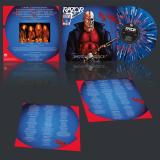
Razor, a thrash metal legend! The most valuable Canadian export since the Toronto Maple Leafs. When Dave Carlo and his band took to the stage at the legendary Headbangers Open Air Festival a few years ago, the crowds went completely wild. This enthusiastic reaction suggests that Razor may have more fans today than they did in their heyday in the mid-1980s. So the re-release of “Shotgun Justice” on vinyl comes just at the right time. The album comprises 14 tracks and features immortal classics such as “United by Hatred,” “Stabbed in the Back,” and “Brass Knuckles.” Shotgun Justice was originally released in 1990 on CD only on Dave Carlos' own label, Fist Fight Records (distributed in North America by Fringe Records). It was the first Razor album with Bob Reid on vocals (who had replaced Stace McLaren, aka Sheepdog).
When creative souls collide special things happen. After several collab sessions, Osunlade & James Curd dawned about a style of it own. Something that embodied both midwesterner’s electronic soul approach to house and dance music. After a successful release “Chocolate Puddin’” the collaborations increased and so began Nomadics. With a slew of music the approach starts here. Better Man is a future house classic in our opinion! Starting with the re sang version of the Curtis Mayfield coined, Gladys Knight delivered On and On taken from the Claudine OST. Both parties are set to release the song simultaneously. James on his Pronto imprint with the original version and remixes by the talented Frits Wentink, Too Easy & Mr Ho. While Yoruba will release Osunlade’s Yoruba Soul Mixes. We are hoping to create cross pollinated bridge with these releases. Something for everyone is our aim!
As always your support and taste are a blessing!
Those not familiar with Jones' style will listen slack-jawed at the sheer anticipatory nature of his sound collage. The five extended tracks are based on hypnotic and somewhat menacing grooves: a repetitive dub bass beat, waves of Middle Eastern strings and voices, layers of building hand percussion. The washes of sound and percussion come and go, often creating a sense of motion and change. All of the tracks are similar and even share elements. Mid-East tension is so accurately captured through the use of the region's instrumentation (especially percussion), sinister electronics, samples of men chanting, women crying, sounds culled from the horrors of war, and occasional angry distortion that the listener will be transported to the belly of the beast.
»Mullah Said« displays two aspects of the work of Muslimgauze. Firstly, musically, it is in the delightful drifting ambient vein. The percussion is mainly acoustic hand drums - providing a rhythm of aural features - the trademark shimmering string sound heard on a number of releases is much in evidence, rhythms are generally slower, there are lots of samples of people speaking in conversation, markets wherever. 'Mullah said' opens the disc with the lovely mix of these sounds. »Every Grain of Palestine Sand« continues the mood, with a slightly faster tempo, and more emphasis on the beat. But it soon locks into a mesmeric lassitude as various effects echo or smear the sounds, drums come in for short moments, different string sounds enjoin the play. »Muslims Die India« follows the mood though the voices seem darker, sadder, and then comes »Every Grain of Palestinian Sand« followed by »Muslims Die India«. Yes - not a typo, these tracks are repeated. Muslimgauze trend – to remix himself. Prime Muslimgauze middle eastern ambience - if you like that side you will love this album. The final track is short and different, a crackling ground over which a singer chants a song interrupted by machine-gun percussive bursts - »An End«.
Meticulously assembled from a good 15 years' worth of source material, Cong Burn boss John Howes' second Paperclip Minimiser transmission proliferates its predecessor's network of turn-of-the-millennium aesthetics and concepts, bringing us closer to the lost future promised by the mid-digital age. If the debut album rooted itself in 2006, using an era-specific rig to activate its vintage Winamp-ready sound, 'II' pushes the clock forward just a little, recycling an unreleased album that Howes engineered in various locations across the north of England, starting way back in 2011. Working quickly and methodically with his homebrewed "DIY DAW" system, Howes improvised live using the record's bank of sounds, transforming the skittering bio-electronic rhythms, bitcrushed modem whines and inclement Lancs soundscapes into a suite of sleek, bass heavy steppers.
Howes has refined his setup and process over the years to function as an antithesis of contemporary production logic, a system that he can use easily to retreat from the excessive layering, overdubbing and editing that plagues modern electronic music. With only limited separate channels in each track, 'II' sounds both archaic and strangely novel. Showing respect to the early days of techno, when stone-cold classics were jammed out live using just a drum machine, a sampler and a couple of synths, Howes simultaneously acknowledges the promise of the transition to a digital future, as nascent algorithmic technology began to rehydrate stale rhythmic and melodic patterns. Fabricating its wrinkled cyberpunk landscape from shovelware blips and whines, spacious environmental echoes and lustrous, plasticky FM hits, 'II' is dense but never congested. It's a reminder that bass music thrives when it's given the room it needs to breathe.
2026 Repress
Lars Huismann returns to Mutual Rytm as he delivers the second instalment of his "Sounds From The Past" trilogy on the label.
As SHDW & Obscure Shape's Mutual Rytm imprint continues to grow, it's clear that the DJ and producer pairing have a strong vision for the label and are building an equally impressive roster of artists to form the imprint's core family members. One of the early standouts is Lars Huismann, who arrived to deliver a selection of impactful offerings influenced by the "golden years" of techno in his own unique style crafted by various production techniques. Having featured on the label's opening VA and delivered the first EP for MR002, racking up a wealth of global support in the process, mid-November welcomes a return for the Berlin-based talent as he serves up six fresh cuts in his signature sound for "Sounds From The Past II".
Opener "Sounds From The Past II" is an action-packed title cut fusing typically slick rolling grooves with hazy melodies and atmospheric releases of tension, while "Propulsion" takes cues from its title and sees precise drum shots, echoed background vocals and a tunnelling groove taking the track right into the thick of the action.
On the flip, B1 "Loucura" brings a percussive workout as frantic organic drums and resonant brass melodies bring a party
to proceedings, with "Stroke" and "Nudge" both armed with tough kicks, zipping synths and more subtle vocal work.
Digital buyers get an extra exclusive in the form of "Dub Division", welcoming a slightly more subdued but equally as impactful track guided by dubby chords and peppy hi-hats to close the show.
Walter Thomas’s “Chicago Knights” LP features a retrospective of songs written and released between 1987 and 2009, primarily with the Roland 1824 and the Fostex 8 track reel to reel. Channeling the spirit of underground soul and dance music specifically rooted within the greater area of Chicago, Illinois–a city known for its deep and healthy soul and r&b roots–this compilation features 8 of its 9 tracks on vinyl for the very first time.
The intro track “I Wanna Get Witcha” dates back to 1987, holds a proven track record of kicking off many a dance floor, rocking clubs worldwide in a blur of boogie-funk, disco, and soul. “Immaturity” and both versions of “Fed Up” echo the emotional differences and tensions between lovers in a spat. “Magic City” served as the anthem and homage to its namesake roller skating rink in 90s-era Waukegan, IL. While “Chicago Knights” is a relentless mid-tempo groove inspired by the aggressive motorists that dominate Chicago roadways, “2nd Chance” drops the tempo to a slow r&b roll, preaching the ethos of love, peace, and forgiveness.
Last but certainly not least, “E&J’s” was a real commercial jingle used for a once legendary BBQ joint “E&J’s” in Illinois: a short bonus track to close out the LP. These 9 tracks are just a touch of Walter’s expansive body of work, and we’re stoked to bring them to you on wax.
Walter Thomas is a singer, songwriter, producer, arranger, and composer from North Chicago, IL known for his soulfully smooth arrangements and vocals. Walter has toured internationally with quintessential soul groups like the Temptations and Friends of Distinction, as well as opening for performers including the Floaters, Bette Wright, The Emotions, and The Drifters. His decades of touring with nightclub and concert performances have honed this gifted artist into a seasoned and refined live act.
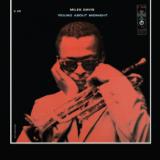
In 1955 Miles Davis played an all-star jam session at the Newport Jazz Festival with Thelonious Monk on piano, Gerry Mulligan on baritone sax and Zoot Sims on tenor sax. This performance immediately drew the attention of Columbia Records' George Avakian, who was so impressed that he immediately offered Davis a contract if he could form a regular band. The group he then assembled would go down in history as Davis' so-called "First Great Quintet", consisting of John Coltrane on tenor sax, Red Garland on piano, Philly Joe Jones on drums, Paul Chambers on bass and of course Miles himself on trumpet. 'Round Midnight is Miles Davis' first record for Columbia and also the first studio recording of the First Great Quintet. The recording sessions began on October 26 1955 but the album wasn't released until 1957 as Davis was still under contract at Prestige at the time. These respective sessions yielded Steamin', Workin', Cookin' and Relaxin'; albums that would go down in history as quintessential blueprints of late 1950s hard bop.
The record is made up of a collection of standards and one traditional song ("Dear Old Stockholm", from the 19th century). Notably, it features what may be considered the most well-known versions of Thelonious Monk's "'Round Midnight" and "Bye Bye Blackbird". That Avakian made a golden signing was sufficiently clear from the start, but no one could foresee that it would be this quintet on Columbia that would go on to change the course of modern jazz forever with Kind of Blue. 'Round Midnight is available as a limited edition of 1500 individually numbered copies on crystal clear vinyl.
Igor Tamerlan is a stranger in his own land. Born in 1954 the Hague and spent most formative years in Paris, Igor suddenly had the urge to relocate to Bali in 1986. “I want to settle in Indonesia and marry a local girl,” he told his sister shortly before flying out.
His next journey would be as audacious as his time in the Fifth Republic. Born from a prominent Indonesian expatriate family in Paris with ties to Indonesia’s first prime minister Sutan Sjahrir, Igor earned a degree in architecture at Ecole nationale supe´rieure d’architecture de Paris-La Villette.
He could have been a brilliant architect or a political scientist (he was accepted to Sciences Po), but his passion for music distracted him from his academic works. He was after all named after Russian composer Igor Stravinsky.
During his brief stint at Sciences Po, Igor spent most of times hanging out at recording studios and rub shoulders with the likes of singer-songwriter Jean-Jacques Goldman and Michel Polnaref. He had a brief encounter with The Rolling Stones at the Cha^teau de Thoiry studio in the early 1970s.
But Igor’s musical education and his occidental eyes appeared to be ill-suited for Indonesia. His first record, titled Langkah Pertama (First Step) on the mainstream label Musica was met with a shrug and was a commercial dud. An experimental record blending the influence of Spanish motifs, Francophile production and a whiff of hip hop and ska was seen by critics as being too alien. His sarcasm-laden lyrics and his biting critique of excessive materialism among the upper tier of Indonesia’s nouveau riche in the album was met with confusion from the audience. He was just too far ahead of his time.
He left the label Musica – or may had been dropped – soon after Langkah Pertama and decided to go independent. He then relocated to Bali and set up a state-of-the-art recording studio in Sanur, across the street from Southeast Asia’s first boutique hotel where luminaries like Mick Jagger, David Bowie, Sting, Yoko Ono and Ringo Starr stayed for their holiday.
From the studio, Igor recording everything from the sounds waterfalls, geckos, minibuses to motorized rickshaw and mix them with hip hop, jazz, electronica, dub and Balinese gamelan. A visionary, Igor was the first musician to use MIDI, which started to be available globally in the early 1980s.
On paper, songs like “Bali Vanilli” should not work, a mish mash of disparate elements mentioned above, sung in three languages, Balinese, English and Bahasa Indonesia while tackling the subject of overtourism. The song was also the first to introduce rap to an unsuspecting audience. But for some strange reason “Bali Vanilli” became a sensation and overnight Igor became household name. And in 1987, long before overtourism was an issue, Igor broached the subject to a national audience in Indonesia on the possible destruction of nature and culture from tourism.
Ever an iconoclast, Igor decided to step out of the limelight following the success of “Bali Vanilli” and in early 1990s he relocated to Indonesia’s cultural capital, Yogyakarta. Here, he worked on some more experimental music while juggling as music video director. He passed away in 2018 at the age of 64.
The 10 songs in this compilation, Bali Vanilli: Experimental Pop from Paradise Island (1987-1991), are some of Igor’s best works, music that would have gone into obscurity had it not been for the diligent work of film director Alfred Pasifico Ginting, who managed to track down some of the master tapes while researching on a documentary on the musician.
These recordings have never before been released outside of Indonesia. Igor would have been proud with this reissue project.
- A1: Assault & Battery / The Golden Void
- A2: The Wizard Blew His Horn
- A3: Opa-Loka
- A4: The Demented Man
- B1: Magnu
- B2: Standing At The Edge
- B3: Spiral Galaxy 28948
- B4: Warriors
- B5: Dying Seas
- B6: Kings Of Speed
Half speed vinyl edition of the classic album, 'Warrior On The Edge Of Time' by HAWKWIND. Recorded in 1975, the album is a ground-breaking classic from Hawkwind’s long career. Featuring a line-up of DAVE BROCK, NIK TURNER, LEMMY, SIMON HOUSE, SIMON KING and ALAN POWELL, the album is arguably one of the finest rock albums of the mid-1970s. This new Atomhenge half speed master edition of has been cut at AIR Studios utilising the original master tapes. The half-speed mastered cutting process offers the finest audio reproduction and this new edition is the definitive LP release of this classic album
- Middle Finger Song
- Louder Than Regret
- Back In Town
- Drink About It
- Heavy Heart
- No Shelter
- This Ain't Quiet
- Hell Bash
- Boys In Green
- My Own Basic Rules
- Roana
- Hero
Folk-Punkrock, Bier & Wahrheiten. Mit ihrem Album "This Ain't Quiet" legen die Schweizer Saint City Orchestra ein dreckiges neues Manifest vor - gegen die Stille, gegen das Schweigen, gegen das brave Mitlaufen. Was hier aus den Boxen knallt, ist ein rotzfrecher Mix aus Irish Punkrock und der ungeschönten Realität des Lebens - laut, wild, ehrlich und mit ordentlich Portion Ironie. Die Songs klingen wie durchzechte Nächte mit besten Freunden, wie Kneipentresen voller Geschichten, wie Stadionrufe aus rauen Kehlen und wie der letzte Schluck vor dem Zusammenbruch. Sie erzählen von verlorenen Träumen, gebrochenen Herzen, wütenden Mittelfingern und unbeugsamer Liebe - zur Familie, zur Crew, zum Verein und zum verdammten Leben selbst. This Ain't Quiet ist kein Album für die Playlist im Fahrstuhl - es ist der Soundtrack für Nächte, die man sich tätowieren lassen will. Für Menschen mit Ecken, Kanten und Haltung. Für alle, die lieber grölen als jammern. Das Saint City Orchestra ist zurück - und sie haben Durst. Das SCO ist im 12. Jahr unterwegs, hat bereits je ein Top 30 und ein Top 20-Album in der Schweiz im Gepäck, vielleicht geht's dieses Mal unter den ersten 10? Für Fans von Fiddler's Green, Flogging Molly, The Rumjacks, Dropkick Murphys und The Real McKenzies. Als CD oder farbige (Neon Orange w/ White & Black Splatter) LP erhältlich
- 01: Maria Do Carmo - Beijos São Como As Rosas
- 02: Jose Paradela D&Apos;Oliveira - Fado De Se Velha
- 03: Edmundo De Bettencourt - Crucificado
- 04: Madalena De Melo - Cantares
- 05: Luiza Baharem - Fado Mondego
- 06: Alberto Xavier Pinto - Fado Do Paraizo
- 07: Maria Victória - Fado Maria Victória Nº 1
- 08: Maria Silva - Fado Alice
- 09: Adelina Fernandes - Misérias
- 10: Estêvão Amarante - Fado Do Cauteleiro
- 11: Alfredo Marceneiro - Olhos Fatais
- 12: Ermelinda Vitória - Fado Da Minha Aldeia
- 13: Dr. Lucas Junot - Triste (Fado)
- 14: Maria Alice - Quando O Meu Filho Adormece
- 15: Laura Santos - A Magia Do Fado
- 16: Joao Rocha Jor - Fado Rocha
Tape[16,39 €]
The definition of the word 'fado' is technically 'fate', though the Portuguese meaning bound up with this term is more complex. The music itself can be fairly closely compared with that of Greek rebetika - also the American blues or the original working-class tango music of Argentina and Uruguay - and similarly takes it's common subject matter from the various cruel realities of the world. Though perhaps what distinguishes fado in character is it's often poised acceptance of the pains of life rather than protestation or resistance - as writer Paul Vernon says "It speaks with a quiet dignity born of the realisation that any mortal desire or plan is at risk of destruction by powers beyond individual control"
Death Is Not The End compile here a spine-tingling collection of fado recordings, taken from records issued in the mid 1910s through to the 1930s. The fado's Lisbon and Coimbra variants are presented here by some of the music's earliest recorded stars - spanning a time period leading up to the emergence of the fado's all-conquering star, Amália Rodrigues.
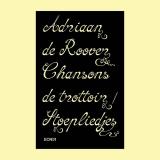
This is a special work by acclaimed composer and musician Adriaan de Roover, who has released records on Dauw, VIERNULVIER, PIAS, and Consouling Sounds. Chansons de trottoir / Stoepliedjes documents his relationship to sampling in the form of a radio play.
Originally created as a radio piece for Resonance FM in Manchester, the album is a sonic portrait of a walk through Brussels. It is constructed from two field recordings: one made during a walk from Metro Midi towards Adriaan’s home, and another recorded on a walk towards Flagey. Rather than foregrounding recognizable landmarks, the piece focuses on the pavement underfoot: the steady, repetitive rhythm of footsteps on sidewalk tiles.
The recordings are mixed with samples from the music of the Brussels hip-hop group STIKSTOF. Their music became the soundtrack to a period in which Adriaan’s desire to move from Antwerp to Brussels began to take shape. Through repeated listening, the city of Brussels gradually revealed itself to him. This experience echoes that of countless music fans who, while listening to The Beatles, imagine what Liverpool might be like: a city revealed through sound and myth, often crystallized in lukewarm Hard Rock Café–style projections.
Chansons de trottoir / Stoepliedjes is an exercise in sampling and an exploration of how one might find a personal place within the music of others. It frames appropriation as an attentive and considered act. Suspended between memory and imagination, the piece exists closer to a dream state than to reportage.