A Must-Hear for Reggae Fans! Legendary Hits Revived in Exquisite Covers ? Now Available on Limited Edition 7-Inch Vinyl!
From the hugely popular compilation series by UK's renowned reggae label Smart Move Records and its producer/creator Lee Francis, comes another remarkable 7-inch vinyl featuring two stunning tracks!
Side A features a soulful reggae cover of Foreigner's iconic 1979 hit "I Want to Know What Love Is", performed by the incredibly talented Jamaican singer Tessanne Chin. This timeless track, reintroduced to a new generation by Mariah Carey's 2009 revival, is beautifully reimagined with a heartfelt reggae twist.
Side B includes a captivating reggae rendition of Mary J. Blige's 2009 hit "I Am", brought to life by rising star Jordaine Bailey, whose smooth and soulful vocals add a unique charm to the original. The result is a refreshing nd laid-back reggae sound that stands out.
Perfect for reggae lovers, R&B fans, and anyone who appreciates acoustic brilliance, this exceptional release is a must-have for your collection.
Don't miss out ? this limited-edition vinyl won't last long!
quête:t move
MISS AT YOUR PERIL !!
There's a lot packed into this one.
A1. A solid jackin Bleep Techno/House werkout (updated from his 2005 I Love Acid EP)
A2. ***A special low slung House track with a classic 'Chicago Trax' feel***
B1. Diva Diva Diva Diva Diva. Big Breakdown. Rough and rugged Breakbeat.
B2. A haunting Acid track with weight in the right places.
Jerome Hill again delivers treats for the dancefloor, Keeping things typically underground and raw, channeling elements from all over into this peach of an EP.
More Water pairs the dancefloor stylings of Sub Basics and Witch Trials through the platform of Temple Of Sound. Beckoning the listener to the centre of the dancefloor with haste, there they will remain as the tracks appropriately travel from light, to dusk, to dark. All the while holding a high-paced tumbling percussion, encouraging complete expressive movement.
Encapsulating bright keys travelling on a wave of undulating rhythm, littered with muffled vocals that enhance the persistent energy that traverses daytime house. All the way to warehouse rackets that hiss and pump with 4 AM energy, this release has something for every moment of the night.
Sohrab unveils “Dreams of Dawn”, on his newly born Toneblind label, a sonic journey that bridges the space between night’s final whispers and the first light of a new day. A fusion of styles with a progressive imprint, this release is a reflection of movement, crafted as a distinct evolution from the artists previous work
Each track, a fragment of a larger vision, pulses with the energy of transition, capturing the essence of dreams dissolving into reality. More than just a collection of sounds, Dreams of Dawn is a statement of intention, dedicated to friendships forged on the road and the experiences around the globe lived so far
- A1: Patina Shift
- A2: Blistex
- A3: Rust Halo
- A4-: Lesio
- B1: Sightjacker Ft. Visio
- B2: Here Used To Be A Star
- B3: Spume (Formerly An Icefield)
- B4: Hypnoxia
- C1: Astral Trepidation Ft Jiyoung Wi
- C2: Spotshadowsphere
- C3: Cable Eater
- C4: Velvet Myst Ft. Heith
- D1: Nerveghost
- D2: Relaxus
- D3: L’ Inaperçu Nous Traverse Ft. Bernardino Femminielli And Habib Bardi
Corrosiv, the sophomore album from Orchestroll, reveals the duo at their most mature and vulnerable. Originally conceived as a reflection on hybridity and bastardization, the album deploys New Age and ambient compositional tropes as a launchpad, exposing their trite sanctity to the realities of corrosion. Having come of age in the 1970s and 1980s, the New Age movement perdures today as a domain of contradictions; its promise of transcendence riddled with the very commercialized dogma from which its adherents claim to flee. Healing modalities such as reiki, crystal therapy, and sound baths are simultaneously pathways to solace and sites of exploitation; their sonic counterparts—ethereal synth pads, shimmering textures, celestial drones—claim to facilitate meditation and enlightenment while devolving into empty signifiers of vitality. With Corrosiv, Orchestroll displays neither reverence nor disdain toward New Age: they exhume it instead, revealing the saccharine effervescence and commodified murk undergirding its aesthetics. The result is intoxicating—disquieting.
Born from a two-week residency at EMS Studios and expanded through a performance at MUTEK Montreal’s 25th anniversary, Corrosiv has since outgrown its original conceptual nucleus, taking on a broader scope. Its inquiry into New Age ideology’s voided rhetoric and aesthetic mysticism now informs a broader interrogation of cultural mediocrity, anti-authoritarianism, gatekeeping, music industry toxicity, and the crumbling edifice of late capitalism and techno-feudalism—all the mechanisms by which meaning is stripped from ceremony, and once-potent forms of knowledge are subsumed into the machinery of economic extraction, severed from their original essence, and transformed into hollow simulacra. Corrosiv distills these themes through a loose narrative: a soul, fixated on wellness as dictated by cosmetic economism, becomes ensnared in an endless afterlife, unable to transcend and shed its dilapidated consciousness.
Framed as an act of audio dissolution, the album thus engages in an alchemical process, whereby complex waveshaping, morphing synthesis, and distortion enact a ritual of fragmentation. There is also friction: between the rigid, mechanical imposition of systematized order and the untamed, chaotic force of organic metamorphosis. Here corrosion and confinement are not solely conceptual motifs; they are enacted in real time, sculpting the album’s terrain. Scraping, tarnishing, degradation—the languid wear of form and substance—become instruments in their own right: buffing as abrasion, entrapment as transformation, corrosion as a means of reconfiguration. The ‘protagonist,’ if there must be one, is the listener, caught within the throes of structural determinism and the potential for emancipation, unable to pass into something greater as the specters of collapsed futures accumulate in the margins.
Corrosiv extends its reach through collaborations with familiar voices: Heith (PAN), VISIO (Haunter), Femminielli (Drowned by Locals), Habib Bardi (Interzone), and Jiyoung Wi (Enmossed, Psychic Liberation, Doyenne) each leave their imprint on its sprawling landscape. At 1h16m, it is a procession, dense with earworms that burrow into the listener’s unconscious.
Misshapen, broken-down metals leach copper into blood, acid reflux burning through the core. Psyche disaggregates into cosmic turmoil, drifting between planes—tongue on rustline, gullet laced with solvent hymns, molars unlatching, bitcrushed to marrowspill. A spasm of brine, ferrous scripture, venomtext blooming in leaden rivulets, cartilage smoldering in phosphor decomposition, synapses drowning in a quicksilver choir. Crest of bile, churning ore, breath clotting into arsenic mist, vein-thread cinched, a corrosive gospel, limb by limb, oxidized to silence.
Ultimately, as the music exhales its final breath, its residue refuses to dissipate—and stillness alone remains. There are no conclusions here—no resolution, no collapse—only the slow drift outward of a vessel unmoored, lost in the sea of symbolic souring. Corrosiv sings the song of a world barren of prophecy, littered with aesthetic detritus. Whether this magic has been transfigured or simply worn away is unclear: the last breath dissipates, but the oxidation does not stop. The silence, too, will decay.
Conceptualized, composed, performed, recorded, mixed, engineered and produced by Jesse Osborne-Lanthier, and Asaël Richard-Robitaille in 2023 and 2024 at Elektron Musik Studion (EMS) - Stockholm, Sweden and Landsc8pe Studio - Montréal, QC, Canada.
Artwork by Jesse Osborne-Lanthier.
Mastered by Stephan Mathieu @ Schwebung Mastering.
- A1: First Movement: Allegro Giojoso 9:18
- A2: Second Movement: Andante Molto Cantabile 2:09
- A3: Third Movement: Toccata Con Fuoco 6:50
- B1: Greg Lake– Lend Your Love To Me Tonight 4:00
- B2: Greg Lake– C'est La Vie 4:17
- B3: Greg Lake– Hallowed Be Thy Name 4:35
- B4: Greg Lake– Nobody Loves You Like I Do 3:56
- B5: Greg Lake– Closer To Believing 5:34
- C1: Carl Palmer - The Enemy God Dances With The Black Spirits (Excerpt From "The Scythian Suite")
- C2: Carl Palmer - L.a. Nights
- C3: Carl Palmer - New Orleans
- C4: Carl Palmer - Two Part Invention In D Minor
- C5: Carl Palmer - Food For Your Soul
- C6: Carl Palmer - Tank
- D1: Emerson Lake & Palmer - Fanfare For The Common Man
- D2: Emerson Lake & Palmer - Pirates
- A1: Arise 3:18
- A2: Dead Embryonic Cells 4:52
- A3: Desperate Cry 6:40
- A4: Murder 3:26
- A5: Subtraction 4:46
- B1: Altered State 6:43
- B2: Under Siege (Regnum Irae) 4:52
- B3: Meaningless Movements 4:40
- B4: Infected Voice 3:18
- C1: Arise (Live) 2:55
- C2: Dead Embryonic Cells (Industrial Remix) 4:33
- C3: Desparate Cry (Live) 6:00
- C4: Murder (Writing Session 1989) 2:35
- C5: Murder (Basic Track) 3:39
- D1: Altered State (Basic Track) 5:43
- D2: Under Siege (Regnum Irae) (Basic Track) 4:50
- D3: Meaningless Movements (Writing Session 1990) 4:46
- D4: Infected Voice (Writing Session 1990) 2:32
- D5: Orgasmatron (Studio Version)
- Life Rhythm
- Balance
- Joy Of Life
- Eternity
- Desert Move Feat. Shantel & Thomas Konstantinou
- Second Nature Feat. Dominic Miller
- Open Land
- Full Circle Feat. Bill Evans
- Silence And Sound
- Supernova
- Home
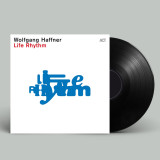
»Ich denke immer wieder aufs Neue darüber nach, wie ich mich als Schlagzeug-spielender Bandleader so positionieren kann, dass das Instrument eine tragende Funktion einnimmt, dies aber auf eine musikalische Weise geschieht und auf keinen Fall als Zurschaustellung von Virtuosität«, sagt Wolfgang Haffner. Diese Haltung zieht sich als roter Faden durch seine gesamte Karriere - und auch durch »Life Rhythm«, sein zehntes Album auf ACT.
Und obwohl Haffners Musik gängigen Vorstellungen virtuoser Schlagzeug-Leader ganz bewusst widerspricht, steht das Instrument diesmal besonders im Fokus. Ausgangspunkt dafür war Wolfgang Haffners allererstes Solokonzert im Jahr 2022 auf Schloss Elmau. Er erinnert sich: »Das war eine Wahnsinns-Herausforderung bei der ich auch vor der Entscheidung stand: Spiele ich jetzt eine Stunde Schlagzeugsolo? Natürlich nicht! Also habe ich habe eine Menge melodisch klingender Perkussionsinstrumente eingebaut, Passagen live geloopt, mit Echos und Delays gearbeitet – im Grunde wie im Studio, nur eben auf der Bühne.« All dies brachte Haffner dazu, sich noch einmal auf ganz intensive Art mit dem Thema mit dem Instrument zu beschäftigen, welches ihn sein Leben lang begleitet. Und so haben alle Stücke auf »Life Rhythm« diesmal ihren Ursprung, nicht wie sonst bei Haffner, am Piano, sondern am Schlagzeug.
Das Ergebnis dieses Prozesses kann man gleich zum Auftakt von »Life Rhythm« auf dem Titeltrack erleben: Das Stück basiert auf einem hypnotischen Groove, bei dem nicht die Becken, wie sonst im Jazz üblich, die Time angeben, sondern vor allem die Trommeln. Das dieser Groove direkt Phil Collins und besonders an dessen Stück »Take Me Home« erinnert, ist kein Zufall: Collins' Art, Drum-Parts zu elementaren Teilen des Songwritings zu machen, ist bis heute eine von Haffners größten Inspirationen. Und auch jedes weitere der elf sehr kompakten, Song-haften Stücke auf »Life Rhythm« öffnet eine eigene Welt des musikalischen Schlagzeugspiels: Mal mal trocken-reduziert mit Besen wie auf »Balance«, poppig bei »Joy of Life«, mit filigranen Becken-Grooves, dezenter Elektronik und Percussion auf »Eternity« oder minimalis-tisch bis kurz vor der Stille in »Silence and Sound«.
Das aus all diesen Stilistiken ein so stimmiges Ganzes ent-steht liegt daran, das Wolfgang Haffner diese im Laufe seiner Karriere bis in die Tiefe durchdrungen hat - an der Seite von stilbildenden Charakteren wie Al Jarreau, Chaka Khan, Pat Metheny, Jan Garbarek, Esbjörn Svensson, Nils Petter Molvaer, Albert Mangelsdorff, Ricardo Villalobos und vielen, vielen mehr. All diese Kollaborationen haben Wolfgang Haffners Voka-bular am Instrument und auch als Komponist geprägt und die da-mit verbundenen, unterschiedlichsten Stile sind gleichermaßen Teil seiner musikalischen Persönlichkeit.
Vielseitigkeit und höchste Musikalität sind auch die Eigen-schaften, die Wolfgang Haffner und seine Mitmusiker auf »Life Rhythm« verbinden. Die Basis bildet ein bestens einges-pieltes Trio zusammen mit Keyboarder Simon Oslender, selbst auch Drummer und Bandleader, und Thomas Stieger, einem der gefragtesten deutschen Bassisten in Pop wie Jazz. Dazu kommen Trompeter Sebastian Studnitzky, Mitstreiter Haffners seit seinem ACT-Debüt »Shapes« und der Finne Arto Mikälä, eine echte Entdeckung in Sachen Klangvielfalt an der Gitarre. Diese Band herausragender Allrounder erweitert Haffner um eine Reihe musikalischer Charaktere, die der Musik ihre ganz eigene Farbe verleihen: Nils Landgren, Freund und Weggefährte seit mehr als 20 Jahren, Saxofon-Ikone Bill Evans, Sting-Gitarrist Dominic Miller, Balkan-Beat-Star Shantel, Bass-Feingeist Nicolas Fiszman, Oud-Virtuose Thomas Konstantinou und Bruno Müller, einer der besten deutschen Jazzgitarristen.
»Life Rhythm«, sagt Wolfgang Haffner, »ist für mich eine Fortsetzung, keine Wiederholung«. Die Musik trägt mit ihrer Wärme, Kraft und Klarheit die charakteristische Handschrift, die Haffner mit seinen Alben und auf tausenden von Konzerten in mehr als 100 Ländern zum wohl populärsten Schlagzeug-spielenden Leader Europas gemacht hat. Und gleichzeitig ist es eine Evolution seiner Musik. Gut möglich, dass Haffners Erfolg genau darin begründet ist, dass seine Musik immer etwas Ver-trautes und etwas Neues beinhaltet und dass Haffner sein Publikum so immer »mitnimmt« im Fluss seiner Ideen - und in einem gemeinsamen »Lebensrhythmus«
- 1: Return Of The Nemesis
- 2: Napalm Satan
- 3: Venom Preacher
- 4: Panzer Holocaust
- 5: Morbid Mayhem
- 6: Lepra Lord
- 7: Valley Of The Corpses
- 8: Graveyard Witchery
- 9: Deathrash Legions
- 10: Black Magic (Bonus Track)
Natural Vinyl[25,00 €]
Deathchain’s early albums reissued on vinyl for the first time in May via Svart Records Finnish death-thrashing maniacs Deathchain’s debut and sophomore albums will be available on vinyl for the first time ever on May 30th, 2025 via Svart Records. Deathchain, hailing from the city of Kuopio, was formed in 2001 from the remains of Winterwolf when the band’s guitarist Corpse moved from the countryside to the city to kick things off, and they continue their illustrious and wild axe wielding path to this day. DEADMEAT DISCIPLES (2003) and DEATHRASH ASSAULT (2005) were originally released by Dynamic Arts Records only on CD. The debut gained a lot of great reviews in Europe, paving the way for the band’s substantial touring around Central Europe, Netherlands, and Belgium. The sophomore album DEATHRASH ASSAULT, which ended in the 18th place on the Official Finnish Album Chart, unleashed Deathchain on the Hellhoundz of Doom and Thrash -tour with Candlemass and Destruction, playing live shows in thirteen countries across Europe. The Japanese version of the album was later released on CD in 2006, featuring a bonus cover track of Slayer’s Black Magic. Corpse comments the reissues: ”It's been over two decades since we recorded our first two albums, and finally they will be unleashed to haunt in the format that is closest to our hearts. Both of these albums were recorded in Kuopio at Studio Perkele, which was the beating heart of the underground back then. We were young and handsome alcohol fueled bastards aiming to make music that is fast, furious, and riff driven. The legendary Valhalla metal bar scene was our home and starting point, and surely you can hear the echoes of North Sawonian madness within these albums. Those times were full of insanely good times, and we did our best to catch the spirit of the old school within our music. Finally with the help of Svart Records we are proud to present you these buried gems of death thrashing metal.” DEATHRASH ASSAULT is available on Svart exclusive black & white marble vinyl, limited natural vinyl, and classic black vinyl. Includes Slayer's Black Magic cover as a bonus track.
- 1: Return Of The Nemesis
- 2: Napalm Satan
- 3: Venom Preacher
- 4: Panzer Holocaust
- 5: Morbid Mayhem
- 6: Lepra Lord
- 7: Valley Of The Corpses
- 8: Graveyard Witchery
- 9: Deathrash Legions
- 10: Black Magic (Bonus Track)
Black Vinyl[24,16 €]
Deathchain’s early albums reissued on vinyl for the first time in May via Svart Records Finnish death-thrashing maniacs Deathchain’s debut and sophomore albums will be available on vinyl for the first time ever on May 30th, 2025 via Svart Records. Deathchain, hailing from the city of Kuopio, was formed in 2001 from the remains of Winterwolf when the band’s guitarist Corpse moved from the countryside to the city to kick things off, and they continue their illustrious and wild axe wielding path to this day. DEADMEAT DISCIPLES (2003) and DEATHRASH ASSAULT (2005) were originally released by Dynamic Arts Records only on CD. The debut gained a lot of great reviews in Europe, paving the way for the band’s substantial touring around Central Europe, Netherlands, and Belgium. The sophomore album DEATHRASH ASSAULT, which ended in the 18th place on the Official Finnish Album Chart, unleashed Deathchain on the Hellhoundz of Doom and Thrash -tour with Candlemass and Destruction, playing live shows in thirteen countries across Europe. The Japanese version of the album was later released on CD in 2006, featuring a bonus cover track of Slayer’s Black Magic. Corpse comments the reissues: ”It's been over two decades since we recorded our first two albums, and finally they will be unleashed to haunt in the format that is closest to our hearts. Both of these albums were recorded in Kuopio at Studio Perkele, which was the beating heart of the underground back then. We were young and handsome alcohol fueled bastards aiming to make music that is fast, furious, and riff driven. The legendary Valhalla metal bar scene was our home and starting point, and surely you can hear the echoes of North Sawonian madness within these albums. Those times were full of insanely good times, and we did our best to catch the spirit of the old school within our music. Finally with the help of Svart Records we are proud to present you these buried gems of death thrashing metal.” DEATHRASH ASSAULT is available on Svart exclusive black & white marble vinyl, limited natural vinyl, and classic black vinyl. Includes Slayer's Black Magic cover as a bonus track.
- Sweet England
- Hares On The Mountain
- Hori-Horo
- The Bonny Irish Boy
- The Tailor And The Mouse
- The Lady And The Swine
- Turpin Hero
- The Cuckoo
- The Bonny Labouring Boy
- The Cherry Tree Carol
- Sweet William
- Omie Wise
- Blackbirds And Thrushes
- A Keeper Went Hunting
- Polly Vaughan
- Pretty Saro
- Barbara Allen
- Charlie
Shirley Collins' Debütalbum "Sweet England" von 1959 wird in ihrem 90. Lebensjahr in remasterter Qualität neu aufgelegt. Originalexemplare dieses British-Folk-Juwels sind heute äusserst rar und werden für über 1.000£ gehandelt. Die Neuauflagen erscheinen im restauriertem Original-Artwork, dem limitierten Vinylformat liegt eine Postkarte bei.
Foxwarren, the Canadian indie collective fronted by Andy Shauf, returns with their sophomore album "2." Joined by his fellow Canadian childhood friends and close collaborators Dallas Bryson (guitar), Darryl Kissick (bass), Avery Kissick (drums), and Colin Nealis (multi-instrumentalist), the eclectic sound of "2" - weaving genres ranging from folk to psych rock to downtempo - coincides with Shauf"s curiosity and desire to incorporate a Native Instruments Maschine MSK3 sampler into his process. There is something uncanny about the feeling of these songs, the way bits recorded in different rooms amplify your attention, listening for how these layers lock. But their true connective tissue is the generous and gentle ways Shauf and the rest of Foxwarren move with melody.
Mia Zapata was the greatest rock singer of her time. She may have likely been the greatest blues singer in punk rock history, the woman who married the 78 and the '78. Tragedy did not make this true. Mia Zapata made this true, and the ferocious, spring-loaded shrapnel frame that was built around her by Andy Kessler (guitar: metronomic and furious), Matt Dresdner (bass: fluid, punching, beat-addicted and melodic), and Steve Moriarty (drums: martial and explosive) - who, with Mia, combined to form The Gits - made it true. The Gits were formed at Antioch College in Yellow Springs, Ohio in mid-1986, grabbing and swapping pieces of art, thrash, noise, punk rock, classic rock, and all the sorts of magical silly and bookish jingle bells that an old-school liberal arts education handed you; for the next few years they worked on turning it all into something tough, sensitive, both brutal and kind. Andy, Matt, Mia, and Steve moved to Seattle in middish 1989, landing in a house on Capitol Hill where they (and fellow travelers) wood-shedded and rehearsed for the next few years. The Gits put out three EPs in 1990 and '91 before signing with C/Z Records and releasing their first full-length album, Frenching the Bully. Seattle quickly claimed the quartet as their own and embraced the Gits blend of ferocious fangs and soft heart, the slug/slap of the guitars, and the gorgeous, soft underbelly of the poetic emotions. These qualities not only fit in with the doe-eyed/sharp-clawed grunge ethos but earned the Gits the respect of their peers, including Nirvana, who tapped them to open a major local show in 1990. Then other stuff happened, and their frantic, confessional barbed-heart snowball began rolling up hill very, very fast; the Gits "quickly" (hah! After half a decade learning to implode and explode hearts and stomping their boots on manifold beer-softened, Marlboro-weeded wood stages!) inspired rapture, awe, and the levitation that happened when peak emotion meets peak grindage in front of amps spitting out something that sounded like the mad marriage of Bolan swagger and Dischord tension_ all fronted by a genuinely incomparable woman who held her heart in her mouth and shared it, in all its celebration and fear, without hesitation. The Gits were an angry, inflamed slinky fully in tune with and tuned by the Bessie Patti Smith of her time, truly the only singer who could summon Joplin, Poly Styrene, Sam Cooke, Iggy Pop and Ian MacKaye all in the same goddamn song. In 1993, less than four weeks after accepting an offer from Atlantic Records, Mia died. I leave it at that, because this is not about death; it's about an extraordinary life. I do not say, "You should have been there," I say, "We are lucky so many of us were, and I am so glad we have this extraordinary evidence of the power and gifts of Mia and the Gits that you now can hold in your hands." And I note that Frenching the Bully, this extraordinary testament to the soul, shock, fury and feeling of the Gits, has been long out of print on vinyl and CD, and this new edition - remastered by legendary Seattle engineer Jack Endino - joyfully rectifies that. -Tim Sommer
- Shoplifter
- Possession
- Buildings
- Shining
- Skirts Of Heaven
- Fantastic Tomb
- The Big Day
- Hotel
- Alive
- Another California Song
Cassette[14,71 €]
Ty hits the big sky trail of our good ol" frontier empire, discovering non-stop bangers and inspired new sonics around every bend. With lyrics co-written by long-time collaborator, filmmaker Matt Yoka, Ty"s glittering rhythm arrangements move with fresh scansion, inviting in sweeps of strings and horns to further the charge righteously. You"re invited too! Don"t miss the trip - the country inspires awe from up on Ty"s high-octane ride.
SAISEI founder Junki Inoue continues his vital archival work uncovering the riches of Japan’s distinctive electronic music scene and bringing them to new audiences around the world.
HERO U.D.A. aka Hiroyoshi Udaka is not someone you can easily google, but he’s sure lived a life worth retelling. His story starts back in the late 80s when, inspired by the acid house emanating from the UK — during what was fondly christened the Second Summer of Love — he picked up DJing and made the move from Japan to London. Throughout the 90s he DJed at underground techno institutions like London’s The End, CLUB UK and Silver Fish, as well as at the infamous Tribal Gathering raves, periodically returning to Japan to support techno greats like Colin Dale, Mad Mike, Suburban Knight and D. Wynn on tour.
The tracks on this EP, previously unreleased except for one, were all recorded after Udaka moved back from London to Tokyo, between 2002 and 2005. Yet they sound strikingly modern, drawing on a rich range of sounds that have come back round again two decades later: broken beat, acid jazz, dub and breaks. Deceptively simple grooves are given depth by layers of textures and micro samples, for example the surface noise on ‘On The Way’ that glues together an otherwise sparse skeleton of dubby pads and body popping drums. ‘Mature Missile’, ‘So Good’ and ‘Night Driver’ employ raw broken beat templates with acid accents, whimsical melodies and vocal interjections for a playful mood. ‘Sin City’ takes a darker turn, off-key piano hits and plunging bass adding to the wonkiness. The EP closes with a wiggly vignette, ‘222AM’, reminiscent of early 00s contemporaries like Mouse On Mars. Now these hidden treasures from Udaka’s archive gain a new life on SAISEI.
———
SAISEI is a Japanese word which translates to ‘reproduction’ and ‘to play’ (as in playing records). Japanese culture is widely known for its traditional nature just as much as it is for being forward into the future and this label’s concept does justice to exactly that. Having started digging for records as early as 16 years old, Junki Inoue delved into productions from 1990s Japan to uncover these native gems. SAISEI’s core concept is to recapture and reintroduce unique pieces of Japanese electronic music onto vinyl, to an audience it never reached before as most of this music was only released in Japan.
b A2. So Good Acid Funk
- Family Portrait
- Egon & Gertie
- First Self-Portrait Series
- Mime Van Osen
- Second Self-Portrait Series
- Wally, Egon, & Models In The Studio
- Promenade
- Third Self-Portrait Series
- Egon, Edith, & Wally Meet
- Egon & Wally Embrace And Say Farewell
- Egon & Edith
- Second Family Portrait
Originally released in 1996 on Quarterstick Records, Music for Egon Schiele is the soundtrack to a piece of dance and theater that was debuted by the Itinerant Theater Guild, May 18, 1995, in Chicago. Based on the life of the romantic and controversial Viennese painter, Egon Schiele was written and directed by Stephan Mazurek, who headed the group of performing artists. Rachel Grimes composed this music and performed it with two string musicians during the run of the performance. The Rachel's began recording in April of 1991 in Baltimore, MD, under the direction of Christian Frederickson and Jason Noble (Rodan, Shipping News). Subsequently, they met and became close friends with Rachel Grimes. In September of 1994 after a few more city moves, band break-ups, and general melancholy they decided to become a full time band and complete their first record for Quarterstick Records, Handwriting. Music for Egon Schiele is their second LP and contains a more stripped down and immediate musical focus. These songs are not sparse, they're beautiful. They build, they crash, and they make you wish you knew more about life and they mysteries its holds.
- Apartment Life
- The Machinist
- The Men Are Fighting
- Lakeland
- Seven And Seven
- Over & Over, Pt. 1
- Bells And Bells
Fit for Consequences: Original Recordings, 1984–1987 is the first ever archival release from Repetition Repetition, the “two-man electric minimalist band” consisting of Ruben Garcia and Steve Caton hailing from Los Angeles in the mid 1980’s. Repetition Repetition’s unique blend of cosmic art-rock minimalism / maximalism was self-released across a series of cassettes produced in micro editions, and while garnering the attention and participation of luminaries such as Harold Budd, remained under the radar during the band’s existence. Fit for Consequences: Original Recordings, 1984–1987 collects select material from across the duo’s catalog.
It was over a plate of Mexican breakfast food when Ruben Garcia and Steve Caton first told Harold Budd of Repetition Repetition and the worlds they intended to explore by respective way of synthesizers and guitars --- a rendezvous instigated by the former’s fan mail to the legendary composer. If the upstarts entered this restaurant from a one-way street of admiration, they would leave with not only Budd’s interest but, sometime later, a blessing in the wake of many hours shared by the three in Garcia’s Los Angeles home recording studio: “This is going to be difficult, but God help them, I think they’re great,” noted Budd in a USC lecture in 1985. Now several degrees removed from prior rock music aspirations, the real game was afoot.
Between 1984 and 1988, Repetition Repetition operated within something akin to the underground of the experimental underground, although even that designation perhaps overstates the case. The duo’s sparse output consisted of three cassettes self-released on Garcia’s Third Stone Music label: Repetition Repetition (1985), Lakeland (1987), and The Machinist (1987). Their songs would also be included during this period on Trance Port Tapes’ vital scene-scanning compilations assembled by A Produce. Live performances occurred with similar infrequency, but Garcia and Caton counted converts in quality over quantity, numbering among them the aforementioned Budd, a Chambers Brother, and, judging by a memorably drop-jawed reaction following a rare Repetition Repetition gig, Jackson Browne.
Likewise, critical support materialized in the form of KCRW deejays Brent Wilcox and Dean Suzuki, whose steady airplay positioned Repetition Repetition’s music amidst fearless company like Jon Hassell, Hiroshi Yoshimura, and Richard Horowitz. Yet, to hear fellow Trance Port featured players like Tom Recchion and Bruce Licher of Savage Republic tell it, Garcia and Caton moved as ghosts --- a notion more vexingly endorsed by the silence of record companies that failed to come knocking --- and therein lies an overarching truth to the work itself.
Journey to the heart of Repetition Repetition and one discovers a collective ear impossibly attuned to the hypnotic possibilities of stylistic convergence, the resulting music possessed of seamless multimodalities which beckon to a glimmering plane of the disembodied. Where Caton sought his artistic fixes at an intersection of popular genres, Garcia zoned in on the sonically spare, drawing from the same wellspring as the Enos and Rileys of his personal avant-garde pantheon, and in their coming together the two tapped into a deeper cosmic source. Synthetic walls of keyboard sound in forever states of reprise met waves of shimmering --- and at times even punishing --- guitar in reply, their soundscapes hovering convincingly between, as suggested in fittingly dualistic fashion in a press kit assembled by Garcia, such disparate sensations as bird flight in one song and oil drilling in the next.
But don’t call it a push-pull dynamic, as this was a creative partnership founded upon fluidity and organicism by way of, naturally, repetition. In contrast to, say, the Bressonian ideal of repetitive motion as a great stripping away, the concept in the hands of Garcia and Caton equated to ascendancy via continuous unfolding, a maximal route to minimalism. To be sure, their recording philosophy morphed over the course of the act’s short history, and what started as a process defined by consistent in-person interplay developed into a more isolated method formulated by Garcia, who eventually took to his own one-man bedroom-studio sessions in order to fully chart any and all potential ostinato-loaded paths which he could travel down, the Tascam-captured resonances subsequently provided to Caton as blueprints from which to take flight himself, adding layer upon layer of steel to the proceedings.
If the practice and execution changed, however, the evidence certainly didn’t rest in the results: The seamlessness remained, and, despite the brevity of their time together, so has Repetition Repetition. With this finely calibrated collection of songs in Fit for Consequences: Original Recordings, 1984–1987, Freedom To Spend sees to it that the private worlds of Garcia and Caton can now be visited by all rather than just the count-‘em-on-both-hands lucky few whose musical endeavors or collector vocations carried them into this once-distant dimension.
Repetition Repetition’s Fit for Consequences: Original Recordings, 1984–1987 will be released on Freedom To Spend in vinyl and digital editions on May 30, 2025. The collection includes extensive liner notes from Bill Perrine, and wil be offered alongside Over & Over, a supplemental collection of music available exclusively as a mail order cassette from Freedom To Spend and RVNG Intl.
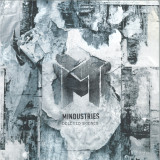
Mindustries is back, ready for a new chapter!
This journey has not been easy, after the loss of his partner in crime Yuri, it is now time to move on forward. With deep respect for everything they built together, this new release looks to the future.
Bringing you a new wave of music fueled by the sounds of all that came before, with the same energy and attitude that Mindustries is known for. Yet, with this release, reaching beyond the limits of what you expect!
Dark, timeless, raw and energetic hardcore in all its diversity.
This is Mindustries.
One year on from the release of the critically acclaimed 'Breathe... Godspeed' for Bristol's Timedance, Verraco - aka JP López - returns to announce Basic Maneuvers, his debut for XL Recordings.
Sonically, the project reflects this physical and emotional shift from the more introspective beauty of Medellín to the vibrant energy of Colombia's capital, Bogotá. Basic Maneuvers reflects movement — between scenes, sounds, and cities — pushing forward Verraco's cross-culture sound; one that collides South American dembow rhythms with maximalist synths, UK soundsystem bass culture, meticulous IDM sound design, with the intensity and precision of techno.
Across the EP, he expands his range with the main single, a powerful 4x4 club-ready edgy banger, a dubbed-out stepper "Total" and "sobe sobe", a grime-infused collaboration with legendary Kenyan-Ugandan rapper affiliated to Nyege Nyege, MC Yallah, that celebrates the deep-rooted connection between the underground dancefloors of Africa and South America. Basic Maneuvers is a bold statement of intent from one of electronic music's most vital and exciting producers.