zake's latest album, Dolere, unfolds meticulously over 70 minutes and invites you deep into his signature blend of detailed, harmonic drone. Inspired by the suspended weight of unchangeable emotions, the first movement drifts on melancholy waves all enveloped in analogue hiss and tape samples that echo a wandering mind's ceaseless pondering. The title track shifts mood with darkly-tinged drones and subtle field recordings that progress deliberately like shadows in a forest. Both pieces offer refuge from life's relentless pace and resonate like sonic Rorschach Tests or meditative soundscapes. Positioned alongside ambient greats like Thomas Koner, this is another essential album in a long line of them from this ambient titan.
quête:t move
Black Truffle is thrilled to announce a reissue of Chico Mello and Helinho Brandão’s self-titled release from 1984, the first return to vinyl of this classic of Brazilian experimental music with its original cover art and complete track listing. An under-recognised figure whose work inhabits a singular terrain where radical new music techniques and music theatre meet musica popular brasileira, Mello has lived and worked in Berlin since the late 1980s. A student of Dieter Schnebel, Mello played in the 90s iteration of Arnold Dreyblatt’s Orchestra of Excited Strings alongside compatriot Silvia Ocougne, with whom he produced a radical and hilarious deconstruction of MPB classics on Musica Brasileira De(s)composta (an early and rather atypical release on Edition Wandelweiser).
On this release, his only recording predating his move to Europe, Mello works with the alto saxophonist Helinho Brandão, who appears to be otherwise unknown outside Brazil. The record’s six tracks range from solo saxophone improvisation to densely layered ensemble works bridging minimalism, acoustic sound art and a plaintive melodic sensibility that calls up Edu Lobo or Milton Nascimento. Beginning with a dramatic, dissonant wind and string surge from which emerge ominously pounding piano chords, opener ‘Água’ slowly builds in intensity, a halo of clustered vocal harmonies gradually closing in on Brandão’s squealing sax until the piece opens up to reveal a gorgeous passage of melodic singing. The piano accompaniment reduces to tolling bass notes as the voice begins a repeated incantation, suggesting a ritualistic atmosphere reminiscent of parts of Xenakis’ setting of Oresteia. Dissonant, sawing tremolos on the strings climb to a crescendo before disappearing into the sounds of water being poured and splashed into metal vessels, presented not as a field recording but as a percussive element performed by the ensemble. A child’s voice then appears, singing to piano accompaniment the same melody heard earlier in the piece. After a brief solo alto improvisation from Brandão, working with the guttural pops and fleeting melodic gestures of Braxton or Roscoe Mitchell, the remainder of the first side is dedicated to the leisurely unfolding of ‘Baiando’ over the course of twelve minutes. A trio for Brandão on soprano saxophone, Mello on a very period-appropriate phased nylon string guitar and Edu Dequech on bongos, the performance eases its way hypnotically through subtle variations on a set of rhythmic and melodic patterns, almost derailed at points by Brandão’s wild forays into extended technique but held together by Mello’s droning guitar notes.
The second side opens with another multi-part epic for a larger ensemble, ‘Matraca’, which makes use of strings, electric guitars and a wide range of South American percussion instruments. Rasping violin harmonics hover as drum hits, repeated guitar notes and triangle accompany a slowly descending bass glissando. A sudden change in direction introduces a thrumming, incessantly repeated bowed bass tone, beginning a series of episodes of minimalist phasing and pattern variation, the combinations of electric guitars and orchestral instruments giving the ensemble an ad hoc charm like the early Penguin Café Orchestra but with more percussive drive. Eventually the piece is overrun by a cacophony of the titular matracas (a kind of ratchet/cog rattle). Following a lyrical trio improvisation by Mello, Brandão and Gerson Kornin on bass, the final ‘Danca’ focuses entirely on Mello’s layered acoustic guitars and vocals, using this restricted palette to build up a haunting piece of almost orchestral density, reminiscent of the 70s work of Egberto Gismonti in how it thickens a folkish ambience with harmonic sophistication.
Arriving in a starkly beautiful gatefold sleeve and sounding better than ever in its new remaster, one might call the stunning music contained on Chico Mello/Helinho Brandão ahead of its time. But what (other than some of Mello’s own work) produced in the years since its initial release has really touched the organic fusion of minimalism, free improvisation, radical instrumental technique and popular song achieved here? Forty years after its first release, Chico Mello/Helinho Brandão remains music of the future.
Mit As It Happened bringen Horse Lords die Inbrunst und Wut der Shows ihrer geliebten Band auf Vinyl heraus: Horse Lords Live, einer Sammlung von Aufnahmen, die die galvanische Energie des Quartetts wie nie zuvor einfangen und gleichzeitig mit der Trope eines Live-Albums spielen. Aufgenommen bei einer Reihe von Konzerten in ganz Europa, die sich über mehrere Tourneen in den Jahren 2022 und 2023 erstrecken, ist As It Happened eine vermittelte und in manchen Momenten bewusst und auffällig bearbeitete Präsentation einer Horse Lords-Performance, die nach einem gewissen Grad an Idealisierung strebt. Da die Performance im Mittelpunkt der Bandpraxis steht und Elemente des Zufalls mit der straff komponierten und komplexen Musik der Horse Lords kollidieren, funktioniert As It Happened sowohl als Provokation als auch als totaler Spaß.
"Jordan Hamilton's ""Project Freedom"" revolves around the non-traditional ways Jordan applies the Cello to play chords, layer melodies, and create songs. This is a record about breaking limitations and boundaries - a fusion of RnB, Soul, Hip-Hop, Electronic, and Jazz.
Located halfway between Detroit and Chicago, Project Freedom was written in Kalamazoo, Michigan where cellist Jordan Hamilton began his journey as a songwriter, producer, and artist. This is Cello-Beats and Folk-Soul Rhythms.
This introspective journey is narrated by Jordan's lyricism that expresses the wisdom gained through life's lessons at home, chasing dreams, living with loss, and falling in love. These are the lessons that earned him the ability to move through this world all the more free.
This is an album made to accompany you through all of life's changes."
ohn Fahey’s Takoma label is best known for pushing the envelope when it comes to acoustic guitar playing, but in 1967 it released a record that has become one of the true cult classics of the ‘60s free jazz movement. Charles Martin Simon was an aspiring writer whose artist wife died in 1965. When he tried to pick up the torch and become an artist using her art supplies, he was, in his words, “reduced to nothing,” and thus created an alter ego or “psyche fragmentation,” Charlie Nothing. Under that moniker he became most famous for creating “dingulators,” working guitar sculptures made from parts of American cars; in 1967, though, he recorded The Psychedelic Saxophone of Charlie Nothing/In Eternity with Brother Frederic, an album consisting of two separate saxophone improvisations accompanied only with gong, tabla, and ukelele. Its cover adorned by Nothing’s own hand-drawn art, this record has since become not only something of a “secret handshake” among free jazz fans, but also a classic of outsider art, fitting right next to your Moondog records if not in sound than in spirit. For its first ever reissue in any format, we’ve gone back to the original tapes to present an all-analog release of The Psychedelic Saxophone of Charlie Nothing/In Eternity with Brother Frederic on black vinyl with the original art intact, offering an unfiltered experience of this man’s cracked genius. A memorable look ‘n’ listen to say the least.
Lullaby for the Debris is the second album from Moses Brown of Institute’s solo project Peace de Résistance. Those of us who loved Peace de Résistance’s 2022 debut, Bits and Pieces, will be pleased to hear that much of what made that album so memorable—the glam-infused art rock sound, the gritty yet richly textured production, and Moses’s bluntly class-conscious lyrics—carries over into Lullaby for the Debris. Yet Lullaby for the Debris also sounds more refined, more timeless than its predecessor, with “40 Times the Rent,” “Coddle the Rich,” and “Ain’t What It Used to Be,” all built around chooglin’ Lou Reed-style riffs beamed in from the great rock and roll beyond. Elsewhere on the record, Moses’s arty side shines through, with “The Funny Man” and “Pay Us More” full of uncanny sounds that invite the listener to bathe in their rich sonic textures. “I Am” and “You Are Absurd” move into a new territory Brown calls “despondent funk,” their rubbery bass sounds and eerily progressive soundscapes evoking Station to Station-era Bowie, while the title track closes the album on a pensive note, landing somewhere between 70s minimalist composition and the mellower moments from Eno’s solo albums. The real strength of this record, though, is Brown’s ever-developing songwriting skills, which meld wry social observation and Crass-style confrontational politics to melodies you’ll sing along with for the rest of your life
Susan Wong's 2007 debut for the evosound label
Susan moved in a new direction for this album, travelling to Nashville to work with top local session players, and arrangers. The album features songs from the 1940s standard "Over The Rainbow" to the 1990's classic love song "When You Say Nothing At All" and also includes covers of songs from Van Morrison, Buddy Holly, and Burt Bacharach.
This is part of the evosound 20th Anniversary special re-release collection. The album will be available on 180g vinyl transparent green LP.
S
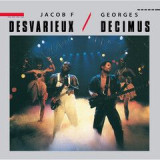
Brand new vinyl reissue to celebrate the 40th anniversary of seminal
album Yelele by Georges Decimus and Jacob Desvarieux, from zouk
pioneers Kassav', includes the massive worldwide crossover hit "Zouk-la
se sel medikaman nou ni"
Whether in concert, or on the radio or TV, the image of Kassav' remains vivid in
the minds of listeners and spectators. The group, founded in 1979 by Jacob
Desvarieux, Georges and Pierre-Edouard Decimus, has become legendary, putting
Guadeloupe and Martinique on the musical map of the world. Touring the world
with zouk, a musical movement introduced and popularized by Kassav', their
albums have repeatedly been rewarded with both gold and platinum discs.
A victim of Covid in 2021, the loss of Jacob Desvarieux leaves a huge void.
The mix of Jacob Desvarieux and George Decimus with Jocelyne Beroard, JeanPhilippe Marthely, Patrick Saint-Eloi and Jean-Claude Naimro has played sold out
concerts in 82 countries. With texts recounting real life in the Caribbean world
their lively music draws on the rhythms of Guadeloupe's gwo-ka and Martinique's
ti-bwa. Transcending the well-defined codes of Caribbean music, they have turned
the 1980s and all the succeeding decades into a fabulous ballroom.
They have been welcomed in Japan and the USSR, where they became the first
group of black musicians to tour. Forty years after the group's creation, their
timeless hits continue to resonate
- A1: Dancing In The Past
- A2: Nikui Aitu
- A3: Memai
- A4: Futaribotti No Heaven
- A5: Lover Boy
- B1: Venice No Gogatu
- B2: Sensual
- B3: See You...later
- B4: Congratulations
- B5: Wakare
Kimiko Kasai, who has had a spectacular career as a jazz vocalist, performing with Mal Waldron, Gil Evans, Herbie Hancock,
and others, moved to Toshiba EMI in 1987and released an LP of electro-pop Japanese works. He is in charge of the songwriting of all the songs himself,
and makes you listen to the adult and exotic majestic singing.
Marking sixty years of Bossa Nova, and twenty years since Marcos Valle’s first release for Far Out Recordings, what better time to bring back this era-defining classic from the Brazilian master composer?
Throughout his astounding six-decade career, infiltrating pop, bossa nova, samba, delicate psychedelia, jazz and funk, Marcos Valle has consistently shown a dogged determination to transcend the traditions and structures of bossa nova, whilst never veering away from the movement’s inherent, fundamental spirit. To some extent, his epithet ‘the original Rio beach boy’ is a handy one: it reflects the origin and character of his often sun-soaked sound, but expounding his importance in the lineage of Brazilian music, he is more discerningly known as ‘the renaissance man of Brazilian pop’. He is indeed one the very greatest and most important composers, arrangers, writers and performers in Brazil.
Up until Nova Bossa Nova, Marcos Valle hadn’t released an album for well over a decade. After 1983, he resented the way the music industry had changed with commercialisation and new demands curtailing his creative freedom. This was until 1994 when Marcos met Far Out boss Joe Davis and they recorded a track for Far Out’s first Friends From Rio album. This new collaborative partnership resulted in a new solo album, which commenced recording in 1996.
Nova Bossa Nova brought Marcos bouncing back into the 90s, slotting nicely in place alongside the acid jazz movement as well as a voracious new demand for Brazilian music on dancefloors from London to Tokyo. It was witnessing the London club scene’s growing appetite for Brazilian music, as well as a lack of new sounds coming out of Brazil at the time, that a young Joe Davis put in a proposal to record a new album with one of his musical idols. Joe wanted to facilitate an album which would combine the latest technologies and production techniques, with live to analogue tape recording: a Marcos Valle album tailor-made for London’s clubs. Always open to modern influences and possibilities, Marcos agreed to the project, and Joe and his production partner Roc Hunter flew to Rio in ‘96. The record wasn’t released until ’98, as the original ½ inch tapes were stolen from Far Out’s London studio, meaning parts of the album had to be re-recorded.
Nova Bossa Nova was unveiled at the peak of the of the Brazilian movement, the record would also prove to be something of a revolution, inspiring a new generation of artists like Bebel Gilberto, Sabrina Malheiros, Da Lata and Bossacucanova, who continued to fuse Brazilian influences with modern electronic sounds.
Adam Beyer continues his elite studio form with ‘Ghost Kiss’.
The boss has been enjoying the most prolific production period of his career in recent times, while reinforcing his sonic range in the process. Recent highlights have included his standout ‘Let’s Begin’ EP which mined classic Drumcode influences, while his remix of Sharam’s PATT (Party All The Time) with Green Velvet and Layton Giordani showed a different side to his repertoire, and delivered his first overall Beatport no.1 along the way.
His latest three-track offering ‘Ghost Kiss’, continues the creative purple patch. The title track sounds like a techno outtake from ‘Requiem for a Dream’s’ soundtrack, deliciously unsettling and striking. This was made for big moments, propelled by a commanding vox that urges us to move our bodies. ‘Pilot’ shows Beyer’s musical breadth and commanding sound design, taking in elements of synth wave and indie pop all within a driving techno context. A captivating listen. The finale ‘Jack’, continues the inspired sonic referencing; a narrative-led dancefloor jaunt that takes in subtle elements house and electro, with Beyer’s unique twist.
Nightfall from the ZAN album (is currently sitting at number 18 in the UK soul chart, so were releasing a 12” with a new track Everlasting with 2 extended mixes of Follow my Heart one is an extended mix of the original and one from Chris bangs, we have moved on this super fast I did the order for pressing on Friday and we are expecting vinyl on Friday hopefully, we thought we’d move fast to capitalise on the success of the album. there are only 250 of these with no repress, its going well on bandcamp and were doing a massive Dj bailout today.
After releasing their first EP Fuse, Cranes expanded to a four-piece band and recorded their debut full-length album Self-Non-Self in 1989. Their sound has been described as “gothic minimalism” and “dreampop”, and also became part of the shoegazing movement in the early Nineties. This 1989 album showed their progression with the increased textures in sound and drum slams. The album contains a darker sound and is a mixture of industrial and post-punk music. Originally only six tracks, the band’s label Dedicated Records added a further two tracks upon its re-release in 1992: “Reach (Live)” and “Nothing In The Middle, Nothing At The End”. In that same year, Cranes went on a world tour with The Cure, which increased their popularity. Self-Non-Self is available as a 35th anniversary edition of 1000 individually numbered copies on black & white marbled vinyl.
- Resonance
- Right Now
- That's The One
- Heads Up High
- Heavyweights (Feat. Kyza, Klashnekoff, Tony D, Reveal, Doc Brown, Persia, Devise & Nay Loco)
- Sweet
- Sick (Feat. King Kashmere)
- Back Around (Feat. Karizz & Brotherman)
- Presence (Feat. Brotherman)
- Almost There (Feat. Brotherman)
- Run It Back
- Seasoned
- All For The Love (Feat. Karizz)
First Word Records is proud to bring you 'Resonance'; a full-length album from Essa & Pitch 92. A lyricist, lawyer and a Londoner, Essa initially released music under the name Yungun in the early noughties, in the midst of UK hip hop's own "golden era". He earned praise from artists such as Nas and Mark Ronson, and performed and recorded with such luminaries as De La Soul, Wu-Tang Clan, Guru, Slum Village and Pharoahe Monch. His classic debut album 'The Essance' originally dropped whilst he was at law school, 20 years ago (which was recently given a full re-issue on First Word). This was followed with a collaborative album with DJ Mr Thing ('Grown Man Business'), then some years later with 'The Misadventures of a Middle Man' in 2014. Essa also released a track on Juneteenth 2020 entitled 'Justice', as a powerful reaction to George Floyd and the BLM movement. It saw support from the likes of Gilles Peterson, and raised money for an assortment of access-to-justice organisations. ...
Careening from the Black Sublime of Dadawah to the, er, Foxy Brown of Jennifer Hylton, Dug Out lets off this early~nineties r'n'b~spiced piledriver, recorded by Lloyd Pickout Dennis at Dynamic, with the Firehouse Crew - George programming drums, Danny the bass, and Wrong Move the other keys
Repress.
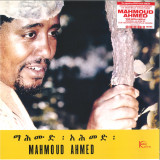
The re-release series of original Ethiopian classic vinyl continues -- the finest Ethio jazz by Mahmoud Ahmed and his band from 1975 plus two tracks from 1978.The liner notes: 'Melancholy blues, piercingly minimalist country airs, brassy, danceable urban jazz, heart-wrenching, off-key crooners: a rich and stirring patchwork of sounds, crossing Afro-beat, Latino-swing moves and Eastern arabesques (Ana�s Prosa�c).' Such were the first -- informed and enthusiastic -- opinions of the music press when the first strains of modern Ethiopian music sounded on our shores. This was in 1984-1985. Such a positive note, struck about such a country at such a time, created plenty of reverb. The country had been so thoroughly trashed by the media's feeding-frenzy, which spewed out a mix of horror and pious pity, bitter denunciation and humanitarian appeals, wallet-tickling clich�s and refusal of identity. In one brutal swoop, TV-reality transformed Ethiopia into a cursed nation, forsaken by God and by man. In contrast to these tragedies, but in the same hackneyed tones, Mahmoud Ahmed's life resembles an edifying fairy-tale where destiny, talent and achievement combine to triumph over poverty, fate and the evil eye. Biography, history and legend, with the help of God, infallibly weave the lesson of merit rewarded. But who can argue, in spite of the mockery that celebrities invariably draw, when faced with one of the greatest voices in all of Africa? Once upon a time, there was a street urchin in Addis Ababa, who started off as a shoe-shine boy and went on to become one of his country's biggest stars, opening the door to Ethiopian music to Western audiences. --Francis Falceto
Ten bad boy digi riddims from the myspace era by Copenhagen’s Maffi crew, dubbed out into 3D space by disrupt in 2024. Raw, minimalist CyberDancehall at its best, nostalgic and oddly futuristic at the same time, this album is quickly becoming RoboCop’s favorite playlist when going to work.
…………………………………………………………………
Maffi Promotions a.k.a. Maffi Boys come straight outta 1773 Kbh V, Copenhagen, Denmark. Originally founded in 1990 by the two homeboys, lazy body Moog and Junior the Rat, Maffi Promotions have been a steady producer of simple digital riddims for years. Hanging out in the streets of Hummel City Junior & Moog used to entertain their friends with the primitve riddims of the Maffi sound. Not knowing that they would do the exact same thing fifteen years later, they continued to believe that one day they would move up the ladder, break out of the underground and reach for the stars.
Now, after finally adopting a little sense of realism, the two homeboys have realised that stardom is nothing compared to spamming people on myspace. So the two stoners decided to get a couple of friends together and turn up the bass online. Together with their sound crew FIREHOUSE, Maffi deal nuff weed and gyals!
Maffi Boys are very dedicated to the art of playing Sensible World of Soccer, rolling weed joints with Manitou tobacco and keeping it real in a Vesterbro-style. So watch out! And don’t test! We’ll be putting up new riddims on a weekly basis. We have nuff things brewing – including a delicious chicken!
………………………………………………………………
Growing up in the streets of Hummel City, Vesterbro, MOOG learned the pleasures of sleeping late, playing Sensible World Of Soccer and picking up hot gyals at an early age. He has spent most of his life trying to master these crucial skills. Taking a break from the dog race, Moog is currently focused on reaching a higher understanding of reggae-science and weedology.
JUNIOR experienced the necessity of rolling well-made spliffs at an early age. Incorporating the aestethic heritage of Scandinavian design, he has spent most of his life perfectionizing this old and traditional art form. Junior is currently taking his ph.d. in digital reggae by buying crates of 80’s 7″ and selecting for his sound system Firehouse.
Formed in Montreal, eight-piece funk band Cane and Abel melded Caribbean elements with soul, blues and psych, frontman Frenchie Thompson holding plenty of bite and the full horn section including former Dragonaires trumpeter Norris Ridguard. After early singles on GRT, the group signed to Epic and relocated to the US but made their biggest splash in France, where they cut two LPs in 1972; this self-titled rarity has Thompson’s ‘Girl You Move Me,’ percussionist Blinky Bostic’s ‘Who’s Gonna Take The Weight,’ and likeable takes of Wilson Picket’s ‘Don’t Knock My Love,’ ‘Green Grass’ and ‘Toe Hold.’ A lost funk classic!
Upon first listen to “Flies the Fields”, one may note the varying colors the band displays, from groove, to urgency, to subtle menace. This is a group making music that breathes and moves, lurches and crawls. “… a unified set of shadows, isolated hurt laid out in fine rainy day garage-demo psychedelia