The Italian trio Desert Wave was formed in 2016, when Drugo (drums) and Logan (bass) were already playing in a doom metal band and then decided to break away and form their own with a more psychedelic/stoner-style. Guitarist Burton joined them a month later, and their musical influences were quite similar: Black Sabbath, Pink Floyd, Led Zeppelin, 70's hard rock, Seattle grunge, up to the granite desert sound of Kyuss.
With "Deafening Silence" they created a more psychedelic and epic, mostly instrumental, sound than their 2017 debut “Lost In Dunes”, much more like the long jam sessions they play in the rehearsal room. The songs were born during the pandemic that deeply marked the band. Like everyone else, they spent several weeks at home, while the empty streets generated a ghostly and disturbing silence. The lyrics are a bit dark and gloomy and on "Endless Night", Logan's voice carries that ghostly presence that loomed over us all. Drugo designed the artwork, as a tribute to the Blade Runner movies. In both films, as in the songs on the album, there was the same feeling of foreboding that hovered in a dystopian future, in which not all the answers are clear and many questions are still unanswered. Burton's powerful guitar riffs echo in this unreal silence, sometimes increasing the sense of restlessness, other times instead, in the more psychedelic parts, they create a crescendo of impotence and inevitability that totally invades you and from which you cannot escape. Purple edition.
Buscar:t quest
The title "Duality" resonated with me deeply as it reflects the inner conflict I often experience. There are moments when I feel fearless and self-assured, contrasted sharply by times when self-doubt creeps in and I question my worth. Sometimes, I cling tightly to my actions, determined to shape my destiny, while at other times, I surrender to the flow of life. I think we all fight these internal battles of duality every day, trying to determine which side we want to nurture, which parts we want to let go of and forgive, and which pieces come from our soul and which pieces were imposed on us. In my pursuit to bring this concept to life, I curated two distinct styles of music for each side of the album. Through the music, I aimed to evoke a sense of magic, for I think that at the core of our internal conflicts lies the enchanting paradox of being humans with boundless potential living, in a mortal world constrained by constructs like money, laws, and societal hierarchies. Over the past few years, I've embarked on a journey of self-discovery, delving into the magical facets of myself—my intuition, my capacity to love—and it was during this exploration that I crafted this album.
Norwegian Grammy-Winning rock band Seigmen are back with a new album called "Resonans". Ask yourself the question: How many bands have maintained the same lineup throughout a career spanning over three decades? Just count and see how far you get. Seigmen is and remains Alex, Sverre, Noralf, Kim, and Marius. Seigmen's new album Resonans echoes the essence of a longstanding friendship. A strong bond among five guys who found each other through music, learned to play instruments, and express themselves together. They solidified their friendship through muddy and sour tones from the rehearsal room on the old submarine quay, down into a basement in the city center, out to a barn outside the city, up on the heights near the old library, down into the mountain beneath the same hill, and back to a rehearsal container at the old shipyard. Always tied to their home town, Tonsberg in Norway. Resonans is the reverberation of endless evening rehearsals, weekends with "lefse" and freshly ground coffee in thermoses, and syncopations. Smiles, conversations, and gossip. The hard, precise, and long-term work. Love and art. Resonans is guts and integrity, demonstrating the uncompromising nature that Seigmen has always represented.
Limited purple vinyl. Norwegian Grammy-Winning rock band Seigmen are back with a new album called "Resonans". Ask yourself the question: How many bands have maintained the same lineup throughout a career spanning over three decades? Just count and see how far you get. Seigmen is and remains Alex, Sverre, Noralf, Kim, and Marius. Seigmen's new album Resonans echoes the essence of a longstanding friendship. A strong bond among five guys who found each other through music, learned to play instruments, and express themselves together. They solidified their friendship through muddy and sour tones from the rehearsal room on the old submarine quay, down into a basement in the city center, out to a barn outside the city, up on the heights near the old library, down into the mountain beneath the same hill, and back to a rehearsal container at the old shipyard. Always tied to their home town, Tonsberg in Norway. Resonans is the reverberation of endless evening rehearsals, weekends with "lefse" and freshly ground coffee in thermoses, and syncopations. Smiles, conversations, and gossip. The hard, precise, and long-term work. Love and art. Resonans is guts and integrity, demonstrating the uncompromising nature that Seigmen has always represented.
The mercurial talent that is SW. back in the building with a new album, and if it weren’t already apparent, OYSTER45 goes some way to assert his place in the pantheon of pioneering producers. In fact, nobody can question his position right at the vanguard of forward-facing dancefloor dynamics.
myDEFINITION part II catches the SUED co-founder as vital as ever. Keeping it on that dusty, low-key flex that has long been his trademark, it harnesses ingenuity to conjure some of the most intriguing gear you’re likely to hear from a limited studio setup. Gone are the hi-tek jazz and ambient flourishes of the near-mythical ‘Untiled’ album, opting, instead, for pure dancefloor headiness. Precision-tooled breakbeats, opulent IDM cybernetics, tuff bleep n’ bass and late nite electro across 10 distinct trax.
Side quests into more abstract realms are fleeting. Dappled melodies evoke warmth in hues of pink and orange but any ambient-dub ephemera quickly dissipates into the peripheries in favour of club-ready pressure. The spectre of mid-‘90s dance music looms large but the SW. blueprint, with its captivating free-form approach, spins those vintage tropes into a distinct sound unto itself. Masterful, cinematic and hallucinatory.
Often drawing comparisons with B12’s seminal brand of ambient techno, SW. will surely be a stylistic reference point in his own right for years to come. Such is the indelible influence he has cast on contemporary electronic music.
A band with many chapters and an everchanging sound, Shudder To Think’s story began in 1986 in Glover Park, Washington DC. Bass player Stuart Hill and drummer Mike Russell had just recruited Chris Matthews to play guitar in their fledgling hardcore band Stüge (1984-86) when they suddenly found themselves in need of a new singer as well. Matthews suggested his friend Craig Wedren for the role. At the audition, Wedren’s style clashed with the style of the band’s previous singer, but the group all sensed that they might have stumbled into a “chocolate-inmy-peanut-butter” situation with intriguing potential. The group changed their name and headed into new territory. Side A of this LP is comprised of five songs from one of their first recording sessions together. The tracks chosen are songs that were only released on demo tapes, never to be re-recorded for future proper releases (this version of “Too Little, Too Late” did appear on the local punk compilation FR-5 in 1987). Side B consists of four tracks that were originally released as their first 7-inch release, the It Was Arson EP, a split release by Sammich/Dischord Records. Included at the end of side B is a version of “Take The Child” from this session (later re-recorded for their first album in 1988).
It got away! The hounds are back on the leash for another session, as Montel makes a bid for better days with this all-out charm offensive of serenades, blissed up patter and emotional blackmail, Palmer-style.
The result is 12 tracks steeped in mind games, romance power plays and neurotoxin rollercoasters, with additional bonus strategies to dissociate with minimum dignity.
Big up Kiwi’s Kiosk..
GRAMMY-award nominated Jordan Rakei is a renowned multi-instrumentalist, vocalist, producer, and songwriter who, over soon-to-be-five studio albums, has been on a wide-ranging journey that explores the outer reaches of his inner psyche, traversing themes of emotional evolution, personal growth and family with unwavering sincerity.
Always positioning himself in and amongst the bigger questions in life, he has navigated his musical journey with passion and precision, unveiling something new about himself through his songwriting at every turn. The Loop is by far Rakei’s most cohesive and evolutionary work to date following an impressive career of previous releases, each of which have demonstrated his natural curiosity and capabilities in exploring new sounds.
London producer Keplrr debuts on Midgar with ‘Plumes’. Known for his productions on trendsetting outlets like Control Freak Recordings and Pressure Dome where he showed his excellent take on forward thinking broken techno music, right here for Midgar he uses a more straight forward approach with two versions of title track ‘Plumes’. The original is a subtle, percussive and playful techno groover, where the ‘Meditation Mix’ flips this impeccable groove into an airy atmospheric after-house mood. Second track ‘Pulse’ continues on this breezy atmosphere, it’s a floaty eyes-closed deep trip, with carefully arranged drums creating the perfect breakdown. Keplrr’s creative process delves into the profound, seeking to encapsulate the sensation of falling or morphing, blurring the lines between reality and reverie. His aim is to transport listeners to a state somewhere between a dream and a trip, where the boundaries of perception dissolve, and the subconscious takes flight. This EP embodies that quest, each track a sonic voyage into the depths of consciousness.
"Remembering is not the opposite of forgetting," Casey MQ sings at the start of Later that day, the day before, or the day before that, his new LP and Ghostly International debut. It's a phrase fittingly misremembered from something the LA-based, Canadian-born composer came upon as he spiraled into unconscious and subconscious-led writing sessions at the piano. Casey's known for his 2020 breakthrough release babycasey, which gave voice to songs seen through the lens of childhood, various film score work and collaborations with artists such as Oklou (who returns here), Eartheater, and Vagabon. His gifts as a producer and songwriter are rooted in textural world-building and the excavation of personal truth. With Later that day... he questions what is true entirely, understanding our mind's tendency to bend and project onto pictures of the past. Across vivid, baroque pop balladry, Casey MQ reorients his recording project and point of view under the notion that memories are malleable. All the joy, pain, love, and loss housed within remembrance is open to interpretation and deconstruction, which he does deftly, with curiosity and complete artistic freedom. "It's a memory album," Casey puts it simply, winding up for the deeper unpacking, "and it might be a breakup album, too_there are more questions than answers." Engaging his dreams and sitting with sheet music at his newly acquired piano, he looked to new and old inspirations including the works of Claude Debussy, Joni Mitchell, and Joe Hisaishi's beloved Studio Ghibli film scores. "Since I was young, I always wanted to write a piano album." babycasey's studied electronic sound isn't wholly abandoned on Later that day... instead, it comes through like an atmosphere, giving Casey's more spacious, minimal arrangements a distinct luster and sheen. The textures and tones shift from song to song as if mirroring the way our minds constantly recontextualize, remember, and forget. Cathartic opener "Grey Gardens" _ its title derived from a dream abstractly related to the Toronto restaurant, but not the 1975 film, which he cites as another coincidental false memory _ presents the record's plaintive, haunted feeling. "Even if not reading into lyrics, sonically I wanted it to feel like you're being pulled into a universe. Not fantasy or otherworldly per se, something more tangible, of the body and mind," Casey says. "Hearing it back, I realized this track was the key to unlocking it." His tender falsetto hovers above ambient washes and echoed keys, each word falling carefully in the crevices. "Asleep At The Wheel" unfolds on arpeggiated synth before a burst of symphonic color; the synth returns inverted to harmonize with the outro, "I love a car crash, I love a story, I love a memory, I swear it's real..." Casey leans into digital imagination on the warm, introspective "Me I Think I Found It." Subdued, stuttered percussion underscores the singer as he cycles through pixelated imagery _ screenshots, smiles, streetlights _ searching for higher meaning through love. Built on ascendent chord distortions, "Dying Til I'm Born" gives the record one of its boldest pulses of emotion. The back half stretches out; "Is This Only Water" is sparse and foggy, "Baby Voice" is intimate and desperate for something to remain. "Words For Love" grooves on guitar, and "Tennisman9" aches in heartbreak. French musician Marylou Mayniel, aka Oklou, appears as the collection's only guest for the closing duet, "The Make Believe," a bright and buoyant send-off that gives Later that day... both a sense of resolve and cyclical-motion. "We are young, under the sun," they sing together, a parting image brimming with lightness.

"Kindred Spirits" versammelt elf Coverversionen, allesamt im Alleingang eingespielt, eingesungen und aufgenommen von Ronny Moorings. Und was für eine Auswahl uns hier erwartet: "Blue Monday" von NEW ORDER, "Question Of Time" von DEPECHE MODE, "Decades" von JOY DIVISION, "A Forest" von THE CURE oder "Alice" von THE SISTERS OF MERCY mögen Stücke sein, die man in der ewigen Playlist eines Ronny Moorings vielleicht schon immer vermutet hätte; die Art und Weise, wie er diese Songs zu neuem CLAN OF XYMOX-Leben erweckt, erstaunt und begeistert dennoch mehr als man das jemals erwartet hätte. Warm, organisch, irgendwo zwischen waviger Elektronik und nebelumwalltem Goth Rock geben sich diese Respektbekundungen, zeigen eine gänzlich neue Seite von CLAN OF XYMOX und lassen ganz nebenbei unsterbliche Klassiker wieder aufleben.
Dass "Kindred Spirits" kein herkömmliches Coveralbum ist, zeigt neben der Songauswahl auch der beinahe sakrale Charakter, mit dem Ronny Moorings an diesem Album gearbeitet hat. Es sind allesamt Songs, die ihm viel bedeuten, die ihn geprägt haben und ihm zweifellos über die eine oder andere besonders dunkle Stunde hinweggeholfen haben - genau, wie es die Musik von CLAN OF XYMOX bereits für unzählige Menschen getan hat. "Kindred Spirits" ist ein Album, so persönlich wie ein gemeinsamer Abend mit Ronny Moorings und seiner Plattensammlung. Eine Lehrstunde in Sachen seelenvoller Musik - gesehen durch die Augen eines hoffnungslosen Musikliebhabers.
Mehrfarbiges Vinyl, Blau, Schwarz und Weiß, Farben viskos ineinanderlaufend und gesprenkelt, Individuell von Hand gefertigt, Jede Schallplatte ist ein Unikat, Deutsche Pressung, 180 Gramm, Überarbeitetes Artwork, Stabile Kastentasche, Mehrfarbig bedruckte Innenhüllen, Mehrfarbig bedruckte Vinyletiketten, Limitiert auf 500 Exemplare weltweit
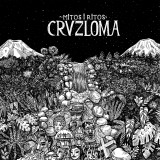
Mitos & Ritos, the debut EP by the Ecuadorian group Cruzloma, consolidates in its six songs a spirit of promoting traditional rhythms in contemporary styles, a process of reinvention and self-discovery in homage to the indigenous peoples of the Ecuadorian jungle and the riches of ceremonial music all in a mix featuring electronica, global bass and dembow. The hostile times humanity is going through have awoken a need to get back to our roots, reclaim ancestral knowledge, and question where the excessive exploitation of natural resources has led us. We have heeded that urgent call to care for everything that seems unlimited but which is increasingly scarce. And so we have looked to the past to understand our relationship with what surrounds us and establish a dialogue between the past, the present and the uncertain idea of the future. Applied to music, this has aroused the interest of artists and producers who use the rich folklore and traditions of Latin America to replicate that dialogue between what was and what will be. With this in mind, Mitos & Ritos ("Myths and Rites"), the debut EP by the Ecuadorian group Cruzloma, consolidates in its six songs a spirit of promoting traditional rhythms in contemporary styles, a process of reinvention and self-discovery in homage to the indigenous peoples of the Ecuadorian jungle and the riches of ceremonial music, based around the bambuco style from Esmeraldas on the northern coast, and the bomba del chota and the san juanito from Imbabura province. On this EP there are also sacred prayers of the Shuar nation, called Ujaj and Anets, including ceremonies like the taking of ayahuasca and of the tzan tza, all in a mix featuring electronica, global bass and dembow. It is a journey into mysticism, the jungle and the dancefloor, reflecting a search for musical identity that is at once contemporary and futurist.
A1 - Polaris
Going all in to open the EP with a truly stand out 2-step roller, ASC crafts a distinctly energetic vibe with Polaris, featuring an intricate old school break seldom heard in drum & bass - packed with high-end detail and a glorious raw energy. With long radiant pad work, a classic jumpy 808 bassline and a stunning, reverberating female vocal sample whooshing and panning across the mix, Polaris will instantly become a favourite in your setlist.
A2 - Things Left Unsaid
Opening with an intriguing fusion of suspenseful keys and deliciously crisp bongos that each play a key role throughout, Things Left Unsaid asks the listener questions of yesteryear in a varied odyssey filled with a myriad of echoed vocal samples, horns and effects, set to a break-laden beat pattern that hops along with kicks and snares each snatching the attention. A calmer vibe from ASC that still packs a punch.
AA1 - Temple Bell
A thumping, spirited beat pattern with rapid kicks and metallic snares provide a visceral aural onslaught as the aptly-named Temple Bell blends our imperious breaks with darkly, epic tolls radiating through a vast ornate hall of resonance -suitably reverberating alongside a backdrop of synchronic atmospherics. Heavily EQ'd vocal samples colour the mix to complete a weighty musical collage.
AA2 - Contrast
Beginning with a flurry of cow bells in a vibrant, expertly edited take on the classic Circles break, ASC serves up a delightfully laid back yet danceable piece with Contrast. Space FX, swirling pads and a mellow, memorable key melody overlay a beautiful mosaic of calm as the continued thrust of the break drives a constant energy to the track, perfectly capturing the ethos of Spatial and closing another immense EP
Words by Chris Hayes Spatial/Red Mist
- A1: She Never Wrote Back
- A2: With You I Still Feel Alone
- A3: Dressed Up Ausländer
- A4: (Bolt) Golden Hour At Sisters
- A5: Crashed
- B1: Just Pretend To Be Someone Else
- B2: I'm Poster Syndrome
- B3: Bubble Life
- B4: 4Real
- B5: Closed Eyes
- C1: Other, Like Me
- C2: Methodology #17
- C3: Boy On A Swing
- C4: I Have A Keen Interest
- D1: In A Place Like This
- D2: Mark Up
- D3: I Am An Artist
Experience the sonic journey that is The Black Dog's latest album, "Other, Like Me," as they delve into the intricacies of the artist's psyche, questioning the very essence of individuality and creative worth. The album invites listeners to confront darker thoughts about self-identity, imposter syndrome, and the relentless pursuit of creative value, all while celebrating the joy found in the act of artistic creation. In this introspective exploration, The Black Dog challenge both themselves and their audience, creating a musical experience that is profoundly personal and open to interpretation. The themes woven throughout the album are a poignant counterpoint between the shadows of self-doubt and the exuberance of creative expression. It's an inward exploration, offering a place of solace for listeners to find comfort amid the chaos of external influences. The album's title, "Other, Like Me", draws inspiration from an interview with Cosey Fanni Tutti in 1999, resonating deeply with The Black Dog's outsider perspective. The phrase encapsulates the essence of the album, reflecting the band's unique identity and shared experiences, while respecting each member's individual passions and interests. Navigating the waters of cognitive dissonance, The Black Dog bring an authenticity to their music that mirrors the internal and external conflicts of the contemporary music scene. With a commitment to stripping back layers and allowing the heart of each song to shine through, "Other, Like Me" offers a raw and unfiltered musical experience that speaks directly to the soul. It's an invitation to introspection, a celebration of independence, and a testament to the power of authentic artistic expression.
Now based in Manchester, set behind a backdrop of haze with the mid 20s coming knocking, Nightbus (Olive, Jake and Zac) found common ground in their mutual taste in music.
Amongst those late nights and the hedonism that comes with them, partnered with somewhat of a compulsive nature, The question of; what next? Rang around.
In summer 2022, a desire to collaborate and make their own music was almost telepathically manifested. Evidently their sound is a testament to the scenes, eras and bands that have inspired them to make music that would stand out in an ever-expanding alternative scene.
- A1: Intro
- B1: The Magic Number
- C1: Change In Speak
- C2: Cool Breeze On The Rocks (The Melted Version)
- D1: Can You Keep A Secret
- E1: Jenifa Taught Me (Derwin’s Revenge)
- F1: Ghetto Thang
- G1: Transmitting Live From Mars
- G2: Eye Know Feat Otis Redding
- H1: Take It Off
- H2: A Little Bit Of Soap
- I1: Tread Water
- J1: Potholes In My Lawn
- J2: Say No Go
- K1: Do As De La Does
- L1: Plug Tunin' (Last Chance To Comprehend)
- M1: De La Orgee
- N1: Buddy (With Jungle Brothers And Q-Tip From A Tribe Called Quest)
- O1: Description
- P1: Me Myself And I
- Q1: This Is A Recording 4 Living In A Fulltime Era (L I.f.e.)
- Q2: I Can Do Anything (Delacratic)
- R1: D A.i.s.y. Age
- S1: What’s More (From The Movie Soundtrack Hell On 1St Avenue)
- V1: Buddy (Native Tongue Decision Part 2)
- T1: Jenifa (Taught Me) (12” Mix)
- U1: Buddy (Native Tongue Decision Part 1)
3 Feet High and Rising is the debut studio album by hip-hop trio De La Soul, and was released on March 3, 1989. It marked the first of three full-length collaborations with producer Prince Paul, which would become the critical and commercial peak of both parties. It contains the singles, “Me Myself and I”, “The Magic Number,” “Buddy,” and “Eye Know”. The album title came from the Johnny Cash song “Five Feet High and Rising”. It is listed on both Rolling Stone’s 200 Essential Rock Records and The Source’s 100 Best Rap Albums. When Village Voice held its annual Pazz & Jop Critics Poll for 1989, 3 Feet High and Rising was ranked #1. It was also listed on Rolling Stone’s The 500 Greatest Albums of All Time.
Released amid the 1989 boom in gangsta rap, which gravitated towards hardcore, confrontational, violent lyrics, De La Soul's uniquely positive style made them an oddity beginning with the first single, “Me, Myself and I.” Their positivity meant many observers labeled them a “hippie” group, based on their declaration of the “D.A.I.S.Y. Age” (Da. Inner. Soul. Yall). Sampling artists as diverse as Hall & Oates, Steely Dan and The Turtles, 3 Feet High and Rising is often viewed as the stylistic beginning of 1990s alternative hip hop (and especially jazz rap). 3 Feet High & Rising was chosen by the Library of Congress to be added to the National Recording Registry for its cultural significance and general excellence.
This special boxset release of De La Soul’s 3 Feet High and Rising includes twelve 7” custom singles pressed on splatter vinyl and housed in custom sleeves, housed in a box that includes a 7” pinup and a double-sided 7” slipmat, and is available first at record stores as part of RSD Black Friday. "
- 1: Different Type Time (Prod. Quelle Chris & Cavalier)
- 2: Custard Spoon (Prod. Quelle Chris)
- 3: Can’t Leave It Alone Feat. Eric Jaye (Prod. Glassc!Ty)
- 4: Come Proper (Prod. Jacob Rochester)
- 5: Touchtones (Prod. Aummaah)
- 6: Déjà Vu / Tydro ‘97 (Prod. Messiah Muzik / Quelle Chris)
- 7: Doodoo Damien (Prod. Quelle Chris)
- 8: Baby I’m Home (Prod. Wino Willy)
- 9: Yeah Boiii (Prod. Quelle Chris)
- 10: All Things Considered (Prod. Wino Willy)
- 11: Pears (Prod. Malik Abdul-Rahmaan)
- 12: Told You (Prod. Fushou)
- 13: Badvice (Prod. Low Key)
- 14: Think About It Feat. Billzegypt (Prod. Obliv)
- 15: Up From Here / 7Th Ward Spyboy (Prod. Ahwlee / Quelle Chris)
- 16: Manigaults / I Miss Them (Prod. Ruffiankick)
- 17: Lazaroos (Prod. Vinny Cuzns)
- 18: Bespoke Feat. Dominic Minix (Prod. Hann_11)
- 19: 50 Bags Feat. Lord Chilla (Prod. Child Actor)
- 20: Axiom / My Gawd (Prod. Glassc!Ty / Quelle Chris)
- 21: Flourish (Prod. Quelle Chris)
"It seemed that if I didn’t somehow repeat the process of greatness, and do so immediately, multiple times away to satisfy playlist and binge watch culture, then I “wasn’t shit”. After a while I was like “nah this doesn’t feel good,… I don’t know if I am finding joy in this”. I would record songs and not release them, obsess over sessions recorded in my home with 30 takes of vocals and wake up only to delete them. When it began to feel right I found solace in an epiphany that I was not obligated to operate at any other wavelength. I am moving on a different type of time, and that doesn’t expire." -Cavalier
For heads of a certain time period of NYC hip-hop, Brooklyn born, New Orleans-based rapper and songwriter, Cavalier was the one that got away. The outrageously talented artist whose name and reputation preceded him everywhere you went in the scene. The rapper who everyone knew was so dope that he had to blow, but who never seemed concerned with any of that. The pretty boy draped in Polo who stole every live show with a feather in his hair and a mouth full of gold fronts. The cat so dedicated to his own independence that even indie labels stopped trying to sign him and projects came when they came, but when they came they were undeniable.
Cavalier was THAT guy for a lot of us; a silver-tongued philosopher with an eye for the poignant details of black life and a delivery as effortless as a young Ken Griffey’s swing. All that said, it never really felt like Cav had that moment in the spotlight that we always assumed was coming. After chiseling away through headier cult corners of the NYC hip-hop scene Cavalier was recognized for his memorable co-pilot to Quelle Chris’ 2013 Mello Music debut, Niggas Is Men. The critically acclaimed LP helped propel Quelle Chris into the forefront of indie hip-hop (and also happened to be the first production credits for Messiah Muzik). Cav followed up with his first full length, Chief, which sports a notable Raekwon feature but also early work from producers like Ohbliv and Tall Black Guy. A relocation to New Orleans and partnership with producer/vocalist Iman Omari yielded two more projects: 2015’s Lemonade EP and Private Stock in 2018. Great records all; eagerly sought by collectors and signal boosted by influential media like OkayPlayer, Solange’s Saint Heron, and Pitchfork. Cavalier’s bonafides have never been in question, but his new album Different Type Time feels like a revelation—a sonic suspension bridge between his rich history and the artform’s future.
Different Type Time doesn’t sound like the future though, its vibrations are somewhere all their own. It sounds like jazz, like a conversation overheard in roti shop, or a pool hall, or the foyer of your old building on a fall day, front door propped open with a brick. The blues is in there too, and the south—the American South, and theGlobal South, and South Brooklyn. It’s not that it sounds like the past, but you can hear everything that came before in the thick of the basslines and the yearning of the keys. Different Type Time also doesn’t sound like now, it sounds like RIGHT NOW; the bounce of the lyrics like the staccato of basketball in the park, carried on a spring breeze.
Although he doesn’t rap on DTT, Quelle Chris plays a pivotal role; producing eight songs and serving as associate producer/consigliere to Cav throughout the creative process. “There is no time wasted in explaining things when I collaborate with Quelle. He understands the universe I am in and the realities I want to create. He’s in them. And I don’t think I can envision one without him,” Cavalier explains. Messiah Muzik, Wino Willy, Ohbliv, Ahwlee, Child Actor, Fushou and several other producers round out the credits, all lending their talents to the album’s spaciously soulful sound. At the center of all these alchemies is Cavalier, nimbly dancing in and out of pockets like a sidewalk game of jumprope. Different Type Time is a masterclass in this thing we call hip-hop; daring and original, yet always standing deeply rooted in the culture.
The Telescopes Radio Sessions collects together the essence of three live session recordings in 3 different countries over a three year period between 2016-2019. This is the third in a series of radio session releases from Tapete Records that have so far included The Monochrome Set and Comet Gain. More session releases are being lined up for the rest of the year and beyond - enjoy the sonics and stay tuned. Over the years I have read a lot on people’s impressions of The Telescopes. Some folk think it’s a collective, others imagine it used to be a band and feel nostalgia towards what they consider to be the original line-up (even though many had come before, during and since) and some people refer to it as currently a solo career. In a way this is all true and none of it is. When faced with these kind of questions, along with questions about the style of music that The Telescopes make I often say The Telescopes house has many rooms, which explains things perfectly for me but for people on the outside looking in it only serves to increase their confusion. For me, confusion isn’t such a bad thing. Everything is born into confusion, the sense we try and make of that chaos is interesting and excites me. The universe often disorientates, it sends me a jumble of thoughts and impressions coupled with a feeling of something I need to express… if I could only decipher the encryption. This is how The Telescopes music comes to be and it is also how The Telescopes came to me. I regard The Telescopes as an entity of it’s own that introduced itself in my darkest hour and I was chosen as its vessel. From the second it arrived I was obsessed to the point where there was nothing else. A bit like having an imaginary friend. As the obsession grew it began to infect others, everybody loved my imaginary friend and wanted a piece of it. As its success grew however, so did the corruption, until one day the entity fell silent. The silence lasted for years, I tried everything to reconnect but it was having none of it. I had been a bad caretaker, I had let the house become infested and I had lost my way. This epiphany served to remind me of simpler times when anything felt possible with this entity by my side. It had trusted me with something so simplistically profound and I had let it down. The realisation of this was a eureka moment. I am not The Telescopes, I never was and never will be, I am the caretaker, the lighthouse keeper and if a job is worth doing it is worth doing well. With this dawning, I felt a crack open up in the cosmic egg and a familiar confusion in my head. The entity had returned. It was time to start untangling its tangled threads once more, to make sense of what it was saying, this time without corruption. It’s all about listening. I listen to what my cosmic friend sends me and channel this expression into what you hear through your speakers. It may take one person to achieve this, it may take more. There is no set line up or instrumentation that can hold The Telescopes. Whatever it takes to hit the zone, whatever is available, absolute focus is imperative. Sometimes it takes sabotage to keep that line of vision intact, there is no room for preconceptions or complacency in making the music. The Telescopes music is the now
incarnate and a state of total being is necessary to achieve. From the outside looking in... again, it’s all about listening. What comes through your speakers is the only thing that matters. The music either reaches you or it doesn’t. Everything else may seem interesting or confusing but ultimately it is corruption. So if you’ve bought the record, read the sleeve notes and bought a ticket to see a live show, don’t be surprised if the line-up is or isn’t the same as the recording. The only thing that is for sure is that The Telescopes as an entity is speaking to you in its own voice in every scenario.
Of course the difference between albums and live shows is that you can play the record over and over again to the point where you know every line and every note that was played. Whereas with live events you are left with an impression that can only be replayed in your mind. It can be frustrating at times. When you are touring with a great line-up and feel like something exciting is happening, you want everyone to hear it, not just the people at the shows but the people that couldn’t make it on the night as well. There is no guarantee that there will be the same line-up at a live show as there is on the album. This is why live sessions are important, they document a side of things that is often fleeting. Here we have three sessions, all different people transmitting The Telescopes sound on each. Some are regulars, some dip in and out and some were just passing through. In each case The Telescopes chose them as their vessel and as the lighthouse keeper I did everything I could to help them on that journey while trying to be a good caretaker to the house of many rooms. The Telescopes have been invited in for many sessions over the years, the first two were for John Peel on BBC Radio 1. We also recorded a session for Marc Riley and Mark Radcliffe before their
celebrity when they had a show on BBC Radio Manchester. We could have compiled this album from those sessions, it was certainly considered but Tapete and myself believe this selection gives an exciting glimpse into that fleeting side of The Telescopes in a constant state of flux that is left mostly to myth and imagination. For those who listen to the records but have never had the chance to take in the live experience, welcome to the other side. For those that follow us live, here’s a little reminder and a keepsake. Infinite suns. Stephen Lawrie February 2024.
To address the weight of the world without speaking of weariness. To march the song to breathlessness but loosen your grip when the band wanders. To tell all your secrets but shield your loved ones from vulnerability. To dress up in the charm and temptation of the pop song but maintain a core of peculiarity, of a single voice trying to navigate this world. This is the project of the Spatulas. Think of the few songwriters who know they're the only ones in the world who could write their songs. The ones who sing in the confidence that the song couldn't exist without them: Peter Jefferies, Jenny Mae, Ron House, Heather Lewis. Jonathan Richman? Put Miranda Soileau-Pratt and the Spatulas on this list. All eleven songs on `Beehive Mind' share a percussive, unshadowed presence, a steady, clear-voiced clop. Every note on the record is a little bit sad on its own but then they're organized in a way that you don't actually notice. Credit this to the band's skill_Jon Grothman, Lila Jarzombek, Kyle Raquipiso and Miranda Soileau-Pratt all play with no limits and they all play with profound ease. The songs breathe in warmth and patience, they are immediate and sweet. And then they start to meander. The guitar skitters with the deliberate unpredictability of a wild animal. Parts repeat and reset with the obsessiveness of an anxious mind. The lyrics open doors to unexpected scenes of lovers, family, and violence. This is all intentional: "I need to play music and listen to music as a form of therapy," explains Soileau. This means safety, this means encouragement, this means trauma, this means hard questions. Only a band so comfortable at the margins, only a band so capable, only a band so trusting can achieve all this. Miranda Solileau-Pratt wrote the first Spatulas song in 2020, while living in Oregon. Since that time, the band has released two cassettes and toured the United States. Members of the Spatulas have also played in The Blimp, Honey Bucket, Hot Gum, and Meerkaz. The band has shared stages with Helen, Lavender Flu, Debt Rag, Pink Reason, Blues Ambush, and Kath Bloom. `Beehive Mind' is their debut LP.