Cerca:ta ku

Generi
Tutto
DIE WÄNDE - DIE WÄNDE

Die Wände

DIE WÄNDE

12inchGRLP1059
Glitterhouse
15.04.2022

Die Wände. Das sind Carsten von Postel, Jann Petersen und Mathias Wolff. 2013 während des gemeinsamen Studiums an der Universität der Künste Berlin gegründet, veröffentlicht das Trio bereits im Oktober 2015 ihre erste gleichnamige EP, tourt zusammen mit Molde und spielt auf Festivals wie u.a. dem Jenseits von Millionen, c/o pop, Alinae Lumr und dem Incubate in den Niederlanden. Der Musikexpress kürt sie zu einem der besten Newcomer auf dem c/o pop Festival 2016. Im gleichen Jahr veröffentlichen sie eine gemeinsame Split-EP mit der Berliner Band Pigeon. Im Frühjahr 2019 erscheint endlich ihr Debütalbum "Im Flausch" bei Späti Palace. Es folgen ausgedehnte Touren und Festivalshows im In- und Ausland, während die Band parallel bereits an neuem Material arbeitet. Im Spätsommer 2021 geht es für die Band ins Studio Tutti nach Leipzig, um gemeinsam mit Alexander Günther (u.a. Mellie, Adrie, Molde, Go Lamborghini Go) ein neues Album zu produzieren und aufzunehmen.

pre-ordina ora15.04.2022

dovrebbe essere pubblicato su 15.04.2022

20,55
DIE WÄNDE - DIE WÄNDE

Die Wände

DIE WÄNDE

12inchGRLP1059
Glitterhouse
15.04.2022

Die Wände. Das sind Carsten von Postel, Jann Petersen und Mathias Wolff. 2013 während des gemeinsamen Studiums an der Universität der Künste Berlin gegründet, veröffentlicht das Trio bereits im Oktober 2015 ihre erste gleichnamige EP, tourt zusammen mit Molde und spielt auf Festivals wie u.a. dem Jenseits von Millionen, c/o pop, Alinae Lumr und dem Incubate in den Niederlanden. Der Musikexpress kürt sie zu einem der besten Newcomer auf dem c/o pop Festival 2016. Im gleichen Jahr veröffentlichen sie eine gemeinsame Split-EP mit der Berliner Band Pigeon. Im Frühjahr 2019 erscheint endlich ihr Debütalbum "Im Flausch" bei Späti Palace. Es folgen ausgedehnte Touren und Festivalshows im In- und Ausland, während die Band parallel bereits an neuem Material arbeitet. Im Spätsommer 2021 geht es für die Band ins Studio Tutti nach Leipzig, um gemeinsam mit Alexander Günther (u.a. Mellie, Adrie, Molde, Go Lamborghini Go) ein neues Album zu produzieren und aufzunehmen.

pre-ordina ora15.04.2022

dovrebbe essere pubblicato su 15.04.2022

20,55
Marcel Dupre, Detroit Symphony Orchestra, Paul Paray - Saint-Saëns – Symphony No. 3 “Organ”

"Long hailed as the audiophile's label, Mercury Living Presence represents an important milestone in the history of classical recording. Since they were first released, Mercury Living Presence LP records have been collected and coveted and 70 years after the label’s first release — Mussorgsky’s Pictures at an Exhibition, with Rafael Kubelík conducting the Chicago Symphony Orchestra — Mercury continues to be admired for the quality of its artistry and recordings: all celebrated for their sheer vividness of sound. This audiophile series sources the original first-generation master tapes. New HD transfers were made at Abbey Road Studios. Master files, including new 3-to-2 mixes for stereo titles, were produced by Thomas Fine, son of the original producer and recording engineer for the majority of Mercury Living Presence titles.
Long considered a benchmark performance and recording, the Mercury Living Presence technique perfectly suits the rich, complex musical textures of Saint-Saens' masterwork. Recorded in Ford Auditorium, Detroit, October 12, 1957, with a Schoeps M201 microphone in the center and Neumann KM-56's on the left and right sides."

pre-ordina ora15.04.2022

dovrebbe essere pubblicato su 15.04.2022

29,83
Eastman-Rochester "Pops" Orchestra, Frederick Fennell - “HiFi a la Española"

"Long hailed as the audiophile's label, Mercury Living Presence represents an important milestone in the history of classical recording. Since they were first released, Mercury Living Presence LP records have been collected and coveted and 70 years after the label’s first release — Mussorgsky’s Pictures at an Exhibition, with Rafael Kubelík conducting the Chicago Symphony Orchestra — Mercury continues to be admired for the quality of its artistry and recordings: all celebrated for their sheer vividness of sound. This audiophile series sources the original first-generation master tapes. New HD transfers were made at Abbey Road Studios. Master files, including new 3-to-2 mixes for stereo titles, were produced by Thomas Fine, son of the original producer and recording engineer for the majority of Mercury Living Presence titles.
An early favorite with audiophiles, this delightful and passionate album of Spanish and Latin American themed compositions will test the best modern-day playback systems. Recorded in the Eastman Theater, Rochester NY, March 25, 1957 with a Schoeps M201 microphone in the center and Neumann KM-56's on the left and right sides."

pre-ordina ora15.04.2022

dovrebbe essere pubblicato su 15.04.2022

29,83
Minneapolis Symphony Orchestra, Antal Dorati - Bloch - Sinfonia Breve, Wayne Peterson - "Free Variations"

"Long hailed as the audiophile's label, Mercury Living Presence represents an important milestone in the history of classical recording. Since they were first released, Mercury Living Presence LP records have been collected and coveted and 70 years after the label’s first release — Mussorgsky’s Pictures at an Exhibition, with Rafael Kubelík conducting the Chicago Symphony Orchestra — Mercury continues to be admired for the quality of its artistry and recordings: all celebrated for their sheer vividness of sound. This audiophile series sources the original first-generation master tapes. New HD transfers were made at Abbey Road Studios. Master files, including new 3-to-2 mixes for stereo titles, were produced by Thomas Fine, son of the original producer and recording engineer for the majority of Mercury Living Presence titles.
Mid-century Modern music, rich in dynamics and orchestral textures. The Wayne Peterson piece was commissioned and received its performance and recording debut by Dorati's Minneapolis band. Bloch recorded April 17, 1960; Peterson recorded April 21, 1959. Both recordings were made in Northrop Auditorium, Minneapolis MN, using three Schoeps M201 microphones."

pre-ordina ora15.04.2022

dovrebbe essere pubblicato su 15.04.2022

29,83
Janos Starker - Bach – Suites 2 & 5

"Long hailed as the audiophile's label, Mercury Living Presence represents an important milestone in the history of classical recording. Since they were first released, Mercury Living Presence LP records have been collected and coveted and 70 years after the label’s first release — Mussorgsky’s Pictures at an Exhibition, with Rafael Kubelík conducting the Chicago Symphony Orchestra — Mercury continues to be admired for the quality of its artistry and recordings: all celebrated for their sheer vividness of sound. This audiophile series sources the original first-generation master tapes. New HD transfers were made at Abbey Road Studios. Master files, including new 3-to-2 mixes for stereo titles, were produced by Thomas Fine, son of the original producer and recording engineer for the majority of Mercury Living Presence titles.
Originally released in 1964, this first LP of Starker's legendary Bach Suites recordings for Mercury met immediate acclaim and encouraged Starker and the recording team to wax the other four Suites. All six Suites were released together in a 1966 box set. Recorded April 15 and 17, 1963, in Fine Recording Ballroom Studio A, New York City, using three Schoeps M201 microphones.."

pre-ordina ora15.04.2022

dovrebbe essere pubblicato su 15.04.2022

28,15
Byron Janis - Mussorgsky – Pictures at an Exhibition

"Long hailed as the audiophile's label, Mercury Living Presence represents an important milestone in the history of classical recording. Since they were first released, Mercury Living Presence LP records have been collected and coveted and 70 years after the label’s first release — Mussorgsky’s Pictures at an Exhibition, with Rafael Kubelík conducting the Chicago Symphony Orchestra — Mercury continues to be admired for the quality of its artistry and recordings: all celebrated for their sheer vividness of sound. This audiophile series sources the original first-generation master tapes. New HD transfers were made at Abbey Road Studios. Master files, including new 3-to-2 mixes for stereo titles, were produced by Thomas Fine, son of the original producer and recording engineer for the majority of Mercury Living Presence titles.
Janis's virtuoso recording, originally released on CD in 1994, finally gets its vinyl due. Recorded in Fine Recording Ballroom Studio A, September 25-29, 1961 with three Schoeps M201 microphones."

pre-ordina ora15.04.2022

dovrebbe essere pubblicato su 15.04.2022

28,15
Donny Hathaway - Everything Is Everything LP

Donny Hathaway (arr, voc, keyb, b); Johnny Board (ts); Clifford Davis (as); Robert A. Lewis (tp); King Curtis, Phil Upchurch (g, b); Louis Satterfield (b) Ric Powell (perc, dr); Morris Jennings (dr) & The Vashonettes (voc) u. a.

Von den vielen Kirchenchor-Karrieren der schwarzen Musik ist die von Donny Hathaway eine der steilsten. Dabei mag der Rang 49 von 100 der besten Stimmen aller Zeiten, die ihm das Lauscherteam des Rolling-Stone-Magazins bescherte, zahlenmäßig abstrakt wirken. Doch bereits die ersten Takte des Starters »Voices Inside« versprechen ein Programm, in dem instrumentale wie menschliche Stimmen gleichberechtigt zu Wort kommen: So beeindrucken satt klingende und durchsichtig gestaffelte Bläsersätze, die sich von dezent bis brassy in Szene setzen.

Mit pfeffrigen Clavinet-Salven gewürzt bricht sich Hathaways Seelensound harmonisch frisch geschlagene Blues-Bahnen (»I Believe To My Soul«), erhebt sich in leidenschaftlichen Tönen (»Misty«) und ackert sich durch perkussiv trockenes und fröhliches Durcheinander im Titel »Sugar Lee«. Jedes Arrangement schöpft aus dem Vollen des exzellenten Musikerpersonals und bleibt für sich einzigartig. Weich abgefedertes und wohlklingendes Miteinander (»Tryin' Times«) wirkt ebenso natürlich wie gebetartiger Gospel (»Thank You Master For My Soul«), der zum Gotteslob Höhenflüge in freie Jazzharmonien wagt.

Zum guten Schluss wieder Hathaways bis ins hohe Register geschmeidig schwebender Solo-Gesang, dessen kurzer Titel »A Dream« treffend für das gesamte Album steht.

Diese Speakers Corner Produktion wurde unter Verwendung von analogem Masterband und Mastering 100% rein analog gefertigt. Alle Lizenzen und GEMA-Beiträge wurden abgeführt.

pre-ordina ora15.04.2022

dovrebbe essere pubblicato su 15.04.2022

39,96
Digital Afrika - Heart of Drums LP

FROM MUSIC COMES HARMONY
HARMONY BRINGS BALANCE
BALANCE RESTORES PEACE
Enter the heart of drums ..

With obvious intent Nui and Simon set out to create an album that encompasses all of their influences and experiences as musicians and journeymen in the world of African inspired rhythm and sound and have arrived at a work that is at once global, innovative and deeply funky !

It’s been an incredible journey that has taken them from the wilds of the northern hinterlands of New South Wales in Australia to the dreamy secret gardens of Marrakesh, from the onsite recordings of Afro-Cuban choirs of Havana, to the Gnawa street sounds of Moroccan medinas.

Nui and Simon have traversed the globe to create these recordings and have collected diverse and international group of artists to collaborate with in the making of Heart of Drums.

Artists such as Cazeaux Oslo, who is an African-American Mc and vocalist hailing from California.

Olugbade Okunade , Nigerian trumpeter and vocalist , was formerly a member of the Femi Kuti Positive Force band.

Members of Clave y Guaguanco, One of Cuba’s foremost folkloric groups, who have been around since the 60’s.

Lalita Yagnik, Portuguese Speaking Indian, vocalist and martial artist.

Radouan Naim, Traditional Moroccan vocalist and instrumentalist .

And

Close Counters, Australian Up and coming Electronic duo.

Digital Afrika is made up of two main protagonists:

Zhonu ‘Nui” Moon (Future Roots)
An African-Australian producer, percussionist and Dj that has performed and recorded all over the world.

With a strong focus on African music,He has worked with the likes of Femi Kuti , Mulatu Astake and Tony Allen.

And Simon Durrington (Si Fixion ) who is an Australian based producer, keys player and DJ. With extensive experience of working with Melanesian , Indian and world musicians.

Drawing on these influences, Si weaves these styles together seamlessly with his unique high quality electronic production.

This album ‘Heart of Drums’ is a synergy of lush analog electronica and fiery African percussion, vocals and instrumentation.

With occasional reinvented throwbacks to the Disco and Funk era as well as forward thinking Afro-futuristic Record bag essentials, Heart of Drums really brings the party!

These are constructed dance floor motivators for any environment.

The artwork for this record deserves special mention as the mask was handcrafted by the interesting and talented artist Ju Mu Monster. Based in Berlin, the studied fashion designer creates colourful, wildly dancing image-worlds, in which beings from diverse cultures are combined with shamanism and spiritual worlds. Her enchanting works of art include murals and canvases as well as magical masks.

All tracks produced and arranged by Zhonu (Nui) Moon & Simon Durrington

non in magazzino

Ordina ora e ordineremo l'articolo per te presso il nostro fornitore.

20,97

Last In: 3 years ago
Various - Hallow Ground LP 2x12"

White vinyl, gatefold cover, silver stamped, spotgloss-printed On Epiphanies, the first-ever "concept-compilation" to be released by Hallow Ground, artists such as Maria W Horn, FUJI||||||||||TA, Lawrence English, Siavash Amini and Norman Westberg, who all have previously released music on the Swiss label, were commissioned to pursue a non-rational creative process in approaching the phenomenon of epiphany through sound. In very different ways, all of the compositions on the compilation draw on the unique emotional powers of certain acoustic instruments, obfuscating the borders between physicality and abstraction. The results, whether long-form, short vignettes, profane and concrete sounds or spiritual and abstract pieces, perfectly encapsulate what Hallow Ground as a label has stood for since its inception in the year 2013: challenging not only conventional notions of what music is supposed to sound like but also the listeners' perception through the power of sound. On Epiphanies, Hallow Ground also welcomes artists including Magda Drozd, Akira Sileas and Valentina Magaletti to make their first ever contributions to the label. For those who greet this compilation with open ears and minds, these 81 minutes will deliver on its title.

non in magazzino

Ordina ora e ordineremo l'articolo per te presso il nostro fornitore.

29,12

Last In: 7 months ago
Ike - The Great Escape LP

Ike

The Great Escape LP

12inchFLIES56
Four Flies
11.04.2022

The music of Isaac de Martin, aka IKE, blends jazz and electronic influences into warm, smooth, and often cinematic soundscapes. A certain eclecticism is not surprising considering that the Berlin-based composer, producer and guitarist was born in Italy into a musical family with British roots, studied classical guitar, graduated in jazz and went on to develop his personal style through creative experimentation, live touring and collaborative work with artists from a variety of disciplines and countries.

The Great Escape, his second album under the moniker IKE, is a collection of songs and instrumental pieces that have a common theme: the escape from – or possible antidotes to – our present techno-scientific society. It is an invitation to take courage, look into ourselves, and go back to our inner child, seen as the guardian of a world of freedom, imagination, spontaneity and natural rhythms.

The concept for the album first came to IKE in mid-2019, when he started collaborating with American singer-songwriter and actress Sera Kalo. Not only did Sera's soulful melodies, powerful vocals and heart-felt lyrics beautifully complement IKE's elegant nu jazz compositions, but the songs they penned together unlocked a specific creative vision. IKE went on to explore and capture it over the next year or so, getting on board great musicians from the US, UK, Scandinavia and, of course, Italy.

Recorded in various locations by IKE himself, the album was mixed by Nene Baratto at Big Snuff Studio, Berlin, and mastered by Fabrizio De Carolis at Reference Mastering Studio, Rome. The stunning artwork is by Italian graphic designer Franz Longhi, who, in line with the album's concept, created an analog feel by hand painting on Xeroxed photographs.

non in magazzino

Ordina ora e ordineremo l'articolo per te presso il nostro fornitore.

27,94

Last In: 4 years ago
Caleb Dailey - Warm Evenings, Pale Mornings: Beside You Then

Growing up in the Californian sprawl and the vast suburbs of Phoenix, Arizona, Caleb Dailey largely dismissed the country and western music that surrounded him. Instead, he was drawn to independent rock, experimental zones, and other genre-defying forms, which led him to create skewed rock music with Bear State and establish the “minimal art label” Moone Records with his brother Micah Dailey in 2013. But in the early half of the 2010s, Dailey began to hear things differently. Drawn into the left-of-center works of artists like Gram Parsons and Blaze Foley, a more idiosyncratic take on country, folk, and roots music began to swirl in his imagination.

Wandering into the form’s cowboy chords and lonesome scenes, Dailey found himself wondering what his own country album might sound like. The result is his debut solo album, a collection of covers called Warm Evenings, Pale Mornings; Beside You Then. Produced by John Dieterich of Deerhoof, Keiko Beers, and Dailey himself, it’s a melancholy charmer, rooted in traditional ideas but free roaming in its scope. Laced with synths, pedal steel, acoustic guitars, and commanded by Dailey’s full and woozy voice, it owes as much to the busted waltzes of Lambchop and the homespun lo-fi folk of Little Wings (whose Kyle Field appears on the album via a spoken intermission) as it does to the songwriters and performers who provide its source material, which include Parsons, Foley, Elvis Presley associate Chips Moman, steel guitarist Buddy Emmons, and others.

“The subversive nature of country music isn’t as much at the surface as some other genres,” Dailey says. “But the deeper down the ‘country hole’ I went, the more I wanted to be part of it. It is truly a strange world.”

The hands of Dailey and his collaborators, which includes a wide roster of DIY experimentalists like James Fella of art punks Soft Shoulder, Jay Hufman (Gene Tripp), Lonna Kelley of Giant Sand, Japanese DIY hero’s Koji Shibuya and Tori Kudo, Nicholas Krgovich, Markus Acher of The Notwist, and more, that strangeness is accentuated. Dailey doesn't aspire to retro Nashville fetishism or sanctioned notions of “realness” so much as a genuine outsider authenticity. Take his version of Gordon Lightfoot’s “If You Could Read My Mind” for example: a highlight of the record, it pairs familiar genre signifiers like pedal steel and guitar strums with warbled synths. Then there’s his read of “Dreaming My Dreams,” originally made famous by Waylon Jennings (who also did time in the Arizona desert), which morphs from a mournful ballad into a wash of far-off sonic noise.

The attention here is on the songcraft itself, with Dailey inhabiting these songs and turning them inside out to reveal unexpected tenderness and playfulness.

Recorded at home with an acoustic guitar and 4-track, Dailey began open correspondences with his collaborators, who fleshed out ideas and added touches, often working with skeletal frames before Dieterich and Dailey shaped it into a cohesive whole. “John is the reason this album exists,” Dailey says. “He sculpted all these parts together in such an otherworldly way. He is truly a magician.” Deeply allergic to insincerity, Dailey avoids any trace of irony. He’s created a cohesive gem out of disparate parts, uniting Americana songcraft with experimental disassemblage. From this bric-à-brac, he’s made something touching and beautifully strange.

pre-ordina ora08.04.2022

dovrebbe essere pubblicato su 08.04.2022

25,67
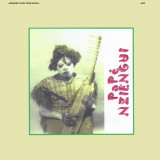
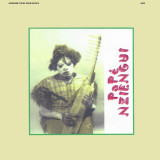
Papé Nziengui et son Groupe - Kadi Yombo LP 2x12"

Kadi Yombo, published in 1989, is the most successful album in the quest for a fusion between tradition and modernity in Bwiti harp music of the Tsogho people of Gabon. Combining beating rattles with a layer of synthesizers, Papé Nziengui blends in a contrapuntal dialogue characteristic of harp playing: male song in appeal and female choir in response, male voice of the musical arc and rhythms of female worship. But above all it’s Tsogho ritual music and modern studio orchestration. The result is an initiatory itinerary of 10 musical pieces which are all milestones likely to be simultaneously listened to, danced, meditated on, and soon acclaimed. In the years since, Nziengui has traveled he world from Lagos to Paris, from Tokyo to Cordoba, from Brussels to Mexico City to become a true icon, the emblem of Gabonese music.

Like Bob Dylan, "electrifying" folk and Bob Marley mixing rock with reggae, some purists have criticized Nziengui for having distorted the music of harp by imposing a cross with modern instruments. They even went so far as to claim that Nziengui was just an average harpist covering his shortcomings with stunts that were only good for impressing neophytes; like playing a harp placed upside down behind his back or playing two or three harps simultaneously. Sincere convictions or venomous defamations, in any case, Nziengui never gave in to such attacks, imposing himself on the contrary to pay homage to the elders (Yves Mouenga, Jean Honoré Miabé, Vickoss Ekondo) while instructing the maximum of young people. He is thus the promoter of many young talents, the most prominent of which is certainly his nephew Jean Pierre Mingongué. In a conservative society where the sacred is confused with secrecy, exposing the mysteries of Bwiti in broad daylight can be punished by exclusion or even execution.

Papé Nziengui has always claimed that he faces such risks because he never felt enslaved to a community that governs his life, that regulates his conduct, that has a right of censorship over his activities. Like Ravi Shankar, the famous sitarist, Papé Nziengui is a man of rupture but also of openness, a transmitter of culture. As proof, he has established himself in Libreville, Gabo’s capital, as the main harpist for sessions and concerts, accompanying the greatest national artists (Akendengué, Rompavè, Annie-Flore Batchiellilys, Les Champs sur la Lowé, etc.) as well as foreign artists (Papa Wemba, Manu Dibango, Kassav', Toups Bebey, etc.). In 1988, he was the first harpist to release an album in the form of a cassette produced by the French Cultural Center (Papé Nziengui, Chants et Musiques Tsogho). At the same time, he created his own group (Bovenga), combining traditional music instruments (musical bow, drums, various percussion instruments, etc.) in the framework of a true national orchestra, which gave the first concert and the first tours of a traditional music that was both modern and dynamic, thus "democratizing" the harp, to the dismay of certain purists.

On the other hand, in modern music, dominated by the logic of profit or even commercialism, artistic creation must often be adjusted for a specific audience based on reason rather than heart. But instead of allowing himself to be distorted, Papé Nziengui has always tried to produce music that is not a caricature, worthy in its expression as in its content, of the sacredness and transcendence of the music of the Origins. This is what makes Nziengui not only the musician, but the man someone whose age hasn’t altered any of his freshness or authenticity

pre-ordina ora08.04.2022

dovrebbe essere pubblicato su 08.04.2022

32,73
Papé Nziengui et son Groupe - Kadi Yombo LP

Kadi Yombo, published in 1989, is the most successful album in the quest for a fusion between tradition and modernity in Bwiti harp music of the Tsogho people of Gabon. Combining beating rattles with a layer of synthesizers, Papé Nziengui blends in a contrapuntal dialogue characteristic of harp playing: male song in appeal and female choir in response, male voice of the musical arc and rhythms of female worship. But above all it’s Tsogho ritual music and modern studio orchestration. The result is an initiatory itinerary of 10 musical pieces which are all milestones likely to be simultaneously listened to, danced, meditated on, and soon acclaimed. In the years since, Nziengui has traveled he world from Lagos to Paris, from Tokyo to Cordoba, from Brussels to Mexico City to become a true icon, the emblem of Gabonese music.

Like Bob Dylan, "electrifying" folk and Bob Marley mixing rock with reggae, some purists have criticized Nziengui for having distorted the music of harp by imposing a cross with modern instruments. They even went so far as to claim that Nziengui was just an average harpist covering his shortcomings with stunts that were only good for impressing neophytes; like playing a harp placed upside down behind his back or playing two or three harps simultaneously. Sincere convictions or venomous defamations, in any case, Nziengui never gave in to such attacks, imposing himself on the contrary to pay homage to the elders (Yves Mouenga, Jean Honoré Miabé, Vickoss Ekondo) while instructing the maximum of young people. He is thus the promoter of many young talents, the most prominent of which is certainly his nephew Jean Pierre Mingongué. In a conservative society where the sacred is confused with secrecy, exposing the mysteries of Bwiti in broad daylight can be punished by exclusion or even execution.

Papé Nziengui has always claimed that he faces such risks because he never felt enslaved to a community that governs his life, that regulates his conduct, that has a right of censorship over his activities. Like Ravi Shankar, the famous sitarist, Papé Nziengui is a man of rupture but also of openness, a transmitter of culture. As proof, he has established himself in Libreville, Gabo’s capital, as the main harpist for sessions and concerts, accompanying the greatest national artists (Akendengué, Rompavè, Annie-Flore Batchiellilys, Les Champs sur la Lowé, etc.) as well as foreign artists (Papa Wemba, Manu Dibango, Kassav', Toups Bebey, etc.). In 1988, he was the first harpist to release an album in the form of a cassette produced by the French Cultural Center (Papé Nziengui, Chants et Musiques Tsogho). At the same time, he created his own group (Bovenga), combining traditional music instruments (musical bow, drums, various percussion instruments, etc.) in the framework of a true national orchestra, which gave the first concert and the first tours of a traditional music that was both modern and dynamic, thus "democratizing" the harp, to the dismay of certain purists.

On the other hand, in modern music, dominated by the logic of profit or even commercialism, artistic creation must often be adjusted for a specific audience based on reason rather than heart. But instead of allowing himself to be distorted, Papé Nziengui has always tried to produce music that is not a caricature, worthy in its expression as in its content, of the sacredness and transcendence of the music of the Origins. This is what makes Nziengui not only the musician, but the man someone whose age hasn’t altered any of his freshness or authenticity

pre-ordina ora08.04.2022

dovrebbe essere pubblicato su 08.04.2022

10,29
Roy Bianco & Die Abbrunzati Boys - Mille Grazie LP

Sic transit gloria mundi! Roy Bianco & Die Abbrunzati Boys, die Halbgötter des Italo-Schlagers, nehmen den Ariadnefaden beherzt in die Hände und ziehen als gemachte Vielzahl von Theseus aus der Mitte des Labyrinths. 2020 is over if you want it. Und schon bot 2021 der Gruppe ein neues Reich der Ideen. Man schöpfte tief aus den Quellen der Inspiration über das heilige Land Italien und schließlich gab es neue große Werke des Italo-Schlager-Pops. Denn auserzählt ist diese Erfolgsgeschichte zwischen Kunst, Konsum und Kritik noch lange nicht. Von Roberto zu Roy, von „Greatest Hits“ zu neuen Titeln, heißt das neue Album fast schon folgerichtig „Mille Grazie“. Denn zum 40-jährigen (gegründet wurde die Gruppe schließlich 1982)
Bandjubiläum im Jahr 2022 muss man nach so einer bewegten Zeit auch einmal ganz bescheiden hinter den Mythos treten. Sich selbstverständlich mit dem nötigen Augenzwinkern, bei der großen Mutter Musik, bei den Fans und schließlich auch bei sich selbst bedanken.

pre-ordina ora08.04.2022

dovrebbe essere pubblicato su 08.04.2022

29,37
Johnny Winter - Johnny Winter LP

Johnny Winter

Johnny Winter LP

12inchCOLUMBIACS9826
Speakers Corner
08.04.2022

Wenn eine internationale Wochenzeitung einen Musiker als »weißen Papst der schwarzen Kunst« betitelt, klingt das verdächtig nach Altersmilde eines Bluesers in den besten Jahren, der die guten schon hinter sich hat. Von wegen! Bei Johnny Winter schlugen die Beurteilungen während seiner Tournee 2011 den Tonfall der frühen Jahre an, als das Blatt "Rolling Stone" den hageren Mississippi-Barden als »schielenden Albino mit langem, fließenden Haar« beschrieb, »der so ziemlich die flüssigste Gitarre spielt, die man jemals gehört hat«.

Ob gewollt oder nicht: man ließ Winter damit ein wenig an dem Rocker-Lorbeer schnuppern, der für den jungen Clapton und Jimi Hendrix reserviert war. Doch Winter lässt hören, dass er nur den Blues wollte, kratzbürstig, um Howlin' Wolfs oder Muddy Waters’ geigenden Höhlengroove zu beschwören, und doch fingerfertig genug an den Saiten, um mit verblüffend geschmeidigem Spiel Tongirlanden herbeizuzaubern, die haarscharf zwischen zwei Taktstriche passen.

Ziemlich cool bleibt Winter, wenn man persönliche Leidenskurven aus seiner Musik herauszulesen versucht: »Wenn ich Blues spiele, geht es mir gut«, diktierte er jüngst einem Journalisten ins Oktavheft. Dass dies auch vor über 40 Jahren schon so war, beweist das Debüt-Album auf beiden Seiten.

Aufnahme: 1969
Produktion: Johnny Winter

pre-ordina ora08.04.2022

dovrebbe essere pubblicato su 08.04.2022

39,92
Papé Nziengui et son Groupe - Kadi Yombo LP

Kadi Yombo, published in 1989, is the most successful album in the quest for a fusion between tradition and modernity in Bwiti harp music of the Tsogho people of Gabon. Combining beating rattles with a layer of synthesizers, Papé Nziengui blends in a contrapuntal dialogue characteristic of harp playing: male song in appeal and female choir in response, male voice of the musical arc and rhythms of female worship. But above all it’s Tsogho ritual music and modern studio orchestration. The result is an initiatory itinerary of 10 musical pieces which are all milestones likely to be simultaneously listened to, danced, meditated on, and soon acclaimed. In the years since, Nziengui has traveled he world from Lagos to Paris, from Tokyo to Cordoba, from Brussels to Mexico City to become a true icon, the emblem of Gabonese music.

Like Bob Dylan, "electrifying" folk and Bob Marley mixing rock with reggae, some purists have criticized Nziengui for having distorted the music of harp by imposing a cross with modern instruments. They even went so far as to claim that Nziengui was just an average harpist covering his shortcomings with stunts that were only good for impressing neophytes; like playing a harp placed upside down behind his back or playing two or three harps simultaneously. Sincere convictions or venomous defamations, in any case, Nziengui never gave in to such attacks, imposing himself on the contrary to pay homage to the elders (Yves Mouenga, Jean Honoré Miabé, Vickoss Ekondo) while instructing the maximum of young people. He is thus the promoter of many young talents, the most prominent of which is certainly his nephew Jean Pierre Mingongué. In a conservative society where the sacred is confused with secrecy, exposing the mysteries of Bwiti in broad daylight can be punished by exclusion or even execution.

Papé Nziengui has always claimed that he faces such risks because he never felt enslaved to a community that governs his life, that regulates his conduct, that has a right of censorship over his activities. Like Ravi Shankar, the famous sitarist, Papé Nziengui is a man of rupture but also of openness, a transmitter of culture. As proof, he has established himself in Libreville, Gabo’s capital, as the main harpist for sessions and concerts, accompanying the greatest national artists (Akendengué, Rompavè, Annie-Flore Batchiellilys, Les Champs sur la Lowé, etc.) as well as foreign artists (Papa Wemba, Manu Dibango, Kassav', Toups Bebey, etc.). In 1988, he was the first harpist to release an album in the form of a cassette produced by the French Cultural Center (Papé Nziengui, Chants et Musiques Tsogho). At the same time, he created his own group (Bovenga), combining traditional music instruments (musical bow, drums, various percussion instruments, etc.) in the framework of a true national orchestra, which gave the first concert and the first tours of a traditional music that was both modern and dynamic, thus "democratizing" the harp, to the dismay of certain purists.

On the other hand, in modern music, dominated by the logic of profit or even commercialism, artistic creation must often be adjusted for a specific audience based on reason rather than heart. But instead of allowing himself to be distorted, Papé Nziengui has always tried to produce music that is not a caricature, worthy in its expression as in its content, of the sacredness and transcendence of the music of the Origins. This is what makes Nziengui not only the musician, but the man someone whose age hasn’t altered any of his freshness or authenticity

pre-ordina ora08.04.2022

dovrebbe essere pubblicato su 08.04.2022

32,73
MIKE KAPLAN - 2001: A GARDEN OF PERSONAL MIRRORS

The song, subtitled “A Garden of Personal Mirrors”, was written in 1968 by the film’s marketing strategist Mike Kaplan. Kubrick proposed it immediately following an unsuccessful pitch by MGM Records, who wanted to release a single to tie in with the film, and amid reports the Beatles were also writing a song. Presented by Wave Theory as a historical release, 2001: A Garden of Personal Mirrors adds a new chapter to the film’s mythology. This limited edition 7” vinyl will be available for the first time ever on 26th November 2021
2001 is infamous in the annals of film music history for the way that Kubrick abandoned Alex North’s original score in favour of classical and popular pieces that have become synonymous with the movie. Following a digital release last year that caught the imagination of the film’s fans, Wave Theory is now releasing a limited edition vinyl that will give the opportunity for soundtrack aficionados to own a piece of movie history.
Mike Kaplan explains, "The Single's intent was to capture the different responses 2001 was generating from audiences and the media, the many levels of interpretation and appreciation, from its hypnotic visuals to its metaphysical illuminations. We also wanted to instil curiosity among audiences who had not yet seen what was becoming a cultural phenomenon.”
Co-founder of Wave Theory Records Dan Jones said, “Attempting to write any music for Kubrick would be a daunting task, as Alex North — and now we discover Mike Kaplan — were both to discover. Both of them are examples of the complex creative interactions that Kubrick’s films distilled.”

pre-ordina ora04.04.2022

dovrebbe essere pubblicato su 04.04.2022

10,47
Ro70 - Ro70 2x12"

Ro70

Ro70 2x12"

2x12inchSMLP2
Sister Midnight
04.04.2022

In the vast musical archive that is Roman Flügel’s discography, Ro70 holds a special place. Written, performed and produced between January and July 1995, it is his debut album as a full-fledged solo artist. Enquired and inspired by a certain David Moufang from Heidelberg, who used to share a classroom with Jörn Elling Wuttke at the SAE Institute and revealed himself to be an Acid Jesus fan and also of the Roman IV 12“ project, it seemed like a good fit for his (and Jonas Grossmann’s) Source Records label.
In the days before file sharing that meant going back and forth with various DATs in his mom’s Volkswagen Polo Fox for actual listening sessions between Darmstadt and Heidelberg. The time was as special and idiosyncratic one as was the sound of Source Records and of course Ro 70 itself. While the rave-olution was ready to eat its kids with the commercial outlook of former underground phenomena looked bright and the scene’s prophecy seemed grim, enterprises like Source and artist like Roman Flügel were defying any competition out of those corners with their own means.
Listening back to the ten tracks of Ro 70, it proves them, their taste and artistic vision right. Probably still being put into the ambient, downtempo, electronica or chill out sections of most record shops, this music could have been made, relished and cherished anytime between 1995 and now. Made in Roman’s home studio in his parent’s house or in the Klangfabrik studio in Egelsbach, this was made for before or after the rave – or for people who din’t want to have to do anything with it at all. His signature is all over it. Well balanced soundscapes with an almost uncanny presence and clarity. Bittersweet symphonies that doesn’t seem to be in an inferior position to modern classical or electronic studies.
It is also a very personal testament to a time in the artists’s life that was ready to get caught in the maelstrom of the oscillating techno city called Frankfurt am Main and its halcyon days between the Delirium record shop, Sven Väth’s marathon sets, the early days of the label triumvirate Playhouse, Klang & Ongaku. In a musical journal without lyrics, those memories will have to stay pantomimic and private. All for the better, that we can at least still listen to them.

non in magazzino

Ordina ora e ordineremo l'articolo per te presso il nostro fornitore.

19,79

Last In: 3 years ago
Articoli per pagina:
N/ABPM
Vinyl