Suche:talking heads

Styles
Alle
Various - Stranger Things: Soundtrack from the Netflix Series, Season 4 2x12"
  • A1: Journey, Steve Perry - Separate Ways (Worlds Apart) - 2 : 49
  • A2: The Beach Boys - California Dreamin' - 3 : 22
  • A3: Talking Heads - Psycho Killer - 4 : 19
  • A4: Kate Bush - Running Up That Hill (A Deal With God) - 4 : 49
  • A5: Mae Arnette - Chica Mejicanita - 2 : 29
  • B1: Extreme - Play With Me - 3 : 28
  • B2: Kiss - Detroit Rock City - 3 : 37
  • B3: The Cramps - I Was A Teenage Werewolf - 3 : 04
  • B5: The Surfaris - Wipe Out - 2 : 14
  • B6: Starpoint - Object Of My Desire - 3 : 53
  • C1: Falco - Rock Me Amadeus - 3 : 47
  • C2: Ricky Nelson - Travelin' Man - 2 : 20
  • C6: James Taylor - Fire And Rain - 3 : 20
  • D1: Siouxsie & The Banshees - Spellbound - 3 : 17
  • D2: Metallica - Master Of Puppets - 8 : 35
  • D3: Moby - When It's Cold I'd Like To Die - 4 : 13
auch erhältlich

Orange Vinyl[25,17 €]


Black Vinyl

Endlich können die Millionen Fans von "Stranger Things" ihre Leidenschaft für ihre Lieblingsserie durch den Kauf von physischen Produkten (vor allem LPs, aber auch CDs und sogar Kassetten, eine Anspielung auf die 80er Jahre als zentrales Thema der Serie) zum Ausdruck bringen! Noch mehr als in den vorherigen Staffeln spielt die Musik eine wichtige Rolle in der Erzählung, insbesondere das Kate-Bush-Phänomen "Running up that hill", das natürlich im Soundtrack enthalten ist, sowie "Pass The Dutchie" von Musical Youth und "You Spin Me Round" von Dead or Alive, die in den ersten Episoden sehr auffällig waren. Supererwartetes Kultprodukt: Vorbestellungsstart am 1. Juli, wenn die zweite Hälfte von Staffel 4 startet. Enfin les millions de fans de "Stranger Things" vont pouvoir matérialiser leur passion pour leur série préférée en achetant en physique (surtout le LP, mais aussi le CD et même la cassette, clin d'oeil aux 80's thème central de la série) ! Plus encore que pour les saisons précédentes la musique joue un role prépondérant dans la narration avec en particulier le phénomène Kate Bush « Running up that hill » évidemment présent sur la BOF ainsi que Pass The Dutchie de Musical Youth, You Spin Me Round de Dead or Alive très remarqués dans les premiers épisodes. Produit culte super attendu : lancement de précommande à ne pas manquer pour le 1er juillet, date de lancement de la 2e partie de la saison 4.

vorbestellen11.11.2022

erscheint voraussichtlich am 11.11.2022

29,79

Last In: vor 2026 Jahren
Gustaf - Audio Drag For Ego Slobs

Formed in 2018, Brooklyn’s Gustaf have built a kind of buzz that feels like it comes from a different era. The art punk 5 piece rapidly established a reputation and early excitement about their danceable, ESG-inspired post punk expanded outside of their city with remarkable effect despite having released no recorded music and barely having an online presence. As a result of their magnetic live show the band found unlikely early champions, catching the attention of luminaries like Beck – who had the band open for him at a secret loft party he played around the release of his latest album – the New York no wave legend James Chance, and shared stages with buzzing indie acts like Omni, Tropical Fuck Storm, Dehd and Bodega, while word of mouth led to sell out shows when they played their first LA headline dates in late 2019. They finally released recorded music in the form of their debut 7 inch at the end of 2020, which only furthered the growth of their reputation, earning them comparisons to acts like Television, The Talking Heads, The B-52s and LCD Soundsystem. Now, the band release their debut LP, the magnificently titled Audio Drag For Ego Slobs, on Toronto’s Royal Mountain Records (Wild Pink, Alvvays, Mac DeMarco).

nicht am Lager

Bestelle jetzt und wir bestellen den Artikel für dich beim Lieferanten.

22,48

Last In: vor 3 Jahren
Lee Tracy & Isaac Manning - Is it What You Want

As the sun sets on a quaint East Nashville house, a young man bares a piece of his soul. Facing the camera, sporting a silky suit jacket/shirt/slacks/fingerless gloves ensemble that announces "singer" before he's even opened his mouth, Lee Tracy Johnson settles onto his stage, the front yard. He sways to the dirge-like drum machine pulse of a synth-soaked slow jam, extends his arms as if gaining his balance, and croons in affecting, fragile earnest, "I need your love… oh baby…"

Dogs in the yard next door begin barking. A mysterious cardboard robot figure, beamed in from galaxies unknown and affixed to a tree, is less vocal. Lee doesn't acknowledge either's presence. He's busy feeling it, arms and hands gesticulating. His voice rises in falsetto over the now-quiet dogs, over the ambient noise from the street that seeps into the handheld camcorder's microphone, over the recording of his own voice played back from a boombox off-camera. After six minutes the single, continuous shot ends. In this intimate creative universe there are no re-takes. There are many more music videos to shoot, and as Lee later puts it, "The first time you do it is actually the best. Because you can never get that again. You expressing yourself from within."

"I Need Your Love" dates from a lost heyday. From some time in the '80s or early '90s, when Lee Tracy (as he was known in performance) and his music partner/producer/manager Isaac Manning committed hours upon hours of their sonic and visual ideas to tape. Embracing drum machines and synthesizers – electronics that made their personal futurism palpable – they recorded exclusively at home, live in a room into a simple cassette deck. Soul, funk, electro and new wave informed their songs, yet Lee and Isaac eschewed the confinement of conventional categories and genres, preferring to let experimentation guide them.

"Anytime somebody put out a new record they had the same instruments or the same sound," explains Isaac. "So I basically wanted to find something that's really gonna stand out away from all of the rest of 'em." Their ethos meant that every idea they came up with was at least worth trying: echoed out half-rapped exhortations over frantic techno-style beats, gospel synth soul, modal electro-funk, oddball pop reinterpretations, emo AOR balladry, nods to Prince and the Fat Boys, or arrangements that might collapse mid-song into a mess of arcade game-ish blips before rallying to reach the finish line. All of it conjoined by consistent tape hiss, and most vitally, Lee's chameleonic voice, which managed to wildly shape shift and still evoke something sincere – whether toggling between falsetto and tenor exalting Jesus's return, or punctuating a melismatic romantic adlib with a succinct, "We all know how it feels to be alone."

"People think we went to a studio," says Isaac derisively. "We never went to no studio. We didn't have the money to go to no studio! We did this stuff at home. I shot videos in my front yard with whatever we could to get things together." Sometimes Isaac would just put on an instrumental record, be it "Planet Rock" or "Don't Cry For Me Argentina" (from Evita), press "record," and let Lee improvise over it, yielding peculiar love songs, would-be patriotic anthems, or Elvis Presley or Marilyn Monroe tributes. Technical limitations and a lack of professional polish never dissuaded them. They believed they were onto something.

"That struggle," Isaac says, "made that sound sound good to me."

In the parlance of modern music criticism Lee and Isaac's dizzying DIY efforts would inevitably be described as "outsider." But "outsider" carries the burden of untold additional layers of meaning if you're Black and from the South, creating on a budget, and trying to get someone, anyone within the country music capital of the world to take your vision seriously. "What category should we put it in?" Isaac asks rhetorically. "I don't know. All I know is feeling. I ain't gonna name it nothing. It's music. If it grabs your soul and touch your heart that's what it basically is supposed to do."

=

Born in 1963, the baby boy of nine siblings, Lee Tracy spent his earliest years living amidst the shotgun houses on Nashville's south side. "We was poor, man!" he says, recalling the outhouse his family used for a bathroom and the blocks of ice they kept in the kitchen to chill perishables. "But I actually don't think I really realized I was in poverty until I got grown and started thinking about it." Lee's mom worked at the Holiday Inn; his dad did whatever he had to do, from selling fruit from a horse drawn cart to bootlegging. "We didn't have much," Lee continues, "but my mother and my father got us the things we needed, the clothes on our back." By the end of the decade with the city's urban renewal programs razing entire neighborhoods to accommodate construction of the Interstate, the family moved to Edgehill Projects. Lee remembers music and art as a constant source of inspiration for he and his brothers and sisters – especially after seeing the Jackson 5 perform on Ed Sullivan. "As a small child I just knew that was what I wanted to do."

His older brother Don began musically mentoring him, introducing Lee to a variety of instruments and sounds. "He would never play one particular type of music, like R&B," says Lee. "I was surrounded by jazz, hard rock and roll, easy listening, gospel, reggae, country music; I mean I was a sponge absorbing all of that." Lee taught himself to play drums by beating on cardboard boxes, gaining a rep around the way for his timekeeping, and his singing voice. Emulating his favorites, Earth Wind & Fire and Cameo, he formed groups with other kids with era-evocative band names like Concept and TNT Connection, and emerged as the leader of disciplined rehearsals. "I made them practice," says Lee. "We practiced and practiced and practiced. Because I wanted that perfection." By high school the most accomplished of these bands would take top prize in a prominent local talent show. It was a big moment for Lee, and he felt ready to take things to the next level. But his band-mates had other ideas.

"I don't know what happened," he says, still miffed at the memory. "It must have blew they mind after we won and people started showing notice, because it's like everybody quit! I was like, where the hell did everybody go?" Lee had always made a point of interrogating prospective musicians about their intentions before joining his groups: were they really serious or just looking for a way to pick up girls? Now he understood even more the importance of finding a collaborator just as committed to the music as he was.

=

Isaac Manning had spent much of his life immersed in music and the arts – singing in the church choir with his family on Nashville's north side, writing, painting, dancing, and working various gigs within the entertainment industry. After serving in the armed forces, in the early '70s he ran The Teenage Place, a music and performance venue that catered to the local youth. But he was forced out of town when word of one of his recreational routines created a stir beyond the safe haven of his bohemian circles.

"I was growing marijuana," Isaac explains. "It wasn't no business, I was smoking it myself… I would put marijuana in scrambled eggs, cornbread and stuff." His weed use originated as a form of self-medication to combat severe tooth pain. But when he began sharing it with some of the other young people he hung out with, some of who just so happened to be the kids of Nashville politicians, the cops came calling. "When I got busted," he remembers, "they were talking about how they were gonna get rid of me because they didn't want me saying nothing about they children because of the politics and stuff. So I got my family, took two raggedy cars, and left Nashville and went to Vegas."

Out in the desert, Isaac happened to meet Chubby Checker of "The Twist" fame while the singer was gigging at The Flamingo. Impressed by Isaac's zeal, Checker invited him to go on the road with him as his tour manager/roadie/valet. The experience gave Isaac a window into a part of the entertainment world he'd never encountered – a glimpse of what a true pop act's audience looked like. "Chubby Checker, none of his shows were played for Black folks," he remembers. "All his gigs were done at high-class white people areas." Returning home after a few years with Chubby, Isaac was properly motivated to make it in Music City. He began writing songs and scouting around Nashville for local talent anywhere he could find it with an expressed goal: "Find someone who can deliver your songs the way you want 'em delivered and make people feel what you want them to feel."

One day while walking through Edgehill Projects Isaac heard someone playing the drums in a way that made him stop and take notice. "The music was so tight, just the drums made me feel like, oh I'm-a find this person," he recalls. "So I circled through the projects until I found who it was.

"That's how I met him – Lee Tracy. When I found him and he started singing and stuff, I said, ohhh, this is somebody different."

=

Theirs was a true complementary partnership: young Lee possessed the raw talent, the older Isaac the belief. "He's really the only one besides my brother and my family that really seen the potential in me," says Lee. "He made me see that I could do it."

Isaac long being a night owl, his house also made for a fertile collaborative environment – a space where there always seemed to be a new piece of his visual art on display: paintings, illustrations, and dolls and figures (including an enigmatic cardboard robot). Lee and Issac would hang out together and talk, listen to music, conjure ideas, and smoke the herb Isaac had resumed growing in his yard. "It got to where I could trust him, he could trust me," Isaac says of their bond. They also worked together for hours on drawings, spreading larges rolls of paper on the walls and sketching faces with abstract patterns and imagery: alien-like beings, tri-horned horse heads, inverted Janus-like characters where one visage blurred into the other.

Soon it became apparent that they didn't need other collaborators; self-sufficiency was the natural way forward. At Isaac's behest Lee, already fed up with dealing with band musicians, began playing around with a poly-sonic Yamaha keyboard at the local music store. "It had everything on it – trumpet, bass, drums, organ," remembers Lee. "And that's when I started recording my own stuff."

The technology afforded Lee the flexibility and independence he craved, setting him on a path other bedroom musicians and producers around the world were simultaneously following through the '80s into the early '90s. Saving up money from day jobs, he eventually supplemented the Yamaha Isaac had gotten him with Roland and Casio drum machines and a Moog. Lee was living in an apartment in Hillside at that point caring for his dad, who'd been partially paralyzed since early in life. In the evenings up in his second floor room, the music put him in a zone where he could tune out everything and lose himself in his ideas.

"Oh I loved it," he recalls. "I would really experiment with the instruments and use a lot of different sound effects. I was looking for something nobody else had. I wanted something totally different. And once I found the sound I was looking for, I would just smoke me a good joint and just let it go, hit the record button." More potent a creative stimulant than even Isaac's weed was the holistic flow and spontaneity of recording. Between sessions at Isaac's place and Lee's apartment, their volume of output quickly ballooned.

"We was always recording," says Lee. "That's why we have so much music. Even when I went to Isaac's and we start creating, I get home, my mind is racing, I gotta start creating, creating, creating. I remember there were times when I took a 90-minute tape from front to back and just filled it up."

"We never practiced," says Isaac. "See, that was just so odd about the whole thing. I could relate to him, and tell him about the songs I had ideas for and everything and stuff. And then he would bring it back or whatever, and we'd get together and put it down." Once the taskmaster hell bent on rehearsing, Lee had flipped a full 180. Perfection was no longer an aspiration, but the enemy of inspiration.

"I seen where practicing and practicing got me," says Lee. "A lot of musicians you get to playing and they gotta stop, they have to analyze the music. But while you analyzing you losing a lot of the greatness of what you creating. Stop analyzing what you play, just play! And it'll all take shape."

=

"I hope you understood the beginning of the record because this was invented from a dream I had today… (You tell me, I'll tell you, we'll figure it out together)" – Lee Tracy and Isaac Manning, "Hope You Understand"

Lee lets loose a maniacal cackle when he acknowledges that the material that he and Isaac recorded was by anyone's estimation pretty out there. It's the same laugh that commences "Hope You Understand" – a chaotic transmission that encapsulates the duality at the heart of their music: a stated desire to reach people and a compulsion to go as leftfield as they saw fit.

"We just did it," says Lee. "We cut the music on and cut loose. I don't sit around and write. I do it by listening, get a feeling, play the music, and the lyrics and stuff just come out of me."

The approach proved adaptable to interpreting other artists' material. While recording a cover of Whitney Houston's pop ballad "Saving All My Love For You," Lee played Whitney's version in his headphones as he laid down his own vocals – partially following the lyrics, partially using them as a departure point. The end result is barely recognizable compared with the original, Lee and Isaac having switched up the time signature and reinvented the melody along the way towards morphing a slick mainstream radio standard into something that sounds solely their own.

"I really used that song to get me started," says Lee. "Then I said, well I need something else, something is missing. Something just came over me. That's when I came up with 'Is It What You Want.'"

The song would become the centerpiece of Lee and Isaac's repertoire. Pushed along by a percolating metronomic Rhythm King style beat somewhere between a military march and a samba, "Is It What You Want" finds Lee pleading the sincerity of his commitment to a potential love interest embellished by vocal tics and hiccups subtlely reminiscent of his childhood hero MJ. Absent chord changes, only synth riffs gliding in and out like apparitions, the song achieves a lingering lo-fi power that leaves you feeling like it's still playing, somewhere, even after the fade out.

"I don't know, it's like a real spiritual song," Lee reflects. "But it's not just spiritual. To me the more I listen to it it's like about everything that you do in your everyday life, period. Is it what you want? Do you want a car or you don't want a car? Do you want Jesus or do you want the Devil? It's basically asking you the question. Can't nobody answer the question but you yourself."

In 1989 Lee won a lawsuit stemming from injuries sustained from a fight he'd gotten into. He took part of the settlement money and with Isaac pressed up "Saving All My Love For You" b/w "Is It What You Want" as a 45 single. Isaac christened the label One Chance Records. "Because that's all we wanted," he says with a laugh, "one chance."

Isaac sent the record out to radio stations and major labels, hoping for it to make enough noise to get picked up nationally. But the response he and Lee were hoping for never materialized. According to Isaac the closest the single got to getting played on the radio is when a disk jock from a local station made a highly unusual announcement on air: "The dude said on the radio, 107.5 – 'We are not gonna play 'Is It What You Want.' We cracked up! Wow, that's deep.

"It was a whole racist thing that was going on," he reflects. "So we just looked over and kept on going. That was it. That was about the way it goes… If you were Black and you were living in Nashville and stuff, that's the way you got treated." Isaac already knew as much from all the times he'd brought he and Lee's tapes (even their cache of country music tunes) over to Music Row to try to drum up interest to no avail.

"Isaac, he really worked his ass off," says Lee. "He probably been to every record place down on Music Row." Nashville's famed recording and music business corridor wasn't but a few blocks from where Lee grew up. Close enough, he remembers, for him to ride his bike along its back alleys and stumble upon the occasional random treasure, like a discarded box of harmonicas. Getting in through the front door, however, still felt a world away.

"I just don't think at the time our music fell into a category for them," he concedes. "It was before its time."

=

Lee stopped making music some time in the latter part of the '90s, around the time his mom passed away and life became increasingly tough to manage. "When my mother died I had a nervous breakdown," he says, "So I shut down for a long time. I was in such a sadness frame of mind. That's why nobody seen me. I had just disappeared off the map." He fell out of touch with Isaac, and in an indication of just how bad things had gotten for him, lost track of all the recordings they'd made together. Music became a distant memory.

Fortunately, Isaac kept the faith. In a self-published collection of his poetry – paeans to some of his favorite entertainment and public figures entitled Friends and Dick Clark – he'd written that he believed "music has a life of its own." But his prescience and presence of mind were truly manifested in the fact that he kept an archive of he and Lee's work. As perfectly imperfect as "Is It What You Want" now sounds in a post-Personal Space world, Lee and Isaac's lone official release was in fact just a taste. The bulk of the Is It What You Want album is culled from the pair's essentially unheard home recordings – complete songs, half-realized experiments, Isaac's blue monologues and pronouncements et al – compiled, mixed and programmed in the loose and impulsive creative spirit of their regular get-togethers from decades ago. The rest of us, it seems, may have finally caught up to them.

On the prospect of at long last reaching a wider audience, Isaac says simply, "I been trying for a long time, it feels good." Ever the survivor, he adds, "The only way I know how to make it to the top is to keep climbing. If one leg break on the ladder, hey, you gotta fix it and keep on going… That's where I be at. I'll kill death to make it out there."

For Lee it all feels akin to a personal resurrection: "It's like I was in a tomb and the tomb was opened and I'm back… Man, it feels so great. I feel like I'm gonna jump out of my skin." Success at this stage of his life, he realizes, probably means something different than what it did back when he was singing and dancing in Isaac's front yard. "What I really mean by 'making it,'" he explains isn't just the music being heard but, "the story being told."

Occasionally Lee will pull up "Is It What You Want" on YouTube on his phone, put on his headphones, and listen. He remembers the first time he heard his recorded voice. How surreal it was, how he thought to himself, "Is that really me?" What would he say to that younger version of himself now?

"I would probably tell myself, hang in there, don't give up. Keep striving for the goal. And everything will work out."

Despite what's printed on the record label, sometimes you do get more than one chance.

nicht am Lager

Bestelle jetzt und wir bestellen den Artikel für dich beim Lieferanten.

11,72

Last In: vor 3 Jahren
Theo Everyday - Holsten FM

Theo Everyday

Holsten FM

12inchCHEEKY006
Cheeky Sneakers
14.10.2022

Balamii resident and Sticky Tapes-founder Theo Everyday arrives with a huge debut on Cheeky Sneakers, seamlessly blending the worlds of jungle, electro and trance with his signature sauce of nostalgic and futuristic hyper-funk.

Having curated the Sticky Tapes mix series and label - supporting music from artists such as Stones Taro, Om Unit, Jossy Mitsu and Lobster Theremin label head Asquith - the DJ and producer knows a thing or two about merging differing styles and energies. The Holsten FM EP plays out like a three hour club set; placing classic UK sounds at its foundation and throwing multi-coloured paint all over them.

'The Way You Feel' makes use of the pitched-vocal, SoundCloud hyper-pop aesthetic with hardcore-piano stabs and heartstring-tugging cheese wrapped within a huge low-end swinging bassline. A great lights-up tool to leave them with a smile on their face. The classic rave energy is maintained on the EP title track - a stripped-back cut of ragga jungle-step that's as meditative as it is devastating.

From golden-era rave and jungle future-mutations to heads-down club sounds, 'Every Body's Talking (Well Let's Talk)' is a strobe-light power sequence for when things are in full swing, before 90s breakbeat and trance join forces on a 'Six and Two Threes' hands-in-the-air moments.

Breaks-littered dream sequences that feel like a warm hug follow on 'Summer Lie In' - its chopped melodies and stirring atmospherics causing ripples within the pond of paradise - before 'Mod Cons' closes with a squelching cut of acid-electro on a killer digi-only exclusive.

nicht am Lager

Bestelle jetzt und wir bestellen den Artikel für dich beim Lieferanten.

11,39

Last In: vor 2 Jahren
Tropical Fuck Storm - Moonburn

Australian art-punk combo Tropical Fuck Storm continues its hot streak of brain-bending releases with Moonburn, a maxi-single cassette on Joyful Noise Recordings. Side A offers the new song, "Moonburn," a ballad in the classic TFS style written and sung by Gareth Liddiard. Fiona Kitschin steps up to the microphone on "Ann," a cover of The Stooges that swaps Ron Asheton's scorching guitar part for a deranged sound collage of guitar freakouts, siren noises, and electronics. Side B includes an acoustic take on the fan-favorite song "Aspirin (Slight Return)" and a haunting cover of Talking Heads' "Heaven."

vorbestellen14.10.2022

erscheint voraussichtlich am 14.10.2022

8,61

Last In: vor 2026 Jahren
Lee Tracy & Isaac Manning - Is it What You Want LP

As the sun sets on a quaint East Nashville house, a young man bares a piece of his soul. Facing the camera, sporting a silky suit jacket/shirt/slacks/fingerless gloves ensemble that announces "singer" before he's even opened his mouth, Lee Tracy Johnson settles onto his stage, the front yard. He sways to the dirge-like drum machine pulse of a synth-soaked slow jam, extends his arms as if gaining his balance, and croons in affecting, fragile earnest, "I need your love… oh baby…"

Dogs in the yard next door begin barking. A mysterious cardboard robot figure, beamed in from galaxies unknown and affixed to a tree, is less vocal. Lee doesn't acknowledge either's presence. He's busy feeling it, arms and hands gesticulating. His voice rises in falsetto over the now-quiet dogs, over the ambient noise from the street that seeps into the handheld camcorder's microphone, over the recording of his own voice played back from a boombox off-camera. After six minutes the single, continuous shot ends. In this intimate creative universe there are no re-takes. There are many more music videos to shoot, and as Lee later puts it, "The first time you do it is actually the best. Because you can never get that again. You expressing yourself from within."

"I Need Your Love" dates from a lost heyday. From some time in the '80s or early '90s, when Lee Tracy (as he was known in performance) and his music partner/producer/manager Isaac Manning committed hours upon hours of their sonic and visual ideas to tape. Embracing drum machines and synthesizers – electronics that made their personal futurism palpable – they recorded exclusively at home, live in a room into a simple cassette deck. Soul, funk, electro and new wave informed their songs, yet Lee and Isaac eschewed the confinement of conventional categories and genres, preferring to let experimentation guide them.

"Anytime somebody put out a new record they had the same instruments or the same sound," explains Isaac. "So I basically wanted to find something that's really gonna stand out away from all of the rest of 'em." Their ethos meant that every idea they came up with was at least worth trying: echoed out half-rapped exhortations over frantic techno-style beats, gospel synth soul, modal electro-funk, oddball pop reinterpretations, emo AOR balladry, nods to Prince and the Fat Boys, or arrangements that might collapse mid-song into a mess of arcade game-ish blips before rallying to reach the finish line. All of it conjoined by consistent tape hiss, and most vitally, Lee's chameleonic voice, which managed to wildly shape shift and still evoke something sincere – whether toggling between falsetto and tenor exalting Jesus's return, or punctuating a melismatic romantic adlib with a succinct, "We all know how it feels to be alone."

"People think we went to a studio," says Isaac derisively. "We never went to no studio. We didn't have the money to go to no studio! We did this stuff at home. I shot videos in my front yard with whatever we could to get things together." Sometimes Isaac would just put on an instrumental record, be it "Planet Rock" or "Don't Cry For Me Argentina" (from Evita), press "record," and let Lee improvise over it, yielding peculiar love songs, would-be patriotic anthems, or Elvis Presley or Marilyn Monroe tributes. Technical limitations and a lack of professional polish never dissuaded them. They believed they were onto something.

"That struggle," Isaac says, "made that sound sound good to me."

In the parlance of modern music criticism Lee and Isaac's dizzying DIY efforts would inevitably be described as "outsider." But "outsider" carries the burden of untold additional layers of meaning if you're Black and from the South, creating on a budget, and trying to get someone, anyone within the country music capital of the world to take your vision seriously. "What category should we put it in?" Isaac asks rhetorically. "I don't know. All I know is feeling. I ain't gonna name it nothing. It's music. If it grabs your soul and touch your heart that's what it basically is supposed to do."

=

Born in 1963, the baby boy of nine siblings, Lee Tracy spent his earliest years living amidst the shotgun houses on Nashville's south side. "We was poor, man!" he says, recalling the outhouse his family used for a bathroom and the blocks of ice they kept in the kitchen to chill perishables. "But I actually don't think I really realized I was in poverty until I got grown and started thinking about it." Lee's mom worked at the Holiday Inn; his dad did whatever he had to do, from selling fruit from a horse drawn cart to bootlegging. "We didn't have much," Lee continues, "but my mother and my father got us the things we needed, the clothes on our back." By the end of the decade with the city's urban renewal programs razing entire neighborhoods to accommodate construction of the Interstate, the family moved to Edgehill Projects. Lee remembers music and art as a constant source of inspiration for he and his brothers and sisters – especially after seeing the Jackson 5 perform on Ed Sullivan. "As a small child I just knew that was what I wanted to do."

His older brother Don began musically mentoring him, introducing Lee to a variety of instruments and sounds. "He would never play one particular type of music, like R&B," says Lee. "I was surrounded by jazz, hard rock and roll, easy listening, gospel, reggae, country music; I mean I was a sponge absorbing all of that." Lee taught himself to play drums by beating on cardboard boxes, gaining a rep around the way for his timekeeping, and his singing voice. Emulating his favorites, Earth Wind & Fire and Cameo, he formed groups with other kids with era-evocative band names like Concept and TNT Connection, and emerged as the leader of disciplined rehearsals. "I made them practice," says Lee. "We practiced and practiced and practiced. Because I wanted that perfection." By high school the most accomplished of these bands would take top prize in a prominent local talent show. It was a big moment for Lee, and he felt ready to take things to the next level. But his band-mates had other ideas.

"I don't know what happened," he says, still miffed at the memory. "It must have blew they mind after we won and people started showing notice, because it's like everybody quit! I was like, where the hell did everybody go?" Lee had always made a point of interrogating prospective musicians about their intentions before joining his groups: were they really serious or just looking for a way to pick up girls? Now he understood even more the importance of finding a collaborator just as committed to the music as he was.

=

Isaac Manning had spent much of his life immersed in music and the arts – singing in the church choir with his family on Nashville's north side, writing, painting, dancing, and working various gigs within the entertainment industry. After serving in the armed forces, in the early '70s he ran The Teenage Place, a music and performance venue that catered to the local youth. But he was forced out of town when word of one of his recreational routines created a stir beyond the safe haven of his bohemian circles.

"I was growing marijuana," Isaac explains. "It wasn't no business, I was smoking it myself… I would put marijuana in scrambled eggs, cornbread and stuff." His weed use originated as a form of self-medication to combat severe tooth pain. But when he began sharing it with some of the other young people he hung out with, some of who just so happened to be the kids of Nashville politicians, the cops came calling. "When I got busted," he remembers, "they were talking about how they were gonna get rid of me because they didn't want me saying nothing about they children because of the politics and stuff. So I got my family, took two raggedy cars, and left Nashville and went to Vegas."

Out in the desert, Isaac happened to meet Chubby Checker of "The Twist" fame while the singer was gigging at The Flamingo. Impressed by Isaac's zeal, Checker invited him to go on the road with him as his tour manager/roadie/valet. The experience gave Isaac a window into a part of the entertainment world he'd never encountered – a glimpse of what a true pop act's audience looked like. "Chubby Checker, none of his shows were played for Black folks," he remembers. "All his gigs were done at high-class white people areas." Returning home after a few years with Chubby, Isaac was properly motivated to make it in Music City. He began writing songs and scouting around Nashville for local talent anywhere he could find it with an expressed goal: "Find someone who can deliver your songs the way you want 'em delivered and make people feel what you want them to feel."

One day while walking through Edgehill Projects Isaac heard someone playing the drums in a way that made him stop and take notice. "The music was so tight, just the drums made me feel like, oh I'm-a find this person," he recalls. "So I circled through the projects until I found who it was.

"That's how I met him – Lee Tracy. When I found him and he started singing and stuff, I said, ohhh, this is somebody different."

=

Theirs was a true complementary partnership: young Lee possessed the raw talent, the older Isaac the belief. "He's really the only one besides my brother and my family that really seen the potential in me," says Lee. "He made me see that I could do it."

Isaac long being a night owl, his house also made for a fertile collaborative environment – a space where there always seemed to be a new piece of his visual art on display: paintings, illustrations, and dolls and figures (including an enigmatic cardboard robot). Lee and Issac would hang out together and talk, listen to music, conjure ideas, and smoke the herb Isaac had resumed growing in his yard. "It got to where I could trust him, he could trust me," Isaac says of their bond. They also worked together for hours on drawings, spreading larges rolls of paper on the walls and sketching faces with abstract patterns and imagery: alien-like beings, tri-horned horse heads, inverted Janus-like characters where one visage blurred into the other.

Soon it became apparent that they didn't need other collaborators; self-sufficiency was the natural way forward. At Isaac's behest Lee, already fed up with dealing with band musicians, began playing around with a poly-sonic Yamaha keyboard at the local music store. "It had everything on it – trumpet, bass, drums, organ," remembers Lee. "And that's when I started recording my own stuff."

The technology afforded Lee the flexibility and independence he craved, setting him on a path other bedroom musicians and producers around the world were simultaneously following through the '80s into the early '90s. Saving up money from day jobs, he eventually supplemented the Yamaha Isaac had gotten him with Roland and Casio drum machines and a Moog. Lee was living in an apartment in Hillside at that point caring for his dad, who'd been partially paralyzed since early in life. In the evenings up in his second floor room, the music put him in a zone where he could tune out everything and lose himself in his ideas.

"Oh I loved it," he recalls. "I would really experiment with the instruments and use a lot of different sound effects. I was looking for something nobody else had. I wanted something totally different. And once I found the sound I was looking for, I would just smoke me a good joint and just let it go, hit the record button." More potent a creative stimulant than even Isaac's weed was the holistic flow and spontaneity of recording. Between sessions at Isaac's place and Lee's apartment, their volume of output quickly ballooned.

"We was always recording," says Lee. "That's why we have so much music. Even when I went to Isaac's and we start creating, I get home, my mind is racing, I gotta start creating, creating, creating. I remember there were times when I took a 90-minute tape from front to back and just filled it up."

"We never practiced," says Isaac. "See, that was just so odd about the whole thing. I could relate to him, and tell him about the songs I had ideas for and everything and stuff. And then he would bring it back or whatever, and we'd get together and put it down." Once the taskmaster hell bent on rehearsing, Lee had flipped a full 180. Perfection was no longer an aspiration, but the enemy of inspiration.

"I seen where practicing and practicing got me," says Lee. "A lot of musicians you get to playing and they gotta stop, they have to analyze the music. But while you analyzing you losing a lot of the greatness of what you creating. Stop analyzing what you play, just play! And it'll all take shape."

=

"I hope you understood the beginning of the record because this was invented from a dream I had today… (You tell me, I'll tell you, we'll figure it out together)" – Lee Tracy and Isaac Manning, "Hope You Understand"

Lee lets loose a maniacal cackle when he acknowledges that the material that he and Isaac recorded was by anyone's estimation pretty out there. It's the same laugh that commences "Hope You Understand" – a chaotic transmission that encapsulates the duality at the heart of their music: a stated desire to reach people and a compulsion to go as leftfield as they saw fit.

"We just did it," says Lee. "We cut the music on and cut loose. I don't sit around and write. I do it by listening, get a feeling, play the music, and the lyrics and stuff just come out of me."

The approach proved adaptable to interpreting other artists' material. While recording a cover of Whitney Houston's pop ballad "Saving All My Love For You," Lee played Whitney's version in his headphones as he laid down his own vocals – partially following the lyrics, partially using them as a departure point. The end result is barely recognizable compared with the original, Lee and Isaac having switched up the time signature and reinvented the melody along the way towards morphing a slick mainstream radio standard into something that sounds solely their own.

"I really used that song to get me started," says Lee. "Then I said, well I need something else, something is missing. Something just came over me. That's when I came up with 'Is It What You Want.'"

The song would become the centerpiece of Lee and Isaac's repertoire. Pushed along by a percolating metronomic Rhythm King style beat somewhere between a military march and a samba, "Is It What You Want" finds Lee pleading the sincerity of his commitment to a potential love interest embellished by vocal tics and hiccups subtlely reminiscent of his childhood hero MJ. Absent chord changes, only synth riffs gliding in and out like apparitions, the song achieves a lingering lo-fi power that leaves you feeling like it's still playing, somewhere, even after the fade out.

"I don't know, it's like a real spiritual song," Lee reflects. "But it's not just spiritual. To me the more I listen to it it's like about everything that you do in your everyday life, period. Is it what you want? Do you want a car or you don't want a car? Do you want Jesus or do you want the Devil? It's basically asking you the question. Can't nobody answer the question but you yourself."

In 1989 Lee won a lawsuit stemming from injuries sustained from a fight he'd gotten into. He took part of the settlement money and with Isaac pressed up "Saving All My Love For You" b/w "Is It What You Want" as a 45 single. Isaac christened the label One Chance Records. "Because that's all we wanted," he says with a laugh, "one chance."

Isaac sent the record out to radio stations and major labels, hoping for it to make enough noise to get picked up nationally. But the response he and Lee were hoping for never materialized. According to Isaac the closest the single got to getting played on the radio is when a disk jock from a local station made a highly unusual announcement on air: "The dude said on the radio, 107.5 – 'We are not gonna play 'Is It What You Want.' We cracked up! Wow, that's deep.

"It was a whole racist thing that was going on," he reflects. "So we just looked over and kept on going. That was it. That was about the way it goes… If you were Black and you were living in Nashville and stuff, that's the way you got treated." Isaac already knew as much from all the times he'd brought he and Lee's tapes (even their cache of country music tunes) over to Music Row to try to drum up interest to no avail.

"Isaac, he really worked his ass off," says Lee. "He probably been to every record place down on Music Row." Nashville's famed recording and music business corridor wasn't but a few blocks from where Lee grew up. Close enough, he remembers, for him to ride his bike along its back alleys and stumble upon the occasional random treasure, like a discarded box of harmonicas. Getting in through the front door, however, still felt a world away.

"I just don't think at the time our music fell into a category for them," he concedes. "It was before its time."

=

Lee stopped making music some time in the latter part of the '90s, around the time his mom passed away and life became increasingly tough to manage. "When my mother died I had a nervous breakdown," he says, "So I shut down for a long time. I was in such a sadness frame of mind. That's why nobody seen me. I had just disappeared off the map." He fell out of touch with Isaac, and in an indication of just how bad things had gotten for him, lost track of all the recordings they'd made together. Music became a distant memory.

Fortunately, Isaac kept the faith. In a self-published collection of his poetry – paeans to some of his favorite entertainment and public figures entitled Friends and Dick Clark – he'd written that he believed "music has a life of its own." But his prescience and presence of mind were truly manifested in the fact that he kept an archive of he and Lee's work. As perfectly imperfect as "Is It What You Want" now sounds in a post-Personal Space world, Lee and Isaac's lone official release was in fact just a taste. The bulk of the Is It What You Want album is culled from the pair's essentially unheard home recordings – complete songs, half-realized experiments, Isaac's blue monologues and pronouncements et al – compiled, mixed and programmed in the loose and impulsive creative spirit of their regular get-togethers from decades ago. The rest of us, it seems, may have finally caught up to them.

On the prospect of at long last reaching a wider audience, Isaac says simply, "I been trying for a long time, it feels good." Ever the survivor, he adds, "The only way I know how to make it to the top is to keep climbing. If one leg break on the ladder, hey, you gotta fix it and keep on going… That's where I be at. I'll kill death to make it out there."

For Lee it all feels akin to a personal resurrection: "It's like I was in a tomb and the tomb was opened and I'm back… Man, it feels so great. I feel like I'm gonna jump out of my skin." Success at this stage of his life, he realizes, probably means something different than what it did back when he was singing and dancing in Isaac's front yard. "What I really mean by 'making it,'" he explains isn't just the music being heard but, "the story being told."

Occasionally Lee will pull up "Is It What You Want" on YouTube on his phone, put on his headphones, and listen. He remembers the first time he heard his recorded voice. How surreal it was, how he thought to himself, "Is that really me?" What would he say to that younger version of himself now?

"I would probably tell myself, hang in there, don't give up. Keep striving for the goal. And everything will work out."

Despite what's printed on the record label, sometimes you do get more than one chance.

nicht am Lager

Bestelle jetzt und wir bestellen den Artikel für dich beim Lieferanten.

23,49

Last In: vor 3 Jahren
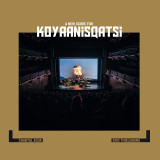
Chantal Acda & Eric Thielemans - Koyaanisqatsi

Dark-folk songwriter Chantal Acda and beyond drums-percussion musician extraordinaire Eric Thielemans propose a new score for Koyaanisqatsi, re-actualising the incredibly beautiful, raw, rhythmic and touching images of this 80-ties cinematographic masterpiece. Slow deep electric waves, lonely synths in sonic desert landscapes, rhythmic pulses, transporting drums and bells, and deeply longing sounds and voices make up the audible fundamentals of this imagined, neo shamanic, ritualistic music to accompany the Earth as it keeps on supporting our post human frenetics even today. This release contains a selection of the musical material scored for a live performance together with the screening of the movie. The live performance premiered on Film Festival Gent and Vooruit in the fall of 2022.

Currently based in Belgium, Dutch-born Chantal Acda (b. 1978) has worked under the Sleepingdog moniker since 2006, making three acclaimed albums that closed on the 'With Our Heads in the Clouds and Our Hearts in the Fields' (2010) album for which she collaborated with Adam Wiltzie (Stars of the Lid, A Winged Victory For The Sullen). They toured the UK and Benelux with Low in 2011. After all this, it was time for her first real solo record. Playing in various formations (Isbells, True Bypass, Marble Sounds) had made her conscious of the patterns that we all, as humans, share in. So, she sought out kindred spirits with whom she might record an album filled with freedom and intensity, and who were conscious of the patterns we so often fall back on. Nils Frahm was the first of these to cross her path. The inventive German pianist and producer is an intense and adventurous performer and was a perfect match for it. Acda also experienced a direct bond with Peter Broderick, a multi-instrumentalist known from his solo work (on labels such as Bella Union and Erased Tapes) and from his work with, among others, Efterklang. Cellist extraordinaire Gyda Valtysdottir from Icelandic group Múm had previously worked with Chantal as a member of the Sleepingdog live band. And lastly, Shahzad Ismaily stumbled into this picture by chance, but when Acda and he found themselves in the same room they formed an instant rapport. After this first record, 3 other solorecords followed. Chantal kept on searching for a deeper connection with the outside world and recorded "The Sparkle In Our Flaws" (2015) and "Bounce Back" (2017). She also released some live recordings with her band and also Bill Frisell, a highly respected jazz guitarist.(2018). These records were released on the German label Glitterhouse. Chantal and her band toured with these records in Europe. In 2019 Chantal created her first music/theatre performance P_wawau for Oerol Festival, The Netherlands. She worked with Valgeir Sigurdson (Björk, Bonnie Prince Billy,...) and singers from Het Nederlands Kamerkoor. As a result of this, she released the recorded music: Puwawau (2019). In 2021 Chantal released her most recent album Saturday Moon. (2021) For this album she worked with her band (Eric Thielemans, Alan Gevaert, Gaetan Vandewoude and Niels Van Heertum) but also with Bill Frisell, Shahzad Ismaily and Mimi and Alan Sparhawk (Low). Saturday Moon was very well received, internationally, by the press.

Eric Thielemans is a drummer and percussionist. Travelling across music scenes and disciplines, Thielemans navigates by means of his own compass. Most known for his resonant solo works like a Snare is a Bell, Sprang, Aural Mist and Bata Baba Loka and many collaborations with musicians in the experimental music scene, as well as the Jazz scene, and indie folk/pop/rock scenes Thielemans keeps on pushing the borders and expanding conscious aural spaces and territories. Recently, Thielemans has collaborated with PVT - a trio together with Mika Vainio & Charlemagne Palestine (album released April 2020) , PAT - a new trio together with Oren Ambarchi and Charlemagne Palestine, A new duo together with Oren Ambarchi, Billy Hart ("Talking about the Weather"), Chantal Acda ("The Sparkle in our Flaws", "Bounce Back", "Puwawau", "Saturday Moon"), Marshall Allen (Sun Ra), Tape Cuts Tape, Distance Light & Sky, Jozef Dumoulin, Trevor Dunn, Shahzad Ismaily, Vaast Colson, Nico Dockx, and many more. Currently Thielemans is working on r-e-s-o-n-a-n-c-e , a culminative work that encompasses and brings to the surface the underlying currents within his life in and with music. Withing r-e-s-o-n-a-n-c-e he investigates the everyday magic through conversations, writing and score writing to invite as many souls as possible to experience and co create the magic in the everyday.

vorbestellen16.09.2022

erscheint voraussichtlich am 16.09.2022

18,28

Last In: vor 2026 Jahren
The Emperor Machine & Bom Carrot 瑤議 - 춤춰 Chumchwo - Let’s Dance EP

Last time he brought his Emperor Machine project to Leng, via the seductive, call-to-the dancefloor that was ‘Dance Par Amour’, Andrew Meecham had vocalist Severine Mouletin in tow. On this welcome return to the label, Meecham has enlisted the help of another sublime singer: Bom Carrot 봄캐롯, lead vocalist with South Korean punk-pop outfit Tirikilatops.

Although the pair share a mutual friend, who had extolled the virtues of a potential collaboration to Meecham, it was only when Bom Carrot 봄캐롯 reached out on social media that the pair were finally connected. Meecham jumped at the opportunity to kick-start a collaboration, quickly firing over a track he’d been working on. A few months later, her vocals landed in his inbox and the rest, as they say, is history.

The resultant track, ‘춤춰 Chumchwo – Let’s Dance’, may feature many of the aural trademarks of Meecham’s Emperor Machine work – spiralling analogue electronics, vintage synth sounds, effects aplenty and infectious grooves inspired by New York’s no-wave movement of the early 1980s – but is somehow even more thrillingly wild, excitable, and exhilarating than you’d reasonably expect.

A big part of that, of course, is the inspired contributions of Bom Carrot 봄캐롯. Her freewheeling vocals – part sung, part spoken, and part improvised – are energetic, distinctive, and addictive, adding layers of post-punk abandon and a genuine sense of musical freedom. Combined with Meecham’s outrageously unpredictable backing track – there are twists and turns aplenty, as well as surprising percussive and musical touches that seemingly appear and disappear at will – the resultant song is like the unlikely sonic lovechild of Talking Heads, YMO, Pierre Henry and K-Punk.

As you’d expect given his track record of delivering freewheeling instrumental reworks, the vocal version comes backed with an extra-special Emperor Machine ‘Instrumental Dub’ version. Stripped back and percussive, with dropouts and breakdowns aplenty, this is no mere vocal-free take, but rather a reconstructed revision piled high with extra percussion, spacey electronics, echoing vocal snippets, bubbly bass and razor-sharp Tom Tom Club guitar licks –all arranged to rise, fall and rise again around Meecham’s killer groove. As the track’s title suggests: “Let’s Dance!”

nicht am Lager

Bestelle jetzt und wir bestellen den Artikel für dich beim Lieferanten.

14,92

Last In: vor 3 Jahren
Squalls - Live From The 40 Watt

Squalls were a band who came from the same rich Athens, GA scene as
The B-52's, Pylon, REM., and Love Tractor, but played their own brand of
quirky pop with their own unique sound
Equal parts Lovin' Spoonful, Grateful Dead and Talking Heads, they got many a
person up on the dance floor. From 1981 to 1989, Squalls rocked Athens and
made several tours of the South, the Midwest, and East coast cities including
several shows at New York City clubs CBGB, Danceteria, and Peppermint Lounge.
They released 4 recordings and were included in the 1986 movie Athens, GA:
Inside/Out. The band also played at the legendary Athens 40 Watt Club 64 times
during their heyday.
Squalls Live from the 40 Watt is a collection of 24 tracks recorded by 40 Watt
Club soundman, T. Patton Biddle, and selected from five early 1980s shows.
Live from the 40 Watt is set for release on August 19, 2022 via Strolling Bones
Records.
Audio Link

vorbestellen30.08.2022

erscheint voraussichtlich am 30.08.2022

44,12

Last In: vor 2026 Jahren
Jonathan Richman & The Modern Lovers - Jonathan Richman & The Modern Lovers LP

The debut album from Jonathan Richman & The Modern Lovers and featuring the U.S. single tracks, “New England” and “Here Come The Martian Martians” This version of The Modern Lovers included drummer David Robinson (The Cars) and Greg “Curly” Keranen on bass (The Rubinoos) Co-Produced by Beserkley Records founder Matthew King Kauffman and Glen Kolotkin (Jimi Hendrix, Janis Joplin) Available CD & LP. Jonathan Richman formed The Modern Lovers in 1970 in Boston with Jerry Harrison (Talking Heads), Ernie Brooks and David Robinson (The Cars). The band recorded a series of demos, first with John Cale (The Velvet Underground) and later with producer Kim Fowley. Both sets of demos were eventually released, but not until the original group had disbanded. In 1975 Jonathan relocated to California and secured a recording deal with Beserkley Records. By 1976 he had pulled together a new version of The Modern Lovers. This group included the holdover David Robinson from the original band and added, Leroy Radcliffe and Greg 'Curly’ Keranen (The Rubinoos). The self-titled release delivered on Richman’s desire for more acoustic and harmony-based material. Unfortunately, nearly on top of the bands’ debut album release, the earlier demo material drawn mostly from the Cale demo sessions was issued, and Jonathan Richman & The Modern Lovers was overshadowed by “Pablo Picasso,” “Roadrunner,” and their—now classic—“debut.” Shortly after the release of their actual self-titled debut, Robinson departed to join The Cars. Needing a new drummer, the band found D. Sharpe (later of the Carla Bley Band) and this new line-up recorded Rock ’n’ Roll With The Modern Lovers which was released in 1977 and achieved some chart success in Europe with “Egyptian Reggae” making it to #5 on the U.K. Singles Chart. Greil Marcus called it “the purist Rock and Roll album I’ve heard this year.” However, another in the series of personnel changes, Keranen left the group. Modern Lovers ‘Live’ followed in 1977 with new bassist Asa Brebner. While the U.S. might not have caught on to the magic of Jonathan Richman & The Modern Lovers, the U.K. certainly did. Recorded at the Hammersmith Odeon, ‘Live’ features Jonathan and The Modern Lovers performing classics from their first two releases to an enthusiastic crowd. The set included the recent Top 5 U.K. single “Egyptian Reggae,” as well as tracks from The Modern Lovers’ previously releases plus an eight-minute version of “Ice Cream Man.” 1979’s Back In Your Life marked the end of any original versions of The Modern Lovers and closed the Beserkley era with Jonathan stepping back from music for a few years after its release.

vorbestellen19.08.2022

erscheint voraussichtlich am 19.08.2022

22,65

Last In: vor 2026 Jahren
JUAN D'OULTREMONT - AVANT L'INCIDENT LP

Electro pop, the songs of Juan d'Oultremont (author of Philippe Lafontaine's famous song coeur de loup) unfold on an electric tempo, with this improbable phrasing and dark, funny and precise texts. If Daniel Johnston had taken Byrne's place among the talking heads, it would probably sound like this.

vorbestellen05.08.2022

erscheint voraussichtlich am 05.08.2022

19,96

Last In: vor 2026 Jahren
Poltergeist - Kämpfer LP

Poltergeist

Kämpfer LP

12inchCLV007LP
Citizen Records
01.07.2022

Poltergeist has that strange power of attraction that these personalities with their icy, mysterious aura hold. As soon as Ari Girard (aka Poltergeist) appears, something happens, he catches the light and strikes the spirits.

Kämpfer LP is a ghost story where Poltergeist invites Joy Division, New Order, Talking Heads, The Cure, Can, Kraftwerk, Nine Inch Nails or Jeff Mills for its first album. At the Poltergeist banquet, the crows of cold wave and the barbarians of krautrock, the metallers of indus rock and the freaks of techno meet.

The epicentre is Berlin, the Wall, Lou Reed's Gotham, the Bowie/Eno trilogy and the toxic nights of underground clubs...

Kämpfer LP, Poltergeist's first album, reveals its dark and disturbing universe. Marked by a heavy, deep and majestic atmosphere, this project evokes, without ever saying it openly, the climatic urgency, the ineluctable destiny, the human obsession to be first, to leave a trace of its passage and the nightmares which agitate the nocturnal spirits.

Between frenetic synths, bewitching waves and marked foot, this implacable album marks the beginning of the Poltergeist era.

Scratching synths, a dark and heavy universe: we can understand Vitalic's crush, who decided to sign the project at the first listening on his label Clivage Music.

nicht am Lager

Bestelle jetzt und wir bestellen den Artikel für dich beim Lieferanten.

19,12

Last In: vor 3 Jahren
BERNIE WORRELL - ALL THE WOO IN THE WORLD LP

Bernie Worrell was a keyboardist and composer best known as a founding member of Parliament-Funkadelic and for his work with Talking Heads. He is a member of the Rock and Roll Hall of Fame, inducted in 1997 with fifteen other members of Parliament-Funkadelic. Worrell broke genres, not only within funk, but also hip hop and rock. Critics described him as one of the most widly innovative and technically dazzling musicians in pop music history.

In 1978 he released his solo debut album All The Woo In The World, which was produced by George Clinton, who was another mastermind behind Parliament-Funkadelic. The album features several guest performances by P-Funk alumni, including Junie Morrison, Garry Shider, Bootsy Collins and Eddie Hazel.

All The Woo In The World is available as a limited edition of 1500 individually numbered copies on translucent red coloured vinyl.

vorbestellen31.05.2022

erscheint voraussichtlich am 31.05.2022

30,46

Last In: vor 2026 Jahren
Bear's Den - Blue Hours

Bear's Den

Blue Hours

12inchCOMM480
COMMUNION
13.05.2022

Bear’s Den have today announced the release of their eagerly anticipated fourth studio album, Blue Hours.

Set for release on May 13th via Communion Records, the album sees the much-loved folk-rock duo – made up of Andrew Davie and Kevin Jones – once again team up with producer Ian Grimble on what is one of their most personal records to date.

Speaking about the new album, Davie says: “Blue Hours is a kind of imaginary space you get into at night, a place where you process difficult things or where you try to figure everything out.”

Themes on the album include both self-reflection and mental health after both struggled with the latter in recent years. “It’s the main over-arching theme with this record,” Davie explains. The group, who have worked with mental health charity CALM (Campaign Against Living Miserably) previously added: “It probably speaks to our struggles and hopefully many other people’s too. Men are not very good at talking. We’re not really taught how to – men have no idea how to talk about this stuff, certainly to each other.”

The pair describe the conceptual blue hours headspace that gives the new album its title as being “somewhere between a hotel, a mental health hospital, a bar that stays open later than anywhere else, a paradise, a dream, a nightmare and an endless sea of corridors and staircases leading you to rooms that represent memories – good, bad, happy or difficult.”

Despite the album’s challenging themes, it’s an album drenched in hope too. “We wanted this to be a celebration of music,” Jones continues. “I think that informed some of the bolder decision making on this record. At a time when music was so distant, it felt important to make an album that sounded hopeful, celebratory, ambitious and beautiful in spite of the heavy subject matter in some of the songs.” Jones adds: “It was almost like we needed to shout louder than before because we felt that there were more barriers between the audience and us. We needed something to transcend that.”

Following on from the album’s lead single, ‘All That You Are’, which was released late last year, the group have also given a further taster of what to expect from the new album with the release today of their bold, electronic-driven latest single, ‘Spiders’. Stream the new single here.

Speaking about the song, Davie says: “I started writing ‘Spiders’ around the time we left London. In my head, I thought moving would solve lots of problems, like everything will be better – almost like this Neverland vibe,” he laughs. “‘Spiders’ is a song dealing with the fact that this absolutely wasn’t the case. I had this vision in my head that I’d be at one with nature, that I’d be calmer – but all the things that were rattling around in my brain before were still there after the move. The song is about the fact you can’t run away from the things that are bothering you.”

Adding, “While making the record we wanted to get across a kind of simmering intensity with the song and the idea of someone trying to keep their shit together while wrestling with these darker thoughts and feelings. We wanted to get across a sense of bravery & triumph in saying, “sometimes I can’t pull myself out” of these difficult situations. To celebrate the difficult moments because we all have them. They are a universally shared experience even if it feels sometimes like they’re not and you’re the only one who feels them.”

Melodically, the song is a gentle Wurlitzer and guitar-driven track filled with hope thanks to the electronic elements added by long-term producer, Ian Grimble. “This song maybe sparked a lot of detail that ended up coming out on other songs on the album,” Davie says. “The sound of this felt exciting to us both,” Jones adds.

vorbestellen13.05.2022

erscheint voraussichtlich am 13.05.2022

20,97

Last In: vor 2026 Jahren
Bear's Den - Blue Hours

Bear's Den

Blue Hours

12inchCOMM479
COMMUNION
13.05.2022

Bear’s Den have today announced the release of their eagerly anticipated fourth studio album, Blue Hours.

Set for release on May 13th via Communion Records, the album sees the much-loved folk-rock duo – made up of Andrew Davie and Kevin Jones – once again team up with producer Ian Grimble on what is one of their most personal records to date.

Speaking about the new album, Davie says: “Blue Hours is a kind of imaginary space you get into at night, a place where you process difficult things or where you try to figure everything out.”

Themes on the album include both self-reflection and mental health after both struggled with the latter in recent years. “It’s the main over-arching theme with this record,” Davie explains. The group, who have worked with mental health charity CALM (Campaign Against Living Miserably) previously added: “It probably speaks to our struggles and hopefully many other people’s too. Men are not very good at talking. We’re not really taught how to – men have no idea how to talk about this stuff, certainly to each other.”

The pair describe the conceptual blue hours headspace that gives the new album its title as being “somewhere between a hotel, a mental health hospital, a bar that stays open later than anywhere else, a paradise, a dream, a nightmare and an endless sea of corridors and staircases leading you to rooms that represent memories – good, bad, happy or difficult.”

Despite the album’s challenging themes, it’s an album drenched in hope too. “We wanted this to be a celebration of music,” Jones continues. “I think that informed some of the bolder decision making on this record. At a time when music was so distant, it felt important to make an album that sounded hopeful, celebratory, ambitious and beautiful in spite of the heavy subject matter in some of the songs.” Jones adds: “It was almost like we needed to shout louder than before because we felt that there were more barriers between the audience and us. We needed something to transcend that.”

Following on from the album’s lead single, ‘All That You Are’, which was released late last year, the group have also given a further taster of what to expect from the new album with the release today of their bold, electronic-driven latest single, ‘Spiders’. Stream the new single here.

Speaking about the song, Davie says: “I started writing ‘Spiders’ around the time we left London. In my head, I thought moving would solve lots of problems, like everything will be better – almost like this Neverland vibe,” he laughs. “‘Spiders’ is a song dealing with the fact that this absolutely wasn’t the case. I had this vision in my head that I’d be at one with nature, that I’d be calmer – but all the things that were rattling around in my brain before were still there after the move. The song is about the fact you can’t run away from the things that are bothering you.”

Adding, “While making the record we wanted to get across a kind of simmering intensity with the song and the idea of someone trying to keep their shit together while wrestling with these darker thoughts and feelings. We wanted to get across a sense of bravery & triumph in saying, “sometimes I can’t pull myself out” of these difficult situations. To celebrate the difficult moments because we all have them. They are a universally shared experience even if it feels sometimes like they’re not and you’re the only one who feels them.”

Melodically, the song is a gentle Wurlitzer and guitar-driven track filled with hope thanks to the electronic elements added by long-term producer, Ian Grimble. “This song maybe sparked a lot of detail that ended up coming out on other songs on the album,” Davie says. “The sound of this felt exciting to us both,” Jones adds.

vorbestellen13.05.2022

erscheint voraussichtlich am 13.05.2022

20,97

Last In: vor 2026 Jahren
Robocobra Quartet - Wellness

Robocobra Quartet

Wellness

7"-VinylFTR002
First Taste
22.04.2022

Improvisation and experimentation are at the core of Robocobra
Quartet’s DNA, almost intentionally at odds with their roots as a
post punk band.
 Including members with no musical training alongside European
music conservatoire innovators, the result is a groove-driven but
cerebral blast, invoking the likes of Fugazi, Talking Heads and
contemporaries such as Squid and Black Country, New Road.
 The eclectic free nature of their live shows allows them to
channel hop from moments of joy and playfulness to periods of
intense fury, creating a unique sound that has earned them
invitations to Montreux Jazz Festival and Latitude.
 Robocobra Quartet have a rule: No Guitars Allowed. Their
unique sound, concocted and self-produced in Belfast, Northern
Ireland, sees that ‘middle’ space filled by other instruments such
as saxophones, samplers, keyboards and sound effects,
swirling around the melodic basslines and powerful drum
rhythms which prop up the core of each of their songs.
 On top of this music sits a single vocal from behind the drum kit
amid a fury of rhythm, sometimes marrying perfectly with the
pulse of the drums and occasionally at complete odds with it.
 Live dates / tour to be announced.
 “I genuinely don’t think there is another band like ‘em, anywhere
in these islands” - Tom Robinson
 “Free-floating musical explorers” - Hannah Peel
 “Fugazi meets Mingus.” - Drowned in Sound
 “Exploratory pioneers.” - BBC Radio 3 Late Junction
 “A cunning marriage of jazz, spoken word and punk” - The
Quietus

vorbestellen22.04.2022

erscheint voraussichtlich am 22.04.2022

14,24

Last In: vor 2026 Jahren
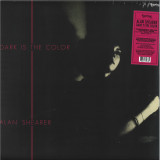
ALAN SHEARER - DARK IS THE COLOR

Alan Shearer

DARK IS THE COLOR

12inchFVR182LP
Favorite
13.04.2022

Favorite Recordings presents Dark Is The Color, the first LP by Alan Shearer reissued on vinyl for the first time. Despite being initially composed and produced for the French library label PSI, this rare
and obscure in-demand gem from 1985 sounds retrospectively like a proper album with great coherence and sophistication all along. Indeed, these 11 tracks will delight synthesizers addicts. Expect deeply emotive instrumental compositions, with ingenious analogue sequencing on stimulating chord progressions. The result is a highly retrofuturistic album, sometimes almost anticipating 90's videogames
scores. Just imagine Wally Badarou in a bunker with Talking Heads watching New York 1997 from John Carpenter.
Composed mostly step by step on a Sequential Pro-One synthesizer, Dark Is The Color is the product of the exciting state of mind from the 80's era with new sounds, new tools and new trends on the music spectrum. Influenced by bands like Talking Head or Japan, the sirens of the new wave scene strongly resonate here with Alan Shearer's familiarity and craftmanship with synthesizers.
Back in the days, Alan Shearer aka Frédéric Viger was working for his father’s music label, “Musique Pour L'image”, and their sublabel “PSI”. He started with Marathon Life under his real name before taking the Alan Shearer monitor. These records were produced for radio, TV and cinema industries but as well for companies’ internal communication. They represented a real investment from the label and these catalogues are usually full of amazing music from great artists such as Martial Solal, Vladimir Cosma, Joël Fajerman, Harlem Pop Trotters and even Manu Dibango.
About his musical illustration process, Alan Shearer tells: "Soundtracks are indeed my biggest influences and I'm a real fan of American composers as Jerry Goldsmith or Elmer Bernstein. I've always considered soundtracks as the new classical music or classical music of our century. There is a real state of mind producing music for illustration: you have to stick to the video. You should not tell what the image is saying but accompany what it is saying. You have to find a unique link, people always told me music should not be noticed for itself in a movie, that's what makes it good.”

nicht am Lager

Bestelle jetzt und wir bestellen den Artikel für dich beim Lieferanten.

18,11

Last In: vor 2 Jahren
Deadletter - Pop Culture Connoisseur

Deadletter

Pop Culture Connoisseur

7"-VinylNSWNI012V
Nice Swan
01.04.2022

Deadletter release their new 7” single, ‘Pop
Culture Connoisseur’. Hailing from Yorkshire, the
now South London rooted band channel the droll
fury of The Fall and the lopsided rhythms of Talking
Heads into a strain of danceable post-punk,
exploring the darker side of existence through a
ens of narrative-driven levity.


Previously supporting the likes of Squid, Viagra
Boys and Pip Blom, Deadletter have emerged as a
genuinely thrilling live prospect. Experts in the field
of intensity, the band seamlessly switch from
conversational verses into a mix of unadulterated
post-punk fury and irresistible rhythm, addressing
hemes such as bureaucracy, loss of personal
dentity and modern-day consumerism.

New single, ‘Pop Culture Connoisseur’, produced
by Theo Verney (TRAAMS, Lazarus Kane, FEET),
finds singer and frontman Zac Lawrence switching
from the overt politicism of previous releases into a
more tongue-in-cheek narrative centred around the
case of PC Read, a police officer fired for stealing
doughnuts through a self-service checkout. In
addition to providing a case study into the fashion
hose in positions of authority often consider
hemselves above the law, the track also aims to
comment at the manner modern morality so often
relates to PR optics, as the cultural trope of law
enforcement eating doughnuts is played out in real
ime.

vorbestellen01.04.2022

erscheint voraussichtlich am 01.04.2022

8,61

Last In: vor 2026 Jahren
Electribe 101 - Electribal Soul

Recorded in 1991 by the quintet of vocalist Billie Ray Martin and Birmingham-based electronic musicians Brian Nordhoff, Joe Stevens, Les Fleming and Roberto Cimarosti, Electribal Soul was conceived as the sequel to the band’s 1990 debut album, Electribal Memories.
Electribal Memories had yielded the hits ‘Talking With Myself’ and ‘Tell Me When The Fever Ended’ and pushed Electribe 101 to the forefront of a crossover electronic scene that fused dance music with pop savvy. They were snapped up by Phonogram, managed by Tom Watkins and hailed as “the next band to meet the Queen” by i-D. The band took the coveted support slot for Depeche Mode on their epochal World Violation tour and supported Erasure at Milton Keynes Bowl. Seen as the next big thing, everything pointed toward enduring critical success for Electribe 101, and the band settled into putting their second album together.
“There was a degree of confidence among us when we came to write the second album,” recalls Billie Ray Martin. “To me, the songs we put down sound like some of our finest moments.” More immediately lush and warm than the dancefloor-friendly structures of Electribal Memories, the clue to the sound of Electribal Soul lies in the second word in its title: soul. Songs like the aching sensuality of opening track ‘Insatiable Love’ or the emboldened defiance of ‘Moving Downtown’ showcase Billie Ray Martin’s distinctive vocal range as it moves from haunting quiet to dramatic, euphoric rapture. Lyrics from ‘Moving Downtown’ had found their way into ‘Pimps, Pushers, Prostitutes’ by S’Express, and the song would appear as ‘Running Around Town’ on Martin’s 1996 solo album. The strikingproduction on the version of the song presented on Electribal Soul suggests classic late sixties soul influences, such as those of legendary Motown producer Norman Whitfield, with the long shadow cast by Kraftwerk never being far away.
‘Deadline For My Memories’, the song that provided the title for Martin’s first solo album, was originally intended for the second Electribe 101 album. Its lyrics document a sense of freedom and liberation from the darkness of a bad relationship, accompanied by jazzy piano and organ sounds over a quiet rhythm and discrete electronics. In contrast, ‘A Sigh Won’t Do’ finds Martin in soothing vocal mode, despite its devastating message about the final ending of a strained relationship, her lyrics framed by restrained and subtle beats and sounds.
To spend time with Martin’s voice on Electribal Soul is to find yourself moved deep into the ordinarily impenetrable emotional corners of your own psyche. “I was into big ballads at the time and listening to all kinds of US and UK singers, and I was also young enough to want to prove myself as a belter of ballads,” explains Martin of the classic soul edge the album showcased.
Electribal Soul heads into darker territory with ‘Hands Up And Amen’. Originally written by Martin in Berlin in the period before moving to London and forming Electribe 101, the song was then perfected and enhanced by the band’s production nous. ‘Hands Up And Amen’ savagely documents the mugging of a woman in Queens, NY at gunpoint, only to resolve itself with a middle section that nods reverently toward gospel tradition. The song coalesces around a regimented break and burbling synths, finally ending with layers of urgent synth sounds.
Meanwhile, a cover of Throbbing Gristle’s ‘Persuasion’ takes us into a seedy world of sexual coercion and creepy infatuation, predating Martin’s chilling version of the track with progressive house unit Spooky two years later. Supported by a minimal, nagging rhythm and barely-fluctuating sounds, Electribe 101’s take on ‘Persuasion’ makes for uneasy listening, even though Martin manages to inject a sort of twisted sympathy for the protagonist as the song progresses.
That Electribe 101 were as comfortable offering complicated, nuanced tracks like ‘Persuasion’ alongside pop house bangers like ‘Space Oasis’ – written by Billie Ray Martin with Martin King before Electribe 101 was formed – is testament to the way the band wove their way effortlessly through electronic music reference points. Framed by light, jazzy piano melodies and string sounds, the energy of ‘Space Oasis’ soars so high that it could easily reach the moon, while highlighting how well-suited Martin’s voice has always been to club music. We hear the same reminder of her dance music credentials on ‘True Memories Of My World’, finding her describing a Hollywood actress who reflects on being used by directors to sell her ‘tears’.
Hooking up with the Birmingham-based Nordhoff, Stevens, Fleming and Cimarosti after placing a Melody Maker ad in 1988 (“Soul rebel seeks musicians – genius only”), it was clear that Martin had found a group that recognised the unique power and importance of her voice. Having worked with genres as diverse as reggae, rock and R&B, the four producers proved to be perfect collaborators, presenting carefully-sculpted backdrops that emphasised the towering emotional dexterity of her voice.
“Listening back to these tracks now, I was reminded of what a bunch of great musicians they were,” says Martin. “They had a rule that if a part still sounded good after a day or two then it could stay. If it bothered the vocals, it would go.” Even more so than on Electribal Memories, Electribal Soul places Martin at the captivating centre of these pieces, surrounding her voice with everything from dubby rhythms to chunky R&B beats to nascent trip hop breaks; wiry, acid-hued synths uncoil gently without ever dominating, while horn samples and lush, disco-inflected strings provide a rich, naturalistic accompaniment for Martin’s emotional outpourings.
The band finished mixing the album at London’s Olympic Studios in 1991. They were assisted by Apollo 440’s Howard Gray on production duties for ‘Deadline For My Memories’, ‘Insatiable Love’ and ‘Space Oasis’, with Gray supported by talented engineer Al Stone. Pre-release promo tapes were issued and an enthusiastic energy started to build around the band’s anticipated second album.
It was not meant to be. Against a backdrop of a worsening relationship with Tom Watkins, and a disinterested Phonogram, instead of receiving a positive reaction to the new tracks, Electribe 101 were swiftly dropped by their label. Electribal Soul languished, unreleased, and the band yielded to pressures that had been building and split up. After collaborating with Spooky and The Grid, Billie Ray Martin went on to release her seminal debut solo album in 1996, with it securing the era-defining hit ‘Your Loving Arms’, while the other group members continued to work together as The Groove Corporation.
Thirty years after the songs were recorded, we’re now finally able to hear what the second and final chapter of Electribe 101’s story sounded like. Electribal Soul shows that the band had really only just got started when they dropped their first album in 1990. Heard only by a select and privileged few, what followed elevated the band’s music to a completely new level, making Electribal Soul musical buried treasure of the most precious and rare variety.
Electribal Soul will be released on LP, CD and digital formats on 18th February 2022 through Electribal Records. The physical formats include extensive liner notes from Billie Ray Martin, and the album sleeve features unseen archive photographs by Lewis Mulatero from the original 1990 sessions with the band that were never used in the sleeve designs for Electribal Memories.

nicht am Lager

Bestelle jetzt und wir bestellen den Artikel für dich beim Lieferanten.

20,63

Last In: vor 3 Jahren
Robocobra Quartet - Heaven EP

Robocobra Quartet

Heaven EP

7"-VinylFTR001
First Taste
25.03.2022

First single in three years from Belfast’s Robocobra Quartet.

For fans of Black Country, New Road, Black Midi, Squid, Fugazi, Dry Cleaning.

“Fugazi meets Mingus.” - Drowned in Sound
“Exploratory pioneers.” - BBC Radio 3 Late Junction
“A cunning marriage of jazz, spoken word and punk” - The Quietus

Improvisation and experimentation is at the core of Robocobra Quartet's DNA, almost intentionally at odds with their roots as a post-punk band. Including members with no musical training alongside
European music conservatoire innovators, the result is a groove-driven but cerebral blast, invoking the likes of Fugazi, Talking Heads and contemporaries such as Squid and Black Country, New Road.

The eclectic free nature of their live shows allows them to channel-hop from moments of joy and playfulness to periods of intense fury, creating a unique sound that has earned them invitations to Montreux Jazz Festival, Latitude and as far out as the Inversia Festival in the polar north of Russia.

Extensive live UK and Europe dates and album launch tour to be announced.

vorbestellen25.03.2022

erscheint voraussichtlich am 25.03.2022

14,25

Last In: vor 2026 Jahren
Johnny Marr - Fever Dreams Pt. 1 - 4

Johnny Marr started his career with The Smiths, beginning an amazing history as one of the most influential songwriters and guitarists in British independent music. His subsequent creative journey has seen him at the heart of The The, Electronic, Modest Mouse and The Cribs, as well as working with such names as The Pretenders, Talking Heads, The Avalanches, and the musician and composer Hans Zimmer - with whom he recently recorded the score and soundtrack for the forthcoming James Bond film, No Time To Die, including the title track created with Billie Eilish.

In the wake of his time leading The Healers, Marr’s solo career has given rise to three UK Top Ten albums - The Messenger (2013), Playland (2014) and 2018’s Call The Comet, and he will be returning in February with his most expansive work to date, Fever Dreams Pts 1-4. It was created during the long, uncertain period that followed the arrival of the UK’s first lockdown, when his focus was pushed into both his interior life, and evoking the emotional states of others. “It’s an inspired record, and I couldn’t wait to get in and record every day,” he says. “But I had to go inwards.”

The upcoming album reflects his multi-faceted past, but takes his music somewhere startlingly new. “There’s a set of influences and a very broad sound that I’ve been developing - really since getting out of The Smiths,” he says. “And I hear it in this record. There are so many strands of music in it. I think it’s the most ambitious solo record I’ve done.”

vorbestellen25.02.2022

erscheint voraussichtlich am 25.02.2022

31,05

Last In: vor 2026 Jahren
Scott Lavene - Broke

Scott Lavene

Broke

12inchSLFMLP7
Nothing Fancy
28.01.2022

Scott Lavene is set to release ‘Broke’ on 7th June 2019, an album that is drenched in living in the gutter but staring at the stars.

Lavene has the lyrical smarts and the fairground bark of an Ian Dury, the incisive wordplay of a Costello and the deadpan pop of Madness in his creative DNA, along with the street poetry of an Essex boy version of Lou Reed, the dislocated funk of Talking Heads, the jellied eel lyrical bounce of Chas and Dave, and the inventive surreal see-saw of a Tom Waits, and many other nonconformists.

It’s an intoxicating brew that he makes his own in this collection of wonderful quirky songs that make up ‘Broke’.

These are songs that are full of detail and a life lived in scuffed shoes, rainy towns and the magic of the everyday. Songs about small talk, being skint, doomed affairs and the sweetness of falling in love over a cup of tea.

Creating unconventional backdrops for his street tales Scott builds up shapeshifting rhymes and looping grooves.

vorbestellen28.01.2022

erscheint voraussichtlich am 28.01.2022

26,85

Last In: vor 2026 Jahren
TROPICAL FUCK STORM - DEEP STATES

Translucent Orange Vinyl. "Deep States" ist ein Protestalbum, das neues kulturelles Terrain erforscht und im subjektiven Zustand zeitgenössischer Panik gräbt. Aber TROPICAL FUCK STORM predigen heimlich, immer im Bewusstsein der Tatsache, dass sie schließlich Popmusik machen, egal wie avantgardistisch oder "out there" es wird. Entsprechend kommt "Deep States" komplett mit Q-Drops, Anspielungen auf den Capitol Riot vom 6. Januar 2021, einem Riff auf Pizzagate, Waterboarding-Marsianern, gefährlichen Kulten von Heaven's Gate bis The Shining Path und, nicht zu übertreffen, Romeo-Agenten, die uns nachts ins Bett legen, um uns am Morgen zu verraten. Wir leben in einer Welt, in der das Bizarre zum Normalen geworden ist, und TROPICAL FUCK STORM lotet dieses Paradoxon aus. Was TROPICAL FUCK STORM so großartig macht, ist die Schnittmenge zwischen ihrem düsteren, aber satirischen Storytelling und den musikalischen Arrangements, die darauf abzielen, erhaltene Kanons und Weisheiten zu pervertieren. Diese Songs sind ein Experiment, das sich in seinem eigenen idiosynkratischen, zutiefst beunruhigenden Tempo vor- und zurückbewegt. Sie hängen am schrägen Beat und gleiten in jazzige, verzerrte Jams, die so turbulent sind, dass sie Charlie Mingus stolz machen würden. Musikalisch macht "Deep States", was es will: Pop, R&B, New Wave im Stil der Talking Heads, Delta Blues, Tom Waits und einige der HipHop-Lieblinge der Band wie Wu-Tang Clan und Missy Elliott. Barrieren werden nicht nur durchbrochen, sie scheinen komplett weggefallen zu sein.

vorbestellen12.11.2021

erscheint voraussichtlich am 12.11.2021

23,91

Last In: vor 2026 Jahren
Parquet Courts - Sympathy For Life

Parquet Courts’ thought-provoking rock is dancing
to a new tune. ‘Sympathy For Life’ finds the
Brooklyn band at both their most instinctive and
electronic, spinning their bewitching, psychedelic
storytelling into fresh territory, yet maintaining their
unique identity.
Built largely from improvised jams, inspired by
New York clubs, Primal Scream and Pink Floyd
and produced in league with Rodaidh McDonald
(The xx, Hot Chip, David Byrne), ‘Sympathy For
Life’ was always destined to be dancey. Unlike its
globally adored predecessor, 2018’s ‘Wide
Awake!’, the focus fell on grooves rather than
rhythm.
“‘Wide Awake!’ was a record you could put on at a
party,” says co-frontman Austin Brown. “‘Sympathy
For Life’ is influenced by the party itself.
Historically, some amazing rock records been
made from mingling in dance music culture - from
‘Talking Heads’ to ‘Screamadelica’. Our goal was
to bring that into our own music.”
Deluxe LP features tipped on gatefold sleeve with
a glued-in six page booklet.

vorbestellen22.10.2021

erscheint voraussichtlich am 22.10.2021

21,81

Last In: vor 2026 Jahren
Parquet Courts - Sympathy For Life

Parquet Courts’ thought-provoking rock is dancing
to a new tune. ‘Sympathy For Life’ finds the
Brooklyn band at both their most instinctive and
electronic, spinning their bewitching, psychedelic
storytelling into fresh territory, yet maintaining their
unique identity.
Built largely from improvised jams, inspired by
New York clubs, Primal Scream and Pink Floyd
and produced in league with Rodaidh McDonald
(The xx, Hot Chip, David Byrne), ‘Sympathy For
Life’ was always destined to be dancey. Unlike its
globally adored predecessor, 2018’s ‘Wide
Awake!’, the focus fell on grooves rather than
rhythm.
“‘Wide Awake!’ was a record you could put on at a
party,” says co-frontman Austin Brown. “‘Sympathy
For Life’ is influenced by the party itself.
Historically, some amazing rock records been
made from mingling in dance music culture - from
‘Talking Heads’ to ‘Screamadelica’. Our goal was
to bring that into our own music.”
Deluxe LP features tipped on gatefold sleeve with
a glued-in six page booklet.

vorbestellen22.10.2021

erscheint voraussichtlich am 22.10.2021

36,09

Last In: vor 2026 Jahren
JW Francis - WANDERKID

"Future indie classics that reek of modern New York City Charm” – DIY Magazine
"Captures honest-to-god truths in a new light’ – The Line of Best Fit
“A nostalgia-tinged hit, filled with jangly guitars and contagious melodies” – Wonderland
‘WANDERKID’ is the sophomore album from New York’s next lo-fi legend, JW Francis, and will be released whilst its creator is in the middle of trekking 2000 miles along the Appalachian Trail in the US. The follow up to JW’s critically acclaimed debut album ‘We Share A Similar Joy’, ‘WANDERKID’ will be released on 3rd September by Sunday Best Recordings. “WANDERKID is an album about escape. It’s supposed to be a gut punch of a record about an anti-hero named WANDERKID who wants to get OUT: out of his living situation, out of his head, out of his life. This album is like looking out the car window with an urgent desire to be on the other side. It was finished during the most recent global pandemic, so hopefully folks find it relatable.”
JW is fast making a name for himself as one of the most exciting new artists around. Born in Oklahoma, JW landed in New York City at 19 to study Economics at Columbia University, but not before making stops, stays and stints in Vermont, aged 12 and Paris, aged 13. Whilst at Columbia, the troubadour started music blog Rare Candy and founded student-run recording studio CU Records. Musically, JW takes his lead from the greats of the Downtown scene - Patti Smith, The Velvet Underground, Television, Talking Heads, The Strokes, Yeah Yeah Yeahs - and is fast emerging at the forefront of the next generation.

vorbestellen01.10.2021

erscheint voraussichtlich am 01.10.2021

25,17

Last In: vor 2026 Jahren
Suburban Lawns - Suburban Lawns

If your brain has a shortlist of bands that instantly evoke New Wave, Suburban Lawns deserve a slot right next to the likes of Devo, Talking Heads and the B-52's. After putting out two singles on their own Suburban Industrial imprint, the Lawns signed to I.R.S. Records and released their debut LP in 1981. While the band gained cult status thanks in part to a Jonathan Demme-produced music video which aired on Saturday Night Live, their self-titled album would sadly be the five-piece's only full-length statement.

Suburban Lawns' asymmetrical aesthetic is personified by co-vocalist Su Tissue, whose mesmerizing stage persona was at once childlike and terrifying. Her unique style embodies the awkward/arty female singer of the Reagan era, while the group's male vocals – courtesy of Frankie Ennui, Vex Billingsgate and John McBurney – maintain the satirical themes of Southern California's postwar mirage of limitless sprawl.

Suburban Lawns' catchiness can be attributed to their drum-tight performance and taut songwriting. Listen to the vocal trade-offs on "Anything," which could have easily come out on any purely Punk label from LA at the time, while Tissue's deadpan delivery on "Janitor" glides into the best art-warble this side of Lene Lovich, broaching the possibility of nuclear annihilation with a murmured "Boom, Boom, Boom, Boom."

From a West Coast scene dominated by 7-inch singles and EPs, the Suburban Lawns' lone LP remains in a class with precious few. It's not surprising that they found acceptance in the Hollywood punk scene, despite their Long Beach roots, and would influence other bands such as Minutemen. This is not a disc that will get parked in your collection hoping to get pulled once in a while; this is a record you will play.

vorbestellen30.07.2021

erscheint voraussichtlich am 30.07.2021

22,65

Last In: vor 2026 Jahren
VARIOUS SOUL JAZZ RECORDS PRESENTS - TWO SYNTHS, A GUITAR (AND) A DRUM MACHINE

Soul Jazz Records new 'Two Synths, A Guitar (and) A Drum Machine' is a new collection of current D-I-Y post-punk bands shaped by the mutant sounds of no wave, punk funk and New York Noise bands from the late 70s and early 80s that collided with the world of underground dance music found at the Paradise Garage, Mudd Club in New York City (ESG, Arthur Russell, Bush Tetras, Talking Heads, Suicide, Liquid Liquid). Other influences cited here include Manchester and Sheffield's industrial post-punk sounds of the 1980s (Joy Division, Cabaret Voltaire, Gang of Four) as well as the 1970s German electronic experimentalism of Cluster, Neu!, Harmonia and Can. Featured artists from around the globe include Los Angeles D-I-Y band Automatic, New Fries from Toronto, artist/music collaborators Toresch from Germany, Susumu Makai from Japan/UK, VexRuffin from the Philippines/California and Madmadmad, Gramme, Tom of England and other UK groups. That all the bands featured here manage to make distinctive contemporary music out of these 80s roots is testament to the wide range of other musics that are seamlessly absorbed into a modern melting pot of sound - hip-hop, the electronic European avant-garde, rave culture, and more.

nicht am Lager

Bestelle jetzt und wir bestellen den Artikel für dich beim Lieferanten.

34,24

Last In: vor 4 Jahren
Liz Phair - Soberish

Liz Phair announces ‘Soberish’, her highly-anticipated new album and first collection of original
material in eleven years. Produced by Phair’s longtime collaborator Brad Wood - known for helming
Phair’s seminal albums ‘Exile In Guyville’, ‘Whip-Smart’ and ‘whitechocolatespaceegg’ - ‘Soberish’ is
released via Chrysalis Records.
Almost thirty years since her peerless debut album ‘Exile In Guyville’ was released (voted #56 in
Rolling Stone’s 2020 list of the 500 Greatest albums Of All Time), Phair returns with a new record that
will both intrigue and satisfy her long-standing fans and introduce her to a smart young audience
whose contemporary heroes have been reading from Phair’s playbook since they first picked up a
guitar.
Liz Phair has achieved the kind of status in her industry rarely bestowed on recording artists. Her
albums in the 1990s were central to the indie rock canon of the day. Her image was featured in
countless magazines, early Apple commercials and Gap ads. Her eponymous album for Capitol
Records in 2003 took Phair in a pop direction that ruffled some critics’ feathers but nonetheless went
gold, galvanizing a host of new fans, particularly among young women who fell in love with hits like
‘Why Can’t I’ and ‘Extraordinary’, tracks that were featured in several major films and TV shows,
including 13 Going On 30, Raising Helen and How To Deal. Liz has picked up two Grammy
nominations and a spot in Pitchfork’s Greatest Albums Of The 90s, with over five million record sales
to date (including three US gold albums). She sang ‘God Bless America’ at the opening game of the
Chicago White Sox World Series victory in her hometown in 2005.
‘Soberish’ is a portrait of Phair in the present tense, taking all of the facets of her melodic output over
the years and synthesizing them into a beautiful, perfect whole. She’s at the top of her game in the
recording studio, drawing upon years of experience in television composition to weave through the
songs daring and unexpected sound design. With Brad Wood’s exquisite engineering and masterful
production, the result is a wholly fresh yet satisfyingly familiar sound that challenges on the first listen
and seduces with each subsequent play through. The earworms are strong with this one.
Phair says, “I found my inspiration for ‘Soberish’ by delving into an early era of my music development,
my art school years spent listening to Art Rock and New Wave music non-stop on my Walkman. The
English Beat, The Specials, Madness, R.E.M.s Automatic for the People, Yazoo, The Psychedelic
Furs, Talking Heads, Velvet Underground, Laurie Anderson, and the Cars. The city came alive for me
as a young person, the bands in my headphones lending me the courage to explore.”
None of the arrangements on Soberish are traditional songwriting standards but the hooks are so
catchy, the imagery so compelling, that the listener is drawn effortlessly along with the music. There
are the off-kilter, unexpected guitar chords listeners will recognize as her signature style, a mainstay
from her earliest work; the instantly knowable choruses of her most pop-friendly songs of the early
2000s; the frank lyricism and storytelling that has opened doors for countless women picking up
guitars and attempting to speak about their experiences.
Phair shares insight into the meaning of her title: “‘Soberish’ can be about partying. It can be about
self-delusion. It can be a about chasing that first flush of love or, in fact, any state of mind that allows
you to escape reality for a while and exist on a happier plane. It’s not self-destructive or out of control;
it’s as simple as the cycle of dreaming and waking up. That’s why I chose to symbolize ‘Soberish’ with
a crossroads, with a street sign. It’s best described as a simple pivot of perspective. When you meet
your ‘ish’ self again after a period of sobriety, there’s a deep recognition and emotional relief that
floods you, reminding you that there is more to life, more to reality and to your own soul than you are
consciously aware of. But if you reach for too much of a good thing, or starve yourself with too little,
you’ll lose that critical balance.”

vorbestellen04.06.2021

erscheint voraussichtlich am 04.06.2021

26,85

Last In: vor 2026 Jahren
Julia Stone - Sixty Summers

Julia Stone

Sixty Summers

12inch4050538620962
BMG Rights Management
30.04.2021

Recorded sporadically over five years from 2015 to 2019, Sixty Summers was shaped profoundly by Stone’s key collaborators on the album: Thomas Bartlett, aka Doveman, and Annie Clark, the Grammy-winning singer, songwriter and producer known as St. Vincent. Bartlett and Clark were the symbiotic pair Stone needed to realise her first pop vision. A wizard of production and songwriting, Bartlett helped coax Sixty Summers’ independent, elemental spirit from Stone, writing and recording over 50 demos with her at his studio in New York. Itself a thoroughfare for indie rock luminaries, some of whom, such as The National’s Matt Berninger and Bryce Dessner, ended up on the album, Bartlett’s studio was perfect fertile ground for Stone’s growth.
Clark was the incisive yang to Bartlett’s yin, a sharp musical polymath who, when presented with the work Bartlett and Stone had made together, quickly helped fashion Sixty Summers into the album it was destined to be. Contributing vocals and guitar in addition to production, Clark’s revered acidic touch ignited the sparks of Stone’s creations.
The scope of Sixty Summers is dizzyingly vast; miles away from Stone’s past work, it is a world unto itself, a surreal and breathtaking new landscape. Where Stone’s previous solo records, 2010’s The Memory Machine and 2014’s By The Horns, found her grappling with the natural darkness that comes with loving too much, Sixty Summers finds Stone claiming every part of herself: fire, fury, love, lust, longing. Touching on reference points as disparate as the avant-funk of Talking Heads (on ‘Break’) the romantic 2am musings of Serge Gainsbourg (‘Free’, ‘Dance’) and the sleek, ecstatic synth work of Lorde’s Melodrama (‘Substance’), Sixty Summers is an album you can dance to and one you can lose yourself in completely.

vorbestellen30.04.2021

erscheint voraussichtlich am 30.04.2021

26,85

Last In: vor 2026 Jahren
Gray - Never Gonna Leave New York City / Willie Mays, Boom For Real

Formerly unreleased, super-rare tracks from the original New York scene, art-house band Gray originally fronted by the legendary artist Jean-Michel Basquiat.

A slice of the Lower East Side New York grounded in real experiences, real feelings and the joys of urban living, expressed through the tracks ‘Never Gonna Leave New York City’ & ‘Willie Mays, Boom For Real’ from founding Gray member Michael Holman and bandmate Nicholas Taylor.

This RSD release comes in a stunning full colour sleeve complete with liner notes from executive producer, as well as legendary counterculture author and rock biographer (Jagger, Dylan, Bowie, Pink Floyd, The Ramones, Talking Heads, Zappa, etc), Barry Miles.

nicht am Lager

Bestelle jetzt und wir bestellen den Artikel für dich beim Lieferanten.

11,35

Last In: vor 5 Jahren
Nouvelle Vague - Version Française

The 80s owed everything to the punk revolution ... and betrayed it time and again.

ln 76-77, the incredible explosion of English-speaking bands focused the energies of a whole generation of Western youth - rebels ready to pick up a guitar and use it like a weapon. Yet more than punk music itself, it was the creative burst it triggered that radically shaped 80s pop and heralded an unending stream of inspired performers.

Although we often speak of the British and American golden age of post-punk from 78 to 84, with artists that included Talking Heads, Joy Division, PIL and Devo, France (together with Switzerland and Belgium) joined the movement too. Today, on a new album, the group Nouvelle Vague have paid tribute to this sumptuous "Frenchy" period clothed in the nihilism of punk, along with bitterness fuelled by the economic crisis and, paradoxically, the bewitching spirit of pop.

lts title, Couleurs sur Paris (Colours on Paris) is based on both a famous postcard collection and Oberkampf's 1981 punk anthem, and reflects the period, which oscillated between elation and despair. Written by artists sometimes known as "the modern young people" and including faux naïf electropop nursery rhymes by Elli & Jacno ("Anne cherchait l'amour", 1979), Lio ("Amoureux solitaires" , 1980)
and Etienne Daho ("Week-end à Rome", 1984), along with Lili Drop ("Sur ma mob", 1979) and Taxi Girl ("Je suis déjà parti", 1986), the songs clearly express the hopes and disappointments of the day.

The sense of melancholy suggested by the disenchanted lyrics of "Déréglée" - performed in 1977 by Marie-France, an icon of Paris nightlife - is even more noticeable on the 1981 hit by The Civils, who cynically sang, "Tonight, they're dying in Chad, but l'm buying my dream Walkman" before taking it to the chorus: "The economic crisis is fantastic, decadence is the right feel".

The punk shockwave con also be felt in the music of bands who radically shaped French culture and song. Like Rouen, with Les Dogs ("Sandy, Sandy", 1982), every provincial town and city in France began to produce bands at the end of the 70s and the start of the 80s. Wunderbach's 1983 punk pamphlet "Oublions l'Amérique" was a foretaste of what is now called alternative punk, a genre that won acclaim in 1988 with Mano Negra's "Mala Vida". Indochine, French pop legends for the last thirty years, also encouraged the trend in the summer of 1983 with "L'aventurier", after a first single brimming with the spirit of rebellion, "Dizzidence Politik".

Rita Mitsouko, the duo that emerged from the underground Parisian punk scene of the late 70s, rocketed to stardom in 1984 with "Marcia Baïla". Equally baroque, TC Matic - the first band fronted by Belgian singer Arno - released an ironic, political underground hit in 1983: "Putain, putain". Other artists fuelled a post-punk movement that explored the romanticism of machines and the darkness of new wave, including the cult, much-neglected duo from Nancy, Kas Product ("So Young but so Cold", 1982) and Switzerland's Stephan Eicher, whose "Two People ln A Room" (1985) followed on from "Eisbaer", a hit in a more underground style written with Grauzone in 1981. However, the genre's most influential practitioners were certainly Noir Désir. From their first single in 1987 ("Où veux-tu qu' je r'garde?"), they won mainstream success with their unique fusion of 80s gloom and power rock. Beyond from the meteoric success of Bordeaux's Gamine ("Voilà les anges", 1988) and the subversive spirit of Jad Wio ("Ophélie", 1989), French post-punk reached its climax with the success of Noir Désir, Rita Mitsouko, Stephan Eicher and Manu Chao, whose albums reigned supreme in the 90s French charts. From the underground scene to gold records: the eternal story of pop.

nicht am Lager

Bestelle jetzt und wir bestellen den Artikel für dich beim Lieferanten.

18,45

Last In: vor 5 Jahren
White Haus - Body Electric

Two things become immediately clear when you hear “Body Electric”, the third original album by White Haus, João Vieira (X-Wife / Dj Kitten)’s solo project. The first is that we’re faced with an insatiable music lover, with an exemplary historical awareness. The second is that is music, although it channels all that passion, does it in such a way that is increasingly all his own. The thing is, that if on one hand, in these twelve new tracks, we’re assailed by the presence of the tutelary Talking Heads and their satellite projects, by Vivien Goldman, Sexual Harrassement or Konk’s New York No Wave, by the electronic pop of Soft Cell or New Order, by the hybrid funk of Prince and his Minneapolis accollites, by the Italo-Disco inspired by Giorgio Moroder or Patrick Cowley or the Acid House of Adonis or Maurice.

nicht am Lager

Bestelle jetzt und wir bestellen den Artikel für dich beim Lieferanten.

16,77

Last In: vor 5 Jahren
Blancmange - Blind Vision

Blancmange

Blind Vision

12inchLMS5521337
London Recordings
18.05.2020

Honey Dijon was asked the remix her “favourite band” Blancmange and choose the magnificent disco oddity, 1983 hit ‘Blind Vision.’ The result is stripped back, bumping houser that sounds as much Green Velvet as it does Talking Heads. Urgent percussion and oscillating synths drive things forward, allowing a full Blancmange vocal to unfold aloft to great effect. Also features the original and sought after extended mix. The first in a new series of ‘London Records Remixed’ releases on 12” and digital. Now at its new home as part of the Because Music Group the London Records catalogue is being revisited by pioneering, contemporary electronic producers.

nicht am Lager

Bestelle jetzt und wir bestellen den Artikel für dich beim Lieferanten.

11,39

Last In: vor 2 Jahren
Stephen Paul Taylor - Synthpop Is Dead

ALBUM: I came up with the album title after watching a YouTube video by the channel "Watch Mojo" entitled "The Top Ten Dead Music Genres". In this video, they claimed that Synthpop is dead. Since everybody said I was a Synthpop artist, I was astonished to discover that the genre I play is considered "dead". It's relatively tongue in cheek because I don't believe any musical genre is dead and everything can be revisited and everything evolves. That being said, this is an album in which, at least musically, I am working within the boundaries of this genre, while at the same time starting to experiment with other, more modern sounds and concepts. Thematically, I tackle various topics: dysfunctional childhoods (Shortcut), heroic love in a dystopian nightmare (Billions of Years), self-destructive behaviour (Drink and Drive), unrequited, criminal love (House Arrest) and many others.

BIOGRAPHY: Glitter, glam and good vibes from the heart of Berlin! Stephen Paul Taylor (SPT) is a Canadian artist who went viral in David Bowie's old stomping grounds and has played hundreds of concerts, festivals and weddings all over Europe. He makes Synthpop-Art-Punk with undertones of New Order and Talking Heads.
Taylor was in Post-Art Synth-Folk duo, Trike, for five years before branching off into his solo project in 2014. Trike won a $20K award from "The Gong Show" (in Vancouver) in 2011, toured 22 countries, recorded an album in Denmark and Belgium and played hundreds of shows. Taylor then went solo and began playing all over Europe, from Denmark rooftops to weddings in East Germany. He gained a name for himself after achieving viral status and has continued to play all over Europe ever since. Well known for being a street musician, he essentially quit playing in the street in 2018 and focused exclusively on playing on the stage
His music is a blend of both old and new. A strong beat pulses beneath the catchy melodies and captivating lyrics float atop the whole ensemble. His bittersweet words often contrast the happy melodies within the music. He tackles unique subjects that reflect the 'ennui' our our current cultural climate. His newest album "Synthpop is Dead" is an ironic interpretation of the notion of musical genres actually "dying". Did Synthpop actually die or did it evolve? His new album also touches on other themes, from our dependance on fossil fuels to our addiction to self-destructive activities, like drinking and driving. The album uses healthy doses of humour to hammer down its themes
A year after going solo, SPT went viral with his song "Shi*t's F*cked" (His channel has 7.5 million views on YouTube) and appeared on many TV shows and well-known media outlets, from RBB to Arte to Comedy Central. He was also featured on Germany's "Das Supertalent" in 2016. He has 1.5 million listens on Spotify. He's been on the radio in Italy, Latvia, Canada and Australia, to name a few. He was also signed with Budde publishing and his racord label, "SPT Records" is a subsidiary of "Shitkatapult Records"
Dieter Bolle said his "80's influenced" music was "sehr geile" (very beautiful). Electric Six frontman, Dick Valentine, said he's "a firecracker".

nicht am Lager

Bestelle jetzt und wir bestellen den Artikel für dich beim Lieferanten.

17,44

Last In: vor 5 Jahren
Rheinzand - Rheinzand

Rheinzand

Rheinzand

2x12inchZZZV20002
Music for Dreams
11.05.2020

After much anticipation, our Belgian disco diamonds Rheinzand present their debut full-length album. On their self-titled record, The Belgian trio wraps the human heart in synthetic threads of modular electronic disco. 9 songs writhing on timeless dancefloors, morphing in and out of shapes of luxuriant melody and vivid instrumentation.

The album is full of classic disco and electro sounds, wielded with imposing prowess by multi-instrumentalist Reinhard Vanbergen. It’s both an exploration ofdance music’s electronic genealogy and the vintage cool that has defined its different eras. Still, an organic atmosphere pervades as the blend of real instrumentation fixes a sort of retro-futurism, imagining an alternative timeline that’s a bit more exciting, more sensuous and libidinal, maybe more human, too, than our current outlook.

We start the engines with Break of Dawn, a compelling beat rises from the basement and soon we’re submerged by the pulsing bassline. Dark sunglasses on, we cruise through the night, letting flashing city lights flow into unbroken torrents of color. Blind awakens us, a splash of handclaps in the face, vivid strings and Charlotte’s trademark slick vocals enter the stage. Tantalizing sunbeams power up circuits of electronic synths blipping and beeping away.

Later down the road, we hit the Latin part of town. Porque fits enchanting vocal spells in beautiful Spanish on playful flamenco rhythms. Fourteen Again is a throwback to early electro, playing around with knobs and buttons. An oscillating synth imagines new worlds of plastic emotion. Still disco and still very cool, though. A constant velocity is sustained throughout the album bythis recurring locomotive synth, trudging away beneath the action. Once in a while, we hear the deep, mighty, trembling voice of Mr. Rheinzand speaking to us in incantations. Someone’s pulling the strings here.

On Slippery People, the trio cover the Talking Heads classic in a characteristic procedure of bouncy funk. We’re swirled around by the delirious glasswork of You Don’t Know Me into the hypnagogic funk noir of Strange World. Drifting through the house of mirrors after the fourth mojito.

Obey collects all these threads in a full-bodied future classic disco anthem, before Queen of The Dawn wraps up the show with a sky-bound epic of operatic choirs and ceremonious drums that lands somewhere between Kate Bush’s Aerial and Peter Gabriel’s most bombastic.

nicht am Lager

Bestelle jetzt und wir bestellen den Artikel für dich beim Lieferanten.

26,01

Last In: vor 5 Jahren
EDIKANFO - The Pace Setters

In 1981, London-based E.G. Records released the debut album from a young Ghanaian group called Edikanfo. Edikanfo quickly rose to international notoriety following the release of “The Pace Setters” because of the infectious, forward-looking highlife meets afro-funk synthesis the band committed to tape. But the album also caught an additional wind of publicity due to its producer, the already legendary British musician and sound conceptualist Brian Eno. During that time, Eno was researching and openly propagating West African musics. He often mentioned his love of Fela Kuti and called his own rhythm-driven experiments the search for a “vision of a psychedelic Africa.” He had recently been collaborating with The Talking Heads on their Avant-funk masterpiece “Remain in Light” and with The Talking Heads frontman David Byrne on “My Life in the Bush of Ghosts,” an album which foretold the sort of cross-pollination and global music interconnectivity that today we take for granted. Eno and Edikanfo’s work together at Studio One in Accra (Ghana) was yet another inspired morphing of soundworlds and processes and a significant touchstone for both artists. As Brian Eno recently noted: “the actual recording sessions were joyful - the band played with such verve that you couldn't resist.”


But just when the sky seemed the limit for Edikanfo, the coup d’état in Ghana on the last day of 1981, tragically put the brakes on the band’s quickly developing fortunes. For years after that, the country endured enforced curfews at night, which of course ultimately gutted the live music scene in Accra and elsewhere. Because of this and other financial setbacks, the band ceased activity and its members spread out in exile, all over the world. It clearly seemed as though the story of Edikanfo, one of Ghana’s greatest bands of that era, had come to a premature end.


Now, almost four decades later, Edikanfo has returned. And with its surviving members gearing up to reissue and tour their classic 1981 album, “The Pace Setters,” the band is once again excitedly pointed towards the future.

nicht am Lager

Bestelle jetzt und wir bestellen den Artikel für dich beim Lieferanten.

19,20

Last In: vor 5 Jahren
Happy Mondays - ...Yes Please!

The last Happy Mondays album on Factory Records originally released September 1992 - reaching no 14 in the UK chart. Produced by Talking Heads’ Tina Weymouth and Chris Frantz. Artwork lovingly replicated by original Manchester designers Central Station Design. Featured the singles "Stinkin' Thinkin”, “Sunshine & Love” and “Angel”.

nicht am Lager

Bestelle jetzt und wir bestellen den Artikel für dich beim Lieferanten.

25,25

Last In: vor 6 Jahren
All We Are & Alex Kapranos - Heart Attack

'All We Are' & 'Alex Kapranos' Both Have History With Speedy Wunderground. Label Boss 'Dan Carey' Produced Awa's Shimmering Self-titled Debut Album & Also Franz Ferdinand's Third Long-player Tonight: Franz Ferdinand. For The Latter Carey Also Created A Dub Remix Version Of The Entire Album Called Blood, Tapping Into His Love Of Dub And Earlier Work With Artists Like Lee Scratch Perry And Mad Professor.

In True Speedy Style This New Collaboration Came About Completely Off The Cuff. Kapranos Came To The Speedy Wunderground Stage At London's Label Mates Festival At Moth Club In Late Jan To See An Artist He Had Been Working With Play. All We Are Were Also On The Bill, And After Chatting With The Band And Dan They Invited Alex To Come To The Speedy Session They Had Planned With The Band Two Days Later At Dan's Studio In Streatham.

Once In A Room Together The Music Came Fast. The Remainder Of The Day Was Spent Forming Lyrical Ideas. All Present Including Carey Contributed, Jotting Down Ideas, Excerpts Of The Days Phrases And Conversations And Putting Them Together In True William Burroughs Cut-ups Style. 'It Was A Way To Detach From Conventional Song Subject-matter' Says Kapranos. All We Are Agreed, 'The Writing Process Was A Lot Of Fun And For Us A Completely Fresh Way Of Looking At It.'

... The Resulting Track 'Heart Attack' Is A Skittering Disco-post-punk Jam. Equal Parts Of All Their Day Jobs Form Something Fresh, With Echoes Of Talking Heads And Alex's Unmistakable Vocal Delivery Over The Top. 'The Speedy Tracks Are Always Such A Good Vibe And The Studio Is Such A Special Place' Say All We Are. Kapranos Adds, 'as I Think Is Typical For The Label, Nothing Existed In The Morning When We Got Together, And Then Suddenly Everything Was Completed And Recorded By The Time We Went For A Pizza In The Evening.'

- Get Out Of The K-hole. Get On To The Beach.

nicht am Lager

Bestelle jetzt und wir bestellen den Artikel für dich beim Lieferanten.

10,88

Last In: vor 6 Jahren
Angelique Kidjo - Remain In Light

Global pop star and 3-time Grammy winner Angélique Kidjo has partnered with 2015 Grammy producer of the year Jeff Bhasker (Kanye West, The Rolling Stones, Beyonce) for a full circle re-imagining of Talking Heads' 1980 landmark album Remain in Light. The album features appearances by Alicia Keys, Questlove of The Roots, Ezra Koenig of Vampire Weekend, Blood Orange, Tony Allen, Angelique's longtime guitarist Dominic James, and Magatte Sow (percussionist for the 'Black Panther' film score). Visual artist Kerry James Marshall collaborated on the album artwork.

nicht am Lager

Bestelle jetzt und wir bestellen den Artikel für dich beim Lieferanten.

24,33

Last In: vor 6 Jahren
Artikel pro Seite:
N/ABPM
Vinyl