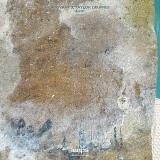
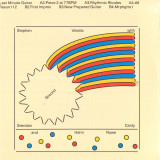
Swiss sound artist Zimoun continues and transforms the material from his solo project 'One & Two' with Taylor Deupree on 'Wind Dynamic Organ, Deviations.' Both albums were created entirely from recordings of the Wind Dynamic Organ (Prototype III), an extraordinary instrument housed in Bern Minster and developed by Daniel Glaus and his team at the Bern Academy of the Arts. Unlike a traditional organ, this prototype allows the wind pressure and air volume of each pipe to be shaped in real time and produces tones that breathe and blur at their edges. On Deviations, the pair push these organic tones into new territory by layering, bending and re-contextualising them into evolving ambient structures. A quietly radical exploration.
Поиск:taylor deupree
Все
- 1
After several solo-releases on the label, Dauw welcome back Taylor Deupree and The Humble Bee for their first collaborative album to date: »Re: Case Studies«.
While most collaborative albums are intentional from the start, this one almost never came to fruition and was born rather out of a fortunate coincidence. A few years ago, Taylor Deupree created a series of compositions entirely based on feedback loops, which nearly made their way out as solo work. However, while these abstract pieces felt complete, they also felt unfinished to the artist. After some discussions with the label, he decided to invite someone to bring them to life and finish what had been sitting in the drawer for a long time. Enter The Humble Bee. A few months later, Craig Tattersall sent his musical response. While the echoes of the original remain, »Re: Case Studies« stands entirely on its own and represents a full-fledged collaboration.
An elaborate, authoritative acoustic re-imagining of Taylor Deupree’s seminal electronic album Stil. (2002), Sti.ll is the result of a multi-year collaboration between Deupree and arranger/producer Joseph Branciforte to bring Deupree’s explorations of extreme repetition and stillness into the world of notated chamber music. Clarinet, vibraphone, cello, double bass, flute, and percussion stand in for the digital loops and granular processing of Deupree’s original, with meticulously notated arrangements preserving the all rhythmic, formal, and textural complexity of these compositions. Transcribed and arranged by Greyfade’s Joseph Branciforte and performed by an ensemble of notable New York creative musicians — Madison Greenstone, Ben Monder, Laura Cocks, Christopher Gross, and Sam Minaie, alongside Branciforte and Deupree themselves — Sti.ll is a landmark recording situated between the electronic and acoustic worlds.
»Februarys« is a collection of recordings taken over the past few years from these sessions. First started in a hotel room in Iceland and finished in Deupree’s studio in 2021. It is a diary of sorts, collecting these times into a small box of sounds. Taylor Deupree and Marcus Fischer have been collaborating on music for over 10 years. Ever since, and at every opportunity they are together, they record. Whether it’s in one of their respective studios, on stage somewhere or in a hotel room on tour, the tape machines are running. For some reason, this often seems to happen in the month of February.
There's a comforting mechanical heartbeat to 'Proem,' like a machine that has just become aware of itself, as it creaks and stutters along timidly interacting with its human caretakers. Peak moments of minimal dub-like ingredients impart flavor to a slow simmering broth of rich ear-coating ambience. (Lost Tribe Sound)
Dauw welcomes Taylor Deupree to the label with his new record 'Mur'. With this release Dauw also introduces Jelle Martens, a Belgian graphic designer and painter, for the artwork of this release.
Deupree describes the album title “as if there’s always something about my music that’s like a murmur”, resulting in a murmuring effect when pronouncing the names of each track. Mur is a personal journey through the challenging year that 2020 has been. The fifth and last track on the album, Mar, contributes as a catharsis to this turbulent period in Deupree’s personal life, which is defined by the interaction between the loud sounds and the soft keys of the piano. As if the storm has died down and the waters have found their peace.
Taylor Deupree is an American musician and mastering engineer based just outside of New York. As a former member of the American electronic band Prototype 909, Deupree has had numerous collaborations with artists such as Ryuichi Sakamoto, Stephen Vitiello, Alva Noto and Marcus Fischer. Curating 12k, a New-York based music label, is another aspect of Deupree’s career and brought together over one hundred releases since its beginnings in 1997. Having some similar artists in our catalog (Federico Durand, Will Samson and Steinbüchel for example), it’s safe to say that Deupree’s new release through Dauw will be in good company.
The album 'Balance' by Frank Bretschneider & Taylor Deupree was originally released in 2002 by Mille Plateaux on CD only. The 9 tracks on 'Balance' are a perfect example for the aesthetics to arise within the Click & Cuts scene and (ambient-)glitch music movement of the late 90s and early 2000s.
The two masters of microscopic sounds and sine wave/white noise-based music constructed these seamlessly mixed pieces around rhythms and melodies, which grants the album plenty of dynamics. The wide variety of carefully chosen ambient sounds throughout the whole work endows 'Balance' warmth and intimacy.
The recordings are now available for the first time on vinyl within the KeplarRev series, presented in a new updated artwork based on the original layout with photographs by Taylor Deupree.
From the original press release in 2002:
"Balance is the first and so far only collaborative release from Frank Bretschneider (Berlin) and Taylor Deupree (Brooklyn). Both of these artists are no strangers to the ears of many; Taylor Deupree is one of New York's most vibrant electronic producers. From his early techno days as a member of Prototype 909 to his current status as one of N. America's key "microscopic" electronic composers and to add runs the prestigious 12K and LINE labels. Frank Bretschneider is a key member and founder of the prestigious Raster Music label, he has critically acclaimed releases under the names Komet and Produkt. It's easy to say that Frank Bretschneider has created some of the most influential spatial electronics of the late 90's.
Utilizing both artists keen ears for carefully crafted sounds, Balance blends the clean sine wave / white noise of Bretschneider with the defined grit of Deupree's granular synthesis. Realized entirely on Nord Modular synthesizers, Bretschneider and Deupree exchanged patch files through email and began constructing foundation loops. Bretschneider then created initial mixes of 9 songs and then sent them to Deupree who remixed and re-processed them. This digital exchange allowed for them to work using their own methods and aesthetic while combining the similarities of each others interests. The result is a looping and churning rhythmic work that is both synthetic, warm, dubby and tonally challenging. Thus Balance creates an engaging balance between the 2 artists aesthetics."
Both Stephen Vitiello and Taylor Deupree are seasoned collaborators. Each new collaboration is a new context, a new conversation and a unique opportunity to learn. Vitiello has worked with musicians such as Scanner, Steve Roden, Ryuichi Sakamoto and Machinefabriek. As an artist often
represented in galleries and large scale sound installations he has also had the frequent opportunity to work with visual artists from the likes of Tony Oursler to Julie Mehretu and Joan Jonas. Deupree has a long history of collaboration including early works with Christopher Willits and Richard Chartier as well as Marcus Fischer, Ryuichi Sakamoto, and Bon Iver's S. Carey. Fridman Variations is Vitiello and Deupree's third release
together and continues their tradition of exploring their unique form of experimental improvisation.
Stemming from a live performance at NYC's Fridman Gallery, Fridman Variations was co-produced by the gallery and will remain as part of the gallery's publications. Fridman Gallery is a visual exhibition space that also boasts a unique dedication to experimental music through their annual New Ear Festival, at which Vitiello and Deupree performed and recorded the main piece for this album.
Side A of Fridman Variations is the live recording, edited for vinyl while side B contains two pieces made with some of the same source material as the live performance and intended to be related, but entirely new, works. Guitar, modular synthesizer and a small tape synthesizer are at the heart of these songs. The improved layers draw on buried melodies and hint of feld recordings and found textures. Not overly melodic, not
overly noisy, Vitiello and Deupree like to fnd the edge between the pretty and the obscure, often suggesting more than laying their intentions bare. This type of sound is one that the duo often explores as an opportunity for Deupree to adventure beyond his melodic comfort zone and for Vitiello to work and experiment with new instruments and how they interact with his signature guitar.
One of the biggest inspirations to the artists for this work was the hushed and dreamy state of the audience during the performance. The late-night ambience added to the immersive quality of the surround speakers and helped to channel creativity and a sense of sharing
Both artists feel that recording live performances is an opportunity to capture a unique moment that simply won't happen again. Despite a performance's faws or imperfections the energy and interaction is a special moment in time for the performers and audience. The opportunity to not only document it for the listeners who were present but also to be able to share the moment with those who weren't there is a positive one.
To further be able to expand on the ideas in the controlled studio environment serves to enrich the experience and further the communication.
When you’re running a label, a demo occasionally comes across your desk that makes you reconsider everything you thought your label was all about. For Balmat, such was the case with this stunning album from Stephen Vitiello, Brendan Canty, and Hahn Rowe. It sounds like nothing we’ve released so far—and that very otherness opened up a whole new world of possibilities for us.
Fans of ambient, experimental electronic music, and sound art will be familiar with Vitiello, a New York native, long based in Virginia, who has collaborated with a cross-generational list of greats: Taylor Deupree, Steve Roden, Lawrence English, Tetsu Inoue, Nam June Paik, Ryuichi Sakamoto, Pauline Oliveros, and many more. On labels like 12k, Room40, and Sub Rosa, he has explored a wide range of minimalism, microsound, lowercase, ambient, improv, and other styles. But this album is something different. It may begin in ambient-adjacent territory, but it quickly veers off, and it just keeps zigzagging, taking on elements of krautrock, post-punk, dub, and the groove-heavy interplay of groups like Natural Information Society and 75 Dollar Bill.
This stylistic turn is thanks in large part to Vitiello’s choice of collaborators. “We’re coming from three different schools,” Vitiello says: “sound art, art rock, and punk rock.”
Active since the early 1980s, Rowe—a violinist, guitarist, and producer/engineer—has played with, or manned the boards for, a frankly jaw-dropping list of musicians: Herbie Hancock, Gil Scott-Heron, the Last Poets, Roy Ayers, John Zorn, Glenn Branca, Swans, Live Skull, Brian Eno, David Byrne, Anohni, R.E.M., Yoko Ono, and many more. But he might be most closely associated with Hugo Largo, a one-of-a-kind New York quartet—two basses, vocals, and Rowe’s violin—that in the late 1980s helped lay the groundwork for what would eventually become known as post-rock.
Canty, of course, is the legendary drummer of Fugazi, the visionary DC post-hardcore group, as well as Rites of Spring before them, and, currently, the Messthetics, a Dischord-signed instrumental trio with guitarist Anthony Pirog and Fugazi bassist Joe Lally.
Vitiello’s trio first collaborated on First, a 17-minute piece released on the Longform Editions label in 2023. Second picks up where the freeform drift of First left off, channeling the trio’s exploratory energies into more intentionally structured tracks and—in a real first for Balmat—some almost shockingly muscular grooves. “Sometimes my projects are more conceptually driven,” Vitiello says, “but I think this was more musically geared. I just wanted to open up the references and bring in an incredible drummer, bring in some melodies, and I’m sort of the center.” But his collaborators, he stresses, are “vastly creative in making anything I might suggest better.”
Like its predecessor, Second took shape in phases, shifting between improvisation and collage. Vitiello laid down the skeleton of the music at home, sketching out initial ideas on Rhodes keyboard and acoustic and electric guitar; he then fed the parts through samplers and his modular system, recording 10- or 20-minute jams. Once he had edited them into more structured forms, he hit the studio with Canty, who added not just drums but also bass and piano; finally, Vitiello took the results of those sessions to Rowe, who played violin, viola, electric bass, and 12-string acoustic and bowed electric guitar, and assisted in some of the final structuring and mixdown.
A few more surprises along the way: Reanimator’s Don Godwin, the studio engineer where Vitiello recorded with Canty, contributed what he calls “resonant dustpan”; and none other than Animal Collective’s Geologist, who just happened to be in the studio that day, sits in on hurdy gurdy on “Mrphgtrs1,” the album’s gorgeous, stunningly atmospheric drone closer. “I love these chance encounters,” Vitiello says. “Somebody I admire, a group I admire—that was an unexpected gift.”
An unexpected gift is a great way of describing Second as a whole: three veteran musicians venturing outside their usual zones and finding a new collaborative language together. The results can’t be neatly slotted into any given genre; they belong not to any given category, but to the spirit of conversation itself.
Colombian-born artist Juan Carlos Torres Alonso, aka OKRAA, presents his third sonic exploration on A Strangely Isolated Place titled, La Gran Corriente. This album marks a profound shift in Juan's creative journey, where themes of portals, the illusion of time, and the paradoxes of self-discovery converge into a powerful auditory experience.
Following a transformative visit to Bogotá in May 2023, Juan underwent an introspective journey that inspired a new direction in his music. This experience, which he describes as an encounter with "an infinite current behind or inside of everything," led to a complete reimagining of his work. Abandoning previous demos, Juan embraced a liberated creative process that was both challenging and exhilarating.
La Gran Corriente is characterized by its innovative production techniques, eschewing fixed grids and BPMs in favor of fluid, organic structures and combining influences from Juan’s other production alias, ‘Laudrup’. This approach not only opened up new creative possibilities but also led to numerous "happy accidents," resulting in a body of work that is as unpredictable as it is cohesive.
At the heart of the album lies a poem written by Juan during production, a text that echoes the themes woven throughout the music. Translated loosely to English, the poem reflects on the nature of reality and time, with lines like "the land of oblivion is not real" and "the great current reminisces; time is an illusion." These words serve as both a guide and a reflection of the album’s deeper meaning.
La Gran Corriente is a record that invites the listener to unlearn and to immerse themselves in a sonic current that is both infinite and transformative. It’s a testament to the power of creative reinvention and the relentless pursuit of deeper truths through music.
Featuring artwork by Peter Skwiot Smith, La Gran Corriente is available on gatefold colored vinyl 2LP, mastered by Taylor Deupree / 12k Mastering.
Will Samson returns with a new album Harp Swells after more than ten years of crafting delicate sounds that are often led by his own tender voice. Now back on Taylor Deupree's experimental label, he fully immerses himself in the ambient world he previously considered only a side project. Thse record is a real meditation that sees him move away from the melancholy of his past and towards more bright and optimistic melodies. His aim is to heal himself through music and this record has six movements, each of which is based around his use of a 70s portable reel-to-reel tape recorder known as the UHER 4200. It makes for a widescreen and mesmeric work that stretches out in all directions around you with glistening melodies and slowly shifting energies that truly uplift.
Two records came out in 1988 that forever changed the perception of "experimental" or "serious" music produced in Portugal. These were "Plux Quba" by Nuno Canavarro and "Música de Baixa Fidelidade" by Tózé (António) Ferreira. Both were released by the same label - Ama Romanta -, an influential independent imprint closely linked to avantgarde pop band Pop Dell'Arte. Because those records appeared in what could be perceived as an "alternative pop" framework, they rescued this difficult music from Academia. It helps that Canavarro played in a successful new wave pop band (Street Kids) during the period 1980-83. By association, being a friend since 1976, António was in close contact with many of the musicians and bands that were part of the equally celebrated and detested Portuguese Rock Boom (roughly 79-82).
He was not a musician then but through his friendship with Canavarro, who had the means to acquire electronic equipment, António became involved with that equipment and shared Canavarro's passion for experimentation and curiosity for knowledge. They tried to get hold of as many technical magazines as possible and learn while testing ideas. In 1983, Street Kids were about to break up, young lives drafted into the Army and maybe, in Canavarro's case, a whole new passion for challenging music similar to his bandmate Nuno Rebelo, by then in the process of discovering a wide range of "other" music mainly through Jorge Lima Barreto. Barreto, who had started Telectu with Vítor Rua, possessed a huge book and record collection and, like Rua before them, Canavarro, Rebelo and Ferreira became fascinated by the pool of knowledge they now had access to by frequenting Barreto's house in Lisbon. He was roughly a decade older, had published several books and other writings throughout the 1970s, cultivated an anarchic stance and a penchant for cultural indoctrination. Rebelo was the first to be introduced via his contact with Rua (who had invited him to play in his other band GNR).
Overwhelmed, he felt the need to share his enthusiasm with friends and eventually took a few to the house in true pilgrimage fashion. To see the Light. Among the few he led there was even João Peste, founder of Ama Romanta. Canavarro and Ferreira preceded him.
Ferreira recalls an exciting learning process added to his experiments with Canavarro's array of synths such as the Korg Ms 20, Korg polysix, ARP Axxe, Roland SH-01, the Ensoniq Mirage sampler... He read in a magazine article about someone who had studied at the Institute of Sonology (then in Utrecht, Netherlands) and went there during a vacation trip in the Summer of 1983. He became excited by the prospect of studying at the Institute but money was a problem. Canavarro, on the other hand, was admitted there in the following year. Back in Portugal, Ferreira eventually abandoned his Chemical Engineering studies in Lisbon's Technical Institute in favour of a more focused music practice. He collaborated with Telectu during 1984 and 85 as a sort of technical engineer, implementing some recording solutions and background tapes and went to work at a thermoelectric power plant in Sines, hoping to make enough money to fund his musical studies. He did and proceeded with the paperwork for admission at the Institute of Sonology, now based in The Hague. António studied there in 1986-87 and the present album includes two compositions developed at the Institute: "More Adult Music" and "This Is Music, As It Was Expected", both featuring the voice of Rodney Waschka II. Among other activities and talents, Rodney is an expert in computer music and to António his voice sounded similar to Robert Ashley's, whose work he admired.
What happened at the Institute was a systematization of António's self-taught practice. Computer software, Musique Concrète, noise and silence, organisation of abstract ideas and sounds. The original notes on the back sleeve of the LP give some indication of process and thinking, but a more detailed account was given by António in the liner notes of the CD reissue in 2002, which are also included in this 2025 LP reissue.
The music sounds deep and detailed, despite the fact of António calling it low-fi ("Baixa Fidelidade"). It flows like an improvised performance where several musicians might be responding to each other, respectful of their mutual space. Drama occurs, as a natural emotional connection is sought by the listener. Piano, bells, drone, processed voices, even the clear narrative of Rodney Waschka II, contribute to create a sort of alternative perceptual reality. The sounds are almost tangible, more a part of the physical world than ethereal manifestations and thus it would not be correct to invoke "ambient music" as a selling point. But although "physical" and distinct, this music is still alien, more so in Portugal's 1988 environment. In March, helped by Canavarro, António set up a home studio and there he recorded the remaining material for this album: "Algumas Pessoas Olharam O Sul E Viram Deserto", "Um Som, Seguido De Uma Cena Negra E Malva" and "O Verão Nasceu Da Paixão De 1921".
"Música de Baixa Fidelidade" stands not only as a proof of great resilience but as one of those magnificent works of art coming from someone who balanced technical inclination and emotional sensibility. Because of that, Tózé Ferreira is able to decode the phantom world of sound for anyone who cares to experience the sensation of inhabiting a version of the Future. First ever vinyl reissue, reproduction of the original artwork with an additional insert. Made in collaboration with the artist and the support of Paulo Menezes (Plancton Music), who provided valuable assistance. Remastered by Taylor Deupree.
Released in 1999 on Taylor Deupree’s 12k label, »optimal.lp« was the debut album by Dan Abrams under his Shuttle358 moniker. For its 25th anniversary, Keplar presents it on vinyl for the first time with three previously unreleased tracks—the digital version also includes a alternative version of »Tank«—as well as a new artwork recreated by Daniel Castrejón and a remaster by Andreas LUPO Lubich based on the original pre-masters that were been restored and cleaned up for the reissue project by Abrams. »optimal.lp« was inspired by the rich tradition of ambient music and the rhythmic complexity of 1990s electronica while also sharing many traits with the then-emerging clicks’n’cuts movement, making it a true sui generis piece of work—both informed by tradition and visionary, idiosyncratic and seminal for many artists after him.
Abrams developed an interest in ambient music when he was still a child, scouring through cassette tapes of environmental sounds, new age music, and world percussion. Discovering Brian Eno’s »Thursday Afternoon« as a young teenager marked a turning point for him. »It gave me the idea that ambient music could be an intentional creative act, that tone itself is a legitimate form of expression,« he says today. During the 1990s, he increasingly immersed himself in the electronica scene and the output of labels such as Instinct, where Deupree worked as an Art Director and released his first records as Human Mesh Dance. Abrams found a home on 12k after sending Deupree a demo tape that would later evolve into »optimal.lp,« released as the label’s fifth catalogue number.
Abrams was still in college when he started experimenting with a sound module, his laptop and a mixer as well as a MIDI card and a small controller. »Each note was composed in MIDI and played back when I was ready to record,« he explains his working process at the time. »The tracks could be replayed, but the sound interactions with glitches and noise would be a little different each time. I decided to base the concept of the album on these interactions.« Each piece started with a single sound or tone that, as Abrams puts it, already contained the entire composition: »I let these interactions guide me, and tried to complement them as I added sounds. It’s a conversation of sorts with the medium.«
While refining this technique that he would go on to use on every album until 2004’s »Chessa,« reissued by Keplar in 2021, he also used the first-ever Native Instrument product, the Generator soft synth, to write the record’s title track—possibly making it the first album on which it was being used. »optimal.lp« is marked by this curious interplay of cutting-edge technology, the limitations with which every college student with a small budget is faced, and boundless creativity. »I’ve talked with other artists about how we feel about our early work,« Abrams says today. »We all agreed that there were elements that remain a part of us in a timeless way, despite our techniques—or lack thereof—at the time. ›optimal.lp‹ has a lot of things that will always be with me, that are me. I think I left some clues in there for my future self.«
This sense of timelessness remains tangible after a quarter of a century after the album’s original CD release and is even being expanded upon by the vinyl reissue, which is complemented by three pieces that were made while Abrams was working on the album. The digital release even features an entirely new take on the original album’s final piece, »Tank.« While Abrams let one of the masters go through his customised reverb unit when preparing the reissue, he started recording the results of this accidental dialogue between past and present. It’s a fitting tribute to an album whose delicate circular rhythms, rich textures, and ethereal melodies are precisely so exhilarating because their interplay seems to suspend the passing of time altogether.
Having flown in from Tbilisi, Anushka Chkheidze found herself completely alone inside the empty and as yet unoccupied University of Basel's Biozentrum: just her, a piano, and the surrounding spaces. Over a two-week period the young Georgian musician and composer was able to explore the building, designed by Ilg Santer architects, with the piano, microphones, a mixing deck, a computer, and her voice. She also assembled a small choir from the Schola Cantorum Basiliensis music academy in Basel, who performed in an auditorium in the basement.
Anushka used her field recordings and compositional ideas from her on-site sessions to create the music for this album in the studio in Tbilisi, Georgia. The eight tracks are an acoustic and associative journey through the Biozentrum with a nonvisual form of perception: she encountered eight very different places in the building, and the spatial acoustics and nonvisible interior spaces all play their part.
'Clean Clear White' was mixed by Taylor Deupree (Pound Ridge, New York), mastered by Christoph Stickel (Vienna), cut by Sidney Claire Meyer at Emil Berliner Studios (Berlin), and pressed on 180 gram black vinyl by Optimal Media (Röbel/Müritz) with love and care to audiophile standards.
»Other Rooms« is an uncompromisingly adventurous and engaging listen. It manages the rare feat of remaining concise while brimming with detail and inventiveness.
Ten years into a multifaceted career in experimental sound, Belgium’s Adriaan de Roover presents »Other Rooms«, his second solo album and a product of the thoroughly unexpected things we all experience, from societal freeze to the dissolution of individual relationships. Originally recorded for a performance with Fennesz at Église Notre-Dame de Laeken in 2020, »Other Rooms« was reworked into its final form in 2023. De Roover notes an inspiration from »looking at different versions of a life, sitting in a space between them; a constant focus on those alternate things... What if, what if.« It is introspective music informed by a desire for connection to oneself, to others, and to the boundless scale of everything else.
»Other Rooms« is Adriaan’s second outing through the acclaimed Dauw imprint, which is also the home to Midori Hirano, Dylan Henner, H.Takahashi, Lieven Martens and Taylor Deupree. Stepping back from rhythm-oriented motifs, this latest work is a concise but varied collection of weightless melodies and expertly sculpted, computerized soundscapes.
Dauw welcomes back Arovane to the label with his new album Drei Formen. A first edition on glitter tape was given away to the artist and the people we work with, while a second risograph tape edition is now available publicly. With this album the label and artist just want to thank their listeners and followers for their continued support. We hope this music resonates with you and gives some light in these troubled times.
Arovane is the moniker of German based composer and sound-designer Uwe Zahn who’s working in the field of minimal electronica and experimental music. In the late 1990’s his work reached a wider audience through releases on pivotal IDM labels DIN and City Centre Offices. In recent years, he released music on 12k and Puremagnetik and collaborated with Taylor Deupree, Porya Hatami and Synkro among others.
Keplar releases a vinyl reissue of 2001’s »Curve,« the second album released by Frank Bretschneider on Mille Plateaux under his real name. »Curve« saw him pick up on the underlying concept of 1999’s »Rand,« but gave his explorations of the sonic and stylistic range of electronic music notably more space and time to unfold.
Merging compositional minimalism with sonic complexity, the eight tracks display an affinity for the production techniques of dub music, which had already been a major reference point for Bretschneider’s work before. Its subtle grooves, especially in the rhythmically charged pieces towards the end of the album, also nod at the dance music-inspired work of contemporaries such as SND or Vladislav Delay. Produced during a prolific time for Bretschneider, who had previously co-run the Rastermusic label and was at that time still active under his Komet moniker, he considers »Curve« to be a crucial album in his discography.
Bretschneider was an important figure in the 1980s Karl-Marx-Stadt (Chemnitz) scene and released his first solo experiments with electronic music through his own klangFarBe tape label as early as 1985. Throughout the 1990s, he was part of projects such as Produkt and Tol and also released solo albums as Komet on Rastermusic, which he had co-founded in 1995 together with Olaf Bender a.k.a. Byetone. At the turn of the millennium, he gradually started releasing more solo records under his real name. After 1999’s »Rand,« followed »Rausch« on 12k—with whose owner Taylor Deupree he would collaborate for 2002’s »Balance,« reissued in 2020 by Keplar—in the following year and, finally, »Curve.« Produced after he had moved to Berlin, Bretschneider used a Clavia Nord Modular as his primary sound source and the Logic DAW to modulate and synchronise the sounds, adding only drum loops to some tracks in the second half of the album.
»Curve« is a record that is hard to pigeonhole and thus an archetypical Bretschneider album: marked by a meticulous attention to detail, infinitely playful, and fully dedicated to pushing the envelope of electronic music. It is no wonder that it left a lasting mark on the international scene for adventurous electronic music.
All tracks composed and recorded by Frank Bretschneider.
Originally released on Mille Plateaux in 2001.
Remaster and cut by Lupo @ Loop-O.
Artwork by Frank Bretschneider & Tim Tetzner.
Text by Kristoffer Cornils.
In line with his recent body of work, Uwe Zahn bundled minimal compositions telling narratives situating in the melodic realm of ambient music. On first sight, it seems common that one can enter or construct such stories through the melodies these compositions offer. However, melodies never stand on their own – maybe only theoretically – but in fact truly reveal their magic through the sonical context they’re embedded in. To Zahn, a crucial part of his practice is all about this latter notion. Finding the sweet – and sometimes hidden – spots in sound-design that allow him to express the narratives he wants to share. ‘Seismograf’ could be seen as an ode to this exploration and devoted to the practice of listening - to hear sounds that are otherwise inaudible.
“i am like a seismometer for sound structures that are hidden deep under the surface. an ear on the ground, on the earth. the other ear listens to the sky, the birds, the clouds, the wind.” Arovane
Arovane is the moniker of German based composer and sound-designer Uwe Zahn who’s working in the field of minimal electronica and experimental music. In the late 1990’s his work reached a wider audience through releases on pivotal IDM labels DIN and City Centre Offices. In recent years, he released music on 12k and Puremagnetik and collaborated with Taylor Deupree, Porya Hatami and Synkro among others.
"Deining" is the first full album by bassist and composer Dries Laheye. We know Dries as a composer and bass player for bands such as STUFF., Hoera. and Lucid Lucia. He is widely referred to as one of the better Belgian bass players of his generation and now comes forward with a solo-repertoire on this debut-EP.
His intention was to create music that feels like it keeps moving. The result is a dreamy universe that flows through concrete elements and improvised passages. The compositions of this repertoire were written for solo bass guitar with effects as tools. The tracks are recorded live in the studio and some overdubs with voice, bansuri flute and synthesizer were added to create a more layered sound.
Recommended to people who love Taylor Deupree, Bibio, Bill Frisell, Skuli Sverrisson, etc.
- A1: Nothing It Can (2022 Remaster) 04 52
- A2: Your Zenith (2022 Remaster) 02 10
- A3: In Everything Was Given (2022 Remaster) 04 30
- A4: Nature People (2022 Remaster) 01 26
- B1: Bold Advances (2022 Remaster) 03 12
- B2: Equal Ourselves (2022 Remaster) 04 03
- B3: Ours Everyday (2022 Remaster) 03 18
- B4: Ideals Or Hopes (2022 Remaster) 03 47
Originally released in 2012 on the artist's own Unseen label only in digital formats, Moiety by Helios aka Keith Kenniff is finally getting its well deserved physical release in a new 2022 vinyl edition, remastered by Taylor Deupree.
In 2012, Kenniff shared this free, digital-only collection called Moiety, which marked a notable shift in pace, both in output and style. Slower, more meditative than past work, Moiety honed in on Kenniff's proclivity as an ambient producer. Moiety is a stunning piece of work, largely instrumental with vocals as an instrument rather than a voice. It's a visceral listen with cinematic scope. No surprise that the opener "Nothing It Can" is one of Helios' most streamed tracks in his whole catalog.
- A1: Hope Valley Hill (2022 Remaster) 05 23
- A2: Come With Nothings (2022 Remaster) 05 08
- A3: Fourteen Drawings (2022 Remaster) 04 37
- A4: Backlight (2022 Remaster) 04 55
- B1: The Red Truth (2022 Remaster) 04 43
- B2: A Mountain Of Ice (2022 Remaster) 04 30
- B3: Shoulder To Hand (2022 Remaster) 05 22
- B4: Hollie (2022 Remaster) 04 41
Originally released in 2008 on Type Recordings, Caesura by Helios aka Keith Kenniff returns in a new 2022 edition vinyl re-release, remastered by Taylor Deupree.
Keith Kenniff had been with Type from the very beginning, and in the fifth year of the label he offered his fifth gorgeous release. In those five years Keith's style had evolved constantly, with his drifting piano compositions taking the Goldmund label and the Helios sound moving out from underneath the clipped beat-heavy electronics of 'Unomia' and into a more unique place, even incorporating vocals on the 'Ayres' mini album. 'Caesura' however was his 'proper' follow-up to the acclaimed 'Eingya', and has seen Keith return to the instrumental sound he knows so well. In fact in many ways 'Caesura' is a more electronic work than its predecessors, blending layer upon layer of synthesizer and adding his assured drumming to come up with the perfect meeting of indie-pop and ambient music. The haunting cinematic element is still present of course, but these songs are more rounded and confident than any in Keith's career to that point.
From the delicate bliss of 'Hope Valley Hill' which opens up the album with gauzy nostalgia and, as the title promised, hope, through the chunky pop of 'Come With Nothings' it is clear that Keith's music is as arresting as it ever was. Taking cues from the lilting indie-electronics of Ulrich Schnauss and the unfussy ambience of Brian Eno, Keith manages to inject this with his knowledge as a composer. The epic harmonies of 'Backlight' for instance reveal a lightness of touch rarely heard in the genre with sweeping synthesized chords buzzing alongside Keith's signature guitar.
Accompanied by more gorgeous artwork from Matthew Woodson, 'Caesura' still is a glowing record for the winter months, and a glimmer of hope to keep the seasons at bay.
'Dwell Time' focuses on the moments in between. Expanding on Satie's Furniture Music, which explores the role of music as a backdrop, Dwell Time explores the moments in between active and passive listening. A sound that maintains a unique balance of properties can start as an active relationship that slowly dissolves into the background and accompanies a listener over its course. The Dwell Time signal remains completely analog, utilizing homemade tape samples and hardware synthesizers to encourage the listener to move between the different states of listening. Produced by Rafael Anton Irisarri and Mastered by Taylor Deupree.
Snowmelt is a new record by Australian artists Seaworthy (aka Cameron Webb) and Matt Rosner, the long awaited follow up from their 2010 collaboration Two Lakes. Matt Rosner continues to explore the natural world to inspire his work based out of remote Western Australia. His most recent release being No Lasting Form (Room40). Webb's output as Seaworthy has been sparse in recent years as he continues to pursue a career in environmental research, focusing on urban wetlands and their ecosystems. This marks the first substantial release since Wood, Winter, Hollow, a collaboration with Taylor Deupree in 2013.
- A1: Bless This Morning Year (2020 Remaster) 06 05
- A2: Halving The Compass (2020 Remaster) 05 29
- A3: Dragonfly Across An Ancient Sky (2020 Remaster) 05 44
- A4: Vargtimme (2020 Remaster) 03 59
- B1: Coast Off (2020 Remaster) 04 55
- B2: Paper Tiger (2020 Remaster) 04 36
- B3: First Dream Called Ocean (2020 Remaster) 03 54
- B4: The Toy Garden (2020 Remaster) 04 45
- B5: Emancipation (2020 Remaster) 02 35
Repress
Originally released in 2006, Eingya by Helios aka Keith Kenniff returns in a new 2021 edition vinyl re-release, remastered by Taylor Deupree.
Beginning the album on a high with the pastoral beauty of "Bless This Morning Year," Kenniff showcases of what he does best: heartbreaking guitar and piano melodies punctuated by crumbling beats and backed by the most atmospheric synthesizer sounds this side of Eno's Apollo. The appetizing "Halving the Compass" blends subtle field recording with the kind of piano melodies so beautiful they could be compared to Virginia Astley or Harold Budd. This is followed by the album's clear highlight, "Dragonfly Across an Ancient Sky." It's an unsurpassable folk guitar piece with a decomposing percussive background and the sort of melodies that would turn evil tyrants into weeping babies. An album that could appeal as easily to fans of Nick Drake as to fans of Boards of Canada or even early AIR, this truly has something for everyone.
Raised in rural Pennsylvania, Kenniff put out Helios's 2004 debut album, Unomia, while studying percussion at Boston's Berklee College of Music. Since then, he's released six more albums as Helios, in addition to collaborating with his wife Hollie Kenniff in the shoegaze-inspired pop duo Mint Julep and composing music for films and archival use.
"A protracted sunset of an album guaranteed to see you through the longest days of summer and into the twilight of the autumn." - The Wire
"A soundtrack of molasses-sweet, midsummer sunset melancholy and pastoral mellifluence." - Tinymixtapes
- A1: Image-Autumn-Womb (2021 Remaster) 03 09
- A2: In A Notebook (2021 Remaster) 02 16
- A3: Finding It There (2021 Remaster) 03 44
- A4: Subtle The Sum (2021 Remaster) 02 03
- A5: Threnody (2021 Remaster) 04 45
- A6: Now (2021 Remaster) 03 58
- A7: The Winter Of 1539-1540 (2021 Remaster) 02 19
- B1: John Harrington (2021 Remaster) 06 09
- B2: Apalachee (2021 Remaster) 05 00
- B3: Mound Builders (2021 Remaster) 02 55
- B4: Gifts (2021 Remaster) 04 18
- B5: Clement Danes (2021 Remaster) 04 12
Originally released in 2008 on CD and in a very limited vinyl edition, "The Malady Of Elegance" by Goldmund aka Keith Kenniff finally gets its long-deserved vinyl re-release, featuring a new artwork and remastered audio by Taylor Deupree.
Taking cues from 'Corduroy Road' Keith Kenniff (aka Helios) again restricts himself to the piano in conjuring up his humble soundscapes and again we are pulled into a deep, meditative and filmic world as the notes glide to a slow, pensive meter. Keith's precedent release was the challenging 'Two Point Discrimination' EP, released on the Western Vinyl label as part of their portrait series, but where that record was a collection of haunting experiments in form and sound, 'The Malady of Elegance' sees us back into the warming, homespun territory of 'Corduroy Road'. That's not to say these compositions are upbeat, far from it in fact, but there are lines to be drawn to folk music, and while Keith no longer draws on the American Civil War as a primary influence there is still the sense that the ghosts of old America haunt the keys.
On top of these references we see Keith tripping somewhat fittingly into a flickering filmic world somewhat in line with his taste in European film. There is a delicate narrative on show throughout the record from the opening hopefulness of Image-Autumn-Womb through the melancholy of Now to the sensitive romance of the album's closer Evelyn. Listening to the record almost creates its own cinematic accompaniment in the minds eye, and this is simply a testament to Keith's incredible talents as a composer.
Fans of Erik Satie, Sylvain Chauveau and Hauschka need look no further, 'The Malady of Elegance' is a deeply personal meditation which you cannot help but get lost inside.
- A1: Ash (2021 Remaster) 07 06
- A2: Chessa (2021 Remaster) 06 58
- A3: Blast (2021 Remaster) 03 04
- B1: Duh (2021 Remaster) 03 40
- B2: Marche (2021 Remaster) 05 21
- B3: Nerf (2021 Remaster) 03 40
- B4: West Nile (2021 Remaster) 02 16
- B5: Melt (2021 Remaster) 05 30
- C1: Logical (2021 Remaster) 03 01
- C2: Dead Leaves (2021 Remaster) 05 22
- C3: Scrapbook (2021 Remaster) 07 53
- D1: Habitat (2021 Remaster) 07 04
- D2: Bloom (2021 Remaster) 03 31
- D3: Angelic (2021 Remaster) 03 39
Keplar re-issues the fourth album 'Chessa' by Dan Abrams' project Shuttle358 on vinyl for the first time. The double LP edition includes 3 previously unreleased tracks from the same recording sessions back in 2004, as well as an extended artwork with unseen photographs by Dan Abrams.
While undoubtedly associated with the microsound and 'clicks & cuts' movement around the turn of the millennium, on 'Chessa' Shuttle358 left behind the classical rhythmic patterns of the genre and shifted further towards warmer territories, meandering between modern digital minimalism and the soft tones of ambient music. Counter to his microsound synthesis approach on Frame (2000), Abrams created Chessa by writing software that manipulated samples from his unreleased songs, guitar pieces, and vintage japanese films sampled from video tape. In particular, a special granulating technique was written and performed at intentionally low sample rates that gave the uniquely fragile, yet dense sound to the album. Over fourteen tracks Abrams arranges slowly evolving sonic entities of unfading elegance. Strayed and hazy melodies pulse and cascade, elongated but brittle harmonies shimmer and disappear, echoing far-off in the rounded corners of the mind. The patient and detailed way Abrams combines the broken with the beautiful in creating organic collages of sound that retain the euphonic essence of a song, makes this piece of work so powerful and timeless, sounding just as relevant today, as it did 17 years ago.
Under modern scrutiny in Abrams latest studio, he refocused the original recordings to emphasize the elements most important to the original vision. The final mastering and vinyl preparation was done in collaboration with Stephan Mathieu, vinyl was cut by LUPO.
From the original press release in 2004 by Taylor Deupree:
Without a doubt Shuttle358 has become one of the most admired artists to emerge from modern electronic music’s sea of musicians. From the humble beginnings of a demo CD in 12k’s mailbox to 4 critically acclaimed CDs, Dan Abrams is, to some, the one credited for bringing a warmth and human touch back into what has often been considered a very cold, sterile genre. It began with 1999’s Optimal.lp (12k1005), a groundbreaking debut release that immediately defined the Shuttle358 sound; a hybridization of the then-emerging “microsound” genre with Eno’s true ambient explorations. In 2000 Abrams outdid himself with Frame (12k1011) by honing his sound design and exploring production techniques at rates that made his “now” quite brief and creating what was to become one of the most sought-after CDs in the 12k catalog.
Chessa is the third release from Abrams’ Shuttle358 moniker on 12k and he continues to do what he does best: attempt to move microsound away from the world of theory and towards absolute real life. Like his photographs, Chessa is music about, and to be listened to in, unexpected places. It is a narrative, a simple slice of life that plays out through the incidental photography of the cover artwork. To achieve this Abrams fuses irregular granular sound particles, like the movements of everyday life, with a deliberate melodic base that captures emotion and simplicity.
- A1: Eluvium - Dusk Tempi
- A2: Mary Lattimore - Silver Secrets
- A3: Jefre Cantu-Ledesma - Night Swimming
- B1: Machinefabriek - Kelelawar
- B2: Kelly Moran - Sodalis
- B3: Taylor Deupree - Echo Affinity
- B4: Noveller - A Place Both Wonderful & Strange
- C1: Christina Vantzou - Music For A Room With Vaulted Ceiling
- C2: Sarah Davachi - Marion
- C3: Felcia Atkinson - Night Vision, It Touched My Neck
- C4: Jab - Indiana Blindfolded
- D1: Chihei Hatakeyama - The Circle
- D2: Ben Lukas Boysen - Torpor
- D3: Stuart Hyatt, Player Piano & Julien Marchal - Between The Hawthorn & Extinction
Grammy-nominated artist and musician Stuart Hyatt returns with another sonic wonder in the Field Works series, bringing the listener into truly uncharted acoustic territory. Ultrasonic is perhaps the first-ever album to use the echolocations of bats as compositional source material. For this special album, Hyatt has assembled an extraordinary group of contributors: Eluvium, Christina Vantzou, Sarah Davachi, Ben Lukas Boysen, Machinefabriek, Mary Lattimore, Felicia Atkinson, Noveller, Chihei Hatakeyama, John Also Bennett, Kelly Moran, Taylor Deupree, Jefre Cantu-Ledesma, Julien Marchal, and Player Piano. Ultrasonic is part of a broader storytelling project about the federally endangered Indiana bat. Generously funded by the IUPUI Arts & Humanities Institute and the National Geographic Society, each album contains an official printed booklet of The Endangered Species Act of 1973.
"Aix" is an outstanding piece of work by Italian electro-acoustic savant Giuseppe Ielasi, originally released in 2009 on Taylor Deupree's 12k label, the follow-up to 2007’s "August" (12k) and Ielasi's first collaboration with Nicola Ratti as "Bellows", also out in 2007 (Kning Disk). Originally only released on CD (12k), the album got a very limited vinyl issue on Czech label Minority Records in 2010. Keplar presents this extraordinary and timeless collection of 9 evocative minimalist soundscapes on vinyl again after 10 years.
From the original press release in 2009:
"With Aix we see Ielasi building his layered, atmospheric music around rhythmic grids. Most of the time these are quite irregular and the pulses are not neccessarily stable or clear. Where his previous work approached sound in a linear fashion Aix imposes a strong vertical development with the aforementioned grid and a production consisting of ons and offs, employing as much improvisation as Ielasi’s previous work, but in a different way.
Despite the self-imposed grid structure, Aix relies heavily on randomization. Not in the traditional sense of sound placement but instead of the spatialization of sounds, echoes, reverbs and the stereo image. As a result, Aix has an amazing sense and clarity of space as the small fragments of sound breathe and find their own place in the mix, thanks to Ielasi’s sublime skills as a mixer and engineer.
Ielasi relied heavily on numerous short samples and combining them in ways that fell into his groove; some found from others' recordings and many more recorded during the past year. We hear fragments of percussive (acoustic) objects, drums, piano, trumpet, guitar, and, of course, synthetic textures. Although there is a distinct rhythmic pulse to Aix, Ielasi manages to mold it into something wonderfully languid and warm... and strangely inviting."
Composed and recorded by Giuseppe Ielasi in Aix-en-Provence, Autumn 2008. Remaster by Giuseppe Ielasi. Cover photograph "Construction, Barcelona" by Taylor Deupree. Layout by Dan Dudarec/Marco Ciceri.
For more than 20 years Giuseppe Ielasi has been releasing his recordings on labels like Erstwhile Records, Häpna, Kning Disk, Dekorder, 12k, Entr'acte or Editions Mego, as well as on his own label Senufo Editions.
The label Keplar has been on a long hiatus and is now back with its KeplarRev series presenting vinyl re-issues of essential electronic albums from the 90's and 00's, as well as new recordings by momentous electronic and ambient artists.
Previously performing as The Greatest Hoax, Washington, D.C.-based composer T.R. Jordan debuts a new album of contemporary classical and ambient music with Past Inside the Present. Entitled Just for You, Jordan presents an album focused on the evolution of personal relationships and the paths they take.Produced and mixed by Rafael Anton Irisarri (The Sight Below, Ghostly International) and mastered by Taylor Deupree (12K Mastering). Recollections Suite, the companion cassette, is a long form classical piece featuring a string quartet led by cellist Mark Bridges (High Planes/Loscil, Kranky Ltd).
For the dance film essay - The Body as Archive Gregor Schwellenbach chose a simple yet radical approach: he created a kind of catalog of sounds, clearly structured, presented with sobriety and boldness. The sounds are not embedded in the familiar frame of rhythm-harmony-melody, rather, they are introduced smoothly, presented one after the other, sometimes going together, then standing alone. It is a sensual approach, at the same time executed strictly systematically. Or vice versa: Schwellenbach's composition is strictly systematical, giving maximum space for sensuality and the unfolding of sounds.
Schwellenbach strives to create a system that doesn't become rigid, by treating the material gently and with sincerity.
In composing - The Body as Archive he sets clear rules: everything is played by hand, he only uses instruments he plays himself: Keyboards (Rhodes, piano, synthesizer) and double bass. Almost all material is played in the same key, the chords can be used in any combination, everything fits to everything. The ten parts of - The Body as Archive , mastered by Taylor Deupree, could be played all at the same time without sounding cacophonous.
Everything is pure presence, a gently woven stream of elegance and attentiveness. The organization of sounds - usually an action of preparation, didactic and discipline - turns into poetry.
As BPMF started making techno again, he surveyed his techno friends asking them what it was about his music they found the most annoying. The answers TR-606 hi-hats and portamento.
He proceeded to focus on these aspects of his music and today the results are here: "Abide the Glide Volume 4" wherein BPMF is pushing all the right buttons to get the DJ thinking about the sounds their pumpin. Jamie Morris provides an excellent DJ freindly remix of "Even Straighter", taking BPMF's idea and going even straighter.Old Man Raver Pants" proves that a 50 year old man can still party, so long as he's wearing his raver pants and while there's been alot of talk about alternative facts, "Alt-Slacks" is a dub inspired jam that seems like it's narrative might fall apart at anytime.Schmer label head BPMF has been making electronic music since 1984. As Free World released cassettes, was entered by WFCS into CMJ's Best Unsigned Bands competition and in 1985 earned the duo a spot on an Epic Records compilation. In 1986 they released "Amagi", an eclectic collection of experimental electronica inspired by underground new wave and industrial music of the 80s.BPMF and Taylor Deupree formed Decameron and released two cassettes on Havoc Music. Some tracks would appear on early techno CD compilations under pseudonyms. Havoc Music's own compilation "Techno Criminal Sub Cultures" is where BPMF first appeared in 1991.
With Dietrich Schoenemann and Taylor Deupree, BPMF assembled classic early 80s analog gear and as Prototype 909 they released "Acid Technology" on Instinct records; performed their first live show, met Abe Duque who invited all of his techno friends to the legendary Limelight Club in NYC. BPMF brought records and gear jammed live with them. The Rancho Relaxo All-Stars would release three albums and tour Europe together even destroying the original Ultraschall in Munich, quite literally tearing the place down. With John Selway, BPMF channeled early electro and new wave sounds forming Synapse and creating Serotonin Records to bring the funk back and help give birth to the electro revival scene.Prototype 909 recorded four albums and played 70+ shows. Synapse was the first American electro group to play live in Moscow. BPMF released tracks on Serotonin, Schmer, Instinct, Analog/EMF, Tension/Rancho Relaxo Records. His approach to electronic music is hands on and experimental, so more than having a "sound" his music reflects his values: spontaneity and a sense of urgency.
- 1