For five decades, Harold Budd stood on the forefront of the West Coast avant-garde. Born in Los Angeles, he studied with Schoenberg-pupil Gerald Strang and began teaching at CalArts in 1970. While searching for his own voice, he was influenced as much by abstract expressionist painters as by John Cage and Morton Feldman. In his work, Budd brought delicate, slowing-moving melodies to the foreground – creating a new musical language based on “eternally pretty music” and smooth surfaces.
In the early ’70s, Budd started an extended cycle of compositions that would comprise The Pavilion Of Dreams. For Budd, the album was a signpost for a new direction in thinking about music: “The Pavilion Of Dreams erased my past. I consider that to be the birth of myself as a serious artist. It was like my Magna Carta.”
Produced by Brian Eno in 1978, The Pavilion Of Dreams stands toe-to-toe with another minimalist masterpiece also released that year, Steve Reich’s Music For 18 Musicians. Budd’s gorgeous pieces reveal a lightness of touch that draws the listener in, while sublime voices float in and out as if in a recurring dream. Featuring saxophonist Marion Brown and multi-instrumentalists Gavin Bryars and Michael Nyman, The Pavilion Of Dreams remains a master class in exquisite timbre and shimmering texture.
The Pavilion Of Dreams was both the final release on Eno’s Obscure imprint and a transition point towards his seminal ambient series. This first-time reissue is recommended for fans of Ryuichi Sakamoto, Jon Hassell and Mark Hollis.
Поиск:tea time
Все
“The hand knows best,” the painter Margaux Williamson says. “A shape produces itself, where I go toward what is intuitive, rather than logical.” The shapely, intuitive songs that comprise Ada Lea's third album, when i paint my masterpiece, are surprising, imagistic, tactile. They stand before us and we feel their brushstrokes. Alexandra Levy holds her guitar against the backdrop of a sea of her paintings on the album cover and it’s tempting to ask: is painting a metaphor here, for music or life? No! As ever, she resists tidy metaphors. She’s a master of this kind of thorny lowercase title that germinates and grows with time. In a real, profound way, music and painting go hand-in-hand as she unveils a new style of subversion and surrealism inspired by her transdisciplinarity.
Levy is a Renaissance woman, and Ada Lea’s albums have been swelling in scope alongside the evolution of her artistic life. Her recent turn toward pedagogy—teaching a songwriting course at Concordia University and co-facilitating a community-based group called The Songwriting Method—weaves another vivid thread into her multifaceted practice. Her debut LP, what we say in private, blurred the lines between interior and performative worlds. Her sophomore record, one hand on the steering wheel the other sewing a garden, featured vignettes centered on Montreal. On this sprawling and ambitious album, written over three years and whittled down from over 200 songs, she asks: what happens when you… pause? How can a life be held suspended in song? The album is a kaleidoscopic exploration of the transformations art can bring: the vision of an uncompromising artist dancing bravely and freely between registers and across mediums.
The album marks a reset—a quiet revolution. After years of relentless international touring, Levy felt an urgent need for community and renewal. Gruelling road schedules with very little support left her wondering: who am I really doing all this for? The system was uncaring and broken, and so it was that she came to envision a new healthy and healing mode of musical genesis. “For me, that looked like resting, extending my creative reach, going back to school, studying painting and poetry,” she explains. “Taking a step away from music as guided by industry expectations. Simplifying things. Getting a job, starting to teach. Engaging with the process rather than the product.” This need for a more deliberate creative renewal was rejected by her existing systems of support, so she began the search for an alternative.
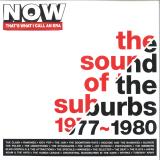
- A1: London Calling
- A2: Blitzkrieg Bop
- A3: Lust For Life
- A4: Going Underground
- A5: Teenage Kicks
- A6: Boys Don't Cry
- A7: Love Will Tear Us Apart
- A8: Making Plans For Nigel
- A9: Rat Trap
- B1: Hanging On The Telephone
- B2: Hong Kong Garden
- B3: Top Of The Pops
- B4: Ca Plane Pour Moi
- B5: Banana Splits
- B6: Cool For Cats
- B7: Into The Valley
- B8: Shot By Both Sides
- B9: Death Disco
- C1: The Sound Of The Suburbs
- C2: No More Heroes
- C3: Babylon's Burning
- C4: Cherry Bomb
- C5: Another Girl, Another Planet
- C6: (I Don't Want To Go To) Chelsea
- C9: Because The Night
- D1: Brass In Pocket
- D2: Roxanne
- D3: Geno
- D4: Time For Action
- D5: Airport
- D6: Echo Beach
- D7: Over You
- D8: Is She Really Going Out With Him?
- E1: Gangsters
- E2: The Prince
- E3: On My Radio
- E4: Mirror In The Bathroom
- E5: Food For Thought
- E6: Life In Tokyo
- E7: The Number One Song In Heaven
- E8: Rock Lobster
- F1: Dog Eat Dog
- F2: C30 C60 C90 Go
- F3: Money
- F4: Nightclubbing
- F5: Are Friends Electric?
- F6: Underpass
- F7: Messages
- F8: Video Killed The Radio Star
- C7: Roadrunner (Once)
- C8: 2-4-6-8 Motorway
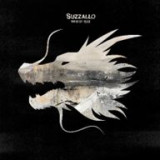
- 01: River
- 02: The Destroyer
- 03: Constellations
- 04: Tsunami Waves
- 05: Star String Radio
- 06: We Are The Clouds
- 07: Time Machine
- 08: Magical Thinking
- 09: Shattered Stars
- 10: Broken Dragon Wings
- 11: Eulogy
Suzzallo (pronounced Süe-zahh-Lōw) is a new Seattle based rock band fronted by Rocky Votolato. After the devastating loss of his child in a tragic car accident, Votolato created an entire new world inside of aggressive anthemic rock songs to transmute extreme grief and loss into something healing and beautiful. This is a return to form for Votolato, who for the past 2 decades has had a successful career as an Indie-rock solo artist, but who started out playing in heavier bands - most well known for his work in Waxwing.
With Rudy Gajadhar on drums (ex-Waxwing), Steve Bonnell on bass (ex-Schoolyard Heroes) and teaming up with legendary producer John Goodmanson, Suzzallo recently finished recording their debut album “The Quiet Year” at Robert Lang Studios in Seattle, WA. Ben Gibbard (Death Cab For Cutie / The Postal Service) is featured on several tracks on the album, adding some levity to the songs with beautifully placed backing vocals, electric guitar, bass 6, and piano.
Funded via a crowdsourcing campaign that raised over 100K dollars, Suzzallo’s highly anticipated debut is due to be released on Thirty Something Records in the spring of 2025.
- 01: The Crossing
- 02: Half Mast
- 03: Desensitized
- 04: Draco Vibration
- 05: Black Ribbon
- 06: Magdalene
- 07: Currents
- 08: Travesty As Usual
- 09: Marginalized
- 10: Coffin Lily
- 11: Sons Of Kings
- 12: The Deprogramming Of Tom Delay
Yellow[33,57 €]
Another bonafide classic from the all time heavy lifer Scott ‘Wino’ Weinrich. Things just get heavier and heavier in Wino's career and his short-lived classic band The Hidden Hand is no exception. Formed in 2002 and already disbanded in 2007, the trio featured Wino, Bruce Falkinburg on bass/songwriting/vocals and drummer Dave Hennessy.
If The Obsessed, St. Vitus, Shrinebuilder, Probot and Spirit Caravan aren’t enough to bring his CV to legendary status, stop reading now. Originally released in 2004 on Southern Lord.
Another bonafide classic from the all time heavy lifer Scott ‘Wino’ Weinrich. Things just get heavier and heavier in Wino's career and his short-lived classic band The Hidden Hand is no exception. Formed in 2002 and already disbanded in 2007, the trio featured Wino, Bruce Falkinburg on bass/songwriting/vocals and drummer Dave Hennessy.
If The Obsessed, St. Vitus, Shrinebuilder, Probot and Spirit Caravan aren’t enough to bring his CV to legendary status, stop reading now. Originally released in 2004 on Southern Lord.
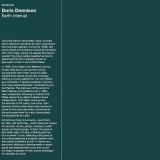
The discovery of Doris Dennison's score represents a genuine musicological breakthrough—what once would have been "a tree falling in the woods" thirty years ago now holds the potential to render "a thunderous clap in our minds." While researching Anna Halprin's lesser-known collaborators, scholar Tom Welsh uncovered the archives of AA Leath, one of Halprin's principal dancers. Buried within these materials was Dennison's handwritten score for Earth Interval, dated May 1956. Born in Saskatchewan, Canada, in 1908, and raised near Seattle, Dennison (1908-2009) encountered John Cage while teaching Dalcroze eurythmics at the Cornish College of the Arts. She joined Cage's earliest percussion quartet—alongside Margaret Jansen, the composer and his wife Xenia—in the group widely regarded as having performed the first complete concert of percussion music in the United States. This historic December 1938 concert was followed by tours and the landmark May 1941 performance at the California Club, comprising Cage and Lou Harrison's Double Music, the premiere of Cage's Third Construction, and Harrison's 13th Simfony.
As Bradford Bailey observes in his extensive liner notes, Earth Interval demonstrates "an extraordinary balance of elements that imbues the piece with a sense of clarity, directness, and constraint that is both distinct and ahead of its time." The work's most remarkable innovation lies in its approach to extended techniques, particularly Dennison's notation for the central movement: "In 2nd movement, 1st player lowers + raises a gong into a tub of water while beating." This technique, absorbed from Cage's experimental vocabulary, generates what Bailey describes as "fields of acoustic abstraction that bend and warp time through sustained resonances, beat, and space." The temporal sophistication of these manipulations anticipated Karlheinz Stockhausen's Mikrophonie I (1964) and Annea Lockwood's water-based sound investigations by over a decade. After joining Mills College as dance accompanist, Dennison maintained crucial connections to the Bay Area's experimental scene, collaborating with figures like Merce Cunningham and programming Cage's music throughout the 1950s.
Comprising three movements—Land Form, Air Tide, and Earth Play—Earth Interval is scored for recorder, drums, gongs, maracas, muted gongs, and bowl gongs. In total, the piece is just under eight minutes: "a fleeting glimmer of moment in time, a life spent at the cutting edge, and a singular creative vision that packs a powerful punch." When viewed in historical context, placed in contrast to roughly contemporaneous avant-garde percussion works by Cage, Harrison, Louis Thomas Hardin (Moondog), and Harry Partch, or important precursors like Edgard Varèse's Ionisation (1931) and Henry Cowell's Ostinato Pianissimo (1934), it's clear that Dennison was following her own path. Earth Interval is not derivative. It is a precursor to what was yet to come, alluding to developments of avant-garde and experimental music that wouldn't begin to appear on the cultural landscape until the 1970s and '80s, with the emergence of Post-Minimalism and more idiosyncratic artists and ensembles like Midori Takada, Ros Bandt, Peter Giger, Frank Perry, Christopher Tree, Michael Ranta, Gamelan Son of Lion, and Niagara.
This recording by Chicago's Third Coast Percussion, captured in March 2022, represents the first complete documentation of this pioneering work. The ensemble's interpretation reveals the piece's remarkable contemporaneity while maintaining its historical specificity. Where Cage, Harrison, and Partch employed "self-consciously off-kilter polyrhythms," Dennison's rhythmic sensibility anticipates minimalist developments by nearly a decade, yet integrates "forceful rests, as well as sharp shifts in sonic character, tempo, and meter, that break the momentum and breathe a sense of life into the piece's structure." This positions her work closer to Post-Minimalism decades before its emergence. The architectural approach demonstrates Dennison's understanding that "the composer almost entirely disappears" in favor of phenomenological listening experience, creating what might be called an egoless music that places its realities and meaning entirely in the ear of the beholder. The present recording, realized by Chicago's distinguished Third Coast Percussion ensemble, represents a significant achievement in experimental music scholarship and performance practice. As specialists in the Cage tradition and contemporary percussion repertoire, Third Coast Percussion approached Earth Interval with the historical sensitivity and technical precision required to illuminate Dennison's subtle compositional innovations. The March 2022 recording sessions, engineered by Colin Campbell, capture both the work's intimate chamber music qualities and its bold exploration of extended techniques. The ensemble's interpretation reveals the piece's remarkable contemporaneity—its ability to speak directly to current musical concerns while maintaining its historical specificity.
This recording serves multiple scholarly functions: it provides the first complete documentation of Dennison's compositional voice, offers insight into the broader network of experimental music practitioners surrounding Cage and Harrison, and demonstrates the sophisticated level of compositional thinking that was occurring within the Bay Area's dance-music collaborations of the 1950s. The work's emphasis on phenomenological listening—what might be called an "egoless" approach to musical experience—places it within a lineage of American experimental music that prioritizes perceptual process over compositional personality. The work's original obscurity—limited to AA Leath's performances at venues like the 1957 Pacific Coast Arts Festival at Reed College—paradoxically allowed it to remain "entirely on its own terms," free from the constraints of historical categorization. Drawing on Jacques Derrida's Archive Fever, the argument emerges that "the archive can acknowledge, celebrate, and resurrect" overlooked voices, transforming our understanding of experimental music history. The present Blume edition, featuring Third Coast Percussion's authoritative interpretation, includes a lavishly illustrated 16-page booklet designed by Bruno Stucchi / dinamomilano, containing complete scholarly apparatus, historical photographs, and detailed production notes. This recording enables "cross-temporal intersectionality," allowing Dennison to "belong to a newly formed and more dynamic understanding of the present and past," demonstrating how forgotten voices can reshape entire historical narratives when given proper scholarly attention and performance advocacy.
- History Repeats
- We're Still Singing
Color Vinyl[12,82 €]
Double A-Side release by two of Englands best Streetpunk/Oi! Bands with two new songs on a ltd vinyl 10inch! GIMP FIST celebrating their 20years anniverary with brandnew track "History Repeats"."HISTORY REPEATS" is something very special in every way: The song surprises with a sound that is very atypical for Gimp Fist, with excursions into folk punk, and for good reason: It is released exactly 20 years after their first pub concert back on June 6, 2005, in Bishop Auckland, and it has captured just that atmosphere musically. Instead of merely celebrating themselves as is usual with anniversary songs, the lyrics convey a clear message to society and politics for mutual respect and peace, as the signs unfortunately point to 'History Repeats' with all the current conflicts worldwide. UK's Streetpunkers RIOT CITY RADIO shouting out loud to all football and soccer fans with their new song "We're still singing" A terrace themed anthem calling out all the 'fair weather' supporters who turn their back on their sports team when times get hard. Catchy Singalongs paired with melodic hooklines and straight forward guitars, for good reasons RIOT CITY RADIO are handled as on of UK's actual best Streetpunk bands! Classic black vinyl, here's the Gimp Fist cover art displayed.
GIMP FIST / RIOT CITY RADIO
HISTORY REPEATS/WE'RE STILL SINGING (SPLIT 10")
Double A-Side release by two of Englands best Streetpunk/Oi! Bands with two new songs on a ltd vinyl 10inch! GIMP FIST celebrating their 20years anniverary with brandnew track "History Repeats"."HISTORY REPEATS" is something very special in every way: The song surprises with a sound that is very atypical for Gimp Fist, with excursions into folk punk, and for good reason: It is released exactly 20 years after their first pub concert back on June 6, 2005, in Bishop Auckland, and it has captured just that atmosphere musically. Instead of merely celebrating themselves as is usual with anniversary songs, the lyrics convey a clear message to society and politics for mutual respect and peace, as the signs unfortunately point to 'History Repeats' with all the current conflicts worldwide. UK's Streetpunkers RIOT CITY RADIO shouting out loud to all football and soccer fans with their new song "We're still singing" A terrace themed anthem calling out all the 'fair weather' supporters who turn their back on their sports team when times get hard. Catchy Singalongs paired with melodic hooklines and straight forward guitars, for good reasons RIOT CITY RADIO are handled as on of UK's actual best Streetpunk bands! Classic black vinyl, here's the Gimp Fist cover art displayed.
- Tricked And Abused
- April Acid Rain Showers
- Cry Freedom
- Suicide Investigatino Team
- One Way Ticket
- Intolerator / Intolerhater
- Run Don't Walk
- Mass Insanity
- Situation Desperate
- Central Nervous System
- We, Your Murdered Sisters
INSTIGATORS are back, with their first shows in over 30 years, and to tie in Boss Tuneage is making their classic second and third albums "Phoenix" and "Shockgun" available again on vinyl, as limited edition colour vinyl pressings as part of the highly acclaimed Boss Tuneage Retro Series. "Shockgun" was originally released in 1988, hot on the heels of extensively touring the US and Europe, and was the second album from the classic second phase of the band, which feature original guitarist Simon Mooney teamed up with Andy "Tez" Turner (ex XPOZEZ) on vocals and the rhythm section of Bob Gorlik on bass and Steve "Cuzzy" Curran on Drums. Restored and remastered by Andy Pearce, it has never sounded better! The first time this album has been available on vinyl for over three decades!! This is a must own purchase for anyone in an interest in 1980's UK punk.
- A1: Life Changes (Feat. Phil Beaudreau)
- A2: My Vision
- A3: Young Winners
- B1: She In My Car (Feat. Dom Kennedy)
- B2: Faces
- B3: Life$Tyle
- B4: The Team
- C1: Whip It
- C2: Love = Hate / Ulterior Motives (Feat. Bj The Chicago Kid)
- C3: Everything Wavy
- D1: I Love Me Some You
- D2: These Days
- D3: Take My Life
For the first time ever, Casey Veggies’ breakthrough album Life Changes is coming to vinyl! PNCINTL is proud to bring this iconic project to collectors and fans worldwide with an exclusive limited-edition pressing.
Originally released in 2013, Life Changes marked a defining moment in Casey Veggies’ career, blending sharp lyricism, smooth West Coast vibes, and unique storytelling. From anthems like Faces and She In My Car to deep cuts that still resonate today, this album became an underground staple and a must-have!
- A1: Some People (Feat. Showtyme)
- A2: Masterpiece (Feat. Blu)
- A3: Treat You Right (Feat. Phonte)
- A4: I’m Good
- B1: Marina (Feat. Curren$Y, Mack Wilds & Smoke Dza)
- B2: Get It
- B3: Vs (Feat. Styles P)
- B4: Wants
- C1: 414 Words
- C2: The Achievement (Feat. Mela Machinko)
- C3: The Sermon (Feat. Royce Da 5’9”)
- D1: Vs Remix (Feat. Nick Grant)
- D2: Other Side (Feat. Mela Machinko)
- D3: Masterpiece Remix (Feat. Pharoahe Monch)
- D4: Asteroids (Feat. Skyzoo, Daylyt, Yatta Barz, Grafh & Stalley)
Back in 2016 a talented wordsmith from the Bronx going by the name Mickey Factz teamed up with producer Nottz to release his full-length "The Achievement: Circa '82". The album is an ambitious piece of work that finds Mickey trying to encapsulate all his thoughts in lieu of this very moment, with Nottz serving as the executive producer providing a plethora of landscapes for Mickey to illustrate his stories. Featuring guest appearances by names such as Styles P, Smoke DZA, Phonte, Curren$y, Royce Da 5'9", Skyzoo, Stalley and several others, this deluxe and extended edition also presents a few remixes and unreleased tracks, all packed in a 2LP limited edition vinyl, bringing Mickey's achievements on physical copy for the first time ever.
- A1: Design - Premonition
- A2: Vision - Lucifer’s Friend
- A3: Richard Bone - Alien Girl
- A4: John Howard - I Tune Into You
- A5: Ian North - We’re Not Lonely
- A6: Selwin Image - The Unknown
- B1: Harry Kakoulli - I’m On A Rocket
- B2: Rich Wilde - The Lady Wants To Be Alone
- B3: Billy London - Woman
- B4: Alan Burnham - Science Fiction
- B5: The Microbes - Computer
- B6: The Goo-Q - I’m A Computer
- C1: Gerry & The Holograms - Gerry & The Holograms
- C2: The Warlord - The Ultimate Warlord
- C3: Die Marinas - Fred From Jupiter
- C4: Dee Jay Bert & Eagle - I Am Your Master
- C5: Peta Lily & Michael Process - I Am A Time Bomb
- C6: Sole Sister - It’s Not What You Are But How
- D1: Alasdair Riddell - Do You Read Me?
- D2: Karel Fialka - Armband (The Mystery Song)
- D3: John Springate - My Life
- D4: Idncandescent Luminaire - Famous Names
- D5: Disco Volante - No Motion
- D6: Dream Unit - A Drop In The Ocean
Compiled by Philip King
“And then came the rise of synth pop : blokes with dodgy haircuts hunched over keyboard-operated
machines stuffed with wires and do-it-yourself tone oscillators making sounds like a brood of geese
passing gas in a wind tunnel. Whoopee! This is the way the ‘70s ended : not with a blood-curdling bang
bang but with a cheap, synthesized, emasculating whimper.”
NICK KENT, NME.
All The Young Droids: Junkshop Synth Pop 1978-1985 is a new compilation that charts the
underbelly of the epoch-defining sound of the synthesiser in 80s popular music. Compiled by Philip
King (previously seen compiling All The Young Droogs, Glitterbest and Boobs - The Junkshop
Glam Discotheque), the music here connects the dots between DIY synth enthusiasts grappling with
new, cheap synthesisers at the tail-end of punk and wannabe, jobbing songwriters enthral to the new
music pioneered by Gary Numan, Depeche Mode and Daniel Miller’s Mute Records. Featuring rare
tracks of auto-didactic progressive pop music, proto-techno punk, shoot-for-the-stars-land-in-the-gutter
chart flops and heralded, underground synth classics, School Daze paints a picture of beautiful failure.
Complete with extensive sleeve notes written by King and never before seen imagery, all 24 tracks
were remastered by RPM in-house engineer Simon Murphy, many from vinyl copies due to lost master
tapes. The story told on All The Young Droids is one of the dawning opportunity presented by both the
emergence to the market of cheaper analog synthesisers and the distribution networks plus indie labels
that exploded with the advent of punk music in 1976. While the music that sprouted out all over the
globe in the wake of these factors was decried as fake, plastic, a refutation of punk’s guitar-led
revolution, it’s telling that much of the music on All The Young Droids.. was created in bedrooms,
ramshackle studios and home-made set ups with often borrowed equipment. In the era of record labels
jumping to capitalise on the success of The Sex Pistols, The Clash (both on major labels, of course)
these artists struggled to stand out from a new gold-rush with next to no budget or PR team. With radio
and labels desperate for the new Yazoo, what resulted was a testament to necessity being the mother
of invention.
At the time, the synthesiser was the music of the future, a shiny new machine that could paint like an
orchestra with a single finger and a 4-track. In the hands of Manchester avant-pranksters Gerry & The
Holograms it’s a pulsing, sardonic weapon.. the only instrument on the Messthetics classic lampooning
of New Wave fashion. In Hamburg, a 16 year old Andreas Dorau used it to write and record (with his
female classmates on vocals) a global smash in Fred Vom Jupiter (later licensed to Mute Records).
The hard-to-find English version (Fred From Jupiter, natch) is included here. Many artists with alreadystoried careers caught the bug and recorded synthesiser-fuelled peons to space, computers, the future
and, of course, love-interests. Harry Kakoulli, late of Squeeze, recorded a solo album in 1979 that
included the incredible power-synth-pop smash-that-never-smashed I’m On A Rocket. Similarly, Ian
North of Neo and American Power Pop stalwarts Milk ’n’ Cookies bought a Korg MS20 and used a
tape machine to record We’re Not Lonely, an absolute lost-classic of minimal synth pop. We’re Not
Lonely also features on the Junkshop Synth Pop sampler 7” twinned with John Howard unreleased
track You Will See, released April 12th 2025.
There are plenty of compilation debuts in evidence. Sole Sister were a mysterious trio who were
featured on the Scaling Triangles compilation of female-fronted, queer-adjacent post-punk /
underground music that also featured The Petticoats. Selwin Image were from San Francisco and
featured members of the recently defunct power pop/punk group The Pushups. Their stupidly catchy
The Unknown fizzes with New Wave energy - think XTC to Sparks but remains unreleased until now.
Dream Unit’s A Drop In The Ocean is an early synth wave cut, positively teaming with Joy Division
instrumentation, previously only released on a long-forgotten and super rare, self-released EP.
Incandescent Luminaire’s Famous Names belies an archetypal struggle of a small-town trying to
make it in a cruel industry but is a thrilling New Romantic-Synth Wave cross over with a OMD
gloominess that’s a joy to hear. Feminist Minimal Wave track I Am A Time Bomb by performance artist
Peta Lilly and Michael Chance is a revelation destined for new found cult status. It was released on 7”
and lost until now.
The flipside to the subterranean, never-made-it synth pop mentioned above are the ambitious, even
fruity attempts at success that have a perennial elegance to their confidence. New Jersey-ite Billy
London (real name Ed Barth) tried to cash in on the synth boom with Woman, released by a major
label, a lurching new wave track built on the Louie Louie rhythm and a wonderfully camp Lou Reedstyle sleazy vocal before exploding in the synthesised chorus. The song bombed but with a chorus like
this, you have to wonder why? Ex-Glitter Band member John Springate’s My Life is truly epic, with
doomed chord progressions and massive sounding drums turning into at least 3 different songs in the
course of the track. Before you wonder what’s going on the song resolves with a glorious return to the
main refrain.
The dry-ice-dressed dance floor is well catered for too. Design’s Premonition and Vision’s Lucifer’s
Friend are stone-cold minimal synth bangers, well loved but given a new lease of life here. The
Warlord’s The Ultimate Warlord was released in 1978, a homespun proto Hi NRG banger that was
later re-recorded by The Immortals in Canada who had a club hit with it. One-man- band Disco
Volante’s No Motion was re-issued by Synth wave label Medical in 2012 but makes its first vinyl
compilation appearance here. Close your eyes and you can imagine what Lawrence of Felt would have
sounded like with some cheap Korgs a little earlier in his career. Gibraltar-based trio The Microbes
imagined a computer programming people to dance - how prescient - and ended up with a propulsive,
robo-funk track with splendid rubbery bass playing over a tectonic drum machine. Previously picked up
by Belgian label Stroom TV, Dee Jay Bert & Eagle’s heavily Euro-accented I Am Your Master
demands the listener to “come to paradise!” In a frankly terrifying manner.
All The Young Droids is the first compilation to peel away from the narrative that dour, Minimal Synth
and Cold Wave were the only musical children of the first rush of synth pop. Philip King and School
Daze Records describe a much more complicated world: along with the austere, Brutalist children of
Daniel Miller (who produced Alan Burnham’s Bowie-Low-influenced Science Fiction here) was a
plethora of desperate cash-ins, accidental mainstream hits, ambitious pop dramas and major label
punts that went nowhere. Crucially, the compilation blurs the line between junk and treasure. What if the
two things are interchangeable. What if it’s all science fiction?
- A1: Design - Premonition
- A2: Vision - Lucifer’s Friend
- A3: Richard Bone - Alien Girl
- A4: John Howard - I Tune Into You
- A5: Ian North - We’re Not Lonely
- A6: Selwin | Image - The Unknown
- B1: Harry Kakoulli - I’m On A Rocket
- B2: Rich Wilde - The Lady Wants To Be Alone
- B3: Billy London - Woman
- B4: Alan Burnham - Science Fiction
- B5: The Microbes - Computer
- B6: The Goo-Q - I’m A Computer
- C1: Gerry & The Holograms - Gerry & The Holograms
- C2: The Warlord - The Ultimate Warlord
- C3: Die Marinas - Fred From Jupiter
- C4: Dee Jay Bert & Eagle - I Am Your Master
- C5: Peta Lily & Michael Process - I Am A Time Bomb
- C6: Sole Sister - It’s Not What You Are But How
- D1: Alasdair Riddell - Do You Read Me?
- D2: Karel Fialka - Armband (The Mystery Song)
- D3: John Springate - My Life
- D4: Incandescent Luminaire - Famous Names
- D5: Disco Volante - No Motion
- D6: Dream Unit - A Drop In The Ocean
Black Vinyl[27,69 €]
LTD Trans Pink Vinyl[32,82 €]
LTD Trans Pink Vinyl[27,69 €]
Compiled by Philip King
“And then came the rise of synth pop : blokes with dodgy haircuts hunched over keyboard-operated
machines stuffed with wires and do-it-yourself tone oscillators making sounds like a brood of geese
passing gas in a wind tunnel. Whoopee! This is the way the ‘70s ended : not with a blood-curdling bang
bang but with a cheap, synthesized, emasculating whimper.”
NICK KENT, NME.
All The Young Droids: Junkshop Synth Pop 1978-1985 is a new compilation that charts the
underbelly of the epoch-defining sound of the synthesiser in 80s popular music. Compiled by Philip
King (previously seen compiling All The Young Droogs, Glitterbest and Boobs - The Junkshop
Glam Discotheque), the music here connects the dots between DIY synth enthusiasts grappling with
new, cheap synthesisers at the tail-end of punk and wannabe, jobbing songwriters enthral to the new
music pioneered by Gary Numan, Depeche Mode and Daniel Miller’s Mute Records. Featuring rare
tracks of auto-didactic progressive pop music, proto-techno punk, shoot-for-the-stars-land-in-the-gutter
chart flops and heralded, underground synth classics, School Daze paints a picture of beautiful failure.
Complete with extensive sleeve notes written by King and never before seen imagery, all 24 tracks
were remastered by RPM in-house engineer Simon Murphy, many from vinyl copies due to lost master
tapes. The story told on All The Young Droids is one of the dawning opportunity presented by both the
emergence to the market of cheaper analog synthesisers and the distribution networks plus indie labels
that exploded with the advent of punk music in 1976. While the music that sprouted out all over the
globe in the wake of these factors was decried as fake, plastic, a refutation of punk’s guitar-led
revolution, it’s telling that much of the music on All The Young Droids.. was created in bedrooms,
ramshackle studios and home-made set ups with often borrowed equipment. In the era of record labels
jumping to capitalise on the success of The Sex Pistols, The Clash (both on major labels, of course)
these artists struggled to stand out from a new gold-rush with next to no budget or PR team. With radio
and labels desperate for the new Yazoo, what resulted was a testament to necessity being the mother
of invention.
At the time, the synthesiser was the music of the future, a shiny new machine that could paint like an
orchestra with a single finger and a 4-track. In the hands of Manchester avant-pranksters Gerry & The
Holograms it’s a pulsing, sardonic weapon.. the only instrument on the Messthetics classic lampooning
of New Wave fashion. In Hamburg, a 16 year old Andreas Dorau used it to write and record (with his
female classmates on vocals) a global smash in Fred Vom Jupiter (later licensed to Mute Records).
The hard-to-find English version (Fred From Jupiter, natch) is included here. Many artists with alreadystoried careers caught the bug and recorded synthesiser-fuelled peons to space, computers, the future
and, of course, love-interests. Harry Kakoulli, late of Squeeze, recorded a solo album in 1979 that
included the incredible power-synth-pop smash-that-never-smashed I’m On A Rocket. Similarly, Ian
North of Neo and American Power Pop stalwarts Milk ’n’ Cookies bought a Korg MS20 and used a
tape machine to record We’re Not Lonely, an absolute lost-classic of minimal synth pop. We’re Not
Lonely also features on the Junkshop Synth Pop sampler 7” twinned with John Howard unreleased
track You Will See, released April 12th 2025.
There are plenty of compilation debuts in evidence. Sole Sister were a mysterious trio who were
featured on the Scaling Triangles compilation of female-fronted, queer-adjacent post-punk /
underground music that also featured The Petticoats. Selwin Image were from San Francisco and
featured members of the recently defunct power pop/punk group The Pushups. Their stupidly catchy
The Unknown fizzes with New Wave energy - think XTC to Sparks but remains unreleased until now.
Dream Unit’s A Drop In The Ocean is an early synth wave cut, positively teaming with Joy Division
instrumentation, previously only released on a long-forgotten and super rare, self-released EP.
Incandescent Luminaire’s Famous Names belies an archetypal struggle of a small-town trying to
make it in a cruel industry but is a thrilling New Romantic-Synth Wave cross over with a OMD
gloominess that’s a joy to hear. Feminist Minimal Wave track I Am A Time Bomb by performance artist
Peta Lilly and Michael Chance is a revelation destined for new found cult status. It was released on 7”
and lost until now.
The flipside to the subterranean, never-made-it synth pop mentioned above are the ambitious, even
fruity attempts at success that have a perennial elegance to their confidence. New Jersey-ite Billy
London (real name Ed Barth) tried to cash in on the synth boom with Woman, released by a major
label, a lurching new wave track built on the Louie Louie rhythm and a wonderfully camp Lou Reedstyle sleazy vocal before exploding in the synthesised chorus. The song bombed but with a chorus like
this, you have to wonder why? Ex-Glitter Band member John Springate’s My Life is truly epic, with
doomed chord progressions and massive sounding drums turning into at least 3 different songs in the
course of the track. Before you wonder what’s going on the song resolves with a glorious return to the
main refrain.
The dry-ice-dressed dance floor is well catered for too. Design’s Premonition and Vision’s Lucifer’s
Friend are stone-cold minimal synth bangers, well loved but given a new lease of life here. The
Warlord’s The Ultimate Warlord was released in 1978, a homespun proto Hi NRG banger that was
later re-recorded by The Immortals in Canada who had a club hit with it. One-man- band Disco
Volante’s No Motion was re-issued by Synth wave label Medical in 2012 but makes its first vinyl
compilation appearance here. Close your eyes and you can imagine what Lawrence of Felt would have
sounded like with some cheap Korgs a little earlier in his career. Gibraltar-based trio The Microbes
imagined a computer programming people to dance - how prescient - and ended up with a propulsive,
robo-funk track with splendid rubbery bass playing over a tectonic drum machine. Previously picked up
by Belgian label Stroom TV, Dee Jay Bert & Eagle’s heavily Euro-accented I Am Your Master
demands the listener to “come to paradise!” In a frankly terrifying manner.
All The Young Droids is the first compilation to peel away from the narrative that dour, Minimal Synth
and Cold Wave were the only musical children of the first rush of synth pop. Philip King and School
Daze Records describe a much more complicated world: along with the austere, Brutalist children of
Daniel Miller (who produced Alan Burnham’s Bowie-Low-influenced Science Fiction here) was a
plethora of desperate cash-ins, accidental mainstream hits, ambitious pop dramas and major label
punts that went nowhere. Crucially, the compilation blurs the line between junk and treasure. What if the
two things are interchangeable. What if it’s all science fiction?
- I Won't Back Down (Ft. Mike Campbell)
- Love The One You're With
- Fly Like An Eagle (Ft. Steve Miller)
- Peace Train
- Take It Easy (Ft. Cat Coore)
- Drift Away
- Summer Breeze
- Don't Stop
- Sunshine On My Shoulders
- Come And Get It
The Mighty Rootsmen features the unparalleled talents of Reggae superstars
Toots Hibbert, Luciano, Gregory Isaacs, Michael Rose, and the rhythmic prowess of Sly & Robbie, Mikey Chung, Robbie Lyn, and Sticky Thompson, alongside Zap Pow Horns members David Madden, Calvin ‘Bubbles’ Cameron, and Glen DaCosta. A groundbreaking collaboration – it is a celebration of reggae’s iconic artists, seamlessly blending the genre’s rich rhythms with rock and soul classics.
Brought together by producer Ralph Spall (Paul McCartney, Billy Joel, Cat Stevens) and recorded at the famous Anchor Studios in Jamaica. The album’s unique sound comes from the decision to let the musicians’ instincts drive the creative process, striking a balance between homage and innovation. Featuring classic tracks from the likes of Tom Petty, The Steve Miller band, The Eagles and Fleetwood Mac. It is produced with a reverence for authenticity and musical mastery. This once-in-a-lifetime project brings together a dream team of Jamaican legends, paying tribute to their artistry and the art of collaboration.
This is Timeless classics with a reggae supergroup. Tracks like “Fly Like an Eagle” showcase Steve Miller’s unexpected, soulful guitar work layered over a reggae groove. Meanwhile, Mike Campbell’s guitar on “I Won’t Back Down” deepen the album’s connections to rock royalty. Yet, the project remains firmly rooted in reggae. "My intention was to try to do something that hadn’t been done in reggae before by putting these giants of the genre together to make a record that leaves you with good feelings, they’re very recognisable as the songs they are but have a distinct reggae feel and stamp.” reflects Ralph.
The Mighty Rootsmen stands as a tribute to the enduring power of reggae music—an album that brings joy, good vibes, and a profound connection to musical history.
- O'baby (I Believe I'm Losing You)
- Drown In My Own Tears
- Whip It On Me
- What More Can I Do?
- Heavy Soul
- You've Been A Bad Girl
- I'll Be Back
- I Can Make It
- That's Your Bag
As part of Ace 50 BGP has hooked up with our old friends at Concord Music to reissue one of the most important albums in our story. In 1987 as the dance jazz scene morphed into acid jazz Billy Hawks ‘Oh Baby (I Believe I’m Losing You)’ was filling the dance floors where either Gilles Peterson or Baz Fe Jazz were playing.
The Prestige Records album, “Heavy Soul!”, that featured the track, was impossible to find, and frustrated DJs were desperately trying to find a copy. BGP - the Ace label that the two DJs helmed - reissued the album and put the in-demand track onto a 12 inch single. With supply sufficient it became a club smash, crossing over to become a mod classic and one of the most important cuts from our scene.
In the ensuing years the track's status has remained undimmed and the album has never turned up in significant numbers, and yet it has never been reissued since. With an attention to detail that has always been the Ace way, we have carefully mastered the record to be as close as possible to the sound of the original Van Gelder mastering of 1967, and created and accurate representation of the album and label cover art.
Hawks never lived to be rediscovered, but through our musical detective work we tracked down his brother and found out as much of his story as feasible and we also unearthed a couple of pictures. The Virginian born organist with the amazing voice was a fixture on the North-Eastern lounge bar circuit, which was the entertainment backbone off Black American music at the time, and his full story is told on the illustrated inner sleeve that comes with this release
Balmat 17 marks both a return and a new frontier. It is the second album on the label from Patricia Wolf, whose 2022 album See-Through is one of the most beloved in Balmat’s catalog; it also marks the first time that Wolf has turned her hand to a film soundtrack. The results are every bit as magical as fans of the Portland, Oregon, composer’s music might expect.
Hrafnamynd—Icelandic for “raven film”—is a new feature-length documentary by experimental filmmaker Edward Pack Davee. Shot on a mix of film and digital formats, and incorporating his father’s Ektachrome slides from the 1970s, the autobiographical film works on multiple levels at once: a reminiscence of his childhood in Iceland, an exploration of landscape and folklore, and a documentary study of the island nation’s ravens—including a talking raven named Krummi.
Wolf is the perfect artist to score such an unusual film. Mixing ambient music and field recording—including extensive experience documenting bird song—Wolf brings an unusually empathic perspective to her music. In the context of Hrafnamynd, her airy melodies, pensive atmospheres, and vivid textures intuitively complement the film’s grainy film stock and blown-out colors. Friends for years, the two artists further bonded when Wolf asked Pack to film music videos for her songs “Woodland Encounter” (from See-Through) and “The Culmination Of” (from I'll Look For You In Others). Pack used Wolf’s previously recorded music as placeholders as he began assembling a rough cut of the film, which made her a natural choice to help him complete his idiosyncratic vision with an all-new, bespoke score.
But Wolf’s soundtrack also indisputably stands alone as a full-length album. Largely created using the UDO Super 6 synthesizer, it features a carefully distilled palette of warm, string-like pads and darkly glistening mallets, rounded out with the very occasional introduction of nylon string guitar. Musically and stylistically, the album’s 11 tracks represent both a continuation of the ruminative sound of See-Through and also an extension into new expressive modes. Few musicians, ambient or otherwise, are as skilled at balancing melody with atmosphere, or at finding ways to eke fresh at finding ways to eke fresh, surprising sounds out of an intentionally reduced toolkit. Meditative, immersive, and emotionally generous Wolf’s Hrafnamynd soundtrack evokes a range of ambient classics from decades past while confidently marking out its own verdant patch of ground.
Artist’s Statement:
Edward and I have been friends for years, but we really started to get to know one another better after I hired him to make music videos for my songs “Woodland Encounter” and “The Culmination Of.” For those projects we got to spend a lot of time hiking in various locations around the Pacific Northwest with his camera, very nice lenses, and tripod. Keeping quiet, hidden, and vigilant we searched for wildlife, good light on the trees, meadows, lakes, rivers, and skies. Edward was already an appreciator of my music and I was already in awe of his filmmaking talents so it felt like a great fit. Although we work in different areas of art our styles compliment one another. We both tend toward slow and careful pacing, with a focus on emotion and introspective reflections on life and the landscapes around us. For this reason, Iknew that I could trust Edward to create videos for my music. We saw so many beautiful and unexpected things on our filming days, but I was moved to tears once I saw how magnificent and poetic it all was. His video work from the cinematography, to the editing, and color correction helped bring my inner vision to life.
A few months after that, Edward surprised me with an invitation to work on the soundtrack for his new film, Hrafnamynd. I enthusiastically said yes. I had always wanted to work on a film, and I knew that his filmmaking style would be inspiring to write music for. I had recently acquired an UDO Super 6 synthesizer but hadn't used it much. I decided that this would be the synth that I'd use for the film. It has the ability to sound very modern, but can also sound so warm and fuzzy, like a synth from the 1970s. It turned out to be the perfect instrument for this project as the film itself straddles time from the ’70s to today.
When Edward sent me the rough cut of the film, he used placeholder music to help give me an idea of the emotion and energy that he was hoping to achieve for each scene. For many of the scenes, Edward used music from my albums as temporary tracks. This told me that he trusted my work and style and therefore I should just trust my intuition with how to proceed. I wanted to make sure that everything that I made was a direct reflection of what was happening on screen, a mirror of its emotion and energy so people could really lock into the film psychologically. This process took my composing to unexpected places—like being led by a strange cat or a raven that seemed to have something to show me. I found that the approach made the music so much more dynamic than my usual style. I really enjoyed being influenced by the action and dialog on the screen. Thankfully, Edward was very happy with the work. I made sure to handle this project with the utmost care because this is about his life and his family, and an exploration of the experiences that made him an artist and filmmaker. While watching the film many times over, I found myself thinking about my own family and my early memories with them and how the place where I grew up has influenced who I have become. I found that his film invites the viewer to reflect on their own lives in a similar way. I hope that this music and film can guide others to contemplate on the history of their beingness and the people and places that shaped them.
Another aspect to this project is the splendor and wonder of Iceland itself. I had the opportunity to visit Iceland for the first time in 2023. I got to play a show there for the Extreme Chill Festival and met many friendly and brilliant Icelanders. I also got to collect field recordings that I used in the film. It's a fascinating place and culture that easily captures the hearts and imaginations of anyone who visits. Whether you spend your time in the city immersed in its impressive arts scene, or venture out into the wilderness to behold its wondrous landscape, it will leave a lasting impression. The soundtrack is also a love letter to Iceland itself.
- A1: Sinfonia Al Sole Che Nasce
- A2: Miss Springtime (...Mia)
- A3: Non Una Corda Al Cuore
- A4: Lady Moon
- A5: La Ragazza Che Amava Il Mare E Il Vento
- B1: Disco Divina
- B2: Oasis
- B3: Immenso Mare, Immenso Amore
- B4: Zenith
- B5: Finale
The Time Capsule label unites record collectors and DJs of Brilliant Corners and Beauty & The Beat communities in London. For each release, Kay Suzuki works alongside one co-curator to reinstate and repackage the music they hold dear into perfectly restored historic artifacts.
For the first release, Brilliant Corners regular and Meda Fury signing Ryota OPP curates the reissue of Il Guardiano Del Faro’s 1978 album Oasis.
Born 1940 in Milan, Federico Monti Arduini was a child prodigy who studied piano and was already performing at concerts from the age of eight. He composed pop songs for other artists which sold millions of copies, but his own solo success came after he encountered synthesizers in the early 70s.
Viewed as a precursor of New Age sound art, Arduini was one of the first producers in Italy to use the Moog synthesizer and a meeting with Bob Moog in New York only added to this obsession. He was also an early adopter of the tradition among electronic producers to use a moniker to disguise his identity. Il Guardiano Del Faro (translated as “the guardian of lighthouse”) is a nod to the small Italian fishing town Porto Santo Stefano, where Arduini created his studio in the mid-70s.
He produced a number of albums from this seaside idyl of electronic instruments and tape recorders, but Oasis stands out from the pack. Released in 1978, it became a cult classic for its experimental sounds and emotional expressions. Spiritual synth sounds cover the album in a dreamy haze, oscillating between ambient and psychedelic. Sparing deployment of the Roland rhythm box gives dance floor favourites ‘Disco Divina’ and ‘Oasis’ touches of space disco and even teases proto-house elements like the great Sun Palace.
“The passionate, sweet and dramatic sound of Il Guardiano Del Faro made me fantasise about so many romantic aspects of Italian culture. Oasis is sonically more interesting than his other albums and these exotic, eccentric rhythms sound quite familiar to the modern music fans.” – Ryota OPP
This one is very special! Last time the Dusty Donuts DJ Squad got invited down to play in Skopje/ North-Macedonia we all got together in the Studio of the undisputed South Balkan King to cook up some magic. DJ Goce had the whole team including his DJ brother Chvare in the control room and ideas were sparking. Marc came up with a very unique twist on this def joint. Straight Brown Sugar Brooklyn flavours on this one to make bootys shake around the world. The flip stays in Brooklyn, DJ Chvare hooked us up with this special masala as the notorious combination and arrangement of spaced out US-Indian Funk combined with heavy weight Brooklyn Beats will make it into any 45 DJs box.