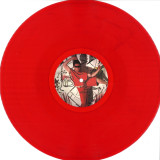
Philipp Gorbachev presents his latest 5-track EP "Nichego Ne Ponyal" on System 108. Philipp Gorbachev is amongst Moscow's most renowned dance music artists. The musician, DJ, and live performer is also known as the resident of MUTABOR, a member of ARMA17 and the System 108 community. His previous releases on Comeme, Trip, ARMA, and his own PG TUNE label contribute to a big variety of music genres: full live bands, church bell music, and techno. The new EP, which translates to 'I understood nothing' is an ode to isolation, where one's personal state of solitude simultaneously clashed with a global pandemic lockdown. The record was produced in the process of a fleeting stream of thought, and rather than relying on the use of automatization and the digital, it consists of recorded instruments. Drum machines, live drums, drum pads, keyboards, accompanied by bewildering vocals - all create an enticing audio tale that embodies the ethereal state of today's existence. Whilst being confined in the new secluded and virtual reality of the world, the artwork was devised via Facetime by photographer Nick Gavrilov, and just like the EP, it depicts the act of creation as such; Gorbachev's kitchen transformed into a temporary art studio where the interchange of imagination roamed free. The 'Nichego Ne Ponyal' EP is a result of Philipp Gorbachev's collaboration with System 108 and is the 3rd vinyl release of the creative platform, which is recognized for delivering outstanding events in Moscow's electronic music scene.
Buscar:techno machine
FILM Recordings will release the debut LP from Denial of Service.
The album follows up EP's Sensou (2015), and more recently Contour & Shape (2017) - but marks the producer's most expansive release on the label thus far by some margin. Clocking in at 15 tracks, the lengthy opus draws from the same palette found on previous work - drum machine driven, heavily mutated Electro and IDM sit alongside low slung Techno cuts and arpeggiated EBM references. As ever, the production is stunning - crisp and plosive, as much a record for the club as it is a tempered headphone experience; whilst the mood channels that same dank, claustrophobic energy found on previous missives.
As a body of work, the LP displays the distinctive touch of a production veteran. The transformative shifts in structure on opener A Fine, New Mother Now belie a kind of boldness found less often across the contemporary electronic music landscape; and the drum programming on IDM-leaning explorations Autoimmune & Supercell bear the hallmarks of a perfectionist with time on his hands and in full control of his art. Space and the placement of sonic components plays a huge role in the artist's work and the 3 Stigmata of Palmer Eldritch displays this canny knack for generating both textural, wide angle soundscapes whilst maintaining that wrought-iron edge to drums and percussive elements - even more fervent, noisy compositions like Dr Manahattan manage to keep hold of this remarkable balance. It's impressive stuff, a fine and well worked meeting point between artistic vision and engineering prowess.
An elongated discussion, no doubt - but worth hearing every word. Each twist and bend, however sharp, remains carefully placed and beautifully recorded. Dryer works Slither & Junkie Foxtrot towards the LP finish offer a less introspective, more hard hitting angle to the work, and by the time the listener arrives at dual closer the Daisy Chain - Adults - they're ready for its heady catharsis.
The debut album from Denial of Service is a trip, and the line between club space and home listening environment is decidedly blurred - an emotive exploration of true psychedelic Electronica, delivered direct from the source.
D Leria debuts on Avian.
Giuseppe Scaccia shows his range on a new six track EP, arriving late 2020.
Produced diligently across the last two years, the record showcases a range of styles. Tonally, the material is bound by a recognisable engineering palette – driven, but not to the point of corrosion, tight and focused in the low end with caustic, percussive synth patches driving much of the more dance floor material.
In the terms of the form, though – Scaccia draws for a disparate arrangement. Opener A Life On The Run clocks in at over 140bpm, with a demented lead synth line providing the action buoyed by a simplistic drum machine rhythm. Divergences offers a more immersive experience in terms of tempo – again letting the lead do the work, while shifting hats operate around the sonic periphery to break up the recording. On Il Giardino Degli Unicorni the artist utilises a single, staccato sequence, letting the sends do the bulk of the business with careful processing and live articulation helping to build the intensity. On the flip, pulsing workout Noises from The Room develops surreptitiously over its run time – fathoms deep kicks are submerged under a heated sequence and Red Flowers, an exercise in careful reduction reintroduces a little musicality to the record, before warping closer Tribalism places the listener back on the dance floor with a half-time rhythm driving the droning sound design.
A careful meeting point at which the multiple styles that underpin Scaccia’s D Leria project meet, Still Standing offers insight into how future work might manifest whilst remaining a valuable document on the current state of both left field Techno music and the artist’s own creative identity.
Constant Sound welcome a true stalwart of underground UK house and techno, the one and only 100HZ. Lee Renacre has been delivering distinctive club tracks with an ear-snagging kink since the early '90s, and he's sounding as inspired as ever on this new release. "Jive" skips and swings with urgency, but the synths soar like the loftiest Motor City anthems. "Honkey (Crazy Hats)" is a more obscure affair that uses subtle inflections of rhythm and texture to create an immersive trip anchored to a steady kick. "Ochos" is a dreamier cut that places the emphasis on melody and atmospherics rather than straight up beats, creating a beautiful slice of machine soul in the process.
The eighteenth release on Second Circle is the label's second exploration into an artists archival works; this time presenting a selection of four early tracks by theatre, film and music producer Can Oral under his Khan alias.
Can moved to Williamsburg, New York in the early 90's along with good friend and fellow musician Jimi Tenor. Born in Germany of Turkish-Finnish parents, he would frantically start buying equipment (such as a TR808, TB303 and Korg Polysix) from junk shops across New York, becoming greatly prolific in his recordings which he would work on throughout the night. During the daytime though, Can set up and ran the now defunct Temple Records, a seminal Soho record store, and later label, largely importing Techno and Acid from Europe. Though a small store, Temple Records would count musicians and DJs such as Björk, Tricky, Dee-Lite, Josh Wink and Joey Beltram among its regular customers. Also he would host many such guests to play live or DJ at his weekly Techno party “Killer” which was held at Save The Robots in New York’s East Village.
Can Oral's nightly studio sessions eventually led to an almost inexhaustible discography with over a dozen monikers each representing a different aspect of his productions. SC018 focuses then on his early electronic works as Khan.
Named after the color painted studio where the EP was produced between 1993-1996, 'Blue Box Sessions' is a collection of four analogue machine driven cuts, covering different tempos and ethos within electronic music. Initially live recorded to an old DAT recorder, and without any overdubs, SC018 is a lost and found artefact to Khan's unquestioned raw talent and timeless relevance.
Michel Baumann is one of Germany's most respected artists. You probably know him as Soulphiction, his iconic alias Jackmate and head chief of Philpot - a label pushing the sounds of dance music in every possible way since the beginning of 2000.
Now making his debut on the very first release from 18437 Records, after teasing everyone with his recent 12" for Matthew Herbert's Accidental label, Jackmate is back in full swing.
Opening track Modulate Nightdrive is a mind expanding, deep techno affair. Remember when techno had funk and made you sweat? This is it.
Next up is CubanLinx, a percussive machine voodoo exercise. Last but not least, Test Drive shows why Jackmate is still relevant as a producer and worthy of your record collection.
The recipe is simple, a drum machine, a few thick bass notes and whack on some chords - voila - timeless dance music delivered by Michel Baumann.
Label info:
18437 Records is a brand new label by focused on the outer fringes of house and techno.
The electronic musician and Poker Flat founder's contemplative new studio album takes in minimal house music, moody techno and effervescent breaks across 11 unique tracks. His previous LP Paradise Sold alongside Langenberg was released in 2018 to critical acclaim, and described as "elegantly euphoric" by Mixmag. Never Ending Winding Roads is an entirely solo release however, with much of it produced during the months of enforced isolation due to the coronavirus pandemic. Many of the track titles reflect Steve's headspace during this time, with themes of solitude, contemplation and reflection brought to the fore perhaps more than with any of his previous work. Steve's formative musical years were spent during Germany's techno and acid-house heyday, with his love for a perfect groove as apparent now as it was back then. His DJ skills and a keen, innovative ear led him not down the typical path of the early nineties trance and harder dance scene, but instead towards a fresher, hybrid sound-merging stripped deep house, tweaked out acid and more minimal forms of techno and electronic music: a strand of music he fiercely champions to this day.
"My mindset when making Never Ending Winding Roads was completely different to any other project I have embarked on. I didn't have to tour, and instead could focus 100% on writing music without having the dancefloor as a constant influence. This allowed me creative freedom to explore a range of styles and emotions, and as a result, it is the album I feel most satisfied with to date." says Steve Bug.
With 11 brand new tracks, Never Ending Winding Roads is a meticulously produced and deeply engaging electronic album; one that explores various shades of house, techno and broken beat with Steve's celebrated attention to detail and consummate originality. Album opener Lucid Loops perfectly sets the tone, immediately ensnaring you with a hypnotic, undulating synth line and a faintly menacing undertone thanks to hushed, discordant strings and unnerving vocal stabs. This atmosphere of quiet paranoia permeates many of the tracks on Never Ending Winding Roads, most explicitly in the sinewy groove and sketchy, panic-inducing synth line of Locked Away In My Head.
This album more than perhaps any other in his career sees Steve experimenting with broken-beats, to incredible effect. Tracks like A Conscious Machine and Electro Harmonix are melodic, emotionally-rich cuts: burst of radiant optimism that juxtapose beautifully with the album's darker moments. Elsewhere tracks like Yellow Snake find Steve exploring deep, dubby territory, while album closer Upon Mountains is a cosmic, arpeggiated masterpiece: an 8bit computer game soundtrack reimagined as a poignant electro ballad.
Automatic Tasty (Jonny Dillon) has been away from Central Processing Unit for five years now, releasing on labels such as AC Records and Furthur Electronix in the intervening time. However, new EP The Future Is Not What It Used To Be shows that the chemistry between label and artist is still in good nick by offering up four tracks of contemplative electro-boogie.
While the preceding CPU/Automatic Tasty drop may be 2015's The Life Parochial, The Future Is Not What It Used To Be actually has more in common with Sentimentalist's Choice, Automatic Tasty's CPU debut which came out back in 2013. This is not due to a huge stylistic shift - all three records bring together classic electro, techno and boogie sounds to create charming and melodious tracks - but more to do with the tone of the record. You see, while The Life Parochial was a squelchy machine-funk delight, The Future Is Not What It Used To Be is a more pensive affair befitting its title.
This isn't to say that The Future Is Not What It Used To Be is a muted EP. Far from it - this record contains some of the most gorgeous electro joints you'll hear all year. The vibe is established on its eponymous opening jam, a vocoder-laced production pitched somewhere between the more ruminative tunes on Posthuman's 2018 LP Mutant City Acid and contemporary boogie acts such as Funkineven/Steven Julien and Galaxians. The track is made by the beautiful, bittersweet timbre of its synths, and these are maintained on following number 'Romance In The Old Country'. Given the offbeat skip in its groove and sunset-glow ruefulness of the keys, 'Romance In The Old Country' is a cut which invokes the instrumentals of Jessy Lanza LPs - and even (whisper it) a little Sade.
The Future Is Not What It Used To Be is an EP of evocative track titles, but there may be none more accurate than first B-side 'Rising Sun'. Here, Automatic Tasty tweaks the wistfulness of the A-side cuts into something more uplifting. While a thoughtful quality remains in 'Rising Sun's soft synths and skittering 808s, the track is driven by the exuberant energy of the 'Woo! Yeah!' drum break to become the sort of tune you drop as dawn begins to break over the rave. 'Rising Sun's afterglow falls over the closing track 'Adventures In The World Of Becoming', a steady IDM-electro pulse that channels the spirit of Aphex Twin's seminal Selected Ambient Works 85-92.
'The future is not what it used to be - no past, no memory'. With this robo-voiced intonation, Automatic Tasty returns to Sheffield's Central Processing Unit with four moving, poignant machine-funk tracks.
Slick jungle, low-slung broken beat and even a deep house banger, 'Interlocked' assembles 8 tracks of some of the purest old-school vibes by a veteran of the scene under a brand new alias for a frustrated and precarious (post)-lockdown summer. Tapping the drama and energy of the largely pre-generic party days of '91-94 - a halcyon time of transition in which Drumskull himself, as a life-long skater otherwise stoked on the the raw energy of 80s skate video soundtracks - to Black Flag, JFA, Minor Threat, Stupids et al, to Primus, Gang Starr and Meat Beat Manifesto, made the passage into syncopated machine funk, to sub bass, time-stretched breaks and automated beat production.
Physically drumming in a couple of skate punk bands in the early 90s, exposure to hardcore and early jungle tapes in '93 by DJ Dimension and DJ Rob (Leeds Orbit, UK), amongst countless others, inspired an archetypal move to sell his drum kit so as to land a set of Technics 1210s. Spinning techno and jungle on the local free party scene and clubs as part of a DJ collective from '94-96, crafting early tunes on Amiga ProTracker software, and shortly after running club nights in mid-90s London with Mo' Wax and Ninja Tune artists, Drumskull expresses the eclecticism of the era across 8 big tracks of previously unreleased material. Evoking all the energy and excitement of being involved in those early years of dance culture, 'Interlocked' powerfully yet playfully connects then to now, reveling in a sense of timelessness, mutation and hybridity.
Album photography by Amir Zaki from his book with legendary Skateboarder Tony Hawk and author Peter Zellner 'California Concrete: A Landscape of Skateparks (2019). Graffiti lettering by original UK stylemaster and beatmaker REQ TDK.
DOWNFALL is the first album under the name SAITO created by Lena Saito, aka Galcid, and produced by accomplished analog synthesizer guru, Hisashi Saito, aka Lena’s husband. Having descended from a long line of Japanese sword-smiths, the industrial sound of smashing steel is embedded in Lena’s DNA and reflected in her music, however there are also refined, hypnotic tones showing a side with more finesse. The music itself is not scored and is predominantly improvised. Words and vocals are ad libbed as well. Sometimes the machines respond as if through telekinesis, altogether emitting a sound which can be categorized somewhere in the range between modern experimental dance music and something possibly making more sense to enlightened minds a thousand years in the future.
There is a new addition to the forge of talents of Mille Plateaux, a Japanese musician by the name of Saito whose album has been released on the label under the title of Downfall. After a whole series of releases under the signature tag clicks & cuts, there comes out a work, much more suited for a dance hall, that is different in terms of the genre from everything that has been published so far.
Like a bucket of ice-cold water poured over the head, erratic agressive hardcore rhythms pour all over the audience in the first track, interrupted only by grinding noises and minimalistic technogenic clicks.
Downfall won't fail to infect even the most experienced music connaisseur with its out-of-control energy, while offering a wide range of techniques: at times, robotic voices, one second long fragments of looped melodies and many other audio gimmicks.
Lena Saito (that is the author's name) is not afraid of conducting experiments in her chemical laboratory, freely mixing sound reagents without taking any precautions. It feels like, this new chemical substance, that she has been working on so thoroughly, contains quite a long list of ingredients, although its main component is the various rhythm breaks.
The synthesizer part of Red Hammer sounds in the best traditions of the acid style, and the rhythm section is akin to African tribal dances of the future. Downfall is absolutely unrelenting in its concept.
The melody of the composition Nucleosome is a little bit like the melancholic IDM of the 00s, finding itself secondary to the dominating, yet again convoluted rhythmical web meticulously woven by Saito.
This album can be definitely named as a big contender aspiring to start a new golden era of Mille Plateaux, and Saito as the hidden treasure of the label that can challenge even the veterans for the right to be the headliner.
Running the anything goes travelling warehouse rave "Fusion mes Couilles"
Emma DJ and Ishaq have created a unique situation with their party series in Paris. The two have been able to do what not many have, which is create a party environment strictly on their own terms, with no outside influence, no pandering to agents or the trends of the day and no outside money rearing its head trying to influence. This endeavor is no small feat considering the oversaturated and bland nitelife climate over the last years in the city. The result of their hard work, has been a large scale dedicated fanbase that trust them, hands down.
Over these years both Emma DJ and Ishaq had been working independently on their own productions as well, with Emma DJ recently releasing a slew of tapes in a hyperactive, machine gun manner, while Ishaq makes his first appearance on wax here.
On the "Fusion" split lp we get four tracks from Emma DJ on the a-side and four tracks from Ishaq on the b-side...both artists bring their unique takes on modern dance music on each side of the record from gnarled acid, to tweaked IDM, to broken techno, or ADD chopped guitar loop beats, this is a truly unique release documenting the sound of the top crew in the Paris underground.
Artwork licensed from NYC street photographer Richard Sandler
You have reached the Infolines. Tonight, we send you on a journey packin’ east to play in the magnificent halls where thespians and rock & roll once played. ‘The Theatre’ features a compilation of cuts that inspire those who listen to sweat in the soon to be humid weather of Detroit.
Bendersnatch is back again, this time with their funky groove ‘Vice Versa’, tooled as a call to the dance floor with a kick that cuts, and bleeps reminiscent of the second wave of techno. Remote Viewing Party brings us a break beat rhythm joined by instrumentalists Ezuch & Bcota with ‘Outpost’. The duo brings shows us their depth creating an atmosphere that will bring you chills, and tears that you will probably think is sweat running down your face. Newcomer Dev-Lish is joined by Maxlow with their head banger ‘Faith In The Machine, in a collaboration inspired by the Detroit birthed genre ‘sludge’. Evil grinding tones with huge bass and dark vocals will make you want to breath. Last, but not certainly least is Francois Dillinger. This artist has been churning out his art and making waves in the electro and techno communities. He brings to the table ‘Lost Loops’ with nothing short of huge bass, large spatial tones designed to hit all frequency ranges leaving room for the crowd to breath while being taken on a journey.
As always, keep an eye on this space and be sure to call in for the waypoint to the party.
Timeless periods of industrial rhythm: Diarmaid O Meara and Kucera collaborate to release ‘Shadowmen’ vinyl on Gobsmacked Records
Nightclubs around Europe are shut. Even in Berlin, the clubbing capital of the world, nightlife has been reduced to a simmer. “But that doesn’t mean we can’t have a good time and connect via timeless periods of electrifying and industrial rhythms”, said Irish producer and DJ Diarmaid O Meara. Together with long-time Gobsmacked techno stalwart Kucera, the two have dropped their latest vinyl ‘Shadowmen’.
The collaboration has derived from long sessions in the Gobsmacked cavern studios in Berlin. The result: A 12” that is laid out in the style of the perfect rave – with a breakbeat electronica entry that promotes procrastination, freakish, and intensely introverted thoughts created through pulsating rhythms and ghostly frequencies, industrial rave sounds for those moments of release.
Partying is a huge part of Berlin’s identity
By listening to the vinyl featuring a dark rhythm, it becomes obvious that the duo has been heavily influenced by underground techno nights in Berlin, and also regularly sharing the stage together at international events. With the pandemic-mandated closure of clubs stretching through the summer, however, playing gigs and festivals is no longer an option. Hence, illegal parties have sprung up to fill the gap and infuriated some public health officials and politicians, also in Berlin.
“Partying is still a huge part of the city’s identity”, continued Diarmaid O Meara who has been living in Berlin for over a decade and also organising parties all over the city. “Raves are a much-needed way to blow off steam after a period of isolation but we have to consider a more proactive approach, for instance district authorities making public spaces available to party organisers under conditions that ensure hygiene measures are maintained.”
Although there has been no shortage of digital music events either since the pandemic began, clubbing is more than just watching a DJ set. “Rather it’s about the unique space that’s created by artists and the crowd that are pulled together by music”, said Kucera who has been destroying dance floors across Europe with his live sets since 2004. “In times when people are still feeling more isolated than ever, our latest vinyl with the accompanying music video aims to bring a sense of connectedness and community during the lockdown.” The video imagery has been recorded live using Kuceras machine pattern triggering whilst performing the tracks live.
Unwavering dedication to the culture of counter-culture
The name ‘Shadowmen’ reflects the work both artists have contributed constantly and consistently to the scene over the past two decades with unwavering dedication to the culture of counter-culture. The artwork, in classic Gobsmacked style, comes with a tip of the cap to the global elite who have been successfully driving humanity off a cliff. “We’ve thrown a little apparent illuminati symbol in there for those who’ve been confined too long at home and on YouTube for the past 6 months”, said Diarmaid O Meara.
Both artists are working on a multitude of new tracks and events for the post-Covid era. Of particular interest is Kuceras live visual show for Gobsmacked, with visuals triggered from his machine live-set patterns. This is something he has been wanting to experiment with for a long time now and it started to take shape in the form of visual hallucinations of industrial areas and trains he had been filming while traveling across Europe before the world stopped functioning properly due to Covid-19. Diarmaid O Meara has quite a few tricks up his sleeve, including a new politically inspired alias, where both artists will take centre stage in some wacky antics.
The multi-media project Kraftwerk was started in Düsseldorf, Germany 1970 by Ralf Hütter and Florian Schneider. They set up their electronic Kling Klang Studio where they conceived and produced all Kraftwerk albums.
Kraftwerk created the soundtrack for the digital age of the 21st century. AUTOBAHN 1974, RADIO-ACTIVITY 1975, TRANS EUROPE EXPRESS 1977, THE MAN-MACHINE 1978, COMPUTER WORLD 1981, TECHNO POP 1986, THE MIX 1991, TOUR DE FRANCE 2003. Their compositions, using innovative techniques, electronic sounds and synthetic voices combined with computerised rhythms, had a major musical influence on Electro, Hip Hop, Techno and Synth-Pop.
The multi-media project Kraftwerk was started in Düsseldorf, Germany 1970 by Ralf Hütter and Florian Schneider. They set up their electronic Kling Klang Studio where they conceived and produced all Kraftwerk albums.
Kraftwerk created the soundtrack for the digital age of the 21st century. AUTOBAHN 1974, RADIO-ACTIVITY 1975, TRANS EUROPE EXPRESS 1977, THE MAN-MACHINE 1978, COMPUTER WORLD 1981, TECHNO POP 1986, THE MIX 1991, TOUR DE FRANCE 2003. Their compositions, using innovative techniques, electronic sounds and synthetic voices combined with computerised rhythms, had a major musical influence on Electro, Hip Hop, Techno and Synth-Pop.
The multi-media project Kraftwerk was started in Düsseldorf, Germany 1970 by Ralf Hütter and Florian Schneider. They set up their electronic Kling Klang Studio where they conceived and produced all Kraftwerk albums.
Kraftwerk created the soundtrack for the digital age of the 21st century. AUTOBAHN 1974, RADIO-ACTIVITY 1975, TRANS EUROPE EXPRESS 1977, THE MAN-MACHINE 1978, COMPUTER WORLD 1981, TECHNO POP 1986, THE MIX 1991, TOUR DE FRANCE 2003. Their compositions, using innovative techniques, electronic sounds and synthetic voices combined with computerised rhythms, had a major musical influence on Electro, Hip Hop, Techno and Synth-Pop.
The multi-media project Kraftwerk was started in Düsseldorf, Germany 1970 by Ralf Hütter and Florian Schneider. They set up their electronic Kling Klang Studio where they conceived and produced all Kraftwerk albums.
Kraftwerk created the soundtrack for the digital age of the 21st century. AUTOBAHN 1974, RADIO-ACTIVITY 1975, TRANS EUROPE EXPRESS 1977, THE MAN-MACHINE 1978, COMPUTER WORLD 1981, TECHNO POP 1986, THE MIX 1991, TOUR DE FRANCE 2003. Their compositions, using innovative techniques, electronic sounds and synthetic voices combined with computerised rhythms, had a major musical influence on Electro, Hip Hop, Techno and Synth-Pop.
Repress
René Pawlowitz presents himself in many different forms; whether it’s as Head High, EQD, Wax, WK7, The Traveller or more recently as Hoover - he consistently, and without any fuss or hype - produces some of the most effective, quality techno you can find on the planet. The Shed alias is usually reserved for his best work.
With this in mind, it really is a special event to announce this amazing new EP from Shed on Tectonic, showcasing 3 distinctive and highly effective techno cuts.
‘Try’ takes a broken-beat techno rhythm for it’s spine - reminiscent a little of the 2008/9 dubstep/techno crossover period. Tension is set with dissonant elements pulsing around swooping subs until we are saved by the heroic pads that ease in, building ever upwards to a lush finale. Close your eyes and be transported back to the rave.
‘Box’ is a darker, more percussive affair - claustrophobic and industrial. 130bpm 4/4 distorted kicks set the stage as frantic drum machine hats and claps crash about heavily reverb’ed ghostly samples.
Lastly we come to ‘Sweep’, a hypnotic bleepy roller with a bass heavy presence. As the riff loops up and over, drums build and a dissonant synth part creeps in. The not-quite 4/4 kick drives you ever forward with a gentle stumble as rattling hi hats flair about over head. Great finish to a great EP.
Repress!
Summer's in the air, and with impeccable timing, Bawrut returns with his fourth EP for Ransom Note Records! From ‘Ciquita’ to ‘Rumba’ to ‘Three Sounds’, the Madrid-based producer has been providing DJs with off-kilter dance floor ammunition for years now, amassing a dedicated following in the process. Out 13th September on 12” and digital, the Pronto Arpeggio EP is arguably his biggest and best collection to date. It’s certainly his silliest, kicking things off with a frankly absurd title track. Clocking in at almost 11 minutes, ‘Pronto Arpeggio’ is a prog techno labyrinth of fakeouts, tempo switches, thwacking kickdrums, and huge synths like if Giorgio Moroder did the music for Tomorrow’s World . So yeah, not your average mid-set toilet break tool (although if you want to use it for that, we won’t judge you). ‘Shooreee’ is classic Bawrut with a psychedelic twist, like spiking your own Negroni with mescaline. This sweaty, slow-burn acid weapon bides its time before erupting into a potent payoff. ‘Atchu’ carves its way through laser bleeps and dub FX, built around an unforgettable vocal sample that’ll be lodged in your skull for months whether you like it or not.
When it came to the remixes, we thought it was only right to enlist some of Bawrut’s biggest supporters. KiNK chisels ‘Pronto Arpeggio’ into a vlean slab of high-velocity machine funk, while Ruf Dug teases out the gentler side of ‘Shooreee’, resulting in a melodic track that feels tailor- made made for Mediterranean sunsets.
Bawrut absolutely ruled the festivals in 2018 with ‘More Cowbell’ and we’re expecting more of the same this year as he continues to go from strength to strength. Forza!
Techno boldness from the depths of Upstate New York. Mysterious L’estasi Dell’oro returns with eight mind-boggling machine songs. Twisted mechanical workouts, enchanted while driving hard like awakened nature recapturing unattended industrial structures. Circular melodies cut through the rectangular metallic clutter. This is the stuff to bring us back together. Following previous releases on Macro, Field, Flaneur Audio, Fifth Wall and Voodoo Down, Christopher Ernst leaves his Brooklyn phase behind and starts afresh with his first long-form release in five years.


