2024 Reissue
Sam KDC's latest offering for Auxiliary takes the listener on a deep and spiritual journey. "Of Myth & Mercury" consists of four intricate pieces that tell a ritualistic tale drenched in a mystical atmosphere. All four tracks flow are Grey Area in design, and set about proving what can be done with the template. Atmospheric pressure from one of electronic musics unsung heroes.
quête:template
Ruby Wine Vinyl. Manchester UK's Space Afrika make music of what they term "overlapping moments" - oblique mosaics of dialogue, rhythm, texture, and shadow, half-heard through a bus window on a rainy night. Honest Labour, the group's first full-length since 2020's landmark hybtwibt? (have you been through what i've been through?) mixtape, expands the project's palette with classical strings, shimmering guitar, and visionary vocal cameos, leaning further into their enigmatic fusion of ambient unrest and cosmic downtempo. It's a sound both fogged and fragmented, at the axis of song craft and sound design, born from and for the yearning solitudes of life under lockdown.The album title is tiered, alluding to a legendary patriarch from co-founder Joshua Inyang's Nigerian family tree (who was lovingly called "Honest Labour" for his loyalty and resilience) as well as the nature of self-designated work, such as Space Afrika's music - a "labor of love" in its truest sense. With fellow co-founder Joshua Reid recently relocated to Berlin, the pair began sharing files last fall, piecing together poetic vignettes of looping haze and found sound, inspired by the notion of "records that leave an impression, and help the listener deal with their life." As the isolation of Covid compounded with the worsening winter, the songs skewed increasingly introspective and emotive, reflecting a mood of dissipating futures and the infinite nocturnal unknown.The artists cite two core motivations for Honest Labour: to transcend the sum of their influences, and "to show what we're capable of." Both ambitions are entirely realized. The collection's 19 tracks flow with a synergy and sophistication as rare as they are radical, untethered to the dusty dub-techno templates of Space Afrika's early years. These are interstitial anthems, expressionistic and open-ended, delirious but deliberate, attuned to the drift and dreamstate of the present moment: "Ultimately this is an homage to U.K. energy, and an album about love and loss."
This LP is a compilation of songs from five different digital-only demo collections I released on Bandcamp between 2021 and 2023. I relied on the ears and judgment of my old friend Dom at Feral Child to curate this comp, allowing him to choose his favorites from over 60 songs. While I might have chosen an entirely different batch of tunes, I was happy to defer to Dom, as I’ve never had much perspective when it comes to assessing my own material. All of the songs on this album were recorded at home, mostly on the same day they were written. Most of them are first takes, intended to provide a template for a theoretical band to follow if and when the songs were to be re-recorded “properly” at a later date. A few have since been re-recorded for studio records, and a few others remain in contention for future studio records.
Since first splashing on to the Southern California circuit in the mid-aughts, Geneva Jacuzzi (née Garvin) quickly cemented herself as the queen of the Los Angeles underground. Her immersive and unhinged multimedia performances are the stuff of legend, a psychotropic gallery of masks, costumes, confrontation, and massive art installations. Jacuzzi’s recordings are equally revered, catchy hooks and cryptic moods dusted in 4-track grit. The arrival of her third official full-length, and Dais Records debut, is cause for such celebration. Triple Fire vividly expands and crystallizes Jacuzzi’s signature fusion of midnight melody and mutant aerobics across a 12-track hit parade of wildcard synth-pop and sly post-apocalyptic camp. Her enthusiasm for the album is as bold as her body of work: “Halfway through, we started calling this the record of the prophecy, the record that’s going to save mankind.”
Opener “Laps of Luxury” sets the template – a strobe-lit dreamer’s delight of swaggering synth bass, Haçienda drum machinery, and sultry vocal spellcasting (“Tragic mysteries I’ve known for centuries / I burned all memories and turned to fantasy”). The collection burns through shades of sardonic strut (“Art Is Dangerous,” “Nu2U,” “Keep It Secret”), coldwave kiss off (“Speed Of Light,” co-produced by Andrew Clinco of Drab Majesty), retro-futurist body music (“Dry,” “Scene Ballerina,” “Bow Tie Eater”), and cheeky glitterball pop (“Take It Or Leave It,” “Heart Full Of Poison” co-produced by Roderick Edens and Andrew Briggs). She likens the eclectic spectrum of moods to the continuum of human emotions: “Funny, sexy, sad, scary, witty, hopeful, menacing. Eventually it deconstructs, turns into a party, and then ends sweet and soft.”
Taken as a whole, Triple Fire comes as close as any document yet to capturing Jacuzzi’s kaleidoscopic alchemy of pop sugar and chaos energy, flickering between icy and ironic, chic and surreal, hungry and heartsick. Hers is a muse as rare as it is regenerative, forever reborn at the precipice of the next chorus: “Someone said that Alcatraz had fallen into the sea / Almost sounded like an angel calling me in a dream / I felt an electric shock when I picked up the microphone.”
- July 17, 1955, Newport Jazz Festival
- A1: Spoken Introductions By Duke Ellington And Gerry Mulligan
- A2: Hackensack
- A3: ‘Round Midnight
- July 17, 1955, Newport Jazz Festival
- B1: Now’s The Time
- July 3, 1958, Newport Jazz Festival
- B2: Spoken Introduction By Willis Connover
- B3: Ah-Leu-Cha
- July 3, 1958, Newport Jazz Festival
- C1: Straight, No Chaser
- C2: Fran-Dance
- July 3, 1958, Newport Jazz Festival
- D1: Two Bass Hit
- D2: Bye Bye Blackbird
- D3: The Theme
- July 4, 1966, Newport Jazz Festival
- E1: Gingerbread Boy
- E2: All Blues
- July 4, 1966, Newport Jazz Festival
- F1: Stella By Starlight
- F2: R.j
- F3: Seven Steps To Heaven
- F4: The Theme / Closing Announcement By Leonard Feather
- G2: Gingerbread Boy
- G3: Footprints
- July 2, 1967, Newport Jazz Festival
- H1: ‘Round Midnight
- H2: So What
- H3: The Theme / Closing Announcement By Leonard Feather
- July 5, 1969, Newport Jazz Festival
- I1: Miles Runs The Voodoo Down
- I2: Sanctuary
- I3: It’s About That Time / The Theme
- November 1, 1973, Newport Jazz Festival
- J1: Spoken Introduction By Ronnie Scott / Band Warming Up
- J2: Turnaroundphrase
- J3: Tune In 5
- November 1, 1973, Newport Jazz Festival
- K1: Ife
- K2: Untitled Original
- November 1, 1973, Newport Jazz Festival
- L1: Tune In 5 / Closing Announcement By Ronnie Scott July 1, 1975, Newport Jazz Festival
- L2: Mtume
- October 22, 1971, Newport Jazz Festival In Europe
- M1: Directions
- M2: What I Say
- October 22, 1971, Newport Jazz Festival In Europe
- N1: Sanctuary
- N2: It’s About That Time
- July 2, 1967, Newport Jazz Festival
- October 22, 1971, Newport Jazz Festival In Europe
- O1: Bitches Brew
- October 22, 1971, Newport Jazz Festival In Europe
- P1: Funky Tonk
- P2: Sanctuary
- G1: Spoken Introduction By Del Shields
The 8-LP box set Miles At Newport 1955-1975 - The Bootleg Series Vol. 4 features of live performances by Miles’ stellar band lineups from 1955, 1958, 1966, 1967, 1969, 1971, 1973, and 1975, in New-
port, Rhode Island, New York City, Berlin, and Switzerland. From Miles’ debut performance at NJF in 1955 (a hastily arranged jam session featuring Thelonious Monk and Gerry Mulligan), to his final public performance of the ‘70s in 1975, the box set traces the ascen- dance of Miles’ music as the jazz superstar he has become known to be.
The full-length concert performances alone of Miles’ famed “Kind Of Blue” Sextet (with Cannonball Adderley, John Coltrane, Bill Evans, Paul Chambers, and Jimmy Cobb), and second great quintet in ‘66 and ‘67 (with Wayne Shorter, Herbie Hancock, Ron Carter, and Tony Williams) represent templates that reverberate in jazz and popular music to this day.
Miles At Newport 1955-1975 - The Bootleg Series Vol. 4 is available as a deluxe 8LP box set, housed in a lift-off box. The set includes print- ed innersleeves, a mini poster of Miles, and a 12-page booklet with extensive liner notes and rare photos.
Since first splashing on to the Southern California circuit in the mid-aughts, Geneva Jacuzzi (née Garvin) quickly cemented herself as the queen of the Los Angeles underground. Her immersive and unhinged multimedia performances are the stuff of legend, a psychotropic gallery of masks, costumes, confrontation, and massive art installations. Jacuzzi’s recordings are equally revered, catchy hooks and cryptic moods dusted in 4-track grit. The arrival of her third official full-length, and Dais Records debut, is cause for such celebration. Triple Fire vividly expands and crystallizes Jacuzzi’s signature fusion of midnight melody and mutant aerobics across a 12-track hit parade of wildcard synth-pop and sly post-apocalyptic camp. Her enthusiasm for the album is as bold as her body of work: “Halfway through, we started calling this the record of the prophecy, the record that’s going to save mankind.”
Opener “Laps of Luxury” sets the template – a strobe-lit dreamer’s delight of swaggering synth bass, Haçienda drum machinery, and sultry vocal spellcasting (“Tragic mysteries I’ve known for centuries / I burned all memories and turned to fantasy”). The collection burns through shades of sardonic strut (“Art Is Dangerous,” “Nu2U,” “Keep It Secret”), coldwave kiss off (“Speed Of Light,” co-produced by Andrew Clinco of Drab Majesty), retro-futurist body music (“Dry,” “Scene Ballerina,” “Bow Tie Eater”), and cheeky glitterball pop (“Take It Or Leave It,” “Heart Full Of Poison” co-produced by Roderick Edens and Andrew Briggs). She likens the eclectic spectrum of moods to the continuum of human emotions: “Funny, sexy, sad, scary, witty, hopeful, menacing. Eventually it deconstructs, turns into a party, and then ends sweet and soft.”
Taken as a whole, Triple Fire comes as close as any document yet to capturing Jacuzzi’s kaleidoscopic alchemy of pop sugar and chaos energy, flickering between icy and ironic, chic and surreal, hungry and heartsick. Hers is a muse as rare as it is regenerative, forever reborn at the precipice of the next chorus: “Someone said that Alcatraz had fallen into the sea / Almost sounded like an angel calling me in a dream / I felt an electric shock when I picked up the microphone.”
goat (JP) are renowned for two albums released in 2013 and 2015 that took Kraftwerk’s man-machine concept back to its roots with swingeing, inch-tight drums, bass and guitar patterns that needed to be heard to be believed. For their long-in-the-making new album ‘Joy In Fear’, band leader Koshiro Hino (YPY, KAKUHAN) describes the process as “90 percent pain” - and we can well believe it - few other records we can think of transmute DAW-composed rhythmic precision into such an expressive instrumental performance. It really is a feat of determination, skill and execution that seems to defy human dexterity.
Make no mistake - an academic exercise it ain’t - in the most visceral sense, goat (JP) make BODY music, for dancing, flailing, for losing yourself in completely. As usual, Hino plays guitar, backed by bassist Atsumi Tagami, while Akihiko Ando joins on saxophone, while Takafumi Okada and Rai Tateishi step in to handle percussion, with the latter moonlighting on flute. Every sound is sculpted into a fragment of cadence: guitar and bass prangs alternately echo and dance between the drums, and Ando's sax is mutated into a respiratory slobber of guttural smacks and phantom breaths.
In some respects, it's tempting to label it jazz, but the kind of jazz that Miles Davis spearheaded on the game-changing 'On The Corner', the blueprint for so much post-punk, electronic music and avant rock. goat (JP) take that raw alloy and sharpen it like a blade, mangling the template with the knotty metrics of Autechre or Ryoji Ikeda. The accuracy is galvanic; it's almost impossible to comprehend each player keeping a mental note of the mathematical time signatures, and yet they floss them out with trills and icy stutters that seem to evaporate around the thick, taiko-like thuds.
They practically get our teeth gnashing with the bruxist rictus chatter of ‘III I IIII III’ , before ‘Cold Heat’ introduces subtly harmonised, new aspects to their sound with slivers of Hassellian flute and ringing overtones of their percussion, while the winding sensuality of ‘Warped’ slips down very nicely. Their links to OG no-wavers like Glenn Branca & Wharton Tiers’ Theoretical Girls - is manifest in the 8 mins of chipping stop/start pulse and parry to ‘Modal Flower’, while a total left turn into Mark Fell-meets-Ligeti-esque messed up metronomics in ‘GMF’ ties it off with a properly beguiling flourish.
- A1: Spoken Introductions By Duke Ellington And Gerry Mulligan
- A2: Hackensack
- A3: Round Midnight
- B1: Now's The Time
- B2: Introduction By Willis Connover
- B3: Ah-Leu-Cha
- C1: Straight, No Chaser
- C2: Fran-Dance
- D1: Two Bass Hit
- D2: Bye Bye Blackbird
- D3: The Theme
- E1: Gingerbread Boy
- E2: All Blues
- F1: Stella By Starlight
- F2: R.j
- F3: Seven Steps To Heaven
- F4: The Theme / Closing Announcement
- F5: Element / Closing Announcement
- G1: Spoken Introduction By Del Shields
- G2: Gingerbread Boy
- G3: Footprints
- H1: Round Midnight
- H2: So What
- H3: The Theme / Closing Announcement
- I1: Miles Runs The Voodoo Down
- I2: Sanctuary
- I3: It's About That Time / The Theme
- J1: Band Warming Up / Voice Over Introduction
- J2: Turnaroundphrase
- J3: Tune In 5
- K1: Ife
- K2: Untitled Original
- K1: Tune In 5
- K2: Mtume
- M1: Directions
- M2: What I Say
- N1: Sanctuary
- N2: It's About That Time
- O1: Bitches Brew
- P1: Funky Tonk
- P2: Sanctuary
Miles Davis' 20-year association as an artist at impresario George Wein's renowned Newport Jazz Festival is a thriving tradition that is celebrated with the release of Miles Davis At Newport 1955-1975: The Bootleg Series Vol. 4.
The 8-LP box set, comprised of live performances by Miles' stellar band lineups in 1955, 1958, 1966, 1967, 1969, 1971, 1973, and 1975, in Newport, Rhode Island, New York City, Berlin, and Switzerland.
The 4th entry in the critically-acclaimed Miles Davis Bootleg Series, contains hours of previously unreleased material. From Miles' debut performance at NJF in 1955 (a hastily arranged jam session featuring Thelonious Monk and Gerry Mulligan, that immediately led to the trumpeter's Columbia signing), to his final public performance of the '70s in 1975, the box set traces the ascendance of Miles' music as the Jazz superstar he has become known to be.
The full-length concert performances alone of Miles' famed ""Kind Of Blue"" Sextet (with Cannonball Adderley, John Coltrane, Bill Evans, Paul Chambers, and Jimmy Cobb), and second great quintet in '66 and '67 (with Wayne Shorter, Herbie Hancock, Ron Carter, and Tony Williams) represent templates that reverberate in jazz and popular music to this day.
- A* | Blood (1:08)
- A1: Bullies Of The Block (4:55)
- A2: Everything’s Everything (3:47)
- A3: Shammy’s (4:16)
- A** | Heat Mizer (1:08)
- B1: Six Tray (4:39)
- B2: Danger (3:58)
- B3: Inner City Boundaries (4:39)
- B* | Bomb Zombies (1:06)
- C1: Cornbread (4:21)
- C2: Way Cool (4:22)
- C3: Hot Potato (4:30)
- C4: Mary (3:45)
- C5: Park Bench People (4:59)
- D1: Heavyweights (6:11)
- D* | Tolerate (1:01)
- D2: Respect Due (3:53)
- D3: Pure Thought (3:14)
2024 Repress
Innercity Griots, the second album from Freestyle Fellowship, is perhaps *the* essential West Coast left-field rap album of the early ’90s. Released in 1993 on 4th & Broadway, it’s a towering, progressive hip-hop masterpiece that expanded rap’s boundaries through lyrical elevation and production innovation. Their talent was ahead of everybody else by light years. This is pure b-boy jazz.
The original single vinyl LP is now hideously scarce, and of course the sound suffers from not being officially released as a double. This Be With re-issue fixes both problems, and for completeness also includes “Pure Thought” from the CD version of the album. This incredible display of imaginative hip-hop sounds better than ever.
Freestyle Fellowship were some of the earliest technically dazzling rappers to come out of California. Mikah 9, P.E.A.C.E., Aceyalone and Self Jupiter - along with DJ Kiilu - forged their famed lyrical dexterity in the ultra-competitive crucible of the Good Life Cafe. Founded in Leimert Park, South Central LA in December 1989, this earthy health-food store and cafe was where the city’s finest microphone fiends would gather to showcase their freestyle skills at the Thursday night open-mic.
Innercity Griots has been described as the Rosetta Stone for rap styles. The group’s dense, vibrant wordplay and enviable interplay quickly earned the attention and respect of the city’s hip-hop underground. Frenetically trading acrobatic rhymes with agility and grace, the Fellowship used their voices as instruments like true virtuosos, spraying improvised raps like a Coltrane sax solo.
With the bulk of the album’s production handled by The Earthquake Brothers, and Bambawar, Daddy-O, and Edman taking over for some of the tracks, Innercity Griots dances between organic and programmed music, largely forgoing sampling and instead built around live jazz jams. The likes of Freddie Hubbard’s “Red Clay” and Miles Davis’s “Black Comedy” were used more as templates for house band The Underground Railroad Band to spiral out from. As Pitchfork noted in their recent 9.0 review of this classic album, “Freestyle Fellowship embodied the style and spirit of jazz on a molecular level. They shared the effortless cool and tough countenance of the great bebop players from the ’50s without verging into jazz-rap parody. Their innate jazziness felt tangible and hard-earned”.
The unusual approach to the music was matched by the Fellowship’s lyrics. Eschewing the tired rap tropes of the time, this multifaceted album instead explores their ruminations on greed and homelessness, weed, sex, survival, insecurity and tribalism.
Remastered by Simon Francis for double vinyl and cut by Pete Norman, we hope this long-overdue re-issue of Innercity Griots satisfies the legions of fans that have since been bewitched by the majesty of this record. It should also introduce some new listeners to yet another overlooked classic.
*Illustration similar / Abbildung ähnlich
Ortofon cartridge alignment protractor
An alignment protractor is used to find the correct distance from stylus tip to tonearm pivot.
When aligning a cartridge for tangency using the alignment protractor, it is essential to remember that you are attempting to align the cantilever (and, hence, the stylus), not the cartridge body. There is no guarantee that the cantilever is perfectly aligned within the cartridge body, so simply aligning the cartridge body will not necessarily produce the desired result.
Furthermore, many cartridge bodies have non-parallel sides, making tangential alignment of the cartridge body with the lines of tangency on the gauge virtually impossible.
An alignment protractor is a plastic template onto which are printed the null point(s) and lines of tangency against which the cartridge should be aligned. The template is placed over the turntable's spindle (made possible via a spindle-sized hole drilled in the template) and placed against the platter.
Cartridge must be adjusted until the cantilever is parallel to the set of parallel lines. And this should be achieved for both the indicated points. When the cartridge's longitudinal axis is parallel with the horisontal lines, tracking error will be at a minimum.
Repress.
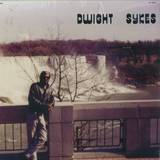
Back in print and just in time for summer relaxation. It's hard to believe this album came out over 10 years ago. Back then we thought it was too rough for consumption, were we wrong! Today, “Songs” can be heard on hundreds of playlists around the world and still attracts listeners with its unique sonic grit. It became a template for LOFI producers and has even been featured in multiple Thrasher skate videos. Its appeal continues to cross genres and remains entirely random, but unmistakably Dwight. If you missed out on this album the first time, it's your chance to get that first PPU restoration of Dwight's solo songs from the 80s. This is the restoration that took over 2 years and included; phones held up to speakers, cassette to 1/4 reel transfers, Tascam manipulations, scotch tape, and a pair of scissors.
Dwight Sykes aka Sporty Cat, was born February 27, 1956 in Nettleton, Mississippi. At the age of two Dwight and family moved to Kalamazoo, Michigan where he would remain for most of his younger years. At the age of nine Dwight started his musical career singing background vocals with a spiritual group, Airs of Harmony, Jr., now known as the Michigan Nightingales. After three years of signing, Dwight started playing guitar. He joined his first r&B band, The Kenyatahs, at age thirteen and then played for five years with the group. Following the break up of the group and the death of his mother, Dwight enlisted in the U.S. Army. During that time he played guitar and drums for the band 100% Pure Poison. They played throughout Germany for 18 months. After being honorably discharged, and back in the states, Dwight started playing in numerous local Michigan bands including Domain, and Chaos. Eager to write his own material, Dwight created the group Jahari. They toured for a couple of years in the Michigan area until another break-up. Still under the Jahari alias, Dwight wrote "Situations" which received respectable air-play on Michigan local radio stations, WKMI, WQXC, WRDR, WKZO and WKDS. Dwight now resides near Atlanta, Georgia. He continues to write and produce songs on his Tascam 464 four track console. Although he uses other avenues to provide for the upkeep of himself and son, his love of music keep the hope alive that he will one day get that big break in the music business. Dwight Sykes - Songs Volume One is a collection of material written, produced and recorded by Dwight Sykes on 4-Track Cassette, in his home studio L.U.S.T. Productions.
For the most part, J.R. omits the county, americana, and folk influences heard on All Blue though there is a shock of recognition in the always surprising power and pure tone of her voice. Rich in melody and early confidence, Julianna Riolino here draws from classic girl- group pop and contemporary indie while establishing a
characteristic song- writing template of interpreting foundational texts and iconography to portray uniquely personal experiences and emotional truths. "It's like it's who you are before you grow more" she says of J.R. now. It's an important step in the formation of an important and thrilling artist, and one of today's greatest singers. J.R. is available on Black or Yellow vinyl (indie-only).
As Token gears up for its 126th release, the time has come to invite a label favorite - Inigo Kennedy. The Englishman responsible for Token 1 readies us for three tracks of pure grain and warbling melodies packaged as 'The Calling' - a hypnotic yet stomping club record that highlights his unique production style full of character.
Taking up the entirety of the A side, 'Magnitude Seven' pulses itself through the first part of the ep. Melodic yet dissonant as many of Kennedy's best records, the track calls on a stripped down acid line to support a saturated groove and noisy synthwork. Epic in construction, 'Magnitude Seven' comes in waves of unsettling intensity emphasized by a powerful double kick sequence. The B1 takes it up a notch as the title track appropriately named 'The Calling'. A frantic four to the floor rhythm pushes along sustained notes, settling in a certain pressure. Harmonic sections breathe more life in an otherwise nail biting record that defines the Token sound accurately and Kennedy uses this arrangement to distance himself from the classic loop based template used by most producers in his field today, confirming the ongoing relevance of a longstanding career in club music. Ending with a bit of a twist for most, longtime fans will be unsurprised by the choice to wrap things up with 'Out of the Woods' - a fitting electronica closer that departs from 'The Calling' with a focus on introspection. Drifting notes and a shuffled percussion line are reminiscent of his UK roots and fit perfectly as an epilogue to his previous techno tracks. Ethereal as ever, Inigo Kennedy offers us another masterclass in out of the box production techniques in soulful electronic music.
SIMON AND GARFUNKEL’S SWAN SONG: BRIDGE OVER TROUBLED WATER FEATURES METICULOUS PRODUCTION, GORGEOUS SONGWRITING, AND HEALING SPIRIT
Sourced from the Original Master Tapes and Limited to 4,000 Numbered Copies: Mobile Fidelity’s 180s SuperVinyl 33RPM LP Plays with Staggering Detail, Clarity, and Definition
1/4" / 15 IPS analogue master to DSD 256 to analogue console to lathe
Unifying, soothing, comforting: Simon and Garfunkel's Bridge over Troubled Water quickly became the album of an era upon release in 1970, the benchmark set serving as a beacon of hope and hymn of reassurance during a time marked by polarizing changes, social unrest, uncertain politics, and the dawn of a new era. These uplifting reasons — to say nothing about the gorgeous songwriting, meticulous production, and watershed performances — attest to why it is more relevant than ever in our current climate. Music, Bridge over Troubled Water simultaneously suggests and proves, heals all wounds and lifts all boats.
The seminal effort Rolling Stone named the 51st Greatest Album of All Time reaches illustrious sonic and emotional heights on Mobile Fidelity’s 180g SuperVinyl 33RPM LP. Pressed on MoFi SuperVinyl and strictly limited to 4,000 numbered copies, this ultra-hi-fi collector's edition brings you closer to music that picks up where the duo's Bookends leaves off. You'll enjoy deep-black backgrounds and pointillist details. Seemingly every note, breath, and movement is reproduced with exquisite accuracy, clarity, and balance. Each rotation benefits from SuperVinyl’s ultra-low noise floor and superb groove definition.
The best-selling record in the U.S. for several years running and winner of six Grammy Awards — including nods for Record of the Year, Album of the Year, Song of the Year, and Best Engineered Recording — Bridge over Troubled Water endures as a staple of accessible sophistication, angelic elegance, effortless singing, unhinged ambition, and therapeutic spirit. While it would turn out to be the final studio set for a duo surrounded by creative and personal disagreement, Simon and Garfunkel's collaborative ethos and soaring harmonies — combined with reflective narratives centred on the American experience, friendship, romance, and farewells — combine to turn the 11-track work into a paean to resolution, reconciliation, calm, and balance.
Home to the legendary title track graced by Garfunkel's pacifying solo lead vocals as well as the equally famous folk ballad "The Boxer," Peruvian-based "El Condor Pasa," upbeat "Cecilia," and rock ’n’ rolling "Baby Driver,” Bridge over Troubled Water remains as renowned for its musical diversity as its lyrical poignancy. Moving beyond the templates they'd perfected on four prior albums, Simon and Garfunkel embrace a then-unimaginable swath of styles. Rock, pop, gospel, country, R&B, South American, and jazz strains course throughout the songs, each sparked with bold experiments yet grounded in a well-orchestrated melange of melody, rhythm, and classicism that makes everything personal, familiar, and warm.
Not for nothing is Bridge over Troubled Water one of the finest-sounding albums ever made. Featuring instrumentation helmed by members of Los Angeles' fabled Wrecking Crew as well as multiple choral and string sections, songs took hundreds of hours to complete and involved pioneering recording techniques. Evoking both Phil Spector's live"Wall of Sound" approach as well as inventive effects, Bridge over Troubled Water is a triumph of texture, atmosphere, and architecture. Our audiophile edition brings the record's unique traits to the fore.
Whether the reverberation generated by Garfunkel's cassette recorder on "Cecilia," echoing drums captured in a corridor heard throughout "The Boxer," automobile noises peppering "Baby Driver," layer upon layer of voices dotting "The Only Boy Living in New York," or echo-chamber percussion on the title track, details comes through with stunning accuracy, clarity, and dimensionality. In every regard, Bridge over Troubled Water exudes genius.
A landmark recording and masterful symphony of performance, composition, and execution, Miles Davis' E.S.P. established the template jazz would follow for the following decade. The 1965 record splits the gap between accessible hard-bop and the cutting-edge approach Davis increasingly pursued into the 1970s. Adventurous, sophisticated, and yet altogether cohesive, E.S.P. stands out not only due to its elastic compositions but via its chemistry, interplay, and feeling attained by the instrumentalists. The first album Davis' classic second quintet made together, it's also very arguably the group's best. Never before has the effort been experienced in such transformational sound.
Pressed at RTI, this 180g 45RPM 2LP set of E.S.P. renders the music's dynamics, pitch, colors, and textures with lifelike realism and proper scale. Reference-caliber separation, wall-to-wall soundstages, and distinct images magnify the intensity and beauty of Davis and Co.'s creations. Whether it's the distinctive snap of Tony Williams' drum sticks against the snare head, air moving through Davis' trumpet, acoustic thrum of Ron Carter's bass, or upper register of Herbie Hancock's piano, the sound is better than you'd even hear in the most intimate jazz clubs. Prepare to be swayed on every level.
For many, E.S.P. looms among the decade's best albums if only because of the significance of Davis' line-up. While Hancock, Williams, and Carter are holdovers that began playing with one another on 1963's Seven Steps to Heaven, Wayne Shorter functions as the secret weapon and key addition responsible for this ensemble hitting a new peak. Indeed, the saxophonist helped pen two of the seven compositions here – notably, E.S.P. is entirely comprised originals and clocked in as one of the longest-running jazz LPs issued at the time – and, more importantly, grants Davis the confidence and leeway necessary for the eruption of enigma, steadiness, and tension.
As he did with John Coltrane year earlier, Davis hangs back and picks his moments to solo, with Shorter stepping up to supply the churn. Their bandmates respond in kind, itching to take off into new stratospheres all the while keeping their improvisations grounded and connected to the piece at hand. Guided by Davis' visions and inspired by current boundary-pushing works by the likes of Ornette Coleman, Cecil Taylor, and Coltrane, the magnificent results spark with variation, harmony, emotion, energy, and brilliant movement.
Interlocking lines drive "Little One," alternating rhythms pulse through the funky "Eighty-One," melodies soar on the balladic "Iris," the aptly titled "Mood" broods over minor-key structures, and "Agitation" – goosed by a two-minute percussive introduction by Williams – delivers on its promise. No record – and no group of musicians – have ever balanced coherent themes and exploratory playing in better fashion than Davis' quintet on E.S.P. It's the avant-garde record even jazz traditionalists love, and essential on every level.
Mammoth Penguins are a 3-piece indie powerhouse, showcasing the songwriting and vocal talents of Emma Kupa (Standard Fare) backed up by the noisiest rhythm section in indie pop. May 2024 sees the release of their fourth album Here on Fika Recordings. After 2019’s big, bold and confident There’s No Fight We Can’t Both Win, and the initial shock of the global pandemic cancelling a trip to SXSW in 2020, the band returned to the studio in the summer of 2021 to start recording. The new record leans into a raw pop-punk power-trio sound more than ever, with a deep growl in layered guitars and bursts of percussion and harmony. The songs and artwork explore themes about finding a place for yourself and familiarity with people and places. Although it turns back towards a classic three-piece sound, the band weren’t restricted by that palette, adding finishing touches of percussion, extra guitars and backing vocals in short bursts in a garden shed, and also bringing in gorgeous strings to sweeten the title track. The sound builds on the band’s first album, Hide and Seek, which was released with the much-loved and sorely missed Fortuna POP! in 2015. The follow-up LP John Doe in 2017 was an ambitious concept album, exploring the feelings of loss and anger at a man who fakes his own death only to return years later, expanding well beyond the 3-piece rock‘n’roll template, with washes of strings, synths and samples. The ‘Penguins have been smashing it at some high-profile support slots in the lead up to this album release, including at Allo Darlin’s joyous reunion at Islington Assembly Hall (Oct 2023) and Muncie Girls last ever London show (Dec 2023). They play the Leicester Indiepop all-dayer and Wales Goes Pop in March, before heading out on tour in support of the new album in May. Those big singalong choruses need your voice shouting back from the crowd with joy and defiance. Mammoth Penguins are Emma Kupa (guitar, vocals), Mark Boxall (bass, vocals) and Tom Barden (drums, vocals). Reminiscent of the pop melodies of The Beths, the indie dissonance of Land of Talk, and the guitar forward slacker rock of Weezer, Mammoth Penguins marry heart-ache indiepop with spiky guitars and Emma’s frank confessional songwriting. “wonderfully awkward indie pop with a literate flair, sounding a lot like a Weezer record or even a more feminine Wedding Present” Clash // “eminently relatable earworms” Brooklyn Vegan // “one of the finest examples of simple and true indie rock around” All Music // “her characterful voice still carrying masses of charm and the messier, grungey approach bringing a strength all of its own, aided by a clutch of cheerful hooks and riffs that contrast nicely with lyrics dealing mostly with heartbreak and misery” Drowned In Sound
Repress.
In dialogue with both past and future, Slapfunk protégé Julian Anthony touches down with a 4-track invocation of classic deep house templates.
Tripped out sensibility meets sci-fi tendency as ‘Full Moon Fever’ and ‘Open Minded’ deliver full-bodied exercises in total dance floor immersion. Fractal fuel for the vision quest, they’re sophisticated like the finest dream house while channelling the buoyant, jacking heft of timeless Chi-town material.
Wide eyed but tuff, ‘Stormy Tuesday’ rolls in with more of the groove-forward drive that typifies Anthony’s best work. It’s just the kind of immaculate gear we've come to expect from the Dutchman, and evoking golden era Dream 2 Science, ‘Virtual Reality’ ploughs the same furrow of propulsive, ‘90s-indebted house. Deep space projections radiating togetherness and warmth from the start.
Grain is the third Innode release following on from Gridshifter in 2013 and syn in 2021.
A new methodology to make the album is applied yet again from the trio of Bernhard Breuer, Steven Hess and Stefan Németh. The approach is more an anti approach where the trio let the process of creation itself steer the development of the recording, without any prior conceptual agenda.
Irregular rhythmic patterns often served as the initial springboard for each piece with Breuer creating a loop either by playing drums or with the aid of a modelling percussion synthesizer. The results often bypass existing formulaic grids. The outfit embraced these anti-precision steps building shapes around the tarnished templates.
The process of building upon the core structures laid forth alters throughout. In the case of "Splitter" you can hear an example of Bernhard´s core loops dominating a skeletal audio sphere. The title of the track "Impactopium" reflects the process of its construction being a conglomeration of individual titles meshed into a whole. The audio is a non-linear compendium of several fragments of individual elements. A conscious method of exploring a more decentralised architecture saw three disparate elements layered randomly on top of each other with some synths added as a sonic seasoning at the later stages.
Elsewhere sonic elements are restructured in unusual ways. One member's contribution is completely stripped away, quiet sounds captured with contact mics are highly amplified, the last track introduces twisted themes of the first track.
The title Grain refers to the roughness resulting from these explorations. It also takes note of the term grain as used in analogue photography or in the case of audio as a distorted signal, or "noise". All of these elements, normally eschewed, are here embraced as a thematic thread to instigate the exploratory proceedings.
This is a playbox of inventiveness, a hall of mirrors and an endless search for unusual tactics and fresh results.
Tackling the initial loop tracks from a wide variety of strategic approaches Innode has concocted a strangely cohesive work. From sparse source material to heavy overdubs of overdubs grain is a uplifting collection of works from this relentlessly curious and exploratory Austrian outfit. Humans make the work but the random embracing of unexpected processes means the gentleman of the outfit is not fully ruling what becomes of these works.
LP back in again soon, note new price. 5 stars; ‘50 Essential Albums of the 1970s.’ Eccentric & uncompromising, savage & beautiful, literate & guttural. Rolling Stone // Raunchy, pithy, and deeply redolent ... lines quiver with a raw vision rarely heard in folk or country. Pitchfork // Legendary Texan artist Terry Allen occupies a unique position straddling the frontiers of country music and visual art; he has worked with everyone from Guy Clark to David Byrne to Lucinda Williams, and his artwork resides in museums worldwide. Widely acclaimed as a masterpiece, his deeply moving (and hilarious) satirical second album, a complex memory palace to his West Texas hometown Lubbock, is often cited as the urtext of alt-country. Produced in collaboration with the artist and meticulously remastered from the original analog tapes, this is the definitive edition: the first to correct the tape speed inconsistencies evident on all prior versions; the first U.S. vinyl reissue. “Lubbock’s got a hard bark, with little or no self-pity; its music has an edge that can be smelled, like Lewter’s feed lot. No one from Lubbock ever apologized for what they were or where they lived.” – Terry Allen (2016) Three hundred forty-four miles of “blue asphaltum line” separate Ciudad Juárez, Mexico from Lubbock, Texas. Even if Allen’s music is more accurately described as art-country, Lubbock (on everything) sowed the seeds of alt-country’s emergence a decade later. It’s no accident that Lloyd Maines went on to play on classic albums like Uncle Tupelo’s Anodyne (1993) and Wilco’s A.M. (1995), and to produce Richard Buckner, nor that Sturgill Simpson and Jason Isbell play “Amarillo Highway” in concert. This is the urtext, the template for everything that followed
Heavee is a Queer Chicagoan DJ & producer with a long history in footwork. His 2022 'Audio Assault' EP on Hyperdub showcased synth-driven, melodic footwork, but ‘Unleash’ goes much further into audio world-building, with a fresh, spongy and citrus-y sound palette and rich, bright chord sequences.
It's minimal, airy, balancing light and dark, sometimes breezy and sometimes clinical. Heavee works simultaneously outside and inside the box, rebuilding footwork's framework and vibe to his own unique specification. Rhythmically, it's dance floor ready, using footwork's 160 template as a springboard for building new drum sounds to express these rhythms, and draws from R&B, rap, jazz and grime, with a sprinkling of bitter-sweet vintage Detroit techno.
‘Unleash’ takes footwork’s “eats all” approach to music and leads it in a fresh direction with a freedom of spirit. It's a strong addition to the footwork cannon and shows that experiments in dance music can be fun.