Bill Evans catapulted to the top of the jazz world in June 1961 after reeling off three straight masterpiece sessions at New York's Village Vanguard with his trio. Yet the emotional highs came to a screeching halt shortly thereafter when bassist Scott LaFaro died in a car accident. Devastated, Evans refrained from playing for nearly a year. If not for an inspirational collaboration of tremendous creative outpouring, one wonders what fate may have befallen Evans. Undercurrent, the outcome of two studio sessions with guitarist Jim Hall, is that project.
Mastered on Mobile Fidelity's world-renowned mastering system and pressed at RTI, this Silver Label LP edition bursts forth with brilliant textures, you-are-there realism, and extraordinary tonalities. No other version outside of this analogue copy brings you face-to-face with these two jazz giants' sonic communion, a kind of spiritual musical summit on which Evans' deft keyboard touches and Hall's reliably subtle phrasings seamlessly mesh and wonderfully dance, the compositions streaked with natural instrumental decay, full-frequency extensions, and poignant emotionalism that, on this LP, you can feel.
While Evans managed to sit down for a few one-off takes between LaFaro's passing and these April-May 1962 dates, he largely remained on hiatus and abstained from recording. Whether it owes to the intimate pairing, he and Hall's brotherly chemistry, or the exquisite selection of program material, the results consistently come across as the equivalent of a private meditation - such is the level of introspective depth and quietly shaded interplay throughout. For Evans, the duet clearly functions as therapy, a healing episode in which his partner patiently lays back, shadowing moves and suggesting others, neither musician interested in the spotlight but each striving for (and achieving) transcendent beauty.
In tackling standards such as Rodgers and Hart's "My Funny Valentine" and the Broadway classic "Darn That Dream," as well as the Hall original "Romain," the pair traverses complex harmonies with the astute elegance of a figure skater. At times, Evans and Hall go for broke on a hard-swinging romps, yet it's their implied melancholy and drifting, softly struck melodic refrains on waltzes and ballads that bestows Undercurrent with a nuanced romanticism and whispered atmosphere befitting the record's title.
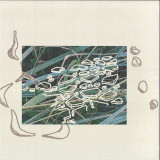
Indeed, even the album's cover - an iconic photograph by Toni Frissell - exhibits the surreal, almost-hallucinogenic properties of the fare contained within.
quête:text
The vanguard of the Polish psychedelic heavy rock scene returns
with a brand new album! Continuing to defy expectations and
challenge what it means to be a “stoner” band, Weedpecker have
crafted a new masterpiece. After several fundamental lineup
changes in the past years, fans of
Weedpecker were left wondering
what might become of the band’s
newest incarnation. “III”, their
last outing from 2018, was the
final one with longtime bandmates
Bartek Dobry, Robert Kulakowski
and Grzegorz Pawlowski (the first
of whom is remaining founding
member Piotr Dobry’s brother).
In 2019, the band gave a very brief
glimpse into their new lineup featuring
members of Dopelord, Major
Kong and Belzebong while on
a short tour. The most surprising
change was the switch from dual
guitars to a full-time keyboardist.
So much for history, where does
this take us to now with the new
album?
“IV” is a deep, vividly textured IV” is a deep, vividly textured psychedelic
rock record with tons of
layers begging to be picked apart
upon multiple spins. Beginning
with the driving opener “No Heartbeat
Collective”, the song immediately
beings new elements into
the mix. Etherial keys and twisting
guitar lines meld in harmony,
giving way to chunky riffs. Moving
forward, “IV” continues to surprise
with mellow psychedelic gems
reminiscent of early Tame Impala,
blistering Oh Sees-esque rock
bursts and of course the trademark
melodic heavy riffage.
Former co-lead guitarist Bartek
has teamed up with the band
in the position of engineer and
producer, while also lending his
arrangement skills. This combination
of new input and experimentation
has led to the most radical
Weedpecker record thus far, a
killer album which will doubtless
make a late entry for 2021’s album
of the year.
Available on 180gr. transparent
yellow LP including download card
and on CD.
repressed !
Biogen's a different kind of musician, always travelling the road less trodden. All law's broken - no chords, no build-ups and no traditional drum patterns. Instead Biogen offers listener's fragmented shredding's, constant irritations, glitches, imbalance—and enough creative ideas to supply a whole battalion of electronic musicians. His works are full of contrast. Occasionally soft and mellow - like a cloud in trousers - Biogen would call that 'sofa-trance'. Other times the music's harsh and uncompromising with uncomfortable, irrational beats and glitches - 'Weird-core' - a vast uncharted territory. Some might be tempted to connect the contrast and contradictions in his music to his long battle with manic-depressive disorder. But the disparity in his music is its strength, confounding and delighting the listener.
It's five years since Biogen passed away, but his influence is keenly felt among Icelandic electronic musicians. In the early '90s, Sigurbjörn 'Bjössi' .orgrímsson was a pioneer of the modern electronic scene as a member of the old skool hardcore band Ajax, who for a short time counted Goldie as vocalist, and cemented his reputation for pushing the limits under his Biogen pseudonym. His musical creations weren't made to serve the past or the present, but the future.
Each release and concert offered something different. Concerts were supposed to be challenging and engaging. His releases were not easy to come by and often he'd sell his music on Laugavegur - to unsuspecting tourists intrigued by his Viking-like appearance or mesmerised by his big blue eyes. He was a friend and a mentor to many; in 1995 he was a founding member of Thule Records, and in 2007 one of the leading forces in the Weird-core movement, a group of artists focusing on the unconventional. He'd encourage young artists to release their music into the cosmos - to make mistakes and learn from them - and that wouldn't be done while sitting in a basement. Many have memories of their first gig, watching a tall and comforting figure hovering above everyone else in the crowd. That was him, and it happened rarely that he wasn't there.
A fair amount of tracks on 'Halogen Continues' are previously unreleased, or self-released in very small amounts. The music moves from 'Irrelevant Information' where Biogen illuminates on 'Stabastab" a mysterious international institute he dreamt up, originally on the 'Mutilyn' LP that he handmade and sold himself. It was an anti-LP, a non-linear album of drones, crackles and weirdness. 'Bliss' is from the 1996 double CD compilation entitled "Icelandic Dance Sampler' that he helped compile. '303 Ambient' one of the recent works of the "Weird-core" era - also a regular event showcasing abstract electronica. He was the front man of the movement; regularly performing in Reykjavik with shows included lots of break-beats and 303's.
His creativity and freedom from tradition have seen Biogen gathering appreciation as an artist with the passing of time, and are hand in hand with the concept of . The artwork by Tombo is inspired by the idea of eternity and reverence after death. Nina compiled the tracks much like other album journeys on - 'I was in the car driving in the middle of nowhere in Iceland when I heard Biogen's music for the first time. Dramatic weather conditions outside probably influenced that instant emotional connection that I had with his music. Later navigating through a large archive of his recordings it took me some time until the album took form. I picked the most idiosyncratic cuts that show his creative approach most brightly. Some of them are short cuts ending obnoxiously with a lot of temper and others gorgeous atmospheric narratives - so deep and haunting that it feels like they are not familiar with a notion of time and dissolve slowly into the eternity. It's been an honour and felt exciting to have complied his work, a responsibility I feel keenly, and I hope he would like his music together in this album.'
Biogen's friend the Icelandic musician Ruxpin (Jonas Gudmundsson) who has worked to collect together Biogen's musical legacy through his DAT recordings and hard drives, and kindly granted Nina access to the files, provided much of the text for the press release. Following the album release of 'Halogen Continues', a further album of Biogen's ambient and experimental works will be released on GALAXIID later this year.
UK label Wisdom Teeth returns with its third long-form offering - Sculpturegardening: a new LP by Mexico City-based artist and producer, Tristan Arp. Incorporating elements of ambient, glitch, microhouse and downtempo, it’s an otherworldly record populated by knotty modular textures, blossoming floral melodies, tight pointillist rhythms and glossy acoustic instrumentation. The record was born from a process of “collaborating with machines”: using modular synthesisers to generate probabilistic melodies and rhythms, with the artist taking on the role of sculptor and curator. Throughout, the boundaries between the organic and digital are playfully blurred: we hear synthesisers played by guitars; emotive and distinctly human melodies generated by modular circuits; digital percussion drummed by hand; and live cello processed with a digital finish. The results sometimes recall Roman Flügel at his most colourful, or Benge’s meandering synth workouts, and even at times echo the dubbed-out cello experiments of Arthur Russell.But really sculpturegardening occupies a sonic world of its own, born from a unique web of happy accidents and incidental arrangements. The record’s bright colours and subtle rhythms make it a fitting follow-up to K-LONE’s 2020 LP Cape Cira and Facta’s 2021 LP Blush, and place it neatly alongside the work of label mates Duckett, Benoit B, Steevio and Iglew.
“With sculpturegardening, my concept was to approach music like gardening. I collaborated with machines inspired by the way a gardener collaborates with the earth. A gardener creates the conditions for the plants to come to life and develop on their own. In a similar way, I created a set of conditions and probabilities for the music to make itself. Who is making the music here? “A sculpture garden to me can be a really beautiful environment of balance between randomness and order––between nature and human interaction. Things that are either extremely organized or completely random tend to not resonate with us. On the other hand, something very interesting happens when a balance between the randomness and organization is struck. I invented this verb sculpturegardening to represent creating with the aim of this balance, and the with the aim of building a world in which each piece is a zone, or a sculpture in a garden.” The record will be twinned with a physical iteration - a sound installation at an exhibition curated by Tristan Arp titled Nada Se Pierde; Todo Se Transforma. The show opens on 9th October in Mexico City at Avant.dev. The physical sculpture garden will be a collaboration with Mexican sculptor Pablo Arellano. The sound installation will centre around a 4-channel audio system that gives voice to different sculptures and allows visitors to create a mix of the sounds depending on their position in the garden.
Balearic floatation tank vibes from another choice debutant to Good Morning Tapes, introducing Nueen with a romantically introspective suite of fluttering electronic productions gilded with glyding subbass, recommended if you're into the sferic label, Bola/0161-era Skam, Eno & Budd, Roméo Poirier or Perila.
Blessed with a play of warmth and dappled light recognisable to anyone who has visited or lives in the Mediterranean, ‘Nova Llum’ presents Nueen’s diaristic account of days lolling and contemplating life in the Balearic isles. Drawing inspiration from its sunbleached rocky mountains and brilliant blue waters unusually devoid of lobster-tanned holidayers during lockdown, Nueen lets his mind and arps drift unimpeded across the landscape in nine sublime parts with a sound bound to appeal to lovers of classic Eno & Budd or Roméo Poirier as much as strains of vapourwave, Perila’s ASMR textures and cult Grabaciones Accidentales.
With a light touch Nueen takes us there, beautifully evoking a slippage of time from afternoon to noche between the glitching butterfly net sweeps capturing the isle’s sleepy ambience in ‘Once You Have It,’ to the shimmering shorelights of ‘Viejo Roble del Camino’ that draw the album’s velvet curtains to a close. Where the backdrops feel still, ancient, natural, Nueen channels a gently vibrant human energy via his melodic and harmonic signature, with daubs of field recordings lending an intangible effervescence to the the tip-of-tongue strings in ‘Centro Gris,’ and with sparing use of percussion and subs giving it a sort of subliminal drive and saline buoyancy, especially in the skin-stroking bliss of ‘Hum.’
An origin story since time immemorial, this DIY garage
rock five piece came together in 2018 through the
traps of the Melbourne music scene. Bonding over a
shared love of tightly coiled riffs and a collective
musical ethos, Civic made a name for themselves
through the intensity of their live shows, which would
become local folklore.
On ‘Future Forecast’, Civic pay homage to the
classics, but pivot on them with avant-charged edge.
It’s raw, searing guitars, pummelling rhythms, driving
bass and vocals that lock into and synergize with their
wall of sound. All of this is balanced by the raucous
and restrained weaving of melodies and textures, and
vocal variation which broadens their sound past any
one genre label.
There’s the horn-fuelled drive of album opener
‘Radiant Eye’, the power pop-laden hook of ‘As Seen
On TV’, the emotively atmospheric and vocally
subdued ‘Sunday Best’, all culminating with closer
‘Come To Know’, before ending in a tightly wound
splay of feedback and groove.
Coloured vinyl LP in custom inner sleeve. Includes
digital download
Recorded in a pool house surrounded by an evergreen oak tree forest just outside of Madrid; musician and composer Oliver Patrice Weder’s second artist album ‘The Pool Project’ combines textural and meditative sounds that touch on global influences from jazz, ambient and modern composition. In conjunction with the album, Spitfire Audio has released ‘The Pool Project’ sound library, inviting composers and producers to reimagine, recreate or completely pull apart Oliver’s sound world to facilitate their own vision. Capturing the unique acoustics of the pool house, the library is presented in Spitfire Audio's award-winning, easy-to-use plug-in and features a range of controls and effects. While ‘OPW’ was inspired by constant movement and travelling, ‘The Pool Project’ had quite a contrary motivation. Oliver explains “After making my debut album, it was clear for me that it was only the beginning of a long journey. I enjoy the process and idea of creating something deeply personal and connected to the situation I am in, a snapshot of time so to speak, so I had to start writing a second album sooner or later. I love change and find it very inspiring to creatively adapt to my surroundings and circumstances to see what comes out at the other end. I spent the lockdown time living in a countryside cottage just outside of Madrid, surrounded by holly oak trees. The combination of this and seeing my one year old daughter grow up, as well as expecting another baby boy, created a very unique and fruitful environment to draw inspiration from.” Confirmed press/radio: Future Music - Album review Electronic Sound - Album review Scala Radio -Ambient Track of the Week Scala Radio - Session Track/Interview Reviews: "Rich in beauty and emotion… one of the finest modern composers around" - 8/10, Future Music Mag "Sounds like a warm oasis of calm" - 8.5/10, Higher Plain Music Achievements: Recorded and toured across Europe with various bands including psychedelic rock band Time for T. Composed for the BBC. Lead composer at Spitfire Audio. In 2017, Oliver co-scored the feature film ‘The Haunted’ and made a vlog style series Inside the Score with Spitfire Audio, documenting the entire process — from meeting the director, to seeing the film shown at various international film festivals. Released OPW, a sample library and album, in 2019 with SA Recordings x Spitfire Audio. Interview with MusicTech.
Since its creation in 2007, Hifiklub has led more than 150 collaborations which have allowed the Toulon trio to open its music to multiple artistic experiences revealing a constant desire for research and novelty. From unprecedented encounters to unique projects, Hifiklub has developed over the years a now substantial discography whose musical proposals range from pop to jazz through the most experimental sounds and even traditional music. One path, however, remained unexplored: contemporary music."Last Party On Earth" is organized around the association of three energies: contemporary composer Jean-Michel Bossini, singer Duke Garwood and the instrumental ensemble Hifiklub.
Surrounded by mysticism and darkness, the creation has cinematographic dimensions. It positions the listener in a depth and disposition of soul where the voice - and the poetry - of Duke Garwood is carried by Hifiklub and Jean-Michel Bossini around cold and tormented atmospheres. The album seduces by the detail of its sounds, its apparent tranquility and its intimate atmospheres thwarted by harsh flashes.
Mixed by Alain Johannes (Queens of the Stone Age, Them Crooked Vultures, Eleven), the album sees the exceptional participation of the string trio Anpapié (Alice Piérot, Fanny Paccoud and Elena Andreyev) who magnificently perform the score by Jean-Michel Bossini.
All songs performed by Hifiklub, Duke Garwood and trio Anpapié (conducted by Jean-Michel Bossini)
Pascal Abbatucci Julien – drums, percussion
Eléna Andreyev – cello
Jean-Loup Faurat – guitar
Duke Garwood - vocals, guitar
Régis Laugier – bass
Nico Morcillo – guitar
Alice Piérot – violin
Fanny Paccoud – alto
Collaboration is an essential ingredient to this open trio’s creative approach, forming a recurring theme in Hifiklub’s extensive discography and filmography. Based in Toulon, the hyperactive experimental rock band offer a diverse ever-evolving catalogue that now boasts over 150 artist collaborations since they started in 2006. Over the years they have formed as many fruitful artistic friendships allowing them to explore the endless possibilities of expression combining sound, image and text.
Some of the artists that feature in Hifiklub’s kaleidoscopic discography: Lee Ranaldo (Sonic Youth), Alain Johannes (Queens of the Stone Age, Them Crooked Vultures, Eleven), Roddy Bottum (Faith no More, Imperial Teen), Matt Cameron (Pearl Jam, Soundgarden), The Legendary Tigerman, Jad Fair (Half Japanese), Iggor Cavalera (Sepultura, MixHell), Jean-Marc Montera, R. Stevie Moore, Mike Watt (Minutemen, The Stooges), Fatso Jetson, Nels Cline (Wilco), Scanner, Mike Cooper, Eugene Chadbourne…
LP+Buch
Limited Edition Deluxe Version comes with 50 page children's book inspired by the album. Written by Francine Prose and illustrated by Omar "El Oms" Juarez. The colored vinyl is red. Fresh off of their 2020 offering Adult Themes, El Michels Affair is back with a new full-length release. Titled Yeti Season, this newest album has everything we've come to expect from EMA's patented cinematic style of instrumental soul music. Where Adult Themes inspired a soundtrack to an imaginary film, Yeti Season brings us to a different place in time_with new inspirations. Taken with Turkish-styled funk and an almost Mumbai-esque take on soul, El Michels Affair offers us a different kind of drama and imagination with Yeti Season. If you've been following along, this shouldn't be viewed as too far a departure for El Michels Affair. The first single off of Yeti Season showed their hand back in 2018. A double-sided banger, that release brought the musical textures to the fore that dominate this record. The first song, titled "Unathi," is fully realized with the beautifully haunting-yet-hopeful vocals of Piya Malik, formally of 79.5_another Big Crown artist. Singing in Hindi, Piya's ethereal voice is telling us to work and strive together toward progress. Even if you don't understand her language, you can still hear the urgency of purpose, creating a lasting vibe that sits on top of it all. Leon Michels explains that Piya had a vital influence on this record: "When Piya started singing in Hindi, she had a different voice, a different tone. I knew we had to do something together." And so Piya appears on three other songs on Yeti Season: "Zaharila," "Murkit Gem," and "Dhuaan." Each providing particular signatures to the album. "Zaharila" is a building and changing love song punctuated by blaring trumpets, driving drums, and Piya's pleading lyrics. While the more upbeat "Murkit Gem" opens with a fuzzed out, Wu-Tang-esque baseline that buoys Piya's stylings. The psychedelic guitar and Piya's changing tones and textures singing about an all-consuming love are what pushed "Dhuaan" on to the second single from Yeti Season. There is also a vocal appearance from Shannon Wise of The Shacks, yet another Big Crown artist. Her song called "Sha Na Na," lies more in the familiar EMA vein: melodic, hypnotic, soulfully visual. But between Shannon's airy singing, the jumpy baseline, moody vibes, the active drum lines, it sounds like a pensive walk home after a strangely dramatic night. So what is Yeti Season? It could be more of a feeling than an actual place or time of year. It's a heavy album_as evidenced by the signature musicianship and dramatic vocal expressions. But it's also a hopeful record, with phrasings, textures, and chord changes that hint at something better_or fuller_coming our way. You hear it in songs like "Ala Vida," with its stabby, pulsing chords laying a bedrock for EMA's bright, atmospheric horn lines. Or even in "Fazed Out," which leaves you with a feeling of determination, a striving for resolution even though the driving, march-like song structure should accompany some conquering army. This persistence has to come from the fact that Leon Michels and company finished this record during the lockdown. It was a tough and troublesome time. But look at what has come of it: Yeti Season_a record of high and heavy drama, but also one of hope and promise. It may take a year like 2020 behind us to find hope in a winter big footed creature like a Yeti, but that's where we are.
- A1: Italia: Ultimo Atto? Seq 1
- A2: Italia: Ultimo Atto? Seq 2
- A3: Italia: Ultimo Atto? Seq 3
- A4: Italia: Ultimo Atto? Seq 4
- A5: Italia: Ultimo Atto? Seq 5
- B1: Italia: Ultimo Atto? Seq 6
- B2: Italia: Ultimo Atto? Seq 7
- B3: Italia: Ultimo Atto? Seq 8
- B4: Italia: Ultimo Atto? Seq 9
- B5: Italia: Ultimo Atto? Seq 10
In 1977, in the midst of a period of political turmoil and social unrest that went down in Italian history as "years of lead", screenwriter and director Massimo Pirri made a film no one else had the courage to make: Italia: ultimo atto? (Could It Happen Here?). Here, Pirri explores the controversial (and, in the 70s, very current) topic of left-wing armed struggle. He does so through a storyline that is almost prophetic: in the film, a mysterious ultra-leftwing armed group plans and executes the killing of the Ministry of the Interior; in 1978 Christian Democrat leader and former premier Aldo Moro was kidnapped and killed by the Marxist-Leninist Red Brigades).
The violence of Pirri's storyline is fully captured by the score composed by Lallo Gori, who uses obscure synths, analog keyboards, and dry-sounding acoustic drums to create an extremely tense and frenzied soundscape of electronic textures.
The result is an album that combines dark, haunting jazz-funk with ambient atmospheres and suspenseful electronic sounds, and which ends up sounding like an instrumental proto-hip hop record where Moog synths take the lead together with drums.
At the time, this must have seemed like a low-budget, ramshackle soundtrack – essentially, a B-movie soundtrack. Indeed, the extensive use of electronic sounds was meant to compensate for the lack of acoustic instruments, such as the bass or (alas!) brass, which were replaced by keyboards and MiniMoog synths. Today, however, Lallo Gori's odd and minimalistic style of arranging makes this score sound unexpected, avant-garde, and innovative. In short, modern and contemporary.
Previously unreleased in any format, all tracks have been remastered from the original master tapes.
It’s been four successful collaborative releases and Mama told ya has grown up so much since this last couple of years.
Faithful to its praise of collaboration, this fifth release will be no exception: Anetha invited the prodigious Alex Wilcox in a 4-tracks emotional roller coaster adventure entitled « It’s okay to cry ». Because yeah, newsflash : it really is.
Best piece of advice from Mama, you should now let it go, open the floodgates, release the pressure. Let yourself be carried through BPMs, Glitched-Ghetto-Techno, satured yet textured, that our powerful duo concocted. It is time to catharsis! The artwork has been commissioned to the extraordinary Risa from Olga Goose Candle. It was an evidence to bring to the table her vintage kooky wax characters whose ultimate poetic fate is to melt. Into tears.
Photographer Anaïs Lallite and designers Diplomatie Studio took care of the design, mastering was entrusted to Sixbitdeep, as usual. Embark for a jazzy-cowboy-bepopesque-techno ballad in Funky Blender (A1). At first, you’ll feel the sharp blades twirling by your ear: Alex Wilcox chops up what’s left of our sorrow then smooths it up with some soul in it through that « groovgeous » bass saxophone. Featuring Latrice Pink, Alex Wilcox shows some damn good maestria in glitched and vocal effects with RESPOND! (A2). The urge to let it go is relentless. So irrepressible that you let the boisterous uptempo drumming race sweeps you in direction of that point of no return where you’ll have nothing else to do but finally release. And here we are, Paris, Texas (B1), where two universes collide. Both Anetha and Alex Wilcox discharge their heart into two beautiful tunnels of grief intertwining into one bomb aquatic transe track. The drop you’ve been waiting for is here and it’s okay to cry, honey. Alex Wilcox upbeats one last time our journey in a spooky, spine-chilling electronic course in BOO. (B2).
Sharing his InBach album with the world in 2020 set events into motion that ultimately led to Arandel making second edition in the critically acclaimed, borderless project that unites rare instruments, musical reimanigation.
Arandel unites once again behind the musical phrases of the Leipzig composer specialists of ancient and modern instruments (Thomas Bloch), modern synthesizers and moogs, strings experts (Gaspar Claus), and the poetic spoken word of Myra Davies and Bridget St.John.
Textextext - (add your write up)
"There is a Bach for everyone" Arandel says, "and that discovery is what led me here, to InBach". Beneath the intricate history, the godlike adoration placed upon Bach, he was a playful musician, an eclectic one even. And so, a full year after the release of the first InBach record on InFiné, there is enough material to make a second one. "There is so much about Bach I didn't even know when making the first one - but after the release, people kept coming to me, telling me about certain pieces I should listen to or rework; songs that I had never even heard of."
The second InBach grew like a garden from the seeds of the first one - an eclectic journey through melodic fantasies, intricate sound design and a certain Pop silver lining. Some tracks were born out of Arandel's band performing on stage, experimenting with the songs live and composing them anew, like "Nos Contours", a new, French-lyrics version of Bodyline with Ornette, Arandel's stage partner.
InBach vol. 2 is a logical consequence then, of someone diving into a pool of music and history so large that it is being chronicled to this day. A substantial part of the instruments used on the lofty, eclectic album were recorded at the Musée de la Musique Paris: rare instruments like the *Erard square piano, ondioline, Zach's cello, Stroh violins*. They help shape the unique sound of Arandel's InBach project: sometimes _eerily familiar, always otherworldly and elusive.
In the vein of rare instruments, the first guest musician Arandel approached for InBach was Thomas Bloch, who lends his gift to four tracks over the two albums, playing the ondes Martenot, one of the first electronic musical instruments ever invented. Thomas has worked with many major artists in his career of ike of Radiohead, Gorillaz, Marianne Faithful, Tom Waits, Daft Punk.
The record travels *between styles, ideas and moods elegantly - it is a distinctly fun and personal album. Freeing himself from the weighty shackles of expectation surrounding the classical maestro, Arandel goes for the core of every Bach piece he tackles, making them his own. on "Octobre", based on Air On G-String, from Orchestral Suite No. 3 D-dur, BWV 1068, his nephew tells a dreamlike story of an ominous gang of children, literally blossoming in the mud. "Fabula" - featuring the French singer Scalde - based on the melancholic, Christian lament Meine Seele wartet auf den Herrn, becomes a grandiose, auto-tuned pop ballad on InBach vol. 2, featuring the virtuoso cello of fellow InFiné associate *Gaspar Claus*.
The use of spoken word is another new layer to InBach, and acts a lyrical thread carrying the listener through InBach vol.2: the closing track features Bridget St.John, John Peel-associated folk legend from the UK to offer to collaborate on a poem for this second volume, she replied to him with a line from André Gide : "You can't discover new land if you aren't willing to lose sight of every shore". A lovely way to sum up the InBach experience for both artist and listener.
DJ Spinna’s imprint Wonderwax returns in 2021 with a brand new installment from Paris-based producer Hugo LX – four new cuts for the club and beyond, showcasing a wide palette of silky textures, smoky synth patches and his signature drum samples. Ranging from house beats to future boogie, detouring through the broken beat path and other high tempo areas, transcenDance is a new step in the beatsmith discography, and a very personal homage to original dance music legacies.
Founded by the pianist Robin Notte (from the former electro-jazz band WISE) Panam Panic is one of the best Jazz-Groove french band. Influenced by Musician like Yussef Dayes, Robert Glasper, Roy Hargrove or Christian Scott, Panam Panic mix up Jazz with groove, Hip hop and electronic textures. Love Of Humanity is their last album.
Robin Notte's gamble is to create a Jazz which is sufficiently sophisticated to delight the most demanding experts, yet also accessible enough to initiate neophytes.
As such, Panam Panic defends a resolutely actual Jazz, open with no borders or blinders, combining powerful organic grooves with tidy melodies, delicate harmonies and frenzied solos.
Color Vinyl
'This is the story of a man, marked by an image from his
childhood.' Thus begins, with deceptive simplicity, Chris
Marker's La Jetée (1962). The film, by far Marker's bestknown
work, synthesizes many of the elusive filmmaker's
central preoccupations - time and memory, power and resistance,
the ephemerality and resilience of love - yet it also
undermines the very idea of film. Composed almost entirely
of still photographs, La Jetée quite literally pieces together
the tale of an unnamed, forsaken protagonist, drafted into a
series of time travel experiments in post-apocalyptic Paris.
While Marker creates some of the most hauntingly beautiful
imagery in cinema, what animates La Jetée's frozen
pictures is its sparse and unsettling soundscape. Whispers,
breaths and heartbeats offer an unnerving reminder of
bodily rhythms that, inside the film and out, will inevitably
cease. Fragments of symphonic music at once capture a
love affair and underscore the tragedy awaiting it. The poetic
momentum of the narrator's voice, our only guide: 'On
the tenth day, images begin to ooze, like confessions.'
Superior Viaduct is honored to present the first-time release
of the soundtrack from La Jetée. This vinyl album
features both French and English voiceover narrations,
along with organic textures and Trevor Duncan's impressionistic
score. More than half a century has passed since
La Jetée's theatrical release - now is the time to travel back
to the 'sudden roar' of this masterpiece in a completely
different light.
Haiku Salut, the acclaimed electronica trio from the Derbyshire Dales release their fifth album, ‘The Hill, The Light, The Ghost’ on Secret Name records on August 27th. Note the LP follows in November.
A beautiful study of ghosts and memory, the gestation of the record began when Haiku Salut’s Sophie Barkerwood was given a Tascam field recorder. “I carried it around with me in case anything interesting happened. I guess I wanted to capture little pieces of the world in the same way we all take photographs,” explains Sophie. “It wasn’t immediately apparent that we would begin to use these sounds as the architecture for an album but as our writing process evolved the textures of these memories became a bank of inspiration.”
“We then began actively searching for ghosts in the world and framing the songs around their qualities,” Sophie continues. “Gathering recordings, removing them from their context and building worlds around them. Capturing and preserving personal experiences, and evoking vivid spaces. You could say the record is a miniature exploration of sound in relation to memory. Each piece is intimately connected to a place in time.”
Musically, the album marries the expansive vision of their third album, ‘There Is No Elsewhere’, which celebrated identity and community, with the darker, more contemplative feel of their fourth album, the trio’s original soundtrack for Buster Keaton’s ‘The General’. Building on the lessons learned working on ‘The General’, ‘The Hill, The Light, The Ghost’ is a cohesive suite, nine songs that combine to tell a larger story – that of experience and memory, of precious moments and echoes of past lives.
An hour of finely crafted grooves where cosmic atmospheres meet late night bangers !
While on a break due to a certain pandemic, L’Eclair threw itself in the making of a new album. Until that point recording sessions were usually really short. Former albums were made in only a few days and recorded mostly live on tape. That changed as the band decided to do four recording sessions over nine months, hence allowing the group and its sound engineer/manager Benoit Erard to spend more time and energy on the production. With the ability to step back and reflect on the work in progress, L’Eclair had the occasion to take things a step above in terms of arrangements, compositions and structures. The result is an hour-long 12 tracks record, which is more diversified and concise than previous efforts.
Titled “Confusions”, the album shows L’Eclair’s obsession with groove in all its forms. It blends club vibes with psychedelic grooves, rhythmic trances and ambient comedowns while retaining a true coherence. Produced and organic, danceable and ethereal, spontaneous and cerebral, joyful and melancholic, “Confusions” is always on the fence between very different moods without ever wandering off. The band’s never fading influences are still there: you can hear hints of CAN, Piero Umiliani or Tangerine Dream here and there. But it’s melted with different universes, such as late 80s Madchester or Aphex Twin and Boards Of Canada’s textured worlds. There is also a strong Hip Hop feel with sampled-based tracks and non-binary beats that recall the likes of great producers like Madlib, MF DOOM, J Dilla or even Timbaland. The record also has its fair share of dub and house influences, which connect with the group’s attachment to the club vibe.
- A1: Slowly Sinking In (2021 Remaster) 06 48
- A2: Awake On The Fifth Floor (2021 Remaster) 07 12
- A3: In Spite Of Everything (2021 Remaster) 08 35
- B1: Your New God (2021 Remaster) 07 08
- B2: Daydream Belief (2021 Remaster) 06 35
- B3: That Empty Feeling (2021 Remaster) 03 16
- C1: And I Got Left Behind (2021 Remaster) 07 55
- C2: Nothing, Still Nothing (2021 Remaster) 09 28
- D1: Dry Retch (2021 Remaster) 10 45
- D2: Always A Part (2021 Remaster) 08 11
For its 20th anniversary, Keplar presents an absolute milestone in the history of IDM and ambient music for the first time in its definite form: »Together Is the New Alone« by Donnacha Costello was originally released on Mille Plateaux in 2001 as the second LP under the Irish producer’s given name and firmly established him as one of the leading artists in the field of forward-thinking electronic music after he had primarily made a name for himself with house and techno releases under the Jayrod moniker. This vinyl reissue with an entirely new artwork comprises all ten tracks originally only included on the CD version in their edited and final form in which they were last presented on the digital re-release under the name »Together,« remastered by Stephan Mathieu and self-published by Costello, in 2015.
Truly prescient artists rarely opt for introspective sounds, however that was the case when Costello set out to produce »Together Is the New Alone« during nightly session in his hometown Dublin between April and July in 2001, and it also explains the album’s enduring appeal and unwavering radiance twenty years on. While many of his contemporaries dedicated themselves to explore the musical zeitgeist and notions of the future in conceptual terms, Costello made them emotionally tangible, allowing his audience to feel their underlying ambiguity rather than just reflect on it. »Together Is the New Alone« is an album that wordlessly speaks of the paradoxical sense of social alienation and isolation expressed by its title and thus seems even more topical today than it did at the time of its release.
Working with elements from techno culture, glitch aesthetics, intricate IDM rhythms and lush ambient textures, Costello never once throughout the album adheres to tried and tested formulas and conventions, but holistically moulds complex compositions out of distinct and discrete parts. The result is a record that is at once easily accessible and deeply affecting, but also infinitely rich and stunningly sophisticated in musical terms. A personal record expressing a universal sentiment—a truly timeless statement that will reverberate for decades to come.
(Kristoffer Cornils)
- A1: Fog (Devil's Island Mix)
- A2: A Day At The Beach
- A3: Meadowlark
- A4: Heteromorph
- A5: Nautilus
- A6: Java Head
- A7: Prelude
- A8: Tuxedo Moonlight
- A9: Moonlight Marimba
- A10: Red Skies At Night
- B1: Dof Downie Woot
- B2: Open Season
- B3: The Rain On Mars
- B4: Music Box
- B5: Brothers Grimm
- B6: Rear Window
- B7: Time & Tide
- B8: Rue Du Poisson Noir
- B9: Interlude
- B10: Wireless
- B11: Bossa Nova
Composer, electronic music innovator, and Pere Ubu's original synthesist Allen Ravenstine returns to Waveshaper Media with the diptych LP (comprised of 1 EP per side) Nautilus / Rue De Poisson Noir, the final two parts in Raventine’s Tyranny of Fiction series. Waveshaper Media first came into contact with Ravenstine when we interviewed him in 2012 for our modular synthesizer documentary I Dream Of Wires.
Nautilus / Rue De Poisson Noir brings together 21 of the prodigious composer’s recent lyrical and abstract compositions collectively comprised of the sounds of analogue and digital synthesizers, alongside traditional acoustic instruments. The first 10 recordings, subtitled Nautilus, are found on Side A of this LP while the second 11, Rue Du Poisson Noir, comprise Side B.
Using a singular blend of acoustic and electronic instrumentation, each track on Nautilus, weaves its own wayward travelogue amidst stray bits of audio verité and wafting musical fragrances—by turns tropical and foreboding. Rue De Poisson Noir takes cues from its fragmentary companion both in palette and approach, slithering between cinematic intrigue, off-brand jazz, avant-garde mischief, and fried electro without ever batting an eye. Together they form a beguiling collection of hyperrealist miniatures that remains strange, restless, inquisitive and — most of all — evocative throughout.
For those in the know, Allen Ravenstine has been one of the most creative synthesizer players of the past forty-plus years. Ravenstine started out in the mid-1970s experimenting in his Cleveland apartment with an analogue EML 200 synthesizer, eventually creating a piece in 1975 that became known as Terminal Drive. While he had no intention of releasing his compositions, word got out about the kind of sounds he was experimenting with, which led to an invitation to join pioneering “avant garage” group Pere Ubu for the recording of the group’s first 45, “Thirty Seconds Over Tokyo.” He soon joined Pere Ubu full-time, bringing to the band’s sound unpredictable textures, effects, bleeps, squalls, pulsating washes of sound—whatever he felt could enhance the soundscape of the band’s performances and recordings.
By the early 1990s, Ravenstine had grown sick of the road, band infighting and the music industry in general. Deciding a change was needed, he opted to forego music altogether, making his living as an airplane pilot. His music career remained in limbo until 2012, when an interview for the I Dream Of Wires documentary, alongside Robert Wheeler who had succeeded him as Pere Ubu’s synthesist, turned into a recording session for the duo, leading to a series of collaborative releases. As well as having his 1975 Terminal Drive recordings released to great acclaim in 2017, Ravenstine has been prolific in recent years, with Nautilus / Rue De Poisson Noir now marking his 4th solo full-length.