Hop on a magic carpet ride and rediscover the music from the Disney Classic Animated Film Aladdin. Enjoy Songs from Aladdin on ocean blue coloured vinyl, released to celebrate the film’s 30th anniversary. Featuring classic songs including, “A Whole New World”, “Friend Like Me” and “Prince Ali.”
Cerca:the arab
4 more quarters, 4 more contrasting expressions of global bass music culture: Barefoot sound originator and G-stone Afrofuturist Stereotyp teams-up powerfully with Malaysian rap legend Arabyrd on 'KEK', delivering a massive dose of Malay shudder trap that does not relent in either its growling bass attack or husky lyrical humour. Next up, the crisp and clean mid-90s DnB vibes of Bristolian producer K-65 ups the energy and tempo with the steadily rolling rinse-out of 'In My Mind', lightening the mood momentarily prior to the first cut on the B-side, with which we descend once more into the increasingly familiar Badman-isms of Low End Activist, who opts for a mutant strain of hardcore UKG on this outing, all scuffed swing and first light maneuvers. Finally though, it's all about the transparency of the groove, with the lush closing tune by Sentinel 793 emanating masses of UK Bruk style and charm, delivering another solid, low-slung workout from this hardworking and charismatic producer. Confined to quarters or not, get these 4 new sound pieces for the meantime, downtime, time being etc... as you like, want or need.
2022 Repress On Elephantine, Cairo-based Maurice Louca guides a 12-piece ensemble through a 38-minute masterwork that might best be described as panoramic. Elements of free improvisation, Sun Ra's cosmic jazz, gorgeous Arabic melody, trancelike African and Yemeni music and minimalism meet in his wholly unique compositional vision. Louca also makes vital contributions on guitar and piano, and inspires stirring performances from a global lineup.
One of the most gifted, prolific and adventurous figures on Egypt's thriving experimental arts scene, Louca has in recent years garnered a global reputation through two previous solo albums and an expanding, evolving lineup of genre-defying collaborations. The Wire called his 2014 sophomore solo effort, Salute the Parrot, "remarkable music-dense, driven and splashed with colour." In 2017, the self-titled debut by Lekhfa, the trio of Louca and vocalists Maryam Saleh and Tamer Abu Ghazaleh, was praised as an "edgy triumph" in The Guardian and picked by BBC Radio 3's Late Junction as one of the very best 12 albums of 2017.
For Louca, 36, Elephantine serves as both the pinnacle of his wide-ranging experience and a bold next step in his development as a composer, arranger and bandleader. The celebrated Egyptian visual artist Maha Maamoun has created the album cover art, following her contribution to Salute the Parrot. "There was a blessed thing about the process of making this record," Louca says of the sessions, held last year in Stockholm and featuring the leader on guitar and piano. "The dynamic between us musically but also as people ...What these musicians delivered was really more than I could ask for, Everyone played their hearts out on this record."
The music-from its pensive lulls through its stretches of hard-grooving hypnosis and moments of avant-jazz catharsis-testifies to that rapport. Best absorbed as a continuous performance, Elephantine's six individually named tracks nonetheless present striking self-contained landscapes. "The Leper" entrances through a deft use of repetition that Louca gleaned from cosmic jazz, African and Yemeni music and other transcendental modal traditions. (Those who've followed Louca's work might be reminded of the Dwarfs of East Agouza, his mesmeric unit with Shalabi and Sun City Girls' Alan Bishop.)
"Laika" manages to evoke the minimalists, though on the combustible terms of '60s and '70s free jazz; "One More for the Gutter," on which Louca ingeniously pits one half of his ensemble against the other, albeit in a synergistic way, mines similarly fiery terrain. "The Palm of a Ghost" distills the band to a Cairo-rooted core, featuring stirring spontaneous melodies from oud player Natik Awayez, violinist Ayman Asfour and vocalist Nadah El Shazly. The album's title track follows, and it too blurs the border between composition and improvisation with gorgeously atmospheric results. "Al Khawaga," with its colossal ensemble riffs, beautifully dirty swing and impassioned blowing, is an ideal finale.
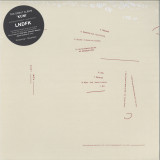
LNDFK (aka Linda Feki) presents her ground-breaking debut album, "Kuni" on Brooklyn-based Bastard Jazz Recordings. Undeniably on the rise after her 2019 breakout performance at Primavera Sound, LNDFK has already caught the attention of Pitchfork, Rolling Stone, Clash Magazine, Noisey, and Brooklyn Vegan (among many others) while being championed by the likes of Gilles Peterson, Tom Ravenscroft, and Jamz Supernova & landing spots on tastemaker playlists like Spotify's "Pollen" and "Fresh Finds."
"Kuni" is a spellbinding exploration of dichotomies: Love & Death (Eros & Thanatos), Flower & Fire, Delicacy & Violence, Poetry & Realism, Purification & Destruction. These opposites are reified in the 10-track LPs multifarious and multifaceted sounds, elegantly meandering through a variety of styles and genres, spearheaded by Linda and features the production wizardry of Darrio Bassolino who co-wrote the album.
"Kuni" opens with "Hana-bi," an ambient instrumental piece that sets the tone for the album. Inspired by the Takeshi Kitano 1997 film of the same name – particularly Joe Hisaishi's stunning soundtrack, as well as Kitano's paintings which appear in the film. "Hana-bi" expresses the dialoguing opposites of flowers and fire, the first of many dichotomous representations throughout the album. "Takeshi" acts as an extension and to "Hana-bi," albeit one of opposing sound, with its driving, highly syncopated drums (which reappear throughout "Kuni") – à la Karriem Riggins, Questlove, or Yussef Dayes – frenetic bass line, and jazz chords. Linda's sultry voice is interspersed, initially jumping around in scat fashion, being triggered as if a sample, before her lyrics come in; her vocals are used like an additional instrument, adding to the song's rich texture. "Kuni" truly hits its stride with the next song, "Smoke – a moon or a button" (its title lifted from the 1959 book by Ruth Krauss and Remy Charlip), which is structured like a jazz standard yet flows into neo-soul territory sonically with those prodigious drums a highlight once again.
LNDFK touches on experimental hip hop in two songs on the record (both of which were released as singles in 2021): "Don't Know I'm Dead or Not (feat. Chester Watson)" – track #4 – and "How Do We Know We're Alive (feat. Pink Siifu)" – track #9. Although they embrace a more hip hop-leaning sound, these songs by no means shy away from the exploratory theme, and feature two of the alt-rap scenes rising stars with Chester Watson and Pink Siifu who offer provocatively impressing verses, combining dense word play with unconventional flows. While these tracks may first appear to be outliers on the album, they are undeniably in tune with "Kuni's" message and sonic palette, acting as testaments to LNDFK's willingness to explore and experiment.
Meanwhile, "Ku" – the third and last single before the album release – furthers the pre-established future soul sound while meandering through nu jazz and left-field electronic. Inspired by the graphic novel and film, "Sin City," and its female assassin protagonist Miho, "Ku" is a musical interpretation of Miho's story, incorporating both her beauty – the first half of the song – and murderous tendencies – the second half – to create a stunning juxtaposition, culminating in an ambient finale that suggests the character's vulnerability and inner peace. The song gracefully bridges the gap between Hiatus Kaiyote-esque songwriting, Dilla's rhythmic syncopation, and Thundercat's instrumental prowess (LNDFK has shared a stage Brainfeeder labelmate Kamasi Washington).
Mixed in throughout "Kuni" are a series of instrumental pieces that function as something akin to an interlude. The aforementioned intro, "Hana-bi," and the album closer "se mi stacco da te, mi strappo tutto:" act as bookends, while "Om" indicates the half-way mark, and "Ktm" sees Jason Lindner add his sound the album. These tracks are the ambient foundation of "Kuni," representing the thematic duality of the work. Clocking in at only 24 minutes, "Kuni" packs an astonishingly diverse array of sounds, styles, and themes, all while showcasing virtuosic musicianship and instrumental prowess.
Appearing on "Hana-bi" and "Ktm," renowned international artists Asa-Chang and Jason Lindner add an additional perspective to "Kuni": Asa-Chang on "Hana-bi," and Jason Lindner on "Ktm." Asa-Chang - famously of the Japanese avant-garde group Asa-Chang & Junray - provides vocals and percussion to an alternate version of the instrumental opener, while the acclaimed keyboardist Jason Lindner offers his synth expertise on "Ktm." These features highlight the spirit of collaboration found in LNDFK's music, always willing to try out new ways of working.
LNDFK is a singer and songwriter, born of two cultures – an Italian mother and Arab father. She grew up in Naples, away from her father, the Sahara, her homeland and traditions, which has helped nourish the desire to rediscover – through art – an engagement to her roots. Her music melts with jazz, neo-soul and hip-hop influences, filtered through her experiences and sensibility.
Her first EP, "Lust Blue," was composed with the artistic production of Dario Bass and released by Feelin' Music; after that she released several singles that saw international radio support (BBC, NTS, Wordwide FM) and gained a massive audience on digital platforms. Together with her band, she toured around Europe, performing alongside such notable artists as Kamasi Washington and Mndsgn, among others. Most recently she toured Italy, and performed at Primavera Sound Festival 2019 in Barcelona.
"Kuni," is due out on NYC label Bastard Jazz Recordings in February, 2022, while the vinyl LP will follow shortly after.
The rerelease of Je Dis Oui on vinyl from Pink Martini. The album features 15 new tracks and includes guest appearances from ARI SHAPIRO, IKRAM GOLDMAN, KATHLEEN SAADAT AND RUFUS WAINWRIGHT “Pink Martini is a rollicking around the world music adventure…if the United Nations had a house band in 1962, hopefully we’d be that band.”—Thomas M. Lauderdale, The album features bandleader Thomas Lauderdale and his “little orchestra,” as well as lead singers China Forbes and Storm Large. “Je dis oui!” is Pink Martini’s ninth studio album; the album features three original songs co--‐written by Thomas Lauderdale. The album also features a stunning version of the classic “Blue Moon” by Rufus Wainwright, “Finnisma Di”, a new Arabic version of the band’s early hit “La soledad” sung by NPR’s Ari Shapiro, and songs in English, French, Arabic, Farsi, Portuguese, Turkish, and the band’s first forays into Armenian and Xhosa. Pink Martini have now sold over 3 million albums worldwide.
- A1: Overture
- A2: Main Tiles
- A3: First Entrance To The Desert, Night & Star, Lawrence & Tafas
- B1: The Miracle
- B2: That Is The Desert
- B3: Nefud Mirage, The Sun's Anvil
- C1: The Rescue Of Gasim, Bring Gasim Into Camp
- C2: Arrivals At Auda's Camp
- C3: On To Akaba, The Beach At Night
- C4: Sinai Desert
- D1: The Voice Of The Guns
- D2: Horse Stampade, All Rescues Lawrence, Lawrence & His Bodyguard
- D3: The End, Playoff Music
Der Maurice Jarre-Score zum britischen Historien-Monumental-Epos 'Lawrence Of Arabia' (1962) ist eine der berühmtesten und bekanntesten Filmmusiken, die jemals komponiert wurden. Die neue Ausgabe auf lilafarbenem Doppelvinyl enthält über 50 Minuten der von der Kritik gefeierten Originalmusik aus diesem David Lean-Epos, darunter über 20 Minuten Musik, die nicht auf dem Original-Soundtrack-Album von 1962 zu hören ist. Eingespielt von den Prager Philharmonikern unter der Leitung von Tony Bremner.
The Diva Faïrouz.
Her real name Nouhad Haddad, she was born in the Zokak el Blat district of Beirut. The eldest of a modest Maronite family, she developed a passion for singing very early on. Her parents are too poor to afford the luxury of a radio, so she spends most of her time listening, her ear glued to the wall, to the neighbors. Nouhad quickly memorizes the songs she hears and gives a few samples at parties organized by her school. It was there that she seduced her comrades with her vocal abilities and that she was noticed in 1947 by the composer Mohammed Fleyfel.
The echo of his velvety voice reaches Halim el Roumi, talent scout, renowned singer-songwriter and director of Lebanese Radio, who asks to audition him immediately. Literally fascinated, el Roumi introduced him to the choir of Radio Beirut, baptized it with the name of Faïrouz and became its appointed composer. Then, he introduces her to Assi el Rahbani, a young avant-garde composer who, in the company of his brother Mansour, wishes to renew a Lebanese song under profound Egyptian influence.
The teenager Faïrouz succumbed to the personal charm of Assi, whom she married in 1954, and to that of his compositions (the model couple of Arab song would be separated by the death of their husband in 1986). The heavenly trio causes, from the publication of its first titles, a real musical revolution. Traditionalists howl at sacrilege and distortion while sympathizers of the rejuvenation and modernization of Lebanese folklore, weary of insipid refrains and pale copies, show their enthusiasm.
In 1957, Faïrouz opened the International Festival of Baalbek (a locality mentioned in one of his flagship titles) and sang in the middle of the six columns of the Roman temple. This initial encounter with his audience, who warmly welcomed him, earned him the nickname "seventh column". Faced with this fabulous galloping success, the Rahbanis are stepping up their offensive and courageously playing the card of constant innovation. They wrote for Faïrouz musical sketches, operettas and, from 1962 to 1976, about fifteen sung plays in which she plays the role of a woman in love with Love, the true, the pure, the innocent. , and that of hope. She also appears in a few films but she quickly interrupts her cinematic odyssey.
It is still and always one of the major references of Arabic song and many of its titles, such as "Bint el Chalabia", are hummed as much by the new generation as by the old.
- A1: Tal Miller - Nly Sixteen
- A2: Little Walter - The Line
- A3: The Rhythm Addicts - Oop Boomp
- A4: The Vampires - Clap Trap
- A5: Art Neville - Arabian Love Call
- A6: Renato Carosone - Luna Rossa
- B1: The Masonics - Call It A Day
- B2: Albert King - Had I Told It Like It Was
- B3: Tommy Brown - Southern Woman
- B4: Earl Craig & The Down Beats - Saki (Part 2)
- B5: Lou Monte - Sixteen Tons
- B6: The Eloise Trio - Similau
Mit Oop Boomp veröffentlicht Stag-O-Lee mit Vol. 13 eine neue Folge der fantastischen Exotic Blues & Rhythm Serie, die unter den Fans bereits Kultstatus genießt. Wie auch bei den Vorgängern bietet die Vinyl-only 10" je 12 Songs zwischen tanzbaren Popcorn-Grooves, ein paar Tittyshakern und 50s Rhythm & Blues Tunes - alle mit einem exotischen Flair!
Lost somewhere between the mysterious alleys of 70s Istanbul and the scorching sun and crystal blue sea of Jaffa, Tel Aviv, Şatellites self-titled debut album is set to be released on Batov Records on April 1st.
The Şatellites’ sound shimmers between traditional Turkish folk and instrumentation, ethereal psychedelic guitar leads and groovy dance floor baselines. The resulting concoction of songs draws on cross continental influence yet at its core is a desire to illuminate the vivid qualities of classic Turkish music, honouring the Anatolian folk and psych artists from this golden era of music. From the funky disco beat of Disko Arabesque to the celestial lead guitar in Yağmur Yağar Taş Üstüne, the band add fire and flair to time-honoured pieces of Turkish music giving them new meanings. Covering important tracks such as female singer Kamuran Akkor’s track Olurmu Dersin, and musician and guitarist Zafer Dilek’s Yekte, the album covers an array of original pieces of different musical styles and sounds, that once have and continue to flow out of Turkey. The band boasts six members; Ariel Harrosh (Bass) Lotan Yaish (Drums), Yuli Shafriri (Vocals), Tsuf Mishali (Keys and Synths), Tal Eyal (Percussion) and Itamar Kluger (Diwan saz, both electric and acoustic, electric baglama, Greek 4 double string bouzouki). They came together some years after band leader Itamar Kluger discovered the saz whilst travelling the Kaçkar mountains in Turkey’s eastern region. The saz being a long necked, plucked stringed instrument native to the rural areas of the country, which remains an integral part of Şatellites’ union, and plays predominance throughout the bands’ album and music.
In the same way the guitar was electrified in the 1930s, the electrification of the saz in the 1960s led to an explosion of rock music dredged in middle eastern influence, a musical genre fittingly called “Anatolian Rock” and based on the principles of Anglo-American and psychedelic rock music, yet incorporating the style, rhythm, and scales of traditional Anatolian folk music.
As such, throughout the creation of the album, the band conceived the idea of intertwining differing elements such as the groove of funk, the rhythm of disco, and reverb of psychedelic, with traditional middle-eastern rhythm and structure, opening up the wealth of Turkish music to the western world, so that anyone and everyone can relate to something from the album. With that said, Şatellites emphasise that their music is not fundamentally Turkish music, on the contrary, they merely try to sound as close to the genre as possible. Their sole aim is to honour this amazing culture and to present it to the world in a more accessible and attainable form.
- A1: Houdou'on (Calm) (Calm)
- A2: Ma Lkit (Not Found) (Not Found)
- A3: Thalem (Tyrant) (Tyrant)
- A4: Stranger
- A5: Ya Tounes Ya Meskina (Poor Tunisia) (Poor Tunisia)
- A6: Ethnia Twila (The Road Is Long) (The Road Is Long)
- A7: Kelmti Horra (My Word Is Free) (My Word Is Free)
- A8: Dfina (Burrial) (Burrial)
- A9: Hinama (When) (When)
- A10: Yezzi (Enough) (Enough)
- A11: Dfina (Burrial) (Burrial)
- A12: Liberta (Live)
- A13: Kelmti Horra (My Word Is Free) (My Word Is Free)
Emel Mathlouthi is a Tunisian author, composer,performer and producer whose music has crossed time, countries and continents.
‘Kelmti Horra’ celebrates its tenth anniversary this year. Ten years of passion, protest and free speech: this album marked the year 2012,
becoming the Arab Spring anthem.
After an awesome mixtape here is the first volume from a series of maxis by Nabil Vortex !
As a tribute to these masters of the underground and to make you dance to fresh sounds, from Maghrebian Raï to Chaoui, or Arabic music, Nabil’s new tales will take you on a fantastic travel trough time and space.
“Whether it is traditional or contemporary, we need to be authentic,” says Gözen Atila who performs as Anadol. “I don't claim that I am authentic, but this is what I want to achieve.”
A sense of authentic exploration, introspection and celebration coats every inch of Anadol’s latest album. After 2019’s Uzun Havalar, the Turkish artist returns with an album that continues to explore a variety of deeply embedded musical traditions while also hurtling into new terrain.
The music and influences - as well as the history, culture and geography behind them - that make up Atila as an artist all coalesce to create something entirely new. The result is something that is simultaneously exploring history and tradition, while harnessing innovative modern sounds and techniques. “If there is any tradition I am somehow connected to, or influenced by, then it’s multi- genres,” she says. “Such as Turkish Pop and Arabesk music from this country where I grew up. There is a connection to Folk and also French pop or Flamenco, Middle Eastern melodies and orchestration, Greek adaptations, Kenny G. solos, American guitars.”
This can be heard on Felicita, not in as much as you can link up the influences directly but in the way it glides across genres, eschewing convention and predictability along the way, to result in a kaleidoscopic experience. For the album, Atila found a talented roster of Jazz musicians in Istanbul who she recorded on top of her synth productions and field recordings. Soon enough saxophone, drums and strings began to stack up against preset drum loops from vintage organs. It’s a record where woozy psychedelic excursions bleed into dreamy synth lines, immersive ambience and the occasionally disconcerting yet incredibly tactile use of field recordings.
If it’s an album that feels like it travels through a variety of feelings, then it’s because the concept is loosely rooted in such a journey. Felicita translates as “happiness” and this album is something that explores the complexities of such an emotion. “I did not name the album like this because I just wanted to call it happiness,” Atila says. “A song like ‘Felicita Lale’ is a sad and confused song about a female character who can't get out of bed. It’s a funny rumination, in her thoughts, saying to get up and lie down repeatedly. At some point the lyrics say: "hep agla, felicita", meaning: "Cry all the time, Felicita". Like she is talking to happiness itself and telling it to cry. So it is not about happiness, it is more about the concept of happiness which can be very sad.”
Limited Brown Vinyl
Brown Rice is probably the most accessible entry point into Cherry's borderless ideal, jelling into a personal, unique, and seamless vision that's at once primitive and futuristic in the best possible way. Its title track is a sensual fusion of various styles and sounds from the African, Indian and Arabic traditions. It also represents the spiritual multiculturalism that Cherry was interested in exploring during this creative period. With ex-Ornette Coleman cohorts on board – Billy Higgings on drums and Charlie Haden on double bass (also heard on electric) – the album (originally released in Italy in 1975) is a cult on its own.
These two songs were written, recorded and
mixed during the sessions for Arab Strap’s first
album in forever, ‘As Days Get Dark’.
As much as they loved them, they couldn't find a
place for them on the final album. Maybe it’s
because they seem to have their own distinct
identities, but sometimes a song just sounds better
on its own, when it’s not part of a crowd and vying
for attention.
So, to celebrate the anniversary of the album’s
release, Rock Action present ‘As Days Get Dark’s
two runaway loners; a couple of black sheep who
might not click with the rest of the family but, even
though they aren’t very happy, are still worth a
cuddle.
Coloured vinyl 7” with digital download code.
Limited!
Gaïsha - Oriental Psychedelic Sounds and Funky Grooves
Gaïsha is a collaboration between the Belgian-Moroccan singer, Aicha Haskal, and Les Cerveaux Lents.
Aicha Haskal’s voice is smooth and warm voice and switches seamlessly between Arabic chants, parlando and even rap. The Arabic lyrics of the song ‘Ghalat’ were written by the Egyptian poet Abdelhamid Farag, who calls himself a ‘poète de l’ éloignement’. His lyrics are permeated with deep melancholy and romance. The song is a tribute to Abdelhamid, who passed away in 2020.
B-side ‘L’Amour Digital’ is based on ‘Sihtou Wajdan’, a traditional Muwashah. Muwashah is a poetic form that originated in Al- Andalus (Muslim Spain in the 11th century). Aicha adds to the poem a reply in French, giving the song a universal and interconnecting flair.
‘Ghalat’, een ode aan de Egyptische dichter Abdelhamid Farag, knalt uit je speakers met een geweldige levenslust”- Cutting Edge
Wie fan is van de muziek van Altin Gün, heeft met deze nieuwe single van het Gentse Gaïsha er een leuke ontdekking bij. - Indiestyle
"Het ritme, de synths en de groove lijken westers, maar verder ademt alles aan deze track een oosterse melancholie uit.” - Damusic
After their debut album Space Voyage for Warner Chappell, Eleven76 are back with a new album commercially available for the first time entitled Occhio Occhio.
The album contains insect-themed outernational grooves with tropical and Arabian flavours and smooth and buttered tunes with soulful vibes that are reminiscent of classic European library music. Vintage synthesizers and hot tape-recorded drums continue to lead Eleven76's mystique, with travels through funk territories and all the while frenzied percussion-heavy break beats keep b-girls and b-boys moving on the floor.
Including the sold-out first two singles "The Scarab’s Quest" & "The Hornet’s Nest" plus 3 exclusive tracks for this vinyl edition.
Deer Leader is the moniker used by Stuart McQuarrie, Ross Prentice and
Robin Pringle - three multi instrumentalists who produce introspective
soundscapes that marry up loud guitars, spliced up beats, vocal samples
and warm layers of reverb.
Initially an purely instrumental outfit, the group have previously released a
double A-side single “Know Everything, Know Everyone/Last Acts of a Desperate Man”, which received attention from a few US blog sites and favourable
reviews from the local music press.
However, the group has spent the last few years reworking their sound with
revered producer Andy Miller (Mogwai, Arab Strap, Life Without Buildings);
recording their debut, which was finished early 2019.
The record moves away from their instrumental beginnings and presents songs
that offer a sense of duality in both their musical and lyrical content; part
dreamscape, part nightmare.
- A1: In A Sentimental Mood
- A2: The Party Is Over
- A3: With Sadness
- B1: Like The Precedent
- B2: Deep Arabesques
- B3: Chet's Blues
- B4: Almost Blue
- B5: Waiting For Chet
Long time hard to find and long awaitedreissue of Chet Baker’s last studio album.
Lyrical, poignant, it shows Chet Baker at his best. Included the original version of Elvis Costello’s “Almost Blue”. Which has become
an all-time classic masterpiece in Chet’s repertoire, also heard on the “Let’s Get lost” soundtrack. HQ re-mastering
- 1: Mallory's Legacy
- 2: Fading In The Snow (Amine Bouhafa & Etsuko Chida)
- 3: Habu's Farewell
- 4: Looking For Habu
- 5: The Rope (Amine Bouhafa & Etsuko Chida)
- 6: Ghost Of A Child
- 7: The Mountain Call
- 8: Rambling In The Mountain
- 9: Alone On The Wall
- 10: Through The Khumbu Valley
- 11: An Icefall Journey
- 12: Feeling The Heights
- 13: The Storm
- 14: Finding Mallory
- 15: The Summit
- 16: Epilogue
The Summit of the Gods is a French animated film directed by Patrick Imbert, released in 2021. It is an adaptation of the manga The Summit of the Gods by Jirō Taniguchi, based on the novel by Baku Yumemakura. This journey is set against the backdrop of the fate of a Japanese mountaineer and George Mallory's adventure to the summit of Everest.
International release: November, 30th on Netflix
Festivals:
- Annecy International Animation Film Festival (2020)
- Cannes Film Festival (2021) - Official Selection
- Application for the César and Oscar Awards 2022
Balancing on a double culture that he claims, Amine Bouhafa develops a very personal style by playing with the clichés of orientalism. The quality of his writing and the originality of his style led to his being chosen by the producer Sylvie Pialat and the Mauritanian director Abderrahmane Sissako to compose the music for Timbuktu. The film won seven Césars, including the one for best original music.
More recently, he composed the inspired scores for Tu Mourras À Vingt Ans by Amjad Abu Alala (Golden Lion for the first film - Mostra 2019 / Best Music Award at the Odessa International Film Festival 2020), Un Fils by Mehdi Barsaoui awarded for the best actor (Orizzonti selection - Mostra 2019), Gagarin by Fanny Liatard & Jérémy Trouilh (Official Selection of the Cannes Film Festival 2020 - Best Original Score Award at the Rome Film Festival 2020 and at the Bordeaux International Independent Film Festival (FIFIB), L'Homme Qui Vendu Sa Peau by Kaouther Ben Hania awarded Best Actor (Orizzonti selection - Mostra 2020) and the Star of the Best Arab Film at the El Gouna Festival 2020 and The Summit of the Gods by Patrick Imbert (Official Selection of the Cannes Festival 2021).