HIFILOFI SCIFIWIFI is the debut solo album from Gale P, best known as the co -founder, guitarist and occasional singer of acoustic-indie stalwarts Turin Brakes.
Born in Tehran, based in Brixton, Gale Paridjanian was raised in the multicultural melting pot of South London in a family home full of musical instruments. He picked up a guitar at a young age and launched himself onto his musical arc.
A lockdown break from touring provided the space to explore fresh creative directions, inspirations and collaborations. Gale brought all these into his home studio to stitch together into a compelling set of personal songs; “I’d go around London looking for inspiration, bring it back to my garden shed and create freely, attempting to turn into sound what I’d seen that day - a painting, a fight, a story overheard. But sometimes I’m just trying to make music I want to hear, like a home-made Shazam playlist.”
Everything is tied together by Gales’ authentically lo-fi production, intimate vocals and sultry acoustic guitar, floating across dreamily trashy beats and subtle offbeat electronics.
Suche:the arc
- A1: Tokyo 2086 (Intro)
- A2: Morphoice & Syst3M Glitch – Cara Keeps Running
- A3: Morphoice & Clint Alford – Arcade
- A4: Morphoice & Mayah Camara – City Lights
- A5: Open Your Eyes
- B1: Morphoice & Syst3M Glitch – Downtown
- B2: Strange Nights
- B3: Into The Midnight Sunset
- B4: Morphoice & Clint Alford – Hold On
- B5: Another Outro (Losing Myself)
Nach den Erfolgssingles 'Strange Nights' und 'Cara Keeps Running' veröffentlicht der in Deutschland ansässige Synthwave-Produzent MORPHOICE sein Debütalbum 'Vinyl City', eine Liebeserklärung an die von Blade Runner inspirierte Cyberpunk-Kultur und die Musik der 80er - mit Syst3m Glitch, Clint Alford und Mayah Camara on vocals, Jesse Molloy (The Midnight) am Saxofon und dem deutschen Multiinstrumentalisten Tim Eden. Gemastert in den Londoner Abbey Road Studios, ist das Album ein Lebenstraum des Künstlers, ein neues Kapitel seiner persönlichen und musikalischen Entwicklung, das tiefe Freundschaften und Vertrauen unter den Mitwirkenden entstehen lassen hat. MORPHOICE taucht tief in die 80er-Retro-Nostalgie und in kybernetische Zukunftsvisionen ein, eingehüllt in rosa-lila Neonlicht. LP auf 180g Clear Vinyl mit blau-violettem Splatter.
- A1: 4 A While
- A2: Next Door
- A3: Mule
- A4: Obscure
- A5: Out Of Control
- A6: Red And Yellow
- A7: I Don´t Care
- A8: Sleeping Alone
- A9: U Know
- B1: Job
- B2: My Hope Is Fading
- B3: Fernando
- B4: More Flute
- B5: Break Again
- B6: New Life
- B7: Trouble Dub
- B8: Everything Is Blue
- C1: Word´s Don´t Say Much
- C2: Drunk Again
- C3: As We
- C4: Babies Laugh
- C5: For The System
- C6: Get It
- C7: Pattern Select
- D1: That Easy
- D2: Till The Sun Comes Up
- D3: Try My Organ
- D4: Love Ocean
- D5: Murphy Combo
- D6: After The Lights
- D7: Go On
- D8: Ahahahaha
- D9: Every Man Has To Carry
- D10: Kaputtnick
- C8: Ach
- C9: Dream Chaserc10 | All Good
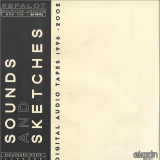
Lo-Fi was rather an involuntary attribute in the 90s. 90s hip hop instrumentals with the sound aesthetics of old 12-bit samplers are the blueprint for everything that runs under chill and lo-fi beats today. For this double LP, SEPALOT dug deep into his demo box, listened to countless DAT cassettes and dug up 36 pearls from the period 1996 - 2002.
Sepalot: "I had to laugh a lot at times and was sometimes embarrassed, but the innocence of the early days also has an insane power. The best beats demos and sketches from my early days now get their moment."
What is techno if not a powerful conduit for energy? The movement of a sequence, the surge of an effects rush, the respondent reaction in every individual dancer and the moving mass of the crowd as a whole. Whether the frequencies transmit directly into the brain through the intimacy of a headphone reverie, reverberate through the architecture of a space or fill the formless void of the open air, techno’s potency to initiate and stimulate energetic events is profound. This is something Pfirter understands intimately, having spent more than 15 years exploring ways of manipulating the energy on a dancefloor.
Of course, energy is not just about volume and aggression. Tonality, spatial processing and composition can have just as profound an effect as the thump of the kick drum. On his new album Altered States, Pfirter proves that point by zeroing in on the cerebral, psychedelic elements of his craft across 10 incisive tracks. The Argentine producer consciously approached his second album (following 2019’s The Empty Space) with a minimal mindset, using a very focused set of drum machines and synths to achieve a consistency across the record. Captured over a short burst of creativity, it’s the sound of an artist pushing a limited array of tools as far as possible. Despite this concise palette, it’s not an album that repeats itself, but rather an extended trip that flows from one detailed, textured immersion to the next.
The dense, febrile waves of hard-oscillating ripples in ‘A Future In Chaos’ and the sparkling, off-key chimes adorning ‘Yearn’ all speak to Pfirter’s gift for extravagant, surrealist expression within his tracks. ‘Altered States’, by way of contrast, succeeds in its absolute immediacy – a piledriving statement of bleep-driven intent. ‘Boiler’ and ‘Convergence’ land somewhere in between, coiling around kinked rhythmic incantations which still push forwards with precision while offering a different angle from which to approach the dancefloor. Cementing the idea of the whole album as a listening experience, Altered States is bookended by ‘Venus’ and ‘Dissolution’, two minimal exercises in drone-oriented mood setting.
Pfirter understands the role of his music, and his own instincts as a performing artist. It’s crafted to be captivating for DJs as much as the attentive listener. Spanning linear rhythms and broken beats, moments of calm and writhing intensity, Altered States offers a multitude of energetic possibilities in the mix or as a standalone piece of music. Ultimately, it’s a masterful return from a leading light of the contemporary techno scene.
This is MindTrip!
Ambassador's Reception head-honcho Stevie Kotey has started sorting out his archives. Relaunching the label and assuming the pseudonym Steamy Windows he's been dusting off and souping up crowd-pleasing cuts by the score. The first fruits of this labour to be made public will be One Of Those Nights – a collaboration with cool Californian dude, Woolfy – King Of The Sun-Baked Balearic Boogie. The two of them turning in a breathless bedroom berserka of balmy, heat-stroked, blue-eyed electro street soul – suitable for fans of Apiento, Harriett Brown and Lexx' Cosmic Shift long-player. Its bass bumping bionically, keys and guitar blown in like a breeze.
Percussion-like seashells gently washed and made to shine by the tide. While Woolfy's whispers are the male equivalent of Brenda Ray's intimate coo. I've been privy to six mixes that range from a beatless ambient calm – showing off the electric axe work and celestial synthetic flute – to bottom-end bolstered dub. L.U.C.A's Quirky Version puts the beat right up front – big snares behind treated vocal fragments. Gating everything for a trippy, serenely stoned glide. Taken altogether this sextet forms a kind of suite, finally refocusing on the love song at its root.
Dr.Rob (Ban Ban Ton Ton)
b 02: One of Those Nights (Beach Hotdog) feat. Woolfy
c 03: One of Those Nights (No Vox) feat. Woolfy
d 04: One of Those Nights (L.u.c.a Quirky Version) [feat. Woolfy & L.u.c.a]
[e] 05: One of Those Nights (Green Mix) [feat. Woolfy]
[feat. Woolfy]
From its earliest utterances, experimental music has been particularly disposed to transnational and cross-cultural collaboration. Seeking the answer for a fundamental problem - how to transcend the boundaries of difference, distance, and time - it presents a means to find common ground and communicate through the elemental form of sound. Over the last 5 years, this precisely what the duo of Félicia Atkinson & Jefre Cantu-Ledesma has achieved, intertwining sublime sonorities across the geographic expanses between their respective homes in France and the United States. Their third album for Shelter Press, ‘Un hiver en plein été’ (‘A winter in the middle of summer’) - the first to have been largely recorded by Atkinson and Cantu-Ledesma together in the same space - distills a mesmerizing pallet of acoustic and electronic sources into an open discourse of radically poetic forms, offering glimpses of warmth and intimacy waiting in the post-covid world to come.
Both veteran experimentalists with celebrated bodies of solo work behind them - each traversing the challenges of electroacoustic practice in their own singular ways - prior to their first recorded outing in 2016, Félicia Atkinson and Jefre Cantu-Ledesma had only crossed paths in person once, initially meeting in San Fransisco during 2009. The mutual bond formed during that brief encounter flowered into their first LP, ‘Comme Un Seul Narcisse’, followed two years later by 2018’s ‘Limpid As The Solitudes’. Both recorded remotely - sending files back and forth, fortified by conversations on a vast range of subjects - these two albums were guided by impassioned conceptual nods to Guy Debord, Baudelaire, Brion Gysin and Sylvia Plath, while seeking resolutions for the challenges and unique possibilities that working at a distance provoked.
Where the triumphs of its predecessors rose from the bridging of disparate moments and divergent spaces, ‘Un hiver en plein été’ culminates as a celebration of closeness, a result of Atkinson and Cantu-Ledesma working together in the studio, responsively in real time, for the first time. Recorded in Brooklyn during August of 2019 - a handful of months before the pandemic would impose chasmic distances across the globe - its six discrete works, carefully crafted and finalized over the ensuing year, evolve seamlessly across the album’s two sides, weaving a sprawling tapestry of sonority, within which both artists retaining their own voices and visions, while drawing each other towards uncharted ground.
Atkinson likens the recording of ‘Un hiver en plein été’ to have been akin to “a playground”, each artist “hungry for each sound, a bit like the rush in the Louvre in Godard’s Bande à part”, to which Cantu-Ledesma adds that the process seemed to have had “a mind of its own”, with both “along for the ride”. This organic sense of entropy and enthusiasm - a joyous exploration of the unknown - guides the momentum of the album’s evolving arc, as unfolding chasms of ambient space ripple with humanity, life, and fleeting glimpses of the actions that led to its material core.
Crafted from deconstructed melodic elements and drifting long-tones - laden with subtle nods to Indian classical ragas and free jazz - searching patterns of speech, textural elements captured within the studio and the outside world, and searching tonal and percussive interventions, ‘Un hiver en plein été’ coheres as a multi-faceted series of electroacoustic dialogues; nesting conversations between two artists working at the juncture of abstraction and narration, field recording and harmony, and the philosophical and phenomenological, in search for the meaning of friendship, and its manifestation in pure sound.
- 1: Curtain Up
- 2: The Busby Babes
- 3: Munich And The Roll Call
- 4: 1968 For Them
- 5: Say What You Like
- 6: A Disaster
- 7: Game Changer
- 8: Manchester Marseilles
- 9: Winter Of Discontent
- 10: Time For A Change
- 11: More Change
- 12: This Is Different
- 13: Battle Begins
- 14: Palace
- 15: Media Circus
- 16: Rebuilding
- 17: Breaking News
- 18: Talking In Paris
- 19: Miracles
- 20: Stepping Aside
- 21: Digging Deep
- 22: The Final Push
- 23: May 26 1999
- 24: Deansgate
- 25: The United Way Credits
- 26: Pictures Of Matchstick Men
- 27: A Fifth Of Beethoven
- 28: I Am The Resurrection
The soundtrack to the movie The United Way. The United Way is the legendary story of ‘The Red Devils’ – Manchester United. From their humblest of beginnings in England’s Industrial North at the turn of the 20th Century, Manchester United gifted working men, women and children alike, the poor and the struggling, a new Dream – a winning Dream of hope, beauty and ambition. Here is a family club which pulled itself, phoenix-like, from the ashes of the horrific Munich air disaster to become champions of European football, committing to a stunning, relentlessly attacking style and elevating working class boys to the status of gods: Charlton, Best, Cantona, Beckham and Ronaldo. Such is the mythical aura of the club, that its stadium is universally known as “The Theatre of Dreams”. Now, with over 650 million supporters around the world, 73m Facebook fans, 18m Twitter followers and 1.8m shirts sold per season, Manchester United are the most celebrated, widely supported sports club in the world. Presented by the peerless Eric Cantona and featuring stunning archive and never seen before footage, “The United Way” celebrates the birth and growth of a global phenomenon – a unifying club for the people, by the people. The whole film is set to a score by George Fenton - one of the UK’s most successful composers, writing scores for over 100 films and dozens of plays and TV programmes. He has been recognised with numerous awards: 5 Oscar nominations, multiple Ivor Novello, BAFTA, Golden Globe, Emmy and BMI awards, a Classical Brit, The Nina Rota Award at Venice and a World Soundtrack Lifetime Achievement Award from Film Fest Gent.
- A1: Silvia Kastel - Errori
- A2: Andrea Belfi - Spitting & Skytouching
- A3: Marco Shuttle - Lux Et Sonus
- B1: Ninos Du Brasil - Noite Atrás
- B2: Alessandro Adriani - You Will Not Be There For The End
- B3: Chevel - Friends Electric
- C1: Lucy - Starving The Mind
- C2: Lory D - Prv-Hh3-X
- D1: Caterina Barbieri - Virgo Rebellion
- D2: Neel - 4G
2 x 180 gr heavy weight vinyl in deluxe matte-finish Gatefold cover + Download Card) Flowers From The Ashes is the latest multi-artist project to bear the acclaimed Stroboscopic Artefacts imprimatur. Silvia Kastel, Andrea Belfi, Marco Shuttle, Ninos Du Brasil, Alessandro Adriani, Chevel, Lucy, Lory D, Caterina Barbieri & Neel Flowers From The Ashes is the latest multi-artist project to bear the acclaimed Stroboscopic Artefacts imprimatur. There is a sensibility of decadence and corroded grandeur etched within its four album sides, reminding us that historically 'decadent' times have nonetheless resulted in some of the boldest acts of individual and collective creativity. Like the 'floral' theme that has remained a consistent feature of S.A.'s graphic presentation, the music here equally presents fragility and intensity in a way that really drives home this visual metaphor for good, while still holding out the promise that similar creations will be seeded in the near future.Though many of the artists involved have set of residence outside of their native Italy, all contribute here to make a captivating portrait of a shared spirit and cultural memory. The album opens with 'Errori,' deceptively fragile sonic ornaments crafted and suspended in space by Blackest Ever Black artist Silvia Kastel. This is followed closely by the mellifluous, warming glow of percussionist Andrea Belfi's 'Spitting & Skytouching,' and then by the resolute electric bass patterns and luminous fog of 'Lux et Sonus,' from Eeri label head Marco Shuttle. Hospital Productions alumnus Ninos du Brasil open the B-side with a similarly dense, amorphous construction built from tribalistic chants and rhythmic patterns, to be followed by Mannequin label boss Alessandro Adriani's 'You Will Not Be There For The End,' showcasing his distinctive take on the 'paranoiac breakdance' aesthetic of classic EBM. S.A. veteran Chevel rounds out the first record in the program by interlacing several percolating synth lines together into a richly conversational piece.The journey continues with 'Starving The Mind,' an undulating mini-epic from S.A. founder Lucy that is animated by his signature balance of seductiveness and concentration. The bright, biting acid synth tones of 'PRV-HH3-X', by Lory D, then takes a sharp right turn into an invisible metropolis ruled by reflective high fashion and hidden intrigue. The imposing architecture of 'Virgo Rebellion,' designed by modular synth futurist Caterina Barbieri, acts as an excellent companion piece, and sets up the closing '4G' from Spazio Disponibile co-founder Neel - a crepuscular serenade that accurately sums up much of the foregoing activity.
Rare recordings featuring Carla J Easton & friends with guests Duglas T
Stewart (BMX Bandits) and Eugene Kelly (Vaselines) - This album was
shelved and never saw the light of day but now, for the frst time ever,
these recordings are re-mastered and presented to you on vinyl.In 2011,
Carla J Easton fnished her MFA at Glasgow School of Art armed with a
batch of newly written songs and wanted to start a band - Calling on longtime collaborator Sita Pieraccini and childhood friend Debs Smith, fat
rehearsals ensued and a frst gig was booked at The Arches in Glasgow
Aptly, the night the would debut as TeenCanteen was called The Love Club. Not
long after, Emma Kullander would join the ranks and the 4 headlined Henry's
Cellar Bar in Edinburgh. Through word of mouth, the place was packed. With only
5 songs to their name, a tentative version of All The Lovers by Kylie Minogue was
thrown in as a last minute encore before the band delved into replaying their song
Friends.Studio time was booked at the fedgling 45 A Side in Glasgow resulting in
the recording of How We Met (Cherry Pie), You're So Analog, Under My Cover and
Friends.Calling on mentors from the Glasgow music scene – Duglas T. Stewart
(BMX Bandits) and Eugene Kelly (The Vaselines) turned up to be part of this
session. Duglas, joining TeenCanteen on a heart rendering duet for the song
Under My Cover, and Eugene, providing a blistering electric guitar solo on You're
So Analog.Hearing themselves on record for the frst time, and with Easton's
repertoire for songs growing more, they quickly returned to the studio for another
weekend.Recording the songs Atlas, Fireworks (which would go on to be covered
by BMX Bandits on their album BMX Bandits in Space), It could Be Beautiful and
One More Night, TeenCanteen were ready to release into the world with an
album's world of recorded material.
This is the sound of four friends making music together, learning as they go. At
its core are the luscious three- part harmonies TeenCanteen would go on to
develop further and be known for.
It's not perfect. It's not polished. It's the sound of something new.
It was the precursor to the glorious full pop sound the band would introduce to
the world when their debut album Say It All With A Kiss was released on Last
Night From Glasgow.This is how it starts.
The third entry in Lucy's trio of adventurous full-lengths is visually introduced by artwork of a pearl-bearing shell, designed by Stroboscopic Artefacts' resident visual artist (and Lucy's brother) Ignazio Mortellaro. This drops a subtle hint as to the nature of its contents: just as a pearl slowly forms within its enclosing body in response to organic challenges, Lucy's work is also a kind of crystallization of memory and experience into an artifact of great value.
Listeners to this album will be struck immediately by how different it sounds from past Lucy productions, while still retaining the feel of relentless questing that defined his previous two solo LPs Wordplay for Working Bees and Churches, Schools, and Guns (or, as Lucy himself defines the feeling, the equal valuation of precision and exploration'). Initially feeling like Lucy is guiding his listeners on a slow and slightly apprehensive down-river trip through the Amazon, or some similarly thriving but as-of-yet undiscovered terrain, the album is enriched by several layers of ambience and by the wordless, improvisational (yet still somehow narrative) vocals and flute of Jon Jacobs. Without a doubt, it's an album with an initiatory' atmosphere that listeners should commit themselves to hearing in one sitting, with as little interruption as possible. However, unlike many initiatory rites, this is no arduous ordeal at all: great care has gone into connecting each chapter of the album with the same silver thread of entrancing story-telling. On standout pieces like She-Wolf Night Mourning,' electronic arpeggiation and persistent synthetic flutters perfectly merge with the unique tone colors of resonant acoustic percussion and pensive woodwind. Elsewhere, pieces like A Selfless Act' reconcile technoid pulses with melancholic, yet intoxicating echoes of Mediterranean musical traditions.
Interestingly, many of the tracks on Self-Mythology refer to old legends and well-known fairytales (e.g. the opening track which references Baba Yaga's magical hut), or to more broadly defined states of consciousness ( Samsara,' which features an especially strong, sustained choral interplay between glassy synth sequences and earthy flute sonorities). This is where the album is truly unique and relevant in its ambition. The interplay between the graphic design, the vocal and flute performances of Jacobs, and the sound design chosen by Lucy aims to be an intimate audio autobiography of its creators while also referring back to the stories that have shaped human destiny for millennia. This work is a meditation upon the reciprocity between personal hopes and fears and collective dreams and nightmares, an exploration of the endless interplay between the universal and the deeply individual. It is the tale of that uncanny process by which our own conscious experience draws from the pool of archetypal information, while also contributing to it.
The Israeli producer Yotam Avni, though not one of the main players in the Stroboscopic Artefacts story to date, nevertheless shows that he is definitely here for a reason: having contributed with an entry in the Monad series back in July, he returns with a new set of tracks that fit perfectly into the label's overall aesthetic of evolving hyper-reality, while also being a strong personal statement. With both his S.A. debut and this new offering, Avni shows himself to be a truly 'progressive' musician: a creator whose musical techniques are informed by his creative disposition and not the other way around, an individual who seems to be using the richness and differentiation of human experience in order to let yet more of it arise.
The new record begins with the galloping rhythm of "Tehillim", bringing a whole inventory of struck wood and metal elements into play, and leading listeners on an adventurous voyage through liturgical chanting and volcanic eruptions of synthesizer magma, all the while being accented with nimble percussive fills that convey the improvisational feel of classic bebop drummers. The following "Orma," while more stripped down in terms of individual elements, continues down the same path with clever spatial arrangements, and with tonal and percussive elements that seem snatched out of their buys urban environments and placed under austere laboratory investigation: this holds true for the isolated bits of sax and vaguely middle-Eastern percussive accents that the improvisational feel of classic bebop drummers. The following "Orma," while more stripped down in terms of individual elements, continues down the same path with clever spatial arrangements, and with tonal and percussive elements that seem snatched out of their buys urban environments and placed under austere laboratory investigation: this holds true for the isolated bits of sax and vaguely middle-Eastern percussive accents that distinguish this track, and which leap out mischievously from their carefully controlled setting.
"Shlok" begins with a deep subterranean kick pattern and percolating bell tones that, while first bringing to mind recent efforts from Planetary Assault Systems, soon transform into something much unique to Avni's imagination - smooth arcing vocals and contrasting shades of nocturnal ambience turn this into a very sinuous and sultry piece of rhythmic music. Once the listener has been lured in by this siren song, the closer "Even" brings the EP's most forceful and demanding beat - though its heavy punch is tempered with a sense of contemplative sophistication. Once the insistent beat is overlaid by a shimmering latticework of piano, breezelike pads, and concentrated string plucks, it testifies to Avni's ability to create tracks that are loaded with emotional nuance and defy easy description.
Stroboscopic Artefacts is releasing its latest addition to the forward leaning edge of electronic music with the Totem series. Unfurling as a chain of transparent 10' vinyl, each of the Totem releases will have a subtly divergent take on the aesthetic space defined by techno and club culture. Totem continues investigations previously established by Stroboscopic Artefacts, namely the relation between sound and material object, spatiotemporality and the architecture of music. The series aims to collapse the artist, their intention and resonance with the public into one object, an artifact of beauty and functionality, the emblemized transparent 10-inch. In choosing a less common format for the Totem series, Stroboscopic Artefacts aims to reinforce the cognition that each of these pressings is a unique object, carrying a message that will develop as the record's existence moves through space and time
In the afterglow of her acclaimed 2020 album Silver Ladders (a year-end favorite of NPR, Pitchfork, The New Yorker, and others), Los Angeles-based harpist Mary Lattimore returns with a culminating counterpart release, Collected Pieces: 2015-2020. The limited-edition LP features new and previously unreleased material, Bandcamp-only singles, and other obscurities alongside standouts from her 2017
tape Collected Pieces. Beyond the vinyl compendium, an expanded tracklist on the cassette/digital version brings more of Lattimore’s archives together for the first time. Lattimore has described the process of arranging these releases as akin to “opening a box filled with memories,” and here that box continues to populate, accessible for both the artist and fans. Evocative material separated by years, framed as a portrait of an instrumental storyteller who rarely pauses, recording and often sharing music as soon as it strikes
SA015 is a split vinyl taken care of by long term label artist, Pfirter, and by a new voice that's been adding to the SA story across the summer, Kangding Ray. Pfirter's 'Caos y Orden Superior' is a weighty odyssey spread across nine minutes. Its opening is languid but somehow relentless as strange synthesised sounds are interrupted by insistent beats. Across the arc of this track 'chaos' and 'order' lose their static definitions, and played over a large club rig this has the potential to throughly disorientate. From here Kangding Ray takes over duties with 'Wars', a fragmented meditation on the darkest side of human nature. Created from hues saturated by the pain of mistakes and regrets, it pulses, rocking gently, swooning in and out. This stunning slice of electronic music acts as a balm for the very wounds that conflict leaves behind.
Dodging Dues is a startlingly expansive record “startling” in part because it’s relatively short (seven songs, all but one hovering around the four minute mark), but also because it traverses so many moods and styles: languid and dreamy one moment, surging and intense the next. Garcia Peoples (these days a six-person band) “hit their stride” a long time ago, but here they seem to be hitting a dierent one, working themselves loose of in‑uences (though this tree has roots: traces of Thin Lizzy, of more arcane bits of U.K. folk-prog, of vintage Meat Puppets in some of the softer passages) while at the same time opening themselves up to their own individual strangeness, becoming ever more singular and ever more free.
Gold Vinyl
12” EP by the lovely French synthwave duo known as DEUX. GERARD PELLETIER and CATI TETE formed Deux shortly after meeting in Lyon in 1981. Their music can be described as minimal synth with stripped down rhythm compositions and suitably cold duets. A perfect blend of archetypal Kraftwerkian pop and French synth, these set of songs comprise their later years (1985) and stylistically sound like classic house combined with the romance of New Wave. This EP features previously unreleased newly remastered studio and demo tracks. Pressed on 180 gram gold vinyl, limited to 999 hand-numbered copies. Note: due to a pressing plant issue, the color of the vinyl isn’t precisely gold – it’s more of an olive golden brown.
Massachusetts hardcore band Defeater have announced their new self-titled album. Defeater will be released May 10 on Epitaph. This is Defeater's fifth full-length release and their first in 4 years. The first new single, "Mothers' Sons" features blistering guitars that take the song into something chaotic and beautiful. Defeater was produced with Will Yip (Quicksand, La Dispute, Blacklisted, Ms. Lauryn Hill) whose enthusiasm and talent pushed the songs to their fullest potential. Defeater showcases the band at their most devastating and sonically arresting to date. It is as pummeling as it is atmospheric. Yet it's been a long journey to where the band is now. Years of touring took their toll on the friends that make up the current lineup of Derek Archambault (vocals), Jake Woodruff (guitar), Adam Crowe (guitar), Mike Poulin (bass) and Joe Longobardi (drums). Health, substance abuse issues, and ejecting a longtime member had made a touring hiatus necessary. After a few months at home, working and decompressing, the fire to write a new record caught everyone in a major way. The result of time off and the band's renewed energy, Defeater has created their most organic batch of songs yet. And in Defeater fashion, the instrumentation is complimented by a narrative approach. Archambault explores his own "Glass family" (an homage to the J.D. Salinger characters) from new perspectives.
- 01: *
- 02: I
- 03: Ii
- 04: Iii
- 05: Iiii
- 06: Iiiii
- 07: Iiiii I
- 08: Iiiii Ii
- 09: Iiiii Iii
- 10: Iiiii Iiii
- 11: Iiiii Iiiii
- 12: Iiiii Iiiii I
- 13: Iiiii Iiiii Ii
- 14: Iiiii Iiiii Iii
- 15: Iiiii Iiiii Iiii
- 16: Iiiii Iiiii Iiiii
- 17: Iiiii Iiiii Iiiii I
- 18: Iiiii Iiiii Iiiii Ii
- 19: Iiiii Iiiii Iiiii Iii
- 20: Iiiii Iiiii Iiiii Iiii
- 21: Iiiii Iiiii Iiiii Iiiii
- 22: Iiiii Iiiii Iiiii Iiiii I
- 23: Iiiii Iiiii Iiiii Iiiii Ii
- 24: Iiiii Iiiii Iiiii Iiiii Iii
Chìsake Algonquin: to chant; to conjure; to cast a spell; this generally involves a shake-house, or shaking tent, in which the conjurer goes into a trance; the conjurer then has an out-of-body experience, going into the future to predict coming events, or into the past; as well as going into any locality in the universe to seek out someone or something generally practiced for ancestral divination.
The unaccompanied flute pieces within this album are adaptations of Anishinaabeg shaking tent chants. The Anishinaabeg also known as Anishinaabe are a group of culturally related Indigenous peoples that reside in areas now called Canada and the United States. They include the Odawa, Saulteaux, Ojibwe (including Mississaugas), Potawatomi, Oji-Cree and Algonquin peoples. The word Anishinaabeg translates to "people from whence lowered". The Anishinaabeg origin myths describe their people originating by divine breath.
The shaking tent or conjuring lodge was the setting for a divinatory rite performed by specially trained shamans otherwise known as Chìsakewininì. During the shaking tent ceremony the Chìsakewininì would construct a special cylindrical framework typically of birch or spruce uprights planted in the ground with respective wood hoops to bind it together. This created a tensile structure of which birch bark, deer skin, or cloth was used as a covering. Rattles of caribou and deer hooves, or cups of lead shot, were tied to the frame. The floor was usually softened with freshly cut spruce boughs. The vertical axis of the shaking tent represents the realm of mediating beings, while the horizontal axis the earth or world of humans. The Chìsakewininì would enter the shaking tent at night and once inside would not be visible from onlookers. The singing of chants and drumming would summon the Chìsakewininì's spirit helpers, whose arrival was signified by animal cries and erratic tent shaking. During this transcendent state, the Chìsakewininì could dispatch these spirit helpers or Manidò to distant regions to answer questions from the onlookers about the most auspicious places to hunt, the well-being of a distant relative, and what would happen in the future.
The chants were usually sung using vocables before, during, and after the Chìsakewininì entered the shaking tent. Like many other similar divination ceremonies, singular or collective, the opening chants begin lyrically. They gradually turn to more reductive abstract structures midway and then end in lyrical chants. This symbolizes the performer and listener leaving the external literal world, entering a more abstract state of mind, and then returning. Traditionally all songs were carved on birch bark for record-keeping with mnemonic pictographs or other marks for future use. Tally mark clustering, sometimes used for song-keeping throughout the Anishinaabeg, is used for this album's track titles and numerical sequence.
The album intro begins with the shaking of a necklace of otter penis bone, fish spine, bear teeth, elk teeth and deer hide, gifted from Algonquin Elder Ajawajawesi. It is meant to focus the listener's attention before the flute pieces begin. The warble or multi-phonic oscillation prevalent in the middle tracks traditionally represented the "throat rattling" vocalization of the tonic note or sometimes known as the horizon of which the melody floats off of. Due to the repetition of multi-phonic oscillation the performer will breathe erratically creating an altered state correlating with the Chìsakewininì ceremonial actions. All songs are repeated seven times to signify the seven sacred directions: east, south, west, north, above/sky, below/earth, and center.