SKY HIGH BLUE COLOURED VINYL
When Leon Michels and El Michels Affair released their rst record, Sounding Out The City, in 2005, it was hard to guess what was next for Michels and his then-introduced, now-patented "cinematic soul" sound. Now, four EMA studio albums and scores of tribute and remix projects later - all while producing for some of the biggest names in the industry - Michels has trademarked his sound, with each project taking audiences somewhere new and pushing the boundaries of what he is known for. The man is a river, not a lake and this time he takes his golden touch into the realm of hip-hop laying down a musical bed for one of the greatest to ever rhyme into a microphone: Black Thought of The Roots crew. Releasing on Big Crown Records, the LP is called Glorious Game and it is a remarkable debut partnership in more ways than one. Michels provides his bottom-heavy, soul-tinged production for Black Thought who gives us some of the more personal and transparent verses we've ever heard from him. Michels and Black Thought have been in each other's orbit for a while now. The two first met in the 2000s when Thought was first getting familiar with the contemporary soul scene. "Out of that whole world, Menahan Street Band was probably my favorite," recalling the funk and soul group Michels was a founding member of back in 2007. Fast forward a few years and musicians from that collective - Dave Guy on trumpet and Ian Hendrickson-Smith on sax - are now full time players with The Roots. This connection eventually led Leon and Thought to doing a few fundraising events around NYC and Philly together. "Before long, Black Thought was coming around the studio and would jam with us from time to time," Michels explains. "Then, fast forward to 2020 and COVID lockdowns, he just hit me up out of the blue, wanting me to send him stuff to write to. We both were looking to stay busy" Being that Black Thought is the co-founder and emcee for, hands down, the best live-band group in hip-hop. Michels took a decidedly different approach to this project and instead of sending recorded tracks of live compositions, he pulled out the sampler and sampled himself and some records from his collection. "I'm a big fan of soul music," as if Michels has to remind us. "And part of hip-hop's appeal to me has always been the sample-based production" For Glorious Game, Michels would make wholly composed and recorded soul songs in his studio, sample himself, then chop and/or loop up his sounds and create instrumentals for Black Thought. On some tracks he took a more traditional hip-hop approach, starting from samples of other people's music but then adding live instrumentation on top. But for the most part, it's him reinterpreting his own compositions into something new. The result is an organic feel of loop-based tracks that breathe and uctuate enough for Black Thought to ex on. "What I write about is determined by the equation of the producer's energy and my energy," Black Thought says. "It's about where we meet." So armed with Michels sampled and re-sampled soul cinematics, Black Thought rhymes through personal memories.
Suche:the audience
Tape
When Leon Michels and El Michels Affair released their rst record, Sounding Out The City, in 2005, it was hard to guess what was next for Michels and his then-introduced, now-patented "cinematic soul" sound. Now, four EMA studio albums and scores of tribute and remix projects later - all while producing for some of the biggest names in the industry - Michels has trademarked his sound, with each project taking audiences somewhere new and pushing the boundaries of what he is known for. The man is a river, not a lake and this time he takes his golden touch into the realm of hip-hop laying down a musical bed for one of the greatest to ever rhyme into a microphone: Black Thought of The Roots crew. Releasing on Big Crown Records, the LP is called Glorious Game and it is a remarkable debut partnership in more ways than one. Michels provides his bottom-heavy, soul-tinged production for Black Thought who gives us some of the more personal and transparent verses we've ever heard from him. Michels and Black Thought have been in each other's orbit for a while now. The two first met in the 2000s when Thought was first getting familiar with the contemporary soul scene. "Out of that whole world, Menahan Street Band was probably my favorite," recalling the funk and soul group Michels was a founding member of back in 2007. Fast forward a few years and musicians from that collective - Dave Guy on trumpet and Ian Hendrickson-Smith on sax - are now full time players with The Roots. This connection eventually led Leon and Thought to doing a few fundraising events around NYC and Philly together. "Before long, Black Thought was coming around the studio and would jam with us from time to time," Michels explains. "Then, fast forward to 2020 and COVID lockdowns, he just hit me up out of the blue, wanting me to send him stuff to write to. We both were looking to stay busy" Being that Black Thought is the co-founder and emcee for, hands down, the best live-band group in hip-hop. Michels took a decidedly different approach to this project and instead of sending recorded tracks of live compositions, he pulled out the sampler and sampled himself and some records from his collection. "I'm a big fan of soul music," as if Michels has to remind us. "And part of hip-hop's appeal to me has always been the sample-based production" For Glorious Game, Michels would make wholly composed and recorded soul songs in his studio, sample himself, then chop and/or loop up his sounds and create instrumentals for Black Thought. On some tracks he took a more traditional hip-hop approach, starting from samples of other people's music but then adding live instrumentation on top. But for the most part, it's him reinterpreting his own compositions into something new. The result is an organic feel of loop-based tracks that breathe and uctuate enough for Black Thought to ex on. "What I write about is determined by the equation of the producer's energy and my energy," Black Thought says. "It's about where we meet." So armed with Michels sampled and re-sampled soul cinematics, Black Thought rhymes through personal memories.
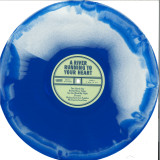
Eric D. Johnson rarely lingers at one location too long. As a kid growing up in the Midwest, Johnson's family moved around a lot, but it wasn't until he became a touring musician years later that motion became a central part of his identity. That transient lifestyle stoked an enduring reverence for the world he watched pass by through a van window. A sense of place is a unifying theme he's revisited with Fruit Bats throughout its many lives. From the project's origins in the late '90s as a vehicle for Johnson's lo-fi tinkering to the more sonically ambitious work of recent years, Fruit Bats has often showcased love songs where people and locations meld into one. It's a loose song structure that navigates what he calls "the geography of the heart." "The songs exist in a world that you can sort of travel from one to another," says Johnson. "There are roads and rivers between these songs." Those pathways extend straight through the newest Fruit Bats album, aptly titled A River Running to Your Heart . Self-produced by Johnson_a first for Fruit Bats_with Jeremy Harris at Panoramic House just north of San Francisco, it's Fruit Bats' tenth full-length release and one that finds the project in the middle of a creative resurgence. After two decades of making music, hard-earned emotional maturity has seeped into Johnson's songs, resulting in a more complex sound that's connected with audiences like no other previous version of Fruit Bats. A River Running to Your Heart represents the fullest realization of that creative vision to date. It's a sonically diverse effort that largely explores the importance of what it means to be home, both physically and spiritually. And while that might seem like a peculiar focus for an artist who's constantly in motion, for Fruit Bats, home can take many forms_from the obvious to the obscure. Lead single "Rushin' River Valley" is a self-propelled love song written about Johnson's wife that clings to the borrowed imagery of the place where she grew up in northern California. Then, there's the gentle and unfussy acoustic ballad "We Used to Live Here," which looks back to a time of youthful promise and cheap rent. But the wistful "It All Comes Back" is perhaps the most stunning and surprising track on the album, Johnson's production skills on full display. Built upon intricate layers of synths, keyboards, and guitars, it's a pitch-perfect blend of tone and lyricism that taps into our shared apprehensions and hopes for a post-pandemic life. "We lost some time / But we can make it back / Let's take it easy on ourselves, okay?" sings a world-weary but ultimately reassuring Johnson in the song's opening lines. It's the kind of performance that makes you hope Fruit Bats stays in this one place, at least for a little while longer.
BLUE & BONE VINYL
Eric D. Johnson rarely lingers at one location too long. As a kid growing up in the Midwest, Johnson's family moved around a lot, but it wasn't until he became a touring musician years later that motion became a central part of his identity. That transient lifestyle stoked an enduring reverence for the world he watched pass by through a van window. A sense of place is a unifying theme he's revisited with Fruit Bats throughout its many lives. From the project's origins in the late '90s as a vehicle for Johnson's lo-fi tinkering to the more sonically ambitious work of recent years, Fruit Bats has often showcased love songs where people and locations meld into one. It's a loose song structure that navigates what he calls "the geography of the heart." "The songs exist in a world that you can sort of travel from one to another," says Johnson. "There are roads and rivers between these songs." Those pathways extend straight through the newest Fruit Bats album, aptly titled A River Running to Your Heart . Self-produced by Johnson_a first for Fruit Bats_with Jeremy Harris at Panoramic House just north of San Francisco, it's Fruit Bats' tenth full-length release and one that finds the project in the middle of a creative resurgence. After two decades of making music, hard-earned emotional maturity has seeped into Johnson's songs, resulting in a more complex sound that's connected with audiences like no other previous version of Fruit Bats. A River Running to Your Heart represents the fullest realization of that creative vision to date. It's a sonically diverse effort that largely explores the importance of what it means to be home, both physically and spiritually. And while that might seem like a peculiar focus for an artist who's constantly in motion, for Fruit Bats, home can take many forms_from the obvious to the obscure. Lead single "Rushin' River Valley" is a self-propelled love song written about Johnson's wife that clings to the borrowed imagery of the place where she grew up in northern California. Then, there's the gentle and unfussy acoustic ballad "We Used to Live Here," which looks back to a time of youthful promise and cheap rent. But the wistful "It All Comes Back" is perhaps the most stunning and surprising track on the album, Johnson's production skills on full display. Built upon intricate layers of synths, keyboards, and guitars, it's a pitch-perfect blend of tone and lyricism that taps into our shared apprehensions and hopes for a post-pandemic life. "We lost some time / But we can make it back / Let's take it easy on ourselves, okay?" sings a world-weary but ultimately reassuring Johnson in the song's opening lines. It's the kind of performance that makes you hope Fruit Bats stays in this one place, at least for a little while longer.
Kristian Matsson has never remained in one place for very long. Having spent much of the last decade touring around the world as The Tallest Man on Earth, Matsson has captivated audiences using, as The New York Times describes, “every inch of his long guitar cord to
roam the stage: darting around, crouching, stretching, hip-twitching, perching briefly and jittering away…Mr. Matsson is a guitar-slinger rooted in folk, and his songs are troubadour ballads at heart.”
Now, Matsson returns as The Tallest Man on Earth with Henry St., his sixth studio album following 2012’s There’s No Leaving Now, full of “vivid imagery, clever turns-of-phrase, and devastating, world-weary observations” (Under The Radar) and 2015’s Dark Bird Is A
Home, his “most personal record… surreal and dreamlike” (Pitchfork). Henry St. notably marks the first time he recorded an album in a band setting. “My entire career I’ve been a DIY person––mostly fueled by the feeling that I didn’t know what I was doing, so I’d just do everything myself.”
But now, longing for the energy that’s only released when creating
together with others, Matsson invited his friends to come and play.
Nick Sanborn (of Sylvan Esso) produced Henry St., which includes contributions from Ryan Gustafson (of The Dead Tongues) on guitar, lap steel and ukulele, TJ Maiani on drums, CJ Camerieri (of Bon Iver) on trumpet and French horn, Phil Cook on piano and organ, Rob
Moose (of Bon Iver, yMusic) on strings and Adam Schatz on saxophone.
The Endless Coloured Ways is a collection of songs by legendary singer/ songwriter, Nick Drake, performed and recorded by over 30 incredible artists from a range of different backgrounds, genres, age groups and audiences. From Fontaines D.C to Guy Garvey, and Aurora to Feist, each artist has offered their own incredible take on a timeless classic. - Second in a collection of five 7" singles - - Limited stock - - Gatefold lancing sleeve -
Kristian Matsson has never remained in one place for very long. Having spent much of the last decade touring around the world as The Tallest Man on Earth, Matsson has captivated audiences using, as The New York Times describes, “every inch of his long guitar cord to
roam the stage: darting around, crouching, stretching, hip-twitching, perching briefly and jittering away…Mr. Matsson is a guitar-slinger rooted in folk, and his songs are troubadour ballads at heart.”
Now, Matsson returns as The Tallest Man on Earth with Henry St., his sixth studio album following 2012’s There’s No Leaving Now, full of “vivid imagery, clever turns-of-phrase, and devastating, world-weary observations” (Under The Radar) and 2015’s Dark Bird Is A
Home, his “most personal record… surreal and dreamlike” (Pitchfork). Henry St. notably marks the first time he recorded an album in a band setting. “My entire career I’ve been a DIY person––mostly fueled by the feeling that I didn’t know what I was doing, so I’d just do everything myself.”
But now, longing for the energy that’s only released when creating
together with others, Matsson invited his friends to come and play.
Nick Sanborn (of Sylvan Esso) produced Henry St., which includes contributions from Ryan Gustafson (of The Dead Tongues) on guitar, lap steel and ukulele, TJ Maiani on drums, CJ Camerieri (of Bon Iver) on trumpet and French horn, Phil Cook on piano and organ, Rob
Moose (of Bon Iver, yMusic) on strings and Adam Schatz on saxophone.
Hawthorne is the powerful new album and short film from Queens-by-way-of-Detroit emcee Motown Priest, a gifted lyricist with a penchant for writing gripping narratives. More than just a gifted storyteller, he also has a phenomenal ear for production that helps to take this project to another level. It’s a cohesive, poignant, and incredible piece of art that serves as a searing look at the world we all live in today. “This album and film weren’t about cheap moralism or heady preaching, it's a very simple idea of confronting who we are, and who we are affects the world around us,” Motown Priest explains. “This is where Hawthorne, in both music and film, connects.” He’s true to his word, too, because the album’s 12 tracks bang just as hard as they make you think. They’re the type of songs you can sit with and unpack, or you can blast them at full volume to make your system rattle - or both. Tracks like “For Sale” and “The Calogero Effect” boast soulful, nostalgic production that fits their more meditative narratives of succumbing to vices and childhood innocence. On the other hand, “Pandora’s Box” straight-up slaps thanks to its distorted guitars and live drums, while “New Religion” is an aggressive, teeth-gritting banger. It’s all part of Motown Priest’s plan to fully engage with his audience while delivering one of the year’s best releases, regardless of genre and medium. In addition to the album, Hawthorne exists as a short film that further explores many of the same themes (ceaseless desire, identity, and capitalism) through the visual format.Within its 35-minute runtime, the film follows the same protagonist as the album, a young man who seeks change and fulfillment but doesn’t consider the pain and damage he causes along the way. It makes for a damning look at so many cultural ills, and it couldn’t have arrived at a more fitting time.
Damage and Their Slices” is a collaborative album NVST and Theo Muller, in which they invite the listeners to a deep dive into an esoteric universe where dark magic meets political revolt.
The Swiss artist NVST shouts, preaches, stirs up and questions the consciences of his audience with a deluge of words about this sick society, the capitalist infection and the abuse of power. In tune with this mantra of georgeorwellian rhetoric, the music by Frenchman Théo Muller turns the malaise of the content into form: paranormal psychedelia, arcane dub, industrial ectoplasms, esoteric ambient and paranormal drones. In short: a friction of electronic sounds that Kraftwerk, years ago, unwittingly defined as metal on metal. Live, this call to action to necromancy and revolution takes on an amphibious, organic, almost cathartic and revealing form.
Cairo, late 2013. In a city in turmoil, where the curfew had just been lifted after a second coup d'état, where the walls were still covered in dreams and revolt, where even the clubs of the city-centre echoed with anti-Islamist and anti-army slogans, I was deeply touched by the voice of Abdullah Miniawy at the 100Copies music studio, a stone's throw from Tahrir Square. A singer, writer, poet, poetry-slammer and student from the El-Fayoum oasis, this spokesman for Egyptian youth was shaking up the music scene and social networks with his hypnotic voice and unique blend of electro, sufism and jazz music, both punk and psychedelic, secular and avant-garde. Three months later, Abdullah's first on-stage revelations took place at the La Voix est Libre festival in Cairo with the "Jimi Hendrix of oud", Mehdi Haddab, followed by his first meeting with composer and saxophonist Peter Corser at the D-CAF festival (Downtown Contemporary Art Festival), created in the aftermath of the revolution by leading figure in theater Ahmed El-Attar. After three years of administrative battles, while censorship was making a comeback in Egyptian artistic circles, Abdullah finally arrived in Paris where he recorded an initial version of Purple Feathers with Peter Corser, which was broadcast on Soundcloud.
In 2017, gripped from the very first seconds by these soaring vocal and instrumental performances, Erik Truffaz accepted our invitation to become involved with Peter's hypnotic loops and Abdullah's electric vocals, and was soon joined by the visceral strings of cellist Karsten Hochapfel. Five years later, Le Cri du Caire is still turning heads, and often moving audiences to tears. Both free and spiritual, sensitive and elusive, their music elevates the soul to giddy heights and flies towards what may well be one of the shortest paths from zero to infinity.
40th Anniversary Edition - newly remastered from the master tapes, with an additional bonus LP of instrumentals and the previously unreleased "Narration Theme."
Daytime Viewing (1979-80) is an extended narrative song, based on a casual analysis of daytime television drama and the audience phenomena such programming addresses. The piece explores the use of fantasy as a survival mechanism against loneliness, illustrating the human compulsion to inflate the mundane to mythological proportions. A central female character weaves tales, using threads of personal experience and the idea of TV as friend, as mantra, and as transformational window between imagined spectacle and the pedestrian plane.
Originally released as a private cassette edition recorded, 1982; Chez Hum-Boom release, 1983 documenting the collaborative performance piece of the same name by Jacqueline Humbert g David Rosenboom. This heady, thoroughly enjoyable work was first made available on CD and LP in 2013 by Unseen Worlds. Jacqueline Humbert (aka J. Jasmine) is a songwriter of brains and wit on
par with Robert Ashley, with whom she's worked extensively. David Rosenboom's complex, harmonic electronic arrangements are accentuated brilliantly by percussion from William Winant. Daytime Viewing can happily be added.
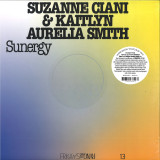
Sunergy brings together synthesists Kaitlyn Aurelia Smith and Suzanne Ciani for the thirteenth installment of FRKWYS, RVNG Intl.'s intergenerational collaboration series. For this edition, a panorama of the Pacific Coast provides the place and head space for a musical appreciation and consideration of a life-giving form vast and volatile with change. Fortuitously (as is the freaky way), Smith and Ciani were discovered to be neighbors in the small coastal community of Bolinas, California. The two had become close friends, bonding over their experience as woman musicians and, more unusually, their shared passion for the Buchla synthesizer. The music of Sunergy embraces this kinship, with Ciani and Smith respectively performing on the Buchla 200 E and the Buchla Music Easel, two modern configurations of the innovative instrument developed in the '60s by Don Buchla.
Sunergy was recorded in the Bolinas home where Ciani has lived for the last twenty-four years. Her living room overlooks the Pacific Ocean from a cliffside perch, creating an idyllic, inspired setting for music making. Setting up their synths side-by-side, Ciani and Smith took turns keeping time and freely improvising for the album sessions. As a complete piece, Sunergy is shaped by slow, pulsing forms and sinuous, melodic sequences that conjure both an oceanic world and the unlimited sound made possible by modular processing.For her part, Ciani has long been a Buchla voyager. Suzanne proselytized the potential of Don's synthesizer instruments in the '60s and '70s, performing her own compositions before introducing synthesized jingles and sound effects to household audiences. Ciani then achieved wide recognition for her debut album Seven Waves, a collection of colorful, classical song-like melodies fluidly working with harmonic textures and sounds of the ocean shore. Since its 1982 release, Seven Waves has become an important chapter of the ambient canon within which contemporary artists like Smith have developed their own synth syntax. Smith was born just a few years after the appearance of Seven Waves, growing up in Orcas Island, Washington. A place of profound natural beauty, the islands would inform Tides, her first instrumental collection from 2014. Smith composed Tides as an accompaniment for Yoga classes, ultimately freeing her from conventional songwriting into the exploratory, synth-based compositions demonstrated in ecstatic variety on 2016's Ears. Despite the serene setting where Sunergy was realized, the album does not romanticize a complete oneness with nature. Smith and Ciani use their collaborative ground to reflect on the unstable forces at play across the Bolinas horizon. Sunergy takes stock of Bolinas in the 21st century, a once-thriving artist's refuge now vulnerable to real estate pressure extending from affluent San Francisco, and more irreparably, the specter of climate change erasing its many waterfront habitats.
A diametric dynamic is present in Sunergy, a somber meditation amidst the intense cultural and solar forces transforming the landscape, and a hopeful assertion of the surviving creative culture of Bolinas. Far from rehashing the gentle grace of the artists' seminal works, Sunergy instead seeks to awaken and bear witness, employing the Buchla waveforms to mirror the infinite rhythms of the ocean and our essential relationship to it.
Kaitlyn Aurelia Smith and Suzanne Ciani's Sunergy will be released on September 16, 2016 on LP, CD, and digital formats. An accompanying documentary by Sean Hellfritsch will be offered in tandem.
Sintering or frittage is the process of compacting and forming a solid mass of material by heat or pressure without melting it to the point of liquefaction. The material produced by sintering is called sinter. The word sinter comes from the Middle High German sinter, a cognate of English cinder.
Born in the mid-60s, German musician and sound designer Uwe Zahn came on the scene of electronic music with his debut full-length album for DIN, titled “Atol Scrap.” In the very same year of 2000, the influential City Centre Offices label has signed Arovane for his majestic “Tides,” which has withstood the test of time for over two decades now. Back then, electronic music was split between the dance floors and the bedroom listening, with the latter carrying the now-famous acronym for Intelligent Dance Music. And Zahn’s compositions were indeed just that – more than a gimmicky, knob-twisting, stuttering randomization of experimental rhythms and tone, Arovane’s music evoked real emotion which has assembled his followers from around the globe. But his arrival on the scene was more than a predictable trajectory. Zahn’s sound began to take shape in the late 80s when the cut-up hip-hop beats were layered with synthesizer pads and looped samples. This experimentation progressed into what the 90s coined as breakbeat and glitch.
As the 2000s rolled over, and the monumental imprints, such as Skam and Warp, honed their staple repertoire defining the future of electronic music, City Centre Offices had a staple of their own. Often referenced alongside Boards of Canada and Autechre, Arovane’s sound quickly gained a discerning audience, tuning into his melancholic melodies, advanced textures, and complex polyrhythms. The pinnacle of his production was released in 2004, when suddenly, on “Lilies,” Zahn signed off with the final track, which he has titled “Good Bye Forever.” And then there was silence. For nearly nine years, the scene and yours truly mourned the loss of Arovane, assuming that he’s given up. That is until, in 2013, Zahn came out with a brand new album, “Ve Palor,” on the surviving post-IDM imprint, n5MD.
While on hiatus, Uwe spent his time researching, reconnecting, and reflecting on all he’s built. The sound experiments went on, and so did the music scene, morphing, dissolving, re-shaping itself into a new form for new followers. During that time, Zahn spent some time with sound design, creating patches for Access Virus TI, as well as sample packs for various sound developers. After “Ve Palor,” Zahn began collaborating with various musicians from around the world, exploring, directing, and fusing their distinguished sound with his own. On his subsequent releases, he shared credits with ambient artists Porya Hatami, Hior Chronik, Darren McClure, and even yours truly. During our collaboration, Zahn often described the process of building a new vocabulary for our very own defined language, with which my piano spoke through sound.
With nearly two dozen studio releases under his belt, numerous EPs and singles, and just as many appearances on various compilations, Zahn continues to split his time between his fascination with sound design, sonic programming, and musical composition, which sees the light via his ongoing projects, releases, and contributions towards audio plug-ins, software synths, and sound sets for advanced hardware. It’s effortless to slot Zahn’s sound between the genres, scenes, and names, but very difficult to peel apart, define, and then express the essence using words. However, what is simple and essential for the ones who understand, is recognizing, admiring, and subsequently falling in love with all that is encompassing of Arovane. (by Mike Lazarev)
Never released before recordings from Logos Foundation live sessions at Logos Foundation, January 3, 1981.
The music is free-improvisation - that is we make our music co-operatively while playing : by listening, reacting, throwing in new ideas, not by following preplanned schemes. At its simplest the group's intention can be said to be to play together as well as possible and to enjoy ourselves while doing so. We are very interested in the result and intend that the audience is as well. As well as the musicians reacting to each other the music itself is pretty reactive to context. In other words room acoustics, background noise, audience response have a strong effect on what happens. This is particularly true of the audience. We have done performances where conversation has broken out with some audience members. There is much to see as well as hear - this is partly to do with the instruments. Together Terry, Steve and David have hundreds, all sizes, all sorts, most colours. They completely cover the floor. Many of these are non-western. The wide range of instruments means that an extremely broad sound spectrum is covered, from sudden bangs to very quiet low notes, from squeaks to normal guitar sounds. This is what fixes the overal group sound.
David Toop: Flute, home-made reeds, percussion Peter Cusack: Guitar Steve Beresford: Piano, Small Instruments Terry Day: Percussion, home-made reeds
Logos Foundation, located in Ghent, is a unique professional organisation for the promotion of new music and audio-related arts by means of new music production, concerts, performances, composition, technological research and other activities related to contemporary music. This organisation has been founded in 1968 by Godfried-Willem Raes.
On October 21, 2022, Merge Records will release Pigments, the debut collaboration between New Orleans electro-revival dynamo Dawn Richard and multi-instrumentalist, producer, and composer Spencer Zahn. Pigments is a project about the power of self-expression through living art, through motion. It's also a love letter to New Orleans, Louisiana. Not strictly classical, jazz or ambient electronica but rather a body of "movements," Pigments is an expressive soundscape that is an immersive passage through the city as seen through the eyes of a young Black girl with dreams to paint her future with the pigments given to her. Richard explains: "Spencer wanted to create one long piece of music that would ebb and flow around my lyrics and emotions, which tell a story of growing to love my own skin. I wanted my voice to be moss surrounding the roots of Spencer's compo - sitions, never forcing the moment to fill every space but rather reveling in the openness of thought and breath." Zahn agrees, saying, "I wanted to work with all these different textures, tones, and colors to have a new sound to frame Dawn's voice and lyrics. To hear a lone clarinet as the breath fades and a cello continues its melody to cue Dawn's vocal entrance is unlike any other record she has made. These are things that excite me as a composer but more as a listener. I hope that other listeners feel the same." Coming on the heels of Dawn Richard's critically acclaimed Merge debut Line, Pigments will introduce listeners to a different facet of Richard's outrageous talent and bring Zahn's thoughtful creativity to a new audience.
Official reissue of Civilistjävel!'s first, self-titled archival LP in sky-blue embossed sleeve, 500 copies.
A minor masterpiece of high-lonesome, ultra-spacey existential electronics, recorded in the ‘90s and early 2000s, the music on this album had never been heard outside the Swedish artist’s private tape/CD-R trading networks until 2018 - when London’s Low Company presented it in a hand-assembled vinyl edition of 250 with scant context or biographical info. Some people understandably thought the project might be a ruse - was it really plausible that material this accomplished and affecting had fallen under the radar for 20-odd years? Implausible, perhaps, but true nonetheless. Five years on we know that Civilistjävel is indeed the real deal: the alter ego of a discreet but by no means reclusive solo artist based in Uppsala who has for decades been quietly honing his craft without worrying about who's listening. Since 2019 he has become more visible: performing live several times in and around Europe, and last year releasing a brand new studio album, Järnnätter, on Felt Records. Meanwhile Low Company has put out four subsequent, vinyl-only volumes of archival material. These have increasingly tended towards the more rhythmic/techno-oriented impulse in Civilistjävel, so it’s interesting to return now to Volume 1: comprised of the most introspective and isolationist of his works, tapping into deep wells of northern European melancholy. It’s a music made with no audience in mind, but simply to suit itself: cold-world kosmische, intimate minimal synth etudes, bowled percussion clusters and impossibly yearning, 30-days-of-night ambient dronescapes. Created mostly using a Juno60 and Korg MS20, and home-recorded to DAT (crackles and surface-noise preserved intact), you can hear in these seven expansive instrumentals unconscious echoes of Serge Bulot and Anna SjalveTreje’s crepuscular dream-sequences, Scandinavian black metal's mist-cloaked forest-fantasies, the austere dub-techno of Thomas Köner and Basic Channel, and the gristly, consumptive concrète of Nurse With Wound and Asmus Tietchens.
Ground Groove, the third full-length release from the LA-based, Iranian-American producer and DJ, Maral, begins with an invocation: the sprawling, achingly heavy Feedback Jam opens the floodgates of history. Conventional (linear) spacetime collapses, crushed beneath the track’s lumbering 4/4 heartbeat and successive waves of distortion. As each wave recedes, samples trickle forward in the mix — seeking, perhaps, to fill the void. Voices and instruments rise and fall in uncanny reverse. Overlapping, implied melodies flicker into focus, then flit away. Feedback Jam is at once an initiation ritual, and a thesis statement for the record that follows.
Drawing upon a vast personal archive of Iranian folk, classical, and pop recordings (some sourced from mixtapes made by her parents in the eighties/nineties), Maral presents, on Ground Groove, a further refinement of the signature “folk club” sound she developed as a live DJ— a sound she would later codify on Mahur Club (2019) and Push (2020). By collecting, dissecting, and re/presenting sonic fragments from Iran, Maral practices a kind of dance-floor ethnomusicology. The subject of her inquiry: Iranian
culture and contexts, throughout history and in the present. But, crucially, this inquiry is instantiated within and throughout the body of the listener, whether this listener is dancing in the club, or riding the train, nodding along with headphones on.
Maral speaks of being in collaboration with her samples, treating each as a distinct bandmate, often consulting with an artist’s catalog (or even a single recording) as one would a trusted creative partner. In so-doing, Maral claims to seek to transcend the self. In this regard, her output neatly triangulates contemporary dance and heavy music with much of the traditional religious music that she samples. Broadly speaking, each of these idioms addresses a desire —shared by audience and performer alike—to transcend the self through volume, repetition, and movement.
Having, in her youth, studied the Setar under Nader Majd (the founder of Virginia’s Center for Persian Classical Music), Maral cycled through various genres (ex: punk, emo, dub) in her adolescence and early twenties, all the while expanding her knowledge of, and appreciation for, Iran’s diverse musical traditions during regular summer trips to Tehran. In college, Maral taught herself to make beats with a ripped copy of Ableton (which remains her DAW of choice), eventually transitioning to playing and hosting various club nights. Forever abiding by an autodidactic, DIY impulse to create art and foster community, Maral relocated to Los Angeles in 2013, where she quickly immersed herself in the city’s numerous overlapping music scenes.
Collaboration (beyond sampling) has proven an important component of her process, with notable spoken word contributions from the likes of Lee Scratch Perry and Penny Rimbaud, as well as a 2021 Panda Bear collab track (On Your Way), which the Animal Collective founder co-produced. Maral is equally attentive to the visual components of her records (album art, music videos, etc.), drawing upon the work of peers and friends for inspiration.
Indeed, the genesis of Ground Groove can be traced back to an audio-visual collaboration between Maral and the artist Brenna Murphy, originally commissioned for the 2021 Rewire Festival — a project that would eventually serve as the album’s foundation. Tracks eight through eleven on Ground Groove comprise Maral’s half of this installation, with tracks one through seven composed afterwards, inspired by the fruits of Maral and Murphy’s collaboration. Murphy’s visuals will be released alongside Ground Groove as a visual accompaniment. Additionally, Murphy designed the album’s art, directed the video for the lead single (the aforementioned Feedback Jam), and is featured on track six, Shy Night.
Composed largely on Ableton, Ground Groove features more frequent and more prominent live recordings from Maral (guitar, bass, and vocals) than either Push or Mahar Club. The cult favorite Roland MC-909 groovebox rears its head on Mari’s Groove. Mixed by Trayer Tryon (Hundred Waters) and mastered by Daddy Kev, the attention to sonic quality on Ground Groove constitutes another significant step in Maral’s development as a studio artist.
Ground Groove’s eleven tracks are “grooves” in the obvious sense, in that they are each driven by a persistent, propulsive rhythm, but the album’s title may just as well suggest the glacial passage of time—the scope of human history, in which individual voices, like streams, carve paths (impossibly) through earth and stone, winding their way to the vast sea of the present.
A year and a half ago, THE MFA returned to the fore once more, when we released their "Oranges and Lemons EP".
Their new album, “Lights Out”, which could be described as a long time coming, is definitely THE MFA’s most ambitious work to date.
As they put it in their own words: “The album is very special to us. It’s a long ambition brought to fruition. It’s an album that is at home on the dancefloor or at home. We’ve always been influenced by 90s rave culture and the club scene of that era and the explosion of creative freedom through electronic music that happened back then.”
The album sums up what THE MFA stands for; their love of electronic music intertwined their love of songs and melody, sometimes banging, sometimes pensive, sometimes longing, occasionally up-beat and happy. Melodic techno-pop-rave then.
The album opener "My Desire" pins down the essence of the album, showing some pop sensibility and a healthy dose of that early 90s spirit with longing vocals by Rhys Evans. The track shows from many angles of the intensity of what club culture was about. The track has, for sure, that pop quality which sets it apart - it is a very complete and rounded and in the true sense, a hit.
"Identify This" kicks off with blissed-out sci-fi sounds but commences with 90s rave chords that gets under your skin and creates a fantastic kaleidoscopic picture of moody UK rave with these spurts of emotional uplifting moments which are worth every penny.
"Bear Likes To Rave" takes us back to the warehouse days and reminds us of the acid warehouse parties with fanned stroboscope beams and dry ice cannons. It’s like looking down on a rave party happening from above, from a bird's eye view, which is in full swing where the euphoria spills over into the audience. "Girl Ahead" is a vocal track exclusively on the digital version of the album, again with Rhys Evans on vocal duties. Here they ponder all the possibilities of the future and the mistakes of the past. Features space toms and grand piano rave chords to evoke a housy feel within.
With "Freedom24" a Hi-NRG melody meets nightcrawler sounds ala "Klang De Familie". This is a soundtrack for the night.
"Lammas Day" has the chilling exotic quality of 808 State "Pacific State" if you grant us this comparison, paired with some phantastic Dr Who sensibilities! This track is quite a voyage!
"Warehouse"... Make Some F-...ing Noise... A TV presenter speaks about Acid house...... This is a wild mash up of impressions which nicely go together due to the melodic string composition and the 303 sequences.
"The Snapping Branch" starts with a mash up of sounds and then dives into an episodic snapshot of "happiness" when the serotonin shoots in (just before it drops). Experiencing a perfect flow that does not want to end. Every clubber knows that feeling.
"You Make Me Smile" is the third vocal track on the album featuring Rhys Evans on vocals. It has fantastic radical stark mood changes and blatant shifts, therefore throws the listener from one corner to the other. Just like the contrast of day and night. Bits here and there might conjure a Radiohead spirit, but really this is all MFA.
"Lights Out” certainly puts across the feeling you get at the end of the night - the club has closed; you are walking home. These are the sounds and feelings in your memories as you chase the vibe that is dwindling as the club becomes ever further away.
Avid Habibi Funk listeners may be familiar with Libyan composer / producer Najib Alhoush, who’s track “Ya Aen Daly” - the Bee Gee’s “Stayin Alive” cover - was included in our second compilation. While the original track never excited us, Najib’s version managed to strip it from its pop approach that had taken over disco during the genre`s peak. At that time, disco tracks mostly were aiming to appeal to the widest audience possible. Najib had turned the original track into something different and very unique. Upon further research we found that Najib was actually the singer and founder of The Free Music band alongside Fakhreddin, Salim Jibreel, Abdulrazzak ‘Kit-Kat’, Mukhtar Wanis and Mohameed Al Rakibi.
Initially, we only licensed Najib Alhoush’s “Ya Aen Daly” from Yousef Alhoush, Najib’s son, who was pleased to hear that there was interest in his father’s music form someone abroad. In the process of exchanging and learning about Najib’s music and career, our understanding was that The Free Music only recorded the one album. This couldn’t be further from the truth, in fact, there were ten albums produced by the group, all impressively coherent with a clear influence from disco, soul, funk and reggae.
The Free Music album was probably the longest it ever took us to gather information, photos and musical source material in a good enough quality to be reissued. This is largely due to the complicated political situation in Libya, compounded by the fact that Libya is still largely cut off from international payment systems, so getting an advance payment to the right person can be a process that takes weeks. The same goes for getting master tapes to a studio abroad and afterwards back to Libya.
When we look for music that works under the umbrella of Habibi Funk, we often come across albums where bands experimented with influences from Soul, Jazz, Funk, Disco and more, usually on a single track or two but then they often go down to a different path for the rest of the album. This was not the case for The Free Music. All their albums are fully dedicated to their unique blend of Disco, Reggae and Funk and it feels that when we made the selection for this album, we could have chosen a completely different number of tracks and the album would be been equally strong.
The lead-off single is the stupendously groovy “Ana Qalbi Ehtar” out February 3rd along with LP pre-order to capitalize on Bandcamp Friday. From the outset, the rhythmic strumming of the funkified guitars give way to the galloping drums and bass, opening up to anthemic vocals and rounding out with a blistering guitar solo, a certified disco-funk classic through-andthrough.
Second single, out February 17th is the disco slammer “Hawelt Nensa Ghalaak.” Guitars, harmonized horns, synths and bouncing bass and drums collide w/ spaced out vox to make the track a dancefloor sureshot for any party.
Third single is “Mathasebnish,” out March 3rd, a pure disco-funk slammer if there ever was one – with stabbing horns, funky bass riffs, a riding rhythm guitar and anthemic vocals, rounded out with stunning flute and guitar solos – the track will surely be on repeat along with the arrival of warmer weather.
Album focus track “Men Awel Marra” is another standout disco-infused tune, showcasing the immense creativity out of Najib and The Free Music. This past summer we finally had the opportunity to get together with Yousef face-to-face at a coffee shop in Istanbul’s central Istiklal road together with our friend Anas El Horani. Yousef told us the whole story of how his father got into music, the start of the band and his father’s continued conflicts with the Gaddafi regime that probably kept his career from becoming even bigger. As always, both vinyl and CD come with an extensive booklet featuring background on The Free Music and Najib Alhoush, including words from Najib’s son, Yousef, as well as unseen photos, cassettes and more.
As the momentum continues to build for old-school blues rock trio GA-20, the band takes their expanding fanbase by storm with the release its first full-length live LP, Live In Loveland!. Featuring 11 rowdy, blistering performances (including five songs from 2022's Crackdown, three from their 2019 debut Lonely Soul and three previously unrecorded tracks), Live In Loveland! captures GA-20 feeding off the energy of the wall-to-wall crowd and delivering each song with raw emotion and body-shaking force. Live In Loveland! mixes band originals and vintage covers, from early electric blues and honky-tonk country to proto rock 'n' roll, all performed live with deep feeling and punk energy. The album was recorded direct-to-tape on a vintage Tascam 388 at Plaid Room Records in Loveland, Ohio, home of the famous Colemine record label. Produced by Stubbs and engineered by Colemine owner Terry Cole, the band blasts out of the gate playing Harold Burrages' I Cry For You, before tearing into Little Walter's obscure gem My Baby's Sweeter. The previously unrecorded original Hold It One More Time proves to be an instant classic, sitting seamlessly next to the vintage covers on the album. According to guitarist Matthew Stubbs (whose resume includes playing with blues legends Charlie Musselwhite and James Cotton, among others), "There is a special type of energy that is exchanged when we play in front of a live audience, and we definitely feed off of that and wanted to capture that. I love the power and energy of the best live blues albums. Historically, some of the most iconic blues and jazz records have been live ones. B.B. King's Live At The Regal changed my life. So did Hound Dog Taylor's Beware Of The Dog!, and Albert King's Live Wire/Blues Power. We really wanted to continue that tradition and do one of our own."