
- A1: If It's Here When We Get Back It's Ours
- A2: Something To Forget
- B1: Dressing Cold
- B2: Antique






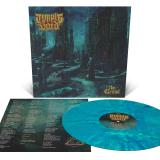
Critically acclaimed Death Metal force TEMPLE OF VOID return with their new album, The Crawl. The caveman brawn of previous albums, namely Summoning the Slayer (2022), remains, but there’s a wider dynamic on the group’s fifth full-length album at play. Now a quartet—featuring guitarist Alex Awn, drummer Jason Pearce, vocalist/guitarist Mike Erdody, and bassist Justin Malek—the Michiganders aren’t shying away from their non-metal influences, seeking greater integration of grunge and post-punk with their brutish signature. Singles “The Crawl” and “Soulburn” demonstrate the proficiency of TEMPLE OF VOID's death-cloaked, spearheaded attack. From the high intensity of opener “Poison Icon” to the granite wall of “The Twin Stranger,” The Crawl isn’t just TEMPLE OF VOID evolved, it’s a harbinger of death metal to come. “The biggest shift for me on this record was not feeling like we had to fly the ‘death-doom banner’ as part of our identity,” says Alex Awn. “Death-doom, as a genre, gave us something to anchor our sound around when we started. It was always a reference and touchstone. At the same time, we always wanted to make sure we had our own spin on it. We’ve always been adding to the conversation, adding to the genre, giving our point of view. A huge part of what makes a Temple of Void record is the non-death-doom influences that make up our DNA. And on album five we never once asked ourselves, ‘Do we have enough death metal? Do we have enough doom metal?’ We simply wrote a heavy-ass record—let the chips fall where they may.” For lyrics, Erdody built on the psychology and fear themes of Summoning the Slayer. The overarching theme of The Crawl is, put rather simply, an “allegory about life, choices, and consequences.” It’s a qualitative view on the horrors of the human condition and the contemplation of our monstrous capabilities. “The Twin Stranger,” for example, is about being stalked by a person’s doppelganger; “Godless Cynic” draws on a short story by sci-fi author Harlan Ellison; and “Poison Icon” tackles the crushing effects of mankind’s intrinsic nature to deceive and control.

The Delines were finishing the "Mr. Luck & Ms. Doom" sessions when Willy brought in a tune called "Walking With His Sleeves Down". Vocalist Amy Boone learned it on piano and the Band recorded it live. The take was stunning but the song didn"t quite fit the record so they set it aside along with "The Reckless Life", "Dilaudid Diane" (featured in their recent encores) and "Jumping off in Madras". The song worked sonically but again didn"t feel quite right lyrically and when they finished the record Willy couldn"t stop writing songs for it. The US opioid epidemic with thousands of young people rattled with addiction and living in tents and on the streets and in old cars and RVs, influenced "Luck and Doom" but even more so with The Set Up. Their stalwart producer, John Morgan Askew, was at the helm again and he"s the king of building atmospheric worlds. You can really feel it on this one. By the time we finished they realized "The Set Up" was the wayward, misguided, and lonely sister to "Mr. Luck & Ms. Doom". More ragged and undone but all CinemaScope Delines.

In the pantheon of classic free jazz, Noah Howard's The Black Ark looms large. Recorded at Bell Sound Studios in New York City in 1969 – just prior to the alto saxophonist's relocation to Europe – the album was eventually released in 1972.
The Black Ark exhibits not only the power and imagination of Howard's playing, but also his breadth as a composer and bandleader. Listeners expecting unrelenting blasts of "energy music" might be surprised to find a cohesion atypical of free jazz; amidst the wild, impassioned solos, Howard weaves in Latin rhythms and fat-bottomed grooves.
The first side, consisting of "Domiabra" and “Ole Negro,” sets the album's tone. Both tracks sound as if they could have appeared on some of Blue Note's proto-spiritual jazz, groove-heavy releases – evoking the likes of Lou Donaldson or Horace Silver – before ceding the floor to the horn players' anarchic firepower.
As John Corbett writes in the liner notes, "Two players stand out. Bassist Norris Jones – who would soon consolidate his name into a one-word reversed amalgamation/permutation of the two, Sirone – is given ample room, largely unaccompanied; his corporal approach foreshadows later work with the Revolutionary Ensemble. But the secret weapon on The Black Ark is Arthur Doyle. Straight from basement rehearsal sessions with Milford Graves, whose ensemble he had joined and who remained a favorite of the drummer for decades, Doyle is a human flamethrower."
Trumpeter Earl Cross' guttural, vocal effects complement Doyle's take-no-prisoners approach, while the estimable combination of Muhammad Ali (Rashied's brother) on drums and Juma Sultan on congas adds an ever-shifting propulsion. The septet is rounded out by the enigmatic pianist Leslie Waldron, who anchors the group with imaginative accompaniment and occasional boppish flourishes.
Every bit worthy of its reputation as an "out-jazz" holy grail, The Black Ark only sounds better with age. It remains the ideal record to convert the remaining free-jazz skeptics.

