Blue Hawaii was Elvis’ 8th film, and on its release in 1961 became one of that year’s most
successful titles at the box office. It remained one of the singer’s all-time favourite movies,
and began a love affair with the island, which had become America’s 50th state in 1959.
Blue Hawaii was the usual Elvis mix of exotic locations, beautiful girls and lots of songs. The
soundtrack of Blue Hawaii did not disappoint – the sleeve boasting “14 Great Songs”. The
title track was a perfect introduction, while the Hawaiian setting meant that space was found
for the atmospheric Hawaiian Sunset and Island Of Love (Kauai). Room was also found for
two other island-related songs - Aloha Oe and Hawaiian Wedding Song, both of which had
been hits for Bing Crosby back in the 1930s. But where Blue Hawaii really scored for fans
was the inclusion of the boisterous Rock-A-Hula Baby and a song which would go on to
become one of the singer’s best-loved ballads – Can’t Help Falling In Love. Based in part on
an 18th Century French melody, for many years this became Elvis’ in-concert finale.
Buscar:the ball
On Giver Taker, the gorgeous debut album by Anjimile, death and life are always entwined, wrapping around each other in a dance of reverence, reciprocity, and, ultimately, rebirth. Giver Taker is confident, intentional and introspective. Anjimile Chithambo (they/them, he/him) wrote much of the album while in treatment for drug and alcohol abuse, as well as while in the process of living more fully as a nonbinary trans person. Loss hovers over the album, whose songs grieve for lost friends ("Giver Taker") and family members ("1978") along with lost selves ("Maker," "Baby No More," "In Your Eyes.") But here, grief yields an opening: a chance for new growth. Each song on the album is its own micro-journey, adding up to a transformative epic cycle created in collaboration with bandmate Justine Bowe of Photocomfort and New-York based artist/producer Gabe Goodman. "1978" and "Maker" both begin as Sufjan Stevens-esque pastoral ballads with Chithambo's mesmerizing voice foregrounded against minimal instrumentation and swell into the realm of the majestic through the addition of warm, steady instrumentation (informed by the mix of 80's pop and African music Chithambo's Malawi-born parents played around the house) and harmonies by Bowe. "In Your Eyes" starts out hushed and builds to a crescendo via a mighty chorus inspired by none other than the Lion King. The allusion is fitting: each song encapsulates a heroic voyage, walked alone until accompanied by kindred souls. The choirs present throughout are equally deliberate. Chithambo grew up as a choir boy himself, and several songs (notably "Maker") grasp not only towards reconciliation between his trans identity and his parents' strong religious beliefs, but towards reclaiming his trans identity as an essential part of his own spirituality.
Kristian Matsson has never remained in one place for very long. Having spent much of the last decade touring around the world as The Tallest Man on Earth, Matsson has captivated audiences using, as The New York Times describes, “every inch of his long guitar cord to
roam the stage: darting around, crouching, stretching, hip-twitching, perching briefly and jittering away…Mr. Matsson is a guitar-slinger rooted in folk, and his songs are troubadour ballads at heart.”
Now, Matsson returns as The Tallest Man on Earth with Henry St., his sixth studio album following 2012’s There’s No Leaving Now, full of “vivid imagery, clever turns-of-phrase, and devastating, world-weary observations” (Under The Radar) and 2015’s Dark Bird Is A
Home, his “most personal record… surreal and dreamlike” (Pitchfork). Henry St. notably marks the first time he recorded an album in a band setting. “My entire career I’ve been a DIY person––mostly fueled by the feeling that I didn’t know what I was doing, so I’d just do everything myself.”
But now, longing for the energy that’s only released when creating
together with others, Matsson invited his friends to come and play.
Nick Sanborn (of Sylvan Esso) produced Henry St., which includes contributions from Ryan Gustafson (of The Dead Tongues) on guitar, lap steel and ukulele, TJ Maiani on drums, CJ Camerieri (of Bon Iver) on trumpet and French horn, Phil Cook on piano and organ, Rob
Moose (of Bon Iver, yMusic) on strings and Adam Schatz on saxophone.
"Lovoscope" is the second album of the Parisian band Polycool. After the obsession with lemons of their first LP "Lemon Lord", the band changes course to talk about love, quite simply.
Each song on the album tells the story of love from a different angle. Lovoscope is the only way to access all the faces of love: happy, toxic or even virtual. The album is a bubble of 11 tracks in which we go through rhythmic ballads (Spiral, Leaves, <3), tracks with electronic sounds (Computer Love, Start), sharp melodies and refrains (Unlike You, Please Babe), and even unidentified sound objects (Odijk).
We find the Anglo-Saxon influences of LA Priest, Unknown Mortal Orchestra, Connan Mockasin, but also Metronomy or Sam Evian, all in a French musical sauce. This album was recorded in the summer of 2021 in an attic studio, surrounded by fields, in a free DIY tradition.
The ten-track LP marks the latest collaboration of "Swiss born Gotham bred" (SPIN) indie rocker Sam Koechlin with his longtime producer / "Second Beatle" Daniel Schlett (Iggy Pop; The War on Drugs) and mastering engineer Greg Calbi and features Chris Egan (Solange; Blood Orange) on drums and Josh "JD" Werner (Ghostface Killah; CocoRosie) on bass.
Singles Golden Days (Sept 16) and Never Let Me Go (July 22), the album's title track, offer a taste of what to expect from the "King Of Tears’" (Radiotélévision Suisse) sophomore effort: a soundtrack for the first day after what looked like the last, fueled by the madness of a rapidly accelerating career trajectory, the thrill of touring with his band again, and the promise of a reopening world whose studios, stages and dance floors we get to share again at long last. In 2021, Sam released his debut album Power Ballads, a largely home-recorded yet “well-crafted set of atmospheric post-punk” (KEXP) to international acclaim.
One of the main figures in Alabama’s music scene, Frederick Knight arrived at Stax in 1972 and hit with the country soul of "I've Been Lonely For So Long", making number 8 on the R&B chart, and the subsequent album was a real milestone in his career.
Prior to this he played a significant part as a producer/writer at Neil Hemphill's Sound of Birmingham Studios where the Stax album was cut. Later that decade Knight would again achieve commercial success with his own record label, Juana, and the recordings of The Controllers and, most notably, Anita Ward.
These early 70s tracks have never surfaced on vinyl before, both of which were also recorded in Birmingham. The plaintive ballad "You've Never Really Lived" with its subtle tempo will have you hooked from the off, while "How, When Or Where" is a mid-tempo opus that will please the dancers out there.
Two utterly fabulous tunes.
- 1: Intro Feat. Ice-T
- 1: 2 Speak On It
- 1: 3 Got It Locked
- 1: 4 Stay Down
- 1: 5 Drive By (Interlude)
- 1: 6 Squeeze Yo Ballz Feat. Baby S
- 1: 7 Money Feat. Dr. Dre
- 1: 8 The Cron
- 1: 9 Big Boyz Feat. Too $Hort
- 1: 0 Psychic Pimp Hotline (Interlude)
- 1: Let's Make A V Feat. Dj Quik, Frost, El Debarge
- 1: 2 Tha Game (It's Ruff) Feat. Playa Hamm
- 1: 3 That's Drama
- 2: 1 Real Raw Feat. Sharief
- 2: It's Where Ya From Feat. Mc Ren
- 2: 3 Shake Da Spot Feat. Shaquille O'neal
- 2: 4 I Don't Wanna Die
- 2: 5 .6 N'na Moe'nin Feat. Dawn Robinson
- 2: 6 Step On By Feat. Dr. Dre, Rc & Crystal
- 2: 7 Big Ballin' Feat. Rc
- 2: 8 Where's T? Feat. Dr. Dre
- 2: 9 Nuthin Has Changed Feat. Kool G Rap & Tray Dee
- 2: 10 The Original Feat. Whoz Who
Cassette[13,82 €]
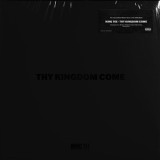
Die lang erwartete offizielle Veröffentlichung von "Thy Kingdom Come"! "Thy Kingdom Come", das ursprünglich am 30. Juni 1998 auf Dr. Dre's Aftermath Entertainment veröffentlicht werden sollte, ist das fünfte Studioalbum von King Tee. Zur gleichen Zeit Aufgenommen wie die Multi-Platin-Alben Dr. Dre - "2001" und Eminem - "The Slim Shady LP", enthält "Thy Kingdom Come" Gastauftritte von Dr. Dre, MC Ren (N.W.A.), DJ Quik, Too $hort, NBA-Legende Shaquille O'Neal, Ice-T, Kool G Rap, Dawn Robinson (En Vogue, Lucy Pearl) - um nur einige zu nennen. Für die Produktion des Albums zeichnen sich Dr. Dre (Eminem, 50 Cent, Snoop Dogg, Xzibit), Mike Dean (Kanye West, Beyoncé, The Weeknd, Jay-Z), DJ Quik (2Pac, Snoop Dogg), Bud'da (Aaliyah, Ice Cube) und Dr. Dre's Aftermath-Produzenten DJ Battlecat, Stu B Doo, Chris "The Glove" Taylor und Fredwreck sowie Ant Banks, Step One und SLJ verantwortlich. Das Album wurde von Dr. Dre gemischt und überwacht. Remastert in hochauflösendem 24-bit 44.1 kHz Audio im Jahr 2022.
- 1: Intro Feat. Ice-T
- 1: 2 Speak On It
- 1: 3 Got It Locked
- 1: 4 Stay Down
- 1: 5 Drive By (Interlude)
- 1: 6 Squeeze Yo Ballz Feat. Baby S
- 1: 7 Money Feat. Dr. Dre
- 1: 8 The Cron
- 1: 9 Big Boyz Feat. Too $Hort
- 1: 0 Psychic Pimp Hotline (Interlude)
- 1: Let's Make A V Feat. Dj Quik, Frost, El Debarge
- 1: 2 Tha Game (It's Ruff) Feat. Playa Hamm
- 1: 3 That's Drama
- 2: 1 Real Raw Feat. Sharief
- 2: It's Where Ya From Feat. Mc Ren
- 2: 3 Shake Da Spot Feat. Shaquille O'neal
- 2: 4 I Don't Wanna Die
- 2: 5 .6 N'na Moe'nin Feat. Dawn Robinson
- 2: 6 Step On By Feat. Dr. Dre, Rc & Crystal
- 2: 7 Big Ballin' Feat. Rc
- 2: 8 Where's T? Feat. Dr. Dre
- 2: 9 Nuthin Has Changed Feat. Kool G Rap & Tray Dee
- 2: 10 The Original Feat. Whoz Who
Black Vinyl[27,52 €]
Die lang erwartete offizielle Veröffentlichung von "Thy Kingdom Come"! "Thy Kingdom Come", das ursprünglich am 30. Juni 1998 auf Dr. Dre's Aftermath Entertainment veröffentlicht werden sollte, ist das fünfte Studioalbum von King Tee. Zur gleichen Zeit Aufgenommen wie die Multi-Platin-Alben Dr. Dre - "2001" und Eminem - "The Slim Shady LP", enthält "Thy Kingdom Come" Gastauftritte von Dr. Dre, MC Ren (N.W.A.), DJ Quik, Too $hort, NBA-Legende Shaquille O'Neal, Ice-T, Kool G Rap, Dawn Robinson (En Vogue, Lucy Pearl) - um nur einige zu nennen. Für die Produktion des Albums zeichnen sich Dr. Dre (Eminem, 50 Cent, Snoop Dogg, Xzibit), Mike Dean (Kanye West, Beyoncé, The Weeknd, Jay-Z), DJ Quik (2Pac, Snoop Dogg), Bud'da (Aaliyah, Ice Cube) und Dr. Dre's Aftermath-Produzenten DJ Battlecat, Stu B Doo, Chris "The Glove" Taylor und Fredwreck sowie Ant Banks, Step One und SLJ verantwortlich. Das Album wurde von Dr. Dre gemischt und überwacht. Remastert in hochauflösendem 24-bit 44.1 kHz Audio im Jahr 2022.
- A1: Diy Meat
- A2: Das Vulture Ans Ein Nutter-Wain
- A3: He Pepe!
- A4: Hostile
- A5: Stay Away (Old White Train) (Old White Train)
- B1: Spinetrak
- B2: Chilinism (Interlude)
- B3: Powder Keg
- C1: Oleano
- C2: Cheetham Hill
- C3: The Coliseum
- D1: Last Chance To Turn Around
- D2: The Ballard Of J Drummer
- D3: Oxymoron
- D4: Secession Man
- A1: Intro (Feat Ice-T)
- A2: Speak On It
- A3: Got It Locked
- A4: Stay Down
- A5: Drive By(Interlude)
- A6: Squeeze Yo Ballz (Feat Baby S)
- B1: Money (Feat Dr Dre)
- B2: The Cron
- B3: Big Boyz (Feat Too Short)
- B4: Psychic Pimp Hotline (Interlude)
- B5: Let's Make A V (Feat Dj Quik & Frost & El Debarge)
- B6: Tha Game (It's Ruff) (Feat Playa Hamm)
- B7: That's Drama
Cassette[20,38 €]
- A1: Intro (Feat Ice-T)
- A2: Speak On It
- A3: Got It Locked
- A4: Stay Down
- A5: Drive By(Interlude)
- A6: Squeeze Yo Ballz (Feat Baby S)
- B1: Money (Feat Dr Dre)
- B2: The Cron
- B3: Big Boyz (Feat Too Short)
- B4: Psychic Pimp Hotline (Interlude)
- B5: Let's Make A V (Feat Dj Quik & Frost & El Debarge)
- B6: Tha Game (It's Ruff) (Feat Playa Hamm)
- B7: That's Drama
Vinyl[41,13 €]
Red Vinyl
The Cinematic Orchestra haben anlässlich des 20-jährigen Jubiläums die erste Reissue ihres Klassikers, „Every Day“, angekündigt. Auf 3 LPs auf transparentem rotem Vinyl finden sich die Bonustracks „Oregon“ und „Horizon“ (feat. Niara Scarlett) sowie die beiden bisher unveröffentlichten Tracks „Semblance“ und „Flite“ (Original Version). Die Veröffentlichung enthält ein neues Artwork vom Designer des ursprünglichen Artworks von „Every Day“, Openmind, und eine Klapphülle mit Gilles Petersons Original-Linernotes. Außerdem wird eine Auswahl von bisher unveröffentlichten Fotos auf einer 12“-Karte präsentiert, darunter die Band im Rivoli Ballroom in London (fotografiert von Carl Fox) und J. Swinscoe mit Fontella Bass in der Nähe des Genfer Sees in der Schweiz (von Peter Williams).
In den zwei Jahrzehnten seit der bahnbrechenden Veröffentlichung des Albums ist der Einfluss der Band unüberhörbar geworden; Jazz ist überall um uns herum, mit gefeierten Künstler:innen, von Kamasi Washington über Tau5 und Koma Saxo bis hin zu Sons of Kemet und unzähligen mehr, London, Berlin und L.A. haben in letzter Zeit eine Szene hervorgebracht, die produktiver ist, als irgendjemand erwartet hätte. BADBADNOTGOOD haben Jazz-Soundtracks zu großen Modeschauen geliefert, und Kendrick Lamar hat - über den Rap-Umweg - das Genre an die Spitze der Charts gebracht. Die Art und Weise, wie sich The Cinematic Orchestra über ihre anfänglichen Jazz-Einflüsse hinaus zu einer Art transzendentaler Orchestrierung entwickelt hat, kombiniert mit der zeitgenössischen eleganten Elektronik, die heute von Künstler:innen wie Ólafur Arnalds und Floating Points verwendet wird - Künstler:innen, denen sie geholfen haben, den Weg zu ebnen - begann mit der Veröffentlichung von „Every Day“ wirklich Früchte zu tragen. Auf den sieben makellosen, schwebenden Tracks nimmt die Gruppe (angeführt von Gründungsmitglied J. Swinscoe und seinem langjährigen musikalischen Mitarbeiter Dominic Smith) die Hörer mit auf eine Reise durch klassischen Soul, Jazz, Chorsätze, versinkenden Horn-Riffs, pochenden Harfen-Linien, Minimalismus und vieles mehr - mit einer Seele, die tiefer als der Ozean ist. Und mit Gästen vom Kaliber eines Fontella Bass (Autor und Interpret des 60er-Jahre-Soul-Meisterwerks, „Rescue Me“ und Mitglied der Free-Jazz-Abtrünnigen, Art Ensemble of Chicago) und der britischen Rap-Legende Roots Manuva (dessen hochfliegender, philosophischer Beitrag zu „All Things To All Men“ ein absoluter Fan-Favorit ist) weiß man, dass man sich auf etwas Besonderes freuen darf. Pitchfork stimmte dem seinerzeit zu und bewertete das Album bei Veröffentlichung mit 8,6 von möglichen 10 Punkten.
Format: Limitierte rot-transparente Vinyl im Gatefold Sleeve mit vier Bonus Tracks von welchen einige bisher nicht auf Vinyl erhältlich waren inklusive 12” Fotokarte und Downloadcode
Kristian Matsson has never remained in one place for very long. Having spent much of the last decade touring around the world as The Tallest Man on Earth, Matsson has captivated audiences using, as The New York Times describes, “every inch of his long guitar cord to
roam the stage: darting around, crouching, stretching, hip-twitching, perching briefly and jittering away…Mr. Matsson is a guitar-slinger rooted in folk, and his songs are troubadour ballads at heart.”
Now, Matsson returns as The Tallest Man on Earth with Henry St., his sixth studio album following 2012’s There’s No Leaving Now, full of “vivid imagery, clever turns-of-phrase, and devastating, world-weary observations” (Under The Radar) and 2015’s Dark Bird Is A
Home, his “most personal record… surreal and dreamlike” (Pitchfork). Henry St. notably marks the first time he recorded an album in a band setting. “My entire career I’ve been a DIY person––mostly fueled by the feeling that I didn’t know what I was doing, so I’d just do everything myself.”
But now, longing for the energy that’s only released when creating
together with others, Matsson invited his friends to come and play.
Nick Sanborn (of Sylvan Esso) produced Henry St., which includes contributions from Ryan Gustafson (of The Dead Tongues) on guitar, lap steel and ukulele, TJ Maiani on drums, CJ Camerieri (of Bon Iver) on trumpet and French horn, Phil Cook on piano and organ, Rob
Moose (of Bon Iver, yMusic) on strings and Adam Schatz on saxophone.
Released in the UK in January 1967 by Decca Records and February by London Records in the US – Between The Buttons was the Stones’ fifth British and seventh US studio album. Released as the follow-up to Aftermath, this album marked a high point in the band’s career, continuing their ventures into psychedelia and baroque pop balladry, it is among the band’s most musically eclectic works. Brian Jones sidelined his guitar on much of the album, instead playing a wide variety of other instruments including organ, marimba, vibraphone, and kazoo. Piano contributions came from two session players: former Rolling Stones member Ian Stewart and frequent contributor and studio legend Jack Nitzsche. It was the last album produced by Andrew Loog Oldham, the band’s manager and producer of all of their albums to this point.
The album has one of the most striking sleeves of the period, featuring a classic Gered Mankowitz image on the cover. The photo shoot took place at 5:30 in the morning following an all-night recording session at Olympic Studios. Using a home-made camera filter constructed of black card, glass and Vaseline, Mankowitz created the effect of the Stones dissolving into their surroundings – according to Mankowitz… ""to capture the ethereal, druggy feel of the time; that feeling at the end of the night when dawn was breaking and they’d been up all night making music, stoned.”
The songs continued Aftermath’s lyrics of acute social observation and savage insight, their earlier raw, rootsy power enhanced by other influences of the period – notably The Beatles, The Kinks, and again Dylan. It is one of their strongest, most varied LPs, with many great songs that remain unknown to all but Stones devotees.
The inventive arrangements and innovative instrumentation on brooding near-classics like All Sold Out, My Obsession and Yesterday’s Papers brought a new dimension to the music. She Smiled Sweetly shows their hidden romantic side at its best, Connection is one of the record’s few pieces of more conventional driving rock and album closer Something Happened To Me Yesterday includes Keith’s first solo vocal.
The US version includes contemporaneous hits – the two songs that gave the group a double-sided number one in early 1967: the shameless and controversial Let’s Spend The Night Together and the beautiful, melancholy Ruby Tuesday.
Released in the UK in January 1967 by Decca Records and February by London Records in the US – Between The Buttons was the Stones’ fifth British and seventh US studio album. Released as the follow-up to Aftermath, this album marked a high point in the band’s career, continuing their ventures into psychedelia and baroque pop balladry, it is among the band’s most musically eclectic works. Brian Jones sidelined his guitar on much of the album, instead playing a wide variety of other instruments including organ, marimba, vibraphone, and kazoo. Piano contributions came from two session players: former Rolling Stones member Ian Stewart and frequent contributor and studio legend Jack Nitzsche. It was the last album produced by Andrew Loog Oldham, the band’s manager and producer of all of their albums to this point.
The album has one of the most striking sleeves of the period, featuring a classic Gered Mankowitz image on the cover. The photo shoot took place at 5:30 in the morning following an all-night recording session at Olympic Studios. Using a home-made camera filter constructed of black card, glass and Vaseline, Mankowitz created the effect of the Stones dissolving into their surroundings – according to Mankowitz… ""to capture the ethereal, druggy feel of the time; that feeling at the end of the night when dawn was breaking and they’d been up all night making music, stoned.”
The songs continued Aftermath’s lyrics of acute social observation and savage insight, their earlier raw, rootsy power enhanced by other influences of the period – notably The Beatles, The Kinks, and again Dylan. It is one of their strongest, most varied LPs, with many great songs that remain unknown to all but Stones devotees.
The inventive arrangements and innovative instrumentation on brooding near-classics like All Sold Out, My Obsession and Yesterday’s Papers brought a new dimension to the music. She Smiled Sweetly shows their hidden romantic side at its best, Connection is one of the record’s few pieces of more conventional driving rock and album closer Something Happened To Me Yesterday includes Keith’s first solo vocal.
The US version includes contemporaneous hits – the two songs that gave the group a double-sided number one in early 1967: the shameless and controversial Let’s Spend The Night Together and the beautiful, melancholy Ruby Tuesday.
"Released in April 1966 by Decca Records, Aftermath was the Rolling Stones’ fourth British studio album. It was issued by London Records in the US in June 1966. Recorded at the RCA Studios in California, it was their first album released in true stereo.
It is also one of the first ‘popular’ albums to eclipse the 50-minute mark, and contains one of the earliest rock songs to exceed 10 minutes (the blues jam Goin’ Home). The album’s release was briefly delayed by controversy over the original packaging idea and title – Could You Walk on the Water? – due to London Reocord’s fear of offending Christians in the US.
The album was considered an artistic breakthrough for the band, being the first to consist entirely of Jagger–Richards compositions, (after their maverick young manager, Andrew Loog Oldham, had shut them in the kitchen of their flat until they had written some more original songs!).
It also featured strongly the immaculate guitar work of Brian Jones and the remarkably wry, observant song-writing of Jagger–Richards
Jones played a variety of instruments not usually associated with their music, including sitar, dulcimer, marimbas and Japanese koto, as well as guitar, harmonica and keyboards, though much of the music is still rooted in Chicago electric blues. The burgeoning influences of psychedelia, Bob Dylan and the tensions around the world, are evident in classics like Paint It Black, an eerily insistent number one hit, available on the US version of the LP.
Other classics included the jazzy Under My Thumb, where Jones added exotic accents with vibes, and the delicate Elizabethan ballad Lady Jane, with distinctive dulcimer, the wry observational Mother’s Little Helper with its unashamed lyrical drug references, and the overlooked gem – the brooding, meditative I Am Waiting.
The American edition was issued with a shorter track listing, substituting the single Paint It Black in place of four of the British version’s songs, in keeping with the industry preference for shorter LPs in the US market at the time."
"Released in April 1966 by Decca Records, Aftermath was the Rolling Stones’ fourth British studio album. It was issued by London Records in the US in June 1966. Recorded at the RCA Studios in California, it was their first album released in true stereo.
It is also one of the first ‘popular’ albums to eclipse the 50-minute mark, and contains one of the earliest rock songs to exceed 10 minutes (the blues jam Goin’ Home). The album’s release was briefly delayed by controversy over the original packaging idea and title – Could You Walk on the Water? – due to London Reocord’s fear of offending Christians in the US.
The album was considered an artistic breakthrough for the band, being the first to consist entirely of Jagger–Richards compositions, (after their maverick young manager, Andrew Loog Oldham, had shut them in the kitchen of their flat until they had written some more original songs!).
It also featured strongly the immaculate guitar work of Brian Jones and the remarkably wry, observant song-writing of Jagger–Richards
Jones played a variety of instruments not usually associated with their music, including sitar, dulcimer, marimbas and Japanese koto, as well as guitar, harmonica and keyboards, though much of the music is still rooted in Chicago electric blues. The burgeoning influences of psychedelia, Bob Dylan and the tensions around the world, are evident in classics like Paint It Black, an eerily insistent number one hit, available on the US version of the LP.
Other classics included the jazzy Under My Thumb, where Jones added exotic accents with vibes, and the delicate Elizabethan ballad Lady Jane, with distinctive dulcimer, the wry observational Mother’s Little Helper with its unashamed lyrical drug references, and the overlooked gem – the brooding, meditative I Am Waiting.
The American edition was issued with a shorter track listing, substituting the single Paint It Black in place of four of the British version’s songs, in keeping with the industry preference for shorter LPs in the US market at the time."
- A1: Nina’s Dream
- A2: Mother Me
- A3: The New Season
- A4: A Room Of Her Own
- A5: A New Swan Queen
- B1: Lose Yourself
- B2: Cruel Mistress
- B3: Power, Seduction, Cries
- B4: The Double
- B5: Opposites Attract
black vinyl[32,14 €]
Black Swan is a 2010 American psychological thriller film directed by Darren Aronofsky and starring Natalie Portman, Vincent Cassel, Mila Kunis and Winona Ryder. The plot revolves around a production of Tchaikovsky’s Swan Lake ballet by a prestigious New York City company. Usually described as a psychological thriller, Black Swan can also be interpreted as a metaphor for achieving artistic perfection, with all the psychological and physical challenges one might encounter.
The original score for the film was composed by Clint Mansell, an English musician, composer, and former lead singer of the band Pop Will Eat Itself. Mansell was introduced to film scoring when director Darren Aronofsky hired him to score his debut film, Pi. Ever since Mansell wrote the score for many of Aronofsky’s films. Notable additional film scores include The Fountain, Moon, Smokin’ Aces, Requiem for a Dream, The Wrestler, Doom, and High-Rise.
Black Swan is available as a limited edition of 750 individually numbered copies on silver and black marbled vinyl and includes a 4-page booklet.
Der vierfach Grammy-nominierte Multiinstrumentalist, Produzent und Gründungsmitglied von Porcupine Tree veröffentlichte im März 2009 sein gefeiertes Debütalbum.
Das düstere, cineastische und reichhaltig strukturierte Album besteht aus 10 Tracks, die von Balladen und Hymnen bis hin zu industriellen Lärmattacken reichen. Es ist das Ergebnis von zwei Jahren kreativen Schaffens und zahlreichen Aufnahmesessions weltweit in Studios von Mexiko City bis Japan und Israel.
Reissue als Digipak CD oder schwarzes Doppelvinyl im Gatefold Sleeve
Wilsons Solodebütalbum erschien ursprünglich 2009 auf Kscope
mit Tony Levin, Gavin Harrison, Jordan Rudess, Michiyo Yagi, Sand Snowman und Theo Travis
Let's get it straight: "This is" is THE album by Ghia. It catches the band at its peak and features 10 songs, including not only their impeccable hit, "What's Your Voodoo?" but a full arsenal of yet unheard, timeless, and soulful music without equal. The songs on the album, which were recorded between 1988 and 1991, could be considered forerunners of the downtempo genre, with one foot in the late 1980s street soul direction but sparkling with touches of synth pop and contemporary jazz-funk. Genre limitations aside, all that Ghia ever wanted to do was create music-good music-and you will hear this in the depth of the compositions.
The album starts with "Keep Your House In Disorder," which has yet again become another classic song from the band's catalog since it was featured as the B-side of the "What's Your Voodoo?" reissue. The song is about a relationship in which the woman has trouble adapting to her boyfriend's turn in life. He tells her to "keep your house in disorder," meaning don't take things too seriously, don't stand still, and you will do better to take the sideroads in life.
"This Is" continues with the downtempo numbers "Crystal Silence" and "Close to You." Both are deep, one-of-a-kind, and previously unissued street soul ballads. On these two tracks, you can still hear the band's roots in jazz-funk. Hence, as a follower of the band's output may have yet recognized, instrumentals of these two tracks can be found on their first LP, "Curaçao Blue." In fact, "Close to You" was one of the band's first compositions. Earlier recordings of the song exist with different singers and different vocals, but it wasn't perfect until Lisa laid down the final version and a choir was added. It's difficult for us to recall any late-80s soul tune as beautiful and intriguing as this one. The final section, which begins with "so much baby we can say," sounds ahead of its time, reminiscent of mid-90s contemporary R&B.
Next up is "Eskimo," an equally brilliant and soulful downtempo composition, but with more focus on synth sounds than the previous tracks. Once more, it showcases the creative lyricism of the song writers, Boberg and Simon, imagining a train ride during a rainy and cold night: "feeling like an Eskimo in an igloo in New York."
Eskimo leads to the aforementioned classic, "What's Your Voodoo?" Originally released in 1991 on the small Mikado label, it was reissued on our label in 2019. We already called this "one of the most wonderful and mystic slow motion synth pop tunes ever recorded"-and we still mean it! Let's face it: this was done before British bands like Massive Attack, Tricky, and Portishead laid the foundation of trip-hop. Dare we call Ghia's music "proto trip-hop"? As a special bonus, the digital version of the LP features a previously unreleased mix of the song, which includes added samples; this should clarify how close Ghia actually was to the sound of the mid-'90s.
"Angel On Your Shoulder" and "L O M E" are two more completely unissued and great tracks from the band's shelved works. Being a bit more uptempo than the rest of the album, they fall between contemporary soul/R&B and synthesized pop music. And of course, another downtempo hit needed to be featured on the album: "You Won't Sleep on My Pillow." It was the original A-side of their single release in 1991, and since then it has been featured on various compilations.
The album concludes with a really strong ballad entitled "I Haven't Got The Power." Here we hear only pianist and keyboardist Lutz Boberg with Lisa Ohm, without further instrumentation. Basically recorded in a live session, this showcases once more the talent and ingenuity within the Ghia project.
Whether you agree or not, "This is" may easily be considered one of the best German late 80s/early 90s soul pop and downtempo albums ever recorded. Cautiously, it may even be submitted as the missing link between mid/late 80s soul by bands such as Sade, and later trip-hop groups like Massive Attack. Let us celebrate Ghia and their music, which had been shelved for more than 30 years but has now finally been released on The Outer Edge.