Wasteland is a record that is unafraid to plunge into the darkness of the modern world and embrace the weirder, edgier and more unnerving moments that come from doing so. It is an album that captures all the enormity of life from the micro to the macro, zooming in on the personal as well reflecting on broader societal issues.
“Wasteland is about the idea of a place once known or familiar that is now broken down and unrecognisable,” says Ghedi. “It’s about exploring the process of watching someone’s surroundings and environment collapse.” And within that you have a lot going on. “It also explores death, personal loss, grief, mental health and how the natural world provides solace and meaning for that loss and how these worlds blur into one another.”
Ghedi has always been an artist that in many ways perfectly encompasses folk music in its purest form but he is also someone that frequently pushes the boundaries of that label and no more so is that apparent than on this record. As like previous albums, such as 2018’s A Hymn for Ancient Land and 2021’s In the Furrows of Common Place, Ghedi uses traditional folk songs as a means to explore contemporary issues via modern and experimentally-leaning music. “With the traditional material on this album I wanted to find songs with content that resonated with me,” says Ghedi. “But also that were based roughly around the north of England.” This is a central underlying theme to the album for Ghedi. The feelings of loss, erosion, and degradation are often most pronounced in working class communities and this was something he wanted to weave in. “It was important to voice and choose material that represented or expressed issues that correlated with things going on around me.”
However, as remarkable as some of the traditional material is, some of the most arresting work on the album is Ghedi’s entirely original compositions. Lead single ‘Wasteland’ is a stunning piece of work that while rooted in an environment being corrupted and broken – “there’s violence on these hills” Ghedi sorrowfully sings, before claiming this is no longer somewhere that can be called home – it is also a stirringly beautiful composition that soars and glides as it opens up, as sweeping strings swoop and in and out of Ghedi’s twangy electric guitar.
The decision to incorporate more fuller sounds, such as electric guitar and huge drums, results in a notable shift and evolution in tone for Ghedi. “The lyrical content needed something more band-driven and loud to deliver them,” he explains. “Incorporating the electric guitar in my songwriting was also a big part of opening the sound up, using drop tunings pushed me to use my voice in a wider range, which forced me to use falsetto a lot which I haven’t previously done before. That then opened the sound up and gave me creative ideas for bigger arrangements and to sonically really push things.”
What Ghedi has done in creating his masterpiece is construct a remarkable space where deeply intimate and personal feelings coexist with reflections on environment, place and society, while also interweaving historical context via traditional songs. Wasteland is as much of a world to explore and exist in as much as it is an album, with Ghedi carving out his distinctly unique sonic language and voice to explore that singular environment.
Buscar:the ball
Wasteland is a record that is unafraid to plunge into the darkness of the modern world and embrace the weirder, edgier and more unnerving moments that come from doing so. It is an album that captures all the enormity of life from the micro to the macro, zooming in on the personal as well reflecting on broader societal issues.
“Wasteland is about the idea of a place once known or familiar that is now broken down and unrecognisable,” says Ghedi. “It’s about exploring the process of watching someone’s surroundings and environment collapse.” And within that you have a lot going on. “It also explores death, personal loss, grief, mental health and how the natural world provides solace and meaning for that loss and how these worlds blur into one another.”
Ghedi has always been an artist that in many ways perfectly encompasses folk music in its purest form but he is also someone that frequently pushes the boundaries of that label and no more so is that apparent than on this record. As like previous albums, such as 2018’s A Hymn for Ancient Land and 2021’s In the Furrows of Common Place, Ghedi uses traditional folk songs as a means to explore contemporary issues via modern and experimentally-leaning music. “With the traditional material on this album I wanted to find songs with content that resonated with me,” says Ghedi. “But also that were based roughly around the north of England.” This is a central underlying theme to the album for Ghedi. The feelings of loss, erosion, and degradation are often most pronounced in working class communities and this was something he wanted to weave in. “It was important to voice and choose material that represented or expressed issues that correlated with things going on around me.”
However, as remarkable as some of the traditional material is, some of the most arresting work on the album is Ghedi’s entirely original compositions. Lead single ‘Wasteland’ is a stunning piece of work that while rooted in an environment being corrupted and broken – “there’s violence on these hills” Ghedi sorrowfully sings, before claiming this is no longer somewhere that can be called home – it is also a stirringly beautiful composition that soars and glides as it opens up, as sweeping strings swoop and in and out of Ghedi’s twangy electric guitar.
The decision to incorporate more fuller sounds, such as electric guitar and huge drums, results in a notable shift and evolution in tone for Ghedi. “The lyrical content needed something more band-driven and loud to deliver them,” he explains. “Incorporating the electric guitar in my songwriting was also a big part of opening the sound up, using drop tunings pushed me to use my voice in a wider range, which forced me to use falsetto a lot which I haven’t previously done before. That then opened the sound up and gave me creative ideas for bigger arrangements and to sonically really push things.”
What Ghedi has done in creating his masterpiece is construct a remarkable space where deeply intimate and personal feelings coexist with reflections on environment, place and society, while also interweaving historical context via traditional songs. Wasteland is as much of a world to explore and exist in as much as it is an album, with Ghedi carving out his distinctly unique sonic language and voice to explore that singular environment.

No-one could have predicted the success of The 88, the first album from Minuit
(minwee), or how warmly it would be received. Equally no-one could have predicted that the band would return to the live arena a decade after their final fling or consider pressing their debut on vinyl for the first time.
Formed in Nelson, NZ in 1997, the trio cut their teeth playing regularly around the South Island’s underground club and festival scene. After a hiatus overseas, they began recording The 88 in 2002 in Ryan’s home studio. The lyrics were influenced by their travels around Europe and Ruth's time working for the UN in Kosovo and East Timor; the beats by The Prodigy, Portishead and the UK’s trip-hop and breakbeat scenes.
Signed to indie label Tardus, their tunes were eagerly picked up by the bNet student radio network, which then ballooned into high rotates on TV station C4, helped along by Alyx Duncan’s stunning video for Except You. A busy summer playing live every weekend for three months and seemingly universal praise from the music press led to them swiftly gaining gold sales.
Now 22 years later, with live shows looming, the trio have decided to revisit their debut, completing two previously unfinished tracks from the period to add a bonus to this inaugural vinyl release.
- Turn Again
- Flowerface
- East Of The Sun
- Weary Spell
- Moon Dark
- Dreamless Sleep
- Fox's Song
- Three Magic Notes
- Waiting Room
- Let's Go For A Swim
- Owl Light
- Dominion Of Spells
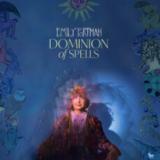
The album is a powerful reaffirmation of human creativity: "My music has always been about connection, bringing enduring old stories into conversation with contemporary life," Portman says. "This album is a collective, entirely human-made effort, and it's richer because of it." Renowned for her luminous songwriting and distinctive voice in contemporary folk, Portman steps into bold new territory with an album that charts a heroine's midlife journey through dark woods in search of wonder. Drawing on ballads and folktales, Dominion of Spells explores themes of burnout, misogyny, motherhood, miscarriage and personal transformation, weaving lived experience with mythic imagery and traditional folk narratives. The title track, Dominion of Spells , reclaims a 17th- century phrase once used to diagnose women as "disordered", drawing on the myth of the wandering womb and the long history of medical misogyny. Portman transforms these ideas into a vision of a freer, fairer realm where women's bodies are understood rather than feared. The first single, Turn Again , is a tender meditation on parenthood, inspired by her young son's imaginative shapeshifting games and echoing the Tam Lin ballad, where steadfast love breaks a powerful spell. Elsewhere, the album explores women's right to move safely after dark, genderswapped retellings of heroic quests, miscarriage, phone addiction and the restorative power of creative practice.
Katz Mulk's ''All the mess'' is a collection of songs about playing and play-work, recorded between 2023-25 in Glasgow and Tokyo. Developed from performances across the UK and during a residency at Xevarion Institute in Hong Kong, with dancers, costume design by Mary Hurrell, and mobile speaker design by Chris Ball. Slithering breath, crackling synths, dented gongs, and dub loops pull songs into unexpected, unsettling patterns, like being a kid again but with more electronics.
- A1: Can I Live Feat. Precious Okoyomon 02:36
- A2: M32 Riddim 04:06
- A3: One Exists Or Agrees To Exist 05:00
- A4: Don't Panic Feat. Ms. Carrie Stacks 02:58
- B1: Duppy Know Who Fi Frighten 06:31
- B2: Helicopter Hovers Over My Crown Heights Apartment 05:19
- C1: Exorcise The Language Of Domination Feat. Juliana Huxtable 06:12
- C2: B2B Feat. Suutoo 05:32
- D1: Effects Of Resistance Feat. Khanyisile Mbongwa 06:12
- D2: Black Trans Masculine Experience (Instrumental) 08:55
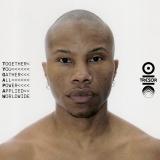
May 2026 marks the arrival of TYGAPAW (aka Dion McKenzie)’s first full-length album on Tresor Records, entitled Together You Gather All Power Applied Worldwide. An acronym of its creator’s name, TYGAPAW’s third studio album is a deeply personal collection of music building worlds where Black queer and trans siblings can thrive, while unifying dancefloors worldwide. A proposition that collective wisdom liberates us from the matrix of domination we live within. The album unfolds as the latest chapter in TYGAPAW’s ongoing techno opera opus, continuing to center the voices of Black women, which surface as layered incantations rather than lyrics - powerful, haunting, sensual, activating.
With the process of creating the album starting in 2023, as TYGAPAW (Dion McKenzie) was in the first year of their transition, the music reflects the intensity of that period, where they were experiencing deplatforming as a response to the shift in their physical appearance: Tracks like ‘M32 Riddim’ and ‘Helicopter hovers over my Crown Heights Apartment’ feature high-paced rhythms intersecting with intense siren-like synths to form demanding compositions echoing a heightened sense of alert. Yet throughout the album, relief comes in the form of TYGAPAW’s vocal features, co-conspirators, and chosen family, whose voices are treated with reverb and echo, a sonic fingerprint that leads back to the pioneers in the legendary studios of TYGAPAW’s native land, Jamaica, an important reminder that the past will always inform the future. It is an album for dancers first and foremost, where joy, defiance, and integration with the natural body coexist, and every drop feels less like a climax than a transformation. Expect a bass that permeates your soul and melodic synthesized sequenced phrases echoing the dancehall eras of TYGAPAW’s youth, reshaped into hypnotic melodies that glow over industrial kicks designed to command attention, reasserting Jamaica's pioneering yet often overlooked contribution to electronic music.
In the opening track, ‘Can I Live’, Precious Okoyomon’s words feel like the beginning of a ritual; setting the intentions for the rest of the proceedings. As McKenzie puts it, their “work is about regeneration, resetting, getting integrated into nature, and about rebirth. That’s the tone I wanted to set at the outset of the album.” Ms Carrie Stacks continues this thread of support in ‘Don’t Panic’ with heavily processed vocals on top of a beat that takes inspiration from another important ingredient in the antidote to the oppression of isolation: Ballroom culture. “ I feel like I found my queerness in Ballroom, that’s why this track is very important to me.”
Echoes of NYC Black queer nightlife scene also permeate in the energetic drums of ‘Exorcise the Language of Domination’, in which Julianna Huxtable’s spoken performance complements the various movements and tones of the music. “My producer brain thought this was the one that Juliana’s vocals would be best suited for. I hinted: ‘what do you think of this one?’ She just went into her notes and picked some passages to go with the first section of the track. From there, it was a year-long process of development. It required time and space for this thing to evolve, but I think it’s one of the most powerful tracks on the album.” London’s SUUTOO contributes the album’s only musical collaboration on ‘B2B’, a track that emerged from sessions in McKenzie’s New York studio where the real objective was to connect and have fun; a time out from the demands of life outside.
The album closes out with a double hit of emotion in the form of ‘Effects of Resistance and Black Trans Masculine Experience’. The former features South African scholar Khanyisile Mbongwa drawing connections that exist between Africa and the Black diaspora, whilst looking to the future and calling for a shared sense of community.
The latter piece, an instrumental version of the piece which featured on the IMMIGRANT E.P. of 2025 is a gentle and deeply affecting end to the record, a place of peace and acceptance. This end-of-cycle tone is mirrored in the sleeve photography, which also ties back to IMMIGRANT by finally revealing what was hidden: a portrait of the artist fully self-actualized; a step towards true inner liberation. TYGAPAW is sonically defiant across this album; bass frequencies feel tactile — less heard than inhabited — infectious lead synth melodies remain with you long after the track ends. An overall sound that leaves asserting an urgent need for connection. From Detroit to New York to Berlin to Jamaica, despite geographic distance, this album reminds us that we remain in solidarity, recognising that meaningful world-building requires collective input and action, both personal and communal, if we are to move toward liberation.
- 1: Slab
- 2: Thirty-Seven Forever
- 3: How You Gonna Get Even
- 4: Someone You Forgot
- 5: Lonely Heart Pyramid Scheme
- 6: Soulseeker
- 7: Jukebox Weepie
- 8: Casio
- 9: High Hopes (Ballad Of Rural France)
- 10: Electrical Tape
Much like the duo’s music, the story of Rural France is both mundane and magical. Tom Brown (also of transatlantic janglepunks Teenage Tom Petties) and Rob Fawkes moved to London in their mid-twenties. Despite living under the same roof, they never picked up a guitar – except for one drunken, failed attempt at writing a Spoon song (“Big Chops” …don’t ask). It was only after both separately relocating to Wiltshire and starting families that they began assembling songs as a way of meeting up. Tom had amassed a pile of sprightly slacker jams that were calling out for Fawkes’ messily melodic guitar lines. Rural France was born.
After a debut album on their hero, ex-Lemonhead Nic Dalton’s Half-a-Cow Records, they retreated to a garage to record their next two albums: RF (2021) and Exacamondo! (2024), both released on much-respected jangle label Meritorio Records. Despite being lo-fi in the truest GbV sense, both records were warmly received by the DIY indie blogosphere, with their short, scrappy, but supremely melodic songs landing on numerous AOTY lists. RF even won Album of the Year at Janglepop Hub.
Raven Sings The Blues probably summed up the sound best: “With drunken visions of Beach Boys harmonies playing in the back of their heads and hooks that consume Teenage Fanclub cheeriness with the same beautiful brevity that drives Tony Molina, the pair have knocked out eleven rumpled classics.” Album four, SLOTHS, arrives via Meritorio Records and Safe Suburban Home Records on 08/05, and is a slightly different beast. For one, it’s been mixed by a professional – Rob Slater (Westside Cowboy, Yard Act, Thank) – giving the guitars and drums room to breathe. It’s easily their most high-fidelity record to date. It’s also their jangliest, most baroque and thoughtful album yet. But alongside added organ, horns and mellotron – and drums from Tom’s Teenage Tom Petties bandmate Jeff Hamm – it still retains the buzzes, hums and little freak-outs that stick to the duo’s original “Pavement playing Teenage Fanclub” mission statement. “Rob and I both wanted to do something a little slower and a little more melancholy,” says Tom. “We resisted our usual urge to hit the distortion pedal and made something that fitted where we are now and celebrates how we still listen to Meatloaf when we get drunk.”
SLOTHS is also the most thematically consistent Rural France record to date. While it wouldn’t be right to call it grown-up, it definitely has homeowners’ insurance. From the Silver Jews-esque Americana of “Slab” and mid-life rallying cry of “Thirty Seven Forever”, to the horn-embossed loser anthem “Lonely Heart Pyramid Scheme,” the songs celebrate (and rail against) the absurdities of getting older, forming a band in your thirties, and the strange phenomenon of time passing. Because no matter how slow you move, everything else goes fast. SLOTHS.
- 1: Snake
- 2: Moses Kill
- 3: Golden Arm
- 4: Lunch
- 5: Special Power
- 6: The Void / Madison
- 7: White Shirt
- 8: Radiator
- 9: Icepick
- 10: <
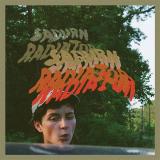
Intimacy is manifested in every moment of Radiator, the debut album from Philadelphia's Sadurn. This feeling of closeness, of being able to lend your every sense to one's confessions of internal conflict, is due in large part to the circumstances under which this album was created. Much of the world fell apart in 2020, but Sadurn tucked themselves away in a Pocono's cabin, creating and recording what would become their first full-length. Within the confines of their close quarters, passing animals as the only auditory witness to a makeshift recording studio created by moving furniture, Sadurn created an album that will break your heart and then slowly piece it back together.Sadurn started as the solo project of Genevieve ??DeGroot. Picking up guitar in 2015, DeGroot started writing songs, eventually playing DIY shows throughout the city of Philadelphia. With time, the direction, sound, and members of Sadurn changed. The beginning of 2020 was meant to serve as their debut as a four member band (Jon Cox on guitar/tenor guitar, Tabita Ahnert on bass, and Amelia Swan on drums), but the world had other plans and the group adapted.Taking influence from artists like Gillian Welch, Alex G, and Jason Molina, Sadurn's emotive indie rock explores the struggles and eventual beauty of grappling with multiple emotional realities, particularly when it comes to relationships. That conflict, the idea of being forced to choose, even when terrified, is present on singles like "Radiator" and "Golden Arm." The latter is an unhurried ballad that shows its truest colors with time, eventually blossoming with unexpected admissions of desire and uncertainty. Indecision, heartbreak, and attempting to live out your days against the actual backdrop of a gradually worsening hellscape is a shared commonality among us all, but on Radiator Sadurn breaks down walls that others so often put up. It's a fleeting, impactful glimpse at one's whole heart, and its sweeping, special nature is evident from the moment the album opens.
- D4: The Look Of Love (Medley No 2)
- B7: The Look Of Love (Medley No 1)
- A1: D Ballers
- A2: When I Die .. (Feat. Emade)
- A3: Home
- A4: Take Some Time
- A5: From Harlem 2 Conant Gardens
- B1: Fuck Ya, Just Clap
- B2: Troubles
- B3: Fall In Love (I&Apos;M Ready)
- B4: Metreeves
- B5: Much Better Smokey
- B6: One
- C1: Woo
- C2: Rockin
- C3: Two Loverz
- C4: Detroit Wisp
- C5: Whut Do U See Harold?
- C6: Whoodonut
- C7: Love Y O.u
- D1: The Spot
- D2: So Heavy Sir
- D3: Never Hurt U
- D5: Welcome 2 .. (Feat. Emade)
The album was pressed on double 180g black vinyl.
Limited edition of 200 copies worldwide.
J Dilla passed away 20 years ago. Metro himself paid tribute to the production master.
"Donutroit" is a meticulously crafted tribute to James Dewitt Yancey. Reinterpretations, reworks, and original compositions – a total of 24 tracks produced by Metro, who pays tribute to the legend with this album. Maciej returns with the album after a somewhat lengthy break, but he does it with a bang. This kind of hip-hop with soul elements has been unheard of in Polish music for a long time. This is the first Polish full-length tribute to Dilla. The guests are few, but they are impressive. Emade himself plays drums on two tracks, and Immortal Onion reworked one of James's iconic recordings.
Dawid ObyOby Frańczak is responsible for the full artwork.
The legendary Polish underground label JuNouMi Records is responsible for the pressing.
l 12: The Look Of Love (Medley No. 1) feat. Immortal Onion
[w] 23: The Look Of Love (Medley No. 2) [feat. Immortal Onion]
[l] B7: The Look Of Love (Medley No. 1) [feat. Immortal Onion]
[w] D4: The Look Of Love (Medley No. 2) [feat. Immortal Onion]
[l] B7 | The Look Of Love (Medley No 1) [feat. Immortal Onion]
[w] D4 | The Look Of Love (Medley No 2) [feat. Immortal Onion]
Nurtured on 90s alternative indie, lucky break's music melds the emotional directness of Fiona Apple, the wide-eyed warmth of Bedouine and the Americana-leaning alt rock of Lucinda Williams. Fans of Alvvays, Hole, Phoebe Bridgers and The Breeders will find familiar touchstones here. lucky break is a hand-drawn cartoon character and a girl with a guitar, an ever-expanding container for the feelings that come with making art. She can be very sad and very joyful, living somewhere between worlds. On her debut for Fire Records, made it!, lucky break builds a new world for her character to inhabit. made it! collects songs written between the ages of 19 and 23, documenting the uncertainty of early adulthood, the end of a first major relationship and the process of learning to stand up for yourself. Tracks like "Crush" pair sharp lyrical insight with big drums and crisp bass, while "Head Down" uses bright, dreamy guitars to explore themes of politics, consumer culture and moral complacency. Confessional, direct and emotionally precise, lucky break's songwriting is matched by a versatile and expressive vocal performance that shifts across moods and styles throughout the record. Produced with Elliott Woodbridge in Burbank, made it! is a playful, self-assured debut from a young artist who has already found her voice and is stepping confidently into a bright future. Digisleeve-CD and coloured Vinyl-LP w/ dlc available!
- 1: Big Swing
- 2: Burning String
- 3: Camp Song
- 4: City Lights
- 5: Crush
- 6: Darklight
- 7: Head Down
- 8: If People Could Fly
- 9: Pictures Of Herself
- 10: Red Balloon
- 11: Spinning Cup
SILVER VINYL[26,01 €]
Nurtured on 90s alternative indie, lucky break's music melds the emotional directness of Fiona Apple, the wide-eyed warmth of Bedouine and the Americana-leaning alt rock of Lucinda Williams. Fans of Alvvays, Hole, Phoebe Bridgers and The Breeders will find familiar touchstones here. lucky break is a hand-drawn cartoon character and a girl with a guitar, an ever-expanding container for the feelings that come with making art. She can be very sad and very joyful, living somewhere between worlds. On her debut for Fire Records, made it!, lucky break builds a new world for her character to inhabit. made it! collects songs written between the ages of 19 and 23, documenting the uncertainty of early adulthood, the end of a first major relationship and the process of learning to stand up for yourself. Tracks like "Crush" pair sharp lyrical insight with big drums and crisp bass, while "Head Down" uses bright, dreamy guitars to explore themes of politics, consumer culture and moral complacency. Confessional, direct and emotionally precise, lucky break's songwriting is matched by a versatile and expressive vocal performance that shifts across moods and styles throughout the record. Produced with Elliott Woodbridge in Burbank, made it! is a playful, self-assured debut from a young artist who has already found her voice and is stepping confidently into a bright future. Digisleeve-CD and coloured Vinyl-LP w/ dlc available!
- 1: Look For Your Mind
- 22: Or 3
- 3: Nothin' But You
- 4: Gather Round
- 5: I Just Can't Get Over Losing You
- 6: Fire And Gold
- 7: Mean To Me
- 8: Bring You Down
- 9: Yeah I Do
- 10: I Hurt You
- 11: You're Still My Girl
- 12: Joy
- 13: My Heart Is In Your Hands Tonight
- 14: Your True Enemy
TRANSPARENT DAY VINYL[24,79 €]
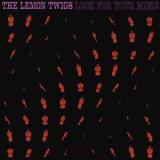
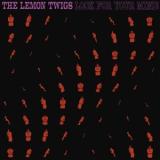
Die beiden vorherigen Captured-Tracks-Alben von The Lemon Twigs, "A Dream Is All We Know" (2024) und "Everything Harmony" (2023), deuteten bereits auf eine Art Neubeginn in ihrer damals fünf Alben umfassenden Karriere hin. "Es war der Beginn davon, Platten zu machen, die wir selbst anhören würden", sagt Michael D'Addario, der jüngere der Twig-Brüder, heute 26 Jahre alt. Spätestens mit "A Dream Is All We Know" und dem zukünftigen Michael-Klassiker "My Golden Years" hatte die neue Ära der Lemon Twigs wirklich begonnen. Und nun erscheint das dritte Lemon-Twigs-Album für Captured Tracks, "Look For Your Mind!", das unter seiner poppigen Oberfläche einen unterschwelligen Strom aus Paranoia und Misstrauen trägt. Der Opener, der titelgebende Track "Look For Your Mind", ein beschwingtes Stück von Michael, führt die Hörer*innen in den gitarrengetriebenen Harmonie-Sound ein, der das zentrale Thema des Albums bildet. Vieles, was auf "A Dream Is All We Know" erreicht wurde, ist auch hier präsent - nur noch fokussierter. Es sind klassische Twigs, geprägt vom goldenen Zeitalter des Gitarrenpops, aber in keiner Weise sklavisch nachempfunden. Neu auf diesem Album ist die Einbindung der Live-Mitglieder Reza Matin (Schlagzeug) und Danny Ayala (Bass) sowie Eva Chambers von Tchotchke in die Rhythmusgruppe. Während die Brüder zuvor im Studio alles selbst eingespielt hatten, zeigt dies ein neues Gefühl von Freiheit. "Gather Round" ist eine der größeren Produktionen auf "Look For Your Mind!" - ein Brian-Song mit freudigen Orchestrierungen, der wie ein Wahlkampflied aus der Jahrhundertwende wirkt. Der Songwriter sucht nach einer unverdorbenen Führungsperson, kommt aber zu dem Schluss, dass kollektives Handeln der einzige Weg nach vorn ist. Musikalisch ist er opulent und herrlich 1967, doch Stimmung und Aussage sind unverkennbar 2026. "Jedes Mal, wenn wir versuchen, etwas völlig Geradliniges zu schreiben, können wir nicht anders, als ein Element hinzuzufügen, das völlig aus dem Rahmen fällt", erklärt Brian. Brians "Fire And Gold" beginnt mit einem klingenden Power-Pop-Riff, bevor alles auf den Kopf gestellt wird. Es ist auch der erste Song des Albums, auf dem der energiegeladene Drummer Reza Matin zu hören ist, den die Brüder mit Größen wie Jody Stephens von Big Star, Jim Bonfanti von The Raspberries und Bev Bevan von The Move vergleichen. Den Abschluss der ersten Seite der Vinyl-Ausgabe bildet Michaels wunderschöne Ballade "Mean To Me", mit Gesangsparts, die The Beach Boys vor 60 Jahren gerne aufs Band gebracht hätten - eingesungen von Michael, Brian und Danny. Der Abschluss der zweiten Seite, "Your True Enemy", wirft schließlich alles über den Haufen. "Wir haben den Song zunächst als einfache Rocknummer angelegt, aber das passte nicht zur düsteren Stimmung des Textes", sagt Brian. "Also haben wir begonnen, experimenteller zu werden." Das sechste Studioalbum der Lemon Twigs mag auf den ersten Blick wie eine direkte Fortsetzung der beiden Vorgänger wirken, ist aber zugleich viel mehr: mit Verweisen auf frühere Werke, einem neu entdeckten kollektiven Geist und vor allem großartigem Songwriting.
12"[25,63 €]
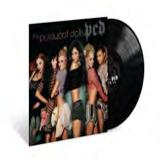
PCD ist das Debüt-Studioalbum der legendären Girlgroup The Pussycat Dolls, das am 12. September 2005
veröffentlicht wurde. Mit Ron Fair als Executive Producer und Beiträgen von Produzenten wie Kwamé,
Polow da Don und Rich Harrison sowie Gastbeiträgen der Rapper Busta Rhymes, Timbaland und will.i.am
wurde das Album sofort zu einem Riesenerfolg.
Textlich enthält das Album sexuelle Anspielungen und behandelt Themen wie Feminismus und Romantik, untermalt von energiegeladenen Dance-Pop-Songs und mitreißenden Balladen. Die ersten vier Singles
aus PCD – „Don’t Cha“, „Stickwitu“, „Beep“ und „Buttons“ – waren kommerziell erfolgreich und führten
die Charts in verschiedenen Ländern an, darunter Neuseeland, wo alle vier die Spitze der Single-Charts
erreichten.
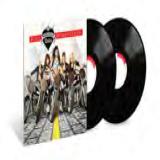
2x12"[34,03 €]
PCD ist das Debüt-Studioalbum der legendären Girlgroup The Pussycat Dolls, das am 12. September 2005
veröffentlicht wurde. Mit Ron Fair als Executive Producer und Beiträgen von Produzenten wie Kwamé,
Polow da Don und Rich Harrison sowie Gastbeiträgen der Rapper Busta Rhymes, Timbaland und will.i.am
wurde das Album sofort zu einem Riesenerfolg.
Textlich enthält das Album sexuelle Anspielungen und behandelt Themen wie Feminismus und Romantik, untermalt von energiegeladenen Dance-Pop-Songs und mitreißenden Balladen. Die ersten vier Singles
aus PCD – „Don’t Cha“, „Stickwitu“, „Beep“ und „Buttons“ – waren kommerziell erfolgreich und führten
die Charts in verschiedenen Ländern an, darunter Neuseeland, wo alle vier die Spitze der Single-Charts
erreichten.
EU/UK Exclusive
Japanese pressing - comes with Obi
A compilation of the Japanese band 'Piper' who formed and released 5 albums in 80's, and for this special compilation all tracks are selected by the original members and taken from their 4 albums released between 1983 - 1985.
Including the city pop classics 'Summer Breeze' & 'Breezing' along with more mellow funk/soul crossover fusion hits.
Thessaloniki is a hotbed of electronic talent. Tendts are testament to this. The triumvirate of brothers Christos and Fotis Papadakis, joined by guitarist Elias Smilios, have carved out a truly unique sound. Blending disdainful punk with synth‑pop sheen, the group arrive at the Bordello with Ghost Boys. Cymbals crash in the title piece, a lone key circling percussive precipitation before rich guitar strings bring balance and ballast. The song, an emotion‑stripped story of missed opportunities and narrowing prospects, is sensitive and sharp; an emblazoned anthem to the lost and forgotten. Distilled down to a powerful essence, the radio version focuses on the throaty message, meandering synth melody, and smoky strings.
Lauer steps in for remix duties, dipping the original into a blue acid‑electro syrup before it re‑emerges as a fresh‑faced reimagining, its chorus lanced with vocoders while a minimal melody simmers beneath Chicago‑style knob twists. Taking another direction, Boys’ Shorts melt broken‑beat revelry into their countrymen’s original. Smilios’ guitar riff becomes a central column around which samples spin and house warmth emanates. Sheer quality from needle drop.
DE
Elektronische Klangreisen zwischen pulsierendem Techno, treibendem House und atmosphärischer Ambient-Electronica. Treibende Grooves, verspielte Beats und futuristische Effekte schaffen Kopfkino, Bewegung und positive Energie – perfekt für Dancefloor, Afterhour oder entspannte Hörmomente.
EN
The electronic sound goes from pounding techno to driving house and atmospheric ambient electronica. Driving grooves, playful beats and futuristic effects create mental images, movement and positive energy – perfect for the dance floor, after-hours or relaxed listening moments.
- 1: John Holt - You’ll Never Find Another Love Like Mine (3.48)
- 2: Cornell Campbell - Be Thankful (3.58)
- 3: Elizabeth Archer & The Equators - Feel Like Making Love (.4)
- 4: The Chosen Few - People Make The World Go Round (3.22)
- 5: Dave & Ansel Collins - Single Barrel (3.17)
- 6: The Now Generation - Shaft (3.19)
- 7: The Marvels - Some Day We’ll Be Together (3.05)
- 8: The Darker Shades Of Black - War (2.41)
- 9: Winston Curtis - Private Number (3.42)
- 10: Lee Perry & The Upsetters - Bathroom Skank (4.30)
- 11: Slim Smith - Watch This Sound (2.43)
- 12: Winston Francis - Sitting In The Park (3.29)
- 13: The Sensations - If I Don’t Watch Out (2.57)
- 14: Carl Bert & The Cimarons - Slipping Into Darkness (3.04)
- 15: The Darker Shades Of Black - Ball Of Confusion (3.10)
- 16: Jah Youth - Ain’t No Sunshine (2.35)
Sixteen killer 70s reggae funk and soul cuts from the likes of John Holt, Lee Perry, Cornel Campbell, The Cimarons, The Chosen Few and more featuring superb reggae takes on songs by artists including The Jackson 5, William DeVaughn, Diana Ross and The Supremes, War, The Temptations, Roberta Flack, The Stylistics and others!
Well-documented is the influence of American black music on Jamaican styles of the 1960s – from the birth of ska music, when The Skatalites ska-ified the jump-up southern USA rhythm and blues music of Rosco Gordon, Louis Jordan and Fats Domino, through to the creation of rocksteady when Jamaican artists like The Techniques, The Paragons, Alton Ellis and The Melodians turned to the slower rhythms and soulful harmonies of groups such as The Impressions and The Drifters for inspiration.
Less-well established is that in the 1970s Jamaicans didn’t (shock!) stop listening to American black music styles, with many 70s reggae artists as invested in soul, funk and the proto-disco sounds of Philadelphia, as was the case with rhythm and blues in the previous decade. In the 1970s, while Jamaica promoted its own roots reggae styles around the world, powerhouse USA soul labels such as Motown, Philadelphia International and Stax Records were at the same time all popular on the island.
This interaction between American and Jamaican music was not limited to Jamaica. In Britain, first-generation Caribbean-émigré children in the 1960s and early 70s grew up with an equal love of both soul and reggae, which manifested itself in the home-grown arrival of lovers rock in the mid-1970s.
Soul Jazz Records’ new ‘Reggae Island Soul’ tells this story of how soul and funk-infused reggae in the 1970s united the sounds of Jamaica, USA and the UK into a highly addictive cultural hybrid of styles.
- A1: Outro
- A2: Les Monstres
- A3: La Fenêtre
- A4: Être Une Fille
- A5: Sidequest Feat. Asfar Shamsi
- B1: Avec Ça
- B2: Bonhomme De Neige
- B3: Vivant
- B4: Les Rois
- C1: Cowgirl Feat. Tuerie
- C2: Eh Le Reuf
- C3: Kodak Blue
- C4: Vol De Nuit Feat. Jazzy Bazz
- D1: L'école Primaire Feat. Chilly Gonzales
New album by french rapper Sheldon, including featurings with Chilly Gonzales, Jazzy Bazz, Tuerie, Asfar Shamsi...
Monsters are never where we expect them to be. They take shape in silences, in vague fears, in the baggage we carry without always understanding it. Sometimes, we also encounter them along the course of a life. On this new album, Sheldon chooses to dance with them, to tame them with wit, grace, and a sense of peace.
Following a powerful return with Grünt 75, an iconic format to which the 75e Session collective brought particularly ambitious visual staging, Sheldon unveils a fourth album that unfolds across fourteen tracks like a chiaroscuro landscape, revealing the full depth of his emotional and musical range. Through intimate narratives, the record explores identity (Être une fille), family and fatherhood (La Fenêtre and Les Monstres, the title track), as well as friendship (Eh le reuf). These are themes that run through all of us, approached here with writing that is vivid, demanding, and deeply sensitive.
Driven by a strong narrative arc, the album features songs like Être une fille, which challenges and questions us. On it, Sheldon reflects on his relationship to gender, his doubts and discomfort with the codes of masculinity, and the idea that he has sometimes imagined himself elsewhere. Tracks like La Fenêtre and Avec ça illuminate the album like moments of communion, sincere, warm, and unifying, carried by a childlike lightness that makes tomorrow disappear.
True to his open minded and ever curious artistic approach, Sheldon draws from a wide range of musical genres while keeping rap as the album’s guiding thread, giving each song its own singular identity and contributing to the balance of the whole. To shape the project, Sheldon surrounded himself with a new generation of musicians and beatmakers whose influences span rap, indie rock, pop, and experimental music. Among them are Johnny Ola, who has notably composed for Zamdane, Jazzy Bazz, and Edge, Rodolphe Babignan, Carbonne’s flamenco guitarist, and Jeune Oji, an artist signed to Friends of Friends Music. Together, they bring melodic and acoustic richness, as well as a collective generosity that deepens the album’s intimacy.
This new album also opens the door to new collaborations.
On L’école primaire, Chilly Gonzales joins Sheldon for an unconventional piano and vocals piece, driven by cinematic, deeply intimate storytelling. Using his primary school as a point of reference, Sheldon retraces his path from childhood to adulthood, somewhere between nostalgia and serenity.
On Cowgirl, Tuerie joins Sheldon for a soft, melodic ballad with an 80s tint, capturing the weightlessness of a sunlit summer.
On Sidequest, Sheldon reunites with Asfar Shamsi, who had already appeared on his Grünt. Over a delicate cloud trap production, the two artists open up about everyday pain, finding in introspection a way to put things into perspective.
Finally, Vol de nuit brings Jazzy Bazz and Sheldon together for an intimate exchange over an ethereal, mysterious production, as both artists look back on their journeys with calm and clarity.
Conceived alongside Sheldon’s closest circle, the project celebrates family, friendship, and love as its founding pillars. Sheldon chooses to step away from the images, allowing his story to be embodied instead through the faces and gestures of those around him. This approach runs through all of the project’s visuals. Rejecting the excess of spectacular image making, he chose instead to hand a camera to his loved ones so they could offer their own vision of a song from the album. By opening a small window onto his intimacy, and that of the people closest to him, Sheldon finds a way to say a great deal with very little, turning deeply personal trajectories into something universal.
Like the music videos, the album cover is rooted in a deliberately simple approach, where the fantasy of childhood disrupts reality. Designed by Tenzin, the graphic designer behind Sheldon’s recent projects, Ptite Sœur, and also work for Jul, it is based on an archival photograph taken during a traditional carnival in Tenzin’s native village. With no staging involved, the image captures children in costume mid parade, caught in a spontaneous burst of movement, embodying the free innocence of childhood.
Les Monstres marks a new chapter in Sheldon’s journey. Like a rainbow after the storm, this fourth album reveals new colours in the artist’s discography, as he delivers a record that is both demanding and accessible, intimate and open, one in which music becomes a love letter to friendship and to love itself. Set for release on April 24, 2026, the album will be followed by a tour culminating at La Cigale in Paris on December 3, 2026.