"Vilhelm Bromander Unfolding Orchestra returns with Jorden vi ärvde (""The Earth We Inherited""), the follow-up to their acclaimed 2023 debut, In This Forever Unfolding Moment. Set for release on April 25, 2025, the album deepens Bromander’s unique fusion of cosmic jazz, free jazz, folk music and Indian classical traditions while carrying a powerful message about environmental and social responsibility.
Bromander composed this work as both a dedication to his children and a reflection on humanity’s role as caretakers of the planet. “The album is an attempt to spread light, beauty, hope, and resistance while acknowledging the gravity of our times,” he explains. “Right-wing forces are rising, wars continue, and climate disasters escalate. How do we find the strength and hope to change?”
The music balances urgency with a deep trust in humanity. Bromander’s meticulous arrangements, performed by an all-star ensemble, offer moments of both fiery resistance and serene contemplation. Tracks like “Jorden vi ärvde, den skall oss också ärvas” unfold patiently, blending vibrant improvisations with lush orchestration. The evocative ballad “Erde”, with stunning solos by pianist Alex Zethson and the bass-player himself, nods to Charlie Haden’s Liberation Music Orchestra, while “For Dewey” pays tribute to the elastic interplay of Keith Jarrett’s legendary quartet, high-lighting the fire-y saxophone playing of Elin Forkelid. The closing piece, “Calliope,” channels Indian classical influences, with harp evoking a swarmandal’s shimmering resonance.
With Jorden vi ärvde, Bromander expands his artistic vision, weaving together intricate compositions with a passionate call to action. The result is an album that doesn’t just demand to be heard—it invites listeners to reflect, feel, and, ultimately, act."
Поиск:the ball
Все
- Innominate Nº I
- Innominate Nº Ii
- Innominate Nº Iii
- Innominate Nº Iv
- Innominate Nº V
- Innominate Nº Vi
- Innominate Nº Vii
- Innominate Nº Viii
Crystal Clear[29,20 €]
BIG|BRAVE"s preternatural instincts and depth of skill as musicians are on full display on their most naked and austere record to date, OST. The trio entered the studio with broader concepts and themes in mind, but no preconceived music. The overarching concept was to make a film score for a film that had yet to be created, to use minimal instrumentation, or more specifically not their standard band instruments, and to improvise within these parameters. OST was fully written and recorded in the studio. The band was free to enter the live room and record a take with whatever instrument was at hand. Once they had a good foundation for a song, Ball, Wattie, drummer Tasy Hudson and even engineer/producer Seth Manchester would each build on it, layering takes, from instrumental improvisations to abstract vocals, until they felt it was a completed piece. Wattie"s voice seamlessly blends with the instrumental flourishes made from "The Instrument", a Wurlitzer, prepared piano, synths and a very limited amount of electric guitar. Additionally, there is a sprinkling of flute by Melissa Guion (MJ Guider). The performances of each player are tactile and ardent, even at their most subtle and effected. Following OST"s completion, BIG|BRAVE contacted director/ visual artist Stacy Lee to visually score the record. Director Lee and BIG|BRAVE, having previously collaborated, had established an artistic understanding which allowed BIG|BRAVE to give Lee no instruction, no limitations: the creative process synthesized across film and music. Select screenings with live performances are in the works.
- A1: Upon The Emerald Isle
- A2: Give Your Heart To The Hawks
- A3: Muse Of Fire
- A4: An Der Landwehr (Lament Of An Icarus)
- A5: Eirigh Anois!
- B1: Hold The Line
- B2: My White Rose
- B3: The Tsarist Army
- B4: Caoineadh Na Solas (Lament For The Sun)
- B5: La Peau Dernière
- B6: Deoch An Dorais (The Final Salute)
m Herbst 2022 reiste Jerome Reuter, der luxemburgische Singer-Songwriter und Kreativkopf von ROME, erneut auf die grüne Insel, um dort einige entspannte Wochen mit seinen irischen Freunden zu verbringen. Wie nicht anders zu erwarten war, wurde viel getrunken und gelacht. Es entstanden aber auch Songs. Und am Ende der Reise erblickte eine weitere, faszinierende "Dublin Session" das Licht der Welt.
Wurden die Tracks der ersten Dublin Session noch im legendären "Sonic Studio" in der irischen Hauptstadt aufgenommen, zog man sich für die zweite Session bewusst in die grünen Hügel von Wexford County zurück, um in Brian Brodys "Ballycale Studio" vollkommen ungestört und ganz ohne Zeitdruck musizieren zu können. Alle daraus entstanden Lieder der "Dublin Session II" sind unveröffentlichte Neukompositionen, denen Dank renommierter, irischer Musiker der landestypische Folk-Sound innewohnt.
Auf "The Dublin Session II" verbindet sich auf fast schon ganz natürliche und vor allem sehr harmonische Art und Weise ROMEs ureigener Stil aus Proto-Folk mit dem Klang des Traditional Irish Folk. Hierfür rekrutierte Co-Produzent, langjähriger Freund und musikalischer Mitstreiter Brian Brody (Rack & Ruin) kurzerhand das Who-is-Who irischer Musiker wie Ronan O Snodaigh (Dead Can Dance, Kíla) am Bodhran, Eoin O Cionnaith (Van Morrison, Christy Moore) an den Uilleann Pipes, Matthew Hanaphy am Banjo und den Tin Whistles, Goshia Gasior auf der Violine und Andy Slowey am Bass.
Unter den Kompositionen befinden sich Lieder wie das eingängige, fast tanzbare "Hold the Line" oder das bitter-böse "The Tsarist Army", die einen Kontrapunkt zu melancholischeren Kompositionen wie "My White Rose" und "Muse of Fire" setzen. Nicht unbeeinflusst vom Kriegsgeschehen in Europa und den Zeichen der Zeit entstand so ein multilinguales Kleinod mit Liedtexten auf Französisch ("La Peau Dernière"), Deutsch ("An der Landwehr"), Englisch und Gälisch ("Eirigh Anois!" u.a.).
Totgeglaubte leben bekanntlich länger und so stellt man mit ROME fest: Der europäische Geist ist wohlauf!
- A1: A Broken Heart Cries
- B1: For The Rest Of My Days
When we accessed Joe Evans’ master tapes in the mid-90s we were pleased to find the superb ‘A Broken Heart Cries’ by the Pretenders as it had never been released. Over time enterprising Crossover DJs picked up on it from our CD, causing demand for a Kent Select release in 2007. Once that had sold out demand continued, making that original Kent 7” so in demand that prices are now into the low hundreds of pounds.
We took the opportunity to add the group’s beautiful harmony ballad ‘For The Rest Of My Days’ for its debut UK vinyl release.
- Ome See About Me
- Don T Let Me Slide
- Midnight In Harlem
- Bound For Glory
- Simple Things
- Until You Remember
- Ball And Chain
- These Walls
- Learn How To Love
- Shrimp And Grits Interlude
- Love Has Something Else To Say
- Shelter
"Released in 2011, Revelator is the debut studio album by the Tedeschi Trucks Band, a powerhouse blues-rock ensemble led by Susan Tedeschi and Derek Trucks. The album blends blues, rock, soul, and jazz, showcasing the band's rich, full-bodied sound. Standout tracks like ""Midnight in Harlem,"" ""Come See About Me,"" and ""Bound for Glory"" highlight Tedeschi’s soulful vocals and Trucks’ masterful slide guitar work. Produced by Jim Scott and Derek Trucks, Revelator received critical acclaim for its organic musicianship, heartfelt songwriting, and dynamic arrangements. The album won the Grammy Award for Best Blues Album in 2012, solidifying the band’s reputation as one of the finest acts in contemporary blues and rock. For fans of blues-infused rock with deep soul influences, Revelator is an essential listen, capturing the magic of a band that seamlessly blends technical brilliance with emotional depth. Revelator is available as a limited edition of 1500 individually numbered copies on red coloured vinyl."
- A1: La France Nouvelle
- A2: In Brightest Black
- A3: Tomorrow We Live
- A4: Food For Powder
- A5: Ad Vindicta
- A6: By Tradition
- B1: Dannazione
- B2: Bring Me The Head Of Romanez
- B3: The Western Wall
- B4: White Flags
- B5: Jupiter
- B6: Mar'yana
- B7: Men Against Time
- B8: Herculaneum
A Man Against Time...
Die Schatten des Krieges verdunkeln Europa. Die 20er Jahre des neuen Jahrtausends erwecken beklemmende Erinnerungen an jene Zwischenkriegszeit einhunderte Jahre zuvor, aus der unweigerlich der Zweite Weltkrieg entstand. Nun steht die Ukraine in Flammen, täglich bedrängt von russischen Angriffen. Und Europa ist zerrissen in diesem Konflikt, der oft nur wie der Vorbote eines viel größeren Katastrophe wirkt.
Jerome Reuter hat mit seiner Band ROME die Musik als Mittel gewählt, Europas Schicksal zu kommentieren und zu verarbeiten. Seit 2005 schreibt er Lieder und Konzeptalben, die sich den Schlüsselmomenten der Geschichte widmen, ihre Mythen und Narrative reflektieren und kommentieren. Dabei behandelt er historische Themen aus einer künstlerischen Distanz, dekonstruiert Ereignisse und Ideologeme, betrachtet sie aus unterschiedlichsten Perspektiven und gibt sie uns als Frage zurück. Er wird vom mal melancholischen, mal wütenden Zeitzeugen zum teilnehmenden Beobachter, aus dessen individualsubjektiver Sicht die Dinge unmittelbar mit Pathos aufgeladen erscheinen. Mit ROME sollen wir erkennen, beobachten, erschauern und erschrecken, aber auch neu erstrahlen: "We walk in brightest Black towards the Sun".
Reuters Songwriting gleicht oft einer Reise, auf der sich visuelle Eindrücke mit persönlichen Gesprächen mischen. Als lese man in seinem Tagebuch nach einem turbulenten Tag, der persönlich reflektiert und schließlich in ikonische Metaphern gegossen wird. "Civitas Solis" soll ausdrücklich nicht als Konzeptalbum verstanden werden, wie wir es zuvor so oft von ROME erleben durften. Immer schien sich Reuter ganz jenen Themen zu verschreiben, ging in emotionaler Hingabe und Identifikation auf, nur um dann wieder Distanz einzunehmen, um das Geschehen aus einer neuen Perspektive und in anderem Licht zu betrachten.
Jerome Reuter ist ein Suchender auf den verschlungenen Wegen der Geschichte, getrieben von einer Sehnsucht nach Europa, dem Mythos, der Utopie - zwischen aufgeklärtem Manifest und irrationaler Festung. Als zentrale Metapher dient ihm diesmal Civitas solis, der "Sonnenstaat" aus der utopischen Schrift des Dominikaners Tommaso Campanella (1623). Darin wird der wirtschaftliche und politische Aufbau eines idealen Staates imaginiert - eine der ersten gesellschaftlichen Utopien. In der Welt von ROME kann dieses Modell höchst ambivalent gelesen werden, denn Reuter bewegt sich von jeher assoziativ zwischen Anarchismus und Traditionalismus.
Stilistisch bedient sich ROME auf "Civitas Solis" einer ungewöhnlichen Bandbreite - angelegt zwischen der Liedermacherkunst von Jacques Brel, Leonard Cohen und Townes van Zandt, kalten Dark Wave-Akkorden und akzentuierten Akustikgitarren. Das Wechselbad aus martialischen Hymnen und introspektiven Balladen kehrt zu zahlreichen Schlüsselmomenten aus zwanzig Jahren Bandgeschichte zurück und wie alle ROME-Alben wirft es vor allem Fragen auf. Provozierende Fragen. Was wird unsere Zukunft bringen? Und was bedeutet das für Europa? Uns bleibt nichts übrig, als in die Fern blicken, "standing on the Western Wall". Jerome Reuter ist ein "Man against Time" und mit ihm bezeugen wir den Sturm.
- So Fast
- Dance Me
- Sorry Part I
- Sorry Part Ii
- Tell You Again
- Explain
- Crying Baby
- Sweeter
- Tonight, We Sleep
- Mother
- Love To Annoy
- Creative Depression
- Condescending You
- Le Solei
- Dance Music (7" Version)
Julie in Memphis. Während Erics Trip auf Eis lag, flog die Herzogin des kanadischen Flanells im Dezember 1996 in den Süden, um ein Album mit Balladen über postpartale Depression aufzunehmen. Zusammen mit Howe Gelb von Giant Sand und David Shouse von The Grifters, fängt Loneliest In The Morning Julies blaue Phase mit zitternder Genauigkeit ein.
In addition to being members of Miles Davis' band, John Coltrane, Red Garland and Paul Chambers recorded several projects together without the trumpeter. Soultrane is a superb quartet album featuring the three musicians along with drummer Art Taylor (he and Chambers were both members of the Red Garland Trio). The LP was recorded in between the two Miles Davis Sextet sessions that produced the album Milestones. Among the highlights are a lengthy reading of Tadd Dameron's "Good Bait", and Trane's earliest and probably best version ever of Billy Eckstine's ballad "I Want to Talk About You", which would become a favorite inthe saxophonist's live repertoire.
180-gram VIRGIN VINYL LIMITED EDITION. The Complete Album | Bonus Track
2025 Blue Vinyl Repress
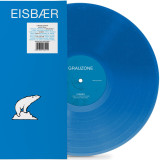
WRWTFWW Records is very honored to announce the official reissue of Grauzone's essential 1981 maxi single with timeless classic "Eisbär", proto-techno beast "FILM 2", and romantic synth ballad "Ich Lieb Sie", just in time for the 40th anniversary of the Swiss band's formation. The three-track vinyl is sourced from the original reels, cut at 45rpm, and comes with its iconic artwork on a 350gsm sleeve.
Ich möchte ein Eisbär sein...Written by Martin Eicher after a nightmare in which he saw talking polar bears on the walls, and with music by the Grauzone crew consisting of Martin and his brother Stephan Eicher, Marco Repetto, Christian "GT" Trüssel, and Claudine Chirac (on saxophone), "Eisbär" is the most recognizable title from the band, a sublime mix of ingredients reflecting the transitional era it comes from - the raw energy of punk music still palpable, combined with the audacity of early electronics, the warm groove of a disco gem, beautifully fragile lyrics, and one of the best basslines ever. It became a mega hit, totally unplanned, but how could you resist such a track
"FILM 2" is the ultimate b-side monster, a menacing all-instrumental pre-techno masterpiece, slowly building to a magnetizing frenzy. An instant underground favorite, it was famously heard played at both speeds depending on the scenes and DJs you were frequenting, 45rpm as it was first intended, and 33rpm for the cosmic experience (search Daniele Baldelli's Cosmic C75 1982 mixtape online for a great example of this).
The maxi single ends with "Ich Lieb Sie", a synth-pop meets doo-wop ballad, a true love song oozing with innocence. Simple, stylish, and just right.
At the crossroads of post-punk, new wave, pop, and electronic experimentation, the Eisbär maxi offers three songs that are technically different but hold the same spirit, the perfect embodiment of Grauzone's music - wild, unpredictable, and youthful, yet sophisticated, catchy, and ingenious. The magic recipe for the good stuff.
Stephan Eicher went on to be, arguably, the most successful Swiss musician ever, with an international career extending from pop chanson to experimental escapades and collaborations with Moondog, artists Sophie Calle and John Armleder, and author Martin Suter among many other luminaries. Marco Repetto flourished as a techno and ambient producer, releasing multiple projects including releases on Aphex Twin's Rephlex label.
Grauzone and WRWTFWW will continue to collaborate on the band's 40th anniversary reissue campaign, with numerous projects planned for the year, including a vast selection of music, visuals, and literature never available before.
- Carnival
- She Moved Through The Fair
- All I Got
- Bett's Dance
- Toy Balloon (For Little Anna-Rebecca)
- Waiting & Wondering
- Hey Doc
- Sweet Talking Lady
- Paper Houses
- Born And Bred In Old Ireland
- How It All Came Down
- Just A Simple Soul
1000 pressed. Classic Black vinyl, DL card. Toy Balloon receives its long overdue debut vinyl pressing, featuring new artwork. Caught somewhere between traditional folk and Jansch's penchant for the blues, 'Toy Balloon', from 1998, was the elder statesman of British folk's 20th studio album. Featuring a host of fantastic solo performances along with a brace of bigger sounding moments with a band including former Dire Straits' Pick Withers on drums and the legendary Pee Wee Ellis on sax, the mainly self-penned opus also boasts a hypnotic cover of the standard 'She Moves Through The Fair' and an evocative reading of Jackson C Frank's 'Carnival'.
The Ibex Band, with Giovanni Rico and Selam Woldemariam at the creative helm, provided the musical backbone for legends like Aster Aweke, Girma Beyene, Tilahun Gessesse, Mulatu Astatke, and Mahmoud Ahmed, including the iconic album Ere Mela Mela, shaping modern Ethiopian music as we know it today. This 1976 album (Ge’ez Year 1968) played a pivotal role in that legacy and has now resurfaced to set the record straight.
There’s a tendency to talk about the seventies as a golden age of Ethiopian music. There are good reasons for that, and just as good reasons against it. However, the notion of a golden past privileges the role of Western explorers and suggests that the pinnacle of Ethiopia’s musical culture is something only a foreigner can appreciate and unearth. It downplays the complexities of Ethiopia’s culture and history, creating an artificial divide between then and now. And it underestimates the constantly evolving sound that has followed.
The legendary musical outfit The Ibex Band, later metamorphosed into The Roha Band, has played a central role in defining the sound of many of the greatest stars on the music scene of Ethiopia from the mid-seventies onwards–but their golden output has never really waned. The story of the origins of the band that provided the musical backbone for greats such as Aster Aweke, Girma Beyene, Tilahun Gessesse, backing the solo career of group member Mahmoud Ahmed as well as backing Mulatu Astatke and many others has yet to be properly told.
Two misconceptions plague the image of Ethiopian music, one is that the music is pure because it is, by some notion, unexploited, the other is that it is all traditional. To begin with, a combination of political changes between the late sixties and the mid-nineties created an environment where only the most dedicated and skilled musicians struggled on and pursued a musical career against fierce odds. The whole Ibex Band, with Giovanni Rico and Selam “Selamino” Seyoum Woldermarian at the creative helm, are arguably the origo of the vibrant scene in the mid-seventies, and the said pair are foremost responsible for not only navigating the band through troubled times, but also modernizing the 6/8 chickchicka rhythm to a contemporary form. Giovanni laid the rhythmic foundation with heavy looped basslines that reinvented traditional melodies as dance music, and with Selamino’s innovative guitar work they influenced scores of musicians from Abegaz Kibrework Shiota to Henock Temesgen. Even Giovanni’s Fender bass and Selamino’s Gibson guitar inspired younger musicians in their choice of instruments. Not only in choice of instruments but also in sound–even as the digital revolution hit Ethiopian music, a lot of popular music still took its cue from the masters from Ibex and Roha.
Ibex emerged out of the ashes of the sixties group the Soul Echos band, adding Giovanni and Selamino to their ranks and taking their cues from a slew of influences, such as Motown and The Beatles, fused with traditional music. A tighter-knit unit than most bands at the time – Ibex has remained six to seven members throughout their whole career, compared to many bands that were as large as fifteen or sixteen men strong when Ibex set out. Their playing has been viciously focused, economical yet heavy. Just a year before the recording sessions of the album in your hands, Giovanni and Selamino made a contribution to the popular musical lexicon of Ethiopia that was simply defining the popular sound: their arrangement and recording of bandmate Mahmoud Ahmed’s solo effort and real commercial breakthrough tune and eponymous album, Ere Mela Mela, from 1975.
Selamino has never limited himself to being an adroit lead guitarist, but has always been a scholar of history, and as such he has probably contributed as much to modern Ethiopian music with his guitar playing and compositions as with a deepened understanding of modern or contemporary – Zemenawi – Ethiopian music. Selamino’s contributions serve as a metaphor for those of the whole band, at one and the same time creating and defining a new, danceable and updated sound anchored in Giovanni’s bass, whilst also elevating the broader scene through their support for others on the scene and on top of that, increasing the understanding of the music.
There is an understandable desire to romanticize the musical heyday Ibex and Roha were at the forefront of, because so much of the output is sorrowfully hard to come by. Ibex creativity was nothing short of ridiculously fierce compared to many of their Western contemporaries. Based on their sheer recorded output alone they could have usurped the title “hardest working in show business” from James Brown, recording more than 250 albums or 2500 songs in the seventies and eighties. Some only surface as cassettes today, others were never given full LP release, and some are simply impossible to find today. In the light of that, it’s nothing short of a miracle that the recording Stereo Instrumental Music from 1976 (Ge’ez Year 1968) has resurfaced. Unearthed in perfect condition on a chrome cassette, this is musical history comes alive–to set the future straight. Stereo Instrumental Music was recorded in collaboration with Karl-Gustav Lundgren, a Swedish national working for the Radio Voice of the Gospel. It took two sessions at the Ras Hotel ballroom in Addis Ababa. The Ibex Band was the first band in Ethiopia to employ a four-track recorder for their recording (the first available in the country, lent by Karl-Gustav). Later the same week, Giovanni and Selamino realized that, lengthwise, the recorded material fell short of what they wished for, so they recorded four more tracks in one more session on a single-track recorder. The Ras Hotel and Ghion Hotel, where the Ibex Band held musical residencies were to Ethiopia in general and Addis Ababa in particular what Motown was to the USA and Detroit a few years earlier – a hotbed of musical creativity and showmanship.
The most astonishing thing about Ethiopian music of the last half century is how tradition and modernity are intertwined. Because of this feature, it’s kind of hard to tell when there ever was or when we are in a “golden age”. So much of music from the past has been criminally neglected, but because of the hardships in the past, it would be an oversimplification to say that said past was a golden age. Probably, the golden age is what we are approaching, because for the first time both the past and future are accessible, and the monumental contributions from before can lay a firm foundation for a thriving music scene today. The Ibex Band stands firmly in the past, present and the future. That, if anything, is golden.
The detailed history of Stereo Instrumental Music is in many ways unique. To begin with, it couldn’t have been recorded earlier (there were no four-track recorders available) and it really couldn’t have been recorded afterwards either, at least not in the years directly following, because of the toll the musical scene took from the unfavorable political climate that followed when the nascent Derg regime and rival groups tried to assert themselves, the musical equipment lent from The Voice of Gospel Radio simply disappeared from Ethiopia when the radio station folded in 1977. Karl-Gustav Lundgren,
the Swedish foreign national who assisted during the recording, worked with the Ethiopian Evangelical Church Mekane Yesus at the time, recalls how they only had about fifteen minutes to get the microphones in place for the recording as to not alert neither the management at Ras Hotel nor the authorities and most importantly, to complete the recording before the curfew came into effect at midnight. In leaping to the opportunity to use previously unavailable equipment to push their sound forward and improvising to meet the logistical challenges, the Ibex Band displayed the very avant-gardism and adaptability that explains their longevity as a band through the years. The recording of Stereo Instrumental Music is from a given time in history, but it sounds as beyond time.
Much of the energy that burst out of the scene that Stereo Instrumental Music came out of dissipated or got sidetracked during the societal changes Ethiopia went through in the 1970s and 80s. Whilst leaders might have professed to be revolutionary, the work ethic of the Ibex Band can truly be described as that. They never called it quits, but adapted, toured extensively abroad in Africa, Europe, and the Middle East, and found ways to work even in the face of the curfew that curtailed a lot of musical life. They even played major arenas in the nineteen eighties, despite said curfew and restrictions. The whole extent of their legacy has never been told, but their music speaks louder than words, so therefore… tune in to the Ibex Band’s Stereo Instrumental Music.
Ugly is the second album released by the New York alternative metal band Life of Agony. Produced by Steve Thompson, the album signalled a considerable shift from the hardcore and groove metal sounds which defined their 1993 debut album. The band ditched the gang vocals and instead let Keith (now Mina) display his newly developed crooning. Keith's new expressive style sounds more emotive and is perhaps more at heart with the era's alternative bands and it suits UGLY perfectly.
Musically, this album is a pretty interesting hybrid. The first half of the album opener "Seasons" shows Keith's vocals glide quietly over the top, only to break into higher notes more frequently as the song progresses into the soaring second half. This opening track is a strong introduction to the bands new sound.
The album also features the band's trademark pulverizing riffs as heard in "I Regret", "Damned If I Do" and "Fears", the gang vocals and double-kick drumming has been completely omitted. Songs like "Lost At 22," and "How It Would Be" all feel profound. "Drained" shows the serious hooks and "Let's Pretend" is a ballad written to Keith's mother who died shortly after his birth. The album ends with a rendition of Simple Minds' "Don't You Forget About Me" that arguably kicked off the trend of Roadrunner bands doing novelty covers.
It unquestionably belongs in the collection of anyone who has a love for quality 90s-era alternative rock music. The uglier the better!
- A1: There Ain’t Enough Roses
- B2: Instrumental
Black Vinyl[10,04 €]
Authentic group soul harmony that is guaranteed to appeal to fans of downtempo soul ballads. Accompanied with an instrumental version, where the flute plays the lead vocal melody. A recognizable continuation to the previous collaboration between the singers and the Cold Diamond & Mink band. If there’s a group in this age that faithfully carries the torch of real group soul harmony, it must be these three cats from the US west coast by the name of Thee Baby Cuffs. Currently composed of Joe Narvaez and Reality Jonez, the trio prances on the stage with their new song “There Ain’t Enough Roses”. Produced together with the Timmion house band Cold Diamond & Mink, these gentlemen lay down pure soulful romantics enough to fill a jacuzzi. Even though they seem to be walking out from the candy and flower shop empty handed to meet their lover, they are equipped with lyrics and falsetto flows that can melt any heart. Continuing with their tried and tested downtempo ballad style, Thee Baby Cuffs deliver a soul boulder just as potent as their previous Timmion releases “My My Baby” and “You’re My Reason”, not to forget the brilliant work that they have put out on the Raza Del Soul label from California. So hop on in the passenger’s seat and let Thee Baby Cuffs serenade you all the way to the sunset. In case you’re more for the instrumentals, flip the single over to reveal the flute-led version that’ll send you to that sweet Steve Parks lowrider territory in no time.
Transparent Orange Vinyl[10,88 €]
Authentic group soul harmony that is guaranteed to appeal to fans of downtempo soul ballads. Accompanied with an instrumental version, where the flute plays the lead vocal melody. A recognizable continuation to the previous collaboration between the singers and the Cold Diamond & Mink band. If there’s a group in this age that faithfully carries the torch of real group soul harmony, it must be these three cats from the US west coast by the name of Thee Baby Cuffs. Currently composed of Joe Narvaez and Reality Jonez, the trio prances on the stage with their new song “There Ain’t Enough Roses”. Produced together with the Timmion house band Cold Diamond & Mink, these gentlemen lay down pure soulful romantics enough to fill a jacuzzi. Even though they seem to be walking out from the candy and flower shop empty handed to meet their lover, they are equipped with lyrics and falsetto flows that can melt any heart. Continuing with their tried and tested downtempo ballad style, Thee Baby Cuffs deliver a soul boulder just as potent as their previous Timmion releases “My My Baby” and “You’re My Reason”, not to forget the brilliant work that they have put out on the Raza Del Soul label from California. So hop on in the passenger’s seat and let Thee Baby Cuffs serenade you all the way to the sunset. In case you’re more for the instrumentals, flip the single over to reveal the flute-led version that’ll send you to that sweet Steve Parks lowrider territory in no time.
- There Ain't Enough Roses
- There Ain't Enough Roses (Instrumental)
Black Vinyl[10,04 €]
If there's a group in this age that faithfully carries the torch of real group soul harmony, it must be these three cats from the US west coast by the name of Thee Baby Cuffs. Currently composed of Joe Narvaez and Reality Jonez, the trio prances on the stage with their new song "There Ain't Enough Roses". Produced together with the Timmion house band Cold Diamond & Mink, these gentlemen lay down pure soulful romantics enough to fill a jacuzzi. Even though they seem to be walking out from the candy and flower shop empty handed to meet their lover, they are equipped with lyrics and falsetto flows that can melt any heart. Continuing with their tried and tested downtempo ballad style, Thee Baby Cuffs deliver a soul boulder just as potent as their previous Timmion releases "My My Baby" and "You're My Reason", not to forget the brilliant work that they have put out on the Raza Del Soul label from California. So hop on in the passenger's seat and let Thee Baby Cuffs serenade you all the way to the sunset. In case you're more for the instrumentals, flip the single over to reveal the flute-led version that'll send you to that sweet Steve Parks lowrider territory in no time.
LTD. TRANSPARENT ORANGE VINYL[10,71 €]
If there's a group in this age that faithfully carries the torch of real group soul harmony, it must be these three cats from the US west coast by the name of Thee Baby Cuffs. Currently composed of Joe Narvaez and Reality Jonez, the trio prances on the stage with their new song "There Ain't Enough Roses". Produced together with the Timmion house band Cold Diamond & Mink, these gentlemen lay down pure soulful romantics enough to fill a jacuzzi. Even though they seem to be walking out from the candy and flower shop empty handed to meet their lover, they are equipped with lyrics and falsetto flows that can melt any heart. Continuing with their tried and tested downtempo ballad style, Thee Baby Cuffs deliver a soul boulder just as potent as their previous Timmion releases "My My Baby" and "You're My Reason", not to forget the brilliant work that they have put out on the Raza Del Soul label from California. So hop on in the passenger's seat and let Thee Baby Cuffs serenade you all the way to the sunset. In case you're more for the instrumentals, flip the single over to reveal the flute-led version that'll send you to that sweet Steve Parks lowrider territory in no time.
- Prelude
- To Claudia On Thursday
- I Just Want To Be Your Friend
- 5: A.m
- I'm With You
- The Island
- Sing To Me
- It's You
- Some Sunny Day
- It Won't Always Be The Same
- The Know It All
- Karmic Dream Sequence #1
- There Is Nothing More To Say
- Anthem (Begin)
"The Millennium's Begin can truly be described as a bona fide lost classic. On Begin, hard rock, breezy ballads, and psychedelia all merge into an absolutely air-tight concept album, easily on the level of other, more widely popular albums from the era such as The Notorious Byrd Brothers. The songwriting, is sterling and innovative, never straying into the type of psychedelic overindulgence which marred so many records from this era. At the time the most expensive album Columbia ever produced (and it sounds like it), Begin is an absolute necessity for any fan of late-'60s psychedelia and a wonderful rediscovery that sounds as vital today as it did the day it was released. Begin is available as a limited edition of 1000 numbered copies on yellow & orange marbled vinyl and includes an insert."