It was not only in Brittany that progressive rock bands went under the radar in the 1970s This was the case with the New Zealand quintet Dragon, born in 1972 in Auckland. Author of two albums released by Vertigo, certainly appreciated by amateurs, the group unfortunately did not meet with the expected success in its country of origin, which led it to emigrate to Australia from 1975. From there, they would spin the perfect love with the kangaroo public and the rest of the world in the 80s. Since then, between splits and reformations, they are still touring! But let's come back to this second album "Scented Gardens For The Blind" published for the first time in 1975 and today emerged from the shadows by the Replica and Musea labels. Note that from the first title, they try to get out of the shackles of progressive pop with Ivan Thomson's keyboards which push the combo to venture towards very English lands that the Zombies then Argent knew how to borrow. It is both marked by the 70s and a real desire to seduce the charts. What they did next in Australia. For the time being, on most of the album, the work remains a paragon of progressive rock marked by long guitar solos and beautiful flights of keyboards. Masterfully reissued.
Поиск:the beautiful
Все
001[9,54 €]
Swarm Intelligence’s unique take on industrial techno is back, with the second instalment on his self-titled label, coming this November.
Fiercely intense, dramatic and cutting-edge, Swarm Intelligence’s distinctive take on techno has garnered him a solid following amongst the true underground of the scene. Following on from the widely supported launch of his label, SWRM002 is a striking next step – a testament to the quiet confidence of a skilled artist unafraid to eschew norms and carve his own path. This second EP continues to draw inspiration from dystopian themes of new and imagined technologies and their resulting societal impact.
‘Critical Signal’ was produced during the global pandemic, and iteratively refined over the following years. Grinding basses and tense atmospherics sit atop a thunderous four-to-the-floor. Its message to humanity is as relevant now as it was then – “you are resilient, you will prevail”. In ‘Mass Disinformation’ a visceral, bleak and unsettling sonic landscape punctuated by a slamming groove is an apt metaphor for the psychological warfare being unleashed on the world today.
Opening the B-side, the uplifting glory of ‘Digital Immortality’ lifts the tone of the release. Here, Swarm’s signature glitchy, broken beats complement beautiful melodic swells and a rolling bass line. The track imagines a digital afterlife where, upon uploading our consciousness, we leave our bodies behind. Bringing the EP to a close, “Singularity Dawns” is the most freeform, cinematic composition. Its obscure broken rhythms and traversing sequence tells the tale of an AI becoming self-aware and discovering its capacity to feel.
Limited edition 180g audiophile pressing, high-definition premium vinyl for super fidelity - the complete LP + 2 bonus tracks 'Monk's Dream' was the first album Thelonious Monk released on Columbia Records after his less than amicable departure from Riverside Records. Even though Monk had already recorded all the tracks on the album before (apart from Bright Mississippi), in a variety of settings, the powerful cohesion of the quartet this Columbia session produced a first-rate work worthy of the praises it received when released, and which it still receives today. It was Monk's best-selling album ever. "This important album, Monk's first after a long absence from the recording studio, is a stunning reaffirmation of his power as a performer and composer. It is a brilliant and absorbing program of five Monk originals and three standards (and they might just as well be originals, so startling is their transformation at his hands). This is a beautiful album in every respect, completely stimulating in each second of its more than 47 minutes" - ***** Pete Welding, DownBeat
This recorded autobiography of Catherine Howe, age 20, briefly appeared in 1971. Too young for memoirs, most artists have barely established any sort of musical competence by the age of legal adulthood, let alone compositions matching the maturity and complexity of Howe's. What A Beautiful Place, however, is a prodigious effort wrought from the melancholy ruminations of post-adolescence. The album's twelve songs unfold like a classic bildungsroman, beginning in the smoke-stained industrial county of Yorkshire, transformed by the electrified creative landscape of mid-century London, and retiring to the warm pastoral bliss of the county of Dorset on England's southern coast. Produced by noted jazz pianist Bobby Scott, the LP_oft-mistaken for a concept album_was available for only a month in the summer of 1971, disappearing after Reflection Records' shuttering in 1971.
The debut album of soul singer, Maiiah is also the third full-length by Hamburg collective, Angels of Libra, following on from the success of their collaboration with Irish singer, Nathan Johnston.
Maiiah is a singer with roots in the Balkans but residing in Düsseldorf, the city of the legendary Unique Club and the label of the same name. Soul left its mark on her early on, and when she met Hamburg producer, musician and composer Dennis Rux (Hamburg Spinners/Yeah! Yeah! Yeah! Studios) during the pandemic, the two realized they shared a similar musical vision. Their common love of soul music and old rhythm & blues brought them together, and they started recording music together in Hamburg with the Angels of Libra. Lo and behold, their first single together "Obey" got into rotation at tastemaker station Radioeins and confirmed them as a winning team.
Following in the footsteps of many a classic soul tune, second single, "No No No (I'm So Broke)" is a social critique and commentary. In it Maiiah literally wears her heart on her sleeve, as she sings about the back- breaking job she was working at the time and the poor earnings as a hotel service employee.
But naturally life has more to offer than just work and so a large part of the songs on this record revolve around love. Maiiah gives her own spin to the classic "I'm A Good Woman", which the spirited singer has performed live many times. The story goes that the late DJ and Unique Records label owner Henry Storch sent Maiiah the original song by Barbara Lynn to comfort her after a heavy heartbreak. The song thus holds a very important place in Maiiah's heart, and it was released as the third advance single, recorded during her tour with Nathan Johnston at Bekegg Studios in Rastede, Lower Saxony.
With Dennis Rux at her side and the powerful arrangements of the Angels of Libra, Maiiah has found the right partners for her personal debut. On "Kava" & "Plenty of Life", Hamburg's jack-of-all-trades Carsten Meyer aka Erobique is featured as a guest on the keyboards, so here the rhythm section of the Hamburg Spinners comes together again. The love for old soul, rhythm & blues and the analog sound of the sixties is also fully expressed on this album. The longings and deep feelings in Maiiah's lyrics are carefully picked up musically, whether as a classic R&B song as in "Please Come Home" or in boogaloo party mode as in the Croatian-sung "Kava", the fourth single. "Plenty of Life" is a song for self-cheering and a call to open up to the beautiful sides of life despite all adversity. In "I wanna go", on the other hand, Maiiah longs for her Croatian homeland. The crowning finale of the album is the intense "Infinity" about life's phases and the recurring ups and downs as the essence of human existence.
The ingredients of Maiiah and the Angels of Libra's recipe are authentic lyrics, to the point arrangements, tight horns, rousing background vocals and the spirit of the golden age of soul music, as it was shaped by labels like Motown and Stax. Recorded in part with original equipment from the 50s. Producer Dennis Rux says, "We wanted to create a record that people would go dance to at the Komet" (a neighborhood club on St. Pauli in Hamburg, the band's second home). The joint album combines the Hamburg soul of the Angels of Libra with the passion of Maiiah, who can fully live out her temperament on the mic.
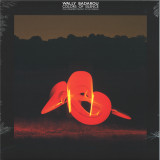
Synth pioneer and musical polymath, Wally Badarou is a genius. But you know that already. A vinyl version of his majestic Colors Of Silence has been craved by the Balearic cognoscenti ever since its low-key 2001 release. Indeed, when we first started work on Be With, we asked some pals with exquisite taste what their dream release would be. We asked Balearic legend Moonboots and, without hesitation, he said Colors Of Silence by Wally Badarou. We didn't know Wally had made this album. And most still don't. But that's about to change.
Colors Of Silence is ostensibly a new age album. As ever though, Wally's sophisticated synth textures and expressive keyboard runs are so full of character, so full of life, that this work of art transcends any easy genre categorisation. It's simply stunning, throughout. It sounds like A.r.t. Wilson or Suzanne Kraft, with traces of CFCF and Jonny Nash. But it was made a good decade earlier than the work of these modern giants. Sometimes, it doesn't seem far from some Larry Heard albums.
Island Records founder Chris Blackwell's friend Nathalie Delon asked Wally to provide music for the yoga DVD she was to release. Lack of time on both sides made them agree on using "quality demos" Wally had in his ideas bank. It's understandable why Colors Of Silence remains somewhat of a lost gem. As Wally explains: "Total lack of promotion made it an 'intimate' release, which was exactly what I was looking for: just a buzz-maker and time-buyer that would allow me to concentrate on the real thing as soon as I'd have time, which could also turn into a rare collecting item later, once the final versions made their way to success. You never know."
Over the years, Colors Of Silence has become a true cult record for the ambient/Balearic heads.
The beguiling but brief "Dance In The Dust" is the shuffling, hyper-percussive, hypnotic opener. It gives way to the deep serenity of "Amber Whispers". It's a gliding, divine, mini melodic masterpiece. It'll make you swoon in its extreme beauty. The bright and breezy "Where Were We" follows, a tropical, reggae-tinged bounce through the islands.
The uptempo groove is maintained on the keys-drizzled soca-funk of "The Lights Of Kinshasa" before Side A is rounded out with "Pictures Of You". It starts with stately, melancholic, unadorned piano and this alone would make for a beautiful song. But Wally always gives us that bit extra and he effortlessly introduces warm, dreamy pads and minimal, slo-mo percussion to augment a frankly stunning piece of work.
Ushering in Side B, Wally's mesmeric piano playing is to the fore again, in the intro to uber-chilled "Serendipity For Two". The playing becomes more mellifluous as the track progresses and adds warmth through exotic percussion, woodwind, sweeping synths and digi-drums. It has echoes of, er, Echoes. It segues seamlessly into the more propulsive, wavy "Smiles By The Millions". If you're not nodding and grinning along widely to the gently throbbing bassline underpinning this, we can't help you. The meditative "Higher Still" follows, cinematic in feel and ever so slightly sinister with the strings. It sounds particularly Badalamenti-esque, if you ask us.
That unmistakable, almost peculiar Badarou funk - so lyrical, so texturally rich and so rhythmically spacious - is all over "Oriental". Next up, "Days To Wonder" brings the serenity back, insistent yet melodic keys, as if played in a place of worship, coupled with birdsong, conjure a kind of instant nostalgia for halcyon days of youth. The contemplative "Dawn Of Europa" is a sombre, beatless, ambient journey whilst the glorious, too-brief "Crystal Falls" features soft percussion and sparkle before fully glistening with some gentle head-nod beats. Wally brings this incredible collection to a mellow, tender close with the graceful "Purple Lines".
There can be few artists more under-appreciated given their vast influence than Wally Badarou. His solo work practically defined the sound of the Balearic DJs of the 1980s, and thus the more sophisticated sound of dance culture thereafter. A synth specialist, Badarou was the long-time associate of Level 42. He was one of the Compass Point All Stars (with Sly and Robbie, Barry Reynolds, Mikey Chung and Uziah "Sticky" Thompson), the in-house recording team of Compass Point Studios responsible for a series of albums in the 1980s recorded by Grace Jones, Tom Tom Club, Mick Jagger, Black Uhuru, Gwen Guthrie, Jimmy Cliff and Gregory Isaacs. Badarou's keyboard playing could also be heard on albums by Robert Palmer, Marianne Faithfull, Herbie Hancock, M (Pop Muzik), Talking Heads, Manu Dibango and Miriam Makeba. He also produced Fela Kuti. Phew!
Meticulously remastered and cut by both Simon Francis and Cicely Balston respectively, it has been pressed to the highest possibly quality at Record Industry in Holland. Special thanks must go to Apiento from Test Pressing who first introduced us to Wally and facilitated all those early zoom meetings. It couldn't have happened without his help. Not least on pulling the art together, too, which features striking original photography by Mads Perch. Benji Roebuck of Roebuck Press did his thing brilliantly in art working the whole package to completion. All in all: essential.
Get On Down is proud to announce a vinyl reissue of one of the West Coast's most revered, yet underrated, hip-hop classics and quite possibly one of the best hip-hop albums of all time: The D.O.C.'s No One Can Do It Better. Produced entirely by Dr. Dre and out of print on vinyl in the U.S. for several years, this limited edition colored LP features original album artwork and thirteen tracks of rap heaven. When his debut album hit in mid-1989, The D.O.C. was in the vortex of the biggest hip-hop happening on the planet: the rise and rule of N.W.A. The group’s breakout album Straight Outta Compton had hit one year prior and had created both controversy and worldwide critical acclaim. As rap history buffs and industry insiders know, The D.O.C. was a crucial behind-the-scenes member of the N.W.A. inner circle - his most important role in the early days of the group was writing many of Eazy-E's rhymes, including his hit 1988 single “We Want Eazy.” He would go on to write for Efli4zaggin, The Chronic and Doggystyle. But The D.O.C. wasn’t in N.W.A. and never wanted to be - he was his own man, with his own vision. And after Compton proceeded to blow up the next crew album was No One Can Do It Better. Significantly, it was the first album where Dr. Dre showed his greatness as a solo producer for one MC. Boasting four singles - “The D.O.C. & The Doctor,” “Mind Blowin’,” the smash “It's Funky Enough” and “The Formula” - the album is flawless from beginning to end. Of particular note beyond the singles is “The Grand Finale,” which was the last time that Ice Cube, M.C. Ren and Eazy-E would rhyme on a track together. The D.O.C. showed on this amazing record that he was one of hip-hops most talented MCs. He nearly died in a horrific car crash as the album was catching fire in the late summer of 1989 which damaged his vocal cords, but he survived and continues to make new music and act as a sounding board for Dr. Dre to this day. More recently a documentary covering D.O.C.'s life titled The DOC debuted at the Tribeca Film Festival with fans eagerly awaiting a wider release. This album is a must have for any Hip-Hop fan
- A1: Whitney Houston I Believe In You And Me 4 00
- A2: Whitney Houston Step By Step 4 12
- A3: Whitney Houston With The Georgia Mass Choir Joy 3 15
- A4: Whitney Houston With The Georgia Mass Choir Hold On, Help Is On The Way 3 08
- A5: Whitney Houston With The Georgia Mass Choir I Go To The Rock 4 05
- B1: Whitney Houston With The Georgia Mass Choir I Love The Lord 4 56
- B2: Whitney Houston Featuring Bobby Brown, Faith Evans Somebody Bigger Than You And I 4 41
- B3: Whitney Houston You Were Loved 4 10
- B4: Whitney Houston My Heart Is Calling 4 14
- C1: Whitney Houston I Believe In You And Me 3 52
- C2: Whitney Houston Step By Step 4 32
- C3: Whitney Houston Featuring The Nativity Choir From Who Would Imagine A King - (From "The Preacher's Wife") 3 30
- D1: Whitney Houston With Shirley Caesar And The Georgi He's All Over Me 3 53
- D2: Cissy Houston With Hezekiah Walker And The Love Fe The Lord Is My Shepherd 4 23
- D3: Whitney Houston With The Georgia Mass Choir Joy To The World 4 41
Black Vinyl[29,37 €]
Available for the first time on vinyl, Whitney Houston's The Preacher's Wife: Original Soundtrack Album is the best-selling gospel album of all time. Released on November 26, 1996, the album features songs performed and produced by Houston, who also starred in the film. From the moment you press play, your heart will move to soul-stirring vocals like the hauntingly beautiful "I Believe In You and Me," and the spiritual "Joy To The World," "I Love The Lord," and "Step By Step." The album features guest artists including Shirley Caesar, the Georgia Mass Choir, and Houston's mother, the legendary Cissy Houston. This 2LP vinyl features a new essay by producer Mervyn Warren and fan testimonials of love.
- A1: Whitney Houston I Believe In You And Me 4:00
- A2: Whitney Houston Step By Step 4:12
- A3: Whitney Houston With The Georgia Mass Choir Joy 3:15
- A4: Whitney Houston With The Georgia Mass Choir Hold On, Help Is On The Way 3:08
- A5: Whitney Houston With The Georgia Mass Choir I Go To The Rock 4:05
- B1: Whitney Houston With The Georgia Mass Choir I Love The Lord 4:56
- B2: Whitney Houston Featuring Bobby Brown, Faith Evans Somebody Bigger Than You And I 4:41
- B3: Whitney Houston You Were Loved 4:10
- B4: Whitney Houston My Heart Is Calling 4:14
- C1: Whitney Houston I Believe In You And Me 3:52
- C2: Whitney Houston Step By Step 4:32
- C3: Whitney Houston Featuring The Nativity Choir From Who Would Imagine A King - (From "The Preacher's Wife") 3:30
- D1: Whitney Houston With Shirley Caesar And The Georgi He's All Over Me 3:53
- D2: Cissy Houston With Hezekiah Walker And The Love Fe The Lord Is My Shepherd 4:23
- D3: Whitney Houston With The Georgia Mass Choir Joy To The World 4:41
Yellow Vinyl[25,17 €]
Available for the first time on vinyl, Whitney Houston's The Preacher's Wife: Original Soundtrack Album is the best-selling gospel album of all time. Released on November 26, 1996, the album features songs performed and produced by Houston, who also starred in the film. From the moment you press play, your heart will move to soul-stirring vocals like the hauntingly beautiful "I Believe In You and Me," and the spiritual "Joy To The World," "I Love The Lord," and "Step By Step." The album features guest artists including Shirley Caesar, the Georgia Mass Choir, and Houston's mother, the legendary Cissy Houston. This 2LP vinyl features a new essay by producer Mervyn Warren and fan testimonials of love.
Frozen reeds presents the only recorded duo playing of two legendary musical figures. Derek Bailey and Paul Motian – two longstanding pioneers of distinct strains of improvised music – came together for a brief period of collaboration in the early 1990s. Tapes of their two known live performances (one at Groningen’s JazzMarathon festival in the Netherlands, the other a year later at New Music Cafe, NYC) were recently unearthed in the Incus archives, and their contents will surprise and delight fans of both supremely idiosyncratic musicians.
The Groningen concert (1990) is released on vinyl, while the New York date (1991) is included with the digital download, free of charge for all purchasers. A conversation between Bill Frisell and Henry Kaiser on Bailey, Motian, their intertwined backgrounds, and the significance of these recordings is included as sleeve-note insert.
“This is one of those moments that we’re always hoping for, and it's so rare. And it's so hard to talk about, because it's so beautiful. It's like you're seeing some new species of plant that you never knew existed or something.” – Bill Frisell
Each player bringing decades of crucial experience to their encounters – with histories taking in vast swathes of the development of jazz and free improvisation – these fleeting shared moments provide some of the most riveting playing in the career of either.
There is precious little recorded evidence of Motian as a free improviser, but his mastery is beyond any doubt in these recordings. From knife-edge precision to textural haze, Motian’s palette is astounding, but perhaps even more impressive is his confidence in the non-idiomatic conversation itself. Pushing far beyond the established vocabulary of free percussion, his playing allows a measured degree of repetition to take form, giving rise to almost song-like structures. The covert influence of the drummer’s work on the post-rock genre (just taking its first nascent steps in the early 1990s) is made overt here.
In turn, Bailey allows some of his most unashamedly melodic passages to unfold without a mote of his trademark contrariness or antagonism. Patterns that would be acerbically disrupted elsewhere are allowed to settle, with variations of note and timbre introduced more gradually than is typical of his playing. When forceful changes in dynamics or tone do arrive, they do so in such close tandem with Motian’s rhythmic and textural transitions as to beggar belief. The guitarist’s duos with percussionists (Jamie Muir, Han Bennink, John Stevens…) arguably provide some of the highlights of his discography. ‘Duo in Concert’ represents a strong addition to the list.
An elegant sense of construction pervades the sets, as the duo ably fulfil the promise of free improvisation: carving out hugely compelling, expertly balanced, and thrillingly paced music as if from thin air.
Faitiche releases the album Improvisations And Edits, Tokyo 26.09.2001 on vinyl for the first time. For the original 2002 CD on Soup-Disk and Sub Rosa (Audiosphere), Jan Jelinek and the Japanese trio Computer Soup (Satoru Hori – trumpet, Osamu Okubo - toys & electronics, Kei Ikeda - toys & electronics) presented eight tracks all recorded one afternoon in the trio’s living room in Tokyo. They are excerpts from a joint group improvisation that subsequently underwent rudimentary editing, on which Jelinek and Computer Soup worked separately.
Jelinek met the three musicians at his first concert in Japan in 2001, at Tokyo’s Yellow club, where Computer Soup performed as the support act. Delighted by their free improvisation on pocket-sized electronic toys, trumpet and oscillators, he arranged to meet Hori, Okubo and Ikeda a few days later for a session at their apartment. The resulting three-hour recording, made on their living room floor, formed the basis for Improvisations and Edits. A few days later, Jelinek returned to Berlin. Over the following months, they separately chose passages from the recording that were then edited and assembled into an album.
Formed in Tokyo in 1996 as a quintet (including Shusaku Hariya and Daisuke Oishi), Computer Soup began by performing with acoustic instruments on the streets of Shibuya. Ikeda und Okubo soon switched instruments, and from then on the group’s minimalistic but densely woven sound was defined by electronic toys, oscillators and Satoru Hori’s trumpet. Their first album was released in 1997 on the Japanese label Soup Disk. Eight further releases followed.
From the reviews of Improvisations and Edits, Tokyo 26.09.2001 in 2003:
"The mind-blowing first track Straight Life is perhaps the best example of what the album has to offer. Jelinek's trademark smears and washes occupy the midrange, like ghosted images of Joe Zawinul's electric piano floating quietly in the wind. DSP jazz modes are set against a walking bassline (possibly computer generated) and a gently tooted trumpet complete with Harmon mute, a dead ringer for Miles Davis' Prestige-era ballads. The effect is something like a three-dimensional film, with different realities on each layer; images of what jazz was manage to interact with a real-time demonstration of all it could be."
pitchfork, 2003
"Improvisations and Edits is a warm and mellow Ambient release with beautiful glitch fragments, static noise bursts and real trumpet intersections. However, there are times where it is the exact opposite, mainly effect-laden, overdriven and bouncy with a lack of melodies and focus, so be aware of these specific tracks."
ambientexotica, 2003
"Often deliciously dreamy and hazy, Improvisations and Edits is like listening to an exceptional instrumental jazz performance while half-conscious or under some sort of chemical influence. Computerised blips and bleeps, loops and treatments and murky sonic skips curl up around desolate horn notes and scattered instrumental noises that culminate in elegant music."
exclaim.ca, 2003
Orbiting Human Circus' new album is called Quartet Plus Two. What is Orbiting Human Circus? It is the continuing evolution of Julian Koster (Neutral Milk Hotel, The Music Tapes), whose music and storytelling under this moniker have encompassed immersive theater and a Night Vale Presents podcast, as well as more traditional albums. Central to the album are the "two" referenced in the title: North and Romika, the singing saws, whom Koster doesn't "play" so much as encourage. "I think saws sing like angels," says Koster. "I always have. Since I was a little boy. When you encourage them to sing, they do so earnestly and beautifully. It's an honest and real sound." The origins of Quartet Plus Two are as magical and seemingly unlikely as everything else in Koster's career. While walking through New York's Central Park, he stumbled upon Gauvain Gamon and Kolja Gjoni_a standup bass player and drummer, respectively_playing Gershwin and Mingus, and a musical partnership was born. Pianist Benji Miller rounds out the titular quartet, with Koster's longtime collaborators Robbie Cucchiaro (horns) and Thomas Hughes (orchestral arranging and chimes) of The Music Tapes also contributing to the record. The music they make together is at once familiar and unrecognizable, as Koster and Orbiting Human Circus interpret jazz compositions by Irving Berlin, Duke Jordan, George and Ira Gershwin, and others, alongside Koster's three originals. The use of the term "composition" is intentional and speaks to Koster's relationship with the music of Quartet Plus Two in far more evocative terms than "cover" or "standard." "To me it was always magical that there were these people called `composers' who created symphonies and popular songs for other people to breathe into life and existence all over the world and throughout time," he explains. "They traveled into our homes as sheet music, endless recorded interpretations, or were passed from hand to hand, village to village, like folk tales, changed by every hand that touched them. That music was something that came to life in our own living rooms and lives, songs that our grandmothers might have sung in a choir that we might sing just as earnestly. I just think it's nice, and I would love to share that feeling in any way we can."
- Unifactor - Dump
- Suspension Of Disbelief - Maxine Funke
- Spinnaker - A Happy Return
- Nei No Su - How To Count Planets
- Bad Luck Might Come - My Two Toms
- Mugwamp - Oro Swimming Hour
- Tail Grows - Jam Money
- Faunt - A Happy Return
- Chancelroy - Michael Tanner
- Torches - Jam Money
- Untitled 2 - Mouth Harp Ensemble
- A Lion - New North Wales
- Silfr Pocket - Jam Money
- Nriho - Tenniscoats
- Fuyu - Andersens
- Silly Season - The Gentlist
- Look At The East, Look At The West, Look At Where Your Mum Cooks - My Two Toms
- I Love You So - Benoît Pioulard
- An Arm For A Pillow - Matthew De Gennaro
Music compilation and art book. We open the GLITZERBOX again and look into a glittering kaleidoscope of music and illustration. Crossing genres, in handmade editions and with great attention to detail, Jimmy Draht fuses artistic ideas into a new whole.
The vinyl contains beautiful folk songs, experimental collages, field recordings and lo-fi pop. All tracks are exclusive or have never been released on vinyl before.
Featuring music by: Maxine Funke, Tenniscoats, Mouth Harp Ensemble, How to count planets, A Happy Return, Benoit Pioulard, New North Wales, Dump, My Two Toms, Oro Swimming Hour, Matthew de Gennaro, The Gentlist, Andersens, Jam Money, Michael Tanner.
The artists, whether they paint, draw, scribble or cut, whether analogue or digital, whether they are graphic artists, illustrators or visual artists: they combine image and sound, discover connections and show that music can create images and vice versa.
Art by Petra Péterffy, Laurent Impeduglia, Nadine Spengler, Michael Dumontier, Tomoko Mori and Nicholas Stevenson.
A limited and numbered edition of 300, with hand-printed 3 color silkscreen book. Compiled by Markus Acher (The Notwist) and Jimmy Draht.
Since the late 90s JIMMY DRAHT publishes elaborately designed music-graphic-comic-text hybrids, most of them handmade and screenprinted. Initiated by Marion Epp, often in cooperation with a music label, artists from various genres are invited to participate. Each release is accompanied by exhibitions and music events.
Bands such as Calexico, The Notwist, Lali Puna, Neoangin, Pram, Otomo Yoshihide, A Million Mercies, Ted Milton, MS John Soda, Schwermut Forrest, Tied & Tickled Trio have participated (to name a few).
In terms of design we were lucky to showcase the works of ATAK, Anna Sommer, Knust, CX Huth, Katz & Goldt, Judith Zaugg, Thomas Ott, Jochen Gerner, Martin tom Dieck, Jim Avignon, Le Denier Cri, Elvisstudio and many more.
ALIEN TRANSISTOR was founded in 2003 by Markus & Micha Acher of The Notwist. The concept of the label is to produce music that has a musical or personal reference to the Notwist microcosm: From electronic soundscapes to abstract hip-hop to laptop-treated contemporary, from processed oriental music to Nick Drake-inspired songwriting. Alien Transistor respects no musical boundaries.
Black Vinyl[31,05 €]
Available for the first time on vinyl, Whitney Houston's The Preacher's Wife: Original Soundtrack Album is the best-selling gospel album of all time. Released on November 26, 1996, the album features songs performed and produced by Houston, who also starred in the film. From the moment you press play, your heart will move to soul-stirring vocals like the hauntingly beautiful "I Believe In You and Me," and the spiritual "Joy To The World," "I Love The Lord," and "Step By Step." The album features guest artists including Shirley Caesar, the Georgia Mass Choir, and Houston's mother, the legendary Cissy Houston. This 2LP vinyl features a new essay by producer Mervyn Warren and fan testimonials of love.
Matt Berry releases a unique collaboration with esteemed Library Music label KPM. KPM is renowned for providing the musical bedrock for so many classics of British TV and international cinema, using the best British composers such as Keith Mansfield, Alan Hawkshaw, John Cameron and Alan Moorhouse to do so. ‘Simplicity’ follows in the footsteps of these giants and is a worthy successor to them. Alongside his formidable acting career, Matt Berry has released a series of acclaimed albums on the Acid Jazz label. Ranging from the folk stylings of ‘Kill The Wolf’, the ambient electronica of ‘Music For Insomniacs’, to the psych rock of ‘Blue Elephant’, these have marked Berry out as an impressive musician and recording artist in his own right. Embodying the form of KPM’s original LPs geared towards film and television pitching, the album consists of 11 sharp and vibrant instrumentals, which will no doubt be heard in productions for many years to come. Released in special collaboration with Acid Jazz, the album is presented in a beautiful graphic sleeve, with notes that allude to the original KPM releases, for something that is instantly hip and familiar, yet unmistakably new.
Grafh is one of only a handful of rappers from the early 2000s NYC scene to successfully transition into the new underground movement. After releasing two solo LPs and collab albums with Flee Lord and DJ Shay (RIP) in the last four years, he recently dropped his highest profile project to date, Art of Words, entirely produced by the top emcee/producer in the game, 38 Spesh. The 10-track offering reaffirms Grafh is a force to be reckoned with on the mic. To add gas to the already blazing fire recruited an all-star guest line-up for the album that includes Conway The Machine, Rome Streetz, Bun B, Dave East, and Giggs.
Fittingly, for the release of "White Bread, Black Beer", which was a beautiful expression of the creative energy Gartside had sustained over two decades at that point, Scritti Politti returned to Rough Trade for the first time since the mid-1980s. Humbly described by Green on release as "an album of me playing around in the back room... just me alone at home", "White Bread, Black Beer" was universally acclaimed. Described as "a return to the top" by The Guardian, "the best record of this restlessly self-critical career" by Uncut and "a sophisticated, gloriously gentle thing" by Pitchfork, the record was duly nominated for the 2006 Mercury Prize (and was only pipped by Arctic Monkeys" debut).
This brand new EP from the Cornish improv noise / post-rock / shoegaze trio is their first release since their acclaimed second album Sleepover, which came out at the end of 2021. It features two long tracks and vocals from their Sonic Cathedral bandmate Lorena Quintanilla from Lorelle Meets The Obsolete. “One of our recording sessions resulted in a couple of tracks that had a very different energy to what we’ve recorded to date because there was less of a motif-based approach to them, which made them kind of scenic,” explains Mildred Maude guitarist Matt Ashdown. “We felt like they were the best opportunity we’ve had for doing a collaboration. We’ve played a few shows with Lorelle Meets the Obsolete and really clicked – we love what she does in that band and also as J. Zunz – so we asked her to do both tracks. It feels completely right – a natural pairing.” “I love collaborations and this one was really special,” adds Lorena. “I feel honoured to be part of this EP. I always enjoy seeing Mildred Maude, I feel that one can grasp eternity during their sets. With ‘Half The Sky’, the vocal melody and lyrics came out immediately, I felt like I was in a room jamming with them and everything was slowly flowing and growing. As for ‘Shifting’, it was another story. It is such a beautiful song, and I didn't want to mess it up. They liked one of the takes I sent, so I kept on that track for the first part and for the end I looped vocals on my DL4.” “Vocals change everything and give it a different air of completeness, but Lorena understands our music, so she was able to maintain its looseness,” concludes Matt. “We’re stunned by what Lorena has done; she’s given both tracks a different life