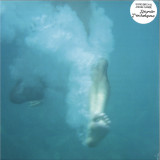
NEW 45 BY DEEP-FUNK PIONEER LUCKY BROWN RECORDED DURING THE MYSTERY ROAD SESSIONS!
"Funk is a living, breathing, creative and generative entity and The New Lucky Seven celebrate its life with a mysterious and authentic sonic snapshot from the iconic Mystery Road sessions: WOODHEAD!"
Woodhead is a steady medium groover built around an acute chanky guitar part that Joel Ricci aka Lucky Brown composed while living in the "Woodhood" district of Bellingham Washington, USA in the fallout shadow of an industrial area on the outskirts of town. The Woodhood was so named because the streets were all named after different kinds of trees; Cottonwood, Alderwood, Birchwood, etc. Though members of the band had been performing Woodhead since as early as 2004, it had never been officially committed to tape. So during the 2013-2014 span of living room "Magik Carpet" sessions at drummer, Oliver Klomp's house in West Seattle, the combo dubbed by Lucky as "The New Lucky Seven" casually hit the head a couple times before calling it a night as Lucky rolled tape.
Opening with the now world-famous guitar player, Jabrille "Jimmy James" Williams dropping deftly into his rhythmic part, Lucky chants in the background the words "don't stop" as the tension builds up into the moment the whole band comes in. With Bob Heinemann on bass, Marc Hager on Rhodes and Oliver Klomp on drums, the thick but honest groove is instantly palpable. Trombone player Mars Lindgren and Sax player Thomas Deakin, along with Lucky on Trumpet lay down the 'head' to the tune right off the bat with everyone in the band giving that hard hit on the 4 count of the last bar of the repeated figure. This 'hit' returns again to form the breakpoint between soloists Jimmy James, Marc Hager, and on side B, Thomas Deakin, and Lucky Brown on the flute. The horn section microphone was situated on the dining room table and Lucky just had to lean over to reach it with his instrument! Michael Iris of Bell Creek Studio transferred and mixed these two tunes from Lucky Brown's cassette machine.
This tune was left off of the Mystery Road compilation album but comprises one of the last tracks created during those sessions therefore the concept, vibe, style, and intention should resonate and be interchangeable with the rest of the 45s from that epic Box Set TR-9043 released by Tramp Records on May 4, 2015.
As you spin and interact with the Mystery Road recordings, you are invited to allow Woodhead to take its rightful place specifically alongside the other "The New Lucky Seven" recordings and generally as a part of the suite of crude and naive living-room "Magik Carpet" funk of the rest of the Mystery Road.
As illuminated before in Lucky's artist statement regarding the Mystery Road sessions, the music contained therein was always intended to put emotion, vibe, feeling, and spirit before technical, spatial, or even performance constraints and to serve as a gift of discovery to lovers and aficionados of the deep funk idiom and the rare 45rpm format. Funk is a living, breathing, creative and generative entity and The New Lucky Seven celebrate its life with a mysterious and authentic sonic snapshot from the iconic Mystery Road sessions: WOODHEAD!
Buscar:the birch
IMITED 2022 REPRESS ON RED VINYL WITH GOLD SPLATTER.
Steve Von Till, best known as Californian heavyweights Neurosis' singer and guitarist.
TERRORIZER - 8/10 Boxed review and interview excerpt (May issue) "Imagine if a coarser Neil Young had been born in England instead of Canada and if he had done a little bit of time in Hawkwind as well, and the imaginary result isn't too far from some of the best songs on offer here..."
Von Till enlisted Randall Dunn, production supremo and Master Musicians of Bukkake founder, to helm the desk, as well as bringing in Eyvind Kang on viola and percussionist Pat Schowe.
'A Life Unto Itself' also showcases J. Kardong on pedal steel, texturising Von Till's baritone gravel and sun-bleached skeleton of a guitar arrangement with some dust-blown harmonics , reminiscent of similarly raspy, whiskey-throttled voices of Mark Lanegan and Michael Gira.
- 1: Approaching Hrafnsey
- 1: 2 .The King
- 1: 3 .Entering The Temple
- 1: 4 .Last Teardrop
- 1: 5 .Blood Tree, Part I
- 1: 6 .Strike, Brother
- 1: 7 .Escape
- 1: 8 .I Will Avenge You, Father
- 1: 9 .The Land Of The Rus
- 1: 0 .A Burning Barn
- 1: Seeress
- 1: 2 .Raven's Omen
- 1: 3 .Storm At Sea / Yggdrasill
- 1: 4 .Iceland
- 1: 5 .I Will Save You, Mother
- 1: 6 .Slave Work
- 1: 7 .Gudrun
- 1: 8 .Follow The Vixen's Tail
- 1: 9 .He-Witch
- 1: 20 .Draugr
- 1: 2 .Mound Dweller
- 1: 22 .To The Games
- 2: 1 .Birch Woods
- 2: First Of Many
- 2: 5 .Svid Night, Part Ii
- 2: 6 .I Am Your Death
- 2: 7 .Come Morning
- 2: 8 .I Am His Vengeance
- 2: 9 .Odinn
- 2: 10 .Valkyrie
- 2: 11 .Vestrahorn
- 2: 1 .Hidden Valley
- 2: 13 .Blood Tree, Part Ii
- 2: 14 .Blod Inside / I Choose Both
- 2: 15 .A Maiden King
- 2: 16 .The Wolf Has Grown
- 2: 17 .The Gates Of Hel / Slain By Iron
- 2: 18 .Hekla
- 2: 19 .Cut The Thread Of Fate
- 2: 0 .Make Your Passage / Valholl
- 2: 1 .Aettartre / End Credits
- 2: 3 .Trollish Sorcery
- 2: 4 .Svid Night, Part I
"Rob wollte, dass sich die Welt von The Northman rau und ungemütlich anfühlt, als wäre es mit Schlamm und getrocknetem Blut bedeckt, also war es wichtig, dass die Musik dies widerspiegelt." Die Komponisten Robin Carolan (Tri-Angle Records) und Sebastian Gainsborough (Vessel) wurden vor eine Aufgabe epischen Ausmaßes gestellt, als Regisseur Rob Eggers (The VVitch, The Lighthouse) sie bat, die Filmmusik für seinen ehrgeizigen Film The Northman zu schreiben. Sie mussten eine Filmmusik schaffen, die sowohl die immensen Recherchen zur Authentizität dieses historischen Stücks aus der Wikingerzeit würdigte; als auch den filmischen Maximalismus des Films für ein modernes Publikum ergänzte. Die Künstler gingen bis an die Grenzen ihrer Kreativität und das Ergebnis ist ein wunderschönes Klangbild, das den Hörer mitten in den Film versetzt. Beim Arrangieren der Partitur zogen die Komponisten den Musiker und Ethnographen Poul Hoxbro zu Rate, um sich inspirieren zu lassen und einen Einblick in die Geschichte der Wikingermusik zu erhalten. Da Robin und Sebastian aus dem Bereich der elektronischen Musik kommen, waren sie keinerlei Beschränkung auf eine kleine Auswahl von Musikinstrumenten unterworfen, nutzten diese aber als Ausgangsbasis. "Elektronische Musik hat ein fast grenzenloses Potenzial, wenn es darum geht, Klänge zu erzeugen, und das ist natürlich eine unglaubliche Sache, aber man kann auch in ein Wurmloch geraten und sich darin manchmal verlieren. Diese Gefahr besteht nicht, wenn man nur ein paar Hauptinstrumente hat, auf die man zurückgreifen kann" so Robin Carolan. Sie benutzten traditionelle Instrumente wie die Tagelharpa, die Langspil, die Kravik-Lyra und die Säckpip, um die filmische Welt von The Northman zu erschaffen, aber sie nahmen sich auch kreative Freiheiten, indem sie Instrumente wie Trommeln hinzufügten, von denen einige Wissenschaftler glauben, dass sie in der Musikkultur der Wikinger keine große Rolle gespielt hätten, einfach weil es keine archäologischen Beweise für echte Trommeln gibt. "Eines der Stücke sollte den Klang eines Bullroarers nachahmen; ein uraltes Instrument, das in heiligen Ritualen oder in der Schlacht zur Einschüchterung von Feinden eingesetzt wird. Es erzeugt einen wirklich verwirrenden, röhrenden Vibrato-Sound und tiefe Frequenzen, die wahnsinnige Entfernungen zurücklegen können." sagt Robin auf die Frage nach einem der einzigartigeren Aspekte der Partitur. Alle Beteiligten haben so viel Mühe in ihre Recherchen und ihre Kreativität gesteckt, und dieser Reichtum ist in jedem Stück offensichtlich. Das Album als Ganzes ist ein cineastisches Meisterwerk aus Klang und Atmosphäre, wunderschön und verstörend zugleich, genau wie der Film, den es so wunderbar begleitet.
- 1: Approaching Hrafnsey
- 1: 2 .The King
- 1: 3 .Entering The Temple
- 1: 4 .Last Teardrop
- 1: 5 .Blood Tree, Part I
- 1: 6 .Strike, Brother
- 1: 7 .Escape
- 1: 8 .I Will Avenge You, Father
- 1: 9 .The Land Of The Rus
- 1: 0 .A Burning Barn
- 1: Seeress
- 1: 2 .Raven's Omen
- 1: 3 .Storm At Sea / Yggdrasill
- 1: 4 .Iceland
- 1: 5 .I Will Save You, Mother
- 1: 6 .Slave Work
- 1: 7 .Gudrun
- 1: 8 .Follow The Vixen's Tail
- 1: 9 .He-Witch
- 1: 20 .Draugr
- 1: 2 .Mound Dweller
- 1: 22 .To The Games
- 2: 1 .Birch Woods
- 2: First Of Many
- 2: 7 .Come Morning
- 2: 8 .I Am His Vengeance
- 2: 9 .Odinn
- 2: 10 .Valkyrie
- 2: 11 .Vestrahorn
- 2: 1 .Hidden Valley
- 2: 13 .Blood Tree, Part Ii
- 2: 14 .Blod Inside / I Choose Both
- 2: 15 .A Maiden King
- 2: 16 .The Wolf Has Grown
- 2: 17 .The Gates Of Hel / Slain By Iron
- 2: 18 .Hekla
- 2: 19 .Cut The Thread Of Fate
- 2: 0 .Make Your Passage / Valholl
- 2: 1 .Aettartre / End Credits
- 2: 3 .Trollish Sorcery
- 2: 4 .Svid Night, Part I
- 2: 5 .Svid Night, Part Ii
- 2: 6 .I Am Your Death
"Rob wollte, dass sich die Welt von The Northman rau und ungemütlich anfühlt, als wäre es mit Schlamm und getrocknetem Blut bedeckt, also war es wichtig, dass die Musik dies widerspiegelt." Die Komponisten Robin Carolan (Tri-Angle Records) und Sebastian Gainsborough (Vessel) wurden vor eine Aufgabe epischen Ausmaßes gestellt, als Regisseur Rob Eggers (The VVitch, The Lighthouse) sie bat, die Filmmusik für seinen ehrgeizigen Film The Northman zu schreiben. Sie mussten eine Filmmusik schaffen, die sowohl die immensen Recherchen zur Authentizität dieses historischen Stücks aus der Wikingerzeit würdigte; als auch den filmischen Maximalismus des Films für ein modernes Publikum ergänzte. Die Künstler gingen bis an die Grenzen ihrer Kreativität und das Ergebnis ist ein wunderschönes Klangbild, das den Hörer mitten in den Film versetzt. Beim Arrangieren der Partitur zogen die Komponisten den Musiker und Ethnographen Poul Hoxbro zu Rate, um sich inspirieren zu lassen und einen Einblick in die Geschichte der Wikingermusik zu erhalten. Da Robin und Sebastian aus dem Bereich der elektronischen Musik kommen, waren sie keinerlei Beschränkung auf eine kleine Auswahl von Musikinstrumenten unterworfen, nutzten diese aber als Ausgangsbasis. "Elektronische Musik hat ein fast grenzenloses Potenzial, wenn es darum geht, Klänge zu erzeugen, und das ist natürlich eine unglaubliche Sache, aber man kann auch in ein Wurmloch geraten und sich darin manchmal verlieren. Diese Gefahr besteht nicht, wenn man nur ein paar Hauptinstrumente hat, auf die man zurückgreifen kann" so Robin Carolan. Sie benutzten traditionelle Instrumente wie die Tagelharpa, die Langspil, die Kravik-Lyra und die Säckpip, um die filmische Welt von The Northman zu erschaffen, aber sie nahmen sich auch kreative Freiheiten, indem sie Instrumente wie Trommeln hinzufügten, von denen einige Wissenschaftler glauben, dass sie in der Musikkultur der Wikinger keine große Rolle gespielt hätten, einfach weil es keine archäologischen Beweise für echte Trommeln gibt. "Eines der Stücke sollte den Klang eines Bullroarers nachahmen; ein uraltes Instrument, das in heiligen Ritualen oder in der Schlacht zur Einschüchterung von Feinden eingesetzt wird. Es erzeugt einen wirklich verwirrenden, röhrenden Vibrato-Sound und tiefe Frequenzen, die wahnsinnige Entfernungen zurücklegen können." sagt Robin auf die Frage nach einem der einzigartigeren Aspekte der Partitur. Alle Beteiligten haben so viel Mühe in ihre Recherchen und ihre Kreativität gesteckt, und dieser Reichtum ist in jedem Stück offensichtlich. Das Album als Ganzes ist ein cineastisches Meisterwerk aus Klang und Atmosphäre, wunderschön und verstörend zugleich, genau wie der Film, den es so wunderbar begleitet.
- 1: Approaching Hrafnsey
- 1: 2 .The King
- 1: 3 .Entering The Temple
- 1: 4 .Last Teardrop
- 1: 5 .Blood Tree, Part I
- 1: 6 .Strike, Brother
- 1: 7 .Escape
- 1: 8 .I Will Avenge You, Father
- 1: 9 .The Land Of The Rus
- 1: 0 .A Burning Barn
- 1: Seeress
- 1: 2 .Raven's Omen
- 1: 3 .Storm At Sea / Yggdrasill
- 1: 4 .Iceland
- 1: 5 .I Will Save You, Mother
- 1: 6 .Slave Work
- 1: 7 .Gudrun
- 1: 8 .Follow The Vixen's Tail
- 1: 9 .He-Witch
- 1: 20 .Draugr
- 1: 2 .Mound Dweller
- 1: 22 .To The Games
- 2: 1 .Birch Woods
- 2: First Of Many
- 2: 5 .Svid Night, Part Ii
- 2: 6 .I Am Your Death
- 2: 7 .Come Morning
- 2: 8 .I Am His Vengeance
- 2: 9 .Odinn
- 2: 10 .Valkyrie
- 2: 11 .Vestrahorn
- 2: 1 .Hidden Valley
- 2: 13 .Blood Tree, Part Ii
- 2: 14 .Blod Inside / I Choose Both
- 2: 15 .A Maiden King
- 2: 16 .The Wolf Has Grown
- 2: 17 .The Gates Of Hel / Slain By Iron
- 2: 18 .Hekla
- 2: 19 .Cut The Thread Of Fate
- 2: 0 .Make Your Passage / Valholl
- 2: 1 .Aettartre / End Credits
- 2: 3 .Trollish Sorcery
- 2: 4 .Svid Night, Part I
"Rob wollte, dass sich die Welt von The Northman rau und ungemütlich anfühlt, als wäre es mit Schlamm und getrocknetem Blut bedeckt, also war es wichtig, dass die Musik dies widerspiegelt." Die Komponisten Robin Carolan (Tri-Angle Records) und Sebastian Gainsborough (Vessel) wurden vor eine Aufgabe epischen Ausmaßes gestellt, als Regisseur Rob Eggers (The VVitch, The Lighthouse) sie bat, die Filmmusik für seinen ehrgeizigen Film The Northman zu schreiben. Sie mussten eine Filmmusik schaffen, die sowohl die immensen Recherchen zur Authentizität dieses historischen Stücks aus der Wikingerzeit würdigte; als auch den filmischen Maximalismus des Films für ein modernes Publikum ergänzte. Die Künstler gingen bis an die Grenzen ihrer Kreativität und das Ergebnis ist ein wunderschönes Klangbild, das den Hörer mitten in den Film versetzt. Beim Arrangieren der Partitur zogen die Komponisten den Musiker und Ethnographen Poul Hoxbro zu Rate, um sich inspirieren zu lassen und einen Einblick in die Geschichte der Wikingermusik zu erhalten. Da Robin und Sebastian aus dem Bereich der elektronischen Musik kommen, waren sie keinerlei Beschränkung auf eine kleine Auswahl von Musikinstrumenten unterworfen, nutzten diese aber als Ausgangsbasis. "Elektronische Musik hat ein fast grenzenloses Potenzial, wenn es darum geht, Klänge zu erzeugen, und das ist natürlich eine unglaubliche Sache, aber man kann auch in ein Wurmloch geraten und sich darin manchmal verlieren. Diese Gefahr besteht nicht, wenn man nur ein paar Hauptinstrumente hat, auf die man zurückgreifen kann" so Robin Carolan. Sie benutzten traditionelle Instrumente wie die Tagelharpa, die Langspil, die Kravik-Lyra und die Säckpip, um die filmische Welt von The Northman zu erschaffen, aber sie nahmen sich auch kreative Freiheiten, indem sie Instrumente wie Trommeln hinzufügten, von denen einige Wissenschaftler glauben, dass sie in der Musikkultur der Wikinger keine große Rolle gespielt hätten, einfach weil es keine archäologischen Beweise für echte Trommeln gibt. "Eines der Stücke sollte den Klang eines Bullroarers nachahmen; ein uraltes Instrument, das in heiligen Ritualen oder in der Schlacht zur Einschüchterung von Feinden eingesetzt wird. Es erzeugt einen wirklich verwirrenden, röhrenden Vibrato-Sound und tiefe Frequenzen, die wahnsinnige Entfernungen zurücklegen können." sagt Robin auf die Frage nach einem der einzigartigeren Aspekte der Partitur. Alle Beteiligten haben so viel Mühe in ihre Recherchen und ihre Kreativität gesteckt, und dieser Reichtum ist in jedem Stück offensichtlich. Das Album als Ganzes ist ein cineastisches Meisterwerk aus Klang und Atmosphäre, wunderschön und verstörend zugleich, genau wie der Film, den es so wunderbar begleitet.
After the blackest night comes the most radiant dawn; the spark of life illuminates all that which was swallowed by shadows. "Fäghring" bears the gift of rebirth - both in nature and for Swedish folk metal band Bhleg. The fourth and closing part of the album tetralogy "Ár" is the most ambitious Bhleg recording to date. Its metal parts are saturated with both primal ferocity and majestic atmosphere. The ambient interludes from their early works are still here, but now conveyed mostly through analogue recordings.
The sweeping, dreamy soundscapes are enhanced by a slew of unorthodox instruments, courtesy of S - who performs not only guitars and bass, but also lyre, hurdy-gurdy, mouth harp, keyboards, bullroarer, birch trumpet, as well as percussion such as frame drums, birch sticks, and stones. Besides the characteristic voice of Bhleg vocalist and lyricist L, "Fäghring" features various guest appearances with a range of singing styles rooted in Scandinavian folk-tradition such as Andreas Pettersson from Saiva, Êlea of Noêta, and Swedish author Lars Magnar Enoksen.
"Fäghring" will be released by Nordvis Produktion on April 1, 2022. Tracked and mixed using the band's own recording setup, Studio Asu. Mastered by Tore Stjerna at Necromorbus Studios. Both the CD and LP booklets have received a lot of attention, consisting entirely of custom photography and illustrations.
Sound Like: Grift, Ulver (early), Burzum, Panphage, Fluisteraars, Djevel, Skogen
White Vinyl
This is the third all-solo outing from Nat Birchall, following on from last year’s very well received Ancient Africa.
Once again Nat plays all the instruments in this homage to the patron saint of the tenor saxophone, John Coltrane.
Afro Trane presents a balanced programme of Coltrane songs and original compositions which focus on the more Afro-centric aspects of the music,
included are the classic Coltrane compositions Acknowledgement from A Love Supreme, India from the Impressions album and Dahomey Dance from Ole.
If you check the credits of The Rolling Stones' Goats Head Soup LP from 1973 you'll find a certain "Pascal" listed on the percussion section. That is none other than Los Angeles based artist Nicolas Pascal Raicevik (1933-1994), aka 107-34-8933, aka Head, aka Nik Pascal, aka Nik Raicevic. Besides his hitting the bongoes on the Stones album, Nik was a great artist on his own, both as a painter and as a musician. As a musician, he was a pioneer in the use of synthesizers, preceeding the Berlin school by some years when his Head LP was released on on Buddah in 1970. Buddah probably saw in Head the opportunity to cash in some money from the remains of the psychedelic scene - the three tracks on the LP are named after drugs used in the late sixties. The sounds, however, are accomplished works that show Raicevic as one of the most interesting pioneers in the use of synths. The album probably didn't do too well, since Buddah didn't renew the contract with Raicevic, who instead took his own way releasing his works on his very own Narco Records and Tapes label. Between 1968 and 1975 Narco would issue 4 LPs credited either to Nik Raicevic (Beyond The End... Eternity) or Nik Pascal (The Sixth Ear, Magnetic Web and Zero Gravity) plus one credited to 107-34-8933 (Numbers, which is in fact the same LP as Buddah's Head, albeit with different cover art). Copies of these LPs came with an ironic sticker over the shrinkwrap that read "Do not listen to this LP if you are stoned".
Numbers was the first reference in the Narco catalogue (NR101), each of the three tracks it contains is named after a drug: Cannabis Sativa, Methedrine and Lysergic Acid Diethylamide. The album was credited to 107-34-8933, there is no date of release on the disc, some sources take it as back as 1968 - in any case, this is the same record that was issued on Buddah in 1970 credited to Head and eponymously-titled. The Wah Wah reissue features the original cover artwork from the Narco edition.
Besides his musical explorations, Nik was also an interesting painter. His paintings are auctioned from time to time, and are consciousness expanding works influenced by abstract cubism and surrealism, some kind of Salvador Dalí on drugs exploring the outter and inner space. All the artwork on the sleeves of his LPs is done by himself. Spacey landscapes and psychedelic colours that fit perfectly to the music they contain.
"Nik Raicevic's music is at the intersection of radical psycho-electronic weirdness and kraut kosmische music (in particular the scifi-hypno-minimal modules of Conrad Schnitzler in Grun, Rot and Blau). It presents mega epic & tripped out electronic improvisations.
"This is an absolute must for collectors and fans of visceral, neurotic soundscapes."
"As far as late-60s / early-70s American Bedroom' Electronic Music goes, these LPS have to be among the first transmissions from this sector, made all the more attractive when coupled with Raicevic's alien topographIes - the covers are high-color portrayals of Venusian lanes, knotted growths, & future-past architecture in a style you might equate with Vintage' sci-fi pulp-novel covers - & copious Downer' sentiment. This music is imbued with a sort of lonely, anti-social sensibility that's about as far as you can get from the Academic' Early Electronic vector. I will say that if the Steve Birchall, Cellutron & the Invisible, and/or Pythagoron™ seed your garden, this will likely do the same."
Never reissued before on vinyl format, the Wah Wah reissue features original sleeve artwork made of paintings and drawings by Nik himself and reproduction of the famous ironic "Do not listen if you are stoned".
Limited edition, 500 copies only.
If you check the credits of The Rolling Stones' Goats Head Soup LP from 1973 you'll find a certain "Pascal" listed on the percussion section. That is none other than Los Angeles based artist Nicolas Pascal Raicevik (1933-1994), aka 107-34-8933, aka Head, aka Nik Pascal, aka Nik Raicevic. Besides his hitting the bongoes on the Stones album, Nik was a great artist on his own, both as a painter and as a musician. As a musician, he was a pioneer in the use of synthesizers, preceeding the Berlin school by some years when his Head LP was released on on Buddah in 1970. Buddah probably saw in Head the opportunity to cash in some money from the remains of the psychedelic scene - the three tracks on the LP are named after drugs used in the late sixties. The sounds, however, are accomplished works that show Raicevic as one of the most interesting pioneers in the use of synths. The album probably didn't do too well, since Buddah didn't renew the contract with Raicevic, who instead took his own way releasing his works on his very own Narco Records and Tapes label. Between 1968 and 1975 Narco would issue 4 LPs credited either to Nik Raicevic (Beyond The End... Eternity) or Nik Pascal (The Sixth Ear, Magnetic Web and Zero Gravity) plus one credited to 107-34-8933 (Numbers, which is in fact the same LP as Buddah's Head, albeit with different cover art). Copies of these LPs came with an ironic sticker over the shrinkwrap that read "Do not listen to this LP if you are stoned".
"Raicevic is clearly still in the early learning-curve stages," which it a key LP to understand Nik's evolution and setting the path for more evolved works to follow.
Besides his musical explorations, Nik was also an interesting painter. His paintings are auctioned from time to time, and are consciousness expanding works influenced by abstract cubism and surrealism, some kind of Salvador Dalí on drugs exploring the outter and inner space. All the artwork on the sleeves of his LPs is done by himself. Spacey landscapes and psychedelic colours that fit perfectly to the music they contain.
"Nik Raicevic's music is at the intersection of radical psycho-electronic weirdness and kraut kosmische music (in particular the scifi-hypno-minimal modules of Conrad Schnitzler in Grun, Rot and Blau). It presents mega epic & tripped out electronic improvisations.
"This is an absolute must for collectors and fans of visceral, neurotic soundscapes."
"As far as late-60s / early-70s American Bedroom' Electronic Music goes, these LPS have to be among the first transmissions from this sector, made all the more attractive when coupled with Raicevic's alien topographIes - the covers are high-color portrayals of Venusian lanes, knotted growths, & future-past architecture in a style you might equate with Vintage' sci-fi pulp-novel covers - & copious Downer' sentiment. This music is imbued with a sort of lonely, anti-social sensibility that's about as far as you can get from the Academic' Early Electronic vector. I will say that if the Steve Birchall, Cellutron & the Invisible, and/or Pythagoron™ seed your garden, this will likely do the same."
Never reissued before on vinyl format, the Wah Wah reissue features original sleeve artwork made of paintings and drawings by Nik himself and reproduction of the famous ironic "Do not listen if you are stoned" sticker. Limited edition, 500 copies only.
- A1: Sofie Birch - Willness
- A2: Hollie Kenniff - Embers
- A3: Clariloops - Today
- A4: Drum & Lace - Felt
- A5: Sachi Kobayashi - Scent Of Roses
- A6: Belly Full Of Stars - Charlie Day
- B1: More Eaze - Better
- B2: Marine Eyes - Doorways
- B3: Iksre - You Will Find
- B4: Inquiri - Ruminating
- B5: Clarice Jensen - Getting Lost Is Okay
- B6: Christina Giannone - Decor
- C1: Patricia Wolf - Cognitive Distortion
- C2: Penelope Trappes - Possession
- C3: Claire Deak - Dampen The Waves
- C4: Ami Dang - Cerulean
- C5: Pechblende - Glacial Lake Lullaby
- C6: Karen Vogt - I Know It Is Hard
- D1: Zoe Polanski - Liu
- D2: Nailah Hunter - Yaellan's Grove
- D3: Caminauta - Endless Tide
- D4: Ai Yamamoto - Yamaha To Yamamoto San
- D5: Cat Tyson Hughes - Almonta
Healing Together is a benefit compilation for mental health recovery featuring 23 ambient-electronic artists from around the world. Recognizing that music is a bridge to normalizing conversations about the challenges people are going through, each artist was prompted to create a song that would help someone with mental health struggles know they're not alone. This sprouted into a collection of ambient music holding space for the many emotional landscapes we experience as humans. Healing Together features new compositions specially prepared for the compilation from the incredible line-up of women artists Nailah Hunter, Penelope Trappes, Clarice Jensen, Drum & Lace, Sofie Birch, Hollie Kenniff, Clariloops, more eaze, Ami Dang, Karen Vogt, Patricia Wolf, Zoe Polanski, Sachi Kobayashi, Christina Giannone, Ai Yamamoto, Cat Tyson Hughes, IKSRE, Inquiri, Belly Full of Stars, Claire Deak, Pechblende, Caminuata and marine eyes. Net profits of the compilation will go to Sounds of Saving, a non-profit fueling hope for mental health both by celebrating the power of human connection to music and directing people towards the resources they need before it's too late.
BLACK BOMBERS, Birmingham's rock 'n Roll veterans whose primal racket contains elements of both proto and post punk, drop a new 7"on Friday, April 1st - on Easy Action Records. All Fools' Day 2022 seems the perfect time to release a track about false promises and the fantasy of returning to fading Empires. The recording for the single was originally carried out during one of those brief respites from Lockdown in the Summer of 2020 and was then developed in the Soho studio of new Black Bomber guitarist Steve Crittall over the following few months. The 'B' side of the single features Black Bombers' cover of The Damned's 'You Take My Money' - the much maligned second album being something of a band favourite. Bass player Darren Birch played with Damned guitarist Brian James in a short-lived line-up of his James Gang band. This release comes as 'UN-SCENE!', Black Bombers' drummer Dave Twist's compilation album of Birmingham Post Punk, is receiving real acclaim and is already in short supply... The band have dates around the country in the coming weeks and play the DIE DAS DER benefit show for Ukraine on March 27th at the Hare & Hounds, Kings Heath Birmingham.
- 1: Rusletur (O.brække)
- 2: Monday (M.eilertsen)
- 3: One Step Further - Three Back (O.brække)
- 4: Limbo (O.brække)
- 5: Rubicon (M. Eilertsen)
- 6: Spring Psalm (M. Eilertsen)
- 7: Raag Löyly (T. Seim)
- 8: Rubato Alla Grande (O. Brække)
- 9: Something's Motion (P. O. Johansen)
- 10: Big Shuffle (O. Brække)
- 11: Responsorium (O. Brække)
- 12: Momk (T.seim)
- 13: Theme For Alvar Wirkola (P. O. Johansen)
- 14: Dawn (O. Brække)
The Source - nearly 30 years in the tradition of the infinite peculiar. The Source is a quartet with a long history. Actually started in 1993, with the founding members Ingebrigt Håker Flaten (bass), Per Oddvar Johansen, Trygve Seim og Oyvind Brække, who all by then studied at the Jazz Course at the Trondheim Music Conservatory. The new quartet album; " ... but swinging doesn`t bend them down" will be published in October on the legendary record label Odin. The title is an excerpt from the poem "Birches" by the American poet Robert Frost, a title that encompass a child's dream of climbing the treetops and swinging birch branches. It could be read as a reflection over the conflict between the free play in nature and the boundaries of adult life awaiting on the ground_ But maybe the ground can wait? Just join the sheer joy of climbing the trees and the careful balance that is needed not to fall and be at one with the flexibility of nature. After several season-related albums, like "The Source: of Christmas" and "The Source: of Summer", it is now a pure quartet display out in the tube, only based on original music. The pieces are all signed by the quartet members and covers a vast register; raga, shuffle, swing, lyrical spots, improv and even a rough trombone/drum outing, and more.The Source: Oyvind Brække, trombone Trygve Seim, saksofon Per Oddvar Johansen, trommer Mats Eilertsen, bass.
A transcendental journey that takes in meditative musical mantras, sprawling tenor sax improvisation and mesmeric percussion, the new album byWork Money Death(the group that backed ATA artist Tony Burkill on his 2017 debut record of the same name) seeks to reinterpret the sound of artists such as Pharoah Sanders & Alice Coltrane over two tracks: the brooding tension of A-Side"Dusk"and the sanguine & uplifting"Dawn"on the B-Side.Titled "The Space In Which The Uncontrollable Unknown Resides Can Be The Place From Which Creation Arises", this new LP was conceived and recorded by Tony Burkill and Bassist Neil Innes during the spring/summer of 2020.
A stalwart of the Leeds music scene for the best part of 3 decades, Tony Burkill had maintained a low profile nationally, choosing to favour continued study and development on the instrument over attainment of success or recognition within the music industry. With his debut release on ATA in 2017 he impressed audiences with his powerful and gutsy approach to improvisation. Also featuring on the record are Drummer Sam Hobbs (The Electric Doctor M and Producer of Matthew Bourne's Moogmemory), Bassist Neil Innes (The Sorcerers, The Lewis Express), Pianist Adam Fairhall (Nat Birchall) and Percussionist Pete Williams (The Sorcerers, The Lewis Express).
Originally conceived as a large scale group performance of a single extended piece "The space in which the uncontrollable unknown resides, can be the place from which creation arises"was written by Tony and Neil through a series of extended improvisations similar to the extended meditation sessions that both musicians practice. These sessions enabled a state of flow through which Tony's compositional approach to improvisation yielded meaningful melodic fragments that would be returned to and developed in a way similar to someone returning to the mantra.
"If I could watch any jazz band in the UK, any, I would choose Matthew Halsall's band, just love what he's been doing over the last few years... It's always high level, spiritual jazz music" Gilles Peterson BBC Radio 1.
Matthew Halsall (born September 11, 1983, in Manchester, England) is a Worldwide Award winning and MOBO nominated trumpeter, composer, producer and DJ.
Since 2008, Matthew has released seven critically acclaimed studio recordings and has been a key figure in the rise of a new jazz sound in the UK. In addition to his own releases Halsall has collaborated with many DJs and producers, most notably DJ Shadow and Mr. Scruff, and in 2013 Matthew's music was selected by Bonobo for his Late Night Tales compilation. Halsall is also the founder of Gondwana Records, a genre bending independent record label featuring a wealth defining albums by the likes of Portico Quartet, GoGo Penguin, Hania Rani and Mammal Hands.
His own rich music draws on the spiritual-jazz of Alice Coltrane and Phaorah Sanders, contemporary electronica and dance music alongside his travels in Japan, the traditional art and music of which, has left a lasting impression on his compositions.
Sending My Love (2008) and Colour Yes (2009) were his first releases and document Halsall's first great bands featuring the likes of flautist Chip Wickham, saxophonist Nat Birchall, harpist Rachael Gladwin, bassist Gavin Barras and drummer Gaz Hughes. Joyful, life-enhancing albums, drawing on UK jazz and spiritual jazz influences but with a decidedly modern bounce, they introduced Halsall's music to the world gathering support from the likes of Gilles Peterson and Jamie Cullum, Mojo, Straight No Chaser and beyond.
But Halsall was never completely happy with how the records were presented and as part of Gondwana Records 10th anniversary decided to revisit the recordings, meticulously remixing and remastering them for vinyl and commissioning new artwork from Ian Anderson, one of his favourite designers. These then are the definitive editions of the records.
Sending My Love comes complete with the beautiful bonus track This Time, while Colour Yes features the equally striking It's What We Do and Ai.
"I am very proud of these early recordings. They represent the starting point of my musical journey in Manchester and showcase some of the cities finest musicians such as: Nat Birchall, Chip Wickham, Rachael Gladwin, Adam Fairhall, Gavin Barras and Gaz Hughes. They are also the very first recordings my brother and I decided to release on our record label (Gondwana Records). Listening back they sound full of energy and joy and really reflect how I was feeling at that precise moment. But as much as I loved the music, I was never 100 percent happy with the sound of the mixes and mastering.
So I decided to go back to the original tapes to remix and remaster them and present them the way I'd always wanted, and along the way we unearthed a couple extra unreleased tracks, which we decided to include as bonus material. Myself and my brother also decided to bring in Ian Anderson of The Designers Republic to re-imagine the artwork and we are super blown away by the results!" Matthew Halsall, Oct 2019
A welcome vinyl issue for Matthew Halsall's 2012 masterpiece, Fletcher Moss Park, specially re-mastered for this limited edition release.
Released to critical acclaim and arguably Halsall's most complete recording Fletcher Moss Park is inspired by one of Manchester's most beautiful places. A rambling, multi-tiered park of walkways and dreamy gardens that offers the contemplative Halsall a place of peace and respite from the city, a meditative space to think and write in. The stillness and beauty of the surroundings have steeped into his beautiful compositions for this album. Elegant and sincere, Halsall's compositions draw on his love of spiritual jazz, modern dance music and favour an earthy honestly and direct communication over tricksy arrangements and it is this deceptively simple openness that gives his music such a unique flavor.
Featuring saxophonist Nat Birchall, harpist Rachael Gladwin, pianist Adam Fairhall & Taz Modi, bassist Gavin Barras and drummers Gaz Hughes & Luke Flowers plus a string quartet.
Deluxe 2LP editions with artwork re-imagined by Ian Anderson of 'The Designers Republic'. "If I could watch any jazz band in the UK, any, I would choose Matthew Halsall's band, just love what he's been doing over the last few years ... It's always high level, spiritual jazz music" - Gilles Peterson BBC Radio 1. Matthew Halsall (*September 11th' 1983, in Manchester, England) is a Worldwide Award winning and MOBO nominated trumpeter, composer, producer and DJ.
Since 2008, Matthew has released seven critically acclaimed studio recordings and has been a key figure in the rise of a new jazz sound in the UK. In addition to his own releases Halsall has collaborated with many DJs and producers, most notably DJ Shadow and Mr. Scruff, and in 2013 Matthew's music was selected by Bonobo for his Late Night Tales compilation. Halsall is also the founder of Gondwana Records, a genre bending independent record label featuring a wealth defining albums by the likes of Portico Quartet, GoGo Penguin, Hania Rani and Mammal Hands. His own rich music draws on the spiritual-jazz of Alice Coltrane and Phaorah Sanders, contemporary electronica and dance music alongside his travels in Japan, the traditional art and music of which, has left a lasting impression on his compositions.
Sending My Love (2008) and Colour Yes (2009) were his first releases and document Halsall's first great bands featuring the likes of flautist Chip Wickham, saxophonist Nat Birchall, harpist Rachael Gladwin, bassist Gavin Barras and drummer Gaz Hughes. Joyful, life-enhancing albums, drawing on UK jazz and spiritual jazz influences but with a decidedly modern bounce, they introduced Halsall's music to the world gathering support from the likes of Gilles Peterson and Jamie Cullum, Mojo, Straight No Chaser and beyond. But Halsall was never completely happy with how the records were presented and as part of Gondwana Records 10th anniversary decided to revisit the recordings, meticulously remixing and remastering them for vinyl and commissioning new artwork from Ian Anderson, one of his favourite designers. These then are the definitive editions of the records. Sending My Love comes complete with the beautiful bonus track This Time, while Colour Yes features the equally striking It's What We Do and Ai.
"I am very proud of these early recordings. They represent the starting point of my musical journey in Manchester and showcase some of the cities finest musicians such as: Nat Birchall, Chip Wickham, Rachael Gladwin, Adam Fairhall, Gavin Barras and Gaz Hughes. They are also the very first recordings my brother and I decided to release on our record label (Gondwana Records). Listening back they sound full of energy and joy and really reflect how I was feeling at that precise moment. But as much as I loved the music, I was never 100 percent happy with the sound of the mixes and mastering. So I decided to go back to the original tapes to remix and remaster them and present them the way I'd always wanted, and along the way we unearthed a couple extra unreleased tracks, which we decided to include as bonus material. Myself and my brother also decided to bring in Ian Anderson of The Designers Republic to re-imagine the artwork and we are super blown away by the results!" Matthew Halsall, Oct 2019.
In remembrance of Pete Birch, AKA Woosh, AKA The Peaceful Ones and founder of Spirit Wrestlers. Four ambient pieces, three of which were released as part of Pete's 52 Card Trick series on the Spirit Wrestlers Bandcamp site, plus another piece which was a favourite of Pete's but was never finished in time.
Collected together on vinyl for the first time, all profits from the sale of this record will be donated to the Spirit Wrestlers Foundation. Set up after Pete's passing, the Foundation promotes the belief that ""Music is the Healing Force of the Universe"", that ""Love Is the Most Important Thing"" and helps causes that were close to his heart. Nx
- 01: *
- 02: I
- 03: Ii
- 04: Iii
- 05: Iiii
- 06: Iiiii
- 07: Iiiii I
- 08: Iiiii Ii
- 09: Iiiii Iii
- 10: Iiiii Iiii
- 11: Iiiii Iiiii
- 12: Iiiii Iiiii I
- 13: Iiiii Iiiii Ii
- 14: Iiiii Iiiii Iii
- 15: Iiiii Iiiii Iiii
- 16: Iiiii Iiiii Iiiii
- 17: Iiiii Iiiii Iiiii I
- 18: Iiiii Iiiii Iiiii Ii
- 19: Iiiii Iiiii Iiiii Iii
- 20: Iiiii Iiiii Iiiii Iiii
- 21: Iiiii Iiiii Iiiii Iiiii
- 22: Iiiii Iiiii Iiiii Iiiii I
- 23: Iiiii Iiiii Iiiii Iiiii Ii
- 24: Iiiii Iiiii Iiiii Iiiii Iii
Chìsake Algonquin: to chant; to conjure; to cast a spell; this generally involves a shake-house, or shaking tent, in which the conjurer goes into a trance; the conjurer then has an out-of-body experience, going into the future to predict coming events, or into the past; as well as going into any locality in the universe to seek out someone or something generally practiced for ancestral divination.
The unaccompanied flute pieces within this album are adaptations of Anishinaabeg shaking tent chants. The Anishinaabeg also known as Anishinaabe are a group of culturally related Indigenous peoples that reside in areas now called Canada and the United States. They include the Odawa, Saulteaux, Ojibwe (including Mississaugas), Potawatomi, Oji-Cree and Algonquin peoples. The word Anishinaabeg translates to "people from whence lowered". The Anishinaabeg origin myths describe their people originating by divine breath.
The shaking tent or conjuring lodge was the setting for a divinatory rite performed by specially trained shamans otherwise known as Chìsakewininì. During the shaking tent ceremony the Chìsakewininì would construct a special cylindrical framework typically of birch or spruce uprights planted in the ground with respective wood hoops to bind it together. This created a tensile structure of which birch bark, deer skin, or cloth was used as a covering. Rattles of caribou and deer hooves, or cups of lead shot, were tied to the frame. The floor was usually softened with freshly cut spruce boughs. The vertical axis of the shaking tent represents the realm of mediating beings, while the horizontal axis the earth or world of humans. The Chìsakewininì would enter the shaking tent at night and once inside would not be visible from onlookers. The singing of chants and drumming would summon the Chìsakewininì's spirit helpers, whose arrival was signified by animal cries and erratic tent shaking. During this transcendent state, the Chìsakewininì could dispatch these spirit helpers or Manidò to distant regions to answer questions from the onlookers about the most auspicious places to hunt, the well-being of a distant relative, and what would happen in the future.
The chants were usually sung using vocables before, during, and after the Chìsakewininì entered the shaking tent. Like many other similar divination ceremonies, singular or collective, the opening chants begin lyrically. They gradually turn to more reductive abstract structures midway and then end in lyrical chants. This symbolizes the performer and listener leaving the external literal world, entering a more abstract state of mind, and then returning. Traditionally all songs were carved on birch bark for record-keeping with mnemonic pictographs or other marks for future use. Tally mark clustering, sometimes used for song-keeping throughout the Anishinaabeg, is used for this album's track titles and numerical sequence.
The album intro begins with the shaking of a necklace of otter penis bone, fish spine, bear teeth, elk teeth and deer hide, gifted from Algonquin Elder Ajawajawesi. It is meant to focus the listener's attention before the flute pieces begin. The warble or multi-phonic oscillation prevalent in the middle tracks traditionally represented the "throat rattling" vocalization of the tonic note or sometimes known as the horizon of which the melody floats off of. Due to the repetition of multi-phonic oscillation the performer will breathe erratically creating an altered state correlating with the Chìsakewininì ceremonial actions. All songs are repeated seven times to signify the seven sacred directions: east, south, west, north, above/sky, below/earth, and center.
- 1: Mohammed Rafi – Jaan Pehechaan Ho
- 2: Vanilla, Jade And Ebony – Graduation Rap
- 3: Skip James – Devil Got My Woman
- 4: Vince Giordano And The Nighthawks – I Must Have It
- 5: Lionel Belasco – Miranda
- 6: Blueshammer – Pickin' Cotton Blues
- 7: Mr. Freddie – Let's Go Riding
- 8: Vince Giordano And The Nighthawks – Georgia On My Mind
- 9: Lionel Belasco – Las Palmas De Maracaibo
- 10: Vince Giordano And The Nighthawks – Clarice
- 11: Craig Ventresco – Scalding Hot Coffee Rag
- 12: Vince Giordano And The Nighthawks – You're Just My Type
- 13: Lionel Belasco – Venezuela
- 14: Joe Calicott – Fare Thee Well Blues
- 15: Pink Anderson & Simmie Dooley – C. C. & O. Blues
- 16: Mcgee Bros – C-H-I-C-K-E-N Spells Chicken
- 17: Robert Wilkins – That's No Way To Get Along
- 18: Dallas String Band – So Tired
- 19: Little Hat Jones – Bye Bye Baby Blues
- 20: David Kitay – Theme From Ghost World
Cinema Paradiso is proud to present the Ghost World soundtrack, released on vinyl for the very first time, as a double gatefold LP.
A film adaptation of the popular Daniel Clowes comic of the same name, Ghost World starred Scarlett Johannson, Thora Birch and Steve Buscemi, becoming a critically acclaimed cult favourite immediately upon its release in 2001. As he did with Crumb, director Terry Zwigoff has created a soundtrack as eclectic and riveting as his movie subjects. The sounds of early jazz and blues play a crucial role in the events of Ghost World - the music heard here is some of the best ever recorded.
Skip James's classic "Devil Got My Woman" from 1931 may be the best-known work on this soundtrack, but it hardly steals the show. Three tracks from weird but riveting jazz-meets-calypso bandleader Lionel Belasco are included; the 70-year-old recordings are so original, they sound timeless. The same praise can be stated of film opener "Jaan Pehechaan Ho" a Bollywood rarity that has elements of surf music, funk, and garage rock. Of course, we also have to hear "Graduation Rap" and Blueshammer's "Pickin' Cotton Blues" two intentionally bad contemporary tracks that make the characters in the movie (and anyone listening to this soundtrack) feel out of place in today's pop culture.
Zwigoff wisely fills out the LP with tracks from his personal 78 record collection, a mix of '20s and '30s string band and blues tunes that are seldom found in compilations (including great cuts by the Dallas String Band, Joe Calicott, and McGee Bros).
The haunting "Theme from Ghost World" composed by David Kitay, finishes off the second LP, perfectly capturing all the bittersweet moods found in the film.
Ancient Africa represents Nat Birchall’s official follow-up to last year’s universally acclaimed Mysticism of Sound.
Nat once again plays all the instruments here, tenor and soprano saxophone, bass clarinet, bass, drums and percussion. But this time around the Korg synth is replaced by piano as
Nat wanted to utilise a more “classic” Jazz sound to express his musical visions. He has also arranged the songs for multiple horns, with melodies and harmonies played by up to five different instruments to achieve a fuller and often glorious sound.
An exception to this is Mirror Mind, a ‘duet’ featuring tenor saxophone and piano, hence the title.
With most of his compositions Nat tends to come up with titles depending on the thoughts or images the music manifests within him as he listens back to the recording.
The title track conjures up images of an African sunrise, the horns perhaps invoking the sun as it begins to illuminate the land which was the origin of the human story on Earth.
“Africa is the root of everything, and is the source of civilization, art, music, you name it.”
Paladins is so titled for the African heroes of the past and the present, in all walks of life, social, political, the arts etc.
“Anyone who fights against oppression, whether it be through activism or art, not only in Africa but throughout the whole diaspora, is a Paladin in my book.”
Song for John Blanke is named for the African trumpeter who played in the court of Henry VIII. The horn line sounding
a little like a fanfare, but in a lower register than the Tudor trumpets might have played for the court of the king!
Malidoma is named in honour of the African writer Malidoma Patrice Some. His excellent book ‘Of Water and The Spirit’ is a deeply
moving and illuminating narrative of his life’s journey. From his abduction by Jesuit priests at an early age from his village in Burkina Faso to
his being reunited with his people and subsequent assignment to spread his people’s ancient knowledge to the Western world.
The final song, Ancestral Dance, is a musical reminder to both celebrate life as and when the occasion demands, but also to not forget where we came from, as individuals and as a species.
An album evolving around disruptive and chaotic life events. A testament to putting the pieces back together through love and support from friends and loved ones.
All tracks are built on two improvised live sessions recorded on a Roland Juno-60, Moog Sub 37, Roland XP 30 by Sofie Birch and Johan Carøe in Copenhagen in 2019.
Edited and reworked to 11 tracks during residency at Andersabo in Sweden the summer of 2020 with new recordings of acoustic elements.
The music on this album by Sofie Birch was originally created for the ASMR performance piece ‘Whisper Fold Brush’ in collaboration with SLØR Visual Performance / My Lambertsen. The album release version focuses on the music that was composed for the performance, while the ASMR sounds were moved to the background or are in some cases not present at all.
Paper Birch is a collaborative experimental noise rock duo formed by Fergus Lawrie (Urusei Yatsura) and Dee Sada (NEUMES / An Experiment On A Bird In The Air Pump) in May 2020. United by mutual feelings of despair, fragility and hope, they passed ideas and sounds between London and Glasgow whilst the UK was in lockdown. The resulting 9-track debut LP morninghairwater is set to be released on vinyl, CD and digital. A melting pot of genres, morninghairwater twists and turns through moments of 60’s inspired
indie-pop, fuzzed out angular shoegaze and glitchy electronic soundscapes with astonishing ease. This album draws not only on the influence of both Lawrie and Sada’s individual back catalogues but which at times echoes with everything from Heavenly to Joy Division. The album also marks the beginnings of a collaborative relationship with renowned visual artist, Thomas James who has created thrilling films for Ghostpoet, Paloma Faith and most recently, The English National Ballet. Whilst morninghairwater may be a product of the universally challenging time in which it was recorded, the duo has already started work on their second album and Paper Birch looks set to be an enduring fixture of the UK experimental scene. Press and radio coverage for Paper Birch “an intoxicating squall of noise pop” - God Is In The TV “Sada’s signature softly cooed atmospheric translucent vocals prove a congruous fit with Lawrie’s
deeper, more grunge-y despondency; sounding at times like Psycho Candy-era Jesus And Mary Chain in harmonious matrimony with Mazzy Star, or, the Pop Group hooks up with MBV” - Monolith Cocktail “mixing in disparate elements from classic 60s pop to glitchy electronica to transportative effect” – Joyzine “with a strong baseline and a sea of roaring guitar, a bit like The Pastels vs My Bloody Valentine (nothing wrong with that!)” - Is This Music “The texture is suggestive, the atmosphere hypnotic and the climate oppressive” - Sun Burns Out “A true jewel of modern and underground psychedelic pop” - Acute Pop
Tape
The music on this album by Sofie Birch was originally created for the ASMR performance piece ‘Whisper Fold Brush’ in collaboration with SLØR Visual Performance / My Lambertsen. The album release version focuses on the music that was composed for the performance, while the ASMR sounds were moved to the background or are in some cases not present at all.
Listening to Græns album ”Musique Pour L’Esprit En Expansion” is an awakening experience. This record pours new poison over rock music, a genre which the bands founder Axel (Graveyard, Big Kiss etc) has a lot of experience from and, in his own words “a love/hate relation to”. That objective and sober perspective on the genre may be the main reason for the loosely assembled set of influences, put together by Axel, Lisen Rylander Löve (Midarcondo, Union Carbide Productions, Amason etc) and Rickard “Bobban” Johansson (Den Stora Vilan, Hills etc.), three experienced and wide eared musicians with a fearless approach to their main instruments and music in general.
With song titles like “Björkarnas Sus” (Whiz of the Birch trees) and “Commodification blues”, ”Musique Pour L’Esprit En Expansion” mixes nature romanticism with raw political comments about consumption. The sound moves from Stooges La Blues-land to Swedish progg with each instrumentalists shining through in grand style! Axel describes the less song-oriented tracks as “directed improvisation” – it’s loose but not eclectic.
Whatever sense you are using to catch this music, Græns message of cosmic unity and creative freedom will carry through to you!
- A1: Willie Dunn - I Pity The Country
- A2: John Angaiak - I'll Rock You To The Rhythm Of The Ocean
- A3: Sugluk - Fall Away
- A4: Sikumiut - Sikumiut
- A5: Willie Thrasher - Spirit Child
- A6: Willy Mitchell - Call Of The Moose
- B1: Lloyd Cheechoo - James Bay
- B2: Alexis Utatnaq - Maqaivvigivalauqtavut
- B3: Brian Davey - Dreams Of Ways
- B4: Morley Loon - N' Doheeno
- B5: Peter Frank - Little Feather
- B6: Ernest Monias - Tormented Soul
- C1: Eric Landry - Out Of The Blue
- C2: David Campbell - Sky Man & The Moon
- C3: Willie Dunn - Son Of The Sun
- C4: Shingoose - Silver River (Poetry By Duke Redbird)
- C5: Willy Mitchell & Desert River Band - Kill'n Your Mind
- D1: Philippe Mckenzie - Mistashipu
- D2: Willie Thrasher - Old Man Carver
- D3: Lloyd Cheechoo - Winds Of Change
- D4: The Chieftones (Canada's All American Band) - I Shouldn't Have Did What I Done (Canada's All American Band)
- D5: Sugluk - I Didn't Know
- D6: Lawrence Martin - I Got My Music
- E1: Gordon Dick - Siwash Rock
- E2: Willy Mitchell & Desert River Band - Birchbark Letter
- E3: William Tagoona - Anaanaga
- E4: Leland Bell - Messenger
- E5: Saddle Lake Drifting Cowboys - Modern Rock
- E6: Willie Thrasher - We Got To Take You Higher
- F1: Sikumiut - Utirumavunga
- F2: Sugluk - Ajuinnarasuarsunga
- F3: John Angaiak - Hey, Hey, Hey Brother
- F4: Groupe Folklorique Montagnais - Tshekuan Mak Tshetutamak
- F5: Willie Dunn - Peruvian Dream (Feat Jerry Saddleback - Part 2)
Deluxe 3LP mit 34 neu gemasterten Tracks und einem 60-seitigen Buch mit ausführlichen Linernotes, Interviews, bisher ungesehenen Archivphotos und den Texten (samt Übersetzung) in einem ,Tip On"-Schuber und drei ,Tip On"-Sleeves. Linernotes von Kevin ,Sipreano" Howes. Bisher fast nicht an die Öffentlichkeit gedrungen, kaum dokumentiert, aber im Kern ungeheuer revolutionär, nehmen die Aufnahmen verschiedenster Gemeinden amerikanischer Ureinwohner endlich in Form von ,Native North America (Vol. 1): Aboriginal Folk, Rock, and Country 1966-1985" den Platz ein, den sie verdienen. Eine Anthologie von Musik, die einst fast ausgestorben, aber nun für alle zu hören, ist ohne Frage eins der ambitioniertesten Projekte in der 12-järhigen Geschichte von Light In The Attic. ,Native Norht America (Vol. 1)" versammelt Musik der eingeborenen Völker Kanadas und der nördlichen USA, die in den turbulenten Jahrzehnten zwischen 1966 und 1985 aufgenommen wurde. Die Musik spiegelt die Zusammenführung globaler Popkultur und die Neuerweckung der eingeborenen Spiritualität und Ausdruckskraft wider. Der größte Teil dieses Materials war über Jahrzehnte lang durch fehlende Distributionskanäle und wenig Präsenz in den Massenmedien in Vergessenheit geraten - bis jetzt! Hier versammelt sich Garage Rock vom Polarkreis aus der Nunavik Region des nördlichen Quebec, melancholischer Yup'ik Folk aus Alaska und flüsternder Country Blues aus dem Wagmatcook First Nation Reservat in Nova Scotia. Man vernimmt Echos von NEIL YOUNG, VELVET UNDERGROUND, LEONARD COHEN, CREEDENCE CLEARWATER REVIVAL, JOHNNY CASH und anderen in den Songs, die jedoch mit eingeborenem Bewusstsein, Erzählkultur, Poesie, Geschichte und Zeremonie angereichert werden. Die Compilation ist gewidmet dem legendären Métis Singer/Songwriter und Dichter WILLIE DUNN, der auf der Anthologie auftritt, während der Zusammenstellung des Albums jedoch verstarb. ,Native North America (Vol. 1)" ist nur der Anfang; eine Zusammenstellung von Folk, Rock und Country aus den südlichen 48 Staaten der USA und Mexiko wird momentan in der Light In The Attic Goldmine ausgegraben.
Over the course of four albums, Manchester based trumpeter, composer, arranger and band-leader Matthew Halsall has carved out a niche for himself on the UK music scene as one of it's brightest talents. His languid, soulful music has won friends from Jamie Cullum and Gilles Peterson to Jazz FM and Mojo as well as an ever-growing international following. His label Gondwana Records is home to GoGo Penguin and his own albums have found Halsall exploring the modal jazz of John and Alice Coltrane, paying tribute to the hard bop of the late '50s and early '60s or most recently on Fletcher Moss Park drawing on Eastern influences in his most personal statement yet. His latest album When The World Was One is something of a companion piece to Fletcher Moss Park (much of the music was written at the same time) but draws more explicitly on Halsall's love of spiritual jazz and Eastern music as well as his own studies in meditation and travels in Japan. Beautifully recorded at Hasall's favourite studio, 80 Hertz in Manchester, and engineered by Brendan Williams and George Atkins it features the recording debut of Halsall's large ensemble, The Gondwana Orchestra, which utilises the exotic flavours of harp, koto and bansuri flute and Eastern scales to create a global palate for Halsall's life-affirming sounds.
The Gondwana Orchestra features long time collaborators Nat Birchall, saxophone, Gavin Barras, bass and Rachael Gladwin, harp as well as Taz Modi on piano. Modi who also plays with Halsall in their more electronic trio shares his passion for spiritual jazz and plays the music with real feeling while the role of the harp here is to bring a touch of 'magical reality' a floating dreaminess that is a vital part of Halsall's elegiac and beautiful music. The drummer Luke Flowers is perhaps best known as part of Cinematic Orchestra, and Halsall describes him as 'one of the best drummers in the world' and hails him for 'playing the music exactly as I heard it in my head', Keiko Kitamura is a Japanese Koto player who is becoming an increasingly important part of the Gondwana Orchestra, her role is similar to Gladwin's in that the koto helps free up the music while also bringing a real sound of the East. Finally, flautist Lisa Mallett brings a love of Indian music to the orchestra, much travelled on the continent she brings all of her knowledge and experience to play offering a unique texture to Halsall's dreamy melodies.
The album opens with the title track, When The World Was One, an expansive ascending tune that nods to Art Blakey and McCoy Tyner and draws the listener in before giving way to the dreamy, meditative A Far Away Place which features great work from Gladwin on harp and draws on Eastern influences alongside the music of Alice Coltrane and Yusef Lateef. Falling Water which features the beautiful soprano of Nat Birchall nods to classic spiritual jazz as well, but mixes in the more contemporary influences of Nostalgia 77 and Cinematic Orchestra, while the hard-driving Patterns conjures an up-lifting celebratory vibe with fine work from pianist Modi to set the mood. The beautiful Kiyomizu-Dera is inspired by Halsall's travels in Japan and in particular his visit to the Buddhist temple of the same name. Likewise Sagano Bamboo Forest is named for another place that left a deep imprint on Halsall and aims to capture his feelings as he worked through the vast maze of bamboo trees. Finally the album closes with the self-explanatory Tribute To Alice Coltrane a grooving tribute to one of Halsall's key influences. Driven by a powerful bass line and featuring wonderful work from Mallet on bansuri flute and harpist Gladwin, the band all really find their way into Halsall's groove before the leader plays a beautiful wistful solo of his own and it is the oneness of the Gondwana Orchestra that makes it such a powerful vehicle for Halsall's music as the leader takes you on his very own journey through his musical and spiritual world.
- 01: Benjamin Herman Lizard Waltz
- 02: Idris Ackamoor & The Pyramids An Angel Fell
- 03: Nat Birchall The Black Ark
- 04: Chip Wickham Shamal Wind
- 05: Jimi Tenor & Kabukabu Suite Meets
- 06: Black Flower Winter
- 07: Darryl Yokley Echoes Of Ancient Sahara
- 08: Damon Locks Black Monument Ensemble Sounds Like Now
- 09: Oiro Pena Nimeton
- 10: Cat Toren Soul0
- 11: Wisdom Of Elders Shabaka & The Ancestors
- 12: Gnawa Makaya Mccraven
Modern sounds for the 21st century featuring modal, progressive and esoteric contemporary jazz from the UK, Spain, Netherlands, Finland, USA, Belgium, Canada, South Africa, Sweden, Germany & Italy.
The first 12 volumes of our hugely popular Spiritual Jazz series have unearthed a wealth of historic recordings in the genre, collating a variety of works from the '50s to the '80s by artists from all around the world.
And so, with Volume 13, we turn our attention to what's happening NOW.
Over the course of 24 tracks and spanning 2 x 2LPs, we present an overview of the contemporary exponents of Spiritual Jazz; musicians who are intent on bringing something personal to the table, as much as they recognize the importance of those who have paved the way for them. We feature music recorded within the past 20 years and from 15 different countries, including modern classics from veterans Steve Reid and Idris Ackamoor, providing a vital link between the past masters and the enlightened new generation.
It's pioneers such as John Coltrane, Sun Ra, Pharoah Sanders et al, with their innovations in reaching another plane of consciousness that was and remains uppermost in the minds of exponents of Spiritual Jazz. Fittingly, several of the artists featured on this compilation, such as Cat Toren and David Boykin, are practitioners of the art of music therapy and sound healing, and have absolute conviction in the role of song as solace. The pioneers may no longer be with us, but their saintly selves loom large, shining a light in the darkness, inspiring many a brave new disciple today, as this album will testify: the new wave of jazz is gathering pace and still sounds fresh, vibrant and as relevant as ever.
Available as 2 x 2LP sets each with gatefold sleeves, extensive liners, download card & pics inside.
The debut album from Kiri Ra! is an intuitive journey through landscapes of spectral otherness with colors of post classical minimalism, ambient folk and spiritual jazz. Starting as cross Baltic improvisation group in 2014, Kiri Ra! found form in the winter of 2016 when Finnish experimental artist Lau Nau, Finnish jazz saxophonist Linda Fredriksson, and Swedish pianist Matti Bye were commissioned by The Swedish Film Institute to create music for experimental amateur documentary films from its archive. Their debut album is made up entirely of improvised live studio recordings that stemmed from this film-scoring effort. With meticulous attention to detail and a sense of wonder, the players are collective witnesses to what can unfold between three musicians in a room. As illustrated on the tracks "Happlo'os" and "))Glänta//", softly played piano ostinatos, field recordings and bowed percussion set a visceral foundation for the saxophone to carve melodic tones of tingling melancholia. This warmth and sense of intimacy prevails throughout the album, as illustrated on the serene track "Linnesöndagen Gynnas Icke", whilst "Kites Över Gärdet" is an almost supernatural unfolding of timelessness.
It's been three years since the last vinyl by Ntogn was unveiled and now we're glad to share with you the result of his venture through the recent winter.
'Smedjan' is inspired by the dwarven craftsmanship of Norse mythology. It is made completely with organic sounds gathered from, and recorded in, the forests of Bålsta which is rich with northern heritage. Everything you hear is either processed textures of birch wood blocks, layers of a custom made Ukrainian artisan mouth harp or the artist's own voice.
There is no synthesis in this record. The kick drums are made by hitting these pieces of wood against each other with contact microphones. Bass layers are extracted from bark scraping against bark. Hi hats are crafted by recorded fire of the same wood logs burning and ambiance is built from the forests where the trees grew and from the woodshed where the artist chopped the wood during winter to keep his cabin warm. The rhythms and sounds in this shed is what inspired the making of this record.
By shaping these sounds of wood and metal Ntogn strives to create a sonic experience that connects the listener to the old Norse stories of the dwarven craftsmanship of Svartalfheim. It is they who made the famous trinkets and weapons that empower the gods of Asgård through stories of trickery and despair which has later inspired tales and literature for over a thousand years.
The record has been distilled from material that was meant to become a two-hour live set specifically made for Mo:dem festival which was unfortunately cancelled due to the corona pandemic. It was also the foundation of the artist's thesis at the university of sound design where he made a study of the effects of organic sound on an electronic expression such as techno music.
It will be released digitally and as a 200 copy limited edition black vinyl adorned with an artwork drawn by the artist's partner Gabriella Holmström using the ashes of the same birch wood blocks that was used to make the sonic content.
The record has received early support from Francois X, Takaaki Itoh, Abstract Division, BLNDR and Rambadu to name a few.
*:・゚✧*:・゚✧
Ntogn en'togg-n is a conceptual electro-acoustic project developed by Hypnus Records' founder and sound design graduate Michel Iseneld (b. 1988, Sweden). It aims to breath life into a fascination for magic with the use of contemporary and classic sound design techniques. This has resulted in what Resident Advisor's William Lynch describes as 'fierce, artistic techno that sounds like little else out there' and a discography ranging from earth-shattering techno to dark, throbbing ambient excursions.
After spending nearly three years in isolation, deeply lost in literature on history, philosophy, occultism and epic fairy-tales; Michel developed an inner world which eventually found an outlet through the means of music in 2013. By the use of field recordings and various samplings of his voice and surroundings, something peculiar sprouted as his inner images started to manifest and mature into an organic sound inspired by the emerging hypnotic deep techno scene.
Today, all music is released on his own imprint Tome in order to preserve the projects' artistic freedom and originality. After two years of sound design studies at the university and a new-found passion for modular synthesis; there's plenty of music in store aimed to satiate the curious minds.
- A1: Matthew Halsall & The Gondwana Orchestra - When The World Was One
- A2: Yazmin Lacey - 90 Degrees
- A3: Hector Plimmer - Communication Control
- B1: Ill Considered - Long Way Home (Live At The Crypt)
- B2: The Expansions - Mosaic
- B3: Chip Wickham - Red Planet
- C1: Levitation Orchestra - Odyssey
- C2: Emma-Jean Thackray - Walrus
- C3: Tenderlonious & The 22Archestra - The Shakedown
- D1: Joe Armon-Jones & Maxwell Owin - Tanner's Tango (Feat Nubya Garcia)
- D2: Collocutor - Gozo
- D3: Makaya Mccraven - Track 12
- E1: Nat Birchall - Ancient World
- E2: Ruby Rushton - Moonlight Woman
- F1: Ebi Soda - Dimmsdale
- F2: The Cromagnon Band - Thunder Perfect
- F3: Seed Ensemble - Mirrors
3LP + MP3
Soul Jazz Records' new album 'Kaleidoscope - New Spirits Known and Unknown' brings together many of the ground-breaking artists involved in the new jazz scene that has developed in the UK over the last few years. Featured artists include Matthew Halsall, Yazmin Lacey, Ill Considered, Tenderlonious, Theon Cross, Emma-Jean Thackray and many, many more in this ground-breaking release. As well as sharing a pioneering spirit in these new artists' approach to frontier-crossing musical boundaries, a further theme of this album is that many also share a determination to independent practices - and most of these artists' recordings featured here are either self-published or released on independent labels. While the attention of this new wave of jazz artists up until now has been Londonbased, this album shows how this movement is spread across the whole of Britain (and indeed beyond). 'Kaleidoscope - New Spirits Known and Unknown' shows that while there is commonality in these artists' approach to music, there is a wide variety of styles - from deep spiritual jazz, electronic experimentalisation, punk-edged funk, uplifting modal righteousness, deep soulful vocals and much more.
While Nat Birchall is naturally best known for his jazz work, he's no stranger to the world of dub and reggae. In fact, "Tradition Disc In Dub" is his second full-length collaboration
with roots reggae musician, producer and mixer Al Breadwinner (the first, "Sounds Almighty", dropped in 2018). It's a little more spaced-out than its predecessor,
with both Birchall and Breadwinner emphasizing weighty riddims, echoing instrumentation (sax, flute, organ etc.) and the kind of analogue effects
that marked out the golden age of dub. In fact, the "golden age" reference is particularly relevant, because while there's plenty of subtle variety on show throughout,
it's closer in tone to King Tubby and Lee 'Scratch' Perry's 1970s work than, say, Mad Professor or Iration Steppas. More importantly, it's also superb.
Born in Paris, raised in Vienna, resident in Ibiza, saxophonist and composer Muriel Grossmann embodies the borderless, pan-continental energies of contemporary European jazz. Her music emerges from the lineage of European jazz that's absorbed the progressive music of Coltrane, Dolphy and Sanders. Today, she cites players such as Illinois Jacquet and Lester Young in the same breath as the masters of the avant-garde, and her playing marries the directness and eloquence of the older generation with the questing, spiritualised playing epitomised by Coltrane. The roster of musicians she has played with is long, and includes veteran European avant-gardists including Joachim and Rolf Kühn, Wolfgang Reisinger and Thomas Heidepriem, and she works tirelessly with contemporary groups and big bands across the continent.
Since her first recordings in the early 2000s, Grossmann has released a dozen albums as leader, featuring sounds ranging from hard-swinging modernist jams to free improvisation, expansive spiritual work to rhythm-focussed Afrocentrism. But at the centre of her work is a thread of pure and heartfelt spiritual music in the modal tradition defined by Coltrane and close collaborators like Pharoah Sanders and Alice Coltrane. You can't play this music successfully if you don't mean it – like the music of her contemporary Nat Birchall, Grossmann's engagement with the Coltrane tradition is sincere and deep. Her music resonates within the tradition – more than just a style, it adds a new chapter to the story of modal and spiritual jazz in Europe.
This Jazzman set draws a selection from her 2016 album Natural Time ('Your Pace', 'Peace For All') and from 2017's Momentum ('Elevation', 'Chant' and 'Rising'). Featuring her regular quartet of Radomir Milojkovic (guitar) Uros Stamenkovic (drums) and Gina Schwarz (bass), the music on Elevation is pure sound, soul and spirit!
- LP only with thick tip on sleeve- Download card included inside
"Timeless and innovative... a musical genius" Mike Gates, UK Vibe
"A listening experience akin to transcendence" Andrew Jones, Down Beat
"Vibrant, passionate, exhilarating. A monument of spiritual jazz" Mark Sarazzy, Impro Jazz
"A journey that takes off like missile, passes through meditation, reaches nirvana and ends with thanksgiving" Elliot Simon, NYC jazz records
"Timelessly beautiful" Christian Bakonyi, Concerto
Producer duo Hudson Mohawke and Lunice stare at the moon for too long, get abducted and return just in time to deliver their second EP ‘II’. Following the release of the mysterious ‘Serpent’, a lunar chart that was decrypted by fans in minutes and a dangerous Radio 1 Essential Mix, TNGHT’s crescent moon is appearing once again from behind heavy clouds. It has been seven years since Hudson Mohawke (Ross Birchard) and Lunice’s (Lunice Fermin Pierre II) prodigious debut which accidentally changed the sound of the pop music caught in its wake. The pair of bedroom-producers-cum-superproducers hail from Glasgow and Montreal and have aligned once again on a record which aims to chew up and spit out every influence across a single 12”.
FILE UNDER: jazz, modal jazz, spiritual jazz
- 2xLP gatefold- 180g pressing- free download card
With 20 years passing since his first foray into recorded jazz, Nat Birchall now ranks as one of the premier saxophonists of his generation. With several highly acclaimed albums in the locker, he now returns with his most ambitious project yet – a tribute to the legend that is Yusef Lateef.
"The Storyteller - A Musical Tribute to Yusef Lateef"
"When Jazzman Gerald first mentioned to me the idea of doing an album as a tribute to the jazz giant Dr Yusef A. Lateef, my first thought was "Where on earth do I start?" Lateef was such a colossus of music, and his scope so broad, that I couldn't hope to begin to cover his musical universe. He was a master of the tenor saxophone, a master of the flute, a master ballad player, a master blues player. Not to mention his skills as a composer and arranger and of course his exploration and use of musical methodology and instruments from all over the world."
"I've always been a great admirer of Lateef, and the challenge was intriguing, so I decided to give it go. We interpreted some of his own compositions (Brother John, Morning & Ching Miau) as well as some compositions by others that he made his own by careful arrangement and interpretation (Love Theme from Spartacus, Ringo Oiwake). I also wrote some original songs that, while certainly not written in his style, might be said to fall into his very broad approach to music making."
"I also wanted to utilise as many different instruments as possible, something I hadn't explored too much until this album. So it was a nice opportunity to finally get around to playing some of the many small instruments I've collected over the years; the Turkish zurna, the mbira from Zimbabwe, the balaphon from Mali and the arghul from Egypt. We have also tried to use varied time signatures in the music, so we have songs in 3/4, 5/4 and 7/4 time, as well as the standard 4/4."
"Ultimately the best music tells a story to the listener and takes them to places they might not have imagined themselves. Yusef Lateef certainly did that, and as such was a master storyteller."
Nat Birchall
On ‘Ways Of Seeing’ Konx-om-Pax has switched up the mood and hit gold. He has made an album that is filled with joy and sunshine, saturated with the classic feel of Berlin Techno.
Tom Scholefield has moved on from the dark ambient and brittle rave of the first two Konx-om-Pax albums, which were a reflection of his hometown Glasgow's electronic music scenes. After a recent move to Berlin, the textures of Glasgow's musical strains have fused into an accessible and friendly mix of poppy melodic electronica built from a stricter 'less is more' sound pallete, closer in spirit to the music of his adopted city. It is also a record which was made in opposition to recent music he has been hearing, in particular the troubled, dark and noisy experimental music coming out of Berlin. Tom wanted to focus on more joyful qualities, making this a record imbued with warmth and happiness, a panacea to the darkness and disorientation all around in 2019.
Having a social scene full of producers has also influenced the album. The opening track 'LA Melody' came from staying with Ross Birchard (Hudson Mohawke) at his house in LA, hanging out in the glorious sunshine with him and Lunice working on tracks.
"Initially Ross asked me to write some melodies to use in a project he was producing, but I ended up liking it so much I decided to keep the riff. I generally write music alone, but being around other producers gave me a certain excited energy that reminded me of after-parties back in Glasgow where Ross and myself spent our youth together. Spending time in Clark's studio also helped me improve my workflow and sequencing the album by seeing the way he does things". On 'Säule Acid' he collaborates with Silvia Kastel and in 'I’m For Real' the vocals of Glaswegian DJ/producer Nightwave filter around the track.
With 20 years passing since his first foray into recorded jazz, Nat Birchall now ranks as one of the premier saxophonists of his generation. With several highly acclaimed albums in the locker, he now returns to JAZZ45 for the second time to wrap his chops around the 45rpm 7" format. This is the format that takes no prisoners - there's no time for noodling - and the result is an intense yet sensitive message of deep jazz, modal jazz, esoteric jazz, spiritual jazz; refined and concentrated into 2 whirlwind sides. Watch out for a double long-player to come later in 2019!
With 10 albums already to her name, Muriel Grossmann is well-placed to create more sonic waves in 2019. Taken from her mesmerising spiritual jazz LP 'Golden Rule', we have deep jazz, modal jazz, esoteric jazz, spiritual jazz; refined, intensified and concentrated into 2 whirlwind sides.
"Arresting, deeply moving spiritual jazz... it's deep"
"Muriel Grossmann... embraces the groundbreaking, exploratory jazz of Sun Ra and John Coltrane, gives a very respectful nod to fellow contemporaries Nat Birchall and Shabaka Hutchings, and immerses itself in a swirl of transcendental expression" - UK Vibe
" Recommended, particularly for listeners who are ready explore sounds beyond straight ahead jazz or those comfortable with more esoteric jazz sounds." - The Vinyl Press