What on earth has happened to gothic rock? This was the thought burning in Joakim Knutsson’s mind, and he felt that something needed to be done to save the much-loved genre from going down the drain. He embarked on this mission with the aim to create something special but also something faithful to the original ideals of the 80’s gothic genre. “I wanted a band that would be an occult mix of The Lords Of The New Church, Adam and the Ants, John Carpenter and Billy Idol”, says Knutsson, “The end result turned out heavier, bloodier and darker than that, but that was probably our destiny anyway.” With a little help from prominent members of the Swedish metal and punk community the idea recently took a solid form. Today the band together sums more than 250 years of knowledge in music and pop culture - knowledge they shamelessly put to use in their own creation. Here they are: die Oberherren. The Gothic rock band the world has been waiting for since the golden age of the 80s. Kept strictly under wraps until now, die Oberherren feature members of the rock and metal royalty in Sweden, with past or current membership in bands such as The Coffinshakers, Ghost, The Mobile Mob Freakshow, Gehennah and many more. The band snatched their ominous-sounding moniker from the intellectual group that operated at the turn of the 20th century, by whom their lyrics are also heavily influenced. “Anarchistic, occult and apocalyptic imagery with prophets of war, armageddon, decadence and love – these themes and ideas are even more actual today than the original ‘overlords’ could ever dream of over a hundred years ago”, comments Knutsson. The debut album Die By My Hand, set for release on January 27th 2023 on Svart Records, is a collection of eight songs that are adorned with infectious hooks and laced with vintage darkness. The apocalyptic celebration will commence this Friday, Sept 7th, with the release of the first single off the album titled The Horned One Stabs.
Search:the black 80s
What on earth has happened to gothic rock? This was the thought burning in Joakim Knutsson’s mind, and he felt that something needed to be done to save the much-loved genre from going down the drain. He embarked on this mission with the aim to create something special but also something faithful to the original ideals of the 80’s gothic genre. “I wanted a band that would be an occult mix of The Lords Of The New Church, Adam and the Ants, John Carpenter and Billy Idol”, says Knutsson, “The end result turned out heavier, bloodier and darker than that, but that was probably our destiny anyway.” With a little help from prominent members of the Swedish metal and punk community the idea recently took a solid form. Today the band together sums more than 250 years of knowledge in music and pop culture - knowledge they shamelessly put to use in their own creation. Here they are: die Oberherren. The Gothic rock band the world has been waiting for since the golden age of the 80s. Kept strictly under wraps until now, die Oberherren feature members of the rock and metal royalty in Sweden, with past or current membership in bands such as The Coffinshakers, Ghost, The Mobile Mob Freakshow, Gehennah and many more. The band snatched their ominous-sounding moniker from the intellectual group that operated at the turn of the 20th century, by whom their lyrics are also heavily influenced. “Anarchistic, occult and apocalyptic imagery with prophets of war, armageddon, decadence and love – these themes and ideas are even more actual today than the original ‘overlords’ could ever dream of over a hundred years ago”, comments Knutsson. The debut album Die By My Hand, set for release on January 27th 2023 on Svart Records, is a collection of eight songs that are adorned with infectious hooks and laced with vintage darkness. The apocalyptic celebration will commence this Friday, Sept 7th, with the release of the first single off the album titled The Horned One Stabs.
A deranged cacophony straight out of London, England. On their debut, self-titled release, VIOLIN blend elements of Swedish masters TOTALITÄR and HEADCLEANERS with the muscle and swagger of Boston 82 and the panicked power of NYHC in the mid 80s. The end result is a Mind numbingly fast and concise pure hardcore punk that is all together contemporary, edging in at times on the learned idiocy of Toronto’s S.H.I.T. VIOLIN is the brainchild of Lindsay Corstorphine (SAUNA YOUTH, MONOTONY, PRIMITIVE PARTS etc) who has written, mixed and recorded everything on this stellar release, with the exception of the drums, here carried out by the inimitable Jonah Falco of FUCKED UP fame. Pinning Falco’s drumming to Corstorphine's vision has nailed a sound which is at once huge and perfectly audible, whilst remaining brutal and ugly in tone. There are moments of genuine innovation on display as is evident on the track ‘Empty Mind’ which begins with discordant noise, before building from a mid-paced swing into frantic lunacy, and then introducing a harrowing and unexpected synthesiser. The stark black and white artwork, carried out by Daniel David Freeman, provides a perfectly abstract and menacing back drop to this slab of primitive hardcore.
"Circus has always had some kind of presence in my life. My grandmother grew up within a travelling circus in Denmark many years ago and a cousin of mine reputedly ran away with another travelling circus in Ibiza for a while in the 80s. Some years ago my mother sent me a few faded black and white photos of my grandmother dressed up for performance and they are amazing. There are apparently many more photos but they've been handed to a circus museum in Denmark. Perhaps some day, if I dare to, I'll go and visit... In the meantime, I give you The Circus Hunter: The soundtrack to an 80s horror circus flick that perhaps could have been. I hope you will enjoy its breezy upbeat fun as well as its dark sides." Martin Jensen (The Home Current). Martin Jensen is a Danish born, Luxembourg dwelling electronic musician. He has several previous releases across several labels including Castles In Space, Polytechnic Youth, Woodford Halse
Lim. Collector’s item. Comes in black vinyl with transparent PVC sleeve, limited edition/500 units world wide.
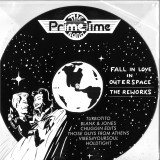
DJ Supermarkt came across this rare private press 7 Inch a long time ago, and since tried to locate the band to include the track on his Too Slow To Disco compilation series. After years he found bandleader Jeff Wollman, who gave TSTD permission to finally rerelease this funky space beauty for the first time on the new compilation TSTD 4.
The story could have ended here, but Jeff and DJ Supermarkt went one step further, and came up with the plan to give the track to a few selected producers for new versions/reworks. We contacted our favorite smooth space approved producers of today, and they all said “Yes” and we are super proud to now give you: The Reworks!
About PRIME TIME BAND:
Some bands excel at turning up, turning it on and getting the job done. Prime Time Band have spent an unlikely 38 years in the business as we write, throwing down a smooth, funky-yet-jazzy set for discerning listeners in the USA, Japan and beyond. “Fall in love in outer space”, their 1986 almost-hit, hits that sweet spot between 80s funk-pop and the disco era’s love of anything galaxy-tinged. Guy Maxwell (bass), Larry Vann (drums), Jeff Wollman (keys), Kenn Peterson (guitar) and Tom Marken (vocals) gifted us a rather delicious spacey groover that feels as ready for
Standard LP is on classic black vinyl. The Land of Kali’ (co-produced by Youth), is the first new Essential Logic studio album in 43 years, and features the forthcoming new single ‘Prayer for Peace’, a re-imagining of the X-Ray Spex track from the tragically overlooked album, ‘Conscious Consumer’ (1995) on which Lora also played sax. “Poly Styrene and I were living in a Krishna community in Worcestershire in the early 80s. We came together for the first time musically after X-Ray Spex to record the original version of this song. In 2019, I decided to record my own take as a tribute to the special times we shared. I hope Poly likes this new version too.” The 7” release of ‘Prayer for Peace’ is exclusive to the 5 LP box set “Logically Yours” via The bands DTC site and features a picture of Lora and Poly together during their time living at the temple. Further tracks penned for release from the album include the dystopian, lockdown-inspired ‘Alien Boys’ and ‘Sky Rocket’, written with daughter Malini, about the fairground of life. Tracks: A1 ‘Prayer For Peace’ A2 ‘Alien Boys’ A3 ‘Mother Earth’ A4 ‘Never Know’ A5 ‘Charming Every Cupid’ B1 ‘Sky Rocket’ B2 ‘Serious’ B3 ‘Fallible Soldiers’ B4 ‘Land of Kali’ B5 ‘Beyond’… Bonus Track: Land of Kali – (Adamski's Kali-Kiss Remix) – CD only
- A1: Love Song
- A2: Young Bastards
- A3: Stop It
- A4: Blind Man
- A5: Skin O Daayba - Complex Habits No.3
- A6: We Are Waiting
- B1: Mantra
- B2: Skin O Daayba - Feedbackless World
- B3: Cupping Glass
- B4: Half Monk Half Herring
- B5: Ukoidm - Fishing (Edit)
- B6: Eric
- B7: In The Garden
- B8: Sequencer
- C1: Who Are We
- C2: Hit
- C3: Yozti 2
- C4: Voices Cricket
- C5: Attempt To Raise Hell
- C6: Anna's Assignment
- D1: In Our Culture (Surname Version)
- D2: Lesson 4 Voices
- D3: Intermission
- D4: Chicken
- D5: Untitled
- D6: Against Soap
- D7: Bereshit
- D8: Caretakers
Black Truffle is pleased to announce Uri Katzenstein’s Audio Works, produced in collaboration with Holon’s Centre for Digital Art. Spanning sculptural installation, performance, video art, and many other media, Katzenstein’s absurdist, poetic, and often hilarious work made extensive use of sound and music. This, however, is the first release dedicated to the artist’s audio work, collecting 28 tracks produced between the early 1980s and 2017. Compiled from dozens of hours of recordings left uncatalogued (and in some instances unheard) at the artist’s death in 2018, these four sides are a treasure trove, offering a captivating glimpse into a uniquely uninhibited creative practice. Predominantly recorded alone, with some contributions from regular collaborators such as Ohad Fishof on the later pieces, many of these tracks stem from Katzenstein’s time living in New York in the 1980s. Feeding on the cross-pollination of post-punk energy, radical art practice, and new media possibilities that characterised the New York scene at this time, many of Katzenstein’s recordings squeeze multilayered vocal experimentation into synth-based miniatures with a distinctively pop twist, their forms ruptured with anarchic bursts of free-form electronics, sounds from self-built instruments, and field-recorded snatches of the outside world. Katzenstein’s electronic production calls up touchstones of skewed 80s art pop like Laurie Anderson, Ambitious Lovers, and Scritti Politti, but imbued with DIY directness and economy of means. The arrangements of synths, percussion, and noise elements are invigoratingly raw and, at times, almost austerely minimal. On ‘Intermission’, thick distorted chords accompany a wandering portamento melody, inhabiting the wayward carnival space of Roedelius’ most unhinged efforts. Many of the tracks centre on Katzenstein’s multi-tracked vocal performances, often moving between multiple languages, (most commonly English, German, French, and Hebrew). A bewildering range of vocal approaches are present on these pieces, from sweet wordless harmonies to hammed-up growls and monastic recitations. On ‘Skin O. Daayba – Complex Habits no. 3’, improvised resonance singing against a backdrop of echoing electronics and radio snatches. ‘Half Monk Half Herring’ layers multi-lingual syllabic fragments, crossing sound poetry techniques with melodic invention in a way rarely heard outside of Caetano Veloso’s Araçá Azul. On ‘Attempt to Raise Hell’, Katzenstein’s distorted voice spits out streams of alliterative nonsense (‘the hemlock of Henry, he was a hermit…purple pumpkin pulsates to pops’), while on the hilarious ‘Eric’, Katzenstein appears to instruct a small boy simultaneously in basic French and German conversation. On ‘Chicken’, vocal harmonies accompany the pecking and clucking of the titular fowl. Moving from bent, outsider synth pop to snatches of Jo Jones-esque automated instrumental clang and absurdist linguistic experiments, these are far more than footnotes to an artist’s gallery works. Accompanied by extensive, beautifully written liner notes by Roee Rosen and the little information that exists on the individual tracks, Katzenstein’s Audio Works inhabits an outer fringe of DIY pop and sonic experiment reminiscent of Pascal Comelade or Die Welttraumforscher, where accessible forms convey radical interrogations of song, word, and sound.
- 1: An Mp Speaks
- 2: Monetaries
- 3: The International Narcotics Traffic
- 4: The Way Of The World
- 5: Antinature
- 6: Charles Windsor
- 7: The Vision Of Peregrine Worsthorne
- 8: The Well Of Loneliness
- 9: The Wicked Palace Revolution
- 10: God Made The Virus
- 11: The Funeral
- 12: A Child Soon In Chains
- 13: In The Dark Times
- 14: The Procession Of Popular
- 15: Capitalism
- C16: In Purgatory(Re-Recorded Version)
- 17: Comrade Era(Re-Recorded )
- 18: Something Wrong Somewhere
- 19: Red Sleeping Beauty
- 20: From The Damned
- 21: For The Fat Lady
- 22: Frans Hals
- 23: Kill Kill Kill Kill
- 24: You’re Alive
- 25: Bad Dreams
- 26: Someone Worse Off Antiamericancretin
- 27: Unfortunately
- 7: 1 In Purgatory
- 7: 2 Comrade Era
- 7: 3 Something Wrong Somewhere
Pressed on Red vinyl and presented in gloss laminated gatefold sleeve.
Double album set contains the original LP plus 13 bonus tracks taken from their first four singles and the re-recorded version of In Purgatory which originally appeared on the PINK compilation E.P “It sells or it smells” plus bonus 7” a reproduction colour vinyl copy of McCarthy’s first 7” “In Purgatory”
All three tracks have been remastered from the original master tape and presented in a wraparound sleeve, just like the incredibly rare “Wall Of Salmon” original.
Also Includes
20 page 12x12” full colour booklet containing all the lyrics and packed full with photos, many previously unpublished. Press clippings and other memorabilia. Introduction by Nicky Wire of the Manic Street Preachers and track by track commentary by Malcolm Eden.
8 x 10 Black & White press photo
Reproduction European Tour poster “The Well Of Loneliness” Promo poster McCarthy sticker
By the time McCarthy appeared on the NME’s C86 cassette they had already been playing together for a couple of years and released two excellent singles. Their debut “In Purgatory” and the indie masterpiece “Red Sleeping Beauty” (both included on this release). The following year McCarthy released the brilliant “Frans Hals” before unleashing their debut album “I Am A Wallet”
Now recognised as an indie pop masterpiece it has gone on to achieve cult status, receiving praise from the likes of Nicky Wire (Manic Street Preachers) as one of the most important albums of the 80s. Known by today's indie acolytes as the band that spawned Tim Gane and Leititia Sadier (who of course went on to form Stereolab).
It’s a seamless album reminiscent of the Byrds. Wonderful, if slightly twee, jangly guitars with complex and rarely rhyming lyrics, Malcolm Eden’s strident left wing political views are manifest on I Am A Wallet. Cloaked in pretty guitar and propulsive drums, Eden sets about attacking the pillars of the day, MPs, Prince Charles, Fleet Street, religion, the response to AIDS and on almost every song, capitalism. The horrors and inequalities of the capitalist system are laid bare for all the see. The system which enables some to get rich at the expense of others is reviled and attacked.
SANG FROID was born in Nantes during the winter of 2019. The band comprises two members of REGARDE LES HOMMES TOMBER and one member of THE VEIL. Passionate about genres like New Wave, Cold Wave and Goth Rock, the trio wished to sound like a tribute to these 70s and 80s scenes. The result is a 4 song EP to be released on the 7th of October through Black God Records. Walking alone at night, heavy hearted, in an oversized city with bleak architecture, is the kind of impression left when listening to SANG FROID's songs. Inspired by bands like Cocteau Twins, Dead Can Dance, Sisters Of Mercy or Depeche Mode the music is drifting in a cold and grey universe, at times sundered by a raging will to live. Mastered by Xort at Drudenhaus Studio. Tracklisting 1. Heavy Sleep Heavy Heart 2. Psalms Of The Great Void 3. Oversee And Kill 4. Death Came To Me
- A1: Supplier
- A2: Scarface
- A3: Deeper
- A4: High (Ft. Danny Brown)
- A5: Harold’s
- A6: Bomb (Ft. Raekwon)
- A7: Shitsville
- A8: Thuggin’
- A9: Real
- A10: Uno
- B1: Robes (Ft. Domo Genesis & Earl Sweatshirt)
- B2: Broken (Ft. Scarface)
- B3: Lakers (Ft. Ab-Soul & Polyester The Saint)
- B4: Knicks
- B5: Shame (Ft. Bj The Chicago Kid)
- B6: Watts (Ft. Big Time Watts)
- B7: Piñata (Ft. Domo Genesis, G-Wiz, Casey Veggies, Sulaiman, Meechy Darko, & Mac Miller)
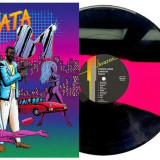
Repressed on Neon Pink and Black Vinyl ! This single LP edition of Piñata has been lacquered at half speed master by Metropolis Mastering in London for the highest fidelity and is housed in an 80s themed cover variant exclusively for Record Store Day 2021. Piñata, the acclaimed effort from Freddie Gibbs and Madlib is a perennial best seller. For RSD 2021 Gibbs and Madlib replace Crockett and Tubbs for a follow up to the blaxploitation inspired “Pinata: The 1974 Version”, with the 80s fueled “Pinata: The 1984 Version.” Though we promise, no mullets or ugly Ferraris.
Released in 2014. Continues to be a best seller. Never issued with this varriant cover.
The Communards’ sophomore album ‘Red’ consolidated the genius of the musical partnership between Bronski Beat singer Jimmy Somerville and pianist Richard Coles. Fusing synths and hi-NRG production with lush string and horn arrangements, The Communards straddled pop and the political, the album’s themes set against the political unrest and moral panic of late 80s Britain. A global smash upon its release, this remastered and expanded 35Th Anniversary Edition features an extensive array of B-sides, live tracks, demo versions and remixes, including classic mixes by legendary 80s club doyens Shep Pettibone, Clivilles & Cole (better known as C&C Music Factory) and a euphoric new 2022 remix of ‘Never Can Say Goodbye’ by UK outfit The 2 Bears (Hot Chip’s Joe Goddard and DJ Raf Rundell). Available on Deluxe Double CD , Collector White & Red Double Vinyl , Black Vinyl. All editions remastered , with new sleeve notes.
- 1: Going To The City - Stormer
- 2: Cocaine - L.a. Rocks
- 3: Bound For Hell - Max Havoc
- 4: Rock ' Roll Ain't Pretty - Jaded Lady
- 5: Ready To Explode - Steeler
- 6: No Time To Lose - Lizzy Borden
- 7: On The Run - Sin
- 8: Give Em The Old 1, 2, 3 - Black Blue
- 9: Damnation Alley - Bitch
- 10: Feeling To Rock - Romeo
- 11: Savage Kind Of Girl - V.v.s.i
- 12: Up From The Depths - Hellion
- 13: Blade Of Steel - Angeles
- 14: Cold Reception - Knightmare Ii
- 15: Cinderella (In Black Leather) - Witch
- 16: Liquid Lady - Reddi Killowatt
- 17: Lesson Well Learned - Armored Saint
- 18: We Came To Kill - Leather Angel
- 19: Take It Or Leave It - Rough Cutt
- 20: Fool Of Lies - Lisa Baker
- 21: Judgement Day - Odin
White Lines Vinyl[88,24 €]
2xLP + Book (Black) Heavy metal? Glam? Hard rock? Make your own fuckin' call, you poser. We're not gonna do it for you. Bound for Hell is early `80s L.A. rock as it actually was: a California cataclysm of drunk and horny headbangers, dressed in sharp, shiny, leather androgyny and fire, kicking crowds in the teeth to clear the way to that one big shot. This 2LP set delivers 21 tracks by 21 artists in an ephemera-stuffed gatefold, plus 144-page hardbound book detailing the Sunset Strip's most razor-sharp heathens. Drumsticks burned. Hands were severed. Faces bled. Heavy was HELL for a half decade and it was a long, long way down.
- 1: Going To The City - Stormer
- 2: Cocaine - L.a. Rocks
- 3: Bound For Hell - Max Havoc
- 4: Rock ' Roll Ain't Pretty - Jaded Lady
- 5: Ready To Explode - Steeler
- 6: No Time To Lose - Lizzy Borden
- 7: On The Run - Sin
- 8: Give Em The Old 1, 2, 3 - Black Blue
- 9: Damnation Alley - Bitch
- 10: Feeling To Rock - Romeo
- 11: Savage Kind Of Girl - V.v.s.i
- 12: Up From The Depths - Hellion
- 13: Blade Of Steel - Angeles
- 14: Cold Reception - Knightmare Ii
- 15: Cinderella (In Black Leather) - Witch
- 16: Liquid Lady - Reddi Killowatt
- 17: Lesson Well Learned - Armored Saint
- 18: We Came To Kill - Leather Angel
- 19: Take It Or Leave It - Rough Cutt
- 20: Fool Of Lies - Lisa Baker
- 21: Judgement Day - Odin
Black Vinyl[84,03 €]
2xLP + Book (Black) Heavy metal? Glam? Hard rock? Make your own fuckin' call, you poser. We're not gonna do it for you. Bound for Hell is early `80s L.A. rock as it actually was: a California cataclysm of drunk and horny headbangers, dressed in sharp, shiny, leather androgyny and fire, kicking crowds in the teeth to clear the way to that one big shot. This 2LP set delivers 21 tracks by 21 artists in an ephemera-stuffed gatefold, plus 144-page hardbound book detailing the Sunset Strip's most razor-sharp heathens. Drumsticks burned. Hands were severed. Faces bled. Heavy was HELL for a half decade and it was a long, long way down.
Zillion is an institute of Belgian club life. Insider made under his new guise Space Barons 2 exclusive tracks that will be featured in the Zillion movie. The first is Black magic: the track you think you've known for years but that's actually brand, spanking new. Tested and approved, hitting with the power of an oldskool anthem coupled with the pedigree of a grand cru 2022. Second is Space & Sound: a pure and unadulterated trip into every one of your guilty pleasures. Combing 80s, 90s, and the 2000s into a futuristic roller coaster like only the Space Barons can do. Grab your hands on this super exclusive release.
- A1: Rock This Mother
- A2: Talk To Me Girl
- A3: You Can Find Me
- A4: Check This Out
- A5: Jesus Going To Clean House
- A6: Hope You Understood
- A7: Is It What You Want
- A8: Love Is Everlasting
- A9: This Is Hip-Hop Art
- A10: Opposite Of Love
- A11: Do You Know What I Mean
- B1: Saving All My Love For You
- B2: Look Out Here I Come
- B3: Girl You Always Talking
- B4: Have A Great Day
- B5: Take My Hand
- B6: I Need Your Love
- B7: Your Town
- B8: Talk Around Town
- B9: Booty Head/Take A Little Walk
- B10: I Love My Mama
- B11: I Never Found Anyone Like You
Vinyl LP[23,49 €]
As the sun sets on a quaint East Nashville house, a young man bares a piece of his soul. Facing the camera, sporting a silky suit jacket/shirt/slacks/fingerless gloves ensemble that announces "singer" before he's even opened his mouth, Lee Tracy Johnson settles onto his stage, the front yard. He sways to the dirge-like drum machine pulse of a synth-soaked slow jam, extends his arms as if gaining his balance, and croons in affecting, fragile earnest, "I need your love… oh baby…"
Dogs in the yard next door begin barking. A mysterious cardboard robot figure, beamed in from galaxies unknown and affixed to a tree, is less vocal. Lee doesn't acknowledge either's presence. He's busy feeling it, arms and hands gesticulating. His voice rises in falsetto over the now-quiet dogs, over the ambient noise from the street that seeps into the handheld camcorder's microphone, over the recording of his own voice played back from a boombox off-camera. After six minutes the single, continuous shot ends. In this intimate creative universe there are no re-takes. There are many more music videos to shoot, and as Lee later puts it, "The first time you do it is actually the best. Because you can never get that again. You expressing yourself from within."
"I Need Your Love" dates from a lost heyday. From some time in the '80s or early '90s, when Lee Tracy (as he was known in performance) and his music partner/producer/manager Isaac Manning committed hours upon hours of their sonic and visual ideas to tape. Embracing drum machines and synthesizers – electronics that made their personal futurism palpable – they recorded exclusively at home, live in a room into a simple cassette deck. Soul, funk, electro and new wave informed their songs, yet Lee and Isaac eschewed the confinement of conventional categories and genres, preferring to let experimentation guide them.
"Anytime somebody put out a new record they had the same instruments or the same sound," explains Isaac. "So I basically wanted to find something that's really gonna stand out away from all of the rest of 'em." Their ethos meant that every idea they came up with was at least worth trying: echoed out half-rapped exhortations over frantic techno-style beats, gospel synth soul, modal electro-funk, oddball pop reinterpretations, emo AOR balladry, nods to Prince and the Fat Boys, or arrangements that might collapse mid-song into a mess of arcade game-ish blips before rallying to reach the finish line. All of it conjoined by consistent tape hiss, and most vitally, Lee's chameleonic voice, which managed to wildly shape shift and still evoke something sincere – whether toggling between falsetto and tenor exalting Jesus's return, or punctuating a melismatic romantic adlib with a succinct, "We all know how it feels to be alone."
"People think we went to a studio," says Isaac derisively. "We never went to no studio. We didn't have the money to go to no studio! We did this stuff at home. I shot videos in my front yard with whatever we could to get things together." Sometimes Isaac would just put on an instrumental record, be it "Planet Rock" or "Don't Cry For Me Argentina" (from Evita), press "record," and let Lee improvise over it, yielding peculiar love songs, would-be patriotic anthems, or Elvis Presley or Marilyn Monroe tributes. Technical limitations and a lack of professional polish never dissuaded them. They believed they were onto something.
"That struggle," Isaac says, "made that sound sound good to me."
In the parlance of modern music criticism Lee and Isaac's dizzying DIY efforts would inevitably be described as "outsider." But "outsider" carries the burden of untold additional layers of meaning if you're Black and from the South, creating on a budget, and trying to get someone, anyone within the country music capital of the world to take your vision seriously. "What category should we put it in?" Isaac asks rhetorically. "I don't know. All I know is feeling. I ain't gonna name it nothing. It's music. If it grabs your soul and touch your heart that's what it basically is supposed to do."
=
Born in 1963, the baby boy of nine siblings, Lee Tracy spent his earliest years living amidst the shotgun houses on Nashville's south side. "We was poor, man!" he says, recalling the outhouse his family used for a bathroom and the blocks of ice they kept in the kitchen to chill perishables. "But I actually don't think I really realized I was in poverty until I got grown and started thinking about it." Lee's mom worked at the Holiday Inn; his dad did whatever he had to do, from selling fruit from a horse drawn cart to bootlegging. "We didn't have much," Lee continues, "but my mother and my father got us the things we needed, the clothes on our back." By the end of the decade with the city's urban renewal programs razing entire neighborhoods to accommodate construction of the Interstate, the family moved to Edgehill Projects. Lee remembers music and art as a constant source of inspiration for he and his brothers and sisters – especially after seeing the Jackson 5 perform on Ed Sullivan. "As a small child I just knew that was what I wanted to do."
His older brother Don began musically mentoring him, introducing Lee to a variety of instruments and sounds. "He would never play one particular type of music, like R&B," says Lee. "I was surrounded by jazz, hard rock and roll, easy listening, gospel, reggae, country music; I mean I was a sponge absorbing all of that." Lee taught himself to play drums by beating on cardboard boxes, gaining a rep around the way for his timekeeping, and his singing voice. Emulating his favorites, Earth Wind & Fire and Cameo, he formed groups with other kids with era-evocative band names like Concept and TNT Connection, and emerged as the leader of disciplined rehearsals. "I made them practice," says Lee. "We practiced and practiced and practiced. Because I wanted that perfection." By high school the most accomplished of these bands would take top prize in a prominent local talent show. It was a big moment for Lee, and he felt ready to take things to the next level. But his band-mates had other ideas.
"I don't know what happened," he says, still miffed at the memory. "It must have blew they mind after we won and people started showing notice, because it's like everybody quit! I was like, where the hell did everybody go?" Lee had always made a point of interrogating prospective musicians about their intentions before joining his groups: were they really serious or just looking for a way to pick up girls? Now he understood even more the importance of finding a collaborator just as committed to the music as he was.
=
Isaac Manning had spent much of his life immersed in music and the arts – singing in the church choir with his family on Nashville's north side, writing, painting, dancing, and working various gigs within the entertainment industry. After serving in the armed forces, in the early '70s he ran The Teenage Place, a music and performance venue that catered to the local youth. But he was forced out of town when word of one of his recreational routines created a stir beyond the safe haven of his bohemian circles.
"I was growing marijuana," Isaac explains. "It wasn't no business, I was smoking it myself… I would put marijuana in scrambled eggs, cornbread and stuff." His weed use originated as a form of self-medication to combat severe tooth pain. But when he began sharing it with some of the other young people he hung out with, some of who just so happened to be the kids of Nashville politicians, the cops came calling. "When I got busted," he remembers, "they were talking about how they were gonna get rid of me because they didn't want me saying nothing about they children because of the politics and stuff. So I got my family, took two raggedy cars, and left Nashville and went to Vegas."
Out in the desert, Isaac happened to meet Chubby Checker of "The Twist" fame while the singer was gigging at The Flamingo. Impressed by Isaac's zeal, Checker invited him to go on the road with him as his tour manager/roadie/valet. The experience gave Isaac a window into a part of the entertainment world he'd never encountered – a glimpse of what a true pop act's audience looked like. "Chubby Checker, none of his shows were played for Black folks," he remembers. "All his gigs were done at high-class white people areas." Returning home after a few years with Chubby, Isaac was properly motivated to make it in Music City. He began writing songs and scouting around Nashville for local talent anywhere he could find it with an expressed goal: "Find someone who can deliver your songs the way you want 'em delivered and make people feel what you want them to feel."
One day while walking through Edgehill Projects Isaac heard someone playing the drums in a way that made him stop and take notice. "The music was so tight, just the drums made me feel like, oh I'm-a find this person," he recalls. "So I circled through the projects until I found who it was.
"That's how I met him – Lee Tracy. When I found him and he started singing and stuff, I said, ohhh, this is somebody different."
=
Theirs was a true complementary partnership: young Lee possessed the raw talent, the older Isaac the belief. "He's really the only one besides my brother and my family that really seen the potential in me," says Lee. "He made me see that I could do it."
Isaac long being a night owl, his house also made for a fertile collaborative environment – a space where there always seemed to be a new piece of his visual art on display: paintings, illustrations, and dolls and figures (including an enigmatic cardboard robot). Lee and Issac would hang out together and talk, listen to music, conjure ideas, and smoke the herb Isaac had resumed growing in his yard. "It got to where I could trust him, he could trust me," Isaac says of their bond. They also worked together for hours on drawings, spreading larges rolls of paper on the walls and sketching faces with abstract patterns and imagery: alien-like beings, tri-horned horse heads, inverted Janus-like characters where one visage blurred into the other.
Soon it became apparent that they didn't need other collaborators; self-sufficiency was the natural way forward. At Isaac's behest Lee, already fed up with dealing with band musicians, began playing around with a poly-sonic Yamaha keyboard at the local music store. "It had everything on it – trumpet, bass, drums, organ," remembers Lee. "And that's when I started recording my own stuff."
The technology afforded Lee the flexibility and independence he craved, setting him on a path other bedroom musicians and producers around the world were simultaneously following through the '80s into the early '90s. Saving up money from day jobs, he eventually supplemented the Yamaha Isaac had gotten him with Roland and Casio drum machines and a Moog. Lee was living in an apartment in Hillside at that point caring for his dad, who'd been partially paralyzed since early in life. In the evenings up in his second floor room, the music put him in a zone where he could tune out everything and lose himself in his ideas.
"Oh I loved it," he recalls. "I would really experiment with the instruments and use a lot of different sound effects. I was looking for something nobody else had. I wanted something totally different. And once I found the sound I was looking for, I would just smoke me a good joint and just let it go, hit the record button." More potent a creative stimulant than even Isaac's weed was the holistic flow and spontaneity of recording. Between sessions at Isaac's place and Lee's apartment, their volume of output quickly ballooned.
"We was always recording," says Lee. "That's why we have so much music. Even when I went to Isaac's and we start creating, I get home, my mind is racing, I gotta start creating, creating, creating. I remember there were times when I took a 90-minute tape from front to back and just filled it up."
"We never practiced," says Isaac. "See, that was just so odd about the whole thing. I could relate to him, and tell him about the songs I had ideas for and everything and stuff. And then he would bring it back or whatever, and we'd get together and put it down." Once the taskmaster hell bent on rehearsing, Lee had flipped a full 180. Perfection was no longer an aspiration, but the enemy of inspiration.
"I seen where practicing and practicing got me," says Lee. "A lot of musicians you get to playing and they gotta stop, they have to analyze the music. But while you analyzing you losing a lot of the greatness of what you creating. Stop analyzing what you play, just play! And it'll all take shape."
=
"I hope you understood the beginning of the record because this was invented from a dream I had today… (You tell me, I'll tell you, we'll figure it out together)" – Lee Tracy and Isaac Manning, "Hope You Understand"
Lee lets loose a maniacal cackle when he acknowledges that the material that he and Isaac recorded was by anyone's estimation pretty out there. It's the same laugh that commences "Hope You Understand" – a chaotic transmission that encapsulates the duality at the heart of their music: a stated desire to reach people and a compulsion to go as leftfield as they saw fit.
"We just did it," says Lee. "We cut the music on and cut loose. I don't sit around and write. I do it by listening, get a feeling, play the music, and the lyrics and stuff just come out of me."
The approach proved adaptable to interpreting other artists' material. While recording a cover of Whitney Houston's pop ballad "Saving All My Love For You," Lee played Whitney's version in his headphones as he laid down his own vocals – partially following the lyrics, partially using them as a departure point. The end result is barely recognizable compared with the original, Lee and Isaac having switched up the time signature and reinvented the melody along the way towards morphing a slick mainstream radio standard into something that sounds solely their own.
"I really used that song to get me started," says Lee. "Then I said, well I need something else, something is missing. Something just came over me. That's when I came up with 'Is It What You Want.'"
The song would become the centerpiece of Lee and Isaac's repertoire. Pushed along by a percolating metronomic Rhythm King style beat somewhere between a military march and a samba, "Is It What You Want" finds Lee pleading the sincerity of his commitment to a potential love interest embellished by vocal tics and hiccups subtlely reminiscent of his childhood hero MJ. Absent chord changes, only synth riffs gliding in and out like apparitions, the song achieves a lingering lo-fi power that leaves you feeling like it's still playing, somewhere, even after the fade out.
"I don't know, it's like a real spiritual song," Lee reflects. "But it's not just spiritual. To me the more I listen to it it's like about everything that you do in your everyday life, period. Is it what you want? Do you want a car or you don't want a car? Do you want Jesus or do you want the Devil? It's basically asking you the question. Can't nobody answer the question but you yourself."
In 1989 Lee won a lawsuit stemming from injuries sustained from a fight he'd gotten into. He took part of the settlement money and with Isaac pressed up "Saving All My Love For You" b/w "Is It What You Want" as a 45 single. Isaac christened the label One Chance Records. "Because that's all we wanted," he says with a laugh, "one chance."
Isaac sent the record out to radio stations and major labels, hoping for it to make enough noise to get picked up nationally. But the response he and Lee were hoping for never materialized. According to Isaac the closest the single got to getting played on the radio is when a disk jock from a local station made a highly unusual announcement on air: "The dude said on the radio, 107.5 – 'We are not gonna play 'Is It What You Want.' We cracked up! Wow, that's deep.
"It was a whole racist thing that was going on," he reflects. "So we just looked over and kept on going. That was it. That was about the way it goes… If you were Black and you were living in Nashville and stuff, that's the way you got treated." Isaac already knew as much from all the times he'd brought he and Lee's tapes (even their cache of country music tunes) over to Music Row to try to drum up interest to no avail.
"Isaac, he really worked his ass off," says Lee. "He probably been to every record place down on Music Row." Nashville's famed recording and music business corridor wasn't but a few blocks from where Lee grew up. Close enough, he remembers, for him to ride his bike along its back alleys and stumble upon the occasional random treasure, like a discarded box of harmonicas. Getting in through the front door, however, still felt a world away.
"I just don't think at the time our music fell into a category for them," he concedes. "It was before its time."
=
Lee stopped making music some time in the latter part of the '90s, around the time his mom passed away and life became increasingly tough to manage. "When my mother died I had a nervous breakdown," he says, "So I shut down for a long time. I was in such a sadness frame of mind. That's why nobody seen me. I had just disappeared off the map." He fell out of touch with Isaac, and in an indication of just how bad things had gotten for him, lost track of all the recordings they'd made together. Music became a distant memory.
Fortunately, Isaac kept the faith. In a self-published collection of his poetry – paeans to some of his favorite entertainment and public figures entitled Friends and Dick Clark – he'd written that he believed "music has a life of its own." But his prescience and presence of mind were truly manifested in the fact that he kept an archive of he and Lee's work. As perfectly imperfect as "Is It What You Want" now sounds in a post-Personal Space world, Lee and Isaac's lone official release was in fact just a taste. The bulk of the Is It What You Want album is culled from the pair's essentially unheard home recordings – complete songs, half-realized experiments, Isaac's blue monologues and pronouncements et al – compiled, mixed and programmed in the loose and impulsive creative spirit of their regular get-togethers from decades ago. The rest of us, it seems, may have finally caught up to them.
On the prospect of at long last reaching a wider audience, Isaac says simply, "I been trying for a long time, it feels good." Ever the survivor, he adds, "The only way I know how to make it to the top is to keep climbing. If one leg break on the ladder, hey, you gotta fix it and keep on going… That's where I be at. I'll kill death to make it out there."
For Lee it all feels akin to a personal resurrection: "It's like I was in a tomb and the tomb was opened and I'm back… Man, it feels so great. I feel like I'm gonna jump out of my skin." Success at this stage of his life, he realizes, probably means something different than what it did back when he was singing and dancing in Isaac's front yard. "What I really mean by 'making it,'" he explains isn't just the music being heard but, "the story being told."
Occasionally Lee will pull up "Is It What You Want" on YouTube on his phone, put on his headphones, and listen. He remembers the first time he heard his recorded voice. How surreal it was, how he thought to himself, "Is that really me?" What would he say to that younger version of himself now?
"I would probably tell myself, hang in there, don't give up. Keep striving for the goal. And everything will work out."
Despite what's printed on the record label, sometimes you do get more than one chance.
"Formed more than three decades ago in 1989 only to fall into a slumbering hibernation lasting until last year, Swedish hard rock outfit NESTOR decided to reunite, reinvent the iconography of rock and restore its glory in 2021 with their debut album – yes, their debut album – Kids in a ghost town. With friendship as the fundament of this unique, seemingly unbreakable bond, NESTOR are back for good and better than ever! Upon its initial release, NESTOR’s acclaimed first album, Kids in a ghost town, sent their fans on a journey back in time to the 80s, both in sound and spirit, as well as with their completely self-produced music videos – all of which spurred a nomination for a Swedish Hard Rock/Metal Grammis-Award! This is an album of such impressive scale in fact, that Napalm Records has decided to re-release Kids in a ghost town in various exclusive edition, set for release on September 30, 2022! NESTOR embraces influence from the 80s with a sense of nostalgia and authenticity. With glossy production, NESTOR takes you straight back to the golden age of rock music, openly displaying their influences – from Bon Jovi and Aerosmith to Journey and Foreigner. With over 30 years of existence, NESTOR turn back time while being one of the hottest newcomers of modern rock music, with millions of streams on Spotify and hundreds of thousands of views on YouTube to boot, even having shared stages with the almighty ALICE COOPER, hard rock powerhouse H.E.A.T. and supporting the legendary KISS in Stockholm on their 2022 stadium tour! The re-release of Kids in a ghost town includes the critically acclaimed full-length album as digital album, CD, Black Vinyl LP and cassette tape, as well as a limited edition wooden boxset (+ exclusive 7"" sun yellow transparent vinyl, 3 guitar picks, CD - Digisleeve & wristband) and Die Hard red transparent vinyl (+ exclusive 7"" vinyl & patch)." Single Blurb: "Swedish rock ambassadors NESTOR embrace influences from the 80s with a sense of nostalgia and authenticity on their single ""Signed in Blood""! With glossy production, NESTOR takes you straight back to the golden age of rock music - openly displaying their influences - from Bon Jovi and Journey to Aerosmith. NESTOR turn back time while being one of the hottest newcomers of modern rock music with millions of streams on Spotify alone! "
Forged in Hell’s Fire, November 2018 Singapore, by SHYAITHAN – Guitars (also from IMPIETY). The band at present consists of long time komrades HADES - Vocals (also from and founder of BATTLESTORM), ASURA – Guitars (also from and founder of DEUS EX MACHINA), CRYPTOR – Bass (ex-founding member of DEMISOR) and lastly DIZAZTER on Drums (also from IMPIETY/ DEPRAVITY). XUL ANTICHRISTO from INFERNAL EXECRATOR held Vocal duties at the very beginning, but had to leave after the first EP recording due to his tight schedule (work commitment). DEVOUROR defines it’s sonic wrath arrogantly as ‘Bestial Deathcult Warfare’ with late 80s/early 90s influence from Possessed, Sarcofago, Necrovore, Blasphemy, Death, Sodom. With this being said, DEVOUROR is Not a project of sorts, but a brutal 5 Beast Blackened Metal of Death Squadron that scoffs, hacks and slays the rest of mediocre rubbish that currently saturates the underground. All members are Veteran Diehards with filthy back-grounds of over 25 long years of dedication and commitment raising the old glorious flag of unholy Black Death!
Luca LTJ Trevisi (LTJ Xperience) began his dj/producer career in the 80s. As resident dj in two of the most famous Italian clubs of the time, Kinky in Bologna and Cap Creus in Imola, he was one of the first Italian jocks to spin House and to re-propose those black music, jazz and latin-bossa classics from the 70s that at the end of the same decade would have given birth to the Acid Jazz and Rare Groove movements. His first single release in 1988, titled First Job, together with Kekkotronics, was also the first release ever on Bologna based Irma Records. It was featured in a lot of compilations of the time and entered several playlists, rapidly reaching cult status for many UK and US djs. During the early 90s LTJ delivered a couple of singles in a kind of pre-breakbeat style: Dont Stop The Sax, released all over Europe, and Funky Superfly. He also produced US singer Tameka Starrs single Going In Circles, always for Irma Records, still a classic in the downtempo/r&b field. In the second half of the nineties Luca began to produce acid jazz bands like Bossa Nostra, still today one of Irma Records main acts. Their first album had Vicky Anderson as special
guest and today is still considered one of the most important European acid jazz albums. In the following years he concentrated on developing his activity as collector and rare vinyl merchant, which gave him the chance to get in touch with djs from all over the World and to discover many forgotten gems from the past years. Thanks to this experience he was able to create two extremely successful rarities series on Irma Records:
Groovy and Suono Libero. In the meanwhile LTJ started to dj outside Italy too, performing in important venues like the Blue Note and Jazz Café in London, Giant Step in New York and Montreux Jazz Festival in Switzerland. In 1999 saw the release of his first solo album under the LTJ Xperience moniker. The album was produced with the collaboration of fellow Irma artist and producer Ohm Guru and had Taka Boom and Jackson Sloan among the guests. Two of the main tracks on the album are brazil house classic Sombre Guitar and title track Moon Beat, which became a true hit of the Chill Out genre, featured in dozens of important compilations.
After making countless productions for Irma Records, including their second album When The Rain Begins To Fall (with the participation of the historic Spanish-American singer Joe Bataan), and the recents singles as ORGAN MIND / I LOVE YOU (favorite track by Larry Heard ) & ON THE FLOOR / SOUND MACHINE, LTJ is devoted almost exclusively to re-edit and reconstruct tracks from the past with the addition of sounds and rhythms in post production for labels like SUPER VALUE, SMALL WORLD DISCO, HOT GROOVY RECORDS, OH CRISTO! increasing the production of this new musical genre that is currently defined as beatdown/slo-mo, working with international labels such as Far Out Recordings, Sleazy Beats, Future Classics, E.A.R. Music For Dreams, Apersonal Music, Roam Recordings, !K7.
- A1: Rock This Mother
- A2: Talk To Me Girl
- A3: You Can Find Me
- A4: Check This Out
- A5: Jesus Going To Clean House
- A6: Hope You Understood
- A7: Is It What You Want
- A8: Love Is Everlasting
- A9: This Is Hip-Hop Art
- A10: Opposite Of Love
- A11: Do You Know What I Mean
- B1: Saving All My Love For You
- B2: Look Out Here I Come
- B3: Girl You Always Talking
- B4: Have A Great Day
- B5: Take My Hand
- B6: I Need Your Love
- B7: Your Town
- B8: Talk Around Town
- B9: Booty Head/Take A Little Walk
- B10: I Love My Mama
- B11: I Never Found Anyone Like You
Cassette[11,72 €]
As the sun sets on a quaint East Nashville house, a young man bares a piece of his soul. Facing the camera, sporting a silky suit jacket/shirt/slacks/fingerless gloves ensemble that announces "singer" before he's even opened his mouth, Lee Tracy Johnson settles onto his stage, the front yard. He sways to the dirge-like drum machine pulse of a synth-soaked slow jam, extends his arms as if gaining his balance, and croons in affecting, fragile earnest, "I need your love… oh baby…"
Dogs in the yard next door begin barking. A mysterious cardboard robot figure, beamed in from galaxies unknown and affixed to a tree, is less vocal. Lee doesn't acknowledge either's presence. He's busy feeling it, arms and hands gesticulating. His voice rises in falsetto over the now-quiet dogs, over the ambient noise from the street that seeps into the handheld camcorder's microphone, over the recording of his own voice played back from a boombox off-camera. After six minutes the single, continuous shot ends. In this intimate creative universe there are no re-takes. There are many more music videos to shoot, and as Lee later puts it, "The first time you do it is actually the best. Because you can never get that again. You expressing yourself from within."
"I Need Your Love" dates from a lost heyday. From some time in the '80s or early '90s, when Lee Tracy (as he was known in performance) and his music partner/producer/manager Isaac Manning committed hours upon hours of their sonic and visual ideas to tape. Embracing drum machines and synthesizers – electronics that made their personal futurism palpable – they recorded exclusively at home, live in a room into a simple cassette deck. Soul, funk, electro and new wave informed their songs, yet Lee and Isaac eschewed the confinement of conventional categories and genres, preferring to let experimentation guide them.
"Anytime somebody put out a new record they had the same instruments or the same sound," explains Isaac. "So I basically wanted to find something that's really gonna stand out away from all of the rest of 'em." Their ethos meant that every idea they came up with was at least worth trying: echoed out half-rapped exhortations over frantic techno-style beats, gospel synth soul, modal electro-funk, oddball pop reinterpretations, emo AOR balladry, nods to Prince and the Fat Boys, or arrangements that might collapse mid-song into a mess of arcade game-ish blips before rallying to reach the finish line. All of it conjoined by consistent tape hiss, and most vitally, Lee's chameleonic voice, which managed to wildly shape shift and still evoke something sincere – whether toggling between falsetto and tenor exalting Jesus's return, or punctuating a melismatic romantic adlib with a succinct, "We all know how it feels to be alone."
"People think we went to a studio," says Isaac derisively. "We never went to no studio. We didn't have the money to go to no studio! We did this stuff at home. I shot videos in my front yard with whatever we could to get things together." Sometimes Isaac would just put on an instrumental record, be it "Planet Rock" or "Don't Cry For Me Argentina" (from Evita), press "record," and let Lee improvise over it, yielding peculiar love songs, would-be patriotic anthems, or Elvis Presley or Marilyn Monroe tributes. Technical limitations and a lack of professional polish never dissuaded them. They believed they were onto something.
"That struggle," Isaac says, "made that sound sound good to me."
In the parlance of modern music criticism Lee and Isaac's dizzying DIY efforts would inevitably be described as "outsider." But "outsider" carries the burden of untold additional layers of meaning if you're Black and from the South, creating on a budget, and trying to get someone, anyone within the country music capital of the world to take your vision seriously. "What category should we put it in?" Isaac asks rhetorically. "I don't know. All I know is feeling. I ain't gonna name it nothing. It's music. If it grabs your soul and touch your heart that's what it basically is supposed to do."
=
Born in 1963, the baby boy of nine siblings, Lee Tracy spent his earliest years living amidst the shotgun houses on Nashville's south side. "We was poor, man!" he says, recalling the outhouse his family used for a bathroom and the blocks of ice they kept in the kitchen to chill perishables. "But I actually don't think I really realized I was in poverty until I got grown and started thinking about it." Lee's mom worked at the Holiday Inn; his dad did whatever he had to do, from selling fruit from a horse drawn cart to bootlegging. "We didn't have much," Lee continues, "but my mother and my father got us the things we needed, the clothes on our back." By the end of the decade with the city's urban renewal programs razing entire neighborhoods to accommodate construction of the Interstate, the family moved to Edgehill Projects. Lee remembers music and art as a constant source of inspiration for he and his brothers and sisters – especially after seeing the Jackson 5 perform on Ed Sullivan. "As a small child I just knew that was what I wanted to do."
His older brother Don began musically mentoring him, introducing Lee to a variety of instruments and sounds. "He would never play one particular type of music, like R&B," says Lee. "I was surrounded by jazz, hard rock and roll, easy listening, gospel, reggae, country music; I mean I was a sponge absorbing all of that." Lee taught himself to play drums by beating on cardboard boxes, gaining a rep around the way for his timekeeping, and his singing voice. Emulating his favorites, Earth Wind & Fire and Cameo, he formed groups with other kids with era-evocative band names like Concept and TNT Connection, and emerged as the leader of disciplined rehearsals. "I made them practice," says Lee. "We practiced and practiced and practiced. Because I wanted that perfection." By high school the most accomplished of these bands would take top prize in a prominent local talent show. It was a big moment for Lee, and he felt ready to take things to the next level. But his band-mates had other ideas.
"I don't know what happened," he says, still miffed at the memory. "It must have blew they mind after we won and people started showing notice, because it's like everybody quit! I was like, where the hell did everybody go?" Lee had always made a point of interrogating prospective musicians about their intentions before joining his groups: were they really serious or just looking for a way to pick up girls? Now he understood even more the importance of finding a collaborator just as committed to the music as he was.
=
Isaac Manning had spent much of his life immersed in music and the arts – singing in the church choir with his family on Nashville's north side, writing, painting, dancing, and working various gigs within the entertainment industry. After serving in the armed forces, in the early '70s he ran The Teenage Place, a music and performance venue that catered to the local youth. But he was forced out of town when word of one of his recreational routines created a stir beyond the safe haven of his bohemian circles.
"I was growing marijuana," Isaac explains. "It wasn't no business, I was smoking it myself… I would put marijuana in scrambled eggs, cornbread and stuff." His weed use originated as a form of self-medication to combat severe tooth pain. But when he began sharing it with some of the other young people he hung out with, some of who just so happened to be the kids of Nashville politicians, the cops came calling. "When I got busted," he remembers, "they were talking about how they were gonna get rid of me because they didn't want me saying nothing about they children because of the politics and stuff. So I got my family, took two raggedy cars, and left Nashville and went to Vegas."
Out in the desert, Isaac happened to meet Chubby Checker of "The Twist" fame while the singer was gigging at The Flamingo. Impressed by Isaac's zeal, Checker invited him to go on the road with him as his tour manager/roadie/valet. The experience gave Isaac a window into a part of the entertainment world he'd never encountered – a glimpse of what a true pop act's audience looked like. "Chubby Checker, none of his shows were played for Black folks," he remembers. "All his gigs were done at high-class white people areas." Returning home after a few years with Chubby, Isaac was properly motivated to make it in Music City. He began writing songs and scouting around Nashville for local talent anywhere he could find it with an expressed goal: "Find someone who can deliver your songs the way you want 'em delivered and make people feel what you want them to feel."
One day while walking through Edgehill Projects Isaac heard someone playing the drums in a way that made him stop and take notice. "The music was so tight, just the drums made me feel like, oh I'm-a find this person," he recalls. "So I circled through the projects until I found who it was.
"That's how I met him – Lee Tracy. When I found him and he started singing and stuff, I said, ohhh, this is somebody different."
=
Theirs was a true complementary partnership: young Lee possessed the raw talent, the older Isaac the belief. "He's really the only one besides my brother and my family that really seen the potential in me," says Lee. "He made me see that I could do it."
Isaac long being a night owl, his house also made for a fertile collaborative environment – a space where there always seemed to be a new piece of his visual art on display: paintings, illustrations, and dolls and figures (including an enigmatic cardboard robot). Lee and Issac would hang out together and talk, listen to music, conjure ideas, and smoke the herb Isaac had resumed growing in his yard. "It got to where I could trust him, he could trust me," Isaac says of their bond. They also worked together for hours on drawings, spreading larges rolls of paper on the walls and sketching faces with abstract patterns and imagery: alien-like beings, tri-horned horse heads, inverted Janus-like characters where one visage blurred into the other.
Soon it became apparent that they didn't need other collaborators; self-sufficiency was the natural way forward. At Isaac's behest Lee, already fed up with dealing with band musicians, began playing around with a poly-sonic Yamaha keyboard at the local music store. "It had everything on it – trumpet, bass, drums, organ," remembers Lee. "And that's when I started recording my own stuff."
The technology afforded Lee the flexibility and independence he craved, setting him on a path other bedroom musicians and producers around the world were simultaneously following through the '80s into the early '90s. Saving up money from day jobs, he eventually supplemented the Yamaha Isaac had gotten him with Roland and Casio drum machines and a Moog. Lee was living in an apartment in Hillside at that point caring for his dad, who'd been partially paralyzed since early in life. In the evenings up in his second floor room, the music put him in a zone where he could tune out everything and lose himself in his ideas.
"Oh I loved it," he recalls. "I would really experiment with the instruments and use a lot of different sound effects. I was looking for something nobody else had. I wanted something totally different. And once I found the sound I was looking for, I would just smoke me a good joint and just let it go, hit the record button." More potent a creative stimulant than even Isaac's weed was the holistic flow and spontaneity of recording. Between sessions at Isaac's place and Lee's apartment, their volume of output quickly ballooned.
"We was always recording," says Lee. "That's why we have so much music. Even when I went to Isaac's and we start creating, I get home, my mind is racing, I gotta start creating, creating, creating. I remember there were times when I took a 90-minute tape from front to back and just filled it up."
"We never practiced," says Isaac. "See, that was just so odd about the whole thing. I could relate to him, and tell him about the songs I had ideas for and everything and stuff. And then he would bring it back or whatever, and we'd get together and put it down." Once the taskmaster hell bent on rehearsing, Lee had flipped a full 180. Perfection was no longer an aspiration, but the enemy of inspiration.
"I seen where practicing and practicing got me," says Lee. "A lot of musicians you get to playing and they gotta stop, they have to analyze the music. But while you analyzing you losing a lot of the greatness of what you creating. Stop analyzing what you play, just play! And it'll all take shape."
=
"I hope you understood the beginning of the record because this was invented from a dream I had today… (You tell me, I'll tell you, we'll figure it out together)" – Lee Tracy and Isaac Manning, "Hope You Understand"
Lee lets loose a maniacal cackle when he acknowledges that the material that he and Isaac recorded was by anyone's estimation pretty out there. It's the same laugh that commences "Hope You Understand" – a chaotic transmission that encapsulates the duality at the heart of their music: a stated desire to reach people and a compulsion to go as leftfield as they saw fit.
"We just did it," says Lee. "We cut the music on and cut loose. I don't sit around and write. I do it by listening, get a feeling, play the music, and the lyrics and stuff just come out of me."
The approach proved adaptable to interpreting other artists' material. While recording a cover of Whitney Houston's pop ballad "Saving All My Love For You," Lee played Whitney's version in his headphones as he laid down his own vocals – partially following the lyrics, partially using them as a departure point. The end result is barely recognizable compared with the original, Lee and Isaac having switched up the time signature and reinvented the melody along the way towards morphing a slick mainstream radio standard into something that sounds solely their own.
"I really used that song to get me started," says Lee. "Then I said, well I need something else, something is missing. Something just came over me. That's when I came up with 'Is It What You Want.'"
The song would become the centerpiece of Lee and Isaac's repertoire. Pushed along by a percolating metronomic Rhythm King style beat somewhere between a military march and a samba, "Is It What You Want" finds Lee pleading the sincerity of his commitment to a potential love interest embellished by vocal tics and hiccups subtlely reminiscent of his childhood hero MJ. Absent chord changes, only synth riffs gliding in and out like apparitions, the song achieves a lingering lo-fi power that leaves you feeling like it's still playing, somewhere, even after the fade out.
"I don't know, it's like a real spiritual song," Lee reflects. "But it's not just spiritual. To me the more I listen to it it's like about everything that you do in your everyday life, period. Is it what you want? Do you want a car or you don't want a car? Do you want Jesus or do you want the Devil? It's basically asking you the question. Can't nobody answer the question but you yourself."
In 1989 Lee won a lawsuit stemming from injuries sustained from a fight he'd gotten into. He took part of the settlement money and with Isaac pressed up "Saving All My Love For You" b/w "Is It What You Want" as a 45 single. Isaac christened the label One Chance Records. "Because that's all we wanted," he says with a laugh, "one chance."
Isaac sent the record out to radio stations and major labels, hoping for it to make enough noise to get picked up nationally. But the response he and Lee were hoping for never materialized. According to Isaac the closest the single got to getting played on the radio is when a disk jock from a local station made a highly unusual announcement on air: "The dude said on the radio, 107.5 – 'We are not gonna play 'Is It What You Want.' We cracked up! Wow, that's deep.
"It was a whole racist thing that was going on," he reflects. "So we just looked over and kept on going. That was it. That was about the way it goes… If you were Black and you were living in Nashville and stuff, that's the way you got treated." Isaac already knew as much from all the times he'd brought he and Lee's tapes (even their cache of country music tunes) over to Music Row to try to drum up interest to no avail.
"Isaac, he really worked his ass off," says Lee. "He probably been to every record place down on Music Row." Nashville's famed recording and music business corridor wasn't but a few blocks from where Lee grew up. Close enough, he remembers, for him to ride his bike along its back alleys and stumble upon the occasional random treasure, like a discarded box of harmonicas. Getting in through the front door, however, still felt a world away.
"I just don't think at the time our music fell into a category for them," he concedes. "It was before its time."
=
Lee stopped making music some time in the latter part of the '90s, around the time his mom passed away and life became increasingly tough to manage. "When my mother died I had a nervous breakdown," he says, "So I shut down for a long time. I was in such a sadness frame of mind. That's why nobody seen me. I had just disappeared off the map." He fell out of touch with Isaac, and in an indication of just how bad things had gotten for him, lost track of all the recordings they'd made together. Music became a distant memory.
Fortunately, Isaac kept the faith. In a self-published collection of his poetry – paeans to some of his favorite entertainment and public figures entitled Friends and Dick Clark – he'd written that he believed "music has a life of its own." But his prescience and presence of mind were truly manifested in the fact that he kept an archive of he and Lee's work. As perfectly imperfect as "Is It What You Want" now sounds in a post-Personal Space world, Lee and Isaac's lone official release was in fact just a taste. The bulk of the Is It What You Want album is culled from the pair's essentially unheard home recordings – complete songs, half-realized experiments, Isaac's blue monologues and pronouncements et al – compiled, mixed and programmed in the loose and impulsive creative spirit of their regular get-togethers from decades ago. The rest of us, it seems, may have finally caught up to them.
On the prospect of at long last reaching a wider audience, Isaac says simply, "I been trying for a long time, it feels good." Ever the survivor, he adds, "The only way I know how to make it to the top is to keep climbing. If one leg break on the ladder, hey, you gotta fix it and keep on going… That's where I be at. I'll kill death to make it out there."
For Lee it all feels akin to a personal resurrection: "It's like I was in a tomb and the tomb was opened and I'm back… Man, it feels so great. I feel like I'm gonna jump out of my skin." Success at this stage of his life, he realizes, probably means something different than what it did back when he was singing and dancing in Isaac's front yard. "What I really mean by 'making it,'" he explains isn't just the music being heard but, "the story being told."
Occasionally Lee will pull up "Is It What You Want" on YouTube on his phone, put on his headphones, and listen. He remembers the first time he heard his recorded voice. How surreal it was, how he thought to himself, "Is that really me?" What would he say to that younger version of himself now?
"I would probably tell myself, hang in there, don't give up. Keep striving for the goal. And everything will work out."
Despite what's printed on the record label, sometimes you do get more than one chance.