After many hints and teases MANIC STREET PREACHERS have confirmed the re-issue of a deluxe edition of their 1993 second album ‘GOLD AGAINST THE SOUL’ on 12th June 2020 for Columbia/Sony. Available as a 120 page A4 book featuring unseen images from the bands’ long time photographic collaborator Mitch Ikeda, many personally annotated by Nicky Wire and original typed and handwritten lyrics from the bands own archive. It will contain two cd’s featuring the remastered album, previously unreleased demos, b-sides from the era, remixes and a live recording of The Clash song ‘What’s My Name’. There will also be a 180g vinyl version of the original album with download codes to the extra tracks on CD1 and a digital version featuring all the songs.
Nicky Wire said of the release “We moved our studio a few years ago and I unearthed a lot of demos and pictures from the ‘Gold Against The Soul’ era and thought it would be a shame not to let them see the light of day. We haven’t always been the most complementary about this album in the past, but with hindsight it was a strange and curious record with many fan’s favourites on it. James always gets a huge response when he teases the riff to ‘Sleepflower’ live.”
‘Gold Against The Soul’ entered the Top 10 on release just over a year after their debut album ‘Generation Terrorists’ and saw the band shift musically to a classic rock sound. Lead single ‘From Despair To Where’ was followed by ‘La Tristesse Durera (Scream To A Sigh)’, ‘Roses In The Hospital’ and ‘Life Becoming A Landslide’. Produced by Dave Eringa who had been working in various guises with the band and continues to do so to this day, the album was recorded over six weeks at Outside/Hookend Studios.
Поиск:the book of life
Все
It goes without saying that the global metal scene would not be the same without Sepultura. For 35 years now, the Brazilian icons are not only a band revered worldwide; they have been, are and forever will be at the very forefront of Thrash Metal, trailblazing ever since they released their long-since legendary debut album “Morbid Visions” in 1986.
While quickly establishing themselves as leaders of the second wave of Thrash already in the late eighties, to this day they never came even close to stagnation. “Quadra”, their mighty new undertaking, is proof of a will unbroken, a thirst unquenched and a quality so staggeringly high it’s a wonder this band doesn’t implode. Now three albums deep into what may very well be their strongest incarnation yet – uniting the talents of old-school members Andreas Kisser (guitars, vocals) and Paulo Xisto Pinto Jr. (bass), vocal force of nature Derrick Leon Green (vocals) and drummer Eloy Casagrande – Sepultura are an unleashed power to be reckoned with, uniting bucketloads of experience and youthful vigour in a totally revived way.
“On ‘Quadra’, we felt the urge to revisit that old thrash feeling of ‘Beneath the Remains’ or ‘Arise“,’ only seen through the eyes of today,” Andreas Kisser utters the magic words. “Add to that the tribal percussion, the orchestral elements, the choirs, the melodies and the clean vocals and you get a thorough run-through of our entire career, backed by a very contemporary approach.” Fuelled by an energy almost uncanny for a band that has been active for so long, Sepultura storm through a contemporary thrash monument, backed by sublime melodies, a very eerie atmosphere and a fiendishly high level of technicality. Kisser is appreciating these compliments, still maintaining his very down to earth approach. “We don’t heed the past and we don’t try to be preoccupied by the future too much,” he shrugs. “We’re in the now, trying every day to make Sepultura a little bit better. That’s what keeping us strong.”
And that’s what they have been doing for the last 30+ years. Album after album, tour after tour, no gap in between records longer than three years. “Music is all we do,” Kisser states matter-of-factly. “If it wouldn’t be for Sepultura,” he laughs, “I would be a sad and lonely guy. Sepultura is what we are.” And “Quadra” is living testimony to that. The old Sepultura echo through the very fibre of the songs in all its raw and morbid splendour, but yet it’s the present, the experienced and refined beast that is Sepultura in 2020 that’s blasting out thrash metal anthems for a fucked-up age.
With now 15 albums under their belts, Sepultura are the work horses of the metal world, always ready to attack. In many ways, “Quadra” broadens the vision the Brazilian thrash troopers had on “Machine Messiah” (2017), again relying on the impeccable talent of Swedish producing giant Jens Bogren and his Fascination Street Studios. “He is so full of passion, it’s unbelievable, man,” Kisser raves. “He’s really there, he really cares about the projects he’s doing. For Sepultura, he’s like the fifth member of the band. The chemistry was so amazing, 99 percent of what we were trying do to actually worked. That was insane!” Even after more than 30 years at the forefront of international thrash, guitarist Kisser sounds positively baffled by working with Bogren. “We felt like we were in our rehearsal room.”
Bringing together a monumental grandeur and a wild, untamed ferocity, Sepultura stepped up their game musically – and conceptually as well. “We were possessed by the number four, by the numerology of it”, Kisser starts to explain. “I divided the album into four parts as if we were doing a double vinyl. Side one is the pure and raw thrash side. Side two brings in the rhythms and percussion from our ‘Roots’ era. Three is getting a bit experimental and four brings forth the melodies and the acoustic guitars.” With John North’s book “Quadrivium” as a further source of inspiration, Sepultura dive deep into a mystical world full of hidden meanings. “You have four seasons and twelve month in a year just to pick one example. A lot of stuff in our culture is divided like that.”
Plus, Quadra also is the Portuguese word for ‘sport court’ that by definition is a limited area of land, with regulatory demarcations, where according to a set of rules the game takes place,” he adds. “We all come from different Quadras. The countries, all nations with their borders and traditions; culture, religions, laws, education and a set of rules where life takes place.” In the Quadra of thrash, however, we all are the same. And we bow our heads in unison to the mighty leader that is Sepultura.
You learned that there are genres. Everything separated into categories with their own canon and rules: Major, minor, 4/4, 6/8, highs, lows, high head, butt end. Techno here, Disco there. You learned that art and music are two different things. Visually auditory, audio-visual, optically acoustic, not to mention the surface feel. Listen to me, look at me, touch me. But everything in that order please! You have learned that understanding takes you further. Night / life, rhythm / dancing, substance / excess, water / holding out, sleep / rest, headache / not good. But what would it be if all of that wasn't just right? If all of our knowledge is based on the mistake of having to put everything in relation? To classify it, to make it responsive. What do we do with something that doesn't follow the rules of this logic? That is not based on 0 and 1 and therefore not bound to our binary systems? Is this all at once? After all, what if the whole thing has no limits?
Jens-Uwe Beyer recently released the Yellow Book with Albert Oehlen on Gagosian and on his own label Magazine. He also runs PNN and Schalen. His 4th album „Horizons“ as Popnoname is the very first long player to be released on Cologne based label Feines Tier.
Ionisation is the first LP by Italian poet Adriano Spatola. Born in Yugoslavia in 1941, by the age of 23 he became a major force in the Italian avant-garde. “Towards Total Poetry,” Spatola’s critical study on the state of modern poetry, spells out his position: “to become a total medium, to escape all limitations to include theater, photography, music, painting, typography, cinematographic techniques, and every other aspect of culture, in a utopian ambition to return to origins.” Graphic poetry (cut-up zeroglyphs), volatile and beautiful prose (particularly his books The Porthole and Majakovskiiiiiiij), and of course sound poetry, represented here for the first time. Spatola was the editor of many underground publications: Baobab (a legendary audio-cassette magazine), Tam Tam, and Edition Geiger. Each of his pursuits spread the margins of the format, all done with a relentless, piercing curatorial eye.
Spatola has dark, drunken wit in spades. In his sound poems, an even more saturated persona is conjured. A desperate humor sneers through this LP, a humor that has surrendered to the severe joke of life long ago - lashing out on syllables and ingrown word games. Particularly, his classic “Aviation/Aviateur” (akin to his “Seduction/Seducteur,” & “Violacion/Violateur” etc.). Read by lesser performers, these pieces would falter and float by in the trough, though Spatola’s bull-like confidence tears through. “Poker Foundation” features the poet hysterically singing “the play of the words” over a classical radio piece, mocking and squawking against the string swells. Steve Lacy plays scissors, knife, and saxophone on “Hommage à Eric Satie,” a piece originally recorded for the luxurious Cramps LP boxset Futura. Collaborators Gian Paolo Roffi and Paul Vangelisti are also featured across the collection.
The LP concludes with the titular work “Ionisation,” recorded just days before his premature death in 1988. Feeling his sinking health, his belly in the quicksand, he prefaces the piece, “a funeral march for my body.” He proceeds to scrape and pound the microphone on his chest, face, and clothing. This thick pumping of Adriano’s torso rapping across the speakers abruptly stops after two minutes. A piercing moment.
I was born the day after Adriano died, which has some poetic meaning to me, naturally. I am indebted to him, his sickly sweet manner. The opportunity to publish these largely unknown sound works is an honor which brings a warmth to my torso. Much appreciation goes to Giovanni Fontana (poet and dear friend of Adriano), who helped produce this edition with me. “Every single word has been a tempest of gestures.“
Sean McCann, January 2020
Widely and rightly regarded as one of the best ever soul and funk bands, the now legendary Average White Band tore-up the rule book and conquered the US, UK & International charts with a series of soul and disco hits between 1974 and 1980. AWB’s repertoire has been a source of inspiration and influence for many R&B acts and they are one of the most sampled bands in history, remaining relevant today, continuing to reach new generations of younger audiences. Snoop Dogg, Fatboy Slim, Ice Cube, Puff Daddy, TLC, Rick Ross, will.i.am and Mark Ronson amongst countless others, have all borrowed sections of their grooves. ‘Soul Searching’ is the 4th album by AWB, originally released in 1976. The album reached #9 in the USA. ‘Soul Searching’ also includes the much-sampled classics ‘A Love Of Your Own’ and ‘Queen Of My Soul’, with the latter reaching #40 in the USA.
It was produced by Atlantic’s legendary producer, Arif Mardin.
Widely and rightly regarded as one of the best ever soul and funk bands, the now legendary Average White Band tore-up the rule book and conquered the US, UK & International charts with a series of soul and disco hits between 1974 and 1980. AWB’s repertoire has been a source of inspiration and influence for many R&B acts and they are one of the most sampled bands in history, remaining relevant today, continuing to reach new generations of younger audiences. Snoop Dogg, Fatboy Slim, Ice Cube, Puff Daddy, TLC, Rick Ross, will.i.am and Mark Ronson amongst countless others, have all borrowed sections of their grooves. ‘Person To Person’ is the 5th album by AWB, originally released at the end of 1976. The Double album was recorded live during their Sold-Out US Tour at Tower Theater and The Spectrum, Philadelphia and at The Syria Mosque, Pittsburgh; The Coliseum, Cleveland. It was produced by Atlantic’s legendary producer, Arif Mardin and reached #28 in the USA. ‘Person To Person’ includes an 18-minute funk/jam of ‘Pick Up The Pieces’ and a 9-minute extravaganza in ‘I Heard It Through The Grapevine’.
- 01: Lord Beginner - Sons And Daughters Of Africa
- 02: The Lion - Royal Wedding
- 03: The Mighty Terror - The Hydrogen Bomb
- 04: Dai Dai Simba - Modern Telephone
- 05: Willie Payne & The Starlite Tempos - Wa Sise
- 06: The Mighty Terror - The Emperor Of Africa
- 07: Louise Bennett - Bongo Man
- 08: Marie Bryant - My Handy Man
- 09: Nigerian Union Rhythm Group - Tortoise Mambo
- 10: Calypso Rhythm Kings - Boul Ve Se
- 11: The Mighty Terror - Life Is Like A Puzzle
- 12: The Mighty Terror - Chinese Children
- 13: Bill Rogers - Hungry Man From Clapham
- 14: Lili Verona - Underground Train
- 15: The Lion - Highway Code
- 16: Billy Sholanke - Kana Kana
- 17: Calypso Rhythm Kings - L’année Passée
- 18: Lord & Lady Beginner - One Morning
- 19: West African Rhythm Brothers - Ema Foju Ana Woku
- 20: Trinidad Steel Band - Caroline
part 8[26,01 €]
Still deeper forays into the musical landscape of the Windrush generation. A dazzling range of calypso, mento, joropo, steelband, palm-wine and r’n'b. Expert revivals of stringband music, from way back, alongside proto-Afro-funk. An uproarious selection of songs about the H-Bomb and modern phones, prostitution and Haile Selassie, mid-life crisis and the London Underground, racism and solidarity, the Highway Code and a 100% West Indian Royal Wedding.
For example some frantic British-Guianan joropo music-hall about Eatwell Brown from Clapham, who starts out biting off a piece of his mother-in-law’s face at a party, then devours everything in his path… a chunk of Brixton Prison, a Union Jack, a policeman’s uniform. Or Marie Bryant — collaborator of Lester Young and Duke Ellington — taking time off from skewering the South African PM Daniel Malan at her West End revue, to contribute some arch, swinging filth about uber-genitalia. Superior sound, courtesy of Abbey Road, D&M and Pallas; lovely gatefold sleeve; full-size booklet, with full notes, and fabulous previously-unseen photographs, including a set from the family archive of Russ Henderson (who led the first, impromptu Notting Hill Carnival march, in 1966).
ISAN’s Robin Saville reveals an ambient album, which merges the Electronica aesthetics of his main project with field recordings, drones and acoustic instrumentation.
A lot of things have been written about what happens to the mind when the body starts moving. Instead of reciting poems of the inevitable self-help books, let’s get straight to the point: For many, taking walks on a regular basis is both liberating and empowering. It is not necessarily so much about the exercise, but rather finding one’s own rhythm in life. Robin Saville – of ISAN fame – is such an ambler His walks inspired him to base his third solo album – his first one for Morr Music – on the out of the way places he came to see and experience while being out and about.
Clocking in at just under 40 minutes in total, "Build A Diorama" is both a subtle culmination and a poignant antipode to what Saville has achieved together with Antony Ryan as ISAN. While the aesthetics might seem similar in places, Saville opts for a decisively different pace when it comes to writing and producing. Progress is steady, and change, however, is slow – like looking at a diorama for a long period of time in the ever so slightly changing light or as a flaneur focussing on one particular spot, a found object so-to-speak, waiting for the mind to orchestrate it appropriately, giving it sense and meaning.
Built around quiet field recordings, Saville’s six compositions transform this highly personal and, therefore, difficult-to-convey experience into a comprehensible exploration of beauty. Where ISAN almost exclusively uses electronics, Saville deliberately expands this well-established palette with acoustic instruments like bass guitar, chimes and glockenspiel, aiming for an even more suitable musical manifestation of what the walker sees and feels once he fully engages in his passion. Ranging from blissfully pulsing pads allowing for complete associative freedom ("The Deepdale Halophyte Economy") to the playful minimalism of an orchestra dominated by busy bells ("Bosky"), Saville’s "Build A Diorama" is not just a valuable addition to his musical output, but an essential audio guide for those striving to explore, learn and understand.
- A1: The Explosions - Hip Drop
- A2: Aaron Neville - Hercules
- A3: Bo Dollis & The Wild Magnolia Mardi Gras Indian Band - Handa Wanda
- A4: The Meters - Handclapping Song
- B1: Eddie Bo - Check Your Bucket
- B2: Professor Longhair - Big Chief
- B3: Cyril Nevilille - Tell Me What's On Your Mind
- B4: Lee Dorsey And Betty Harris - Love Lots Of Lovin
- C1: Mary Jane Hooper - I've Got Reasons
- C2: Lee Dorsey - Who's Gonna Help Brother Get Further
- C3: Huey Piano Smith & His Clowns - Free Single And Disengaged
- C4: Eddie Bo - Hook'n'sling (Pt Ii)
- D1: The Gaturs - Gator Bait
- D2: Danny White - Natural Soul Brother
- D3: Ernie K Doe - Here Come The Girls
- D4: Dr John - Mama Roux
- E1: Allen Toussaint - Get Out Of My Life Woman
- E2: The Explosions - Garden Of Four Trees
- E3: Robert Parker - Hip-Huggin
- E4: Chuck Carbo - Can I Be Your Squeeze
- F1: Gentleman June Gardner - It's Gonna Rain
- F2: Marilyn Barbarin - Reborn
- F3: The Meters - Just Kissed My Baby
- F4: Sonny Jones - Sissy Walk (Pt Ii)
Album features Ernie K Doe’s ‘Here Come The Girls’, The Meters, Eddie Bo, Professor Longhair, Lee Dorsey, Wild Magnolias and more.
This is the definitive collection of New Orleans Funk featuring acknowledged masters next to some of the earlier artists who shaped the meaning of funk. The album is also filled with many rare, sought after and undiscovered funk tracks. It covers the period from the emergence of New Orleans Funk in the early 1960's through to the mid-seventies.
The record is an essential part of anyone in any way interested in Funk's record collection. It has some vital ingredients in it that you can't find elsewhere. With the sound of the New Orleans Funeral March Bands, Mardi Gras Indian Tribes and Saturday Night Fish Fries all as inspiration New Orleans Funk developed into a unique sound.
New Orleans is a port town. Originally owned by the French, this was where many slaves were brought from the West Indies. Many of these slaves came from Haiti and brought with them the religion of Voodoo and its drums and music. It became one of the first parts of America to develop a strong African-American culture leading to the invention of Jazz in the early 1900's.
A main feature of Jazz in New Orleans were the Jazz Funeral Marching bands. Solemn Brass bands accompanying a coffin would, on burial, be joined by a second line of drummers and dancers which would turn the event into a celebration of the spirit cutting free from earth. This African tradition is strong in New Orleans and still goes on to this day. The backline drums play a syncopated style that is neither on the beat nor the off-beat. It is these rhythms that are the basis of New Orleans Funk.
The album comes with a booklet presenting a historical explanation to how and why this music came about, and with lots of information about the people involved.
Reviews: "A Perfect Primer For Funk Fans" Q (Top 5 albums of the year). "Probably the finest compilation that Soul Jazz has released. Essential" Time Out.
On October 4th Erased Tapes present Handfuls of Night — the highly anticipated follow-up to Penguin Cafe’s much applauded 2017 album The Imperfect Sea — inspired by the Antarctic, Arthur Jeffes’ journey following in Scott’s footsteps and our penguin friends that reside there. Using gut-stringed violins, viola, cello, bass, percussion, upright and grand pianos, synthesiser, harmonium and more, Arthur Jeffes and his cohorts have crafted a vivid series of panoramic sonic landscapes, that are as rich in cerebral poignancy as they are in emotional depth.
Bookended by the atmospheric ambient piano pieces ‘Winter Sun’ and ‘Midnight Sun’, the album traverses glacial minimalism with ease, combining their signature contemporary classical panoramas, such as the melancholic yet upbeat lead track ‘At the Top of the Hill, They Stood...’ and the colossal cinematic piece ‘Chapter’, with the crystalline folktronica on ‘Pythagorus on the Line Again’ — a re-visiting and continuation of the Penguin Cafe Orchestra’s 1993 Union Cafe song on the principles of harmonics.
Reissue of this 1976 LP from Zambia. Deep minimal African music, lovely compositions over scarce drum machines and (fuzzy) guitars.. Beautiful music with a deeper message in the lyrics which is explained better in the long review below. Some words from the label. There is music that falls right into place, a perfectly articulated expression of a few distinct influences. Then, there is another kind of median music, something more mysterious, the result of time, place, technology, and alchemy. Zambian writer and musician Smokey Haangala’s Aunka Ma Kwacha (The Money is Gone) released in 1976 is an example of this more mystical metallurgy, falling somewhere between psychedelic Zamrock, US folk, Kalindula, and Sundown Beat (music played after dark) from Tongaland. The unique mix of languages on the album (Bemba, Tonga, Lozi, and English) also suggest this complex cultural crossroads. Underlying the whole album is the insistent beat of a simple drum machine, which was totally unheard of in Zambia at the time, and parallels pioneering experiments by Francis Bebey, Sly Stone, and Shuggie Otis, utilizing a technology which would later come to define dance music. Then there’s the album’s original artwork by Peter Kependa, done in style similar to the infamous Jamaican dancehall illustrator Wilfred Limonious, interpreting the album’s title and primary theme; the burden of financial inequality.
In this sense the album is political, but the theme is extrapolated and explored through its impact on personal life; love, marriage, social status, and diet. The album is full of cautionary tales, folklore and references to magic, aspects of Zambian culture simultaneously mystifying and alluring to outsiders, part of what attracted Western readers to Nigerian writer Amos Tutuola’s hallucinatory Yoruba folktales. After becoming a household name in Zambia for his music, writing, and television appearances, Smokey Haangala died at the age of 38, the very week his book The Black Eye was published, abruptly ending his brilliant and ascending career. We are lucky to have his inimitable work to remember him by, Aunka Ma Kwacha resting comfortably in the pantheon of re-visionary works by Rodriguez, Kissoon Ramasar, TJ Hustler, and William Onyeabor.
- A1: Bomb Pops 'Girl Daredevil
- A2: The Claim 'Hercules'*
- A3: Love Parade 'Out To Sea'*
- A4: Hope 'Funny
- A5: Lorelei 'Burro
- A6: Boyracer 'No Fuel
- B1: My Favourite 'Modulate' (7' Version)
- B2: Vinegar Blossom 'Perfection Found In Good Health
- B3: Hulaboy 'Garden
- B4: Tea 'Two Weeks
- B5: Hope 'Whining And Whining'*
- B6: Decemberists Of Liverpool 'Simpler To Say'*
- B7: Hula Hoop 'French Kiss '66
- C1: The Claim 'Waiting For Jesus
- C2: Love Parade 'Lazy Days
- C3: Hope 'There's A Place
- C4: The Apple Moths 'Miserable Town
- C5: Feverfew 'Bed Of Roses
- C6: Boyracer 'My Town
- C7: Sugar Plant 'Orange Filter
- D1: Boyracer 'The Useless Romantic
- D2: The Gravy Train 'Make It Better
- D3: Feverfew 'Paint It Blue'*
- D4: Juniper 'You Don't Hide So Well
- D5: Tree Fort Angst 'You Should Have Seen The One That Got Away
- D6: Hellfire Sermons 'Door To My Backyard'*
- D7: Antiseptic Beauty 'Illuminate Me
- E1: The Apple Moths 'Fred Astaire
- E2: Eva Luna 'She Sines
- E3: Tea 'Breathing' (7' Mix)
- E4: Hellfire Sermons 'Bill And Sarah
- E5: Secret Shine 'Unbearable
- E6: Hula Hoop 'She's A Bad Motorcycle'*
- F1: Remember Fun 'Train Journeys'*
- F2: The Ropers 'These Days
- F3: The Dreamscape 'Blackflower
- F4: Boyracer With Even As We Speak 'Friend
- F5: The Claim 'Plastic Grip
- F6: The Rileys 'Time Will Pass
- F7: Love Parade 'Life
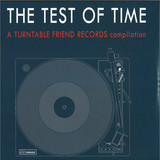
The return of A Turntable Friend Records starts with an opulent 40 track retrospective compilation of their heydays in the 1909s. Peers of Sarah Records and Slumberland Records but far from copying their style, ATF Records always had their own musical identity allowing for a roster as diverse as Boyracer (with Even As We Speak), Secret Shine, The Claim, The Ropers, the Hellfire Sermons + Lorelei.
This compilation is a feast of highlights from the long-deleted back catalogue plus 8 unreleased tracks from the period. Many of the original 7s & 12s are much sought after collector items and several tracks appear on cd for the first time.
Indie guitar popof the best variety delivered by bands from the UK< USA, Australia + Japan.
The release is luxuriously packaged in a tri-fold sleeve for the triple vinyl, strictly limited to 500 for the world. It includes a 12 x 12 full colour booklet and a download code.
The double cd comes with the same tracks also in a gatefold sleeve with full colour booklet.
This compilation is a fundraiser for the William Wates Memorial Trust in the UK with all profits being donated.
“This is my 1st solo rocket.
Tracks presented here were matured at the museum for few years and actually some of them came to
me at my very first attempt on solo music, being myself only involved with bands till then.
Everything was recorded at home exposed to machines i didn't know, using older and newer gear. At
some point midi samples were also used, taking advantage of my computer promises #anythingoes.
Turns out that cold meat lights no fire so attached to this music are ghosts of my life transcribing their
emotions into techno. First half of this rocket is more on a negative tip, the second half is more
positive, like we all should take it. Either way you should listen to both sides cause they complement
each other, so try to relax and enjoy the ride, or get off your ass and jam…"
Tiago’s (LUX/DFA) seminal solo album.
Montreal-based Common Holly (Brigitte Naggar) appeared a few years back with the surprisingly accomplished debut album, Playing House. Holding fast to the honesty of her debut, her impending follow-up is a look outward, a submergence into the dark and the dissonant with consolation found in harmony and humour. Like a ticking internal monologue, the nine labyrinthian yet catchy tracks observe the complexities of mental health, the precarity of life and the challenges of finding strength in the face of grave misunderstanding.
Sometimes in soul music history it has seemed that record producers couldn't get enough of a certain backing track, churning out singles after another, chasing for a hit that never came. The latter doesn't really apply to Pratt & Moody's "Lost Lost Lost", which just recently broke 1 million Youtube plays. While stacking up fame in the lowrider soul scene, this beat ballad also caught the ear of the West Coast record collector and dj Mike Noriega, who decided to write fresh lyrics to accompany its instrumental.
"Wondering" that came as a result was brought to life by the singer and industry insider Gerald McCauley, who turned his soul inside out for the performance. In the past McCauley has worked as a musician, A&R man for example in a project involving George Benson and Al Jarreau and even produced a book and documentary on the history of the Fender Rhodes electric piano. Here he slips comfortably into the Cold Diamond & Mink groove, squeezing every drop of heartache on tape.
This version continues the story of "Lost Lost Lost" so gracefully that one can only wonder, if there are more to come. Who will be the next poor soul to sink into this deceivingly blissful bed of roses, filled with piano, drums and slide guitar?
- A1: Reanimation Music
- A2: War Music, 1St Perspective
- A3: Fairytale Music, 1St Perspective
- A4: Dance Music, 1St Perspective
- A5: Death Music, 1St Perspective
- A6: Dance Music, 2Nd Perspective
- B1: War Music, 2Nd Perspective
- B2: Festivity Music
- B3: Art Music
- B4: Fairytale Music, 2Nd Perspective
- B5: Consolation Music
- B6: War Music, 3Rd Perspective
- B7: Death Music, 2Nd Perspective
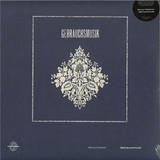
Marcus Fjellström's second album Gebrauchsmusik, initially released a decade and a half ago, is a bizarre sound document that deserves a closer look. Listening back to it now only re-confirms the unique mind of the Swedish composer, who sadly died in September 2017, only 37 years old.
"Gebrauchsmusik" is German for 'Utility Music', and his second excursion into post-classical experimentation is exactly that; thirteen tracks with each one written to suit a certain theme. War, art, festivity, sadness, death and resurrection are all interpreted by Fjellström in his unique style, taking a classical framework and distorting, confusing and manipulating them into far fetching scenarios that is only limited by ones own imagination.
Marcus worked with the Swedish Royal Ballet, the Scottish Chamber Orchestra and Sinfonietta Cracovia as well as numerous other orchestras, ensembles and soloists, artists and filmmakers. He spent the last half year of his life scoring the AMC series The Terror. In his works, Marcus often aimed to combine opposites so that they don’t contradict each other, but rather fuse into a natural, third element - “High” and “low” culture, the naïve and the sophisticated, good and bad taste. These are all elements that comfortably blend together in his works. Musical influences range from electronic acts such as Aphex Twin and Autechre to 20th century composers such as György Ligeti and John Cage. Further influences include impressionist composers Maurice Ravel and Claude Debussy as well as film music composers Bernard Herrmann, Angelo Badalamenti and Zdeněk Liška.
Vinyl edition ltd. to 300 copies, incl. 8-page 12" booklet with drawings by Marcus Fjellström.
- A1: They’re Back Again, Here They Come
- A2: I’ve Forgot My Number (Now I’m Telling You My Name)
- A3: All We Want Is Your Money
- A4: Can’t Sleep At Night
- A5: It’s The Only Way To Live (Die)
- A6: Stay Inside
- B1: Looking At You
- B2: Frivolous Disguises
- B3: Run
- B4: After All
- B5: Don’t
- B6: Screaming Dreaming
- C1: You Were So Young
- C2: Damage Your Health
- C3: Miranda
- C4: Media Menia
- C5: Surrender
- C6: Valium World
- D1: Can’t Sleep At Night (John Peel Session)
- D2: Frivolous Disguises (John Peel Session)
- D3: It’s The Only Way To Live (Die) (John Peel Session)
- D4: Valium World (John Peel Session)
180g Gatefold Double Vinyl with poster, sticker & badge
It was at the tale end of what would later be loosely termed ‘The Seventies’, in Lincoln, Merry England, that three teenagers formed, the consequencies of ther actions are captured here.
“You Were So Young” consists of everything that The Cigarettes ever recorded in what was their two year life span. From the very beginnings in the rehearsal room through to tracks recorded for an unreleased third single. It includes the two singles and their ip sides, some tracks that were included on a local compilation album, and their solitary John Peel session along with a handful that never found their way onto a record.
Their debut single ‘They’re Back Again, Here They Come’ , exchanges hands from upwards of £100 and ‘You Were So Young’ has been viewed on Youtube over 1.3m times.
The CD booklet and vinyl inner sleeves include an in depth interview with Rob and Steve, answering pretty much all there is to know about The Cigarettes
Over the years The Cigarettes have gained a wealth of interest, leaving many to scratch their heads and wonder how they slipped under the radar for so long.
The first album on Numbers from Complete Walkthru aka US producer Max McFerren, titled Scrolls, is out on 20th September 2019.
Scolls plays around with themes of privacy, disillusionment and personal development over eleven tracks, representing a transitional time in McFerren’s life. Through Scrolls’ early stages he moved from New York, where he was holding down a residency at Brooklyn’s Bossa Nova Civic Club and playing regularly in downtown Manhattan at the iconic China Chalet and the now much missed Santos Party House, to the open, rural setting of South Carolina.
The albums personality, and the thematic preoccupations underlying it, reflect the impact of this contrast. It’s sound textures cast widely into what McFerren describes as “the ephemera of the saturated digital realm” while moving through arcane rhythms, chiming melodies and expansive, metallically tinged ambient passages. First single Lean In, streaming in full now, is a dusty breaks-tight miasma of fragmented cyber-consciousness. There are playful, hyperactive refrains on Getting Ridiculous. Leavin’ Church Early is an expansive beat free meditation, while NYC’s dynamic momentum is a cityscape of bad-faith corporate aspiration.
McFerren refers to his motivations with Scrolls as being “anti-nihilism”, as reacting against a dark emptiness he perceives in certain forms of techno. Ultimately with the record, he is seeking the potential of centring joy in the present moment, in a conscious awareness of now.
- A1: Heaven Is A Place On Earth
- A2: I Get Weak
- A3: Leave A Light On
- A4: Mad About You
- A5: Circle In The Sand
- B1: Runaway Horses
- B2: Summer Rain
- B3: I Feel Free
- B4: World Without You
- B5: Vision Of You
- C1: We Want The Same Thing
- C2: Do You Feel Like I Feel
- C3: Big Scary Animal
- C4: Lay Down Your Arms
- C5: Half The World
- D1: Live Your Life Be Free
- D2: Little Black Book
- D3: Love Never Dies
- D4: In Too Deep
- D5: La Luna
• Belinda Carlisle has one of the most successful pop careers selling over 8 million records world
wide, including more than 3 million in the UK alone
• This new Gold title features a comprehensive overview of Belinda’s solo career during the 80s
and 90s
• The Collection boasts a remarkable 15 top 40 UK singles including number one hit ‘Heaven Is A
Place On Earth’, ‘Circle In The Sand’, ‘Leave A Light On’, ‘Summer Rain’, ‘La Luna’ ‘Live Your Life Be
Free’
• Double LP features 20 hits on a 180g Gold coloured vinyl with printed inner sleeves
• 3CD featuring 56 tracks plus a new recording of Joni Mitchell’s ‘Both Sides Now’
- A1: Friendly Fires
- A2: Dirty Disco
- A3: C.p
- A4: Loose Talk (Costs Lives)
- A5: Inside Out
- A6: Melt Close
- B1: Hit
- B2: Babies In The Bardo
- B3: Be Brave
- B4: New Horizon
- C1: Knew Noise
- C2: Up To You
- C3: Girls Don’t Count
- C4: After Image
- C5: Human Puppets
- D1: Charnel Ground
- D2: Haunted
- D3: Je Veux Ton Amour
- D4: One True Path
- E1: Loose Talk (Costs Lives) (Live)
- E2: Human Puppets (Live)
- E3: Knew Noise (Live)
- E4: Friendly Fires (Live)
- E5: Girls Don’t Count (Live)
- F1: New Horizon (Live)
- F2: Haunted (Live)
- F3: You’re On Your Own (Live)
- F4: One Step Backward (Live)
- G1: Always Now
- G2: Visitation
- G3: Regions
- G4: The Wheel
- G5: No Abiding Place
- G6: Once Before
- H1: There Was A Time
- H2: Wretch
- H3: Sutra
- I1: Fallen Monument
- I2: Are You There?
- I3: Virtually Everything
- I4: Tape Loop
- I5: Subferior
- I6: In The Garden Of Eden
- I7: Cry
- J1: Red Voice
- J2: Floating
- J3: Reading Uni Jam With New Order 1981
Factory Benelux is proud to present a deluxe 5 disc vinyl box set edition of Always Now, the debut album by cult Factory Records group Section 25, produced by legendary sonic architect Martin Hannett and sleeved by Peter Saville.
All tracks are newly re-mastered from the original quarter-inch tapes. The first 1000 copies of the box set are pressed in coloured vinyl: disc 1 (black); disc 2 (clear); disc 3 (yellow); disc 4 (red); disc 5 (silver). The outer case in printed in PMS 123 with spot varnish.
The 16 page booklet features unseen images by noted photographer Philippe Carly and texts by founder members Larry and Vin Cassidy. Also included is the first ever interview with guitarist Paul Wiggin, whose sudden departure in late 1981 saw Tony Wilson try (and fail) to recruit pre-Smiths teenager Johnny Marr as replacement.
Recorded as a trio at Pink Floyd’s Britannia Row studio in London in January 1981, Always Now combined austere post-punk rhythm and noise with elements of Can, Krautrock and modern psychedelia. Key tracks include Friendly Fires, Dirty Disco and New Horizon, along with C.P. (a collaboration with Hannett) and Hit (extensively sampled by Kanye West for the track F.M.L. on his 2016 album The Life of Pablo).
Disc 2 gathers together several non-album singles from 1980 and 1981, including Charnel Ground, Je Veux Ton Amour and debut EP Girls Don’t Count – the latter produced by mentors Rob Gretton and Ian Curtis (of Joy Division).
Disc 3 offers a complete live show professionally recorded at Groningen (Netherlands) on 26 October 1980, as part of a Factory package tour.
Disc 4 is part-improvised second studio album The Key of Dreams, recorded and produced by the band themselves a few months after Always Now, and released by Factory Benelux in June 1982.
Disc 5 consists of further experimental material recorded in 1981 and self-released on a cassette called Illuminus Illumina. This final disc closes with an extended (and previously unreleased) live encore jam recorded with all four members of New Order at Reading University on 8 May 1981.
“One of the best albums Britain's second city has unleashed” (Uncut);
“In 1980 their bass-driven mantras were thoughtlessly dismissed as second-rate Joy Division, but hindsight judges them more kindly. The wind-dried skeins of their blasted guitar harmonics and skimped electronics gauntly cling to the songs’ skeletal frames. With telltale titles like Babies in the Bardo their Buddhist interests hang heavy over these early stirrings. But, combining a bass-led drone with a characteristic groaning vocal, Charnel Ground succinctly pins down Section 25's pre-disco appeal” (The Wire)
incl. Download Code