Cerca:the caribbean

Generi
Tutto
Movie Movie - Coming Attractions (10")
  • 1: After Hours
  • 2: Wasting Time
  • 3: First Love (Never Dies)
  • 4: Photograph

MOVIE MOVIE is based out of NYC and features members of the bands TWIN GUNS, THE ELECTRIC MESS, and THE ABOVE. The band combine elements of power pop, '60s, '70s and '80s garage, classic, alternative and glam rock, but they have a sound all their own, with a focus on strong hooks and melodic vocals. "After Hours" is a 1980s New Wave comedy about a party girl on the downtown scene whose claim to fame is a bit part in a popular movie, where she uttered the immortal line, "Won't you look at the time," but she wouldn't give you the time. "Wasting Time" is an existential road picture in the mind of the protagonist, set across heartland America and a sunny beach in the Caribbean, but in reality he never leaves the girl, or town, and in the end ponders his wasted years. "First Love (Never Dies)" is a romantic drama that spans decades, about an aging rocker who reflects on his first teenage love, a girl he has never stopped thinking about. He tries to track her down and reconnect after all these years, only to find she is now married to his old childhood rival.

"Photograph" is a future arthouse hit, shot in stark black white, about the disintegration of a relationship seen from two different perspectives, captured in an old photograph, in which the truth is revealed in the looks on their faces. "Coming Attractions" is MOVIE MOVIE's second EP, after their debut six track EP, "Now Playing" (2022), on Ghost Highway/ KOTJ Records, and they have two full LPs, "Storyboards" (2023), and "In 4-D!" (2024), both Topsy-Turvy Records.

pre-ordina ora13.02.2026

dovrebbe essere pubblicato su 13.02.2026

26,85
JAMES MATTHEW SEVEN FT. FABIO SANTANNA - JAMES MATTHEW SEVEN
 
2

Beijinho do Brasil announce their second release with the highly anticipated follow-up from LA-based producer and multi-instrumentalist James Matthew Seven, featuring guest vocals on the A-side by Rio de Janeiro's Fabio Santanna.

Recorded in a small studio on the beach in Oaxaca, Mexico, "Feels Good, Do It" brings to mind a lost recording from Marcos Valle's time with Leon Ware. Funky and soulful with warm Fender Rhodes and a horn section reminiscent of Banda Black Rio, the tune is a breezy, mid-tempo ode to embracing life's pleasures. Originally with vocals in English, the track was translated and re-recorded in Rio de Janeiro by Fabio Santanna. Fabio has a long-established reputation in Brazil as a torchbearer of modern funk and boogie, continuing in the lineage of artists like Robson Jorge and Lincoln Olivetti. But with his releases on labels like Onda Boa and Dippin' Records (which sold out nearly instantly), his international reputation is steadily growing. He has a new 7" due out on Dippin' Records on October 10th, pushing his name to the forefront once again, right on time to generate more buzz for our next 45!

About the flip side, "Ilha Racional" (a nod to Tim Maia's Racional era):
I had this dream where I was in a dive bar discotheque somewhere in the Caribbean. A thick cloud of smoke hung in the air as the selector dropped this bass-heavy bop that had the whole crowd vibing. Then, out of nowhere, in walked Tim Maia with a bag of mushrooms. He proceeded to grab the mic and preach about this alien world of rational energy. Shit was bugged out. When I woke up, James Matthew Seven had sent me this track to check out.

non in magazzino

Ordina ora e ordineremo l'articolo per te presso il nostro fornitore.

11,35

Last In: 78 days ago
VARIOUS - MAMBO CALYPSO (2025 SLEEVE ART)
  • Yambere
  • O' Look Misery
  • Se Formó El Bochinche
  • Shrimp & Gumbo
  • Santa Isabel De Las Lajas
  • A Pali Papá
  • Mambo Calypso
  • Cumbia Sobre El Mar
  • Cumbia Del Caribe
  • Jamaicuba
  • Strip Tease
  • Baila Yemayá
  • Peanut Vendor
  • Ahora Sí Hay Melao
  • Besitos De Coco
  • Los Chucos Suaves

Zombie Club presents a re-edition (new sleeve art) of "Mambo Calypso" another volume of sonic Caribbean Cruise. Following the approach of the first volume and understanding the Caribbean as a region is not limited to a strictly geographical demarcation but rather a demographic and cultural space where countries, islands and coastal areas may fall into a common Mare Nostrum even arrives in New Orleans. The influence of African drum and the "Cuban clave" makes different music beyond its specific components be they Latinos, Anglos or Frenchie's - look at themselves and recognize a certain family. This is not a coincidence, since the slave trade brought African music from the port of Havana to Cartagena de Indias, Nassau, Port-au-Prince, Salvador de Bahía and the southern United States. The same Blackness, the same rhythm, the same festive mood, spirit of resistance and struggle. And so, Arsenio Rodriguez can be heard without jumps next to a Calypso of Blind Blake, or a tasty Pacho Galán's coastal Cumbia crossover with Dave Bartholomew's Mambo or a Latin Swing of Lalo Guerrero, where the Dominican Merengue sounds Joseíto Mateo in line with that of its Haitian neighbor Nemour Jean Baptiste. A very spicy musical "melting pot," a gumbo of percussion and languages, to enjoy and dance. Re-board the Zombie Club Cruise, mixing different genres of Caribbean music with a high dance and rhythmic component. This selection designed for collectors, Dj's & calypsofied zombie dancers.

pre-ordina ora23.01.2026

dovrebbe essere pubblicato su 23.01.2026

25,42
VARIOUS - ROOTS OF SALSA VOL. 4 CLASSIC LATIN TUNES BECAME ...
  • Meta Y Guaguancó
  • Si Los Rumberos Me Llaman
  • Cuando Suenan Los Tambores
  • Galletana (Aka Calletana And Cayetana)
  • Dulce Con Dulce
  • El Sabio
  • Caramelo A Kilo
  • Mulence
  • Yiri-Y Ri-Bom
  • Sancocho E'güesito
  • Invitación Guaguancó
  • Tumba Tumbador
  • Macho Cimarrón
  • Rompe Saragüey

Classic Latin Tunes Became Sals Hits! Pablo Yglesias -aka DJ Bongohead- compiles Grosso Recordings an amazing serie with classics tunes from Caribbean music that became great successes of "Salsa". Some tracks have been remastered and restored, others are presented on vinyl again after many many years. "This is the four volume in our series on the Roots of Salsa...The main criterion was to pick tracks that sounded adequate for today's DJs to play at a gig or were sufficiently interesting (or enough of a surprise to fans of the later version) to merit inclusion. The other measuring stick was that they needed to come from the old-school, before the more modern era (from 1962 on) and all of its recording innovations and marketing strategies...for now, listen to these dozen gems and then go back to their more familiar cousins from recent times and compare and contrast, and we're sure you'll be enlightened and entertained." Liner notes by Pablo "Bongohead" Yglesias. Format and selection designed for DJs, collectors and general public.

pre-ordina ora26.12.2025

dovrebbe essere pubblicato su 26.12.2025

25,42
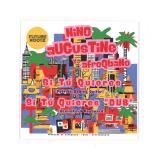
Nino Agustine Y Afroqbano - Si Tu Quieres

Panama meets Havana on this new 7" from Nino Augustine & AfroQbano on Future Rootz. Both artists are Atlanta and Chicago-based, respectively but they brilliantly channel their Afro-diasporic roots into a sound that's equal parts street heat and global groove. The record is anchored by rich Afro-Caribbean rhythm with slick modern production and the kind of cross-border energy that this label is now well known for. It's music for the dancefloor and the diaspora that merges soulful vibes with kinetic grooves that make you feel alive. A great snapshot of what Afrolatino futurism sounds like right now.

non in magazzino

Ordina ora e ordineremo l'articolo per te presso il nostro fornitore.

17,02

Last In: 3 months ago
Juan Chiavassa - Fourth Generation
  • 1: Moon Germs (Feat. Mike Stern)
  • 2: Caribbean Fire Dance
  • 3: Hey Open Up
  • 4: Penelope
  • 5: Tetragon
  • 6: The Other Mingus
  • 7: The Big Push
  • 8: Tutti Italiani
  • 9: To Michael Brecker
  • 10: Bonus Track Jam
pre-ordina ora12.12.2025

dovrebbe essere pubblicato su 12.12.2025

33,40
Stella & The Longos - Amour Propre LP

Cosmic Romance proudly presents "Amour Propre", the new album by Berlin-based multinational band Stella & The Longos and 5 release on the label.

Following the acclaimed 2022 release "Détends-Toi", the first electrifying collaboration between lead singer Stella Zekri and producer Ed Longo, "Amour Propre" crowns two years of relentless touring, growth, and evolution. On the road, the duo forged a powerful live ensemble of Berlin’s finest musicians. That synergy now explodes onto record, expanding Stella & The Longos’ sound into something more organic, daring, and deeply alive.

On "Amour Propre", Stella’s sultry, magnetic voice weaves through lush layers of live drums and percussion, funky guitar riffs, shimmering keyboards, intricate brass lines, and the unmistakable hi-fi production flair of Ed Longo. The rhythms oscillate in a melting pot of musical styles, where Afro-Caribbean influences overlap with vintage boogie beats and quelching synths flirt with smoky Parisian midnight moods. Stella’s voice remains the heart of it all, sensual, husky, and brimming with raw emotion. Her lyrics explore love, longing, and reflection, while also capturing moments of dancefloor euphoria and universal connection.
With The Longos as her powerhouse backing band, every track radiates the energy of a live performance: intimate, enchanting, and unforgettable.

non in magazzino

Ordina ora e ordineremo l'articolo per te presso il nostro fornitore.

18,91

Last In: 35 days ago
Beatrice Dillon - Workaround LP
  • 1: Workaround One
  • 2: Workaround Two
  • 3: Workaround Three
  • 4: Workaround Four
  • 5: Workaround Five
  • 6: Clouds Strum
  • 7: Workaround Six
  • 8: Workaround Seven
  • 9: Workaround Eight
  • 10: Workaround Nine
  • 11: Square Fifths
  • 12: Workaround Bass
  • 13: Pause
  • 14: Workaround Ten

‘Workaround’ is the lucidly playful and ambitious solo debut album by rhythm-obsessive musician and DJ, Beatrice Dillon for PAN. It combines her love of UK club music’s syncopated suss and Afro-Caribbean influences with a gamely experimental approach to modern composition and stylistic fusion, using inventive sampling and luminous mixing techniques adapted from modern pop to express fresh ideas about groove-driven music and perpetuate its form with timeless, future-proofed clarity. Recorded over 2017-19 between studios in London, Berlin and New York, ‘Workaround’ renders a hypnotic series of polymetric permutations at a fixed 150bpm tempo.

Mixing meticulous FM synthesis and harmonics with crisply edited acoustic samples from a wide range of guests including UK Bhangra pioneer Kuljit Bhamra (tabla); Pharoah Sanders Band’s Jonny Lam (pedal steel guitar); techno innovators Laurel Halo (synth/vocal) and Batu (samples); Senegalese Griot Kadialy Kouyaté (Kora), Hemlock’s Untold and new music specialist Lucy Railton (cello); amongst others, Dillon deftly absorbs their distinct instrumental colours and melody into 14 bright and spacious computerised frameworks that suggest immersive, nuanced options for dancers, DJs and domestic play. ‘Workaround’ evolves Dillon’s notions in a coolly unfolding manner that speaks directly to the album’s literary and visual inspirations, ranging from James P. Carse’s book ‘Finite And Infinite Games’ to the abstract drawings of Tomma Abts or Jorinde Voigt as well as painter Bridget Riley’s essays on grids and colour. Operating inside this rooted but mutable theoretical wireframe, Dillon’s ideas come to life as interrelated, efficient patterns in a self-sufficient system.

With a naturally fractal-not-fractional logic, Dillon’s rhythms unfold between unresolved 5/4 tresillo patterns, complex tabla strokes and spark-jumping tics in a fluid, tactile dance of dynamic contrasts between strong/light, sudden/restrained, and bound/free made in reference to the notational instructions of choreographer Rudolf Laban. Working in and around the beat and philosophy, the album’s freehand physics contract and expand between the lissom rolls of Bhamra’s tabla in the first, to a harmonious balance of hard drum angles and swooping FM synth cadence featuring additional synth and vocal from Laurel Halo in ‘Workaround Two’, while the extruded strings of Lucy Railton create a sublime tension at the album’s palatecleansing denouement, triggering a scintillating run of technoid pieces that riff on the kind of swung physics found in Artwork’s seminal ‘Basic G’, or Rian Treanor’s disruptive flux with a singularly tight yet loose motion and infectious joy. Crucially, the album sees Dillon focus on dub music’s pliable emptiness, rather than the moody dematerialisation of reverb and echo. The substance of her music is rematerialised in supple, concise emotional curves
and soberly freed to enact its ideas in balletic plies, rugged parries and sweeping, capoeira-like floor action. Applying deeply canny insight drawn from her years of practice as sound designer, musician and hugely knowledgable/intuitive DJ, ‘Workaround’ can be heard as Dillon’s ingenious solution or key to unlocking to perceptions of stiffness, darkness or grid-locked rigidity in electronic music. And as such it speaks to an ideal of rhythm-based and experimental music ranging from the hypnotic senegalese mbalax of Mark Ernestus’ Ndagga Rhythm Force, through SND and, more currently, the hard drum torque of DJ Plead; to adroitly exert the sensation of weightlessness and freedom in the dance and personal headspace.

pre-ordina ora05.12.2025

dovrebbe essere pubblicato su 05.12.2025

25,00
Various - I Had the Craziest Dream: Modern Jazz and Hard-Bop in Post War London, Vol. 3

The third volume in a survey of the modern jazz & hard-bop scenes that emerged in the new cultural melting pot of post war London, with recordings from the end of the 1940s through to the early 1960s.

Featuring representations from players whose roots lay in the East-End's jewish community alongside a wealth of talent of Caribbean and African descent playing and recording in post war London during this period.

Made in partnership with the Barbican to coincide with the exhibition Postwar Modern: New Art in Britain 1945-1965.credits

non in magazzino

Ordina ora e ordineremo l'articolo per te presso il nostro fornitore.

7,52

Last In: 4 months ago
Various - Balearic Shaketown

Remixes and Edits by MAGIC JAMS (Vinyl Only)

The Shaketown series is back with another sunshine-fueled chapter - this time celebrating the blissful, sun-drenched sounds of the Balearic Islands. Following the highly acclaimed
African Shaketown and Caribbean Shaketown EPs, the third installment, Balearic Shaketown, delivers four irresistible edits and remixes of classic ‘80s pop gems - lovingly reimagined by MAGIC JAMS for today’s dancefloors.

non in magazzino

Ordina ora e ordineremo l'articolo per te presso il nostro fornitore.

16,18
Chase Tha Worst - Raggamuffin EP

Chase is a self-produced, self-funded artist, and this record channels the spirit of Caribbean pirate radio and London’s underground hiphop scene. Drawing from the Global South and reimagined through a raw, bass-heavy UK lens, Raggamuffin celebrates independence, heritage, and DIY energy.

Already championed by Bandcamp Editorial, featured on Rinse FM (Tim Garcia), and following sets at We Out Here Festival, Chase is fast becoming a vital new voice in the UK scene.

non in magazzino

Ordina ora e ordineremo l'articolo per te presso il nostro fornitore.

20,80

Last In: 5 months ago
Ernest Ranglin - Mod Mod Ranglin

Mod Mod Ranglin is a fusion of Ska and Caribbean instrumentals by Ernest Ranglin recorded in 1966 while Ska was changing towards Rocksteady. Although Ernest Ranglin recorded 8 solo albums at Federal Records, Mod Mod Ranglin was the only album with Ska instrumentals, interestingly. The album consists of classic Ska, Mento and Carribean songs of all times. From the start to the end, Ernie's guitar playing flutters like Caribbean breeze. The instrumental song entitled 'Felicia' is a perfect number for all Ska lovers.

---

Produced By:Richard Khouri

Recorded At:Federal Studio

Engineered By:Louis Davidson

non in magazzino

Ordina ora e ordineremo l'articolo per te presso il nostro fornitore.

31,30

Last In: 5 months ago
Various - In-Correcto 15-25 LP

In-Correcto 15–25 marks the first vinyl compilation by Bogotá’s independent label InCorrecto, created in collaboration with Austrian imprint discos elgozo. Celebrating ten years of sonic exploration and creative resistance from the Global South, this special edition brings together a vibrant constellation of artists that define the label’s sound: La Muchacha, Ana María Vahos, Felipe Orjuela, Mau Gatiyo, Conjunto Media Luna, Briela Ojeda, Zarigüeya, Buha 2030, and many more. Between mutant cumbia, Latin American folk, introspective electronics, and borderless sonic experiments, 15–25 is both a party and a statement: a manifesto of the in-correct as an artistic and collective force.

Since 2015, In-Correcto has grown from a cultural magazine into one of Latin America’s most vital independent hubs, operating as a record label, publishing house, and creative collective. With more than 160 releases ranging from punk and ambient to trip-hop and experimental cumbia, the label has supported a generation of artists whose work is as socially engaged as it is sonically daring. Through compilations, anniversary concerts, and political projects, In-Correcto has solidified its reputation as a catalyst for collaboration, solidarity, and cultural cross-pollination in Bogotá and beyond. Based in Vienna with roots on Colombia’s Caribbean coast, discos elgozo shares this vision. Founded in 2024, the label works with Colombian artists and their diaspora, releasing music that fuses ancestral knowledge, queer-feminist expression, sonic experimentation, and joy as a political force—as a way to resist cultural erasure, reactivate traditions, and recover collective vitality. Its catalog spans salsa brava, bullerengue, psychedelic cumbia, and experimental jazz, with a strong focus on vinyl as an act of listening, memory, and resistance.

Carefully pressed, In-Correcto 15–25 is more than a record: it is a bridge between Bogotá’s underground and a global network of listeners. A sonic archive and an invitation to dance, it reaffirms that joy, experimentation, and community remain powerful tools to imagine the world otherwise.

non in magazzino

Ordina ora e ordineremo l'articolo per te presso il nostro fornitore.

30,46

Last In: 6 months ago
ALA.NI - SUNSHINE MUSIC

Ala.ni

SUNSHINE MUSIC

12inchNOFLP68
NO FORMAT
19.09.2025
  • Seaweed
  • Summer Meadows
  • Something You Said
  • Hey Moon
  • Tief
  • Don't Want To Hate You
  • Rain On My Heart
  • Blue Mountain
  • This Is Why
  • Best Of Me
  • Ton Amour

Soulful and radiant, ALA.NI shines in Sunshine Music. Ten years after "You & I", which left a mark in France and internationally (with collaborations including Iggy Pop, Lakeith Stanfield, and Jon Batiste), the golden-voiced Londoner returns with a new album blending vintage tones and Caribbean influences. Shaped by a two-year stay in Jamaica, the musician delivers eleven timelessly elegant tracks infused with the laid-back charm of life surrounded by lush nature. Calypso, ragga, bossa, rocksteady... In this new album, ALA.NI allows herself subtle rewritings of the most emblematic Caribbean rhythms, with interpretations that go as far as Brazil. Her crystalline voice dances, with jazz inflections reminiscent of Sade Adu and Minnie Riperton.

pre-ordina ora19.09.2025

dovrebbe essere pubblicato su 19.09.2025

22,27
Various - Pasé Bél Tan : Francophonies & Creolities in Louisiana LP 2x12"
  • Elby "Bee" Deshotels - Dessus Le Natchitoches
  • Alma Barthélémy - Jamais Je T'oublierai (La Claire Fontaine)
  • Alma Barthélémy - Ma Bonne Créole
  • Alma Barthélémy - Tu Peux Pas Mettre Ce Macaque Dessus Mon Dos
  • Caesar Vincent - Vive Le Vin
  • Caesar Vincent - Travailler C'est Trop Dur
  • Caesar Vincent - La Chanson De Ma Jolie Maîtresse
  • Caesar Vincent - Oh Les Trains Quand Ils Jubutaient
  • Raywood Morvant - La Cravate
  • Chalvin Godar - Ma Négresse M'a Quitté
  • Chalvin Godar - Allons Au Bal, Colinda
  • Raywood Morvant - J'ai Passé Devant Ta Porte
  • Burton Lemaire - La Marseillaise
  • Clifton Chenier - Laissez Les Bons Temps Rouler
  • Clifton Chenier - Les Haricots Sont Pas Salés (Zydeco Sont Pas Salé)
  • Clifton Chenier - Jolie Blonde
  • Isome J. Fontenot - J'ai Traversé La Mer Et Les Montagnes
  • Isome J. Fontenot - La Banane À Nonc Adam (Club 73 Special/Acadian Two-Step)
  • Isome J. Fontenot - Rythmes De Triangles
  • Gabriel Broussard - Train À Vapeur
  • Gabriel Broussard - Train À Vapeur Avec Un Chien Qui Essaie D'attraper Un Prisonnier Qui S'est Échappé Du Train
  • Chalvin Godar - Oh Oui, Dans La Triste Vise
  • Gabriel & Emeline Broussard - J'ai Engagé Ma Promesse Au Baptême
  • Cyril Cyril - Evangelione Bebop
  • Radio Hito - Bonne Créole
  • Yama Warashi - Librement
  • Herandu - Jungle Blonde
  • _Thesmoothcat - Systems Everywhere
  • Juu - Ride Out
  • Nappynappa - Fear Of Freedom
  • Deafkids - A Travessia
  • Madteo - From The Boot To Tap (Foot Version)
  • Chimère Fm - Train À Vapeur Avec Un Chien (Hobo Des Limbes Retouche)
  • Tanz Mein Herz - Le Natchitoches 06:11
disponibile anche

Vinyl + Book[48,32 €]


The songs of Louisiana's Francophone and Creole heritage have flowed through the bayous for centuries, shaped by African, Native American, French, and Caribbean influences. Combining a vinyl record and a bilingual book, Pasé Bél Tan: Francophonies and Creolities in Louisiana celebrates this cultural legacy. It pairs historical recordings with contemporary reflections, inviting artists and scholars to explore this ever-evolving soundscape. Bridging a vibrant present with a painful past, it creates a space for dialogue around identity, memory, and the ongoing transformation of Louisiana’s musical traditions.


The double vinyl compilation and its OBI strip features a staggering 34 songs, ranging from French ballads and Creole renditions to zydeco hooks and reinterpretations by a wide array of contemporary artists such as Madteo, Tanz Mein Herz, Radio Hito, Cyril Cyril, and Deafkids, among others. With archival recordings and contemporary creations side by side, it serves as a bridge across the vast bayou of Louisiana music.


The book is a 272-page bilingual (French/English) publication that seeks to encapsulate the far-reaching implications of Louisiana’s musical heritage within both Louisianan and American society. It explores how this culture has shaped—and been shaped by—its surroundings. With contributions from many key figures of the scene—musicians, researchers, club owners, and other vital witnesses—it aims to present the intricate and singular relationship that exists between Louisiana and its music.


The book only is not available through distribution but only as a bundle with the 2LP version.

pre-ordina ora19.09.2025

dovrebbe essere pubblicato su 19.09.2025

28,15
Various - Pasé Bél Tan : Francophonies & Creolities in Louisiana LP 2x12"
 
34
disponibile anche

Vinyl[28,15 €]


The songs of Louisiana's Francophone and Creole heritage have flowed through the bayous for centuries, shaped by African, Native American, French, and Caribbean influences. Combining a vinyl record and a bilingual book, Pasé Bél Tan: Francophonies and Creolities in Louisiana celebrates this cultural legacy. It pairs historical recordings with contemporary reflections, inviting artists and scholars to explore this ever-evolving soundscape. Bridging a vibrant present with a painful past, it creates a space for dialogue around identity, memory, and the ongoing transformation of Louisiana’s musical traditions.


The double vinyl compilation and its OBI strip features a staggering 34 songs, ranging from French ballads and Creole renditions to zydeco hooks and reinterpretations by a wide array of contemporary artists such as Madteo, Tanz Mein Herz, Radio Hito, Cyril Cyril, and Deafkids, among others. With archival recordings and contemporary creations side by side, it serves as a bridge across the vast bayou of Louisiana music.


The book is a 272-page bilingual (French/English) publication that seeks to encapsulate the far-reaching implications of Louisiana’s musical heritage within both Louisianan and American society. It explores how this culture has shaped—and been shaped by—its surroundings. With contributions from many key figures of the scene—musicians, researchers, club owners, and other vital witnesses—it aims to present the intricate and singular relationship that exists between Louisiana and its music.


The book only is not available through distribution but only as a bundle with the 2LP version.

pre-ordina ora19.09.2025

dovrebbe essere pubblicato su 19.09.2025

48,32
Various - Dolores: Salsa & Guaracha From 70's French West Indies

In Guadeloupe, many people think that jazz and ka music are like a ring and a finger. To some extent, the same could be said about so called Latin music and the music played in the French West Indies.

Both aesthetics were born in the Caribbean and bear so many connections that they can easily be considered cousins. In constant dialogue, there are lots of examples of their fruitful alliance and have been for a while. The English country dance that used to be practiced in European lounges came to be called kadrille in Martinique and contradanza in Cuba. They both featured additional percussion instruments inherited from the transatlantic deportation. Drawing from shared feelings about the same traumatized identity – later to be creolized – it would be hard not to assume that they were meant to inspire each other. The golden age of the orchestras that graced the Pigalle nights during the interwar period further proves the point. As soon as the 1930s, Havana-born Don Barreto naturally mixed danzón and biguine music in a combo based at Melody's Bar. In the following decade, Félix Valvert, a conductor who was born and raised in Basse-Terre in Guadelupe, also worked wonders in Montparnasse with La Coupole, which was an orchestra made up of eclectic musicians. Afro- Caribbean performers of various origins were often hired on rhythm and brass sections in jazz bands, which used to enliven the typical French balls of the capital. In the 1930s and onwards, Rico’s Creole Band was one of them.


Martinican violinist-clarinettist Ernest Léardée, who would become the king of biguine music as well as the main figure of French Uncle Ben's TV commercials (a dark stigma of post-colonial stereotypes), had musicians from the whole Caribbean sphere play at his Bal Blomet – and they all enchanted "ces Zazous-là" (according the words of Léardée's biguine-calypso piece). In les Antilles (French for French West Indies), music history started to speed up in the 1950s, when trade expanded and radio stations grew bigger. The Guadelupean and Martiniquais youth tuned in their old galena radio sets to South American and Caribbean music. As for the women traders, les pacotilleuses, they bought and sold goods across different islands (the "passing of items through various hands" was thought to be most pleasurable) and brought back countless sounds in their luggage. Such was the case of Madame Balthazar, who once returned from Puerto Rico with the first 45rpm and 33rpm to ever enter Martinique.

Out of this adventure was created the famous Martinican label La Maison des Merengues, a music business she opened and undertook with her husband and which proved to be a major landmark. At the end of the 1950s, in Puerto Rico, Marius Cultier competed in the Piano International Contest playing a version of Monk's Round 'Midnight. He won the first prize and this distinction foreshadowed everything that was to come. Cultier, the heretic Monk of jazz, was quickly praised for writing superb melodies, always tinged with a twist that conferred a unique sound to his music. It didn't take long for the gifted self-taught musician to get to play with Los Cubanos, making a name for himself thanks to his impressive maestria on merengues.

The rest is history. Besides, in the late 1950s, Frantz Charles-Denis, born into the upper middle class in Saint-Pierre and better known by his first name Francisco, went back home after working at La Cabane Cubaine – a club located rue Fontaine where he had caught the Latin fever. Francisco's music was therefore heavily marked by his Cuban cousins' influence, which gave the combos he led a specific style and also led to renewal. Things were swinging hard in La Savane, located in the main square in Fort-de-France. He set up the Shango club close by and tested out the biguine lélé there, a new music formula spiced up with Latin rhythms. Soon afterwards, fate had him fly to Puerto Rico and Venezuela.

As for percussionist Henri Guédon (percussions were only a part of his many talents), he was born in Fort-de-France in May 22nd 1944, the day marking the celebration of the abolition of slavery. As an old man, he could remember that in " his father's Teppaz, a lot of hectic 6/8 music was constantly playing...". In the opening lines of his Lettre à Dizzy, a small illustrated collection of writings published by Del Arco, he highlighted the huge impact that cubop had on him as a teenage boy, around 1960. He eventually turned out to be the lider maximo in La Contesta, a big band steeped in Latin jazz. He was also the one who originated the word zouk to describe music which brought the sound of the New York barrio to Paris. It was the culmination of a journey that started in Sainte-Marie: "a mythical place for bélé, the equivalent of Cuban guaguancó". In the early 1960s, the tertiary economy developed to the detriment of agriculture. Yet rural life was where roots music emerged in Martinique and in Guadeloupe.

Record companies played a major part in the process of Latin versions sweeping across the islands – before reaching everywhere else. Producer Célini, boss of the great Aux Ondes label, and Marcel Mavounzy, both the head of Émeraude records - a firm which was founded in 1953 - as well as the brother of famous saxophonist Robert Mavounzy, were big names to bear in mind. Although there were many of them - all of whom are featured on this record - Henri Debs was definitely the major figure in the recording adventure. He proved to be so influential that he even got compared to Berry Gordy. In the mid 1950s, when he acquired his first Teppaz, he worked on his first compositions: a bolero and a chachacha. Then, he became the one man who made people discover Caribbean music, from calypso to merengue. He was among the first ones to rush out to San Juan, Puerto Rico, to buy records and distribute them through a store run by one of his brothers in Fort-de-France. He had members of the Fania All Star come and perform there, which he was madly proud about. He was also the first one to pay attention to Haitian music, such as compas direct and various other rhythms which would soon flood the market. As a result, many of the combos hitting his legendary studio would end up boosted by widespread "Afro-Latin" rhythms. However, he never denied his identity: gwo ka drums were given a major role, although they were instruments which had long been banned from the "official" music spheres. The present selection bears witness to such a creative swarming. Here are fourteen tracks of untimely yet unprecedented cross-fertilization: all types of music rooted in the Creole archipelago have found their way, whatsoever, to the tracklisting. Whether originating from the city or being more rural, they all go back to what Edouard Glissant, in an interview about the place of West Indian music in the Afro-American scope, called "the trace of singing, the one which got erased by slavery." "It is so in jazz, but also in reggae, calypso, biguine, salsa... This trace also manifests through the drums, whether Guadelupean, Dominican, Jamaican or Cuban... None of them being quite the same. They all point to the idea of a trace, seeking it out and connecting to each other through it. This is the hallmark of the African diaspora: its ability to create something new, in relation to itself, out of a trace. It may be the memory of a rhythm, the crafting of a drum, a means of expression which doesn't resort to an old language but to the modalities of it." The opening track features one of the emblematic orchestras of this aesthetic identity, criscrossing many music types from the archipelago. The 1974 Ray Barretto guajira – Ray Barretto was a major New York drummer influenced by Charlie Parker and Chano Pozzo – is magnificently performed by Malavoi, a legendary Fayolais group (i.e from Fort-de-France). Additionally, the compilation ends on a piece by Los Martiniqueños de Francisco. It symbolically closes the circle as it is a genuine potomitan of Martinique culture which also functions as a tireless campaigner for Afro-Caribbean music. Practicing the danmyé rounds (a kind of capoeiria) to the rhythm of the bèlè drum, it delivers a terrific Caterete, a kind of champeta of Afro- Colombian obedience which was originally composed by Colombian Fabián Ramón Veloz Fernández for the group Wgenda Kenya. The icing on the cake is Brazilian Marku Ribas, who found refuge in Martinique in the early 1970s, bringing his singing to the last trance-inducing track. These two "versions" convey the whole tone of a selection composed of rarities and classics of the tropicalized genre, swarming with tonic accents and convoluted rhythms. It is the sort of cocktail that the West Indians never failed to spice up with their own ingredients. For instance, the Los Caraïbes cover of Dónde, a famous Cuban theme composed by producer Ernesto Duarte Brito, has a typical violin and features renowned Martinique singer Joby Valente and his piquant voice.


The track used to be – or so we think – their only existing 45rpm. The meaningful Amor en chachachá by L'Ensemble Tropicana, a band which included Haitian musicians among whom was composer and leader Michel Desgrotte, also recalls how Latin music was pervasive in the tropics in the mid-1960s. They were the ones keeping people dancing at Le Cocoteraie in Guadelupe and La Bananeraie in Martinique. Around the same time, another "foreign" band, Congolese Freddy Mars N'Kounkou's Ryco Jazz, achieved some success on both islands by covering Latin jazz classics – such as their adaptation of Wachi Wara, a "soul sauce" by Dizzy Gillespie and Chano Pozo whose interweaving of strings and percussions can have anyone hit the dancefloor. How can you resist Dap Pinian indeed, a powerful guaguancó by Eugene Balthazar, performed by the Tropicana Orchestra and published by the Martinique-founded La Maison des Merengues? It also acts as a symbol of the maelstrom at work. Going by the name Paco et L'orchestre Cachunga, Roger Jaffory used to play guaguancó too: his Fania-inspired Oye mi consejo is one example of his style. Baila!!!!! Dancing was also one of the Kings' focus points. Oriza is a Puerto Rican bomba and a "classic" originally composed by Nuevayorquino trumpeter Ernie Agosto, which reserves major space for brasses, giving it a special sheen.

Emerging from the New York barrios crucible was also La Perfecta, a Martinique group originating from Trinidad, whose name directly references the totemic Eddie Palmieri figure as well as his own band, also called La Perfecta. Here they borrow Toumbadora from Colombian producer and composer Efraín Lancheros and interpret it by emphasizing percussions, which set fire to the track even more than the wind instruments. The same goes for Martinique's Super Jaguars, who use Tatalibaba – a composition by Cuban guitarist Florencio "Picolo" Santana which was made famous by Celia Cruz & La Sonora Matencera – as a pretext for sending their cadences into a frenzy. In a more typically salsa vein, the Super Combo, a famous Guadelupean orchestra from Pointe-Noire that was formed around the Desplan family and had Roger Plonquitte and Elie Bianay on board, adapt Serana, a theme by Roberto Angleró Pepín, a Puerto Rican composer, singer and musician also known for his song Soy Boricua. Here again, their vision comes close to surpassing the original. In the 1970s, L'Ensemble Abricot provided a handful of tracks of different syles, hence reaching the pinnacle of the art of achieving variety and giving pleasure. They played boleros, biguines, compas direct, guaguancó and even a good old boogaloo - the type they wanted to keep close to their hearts for ever, "pour toujours", as they sang along together in one of their songs. Léon Bertide's Martinican ensemble excelled at the boogaloo which had been composed by Puerto Rican saxophonist Hector Santos for the legendary El Gran Combo.


Three years later, in 1972, Henri Guédon, with the help of Paul Rosine on the vibraphone, tackled the Bilongo made famous by Eddie Palmieri. Such a classic!!!!! And so were the Aiglons, the band from Guadelupe: choosing to execute Pensando en tí, a composition by Dominican Aniceto Batista, on a cooler tempo than the original, they noticeably used a wonderfully (un)tuned keyboard in place of the accordion. On the high-value collectible single – the first one released by Les Aiglons under the Duli Disc label – there is a sticker classifying the track under the generic name "Afro". Now that is what we call a symbol. Jacques Denis

non in magazzino

Ordina ora e ordineremo l'articolo per te presso il nostro fornitore.

21,43

Last In: 30 days ago
VARIOUS - JOROPOP

Various

JOROPOP

12inchMR487
MUNSTER
05.09.2025
  • Buenos Das Juventud El Zigui Y Una Luz
  • Dama Gentil Grupo Espiga
  • Viendo La Lluvia Grupo Syma
  • Lgrimas En Tus Ojos La Fe Perdida
  • People Ladies W.c
  • Quiero Claridad Los Fabricantes De Muñecas
  • El Cielo Est En Tu Mente Los Memphis
  • Sed De Amor La Cuarta Calle
  • Joropo Nº 2 Grupo C.i.m
  • Amor Y Felicidad Grupo Pan
  • Stormy Los Rangers
  • Regresa Junto A Mi Los Chicos Malos
  • Siembra Tus Sueños Ciruela
  • Conoce El Amor The Four Blues
  • Di Quién Es Feliz La Cuarta Calle

Welcome to a kaleidoscopic picnic where you can feast on a music scene that was rich, sparkling, multi-colored, ground-breaking and it'll blow your mind. A prodigious soundscape that blends the Caribbean and the Amazon sophistication and flavors; raw yet delicate textures. "Joropop. Psych Pop & Folk in Venezuela, 1968-1976" features infectious Latin rock rhythms and timeless folk melodies across 15 ultra-rare tracks-most of which have never been reissued until now. Let's set off together to discover the magic of Caracas in the late '60s! DESCRIPTION Welcome to a kaleidoscopic picnic where you can feast on a music scene that was rich, sparkling, multi-colored, ground-breaking and it'll blow your mind. A prodigious soundscape that blends the Caribbean and the Amazon sophistication and flavors; raw yet delicate textures. "Joropop. Psych Pop & Folk in Venezuela, 1968-1976" features infectious Latin rock rhythms and timeless folk melodies across 15 ultra-rare tracks-most of which have never been reissued until now. The golden age of Caracas pop started in 1965. It replaced the wave of cloyingly romantic song writing as fresh talents leant into richer and more complex styles: folk-rock, psychedelia, soul, hard blues, symphonic pop, Latin rock etc. Singer-songwriters, experimental electric guitars and jam sessions all appeared on the scene, creating music that became increasingly refined and free. The industry took a while to catch on to this new trend and leave behind the teen idols and dream lifestyles. By the late 60s, there was a long list of new bands in the capital city. Young people finally found their voice. Let's set off together to discover the magic of Caracas in the late '60s!

pre-ordina ora05.09.2025

dovrebbe essere pubblicato su 05.09.2025

22,27
Mystical Powa, Danny Red & Eddie Tbone - Zion / Kunta Kinte

Influenced by the vibrant Caribbean community and the reggae sounds that permeated his environment, Danny Red was drawn to music at a young age. His journey began in the 1980s, but it was in the early 1990s that Danny Red truly started to make his mark in the reggae scene. Rise to prominence was marked by his unique voice and his commitment to the Rastafari movement, which heavily influenced his music. In the 1990s, as dancehall began to dominate the reggae scene, Danny Red stayed true to his roots reggae origins, focusing on socially conscious themes and spiritual messages.

Known for his powerful vocal delivery and a profound lyrical approach, Danny Red’s music often explores themes of cultural identity, social justice, and spiritual awareness. Here teamed up with south Italian collective Mystical Powa to bring lyrically rich and musically vibrant single. Exploring Rasta believe in holy place called Mount Zion that awaits for each good person. Backed with highly popular anthem horn piece entitled Kunta Kinte played by Eddie T-Bone. Both tunes comes with tuff dub versions ready to mash up all dances worldwide.

non in magazzino

Ordina ora e ordineremo l'articolo per te presso il nostro fornitore.

17,61

Last In: 7 months ago
The Beachers - Cincuenta LP

Founded in 1966, The Beachers is a group whose music is inspired by Caribbean rhythms and Panama’s musical tradition. Calypso, salsa and bolero are part of the unique Beachers sound, whose popularity peaked in the 70s during what is known as “The Golden Era of National Combos”. The Beachers have released 13 albums and more than 30 singles to their name, on prestigious Panamanian record labels like Tamayo, Loyola, or Sally Ruth Records, teaming up with other Calypso legends such as Lord Cobra.

The Beachers are still current and relevant, with five of the original members performing constantly through Panama and the world. Their energy and spirit is felt in the joy, rhythm and flavor of their songs.
Lloyd Gallimore, the band’s musical director since its foundation, and renowned producer Billy Herron have been working together on this new album, commemorating the group’s 50-year career.

This recording relives The Beachers’s magical trajectory and features collaborations with popular Panamanian musicians, a work that displays a sonic landscape filled with the history and legacy of Panama’s Calypso. It’s a tropical musical fantasy whose Caribbean influence has transcended time.

non in magazzino

Ordina ora e ordineremo l'articolo per te presso il nostro fornitore.

14,24

Last In: 8 months ago
Articoli per pagina:
N/ABPM
Vinyl