No one album could ever capture the claustrophobia-to-catharsis of an Eyehategod show, but this compilation of live tracks and demos comes as close as it gets. Giving you an idea of Eyehategod’s uncompromising, single minded purity of expression and exertion of raw nerve, “10 Year Of Abuse” is a monumental document all the way from the demo era to their later, legendary relentless live tour set. Many other bands have tried unsuccessfully to emulate Eyehategod and have never quite captured their dynamic. Formed in 1988 in New Orleans they have become one of the most well known bands to emerge from the NOLA metal scene. Eyehategod note bands like Melvins, The Obsessed, Discharge, Black Flag, Black Sabbath and Saint Vitus as major influences, but are often mentioned in the same breath as any of these legendary bands. Drawing comparisons to Grindcore, Crust Punk and Sludge Metal, their heavy bluesy, detuned rock and roll has been a lynchpin for the misanthropic and disenfranchised. Eyehategod has released five studio albums to date with a sixth in the works and have toured all over the world in a career spanning over thirty years. Though the band has never released a live album, we are left with “10 Years” as the only official witnessing document to decades of decimating live sonic abuse. Released on May 29, 2001, “10 Years” spans seven live tracks from their European tour in 2000, a live radio show from August 1994 and four songs from an early 1990 demo. The result is a feedback-laced window into that wonderful, brutal Eyehategod “sound”, that addictive, lower-than-low note that nestles somewhere in the pit of your burning, alcohol-soaked, nauseated stomach. The booklet alone is a delight for anyone who worships at the altar of Eyehategod’s oppressively heavy, crushing riffs.
quête:the children
BLK JKS are a seminal force in the South African underground.
After an extended hiatus the Johannesburg foursome, championed by The Mars
Volta and TV On The Radio (amongst many others), return with a groundbreaking
new album.
Monster grooves meet guitar and brass driven afro-rock. Echoes of spiritual jazz, postapocalyptic funk, renegade dub and kwaito.
Features Malian guitarist Vieux Farka Tour and Beastie Boys accomplice Money Mark
on the track “Maiga.”
”This South African art-rock band traffics in complexity, cross-hatching not only rhythms
and textures but also the signifiers of genre”- The New York Times
“A prequel to 2009’s amazing After Robots … What occurs when you listen to Abantu is
that it is an Old Testament support to After Robots – where that album prophesied Afropunk, this album suggests the roots to that moment, an engrossing journey of Afrobeat,
fuzzy yet hugely suggestive drone and psych textures, and a bristling sense of both pride
and critique that sings through.” The Wire
“A dark and brooding number that simmers and smoulders as it goes, fueled by a driving
rhythm section and mournful horns.” - Brooklyn Vegan about single “Human Hearts”
“BLK JKS, an awe-inspiring exemplar of modern Africa’s indigenous sound, make a victorious return after an extended hiatus … They create something unique on this album.”
***** Morning Star
- A1: Little Girl Blue
- A2: It Don't Mean A Thing
- A3: I Loves You, Porgy
- A4: Come On Back, Jack
- A5: Plain Gold Ring
- A6: Work Song
- A7: Children Go Where I Send You
- B1: Forbidden Fruit
- B2: Cotton-Eyed Joe (Live At Town Hall)
- B3: My Baby Just Cares For Me
- B4: African Mailman
- B5: Love Me Or Leave Me
- B6: He's Got The Whole World In His Hands
- B7: Exactly Like You (Live At Town Hall)
Cuernavaca / Stateville / Frankincense And Myrrh / Apsara / Ancestral / Spin / Zincali
Approaching his eighty-fifth birthday, sharp and lean, Phil Cohran lives a couple of blocks from the lake on the north side of Chicago. His modest apartment is filled with a palpable richness. His cornet and trumpets, zithers, French horn, harp and frankiphones (an electric kalimba of his own invention); his beloved telescope; African art; a mural of the Chinese monastery where Muslim monks bestowed on him the name Kelan ('holy scripture'); hand-printed posters from the culture wars of 1960s Chicago; all reflect a life dedicated not just to music, but also to science and astronomy, to history and activism. In its range of subject matter the track-list of Kelan Philip Cohran & The Hypnotic Brass Ensemble embodies this invigorating and all-embracing curiosity: a Mexican hill-town filled with perfume and flowers... an Illinois state prison where Cohran taught inmates in the 1960s... heavenly dancers in the temples of Cambodia... a tribute to a sixteenth-century Venetian musicologist. Welcome to the musical world of Kelan Philip Cohran.
Cohran was born in Mississippi and grew up in St Louis. In the immediate post-war years St Louis was a jazz heartland, home of stalwarts like Clark Terry and Oliver Nelson (both of whom he played with), not to mention a genius called Miles Davis. In 1950 Cohran moved to another heartland, Kansas City, where he played trumpet in one of the hardest swinging swing-groups, led by Jay McShann (who famously had given Charlie Parker his first job). With McShann he spent 'the best year of my life', touring as far as Mexico and playing proto-rock'n'roll in Texas with the likes of Big Mama Thornton on vocals. Back in St Louis Cohran led his own group, the Rajas Of Swing, whose show involved wearing red jackets, grey slacks, blue suede shoes and turbans.
Then in the mid-50s he moved to Chicago. He had a small group with a friend, the legendary tenor saxophonist John Gilmore, whose regular gig was to play at Sarah Vaughan's weekly 'birthday' parties, an excuse for the Sassy One to splash the cash and have some fun. ('What, Sarah Vaughan would sing with you and John Gilmore' 'No way, Sarah didn't sing, she was too busy partying.') And in 1959, through Gilmore, he was invited to join Sun Ra's Arkestra, at a crucial period in the evolution of that extraordinary group. Effortlessly wrapping traditions as divergent as boogie-woogie and electronica in an Afro-centric, intergalactic mythology of his own making, Sun Ra casts a huge shadow across conventional narratives of jazz history. 'With Sunny', Cohran simply says, 'I found my own voice'.
You can hear the emergence of this voice on the LP Angels And Demons At Play, recorded in 1960 - Sun Ra's masterpiece from the period. On the track Music From The World Tomorrow, against the urgent whipped and chopped percussion of the Arkestra, it is Cohran's zither, initially bowed and then plucked and strummed, which is the track's magic ingredient. More profoundly it was Sun Ra's example - his defiant self-confidence and sense of purpose - that set Cohran on his own (to quote another Ra composition) 'pathway to unknown worlds'. Indeed this spirit of self-belief led Cohran to turn down the invitation to accompany the Arkestra when Sun Ra moved east in 1961.
Staying in Chicago, Cohran founded the Affro-Arts Theater and performed with the Artistic Heritage Ensemble, recording the group for his own Zulu Records imprint. (Co-members went on to become Earth Wind & Fire; Cohran taught the group's leader Maurice White the mysteries of the frankiphone). The AACM, a musicians' collective of immense influence and importance, had its first meeting in Cohran's front room. With Oscar Brown Jr and Gene Page he wrote and performed in a show celebrating the nineteenth-century Afro-American poet Paul Lawrence Dunbar. He taught music tirelessly in schools and prisons. His studies into music theory and history led him to the discovery of a key book in his life, Gioseffo Zarlino's treatise on harmony, published in Venice in1558. Astronomy is another passion and another area of expertise. One of the gems of the Cohran discography is African Skies, with its lovely harp playing, commissioned by the Chicago Planetarium in 1993.
In Chicago he also raised a large family. Many of his children have gone on to become professional musicians; eight of them are the Hypnotic Brass Ensemble. For each of them, their first teacher was their father, who famously insisted on giving them music lessons not just for several hours after school, but for several hours before school as well. Their father's music was all around them as children; they all vividly remember lying in bed at night not being able to sleep because their father was rehearsing with the Jazz Workshop downstairs.
For the Hypnotic Brass Ensemble, the voyage to where they are now - whether tearing up festivals from Glastonbury to Melbourne, or touring with Gorillaz, or recording their first album on Honest Jon's - has involved a necessary stepping away from their father's shadow. Phil Cohran is the first to recognise this, happily allowing their sound - heavy on the funk, with the urgency of hip hop never far away - to blossom.
But likewise this album is for all of them a natural step. Recorded in Chicago in June 2011, the idea was beautifully simple - 'my music and their band' as Phil puts it, 'we don't have to rattle on more than that'. Only to point out perhaps that here - in the majestic surge of Zincali, for instance, or in the sheer verve and bounce of Cuernevaca - is music not just filled with the warmth of home. This is music that plumbs the depths and rings with joy.
'Cuernevaca is a town in the mountains south of Mexico City. I was there in 1950 when I was on the road with Jay McShann's band. It's a place close to paradise, a city filled with the fragrance of flowers. I always wanted to go back... In 1974 I taught workshops at the prison in Stateville, the Big House where Al Capone spent time. There's a huge wall around the prison, and once I took Hypnotic there - ha - to see what the future holds for them... Makeda, the Queen of Sheba, sent a caravan of gifts to King Solomon - a caravan that took more than a day to pass one point - and the main gifts were Frankincense And Myrrh... I wrote Apsara in 1967, when Jackie Kennedy was in the news with her visit to the temple of Angkor Wat in Cambodia. Apsara were celestial beings, dancers who brought forth the civilization of ancient Cambodia, by dancing in the holy nectar called Amrita... Ancestral is a meditation drone written for my Friday-night residence at the Ethiopian Diamond Restaurant in Chicago's Rogers Park... Spin is the latest of these compositions. Everything in the cosmos spins, from the smallest objects we can see in a microscope to the largest galaxies. Spin is the motion of all things whether it looks like it or not... Zincali is a name Spanish gypsies call themselves. 'Zin', East Africa; 'cali', the people. One of the offshoots in my research into Moorish Spain has led me to Gioseffo Zarlino, the sixteenth-century master of music at St Mark's in Venice. It's said that Bach lost his sight reading Zarlino's treatise on counterpoint. His greatest composition is his setting of the Song of Songs - 'Nigra Sum', 'I am black'. This is my tribute to Zarlino and to the zincali.'
- A1: Revisionist History
- A2: The American Negro
- A3: The Black Broadcast
- A4: Revolutionize
- A5: Double Consciousness
- A6: Watch The Children
- A7: Dying On The Run
- A8: Intransigence Of The Blind
- A9: James Mincey Jr
- A10: Disadvantaged Without A Title
- A11: Mama (You Will Make It)
- A12: The Black Queen
- A13: Margaret Garner
- A14: Race Is A Fallacy
- B1: Light On The Horizon
- B2: A Symphony For Sahara
- B3: America Is Listening
- B4: The March On America
- B5: Paradox Of The Positive
- B6: The Death March
- B7: Black Lives Matter
- B8: Rotten Roses
- B9: Jim Crow's Dance
- B10: Patriotic Portraits
- B11: George Stinney Jr
- B12: Sullen Countenance
The American Negro is an unapologetic critique, detailing the systemic & malevolent psychology that afflicts people of color. It should be evident that any examination of black music is an examination of the relationship between black & white America. This relationship has shaped the cultural evolution of the world and its negative roots run deep into our psyche. With an elaborate orchestral and soulful display, The American Negro re-invents the black native tongue: a politically conscious LP with a prescription to eradicate hate in America. "The American Negro is the most important creative accomplishment of my life. This project dissects the chemistry behind blind racism, using music as the medium to restore dignity and self-worth to my people": Adrian Younge is a multi-instrumentalist, film composer and producer with an analog studio and record store in Los Angeles. He is a member of The Midnight Hour and has produced for entertainment greats ranging from Jay Z, Kendrick Lamar and Wu Tang Clan. He's composed for television shows such as Marvel's Luke Cage (with Ali Shaheed Muhammad), and films including Black Dynamite. He owns the boutique record label, Linear Labs, and is co-owner of Jazz Is Dead. When he's not working on scores for major studios or networks, he's making albums that speak to his own artistry. For The American Negro, Younge not only wrote, but played every instrument of the album's rhythm section; he also orchestrated a 30-piece orchestra and recorded them in his analog studio.
- A1: We Are (Feat St. Augustine High School Marching 100, David Gauthier, Gospel Soul Children, Craig Adams, Braedon Gautier, Brennan Gautier & Autumn Rowe)
- A2: Tell The Truth
- A3: Cry
- A4: I Need You
- A5: Whacutalkinabout
- B1: Boy Hood (Feat Pj Morton & Trombone Shorty)
- B2: Movement 11
- B3: Adulthood (Feat Hot 8 Brass Band)
- B4: Mavis
- B5: Freedom
- B6: Show Me The Way (Feat Zadie Smith)
- B7: Sing
- B8: Until
Breites Lächeln, Unmengen von Charisma, Talent ohne Ende und sehr klug: Jon Batiste Der Instrumentalist,
Sänger, Tänzer und Künstler Batiste ist Bandleader in der Show von Stephen Colbert, Aktivist in der BlackLive-Matters-Bewegung, Julliard-Absolvent und nicht zuletzt Sprössling einer Musiker-Dynastie aus New Orleans. Vater, Onkel und allein 30 seiner Cousins sind Musiker. Seine Wurzeln liegen im Jazz, aber sein
jugendliches Temperament vereinigt diesen mit R&B, Soul, Rap und überhaupt allem, das in kulturellen Kontext mit seinem künstlerischen Ursprung steht. Heraus kommt ein bewegendes Album, mit er nun auch
in Europa für Aufsehen sorgen wird.
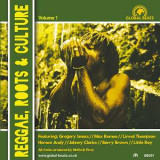
- 1: Horace Andy – Every Tongue Shall Tell
- 2: Horace Andy – Every Tongue Shall Tell Dub
- 3: Linval Thompson – Long, Long Dreadlocks
- 4: Linval Thompson – Long, Long Dreadlocks Dub
- 5: Johnny Clarke – Blood Dunza
- 6: Johnny Clarke – Blood Dunza Dub
- 7: Barry Brown – Fittest Of The Fittest
- 8: Barry Brown – Fittest Of The Fittest Dub
- 9: Johnny Clarke – Declaration Of Rights (Steppas Remix)
- 10: Johnny Clarke – Declaration Of Rights (Steppas Remix) Dub
- 11: Gregory Isaaccs– Motherless Children (Dubplate Mix)
- 12: Gregory Isaaccs– Motherless Children (Dubplate Mix) Dub
- 13: Max Romeo – No Peace (Steppas Remix)
- 14: Max Romeo – No Peace (Steppas Remix) Dub
- 15: Litte Roy – Falling Angels (Dubplate Mix)
- 16: Litte Roy – Falling Angels (Dubplate Mix) Dub
If some of these titles look familiar, it’s because they’re among the most majestic roots and culture songs ever recorded, and by singers whose credentials are beyond question. All tracks feature the original artists and even the actual seventies’ vocal in some cases, but the rhythms have been recreated with today’s sound-systems in mind and are heard at their very best when roaring out of giant speaker boxes, greeted by a forest of raisedhands and with a deejay at the mic.
Producers Mafia & Fluxy include reggae legends Bunny “Striker” Lee and Fat Man among their mentors, and their mastery both in the studio and on stage is unrivalled outside of Jamaica. The way these two brothers play dub will make the hairs on the back of your neck stand up whilst the messages in songs like Every Tongue Shall Tell, Declaration Of Rights, No Peace and Fittest Of The Fittest are relevant as ever but then the music on this album isn’t dated, and is reggae, roots and culture for the ages.
everything one needs to know about this album: a misshapen,
CHUD-like figure wanders in a graveyard bearing a cross,
while a mutated fish flops in a polluted ditch and a clutch
of factories belch their smoke above it all. The message of
the illustration is not to frighten or warn, but to celebrate
and admire.
Originally released in January of 1984, Disease Is Relative
is an unapologetic and wholesale embrace of death,
disease, and dystopia, with liberal doses of absurdism
and an unrelenting devotion to anything unexpected,
chromatic, or evil sounding. Sporting influences as
diverse as no wave, death rock, funk, post-punk, hardcore,
metal, and prog rock, this music somehow happened in the
midst of a first wave hardcore scene, before there was a
“post-” to be “post” of. Less surprising is that this happened
in Cleveland, which also inspired a desire to recreate the
feeling of the city’s post-industrial desolation in sound.
There’s also some epic screaming and crazy guitar playing.
The album features three songwriters (brothers Andrew
& Chris Marec, Robert Griffin), who also divide guitar,
bass, and vocals equally between themselves here.
Drummer Bruce Allen is the secret weapon, and provides
a clue to what a young Bill Bruford might have done in a
band like this. And yet, beyond all odds, the end result is
cohesive, cathartic, and utterly idiomatic. The distinct vibe
of the album, and its sheer quantity of killer riffs, songs
and performances have made it an album that people have
championed over time, while others have come to know it
through the interwebs as a result.
everything one needs to know about this album: a misshapen,
CHUD-like figure wanders in a graveyard bearing a cross,
while a mutated fish flops in a polluted ditch and a clutch
of factories belch their smoke above it all. The message of
the illustration is not to frighten or warn, but to celebrate
and admire.
Originally released in January of 1984, Disease Is Relative
is an unapologetic and wholesale embrace of death,
disease, and dystopia, with liberal doses of absurdism
and an unrelenting devotion to anything unexpected,
chromatic, or evil sounding. Sporting influences as
diverse as no wave, death rock, funk, post-punk, hardcore,
metal, and prog rock, this music somehow happened in the
midst of a first wave hardcore scene, before there was a
“post-” to be “post” of. Less surprising is that this happened
in Cleveland, which also inspired a desire to recreate the
feeling of the city’s post-industrial desolation in sound.
There’s also some epic screaming and crazy guitar playing.
The album features three songwriters (brothers Andrew
& Chris Marec, Robert Griffin), who also divide guitar,
bass, and vocals equally between themselves here.
Drummer Bruce Allen is the secret weapon, and provides
a clue to what a young Bill Bruford might have done in a
band like this. And yet, beyond all odds, the end result is
cohesive, cathartic, and utterly idiomatic. The distinct vibe
of the album, and its sheer quantity of killer riffs, songs
and performances have made it an album that people have
championed over time, while others have come to know it
through the interwebs as a result.
Tape / Cassette
"No Contact" documents the last nine years of live actions from O/H, the duo of David Foster (Huren, Teste, etc.) and Rich Oddie (Orphx, Eschaton, etc.) with recordings from performances in Japan, Russia, Holland, and Canada.
Limited edition of 99 copies on pink C74 cassettes.
- A1: Fallen Through
- A2: Sleep
- A3: Let’s All Go Together
- A4: Wait
- A5: The Only Way
- A6: I Stopped Dancing
- A7: All For Love
- B1: Toys For Boys
- B2: Time
- B3: Vanessa
- B4: Your Body Lies
- B5: My Children
• Marion formed in Manchester in 1994, releasing their debut single on Rough Trade. Signed to London Records, the band found themselves bundled in with the ‘Britpop’ scene, and made their national TV debut by performing ‘Sleep’ on Channel 4’s cult TV show ‘The Word’ in February 1995.
• The band gigged throughout 1995, building up a fan base, and supported Morrissey on his ‘Boxers’ tour.
This World And Body was released in February 1996 and entered the top ten of the UK album chart.
• Demon Records is proud to present This World And Body pressed on 180g heavyweight translucent gold vinyl.
Isasa’s fourth LP is a guitar excursion from a skillful, humble guide. Minimal, contemplative songs, rich in atmosphere and warm in spirit.
Some musicians give their name to their first album, signifying introduction. Some hold it in reserve — it took Wire 39 years to get around to calling an LP Wire. But whenever they do so, they are making a statement. For Conrado Isasa, an acoustic guitarist from Madrid, Spain, the decision to call his fourth album Isasa reflects the fact that his music’s relationship to his own identity has evolved. Isasa presents an artist whose work reflects that he knows and accepts where he comes from.
Between 1993 and 2003, he played electric guitar in the hardcore metal band Down For The Count and the post rock combo, A Room With A View. These were collective statements, communications between small groups and a select underground community. After the latter group’s demise, Isasa stepped back from recording, and for a while from guitar playing as well. He spent some time learning to play the trumpet, but was inspired to return to the guitar in 2007 after he heard Geoff Farina play a Mississippi John Hurt song for the encore of a Glorytellers gig. Then came another period of learning, during which he studied the playing of Hurt, John Fahey, Jack Rose, and Glenn Jones.
Performing as Isasa, he made three records, each of which can be heard as confrontation with an artistic challenge. Las Cosas (2015) is between the man and his acoustic guitar; what could he do with his fingers, a slide, six steel strings, and a box of wood? Los Días (2016) faces the broader issue of how to deal with the requirements of the American Primitive guitar style. Like Fahey, Rose, and Jones, Isasa sought to make an album that used a cohesive sequence of guitar and banjo instrumentals to express personal experiences. With its references to the sights, sounds, and tastes one might encounter in Madrid, it is like a poetic diary written with the distance that comes from having mastered a second language. After making that record, Isasa toured parts of the United States, and played at The Thousand Incarnations Of The Rose, a festival that gathered representatives of American Primitive guitar’s past, present, and future in Takoma Park, the town where the style’s original synthesist, John Fahey, was born. Insilio (2019) began to look beyond that style, dealing with Hindustani raga forms and adding other instrumental textures.
And now comes Isasa. The name suggests something very personal, and it’s true that it draws upon Isasa’s closest relationships. Two compositions are either named for or feature the voices of his children, but their presence helps this music to transcend the purely personal. For what could be more universally shared than the joy and love one feels for children? Others invoke concepts — absence, liberty, love, reunion. They may mean one thing to Isasa, and another thing to you, but by sharing his reactions to them, he invites you to recognize yours. Isasa isn’t just using his experiences to tell you about his life; he is using what he knows about life to help us know a little more about ours.
Across The Globe is the new series of releases from Low Key Source which sees established producers team up with vocalists and MC’s from Australia, New Zealand and beyond.
Volume 1 showcases the beats of Detroit’s Apollo Brown known for his production through Mello Music Group which has seen him work with the likes of Oddisee, Guilty Simpson, Skyzoo, Ras Kass, OC, Sean Price, Boog Brown, Big Pooh and most recently Planet Asia on their new album “Anchoives”.
“Reminiscing” sees the UK’s Jehst team up with Children Of Zeus vocalist Tyler Daley and has them reflecting about back in the day and giving a special mention to the passing of UK Producer Mark B. It’s special boom-bap throwback sound with sweeping strings captures perfectly the message of what life was once like being free from responsibilities.
The English city of Nottingham is represented on the posse cut “Time’s Different” showcasing the lyrical skills of up and comers Juga-Naut and Vandal Savage alongside veteran Cappo. It’s hard hitting snare snaps into a crispy beat which instantly takes you into headnod mode.
Apollo Brown never fails to execute his signature robust Hip Hop production as heard on "World Revolves" where Dialectrix spits fire with a rhythmical flow that resembles the way a sparrow would slice across the air - in short bursts left and right, up and down with ease. Rounding out the EP is Brisbane’s Lazy Grey with “First Come First Served”. Another sharp serving of distinct Apollo Brown production paired with Grey's own verbal dexterity.
With the renowned illustrator and designer Dan Lish holding down the artwork for each volume in this series, “Across The Globe” is a limited edition release every good music lover needs in their collection.
From his 'FAT' Studio near the central Swedish town of Örebro, Sjunne Ferger crafted a small but radical legacy of genre bending music. With an open minded 'anything goes' attitude born from his jazz roots, compiled here are songs charting a transition from fusion beginnings via his debut 7" with group 'Exit' through to a more blissful synthetic sound palette. Across the album's 7 songs Sjunne's heady musical optimism aspired to an aesthetic that moved freely between drum machines & synths to more organic instrumentation with rich arrangements never losing sight of a light ethereal feel.
Hypnotic ambient pieces written for short film swirl amongst the electronic & electrified- unreleased versions of 'Destiny' and 'Candlelight' hint at his sound to come, while the album culminates in the highlights 'Night Rituale' and 'Childrens Mind' -Intoxicating mixes of Sjunne's influences & inspiration, they unknowingly hint at Mkwaju Ensemble and other key Japanese contemporaries, and bear witness to the Swede's deep Eastern philosophical outlook. Retaining his own unique sound throughout, 'Childrens Mind' is a primer for Sjunne Ferger's 'Mindgames' LP reissued on Strangelove later in 2021.
Nimbus, a local student band in Mecosta, Michigan, is one of the highest peaks of self released AOR/Mellow Fusion/Blue eyed soul! This 7 inch is cut out from the only work of Nimbus "Children of the Earth" which was released as private pressing vinyl and distributed just a few copies in 1980. P-VINE are very proud of releasing this EP as new one of Groove Diggers series.
- A1: Intro Snippet
- A2: No Peace
- A3: Say It Loud
- B1: Comin Outta The Rain
- B2: Black Love
- B3: Home Vacation
- C1: Really Real Out Here
- C2: Until This Day
- D1: Strange Fruit
- D2: Is It Because Im Black
- E1: Afrikan Children
- E2: Push Time
- E3: Yonder
- F1: Black Progress
- F2: Live From Soul In The Horn
- F3: Tear It Down
- F4: Black On Purpose Outro
Following his spiritual and artistic rebirth, and hot on the heels of his incredibly well received release, ‘Mona Bone Jakon’, Cat Stevens unveiled his second album of the year in November 1970 … and it was to become one of the defining musical statements of the new decade. ‘Tea For The Tillerman’ not only consolidated Cat’s success in the UK and forged him a glittering new career in the USA, it also set him on the road to global superstardom and gave the world songs like ‘Wild World’, ‘Father & Son’, ‘Where Do The Children Play?’ and many more.
To commemorate the album’s 50th anniversary comes this stunning new 180 gram gatefold vinyl 2020 remaster of ‘Tea For The Tillerman’ by Geoff Pesche at Abbey Road, overseen by original producer Paul Samwell-Smith.
- A1: Milyo Kolarov - Analogue Beam
- A2: Jah Limonardi Und Die Kleine Grafin Dubski - Totti Und Pippo
- A3: Volkers Musikspiele - Der Kleine Roboter
- B1: Kiu Tu Ets El Meu Amic - Un Dia Especial
- B2: Palla Templouf - Ping En Keun
- B3: Der Plan - Track 6
- B4: Jan Turkenburg - Zurack In Die Atmosphnr
- C1: Zahn - In Hyperspace
- C2: Oslo Karamell - Ich Bin Zornig
- C3: Pm Production - Kvirrevitt
- D1: Thomas Natschinksi - Pele-Mele
- D2: Nikolay Stenski - Robotertanz
- D3: Tale Of The Old Turtle
* repress on sandstone colour vinyl
For 'Music For Dreams’ collector’s series, we aim to bring you something a little different, something a little out there. After eclectic contributions from Jan Schulte, Moonboots and most recently Basso, we’ve lent the slot to Belgian sonic globetrotter DJ soFa. As always, he’s been granted supreme curatorial sovereignty, and trust us, he held us to our word on that one. For elsewhere Jr I, soFa takes us on a trip to the alluring and magical reality of childhood - and a trip, it is.
This double LP features both new and old compositions from a wide range of countries, all centered around the youngest citizens of planet earth. The compilation has been 2.5 years in the making, with soFa collecting obscure pieces from all over the world and inspiring young collaborators to produce new tracks mostly by means of analogue synthesizers and vintage drum machines. The result is a thematically and sonically homogenous collage of cosmic children’s music.
'soFa' starts us off with Milo Kolarov’s exercise in sonic imagery ‘Analogue Beam’, a story about animal characters, presented to us as distinct motifs of bleeps and blitzes. Next up is the surreal jigsaw puzzle dub ‘Totti und Pippo’ by Jah Limonardi and 'Die Kleine Gräfin Dubski'.
Here, we come bouncing on giant, iridescent mushrooms, lulled deeper and deeper down the rabbit hole by incantations of a child’s voice. Throughout, the record is full of these synaesthetic properties, immersing the listener in creative ways, nudging you down hidden experiential pathways.
All of the tracks, more precisely ... they were pleasantly engaging, often blooming with charming grooves and provided with a whimsical melody.
- 01: The Cosmic Range Palms To Heaven
- 02: Vibration Black Finger Empty Streets
- 03: Abeeku Slow Sweet Burn
- 04: Wildflower Flute Song
- 05: The Pyramids Memory Ritual
- 06: Steve Reid Ensemble For Coltrane
- 07: Trane's Groove Carla Marciano
- 08: Angel Bat Dawid What Do I Tell My Children Who Are Black (Dr Margaret Burroughs)
- 09: Menagerie Nova
- 10: Teemu Akerblom Avo's Tune
- 11: Vessels The Jamie Saft Quartet
- 12: Jonas Kullhammar Paris
Modern sounds for the 21st century featuring modal, progressive and esoteric contemporary jazz from the UK, Spain, Netherlands, Finland, USA, Belgium, Canada, South Africa, Sweden, Germany & Italy.
The first 12 volumes of our hugely popular Spiritual Jazz series have unearthed a wealth of historic recordings in the genre, collating a variety of works from the '50s to the '80s by artists from all around the world.
And so, with Volume 13, we turn our attention to what's happening NOW.
Over the course of 24 tracks and spanning 2 x 2LPs, we present an overview of the contemporary exponents of Spiritual Jazz; musicians who are intent on bringing something personal to the table, as much as they recognize the importance of those who have paved the way for them. We feature music recorded within the past 20 years and from 15 different countries, including modern classics from veterans Steve Reid and Idris Ackamoor, providing a vital link between the past masters and the enlightened new generation.
It's pioneers such as John Coltrane, Sun Ra, Pharoah Sanders et al, with their innovations in reaching another plane of consciousness that was and remains uppermost in the minds of exponents of Spiritual Jazz. Fittingly, several of the artists featured on this compilation, such as Cat Toren and David Boykin, are practitioners of the art of music therapy and sound healing, and have absolute conviction in the role of song as solace. The pioneers may no longer be with us, but their saintly selves loom large, shining a light in the darkness, inspiring many a brave new disciple today, as this album will testify: the new wave of jazz is gathering pace and still sounds fresh, vibrant and as relevant as ever.