Walter Lure, best known as co-frontman and songwriter of the Heartbreakers, also led his own band, The Waldos. Their debut ‘Rent Party’ LP has been unavailable on vinyl since 1994. This limited edition in blue vinyl has two bonus tracks, from the 'Crazy Little Baby' 7" of 1991.
Sadly, Walter died in August 2020, the last of the ‘L.A.M.F.’ Heartbreakers. His memoir "To Hell And Back: My Life In Johnny Thunders’ Heartbreakers - In The Words Of The Last Man Standing" will be published by Backbeat in paperback edition on July 1, 2021. Upon the original ‘Rent Party’ release, AllMusic said - "The long awaited Waldos album proved to be a big success, at least artistically ... the Waldos tear through a set of tunes that are as much fun as a CD can have with its clothes on."
Walter Lure’s guitar-sparring partner in The Waldos in place of Johnny Thunders is Joey Pinter, whose self-titled solo album was released in 2015. The rest of the band is the late Tony Coiro on bass and Jeff West on drums except on the bonus 7” tracks, the late Charlie Sox.
The album features six Walter Lure originals, plus covers of Jerry Nolan, Gary US Bonds, Claudine Clark and Ray Charles songs. A limited edition in transparent blue vinyl, with inner bag.
Поиск:the clark si
Все
A desperate, desert-baked Midnight Highway of Lost Souls, Cuckolds, Wastrels, blistering Righteous Anthems and delirious Apocalyptic Fever-Dreams. This sublime collection of knowns and unknowns, battered Nashville legends and forgotten backwoods-poets features tales of Grisly Barroom Homicides, Jilted Lustmords, Grim Divorcees in Bedlam and Fiery Suburban Infanticides. Often originally waxed and distributed in unrewarding amounts, these Troubled Troubadours sing of Cowardice, Infidelity, Spurned Lover's Suicide Pacts, Tortured Jailbirds, Vengeful Inebriates and dubious Parenting Skills.
Years in the making – ‘Hillbillies In Hell’ (Volume XII) presents 16 timeless tribulations - Sinful Seductresses, Grinding Poverty, Nihilistic Murderous Horrors, Satan's Eternal Maze of Hardships and Temptations and God's blazing Light of Redemption.
A dank yet at times uplifting stash of marginal 45s - some of these sides are impossibly rare and are reissued here for the very first time. All for your prurient listening pleasure…
. Elton Britt - Lost Highway
, Porter Wagoner - Fairchild
, Justin Tubb - The Great River Road Mystery
, Sanford Clark - It's Nothing To Me
, Johnny Paycheck - You'll Recover In Time
, Stonewall Jackson - Somebody's Always Leaving
, Porter Wagoner And Dolly Parton - The Party
, Buddy Starcher - When Payday Comes
, Tommy Curtis And Bill Taylor - Devil's Stumbling Block
, Jody Reynolds - Devil Girl
, Henson Cargill - Going Backwards
, Lorrie Collins - Another Man Done Gone
, Bobby Braddock - Revelation
, Stonewall Jackson And The Brentwood Children's Choir - That's All This Old World Needs
, The Speer Family - You Can't Run Away From God
, The Singing Rambos - When Payday Comes",Witness...
Various Artists ‘In Bed With Marina’
Classic Indie/Chamber-Pop
2LP MA90 (Marina Records) £15.50
Deal: B/C: 4015698905656
THIS ONE MISSED THE DEADLINE FOR THE OFFICIAL RSD LISTINGS BUT WILL BE AN **UNOFFICIAL RSD DROP 2 ** RELEASE...LIMITED +NON-RETURNABLE..
Celebrating its 25th anniversary, this classic Marina compilation from 1996 makes its first appearance on vinyl. Packaged in a deluxe gatefold cover, In Bed With Marina features track-by-track notes, lots of photographs, two vinyl-only bonus cuts and a gorgeous poster.
Enjoy 24 stunning tracks on two groovy LPs incl. many unreleased cuts and exclusive contributions by Edwyn Collins, Shack, Teenage Fanclub, The Pearlfishers, Cowboy Mouth, The Bathers, Harpers Bizarre, Sugartown, Paul Quinn & The Independent Group, Jazzateers, Antonio Carlos Jobim, Malcolm Ross, The Secret Goldfish, and many others.
- A1: The Beach Boys - Good Vibrations
- A2: The Animals - The House Of The Rising Sun
- A3: Small Faces - Itchycoo Park
- A4: The Walker Brothers - The Sun Ain't Gonna Shine Anymore
- A5: The Righteous Brothers - You've Lost That Lovin' Feelin
- A6: Ike & Tina Turner - River Deep - Mountain High
- A7: The Everly Brothers - Cathy's Clown
- A8: Roy Orbison - In Dreams
- A9: Bobby Vinton - Blue Velvet
- B1: The Supremes - Baby Love
- B2: Martha Reeves & The Vandellas - Dancing In The Street
- B3: The Ronettes - Be My Baby
- B4: The Crystals - Da Doo Ron Ron (When He Walked Me Home)
- B5: The Shangri-Las - Leader Of The Pack
- B6: Lesley Gore - You Don't Own Me
- B7: Julie London - Fly Me To The Moon
- B8: Andy Williams - Can't Take My Eyes Off You
- B9: Stan Getz, João Gilberto & Astrud Gilberto - The Girl From Ipanema
- B10: Dave Brubeck Quartet - Take Five
- C1: Simon & Garfunkel - Mrs. Robinson
- C2: Harry Nilsson - Everybody's Talkin
- C3: Glen Campbell - Wichita Lineman
- C4: The Mamas & The Papas - California Dreamin
- C5: Scott Mckenzie - San Francisco (Be Sure To Wear Some Flowers In Your Hair)
- C8: The Moody Blues - Nights In White Satin
- C9: Fleetwood Mac - Albatross
- D1: Dionne Warwick - Walk On By
- D2: Aretha Franklin - I Say A Little Prayer
- D3: Ben E. King - Stand By Me
- D4: Dusty Springfield - You Don't Have To Say You Love Me
- D5: Petula Clark - Downtown
- D6: The Love Affair - Everlasting Love
- D7: Sonny & Cher - I Got You Babe
- D8: Bob Dylan - Lay Lady Lay
- D9: Elvis Presley - In The Ghetto
- C6: The Stone Poneys Ft. Linda Ronstadt - Different Drum
- C7: Procol Harum - A Whiter Shade Of Pale
Exclusively on vinyl, The 60s Album brings together some of the biggest and most iconic names of the decade.
A value packed 37 tracks kick off with one of the greatest of all time ‘Good Vibrations’ from The Beach Boys, and continues with solid gold smash hits including ‘House Of The Rising Sun’, ‘The Sun Ain’t Gonna Shine Anymore’, ‘You’ve Lost That Lovin’ Feelin’’, the timeless ‘In Dreams’ from Roy Orbison, ‘Blue Velvet’ from Bobby Vinton, and the epic ‘River Deep Mountain High’ by Ike & Tina Turner.
Side B begins with a 6-track salute to the soul female stars and groups of the era - The Supremes, Martha Reeves & The Vandellas, The Ronettes, The Crystals, The Shangri-Las and Lesley Gore are all here, alongside some easy listening from Andy Williams and Julie London, and the cool pop jazz of Astrid Gilberto and The Dave Brubeck Quartet.
The second LP begins with 6 of the most iconic U.S. tracks ever: Simon & Gafunkel’s ‘Mrs Robinson’, and Harry Nilsson’s ‘Everybody’s Talkin’ lead into the peerless ‘Witchita Lineman’ from Glen Campbell, the immaculate ‘California Dreamin’ from The Mamas & The Papas, Scott McKenzie’s ’San Francisco’, and Linda Ronstadt’s defining vocal as part of The Stone Poney’s on ‘Different Drum’. The side is rounded off with 3 of the most atmospheric pieces of music from the 60s… ’A Whiter Shade Of Pale’, ’Nights In White Satin’, and Fleetwood Mac’s stunning ‘Albatross’.
The final side offers up Aretha Franklin, Dionne Warwick, Ben E. King and Dusty Springfield as some of the best voices and most soulful performances ever, before some of the greatest pop from Petula Clark, Love Affair and ‘I Got You Babe’ from Sonny & Cher and then it’s left to two of the biggest names in music history to close the album - Bob Dylan, and the incredible ‘In The Ghetto’ from Elvis Presley.
37 of the greatest tracks and artists from an era-defining decade… The 60s Album.
- A1: The Nips - Gabrielle
- A2: Dolly Mixture - New Look Baby
- A3: The Blades- Revelations Of Heartbreak
- A4: The Crooks - Modern Boys
- A5: Inspiral Carpets - Saturn 5
- A6: The Users - Kicks In Style
- A7: Untamed Youth - Untamed Youth
- B1: Les Elite - Get A Job
- B2: The Gents - The Faker
- B3: The Name - Fuck Art Let’s Dance
- B4: The Scene - Something That You Said
- B5: The Killermeters - Why Should It Happen To Me
- B6: The Accidents - Blood Spattered With Guitars
- C1: The Fixations - No Way Out
- C2: The Leepers - Paint A Day
- C3: The Variations - Fight Back
- C4: The Same - Movements
- C5: The Kick - Stuck On The Edge Of A Blade
- C6: Daggermen - Ivor The Engine Driver
- C7: New Hearts - Only A Fool
- D1: The Long Ryders - Looking For Lewis And Clark
- D2: Ocean Colour Scene - The Day We Caught The Train
- D3: Nine Below Zero - Pack Fair & Square
- D4: The Jolt - I Can’t Wait
- D7: The Moment - Sticks & Stones
- D5: The Inmates - Dirty Water
- D6: Scarlet Party - 101 Dam-Nations
In 1979 as a 15-year-old Eddie Piller was perfectly placed to be at the epicentre of the Mod revival. An inquisitive passion
for music, a family connection to Mod royalty The Small Faces, and an attitude that saw him travelling his home city, then
the country and then the world to take in the sounds that were emerging. In the years since, Piller has been a legendary
figure within the music industry setting up and continuing to own the ground-breaking Acid Jazz label, signing multiplatinum artists such as Jamiroquai and The Brand New Heavies collaborating on compilations with Martin Freeman and as
an award winning broadcaster even setting up his own Totally Wired Radio station. In The Mod Revival he looks back at the
movement that set him on his way.
• Mod is a sixties youth movement original built on sharp clothes, American soul music and nights on the town, that has never
really died. The originals added young British groups to their likes and then moved on, but their influence echoed on
through the 1970s in Northern Soul clubs, and in the sixties influenced bands of the pub rock era. When punk arrived, it was
supposed to sweep away the past, but instead the Sex Pistols were covering the Small Faces. The Clash brought in Mod DJ
Guy Stevens to produce London’s Calling, The Buzzcocks sounded closer to the Hollies than The Ramones and in The Jam’s
Paul Weller there was a musical and sartorial nod to the past of The Who, The Beatles and pop art arrows.
• Weller had spent the 1970s becoming obsessed by mod and saw punk as having a similar youthful energy to the era he had
missed by being born a decade too late. For others Weller’s style proved an inspiration, and as the Jam broke through in late
1978, they saw a wave of bands follow in their wake, and they themselves influenced others to form their own groups. But
there were other things. In bleak late 70s Britain the glorious optimism of the 1960s looked bright and shiny, and as it was
only a decade or so in the past, it was easy to pick up original records, clothes and books for pennies, and as you bought
these you met other like-minded souls who did the same. For those a little too young for punk, it was a community of gigs,
scooters, clothes, bands and records, and for many it developed on through.
• Eddie never stopped being a mod and has a unique perspective having now lived through four decades of being intimately
involved in the music that has emerged from the mod scene. In this part two double vinyl edition (Part 1 and its CD
equivalent reached #14 in the UK compilations charts) Ed guides us through some of his favourite music from the scene. He
guides us through a plethora of bands whose influences include The Who, The Kinks and the Jam, to sixties soul and R&B,
those with an eye on psychedelia. The records have a vitality and a certain stylish swagger to them, that marks them out as
mod. In the deluxe booklet, Piller has written a 5000 word note describing what it meant to him and has granted access to
his own scrapbooksfrom his many years of gig-going from which pages and memorabilia are reproduced.
• Eddie Piller’s Mod Revival is a personal appraisal from the founder of The Modcast, on what the mod explosion of the late
70s and 80s means to him…
One of the greatest gospel disco records of all time from Detroit’s Elbernita "Twinkie" Clark gets its first ever 12 inch pressing courtesy of South Street Disco. Formerly of the Clark Sisters, Elbernita went solo in ’79 and after a debut album she let loose the ’81 follow-up ‘Ye Shall Receive Power’. ‘Awake o Zion’ is the jaw-dropping, gospel disco dancefloor destroyer cut of choice from the album and now rightly receives a full length, 6 minutes of joy, loud and proud, 12 inch pressing. Favoured by the likes of Hunee, Antal, Sadar Bahar and Motor City Drum Ensemble to name only a handful.
On the flip the truly epic, organ-led, body slammer, ‘Power’, sure to convert any naysayers out there. Heavenly goodness for your ears, eyes and mind.
Lloyd Altamont Thomas Robinson recorded many songs as a singer first for Studio One in 1963 and later for many labels and Jamaican producers including Duke Reid,
Lloyd Daley, Sir JJ and more. Robinson was part of the duo Lloyd and Devon, whom had quite a few good songs under their belt including a hit for Derrick Morgan's Hop label,
"Red Bum Ball.". With Glen Brown, under the name Lloyd & Glen, he wrote and recorded many outstanding Rocksteady & early Reggae tracks, some quite heavily influenced by
Black Soul including the two sublime tracks featured here. He went on to record the big dancehall hit “Cuss Cuss” in 1984 on the Harry J. label.
Glenmore Lloyd Brown, began his career as a vocalist in Sonny Bradshaw’s jazz group before recording duets with Hopeton Lewis, Dave Barker, and Lloyd Robinson.
Later, Brown became the founder and owner of the Reggae/Dub labels Pantomine and South East Music. A sought after producer he worked with many with many
Reggae greats including U Roy, Gregory Isaacs, Big Youth, I-Roy, Prince Jazzbo, Johnny Clarke, Lloyd Parks, and Little Roy.
The heavy rhythms of his Dub productions resulted in his being known as "The rhythm master".
As “Lloyd & Glen”, they composed, sang and recorded together about 15 tracks, ranging from Ska to Rocksteady to Soul on a variety of labels between 1966 and 1968.
Most of these songs are outstanding, many are just sublime with a strong American Soul influence.
- A1: Apple Gabriel - In The Jungle (Tuff Gong Version)
- A2: Earl 16 & Mutabaruka - Back To The Roots / Ship A Come
- A3: Brinsley Forde & David Hinds - Chillin' (Tuff Gong Version)
- A4: Chezidek - Spiritual People
- A5: Spiritual Dub
- B1: Var - You Alone
- B2: Micah Shemaiah - Rubadub
- B3: Rubadub Dub
- B4: Ras Teo - Way Up
- B5: Way Up Version
The legendary soundman and record producer, Lloyd Coxsone, began his career in the 1960’s soon after arriving from Jamaica. He was one of the first soundmen to play at West End clubs where a generation of British pop stars like the Beatles and the Rolling Stones first heard music from Jamaica. Sir Coxsone sound then dominated the seventies, when Bob Marley & Dennis Brown were among his greatest allies, as heard on unforgettable dub-plates from that era.
He formed the Tribesman Label and issued King of the Dub Rock before recording the likes of Fredlocks, Willy Stepper & Jimmy Lindsay. King of the Dub Rock 1 & 2 are recognized as reggae classics. They not only feature Lloydie’s own productions but also riddims by Jamaican producer Gussie Clarke and heavyweight dubs by mix master Scientist. On King of the Dub Rock 3, Lloydie teams up with Jahsolid Rock Music, who’s albums with Brinsley Forde, Apple Gabriel and Earl 16 were regularly heard on Sir Coxsone playlists. This album features exclusive dub mixes and vocal tracks from these artists plus brand new tunes by Mutabaruka, Chezidek, Micah Shemaiah, Var & Ras Teo.
King of the Dub Rock 3 is an essential companion for all Coxsone fans wanting to complete the trilogy. It delivers such a high standard of musical quality that it promises to be a modern day classic!
- A1: Freddie Mcgregor - I Am A Revolutionist
- A2: The Silvertones - Burning In My Soul
- A3: Wailing Souls - Without You
- A4: Devon Russell - Jah Jah Fire
- A5: Trevor Clarke - Sufferation
- B1: The Gladiators - Sonia
- B2: Judah Eskender Tafari - Always Trying
- B3: The Viceroys - Ya Ho
- B4: Im & Count Ossie - Give Me Back Me Language & Me Culture
- C1: The Gladiators - Serious Thing
- C2: The Prospectors - Glory For I
- C3: Wailing Souls - Things & Time
- C4: Pablove Black - Inner Peace
- C5: The Gladiators - Peace
- D1: Horace Andy - Mr Jolly Man
- D2: Wailing Souls - Rock But Don’t Fall
- D3: Albert Griffiths & The Gladiators - Righteous Man
- D4: The Viceroys - So Many Problems
Soul Jazz Records’ new Studio One collection ‘Fire Over Babylon: Dread, Peace and Conscious Sounds at Studio One’ features a stellar selection of 70s roots music – classic and rare tracks recorded at
Clement Dodd’s musical empire at 13 Brentford Road in the 1970s.
Rastafarian-inspired Roots music was an ever-important aspect of Studio One’s output from the start of the 1970s onwards and this album features many of the ground-breaking groups and artists that
established the sound of Jamaica during this decade and beyond.
Featured here are seminal artists such as Freddie McGregor, The Wailing Souls, The Gladiators, Horace Andy, Devon Russell, Cedric Brooks, Count Ossie, Judah Eskender Tafari alongside a host of lesserknown rare cuts made at Studio One from artists such as The Prospectors, Viceroys and Pablove Black. Studio One and founder Clement Dodd’s connection with Rastafarianism dates back to the early 1960s, with Dodd accompanying members of the Skatalites up to the hills of Kingston to listen to the music of the Rastafarian Count Ossie and his drummers. The album sleevenotes discuss how Clement Dodd’s musical links, as well as his role in heading the most important record label in Reggae, are in many ways linked to the beliefs of Rastafarianism. This album is released as a heavyweight black vinyl double-album with gatefold sleeve, full notes and
download code, deluxe CD with full booklet and slipcase and digital album.
- A1: (Theme From) The Monkees
- A2: Saturday’s Child
- A3: I Wanna Be Free
- A4: Tomorrow’s Gonna Be Another Day
- A5: Papa Gene’s Blues
- A6: Take A Giant’s Step
- B1: Last Train To Clarksville
- B2: This Just Doesn’t Seem To Be My Day
- B3: Let’s Dance On
- B4: Sweet Young Thing
- B5: Gonna Buy Me A Do
- C1: The Monkees (Radio Spot)
- C2: (Theme From) The Monkees (Tv Version)
- C3: This Just Doesn’t Seem To Be My Day (Tv Version)
- C4: All The King’s Horses (Mono Tv Version)
- C5: I Wanna Be Free (Fast Version)
- C6: You Just May Be The One
- C7: Take A Giant Step (Mono Tv Version)
- D1: (Theme From) The Monkees (Second Version)
- D2: Saturday’s Child (Mono Tv Version)
- D3: I Don’t Think You Know Me (2014 Remix)
- D4: So Goes Love (2020 Remix)
- D5: I Can’t Get Her Off My Mind (2014 Remix)
- D6: (I Prithee) Do Not Ask For Love
- D7: I Wanna Be Free (Demo – Take 5)
The Monkees, one of the most recognizable names in the annals of pop music history, are an American rock and pop band originally active between 1966 and 1971, with reunion albums and tours in the decades that followed. The original line up was Micky Dolenz, Michael Nesmith, Peter Tork and Davy Jones. The group was conceived in 1965 by TV producers Bob Rafelson and Bert Schneider specifically for the sitcom series The Monkees, which aired from 1966 to 1968. The music was originally supervised by record producer Don Kirschner, backed by the songwriting duo of Tommy Boyce and Bobby Hart.
The Monkees self-titled debut and second albums were meant to be a soundtrack to the first season of the TV show, to cash in on the audience.Their first single, “Last Train To Clarksville” b/w “Take A Giant Step,” was released in August 1966, just weeks prior to the TV broadcast debut. In conjunction with the first broadcast of the TV show on September 12, 1966, NBC and Columbia had a major hit. The first long-playing album, The Monkees, was released a month later; it spent 13 weeks at #1 and stayed on the Billboard charts for 78 weeks.
The Monkees have sold more than 75 million records worldwide making them one of the biggest selling groups of all time with international hits, including “Last Train to Clarksville,” “Pleasant Valley Sunday,” “Daydream Believer,” and “I’m A Believer.” ROG is reissuing their iconic debut album as a deluxe 2LP set with bonus tracks (several of which are unreleased mixes) and are having lacquers cut from the analog tapes for the first time since 1966—creating THE DEFINITIVE version of this album since original release!
[n] c3. This Just Doesn’t Seem to Be My Day (TV Version) [Mono]
[p] c5. I Wanna Be Free (Fast Version) [Mono TV Mix]
[q] c6. You Just May Be The One [Mono TV Version]
[x] d6. (I Prithee) Do Not Ask For Love [2020 Remix]
London-based musician Harriet Zoe Pittard aka Zoee has been described as an artist who writes 'personal pop for people who don't fit in' (Huck Magazine). Previously, Zoee has released singles through Ryan Hemworth's 'Secret Songs' imprint and Vegyn's label Plz Make It Ruins, as well as guesting as a vocalist on tracks with Hot Chip's Joe Goddard and with hyper-pop collective PC Music.Over the past two years Zoee has taken some time to nurture her voice and her sound. Her debut album 'Flaw Flower' is due on June 25th. 'Flaw Flower' is an honest and vulnerable glimpse into Zoee's interior world, a world she creates through marrying her real-life phone notes with imagery taken from modern works of literature such as "The Flowering Corpse" by Djuna Barnes, Sylvia Plath's "A Winter Ship" and Maggie Nelson's "Bluets". Through these 11 new songs, Zoee delves deep into her own emotional life, combining aspects of the everyday with the surreal in order to uncover the beauty found in being flawed. The record nods to the avant pop of the 80s, an era that Zoee has always been drawn to thanks to the expressive and trailblazing music of women including Anne Clark, Joan Armatrading, Cyndi Lauper, Rose McDowall and Anna Domino. The album is characterised by a mix of hi-fi and lo-fi instrumentation. 'The Loft' features a free jazz solo from acclaimed experimental saxophonist Ben Vince alongside stock GarageBand synths. 'Host' combines home demo backing vocals with an elaborate baby grand piano solo. Zoee sources foley sounds from YouTube and pulls from her own domestic field recordings, such as a microwave buzzing in 'Microwave' and a shower running in 'Evening Primrose', often using these sounds as the starting point for the songs. Maintaining intimate bedroom elements whilst developing a more expansive band sound, felt integral to the project, since that's where Zoee's writing process often starts, sat on her bed with her laptop and midi keyboard. Writing for the album began in October 2018 when Zoee started working closely again with friend and long-term musical collaborator Rowan Martin. As the material for the record began to take shape the writing and recording process also evolved with the addition of bassist Kyrone Oak and keys player Laura Norman, as well as contributions from Ben Vince and London pop artist Saint Torrente. "I feel like the songs on this album took me deeper into myself, the sad song that I thought was about a boy is still about that but it's also about loss, about self-determination, about not losing hope, about memory, about domesticity, about detachment, about my dad, about my mum, about change, about feeling incredibly alone, about growing up."
Sub Rosa presents in their Early Electronic series, the final chapter of music by Beglian key composer of early electronic experiments, André Stordeur (1941-2020). Side A features a previously unreleased, stark and poignant composition from 1979; while the B side is vibrant and almost playful of pieces from the 2000s.
André Stordeur His musical career started in 1973 with a tape composition for the soundtrack to a film on Gordon Matta-Clark titled Office Baroque. Later in the 1970s, he participated to avantgarde music ensemble Studio voor Experimentele Muziek, founded in Antwerp, Flanders, by Joris De Laet. Since 1980, Stordeur composes exclusively on Serge synthesizer, either a Serge series 79 and a Serge prototype 1980, which was especially built for him by Serge Tcherepnin himself. In 1981, Stordeur composed the music of Belgian film director Christian Mesnil's documentary Du Zaïre au Congo. He studied at IRCAM in 1981 with David Wessel and then flew to the US to study with Morton Subotnick. Stordeur became an influential sound synthesis teacher and, in 1997, completed his Art of Analog Modular Synthesis by Voltage Control,4 a guide to everything modular.
Oberheim While 'Oberheim' is the centerpiece of this LP, we pressed for the first time on vinyl three pieces from the session André called 'Synthesis Studies,' previously featuring on Complete Analog and Digital Electronic Music, 1978-2000. 'I was helped in my studies by a must-have book: The Techniques of Electronic Music, by Thomas Wells and Eric Vogel (University Stores, 1974). That book aside, I learned synthesis on my own. After a trip to India in 1968, I discovered Indian music and took tabla and sitar classes in New Delhi; my teachers were students of Chatur Lal and Ravi Shankar. Later, in the 2000s, while living in the US, I tried to recreate through synthesis all the Indian musical instruments I loved so much.' 'Drone' is one of his most spectacular works.
For our 7th release we are delighted to be reissuing a single that has brought us a lot of joy in recent times. We first came to hear Delores Fuller’s beautiful single One More Chance Lord in the same way we have heard a lot of new music over the last year and a half – through a friend’s lockdown recommendation. Ever since, the single has been a staple in our collection and permanently on our turntable.Perfectly transcending the genres of gospel, modern soul and disco. One More Chance Lord kicks it off with a piano riff that’ll be stuck in your head for days, building to a soaring chorus with lyrics that would fit any uplifting category. My Greatest Desire on the flip, is a ballad reflecting Delores’ vocal talents. Stripped back with only the piano for accompaniment. Delores singing about values of life - “not searching for riches, not hungry for fame”. Perhaps inadvertently explaining why this single has never had the prominence it so deserves.
The single was originally released in 1983 on Intro Records, a US based label predominately active throughout the 1980s. After a little diggin’ we reached out to Dwain Jones who duly licensed us the both sides and informed us that the single features a truly amazing arrange of musicians. Stanley Banks; bassist on classics albums such as George Benson’s Breezin’, Jonathan DuBose, guitarist with renowned gospel group The Clark Sisters and not to mention Pee Wee Ellis; James Browns band leader in the late 1960s who’s sax can be found peppered throughout Delores’ album God’s Love.Remastered and now available again on the teal green label of Miles Away. Limited 500 pressing and set for release on 21st May. Get one quick!
Every Dunbarrow album has a hauntingly classic sound of, in the band’s own
words, “an eerie rawness.” But their third album feels like you’ve discovered a
mysterious half-century old recording tucked away in a decrepit abandoned
mansion. Perhaps there’s a note attached, begging its courier to beware. Alas,
whoever possessed the tape apparently never survived. ...that is to say, it feels like there’s a solemn
story to this album, not just in the
lyrics, but in the sound itself. Much like
the eponymous debut of Black Sabbath,
the band uses subtle sound effects to
dramatically set the scene for its mostly
clean tones and masterful use of open
space for which the band has become
known. But unlike their first two albums,
this one does see the band branching
out just a bit into heavier, more distorted
guitars. The result is a much more
in-your-face sound, while retaining the
Haugesund, Norway quintet’s masterful
proto-metal sound.
The album opens with the sound of falling
rain as Lønning and Eirik Øvregård’s
guitars seep into the speakers like
funereal bells and haunted drones on
“Death That Never Dies.” Drummer Pål
Gunnar Dale slams down three snare
beats as bassist Sondre Berge Engedal
slinks in harmony over it all. Andersen’s
crisp vocals paint a bleak picture of
dark perdition until the band slips into
a swaggering piano-led coda reminiscent
of “Sabbra Cadabra.” The 7-minute
psychedelic folk masterpiece “Turn In
Your Grave” is the album centerpiece,
replete with mournfully shimmering
Mellotron and bleak folkloric lyrics. Its
hypnotically spinning guitar notes and
old European parlando-rubato singing
hearken to dark early Steeleye Span with
a sinister edge. “In My Heart” perfectly
showcases the band’s penchant for folk
based, yet head-banging riffs that break
with tradition that has stilted modern
heavy music.
“I think with this record, we have managed
to create our own unique sound
with its own Dunbarrow tag,” says the
band. With that sound comes the perfect
artwork: A cover illustration from the
early 1900’s by artist Harry Clarke from
his work for Edgar Allen Poe’s Tales of
Mystery and Imagination.
Backed by members of the David Nance Group, Rosali (Long Hots, Wandering Shade, Monocot) wades through the emotional mire with infectious, earworm melodies led by her luminous voice. With their rich, raw instrumentation, these rock ballads sound like the resilience discovered in facing one’s darkest moments, the assurance of the calm and clarity that comes after the storm. As she sings on the second track, “Bones,” “Through the darkness of the field / I walk through without yielding / To the rest of the feelings / I’m carrying.” With her confident song craft, Rosali illustrates the ability to push through, moving toward something greater without being destroyed by the weight of trauma.
Engineered by James Shroeder and featuring Kevin Donahue (Simon Joyner), James Shroeder (Simon Joyner, DNG, Connor Oberst), David Nance, Noah Sterba, Colin Duckworth, and Daniel Knapp, the album was recorded in ten days and the raw immediacy of the music is palpable across these ten tracks. Added adornment was contributed by Philadelphia's Robbie Bennett (War on Drugs) on organ and keys, and Matt Barrick (The Walkmen, Jonathan Fire Eater, Muzz) makes a percussion cameo on “Whisper,”which was tracked at Philly’s Silent Partner Studio, where No Medium was mixed by Quentin Stoltzfus (Mazarin, Light Heat). The open creative collaboration elevated the songs, resulting in the exciting, vibrant sound of the album.
Rosali wrote the bulk of these songs in January of 2019 while on a self-imposed two week residency in the hills of South Carolina. Alone in an old farmhouse, she experienced supernatural events and faced her own demons in the deepest darkness. Perhaps as a result, there is a boldness that permeates the album, a daring vulnerability in both the lyrical themes and their musical accompaniment. Rosali says, “I approach guitar playing the same intuitive way I sing, which is profoundly spiritual for me. Where words fail, the guitar becomes the conduit for raw feelings, providing a direct connection to them. I’m constantly working on being fearless in my work, which means showing the rough side, the mistakes along with the triumphs.”
While writing No Medium, Rosali was inspired by harmonographs—swinging pendulums that create beautiful illustrations of the mathematics of music—considering how the mind, too, creates images through song. She imagined herself as the swinging pendulum—“a body suspended from a fixed point” (Encyclopedia Britannica), governed by the forces surrounding her. She thought about the pendulum’s relationship to time, movement, and even its use in divination practices. The album’s title, lifted from Charlotte Brontë’s, Jane Eyre, resonated with this vision: “I know no medium: I never in my life have known any medium in my dealings with positive, hard characters, antagonistic to my own, between absolute submission and determined revolt. I have always faithfully observed the one, up to the very moment of bursting, sometimes with volcanic vehemence, into the other.” With the multiple meanings of “medium”—as middle ground, a term for psychics, and as the material of artistic expression—No Medium felt like the appropriate name, describing how the self is shaped by the patterns of life .
The influences for the sound of No Medium reflect this pairing of assured vulnerability, in the stylistic coherence of Bob Dylan’s Desire, the tender delivery in Iain Matthews’ Journey From Gospel Oak, the strut and swagger of Bowie’s Hunky Dory, the ambition and beauty of Gene Clark’s No Other, and the playful catharsis of Harry Nilsson’s Nilsson Schmilsson. The Richard and Linda Thompson-esque album opener “Mouth,” places Rosali within both a physical and emotional space. “East of the river I was travelling on / watch me lie, undone / rest me in a forest, overgrown / until I am free of all that I’ve known,” she sings. There is movement, both within a cityscape, and in her outlook on love. Speaking of her thought process when writing the song, she says, “I imagine confidently walking away from the past, toward a new approach to love and intimacy to achieve a closer relationship with myself.”
In “Pour Over Ice,” Rosali explores her relationship with alcohol and her former reliance upon it as a social lubricant to quell her social anxiety, an energizer to keep moving, a means to cope and self-medicate, and most addictively, to lure out her wild side as a free flowing, good time girl. While drinking helped her through some shitty times, it eventually got the upper hand and became an insatiable hole within. She says, “The ‘you’ in the song is really me, talking to that component of myself struggling with drinking and self-sabotage, caught up in the cycle, and all the bad choices I made.” She sings, “Maybe I didn’t care enough / or can’t remember / chasing small pleasures / making fire from embers.” Rosali wanted her lead guitar on this track to simultaneously sound like a slow motion car crash propelling her through the day, and the sound of a gnawing hunger for something more.
Rosali’s alliance with the Omaha musicians that orbit David Nance Group (including Nance himself) came about while on a Long Hots / DNG tour in the summer of 2019. Great friendships formed and one night after playing in Detroit, Dave suggested they be her backing band. The pairing was effortless and natural, and in November of the same year, they were recording No Medium in a basement in Omaha.

"Pay Your Way In Pain" is the first single ahead of St. Vincent's highly anticipated new album Daddy's Home, produced by pop producer and long term collaborator Jack Antonoff. "I was inspired by the classic records of the 70s. Stevie, Sly, Stones, Steely Dan, Chords, Groove. The days when sophisticated harmony and rhythm didn't sound heady - they just sounded, and felt good. Lots of guitar. But warm sounds, not distortion and chaos. Hopefully a turn nobody will see coming" - Annie Clark.
Cuernavaca / Stateville / Frankincense And Myrrh / Apsara / Ancestral / Spin / Zincali
Approaching his eighty-fifth birthday, sharp and lean, Phil Cohran lives a couple of blocks from the lake on the north side of Chicago. His modest apartment is filled with a palpable richness. His cornet and trumpets, zithers, French horn, harp and frankiphones (an electric kalimba of his own invention); his beloved telescope; African art; a mural of the Chinese monastery where Muslim monks bestowed on him the name Kelan ('holy scripture'); hand-printed posters from the culture wars of 1960s Chicago; all reflect a life dedicated not just to music, but also to science and astronomy, to history and activism. In its range of subject matter the track-list of Kelan Philip Cohran & The Hypnotic Brass Ensemble embodies this invigorating and all-embracing curiosity: a Mexican hill-town filled with perfume and flowers... an Illinois state prison where Cohran taught inmates in the 1960s... heavenly dancers in the temples of Cambodia... a tribute to a sixteenth-century Venetian musicologist. Welcome to the musical world of Kelan Philip Cohran.
Cohran was born in Mississippi and grew up in St Louis. In the immediate post-war years St Louis was a jazz heartland, home of stalwarts like Clark Terry and Oliver Nelson (both of whom he played with), not to mention a genius called Miles Davis. In 1950 Cohran moved to another heartland, Kansas City, where he played trumpet in one of the hardest swinging swing-groups, led by Jay McShann (who famously had given Charlie Parker his first job). With McShann he spent 'the best year of my life', touring as far as Mexico and playing proto-rock'n'roll in Texas with the likes of Big Mama Thornton on vocals. Back in St Louis Cohran led his own group, the Rajas Of Swing, whose show involved wearing red jackets, grey slacks, blue suede shoes and turbans.
Then in the mid-50s he moved to Chicago. He had a small group with a friend, the legendary tenor saxophonist John Gilmore, whose regular gig was to play at Sarah Vaughan's weekly 'birthday' parties, an excuse for the Sassy One to splash the cash and have some fun. ('What, Sarah Vaughan would sing with you and John Gilmore' 'No way, Sarah didn't sing, she was too busy partying.') And in 1959, through Gilmore, he was invited to join Sun Ra's Arkestra, at a crucial period in the evolution of that extraordinary group. Effortlessly wrapping traditions as divergent as boogie-woogie and electronica in an Afro-centric, intergalactic mythology of his own making, Sun Ra casts a huge shadow across conventional narratives of jazz history. 'With Sunny', Cohran simply says, 'I found my own voice'.
You can hear the emergence of this voice on the LP Angels And Demons At Play, recorded in 1960 - Sun Ra's masterpiece from the period. On the track Music From The World Tomorrow, against the urgent whipped and chopped percussion of the Arkestra, it is Cohran's zither, initially bowed and then plucked and strummed, which is the track's magic ingredient. More profoundly it was Sun Ra's example - his defiant self-confidence and sense of purpose - that set Cohran on his own (to quote another Ra composition) 'pathway to unknown worlds'. Indeed this spirit of self-belief led Cohran to turn down the invitation to accompany the Arkestra when Sun Ra moved east in 1961.
Staying in Chicago, Cohran founded the Affro-Arts Theater and performed with the Artistic Heritage Ensemble, recording the group for his own Zulu Records imprint. (Co-members went on to become Earth Wind & Fire; Cohran taught the group's leader Maurice White the mysteries of the frankiphone). The AACM, a musicians' collective of immense influence and importance, had its first meeting in Cohran's front room. With Oscar Brown Jr and Gene Page he wrote and performed in a show celebrating the nineteenth-century Afro-American poet Paul Lawrence Dunbar. He taught music tirelessly in schools and prisons. His studies into music theory and history led him to the discovery of a key book in his life, Gioseffo Zarlino's treatise on harmony, published in Venice in1558. Astronomy is another passion and another area of expertise. One of the gems of the Cohran discography is African Skies, with its lovely harp playing, commissioned by the Chicago Planetarium in 1993.
In Chicago he also raised a large family. Many of his children have gone on to become professional musicians; eight of them are the Hypnotic Brass Ensemble. For each of them, their first teacher was their father, who famously insisted on giving them music lessons not just for several hours after school, but for several hours before school as well. Their father's music was all around them as children; they all vividly remember lying in bed at night not being able to sleep because their father was rehearsing with the Jazz Workshop downstairs.
For the Hypnotic Brass Ensemble, the voyage to where they are now - whether tearing up festivals from Glastonbury to Melbourne, or touring with Gorillaz, or recording their first album on Honest Jon's - has involved a necessary stepping away from their father's shadow. Phil Cohran is the first to recognise this, happily allowing their sound - heavy on the funk, with the urgency of hip hop never far away - to blossom.
But likewise this album is for all of them a natural step. Recorded in Chicago in June 2011, the idea was beautifully simple - 'my music and their band' as Phil puts it, 'we don't have to rattle on more than that'. Only to point out perhaps that here - in the majestic surge of Zincali, for instance, or in the sheer verve and bounce of Cuernevaca - is music not just filled with the warmth of home. This is music that plumbs the depths and rings with joy.
'Cuernevaca is a town in the mountains south of Mexico City. I was there in 1950 when I was on the road with Jay McShann's band. It's a place close to paradise, a city filled with the fragrance of flowers. I always wanted to go back... In 1974 I taught workshops at the prison in Stateville, the Big House where Al Capone spent time. There's a huge wall around the prison, and once I took Hypnotic there - ha - to see what the future holds for them... Makeda, the Queen of Sheba, sent a caravan of gifts to King Solomon - a caravan that took more than a day to pass one point - and the main gifts were Frankincense And Myrrh... I wrote Apsara in 1967, when Jackie Kennedy was in the news with her visit to the temple of Angkor Wat in Cambodia. Apsara were celestial beings, dancers who brought forth the civilization of ancient Cambodia, by dancing in the holy nectar called Amrita... Ancestral is a meditation drone written for my Friday-night residence at the Ethiopian Diamond Restaurant in Chicago's Rogers Park... Spin is the latest of these compositions. Everything in the cosmos spins, from the smallest objects we can see in a microscope to the largest galaxies. Spin is the motion of all things whether it looks like it or not... Zincali is a name Spanish gypsies call themselves. 'Zin', East Africa; 'cali', the people. One of the offshoots in my research into Moorish Spain has led me to Gioseffo Zarlino, the sixteenth-century master of music at St Mark's in Venice. It's said that Bach lost his sight reading Zarlino's treatise on counterpoint. His greatest composition is his setting of the Song of Songs - 'Nigra Sum', 'I am black'. This is my tribute to Zarlino and to the zincali.'
Jazz meets Dance... GoGo Penguin Remixed - ein logischer Schritt!
Das in Manchester ansässige Jazz-Trio hat schon immer akustischen Jazz mit der Energie und Seele
elektronischer Musik verbunden und in Clubs wie auf Festivalbühnen Rave-artige Zustände erzeugt. Jetzt
gehen sie diesen Weg auf einem speziellen Albumprojekt weiter und lassen ihre Musik neu erfinden.
Auf ”GGP/RMX” widmen sich angesagte Producer und Remixer wie Squarepusher, Machinedrum, James
Holden oder Clark den besten Tracks des Trios und katapultieren sie in neue Klanglandschaften.
"Matasuna" brings together two important pioneers of funk on its latest release: "The Meters" from "New Orleans"and "The Watts 103rd Street Rhythm Band" from "Los Angeles". The song "Giggin' Down 103rd" by "The Watts 103rd Street Rhythm Band" was first released as a single in 1968 (as Misspress) and is now available again for the first time. The song "Sing A Simple Song" by "The Meters" even premieres as a 45! Both tracks have been remastered to offer the best possible sound.
The A-side opens with "Sing A Simple Song" by "The Meters", a cover version of a song by "Sly & Family Stone" written by "Sly Stone". In direct comparison, "The Meters" cover sounds much more energetic and powerful. The ingredients are simple but effective: heavy drum breaks, funky guitar riffs, deepe bassline and a lively organ. A killer instrumental joint that exudes roughness & funkyness from the first second to the last!
On the flipside "The Watts 103rd Street Rhythm Band" follows up in similar fashion with the song "Giggin' Down 103rd". Instead of an organ like "The Meters", the band offers a super thight horn section backed by killer drums, guitars & bass. A special spicy recipe that thematically fits perfectly for this Funk45!
"The Watts 103rd Street Rhythm Band" was formed by "Charles Wright". Charles, a musician & composer born in 1940 in "Clarksdale, Mississippi", moved to "Los Angeles" in the 1950s. There he played as a singer & guitarist in various doo-wop groups. Beginning in 1962, he formed his own band, "Charles Wright & The Wright Sounds", which was joined in the following years by other musicians who would become known in the future band. The name "The Watts 103rd Street Band" was established in 1967. That same year they signed a record deal with "Warner Bros. Records" and released their first album. More LPs were released in the following years.
The band played mainly cover versions of popular R&B hits in the early years, but began to create their own songs and form their own sound in the late 1960s, which would have a strong influence on other musicians at the time.
Starting in 1969, the first members left the band to work on other projects. Charles also left the band in 1972 to further his solo career and release various albums.
In 1965, the group "The Meters"was founded by "Art Neville"with three other musicians in the musical epicenter of "New Orleans". They quickly made a name for themselves in the local scene. The musician "Allen Toussaint", who was to become one of the most influential record producers of the 1960s, discovered the band and signed them to his label "Sansu Enterprises". They first played as a backing band at live and studio performances of artists of the New Orleans scene, before getting their own record deal with "Josie Records". On this label they released three albums, before releasing more in the following years on "Reprise Records" and "Warner Bros. Records". The band officially disbanded in 1977 and reunited a few years later in 1989.
Since then they have been on stage in different formations as "The Meters", "The Funky Meters" or "The Meter Man".
Their innovative musical style, which was influenced by traditional New Orleans second line music, West African rhythms, Soul and rReggae, set a standard that would influence many musicians. Also, their music had a significant impact on the Hip Hop community, which sampled their songs hundreds of times.
Recorded sporadically over five years from 2015 to 2019, Sixty Summers was shaped profoundly by Stone’s key collaborators on the album: Thomas Bartlett, aka Doveman, and Annie Clark, the Grammy-winning singer, songwriter and producer known as St. Vincent. Bartlett and Clark were the symbiotic pair Stone needed to realise her first pop vision. A wizard of production and songwriting, Bartlett helped coax Sixty Summers’ independent, elemental spirit from Stone, writing and recording over 50 demos with her at his studio in New York. Itself a thoroughfare for indie rock luminaries, some of whom, such as The National’s Matt Berninger and Bryce Dessner, ended up on the album, Bartlett’s studio was perfect fertile ground for Stone’s growth.
Clark was the incisive yang to Bartlett’s yin, a sharp musical polymath who, when presented with the work Bartlett and Stone had made together, quickly helped fashion Sixty Summers into the album it was destined to be. Contributing vocals and guitar in addition to production, Clark’s revered acidic touch ignited the sparks of Stone’s creations.
The scope of Sixty Summers is dizzyingly vast; miles away from Stone’s past work, it is a world unto itself, a surreal and breathtaking new landscape. Where Stone’s previous solo records, 2010’s The Memory Machine and 2014’s By The Horns, found her grappling with the natural darkness that comes with loving too much, Sixty Summers finds Stone claiming every part of herself: fire, fury, love, lust, longing. Touching on reference points as disparate as the avant-funk of Talking Heads (on ‘Break’) the romantic 2am musings of Serge Gainsbourg (‘Free’, ‘Dance’) and the sleek, ecstatic synth work of Lorde’s Melodrama (‘Substance’), Sixty Summers is an album you can dance to and one you can lose yourself in completely.
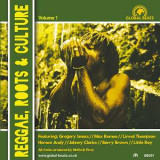
- 1: Horace Andy – Every Tongue Shall Tell
- 2: Horace Andy – Every Tongue Shall Tell Dub
- 3: Linval Thompson – Long, Long Dreadlocks
- 4: Linval Thompson – Long, Long Dreadlocks Dub
- 5: Johnny Clarke – Blood Dunza
- 6: Johnny Clarke – Blood Dunza Dub
- 7: Barry Brown – Fittest Of The Fittest
- 8: Barry Brown – Fittest Of The Fittest Dub
- 9: Johnny Clarke – Declaration Of Rights (Steppas Remix)
- 10: Johnny Clarke – Declaration Of Rights (Steppas Remix) Dub
- 11: Gregory Isaaccs– Motherless Children (Dubplate Mix)
- 12: Gregory Isaaccs– Motherless Children (Dubplate Mix) Dub
- 13: Max Romeo – No Peace (Steppas Remix)
- 14: Max Romeo – No Peace (Steppas Remix) Dub
- 15: Litte Roy – Falling Angels (Dubplate Mix)
- 16: Litte Roy – Falling Angels (Dubplate Mix) Dub
If some of these titles look familiar, it’s because they’re among the most majestic roots and culture songs ever recorded, and by singers whose credentials are beyond question. All tracks feature the original artists and even the actual seventies’ vocal in some cases, but the rhythms have been recreated with today’s sound-systems in mind and are heard at their very best when roaring out of giant speaker boxes, greeted by a forest of raisedhands and with a deejay at the mic.
Producers Mafia & Fluxy include reggae legends Bunny “Striker” Lee and Fat Man among their mentors, and their mastery both in the studio and on stage is unrivalled outside of Jamaica. The way these two brothers play dub will make the hairs on the back of your neck stand up whilst the messages in songs like Every Tongue Shall Tell, Declaration Of Rights, No Peace and Fittest Of The Fittest are relevant as ever but then the music on this album isn’t dated, and is reggae, roots and culture for the ages.