One from the Skanna vaults again. Another release rescued from the dark depths of jungle history. To say this has been a bloody big effort is understatement! The trouble with all these old Jungle records is everybody who owned a copy purchased it to play, not hoard it for future sale. The few copies that have made it for sale vary in quality from G+ - to VG+ and fetch a hefty price on Discogs in the rare cases somebody parts with a copy.
So when we finally managed to source a nice clean audio file we jumped at the chance. Hours, days, weeks, went by staring in to the abyss of audio restoration tools to finally get a worthy master to hand over to Bob Mac to do his final mastering magic. Topped of with vinyl mastering by Shane The Cutter @ Finyl Tweek we're proper happy with this classic reissue. We have made a comparison of the original 12" and the reissue. We found the reissue to be a have a slight edge on the original with a nice bright high end, and a proper heavy bottom end. That's why we always use Shane! We're proud to have this one available for a reasonable price again.
Buscar:the cop
- A1: Road To Fame
- A2: Funky Dreamer
- A3: Sitting In My Sofa
- A4: Wooden House In Sweden
- A5: Art Of Love
- B1: My Baby Blue
- B2: Groovy Sunshine
- B3: Chill Out Man
- B4: Impression
- B5: You Are A Star
- C1: Beautiful Loser
- C2: Why Is Everybody In Such A Hurry
- C3: Green Village
- C4: Pass It On
- C5: Be The One You Are
- D1: Bright Side Of The Sun
- D2: Everybody's Looking For You
- D3: Happy Blues Man
- D4: Musk Malone
- D5: Mig
- D6: Mikkel Brygger
Swirl Vinyl[46,64 €]
Formed in the late 70's, the duo is still grooving at their studio in Vesterbro, Copenhagen.
Laid Back gained their first international major break through in the 80's with Sunshine Reggae and White Horse. The dualism and originality of the two songs has left a worldwide and everlasting reputation of their music. The 3rd evergreen from their hand was made in 1990 named Bakerman altogether with a music video by Lars Von Trier.
More recently, the two members has co-founded their own record company, Brother Music, which has released Laid Back singles such as Cocaine Cool, remixes from Soul Clap, and latest the mini-album Cosyland and the chill out album, Cosmic Vibes.
In 2013 they released the double album Uptimistic Music.
At the end of the 60s and early 70s Brazil was a dream. It was fashionable everywhere in Europe and therefore in France too. One thinks of 'Samba Saravah' from the Un homme et une femme OST, Françoise Hardy and her record produced by Tuca, Isabelle Aubret and her 'Casa Forte' or France Gall with 'Zozoi'. Three Brazilian musicians exiled in France, Edson Lobo (bass), Fernando Martins (piano) and Nelson Serra (drums) form the Trio Camara. They met a group of friends who loved Brazilian music, all professional musicians, but who wanted to remain anonymous, hence the name of the band : Les Masques (The Masks)…
Claude Germain (Les double six), José Bartel, Marie Vassiliu, Pierre Vassiliu … Indeed the singers forming Les Masques are from being unknown. In 1969 they entered Studio Davout with le Trio Camara to record "Brasilian Sound". Composed of 11 tracks, it is a superb album, masterfully produced and recorded, a gripping record to listen in one go and transports us in atmospheres both dreamy and naïve which belong to that period. Produced in 500 copies on CBS, 'Brazilian Sound' was not, unfortunately, a success and it is today impossible to find the original French pressing (which sounds much better than the Canadian pressing released at the same time). This reissue on Le Très Groove Club is welcome, so that 50 years after its release, a larger audience can discover this beautiful record, echo of a once and for all past era.
- A1: Super Electric
- A2: Put Ya Hands Up
- A3: Where’s The Party At (Featuring Mighty 44)
- A4: Back To Back (Featuring Z-Mc)
- A5: Rockin’ With The Best
- A6: Freak It On
- B1: Throw 1 Back At Cha
- B2: Live Your Life (Featuring Max’c)
- B3: Kingstep
- B4: Something Going On (Featuring Jessica Folcker)
- B5: We R Atomic
- B6: Steady Rockin’
Burnin' Sneakers is the second studio album by hip hop group Bomfunk MC's, released in 2002. It is the follow-up album of their successful debut In Stereo.
The album spawns the singles "Super Electric", "Live Your Life" (featuring Max'C) and "Something Goin' On" with Jessica Folcker, who's best known for her international hits "Tell Me What You Like" and "How Will I Know (Who You Are)".
The single "Live Your Life" reached the number 1 position in Finland and the top 10 in both Norway and Sweden.
Burnin' Sneakers is available as a limited edition of 1000 individually numbered copies on flaming coloured vinyl and includes an insert.
- A1: It Takes Time
- A2: Black Magic Woman
- A3: Mama, Keep Your Big Mouth Shut
- B1: Homework
- B2: The Supernatural
- B3: Rattlesnake Shake
- B4: Shake Your Hips
- B5: Albatross
- C1: Travelling Riverside Blues
- C2: Steady Rollin' Man
- C3: Honeymoon Blues
- C4: Last Fair Deal Gone Down
- C5: If I Had Possession Over Judgement Day
- D1: The Green Manalishi
- D2: Goin' Down
- D3: Look On Yonder Wall
Home to legends, not just in Jazz but music itself, Ronnie Scott's in Soho London has been the home to innumerable world class performances but none more so than Peter Green.
A backdrop normally shared for jazz artists was transformed into the raucous good time for Blues fans from all over to witness Peter Green two years into his comeback.
This recording features tracks that range from Fleetwood Mac classics & Blues originals all with Peter Green's inimitable flair. Tracks such as 'Albatross', 'Black Magic Woman', Rattlesnake Shake', 'The Green Manalishi' & 'The Supernatural' as well as versions of Travelling Riverside Blues' & 'Steady Rollin' Man'.
This edition, originally released on 2CD & now available on vinyl, comes as a welcome return for many fans that might have missed out on the first edition of its release. A highly limited 20,000 numbered copies of the 'Soho Sessions' package, which sold out immediate on its release.
Now this new edition on black double LP allows for you to experience the wondrous energy from that night time & time again.
Back in early 2020 I was trying to get in touch with Austin to see if he had any unreleased tracks from the 90's. My mate John Vinyl Junkie has been friends with Austin for years so was able to introduce me. Turned out Austin didn't have any unreleased tracks. However, he was up for repressing one of his early vinyl releases, The Austin EP. Sadly this was one I was missing from my collection so Austin sent me a couple of Near Mint copies I was able to get really good rips from. With the help some superb CEDAR mastering we got these tracks sounding better than ever! So with some amazing 2021 mastering we got this EP sounding better than the original. Due to issues with pressing plants (I should write a book!) this release suffered from delay after delay.
Guillaume Leroux Aka Lunatic Asylum Is One Of The Most Revered Electronic Music Producers From France. He Has Been Producing For Over 25 Years On Labels Like Fnac, Sony Music, Polygram And Lots More. His Incredible Style Of Techno Has Made Him A Highy Respected Figure For Many Of Todays Techno Producers. This 4 Tracker Came Out In The 90's And Sold Out Soon After. Copies Have Been Changing Hands For High Prices On Internet Marketplaces. Now Is Your Chance To Grab A Mint Copy For A Fraction Of The Cost Or The Original.
Gilberto With Turrentine is an album by Brazilian samba and bossa nova singer Astrud Gilberto and American saxophonist Stanley Turrentine. It features performances recorded in 1971, originally released at CTI Records by Creed Taylor. The album can be described as a blend of jazz, pop, and tropicalia. It was arranged by Eumir Deodato and features appearances by A-list jazz performers including Airto Moreira, Ron Carter, Sam Brown, Hubert Laws, and Toots Thielemans.
Astrud Gilberto gained international fame in the mid-1960s following her recording of the famous bossa nova song "The Girl from Ipanema", while Stanley Turrentine was known for his distinctive work as a jazz musician and his earthy blues style.
Gilberto With Turrentine is available as a limited edition of 1500 individually numbered copies on translucent green coloured vinyl, housed in a gatefold sleeve.
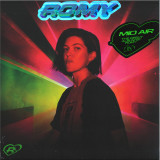
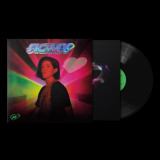
"Mid Air" ist ein Album über das Feiern, die Zuflucht und die Erlösung auf der Tanzfläche. Es ist ein Album, das sich mit Liebe, Trauer, Beziehungen, Identität und Sexualität beschäftigt. Es ist Romys Liebesbrief an die queeren Clubs, in denen sie Gemeinschaft und Anschluss gefunden hat. Die Entstehung des Albums, ihres ersten Soloprojekts, war ein Prozess, bei dem sie sich selbst außerhalb von The xx kennengelernt hat und in dem sie auch noch die Zeit hatte, sich zu verlieben. Es gibt einen Moment, ein Zwischenspiel, ein paar Tracks in "Mid Air", als Romys Stimme leise den Text "it hit me in mid air" singt. Diese Erkenntnis führt uns direkt in den Song "Enjoy Your Life", die zweite Single des Albums, die wie eine Offenbarung klingt. "Meine Mutter sagte zu mir "genieße dein Leben"", singt Musiker Beverly Glenn-Copeland im Refrain - ein Sample aus seiner Platte "La Vita". Als Romy den Satz zum ersten Mal hörte, hat er sie umgehauen - eine Erinnerung in den Tiefen der Trauer, dass das Leben kurz ist und man es in vollen Zügen genießen sollte. Freude, Verbundenheit, Liebe zu suchen. Während die Strophen die härteste Zeit nach dem Verlust ihrer Eltern zum Ausdruck bringen, ist der Refrain eine Art feierliche Ruhe. Schmerz und Freude tanzen zusammen. Die Art von Liedern, die Romy am liebsten mag - das, was sie "emotionale Musik zum Tanzen" nennt - Lieder wie "Smalltown Boy" von Bronski Beat oder "Dancing On My Own" von Robyn. Das ist die Art von Musik, die "Mid Air" inspiriert hat, die Art von Musik, die Menschen in Clubs zusammenbringt, insbesondere in queeren Clubs. Romy begann als Teenager in Londoner Queer-Clubs aufzulegen und sieht "Mid Air" als eine Rückkehr in diese Zeit, ein Pop-Dance-Album, das die Orte beschwört, an denen sie sich zum ersten Mal in das Genre und seine Kraft, Menschen zu bewegen, verliebt hat. Die Tatsache, dass das Album größtenteils unter Ausschluss der Öffentlichkeit entstand, als Romy die Clubs vermisste, machte diesen Impuls, ein Album zu schaffen, das in einem Club ein Zuhause finden könnte, umso wichtiger. Die Zusammenarbeit mit Fred Again.. und Stuart Price (der eines von Romys Lieblingsalben, Madonnas "Confessions on a Dancefloor", produziert hat) sowie mit Jamie xx, einem ganz engen Freund, Mitglied von The xx und Kollaborateur des Tracks "Enjoy Your Life", sorgte für die perfekte Balance zwischen Emotion und Tanzbarkeit. Auch wenn Romy nicht damit gerechnet hätte, dass ein solches Album jemals zustande kommen würde, als sie 2018 begann, mit Fred zu schreiben "Mid Air" führt uns durch die Höhen und Tiefen - einer Nacht, einer Beziehung, von Trauer und Heilung - und endet schließlich an einem Ort des Optimismus. Der letzte Track "She"s on My Mind" ist eine bewusste Anspielung auf den Disco-Song, der am Ende der Nacht in angesagten Queer-Clubs wie der Paradise Garage gespielt wurde und bei dem die getrennt tanzenden Körper zueinander fanden. Es ist das Ende eines Albums, das die besonderen, aber flüchtigen Momente der Ekstase feiert, die man nur in der Tanzmusik finden kann. Oder wie Romy es ausdrückt: "Das Gefühl der Gemeinschaft in den Clubs ermöglicht eine Flucht vor der Realität der Welt. Ich bin vielleicht nicht das Leben und die Seele einer Party, aber in der Atmosphäre eines Clubs zu sein, zu beobachten und sich zu verbinden - dadurch fühle ich mich weniger allein und lebendiger"
Janefondas’ disco house anthem "French Love" shines in new splendour on this single. Sam Irl's rework is carried by a completely new, deep dub vibe, melancholic melodica sounds and playful piano chords. We are already dreaming of summer by the sea.
The Sam Irl Dub is limited to 250 copies. There will be no repress!
- A1: Klangstof - Copper
- A2: Legowelt - Earthbound Atm
- A3: Regularfantasy - Lovely
- A4: D A R K D A Y S - My Attention
- B1: Kypski - Cellonely
- B2: Bastian Benjamin Feat Esther Veen - Opium
- B3: Oguz - Born Sinner
- B4: Disk Space - Reset
- C1: Delano Legito - Deconstruction
- C2: Paul Laurens - Masking
- D1: Cynthia Spiering - Neni
- D2: Dissolver - Wail, Rely & Dig
- E1: Apod - Le Mystere D'automn (Jack Wax Rework)
- F1: Strait-Jackit & Sterling Moss - Acid Hotline
- F2: Disk Space - Assisted Suicide
Eight years after its original release in 2015, and sold out upon release, Umor Rex finally presents a vinyl repress of Sirens, by Kara-Lis Coverdale and LXV. This new edition is limited to 500 copies and comes with revised artwork.
Inspired by the link between seduction and violence, Sirens comprises a series of timbrally vast anamorphic pieces that poise the voice as a newly imagined tool of multiplicity. Processes of sample manipulation, signal processing, routing, and source design inform instrumental writing and performance in feedback until intertwined, flickering between states of conflict and consonance. Apparitions of the schizophrenic voice are at one moment fractured and cold and at the next full of warmth and vivaciousness, embodying velvet rituals of romanticism in the digital age.
Ultimately, Sirens is music for ambitious dreamers: surreal sound portraits sound like the warmth of the world laid over an ice cold virtual altar. LXV’s vocal truncations and fleshy sound palettes depict the archivation of the breath and aural fantasies of the flesh which Coverdale sets amongst a vast and unconfined landscape of deeper and unknown force. Harmonically active and dynamic orchestrations underpin post-sacred tonalities while brooding pipe organs, sphinx flutes, and hailstorms of metallic percussion characterize uniquely disjointed discussions between disparate compositional ontologies. At times violent and at others serenely peaceful and seductive, these pieces, at their most powerful moments illuminate a felt space between cybernetic energy and the body.
Composed and recorded by Kara-Lis Coverdale and David Sutton. Mastered by John Tejada. Cover photograph by Cody Cobb. Layout by Daniel Castrejón.
Here comes Emotional Rescue and Konduko's last in their series of Noel Williams/King Sporty reissues, this time looking at later electro productions and the hip-hop/boogie influenced 'Sun Country'. Vocals and co-production come from Williams' long-time partner Betty Wright and as well as a vocal and instrumental mix there's a longform remix by Bay Area disco dub stalwarts, 40 Thieves.
By this point in his career, the godfather of Miami Bass had travelled a long way from his Jamaican roots in reggae and soul, paying homage to the warm climbs of the Sunshine State and laying down a much copied template using the TR-808 drum machine create the electronic emulations of the breakbeat, claps accenting the backbeat and trademark low frequencies shaking the floorboards. The instrumental stretches the arrangement, emphasising the interplay between electronics, bass, vocal samples, scratching and fx, the voice transformed into a percussive element in its own right. The flip sees 40 Thieves flexing their understated understanding of electro funk, making for a rounded, generation-jumping package.
Super proud to introduce this special 12" by UK Liquid Funk pioneer HIDDEN AGENDA. I first heard their music on Fabio's February (1995) KissFM show, taping from Leighton Buzzard on my parents JVC tuner. I had it playing as my sound track non-stop on my Walkman for months - deep minimal Jungle had arrived! It was the legendary 'The Flute Tune'. I soon purchased a copy on the mighty METAL HEADZ that year with my giro cheque in Coventry from Bang-in Tunes. 'Get Carter' was my next purchase, it was however, 'The Sun' on Fabio's Creative Source (1996) that set me off like a roman candle (and still does to this date) - I consider this the first Liquid Funk track.
HIDDEN AGENDA next hit us super hard by surprise in the winter of 2003. I was DJing late night at a squat in East Finchley on London's Rude FM 88.2 back-to-back. DJ Haze played this 12" that sent me totally hyper and turned out to be Jason's 'Groove Me' on Eastside Recordings. So hyped was I, that DJ Haze gave me that very copy on the spot!
I went onto paint a huge epic 200x200cm oil / acrylic painting to be photographed for the HORRIFIC13 cover. Set in the South Bronx 1978 (which is the title of the Side AA.) - a train Rolls over RAE ST with a semi-wild style piece which reads HIDDEN AGENDA - GOLDEN SKY with a mini 1978 piece also sprayed on the bridge.
RIYL: Sigur Ros, Explosions in the Sky, Bark Psychosis, Caspian, Mogwai, This Will Destroy You. Exclusive vinyl colour (Opaque Mix Hellfire), limited to 1000 copies, and features a gatefold jacket, printed two-sided Euro sleeves, four art prints, and download code. Breaking from the strange monotony and abnormal norms that took hold during two years of pandemic life, Hammock returns with Love in the Void, an album that looks to the future, seizes the present, and unabashedly relishes the experiences and bonds that bring meaning to our days. Known for crafting orchestral works of stirring cinematic ambience, on Love in the Void the Nashville-based duo of Marc Byrd and Andrew Thompson bring guitar-forward, heart-pounding urgency to songs that shout through and shatter the static of complacency. Since forming as Hammock in 2003, Byrd and Thompson have released 14 critically-acclaimed albums and are renowned for their unique talent for bringing inexpressible emotion to life. The Covid-19 pandemic followed closely after one of Hammock’s career-defining works, the Mysterium, Universalis, and Silencia trilogy that chronicled the incomprehensible loss of Byrd’s 20-year old nephew. At their homes and apart, Byrd and Thompson then recorded Elsewhere, an album of shimmering ambience that channelled alienated longing and displacement into avenues that gave way to worlds and possibilities yet realized. Shaken awake and needing to break free of frustrations and longings, Love in the Void pulses with an unbridled spirit for action and experience and a burning desire for connection. Across songs that hammer home the keenly felt emotions of life’s highs and lows, Byrd and Thompson crest soaring crescendos awash in reverb and delve to keenly felt moments of quiet introspection, with unflinching lyrics on tracks like “Undoing” and “Denial of Endings’’ that weigh choices made and circumstances that can’t be changed. Lush and dramatic string orchestration from Matt Kidd (Slow Meadow) and emphatic drumming from Jake Finch heighten the stakes in play, and Christine Byrd’s (Lumenette) ethereal vocals leave mysteries lingering in the haze. Love in the Void is Hammock’s loudest album to date, embracing daring and vulnerability with palpable vitality at its core, and moving into an unknown future without fear.
In 1972, a foursome of design students set out to make a record. This was, in many ways, a strictly creative endeavor. The quartet — composed of Dave Pescod, Alan Lewis, Phil Rawle, and Ted Rockley — were all trained, not as musicians, but as creatives. Art school heavyweights, the four were well-versed in the methodology of intentional experimentation, in the delicate balance of pushing the limits without completely unmooring oneself from a guiding creative intention. Emboldened by a high-brow familiarity with thoughtful experimentation and all the non-conviction of non-musicians, Bowes Road Band’s stint in the world of popular music yielded a record that is as much mind-melting as it is a direct product of its time. Their sprawling LP “Back in the HCA” embodies the exigence “art for art’s sake,” but it is for art’s sake that this record, however off the deep end it seems to travel (hear: “Doctor, Doctor”), remains a unified, and stunning, body of work. The LP’s do-ityourself garage rock noisemaking meets highfalutin creative processes. “Back in the HCA” is warbling psychedelic freakout (“Two Fingers,” “Doctor, Doctor”), Donovan-esque English countryside folk stylings (“Inside My Head,” “Goodbye to Rosie”), and avant-garde jazz improvisions (“Grass is Grass,” “Tomorrow’s Truth”) in one luminous release.
Originally an 9-track LP, Jakarta, Uno Loop, and Bowes Road Band decided to mine the six most cohesive tracks for the reissue, though the extras may be released somewhere down the line. Cohesion efforts aside, “Back in the HCA” stands alone in its singular conception of a genre-bending continuum — it evades definition. That said, the LP can easily be situated in the sonic environment in which it was conceived. By the end of the 60s, England was crawling with blues-based rock outfits that were starting to venture into prog rock territory. You can hear this popular dint cast over the folkier side of the LP. But Bowes Road Band was armed with their non-musicianship: they existed completely liberated from the motivating yet ultimately paralyzing lust for stardom. Enjoying this liberation, Bowes Road Band was utterly free to make noise. This freedom meant drawn out sax interludes amidst sweetly folk stylings (“Grass is Grass”) and Shaggs-like fuzzed-out freakouts that spiral into a void (Doctor, Doctor). This freedom also meant straight-forward tuneful cuts like “Goodbye Rosie” that conspicuously introduce heavily distorted auto-organ accompaniment mid-track amidst poignant lyricism. Bowes Road Band crafts a unified sound and then cracks it open.
With a completely off-the-radar status, Bowes Road Band could only press 50 copies of the record — 10 for each of them and 10 for the school. The band’s lifespan was to end there, or so they thought. “Back in the HCA” was the accidental fruit of a Berlin flea market treasure hunt by Jannis Stürtz, DJ and co-founder of Habibi Funk and Jakarta Records. After finding and sharing the LP with a few colleagues, Stürtz managed to get in touch with the band, get ahold of the master tapes collecting dust in Ted Rockley’s attic, and start the reissuing process. The record is still adorned with its original cover art designed by Alan Pescod, both reminiscent of bygone school days and the Zoom calls of yesterday — in short, reunion. Its re-discovery was happenstance and ought to be listened to as such. That is, “Back in the HCA” was not made to be listened to on a broad scale, or, at least, was not made with this goal in mind; it is neither in its time nor of its time. Of course, the group explicitly cites the folk tunes of the English countryside, the distorted rock groups that reigned during the record’s conception, and the fringes of psychedelic music that only the uber-underground might recognize (e.g., “Dreaming of Alice”). Yet still with these obvious influences, “Back in the HCA” always existed beyond the domain of both traditional musicianship and conventional commodification. Bowes Road Band’s DIY musicality beams through in technicolor across “Back in the HCA.” The vinyl includes an 8-page booklet detailing the albums creation and interviews with the band.
Lead single “Grass is Grass,” out July 14 along with album pre-order, encapsulates the record’s range: the track unfurls into a sprawling sax-driven trip following a sundrenched, Donovan-esque intro w/ lyrics “naively about parks and gardens, not marijuana!” The keyed-down folk cut “Goodbye to Rosie” is single 2 and elevates stripped-down acoustics with golden tinges, out August 4th. Focus track “Tomorrow’s Truth” constructs the fuzzed-out underbelly of acid folk. Listen for echoes of late Beatles, Mark Fry, and Donovan (if they were armed by an unshakabele willful naiveté). Like Sgt. Pepper’s on a shoestring budget—take a trip to the underground with LP “Back in the HCA,” available everywhere physically and digitally on September 1st via Jakarta Records and Uno Loop.
Besides online promotion from label profiles, the album will be further promoted by external agencies within the UK and US.
teely Dan's gold-selling third studio album Pretzel Logic, charted at No. 8 on the Billboard 200 and restored the group's radio presence with the single "Rikki Don't Lose That Number," which became the biggest pop hit of their career and peaked at No. 4 on the Billboard Hot 100. The 1974 album was produced by Gary Katz and was written primarily by Walter Becker (bass) and bandleader Donald Fagen (vocals, keyboards). The album marked the beginning of Becker and Fagen's roles as Steely Dan's principal members.
They enlisted prominent Los Angeles-based studio musicians to record Pretzel Logic, but used them only for occasional overdubs, except for drums, where founding drummer Jim Hodder was reduced to a backing singer, replaced by Jim Gordon and Jeff Porcaro on the drum kit for all of the songs on the album. Steely Dan's Jeff "Skunk" Baxter played pedal steel guitar and hand drums.
Pretzel Logic has shorter songs and fewer instrumental jams than the group's 1973 album Countdown to Ecstasy. Steely Dan considered it the band's attempt at complete musical statements within the three-minute pop-song format. The album's music is characterized by harmonies, counter-melodies, and bop phrasing. It also relies often on straightforward pop influences. The syncopated piano line that opens "Rikki Don't Lose That Number" develops into a pop melody, and the title track transitions from a blues song to a jazzy chorus.
Other standout tracks include "Any Major Dude Will Tell You," a reflective ballad with lush harmonies, and "Parker's Band," a playful ode to the jazz great Charlie Parker.
Lyrically, the album explores themes of nostalgia, lost love, and the struggles of the creative process. In "Barrytown," the band reflects on their early days as struggling musicians, while in "Through with Buzz," they offer a biting critique of the music industry and the pressure to conform to commercial expectations.
One of the defining characteristics of Pretzel Logic is its use of unusual chord progressions and unexpected musical twists and turns. The band's intricate arrangements and skilled musicianship are on full display throughout the album.
Rolling Stone praised the album, calling Steely Dan the "most improbable hit-singles band to emerge in ages."
"When the band doesn't undulate to samba rhythms (as it did on 'Do It Again,' its first Top Ten single), it pushes itself to a full gallop (as it did on 'Reelin' in the Years,' its second). These two rhythmic preferences persist and sometimes intermingle, as on 'Rikki Don't Lose That Number,' which jumps in mid-chorus from 'Hernando's Hideaway' into 'Honky Tonk Women.' Great transition." — the review said.
AllMusic gave the album 5 stars, with reviewer Stephen Thomas Erlewine noting that "instead of relying on easy hooks, Walter Becker and Donald Fagen assembled their most complex and cynical set of songs to date." Dense with harmonics, countermelodies, and bop phrasing, Pretzel Logic is vibrant with unpredictable musical juxtapositions and snide, but very funny, wordplay.
The album's cover photo featuring a New York pretzel vendor was taken by Raeanne Rubenstein, a photographer of musicians and Hollywood celebrities. She shot the photo on the west side of Fifth Avenue and 79th Street, just above the 79th Street Transverse (the road through Central Park), at the park entrance called "Miners' Gate."
After a brief battle with esophageal cancer, Walter Becker died on September 3, 2017 at the age of 67. Steely Dan has sold more than 40 million albums worldwide and were inducted into the Rock and Roll Hall of Fame in March 2001. VH1 ranked Steely Dan at No. 82 on their list of the 100 Greatest Musical Artists of All Time. Rolling Stone ranked them No. 15 on its list of the 20 Greatest Duos of All Time.
This stereo UHQR reissue will be limited to 20,000 copies, with gold foil individually numbered jackets, housed in a premium slipcase with a wooden dowel spine.
Overall, Pretzel Logic is a standout album in Steely Dan's discography. The album's blend of catchy hooks, complex arrangements, and thoughtful lyrics has made it a favorite among fans of classic rock and pop music.
Made when mono was still king, Bob Dylan's self-titled 1962 debut is as understated of an entrance as any significant musician as ever made. Already well-versed in American roots music, Dylan simultaneously pays homage to tradition and extends it by putting his own stamp on classic material that metaphorically functions as the soil of our contemporary songs and styles. Free of ego, and performed with masterful conviction, Bob Dylan ranks with the debut efforts of similar artistic giants Elvis Presley and the Rolling Stones.
Mastered from the original master tapes, pressed at RTI, and limited to 3,000 copies, Mobile Fidelity's restored 180g mono 45RPM 2LP version brings the contents of this seminal release as closest as they've ever come to master tape-quality in the original mono configuration. Transparent to the source, the simple sounds of Dylan's voice, acoustic guitar, and harmonica take on lifelike perspective and directness – the "husk and bark" to which Robert Shelton referred in his now-legendary New York Times review of a Dylan appearance at Gerde's Folk City. MoFi has made possible an inexpensive time-traveling trip back to the Greenwich Village coffeehouses and folk clubs in which Dylan cut his teeth, albeit in much better fidelity and without any annoying background chatter. Wider grooves mean more information reaches your ears.
As the preferred mix at the time of the recording, the mono version presents Dylan as he and his producers originally intended. Since the separation of the stereo versions isn't as sharp, the mono edition places Dylan's vocals in the heart of the musical action and as one with the accompaniment. It paints listeners an incredibly accurate portrait of the attention-getting, concrete mass of sound that features no artificial panning and straight-ahead immersion into the music. This is how almost everyone first heard this timeless album – making the mono mix all the more historically valuable and truthful.
Much has been made of the commercial indifference that greeted the album upon its low-key release. Yet focusing on sales figures and the reaction of a public not yet hip to Dylan's name or music is to miss the forest for the trees. Distinguished from the era's other folk efforts by way of the determination, brazenness, and lived-through-this worldliness Dylan approaches the material and sings the songs, Dylan lays the groundwork for the path he'd soon trailblaze and everyone else would follow.
By nodding to Woody Guthrie at the same time he completely re-imagines a sobering tune such as Blind Lemon Jefferson's "See That My Grave Is Kept Clean," Dylan straddles the past and future. He also displays, with challenging authority and savant-like expertise, the ability to handle weighty topics such as death, sorrow, and lamentation with the vaudeville flair, bluesy mannerisms, and poignant command of an artist three times his age.
As Dylan scholar and pop-culture critic Greil Marcus observed in 2010, "Everybody knew Joan Baez and the Kingston Trio; if you knew Bob Dylan, you knew something other people didn't, something that soon enough everybody had to know. Within a year, an album could put an adjective in front of the singer's name as if it were already common coin." It all starts here.
Track List
- The Scum Always Rises To The Top
- Morbid Bails
- Les Mufflers Du Mal
- Ride Into The Rot (Everything Lewder Than Everything Else)
- Triple D (Dead, Drunk, Depraved)
- Lucifer?S Bend
- Brain Bucket
- Open Road X Open Casket
- Motortician
- Interquaalude
- Sissy Bar Strut (Nymphony 69)
- Cycling For Satan Part Ii
Cursed to ride forever on this mortal plane after partaking in a satanic drug ritual, the Death Wheelers pledge allegiance to the god of hell and fire. However, in order to prove themselves to their newly anointed leader and for the spell to take effect, the club Will need to engage in a series of lewd acts of sex and violence across the country.Immortality comes at a price and you’re about to pay for it… The beating heart of The Death Wheelers is a rumbling engine. Since their self-titled debut in 2015 and in 2020’s cinematic-storytelling breakout, Divine Filth, the Canadian outfit have tapped into wind-through-hair freedom and careened down open roads of groove, not a cop in sight. Their third record, Chaos and the Art of Motorcycle Madness, more than lives up to its name on all fronts. With songs like “Morbid Bails” and “Lucifer’s Bend,” the in-the-know references abound, and The Death Wheelers draw from classic underground metal, scummer heavy rock and cast themselves into a cauldron of cultish biker devil worship, reveling in any and all post-apocalyptic dystopias with genuine glee at having just seen the world eat itself. You might hear some surf guitar. Crazy things can happen. A sample in “Triple D (Dead, Drunk and Depraved)” underscores the message: “We want to be free to ride our machines without being hassled by the man. And we want to get loaded.” That line, from Roger Corman’s 1966 film The Wild Angels, serves as a mission statement, and as “Lucifer’s Bend” starts by laughing about how you can’t get away from Satan, they might as well carve it into their forearms to be ready when the blast of distortion hits, as much Entombed as Motörhead, galloping and sinister, coated in road dust and blood. The band tells the story like this: “Cursed to ride forever on this mortal plane after partaking in a satanic drug ritual, the Death Wheelers pledge allegiance to the god of hell and fire. However, in order to prove themselves to their newly anointed leader and for the spell to take effect, the club will need to engage in a series of lewd acts of sex and violence across the country. Immortality comes at a price and you’re about to pay for it…” While forging songs adherent more to ideology than style, The Death Wheelers cast their biker cult in their own image, and on Chaos and the Art of Motorcycle Madness, they challenge death head-on as only those with no fear of it could hope to do.