Get a taste of everybody's favourite terrestrial with something extra, Jimi Tenor and his fresh brand of galactic balladry with two single versions from his upcoming album on Timmion Records, "Is There Love In Outer Space?". On the A-side, the title track effortlessly merges cosmic synth flourishes with a soulful backbeat, Jimi's smooth vocal and flute stylings, delivering a splendid questioning continuum to Sun Ra's similarly named statement. Flipping to the B-side, the mostly instrumental "Orbiting Telesto" launches us to the outer rings of Saturn with a healthy helping of vintage sci-fi movie soundtrack and library music themes. Accompanied by the down and dirty energy of Cold Diamond & Mink, Jimi's seasoned artistry shines through, showcasing his ability to blend celestial sounds with gritty moondust funk. With these two tracks, Tenor teases our appetite for the two cosmically themed albums in the pipeline for 2024. These songs crafted together with the Timmion crew serve as a testament to Jimi's unique ability to create captivating moods that transcend the usual.
Cerca:the cosmic something
Facta & K-LONE’s Wisdom Teeth imprint continues its busy schedule of 10 year celebrations with the debut LP by H TO O: a new collaborative project by Japanese ambient artists H. Takahashi and Kohei Oyamada. Set across six distinct movements, the LP maps the different stages of the cosmic cycle through a series of dynamic ambient set pieces: from the exponential expansion of the universe in its infancy - here invoked by the bright, chiming album opener ‘Inflation’ - through to its inevitable collapse and rebirth, captured by the record’s driving, ominous closer, ‘Ever’. The record started life in Takahashi’s hands, initially intended as a solo follow-up to his acclaimed 2018 LP, Escapism. The Kankyō Records founder shared his early sketches with friend and collaborator Oyamada, who began to play with the arrangements, taking the work in an experimental new direction. Naturally the project evolved into a cooperative effort, and its final form is the result of an honest and fluid back-and-forth between the two artists. The collaboration marks a considerable shift in energy to the artists’ previous works - most of all in its foregrounded use of rhythm. Where Escapism was built from a series of gently lilting, dream-like vignettes, each movement of Cycle has a clear sense of forward momentum and purpose. Each composition builds from a set of sparse, meandering elements into something dense, cinematic and, at points, discordant. Although Cycle is at heart an ambient record, there is a club-informed feeling of forward motion running through the record, placing it in a similar sonic world to the beatless-but-rhythmic ambient techno of artists like Barker, Lorenzo Senni and Sunareht. Delicate and dramatic in equal measure, Cycle is a vital and exciting debut dedicated to the building of worlds - and to their eventual and inevitable dissolution. Genre: Electronic / Ambient
Pleasure Planet’s kaleidoscopic debut album has been a long time coming, but good things come to those who wait. Developed over years of late-night studio improvisations, ‘Pleasure Planet’ is an affectionate and colorful patchwork of the New York City-based trio’s knotted influences that’s suspended between the rave and the chill-out room, weaving glistening pads and chunky basslines into vocal earworms and warm, saturated rhythmic cycles. Bandmates Andrew Potter, Kim Ann Foxman and Brian Hersey enter into a lysergic dialog with their discrete personal musical histories, drawing inspiration from vintage EBM, ambient music and heady early ’90s West Coast rave sounds and launching these classic elements into a transcendent new sonic universe.
Celebrated DJ and producer Foxman was a lead singer of Hercules and Love Affair when she first ran into DC rave veteran Potter, and the two rapidly realized their musical interests overlapped. So when Potter was recording with his studiomate Hersey, a NYC underground club scene mainstay, and they needed to bring in a vocalist, the choice was simple. Working together was a refreshing, freeing experience for the three seasoned artists, and the more they experimented, the closer they became; Foxman ended up moving into the studio, and Pleasure Planet was manifested into existence. “We’re like family,” says Potter. “We’re always on the same page – we couldn’t make this music solo.”
For Foxman, the open-ended jam sessions provided her with a chance to try something new, a few steps from the dancefloor-forward DJ tracks she’s best known for producing. And as the trio pooled their adolescent rave memories, reflecting on them with more mature ears, they began to develop the signature sound that was first heard on the Throne Of Blood-released ‘Animals’ 12″. Pleasure Planet aren’t trying to re-capture the past, but suggest a poetic contemplation that layers their recollections and musical obsessions into a hypnotic sci-fi dream. Harnessing a self-described “Aladdin’s cave” of analog and digital gear that help galvanize the timeline, they bridge the gap between avant-pop and icy bleep techno, curving suggestive words through lattices of tightly-engineered electronics.
On ‘Endless’, Foxman’s voice is echoed into a glistening haze that hovers around ethereal pads and tense, electroid pulses. Slow-moving and evocative, it’s a track that capture the open endedness of post-rave euphoria, touching the afterparty but moving far beyond the material world. She’s more recognizable on ‘Alien’, the album’s most upfront track, singing in a glassy, upper-register coo over urgent bass bumps, taut guitars and florid electronic atmospheres. “Are you an alien, or are you an angel?” she asks, fractalizing the borders between genres. And the band’s sense of cosmic togetherness bubbles to the surface on ‘Saved by the Bells’, a meditative after-hours experiment that diminishes the pulsing beats for a moment to bring out a spectrum of interconnected, serpentine melodies.
Modular bleeps and echoing percussion anchor the swooning ‘Planet Love’, one of Pleasure Planet’s most recent compositions and one of the album’s most outwardly psychedelic cuts, while the urgent and anthemic ‘Go With Madness’ steps back towards the main stage, evaporating Foxman’s memorable calls into a thumping procession of analog drums and squelchy, acidic bass tweaks. But they save the best for last, tugging at the heartstrings with ‘Remember (In Dreams)’, a giddy spiral of blipping synth arpeggios and haunting, reverberated chorals. It’s the perfect way to conclude an album that cryptically gestures towards the vulnerability of friendship, celebrating the shared experiences that result in some of the most meaningful memories of all.
Get a taste of everybody's favourite terrestrial with something extra, Jimi Tenor and his fresh brand of galactic balladry with two single versions from his upcoming album on Timmion Records, "Is There Love In Outer Space?". On the A-side, the title track effortlessly merges cosmic synth flourishes with a soulful backbeat, Jimi's smooth vocal and flute stylings, delivering a splendid questioning continuum to Sun Ra's similarly named statement. Flipping to the B-side, the mostly instrumental "Orbiting Telesto" launches us to the outer rings of Saturn with a healthy helping of vintage sci-fi movie soundtrack and library music themes. Accompanied by the down and dirty energy of Cold Diamond & Mink, Jimi's seasoned artistry shines through, showcasing his ability to blend celestial sounds with gritty moondust funk. With these two tracks, Tenor teases our appetite for the two cosmically themed albums in the pipeline for 2024. These songs crafted together with the Timmion crew serve as a testament to Jimi's unique ability to create captivating moods that transcend the usual.
"I wish I could turn or turn back" "Sometimes it’s hard to resist the feeling that there was a crucial turn in life out of which everything else flowed. Maybe in our more reasonable frames of mind we can dismiss that thought and take our plans and intentions very seriously. But, there’s often a lurking conviction that, like the oak from the acorn or the movie from its opening scene, it is already all there. In the first moment of Relics of Our Life, anything could happen, anything could come next. But as the suspense is broken with the first notes, the world of the record springs up as both an internal experience and a landscape of which we will learn something, but definitely not everything. The songs induce a swimming sense of cycling repetition and variation where shifting details tilt the ground under us. The round and round doesn’t make us dizzy; like breathing the right way, it makes us both heavier and higher. "Pawliczek’s songs can be located in the company of the greats of Flying Nun Records – maybe the delicacy of The Great Unwashed with the heavy heart of The Verlaines and smartness of The Chills. But, ultimately, his interests are elsewhere – a heart-break song over an earthly lover feels like only the tipping point for longing and devotion that outstrips the personal. In this sense, Popul Vuh for their hymnal geometry and switched-on Palestrina, and Terry Riley for cosmic elation come to mind. The songs have sweeping and cinematic proportions and depths of field constrained by a pop economy love of leanness. "But who’s supplicating whom here? The songs’ devotional quality is not upward to the sacred or even outward to the profane. It’s more like a magnetism between its elements – sounds, voices and rhythms. The track No Talk intones “why don’t you talk to me?” over a driving guitar and one feels visited by some kind of archaic god on whom the tables have been turned, finding himself jealous of our thousand little thoughts. The record finishes with his distorted lilting dance, trying to seduce us with some red red wine that is no one’s blood, but everyone’s favorite drug." -- Karina Gill (Cindy, Flowertown) 2024
"Learn To Die is a bold new step for a group of musicians, artists, and writers that has at least nominally been considered a punk band. A stylistic overhaul. For those who have been following along, it’ll carry some surprises. Slender began over a decade ago as a semi-improvisational cassette recording project, a casual collaboration between a few friends that was initially documented by two self-titled cassette-only releases released in 2014 and 2015 respectively, now both unavailable and out of print. Most fans, however, will know Slender for their two most recent releases, Walled Garden (2017) and Time On Earth (2019), both released on the tastemaking London art-punk label La Vida Es Un Mus. "Their prior work has earned them comparisons to anarcho-punks Crass and The Snipers, lo-fi flagbearers Swell Maps and Pink Reason, and artrockers Cromagnon and Amon Düül. Here, however, such comparisons feel largely unfounded and the band feels somewhat peerless. Moments of artpunk brutalism, lo-fi experimentalism, and kosmiche detours grace the fabric of Learn To Die, but the album reaches for more than pastiche. Teasing the rarified worlds of chamber music and musique concrete, Slender manages something intangible and strange. A vocoded voice intones multi-lingual poems alongside tinny guitars and sampled strings and flutes. Three chord janglepunk anthems arise suddenly out of a cosmic mist crafted by analogue synths reciting the poetry of machines. The album moves in ways reminiscent of works by artists as varied and singular as Nobukazu Takemura, Chuquimamani-Condori, Coil, and Robert Wyatt, but it doesn’t necessarily occupy the same realm as any of them.” – Leah B. Levinson
‘Empires into Sand’ is the first album of new material from Normil Hawaiians in 40 years. The group first refined their sound during the early 80s, hitting on a pastoral experimentalism that drew on ambient drone, motorik impulse and post-punk pep.
‘Empires into Sand’ came together in the familiar manner of their original three albums, with improvisation and nuance informing the blueprint of the tracks. It was with the official release of this last record ‘Return of the Ranters’ (originally recorded in 1984/85, but then unconsciously shelved) in 2015 by Upset The Rhythm that led to the group reconnecting with the intention of playing music together again. Normil Hawaiians played a launch show for that ‘lost album’ and followed that up with more concerts, including an appearance at Supernormal, a residency at the Edinburgh Festival, gigs at Cafe OTO. They were even chosen by Richard Dawson to perform with him in London.
Throughout this time, Normil Hawaiians revisited their original songs for live performance. However for a group always so interested in evolving their sound, it came as no surprise that they shirked at the idea of a faithful retread. The band pushed their songs into new inventive dimensions, still progressive at core, but now imbued with a cosmic uncanny. A cinematic approach that was always quietly present has come to the fore. The quaint weirdness of folk song, the humanity of communal practice and the group’s ecological mindedness have all found a place in Normil Hawaiians’ current sound world.
When Normil Hawaiians write and record music they prefer to gather in a remote location and live together for a while, such is their communal ethos. Being far-flung across the UK, the Family Hawaii (numbering seven key members) decided to encamp to Tayinloan, a small village on the west coast of the Kintyre peninsula in Scotland. They set up their own studio in an isolated, windswept house overlooking the sea and started the tape rolling. Noel Blanden from the band explains the process neatly: “we set up and began playing, slowly and patiently, allowing the music to take its own shape based on where we were staying and our ongoing friendship. We recorded for days, capturing everything. A lot of new and rich ideas began to emerge”.
Normil Hawaiians took their time to develop these threads at their own pace, allowing songs to mutate and settle over months. Simon Marchant deftly produced and recorded the album whilst also performing in the band, this marked the first time the band had total control of their own sound. The last few years has seen the band reconvene in Herne Bay, Faversham, London and Leith to record new parts, constantly responding to the changing form of these quietly spectral songs of defiance.
‘Empires into Sand’ incorporates samples from old rehearsals and live music into the new finished pieces, this is in continuum with their previous records. Snippets of sound from the static of short wave radio and satellite transmissions also embellish the work. In fact the whole album is stitched together with interludes, creating an acutely immersive 45 minutes. ‘Exiles’ opens the album amid swirling atmospheres, synth flights and recordings of Vilnis Egle (father of Zinta Egle from the band) retelling his experience of fleeing his home in Latvia during Soviet occupation in 1942. George Bikandy also features on this track talking about his flight from Syria in 2014. ‘Ghosts of Ballochroy’ is a winding river of a song featuring a lively discourse in Scots courtesy of Rodney Relax. There’s a commitment to truth telling present across this hopeful album populated with angels, incoming tides, long shadows and the rose-washed sun. “From our broken windscreen, we feel the breeze” soars Guy Smith triumphantly over the driving beat of ‘Waterfalls : Bedford 330’. ‘Big City Sky’ flutters and sparkles with rapid synth runs, tape-looped drums and Jimmy Miller’s commanding vocal. With ‘In The Stone’ Zinta’s melody is deliberately jagged and blunt, exaggerated by octave-layered vocals and interjections from Guy.
This is thought-provoking, boundary-bothering music. Honest in intent, a solidarity of vision. The album’s title is derived from a poem by band member Mark Tyler, who sadly passed away during the recording process and the transience of life is felt heavily throughout. Noel best coins the group’s wish for the album: “we wanted to create an album that acknowledges our history and also reflects who we are today. We remained true to ourselves and we wanted to make something beautiful without removing the edges.” ‘Empires into Sand’ certainly does that, it’s an echo from the past, an echo from the future.
The Telescopes Radio Sessions collects together the essence of three live session recordings in 3 different countries over a three year period between 2016-2019. This is the third in a series of radio session releases from Tapete Records that have so far included The Monochrome Set and Comet Gain. More session releases are being lined up for the rest of the year and beyond - enjoy the sonics and stay tuned. Over the years I have read a lot on people’s impressions of The Telescopes. Some folk think it’s a collective, others imagine it used to be a band and feel nostalgia towards what they consider to be the original line-up (even though many had come before, during and since) and some people refer to it as currently a solo career. In a way this is all true and none of it is. When faced with these kind of questions, along with questions about the style of music that The Telescopes make I often say The Telescopes house has many rooms, which explains things perfectly for me but for people on the outside looking in it only serves to increase their confusion. For me, confusion isn’t such a bad thing. Everything is born into confusion, the sense we try and make of that chaos is interesting and excites me. The universe often disorientates, it sends me a jumble of thoughts and impressions coupled with a feeling of something I need to express… if I could only decipher the encryption. This is how The Telescopes music comes to be and it is also how The Telescopes came to me. I regard The Telescopes as an entity of it’s own that introduced itself in my darkest hour and I was chosen as its vessel. From the second it arrived I was obsessed to the point where there was nothing else. A bit like having an imaginary friend. As the obsession grew it began to infect others, everybody loved my imaginary friend and wanted a piece of it. As its success grew however, so did the corruption, until one day the entity fell silent. The silence lasted for years, I tried everything to reconnect but it was having none of it. I had been a bad caretaker, I had let the house become infested and I had lost my way. This epiphany served to remind me of simpler times when anything felt possible with this entity by my side. It had trusted me with something so simplistically profound and I had let it down. The realisation of this was a eureka moment. I am not The Telescopes, I never was and never will be, I am the caretaker, the lighthouse keeper and if a job is worth doing it is worth doing well. With this dawning, I felt a crack open up in the cosmic egg and a familiar confusion in my head. The entity had returned. It was time to start untangling its tangled threads once more, to make sense of what it was saying, this time without corruption. It’s all about listening. I listen to what my cosmic friend sends me and channel this expression into what you hear through your speakers. It may take one person to achieve this, it may take more. There is no set line up or instrumentation that can hold The Telescopes. Whatever it takes to hit the zone, whatever is available, absolute focus is imperative. Sometimes it takes sabotage to keep that line of vision intact, there is no room for preconceptions or complacency in making the music. The Telescopes music is the now
incarnate and a state of total being is necessary to achieve. From the outside looking in... again, it’s all about listening. What comes through your speakers is the only thing that matters. The music either reaches you or it doesn’t. Everything else may seem interesting or confusing but ultimately it is corruption. So if you’ve bought the record, read the sleeve notes and bought a ticket to see a live show, don’t be surprised if the line-up is or isn’t the same as the recording. The only thing that is for sure is that The Telescopes as an entity is speaking to you in its own voice in every scenario.
Of course the difference between albums and live shows is that you can play the record over and over again to the point where you know every line and every note that was played. Whereas with live events you are left with an impression that can only be replayed in your mind. It can be frustrating at times. When you are touring with a great line-up and feel like something exciting is happening, you want everyone to hear it, not just the people at the shows but the people that couldn’t make it on the night as well. There is no guarantee that there will be the same line-up at a live show as there is on the album. This is why live sessions are important, they document a side of things that is often fleeting. Here we have three sessions, all different people transmitting The Telescopes sound on each. Some are regulars, some dip in and out and some were just passing through. In each case The Telescopes chose them as their vessel and as the lighthouse keeper I did everything I could to help them on that journey while trying to be a good caretaker to the house of many rooms. The Telescopes have been invited in for many sessions over the years, the first two were for John Peel on BBC Radio 1. We also recorded a session for Marc Riley and Mark Radcliffe before their
celebrity when they had a show on BBC Radio Manchester. We could have compiled this album from those sessions, it was certainly considered but Tapete and myself believe this selection gives an exciting glimpse into that fleeting side of The Telescopes in a constant state of flux that is left mostly to myth and imagination. For those who listen to the records but have never had the chance to take in the live experience, welcome to the other side. For those that follow us live, here’s a little reminder and a keepsake. Infinite suns. Stephen Lawrie February 2024.
Mr Bongo proudly presents the debut album from Tasmania-born, Melbourne-based, Finn Rees. Gliding across a swirling palette of saturated hues, Dawn Is A Melody feels vintage yet vibrant, new but familiar at the same time. A spiritual, deep and textured jazz record, tipping its hat to greats from the past, capturing memories and reformulating them into new ideas with the help of some of Melbourne’s finest talent.
Expert keys player for the likes of 30/70 and Elle Shimada, alongside one-half of Close Counters, this debut LP was Finn’s conscious departure from the realm of groove-based jazz. Instead, Dawn Is A Melody places the piano and arrangements centre stage, giving Finn and his fellow Melbourne crew freedom to explore the spaces in between, new emotions and alternate soundscapes.
In Finn’s own words: “My intention with Dawn Is A Melody was to create a world; a microcosm of colour. Something rich and beautiful that allowed the melodies and compositions to reach their full potential. It was driven by hope, curiosity and the search for beauty and reassurance in this ever-changing world. The emotion behind the music is really about the journey of life, growing up and changing, as well as my relationship with Tasmania’s natural landscapes where I grew up, a part of the world that is incredibly unique and beautiful.”
The album arcs between opening, middle and end. Beginning with the optimism of ‘Looking Up’ and ‘Lagoon’, the former a celestial, string and harp marbled slice of positivity, the latter a spiritual journey of exuberance and hope, Finn’s fingers dancing across the ‘70s Yamaha grand piano. From there the songs blossom outwards with the cinematic soulful journey of ‘It’s Behind Me Now’ and Brazilian-inspired ‘Expansion’, as the divine ‘Crossing’ signals a transition to a new realm. The energy is transformed from the rich cosmic textures to a more intimate and personal feeling with ‘Ablaze’, ‘Between Spaces’ and ‘As It Passes’ which blissfully fades down to simply piano and strings to close out the record.
Recorded at Rolling Stock in Collingwood, Melbourne, Henry Jenkins was drafted in as recording and mix engineer, his minimal vintage mic setups giving a live aesthetic and warmth to the arrangements. Lucky Pereira and Blakely McLean Davies form the rock-solid rhythm section, with a hand-picked line-up of other Melbourne talent on display, including Cheryl Durongpitikul on tenor sax, Siwei Wong on harp, Audrey Powne on trumpet and Allysha Joy on vocals to name only a few.
Plotting a course from Alice Coltrane, through Herbie Hancock, to Arthur Verocai, this is a debut nourished by the past but firmly made in the present. A record unable to be age-stamped, casting ambiguity as to when, what era and by whom it has been crafted. Like a vintage lens capturing a current scene, Dawn Is A Melody is warm and familiar yet focused on the here now.
2025 Repress
Broc Recordz is thrilled to announce the imminent release of our latest album, Cosmos Giants!
This cosmic fusion is the result of an epic collaboration between maestro Janko Nilovic, JJ Whitefield of the Poets of Rhythm, and Igor Zhukovsky of the Soul Surfers. Together, they've crafted a musical universe where genre boundaries blur, giving way to a transcendent sonic experience.
Immerse yourself in a musical journey where funk, psyche, and soul intertwine to create something truly magical!
Aerials live, dials tuned, Transmission Towers broadcasting. On either side of the river Mersey, transcendental communications are traded back and forth. Two late-night revellers, one firing messages filled with music, the other returning them laced with lyrics. The result, a dopamine hit of oddball machine soul, melded with a highlife, Afrofuturist touch. Wonky and murky yet deeply emotional, Transmission One, is a debut album that also marks the first release on Luke Una’s É Soul Cultura label, encompassing expertly the off-kilter atmosphere the label sets to orbit.
A synthesised landscape with a Northern charm, Transmission Towers marry the musical worlds of two artists that last collaborated over a decade ago. 10 years have passed, lives have been led, but a gravitational pull has placed Mark Kyriacou and Eleanor Mante back in each other’s spheres on opposite sides of the city of Liverpool. Energised with a newfound desire to strip it all back to the sounds that influenced their formative years in the late ‘80s and ‘90s - astral travelling, intoxicated on Motor City techno, Black Dog IDM and mystical Sun Ra.
Mark half Irish, half Greek Cypriot, Eleanor half Nigerian, half Ghanian, the music contained within is an alchemy of those roots and the pivotal acts that buried deep into their minds. A cosmic contrast, part machine-made, part distinctly human. Take the opener ‘UP’, an ESG-channelling, sci-fi punk beatdown or the polychromatic hyperspace anthem ‘Roller Skater 23’.
Transportive throughout, you ride the solar waves, pace and emotion ebbing and flowing. Tracks like ‘Go Slow Heart’ and ‘Cosmic Trigger’ step to a slower beat but hit with a punch. The former, a slo-mo blast of celestial tenderness, the latter an otherworldly, chugged-out lunar excursion, micro-dosing on whacked-out Wah Wah and Eleanor’s ethereal vocals. Beaming love letters to space and back, ‘Sparse’ marries the organic with the artificial, pianos and percussion circling around synth pads and broadcasting bleeps.
Elsewhere, vibrations move faster. ‘Mega’ strikes, fusing sonic tribalism with psychedelic swirls, as ‘Everything’ sweeps you up in its extra-terrestrial new wave grip. Synth stabs and basslines fizzing from every angle.
Demos of Transmission Towers music surfaced on Luke Una’s radar, making him stop in his tracks. Something magical was emerging, perfectly aligned with the E Soul guardian’s tastes. Guidance followed, quickly turning into conversations about Transmission One becoming the first release on Luke’s own label.
Escapist and futurist yet grounded and relatable. Transmission One is synthesis meets sentiment with a deep, spine-tingling soul at its core.
- A1: The Piper
- A2: Into The Sea
- A3: Big Brass Buttons
- A4: Super Lekker Stoned (Richard Fearless Mix)
- A5: Saturns Pattern (Straightface / Young Fathers Remix)
- A6: Let Me In (Demo)
- B1: I Spy
- B2: Oranges And Rosewater
- B3: Praise If You Wanna
- B4: Mother Ethiopia Pt 1
- B5: We Got A Lot
- B6: I’ll Think Of Something
- C1: Devotion
- C2: Sun Goes
- C3: Alone
- C4: Lay Down Your Weary Burden
- C5: The Olde Original
- C6: Pure Sound
- D1: Landslide
- D2: Dusk Til Dawn
- D3: The Ballad Of Jimmy Mccabe
- D4: Rip The Pages Up (Vocal Version)
- D5: How Sweet It Is (To Be Loved By You)
- D6: Golden Leaves
- E3: I Work In The Clouds
- E4: Portal To The Past
- E5: Hopper (White Label Remix)
- F1: Cosmic Fringes (Pet Shop Boys Triad Mix)
- F2: Alpha
- E1: Birthday
- E2: Serafina
Handpicked by Paul himself, Will of The People is a carefully curated collection of 31 tracks from Weller’s extensive cornucopia of tunes that never quite made it to one of his 9 studio albums since 2002. Here is a collection which reminds us that there has always been a parallel narrative to the main recorded output of Paul’s albums and singles. The B-Side, and the remix, is a space in which to explore, experiment, or to flex a different set of artistic muscles.
The story begins back in the autumn of 2003, when the Fly On The Wall 3LP & 3CD collection brought together a wealth of Paul Weller solo recordings that stretched back to 1991. The B-sides, 12” EP tracks, single remixes and ‘live’ recordings featured all had one thing in common, namely that they hadn’t been included on any of his hugely successful solo albums. Furthermore, in many instances, they’d become highly sought after in their original formats and were fetching significant sums from fans and collectors. Will Of The People follows up Fly On The Wall and takes the listener through a similar mix of rarities, this time spanning the period 2002 to 2021.
From covers to eclectic remixes, Will Of The People delivers a scintillating array of songs which skirt across many genres. Here you will find such gems as Paul’s cover of The Beatle’s “Birthday”, released to celebrate Macca’s 70th, and the sparkling disco-ball banger remix of Cosmic Fringes by none other than the Pet Shop Boys. It also includes Paul’s first foray into film soundtracks with the sublime “Ballad Of Jimmy McCabe” from the film Jawbone. Scattered across the tracks are appearances from the likes of Primal Scream, Simon Tong & Graham Coxon.
Will Of The People is released on triple vinyl and 3CD. The album features sleeve notes written by writer and broadcaster John Wilson.
The fourth full-length record from Atlanta’s Microwave is a trip. It all begins with the misty synth strikes and cosmic transmission warbles of “Portals,” before hazy, dripping-wet guitar chords settle in. The song, an adaptation of the traditional Christian hymn “Softly and Tenderly,” is true to its new name, as liminal and fleeting as it is gripping and emotional. It’s an enormous, gentle, enveloping introduction to what will be explored: life and death, happiness and freedom, the real and unreal. This is Let’s Start Degeneracy, the long-awaited new album from Microwave, releasing on April 26 via Pure Noise. It's an emo record, but perhaps only categorically speaking. It contains multitudes: ambient, pop, R&B, punk, and experimental sounds float in and out of one another as the record moves through scenes, experiences, and feelings, all of them rippling with a purity of intention and translation that mark the best artistic works of “psychedelia.” Vocalist/guitarist/producer Nathan Hardy, bassist Tyler Hill, and drummer Timothy Pittard have created something that resembles a concept record, but it’s the sort of concept that’s impossible to contain in just one phrase or word or sound. The record’s title, taken from a conservative politician’s take on drugs in 1970, captures this liberated spirit. There are no rules, and there is nothing to be ashamed of. “It’s about letting go of attachments and behaviors that aren’t serving you, and trying to shake off your programming and not be motivated by fear and guilt and shame,” says Hardy.
REISSUED ON GLACIAL BLUE VINYL! Papercuts' You Can Have What You Want is the third phase in Jason Quever's ongoing pop investigations. The relatively earthbound happy/sad pop of Mockingbird and Can't Go Back has been launched into the vault of the skies. Here, Quever delves further into epic dream-pop using mostly vintage organs, pulsing bass, and Kraut-via-Ringo-inspired drum rhythms. Intact from those earlier efforts is Quever's sense of arrangement and drama, as well as his soaring vocals, draped in reverb gauze. The words reveal a fascination with mortality and things cosmic, while sonically the voice acts as another instrument. This obsessively all-analog effort (no computer processing here whatsoever!) cuts across several eras of dreamy sound: '80s/'90s Creation and 4AD Records, The Zombies, '60s French pop, even Can's Future Days--and then there's the inevitable connection to former tourmates Beach House and Grizzly Bear. Indeed, Beach House's Alex Scally helped with some of the arrangements, though You Can Have What You Want is its own strain of addictive pop. For many, it will be the blissful/melancholy jam of the spring and summer. Quever was raised on a commune in Humboldt County, orphaned, and moved up and down the West Coast before calling San Francisco home and starting Papercuts, initially as a four-track recording project. When not performing with his own band, he can often be found recording others in his studio and filling in when needed as a multi-instrumentalist in friends' groups. "It takes a few seconds of Papercuts' second album, Can't Go Back, to think that maybe you've stumbled upon something special, a delicate mood piece made to slice through the din and chaos of modern life." --Pitckfork (8.3 rating
First album in seven years from Maple Death Records founder James Jonathan Clancy (Italy/Canada), and the first under his birth name following previous ensembles His Clancyness (Fat Cat, Maple Death) and Brutal Birthday (Total Punk, Improved Sequence). In the interim between those projects and this latest, ‘Sprecato’, Clancy has refined and honed his vision —steadily and carefully drawing from a host of disparate influences to create a new kind of singer-songwriter album that bridges the divide between cosmic loner-folk, proto-ambient music, and the epic, intricately arranged world of vintage Italian soundtrack music. For ‘Sprecato’, Clancy has assembled a transnational cast of renowned guest collaborators; including Stefano Pilia (co-producer/guitar/modular/synths/bass), Andrea Belfi (drums), Enrico Gabrielli (flutes, PJ Harvey/Calibro 35), Francesca Bono (piano, Bono/Burattini) —while the core of the band features Dominique Vaccaro (guitars, J.H. Guraj), Andrea De Franco (synths, Fera) and Kyle Knapp (sax, Cindy Lee/Deliluh).
Written and recorded between London & Bologna, the initial spark for the album was to be found in the book length work ‘Gli Sprecati’ (Canicola Edizioni), by visionary Italian comic’s artist Michelangelo Setola, who ultimately provided Clancy with the graphics
that grace the album’s cover and overall visual sensibility. Something of Setola’s near apocalyptic pastoralism runs through the record, even as Clancy’s themes grow beyond the seed they’d originally planted. Drum machines that sound as if they’ve been excavated from the earth meet detuned pianos and guitars; bucolic traces of synths stretched beyond all reckoning. While the band is both loping and epic —with shades of Pentangle’s Terry Cox in the live drumming in particular —there’s a new emotional depth and
Originally recorded in 1987 at Tabansi recorded Studio & Roger All Stars and pressed by Wilfilms, Nigeria. You’ll find six tracks of drumcomputer driven lo-fi jams laced with catchy synth lines from the mind of producer Austine Onwurah, who was quite active in the 80’s.. The project with Mr. Idigo resulted in a highly addictive cosmic boogie album which includes four absolute highlights. The record starts with one of the standout cuts; Flight 505, which is a tough electro/boogie crossover with vocals and sparse vocoder on top. Followed by the heavy boogie jam ‘We Got To Love’ , that is the personal favorite and a great track for DJ’s . The magnificent A-side closes with the catchy title track, again great production with top chorus and synth hook. On the flip you’ll find the wicked digital reggae tune ‘Mystic World’ with still ever relevant lyrics that closes the LP.. There is something special about this sought after record, the way the instrumentation has been played and programmed is very groovy and musical with a certain sound to it that is unmistakably Nigerian. The synth melodies weave in the tracks with ease and layers of funky bass and guitar float on top. Music that will grow on you every time you listen to it, one of the clever wonders coming from Nigeria! Officially licensed with courtesy of the family. Carefully restored and remastered with respect to the original sound and artwork. ‘’The need to ‘Search’ has come oh’ people of the world we have taken earthly forms the wisdom of love and unity thou shall love one another for love and unity is the route of life so do I search for Love, Peace & Unity’’ – Alphonsus Idigo
Epic, grooving, dazzlingly creative, perfectly attuned blends of complex mbalax drumming, field recordings, thumping kick-drum, and cosmic, bubbling, jamming synths and electronics.
The opening is suitably liminal, haunted by a diachronic sense of times past, present, and to come: ancestral ghosts, scratched playback, scraps of old recordings, voices strangulated or just out of range; puttering drums; futuristic, kosmische keys. Part II picks up the pace; III gives the drummers some, and heightens the atmosphere of enchantment. Jon Hassell’s Fourth World music courses through a kind of Dream Theory In Dakar.
Toco SOS, the second side, is a thumping, throbbing, mesmeric future-classic; perfect for fahr’n fahr’n fahr’n on the Autobahn… in a spacecraft. Expert hand percussion, call-and-response singing, bin-trembling foot-drum, spaceways keys. Sleekly funky as prime Popol Vuh.
Both sides range expansively by way of Berlin, where Lamin resided for a few years: you can hear something of T++’s brilliant, landmark HJ record on the A, and elements of Mark Ernestus’ crucial Ndagga project, on the B.
Half an hour of stunning music; in a beautiful sleeve, with mirror lettering, and an intricate spot-gloss rendition of salt crystals, laid over a photograph of the salt mines at Lac Rose, outside Dakar.
KID FRANCESCOLI, leader of the French Riviera Touch is back with the stellar album SUNSET BLUE out Sept 22nd 2023.
After a first sold-out world tour (over 200 concerts in Europe, USA, Asia...), and successful hits such as Nopalitos, Blow Up or Moon (now certified diamond, with more than 200 millions streams), the Marseille-based producer, crooner and multi-instrumentalist, Mathieu Hocine, is eager to share his most accomplished LP ever. This fine collection of soulful songs honor his Mediterranean roots, with elegant and pop melodies. His most recent success and the creation of his first original soundtrack with AZURO, installed him as one of the best French songwriters of his generation, with a unique signature sound.
"I live in Marseille, I spent my childhood in Corsica, I have Algerian origins, my first vacations with friends were in Barcelona, vacations with my first girlfriend in Roma,... Then, I had the chance to perform in Morocco, Greece, Turkey and Egypt: each time I spent time in the Mediterranean region, the people I met there made me feel like I was part of the same country. This shared multiculturalism is really comforting, it has its own poetry and strength, bringing uniqueness and empathy to the people. It is essential for me. I love my city: it’s the perfect place to feel good with sun, sea, family, friendships, love... It gets me emotional, bringing tears with a smile".
With his new musical gem, Mathieu Hocine unveils 11 elegant tunes of his finest craft: sunbathed French Touch (Run Run, 1986), romantic chillwave (Corsica), uplifting synthpop (You Are Everywhere, Like Magic), electronic-soul (Casino Soul), cinematic disco (Solaris), cosmic R&B (Sweet and Sour, Take Time), … Everything is in this record.
For the first time ever, Kid Francescoli paid tribute to his mixed origins with his collaboration with world-renowned lute and mandolin player Hakim Hamadouche (Rachid Taha, Patti Smith, Brian Eno, Tricky...), whom added Algerian patterns to the introspectives songs Drift in Blue and The Morning After.
"My ambition is to create pictures in people's heads with music, to transport them instantly into a movie"
SUNSET BLUE is an instant-crush album: crystal-clear, strong, personal but universal at the same time.
It's an ecstatic soundtrack for this moment when time is suspended, the golden hour when everything seems possible. It feels like Love is in the air, you're living your best life and you're at the right place at the right time. This album embodies this magic moment where we would like to last forever… Like an epiphany, Kid Francescoli's new album is a moment of pure pleasure, a soothing way to escape reality.
"I see myself as a melodist.I would like my music to feel like velvet. There's something cinematic, classy about it, and yet comforting. It's very simple, popular and synonym of love and passion"
His friend French 79 co-produced the album, while the american rapper Bamby H2O brought his NYC swag (on Sweet & Sour), Stan Neff (Polo & Pan, Kungs, Christine and the Queens...) took care of the mix and Alex Gopher (Daft Punk, The Blaze, Bon Entendeur...) added a final touch of magic when mastering. Nicolas Despis (known for his work with Etienne Daho, Hoshi, Juliette Armanet... and many famous French rappers) later joined this dream-team to craft custom-made artworks. SUNSET BLUE is a deeply personal quest, a human adventure for Mathieu Hocine (whom explores his maghrebian origins, his feminine side, his subconscious space, ...). It's a male's work, but don't get it wrong, this LP would be nothing without women’s touch : Julietta (on Run Run and Take Time), Sarah Gaugler from Turbo Goth (on You Are Everywhere and Like Magic), and iOni (on Drift in Blue).
“Music has this magical power to broaden your vision of the world. It's fascinating because, like dreams, it's the kind of irrational things science can't explain and that makes life exciting."
Planets aligned perfectly on this project and thanks to this five-star cast of collaborators, Kid Francescoli achieved his personal holy grail : he orchestrated a great 21st century pop-music album.SUNSET BLUE is a new turning point between organic and electronic, both a mediterranean travel and a Californian dream, a bridge between Ennio Morriconne and modern electronic music.
Also, while it might be called SUNSET BLUE in honor of the sea and the Portuguese / Brazilian concept called “saudade”, but it is a really optimistic album, whose true colors would rather be "yellow-orange-red" in nod to the sun.
Created in the midst of the world tour, SUNSET BLUE is a direct result of the lives’ energy and fans’ joyful vibes: going back in the studio after smiling, singing and dancing with people all around the world inevitably gave Kid Francescoli the desire to retranscribe this ecstatic feeling in music. This album is a sensitive experience, from sunrise to sunset, from first track to last one. It’s an exploration of an everlasting summer, reaching its climax in the very final seconds of the track Corsica, making us want to press play and dive into this jewel all over again.
A beautiful cosmic trip, whether you like to stay in bed cocooning, to travel far, far away or to dance ‘till dawn, to catch the first rays of light.
Make sure to catch Kid Francescoli on his next world tour to have a good time.
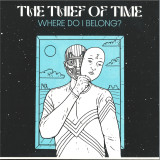
The first album release on Sprechen is a trip across the astral planes of electronica and through the neon soaked streets of South Manchester, where genres cross & styles meet on the creative peripherals away from the dance floor.
A life lived through clubs, comic books, cult movies, cosmic adventures & electronic musical endeavours have all played a role in the creation of 'Where Do I Belong?', the debut long player by The Thief Of Time, a new studio project from Sprechen founder Chris Massey.
What started as just very loose ideas and half started projects during lockdown resulted in a semi autobiographical collection of songs that draw on a lifetime love of electronic artists & synth heavy movie scores.
Nods are given, toes are dipped & caps are doffed in various sonic directions whilst still treading a truly unique path of its own making.
As Chris says: "it started really with me being in a headspace I've never really had in the studio. There was no pre-conceived ideas or agenda of what I wanted to achieve other than just going with what felt right and pursuing sounds & style I favour away from a smokey basement of ravers. Being a child of the 80's gave me a wealth of ever-evolving influences of sounds, styles, imagery, fashion, literature & art which all somehow seemed to direct this project.
It's the first time I've ever created something that contains personal reflections of my own life. Good & bad alongside the high & low points have all driven this creative process which reflects my own headspace will hopefully speak to everyone on some sort of level".
The album also features a host of Manchester artists including A Certain Ratio, Bay Bryan, Psychederek, NIIX & Love Letters From Space as well as Allison Rae from Causeway (Italians Do It Better) who were all instrumental in realising Chris' vision and bringing this exciting project into existence.
Repress!
Little Dragon return with a spectacular second album offering in August, a pulsating electro pop epic that Prince would be proud of (only fronted by a beautiful Swedish lady with a sultry voice). A bold and surprising side/two step onwards from their self titled debut, released two years ago to great acclaim especially among specialist circles. Machine Dreams, with its nagging hooks and gloriously infectious tunes, should finally see the band break out into the mainstream.
Recorded in their home city of Gothenburg, Machine Dreams is a gigantic leap on from previous material but still maintains a distinct sound that can only be Little Dragon. Be it Yukimi s warmly inviting vocals, Erik s dextrous drumming, the vast array of synths and bleeps created by Hakan or Frederik s bubbling bass lines, together they don t sound like anything else around right now. The move towards a more electronic sound was a conscious one, as Yukimi explains; The title Machine Dreams seems obvious. These days, humans seem more and more like machines, and as technology evolves, machines feel more human and it becomes fuzzy and beautiful and science fiction-ish. We feel dependent on our machines to create and live, and their sounds reflect us .
Album opener A New breaks us in gently with a single whirring note on the synthesiser, an almost alien sound that gradually morphs into a slow, thumping bassline. Yukimi s vocals flow alongside Hakan s assortment of sound effects interspersed with militaristic drums breaks. A magical opener that sets the scene and seems to sink into itself, taking us with it, until the pace is swiftly ratcheted skywards with Looking Glass , the massive snare, crisp driving beat and experimental synths revealing the band s current penchant for the 80 s. This influence continues apace into stand out track My Step . Utilising a solid drumbeat that nestles next to jagged and playful synthlines, the track breaks down into motorik propulsion with a scuzzy techno bassline that Yukimi works with ease.
Upcoming single Feather finds Yukimi s voice at its most detached and blaze, seemingly nonchalant yet magnificently seductive. Backed by Hakan s keyboard atmospherics, the song creates a soundscape reminiscent of Tears For Fears more reflective moods. Gradually layering more vocals, synths, echoes and reverb, it builds to a quietly psychedelic, dreamy cosmic swirl. Runabout brings forth a mini Airto style percussive breakdown at the tail end of yet another Little Dragon pop gem. Swimming bursts forth into vision with stabbing keys and reflective bass alongside yet another wonderful vocal performance from Yukimi who sings of young love and now so many years have past, my memories as clear as glass . The song is over as quickly as it started, flowing into the next miniature masterpiece in the form of Blinking Pigs
The album closes with the stunning track Fortune , which has already caught the attention of none other than DJ Shadow. It s no wonder really, as the textured melodies blend with the drifting percussion, creating a blissful sonic mood. With a smattering of drums and bass and the magic of Yukimi s voice and Hakan s electronic dynamics floating on top, it s the perfect track to end this fascinating journey through Little Dragon s brave new world.
With disparate influences from Depeche Mode to Prince, LCD Soundsystem to James Holden, Dancehall to R&B, Jazz and Soul, Little Dragon take their place among artists who straddle many genres, yet somehow create their own and in doing so create sounds that make time stop (Yukimi). Futuristic yet somehow retro, Machine Dreams sees Little Dragon achieve something timeless; that elusive pop classic.
The earth rotates, seasons change_there is but one long day_ Time is a beguiling, indistinct entity_sometimes standing still, sometimes bending back upon itself with premonitions or memories of the future. Growing out of a pen pal style correspondence that took place over the course of a year, separated by the Atlantic Ocean, Gloria de Oliveira and Dean Hurley passed thoughts and music back and forth that would eventually form their collaborative album, Oceans of Time. The result is an aural tapestry of that exchange: woven from conceptual threads of the celestial within, mortality and the realm beyond stars. The duo's partnership is an effortless merge, yet it's the steady presence of de Oliveira's vocals that endows the record with its sense of potency. Throughout the album, there is an innate understanding of how a lyric across a chordal color can sharpen an emotional truth. Much like a sunbeam that pierces a spiderweb to reveal its intricacy, her lyric and melody are purposely aimed in order to illuminate the truths deep within oneself_a process that ties us all to the universal. The Danish philosopher Soren Kierkegaard, a professed influence, wrote about the truth as something that was inherently subjective, less about the concrete reality of what is believed and more about how it is experienced by the believer. Frequent David Lynch collaborator Dean Hurley sets the tonal and sonic landscape of each track on the album, lending a layered ether that envelops, frames and holds de Oliveira's vocals. With its impressionistic synths, shimmering guitars, and ethereal sonics, Oceans of Time at moments recalls the foundational dreampop of 4AD acts like Cocteau Twins and Lush. The album feels especially attuned to the connections between the physical and transcendental realms, and the best dreampop has a way of making the veil between two worlds feel just a little bit thinner. Oceans of Time is a key that has the power to release its listener from the handcuffs of reality, however briefly_
"Fast Rate" blends echoes of nostalgia with futuristic innovation, crafting a sonic landscape. In the relentless rush of life's high-speed journey, it invites introspection, courageously urging listeners to delve into the intricate web of contemporary life.
This EP is inspired by deep reflections on the meaning of life in a fast-paced world filled with thoughts and emotions. It symbolizes a futuristic journey, mirroring the human struggle to gain an external perspective in our busy lives. Random Alias prompts users to contemplate their existence, offering a musical experience that transcends mere dance rhythms.
The 5 tracker showcases a wide array of sounds, from aggressive tones to captivating and atmospheric elements unveiling a new face of the label that keeps exploring the interconnection between human and technology.
The A side roars with high bpm and furious rhythms."Keep me high" express the need of escaping ordinary life, seeking something that keeps us "high" and allows to escape and reset.
Following up "Fast Rate" spans a variety of influences, blending the allure of old-school Detroit electro with futuristic sounds achieved through bold experimentation and advanced wave modeling. This fusion results in a diverse and innovative sonic aesthetic, ranging from nostalgic '80s/'90s vibes to experimental dimensions where tones morph and evolve.
"Solo in Space" and "Restless" on the filp side deliver direct, pulsating sounds and rhythms, embracing an impactful electro-techno vision. These tracks merge both worlds, combining the energy and drive of electro with the power and tension typical of techno, resulting in a sonic journey that blurs genre boundaries.
Completing the collection is a digital bonus track, "Galactic Power," which serves as a soulful embodiment of the EP's essence. With its otherworldly alien-style pitched vocals,The track intricately crafts a cosmic palette of bright pulses and ethereal FM synthesis.
This release represents a bold and progressive vision of electro, confirming and solidifying the eclectic direction and the concept of inter genre flexibility. Music can be an ever-evolving form of art, blending elements that transport listeners to distant cosmic realms.
Time shapes people, people shape technology, technology shapes music, music shapes time.
King Sporty is something of a chameleonic artists, not that many people know. He started out int he 70s making reggae and soul 7"s, then moved into disco, boogie, hip-hop and electro 12"s during the 80s, and then when house music hit in the 90s he evolved once more. This new drop from Emotional Rescue takes a tune from that late era. 'Computer Music' is four to the floor with electro influences and a lazy break that pull you in deep. Far-sighted chords bring a serene sense of cosmic majesty while a filtered vocal adds space age vibes. A dub is included as well as the Universal Cave Discomix by the Philadelphia DJ and production crew. A retro-future EP indeed..
Together, they veer from pummelling odd time signatures and downtuned riffs into ascendant, widescreen climaxes that subvert tired black metal tropes.
Ballantyne is an in-demand performer, playing guitar for DEBBY FRIDAY's breakout album GOOD LUCK (Sub Pop), writing and performing electronic music as City, and performing endurance performance art with Chinese collective TRANCE. The result is an ideological and sonic crystallization that pushes Anti- God Hand's cosmic black metal into something still more emphatic, distinctive, dynamic.
Phase O' Matic, an eccentric treasure hunter, ventures to the Parcel Islands after hearing about Erik and Huber's psychedelic antics. Intrigued by tales of a telepathic shark guarding a hallucinogenic treasure (Shadowfin), he dives deep into the South China Sea wearing his signature glowing shark tooth necklace.
Amidst swirling colors and cosmic jellyfish, Phase communicates telepathically with the school of sharks and ends up locating something he did not expect to find: hundreds of aged vials labelled 'Acid Lean'. Phase O' Matic quickly realized that the 'Acid Lean' vials were the very eau de vie Serb and Paramedic initially sought. He decides to deliver the treasure to Qassem Acidmani himself, hoping to claim the elusive reward promised by Gandalf OG.
KID FRANCESCOLI, leader of the French Riviera Touch is back with the stellar album SUNSET BLUE out Sept 22nd 2023.
After a first sold-out world tour (over 200 concerts in Europe, USA, Asia...), and successful hits such as Nopalitos, Blow Up or Moon (now certified diamond, with more than 200 millions streams), the Marseille-based producer, crooner and multi-instrumentalist, Mathieu Hocine, is eager to share his most accomplished LP ever. This fine collection of soulful songs honor his Mediterranean roots, with elegant and pop melodies. His most recent success and the creation of his first original soundtrack with AZURO, installed him as one of the best French songwriters of his generation, with a unique signature sound.
"I live in Marseille, I spent my childhood in Corsica, I have Algerian origins, my first vacations with friends were in Barcelona, vacations with my first girlfriend in Roma,... Then, I had the chance to perform in Morocco, Greece, Turkey and Egypt: each time I spent time in the Mediterranean region, the people I met there made me feel like I was part of the same country. This shared multiculturalism is really comforting, it has its own poetry and strength, bringing uniqueness and empathy to the people. It is essential for me. I love my city: it’s the perfect place to feel good with sun, sea, family, friendships, love... It gets me emotional, bringing tears with a smile".
With his new musical gem, Mathieu Hocine unveils 11 elegant tunes of his finest craft: sunbathed French Touch (Run Run, 1986), romantic chillwave (Corsica), uplifting synthpop (You Are Everywhere, Like Magic), electronic-soul (Casino Soul), cinematic disco (Solaris), cosmic R&B (Sweet and Sour, Take Time), … Everything is in this record.
For the first time ever, Kid Francescoli paid tribute to his mixed origins with his collaboration with world-renowned lute and mandolin player Hakim Hamadouche (Rachid Taha, Patti Smith, Brian Eno, Tricky...), whom added Algerian patterns to the introspectives songs Drift in Blue and The Morning After.
"My ambition is to create pictures in people's heads with music, to transport them instantly into a movie"
SUNSET BLUE is an instant-crush album: crystal-clear, strong, personal but universal at the same time.
It's an ecstatic soundtrack for this moment when time is suspended, the golden hour when everything seems possible. It feels like Love is in the air, you're living your best life and you're at the right place at the right time. This album embodies this magic moment where we would like to last forever… Like an epiphany, Kid Francescoli's new album is a moment of pure pleasure, a soothing way to escape reality.
"I see myself as a melodist.I would like my music to feel like velvet. There's something cinematic, classy about it, and yet comforting. It's very simple, popular and synonym of love and passion"
His friend French 79 co-produced the album, while the american rapper Bamby H2O brought his NYC swag (on Sweet & Sour), Stan Neff (Polo & Pan, Kungs, Christine and the Queens...) took care of the mix and Alex Gopher (Daft Punk, The Blaze, Bon Entendeur...) added a final touch of magic when mastering. Nicolas Despis (known for his work with Etienne Daho, Hoshi, Juliette Armanet... and many famous French rappers) later joined this dream-team to craft custom-made artworks. SUNSET BLUE is a deeply personal quest, a human adventure for Mathieu Hocine (whom explores his maghrebian origins, his feminine side, his subconscious space, ...). It's a male's work, but don't get it wrong, this LP would be nothing without women’s touch : Julietta (on Run Run and Take Time), Sarah Gaugler from Turbo Goth (on You Are Everywhere and Like Magic), and iOni (on Drift in Blue).
“Music has this magical power to broaden your vision of the world. It's fascinating because, like dreams, it's the kind of irrational things science can't explain and that makes life exciting."
Planets aligned perfectly on this project and thanks to this five-star cast of collaborators, Kid Francescoli achieved his personal holy grail : he orchestrated a great 21st century pop-music album.SUNSET BLUE is a new turning point between organic and electronic, both a mediterranean travel and a Californian dream, a bridge between Ennio Morriconne and modern electronic music.
Also, while it might be called SUNSET BLUE in honor of the sea and the Portuguese / Brazilian concept called “saudade”, but it is a really optimistic album, whose true colors would rather be "yellow-orange-red" in nod to the sun.
Created in the midst of the world tour, SUNSET BLUE is a direct result of the lives’ energy and fans’ joyful vibes: going back in the studio after smiling, singing and dancing with people all around the world inevitably gave Kid Francescoli the desire to retranscribe this ecstatic feeling in music. This album is a sensitive experience, from sunrise to sunset, from first track to last one. It’s an exploration of an everlasting summer, reaching its climax in the very final seconds of the track Corsica, making us want to press play and dive into this jewel all over again.
A beautiful cosmic trip, whether you like to stay in bed cocooning, to travel far, far away or to dance ‘till dawn, to catch the first rays of light.
Make sure to catch Kid Francescoli on his next world tour to have a good time.

Michael Mayer’s IMARA imprint is proud to announce a reissue of German electronica maestro Schlammpeitziger’s second album, Freundlichbaracudamelodieliedgut. Originally released in 1996 by Köln’s A-Musik label, it was the first Schlammpeitziger release to signal to a much wider audience that there was something very special going on in the music of Jo Zimmermann, the mastermind behind Schlammpeitziger. And while he’s subsequently gone on to release a further eight albums for labels like Sonig, Pingipung, and Bureau B, Freundlichbaracudamelodieliedgut is where it really all started for this most singular musician, illustrator and performance artist. Named after the ‘Schlammpeitzger’ or Weather Loach, a fish that breathes through its intestines, moves through substrate, and is surprisingly sensitive to changes in barometric pressure – hence its name – Schlammpeitziger is a similarly remarkable, singular creature.
Like all Schlammpeitziger’s music, Freundlichbaracudamelodieliedgut is overflowing with melody. Using the simplest of set-ups – much of his early music was made with Casio keyboards – Zimmermann magics entire worlds of joy and melancholy. The nine songs here are both rich tributes to the joys of the everyday, and surreal fantasias. “Cosmic Fick” sails out to sea on clouds of taffy and spindrift; “Winterschlafsüßbärentraum” slips and slides around a dream aviary of the mind; the closing “Mango und Papaja auf Tobago” is a diorama spun from springs and Slinkys. Sometimes there are echoes of more peaceable Kosmische music – think Cluster circa Sowiesoso – and both the pacing and the amorphous, tactile textures sometimes recall Chris & Cosey. But Zimmermann’s unique signature is everywhere on Freundlichbaracudamelodieliedgut – simply put, no one else makes music quite as lovely and incandescent as this.
The album’s initial release coincided with an explosion of interest in the music coming out of Köln. This was a unique moment – one where pop, techno, house, ambience, avant-gardism, musique concrete, heavy DSP, and all kinds of other creative phenomena got muddied up in the ‘general jelly’ of Köln’s fast-moving, spirited musical communities. Zimmermann was closely aligned with the music coming out of the A-Musik and Sonig labels – a tightly-knit collection of artists centred around the A-Musik record store, making all kinds of weird and wonderful music, from the electronica of Mouse On Mars to the compositions of Marcus Schmickler, from the electro-acoustics of C-Schulz and Hajsch to the digitalia of FX Randomiz. Zimmermann himself would collaborate with the latter on an album under the name Holosud; friends such as Mouse On Mars and Kompakt’s Reinhard Voigt turned up on Freundlichbaracudamelodieliedgut’s remix EP.
Here, then, is one of the loveliest albums of its era, a pop-electronics album of serious play, one as moistly melancholy as it is melodically riveting. Freundlichbaracudamelodieliedgut is rare beauty indeed.
Michael Mayers Label IMARA ist stolz darauf, eine Neuauflage des zweiten Albums des deutschen Electronica-Maestros Schlammpeitziger, “Freundlichbaracudamelodieliedgut”, bekannt zu geben. Ursprünglich 1996 vom Kölner Label A-Musik veröffentlicht, war es die erste Veröffentlichung von Schlammpeitziger, die einem viel breiteren Publikum signalisierte, dass in der Musik von Jo Zimmermann, dem Mastermind hinter Schlammpeitziger, etwas ganz Besonderes vor sich ging. Obwohl er seitdem weitere acht Alben für Labels wie Sonig, Pingipung und Bureau B veröffentlicht hat, ist “Freundlichbaracudamelodieliedgut” der Ort, an dem alles für diesen einzigartigen Musiker, Illustrator und Performance-Künstler begann. Schlammpeitziger, benannt nach dem “Schlammpeitzger” oder Wetterbarsch, einem Fisch, der durch seine Därme atmet, sich durch den Untergrund bewegt und erstaunlich empfindlich auf Veränderungen im Luftdruck reagiert – daher der Name – ist ebenfalls eine bemerkenswerte, einzigartige Kreatur.
Wie alle Musik von Schlammpeitziger ist auch “Freundlichbaracudamelodieliedgut” voller Melodien. Mit einfachsten Mitteln – ein Großteil seiner frühen Musik wurde mit Casio-Keyboards gemacht – zaubert Zimmermann ganze Welten voller Freude und Melancholie. Die neun Songs hier sind sowohl reiche Hommagen an die Freuden des Alltags als auch surreale Fantasien. “Cosmic Fick” segelt auf Wolken aus Karamell und Gischt hinaus aufs Meer; “Winterschlafsüßbärentraum” schlittert und gleitet durch einen Traum-Vogelkäfig im Geist; das abschließende “Mango und Papaja auf Tobago” ist ein Diorama aus Federn und Slinkys. Manchmal gibt es Echos von friedlicherer Kosmischer Musik – denke an Cluster circa “Sowiesoso” – und sowohl das Tempo als auch die amorphen, taktilen Texturen erinnern manchmal an Chris & Cosey. Aber Zimmermanns einzigartige Signatur ist überall auf “Freundlichbaracudamelodieliedgut” zu hören – ganz einfach, niemand sonst macht Musik so lieblich und leuchtend wie er.
Die ursprüngliche Veröffentlichung des Albums fiel mit einem Aufschwung des Interesses an der Musik aus Köln zusammen. Dies war ein einzigartiger Moment – einer, in dem Pop, Techno, House, Ambient, Avantgardismus, Musique Concrete, Heavy DSP und allerlei andere kreative Phänomene sich in der “Allgemeinen Gelee” der schnelllebigen, lebendigen musikalischen Gemeinschaften von Köln vermischten. Zimmermann stand in enger Verbindung mit der Musik der Labels A-Musik und Sonig – eine eng verbundene Gruppe von Künstlern rund um das A-Musik-Plattengeschäft, die alle möglichen seltsamen und wundervollen Musikrichtungen produzierten, von der Electronica von Mouse On Mars bis zu den Kompositionen von Marcus Schmickler, von der Elektroakustik von C-Schulz und Hajsch bis zur Digitalia von FX Randomiz. Zimmermann selbst würde mit letzterem an einem Album unter dem Namen Holosud zusammenarbeiten; Freunde wie Mouse On Mars und Reinhard Voigt von Kompakt tauchten in der Remix-EP von “Freundlichbaracudamelodieliedgut” auf.
Hier also eines der schönsten Alben seiner Zeit, ein Pop-Electronics-Album voller ernsthaftem Spiel, so feucht melancholisch wie melodisch fesselnd. “Freundlichbaracudamelodieliedgut” ist wahrlich eine seltene Schönheit.
- A1: Earthen Sea - Gleaming Beach
- A2: John Beltran – Elevate It
- A3: Jeremy Wentworth – Relaxed
- B1: Arthur Robert – Remember Me
- B2: Kmru - In A Distance
- C1: The Album Leaf - Md 10
- C2: Len Faki – Flew Away
- D1: Wata Igarashi – Our Place
- D2: Laraaji – Beloved
- E1: Can Love Be Synth – Marzipan
- E2: Biri - Neverending Celestial Dance
- F1: Exos - Shifting In The East
- F2: Future Beat Alliance – Memory Sketch
- F3: Max Cooper – Contour
A year after its first edition, the Open Space series returns in order to keep exploring what ambient music might mean nowadays.
A breadth of fresh artists, some new to the label and others renowned for their more dance-centric works, the compilation aims to give each individual artist their creative freedom to explore the space.
Techno producers such as Arthur Robert or label head Len Faki himself keep the beats present but this time focus on evoking states of introspection rather than the shuffle of dancefloors.
On the other end of the spectrum, we find seasoned multi-instrumentalist Laraaji, who has been crafting deeply meditative soundscapes since the 80’s. Using the special opportunity, the label reaches outside its usual sphere, inviting artists like the modular synth expert Jeremy Wentorth or Jimmy LaValle’s band project The Album Leaf. All while still featuring some well known veteran producers the likes of John Beltran or Exos.
No matter their respective scene or background, all artists are using their unique approach to display something deeply emotive. Be it the warm, expansive electro of Future Beat Alliance or a bubbly cosmic arpride by Hamburg Duo Can Love Be Synth.
Truly living up to its name, the Open Space series aims to open up possibilities for artists to freely pursue their creativity in a completely undefined area, a space for exploration and connection.
- 1: Summertime In London
- 2: I've Been Watching You / You've Been Watching Me
- 3: Jim
- 4: Like A Face That's Been Starved Of A Kiss
- 5: It's A Brand New Morning
- 6: Me & My Old Guitar
- 7: A Town Called Home
- 8: Bob & Veronica's Big Move
- 9: It Isn't Easy Being An Angel
- 10: If I Make It Back To Mary's House
- 11: Together Through The Rain
They drift with phantom ease from spare, intimate, literate alt-country to a nuanced, weighted music bearing the marks of rock'n'roll history..." Classic Rock 8/10 // ”...slow burning, emotional intensity" Mojo **** // ”Alluring and seductive." Uncut **** // Morton Valence’s eighth, and eponymously titled album, comes to you, courtesy of Cow Pie Recordings, featuring 11 new songs, produced by the legendary BJ Cole. Robert ‘Hacker’ Jessett and Anne Gilpin, who form the nucleus of Morton Valence, effortlessly take the country music genre, which is generally considered a uniquely American musical form, and create something uniquely English, without ever compromising their authenticity. The atmosphere that BJ Cole brings to the album is palpable, in both production values, and his unmistakable pedal steel guitar performances, on songs such as the plaintive ‘Together Through the Rain’, where an estranged Anne and Hacker reunite under the shelter of an umbrella, walking through the rain and trading verses along the way. Or the more upbeat country rock of ‘I’ve Been Watching You/You’ve Been Watching Me’, which is almost as if Richard and Linda Thompson had touched down in some Nashville backbar before heading for the bright lights. And of course, the scintillatingly down-beat opener, and instant urban-country classic; ‘Summertime in London’, where Hacker reflects on his home city from afar, through simultaneously tear-stained and rose-tinted glasses. What gives the album its country hallmark, are the narratives in the songs. However, they forego the typical Americana for an altogether more kitchen-sink aesthetic. We see the return of MV alter egos Bob and Veronica in ‘Bob and Veronica’s Big Move’, as they make their way from the big city to what could only be the arcadian blue-collar tranquillity of Hastings, or Skegness perhaps? There’s the bewildered small-town homecoming of a wannabe prodigal son in ‘A Town Called Home’. And a conversation with ‘Jim’, a seemingly old-school kind of bloke, with a penchant for midday drinking and late-night city shenanigans. As well as BJ Cole’s steel guitar, there are other collaborations too. ‘Like a Face that’s Been Starved of a Kiss’, co-written with Band of Holy Joy front man, and lyrical visionary Johny Brown. Flamenco guitar genius, Amir John Haddad, sits in on the urban-cowboy ballad, ‘Me & My Old Guitar’, the skewed violin of Dylan Bates brings something of the vaudeville to songs such as ‘It Isn’t Easy Being an Angel’, Guy Jackson adds his sublime keyboards throughout, and the whole thing is held together by unsung rhythm section heroes Jamie Shaw on drums and Josh De Mita on bass. As with all Morton Valence albums, along with the shade, there is always some light, in particular the escapist cosmic romp of ‘It’s a Brand-New Morning’, or the wryly observant, ‘It Isn’t Easy Being an Angel’, where the protagonist discovers that he’s living in some weird kind of purgatory where even the late Johnny Thunders has quit smoking. This is an ambitious album, formed through a unique symbiosis of musical characters, which is ready to redefine UK country music, put ‘urban country’ centre-stage, and should be heard by everyone
Repress!
The Self Split EP features Kouhei Matsunaga at his chimeric best for Diagonal, delivering two jazzy, freehand concrète collabs with Japanese sound artist and Eartaker noise maker, Masayuki Imianishi, plus two dance-offs with himself as NHK yx koyxen and Speedy K.Gelling Kouhei's many sonic handles for a full spectrum showcase of style and pattern, the set is riddled with a singular mischievous genius at every fold and warp. The Texture Foggy pieces render a more reflective, cosmic aspect of Kouhei's character. Working with Masayuki Imianishi, he terraforms paper, radio, field recordings and synths into vivid alien ecologies of shimmering electronics and spheric melody with a highly visual quality that perhaps betrays Kouhei's talents as an illustrator. For virulent examples of Kouhei at the rave, NHK yx koyxen and Speedy K's Step Move #01 is quite possibly the wonkiest peaktime juggernaut of the year, and the acid wormhole of Early Mellow Darkness sounds like the bald - as in bad - acid offspring of Luke Slater and Ed Rush. Once again Kouhei makes us go mad at the rave, but this time with something to come home and melt into as well.
Lost private press gem "The Swimmer" by Florida native Danny Morgan, is a cool and breezy, beguiling easy glide from 1987. It should've been huge. It still could be. It's a mellow marina masterpiece and quintessentially Balearic. Over the past few years, it's gathered a cult following yet the album from which it derives is virtually impossible to come by.
Finally available on a standalone, fully remastered 12", it's been backed by an instant classic "Seahawks Swimming Through Space Remix", courtesy of those beloved cats Jon Tye and Pete Fowler.
These won't be around for long, limited to just 500 copies for the world, so don't drown in procrastination.
One listen and you'll want to dive in.
Fans of the deeply entrancing, nautically and narcotically-enhanced cuts of Dennis Wilson or Michael Nesmith’s The Prison will be instantly mesmerised by the sheer beauty of "The Swimmer". After tracking Danny down, we wanted to know more. How does something so magical come about? The man himself answered thusly:
"At the time I was running many miles on the Sanibel Island beach and doing a bit of swimming in the Gulf Of Mexico. Keeping my mind busy on a long run, I imagined a “what if” movie scene. Almost every run or swim someone is sitting there on the beach watching what goes by. Back at my desk I started finger picking some chords and the picture in my head showed up. I punched in a rhythm loop and the song was on its way.
Adrian Belew and I had the same manager Stan Hertzman so I was listening to some of Adrian’s work. I was a huge fan of Joni Mitchel and the unusual chord changes and melodies in some of her songs. All of this influenced the sound on “The Swimmer”
I had a support band at the time living in my house on Sanibel Island so we practiced a lot. We came up with an arrangement of the song and we took across the bridge to John McLane’s Important Studios and recorded it. I played finger picking acoustic guitar and sang, Tim Miller played drums, Jeff Holck played fretless bass, Dave Dust played lead guitar and John McLane played keyboards and sang harmony."
Our deep thanks must go out to Jon Tye (MLO / Seahawks / Ocean Moon) for first hipping Be With to this stunner. We returned the favour by giving him the keys to the stems and requesting a strung out remix to go on the flip - he returned having conspired with Pete Fowler to conjure a cosmically copacetic rerub with the subtropical chug of the "Seahawks Swimming Through Space Remix".
Putting together the artwork for this 12" release was an enjoyable process. It was nice to be able to flip the original sleeve for the Beach Life album by using previously unseen photos, sent to us by Danny. We wanted to create something that looks like it would've gone with the LP sleeve. We think we've cracked it. Simon Francis remastered Danny's original audio and Cicely Balston's precise cut for Alchemy at AIR Studios ensures this 12" sounds appropriately outstanding. The immaculate Record Industry pressing will ensure this previously lost masterpiece stays forever found.
Tucked in the heart of Koreatown, Los Angeles, lies The Libra Hotel—the titular architecture of Nick Malkin's new album and site of his musical and psychogeographic exploration. Unlike most musical "site-specific" studies, Malkin remains wholly ambivalent to the documentarian approach, instead sharpening an auteur-like focus on the site as a conceptual and highly expressive backdrop. The Libra is musically explored as a space that houses a noir fragmentation of identity—the exhausted trope of a complicated protagonist walking through rain-soaked street corners and fumy neon lights—where an inner monologue is rendered in both miniature and at a cosmic scale. Casting aside stifling tropes around field recording, ambient, and improvised music, Malkin's work finds its own unique fidelity and emotional core through the assembly and reassembly of memory. Nearly every sound on the album—from frayed saxophones, lambent pianos, and dissected jazz drum kits—are multiplied, shattered, and reconstituted into shapes that adorn The Libra in a motion-blurred fog. The narrative of the Hotel suddenly appears as if out of the mist, with intersecting characters interacting within its walls by happenstance. Adminst the languid set pieces, wraith-like sonic grains gravitate around wide subbass beams that give structural form to The Libra, a narrative tension like when a scene is shot from hundreds of different perspectives: an image both luminous and veiled.
Much like Frank Sinatra's own spatial residency immortalized on "Live at The Sands," "At The Libra Hotel" showcases an exuberant view of entertainment, hospitality, and a form of masculinity, one that can quickly detourn into darkness. Knowing this, Malkin extracts a melancholic core out of The Libra locale. The flickering shadows of American decadence are shown in their ephemeral honesty, lines that trace how even in everyday life virtue is tested, sanity is tested, even reality is tested within the confines of desire, within the night. The album is draped in fleeting textures, carefully arranged with a trance-like microtonality, the faint inflections and articulations of a jazz band cascading into dissipated stillness. Voicemails about changed locations and covert eavesdropping on guests' whispered conversations provide an atmosphere of missed connection and voyeurism—a purloined letter of desire receding into a vanishing point. Like the music itself, The Hotel, a chapel perilous at the intersection of desolation row, the center of it all, yet simultaneously at the edge of town, becomes a structure between libidinous virtuality and actuality—our inevitable half-light.
Ultimately, the pensive atmosphere of "At The Libra Hotel," powerfully asserts a plea for the kinds of intimacy only possible in transient spaces. Here, memory cascades into a force that feels like something supernatural, perhaps even religious, yet always subject to the infidelity of our imagination. Here, the album opens into its primary psychodrama, the transient nature of subjectivity itself and how this becomes fractured in the tumult between our commitments and desires. Within this nocturnal space, to quote Louise Bourgeois, "you pile up associations the way you pile up bricks. Memory itself is a form of architecture."
Selected by Jim O’Rourke for his Tone Glow list of 25 albums that “never got their due”, Org was founded in the early 90’s by Espen Jensen and Kjetil D Brandsdal who would later go on to variously record as Elektrodiesel, Noxagt and Ultralyd in the swirl of the highly active Norwegian underground. “Org" was the only album the pair recorded as a duo, pressed in a meagre edition of just over 100 copies which disappeared almost as soon as they were made, lodged in the memory of the select few who have managed to hear it in the years since.
Made up of three long tracks, the near 20-minute ‘001’ opens the album with an extended organ zone-out matched with scraping factory machinery saturated into a dense cloud of harmonic fuzz. There's something transcendental about the sound that intersects with microtonal Alice Coltrane (particularly the unfairly maligned organ-only edition of "Turiya Sings"), as well as Pauline Oliveros and Ramleh. It’s music that pulls you in subconsciously; before you know it, you're fixating on the uncomfortable grind of metal on metal, buried mechanical rhythms and liturgical organ vamps that wind between industrial cacophony and sacred ritual music. For its last few seconds, we go into a full death metal tearout that fades out before it takes full flight, a glorious wtf.
‘002’ connects between minimalist drone styles and shoegaze, distorting fuzzed organ into pliable, dreamlike warbles that end up sounding like Kevin Shields' ‘Loveless’-era glides, or even Sunn O))) at their most devotional. Never losing the numbing overdriven mettle, its a piece that sounds spiritually entwined with Matthew Bower's Skullflower - a minimalist re-reading of high-contrast guitar music that takes all the psychoacoustic power and none of the annoying posturing.
For ‘003’, subaqueous organ is joined by synth and drum machine, sounding like the inspirational spark for Religious Knives' screwed 'n chopped cosmic psychedelia. The choice of sounds links it to Antena's foundational electro samba recordings too, but the overwhelming drone - a constant on all three compositions - connects the music to minimalist spirituals that have simmered beneath the DIY/avant garde for decades.
‘Org’ sits heavy on the nerves with overproof levels of mulched amp worship and ungodly, palms-down organ chords and wheezing, bezonked lines of melodic thought. 25 years out of sight and marinading in the archives, with the benefit of hindsight we can better understand the role these sounds played in the development of music in the contemporary sphere. It’s an important piece of the puzzle, one that makes valuable connections that, over time, have looked progressively more faint.
- 1: Home
- 2: Prana 10:9
- 3: Holy 0:58
- 4: Amok
- 5: Open
- 6: Game Over
When I first heard Natalie Rose LeBrecht's time-suspending, air-ionizing music, more than twenty years ago, I thought "this kid is on to something." She's been proving that thought right ever since. Her recordings, from the teenage 4-track tapes she made as Greenpot Bluepot to the recent albums under her own name, have been fascinating dispatches from her progressively deeper dives into her gorgeous, weird, wildly idiomatic aesthetic. Holy Prana Open Game is a jewel of intensely personal cosmic music, created through a remarkable process of openness, craftiness, addition and subtraction. It belongs to a tradition of albums that document a rich, meditative sound as it rises up to join the world outside its creators' minds: Alice Coltrane's Universal Consciousness, Harmonia's Musik von Harmonia, Philip Glass's North Star, Talk Talk's Laughing Stock.
"Meditative" is specifically the idea here: Holy Prana Open Game had its origins in the fourteen days LeBrecht spent silently meditating in her home's small music room in the summer of 2019. "I came out of that bursting with the will to create new music," she says, and she created it sound-first. LeBrecht taught herself to program an analog synthesizer's timbres from scratch, and built a new set of glacial, heady compositions out of them, eventually singing to accompany the keyboard parts she was playing.
Then she closed her eyes at her computer, "let my mind be clear and open, imagined light pouring down through me, and began auto-writing to my memory of the music playing through my mind. Most of the lyrics emerged this way, and then I used my conscious mind to refine them a bit at the end." One other song came along with LeBrecht's new pieces, a cover that seems wildly unlikely from the outside and makes total sense in its context: it's a version of Atoms for Peace's "Amok" (which had been created by improvisation and editing, too), mutated into her own idiolect.
In early March of 2020, LeBrecht recorded Holy Prana Open Game's analog synth parts with Martin Bisi at his studio in Brooklyn--and then the world shut down. As you may have gathered, LeBrecht is very much a spiritual, head-in-the-stars type. She is also extremely hardcore, and if making the art she wants to make means doing things the hard way, she cracks her knuckles and gets down to it. Within weeks, she had taught herself how to record, mix and edit with a digital audio workstation. She recorded her vocal parts (sometimes multi-tracked into a radiant choir) at home, assembled a rough mix of the album, and sent it off to her collaborators.
LeBrecht spent some years studying with and assisting La Monte Young and Marian Zazeela at their legendary sound-and-light installation, the Dream House. As with their work, her singular, precisely focused vision is shored up by its openness to artistic voices beyond her own. For Holy Prana Open Game, she worked with the Australian guitarist Mick Turner and drummer Jim White (both of Dirty Three, the Tren Brothers and innumerable other projects), as well as woodwind player David Lackner, a longtime presence on her recordings.
Turner and White have been playing together in one context or another since 1985; in the summer of 2020, they were only blocks from each other in Melbourne, Australia, whose strict lockdown meant they couldn't meet up to record together. So both of them, as well as Lackner, recorded their improvisational additions to LeBrecht's rough mixes individually, often without hearing each other's contributions. "I had asked them to play as much as they could on each track," she says, "and told them that I would edit it all down in post, so I had a lot of source material of theirs to work with."
LeBrecht arranged and edited the recordings from all four of their homes to flow together like breath across the duration of her suite. Prana, one of the album's central conceits, is in fact the Sanskrit word for breath, with the connotation of the breath of life. Like LeBrecht's music, prana flows at its own pace, and demands stillness to take in fully--but it's also subtly playful and surprising, a force that can be as light as air or as immersive as the atmosphere itself.
It's a cohesive song cycle purpose-built for pit stops at points beyond along the California country corridor. Sonically, Stay In It feels equally at home in 2022 as it might in 1972, evidenced by nods to "After The Gold Rush"- era Neil Young, Jonathan Wilson,and The War on Drugs.
The singer-songwriter trucked Jerry Garcia's old console to the desert to embrace the analog. The kind where if you want to rip a guitar solo at 3am with the windows open, you go for it, cowboy. A flurry of calls reverberated back and forth until Eric and his producer Damien Lewis (Kevin Parker, JamesBay), crash-landed in the tiny high desert outpost of Landers, California...in August.
"Stay In It" is a way of saying be present, it's "Be Here Now" says Silverman, an accomplished veteran of the Bay Area live music scene (with appearances at festivals such as Outside Lands and Noise Pop under his belt). "So the record is really about just finding that moment where it all locks in and flows. Get there and stay there."
This is music that picks up influences and imagery and shapes and colors as it encounters them on Interstate 62, before dropping them off as they turn into specks of dust on the horizon. There's the two-step lilt of "Better Days", where we start awash in melancholy synths but end up hopeful for possibility. There's the synthesizer summoning courtesy of first- call session keyboardist Adam MacDougall (Black Crowes, Circles Around The Sun) on "All In My Head" where
things get fully cosmic.
But no matter the track, there's something bigger happening here.
- A1: Feel Again (Feat. Wrabel)
- A2: Oumuamua
- A3: No Fun (With The Stickmen Project)
- A4: Human Touch (Feat. Sam Gray)
- B1: Come Around Again (With Billen Ted Feat. Jc Stewart)
- B2: Let You Down
- B3: Start Again (Feat. Jesse Fink)
- B4: Pas De Bourree (Feat. Lucky Lou)
- B5: Love We Lost (With R3Hab Feat. Simon Ward)
- B6: Offshore (With Avira Vs Chicane)
- C1: One More Time (Feat. Maia Wright)
- C2: Superman (With Blasterjaxx Feat. 24H)
- C3: Forever & Always (With & Gareth Emery Feat. Owl City)
- C4: Roll The Dice (Feat. Philip Strand)
- C5: I’m Sorry (Feat. Scott Abbot)
- D1: Computers Take Over The World
- D2: Clap
- D3: Hey (I Miss You) (Feat. Simon Ward)
- D4: Something Beautiful
- D5: Live On Love (With Diane Warren Feat. My Marianne)
- D6: Shot At Love
- E1: Tocando El Sol (With Azteck)
- E2: Typically Dutch (With Wildstylez Feat. Pollyanna)
- E3: Easy To Love (With Matoma Feat. Teddy Swims)
- E4: Dayglow (Feat. Stuart Crichton)
- E5: La Bomba (With Blasterjaxx)
- E6: Do Right (Feat. Zoi)
- E7: On & On (With Punctual Feat. Alika)
- F1: Vulnerable (Feat. Vanessa Campagna)
- F2: Letting Go (Feat. Matluck)
- F3: Reflexion (Asot 2023 Anthem) (With Cosmic Gate)
- F4: State Of Mind (Feat. Alba)
- F5: Rhythm Inside (With Ahmed Helmy)
- F6: Feel Again (Reprise) (Feat. Wrabel)
One day, you wake up with a cloud in your head. You feel out of place and uninspired, and juggle so many worries the balance is skewed. That was Armin van Buuren three years ago. He put so much love and passion into his work and found it hard to cope with the fact that not everyone can be pleased. Something needed to change. So, he reformed his life routines, took up meditation to calm the storm and did everything he could to negate the numbness. And what he ended up with was a newfound love for music and an incredible three-part album: Feel Again.
From "No Fun" and "Computers Take Over The World" to "One More Time", "Come Around Again" and "Roll The Dice", the Feel Again album sonically represents the journey of an artist extraordinaire radically looking for harmony within himself. Its 34 tracks may be different in terms of sound, but together, they reflect an equilibrium that could only come from a man in balance.
From reconnecting to friends, family, and fans to finding inner peace, Feel Again means acknowledging harsh truths, finding out what really matters and letting that power a new step forward. Because in the evergreen words of Armin van Buuren himself, “we're still learning and will never stop learning till the day we die”.
Feel Again is available as a deluxe limited edition box set, including 3 LP's, which are housed in printed innersleeves. The set also includes 5 exclusive Armin van Buuren lithos. This deluxe boxset is limited to 3000 individually numbered copies on turquoise marbled (LP1), white marbled (LP2), and orange marbled (LP3) vinyl.
Swing Family's Music Force is dramatic mid-80s synth-funk. From the maverick mind of Sauveur Mallia, it's a thrilling and uniquely brilliant album from start to finish. It's undoubtedly known and revered for its unbelievable standout track, "Mission Africa". Those that know, know. And if you don't know, get to know. It's the reason this record has been hugely sought-after for the best part of two decades. Originally released on Tele Music in France in 1985 but now tear-inducingly rare, this is the definition of "a welcome reissue."
Swing Family is basically a supergroup of French Funk royalty. Led by French disco lord and Arpadys maestro Sauveur Mallia, they were augmented by trombonist Alex Perdigon from legendary French funk rock collective Godchild, trumpeter Kako Bessot from funky fusion group Synthesis and saxophonist Pierre Holassian, a member of Giant, Janko Nilovic's French jazz orchestra. So, about as heavyweight as it gets for funky French goodness. Mallia handles, of course, bass duties throughout, as well as utilising his arsenal of synths including his E-mu, Yamaha Dx7, Roland MSQ 700, Mini Moog and Oberheimm.
The maximalist disco fusion of "Exorcistor" is perhaps a bit too 80s French cheese for most tastes, so either linger on its singular style or head straight to the soundtracky typo-funk of "Greewich Boulevard". A deep, swaggering powerhouse, it comes on like mid-80s Chic jamming on the set of Beverly Hills Cop with Kashif. Yes, *that* good. It's followed by the vital "Music Force", a synthy, sleazy instrumental full of sax and flute and those 80s drum fills. Just the right side of acceptable.
OR! You can even choose to forget all the rest and just stick "Mission Africa" straight on. A rumbling, strutting, afro-cosmic low-profile banger. The slick drums hit hard, the synth strings warm things up, overlapping horns add swagger whilst electric guitar flourishes and a chanted refrain sit in the mix quite perfectly. A track that's almost impossible to describe and do justice to. You just need to hear it. Preferably as you saunter into your favourite after-hours club, after spotting all your friends at once, as you cut a swathe to the bubbling dance floor. A track quite like no other, it makes you sit up within its first bars and, to us at least, sound like something you'd have heard on a Print Thomas mix from the mid 00s. Basically, it's cosmo-galactic.
The B Side opens with "Musical Stars", an oh-so-80s funk-lite track which, at times, sounds like something Daft Punk may have left on the cutting room floor during their Discovery sessions. Another unimpeachable favourite of ours is the druggy brilliance of "Gentleman & Musician". You can almost hear the white powder through the speakers, as soaring, acidy synths, slick, heavy beats and the irresistible interplay of the primo horn players create a real sleazy wonder. "Film Action" follows, a galloping horn-heavy synth romp with moments of extreme bass breakdown brilliance before the drama-synths of "Episode Double" take things up another notch as it oscillates between gorgeous funky horns and urgent bleepy magic. Super tense, super funky and super stylish. Just ace. The elctro-tinged horn workout "Fatal Lady" closes things out majestically.
The audio for Music Force has been remastered by Be With regular Simon Francis, ensuring the punch of Sauveur's bass and those sick drums come through to the fullest. Pete Norman’s expert skills has made sure nothing is lost in the cut whilst the original and iconic sleeve - complete with perky Liberty Belle - has been restored here at Be With HQ as the finishing touch to this long overdue re-issue.
French techno titan Madben unveils his much anticipated ‘Troisième Sens’ LP on Maceo Plex’s Ellum Audio.
Madben started absorbing the techno of Jeff Mills, Dave Clarke and Speedy J in the 90s, growing up in Lille in northern France. He retains a passion for DIY culture and warehouse parties thanks to youthful raving at Brussels' Fuse, Gent's Kozzmozz or in abandoned factories in Courtrai. All this has shone through in his music, including a debut album on Astropolis in 2018 that featured a collaboration with Laurent Garnier and a recent EP for Garnier and Scan X’s label.
Over the last decade, he has become a European club and festival favourite playing places like Berghain and Awakenings. His studio boasts a fine array of machines utilised to full effect on this latest opus. ‘Troisième Sens’ perfectly reflects what the artist has always loved, listened to and played, keeping one eye on the dance floor but never at the expense of musical narrative. It’s a genuinely progressive, multi-genre body of work that allows listeners to fully immerse themselves in the seemingly limitless depths of the Frenchman’s sonic capabilities.
He says, “Over the years, I learned to have more fun with the gear in my studio, and this has been the result. The album took three years to finish; I started in an underground basement studio in Paris before moving to Nantes. Therefore, it may surprise listeners with such a diverse selection of moods. It's dark in places but happy in others.”
'Departure' kicks off with uplifting synth work and broken techno beats that have a celebratory feel. 'Addicted' is a lithe cut with steamy vocals and a more fulsome combo of drums and bass, while 'Circuit Breaker' cuts loose in the cosmos. Acid wobbles, smeared synths and metallic percussion all make for a bouncy cut before 'Fade In Fade Out' continues the cosmic trip with vastly oversized synth patterns that will light up a dark space with overwhelming euphoria.
The brilliant 'It's 1 am In A Rave' is a dark, heads-down banger with 'Lost Memories' then layering up melancholic synths and Plastikman-style drum loops into something full of deep thought. There is no let up with the superb acid techno gymnastics of 'No fear', and 'The March' is a turbulent mix of sheet metal synths that whip about over steel-plated drums. 'You Dance Like A Robot' is end-of-the-world electro with a menacing robot vocal, and the electro tip continues with expert drum programming and menacing leads on 'Deep In The Jungle'. 'Meta' is a flailing rhythmic workout that sounds like the machines are in meltdown, and 'I Made A Dream During This Nightmare' is a serene techno soundscape for ruminating about the future of the human race.
Intelligent yet immediate, impactful but emotional, ‘Troisième Sens’ is another standout techno record from Madben.
The Bass Junkie sound spans the old school beats and vibes of the Electro genre’s origins, to the borderline industrial. Phil is a battle hardened Bass Bot from the future armed with his trusty MPC.
The obsession with all things sci-fi continues with this 'Cruising The Bass Nebula' EP. Out this February on my Asking for Trouble label, this is testament to his non-stop love of the genre and keeps on evolving with this funky 10".
Phil Klein aka Bass Junkie has been part of the Bass furniture for decades. I first came across him at my local roller disco somewhere in the 80s where he would flex his early DJ skills. Phil was cutting and scratching on the decks way before anyone I knew.
His history is quite something. In the early 90s he contacted Dave Noller from Dynamix II in Florida and after sending demos (pre-Internet of course). He ended up going there to make some tunes under the name of Cybernet Systems.
Phil has had many monikers and worked with lots of people over the years. Model Citizens with Matt Whitehead, IBM, Gods of Technology and Kronos Device with Si Brown (Dexorcist) and myself both as The Brink and part of The Resonance Committee to name a few. 2021 saw the release of the album Sub Sonic Survivor on Bass Agenda. He's had releases on lots of labels over the years including Control Tower, Firewire, SMB, Ed DMX's Breakin records, Andrea Parker's Touchin Bass label, Billy Nasty's Electrix and his own Battle Trax label.
Throbullating throughout the galaxy since 1986!