Heavyweight LP Picture Disc in a Deluxe PVC bag with flap.
The album opens with an abandoned soundtrack to a recent Hollywood movie, leading into an expansive score for Dutch National Ballet which premiered at the re-opening of the Stedilijk Museum Amsterdam in front of Queen Beatrix, with synths and live strings offering a sinuous melancholic path.
Side Two explores a deep sense of intimacy and reverberant space. Baltik Kitlab introduces a throbbing variation on chamber techno, with soft shuffling rhythms. The album concludes with a contemplative, cloistered and emotional piano piece, Dead Letter Office, with a strong emotional pull.
It’s music that is tender, elegant and heartfelt. The Signal of a Signal of a Signal is a mature work of contemporary electronica from an artist who has been re-inventing himself for nearly the last thirty years.
The Signal of a Signal of a Signal was originally released in an extremely limited CD box set on Touched Music in December 2019. It was accompanied by new albums from FSOL, Locust, Anders Llar and others. The box set sold out in 10 minutes and raised more than £10,000 for Macmillan Cancer Support in the UK. Interest in the album continued and so here is a special edition on heavyweight vinyl in deluxe PVC bag with flap, with all new artwork. It’s an exceptionally personal and fragile release, woven in with the deaths of his entire family to cancer. The album is both a rhetoric of mourning and a celebration of music to empower.
Поиск:the death set
Все
A mixture of electro, techno, house and nods to the soundtrack works of John Carpenter
Miami Beach Witches, which is the name of the album, has a sound that has been inspired by the goth and emo music culture from the 90's and 2000. Sonically filled with the high and lows of the teenage angst in a mixture of electro, techno, house and nods to the soundtrack works of John Carpenter. Visually wise, the world is filled with female teenage witches practicing witchcraft while having to deal with their everyday school drama. Sort of like the world depicted in the Netflix series: The Chilling Adventures of Sabrina, but in a more modern setting. It's faded, blurry and sometimes smoky like the mind of a teenager trying to deal with his life in high school.
"It is time for man to set a goal for himself. It is time for man to plant the seed of his highest hope. His soil is still rich enough for it. But that soil will one day be poor and exhausted, and no lofty tree will any longer be able to grow on it. Alas. There will come a time when man will no longer launch the arrow of his longing beyond man - and the string of his bow will have unlearned to whir! I say to you: one must still have chaos in oneself to give birth to a dancing star. I say to you: you still have chaos in yourself. Alas. There will come a time when man can no longer give birth to any star. Alas. There will come the time of the most despicable man, who can no longer despise himself."
This excerpt of Nietzsche's "Thus Spoke Zarathustra" sets the mood for the latest album of Sardinian sound researcher Eugenio Caria. "In Origine: The Field of Repentance" is a concept album dealing with the origin of man and its impact on the cycle of creation and destruction which drives the evolution of the universe. This time Caria invited one of the world's major trumpeters, prolific Sardinian jazz artist Paolo Fresu to collaborate on the album. Fresu's unique trumpet sound is recognized as one of the most distinctive in the contemporary jazz scene and on this album Caria and Fresu succeed in perfectly merging their contributions into a coherent entity. Fresu is not accompanying Caria and Caria is not accompanying Fresu. Instead they both drive each others plays, building and rebuilding, forming and reforming meticulous pieces of analogue-electronic music that invoke the feeling of a pure timelessness.
- A1: Is He Trying To Tell Us Something? (Instrumental)
- A2: Rhapsody In Green
- A3: Baroque No 2
- A4: This Is My Beloved
- A5: Music For Advertising #1
- A6: Music For Advertising #2
- A7: Music For Advertising #3
- A8: Killers Of The Wild
- A9: Realizations Of An Aeropolis
- A10: Music For Advertising #4
- A11: Music For Advertising #5
- A12: Z Theme From "Music For Sensuous Lovers" (Part 1 - Instrumental)
- A13: The Blobs Son Of Blob Theme
- B1: Cathedral Of Pleasure
- B2: Ode To An African Violet
- B3: The Time Zone Space Walker
- B4: Dragonfly
- B5: The Lords Of Percussion Geisha Girl
- B6: The Electric Blues Society Our Day Will Come
BLACK VINYL[21,97 €]
Mort Garson’s road to cool cultural caché and the sublimity of Plantasia meant a decades’ long journey through an underworld of sophisticated, international, string-laced dreck (i.e., your great-grandparents’ record collection) to arrive at Music from Patch Cord Productions, this set of queasy-listening you now hold.
Music from Patch Cord Productions shows that Garson’s knack was to exist in both worlds, super-commercial and waaay out. He cut delirious minute-long blasts for commercials (as to whether or not they were actually ever aired remains unknown) and spacecraft-hovering études. Were there really account managers out there in the early ’70s that gave the greenlight to these commercial compositions which seemed to anticipate everyone from John Carpenter to Suicide? What were these campaigns actually for, Soylent Green? Regardless, Mort’s jingle work laid the groundwork for the future. As Robert Moog himself noted: “The jingles were important because they domesticated the sound.” Via Garson’s wizardry, the synthesizer transcended novelty to ubiquity and dominance.
Other curios and questions abound. How did Garson’s arrangement work for Arthur Prysock’s satiny body worship album This Is My Beloved transmogrify into the body-snatcher pulses of “This is My Beloved”? Are the two pieces even related? What is the IATA code for the airport of “Realizations of an Aeropolis”? What denomination is the “Cathedral of Pleasure”? If “Son of Blob” sounds like a hallucinatory melted ice cream truck theme, what on earth does Blob’s father sound like? Every sound wrangled out of that Moog by Garson pushes things further and further out.
Of course, these are all questions that may never get answers, as Garson wasn’t the most organized modern day composer, busy as he was conjuring strange new realms with his circuit boards and synths. He worked and wrote right up until his death in 2008, his daughter and Sacred Bones still going through all of the material left behind. He wouldn’t live to see it, but his renaissance was just around the corner, the seeds that had been scattered in record bins around the world suddenly coming to bear fruit. Take a bite!
- A1: Precious World
- A2: Slave Queen
- A3: Steppin' Out Of Babylon
- A4: That's The Way Jah Planned It
- B1: Marley Chant
- B2: Natural Mystic
- B3: Positive Vibration
- B4: Revolution
- B5: I Shot The Sheriff
- C1: War / No More Trouble
- C2: Zimbabwe
- C3: Jamming
- C4: No Woman, No Cry
- D1: Zion Train
- D2: Exodus
- D3: Redemption Song
- D4: Could You Be Loved
- E1: Work
- E2: Natty Dread
- E3: Is This Love
- E4: Get Up, Stand Up
- F1: Coming In From The Cold
- F2: Lively Up Yourself
The Uprising Tour ran in Europe from May to July 1980 with five further dates in the USA in September. It was Bob Marley’s last tour before his tragically early death in May 1981 at the age of just 36. A few days after the release of the “Uprising” album Marley played this now legendary live show from Dortmund’s Westfalenhalle on June 13th. Bob Marley is on superb form and delivers a set of hit singles and classic album tracks. His energetic, charismatic performance gives no indication that he was already ill with the cancer that would take his life less than a year later and this release is testament to his spirit and his musicianship.
This special 3LP edition is released to celebrate what would have been his 75th year.
- A1: Is He Trying To Tell Us Something? (Instrumental)
- A2: Rhapsody In Green
- A3: Baroque No 2
- A4: This Is My Beloved
- A5: Music For Advertising #1
- A6: Music For Advertising #2
- A7: Music For Advertising #3
- A8: Killers Of The Wild
- A9: Realizations Of An Aeropolis
- A10: Music For Advertising #4
- A11: Music For Advertising #5
- A12: Z Theme From "Music For Sensuous Lovers" (Part 1 - Instrumental)
- A13: The Blobs Son Of Blob Theme
- B1: Cathedral Of Pleasure
- B2: Ode To An African Violet
- B3: The Time Zone Space Walker
- B4: Dragonfly
- B5: The Lords Of Percussion Geisha Girl
- B6: The Electric Blues Society Our Day Will Come
PURPLE VINYL[23,66 €]
Mort Garson’s road to cool cultural caché and the sublimity of Plantasia meant a decades’ long journey through an underworld of sophisticated, international, string-laced dreck (i.e., your great-grandparents’ record collection) to arrive at Music from Patch Cord Productions, this set of queasy-listening you now hold.
Music from Patch Cord Productions shows that Garson’s knack was to exist in both worlds, super-commercial and waaay out. He cut delirious minute-long blasts for commercials (as to whether or not they were actually ever aired remains unknown) and spacecraft-hovering études. Were there really account managers out there in the early ’70s that gave the greenlight to these commercial compositions which seemed to anticipate everyone from John Carpenter to Suicide? What were these campaigns actually for, Soylent Green? Regardless, Mort’s jingle work laid the groundwork for the future. As Robert Moog himself noted: “The jingles were important because they domesticated the sound.” Via Garson’s wizardry, the synthesizer transcended novelty to ubiquity and dominance.
Other curios and questions abound. How did Garson’s arrangement work for Arthur Prysock’s satiny body worship album This Is My Beloved transmogrify into the body-snatcher pulses of “This is My Beloved”? Are the two pieces even related? What is the IATA code for the airport of “Realizations of an Aeropolis”? What denomination is the “Cathedral of Pleasure”? If “Son of Blob” sounds like a hallucinatory melted ice cream truck theme, what on earth does Blob’s father sound like? Every sound wrangled out of that Moog by Garson pushes things further and further out.
Of course, these are all questions that may never get answers, as Garson wasn’t the most organized modern day composer, busy as he was conjuring strange new realms with his circuit boards and synths. He worked and wrote right up until his death in 2008, his daughter and Sacred Bones still going through all of the material left behind. He wouldn’t live to see it, but his renaissance was just around the corner, the seeds that had been scattered in record bins around the world suddenly coming to bear fruit. Take a bite!
Videosphere, the debut album by Kompakt’s latest signing, the London-based artist Lake Turner (aka Andrew Halford), swoons into focus with “The Sunbird”, a teasing drift of lilting, ambient tones, riding out a submerged piston-pulse rhythm. Across its brief 109 seconds, it manages to traverse evocative terrain – something mythopoetic, something both humble and grandiose, a glimpse of the other behind the sky’s curtain. “I wanted to conjure up something resembling an ancient ceremony or death procession,” Turner nods. “Like a hymn to the surroundings of a faraway hill.” It’s both sky-bound and earthen, a ritual incantation to call in the music of the spheres.
Turner was introduced to the Kompakt family by his sometime collaborator Yannis Philippakis of Foals. He’d previously made music in post-punk and indie groups Great Eskimo Hoax and Trophy Wife, but Videosphere is the first time he’s fully articulated his own vision of electronic music, aside from one limited lathe-cut 12”, 2018’s Prime Mover EP, on Algebra. The lush ambient-disco-techno dreams of Videosphere were constructed and completed in his London studio and at his parents’ arable and sheep farm in Worcestershire, which might help explain the hazy, unhurried pastoralism of the album.
“There was a slight bittersweetness in finishing the record (in Worcestershire) as my parents were in the middle of selling my childhood home,” he sighs, before quipping, “on the plus, I ended up shearing a lot of sheep over the summer.” A student of archaeology and ancient history, Turner is no doubt carefully attuned to the twisting cogs of history and memory, and it’s no surprise that Videosphere has a nostalgic, melancholic cast; much of its beauty rests in the way it tugs, gently, at the heart strings – see the tear-stained cheeks of the lush, dappled “Honeycomb”, or the sweetly sad electro-roundelay of “No Way Back Forever.”
It’s not all drift-dream hypnosis, though – Videosphere is very much grounded in the now. ““No Way Back Forever” is a nod to the linear nature of time,” Turner explains by way of example, “and the tipping point of the world climate crisis that scientists have now declared.” Jayne Powell’s vocals are sent spinning through the song, wound like candyfloss; she takes centre stage on the techno hymnal title track, too. Throughout, there’s a sense of forward movement, despite the life stasis we find ourselves collectively bound by in mid-2020; there’s also a yearning for the communal, for community, that’s captured in the album title, a nod to an object Turner encountered at London’s Geoffrey Museum, “a television set in the shape of a spaceman’s helmet from the 1970s.”
“The vision I loosely had was to make an electronic record that had a communal warmth and almost ceremonial or ritual feel. I wanted to examine the relationship of our archaic minds in the trappings of the modern world,” Turner concludes. “What the Videosphere also symbolizes for me is the oneness of humanity and community, prevailing.”
Eröffnet wird "Videosphere", das Debütalbum von Kompakts jüngstem Signing, dem in London ansässigen Künstler Lake Turner (alias Andrew Halford), mit "The Sunbird" - einem herausfordernden Strom aus Ambient Sounds, die zu schweben scheinen, um sich dann in einen subtilen, maschinellen Rhythmus zu verwandeln. In gerade mal 109 Sekunden gelingt es dem Stück, ein gewaltiges Terrain abzuschreiten - etwas Mythopoetisches, bescheiden und grandios zugleich, gibt uns eine Ahnung davon, was sich hinter dem Himmel verbirgt. "Ich wollte etwas heraufbeschwören, das einer alten Zeremonie oder Totenprozession ähnelt", sagt Turner, "wie eine Hymne an die Umgebung eines weit entfernten Hügels." Himmlisch und irdisch zugleich, eine rituelle Beschwörung von Sphärenmusik.
Der Kompakt Label-Familie wurde Turner von dessen zeitweiligen Mitarbeiter Yannis Philippakis (Foals) vorgestellt. Zuvor hatte er in den Post Punk- und Indie-Bands Great Eskimo Hoax und Trophy Wife gespielt. Bis auf eine limitierte lathe-cut 12", der "Prime Mover EP" auf Algebra von 2018, artikuliert Turner mit "Videosphere" zum ersten Mal seine eigene Vision von elektronischer Musik.
Die üppigen Ambient-Disco-Techno-Träume von "Videosphere" hat Turner in seinem Londoner Studio und auf der Schaffarm seiner Eltern in Worcestershire produziert, was den nebulösen, gemächlichen und beinahe pastoralen Charakter des Albums erklären könnte.
"Es gab einen bittersüßen Moment als ich mit der Platte (in Worcestershire) fertig geworden war, da meine Eltern gerade dabei waren, das Haus meiner Kindheit zu verkaufen", seufzt er, bevor er witzelt, "das Positive war, dass ich im Laufe des Sommers eine Menge Schafe geschoren habe". Als Student der Archäologie und der Geschichte des Altertums ist Turner zweifellos mit den sich unaufhörlich drehenden Rädern der Geschichte und der daran geknüpften Erinnerungen vertraut, und es ist keine Überraschung, dass "Videosphere" einen nostalgischen, melancholischen Einschlag hat; viel von seiner Schönheit liegt in der Art und Weise, wie es einem sanft ans Herz geht - die Tränen benetzten Wangen von "Honeycomb" oder der ambivalente Elektro-Reigen von "No Way Back Forever".
Trotz allem hypnotischen Driften und Träumen - Videosphere ist sehr stark im Jetzt verankert. "`No Way Back Forever`ist eine Anspielung auf die lineare Natur der Zeit", erklärt Turner beispielhaft, "und auf den Wendepunkt der globalen Klimakrise, den Wissenschaftler gerade ausgerufen haben". Jayne Powells Gesang wirbelt dabei wie Zuckerwatte durch den Song und steht auch im Mittelpunkt des technoid hymnischen Titelstücks. Überall ist ein Gefühl der Vorwärtsbewegung zu spüren, trotz der Stagnation, in der wir uns Mitte 2020 kollektiv befinden; trotzdem existiert eine Sehnsucht nach dem Gemeinsamen, nach Gemeinschaft, die im Albumtitel eingefangen ist - eine Referenz an ein Objekt, dem Turner im Londoner Geoffrey-Museum begegnete, "ein Fernsehgerät in Form eines Raumfahrerhelms aus den 1970er Jahren".
„Die lose Vision, die ich hatte, bestand darin, eine elektronische Platte zu machen, die eine soziale Wärme und eine fast zeremonielle oder rituelle Atmosphäre ausstrahlt. Ich wollte die Beziehung unseres archaischen Geistes in den Fallstricken der modernen Welt untersuchen", so Turner abschließend. "Was `Videosphere` für mich auch symbolisiert, ist die Einheit von Menschlichkeit und Gemeinschaft, die am Ende obsiegt".
Fragile X is an exciting new collaboration between vocalist Inga Schunn and producer Dylan Chase.
The group began in 2019 when Schunn posted an iPhone voice recording on Facebook in which she sang an acapella in her native German. Her friend Chase, who was recording and releasing at that time as Caffeine Worldwide, heard the 30-second clip and immediately asked Schunn, at that time only an acquaintance, if she might like to record something. Neither of them realised at the time that the first sessions would lead to a debut 4-track EP that capably references as many styles as most full-length albums from established artists, while also setting a blueprint for a project that could go anywhere from here.
The opening track alone, 'Lifetime', opens with a woozy blend of UKG rhythms and Royksopp synths, before giving way to Schunn's sedate rendition of Daniel Johnston's 'Some Things Last A Long Time'...basically the years 1990-2002 distilled into 5 furious minutes of 5am energy.
Across the whole release, Chase's productions show the same cinematic flair that made his previous releases on French Press Lounge, Third Try and Human Concrete Block must-haves for your late-night record bag.
A2 'Prix' with the kind of R&S attitude that would make forebears like LFO or Lone proud, could be the soundtrack for an illegal outback rave or a sunset drive over a Big Sur overpass.
The album closer, 'Fragile X Theme,†sounds something like if late 90's Bjork was commissioned to soundtrack the movie Hackers with Akai samplers on loan from the Hartnoll brothers.
The whole release may be overshadowed by the B1, 'Karaoke Girl', a track Schunn and Chase wrote in Mexico City in 2019 after a rough night at a Zona Rosa karaoke bar.
Opening with dripping synths as soft and inviting as the last drink before sunrise, Schunn tells a story of a woman who overstays her invite at an intimate birthday party between friends, taking the mic from the birthday girl and singing "Seal, Rush and Kate Bush" with a "death grip on the mic."
It's a bizarre, vivid song for such new artists to have come up with, and the lyrics are underpinned by Chase's equally adventurous combination of Nordic disco elements with heavily treated bursts of Japanese koto.
The Lifetime EP's title is a reference to the laborious process that it took to make the record, with multiple recording sessions across two countries followed by endless edits and a Covid 19 related vinyl slowdown bringing its release to a crawl.
The record itself is a fast-paced, dopamine rush debut that we are proud to share with you as both the culmination of a long process, and the beginning of a strange new story.
Loraine James follows up 2019's acclaimed 'For You And I' album with a new four track EP, `Nothing'. Her chosen collaborators empathetically extend the feeling in her music with their own unique energies; Uruguayan singer and producer Lila Tirdo a Violeta, Farsi language rapper Tardast, and HTRK front-woman Jonnine Standish. The arc of the EP starts with Lila Tirdo's numb, repeated vocal on the title track. On `Marg', meaning "death" in Farsi, the tense drama of Tardast's despairing poetry describes the hopelessness of refugee experience, cold chords rolling sympathetically around his words. Jonnine shifts the mood with `Don't You See It?', recounting a moment of clarity which allowed her to leave a destructive relationship, Final track `The Starting Point` finds Loraine solo, with punched in bass and chaotic drums pushed through fxs that settle into a plaintive piano melody, the first and only instrument she says she's able to play "properly".
- A1: Keep Yourself Alive
- A2: Doing All Right
- A3: Great King Rat
- A4: My Fairy King
- B1: Liar
- B2: The Night Comes Down
- B3: Modern Times Rock'n'roll
- B4: Son And Daughter
- B5: Jesus
- B6: Seven Seas Of Rhye
- C1: Procession
- C2: Father To Son
- C3: White Queen (As It Began)
- C4: Some Day One Day
- C5: The Loser In The End
- D1: Ogre Battle
- D2: The Fairy Feller's Master Stroke
- D3: Nevermore
- D4: The March Of The Black Queen
- D5: Funny How Love Is
- D6: Seven Seas Of Rhye
- E1: Brighton Rock
- E2: Killer Queen
- E3: Tenement Funster
- E4: Flick Of The Wrist
- E5: Lily Of The Valley
- E6: Now I'm Here
- F1: In The Lap Of The Gods
- F2: Stone Cold Crazy
- F3: Dear Friends
- F4: Misfire
- F5: Bring Back That Leroy Brown
- F6: She Makes Me (Stormtrooper In Stilettos)
- F7: In The Lap Of The Gods...revisited
- G1: Death On Two Legs (Dedicated To
- G2: Lazing On A Sunday Afternoon
- G3: I'm In Love With My Car
- G4: You're My Best Friend
- G5: 39
- G6: Sweet Lady
- G7: Seaside Rendezvous
- H1: The Prophet's Song
- H2: Love Of My Life
- H3: Good Company
- H4: Bohemian Rhapsody
- H5: God Save The Queen
- I1: Tie Your Mother Down
- I2: You Take My Breath Away
- I3: Long Away
- I4: The Millionaire Waltz
- I5: You And I
Universal Music are proud to release all hit Queen studio albums sourced from the original master tapes mastered by Bob Ludwig. This 18 vinyl LP box set comes with a lavishly illustrated 12 x 12 inch 108 page hardback book which features introductions to each album, quotes from Queen themselves, hand-written lyrics, rare photograhs, memorabilia, and information on singles and videos. *Re-press
- A1: Willie Hutch - Brother's Gonna Work It Out
- A2: Charles Earland - Leaving This Planet
- B1: Laura Lee - (If You Want To Try Love Again) Remember Me
- B2: The Modulations - I Can't Fight Your Love
- B3: Margie Joseph - Prophecy
- C1: Blue Magic - Welcome To The Club
- C2: Twennynine With Lenny White - Fancy Dancer (12" Version)
- D1: Miroslave Vitous - New York City
- D2: Edgar Winter - Above And Beyond (12" Version)
For the last 20 years London-based author and party organiser Tim Lawrence has dedicated himself to excavating the history of New York City party culture and bringing some of the most powerful aspects of that culture to London’s dance scene, from where it has ricocheted around the world.
Having conducted the first and set of major interviews with David Mancuso of the New York City Loft, Lawrence started to host Loft-style Lucky Cloud Sound System parties with David and friends in London in June 2003. In February 2004 he published the first of three published three pioneering histories that have excavated and championed the previously overlooked foundations of contemporary party culture: Love Saves the Day: A History of American Dance Music (1970-79), Hold on to Your Dreams: Arthur Russell and the Downtown Music Scene (1973-92), and Life and Death on the New York Dance Floor (1980-83). Since 2018 Lawrence has hosted and DJed at the community audiophile party "All Our Friends. Paper Magazine describes him as the “reigning authority on the history of dance music in New York”.
With knowledge to share, and a readership as well as a dance floor to feed, Lawrence released Life and Death on the New York Dance Floor as the debut imprint on Reappearing Records. A year in the making, a compilation featuring rare and iconic tracks that appear in his much-loved and heavily-thumbed classic Love Saves the Day amounts to the follow-up. The collection features several tracks selected regularly by Mancuso, the party host who exerted a prophetic and unparalleled influence on New York City party culture, as charted by Lawrence. It also includes choice picks from groundbreaking DJs such as Michael Cappello, Steve D’Acquisto, Francis Grasso, Richie Kaczor, Larry Levan and Nicky Siano, whose expressive contributions are faithfully recorded in Love Saves the Day. The compilation traces how disco grew out of the record collections and intuitive sensibility of these and other DJs, offering a unique survey of the era’s expansive sonic palette.
Presenting Shirley Scott’s deeply personal album, ‘One for Me’ - a defiant tribute to the music she always desired to create but was shrouded by the demands of her vibrant career. Thoughtful curation of the band, tracks, and completely self-funded, this project set off on an innovative trajectory supported by Harold Vick on tenor saxophone and Billy Higgins on drums. Originally released on the revolutionary artist-owned label, Strata-East Records, in January 1975, this unique project will be available to enjoy again on Arc Records from 15th May 2020.
The impetus for this record was a real desire for Shirley to express herself more freely and create something for herself, taking back the power she’d seemingly relinquished throughout her career. Maxine Gordon, Scott’s close friend, and executive producer on the original record, expresses thatthey often had intimate discussions about how Scott was being told what to play, what to wear, how to look and how to speak in public for many years. Having had enough of these restrictions, she created this record to please no one but herself.
As Scott expresses on the back of the original LP sleeve:
“All of the music recorded in this album is both personal and very purposeful to me, because it is the first step toward honesty about what and how I want to play. I’ve done a lot of other albums, a lot of different ways for a lot ofdifferent people and now, with the help of the Creator, in whom all things are possible, I have done one for me too.”
Having self-raised funds to make the record, with complete control over the masters, and with her dream band together, Scott recorded at Blue Rock Studio in November 1974. Harold Vick, often referred to as one of the “unsung tenor saxophonists” of his time, was cherry picked to bring Scott’s vision to life. Throughout his career, he released records on Blue Note, RCA as well as performing and recording with a string of legendary artists such as Ray Charles, and Aretha Franklin. Completing the dream trio was highly sought out drummer Billy Higgins, who is the most recorded drummer in the history of Blue Note Records, having played on 45 Blue Note albums. The key to their success was that Higgins tuned his drums to fit with the organ’s bass sound which, of course, Scott played with her feet.
Scott was also known as “Little Miss Half-Steps,” a name given to her by tenor saxophonist George Coleman, (who wrote a composition by that name in her honor) - she regularly played with both George & Harold. Coleman is known to have admired Scott’s half-steps (when you play two adjacent keys on the organ or piano) and their close bond and mutual respect is solidified on this record through a track titled ‘Big George’ - specifically written for Coleman.
“Queen of the Organ”, Shirley Scott was born in Philadelphia in 1934 and lived there most of her life until her early death in March 2002 at the age of 67. Having mastered the piano at an early age, Scott switched from piano to organ at the tender age of 21. Scott had a legendary recording career as a leaderwith 45 albums mainly released on Impulse and Prestige and is often remembered for her work with Eddie “Lockjaw” Davis and Stanley Turrentine.Boasting a thriving career as a musician and composer, Scott progressed to a professor at Cheyney University in her later years. She was a treasured mother and grandmother, and a cherished friend of music scholar, Maxine Gordon, who’s honour it is to collaborate with Arc Records on shining a new bright light on this monumental body of work.
Abyss once again drops a masterclass in Amen manipulation, with shattering bass and proper jungle vibes. Hitting that sweet spot between original old skool and classic styled amen trickery is a trick tried by many, but none in the current scene comes close to matching him. This EP drops HEAVY and gives the dancefloor no time to recover.
For the 10th Shaw Cuts release, Lazarus and Farron join forces on their new collaboration project Pollaar, defying Pai Mei and his alliance with the ruling Manchurian Court who aim to quash the revolutionary rebels. Crane and tiger techniques vs. the seemingly invincible versatile villain and his squad.
The story begins when Pai Mei and his entourage raid the shaolin temple where the rebels have found refuge. Only a few rebels and students escape the attack, among them, Hung Hsi-Kuan. "Haslam" and its blasting drum patterns paired with bright sounding synth fragments help Hung Hsi-Kuan and his copartners to safety. They finally find a safe haven with a traveling opera group. Along the way, Hung encounters the fair Ying Chun, herself a master of the crane technique. They fall in love and have a son, Wen-Ting. Hung could not forget though, and dedicates himself to mastering the art of the tiger style for the next ten years, to finally compete against Pai Mei. The superiority of Pai Mei in the following clash is accentuated by the vigorous drum punches and spacial undertone of "Bonucci Unit". But Pai Mei spares the wounded Hung's life, letting him go. While Ying Chun teaches her son the crane style, Hung devotes himself to relentless tiger style training for seven more years, to challenge Pai Mei once again.
"P-9" and its forceful breakbeat punches, energizing pads and resonant percussion, sets the tone of the duel resulting in Pai Mei's victory and Hung's death. Wen-Ting vows vengeance and continues to tirelessly perfecting his crane style while still dedicated to learning the tiger style. Both combined is the only way to defeat Pai Mei. One year later, Wen-Ting is ready and embarks on the journey to Pai Mei's temple. The menacing and gritty atmosphere of "Compound" and its spellbinding groove filled with abstract machine sounds pushes Wen-Ting to his limit. The white-bearded master has been vanquished, but is he gone forever? Judge for yourself...
- A1: Brian Bennett - Canvas
- A2: Wil Malone - Death Line
- A3: Syd Dale - Huckleberry Fine
- A4: The Harry Roche Constellation - Spiral
- B1: The Ivor & Basil Kirchin Band - Jungle Fire Dance
- B2: The Laurie Johnson Orchestra - The New Avengers Theme
- B3: James Clarke & Sounds - Folk Song
- B4: The Reg Tilsley Orchestra - Strike Rich
- B5: The Barry Gray Orchestra - Joe 90
- C1: Keith Mansfield - Soul Thing
- C2: Ccs - Whole Lotta Love
- C3: Syd Dale - Artful Dodger
- C4: John Gregory & His Orchestra - Jaguar
- D1: Nick Ingman - Down Home
- D2: Barbara Moore - Steam Heat
- D3: Alan Parker - Angels
- D4: Alan Moorhouse - Face Up
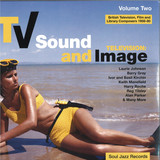
The 36 track 2CD album comes with 50-page book featuring text, biographies and photography. It also comes in a limited run two volume double-vinyl super-loud super-heavy gatefold sleeve editions. Compiled by Stuart Baker (Soul Jazz Records) and sleevenotes biographies by Jonny Trunk (Trunk Records).
TV Sound and Image features British composers who worked in television, film and music libraries the second half of the 20th century.
Aside from John Barry, whose work on the James Bond films made him a household name, or Tony Hatch and Laurie Johnson, the majority of composers featured here - Simon Park, Keith Mansfield, Reg Tilsley, Syd Dale, Keith Papworth – remain relatively unknown. And yet ironically they have created some of the most recognisable songs in British popular culture, their music widely disseminated on television.
A quick role call of these would include Neil Richardson (who composed the theme tune to Mastermind) and Barry Stoller (who wrote Match of the Day). The Simon Park Orchestra’s Eye Level, theme song to the BBC series Van der Valk, reached number one in 1973. CCS’s cover of Led Zeppelin’s Whole Lotta Love was the theme tune to Top of the Pops. And so on.
This album is not however a stroll through the TV memories of the mind, but an exploration of the serious contribution that these creative musicians have on the landscape of popular music in Britain.
Here then is a guide to the amazing music of many of the composers (both well-known and obscure) responsible for some of the most widely known music ever to come out of Britain in the second-half of the 20th century.
Reviews:
Quietus
Der Spiegel: "spannende Klänge ... die oft funky und immer lässig klingen"
"thrilling sounds.... often funky and always chilled"
New Zealand Herald: ***** "Every track is a killer... This is more than just music to mooch too."
Irish Times: **** "downright funky"
Volkskrant: "Ze leverden spanning op maat, die onbekende makers van fenomenale Britse film en tv-muziek. Door de cd TV Sound and Image opnieuw in de aandacht"
Evening Standard: "deeply funky"
Uncut Magazine "excellent 36 track set ... welcome additions to your collection"
Q Magazine: ****
'TENEBRE' is the 1982 Giallo masterpiece from Director Dario Argento. Although his frequent musical collaborators Goblin had disbanded while he was filming, Argento managed to convince three members of the group to reform and record the score to TENEBRE.
Claudio Simonetti, Fabio Pignatelli & Massimo Morante re-assembled in their studio and managed to deliver one of the greatest soundtracks of the 80's, Simonetti brought with him his love of Italio disco and the mixture of solid disco grooves and their intense, tight Prog Rock stylings is nothing short of astonishing.
The lead track is a vocoder lead freakout that mixes disco, rock with church organs, and screeching synth leads and that pretty much sets the tone for the entire record.
'TENEBRE' is far more electronic based than the majority of the bands scores for Argento and it really shines alongside other classic such as SUSPIRIA and DEEP RED.
The Flying Luttenbachers’ “Imminent Death” is the second release by the seminal cult band since its reincarnation in 2017.
“Imminent Death” is very different in many ways from the previous Luttenbachers releases, but then again, you could consistenly say that about most of them. The group has always followed the direction set by its leader 'Weasel Walter' and reflects his desire to create music of a determinately less common quantity in any given era.
'The Flying Luttenbachers' have always been staunchly committed to making artistic statments which defy current trends and seek the expression of personal truth, mania and iconoclasm.
This offering is a record, Mr. Walter has pondered and thought about making for 30 years - finally, here it is, and it is quite a cathartic exorcism. ... Hope, you enjoy.
The Planet X invasion continues ... The third release is the most-awaited EP this year featuring the Matrixxman himself. According to the Alien Council, it is his best EP so far. It contains four tracks of serious icebreaking soundscapes, running trough the listener's veins by freezing the complete solar system with a coolness.
Starting the process is A1 with the fall-out Syren track called ‘Hong Kong Day’ played exclusively in the Matrixxman Dekmantel Boiler Room set last year, now finally being released for the hungry trainspotters who have been waiting for quite some time.
Next up A2, the second installment of the Hong Kong- the Night version- the most spooky-sounding spirit-catching meltdown of a track. It is reminiscent of a lethal death scene in a brutal manga cartoon, where the Iron eagle flies over the lands looking for prey.
On the other side- B1 starts with the track ‘Power Drain’ featuring his label mate-Exos- definitely the festival track of the release which then takes the listener to the breakbeat part of town in the final track called ‘Tango Down’ on B2.
This is where the real Matrixxman signature strikes with raw, dirty rave bass turning it back and forth, finishing the EP with some analog screams. The Planet X continues tearing through the galaxy.