Поиск:the ethiopians

Стили
Все
  • 1
THE ETHIOPIANS - COME ON NOW / SH’BOOM (7")
  • A1: Come On Now
  • B1: Sh`boom

This is the first reissue ever of the ultra-rare and very much in demand single first issued in the U.K. on the Doctor Bird label.
Although it was released in 1968, the single captures The Ethiopians at their best as a Rocksteady vocal harmony group with
two extremely popular and highly collectible Rocksteady tracks on 7” vinyl format, the A side “Come On Now” and “Sh’Boom” on the flip.
Original pressings are now extremely rare and very much sought after by vinyl collectors with a price guide of US1742
for a mint copy according to the collector site CAT45!!

Сделать предзаказ03.04.2026

он должен быть опубликован на 03.04.2026

19,75

Последний логин: 2026 г. назад
THE ETHIOPIANS - TRAIN TO GLORY/MEK YOU GO ON SO

This is the first reissue of two outstanding, very rare and highly collectible tracks by the Ethiopians.

They were initially released on two different singles and are put together on a single here for the first time.

нет на складе

Закажите сейчас, и мы закажем товар для вас у нашего поставщика.

19,75

Последний логин: 20 мес. назад
The Ethiopians - Engine 54 LP

The Ethiopians

Engine 54 LP

12inchMOVLPG2263
Music On Vinyl
05.04.2024

The Beloved Harmony Jamaican Group The Ethiopians Released Their Debut Album Engine 54 In 1968. Train Imagery Is The Main Focus On The Album, With Excellent Falsettos And Consistent Music From The Prime Of The Rock Steady Period. "train To Skaville" Is The Hit Classic Which Appeared On This Specific Album. It Made An Huge Impact Overseas And It Brought The Group Their First Tour In The Uk.

The Ethiopians Was One Of Jamaica's Most Popular Bands During The Late Ska, Rocksteady And Early Reggae Periods. The Band Was Founded By Leonard Dillon, Stephen Taylor And Aston Morrison.

Сделать предзаказ05.04.2024

он должен быть опубликован на 05.04.2024

31,51

Последний логин: 2026 г. назад
THE ETHIOPIANS - REGGAE POWER (Gold COLOURED VINYL)

The Ethiopians was one of Jamaica’s most popular bands during the late ska, rocksteady and early reggae periods. As a much loved harmony group. After a series of major ska and rock steady hits, the group began working with producer, Karl ‘J.J.’ Johnson, with whom they subsequently enjoyed some of the biggest reggae sellers of the late sixties and early seventies, most notably ‘Everything Crash’, ‘What A Fire’, ‘Feel The Spirit’, ‘Hong Kong Flu’ and ‘Woman Capture Man’. The Reggae Power album is chock-full of these tasty melodies and rhythms and comes wrapped in a cool sleeve photo of future Carry On Girls actress Pauline Peart.

Reggae Power is available as a limited edition of 750 individually numbered copies on solid orange coloured vinyl.

Сделать предзаказ24.02.2023

он должен быть опубликован на 24.02.2023

24,33

Последний логин: 2026 г. назад
The Ethiopians - Train To Skaville LP
нет на складе

Закажите сейчас, и мы закажем товар для вас у нашего поставщика.

20,13

Последний логин: 3 г. назад
THE ETHIOPIANS - REGGAE POWER

The Ethiopians were one of Jamaica’s most popular bands during the late ska, rocksteady and early reggae periods. The much loved harmony group began working with the legendary producer Carl ‘Sir J.J.’ Johnson after a series of successful ska and rocksteady hits. This collaboration resulted in some of the biggest reggae hits of the late Sixties and early Seventies. Most notable hits were “Everything Crash”, “What A Fire”, “Feel The Spirit”, “Hong Kong Flu” and “Woman Capture Man”, which are all included on their 1969 debut album Reggae Power. The album cover features a photo of future Carry On Girls-actress Pauline Peart.

Сделать предзаказ04.02.2022

он должен быть опубликован на 04.02.2022

31,72

Последний логин: 2026 г. назад
The Ethiopians - Freedom Train

The Ethiopians are one of the great vocal groups to come out of Jamaica. Singing songs of life and times as they found them, themes that resonated with the people of the Island that made them such a treasured group. Lenard Dillon (b. 9 December, 1942, Port Antonio, Jamaica) the founding member of the Ethiopians began his singing career at Clement 'Coxonne' Dodd's Studio One. Initially he recorded under the name of Jack Sparrow, and backed by the Wailers, cutting 'Ice Water' and 'Suffering In The Land'. Under The Wailers encouragement, he went on to form his
own vocal group. Recruiting singers Stephan Taylor (b.1944, Portland, Jamaica) and Aston 'Charlie' Morris to become The Ethiopians. They cut 'Live Good', 'Why You Gonna Leave Me Now' and 'Owe Me No Pay Me'. Although receiving favourable response, Aston Morris decided to leave the band and the remaining pair carried on and cut 'I'm A Free
Man' and 'Don Dead Already' and 'For You'. On meeting contract builder Leebert Robertson who had recently returned to live in Jamaica, ashad he wanted to get into the music business, a session was booked for Treasure Isle Studios. The session produced their seminal 'Train To Skaville' track, which became an immediate hit in Jamaica and in the UK, when in 1967 it reached number 40 in the charts. They also cut 'Engine 54', which became the title of their debut album. Its
follow up 'I Need You / Do It Sweet', did not fare so well and the band moved over to Sonia Pottinger's stable, where they cut 'The Whip / Cool It Amigo' which revived their fortunes and proved another big hit for the band. Two more hits followed 'Stay Loose Mama' and 'The World Goes Ska', after which the band decided to return to a trio, adding
Melvin 'Mellow' Reid to the line up. The band now hit another run of successes with producer JJ Johnson 'Everything Crash, 'Gun Man', 'Hong Kong Flu' and 'The Selah'. Many hits followed leading the band to work with a variety of Jamaican producers. Such tracks as 'I Want To Be a Better Man, ' Conquering Lion', 'Fire A Mus Mus' Tail', and the timeless 'Reggae Hit The Town' to name a few. Two albums 'Reggae Power' (1969) and 'Woman Capture Man' (1970), pulled a lot of these tunes together. Sadly Taylor was killed in 1975 after been struck by a van in a road accident. Dillon returned to Port Antonio till 1977, when he was persuaded to return to Treasure Isle studios with producer Niney The
Observer and cut the Rasta based album 'Slave Call'. Additional members who joined for this album were Bro Fatty, Bro Ewing, Bro T, Mello and Hychi Dread. An album that showed all the Ethiopians magic had not been lost.
For this release we have included the full 'Slave Call' set, 'Ethiopian National Anthem', 'Slave Call', 'Guilty Conscience', 'Hurry On', 'Mus Follow Babylon'(on CD Edition), 'Train To Skaville (1977 version, on CD Edition), 'Culture', 'Obeah Book', 'Let It Be' and 'I Love Jah'. Alongside some of the bands early hits including the original version of 'Train To Skaville', 'Engine 54', the great and poignant 'Everything Crash', 'Reggae Hit The Town' and 'The Selah'. An interesting set to remind us what a great group the Ethiopians really were.

нет на складе

Закажите сейчас, и мы закажем товар для вас у нашего поставщика.

13,40

Последний логин: 3 г. назад
Various - Rude Boy Scorchers

The Rude Boy moniker has its roots firmly set in the downtown districts of Kingston, Jamaica.
Alongside the regular Ska/Rocksteady sounds coming out of the sound systems, there was an undercurrent theme to some songs that spoke of the struggles of the youth, of their confrontation, arrests and run ins with the establishment.
Some of these songs praised the Rude Boys for their stance and style while other songs were more in contempt with the Rude Boy's attitiudes, comings ,goings and violent behaviour.
For this release we have put together a set of tunes that the Jamaican Rude Boys would have been listening to at the sound systems on the lawns and street corners.
Not only the more obvious Rude Boy tunes like 'Gunmen Coming to Town' , 'Dreader than Dread', 'Moon Hop' but also some of the tunes that made the sound systems rock well into the night.
Hope you enjoy the set,,,,,

В наличии на складе

Есть у нас в наличии и готов к отправке

13,24
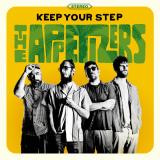
The Appetizers - Keep Your Step LP
  • 01: Feel Like Dancing
  • 02: Thicker Than Water
  • 03: A Message From The Meters
  • 04: Catch This
  • 05: Fussy Girl
  • 06: Cool And Deadly
  • 07: The Life
  • 08: Keep Your Step
  • 09: Make It Reggay
  • 10: Behind My Shoulders
  • 11: Stormy Weather
  • 12: We Shall Overcome

Killer Groove Records proudly presents "Keep Your Step", the explosive comeback by Italian rock steady & early reggae ambassadors The Appetizers, a soulful celebration of reggae's timeless spirit.


"Keep Your Step" marks the band's much-awaited return, landing April 10th on limited edition LP, CD digipack and digital format featuring two exclusive bonus tracks.

The Appetizers deliver a masterclass in roots reggae music with their highly anticipated second studio album, bridging Jamaica's golden age with contemporary relevance. "Keep Your Step" is a heartfelt sonic journey where the band blends rocksteady and early reggae with funk and soul influences to create a sound that's both genuine and refreshingly modern.

The fourteen tracks move fluidly between infectious dancefloor fillers and socially conscious lyrics. From the laid-back swing of "Feel Like Dancing" to the hypnotic rhythm of "Thicker Than Water", the band demonstrates their versatility while remaining true to the roots of Jamaican sound. "A Message from The Meters" pays tribute to the legendary funk pioneers, while the instrumental "Catch This" and "Make It Reggay" highlight the band's musical prowess and the deep connections between reggae and funk.

Meanwhile, tracks like "Fussy Girl" and "Behind My Shoulders" explore love's complexities with humor and soul. The album's heart lies in its social consciousness. "Cool and Deadly", "The Life", "Stormy Weather" and the album title track "Keep Your Step" tell stories of perseverance through life's struggles.

With the hopeful anthem "We Shall Overcome," The Appetizers deliver a timely message about genuine human connection in a social media-dominated era. The digital edition closes with "Get Some Rollin'" and "Swing and Sway," rounding out the journey with two additional gems.

"Keep Your Step" pays homage to Jamaican music legends, from Jackie Mittoo and Tommy McCook to Toots & the Maytals, while carving out The Appetizers' own distinctive sound. This is a groove made for both the dance floor and the soul, proving that reggae's power to inspire, unite, and uplift remains as vital as ever.

The production stays true to The Appetizers' signature sound: organic tones, deep groove, and that live-room vibe you only get when real musicians are locked in together. Luca Monza and Claudio Mambrini, the band's core members, handled the artistic production. Mastering came courtesy of the great JJ Golden (Black Pumas, Sharon Jones & The Dap-Kings, Jr. Thomas & The Volcanos, The Frightnrs) at Golden Mastering in Ventura, California. JJ is one of the most trusted engineers working in this sound, ensuring every ounce of warmth and authenticity came through.

The Appetizers are a rocksteady and early reggae band formed in Milan in 2020 by musicians deeply embedded in the Italian and international reggae scene. Musicians from different paths united by a shared vision: recreating that vintage Caribbean and American sound with authenticity, respect and a forward-thinking edge.

Drawing inspiration from Jamaica's golden era and channeling the soul of Delroy Wilson, Alton Ellis, the early Wailers, and The Upsetters, The Appetizers carry forward the essence of bass culture with a pure, fully organic approach.

Their debut album Listen Up! (2022), released via Belgian imprint Badasonic Records (home to The Slackers, The Aggrolites, David Hillyard & Victor Rice), featured ten original tracks and a dub cut by Victor Rice. Distributed across Europe, the UK, the US, and Japan, it quickly earned international recognition among reggae connoisseurs and selectors worldwide.

Following extensive touring, including shows with The Slackers, Black Uhuru, Skip Marley, and more, the band returned to the studio to record "Keep Your Step", their second album produced by Killer Groove Records. Here the band expands its musical language, weaving together the spirit of historic Jamaican labels like Studio One and Treasure Isle with '60s funk, arriving at a warm, organic, and timeless sound: soul, Jamaican roots, and modern sensibility in perfect balance. Their lyrics explore heartbreak, social issues, and reflections on life and music, performed with dedication and respect for tradition while always pushing forward.


If you're into The Skatalites, The Ethiopians, and those classic Caribbean rhythms, this one's for you.

Сделать предзаказ10.04.2026

он должен быть опубликован на 10.04.2026

23,32

Последний логин: 2026 г. назад
NALBANDIAN THE ETHIOPIAN & EITHER/ORCHESTRA - NALBANDIAN THE ETHIOPIAN (ETHIOPIQUES)

The Éthiopiques series returns! Essential archive recordings from an extremely fruitful period in Ethiopian music.

Before “Swinging Addis” took over the world, there was Moussié Nerses Nalbandian — the Armenian-born composer who shaped modern Ethiopian music. Mentor, arranger, and pioneer, he laid the foundations of Ethio-jazz.

This Éthiopiques volume revives his forgotten legacy, recorded live by Either/ Orchestra First issue ever with new exclusive photos and in depth liner 8-page insert.

“Ethiopian jazzmen are the best musicians that we have seen so far in Africa.
They really are promising handlers of jazz instruments.”

Wilbur De Paris
(1959, after a concert in Addis Ababa)

አዲስ፡ዘመን። *Addis zèmèn* **A new era.**
The time is the mid-1950s and early 1960s, just before "Swinging Addis" bloomed – or rather boomed – onto the scene. Brass instruments are still dominant, but the advent of the electric guitar, and the very first electronic organs, are just around the corner. Rock’n'Roll, R’n’B, Soul and the Twist have not yet barged their way in. Addis Ababa is steeped in the big band atmosphere of the post-war era, with Glenn Miller's *In the* *Mood* as its world-wide theme song, neck and neck with the Latin craze that was in vogue at the same period. Life has become enjoyable once again, with the return of peace after the terrible Italian Fascist invasion of Ethiopia (1935-1941). The redeployment of modern music is part and parcel of the postwar reconstruction. *Addis zèmèn* – a new era – is the watchword of the postwar period, just as it was all across war-torn Europe.
The generation who were the young parents of baby boomers** were the first to enjoy this musical renaissance, before the baby boomers themselves took over and forever super-charged the soundtrack of the final days of imperial reign. Music is Ethiopia's most popular art form, and very often serves as the best barometer for the upsurge of energy that is critical for reconstruction. Whether it be jazz in Saint-Germain-des-Prés or the *zazous* who revolutionised both jazz and French *chanson* after the *Libération*, be it Madrid's post-Franco Movida, or Dada, the Surrealists and *les années folles* that followed World War I, the periods just after mourning and hardship always give rise to brighter and more tuneful tomorrows. Addis Ababa, as the country's capital, and the epicentre of change, was no exception to this vital rule.

**Two generations of Nalbandian musicians**
Nersès Nalbandian belonged to a family of Armenian exiles, who had moved to Ethiopia in the mid-1920s. The uncle Kevork arrived along with the fabled "*Arba Lidjotch*", the** "*40 Kids*", young Armenian orphans and musicians that the Ras Tafari had recruited when he visited Jerusalem in 1924, intending to turn their brass band into the official imperial band. If Kevork Nalbandian was the one who first opened the way of modernism, pushing innovation so far as to invent musical theatre, it was his nephew Nersès who would go on to become, from the 1940s and until his death in 1977, a pivotal figure of modern Ethiopian music and of the heights it. Going all the way back to the 1950s. Nothing less. And it is Nersès who is largely to thank for the brassy colours that so greatly contributed to the international renown of Ethiopian groove. While the younger generations today venture timidly into the genealogy of their country's modern music, often losing their way amidst a distinctly xenophobic historiographical complacency, many survivors of the imperial period are still around to bear witness and pay tribute to the essential role that "Moussié Nersès" played in the rise of Abyssinia's musical modernity.
Given the year of his birth (15 March 1915), no one knows for sure if Nersès Nalbandian was born in Aintab, today Gaziantep (Turkiye/former Ottoman Empire) or on the other side of the border in Alep, Syria... What is certain is that his family, like the entire Armenian community, was amongst the victims of the genocide perpetrated by the Turks. Alep, the place of safety – today in ruins.
Before Nersès then, there was uncle Kevork (1887-1963). For a quarter of a century, he was a whirlwind of activity in music teaching and theatrical innovation. *Guèbrè Mariam le Gondaré* (የጎንደሬ ገብረ ማርያም አጥቶ ማግኘት, 1926 EC=1934) is his most famous creation. This play included "ten Ethiopian songs" — a totally innovative approach. According to his autobiographical notes, preserved by the Nalbandian family, Kevork indicates that he composed some 50 such pieces over the course of his career. This shows just how much he understood, very early on, the critical importance of song as Ethiopia's crowning artistic form. Indeed, for Ethiopian listeners, the most important thing is the lyrics, with all their multifarious mischief, far more than a strong melody, sophisticated arrangements or even an exceptional voice. (This is also why Ethiopians by and large, and beginning with the artists and producers themselves, believed for a long time — and wrongly — that their music could not possibly be exported, and could never win over audiences abroad, who did not speak the country's languages).

Last but not least, one of Kevork's major contributions remains composing Ethiopia's first national anthem – with lyrics by Yoftahé Negussié.
Nersès Nalbandian moved to Ethiopia at the end of the 1930s, at the behest of his ground-breaking uncle. Proficient in many instruments (pretty much everything but the drums), conductor, choir director, composer, arranger, adapter, creator, piano tuner, purveyor of rented pianos,... he was above all an energetic and influential teacher. From 1946 onwards, thanks to Kevork's connexion, Nersès was appointed musical director of the Addis Ababa Municipality Band. In just a few years, Nersès transformed it into the first truly modern ensemble, thanks to the quality of his teaching, his choice of repertoire, and the sophistication of his arrangements. It was this group that would go on to become the orchestra of the Haile Selassie Theatre shortly after its inauguration in 1955, which was a major celebration of the Emperor's jubilee, marking the 25th anniversary of his on-again-off-again reign.

At some point or other in his long career, Nersès Nalbandian had a hand in the creation of just about every institutional band (Municipality Band, Police Orchestra, Imperial Bodyguard Band, Army Band, Yared Music School…), but it was with the Haile Selassie Theatre – today the National Theatre – that his abilities were most on display, up until his death in 1977. To this must be added the development of choral singing in Ethiopia, hitherto unknown, and a sort of secret garden dedicated to the memory of Armenian sacred music, and brought together in two thick, unpublished volumes. Shortly before his death (November 13, 1977), he was appointed to lead the impressive Ethiopian delegation at Festac in Lagos, Nigeria (January-February 1977).

His status as a stateless foreigner regularly excluded him from the most senior positions, in spite of the respect he commanded (and commands to this day) from the musicians of his era. Naturally gifted and largely self-taught, Nerses was tirelessly curious about new musical developments, drawing inspiration from the very first imported records, and especially from listening intensely to the musical programmes broadcast over short-wave radio – BBC *First*. A prolific composer and arranger, he was constantly mindful of formalising and integrating Ethiopian parameters (specific “musical modes”, pentatonic scale, and the dominance of ternary rhythms) into his “modernisation” of the musical culture, rather than trying to over-westernise it. It even seems very probable that *Moussié* Nerses made a decisive contribution to the development of tighter music-teaching methods, in order to revitalise musical education during this period of prodigious cultural ferment. Flying in the face of all the historiographical and musicological evidence, it is taken as sacrosanct dogma that the four musical modes or chords officially recognised today, the *qǝñǝt* or *qiñit* (ቅኝት), are every bit as millennial as Ethiopia itself. It would appear however that some streamlining of these chords actually took place in around 1960. It was only from this time onward that music teaching was structured around these four fundamental musical modes and chords: *Ambassel*, *Bati*, *Tezeta* and *Antchi Hoyé*. A historical and musical “details” that is, apparently, difficult to swallow, especially if that should honour a *foreigner*. Modern Ethiopian music has Nersès to thank for many of its standards and, to this day, it is not unusual for the National Radio to broadcast thunderous oldies that bear unmistakable traces of his outrageously groovy touch.

В наличии на складе

Есть у нас в наличии и готов к отправке

22,06
Soul Jazz Records presents - 300% DYNAMITE! Ska, Soul, Rocksteady, Funk and Dub in Jamaica LP 2x12"

Special new 25th anniversary edition of this most popular and highly-acclaimed of all Soul Jazz Records' Dynamite! series - 300% Dynamite is jam-packed with reggae tunes that crossed-over to become dancefloor hits and are 100% guaranteed to rock any party!

Out of print for the last 15 years, this new edition is being released in a one-off limited-edition heavyweight special-edition yellow coloured vinyl pressing + download code exclusively for Record Store Day 2024. This album is fully remastered, relicensed and with new tracks exclusively for RSD 24. Wayne Smith's booming anthem "Sleng Teng", Althea & Donna's worldwide hit 'Uptown Top Ranking', Sister Nancy's classic "Bam Bam", Augustus Pablo, Lee Perry - it's all here as 300% Dynamite joins the dots between reggae, jazz, funk, dub and soul.

В наличии на складе

Есть у нас в наличии и готов к отправке

30,67
Various - Ethiopian Modern Instrumental Hits LP

Reissue of the original ethiopian vinyl compilation. 180g vinyl + heavy cardboard cover.
"Ethiopians' deep-seated ethiocentrism, the legacy of a thousand years of history, has contributed in no small way to their music's strong national identity, particularly impervious to any African influences. Latin influences, so pervasive in the great musical centers of West Africa and the Congo, have been similarly rebuffed, despite the brilliant attempts of a musician like Mulatu Astatke. He was the first and for a long time the only Ethiopian to have studied music abroad (England and USA). In the late '60s, he brought back 'ethio-jazz', as well as a passion for Latin rhythms that was not readily shared by the Ethiopian audience. As early as 1966, he released a single and two LPs in the US entitled Afro-Latin Soul (and a third LP, Mulatu of Ethiopia in 1972), with his Ethiopian Quintet composed of American and Latin-American musicians (Worthy Records). That was three years before Fela's first American tour and six years prior to Manu Dibango's key breakthrough with the release of Soul Makossa in the Western 'pre-World music' market. All this goes to show how much the history of the African continent's musical modernity should be reconsidered in light of the Ethiopian adventure, even though this lone spark bore little relation, musically or ideologically to the musical revolutions initiated most notably by Ghanian highlife, South African jazz, Congolese rumba or, much later on, by Fela."

В наличии на складе

Есть у нас в наличии и готов к отправке

20,59
Studio 1 Ska Fever - More Ska Sounds From Sir Coxsone's Downbeat LP  2x12"

Repress!

A blistering collection of ska tunes from Clement 'Sir Coxsone' Dodd's legendary Studio One Records, Jamaica's foundation label of reggae music. Featuring classic cuts from the originators of Ska - The Skatalites, The Wailers, Lee Perry - alongside a heavy dose of superb rarities from the might vaults of 13 Brentford Road - pure Ska Fever !

Soul Jazz Records new Studio One Ska Fever returns back to the early 1960s when Ska was the soundtrack to Jamaica's Independence and Sir Coxsone ruled the land and The Skatalites and Studio One were creating history on a daily basis with an endless stream of blistering, scorching classic tunes.

This album includes an incredible line-up of only the finest artists in reggae music, including Roland Alphonso, The Gaylads, The Ethiopians, Don Drummond, Jackie Opel and many more. An all-star cast from Studio One, as Chris Blackwell famously noted, the 'University of Reggae'.

The accompanying booklet contains extensive sleeve-notes from Studio One historian Rob Chapman (author of Never Grow Old and Downbeat Special), with information on musicians, tracks, label scans and more. Soul Jazz Records' Studio One Ska Fever is released in
CD- jewel case, 24-page booklet with card slipcase, as well as a heavyweight double-vinyl edition in deluxe strong gatefold sleeve (with full sleeve notes).

В наличии на складе

Есть у нас в наличии и готов к отправке

30,21
Sky Nations - Medley Dub LP

Sky Nations

Medley Dub LP

12inchMOVLP3001C
Music On Vinyl
17.11.2022

By the close of the Sixties, record retailer and jukebox businessman Karl ‘J.J.’ Johnson was firmly established as one of Jamaica’s leading record producers, having released a string of best-selling rock steady and proto-reggae 45s by such noted local acts as Lee ‘Scratch’ Perry, the Rulers, Carl Dawkins, the Kingstonians and the Ethiopians. Early in 1969, Trojan Records released an album containing a dozen of Johnson’s latest recordings in the new reggae style. Entitled Reggae Power, the LP was dominated by regular hit-makers the Ethiopians.

Reggae Power is available as a limited edition of 1000 individually numbered copies on orange coloured vinyl.

В наличии на складе

Есть у нас в наличии и готов к отправке

31,89
NINEY THE OBSERVER - Soul Syndicate Dub Classics LP

Reggae music in many ways reminds us of America’s Motown records. The music comes out of its stable fast and furious we tend to know the songs, the artists, the
studio but who? are the players. The unsung heroes that in many cases, cut most of our favourite tracks One such band this applies to in the Reggae field is the Soul Syndicate Band.

Each Jamaican record producer would have their favourite set of musicians they would use, availability permitting. Although several musicians crossed over into different named bands. For example, a set of players working with Producer Bunny 'Striker' Lee would go under the guise of The Aggrovators. The same group working with Producer Joe Gibbs would work under the name The Professionals. Soul Syndicate were the band of choice for Producer Niney the Observer, who used them for his own recordings and when you put that aside the other artists Niney produced, Dennis Brown, Max Romeo, Michael Rose, I Roy, The Ethiopians, Barry Brown, Gregory Issacs and Freddie McGregor.  To name a few and not necessary all, you begin to see the amount of material this set of musicians played on.

Built around the rhythm section of Calton 'Santa' Davis and George 'Fully' Fullwood, drums and bass respectfully. They were usually accompanied by Earl 'Chinna' Smith, Tony Chin on guitars, Keith Sterling, Gladstone 'Gladdy' Anderstone, Bernard 'Touter' Harvey, organ/keyboards and Noel 'Skully' Simms, percussion. Niney's tracks tended to be rhythm heavy and thus Sound System favourites.But when brass was needed/called for ,this was provided by the likes of Tommy McCook, Bobby Ellis, Felix ' Deadley Headley' Bennett. Niney not having a studio of his own at the time used most of Kingston's studios, again availability and money providing. But most of these cuts
selected for this release were cut at Channel 1 and a few exceptions at Randy's Studio 17 and at Joe Gibbs studio at Burns Avenue.

Niney also worked closely with King Tubby on his dub plates, so tracks after the recording sessions were taken to King Tubbys for reconstruction and sometimes
re-voicing over an existing rhythm. These were then used as version sides to the vocal cuts, but most importantly used to nice up the dances, being played out on King Tubbys Hometown Hi-Fi Sound System. We have pulled together a selection of such dub plate specials cut by the Soul Syndicate band for this release. Dub sides that emphasise how well the band worked together, and with Niney at the reigns and the added bonus of some Tubby magic sprinkled on top. Please see our Niney the Observer at King Tubbys 1973-1975 (JRO11) for further examples of this work.

We at Jamaican Recordings hope we are not alone in saluting the musicians, that played such a big part in producing many of our favourite Reggae Sounds. Having released titles by The Revolutionaries (JR003), The Aggrovators (JR005), Sly and Robbie (JR006), we are now pleased to release a selection of rare Dub cuts by another one of Jamaica's finest, the Soul Syndicate band to our catalogue...

Respect Jah Floyd.

нет на складе

Закажите сейчас, и мы закажем товар для вас у нашего поставщика.

13,40

Последний логин: 34 дн. назад
MULUKEN MELLESSE - MULUKEN MELLESSE WITH THE DAHLAK BAND (ETHIOPIQUES)

Swan Song

The vinyl LP at the heart of this éthiopiques 31 tracks 2 to 11 was one of the very last vinyl records ever released in Ethiopia. But above all it represents, we felt, the absolute masterpiece of the Ethiopian Groove – the Swan Song of Swinging Addis. The album leaves a clear idea for posterity of the level of sophistication and mastery that modern Ethiopian music had achieved, before being crushed under the Stalino-military heel of the Derg – as the bloody revolution that was unfolding came to be called.

Ethiopia1976.

The Revolution that broke out in February 1974 rolled on in a ruthless march. The whole of Ethiopian society was utterly stunned. The bouquets of flowers handed joyfully to the first tanks of the coup d'état were to wilt very rapidly. From September 1976 to February 1978, 18 months of Red Terror (the name given by the junta itself) spilled blood throughout the country. This fratricidal conflict took its heaviest toll among students and youth. The shift from feudalism to a cruel and primitive Stalinism left the country's citizens deeply traumatised, and snuffed out any pretence of activism, whatever the sector of society. This ice age was to last for seventeen long years.

ሙሉቀን፡መለሰ Mulukèn Mellèssè Muluqän Mälläsä

It was three tracks by Muluken that served as the opener for éthiopiques-1 more than 25 years ago. Seven more tracks appeared on éthiopiques-3 and 13, all accompanied by The Equators, which was soon to become the Dahlak Band.

The first track, Hédètch alu, also the very first piece that Muluken ever recorded, left audiences both unsettled and amazed. Reflecting the singer's extremely young age (he was just 17 at the time), this angelic voice mystified many, who thought they were in fact listening to a feminine voice. He was not yet 22 when he released his last vinyl record in 1976 with Kaifa Records (KF 39LP), one of the very last to be issued in Ethiopia, before the cassette tape became the dominant medium for music distribution – and before the new revolutionary regime put a stop to all independent musical life, via an unspeakable barrage of prohibitions and other persecutions.

Mulu qèn, literally, “A well filled day”. This tender maternal intention wasn't enough to ward off the cruelty of fate. His mother's premature death drove Muluken to leave his native Godjam, in northeast Ethiopia, to live with an uncle in Addis Ababa. Born Muluken Tamer, he took his uncle's last name – Mèllèssè.

The spelling Muluken appeared in his administrative records. Transcription of Amharic to the Latin alphabet, both in Ethiopia and for scholars, gives rise to controversies and quibbles that can never be neatly settled. French allows for a closer approximation of the original pronunciation, thanks to its battery of accent marks, confusing as they may be to anglophones.

Between rather accommodating administrative record-keepers and the various versions that pop up in interviews given by the artist, Muluken's year of birth oscillates between 1953 and 1955…

1954? One thing is certain: the artist's talent made itself known very early indeed, because he got his start in 1966-67, at the age of 13 or 14. Photos from the period attest to his extreme youth. It's a strange sort of initiation for a very young teenager to become a sensation in the heart of Addis's nightlife at the time, Woubé Bèrèha – the Wilds of Woubé. And what's more, in the club of the Queen of the Night, the Godjamé Assègèdètch Alamrèw herself, the very same that was portrayed by Sebhat Guèbrè-Egziabhér in his novel-memoir Les Nuits d’Addis Abeba2… The legendary female club owner who is remembered to this day by the capital's ageing boomers.

Muluken first tried his hand at the drums, before he grabbed the microphone. He emigrated briefly to the Zula Club, across the street from the old Addis Post Office, one of the ground-breaking bars of the burgeoning musical scene, before joining the Second Police Band in 1968, for around three years. He spent a few months with the short-lived Blue Nile Band founded by saxophonist Besrat Tammènè. As the musical scene grew increasingly successful, and pulled slowly but decisively away from its institutional ties, Muluken released his first 45rpm single in February 1972 (Amha Records AE 440). It was included in two LP Ethiopian Hit Parade compilation albums in September of the same year. All in all, Muluken released eight two-track 45s and the same number of original cassette tapes between February 1972 and 1984, the year that he departed for permanent exile in the USA. After converting to Pentecostalism in 1980, Muluken gradually abandoned all secular musical activity. In 1985, at the end of a concert in Philadelphia, he decided to quit concerts and recording for good. Mèlakè Gèbré, the historic bass player from the Walias band who was playing with him that night, recalls that everything appeared so irredeemably diabolical in Muluken's eyes, that it was to be the end of his contribution to Ethiopian Groove.

The end of the story, the beginning of a legend.

Dahlak Band, forgotten by History

Aside from his personal history and vocal talents, it must be remembered that Muluken Mèllèssè was one of the biggest names in the musical innovations that marked the end of the imperial period. These éthiopiques aim to convince those who are just discovering this hidden gem... As for Ethiopians themselves, they are to this day captivated by this singular and atypical figure in the Abyssinian pop landscape – even though he withdrew from public life some 40 years ago. Incorrigible devotees of poetic twists, of more or less hidden meanings, Ethiopians appreciate above all the care Muluken took in choosing his lyrics and the writers who penned them, such as Feqerte Haylou, Alemtsehay Wodajo and, here, Shewalul Mengistu (1944-1977). Love songs, written by women, a far cry from the conventional drivel that pleases sappy sentimentalists.

Muluken is equally acclaimed for his perfectionism when it came to music, the opposite of the overly casual approach that is all too common. He remained a faithful partner of musicians who came from a lineage that borrowed from several inventive and pioneering bands (Venus, Equators, Dahlak). Amongst them were certain artists who began their musical lives with Nersès Nalbandian at the Haile Sellassie Theatre and who come of age in around 1973 – at just the wrong time, you might say. Among them were the pillars Shimèlis Bèyènè (trumpet), Dawit Yifru (keyboards) and Tilayé Gèbrè (sax & flute). Most notably Tilayé Gèbrè, certainly one of the most important musicians, composers and arrangers of his generation, of the end of the imperial era, and of the early years of the Derg.

It was only in 1981 that a miraculous opportunity arose for Tilayé to escape the Stalinist paradise of the dictator Menguistou Haylè-Maryam. Once again it was Amha Eshèté (1946-2021) who provided a solution. The spirited and courageous producer, who had been in exile in Washington since 1975, succeeded, thanks to his incredible perseverence, in bringing the Walias Band to the USA. It was, in fact an extended Walias Band comprising ten musicians3, six of whom chose to slip away after a few concerts and the recording of an LP (The Best of Walias, WRS 100). Tilayé Gèbrè was one of these. He has been living in the USA ever since. There he joined the then-nascent Ethiopian diaspora, which lived largely unto itself, and was making only very modest headway in the American musical market. It seems unfair that Tilayé Gèbrè and the Dahlak Band were not able to benefit earlier from the public recognition that they do deserve.

A similar draining away of the top-rate talents would lead to the reorganization of the major groups of the “Derg Time”. The remaining artists spread themselves around between Ibex Band (renamed Roha Band), Ethio Star Band and a remodeled Walias Band. That spelled the end of the Dahlak Band.

With this record, produced by the essential Ali Abdella Kaifa a.k.a. Ali Tango, we can appreciate everything that the Derg not only destroyed, but also prevented from flourishing. This gem of Ethiopian-style afrobeat came out in 1976 (and, by way of a parenthesis, before the FESTAC 1977 in Lagos, which was attended by an impressive delegation of Ethiopian musicians — although Fela was already personna non grata in his own country). Despite everything that might distinguish this ethio-groove from Fela’s music – no colonial axe to grind, no question of political confrontation with the authorities, no claims to negritude or Africanism for the Ethiopian musicians, and less extrovertion! –, this LP fits beautifully into the saga of intense and electrified soul of the new “African” groove that Fela and Manu Dibango embodied so well from that point onwards.

In restoring this record to its place in the afrobeat epic, it can be seen that, if nothing else, the timeline bestows a legitimate pedigree and a historical primacy to works that had no international impact when they were originally released.

Warning! Masterpiece!

нет на складе

Закажите сейчас, и мы закажем товар для вас у нашего поставщика.

20,59

Последний логин: 69 дн. назад
Various - Let's Do Rock Steady (The Soul of Jamaica) LP 2x12"
  • 1: Desmond Dekker & The Aces – 007 (Shanty Town)
  • 2: Lee "Scratch" Perry – I Am The Upsetter
  • 3: Pat Kelly – Somebody's Baby
  • 4: Delroy Wilson – Once Upon A Time
  • 5: The Rulers – Wrong Emboyo
  • 6: The Sensations – Right On Time
  • 7: Austin Faithful – I'm In A Rocking Mood
  • 8: The Maytals – 54-46 That's My Number
  • 9: The Paragons – Memories By The Score
  • 10: The Rulers – Copasetic
  • 11: Derrick Morgan – Conquering Ruler
  • 12: Stranger & Gladdy – Seeing Is Knowing (With Lyn Taitt & The Jets)
  • 13: Val Bennett – Baby Baby (Aka 5-10-15 Hours)
  • 14: The Uniques – People Get Ready Do Rock Steady
  • 15: Val Bennett – The Russians Are Coming (Take Five)
  • 16: Desmond Dekker & The Aces – A It Miek
  • 17: Roy Shirley – Hold Them
  • 18: The Kingstonians – Winey Winey
  • 19: The Viceroys – Lip And Tongue (Alternate Version)
  • 20: The Overtakers – Girl You Ruff
  • 21: Lloyd & The Groovers – Do It To Me Baby
  • 22: The Upsetters – Return Of Django (Feat. Val Bennett)
  • 23: The Ethiopians – Train To Skaville
  • 24: Desmond Dekker & The Aces – Intensified '68 (Music Like Dirt)
  • 27: The Tennors – Ride Your Donkey
  • 28: Derrick Morgan – Judge Dread In Court
  • 25: The Uniques – My Conversation
  • 26: Stranger & Gladdy – Over Again

The immediate successor to ska, the soulful, melodic sound of rock steady first developed during the long hot Jamaican summer of 1966 and reigned supreme thereafter for two glorious years before finally being superseded by the more energetic style of reggae.

Despite its relatively brief period as the island’s national sound, the rhythms of many of its biggest hits have continued to influence and inspire music-makers to the present day, resulting in renewed interest in the sub-genre among record buyers in recent years.

This superb 2xLP vinyl collection features 24 of the most popular recordings of the rock steady era, including the UK hits, ‘007’, ‘Train To Skaville’ and ‘It Miek’ and The Maytals’ anthemic dance-filler, ’54 46 That’s My Number’.

Pressed on high quality 140gm vinyl and presented in a stylishly designed sleeve, the album not only provides the ideal introduction to this hugely popular and influential sound, but is also a must for established fans of the Jamaican sub-genre, with many of the tracks appearing on vinyl for the first time in decades.

Сделать предзаказ15.05.2024

он должен быть опубликован на 15.05.2024

27,31

Последний логин: 2026 г. назад
Soul Jazz Records presents - 300% DYNAMITE! Ska, Soul, Rocksteady, Funk and Dub in Jamaica LP 2x12"

Special new 25th anniversary edition of this most popular and highly-acclaimed of all Soul Jazz Records' Dynamite! series - 300% Dynamite is jam-packed with reggae tunes that crossed-over to become dancefloor hits and are 100% guaranteed to rock any party!

Out of print for the last 15 years, this new edition is being released in a one-off limited-edition heavyweight special-edition yellow coloured vinyl pressing + download code exclusively for Record Store Day 2024. This album is fully remastered, relicensed and with new tracks exclusively for RSD 24. Wayne Smith's booming anthem "Sleng Teng", Althea & Donna's worldwide hit 'Uptown Top Ranking', Sister Nancy's classic "Bam Bam", Augustus Pablo, Lee Perry - it's all here as 300% Dynamite joins the dots between reggae, jazz, funk, dub and soul.

нет на складе

Закажите сейчас, и мы закажем товар для вас у нашего поставщика.

45,34

Последний логин: 22 мес. назад
Studio One - Story LP 2x12"

Soul Jazz Records’ feature-length documentary/CD/Book ‘Studio One Story’ is being re-released on 1 August 2011, and is also available for the first time as a stand alone DVD. The DVD is being issued as a prelude to the forthcoming deluxe-hardback book ‘Original Cover Art of Studio One Records’ released this autumn by Soul Jazz Records as well as a new Studio One album compilation on Soul Jazz to coincide with the new book.

Studio One Story is a documentary this is both a staggering slice of musical history and a definitive guide to Studio One, Jamaica’s greatest ever record company, and its legendary founder, Clement ‘Coxsone’ Dodd. ‘Studio One Story’ was filmed in 2002, two years before the death of the legendary Clement ‘Sir Coxsone’ Dodd, a man famously reticent of being interviewed - until the making of this film. Described by Chris Blackwell as the Motown of Jamaica, or ‘The University of Reggae’, Studio One is where the careers of literally hundreds of reggae artists began: Bob Marley and the Wailers, Alton Ellis, The Heptones, Ken Boothe, The Skatalites, Burning Spear and Sugar Minott, to name but a few! Studio One is the ‘foundation’ label of Jamaican Reggae and Clement ‘Sir Coxsone’ Dodd is seen by many as its father.

One and a half years in the making, Studio One Story is a truly unique documentary in which the late Clement Dodd gave unprecedented personal access to tell the previously untold story of how he and the many artists and musicians at Studio One literally shaped the rise of Reggae music from the 1950s onwards through to the late 1970s. This is the true story of reggae music and its Jamaican roots told from the inside: From the rise of Kington’s sound systems in the 1940s and 1950s, through to the evolution of a Jamaican music industry (and Studio One’s dominance) in the 1960s and the worldwide success of reggae in the 1970s.

The 4 hour documentary (including over an hour of extras) was filmed on location in Kingston, Jamaica and features interviews with Horace Andy, Alton Ellis, Ken Boothe, Sugar Minott, Denis Alcapone, The Ethiopians, Sylvan Morris, Johnny Moore, Lone Ranger, King Stitt and many others. The DVD also includes rare footage of The Skatalites, Jackie Mittoo, Count Ossie, Marcia Griffiths and others. As well as the stand-alone DVD, Soul Jazz Records are reissuing the original (DVD +CD+Book) original box set.

IF YOU ARE ORDERING THIS PLEASE CHECK IF YOU NEED NTSC (AMERICA, JAPAN, ETC) OR PAL (EUROPE, AUSTRALIA, ETC).
THE DVD HAS FRENCH AND ENGLISH SUBTITLES.

NB.MP3 Release is for the audio CD only.

REVIEWS ‘Studio One was Jamaica’s Motown. This documentary brings it brilliantly to life.’ The Telegraph ‘The history of Clement ‘Coxsone’ Dodd’s legendary Jamaica studio is fantastically told through interviews, copious amounts of music and historical footage and more.’ Uncut ‘Studio One Story is no mere historical document; it is a map that will lead you directly to a massive seam, endlessly mineable, of musical gold’ The Observer ‘A fascinating documentary’ The Telegraph ‘Compulsive viewing for anyone with an interest in Reggae’ The Wire

нет на складе

Закажите сейчас, и мы закажем товар для вас у нашего поставщика.

29,83

Последний логин: 14 мес. назад
Larry Marshall - Lonely Room

Larry Marshall

Lonely Room

7"-VinylCLD4502
Studio One
26.01.2024

Studio One was founded by Clement "Coxsone" Dodd1 in 1954, and the first recordings were cut in 1963 on Brentford Road in Kingston.1[2] Amongst its earliest records were "Easy Snappin" by Theophilus Beckford, backed by Clue J & His Blues Blasters, and "This Man is Back" by trombonist Don Drummond. Dodd had previously issued music on a series of other labels, including World Disc, and had run Sir Coxsone the Downbeat, one of the largest and most reputable sound systems in the Kingston ghettos.
In the early 1960s, the house band providing backing for the vocalists were the Skatalites[3] (1964–65), whose members (including Roland Alphonso, Don Drummond, Tommy McCook, Jackie Mittoo, Lester Sterling and Lloyd Brevett) were recruited from the Kingston jazz scene by Dodd. The Skatalites split up in 1965 after Drummond was jailed for murder, and Dodd formed new house band the Soul Brothers (1965–66), later named the Soul Vendors (1967) and Sound Dimension (1967-). From 1965 to 1968 they played 9 a.m. to 5 p.m., 5 days a week, 12 rhythms a day (about 60 rhythms a week) with Jackie Mittoo as music director, Brian Atkinson (1965–1968) on bass, Hux Brown on guitar, Harry Haughton (guitar), Joe Isaacs on drums (1966–1968), Denzel Laing on percussion, and on horns (some initially and some throughout): Roland Alphonso, Dennis 'Ska' Campbell, Bobby Ellis, Lester Sterling, among others on horns during the era of Rock Steady. Headley Bennett, Ernest Ranglin, Vin Gordon and Leroy Sibbles were included among a fluid line-up, to record tracks directed by Jackie Mittoo at Studio One from 1966-1968.
During the night hours at Studio One from 1965-1968, singers like Bob Marley, Burning Spear, The Heptones, The Ethiopians, Ken Boothe, Rita Marley, Marcia Griffiths, Judy Mowatt, Alton Ellis, Delroy Wilson, Bunny Wailer[4] and Johnny Nash, among others, would put on headphones to sing lyrics to original tracks recorded by the Soul Brothers earlier each day. These seminal recordings included "Real Rock" (by Sound Dimension), "Heavy Rock", "Jamaica Underground", "Wakie Wakie", "Lemon Tree", "Hot Shot", "I'm Still In Love With You", "Dancing Mood", and "Creation Rebel".
Jackie Mittoo, Joe Isaacs, and Brian Atkinson left Studio One in 1968, recorded drums and bass for Desmond Dekker's and Toots' biggest hits at other Kingston studios, then moved to Canada. Hux Brown stayed in Jamaica to record on the soundtrack The Harder They Come, The Harder They Fall, and toured in Nigeria with Toots and the Maytals and Fela Kuti. The Soul Brothers (a.k.a. Sound Dimension) formed the basis of reggae music in the late 1960s, being versioned and re-versioned time after time over decades by musicians like Shaggy, Sean Paul, Snoop Lion, The Clash, String Cheese Incident, UB40, Sublime, and countless other Billboard originals and remakes trying to emulate their original Rock Steady sound at Coxsone's Studio One.
The label and studio were closed when Dodd relocated to New York City in the 1980s.

Сделать предзаказ26.01.2024

он должен быть опубликован на 26.01.2024

24,79

Последний логин: 2026 г. назад
Ethiopians / Soul Brothers - Freeman / Shanty Town

Studio One was founded by Clement "Coxsone" Dodd1 in 1954, and the first recordings were cut in 1963 on Brentford Road in Kingston.1[2] Amongst its earliest records were "Easy Snappin" by Theophilus Beckford, backed by Clue J & His Blues Blasters, and "This Man is Back" by trombonist Don Drummond. Dodd had previously issued music on a series of other labels, including World Disc, and had run Sir Coxsone the Downbeat, one of the largest and most reputable sound systems in the Kingston ghettos.
In the early 1960s, the house band providing backing for the vocalists were the Skatalites[3] (1964–65), whose members (including Roland Alphonso, Don Drummond, Tommy McCook, Jackie Mittoo, Lester Sterling and Lloyd Brevett) were recruited from the Kingston jazz scene by Dodd. The Skatalites split up in 1965 after Drummond was jailed for murder, and Dodd formed new house band the Soul Brothers (1965–66), later named the Soul Vendors (1967) and Sound Dimension (1967-). From 1965 to 1968 they played 9 a.m. to 5 p.m., 5 days a week, 12 rhythms a day (about 60 rhythms a week) with Jackie Mittoo as music director, Brian Atkinson (1965–1968) on bass, Hux Brown on guitar, Harry Haughton (guitar), Joe Isaacs on drums (1966–1968), Denzel Laing on percussion, and on horns (some initially and some throughout): Roland Alphonso, Dennis 'Ska' Campbell, Bobby Ellis, Lester Sterling, among others on horns during the era of Rock Steady. Headley Bennett, Ernest Ranglin, Vin Gordon and Leroy Sibbles were included among a fluid line-up, to record tracks directed by Jackie Mittoo at Studio One from 1966-1968.
During the night hours at Studio One from 1965-1968, singers like Bob Marley, Burning Spear, The Heptones, The Ethiopians, Ken Boothe, Rita Marley, Marcia Griffiths, Judy Mowatt, Alton Ellis, Delroy Wilson, Bunny Wailer[4] and Johnny Nash, among others, would put on headphones to sing lyrics to original tracks recorded by the Soul Brothers earlier each day. These seminal recordings included "Real Rock" (by Sound Dimension), "Heavy Rock", "Jamaica Underground", "Wakie Wakie", "Lemon Tree", "Hot Shot", "I'm Still In Love With You", "Dancing Mood", and "Creation Rebel".
Jackie Mittoo, Joe Isaacs, and Brian Atkinson left Studio One in 1968, recorded drums and bass for Desmond Dekker's and Toots' biggest hits at other Kingston studios, then moved to Canada. Hux Brown stayed in Jamaica to record on the soundtrack The Harder They Come, The Harder They Fall, and toured in Nigeria with Toots and the Maytals and Fela Kuti. The Soul Brothers (a.k.a. Sound Dimension) formed the basis of reggae music in the late 1960s, being versioned and re-versioned time after time over decades by musicians like Shaggy, Sean Paul, Snoop Lion, The Clash, String Cheese Incident, UB40, Sublime, and countless other Billboard originals and remakes trying to emulate their original Rock Steady sound at Coxsone's Studio One.
The label and studio were closed when Dodd relocated to New York City in the 1980s.

Сделать предзаказ26.01.2024

он должен быть опубликован на 26.01.2024

24,79

Последний логин: 2026 г. назад
TLAHOUN GESSESSE - ETHIOPIAN URBAN MODERN MUSIC VOL.4 LP

REPRESS!! Although he is still completely unknown to Western audiences, for Ethiopians, Tlahoun Gèssèssè (pronounced Guèssèssè) is THE VOICE.The first-ever pan-Ethiopian star, he has embodied such nonstop unanimity since the end of the 1950s that is a role-model and a point of reference.

Сделать предзаказ

Этот продукт еще не вышел. Ты можешь сделать предзаказ, как только он появится на складе, продукт будет подготовлен к пересылке.

19,75

Последний логин: 2026 г. назад
SIR GIBBS - PEOPLE GRUDGEFUL/PAN YA MACHETE

Although both tracks are credited to Joe Gibbs, many believe the A side “People Grudgeful” was sung by The Ethiopians whilst the B side “Pan Ya Machete” was performed by The Pioneers.

“Grudgeful” though does not really sound like The Ethiopians and according to Trojan, both sides were performed by The Pioneers.

Which makes sense for several reasons. Firstly, the sound of the song is indeed more reminiscent of the Pioneers/Joe Gibbs work of that time.

In fact The Ethiopians did not record with Joe Gibbs, with the exception of The Ring which was released in 1972, four years later,

while the Pioneers were routinely involved with Gibbs in 1968.

Last but not least, The Ethiopians had no beef with Lee Scratch Perry whilst The Pioneers songs were clearly incriminated by Scratch in his hit song “People Funny Boy”.

Сделать предзаказ29.09.2023

он должен быть опубликован на 29.09.2023

19,75

Последний логин: 2026 г. назад
Soul Jazz Records Presents - STUDIO ONE SKA LP 2x12"

Soul Jazz Records’ new 20th anniversary one-off limited-edition heavyweight special-edition coloured vinyl pressing + download code exclusively for Record Store Day 2023 of Soul Jazz Records’ classic Studio One Ska.
A blistering collection of non-stop Ska classic tunes from Clement ‘Sir Coxsone’ Dodd’s legendary Studio One Records, Jamaica's foundation label of reggae music. Featuring classic cuts from the originators of Ska alongside a heavy dose of superb rarities from the might vaults of 13 Brentford Road - pure fire!
Studio One Records and the seminal in-house band The Skatalites created and defined Ska in the process making Jamaican music famous throughout the world. This compilation features classic vocal and instrumental tracks from The Skatalites, Bob Marley and The Wailers, Delroy Wilson alongside super-rare tracks from the likes of Ken Boothe, The Maytals, Jackie Mittoo, Tommy McCook and many more.
Clement ‘Sir Coxsone’ Dodd’s musical empire was founded on Ska, the first explosive and most exciting music to come out of the newly independent Jamaica, which soon spread across the world. This album is a celebration of the music of Studio One Records’ seminal Ska releases and features a who’s who of the most important artists and musicians in the history of reggae. Studio One is often described as both the University of Reggae and the Motown of Jamaica.

“Every side collected here is a classic” All Music
“Utterly brilliant collection of Ska music. Essential stuff” Q
“Ripping Ska compilation. The sound is tremendous as well thanks to Studio One recording techniques - already superior at the birth of Reggae - and Soul Jazz mastering.
It's a superior Studio One Ska compilation what's not to like?” The Face
"Soul Jazz's exemplary Studio One series continues." The Wire
"There are a million ska compilations around, but this
selection outshines them - yet another
blinder from Soul Jazz." Wallpaper
"This shows the Soul Jazz Records vault
digger’s gold standard of quality.”
Mojo

нет на складе

Закажите сейчас, и мы закажем товар для вас у нашего поставщика.

34,24

Последний логин: 2 г. назад
HAILU MERGIA & DAHLAK BAND - WEDE HARER GUZO 2x12"

Hailu Mergia & Dahlak Band's Wede Harer Guzo is the third release on Awesome Tapes From Africa for Ethiopian keyboard and accordion maestro. In the years since Shemonmuanaye, Mergia has revamped his touring career, playing festivals and clubs worldwide, including a recent tour supporting Beirut. By 1978, Addis Ababa's nightlife was facing challenges. The ruling Derg regime imposed curfews, banning citizens from the streets after midnight until 6:00 am. But that didn't stop some people from dancing and partying through the night. Bands would play from evening until daybreak and people would stay at the clubs until curfew was lifted in the morning. One key denizen of Addis' musical golden age, Hailu Mergia, was preparing a follow-up to his seminal Tche Belew LP with the famed Walias Band. It was the band's only full-length record and it had been a success. But his Hilton house band colleagues were a bit tied up recording cassettes with different vocalists. Still Mergia, amidst recording and gigs with the Walias, was also eager to make another recording of his instrumental-focused arrangements. So he went to the nearby Ghion Hotel, another upmarket outpost with a popular nightclub. Dahlak Band was the house band at Ghion at the time. Together they made this tape Wede Harer Guzo right there in the club during the band's afternoon rehearsal meetings, with sessions lasting three days. Dahlak Band catered to a slightly more youthful, local audience, while Mergia's main gig with the Walias at Addis' swankiest hotel had a mixed audience that included wealthy Ethiopians, foreign diplomats and older folks from abroad. Therefore, their sets featured lighter fare during dinnertime and a less rollicking selection of jazz and r&b. Meanwhile, Dahlak was known more for the mainly soul and Amharic jams they served up for hours two nights a week to a younger crowd. Mergia released Wede Harer Guzo ("Journey to Harer," a city in eastern Ethiopia) with Sheba Music Shop, which was located in the Piazza district but has long since shut down. His cassette copy is the only known source we could find. Jessica Thompson at Coast Mastering managed to restore the recording to clean up layers of hiss, flutter and distorted frequencies, made worse by years of storage. Although there are some remaining sonic artifacts of the era's recording and cassette duplicating quality, this reissue captures the band's inimitable vibe. Recalling the audience's positive reaction to Wede Harer Guzo's novel arrangements, he says it sold well and found many fans. However, as no trace of the tape can be found online, there's no indication as to why the cassette appears largely forgotten until now

нет на складе

Закажите сейчас, и мы закажем товар для вас у нашего поставщика.

23,49

Последний логин: 3 г. назад
Various - Boss Reggae

Various

Boss Reggae

12inchCLD-LP005
STUDIO ONE
17.02.2023

Studio One was founded by Clement "Coxsone" Dodd1 in 1954, and the first recordings were cut in 1963 on Brentford Road in Kingston.12 Amongst its earliest records were "Easy Snappin" by Theophilus Beckford, backed by Clue J & His Blues Blasters, and "This Man is Back" by trombonist Don Drummond. Dodd had previously issued music on a series of other labels, including World Disc, and had run Sir Coxsone the Downbeat, one of the largest and most reputable sound systems in the Kingston ghettos.
In the early 1960s, the house band providing backing for the vocalists were the Skatalites[3] (1964–65), whose members (including Roland Alphonso, Don Drummond, Tommy McCook, Jackie Mittoo, Lester Sterling and Lloyd Brevett) were recruited from the Kingston jazz scene by Dodd. The Skatalites split up in 1965 after Drummond was jailed for murder, and Dodd formed new house band the Soul Brothers (1965–66), later named the Soul Vendors (1967) and Sound Dimension (1967-). From 1965 to 1968 they played 9 a.m. to 5 p.m., 5 days a week, 12 rhythms a day (about 60 rhythms a week) with Jackie Mittoo as music director, Brian Atkinson (1965–1968) on bass, Hux Brown on guitar, Harry Haughton (guitar), Joe Isaacs on drums (1966–1968), Denzel Laing on percussion, and on horns (some initially and some throughout): Roland Alphonso, Dennis 'Ska' Campbell, Bobby Ellis, Lester Sterling, among others on horns during the era of Rock Steady. Headley Bennett, Ernest Ranglin, Vin Gordon and Leroy Sibbles were included among a fluid line-up, to record tracks directed by Jackie Mittoo at Studio One from 1966-1968.
During the night hours at Studio One from 1965-1968, singers like Bob Marley, Burning Spear, The Heptones, The Ethiopians, Ken Boothe, Rita Marley, Marcia Griffiths, Judy Mowatt, Alton Ellis, Delroy Wilson, Bunny Wailer[4] and Johnny Nash, among others, would put on headphones to sing lyrics to original tracks recorded by the Soul Brothers earlier each day. These seminal recordings included "Real Rock" (by Sound Dimension), "Heavy Rock", "Jamaica Underground", "Wakie Wakie", "Lemon Tree", "Hot Shot", "I'm Still In Love With You", "Dancing Mood", and "Creation Rebel".
Jackie Mittoo, Joe Isaacs, and Brian Atkinson left Studio One in 1968, recorded drums and bass for Desmond Dekker's and Toots' biggest hits at other Kingston studios, then moved to Canada. Hux Brown stayed in Jamaica to record on the soundtrack The Harder They Come, The Harder They Fall, and toured in Nigeria with Toots and the Maytals and Fela Kuti. The Soul Brothers (a.k.a. Sound Dimension) formed the basis of reggae music in the late 1960s, being versioned and re-versioned time after time over decades by musicians like Shaggy, Sean Paul, Snoop Lion, The Clash, String Cheese Incident, UB40, Sublime, and countless other Billboard originals and remakes trying to emulate their original Rock Steady sound at Coxsone's Studio One.
The label and studio were closed when Dodd relocated to New York City in the 1980s.

Сделать предзаказ17.02.2023

он должен быть опубликован на 17.02.2023

35,92

Последний логин: 2026 г. назад
Dub Specialist - Bionic Dub Part One

Studio One was founded by Clement "Coxsone" Dodd1 in 1954, and the first recordings were cut in 1963 on Brentford Road in Kingston.[1][2] Amongst its earliest records were "Easy Snappin" by Theophilus Beckford, backed by Clue J & His Blues Blasters, and "This Man is Back" by trombonist Don Drummond. Dodd had previously issued music on a series of other labels, including World Disc, and had run Sir Coxsone the Downbeat, one
of the largest and most reputable sound systems in the Kingston ghettos.
In the early 1960s, the house band providing backing for the vocalists were the Skatalites[3] (1964–65), whose members (including Roland Alphonso, Don Drummond, Tommy McCook, Jackie Mittoo, Lester Sterling and Lloyd Brevett) were recruited from the Kingston jazz scene by Dodd. The Skatalites split up in 1965 after Drummond was jailed for murder, and Dodd formed new house band the Soul Brothers (1965–66), later named the Soul Vendors (1967) and Sound Dimension (1967-). From 1965 to 1968 they played 9 a.m. to 5 p.m., 5 days a week, 12 rhythms a day (about 60 rhythms a week) with Jackie Mittoo as music director, Brian Atkinson (1965–1968) on bass, Hux Brown on guitar, Harry Haughton (guitar), Joe Isaacs on drums (1966–1968), Denzel Laing on percussion, and on horns (some initially and some throughout): Roland Alphonso, Dennis 'Ska' Campbell, Bobby Ellis, Lester Sterling, among others on horns during the era of Rock Steady. Headley Bennett, Ernest Ranglin, Vin Gordon and Leroy Sibbles were included among a fluid line-up, to record tracks directed by Jackie Mittoo at Studio One from 1966-1968.
During the night hours at Studio One from 1965-1968, singers like Bob Marley, Burning Spear, The Heptones, The Ethiopians, Ken Boothe, Rita Marley, Marcia Griffiths, Judy Mowatt, Alton Ellis, Delroy Wilson, Bunny Wailer[4] and Johnny Nash, among others, would put on headphones to sing lyrics to original tracks recorded by the Soul Brothers earlier each day. These seminal recordings included "Real Rock" (by Sound Dimension), "Heavy Rock", "Jamaica Underground", "Wakie Wakie", "Lemon Tree", "Hot Shot", "I'm Still In Love With You", "Dancing Mood", and "Creation Rebel".
Jackie Mittoo, Joe Isaacs, and Brian Atkinson left Studio One in 1968, recorded drums and bass for Desmond Dekker's and Toots' biggest hits at other Kingston studios, then moved to Canada. Hux Brown stayed in Jamaica to record on the soundtrack The Harder They Come, The Harder They Fall, and toured in Nigeria with Toots and the Maytals and Fela Kuti. The Soul Brothers (a.k.a. Sound Dimension) formed the basis of reggae music in the late 1960s, being versioned and re-versioned time after time over decades by musicians like Shaggy, Sean Paul, Snoop Lion, The Clash, String Cheese Incident, UB40, Sublime, and countless other Billboard originals and remakes trying to emulate their original Rock Steady sound at Coxsone's Studio One.

Сделать предзаказ10.02.2023

он должен быть опубликован на 10.02.2023

29,37

Последний логин: 2026 г. назад
Ethiopians - Woman Capture Man LP

The Ethiopians were one of Jamaica’s most popular bands in the late ska, rocksteady and early reggae period. They were founded by Leonard Dillon, Stephen Taylor and Aston Morrison, and recorded several hit singles, including “Train To Skaville” and “Owe Me No Pay Me”.

When their third album was released, reggae music was shifting from rough and fast towards a smoother and slower level. With the smooth vocals of The Ethiopians in front of the mix and the organ sound in the background, they recorded Woman Capture Man. The album is produced by J.J. Johnson, who was a major influence on Jamaican ska and rocksteady music during the 1960s revolution.

Woman Capture Man is available as a limited individually numbered edition of 1000 copies on gold coloured vinyl.

Сделать предзаказ20.01.2023

он должен быть опубликован на 20.01.2023

33,57

Последний логин: 2026 г. назад
HAILU & DAHLAK BAND MERGIA - WEDE HARER GUZO

Tape
Hailu Mergia & Dahlak Band's Wede Harer Guzo is the third release on Awesome Tapes From Africa for Ethiopian keyboard and accordion maestro. In the years since Shemonmuanaye, Mergia has revamped his touring career, playing festivals and clubs worldwide, including a recent tour supporting Beirut. By 1978, Addis Ababa's nightlife was facing challenges. The ruling Derg regime imposed curfews, banning citizens from the streets after midnight until 6:00 am. But that didn't stop some people from dancing and partying through the night. Bands would play from evening until daybreak and people would stay at the clubs until curfew was lifted in the morning. One key denizen of Addis' musical golden age, Hailu Mergia, was preparing a follow-up to his seminal Tche Belew LP with the famed Walias Band. It was the band's only full-length record and it had been a success. But his Hilton house band colleagues were a bit tied up recording cassettes with different vocalists. Still Mergia, amidst recording and gigs with the Walias, was also eager to make another recording of his instrumental-focused arrangements. So he went to the nearby Ghion Hotel, another upmarket outpost with a popular nightclub. Dahlak Band was the house band at Ghion at the time. Together they made this tape Wede Harer Guzo right there in the club during the band's afternoon rehearsal meetings, with sessions lasting three days. Dahlak Band catered to a slightly more youthful, local audience, while Mergia's main gig with the Walias at Addis' swankiest hotel had a mixed audience that included wealthy Ethiopians, foreign diplomats and older folks from abroad. Therefore, their sets featured lighter fare during dinnertime and a less rollicking selection of jazz and r&b. Meanwhile, Dahlak was known more for the mainly soul and Amharic jams they served up for hours two nights a week to a younger crowd. Mergia released Wede Harer Guzo ("Journey to Harer," a city in eastern Ethiopia) with Sheba Music Shop, which was located in the Piazza district but has long since shut down. His cassette copy is the only known source we could find. Jessica Thompson at Coast Mastering managed to restore the recording to clean up layers of hiss, flutter and distorted frequencies, made worse by years of storage. Although there are some remaining sonic artifacts of the era's recording and cassette duplicating quality, this reissue captures the band's inimitable vibe. Recalling the audience's positive reaction to Wede Harer Guzo's novel arrangements, he says it sold well and found many fans. However, as no trace of the tape can be found online, there's no indication as to why the cassette appears largely forgotten until now

Сделать предзаказ09.12.2022

он должен быть опубликован на 09.12.2022

9,62

Последний логин: 2026 г. назад
Various - Reggae Power LP

Various

Reggae Power LP

12inchMOVLP3180C
Music On Vinyl
17.11.2022

By the close of the Sixties, record retailer and jukebox businessman Karl ‘J.J.’ Johnson was firmly established as one of Jamaica’s leading record producers, having released a string of best-selling rock steady and proto-reggae 45s by such noted local acts as Lee ‘Scratch’ Perry, the Rulers, Carl Dawkins, the Kingstonians and the Ethiopians. Early in 1969, Trojan Records released an album containing a dozen of Johnson’s latest recordings in the new reggae style. Entitled Reggae Power, the LP was dominated by regular hit-makers the Ethiopians.

Reggae Power is available as a limited edition of 1000 individually numbered copies on orange coloured vinyl.

нет на складе

Закажите сейчас, и мы закажем товар для вас у нашего поставщика.

31,89

Последний логин: 3 г. назад
Various - SEX– We Are Not In the Least Afraid of Ruins 2x12"
 
23
также имеющийся в продаже

Black Vinyl[44,50 €]


The second installment of gems and nuggets straight from the infamous jukebox at Malcolm and Vivienne's King's Road SEX boutique.

Compiled again by Marco Pirroni (Adam and The Ants, Siouxsie and the Banshees) another collection of carefully curated tracks that were played on rotation at 430 kings road Chelsea, throughout 1974-1976.

Years in the making, this follow up to Marco’s 2004 “SEX: Too Fast To Live Too Young To Die” continues to complete the jukebox playlist with tracks contributed from those friends who frequented the shop - Jordan Mooney (RIP), Paul Cook, Steve Jones and Sam Bully amongst others – remembering those all-important songs that soundtracked the shop and left lasting impressions on them over 47 years ago.

Another wild ride and a kaleidoscope of jukebox bangers from The Animals to Max Bigraves, Nico to Burundi Black, these tracks undoubtedly played a heavy influence on SEX’s customer’s young ears many who would go on and change the musical world forever - Sex Pistols, The Clash, Chrissie Hynde, Siouxsie Sioux to name just a few.

Artwork supplied by Personality Crisis with unpublished photographs from Jane England, a student at the time but already understood the cultural significance and beauty of both the shop and Jordan Mooney who the compilation is dedicated to.

Сделать предзаказ14.10.2022

он должен быть опубликован на 14.10.2022

46,18

Последний логин: 2026 г. назад
Various - SEX– We Are Not In the Least Afraid of Ruins 2x12"
 
23
также имеющийся в продаже

Mohair Blue Vinyl[46,18 €]


The second installment of gems and nuggets straight from the infamous jukebox at Malcolm and Vivienne's King's Road SEX boutique.

Compiled again by Marco Pirroni (Adam and The Ants, Siouxsie and the Banshees) another collection of carefully curated tracks that were played on rotation at 430 kings road Chelsea, throughout 1974-1976.

Years in the making, this follow up to Marco’s 2004 “SEX: Too Fast To Live Too Young To Die” continues to complete the jukebox playlist with tracks contributed from those friends who frequented the shop - Jordan Mooney (RIP), Paul Cook, Steve Jones and Sam Bully amongst others – remembering those all-important songs that soundtracked the shop and left lasting impressions on them over 47 years ago.

Another wild ride and a kaleidoscope of jukebox bangers from The Animals to Max Bigraves, Nico to Burundi Black, these tracks undoubtedly played a heavy influence on SEX’s customer’s young ears many who would go on and change the musical world forever - Sex Pistols, The Clash, Chrissie Hynde, Siouxsie Sioux to name just a few.

Artwork supplied by Personality Crisis with unpublished photographs from Jane England, a student at the time but already understood the cultural significance and beauty of both the shop and Jordan Mooney who the compilation is dedicated to.

Сделать предзаказ14.10.2022

он должен быть опубликован на 14.10.2022

44,50

Последний логин: 2026 г. назад
Various - Unity Is Strength LP 2x12"

Various

Unity Is Strength LP 2x12"

2x12inch4050538679007
TROJAN Records
30.09.2022
 
23

A collection of powerful songs from across the Trojan catalogue, calling for unity and solidarity.

Trojan Records played a pivotal role in bringing Jamaican music to the UK and Europe; not only did it provide comfort and a sense of home for the Caribbean community living in the UK, but it also became an outlet for many thousands of white, working class youths, drawn to the exciting new sounds of reggae. This in turn created a new youth subculture within the UK.

Trojan became more than a music label, it also brought people together through culture, style and fashion. For the first time, people of all races and creeds would unite in the dancehalls, and friendships blossomed because people shared a common love for one thing - the music.

This collection of songs communicates an intergenerational, international story that, on the one hand, elucidates the black experience; on the other, repeats the call for us all to come together in unity.

Сделать предзаказ30.09.2022

он должен быть опубликован на 30.09.2022

37,77

Последний логин: 2026 г. назад
VARIOUS - ROCKSTEADY GOT SOUL

Soul Jazz Records' new Studio One release Rocksteady Got Soul is a collection of uplifting and superb rocksteady and soulful reggae from the late 1960s and early 1970s. Studio One is the number one label in the history of reggae and he album features - as ever with Studio One - an impeccable and unbeatable line-up of reggae superstars, all soaring at the height of their creative powers. Alton Ellis, John Holt, The Heptones, Jackie Mittoo, The Ethiopians, Lee Perry and more. The album is a mix of classic tunes and rhythms alongside super-rarities that were released in a dazzlingly complex web of Studio One labels and issues, deftly navigated with new sleevenotes from author and Studio One authority Rob Chapman. But enough with the chatter, just spin the platter - these tunes rule the town, hands down! This Soul Jazz/Studio One album is released as deluxe gatefold double-vinyl + house inners + download code. Also as jewel case CD housed in card slipcase. Both formats come with full sleeve notes/discography and exclusive photography.

нет на складе

Закажите сейчас, и мы закажем товар для вас у нашего поставщика.

32,56

Последний логин: 4 г. назад
Various - The Trojan Story 3x12"

Various

The Trojan Story 3x12"

3x12inch4050538665796
TROJAN Records
18.06.2021
 
50

One of the most significant collections in Trojan’s immense catalogue, the ‘The Trojan Story’ album dramatically changed the perception of Jamaican music among the general British public outside of the country’s Afro-Caribbean population.

Prior to its release in 1971 there had never been an attempt to present a comprehensive anthology of the island’s musical development, with vintage ska, rock steady and reggae widely regarded as obsolete and of precious little merit.

The treble disc set, which became an instant best-seller, had been the brainchild of Trojan’s label manager and Black Music fan, Rob Bell, who, assisted by Trojan stalwarts, Dandy, Webster Shrowder and Joe Sinclair, produced arguably the most significant Jamaican music retrospectives of all time.

Now, 50 years following its original release, this hugely influential album has been revisited by Bell, along with reggae musician, Rusty Zinn, who have succeeded in improving what was already an almost perfect collection.

Presented in the original eye-catching artwork, the set is further enhanced by a highly illustrated 50-page booklet in which Bell relates the stories behind the release and the 50 tracks featured on the compilation.

Сделать предзаказ18.06.2021

он должен быть опубликован на 18.06.2021

63,45

Последний логин: 2026 г. назад
Tommy McCook & Supersonics - Greater Jamaica Moonwalk Reggae

As one of Jamaica’s leading record producers Arthur ‘Duke’ Reid embraced the new reggae sound. London based reggae giant Trojan Records brought together a dozen of his finest works under the title “Greater Jamaica Moonwalk Reggae”. If features many of the biggest Jamaican hits from 1969 to 1970. Tommy McCook & The Supersonics is one of the main artists to be found on this record. The 12 tracks bringing the best Jamaica had to offer during the heydays of their musical days.

Greater Jamaica Moonwalk Reggae is available as a limited edition of 750 individually numbered copies on orange coloured vinyl.

нет на складе

Закажите сейчас, и мы закажем товар для вас у нашего поставщика.

25,17

Последний логин: 4 г. назад
Niney The Observer - Roots With Quality - Reggae Anthology (LP 2x12"-Set)
 
28

Nachgepresst und mit leicht erhöhtem Preis wieder lieferbar ist die Doppel-LP von und mit der Produzentenlegende Winston Holness aka Niney The Observer, vollgepackt mit 28 Klassikern aus der Bütezeit des Reggae inklusive Nineys Hit "Blood & Fire". Mit allen Artists mit Rang und Namen und den Musikern der Aggrovators, The Revolutionaries und dem Soul Syndicate, eingespielt in Randy's Studio 17, King Tubby's, Dynamic Sounds, Channel One, Joe Gibbs und dem Black Ark Studio!

Сделать предзаказ27.02.2009

он должен быть опубликован на 27.02.2009

28,78

Последний логин: 2026 г. назад
  • 1
Продуктов на странице:
N/ABPM
Vinyl