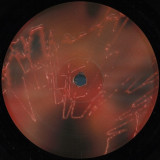
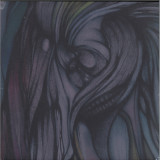
If the name Seb Martel is still unknown to you, the guitarist appears on the credits of classic albums from Tony Allen, Femi Kuti, Morcheeba or Blackalicious. Saturn 63, his new album on InFiné is dedicated to the exploration of the electric guitar in all its nuances. This new opus made from a selection of 9 guitars from the Musée de la Musique (a branch of the Philharmonie de Paris), and only enriched with the voices of his close collaborators (Camille, Sabrina Bellaouel...), unfolds on fourteen tracks a musical fresco faithful to the historical and geographical heritage of his instrument. The album includes fascinating reworks of Carl Perkins, Benjamin Britten, Chavela Vargas or Vincent Segal in addition to his own compositions. However, adopting a dogmatic approach, and dressing his compositions with sounds and effects collected during the recordings, Martel offers an abstract and experimental edge to Saturm 63, which transports the listener into an out of time experience. Two famous names of the French Chanson, -M- and Mathieu Boogaerts joined Martel to close the album with the snapshot of a speechless improvised session.
Cerca:the experience
"Train of Thought, the third full length release by Kamloops, British
Columbia based psych quartet Mother Sun is a 12 song day trip through
an overstimulated frame of mind
Using 60's and 70's psych pop, garage rock, jazz and soul as a jumping off point,
the band refines their modern eclectic storytelling through lush and adventurous
arrangements, highlighted by abstract hooks, velvety strings and triumphant
horns."
"Train of Thought captures the moment as it happened, as natural as possible,"
explains drummer Jared Wilman. But judging from the way the ribbony loops of
Alex Ward's bass weave through the crystal shards of Jared Doherty's and Emilio
Pagnotta's guitars, the in-the-room reality experienced by Mother Sun may be a bit
more warped than average. "Posing a question, falling asleep/ Glued to a fish eye,
blind in the ocean/ Water resistance, growing webbed feet," Doherty sings on
"Webbed Feet", as a pulse of retro soundtrack horns and bombast drums propel
his bleary-eyed vocals into an endless psychedelic expanse.
That track's blend of riotous complexity and souped up devolution digs at the
thesis of the album as it teeters at the edge. "It's all about the way our thoughts
control us and we control them," Doherty says. "Being anxious about mind control,
noticing your surroundings, caring for your mental health, being mindful of others,
and not letting your train of thought run away due to complacency."
To mark the 65th anniversary of the album’s recording, Blue Train will be released in two special editions on September 16 as part of Blue Note’s acclaimed Tone Poet Audiophile Vinyl Reissue Series. A 1-LP mono pressing of the original album will be presented in a deluxe gatefold tip-on jacket, while the 2-LP stereo collection Blue Train: The Complete Masters will include a second disc featuring seven alternate and incomplete takes, none of which have been released previously on vinyl, and four of which have never been released before on any format. The Complete Masters comes with a booklet featuring never-before-seen session photos by Francis Wolff and an essay by Coltrane expert Ashley Kahn. Both Tone Poet Vinyl Editions were produced by Joe Harley, mastered by Kevin Gray from the original analog master tapes, and pressed on 180g vinyl at RTI. Blue Train: The Complete Masters will also be released as a 2-CD set and digital collection
“Few studio experiences I’ve had can compare with the thrill of listening to the original master tapes—mono, stereo and alternate takes—of Blue Train,” says Harley. “I consider these two new versions the definitive editions of this masterpiece performance by John Coltrane.”
LP[24,58 €]
For The Driver Era, music can't and shouldn't be forced
The band, formed by brothers Ross and Rocky Lynch in 2018 while on tour with
their former group R5, aims to embrace the present moment, creating songs that
reflect each experience and feeling as it comes. It's a philosophy that pervades all
of the duo's releases, from their debut Summer Mixtape (expected to release later
this summer) features the band's two new tracks - the Rolling Stone- backed
'Keep Moving Forward' and lead single 'Malibu', inspired by summertime
escapism. In between polishing off the new songs and hitting the road, Ross is
also a critically acclaimed actor (he drew rave reviews for his title role in the serial
killer biopic My Friend Dahmer and recently starred in Netflix's The Chilling
Adventures of Sabrina).
Cassette[9,20 €]
For The Driver Era, music can't and shouldn't be forced
The band, formed by brothers Ross and Rocky Lynch in 2018 while on tour with
their former group R5, aims to embrace the present moment, creating songs that
reflect each experience and feeling as it comes. It's a philosophy that pervades all
of the duo's releases, from their debut Summer Mixtape (expected to release later
this summer) features the band's two new tracks - the Rolling Stone- backed
'Keep Moving Forward' and lead single 'Malibu', inspired by summertime
escapism. In between polishing off the new songs and hitting the road, Ross is
also a critically acclaimed actor (he drew rave reviews for his title role in the serial
killer biopic My Friend Dahmer and recently starred in Netflix's The Chilling
Adventures of Sabrina).
LP + BOOK!
For most of the 20th century, Portugal's economy has relied on fishery and an exploitative canning industry arising from it. To endure their hardship and coordinate their work, fishermen sang. Leva Leva: Litany of the Portuguese fishermen documents this particular culture of the Portuguese coast, through a vinyl compilation containing undisclosed original recordings of fishermen’s songs and contemporary compositions by artists Filipa Cordeiro, Joăo Pais Filipe, Nandele, Romain Baudoin and S1m0nc3ll0. Alongside the record, the project features a detailed art book (Portuguese – French) (not available through wholesale). The volume gives a voice to artists, writers, witnesses and experts, all invited to reflect upon the question of this culture and the rapid transformation it experienced.
Formed in 1985 in Athens, GA by David Barbe (Bob Mould's Sugar),
Mercyland's blast of post-punk was ahead of its time
The band was nourished by a steady diet of the Minutemen's Double Nickels on
the Dime, Husker Du's Metal Circus, Meat Puppets 2, Dinosaur Jr's Yr Living All
Over Me, Volcano Suns, and Mission of Burma. There were few experiences as
exhilarating as seeing Mercyland tear up sweaty rock clubs like Athens' own 40
Watt on a Friday night. Mercyland frequently left clubbers up and down the east
coast in a meltdown. The group disbanded in 1991 and the nine songs marking
their first official collective release here are a necessary historical document of
the end of the criminally unknown band. The time for Mercyland to be better
known is now.
"Kontakt Audio and Infinite Fog Productions proudly present the 25-th anniversary reissue of the one of most unique albums on avantgarde/neoclassic music – Ihor Tsymbrovsky – Come, Angel.
Recorded in 1995 in Ukraine and released in 1996 just as a small run on cassette on Polish label Koka Records, the album without any promotion little by little became legendary and madly wanted by many fans all around the world. And from the first seconds, you can hear why it is so. Pretty hard to explain what songs play Ihor, moreover that would be senseless. “Come, Angel” is one of those albums which are so unique that takes you in a vacuum of verbal forms in an attempt to describe the record. In a few words, this is definitely very intimate and deeply emotional music with an absolutely incredible voice. The first associations could forward you to Antony Hegarty from Antony And The Johnsons, Marc Almond, Arthur Russell, Baby Dee, Bjork. Experienced listener familiar with these great artist knows that all of them are inimitable and Ihor Tsymbrovsky is totally inimitable as well.
In 2016 well-known German label Offen Music published 3 tracks from the album “Come, Angel” which brought a lot of attention to Ihor’s music. This time we’re excited to announce the first full album reissue on CD, Double vinyl, and tapes. Beside the full version of the album, you’ll find an exclusive bonus song from the cult compilation “Music The World Does Not See” – Nefryt Records 2000.
~
“For me, music is a certain way of cultural survival. Here I do not set myself theoretical problems or experiments.
The connotations of life are important: rhythms, melodies, their connection with language, poetry, real life, virtual or imaginary space. It is very important to me how the recitation of work sounds, how consonant and vowel sounds dissolve in singing, how they combine musically. I understand sound space as a field of my interpretations, preferences, priorities, and I do not use direct imitation. If I hear a melody or a musical phrase, and it is fixed in my memory, later I extract it in my own interpretation, as already formed by this field. In art, the goal is in the work itself, not outside it. For me, the expression “To be is to create a new reality” is another winged reality.” – Ihor Tsymbrovsky
~~
“Tsymbrovsky – an architect, musician, a poet, an artist; one of the most underestimated musicians in Ukraine’s artistic world. Many critics pulled their hair out trying to get to the bottom of Tsymbrovsky’s music. It has been inspired by jazz, minimal, modern, ethnic, and meditation music. Tsymbrovsky is not a virtuoso, however, he creates whole worlds with his astonishing falsetto. Although Cymbrovsky’s music is simple it is made of many elements. Filled with magic and unusual sensitivity and warmth it can be therapeutic for the listener. This is that kind of music, which can be listened to many times – in a different way each time.” – Koka Records.
~~~
“Igor Tsymbrovsky’s only album “Come Angel” (1995) still remains perhaps the most bizarre phenomenon in Ukrainian music since independence. The story of its author is a vivid example of cultural amnesia. In the pre-Internet era, Tsymbrovsky was a prominent figure in the Ukrainian underground, performed on the “Red Route”, went on tour in Germany. However, he left a minimum of evidence of his activity and became a silent legend for a few. We talked to Igor to find out where he came from and where he was going.
The album “Come Angel” is eight compositions performed with a falsetto to the accompaniment of a piano. (Tsymbrovsky’s falsetto is a legacy of the Lviv Dudaryk choir, where he sang as a child.) It would seem that it could be easier. But, despite such ascetic tools, Tsymbrovsky managed to create a phenomenon unique to Ukrainian culture. Some people compare him to Benjamin Clementine and Anthony Hegarty, but no comparison will be exhaustive. The lyrics of the songs attract special attention: two of them were written by Tsymbrovsky himself, the others demonstrate his remarkable literary knowledge. Here and Guillaume Apollinaire, and Mikhaijl Semenko, and even less obvious poets, such as Mykola Vorobyov or Jozsef Attila.
The young performer’s first performance took place in 1987 in the club of the Forestry Institute. It is quite symbolic that this room used to be a Jesuit church because such a chamber environment suits his songs about angels much better than the noise of big festivals. However, there were also many festivals in Tsymbrovsky’s career: in 1989, Chorna Rada and Chervona Ruta, in 1991, Kharkiv’s Nova Scena and Ukrainian Nights in Gdansk, Alternativa in Lviv. Ihor calls his first performances musical performances and notes that they sounded completely different. Unfortunately, we will never know exactly how.” – Amnesia
~~~~
“The magicians at Dusseldorf’s Offen Music pluck a madly beguiling pearl of late-night songcraft by Ukraine’s Ihor Tsymbrovsky to follow their vital releases by Toresch and Rex Ilusivii. Come Angel was first recorded in Lviv, Ukraine, in 1995, and issued on cassette by Poland’s Koka Records in 1996. There appears to be no prior mention of the release or artist on the internet and quite how it came into of Offen Music possession is not disclosed, and that only ratchets the record’s enigma to astonishing degrees once you’ve heard the music. In a quivering, high register, androgynous trill, Ihor Tsymbrovsky beckons heavenly beings in the remarkable A-side Come, Angel against a swirling backdrop of phasing, subtly delayed organ. It was recorded in one take (this is the 2nd version), and, if we’re not mistaken, you can hear the keys being pressed rhythmically in the background, which seems to be the song’s only tangible connection to this mortal world as Ihor vaults octaves high and close-in-the-mix with the sort of alien, dreamlike vocal that requires pinching oneself to make sure you’re awake. Spellbinding is definitely the word. On the other side he (we’re assured it is a ‘he’ in the promo text) sets two poems by Mykola Vorobyov and Mykhal Semenko, respectively, to emphatic piano keys, this time more shy of FX save for some delay, placing that willowing, avian vocal at a dreamy arms reach in Roses for the Poet, and with a sort of liturgical dark jazz feel, sorta like Lewis repenting his sins as a castrato monk, in the spare atmosphere in By the Sea. This is gold-seal business, we tell ya. Clock the clips and clear some swooning room.” – Boomkat
credits:
Music By – Ihor Tsymbrovsky
Lyrics By: Ihor Tsymbrovsky (tracks: C2, D1)
Atilla Joszef (tracks: B1)
Mychajl Semenko (tracks: B2, C1,C3, D2)
Mykoła Worobjow (tracks: A1,A2)
Engineer – Edward Hryhorjew
Remastering – Ihor Tsymbrovsky"
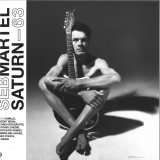
The music on this album includes the audio explorations and experiments that led to the creation of the finished soundtrack - the used and unused elements as I worked to find the ‘Delia’ sounds I felt best connected not only directly to her life experiences that influenced her music, but were expressive of, and representative of her. The compositions are inspired by my research of the Delia Derbyshire audio archive, Delia's original compositional notes and techniques which in combination with my admiration and love of Delia’s
work provided a way to integrate her style and approach to music with my own. An alliance of our sensibilities. Cosey Fanni Tutti
Instrumentation: Synthesisers, Guitar, Cornet, Coolicon, Cymbals, Nagra Tape Recorder,Tape Manipulationsand Field Recordings.
Vocals by: Cosey Fanni Tutti & Caroline Catz.
Music written, composed, performed and produced by Cosey Fanni Tutti 2019 - 2021. Recorded at Studio 47, Norfolk and Twickenham Studio 3, London. Mastered by Chris Carter.
Halv Drøm is the EBM/techno/punk/esoteric project of Berlin-based Australian DJ, producer and Fleisch Records co-founder, Saxon Jörgensen. Halv Drøm’s approach to creating music is deeply rooted in ideas of political upheaval and possibilities of spiritual healing through raw and confrontational sounds. Halv Drøm’s debut appearance on BITE is an intense 5 track EP that alternates between trance-inducing esoteric polyrhythms, high-impact body music and gloomy techno, and results in a dark trip-like musical experience, where modern electronics and ancient rhythmic structures perform a ritual of harsh healing. The EP is supported with remixes by BITE regulars – Unhuman and Human Performance Lab. Artwork by Florian Engerling Design by Eloise Leigh Mixed by Gianmaria Dell’Aera and Manos Simotas Mastered by Gianmaria Dell’Aera
Svart Records to release new album by rising stars of eclectic heavy rock, Messa on the 11th of March 2022. Messa’s rising trajectory hits the stratosphere on their immense new album “Close”. Soaring up out of the Italian Doom Rock underground in 2014, Messa have been rapidly garnering a frenzied throng of devotees, in thrall to their monumental and broad-ranging sound craft. Releasing two widely celebrated cult records, the latest of which “Feast For Water” in 2018 was a critical breakthrough success, with Rolling Stone calling the whole album “captivating, wringing maximum drama out of its savvy stylistic clash,” Messa have had everyone on tenterhooks, waiting for what was next. New album “Close” draws us further into Messa’s spellbinding textures and immersive dynamics. Described as “Stevie Nicks fronting Black Sabbath,” singer Sara’s colossal voice omnipotently carries the listener on an emotional rollercoaster ride where the sonic cauldron of Iommi guitars gives way to Arabian oudh and progressive solos in a masterful style-clash that well befits Messa’s incendiary reputation. The hushed Fender Rhodes piano intro on opener “Suspended,” picks up where Messa left off on their previous album “Feast For Water” but then collapses gloriously into Jazz guitar and widescreen impassioned crushing riffs, lighting our way for the odyssey ahead. The scene is set magnificently for the journey that “Close” expertly takes the listener on, with Messa’s obvious care and passion for the album as a pilgrimage of sonic experience. Heavyweight tracks like “If You Want Her To Be Taken” or “0=2” are modern Doom Rock classics that expertly upgrade and leave the genre reeling in their wake. “Pilgrim” and “Orphalese” are woven with tapestries of Mediterranean sounds where oudh and eastern chord phrasings expand Messa’s cinematic palette with a panache that is all their own. Atmospheric and grandiose belters like “Rubedo” and “Dark Horse” build into an almost limitless climax of discord and harmony where blast beats and saxophones descend into a thrilling cacophony that’s a masterclass in artful cutting edge Doom. Referencing bands like Dead Can Dance, Swans and Om, Messa have created an album where song, experience and atmosphere are focused into a crystalline modus where high art flawlessly embraces good old fashioned riff-worship. Transcending the occult and noir-tinted atmospheres of their past works, “Close” confidently weaves Messa’s multifarious influences into a singular breath-taking sound that leaves the listener enthralled. Perfection or something extremely close, Messa’s “Close” is not just a Metal record, but it’s definitely one of the best things to break out of the confines of Metal in a long time.
Parallel Minds returns after a two-year hiatus with a dub-infested celestial dance debut from a promising Toronto-based producer, record-slinger, and long-time DIY scene mainstay, Ficilio
Ficilio, a.k.a. Will Gillespie and the Parallel Minds crew have enjoyed a long musical friendship. Having met at various underground raves in Toronto, it wasn't long before they found themselves on the same lineups and began trading tunes post-show. When label co-founder Ciel first heard the tunes that would eventually end up on Parallel Minds 003, she was mesmerised by the deep, misty grooves present throughout. 'Dangerous Goods' is the creation of an artist with a super dialed-in sound, whose attention to detail, cohesion, and sound design suggest experience wise-beyond-their-years.
‘Rush-V’ begins the release with a shimmery bang, propelled by infectious chord stabs that sound like they're sprinkled with alien fairy dust and grounded by a driving and subby drum groove. 'Fluid Form' continues in this trajectory, all spacey synths and dubbed out stabs propped up by tough and bouncy drums and a deep low sub. There is an unmistakable 90s influence on these tracks, halfway between old Swayzak and the early 90s output of Dutch label ESP Records. Ficilio is not afraid to flirt with dub techno AND trance influences, which is most discernible on the last track on the A-side, the sublime 'UAM'.
In comparison to the other side, the B-side is a more sub-loaded affair. The drums on this side are less driving and more broken, chopped, and staggered. They work spectacularly on the title track, its vocal chops complement the low-slung groove of the drums to a hypnotic head-nodding effect. 'Second Fold' intrigues immediately with its unusual tempo, fluttering along in a leisurely way until these enchanted synth stabs come in and the track blooms like a beautiful flower. The release comes to a Zen-like close on 'Frame (Amber Mix)', the heavy sub and sparse arpeggiated loops draw us deep within its cavernous interiors.
For the very first time, ITDR spaceship travels back in time to unearth 4 tracks from 'Genuine' (aka Chris Zippel) finest productions originally released on Ninetysix sounds in 1997. Celebrating the 25th anniversary of this project, 'Nu Ambient Grooves' is the ultimate mindtrip experience for downtempo, IDM and TB-303 lovers.
Emily Fairlight is a New Zealand songwriter with a rare talent for capturing the bare essence of stories and moods, combining beautifully honest lyrics with heartfelt melodies. The prevalence of acoustic guitar and intimate sharing of lived experience through song hint at folk music - or, as Fairlight self-deprecatingly calls it, “doom-folk”. Her powerful quivering vibrato and stark, haunting vocal tone are teak-hard yet soft as crushed velvet and have elicited comparisons to PJ Harvey, Bridget St John, Natalie Merchant and Cat Power, all musicians with distinctive voices and a lyrical talent for conjuring a kind of experiential realism. Sun Casts a Shadow is a stripped-down, timeless blend of Fairlight and McLeod’s songs, voices and guitars. Fairlight’s material carries the weight of experience, with McLeod’s harmony vocals and guitar adding colours from The Shifting Sands’ South Pacific Cosmic Rock palette to these vignettes of heartbreak and hope, while Fairlight’s voice brings character and a spectral quality to The Shifting Sands’ songs. With a pandemic devastating the international tour-scape in 2020, Emily's prolific writing continued back in NZ and another album has been recorded, showcasing a broader sonic palette and the continued maturing of Emily's songcraft. In the way that In The Pines marked a kind of unpressured bookend to the Triffids’ auspicious beginnings, before they took their next, bold, step, Sun Casts a Shadow is a quietly intriguing bridge between Fairlight’s past and future; a chapter in a story with many more to come
2022 Repress
Second Woman is the collaborative project featuring Turk Dietrich of Belong and Joshua Eustis of Telefon Tel Aviv.
Josh and Turk have been friends for over 17 years, having met in New Orleans in the late '90s through mutual friend and future collaborator, Charlie Cooper. The duo have been working on music together on and o since that time.
The concept of Second Woman began with the idea of taking tropes from footwork, dub, house, and techno, and twisting these ideas into something kaleidoscopically liberated from the grid. Their work first materialized with two LP's and an EP on John Elliott and Peter Rehberg's Spectrum Spools.
Second Woman tweak the perception of time and space within the audio field into something ASMR-inducing and ultimately satisfying to listen to. Both Josh and Turk experience ASMR in response to certain rhythms and sounds, and e ort was made to incorporate these triggers into the music, hopefully for other people to experience as well.
With Apart / Instant, Second Woman present their signature sound as well as a new, more measured dimension to their work.
Labyrinth is dark, brooding, beat-heavy, melancholic mood music courtesy of Ian Carr and the Nucleus crew. A favourite of Madlib, it goes without saying that this is one magnificent record. Originally released on Vertigo in 1973, Labyrinth was never re-pressed and of course those original copies are now very tricky to score. Like all the Nucleus records, it’s aged ridiculously well and this Be With re-issue, re-mastered from the original analogue tapes, shows off just why this deserves to be back in press.
Genius trumpeter and visionary composer Ian Carr was one of the most respected British musicians of his era. He was a true pioneer and saw the potential in fusing the worlds of jazz with rock, just as Miles Davis and The Tony Williams Lifetime did in the US. In late 1969, following the demise of the Rendell-Carr quintet, and tiring of British jazz, Carr assembled the legendary Nucleus. Regarding music as a continuous process, Nucleus refused to “recognise rigid boundaries” and worked on delivering what they saw as a “total musical experience”. We can get behind that.
Under bandleader Carr, Nucleus existed as a fluid line-up of inventive, skilled musicians. This constant evolution and revolution was all part of the continuous musical exploration and discovery that took jazz to new levels. And the music has kept relevant. To steal a line from a recent review of our re-issue of Roots, when it comes to anything Nucleus “it’s basically already hip-hop”.
At this point Carr had parted ways with guitarist Alan Holdsworth and as a result the Nucleus sound found itself returning to the core elements of groove and melody. Carr had become bolder and more self-confident in his compositions and it shows in the sheer ambition of Labyrinth. Composed by Carr, and with lyrics written by his wife Sandy, Labyrinth was the result of a commission from the Park Lane Group and funded by the Arts Council of Great Britain. Originally a live performance by an augmented Nucleus, some of the expanded cast were brought back for the recording sessions, including vocalist Norma Winstone. So as the front cover of the finished album says, this is literally “Nucleus Plus”.
Labyrinth is presented as a suite, based on the ancient Greek legend of the Minotaur with musical instruments representing the various elements of the mythology. According to the LP’s original sleeve notes, the bass clarinet represents the tragic element, the trumpet represents the heroic element and the voice represents the human element. The rest of the musicians represent the two societies of Athens and Crete and their comments on the story as it unfolds.
The album opens with the experimental, sumptuously dissonant “Origins”. Teasing strands of atmospheric bass clarinet introduce the first theme before swiftly fading out with a startling blast of staccato fanfares and big drums. Heavy. The album soon finds its rhythm as it alights on the spell-binding and groove-friendly “Bull-Dance”, showing off the best Nucleus has to offer: subtle trumpet melodies, compelling rhythms, a psych-rock vibe and tight soloing. And of course there’s Norma Winstone’s stunning wordless vocals, that also take the lead in the next track “Ariadne”, a spacey-jazz song with beautiful piano, flute and clarinet, and the only recognisable lyrics on the album. You might recognise a snatch of it being looped by Madlib on Quasimoto’s “Astro Travellin”. The first part of the improvised “Arena” closes out the first side of the album, a short experimental piece with piano and horns.
Over on the flip-side, the powerful second part of “Arena” introduces a new theme. It swiftly builds, with vocal melodies, piano and horns all pronounced over the thick drums snapping your neck. It comes on like an alternate take on “Bull-Dance”, noisier, with a looser rhythm. The triumphant, shuffling Latin-jam “Exultation” leans on more scintillating vocals from Winstone, and a chunky counter melody from the rhythm section. It’ll get you moving.
The final track, the haunting, twelve minute “Naxos”, is an incredible way to close out this remarkable record. A circling bass guitar loop inspiring the group to a meditative psychedelic jazz rock improvisation in a silent, Miles kind of way, with a great flugelhorn solo from Carr and an ace synth climax.
This Be With edition of Labyrinth has been re-mastered from the original Vertigo master tapes, Simon Francis’ mastering working together with Pete Norman’s cut to weave their usual magic with these wonderful recordings. Another great Keith Davis sleeve has been restored in all its airbrushed Golden Age of comics, gatefold splendour. Complete with Minotaur of course.
Under The Sun is the follow-up to the astonishing Roots and contains yet more absolutely essential Nucleus material. Originally released on Vertigo in 1974, Under The Sun was never re-pressed and of course those original copies are now very tricky to score. Like all the Nucleus records, it’s aged ridiculously well and this Be With re-issue, re-mastered from the original analogue tapes, shows off just why this deserves to be back in press.
Genius trumpeter and visionary composer Ian Carr was one of the most respected British musicians of his era. He was a true pioneer and saw the potential in fusing the worlds of jazz with rock, just as Miles Davis and The Tony Williams Lifetime did in the US. In late 1969, following the demise of the Rendell-Carr quintet, and tiring of British jazz, Carr assembled the legendary Nucleus. Regarding music as a continuous process, Nucleus refused to “recognise rigid boundaries” and worked on delivering what they saw as a “total musical experience”. We can get behind that.
Under bandleader Carr, Nucleus existed as a fluid line-up of inventive, skilled musicians. This constant evolution and revolution was all part of the continuous musical exploration and discovery that took jazz to new levels. And the music has stayed relevant. To steal a line from a recent review of our re-issue of Roots, when it comes to anything Nucleus “it’s basically already hip-hop”.
Under The Sun opens with the crisp, medium tempo “In Procession”. It’s a typically inventive Carr track with layers of dramatic, riff-led themes and repeating brass blasts. Bryan Spring’s “The Addison Trip” is a moody funk piece, with Kieran White guesting on wordless vocals. Roger Sutton contributes some fine bass guitar on this track, particularly the great solo at around the two minute mark. The excellently-named cool, jazzy ballad “Pastoral Graffiti” paints bucolic pictures with its mellow sonics, plaintive horns and Bob Bertles’ flute.
Sutton’s superb, bass-driven “New Life” brings a different dynamic. Horns, guitar and electric piano swirl over the head-nod bass motif and a killer Ken Shaw guitar solo. A false fade out halfway through brings in a new bass riff that’s picked up by the whole ensemble as Carr wah-wah noodles over the top. It’s full-on. The gorgeous, laidback “A Taste of Sarsaparilla” is exactly that - closing out the first side with a cute blast of what is to come over on the killer flip.
The whole of Under The Sun’s second side is a suite of three “Themes” written by Ian Carr. The uptempo first theme “Sarsaparilla” is comfortably one of Nucleus’ best. What would’ve been a cluttered mess in the hands of most is instead an effortless lesson in clarity and zing. Between Geoff Castle’s electric piano solo, the relentless funky drumming and more wild wah-wah trumpet from Carr, Nucleus show you how it’s done.
The languid groove of second theme “Feast Alfresco” is much more typical of “classic” Nucleus and sounds like something that might’ve been on Roots. A Bertles baritone solo and a guitar solo from Shaw weave around the core, serpentine brass theme.
The darker “Rites of Man”, the third and final theme, is a slow build to a solid bass and electric piano riff, shored up by some tricky brass. Carr takes the theme even further and there’s still plenty of room for soloing from all corners of the Nucleus. As usual, the dynamic Sutton/Spring, bass/drums duo is holding down the rhythm for the rest to jam around.
This Be With edition of Under The Sun has been re-mastered from the original Vertigo master tapes, Simon Francis’ mastering working together with Pete Norman’s cut to weave their usual magic with these wonderful recordings. The bleak, rain-dappled cover matches the melancholic vibe of the record and has been restored as the finishing touch to this long overdue re-issue.
"My debut album "Leidenzwang" is the consequence of boundless obsession" apostrophizes Kenji Araki with stoic calm. An obsession in the most positive as well as in the most negative of all senses, involving a wide variety of media. Kenji, in his early 20s, is known to be a digital and interdisciplinary artist from Austria with roots in Japan whose work is primarily influenced by the deconstruction of music and contemporary art.
"Leidenzwang" (in English: Suffering compulsion) is confrontation. Confrontation with the world. Confrontation with oneself. A confrontation that can be productive and cathartic. However, until Kenji Araki was able to get into this pattern of thinking, it was necessary in the process of creation to leave his very own sanctuary which he cultivated over the years. Escapism in the rear-view mirror of the past. "Leidenzwang" as a natural hybrid of passion (probably the most beautiful feeling a creatively active person can experience) and dangerous self-flagellation plus constant unrest. The result and musical core of Kenji Araki's debut album is an experimental, emotional post-club exploration with pop sensibility that deliberately ignores genre boundaries.
12 tracks spread over 50 minutes in fast forward: It starts with the adequate intro "Avant" - a primal scream. Next with "Matter" where Kenji collaborates with Thomas Mertlseder and constructs the sound world of a dark fashion film. Emotional highlights for the vividly vibrating club floor as well as for the digital terminals of Planet Earth delivers "Nabelschnurtanz" with its amalgamation of human sound waves. Followed by "Gel & Gewalt" - a combination of 90s Grunge, IDM and exponential rhythms - the fierce "SINEW" with its distorted double bass recordings and "Monomythz" which is Kenji's interpretation of a club banger with a combination of 2000s Eurodance aesthetic and hypermodern off kilter beats.
A moment to take a breath is offered by the spherical track "Milieu" which was written during an emotional low and thus naturally has a dark note. At position 8 is "lluviácida" - inspired by the "rave scene" observed from afar. Closely followed by the album's title number "Leidenzwang" with its granularized piano melodies while nature sounds can be heard in the background.
The album finale is formed by the polyrhythmic fireworks "Deathless Mess", the piece "Isan 世襲" (in Japanese heritage) which symbolizes the own inner turmoil and at the same time acoustically illustrates the relationship to his origin. And the conclusion is marked by the heartbreaking "Au-Dèla" as the epitome of a closer. Kenji Araki: The time is now.
There is a moment on Sides, the new album from Richmond, Virginia-based duo Lean Year, in which a hospital room floor is filled with white chrysanthemums. This imagery, based on an opiate-induced hallucination experienced by vocalist Emilie Rex's mother as she recovered from surgery, is a perfect encapsulation of the band's second album: dreamlike and beautiful, yet burdened with cold, stark reality. Sides is a harrowing journey through realms of grief and memory, a meditation woven into a tapestry of synth pads, woodwinds, and Rex's instantly recognizable voice. The duo of Rex and Rick Alverson - who also works as a film director (The Mountain, Entertainment, The Comedy) - originally set out to write an album about conflict, but during the writing and recording process, they were confronted with a number of personal tragedies. Alverson lost both of his parents in rapid succession, Rex's mother received a cancer diagnosis, and the couple's beloved family dog, Orca, died. These events transformed the album into an exploration of loss - an attempt at processing the painful, complex, and private emotions that bubble to the surface when confronted with death. "We thought we'd do a concept album called Sides where we could reflect on all of the division in the world, and some in our own families, but then COVID transformed everything / everyone, and we suffered our own specific losses. The record became about loss and grief," Rex explains. "In this way, the title Sides was still appropriate: our individual grief and collective grief, the margins of before and after, the act and feeling of during and enduring. It felt like straddling a threshold between two opposing sides - the moment before conflict and the moment after it passes, life and death, the act of living and the memory of the act. Grief feels like a contention between what you knew and what you now know, and often both feel real and unreal at once." Sides - produced by Alverson alongside Erik Hall (In Tall Buildings) and featuring contributions from Elliot Bergman (Nomo, Wild Belle) and Joseph Shabason (Destroyer, The War on Drugs) - as a distinctly cinematic quality, perhaps due in part to Alverson's other career. Moments of jazz, slowcore, and dirgelike R&B find their way into the sorrowful, ambient suite, lulling the listener into a state of calm while the lyrics speak of ghosts, childhood, and mortality. Despite the gravity of the subject matter, Sides succeeds in mastering a balancing act between pathos and pop. Each song is indelible and haunting, with melodies that have the kind of broad appeal reminiscent of Karen Dalton, Aldous Harding, and FKA twigs.
- A1: Calibre - Barren
- A2: Calibre - Change With Me
- B1: Calibre & Cimone - Time To Breathe
- C1: Calibre - Has To Happen
- C2: Calibre - Feeling Normal
- D1: Calibre & Drs - Badman
- E1: Calibre - Good Times
- F1: Calibre & Drs - Say Enough
- G1: Calibre - Miami
- G2: Calibre - Predicatable
- H1: Calibre - Man Got Sandwich
- H2: Calibre - Wrong
2022 Repress
Multi-faceted artist Calibre today shares his sixteenth studio album "Feeling Normal". The album is out now to pre-order on Vinyl, CD and on digital platforms via his own independent imprint Signature Recordings.
The record is his first bonafide 140bpm record and a staggering body of work that shows the genius levels of one of electronic music's most respected auteurs. Across the 13 tracks, he transcends through space and time, creating music that will take the listener on a weighty sonic journey. The album announcement is accompanied by two dub versions "Bad" and "Badder" deconstructed from the track "Badman" with DRS from Mark Ernestus available via his Hardwax store January 29th and Bandcamp February 12th. "Getting to work with Mark Ernestus is a real honour, I collected Basic Channel, Rhythm & Sound and his other work for many years and still do. It's hard to avoid the influence of this guy in electronic music across genres and so it is a real pleasure to have him do his thing with the Badman tune which I think sounds closely related."
All of the tracks on the record have been road-tested in Calibre's DJ sets over the last 2/3 years with many of them being sought-out by his hardcore fans. It was only a matter of time then that he put them out for all to consume. With a nod to the dancefloor, the clear idea for the album came about following the release of his most personal album to date "Planet Hearth". "It still works in the headspace but ultimately it's been written for the sweaty club experience we miss now, also after an album like Planet Hearth it felt very liberating to do," he remarks. When writing albums, he often just puts it down to the general chaos of life, not citing any one influence but generally just waits to see what comes. With one of the tracks on the album written 7 years ago on the island of Valentia, It became a project that he spent the intervening years collecting tracks for, not really knowing when he was going to put it together as an album. "The whole album is special to me, everything on there has import and meaning beyond for me, I have spent much time on all these and hope they are special for other people too."
Belfast-born, Berlin-based Calibre - AKA Dominick Martin - shows no sign of slowing down. As a producer, DJ, songwriter, multi-instrumentalist and painter, he is one of the most unique and inspiring living artists. With a career spanning two decades, his ability to remain underground whilst being one of the most-respected is testament to who this enigmatic artist is. To this day, he has never been remixed and has a seriously impressive amount of unreleased music under wraps. With everything on hold and gigs on the backburner, this record is exactly what the world needs right now.