'Science, Art And Ritual' is a story of ‘process'. Growing up in Harrow (a then quiet suburb of London) in the 70’s and 80’s from the age of about 10, Kingsuk Biswas aka Bedouin Ascent's ears opened up to sound as he scanned the airwaves. The undeniable righteousness of 80’s dub via David Rodigan’s Roots Rockers shows was the first prominent influence he received, and with punk roots —and his burgeoning record collection— became exposed to the breathless post punk experimentation that followed in the early 80’s sweeping up free jazz, noise, dub and much more. Throughout though, he maintained his fascination with Indian Classical music which was a mainstay in his parent’s house and spoke with the same infinite space as Joy Division's 'Unknown Pleasures', and King Tubby’s Studio dispatches. Through those teens he assembled and de-assembled, knocking about with fellow travellers —punk bands, garage, space rock, noise. Something was happening. On-U Sound, ECM, Factory Records kept him plugged in and sane.
At that time Kingsuk's core studio setup revolved around his vintage Gretsch, Fender Jazz, Moog, TR-606 and rudimentary FX. He added congas, folk instruments, pipes, hand percussion, gongs, and jammed out shards of funk, noise, jazz fusion, electro and ambience into his hungry Tascam Portastudio. By 1987 these had morphed into what we’d now refer to broadly as techno, but the genre didn't exist beyond the reverberating walls of his bedsit, and he hadn’t yet plugged into the global conversation.
'Science, Art And Ritual' was released in 1994 by Rising High Records and was presented as Bedouin Ascent's debut album, although 'Music for Particles' (released in 1995, again on Rising High) was recorded even before —'SAR' sessions span from 1992-1993, whereas 'Music for Particles' were earlier from 1989-1992, with some older 4-track references from about 1986 too.
Weaved in throughout the album are subconscious references to music that Kingsuk heard in the past that still remained within sight as companions. The opening track "Ancient Ocean III", referencing the extinct ocean Tethis, unapologetically channels Tackhead, Colourbox, Mantronix and Lee Perry. The style was also deliberately juxtaposed to the prevailing sound in techno at the time, which had locked onto a rigid form of symmetrical kicks and light snare drums. Elsewhere 80’s soul and funk are frozen and captured in fragile glass lattices. Electric pianos resound throughout, such as in "He Is She", probably a half-memory of 70’s MOR radio from childhood sleepy night drives. A duel between kick drums from three generations of Roland drum machines —TR-808, TR-707 and R-8— is a central theme in "Transition-R", all in conversation, calling and responding. These were not just machines to Bedouin Ascent, but part of an extended family, with heart and soul.
Three decades after seeing the light, Lapsus is proud to present a special 30th anniversary reissue of this
left-field techno gem in a repackaged and redesigned edition. All pressed on a deluxe 3LP marbled vinyl and including a limited lithographic insert print of the original album cover. All tracks have been restored and remastered directly from the original DAT tapes, and the album also features previously unreleased tracks such as "In the Clouds" and "Thru Water" —regularly performed live at that time and produced in the same period as the album sessions in 1993.
'Science, Art And Ritual’ may refer to esoteric traditions in Indian philosophy, but equally embodies the collision of the science, the art and the ritual that is at the core of being immersed in a deep musical journey.
Suche:the folk factory
- 1
Glasgow based Seated Records return with more 1980s Scottish Post-Punk / New Wave material. In this 8-track mini compilation the label introduces the work of Stirling band 22 Beaches, offering a deep dive into music recorded between 1980-1984 - the majority of which has never seen the light of day!
22 Beaches formed in Stirling in the late 1970s as an evolution of the short lived group ‘Alone at Last’ - drummer Fred Parson’s and guitarist Stephen Hunter being the two who spanned the divide. Out of the six members of 22 Beaches, many were school friends, and the rest naturally fell together. The band toured extensively and played at a truly diverse set of venues across the UK: from a local swimming pool boiler room, to small nightclubs and university parties, to several fundraisers for the miners strike. Maybe most notably of all, drummer Fred Parsons described playing at what he calls “the Grangemouth International”, organised by local promoter Brian Guthrie and which featured an all-star lineup of 22 Beaches, The Exploited and the first incarnation of The Cocteau Twins. A coach was hired to ship the audience to Grangemouth from Stirling, the cost of which was included in the ticket. The gig then paused halfway through for a 'help yourself' buffet. Young promoters take heed. This is how it's done!
Over the course of the 80s the band released music on three different, and now sought after, various artists compilation cassettes. “What Day Is It?” and “Sadie When She Died” were released on a compilation of local Stirling artists 'The A.N.K.L.E File'. The track from which the current record takes its namesake - “Dust” - was initially released on a compilation-tape for the fanzine 'Another Spark'. And ‘‘Zoo” (also featured on this record) was first released on Glasgow label Pleasantly Surprised via compilation, 'An Hour Of Eloquent Sounds', where 22 Beaches rubbed shoulders with early music from Scottish names Primal Scream, Cocteau Twins, The Wake and Sunset Gun. Unfortunately, 22 Beaches never met the same level of commercial success as these others and decided to retire the project in 1984 - leaving their recordings and demos to gather dust (hehe)…until now!
This compilation, “Dust: recordings 1980-1984” follows the band's journey and the changes in their sound over the years. It moves from the raw, punk energy of early DIY recordings through to the A Certain Ratio style Balearica of their later pieces. The record's opener and title track “Dust” is perhaps the most shining example of the latter. Characterised by the plenitude of sonic space in the mix, “Dust” has an almost dub sensibility that is communicated through centrality of Parsons’ drums, McChord’s percussion, and Fildes’ Bass while the harmonising vocals of Sharkey and McGregor chant over the top to give the track its distinctive psychedelic edge. This is an atmosphere only exacerbated by the lofi quality of the recording which sits the vocals in the same aural realm as much 1960s psych-folk. On “Cartoon Boy”, the band strips things down further. A droning bass line persists through the tape fuzz and is accompanied by the sounds of a sole looping guitar chord sequence and McGregor and Sharkey’s vocals - respectively and carefully dancing around one another before harmonising in the most beautiful way. The result is a haunting and abstract Marine Girls style heartbreaker. ‘That Girl’ again delivers a dub adjacent rhythm section similar to that of “Dust”. However, on this instance crisp guitar chords, a distant, phased organ and blue-eyed soul vocal delivery, produce a track that could easily have been a lost Orange Juice recording from their sessions with Dennis Bovel. On “Somebody Got It Wrong” and “One Of Us” the band employ a more macro approach where a jangling guitar with an almost highlife-influenced tone, vocal ad-libs and syncopated percussion give the music a Talking Heads-esque swagger.
Taken together these tracks illustrate a clear trajectory in the band's sound, moving from from the high energy no-wave quality of early recordings towards a more dub influenced, and stripped-back sound - a sonic trajectory followed by so many bands of the time, not least those emerging from the diaspora of Manchester’s Factory Records.
On “Breathing’’ we hear the beginning of this transition, with the strong influence of the oddball NYC disco styles of Was (Not Was) and ZE records. All of this is meshed together with the residual punk rock energy of 1980s UK. This combination is employed to excellent effect with the addition of the distinctly Scottish (and what the band confirmed to me to be spontaneous) vocal delivery of: “Do you love me? Do you want me?” “Aye!” “Do you love me? Do you need me?” “Naw!”.
On the record’s closing tracks, “Zoo” and “Talent Show”, we hear early examples of the band’s work, playing with their rawest all-in-one-take live energy where Hunter’s spiralling guitar riffs and McGregor's distorted vocal exclamations lead the charge. The band recalls that these initial-forays did not always translate so well into multitrack recording and overdubbing: “the deconstruction took away some of the band's natural feel”. On “Talent Show” the record ends with Sharkey delivering an almost unintelligible spoken word section over the top of the track, making for one final, disorientating, almost manic slice of post-punk.
These tracks from 1980-1984 chart the progress of a unique contribution to the world of Scottish Post-Punk and New Wave, encapsulating not only the musical trajectory of 22 Beaches but also echoing the broader sonic landscape of 1980s UK, a testament to the adaptability and creativity of the UK’s underground music of the time.
As it celebrates its 50th anniversary, Bill Withers' Still Bill remains true to its title – and stands as the greatest male-fronted soul album not made by a singer named Marvin, Al, Sam, James, or Ray. Though the saying "keeping it real" did not exist in popular parlance when Withers released his sophomore effort on Sussex Records, no words better capture the music's approach, mindset, and value. Every facet of Still Bill radiates honesty, truth, and emotion.
These characteristics – along with Withers' strong singing, hybrid arrangements, and deceptively simple songwriting – have allowed the album to endure to the point where it sounds as fresh today as in 1972.
After rising into the Top 5 of the Billboard Album charts and attaining gold status within a year of release, Still Bill has long been evaluated not by sales – but according to its merit, spirit, and agelessness. Included by The Guardian on its "1,000 Albums to Hear Before You Die" list (2007) as well as in Tom Moon's 1,000 Recordings to Hear Before You Die book (2008), its contemporary standing as one of history's most venerated soul efforts eclipses the positive reception it enjoyed in the early ‘70s.
Still Bill walks the same hallowed ground as What's Going On, Call Me, Night Beat, and Genius + Soul = Jazz. Like those landmarks, Still Bill plays with a mix of consistency, effortlessness, and complexity that rewards repeat listening and transcends categorization.
In combining four of the era's predominant styles – Philly soul, sweaty funk, Southern-reared blues, acoustic-based folk – and melding them with standout production borrowed from both minimalist affairs and sophisticated singer-songwriter albums, Still Bill occupies a distinct universe.
Its rhythmic fare is equally laidback and invigorating; relaxing and rollicking; eloquent and muscular; soft and tough. Withers' calm, self-assured voice hovers above it all, doubling as a warm blanket that adds comfort and grace to lyrics steeped in maturity, perspective, and compassion.
Withers' balanced outlook on human desires, needs, and situations stem from his own existence as a former blue-collar employee who believed his time as a musician would soon end. That grounding forever separates Withers from other contemporary soul greats – and stamps Still Bill with a conversational nature and egoless approachability.
"I mean look, I'm really a factory worker," said Withers in 1972. "That's a real job." There's that word again: real. The songs on Still Bill are tethered to modesty and actuality, wedded to a belief in simplicity, and connected to universal truths that link us all – independent of our economic or social standing. No track better exemplifies those principles than "Lean on Me," a feel-good paean to brotherhood and community that hit No. 1 on the pop and R&B charts en route to becoming a mainstream staple.
Withers approaches the plainspoken insight on "Lonely Town, Lonely Street" and heartbreaking vulnerability of "I Don't Want You on My Mind" with similar sincerity and straightforwardness. His proclivity for authenticity extends to the record's other big hit: the sexual, funk-laden "Use Me," which reached No. 2 and reflects the singer's everyman persona. It's an identity couched in keeping it real, the very inclination that ultimately led Withers to retire in the mid-'80s rather than bend to industry pressures or risk credibility.
That commitment to truthfulness and realism helps make Still Bill feel as unaffected as the air we breathe. Looking back on "Lean on Me" years later, Withers said it seemed like "something that was there before I got here" – the kind of song that could be 100 or 10 years old, or one we encounter anew 10 years into the future. The same can be said for every note on Still Bill.
“France absolutely engage the body... but the spectacle is one for your mind, especially as you start to wonder how much of what you’re hearing is really there.” The Quietus
Legendary hurdy-gurdy-powered kraut/psych/folk/drone band France have announced a new album ‘Good Thoughts. Bad Thoughts’ on The state51 Conspiracy label; capturing a wild performance at The state51 Factory in East London - part of their very first tour of England. They played Liverpool Psych Fest as a one off some years back.
Forming 20 years ago as a trio in Valence, France, for this performance, were Jeremie Sauvage on bass, Yann Gourdon on electrified hurdy-gurdy, and Cyril Bondi (of La Tene and Cyril Cyril on drums (stalwart Mathieu Tilly was taking some much needed time off).
This album sees the band plunge into the depths of the human psyche, backed up by Hugo Hyart’s deep, all-over cosmic doodles and an unhidden homage to the Parliafunkadelicment state of mind : Uniting, dancing, staying creative and open minded despite the tribulations of life. Dedicated to the feeling of good (and baby they’re good... at being good).
On the night France were recorded by Hot Chip’s in-house engineer James Crump who subsequently mixed the record at Hot Chip’s studio in East London. The album was mastered by Richy Hughes at Binary Feedback.
Calvin Love is a Canadian singer-songwriter, composer, and producer from Edmonton, Alberta, now based between Edmonton and Los Angeles. With a sound that blends noir-tinged folk‑pop, crooning rock ’n’ roll, and cinematic storytelling, Love has become a distinctive voice in the international indie landscape. His music has drawn comparisons to Roy Orbison, Leonard Cohen, and Bryan Ferry, with Aquarium Drunkard describing his work as “a crestfallen soundtrack of near‑escape… like Chris Isaak trapped in a David Lynch film.”
Since his debut New Radar (2012), Love has released a run of acclaimed records including Super Future (Arts & Crafts, 2015), Highway Dancer (2018), Night Songs (2020), and Lavender (2021). Along the way, he has collaborated with renowned producers and artists such as Gus Seyffert (Beck, Roger Waters, Black Keys) and the late Richard Swift (The Shins, Damien Jurado), while earning coverage from outlets including SPIN, The Fader, Interview Magazine, and Stereogum.
A seasoned live performer, Love has toured extensively across North America, Europe, and Asia, appearing at festivals such as SXSW, Pop Montréal, Strawberry Festival (China), Endless Daze (South Africa), and Sled Island. He has shared stages with Morrissey, Mac DeMarco, Courtney Barnett, Jonathan Wilson, The Divine Fits, and Jim James, performing in iconic venues like Carnegie Hall, The Troubadour, and Hollywood Forever Cemetery.
In early February 2026, Love releases his seventh studio album, Throw My Shadow To The Sun — a bold, visceral statement that captures him at a new creative peak. Self‑produced and recorded by Reverend Baron at The Ladder Factory in East Los Angeles, the album channels raw, unfiltered energy into a late‑night rock ’n’ roll atmosphere built on moody grooves, gritty textures, and Love’s unmistakable croon.
The sessions brought together a formidable live band: Josh Da Costa (Drugdealer) on drums, Brent Randall (Vanity Mirror) on bass, Davey Chegwidden (De La Soul, Ghostface Killah, Raekwon, Too Short) on percussion, Jeremy Brian Gill (Curtis Harding) on tenor saxophone and flutes, Daniel E. Garcia (Reverend Baron) on lead guitars, and multi‑instrumentalist Laena Myers (White Fence, Orville Peck, El Mariachi Bronx) on violin.
From the hypnotic sway of “Underneath It All,” to the reverb‑drenched sax of “Forever Feels,” to the heavy sludge‑rock crush of “Setting Sun,” Throw My Shadow To The Sun draws from the lyrical storytelling of Dire Straits, the laid‑back blues of JJ Cale, and the timeless melodic drama of Roy Orbison. The result is a cohesive, lived‑in record that transforms fleeting moments and late‑night impressions into something enduring and cinematic.
- 1: Y Dechrau (Feat. Boy Azooga, Jessy Allen, Earl Jeffers, Andy Brown & Amanda Whiting)
- 2: Chware Teg
- 3: Thema Osian
- 4: Tyrchu (Feat. Gruff Rhys)
- 5: Dŵr Y Mynydd
- 6: Geiriau
- 7: Tynged
- 8: Trac Piano
- 9: Cynnau Tân (Feat. Carwyn Ellis)
- 10: Anturiaethau Pellach Capten Idole
- 11: Pino Ar Y Bâs!! (Feat. Darkhouse Family)
- 12: Brân Swît
- 13: Thema Nia (Ahmed)
- 14: Sidan Torri
- 15: Erlid Y Ddraig
- 16: Dwyrain Cymru
- 17: Un I Dewi (Feat. Andy Brown)
- 18: Maen Llia
- 19: Tad A Mab (Feat. Dafydd Brynmor Davies)
- 20: Diolch A Nos Da (Feat. Dafydd Iwan)
Don Leisure has cemented his name as one of the most forward-thinking and experimental beatmakers & producers within the current musical ecosystem. As well as being 50% of Darkhouse Family (alongside Earl Jeffers) he has collaborated with the likes of Angel Bat Dawid, Gruff Rhys, DJ Spinna and First Word label-mates Amanda Whiting & Tyler Daley (Children of Zeus). Garnering serious support from Lauren Laverne, Tom Ravenscroft, Huw Stephens, Gilles Peterson, Huey Morgan, The Vinyl Factory, Clash, Uncut and many more. Following the release of ‘Cynnau Tân (feat. Carywyn Ellis)’ (which gained support across BBC Radio from Tom Ravenscroft, Zakia & Huw Stephens) Welsh beatmaker Don Leisure announces the release of a new album ‘Tyrchu Sain’) as he returns with a new single ‘Tyrchu’ due for release on 22nd January 2025. ‘Tyrchu’ features the soft-spoken vocal stylings of Gruff Rhys over a gently rolling, tape saturated and expertly chopped instrumental, creating (in Gruff’s own words) ‘Shiny new beat-treasures with ghostly reflections of Welsh pop’s past - skillfully dug from Sain Records’ deepest veins’
A dedicated student of music, over the years, Don has amassed a vast encyclopaedic knowledge of music genres and subcultures, including a fascination with Welsh psychedelic folk music from the mid-20th century. This introduction was made by respected musician, producer & selector Andy Votel’s 2005 two-part compilation series ‘Welsh Rare Beat’ (in collaboration with Gruff Rhys and Don Thomas), comprising twenty-five tracks from Sain Records’ back catalogue. Now the oldest independent record label in Wales, Sain is a wildly influential bastion of home-grown Welsh talent, co-founded by Welsh-language folk singer Dafydd Iwan, whose music has seen a cultural resurgence in recent years with his 1983 song Yma o Hyd (We’re Still Here) becoming a huge anthem for Wales football fans. Set up in the Welsh capital, many of Sain’s early releases were recorded at Rockfield Studios in Monmouthshire, but in the early 1970s the record company moved to the Caernarfon area and opened their first recording studio in 1974 near Llandwrog. Announcing a huge digitisation project throughout 2024, Sain Records took on the mammoth task of painstakingly digitising their entire back catalogue spanning 55 years, working in partnership with the National Library of Wales the resulting archive then be submitted for to the National Library of Wales in Aberystwyth, preserving them for future generations to enjoy. Taking this period of rediscovery as an opportunity to reimagine their impressive inventory, Sain invited Don Leisure to dig into their musical treasure chest, creating a sprawling sonic tapestry from the dusty gems within. On this exhilarating excursion, Sain Records founder Dafydd Iwan explains: ‘Imagine someone gave you access to over 50 years of Welsh popular music – almost all of it unknown to you before. It would be a strange experience of discovery, an unknown territory which could baffle and excite. This happened to Jamal (Don Leisure) – and he was captivated by a world of music he barely knew existed, and when he was asked to distill the experience into one album, he immediately warmed to the idea. And this is the result – a kaleidoscope of sounds to encapsulate a half century of Welsh music. To call it unique would be superfluous: no-one could ever recreate this album. Listen, and enjoy.’.
The resulting product is ‘Tyrchu Sain' (translating to ‘Digging Sain’), a fearless and exploratory album, which sees Don put his signature unparalleled and unpredictable skills to work, weaving together moments of forgotten beauty into celestial and otherworldly compositions. The record features appearances by artists from Wales who have a similar obsession as Don Leisure in these classic Welsh rarities including Gruff Rhys, Carwyn Ellis, Earl Jeffers Amanda Whiting and Boy Azooga. A shimmering patchwork quilt of sound, ‘Tychru Sain’ traverses a shifting landscape of acid folk, eerie vocal melodies and interstellar soundscapes, propelled forth by crisp, head nod-inducing drums and grainy textures. Breathing new life into compositions lost to time, and paving a path for new listeners to discover the magic that lies within.
Known for their exhilarating live-to-record albums such as last year's critically acclaimed Wood Blues and Giant Beauty, سماع Sama'a (Audition) is the first of two releases that will surface after أحمدAhmed’s first studio recording sessions at North London’s The Fish Factory in early 2025.
Since 2014, Ahmed أحمد have excavated and re-imagined the music of Ahmed Abdul-Malik, in an ever ongoing search for future music. Over a decade on, the group were given the opportunity to set up in the studio for the first time and, with the aid of meticulous engineer Benedic Lamdin, سماع Sama'a (Audition) is the quartet's most detailed work to date.
Fastidious fans may recognise the album's tracklisting as that of Ahmed Abdul-Malik’s Jazz Sahara. After his success collaborating with the pianists Thelonious Monk and Randy Weston, Jazz Sahara was the first record Abdul-Malik made as a leader and was released in 1958. It used the flame of late Fifties jazz to light the wick of North African folk music and acted as a reminder of the Arabic origins of jazz, creating a distinct, unique sound that was far beyond its time. In Malik’s Jazz Sahara, there is no piano. The ongoing work of each member of [Ahmed] then is to think differently, to wonder how the music will work and to take a risk on trying it out - an extraordinarily compelling feat of imagination. Using group improvisation strategies and recording in single takes, سماع [Sama'a] (Audition) tackled the full suite of Jazz Sahara in just one session, with ‘Ya Annas [Oh, People’] and ‘Isma'a [Listen’] being previously unrecorded. 'Farah 'Alaiyna’, also released on 2019’s Super Majnoon, sounds unrecognisable - the slow, heady stomp and repeated phrasing of 2019’s embryonic [Ahmed] having been blast furnaced and sped up four-fold. The result is four kaleidoscopic, relative miniatures that move, unfold and re-imagine at a very different scale and proportion than [Ahmed]’s previous records. It’s a dizzying, euphoric music and an extraordinary record of a group moving through space-time like no other.
[b] Isma'a [Listen]
[c] El Haris [Anxious]
[d] Farah 'Alaiyna [Joy Upon Us]
[b] b1 Isma'a [Listen]
[c] c1 El Haris [Anxious]
[d] d1 Farah 'Alaiyna [Joy Upon Us]
[b] b1 | Isma'a [Listen]
[c] c1 | El Haris [Anxious]
[d] d1 | Farah 'Alaiyna [Joy Upon Us]
The roots of African music are always open to new possibilities. This is revealed in the music of this unprecedented quartet. Alongside the Malian singer Rokia Traore', Mamah Diabate, Malian griot and djeli ngoni player, has been playing for several years with Stefano Pilia (Afterhours, Massimo Volume). Now, their path intertwines with the artistic and human partnership between Jabel Kanuteh, Gambian griot and kora virtuoso, and percussionist Marco Zanotti(Classical Afrobeat Orchestra, Cucoma Combo). The union of these two pairs develops unusual geographies and architectures, where dual African and Italian identities merge into one universal sensibility. The predominant Malian and Gambian modes chase each other, but all is fused into a broader rhythm factory or embellished by more abstract and liquid experimental digressions. The curiosity and pliability of the individual musicians search for a language that is both current and contemporary, always poised between ancient and modern, landscape and narrative, with jazz, rock and folk influences.
- Lab Discovery
- Take Care Of Your Home
- Annual Home Standards Review
- Job Hunt
- Push The Button, Pull The Crank
- Gum Conspiracy
- Daffy Epiphany
- Gum Monster
- Gum Zombies
- Run!
- Caught Gum Handed
- Flood Gates
- Not To Pop Your Bubble
- Let's Get Looney
- If We Stick Together
- Crash Landing
- Family Picture And End Credits
Enjoy The Ride Records and Enjoy The Toons Records in partnership with WaterTower Music proudly present |The Day the Earth Blew Up: A Looney Tunes Movie (Original Motion Picture Soundtrack) by Emmy-nominated composer Joshua Moshier (Baskets, The Shrink Next Door). Pressed on limited edition colored vinyl, this pressing is limited to 1,000 copies.
That’s not all folks! From Ketchup Entertainment, Warner Bros. Animation, director Pete Browngardt, and the creative team behind the award-winning “Looney Tunes Cartoons” comes The Day the Earth Blew Up: Looney Tunes Movie, a brand-new buddy comedy starring one of the greatest comedic duos in history - Porky Pig and Daffy Duck! This richly crafted, hand-drawn 2D animated adventure marks the first fully animated feature-length film in Looney Tunes history, told on a scope and scale that’s truly out of this world.
Porky Pig and Daffy Duck venture to the big screen as unlikely heroes and Earth’s only hope when their antics at the local bubble gum factory uncover a secret alien mind control plot. Faced with cosmic odds, the two are determined to save their town (and the world!)... that is if they don’t drive each other totally looney in the process. Featuring the voices of acclaimed actors Eric Bauza, Candi Milo, Peter MacNicol, Wayne Knight, and Laraine Newman with the laugh-out-loud gags, vibrant visuals, and beloved characters that make the Looney Tunes so timeless and iconic. The Day the Earth Blew Up: A Looney Tunes Movie arrives in theaters on March 14, 2025.
- A1: It S Showtime - Various Performers (2.5)
- A2: That Dumb Laugh - Various Performers (1.59)
- A3: Sam Ol Joker - Various Performers (1.4)
- A4: The Real You - Various Performers (2.32)
- A5: Back On Tv - Various Performers (1.24)
- A6: Buy Me A Drink First? - Various Performers (1.13)
- A7: Trial Of The Century - Various Performers (1.42)
- A8: My Mother Had Me Committed - Various Performers (1.32)
- A9: The Saints - Various Performers (1.17)
- A10: The Other Half - Various Performers (1.43)
- B1: Social Services - Various Performers (1.41)
- B2: Knock Knock - Various Performers (1.39)
- B3: Doppelg?Nger - Various Performers (2.23)
- B4: That S All Folks - Various Performers (0.54)
- B5: Old Neighborhood - Various Performers (1.14)
- B6: Uh Oh I M In Trouble - Various Performers (1.34)
- B7: Voices - Various Performers (2.25)
- B8: There Is No Joker - Various Performers (1.5)
- B9: It S All Theater - Various Performers (2.03)
Hildur Gudnadóttir reunites with director Todd Phillips for the score to Joker: Folie à Deux, following their acclaimed work on 2019's Joker, which earned Gudnadóttir an Academy Award, GRAMMY, BAFTA and Golden Globe. Phillips describes her music as 'basically the second biggest character in the first film', and her return was never in question.
For Folie à Deux, Gudnadóttir pushed her sonic language further, inventing a new instrument to reflect Arthur's internal split. Inspired by his mental confinement, she worked with Icelandic builders to create a 'string prison' - long strings stretched through space and played with a trench cello - to evoke both euphoria and claustrophobia.
- 1: Lab Discovery
- 2: Take Care Of Your Home
- 3: Annual Home Standards Review
- 4: Job Hunt
- 5: Push The Button, Pull The Crank
- 6: Gum Conspiracy
- 7: Daffy Epiphany
- 8: Gum Monster
- 9: Gum Zombies
- 10: Run!
- 11: Caught Gum Handed
- 12: Flood Gates
- 13: Not To Pop Your Bubble
- 14: Let's Get Looney
- 15: If We Stick Together
- 16: Crash Landing
- 17: Family Picture And End Credits
Enjoy The Ride Records and Enjoy The Toons Records in partnership with WaterTower Music proudly present The Day the Earth Blew Up: A Looney Tunes Movie (Original Motion Picture Soundtrack) by Emmy-nominated composer Joshua Moshier (Baskets, The Shrink Next Door). Pressed on limited edition colored vinyl, this pressing is limited to 1,000 copies.
That’s not all folks! From Ketchup Entertainment, Warner Bros. Animation, director Pete Browngardt, and the creative team behind the award-winning “Looney Tunes Cartoons” comes The Day the Earth Blew Up: A Looney Tunes Movie, a brand-new buddy comedy starring one of the greatest comedic duos in history - Porky Pig and Daffy Duck! This richly crafted, hand-drawn 2D animated adventure marks the first fully animated feature-length film in Looney Tunes history, told on a scope and scale that’s truly out of this world.
Porky Pig and Daffy Duck venture to the big screen as unlikely heroes and Earth’s only hope when their antics at the local bubble gum factory uncover a secret alien mind control plot. Faced with cosmic odds, the two are determined to save their town (and the world!)... that is if they don’t drive each other totally looney in the process. Featuring the voices of acclaimed actors Eric Bauza, Candi Milo, Peter MacNicol, Wayne Knight, and Laraine Newman with the laugh-out-loud gags, vibrant visuals, and beloved characters that make the Looney Tunes so timeless and iconic. The Day the Earth Blew Up: A Looney Tunes Movie arrives in theaters on March 14, 2025.
Space-surf-psych-rock quartet Japanese Television’s album ‘Automata Exotica’ has been remixed by invited friends and peers; including Goat Fool from GOAT, Factory Floor’s Gabe Gurnsey, and Edgar Breau from cult band Simply Saucer. Informed by UFO encounters, ritualism, robots, Northern Soul, and nuclear weapons, ‘Automata Exotica’ was released in March 2024 and was described as “Heavy but also joyful” by The Quietus, “A fuzzy blast of space-surf energy”in Shindig and “A remarkable and unique proposition” by Louder Than War.
Rather than having been transformed out of all recognition, “reimagined” is a more apt term to describe this new version of ‘Automata Exotica’. With the album’s eight tracks presented via considered, alternative mixes with pertinent sonic application, it hangs together incredibly coherently - albeit as a wild and feverish psychedelic experience.
JTV toured with GOAT while writing ‘Automata Exotica’, with the fat fuzz tones and extended middle percussion section of ‘Typhoon Reggae Police’ heavily influenced by their time watching and learning from side stage. Starting life as an uneasy mixture of scratchy 60s garage rock and 70s Afghan psych folk, Goat Fool from GOAT ripped the song apart and stitched it back together. Recognisable but weird and uncanny, it’s a stripped down, oppressive, shimmering voodoo nightmare.
“We used to go and see Gabe’s weird, excellent band Factory Floor playing dark little club nights in Shoreditch years ago and marvel at the racket” says JTV. “Gabe’s been a long time collaborator of ours, in fact he’s the only person to not only do more than one remix for us, but has featured on every remix release we’ve done. Our most ecstatic, cathartic song, ‘Tabadaboum’ was the perfect match for Gabe - the motorik krautrock bassline fits right in with the pneumatic grind of his vintage drum machine loops and synth flurries”.
It's hard to measure the impact cult 1970s Canadian space rock proto punk psych band Simply Saucer had on the formation of Japanese Television. The band reached out to Edgar Breau - the band’s founding member and guitarist - who guitarist Tim says was “really generous with his time, and really kind to an overly keen and slightly awkward Simply Saucer mega fan. It's a real honor to have him playing guitar on one of our records”. His cosmic reimagining of ‘Golden Birds’ layers on the delay, reverb and screaming guitars, launching the track into outer space.
‘Automata Exotica (Remixed)' is set for release on 6th June 2025 on limited edition LP and digital formats. Japanese Television tour in Europe through March and April. The album is released by cult underground label Tip Top Recordings (Jim Wallis, Mandrake Handshake, Pearl & The Oysters), run by Ben Rimmer and David Warn.
- A1: Far Away
- A2: G.p.t
- A3: Factory
- A4: These Flowers
- A5: Ball & Chain
- A6: Don't Forget
- B1: This Life
- B2: When The Day Is Short
- B3: Bloody Mother Fucking Asshole
- B4: Tv Show
- B5: The Maker
- B6: Who Was I Kidding?
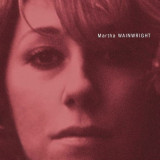
Das selbstbetitelte Debütalbum der kanadisch-amerikanische Singer-Songwriterin Martha Wainwright als 20th Anniversary Edition! Das Album wird bestimmt durch die Intensität und Vielseitigkeit ihrer Stimme und einer Mischung aus introspektiven Texten und emotionaler Instrumentierung. Ihre Songs verbinden poetische Texte mit einer Mischung aus Folk, Rock und Alternative-Einflüssen und erzählen Geschichten von Liebe, Verlust und persönlicher Stärke.
- Glistening
- She Emerges
- Bold And Undaunted Youth
- I’d Rather Be Tending My Sheep
- The Fancy Cannot Cheat So Well
- Only The Diceys
As a founding member of Dublin experimental folk group Lankum, Ian Lynch explores submerged leylines of music and song. Forging a musical path that is all at once dark, mysterious and foreboding, but ultimately transcendental. His new solo project One Leg One Eye sees him taking a fresh approach to musical arrangement culminating in a sound that is more rooted in the raw aesthetics of second wave black metal than contemporary folk. The project was born across 2021, a period in which Lynch was able to enjoy the freedom of experimenting and exploring different paths of sound design without expectation or pressure. Seeking out interesting settings to record music and gather field recordings, there are several environments, external and interior, whose respective essence have seeped into the spirit of the music and come to represent Lynch’s artistic approach and development with this singular debut album, …And Take The Black Worm With Me. Rediscovered spaces in Dublin and the familiar enclave of his bedroom are intrinsic to the distinct and sometimes harrowing atmosphere conjured throughout the album’s five enveloping compositions. One particular location, an abandoned factory where his father worked when Ian was a child, provided a space of great inspiration and intrigue during this time. Lynch frequently visited the large abandoned warehouse and sang with his shruti box, contented in his solitude. ‘I’d Rather Be Tending My Sheep’, grew into existence from those initial sessions, eventually finding a home as an emotive centrepiece to the album. Reflecting on the overall recording of …And Take The Black Worm With Me, Lynch says, “Everything I was doing with these songs was all kind of new to me; experimenting with different sounds, textures and palettes and seeing what I could come up with by piecing it all together. I spent about a year making the album. I loved the whole process because it was basically just me in my bedroom recording everything. The experience of recording like this and having my own time to do it was amazing. I could focus on recording a specific element and happily spend all day working on that one part, doing it as many times as I wanted. At the end of the day if it didn’t feel right, I could just try it again the next day. When you’re on your own you can spend as much time as you want on particular parts until you feel that it’s absolutely perfect. I found that to be a really liberating experience. It was probably my favourite experience recording music.” The collection of songs (and their chronology) featured on …And Take The Black Worm With Me tell a story unique to Lynch’s experiences with anxiety and recognising his shadow self. Whilst the album became an outlet of personal expression for Lynch, the overarching themes and subsequent journey to confront one’s internal dichotomy of light and dark before accepting this inherent duality is universally shared. The eerie and often unsettling world contained within the album’s texturally dense opener ‘Glistening, She Emerges’, driven by the captivating drone of distorted uilleann pipes, immediately immerses the listener in this transportive work. It descends with a great heaviness, yet woven throughout the arrangement is a fascinating and indescribable entity that draws you further into this otherworldly dimension. This mood continues as the tracklist progresses and transitions into Lynch’s haunting realisation of ‘Bold and Undaunted Youth’ which further demonstrates a cinematic influence to Lynch’s compositional style. Sonically, Lynch effectively builds an impressively vast terrain with brilliantly murky lo-fi recording techniques and an unshakable curiosity to move beyond conventional structures and play with the timbre of the instruments available to him. From recording hurdy-gurdy or concertina to tape and experimenting with loops and effects pedals to stitching field recordings together, there’s an intimacy established between Lynch and his audience established through the simultaneously eerie and beautiful tones courting through …And Take The Black Worm With Me. This culminates in ‘Only the Diceys’, the extraordinary closing track in which we reach a place of resolution mapped into the album’s narrative structure. Mixed by longtime collaborator John ‘Spud’ Murphy in his Dublin-based Guerrilla Sounds Studio and mastered by Harvey Birrell …And Take The Black Worm With Me features contributions from Ruth Clinton (Landless) on church organ and vocals by Laurie Shanaman (Ails, Ludicra). Of Shanaman’s participation, in particular, which further illustrates the lo-fi and DIY ethos to the recording, Lynch says, “Laurie is my favourite black metal vocalist of all time and so I reached out to her hoping to have her involved in some way. She did, and she features on the opening track by providing some incredible screams. She recorded them into her phone and sent them over to me; what appears on the album is literally a phone recording of her screaming in her kitchen!” …And Take The Black Worm With Me continues Ian Lynch’s groundbreaking work with Lankum; recontextualising traditional forms and generating new spheres of music in his wake, confirming his status as one of the most interesting and innovative artists working in Ireland today.
- Process Of Elimination
- The Defectors
- They're Guilty
- Circumcision
- White Glove Test
- Trick Or Treat
LOUISVILLE, KENTUCKY has had more than its share of out-of-nowhere bands following from the second big bang that was punk rock. The Babylon Dance Band, Circle X, Your Food, Squirrel Bait, Bastro...these are but some of the exceptional music acts originating in Louisville after 1977. Now it"s time for the great secret of the Louisville first-wave punk scene to be revealed: The Endtables. The Endtables were the crazed brainchild of guitarist Alex Durig, brooding chess-master of the amplified freak-out, and singer Steve Rigot, a flamboyant transgender giant from the shores of southern Indiana who reinvented himself as a Warhol Factory superstar. Like Scarlett O"Hara wrapped in a green velvet curtain, Rigot crafted his own glamorous reality from what was available in the blasted cultural landscape of 1970"s Kentucky. Gold spray paint, duct tape, Ace bandages ... a spectacularly other trailblazer who caused folks to toss their received ideas of beauty and go with the new thing instead. The band first took the stage in late 1978 and was finished by the summer of 1980. In the fall of 1979 they recorded six tracks at a Louisville studio, four of which came out on a 7" EP on their own Tuesday Records. The two remaining tracks ("White Glove Test" and "Trick or Treat") were issued as a single on Self Destruct records in 1991. Both records are among the rarest of any American punk release - more sought after than seen, passed on disintegrating cassette tapes and shouted over upon impact. The music of The Endtables is another chapter in pure American weirdness, as jaw-locking today as the day it was recorded. The scent of modern can be detected in Steve Rigot"s remote vocalese, set against Alex Durig"s guitar outbursts, while drummer Steven Jan Humphrey and bassist Albert Durig (age fifteen!) supply frenzied rhythm. The band rocks its fevered vision to a ferocious degree while Rigot grimly rhymes the truths that remained locked out of the public"s pop tastes in "79-"80. Thirty years of rap and roll later, The Endtables seem inevitable.
- A1: Screaming At The Wailing Wall
- A2: The Seven Deadly Sins
- A3: Factory Girls
- A4: To Youth (My Sweet Roisin Dubh)
- A5: Whistles The Wind
- A6: The Light Of A Fading Star
- A7: Tobacco Island
- A8: The Wrong Company
- B1: Tomorrow Comes A Day Too Soon
- B2: Queen Anne's Revenge
- B3: The Wanderlust
- B4: Within A Mile Of Home
- B5: The Spoken Wheel
- B6: With A Wonder And A Wild Desire
- B7: Don't Let Me Die Still Wondering
In Todmorden, the oddly-named market border town in West Yorkshire with a habit for embracing the weird and wonderful, a burst of sunshine is a precious thing. Through the thick of Winter, through every season in fact, the town’s folk are used to the wind and rain, fog and mist. As much a part of the town as the trademark deep valley it sits in, here the lay of the land invites the weather in, just as it does the many musicians, artists, and unique characters that have come to call the place home over the centuries.
Bridget Hayden is one such soul who found a home among these hills. The experimental musician, who invites the ghosts in for the classic folk songs that make up her stunning new album, knows only too well about such weather, how rare and treasured the breaks from it are. Her favourite thing to do in the valley, she says, is “to make the most of every tiny minute of sunshine.”
Such aspirations nearly derailed the recording of Cold Blows the Rain, her new eight-song collection released via the Todmorden- based label Basin Rock. Having hired the town’s Oddfellow’s Hall to record these new songs in the late summer of 2022, Hayden says the weather was so good she ended up basking in every second of it, only moving inside to begin recording when the sun was setting, working deep into the night to make up the time.
There’s a good chance, however, that it had to be this way. The songs that make up Cold Blows the Rain are not made for the sunlight. They come, instead, wrapped in mist and coated with drizzle, those elements shaping the album as much as the voice and the instruments held within, as real but ambiguous as the ghosts that linger in the shadows. The sound of the dark valley floor.
Mostly centred around meditative and experimental improvisation, Bridget’s work to-date has seen her spend more than two decades recording and performing on the underground music scene. She’s also toured internationally both as a solo artist and as part of bands such as Schisms and The Telescopes, while working on various side-projects with the likes of Folklore Tapes.
For all of this sonic exploration, so much of her work has been formed around elements of traditional folk aesthetics and, over time, she began to piece together a collection of reinterpreted traditional songs that she absorbed as a child from her mother: through The Dubliners and Muddy Waters, to Bessie Smith and The Leadbelly Songbook. Harvesting her love for Nina Simone, Karen Dalton, Margaret Barry, and more, Bridget takes these traditional songs and transforms them into something uniquely evocative
"It goes back to the womb,” Bridget says of that connection. “I would not call it a memory as it is so deep within my blood and bones. My mum was the source, she sang all the time, as part of life. So it was a very lulling and natural introduction. It seemed common to hear her singing – unbeknownst to her – in time with a raindrop dripping at the window,” Bridget continues. “I’ve always wanted to do a folk record as I love these songs so much. It comes much more naturally to me to sing other people’s words, especially when they’re as beautiful as these old verses.”
Underpinned by waves of analogue reverb, and led by Bridget’s stirring and weather-beaten voice, the songs on Cold Blows the Rain drift and crawl like low heavy clouds on flat-top hills, shaped by the land. The backdrop is equally as arresting, all subtle gloom cast in shadow, a gentle but pronounced swirling of textures, crafted from harmonium and violin courtesy of The Apparitions (Sam Mcloughlin and Dan Bridgewood-Hill).
“The weather speaks the most eloquently about human loss,” Bridget says, articulating such sentiments. “It’s good to feel enveloped by something so much vaster than ourselves. The rain and the tears all become one.”
SITW’s fourth studio album is a satirical celebration of mistakes. A joyous lambasting of everyone and everything that’s wrong in the world, against the real-time backdrop of global uncertainty, corruption and political unrest.
A London Charivari. Rough Music. A gleeful old-fashioned cancelling. A Chaunter’s delight. 14th Century recording demons collecting mistakes in a sack. Women mugging rich merchants. Nettles being pissed on. Shit food at Lent. A terrible plan. An undoing. The aftermath of a car crash. Catching people doing something they shouldn’t. Nursery rhymes reimagined as death threats. Behind the sarcastic acerbic delivery, Nicola Kearey and Ian Carter convey thoughtful, essential interpretations encouraging us all to check ourselves, through the multi-layered music of cities through time.
This is about as far away from pastoral folk music as you can get.
In their typical wry city-weary style, a beady eye is cast over those committing wrongs in plain sight, with Kearey narrating a series of tales of people fucking up, or being fucked up, with some brief respite in Lavender - one of London’s oldest street melodies - the album being named after the 14th Century story of Tittivilus, the recording demon, who collects scribes’ mistakes (pokes) and the idle chatter of the “liars with their hairy tongues” congregation.
Despite this seriousness, the album’s working-class dry gallows humour carries a stoic “if you don’t laugh you’ll cry” feeling amongst the corruption, scandals and barefaced lies we all observe on a daily basis, with a warning that “only you can fix your deficits” and “it’s your words and deeds that matter…and let me tell you, they speak volumes”.
The core of the record imagines a sound of traditional London music, where the musical continuum is unbroken by the population decimated by the world wars, or by gentrification and social cleansing that has forced communities apart, and yet absorbs all the influences of all the communities that call London their home.
Carter and Kearey attempted sessions at The George Tavern, Whitechapel, and in Spitalfields, at Denis Severs’ House, and a restored weaver’s townhouse, carrying the aesthetic of the record in their heads as they moved from location to location, before settling into an old factory building and their own workshop. The resulting sparse and economical sound is harsher, more present, more essentially them. It is a mighty haranguing that demands your attention.
After a near decade spent in obscurity, Peter Cat Recording Co. or PCRC, emerged from the toxic winter smog of Delhi to enter the global Krishna consciousness with the release of 2019's "Bismillah", the culmination of years of refining their unique vision of 21st century pop music. Seeking a transcultural sound, centered around the song writing of Suryakant Sawhney, PCRC's music mines ideas from both time and space, across centuries and continents, extracting and transforming them into modern hymns and timeless folk, something you could perhaps imagine hearing in the holo-deck of a ship from Star Trek. As the name suggests, Peter Cat Recording Co. is less a band and more of a self-sufficient factory of music and art. With 3 potent song writers in Suryakant, Dhruv & Kartik, the group is building a legacy informed and echoing the spirit of groups like The Velvet Underground and The Beatles. The next chapter of this entity began with the announcement of their new album, "BETA", a name inspired by the birth of Karan Singh's son. PCRC is Suryakant Sawhney on vocals and guitars, Karan Singh on drums, Dhruv Bhola on bass and samples, Rohit Gupta on keys, horns and woodwind, and Kartik Sundareshan on guitars, horns and woodwind.
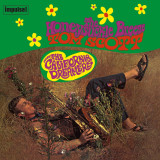
Repress! Before he developed into a star composer and arranger, Tom Scott was an ambitious 19 year-old saxophonist looking for his big break in 1967. The opportunity came when legendary jazz label Impulse paired Scott with 9-piece vocal group The California Dreamers and allowed the young musician to take the helm as a band leader, with The Honeysuckle Breeze as the spectacular result. This rare and long out-of-print album features Scott leading a stellar lineup of sessions players—Bill Plummer (sitar), Glen Campbell (guitar) and Carol Kaye (bass) among them—through warm, smooth versions of songs by The Beatles (“She’s Leaving Home”), Donovan (“Mellow Yellow”), Joan Baez (“North”) and Jefferson Airplane (“Today”), which many will recognize from it’s sampling in the Pete Rock & CL Smooth classic “T.R.O.Y.” Resurrected, refurbished and remastered by the talented folks at Get On Down, Scott’s debut record sparkles with a high quality digital audio transfer from the original master tapes and is packaged in a gatefold paste-on case with a dust sleeve and obi strip. Don’t let this “Breeze” pass you by.
2024 repress
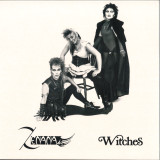
Rush Hour’s RSS series excels in unearthing buried treasure, offering a second chance for artists and releases that have long been overlooked. That’s certainly the case with ‘Witches’, the superb sole single by British 1980s wave trio Zenana.
Originally released on seven-inch by the tiny PRM label in 1986, ‘Witches’ was the product of a sister-brother songwriting team whose music was mostly recorded in the front room of a terraced house in Nanpean, a small industrial village in Cornwall, England’s most south-westerly county. While the single was infectious, impeccably produced and dancefloor-ready, it sold in limited quantities at the time.
Zenana’s story can be traced back to the early 1980s, when singer-songwriter Anita Tedder founded the all-female trio as a vehicle for her musical ambitions. To bring her songs to life, she joined voices with her brother Mike, an early adopter of electronic music who had built a studio – nicknamed MFR, short for ‘Mike’s Front Room’ – in his Cornish home.
Countless Zenana tracks were recorded at ‘MFR’ between 1984 and ’86, with the resultant demo cassette securing the band a management contract, a slew of live bookings, a video shoot and even a television appearance. Buoyed by this underground success, they headed to the remote Sawmills Studio in Cornwall – famously only accessible by boat – to re-record ‘Witches’, a song inspired by local folk tales of witches gathering near Mike’s home.
While this version of ‘Witches’ failed to make an impact at the time, it has become something of a cult classic following its’ rediscovery by crate digger Kiernan Abbott – and subsequent championing by other dusty-fingered DJs including Antal, Skyrager, Trevor Jackson and Luke Una – in early 2023. The buzz inspired Zenana to perform live again for the first time in decades, with the story of their surprise comeback being covered by British media outlets including the BBC and (more surprisingly) the Daily Mail.
Now presented in re-mastered form, ‘Witches’ is a genuinely slept-on gem. Propelled forwards by punchy drum machine beats, a killer synth bassline and fizzing keyboard sounds, the song benefits greatly from strong vocals and an extra-percussive middle eight layered with vocalisations, cosmic spoken word sections and swirling noises.
It comes backed by a brand-new extended ‘spell of love’ courtesy of Bristol duo Bedmo Disco, AKA music journalist Matt Anniss (author of Join The Future: Bleep Techno and the Birth of British Bass Music) and DJ/production partner Gareth Morgan. Anniss is a long-time friend of Mike and Anita Tedder who has fond memories of visiting Mike’s home studio with his family around the time that ‘Witches’ was recorded.
Working from Zenana’s original MFR eight-track recording (tapes of the single version were lost years ago), Anniss and Morgan have turned in the extended ‘dance mix’ the track never had first time around. More atmospheric, clandestine and dancefloor-focused, it offers authentic nods to New York proto-house, mid-80s Shep Pettibone dubs, and the pioneering synth-pop productions and dub mixes of Factory Records regular Martin Rushent.
Are you a mannequin in the eyes of your beloved? Does your partner compare your relationship to a factory that emits plumes of smoke? Are you in love with a seductive and destructive Credit Default Swap? Someone who sucks you in with skyrocketing short term erotic returns - only to ghost you until you crash so hard that you end up broke(n) in your own bed? Do you pay $300 an hour out of pocket to a psychiatrist who promises to help you strike a deal with a difcult parent - one that will produce more stable long term returns on your psychic investments? If so, then you, my friend, may be drowning in the sea of Love in the Time of Capital. It's where everyone would love to drown. It's a new album from John Davis of The Folk Implosion that fnds him backed with confdence by Eli Moore and Andrew Dorsett of the indie pop band Lake. It was recorded by Nich Wilbur at the Unknown, a cavernous recording studio in Anacortes, WA that has been a favorite destination for indie rockers around the nation. Ben Brodin recorded Megan Siebe playing strings on two tracks at his Hidden Branch studio in Omaha, and the album was mixed by Scott Solter in Durham NC. Arrangements are based on the classic power pop trio of drums, bass and electric guitar. Those elements are tastefully embellished with organs and pianos that call to mind records by classic rock bands like Tom Petty's Heartbreakers. That is, if the Heartbreakers were fltered through the Northwestern International Pop Underground tradition, and cast a critical eye on how commodity culture shapes the way we think of ourselves and our intimate relationships. The album also features four ballads, three drum and electric guitar free, for all you late night introspective heads.
The current lineup of New Haven's long running Mountain Movers (guitarist/vocalist Dan Greene, bassist Rick Omonte, guitarist Kr yssi Battalene, & drummer Ross Menze) have been playing together for over a decade now, making their recorded debut on a slew of singles released from 2011-2013, but it wasn't until 2015's "Death Magic" (released on New Haven label Safety Meeting) that the potential of that iteration of the group became clear; Mountain Movers are a force of nature. The camaraderie & sensitivity to each others playing has only grown over time, cr ystallizing on the group's trio of albums for Trouble In Mind; 2017's eponymous "Mountain Movers" served as a reintroduction of the group to a larger audience, while 2018's "Pink Skies" raged like a group confident in its strengths, and 2020's prescient "World What World" - written & recorded before the world shut down - slightly shifted focus away from the jams & back toward the weight of guitarist/songwriter Dan Greene's poetic tales of magical realism. The band's ninth album "Walking After Dark" finds a happy medium between both aspects of the band's strengths; Greene's lyrical compositions and the group's long-form improvised jams. To those that are tuned in, that feeling of communion is evident in the Movers' playing. The members swap & cycle effortlessly through instruments without missing a beat, utilizing the downtime of lockdown to write & record every jam in their practice space. Those piles of tapes would eventually get edited & sequenced into "Walking After Dark", a tour-de-force double-album that balances fried, stony brilliance with outré excursions of experimental serenity. Consider the opening track "Bodega On My Mind" that ambles in like a road-worn traveller, its lysergic folk strums peppered with acidic lead lines from Battalene's Telecaster, eventually giving way to "The Sun Shines On The Moon, where the group's sizzling guitars are buoyed by Omonte's pillowy bass & Menze's percussion. From there on out, tracks like "Factory Dream" give the listener a taste of The Movers' modus operandi here; a mixture of (more) traditional song craft interspersed between long-form, improvised pieces of modern psychedelia. The group shuffles through instruments; synths, drum machines, auto-harp, various forms of percussion (and whatever else was laying around) as well as the trad guitar/bass/drums configuration to craft a suite of songs that - while not necessarily similar in composition - feel unified in their overall sonic scope. Tracks like the 14-minute "Reclamation Yard", whose deep-space electronic pulse is juxtaposed against side C opener "See The City "s persistent acoustic strum that showcase similar ideas of the `spirituality ' of losing ones self in repetition, but executed differently. In many ways "Walking After Dark"s duality feels like a merger of "On The Beach"-era Neil Young & the collective freak-outs of Amon Düül, taking inspiration in the `incorporeality ' of free music and lacing it with Greene's hazy, haunting lyricism and is an exciting step forward for a band that's already a few steps ahead. "Walking After Dark" is released on black double-vinyl in a full color gatefold jacket & includes an insert with artwork & lyrics by member Dan Greene.
Lisbet Fritze and Louise Foo have shared artistic trajectories for half of their lives, having been two thirds of pop noir purveyors Giana Factory. As Glas, the duo reveals a patchwork of everyday observations rooted in significant life changes: moving countries, becoming a mother, keeping sane with and without a significant other. The music conveys a quest for balance, riding the line between doomy drama and playing it cool.
Their 10 song, self-produced debut, Kisses Like Feathers, will be released, worldwide in March 2023, through Hamburg’s hfn music. All lyrics, vocals and instruments were performed by Glas, and recorded in their studio. The album was mixed by Anders Trentemøller, with artwork by Brunswicker studio The Copenhagen-based duo have never been short on inspiration. Lisbet has lent her vocal and guitar talents to Trentemøller, in both the studio and on stage. Louise has explored immersive music with avant-pop project SØSTR, along with her sister, Sharin Foo of The Raveonettes. Lisbet’s other life involves architectural design. Louise works with sound installations in a visual arts context. The musical ideas of these two polymaths find coherence in the newly-formed Glas.
Kisses Like Feathers embody Nordic duality. Dark at times, it also presents with an open ethereality. Some songs feel tailor-made for a club’s sound system. Others lend themselves to intimate, headphone moments. While Lisbet and Louise’s harmonious vocal stack is the common thread throughout the album, the musical fabric is interlaced with acoustic, electric, and electronic instruments. Lo-fi piano and acoustic guitars share a reciprocal space with rich, synthetic orchestration. Galloping, modern rhythms and folk arrangements are often featured in the same song. These elements, and so many others, buttress the pair’s hymns.
- Interruption Introduction
- Passé Composé
- Les Orpailleurs
- Vitesse & Précipitation
- Octopolis
- La Ligne Claire
- The Coordinates Of A Soul
- Sens Dessus Dessous
- Catamaran Cameraman
- Une Minuscule Effervescence
- Le Devoir De Vacances
- Stereogrammes
- The Patterns Of A Hand
- Ainsi Souffle Le Vent
- Schmall Talk
- Maritime Jazz
- The Laws Of Subtraction
- Le Dictionnaire Des Sentiments
- Passé Decomposé (Bonus)
- Les Murènes (Bonus)
- The Contrast Of Characters (Bonus)
Jakarta Records is proud to present “Les Grandes Vacances” courtesy of Beirut’s Cosmic Analog Ensemble, aka multi-instrumental phenom Charif Megarbane. The LP is an expansive musical odyssey, one that paints a melodic tapestry woven from an eclectic panorama of sonic tools. Funky beats, dreamy melodies + cinematic flair combine to create an experience that transcends time. From vibrant funky energy to introspective moods and library-inspired tunes, “Les Grandes Vacances” captures the essence of past and present, inviting you to indulge in the perfect balance of “groove-stalgia.” Out January 19, 2024.
Cosmic Analog Ensemble (1.6k Spotify Monthly Listeners – SML), the prolific one-man band helmed by Charif Megarbane (61.5k SML), the staggeringly prolific producer, instrumentalist, and all-around musical mastermind, returns to his “Ensemble” with LP “Les Grandes Vacances.” Megarbane's artistry has garnered widespread recognition, with notable placements in Spotify Editorial Playlists like "Global Groove" (679k) and "Folk Fabrique" (162k), along with coverage from esteemed platforms / publications such as BBC Radio, Bandcamp, The Vinyl Factory, Time Magazine, and Esquire, among others. Building on the success of his debut solo release “Marzipan” in 2023 via Habibi Funk, “Les Grandes Vacances” is a sonic journey that captures the full scope of Megarbane’s sonic habitus. As a composer and producer, Megarbane touts hugely versatile, sometimes volatile musicianship — his 100+ catalogue of projects (including legendary groups like the Cosmic Analog Ensemble, Free Association Syndicate, Monumental Detail, etc.) features a huge domain of sonic direction. Now, Jakarta Records presents a new expansion in the Megarbane sonic universe.
In the enchanting sonic world of “Les Grandes Vacances,” Cosmic Analog Ensemble expertly combines diverse musical elements to craft an immersive experience. From vibrant funky energy to introspective moments and library-inspired compositions, the album's sonic palette is rich and varied. The meticulously designed artwork by Simone Cihlar (known for collabs with Anderson Paak., Tom Misch, Ivan Ave, Tapioca and others) complements the album's thematic depth, enhancing the visual and auditory journey for listeners.
First single is the thrilling sonic escapade, “La Ligne Claire,” set to release on November 10th in conjunction with LP pre-order. The track immerses listeners in vintage spy movie ambiance, featuring groovy drums, warm keys, thematic guitars, and strings that create an unforgettable car chase scene. As part of the rollout schedule, this single offers a glimpse into the album's captivating fusion of nostalgia and innovation, promising a musical adventure that lingers and resonates in your ears. Second single, the lush and groovy “Le Dictionnaire des Sentiments,” follows in the sonic footsteps of Serge Gainsbourg (complete with beautifully poignant French lyricism), out December 8th to round out the year. The track jerks the listener towards a more meditative state and expanding, cinematic sound.
Kicking of 2024 will be the absolute funkified single 3 “Maritime Jazz,” out January 5th. The track transports you to a groovy marina where the movement of the sea and boats sways you along a Madlib / Yesterdays New Quintet-esque groove.
Reflecting on his creative process, Megarbane cites a stream of consciousness approach to the Cosmic Analog Ensemble: “It’s a very spontaneous, playful, and diary-like approach and workflow…I trust my instinct because instinct is based on experience.”
- A1: Old Friends
- A2: Misty Moutains
- A3: Over Hill
- A4: A Thunder Battle
- A5: Dreaming Of Bag End
- A6: Song Of The Lonely Moutain
- B1: Concerning Hobbits
- B2: Feast Of Starlight
- B3: Protector Of The Common Folk
- B4: Kingsfoil
- B5: I See Fire
- B6: Sons Of Durin
- C1: The Quest For Erebor
- C2: The Bridge Of Khazad Dum
- C3: The Fellowship
- C4: May It Be
- D1: The Riders Of Rohan
- D2: Evenstar
- D3: Minas Tirith
- D4: Twilight And Shadow
- D5: Into The West
Repress!
Immerse yourself into the universe of orcs, hobbits and elves through the soundtracks of The Hobbit & The Lord of the Rings with this limited edition 2LP.
With his surprising first solo album Edmund November, Edmund Lauret (Nordmann, Kosmo Sound, The Milk Factory) returns to his British roots and the music he grew up with. He also debuts as a singer. "I had been making solo songs for a while, but that process was accelerated during the corona period," he says. "I think there has always been a singer inside of me and now it has come out."
The idyllic setting of the southern English countryside where Edmund and his band recorded the album undoubtedly had an impact on the organic, vintage British character of the music.
The songs are open and expansive like the landscapes around the recording studio. The titles and lyrics also have an elusive character; Lauret prefers to leave them to the imagination of the listener.
What is also striking is that Edmund November is clearly influenced by music from the sixties and seventies, the songs Edmund grew up with. As a young guitarist, Edmund was enthralled by Jimi Hendrix, Donovan, early Pink Floyd and The Beatles.
His influences showed him how to master the balance between harmony and melody. This is how Lauret has always worked with his bands for the past fifteen years, and in that sense his solo work is no different.
Edmund November floats between psychedelic folk and melancholy pop. The songs were recorded live with minimal editing, which only adds to the liveliness of the record. Ten songs take the listener on a dreamy musical trip that showcases Edmund's singer-songwriter qualities.
Supermodels ist eine Platte, in der man sich selbst wiedererkennen kann, egal wie alt man ist oder wo man steht. Clauds fesselndes und ergreifendes zweites Album ist ein selbstbewusstes Tagebuch über das Quecksilber des Lebens und der Liebe in den frühen 20ern, ob es nun die Selbstzweifel sind, die sich durch die Songs schleichen, oder der Ort des Kompromisses, den sie zu finden versuchen. Es ist eine exakte Karte der emotionalen und logistischen Wechselfälle, denen sie in ihren frühen 20ern begegnet sind. Risse in Romanzen und Freundschaften, der Druck der Plattenkarriere, die Verluste des Erwachsenwerdens: Jeder dieser 13 Songs ist ein weiterer artikulierter Tagebucheintrag, der ohne Rücksicht auf das Genre und mit der Achterbahn der Gefühle zusammengefügt wurde, die jedem Stück eine so spezifische Schwere verleiht. Für Claud sind dies vertraute Themen, die zum Teil das gleiche Terrain abdecken wie Super Monster von 2021. Aber die Ideen haben ein neues Selbstvertrauen, das sich in Strukturen und Hooks ausdrückt, die nicht zweideutig sind, wenn sie sich von stirnrunzelndem Folk über ungestümen Pop bis hin zu verdrehten Klavierkuriositäten bewegen. Während Supermodels größtenteils im Schlafzimmer ihrer Kindheit entstanden ist, wurde dieses Album an einem eigenen Ort aufgenommen und von einem Team von Vertrauten und Mitarbeitern zu prächtigen Produktionen ausgebaut. Supermodels hat seinen Namen aus dem Albumsong „Screwdriver“. „You caught me looking at photographs of supermodels“, singen sie, wobei sich ihre Stimme langsam über die elegische Zeile erhebt, die auf dem kaputten Klavier geschrieben wurde. "Trying not to cry when I look back at myself". Es ist ein erschütternder Moment, eine Erinnerung daran, wie wir alle daran arbeiten, uns nicht mehr als minderwertig und nicht gleichwertig zu sehen, um ein Dutzend verschiedener Unsicherheiten zu überwinden, die wir in den tiefsten Nischen unserer Fassade zu speichern versuchen. Aber Claud verbirgt bei Supermodels nichts. Es sind Kerne der Verzweiflung, der Erlösung und letztlich der Einsicht, die uns daran erinnern, dass wir weder die Ersten noch die Letzten sind, die sich diesem Blues stellen und weitermachen.
Neue Auflage auf weißem Vinyl des 2013er Albums des englischen Ambient-Folk-Künstlers Jerome Alexander (aka Message To Bears, HIN, J.R. Alexander), das nach 3 Alben bei Dead Pilot Records in limitierte Auflage im Eigenvertrieb erschien. Mit seiner eigenwilligen und bezaubernden Mischung aus Folk, Ambient-Electronica und ätherischen Vocals teilt sich Jerome Alexander bereits mit Neoklassik-Größen wie Nils Frahm und Ólafur Arnalds.
"Morphing Chinese traditional music with bass, Chicago footwork and AI-manipulated birdsong. It's quite a feat to sound this ancient and futuristic simultaneously." The Guardian
"The album presents a world where flute and guanzi find common ground with choral vocals, ambient and AI- manipulated birdsongs." Vinyl Factory
"There has never been a record that sounds like this. And, very possibly, never will be again" Bandcamp
'At once fine-grained and expansive, Lee's work combines traditional Chinese music and historical references with wild electronic experimentation" Pitchfork, 7.6
'Island Birdy' samples Bollywood vocals, 'Foreign Flowers' has hints of warped drum & bass and 'Feather Signifier' is steeped in jazz fusion....Lee's most organic work has plenty of diverse influences" Resident Advisor, Album Of The Day
Swirling layers of OST-style sound design, dreamy choir vocals and traditional Chinese folk combine across eight dynamic and transportive tracks on Birdy Island, the latest album by Beijing-based producer/artist, Howie Lee.
On Birdy Island Lee's intricate brand of traditional pan-asian exploration meets experimental bass weight sound via stripped-back UK Grime sonics and ceremonial taoist music.
Emerging from the forced exile of 2020-2021, Barton found himself with a large number of songs. Taking inspiration from the line of English singer-songwriters that runs from Nick Drake through Lloyd Cole to Pete Doherty and beyond, he chose 10 that lent themselves to an indie-folk aesthetic and began work on the new album, “Manchester Sun”.
Ever the storyteller, Barton weaves tales of first kisses, of soldiers trying in vain to remember their hometown, of missed opportunities and unreliable childhood memories. He casts Orson Wells as a modern day dictator, perched on high in a carousel, and tells the story of the spray-painted marriage proposal that appeared overnight on a motorway bridge 50 miles from London.
Manchester Sun was recorded in England with Barton playing most of the instruments himself, moving through guitar, bass, drums, percussion and Hammond organ during an intensive week-long session in the peaceful, rural setting of Echo Studios. The album places Barton and his acoustic guitar centrestage, with additional contributions from long time collaborators
Léonore Boulanger studied drama, experimental jazz improvisation and Persian music in Paris. Her music reflects her wide interest in African folk and in composers such as George Crumb, Teiji Ito, Harry Partch and singer Meredith Monk. For their fifth album, "Un lièvre était un très cher baiser " Léonore Boulanger & Jean-Daniel Botta with percussionist Laurent Sériès compose and decompose a set of fragments of the outsider art poetry of Ernst Herbeck from Gugging center in Austria. Small formats for the movement, singed in german as in a Kindergarten Krautrock: imaginary folk, music boxes, r'n'b medievalism, motets and futuristic madrigals set up like hopscotches, Byzantine mathematics. UK Tour Dates: Oct 20th CANTERBURY Free Range Oct 21st BIRMINGHAM The Edge (with Judy Brush) Oct 22nd HAY-ON-WYE The Old Electric Shop Oct 23rd LONDON (Léo) Cafe Oto Oct 24th LONDON (Howie) Kennington Cafe Oct 26th MANCHESTER Talleyrand Oct 27th SHIPLEY Triangle Oct 28th NEWCASTLE Cumberland Arms (with Nev Clay) Oct 29th EDINBURGH Settlements Project Oct 30th LIVERPOOL Invisible Wind Factory.
Erstmals auf Vinyl: das erstaunlich ausgereifte Debütalbum der französischen Folk-Rock-Kultband Jack The Ripper aus dem Jahr 2000 in Remaster-Qualität. 'The Book Of Lies' ist das erste Kapitel ihrer Alben-Trilogie, düsterer und direkter als die Nachfolger und der perfekte Einstieg in das Universum dieser Ausnahmeband und ihres besessenen Frontmanns Arnaud Mazurel, die zu einer der wichtigsten französischen Rockbands der 2000er werden sollte.
Jonathan Kusuma is no stranger to club music. He has played, produced and re-edited multiple works. This is what he excels at. But on Dream Bot, he wants his audience to discover a more introspective side of his. Raised in Indonesia, where rhythms are abound, be it from a folk song sung in a ceremony, a machine in a soul-crushing factory or a Boombox on the back of a bicycle, Jonathan’s ears are destined for a career absorbed in rhythm and sound.
With 5 tracks of kaleidoscopic rhythms and introspective moods on Dream Bot, he is paying homage to his rich musical education and heritage. Layered percussive samples come to mind as well as the intricate interplay of gamelans and moody arpeggios. They both evoke their distinct mournful tunings. Dream Bot is a reminder of his roots and the beauty of the sounds on the Indonesian streets that have left many ears in awe.
Leicester born Kevin Hewick is still considered a truly representative force of the post-punk counterculture. His first ‘proper’ gig was on a bill with Joy Division, A Certain Ratio and Section 25. He released a couple of records on Factory in the early 80's, then moving to Cherry Red in 1982. His collaboration with The Sound stands truly as his own masterwork. Recorded and mixed at Elephant Studios, Wapping, London on November 3rd, 4th & 5th 1983, this EP still is a refreshing example of their combined effort. The four tracks move along a sort of outsider folkish post-punk, being perhaps his most accessible work ever.
Justin Thurgur has been at the heart of the UK's World Music scene for over twenty years; principally in his collaborations with the former Fela and Femi Kuti keyboardist, Dele Sosimi, and with the pianist and composer Kishon Khan, most recently in his groups Lokkhi Terra and Cubafrobeat. He has also worked with the likes of Afrobeat drum legend Tony Allen, and with the Cuban giants Giraldo Piloto, Julito Padron and Changuito. Thurgur is also a member of the seminal English folk group Bellowhead.
'Many Faces' brings together this musical journey, with Afro-infused grooves and nods towards Cuban Jazz and Dub, with Thurgur's early passion for the likes of Miles Davis, Coltrane, Lee Morgan, Wayne Shorter, Herbie Hancock, et al....
It features both Khan and Sosimi, who have contributed as co-writers as well as bringing their own inimitable sounds on piano, rhodes and hammond organ. Alongside them are some of the leading musicians on the UK's African, Cuban and Jazz scenes, plus collaborations with rising star singers Jade Pybus and Sahra Gure.
Justin Thurgur - trombone (and some additional keys)
Graeme Flowers - trumpet and flugel horn
Simeon May - tenor, baritone and alto sax
James Allsopp - bass clarinet
Jade Pybus - vocals (on 'Woman')
Sahra Gure - vocals (on 'Be A Little Wiser')
Kishon Khan - piano, rhodes and hammond organ (on tracks 1,3,4 and 5)
Dele Sosimi - piano (on tracks 2 and 6) and vocala (on track 6)
Phil Dawson - guitar
Suman Joshi - double bass (except track 5)
Jimmy Martinez - double bass (on track 5)
Tansay Omar - drums (on tracks 1,3 and 4)
Kunle Olofinjana - drums (on tracks 2 and 6)
Yoann Julliard - drums (on track 5)
Afla Sackey - congas and djembe (on tracks 1,2 and 6), shekere and cowbell, and vocals (on track 6)
Oreste 'Sambroso' Noda - congas (on tracks 3 and 5)
Evie Hilyer-Ziegler - violin and viola
Paul Sartin - violin
Track 1 written by J Thurgur and S Gure
Tracks 2 and 6 written by J Thurgur and Dele Sosimi
Track 3 written by J Thurgur
Track 4 written by J Thurgur and J Pybus
Track 5 written by J Thurgur and K Khan
Recorded at Fish Factory by Simone Gallizio and Sean Douglas, at Boneman Studios by Justin Thurgur, at Better Pass Your Own Studios by Phil Dawson, at Thank You Please Studio by Kishon Khan and at 224 Studios by Matteo Musetti.
Mixed at Hi Street Studio by Mauro Caccialanza.
Mastered at Gearbox by Caspar Sutton-Jones.
Artwork by Matthieu Dufour
Photos of by Siobhan Bradshaw, Justin Thurgur, Stephanie Sian Smith,
Chantal Azari, Alex Bonney, Heather Hoyle, Nicole Thurgur, Joanna Mendel, Tansay Omar, Richard Gearey, Faye Hilyer-Ziegler and Svetlana Onye.
Born into a musical family, as a child Charlie Hickey would obsessively
watch videos of his parents on tour in their old band Uma, learning all the
lyrics that he loved but didn’t understand. This introduction to music sowed a
seed and Hickey was soon writing songs of his own, playing on the guitars
that lay around him and singing about the little details of his school days. He
continued throughout his teen years, his songs becoming an outlet for the
growing anxieties that Hickey now understands to be Obsessive Compulsive
Disorder.
This journey has led to ‘Nervous At Night’, Hickey’s debut album which is
released via Phoebe Bridgers’ Saddest Factory Records. Where 2021’s
‘Count The Stairs’ EP was an attempt to capture the rawness of his
performance, ‘Nervous At Night’ comes alive within its production, Hickey
and producer Marshall Vore leaning into their perfectionist tendencies to find
the best version of each track. “He’s always interested in how you can push
things further but also reigns them in when necessary,” Hickey says. “I think
that’s the true hallmark of a good producer.”
Hickey calls it a pop record but admits that sonically it moves in many
directions, an amalgamation of his love for the folk singers of yesteryear and
more contemporary peers, from Taylor Swift and The 1975 to the Californian
songwriter and producer Blake Mills. This shifting of styles - from the album’s
quiet heavy-hearted ballads to its more gleaming, hook-led tracks - mirrors
its overarching theme: life’s graceless passage between teenage years and
adulthood.
And so we have ‘Planet With Water’, a plaintive love song that bristles with
nostalgia, Hickey singing of phone calls after school, of hearing a neighbour’s
TV through the wall. Elsewhere, ‘Mid Air’ holds a similar weight, Hickey
singing of “spinning in mid-air, waiting for somewhere to land, or some face
to show up” as the song flourishes around his voice, delicately accompanied
by guest turns from fellow LA musicians Harrison Whitford, Christian Lee
Hutson and Mason Stoops.
‘Nervous At Night’ comes alive in its juxtapositions, chronicling the constant
push and pull of life, both its stagnancy and motion. Chiefly though, this is an
album about connection, how even through those struggles we rely on the
people around us to keep moving forwards. “I’d like to write songs that are
for everyone, that let people into my inner world while also hopefully making
people feel less alone on their own. I hope that these songs can be there for
somebody the way my favorite songs have been for me.”
Collaborated with MUNA on track ‘Seeing Things’.
2022 live shows include The Great Escape and SXSW, as well as shows in
London, NY and LA’s Troubadour. Recent US tour with Samia.
LP available on opaque yellow vinyl.
Born into a musical family, as a child Charlie Hickey would obsessively
watch videos of his parents on tour in their old band Uma, learning all the
lyrics that he loved but didn’t understand. This introduction to music sowed a
seed and Hickey was soon writing songs of his own, playing on the guitars
that lay around him and singing about the little details of his school days. He
continued throughout his teen years, his songs becoming an outlet for the
growing anxieties that Hickey now understands to be Obsessive Compulsive
Disorder.
This journey has led to ‘Nervous At Night’, Hickey’s debut album which is
released via Phoebe Bridgers’ Saddest Factory Records. Where 2021’s
‘Count The Stairs’ EP was an attempt to capture the rawness of his
performance, ‘Nervous At Night’ comes alive within its production, Hickey
and producer Marshall Vore leaning into their perfectionist tendencies to find
the best version of each track. “He’s always interested in how you can push
things further but also reigns them in when necessary,” Hickey says. “I think
that’s the true hallmark of a good producer.”
Hickey calls it a pop record but admits that sonically it moves in many
directions, an amalgamation of his love for the folk singers of yesteryear and
more contemporary peers, from Taylor Swift and The 1975 to the Californian
songwriter and producer Blake Mills. This shifting of styles - from the album’s
quiet heavy-hearted ballads to its more gleaming, hook-led tracks - mirrors
its overarching theme: life’s graceless passage between teenage years and
adulthood.
And so we have ‘Planet With Water’, a plaintive love song that bristles with
nostalgia, Hickey singing of phone calls after school, of hearing a neighbour’s
TV through the wall. Elsewhere, ‘Mid Air’ holds a similar weight, Hickey
singing of “spinning in mid-air, waiting for somewhere to land, or some face
to show up” as the song flourishes around his voice, delicately accompanied
by guest turns from fellow LA musicians Harrison Whitford, Christian Lee
Hutson and Mason Stoops.
‘Nervous At Night’ comes alive in its juxtapositions, chronicling the constant
push and pull of life, both its stagnancy and motion. Chiefly though, this is an
album about connection, how even through those struggles we rely on the
people around us to keep moving forwards. “I’d like to write songs that are
for everyone, that let people into my inner world while also hopefully making
people feel less alone on their own. I hope that these songs can be there for
somebody the way my favorite songs have been for me.”
Collaborated with MUNA on track ‘Seeing Things’.
2022 live shows include The Great Escape and SXSW, as well as shows in
London, NY and LA’s Troubadour. Recent US tour with Samia.
LP available on opaque yellow vinyl.
- A1: The Banks Of The Ohio
- A2: O What A Beautiful City
- A3: Sail Away Ladies
- A4: Black Is The Color Of My True Love Hair
- A5: Lowlands
- A6: What You Gonna Call Your Pretty Little Baby
- B1: Silver Dagger
- B2: East Virginia
- B3: Fare Thee Well
- B4: House Of The Rising Sun
- B5: Donna Donna
- B6: John Riley
- B7: Rake And Rambling Boy
- C1: Wagoner’s Lad
- C2: The Trees They Do Grow High
- C3: The Lily Of The West
- C4: Once I Knew A Pretty Girl
- C5: Lonesome Road
- C6: Railroad Boy
- C7: Plaisir D’amour
- D1: Babe, I’m Gonna Leave You
- D2: Geordie
- D3: Copper Kettle
- D4: What Have The Done To The Rain ?
- D5: Lady Mary
Joan Baez – a singer, activist and pacificist committed to the struggle against all segregation – recorded her first album in 1959 at the age of eighteen. The titles on these four sides are taken from the first four records she made, and they all reflected the position she took in the folk movement that was then emerging, together with her militant support of minority groups.
It would be sixty years before she said farewell to the stage, in July 2019 at the Montreux jazz Festival, after a sixty-year career of unrivalled quality that actively showed her sincere commitment to social and political causes. The grace in her exceptional voice, her kindness and admirable personality – and her determination – earned her an exceptional place in the history of popular music, as well as in the hearts of an ever-increasing audience.
‘You Don’t Have to Live in Pain’ is the debut album by
Teeth Agency, curated by Stones Throw founder
Peanut Butter Wolf.
The album includes collaborations with Mercury Prizenominated artist ESKA and producer and musician
Bullion.
Their EP ‘Piano Man Breeds Love’, released on Stones
Throw in summer 2020, received support from 6
Music, KCRW, WWFM, NTS and more.
The Teeth Agency collaboration has already resulted in
the release of art books, exhibitions and audio/visual
based work.
The pair have had four releases with Nyege Nyege
Tapes under the alias Metal Preyers - their self-titled
LP sold out within days of its release and was included
in 2020 End Of Year lists by Crack andd The Vinyl
Factory.
Teeth Agency is the audio/visual project of London
based multi-instrumentalist and producer Jesse
Hackett and Chicago visual artist and gallerist Mariano
Chavez.
The duo are united by their interest in experimental
visuals and a varied range of unconventional musical
styles including lizard lounge jazz, stoner doom psych
and absurdist soul horrorrama. The fourteen songs on
their debut album take the listener through a diverse
range of moods and settings.
For fans of Wilma Archer, Duval Timothy, Paul White,
Bullion, Sam Gendel.
- A1: You're No Good
- A2: Talkin New York
- A3: In My Time Of Dyin
- A4: Man Of Constant Sorrow
- A5: Fixin' To Die
- A6: Peggy
- B1: Highway 51 Blues
- B2: Gospel Plow
- B3: Baby, Let Me Follow You Down
- B4: House Of The Risin Sun
- B5: Freight Train Blues
- B6: Song To Woody
- B7: See That My Grave Is Kept Clean
- C1: Mixed-Up Confusion
- C2: Introduction
- C3: Poor Lazarus
- C4: Mean Old Southern Railroad
- C5: Fixin’ To Die
- D1: Smokestack Lightnin’
- D2: Hard Travellin’
- D3: The Death Of Emmett Till
- D4: Standing On The Highway
- D5: Baby Please Don’t Go
Robert Zimmerman, aka the rock-folk singer-songwriter Bob Dylan, was born in Duluth, Minnesota in 1941. His first three albums – Bob Dylan, The Freewheelin’ Bob Dylan, The Times They Are A-Changing – reoriented both folk music and rock. His early songs were largely inspired by Woody Guthrie, and in turn provided inspiration (and soon a religion) to many music fans around the globe.
There is no doubt that the baby-boomers of 1968 – a whole generation – were seeking an ideal, and the promise of change in Dylan’s first songs transformed a merely average nasal-toned folk singer into a figurehead of the protest movement, and later one of its high priests.
But there are also those who will remember how Dylan invented his own life-story as an orphan with Indian blood who spent his childhood in a circus/ Or how he happily explained to 'Time' why their magazine was pointless (and to CBS News why opinions expressed by media were useless and harmful.) Of course they were, and so Bob was there to change the world. Times, indeed, they were changing, and Bob began wearing silk shirts way before he was handed the Nobel Prize for Literature. We need more Jesus Christs and Bob Dylans as world-changers.
As Plankton Wat, Dewey Mahood uses his considerable
guitar prowess to deliver an album that encompasses
both the wild, seeking energy of free-improvisation and
the deliberate arrangements of more traditional
composition.
With his deft and stylistically varied playing, Plankton
Wat’s ‘Future Times’ escapes psychedelic tropes and
chemical fuelled alterations and instead celebrates an
escape into the natural world.
‘Future Times’ taps into psychedelia’s counter-cultural
heritage as music for protest, liberation and imagining
new ways of being in this world.
“Pastoral drones and swirling psychedelia” - Pitchfork
Known for his guitar prowess in modern psychedelic
music, specifically with Eternal Tapestry as well as
Edibles, Elephant Factory Galaxy Research and Gärden
Söund among others.
‘Future Times’ was recorded at Mahood’s home studio
Solar Commune, with additions from Dustin Dybvig
(Horse Feathers & Edibles) and Victor Nash (Flash Hawk
Parlor Ensemble). Features Ash Dybvig on flute.
LP comes on red or black vinyl packaged with download
code and insert.
“Mahood’s lonesome universe is definitely a psych-folk
monster on the sly… Mahood’s gone far into the burrow
of psychedelia for an album that’s caustic and tender,
bittersweet and effervescent.” - Raven Sings the Blues
As Plankton Wat, Dewey Mahood uses his considerable
guitar prowess to deliver an album that encompasses
both the wild, seeking energy of free-improvisation and
the deliberate arrangements of more traditional
composition.
With his deft and stylistically varied playing, Plankton
Wat’s ‘Future Times’ escapes psychedelic tropes and
chemical fuelled alterations and instead celebrates an
escape into the natural world.
‘Future Times’ taps into psychedelia’s counter-cultural
heritage as music for protest, liberation and imagining
new ways of being in this world.
“Pastoral drones and swirling psychedelia” - Pitchfork
Known for his guitar prowess in modern psychedelic
music, specifically with Eternal Tapestry as well as
Edibles, Elephant Factory Galaxy Research and Gärden
Söund among others.
‘Future Times’ was recorded at Mahood’s home studio
Solar Commune, with additions from Dustin Dybvig
(Horse Feathers & Edibles) and Victor Nash (Flash Hawk
Parlor Ensemble). Features Ash Dybvig on flute.
LP comes on red or black vinyl packaged with download
code and insert.
“Mahood’s lonesome universe is definitely a psych-folk
monster on the sly… Mahood’s gone far into the burrow
of psychedelia for an album that’s caustic and tender,
bittersweet and effervescent.” - Raven Sings the Blues
“dego & 2000Black Remixes / Fish Factory Sessions” features two remixes from renowned broken beat innovator dego and 2000Black of “Sour Face”. One rooted in Brazilian funk and boogie and the other delving into a deeper Bruk realm, the reworkings showcase the versatility of the original track. Taken from Bryony Jarman-Pinto’s critically acclaimed debut LP ‘Cage and Aviary’, “Sour Face” focusses on the wider frustrations of everyday life; “of break ups, environmental issues, the album and myself” she confesses.
Alongside a selection of beautifully recorded as-live sessions of album tracks from the songwriter and vocalist, performed with a full band at London’s legendary Fish Factory Studios. “The sessions were meant to feel live, like a performance.” Bryony explains, “All the musicians have put their ideas into the songs, transporting them to somewhere beyond the album versions and allowing them to take on a new life”. Released last summer, the much-anticipated ‘Cage and Aviary’ was written over the course of three years and created with long-time friend, collaborator and Tru Thoughts label-mate Tom Leah AKA Werkha. Tying together personal reflection to wider social issues, the album gives an intimate insight into what it means to come of age in today’s world. Sophisticated song writing layered with jazz, soul and elements of folk charmed many major tastemakers including Gilles Peterson, Jamie Cullum, Lauren Laverne, Tony Minvielle, Toshio Matsuura, Laurent Garnier, Clash, The Telegraph, Bandcamp and EARMILK.
SUMMER OF SEVENTEEN are MONIKA KHOT (NORDRA, ZEN MOTHER), WILLIAM FOWLER COLLINS, DANIEL MENCHE, FAITH COLOCCIA (MAMIFFER), and AARON TURNER. (SUMAC, SPLIT CRANIUM).
Wildfires plagued Washington state during the summer of 2017, their smoke drifting westward toward the Seattle area and toxifying the air. Shortly before that trauma, MONIKA KHOT, WILLIAM FOWLER COLLINS, DANIEL MENCHE, FAITH COLOCCIA, and AARON TURNER had gathered at the latter two musicians' House Of Low Culture studio on idyllic Vashon Island with revered producer RANDALL DUNN. There they cut eight songs that capture the makeshift band's feelings of what COLOCCIA calls "a kind of doomsday lurking in the background." It's as if these highly attuned players had a premonition.
"Summer Of Seventeen" -which was edited and arranged by MONIKA KHOT, who records apocalyptic music solo as NORDRA and plays in the avant-rock band ZEN MOTHER—is a nuanced admixture of these musicians' sounds and a culmination of all of their previous collaborations. COLOCCIA and TURNER have created eldritch folk and chamber rock for over a decade in MAMIFFER while engaging in various solo and group projects that explore their profound spirituality in sound. MENCHE has been a fixture on the abstract composition scene for 31 years and COLLINS is a savvy explorer of drone and ambient forms. Their ephemeral summit meeting has yielded a masterwork for the ages.
A heaven/hell and beauty/beastliness dichotomy pervades the album—as if a titanic struggle was transpiring in that small studio. The fearsome trumpet fanfare that starts "Chorus Of The Innocents" heralds a baleful fate. With a subliminal industrial rhythm bristling beneath the eerie exhalations, the song submerges us in a slow-motion maelstrom, a horror-film facsimile of MILES DAVIS' "Bitches Brew". "Perceived Slight" threads death-metal screams through a stark, suspenseful atmosphere, with austere glints of guitar and beats like fists on a casket lid intensifying the dread.
Angelic chants and celestial drones perfume the air in several of the songs on "Summer Of Seventeen", countered with muted blast beats, serrated hums, jagged glitches, simulacra of grinding gears and lightning. It's as if no good deed goes unpunished. "Spirits Of Redeemer" could be an elegy for the human race while "Cultural Orphan" sounds like a symphony for a malfunctioning factory. The album ends with "Theatre Needs An Audience," a harrowing ballad somewhere between EINSTÜRZENDE NEUBAUTEN and MERZBOW; it's a savage rent in the space-time continuum.
"Thinking about this record now," COLOCCIA recalls, "it seems like we were all sort of anticipating something like this current pandemic happening, although we were thinking about it as fire in the hands of man (literal fire, and also gunfire) that would overturn the normal running of things and reveal the current false beliefs systems holding up most of America."
That grave aura infiltrates "Summer Of Seventeen", However, a hopefulness bubbles beneath the foreboding architecture of sound and noise summoned here. The bunker is the new penthouse.
-Dave Segal, April 2020
Following on from Myele Manzanza's acclaimed 2019 jazz album, 'A Love Requited', we have a 2020 addendum to that project; an EP of remixes by a set of diverse musicians from all corners of the globe.
Detroit legend Theo Parrish starts off the proceedings. Theo & Myele have previously worked together on various projects over the years, such as with live outfit, The Unit, whilst Myele's 'Surgery Session' of Theo's track 'Moonlight' was picked up by The Vinyl Factory last Summer as well. On his remix of 'Itaru's Phone Booth', Theo maintains the tempo & structure of the original track, whilst tempering the horns and adding some spaced-out keys & a little low end theory to the equation, making this a flip seasoned with Theo's unique flavour.
Mark de Clive-Lowe follows with the most uptempo track on the EP, a delightful bruk refix of 'Big Deal'. Fellow New Zealander, regular collaborator (notably on Manzanza's sophomore album 'OnePointOne') and hugely respected musician in his own right, MdCL delivers a hefty groove direct for the clubs; heavy drums & sci-fi synths lead the way atop of the original's powerhouse horns, switching up with some MAW-esque 4/4 tribal business to close out.
Cardiff's finest, Earl Jeffers & Don Leisure, aka First Word label-mates Darkhouse Family, kick off the flipside with their take on the appropriately titled 'Family Dynamics'. Fresh from their solo & combined projects (producing for Kamaal Williams, running house label Melange, and creating beat-tapes like Halal Cool J & Shaboo), the duo turn out some punchy boom-bap vibes which pulsate throughout the track, accompanied by some sweet vocal hooks, transposing the original into a plucky heads-down neo-soul tinged stomper.
Borrowed CS is another New Zealand artist that's been bubbling away in the underground NZ electronic scene for several years now, as a DJ and a musician. He ends this selection of remixes, taking the original jazz components of 'Pencarrow' and transforming it into a synth-boogie lead piece of brooding broken beat - a 'Clear Path Depiction' even.
Released on Worldwide Award-winning UK label, First Word Records, the original album was also co-produced by another antipodean label-mate, Ross McHenry, who released a new album recently.
The son of a Congolese master percussionist, Myele Manzanza's roots in jazz and African rhythm are well established. Adding his long-time influences of hip hop and dance music into the mix, this EP exemplifies his approach to fusion, and his persona as an ever-evolving artist, drummer & composer. Since his days as part of Electric Wire Hustle, he had his debut release on BBE, has released three solo albums, and done tours & collabs with folks like Jordan Rakei, Miguel Atwood-Ferguson, Recloose & Amp Fiddler. Since moving to London from New Zealand late last year, he has already shared stages with Hiatus Kaiyote, The Bad Plus & Alfa Mist, rocked The Jazz Cafe & Ronnie Scott's, and ably demonstrated his DJ side-hustle chops at stations like Soho Radio, Worldwide FM & NTS, as well as behind the decks in a few danceries across the capital, and behind his drum kit daily.
Already hard at work on brand new material, expect to catch Myele Manzanza live at various shows & festivals across the UK & Europe this coming Summer.
'A Love Requited - The Remixes' is available on 12" vinyl & all digital outlets from March 6th 2020.
Fifteen folk tales from 7 albums made over 7 years by an imbued composer, conjurer & channeler of cosmopolitan Blues. Downtown Castles received “Best of 2018” honors from WIRE Magazine, Liberation France, The Quietus, Gilles Peterson, The Vinyl Factory, Aquarium Drunkard, and AV Club.
Dub echo, hip-hop lyricism and heavy guitar fuzz are boiled down into a heady, characteristic musical brew.
On “Dreaming Is Dead Now”, multi-talented wonder Skinny Pelembe meditates on grief, heartache, stunted aspirations and fresh possibilities in post-recession Britain. For his debut album, the Johannesburg-born, Doncaster-raised artist weaves together a patchwork of personal and musical touchstones; memories and observations are dreamily laced together, sun-dazzled California folk diced with the murkier corners of the UK dance lineage.
Tipping a hat to West London broken beat as much as My Bloody Valentine, the album was co-produced by Malcolm Catto (of The Heliocentrics, who’s previously worked with Yussef Kamaal, DJ Shadow, and Madlib), who helped to distil down its bounty of ingredients into the record’s distinctive flavour. Tough, tight-programmed rhythms are washed over with fuzzy overtures, and the title track is the product of a studio session with a foundational drum & bass duo (credited under the covert alias of The Bleeding Edge). It’s the rare kind of record where the messy, in-between musical spaces are given a light to shine.
First discovered through the Gilles Peterson- and Brownswoodfounded Future Bubblers programme, Skinny has since made it onto Peterson’s iconic Brownswood Bubblers compilation series, performed and collaborated with fellow Future Bubbler Yazmin Lacey, and been tipped by the likes of Ghostpoet and James Lavelle. Praise has also come from The Observer, The Quietus and Huck, with previous singles “Spit / Swallow” and “I Just Wanna Be Your Prisoner” bumped up onto heavy rotation on BBC 6 Music’s A-List. He’s also been in demand for live sessions with The Vinyl Factory and Worldwide FM, and supported Nightmares on Wax and Maribou State.
- A1: A Min We Vo Nou We - Les Sympathics De Porto Novo
- A2: Asaw Fofor - Ignace De Souza & The Melody Aces
- A3: Dja Dja Dja - Stanislas Tohon
- B1: L´enfance - Elias Akadiri & Sunny Black´s Band
- B2: Mé Adomina - Picoby Band D´abomey
- B3: Nounignon Ma Klon Midji - Antoine Dougbé
- B4: Moulon Devia - Orch. Poly-Rythmo De Cotonou
- C1: Paulina - Black Santiago
- C2: Glenon Ho Akue - Lokonon André Et Les Volcans
- C3: Sadé - Sebastien Pynasco And L´orchestre Black Santiago
- C4: Baba L´oke Ba´wagbe - Super Borgou De Parakou
- D1: Gangnidodo - Cornaire Salifou Michel Et L´orchestre El Rego & Ses Commandos
- D2: How Much Love Naturally Cost - Gnonnas Pedro And His Dadjes Band
- D3: Idavi - Orchestre Poly-Rythmo De Cotonou
African Scream Contest 2
A great compilation can open the gate to another world. Who knew that some of the most exciting Afro-funk records of all time were actually made in the small West African country of Benin Once Analog Africa released the first African Scream Contest in 2008, the proof was there for all to hear, gut-busting yelps, lethally well- drilled horn sections and irresistibly insistent rhythms added up to a record that took you into its own space with the same electrifying sureness as any favourite blues or soul or funk or punk sampler you might care to mention.
Ten years on, intrepid crate-digger Samy Ben Redjeb unveils a new treasure- trove of Vodoun-inspired Afrobeat heavy funk crossover greatness. Right from the laceratingly raw guitar fanfare which kicks o Les Sympathics' pile-driving opener, it's clear that African Scream Contest II is going to be every bit as joyous a voyage of discovery as its predecessor. And just as you're trying to get o the canvas after this one-punch knock out, an irresistible Afro-ska romp with a more than subliminal echo of the Batman theme puts you right back there. Ignace De Souza and the Melody Aces' Asaw Fofor" would've been a killer instrumental but once you've factored in the improbably-rich-to-the-point-of-being-Nat-King-Cole-influenced lead vocal, it's a total revelation.
The screaming does not stop there, in fact it's only just beginning. But the
strange thing about African Scream Contest II's celebration of unfettered Beninese creativity is that it would not have been possible without the assistance of a musician who had been trained by the Russian secret services to "search and destroy" enemies of the country's (then) Marxist-Leninist president Mathieu Kerekou.
Already familiar to fans of the first African Scream Contest as a mainstay of ruthlessly disciplined military band Les Volcans de la Capitale, Lokonon André vanished in a cloud of dust at Ben Redjeb's behest with a list of names and some petrol money, only to return a few days later having miraculously tracked down every single name he'd been given. The source of this Afrobeat bounty-hunter's impressive people-finding skills - his training with the KGB - highlights the tension between encroaching authoritarian politics and fearless expressions of personal creative freedom which is the back-story of so much great African music of the 60s and 70s. Happily, in this instance, Lokonon was tracking the artists down to oer them licensing deals, rather than to arrest them.
Where some purveyors of vintage African sounds seem to be strip-mining the
continent's musical heritage with no less rapacious intent than the mining companies and colonial authorities who previously extracted its mineral wealth, Samy Ben Redjeb's determination to track this amazing music to its human sources pays huge karmic dividends.
Like every other Analog Africa release, African Scream Contest II is illuminated by meticulously researched text and eortlessly fashion-forward photography supplied by the artists themselves. Looming large - alongside Lokonon André - in the cast of biopic-worthy characters to emerge from this seductive tropical miasma is visionary space-nerd Bernard Dohounso, who laid the foundations for Benin's vinyl predominance by importing and assembling the turntables that would play the products of his Bond villain-acronymed pressing plant SATEL, a factory that would revolutionise the music industry in the whole region.
The scene documented here couldn't have been born anywhere else but in the Benin Republic , and the prime reason for that is Vodoun. It's one of the world's most complex religions, involving the worship of some 250 divinities, where each divinity has its own specific set of rhythms, and the bands introduced on the African Scream Contest series and other compilations from that country were no less diverse than that army of dierent Gods. At once restless pioneers and masters of the art of modernising their own folklore, the mystic sound of Vodoun was their prime source of inspiration.
One especially irascible Vodoun-adept was Antoine Dougbe, who styled himself The devil's prime minister' while turning ancestral rhythms into satanically alluring modern beats. As Orchestre Poly-Rythmo songwriter Pynasco has observed sagely, Evil is not elsewhere, evil extends into the house'. And African Scream Contest II is a gloriously cinematic road-trip through an undiscovered realm of music lore whose familiarity is every bit as thrilling as its otherness.
Written by Ben Thomson, March 2018
Paper Recordings' Ben Davis takes off his Flash Atkins cape and mask to launch a new project exploring things left of centre and balearic.
In these disposable times, Stubb will celebrate community and DIY with a limited run of 300 vinyl screen-printed kraft card sleeves of commissioned illustrations by artist Rachel Johns plus hand-drawn labels by Hebden Bridge's The Egg Factory.
We Are Launching is a journey in to psychedelic balearia with one of the most exciting artists of recent years, Jane Weaver
Her Mercury Music Prize long-listed album 'Modern Kosmology' was described by The Guardian as "a lean and thrillingly addictive slice of unearthly pop".
The Stubb collaboration is a sublime head trip to the deep reaches of space and electronica with hallucinatory guitars, burbling synths and arpeggiators that are beautifully set off by Jane's ethereal vocals.
Mike Lindsay is founder and producer of folktronica pioneers Tunng and his distinctive tones sing the praises of doing nothing on Boring Days, which is psychedelic leftfield pop at its finest.
The track is locked down by a nagging fifth bass with vocal pops, hand claps, muted afro guitar, washed synths and arps that build before the choruses hit in a wave of analogue keyboards and fuzz guitar.
After that, a gloriously stretched outro takes you straight to the mediterranean. There's also an edited instrumental that brings out the sunshine...
- 1


![حمد [Ahmed] - سماع [Sama'a] (Audition) LP 2x12"](https://www.deejay.de/images/l/7/3/1192273.jpg)