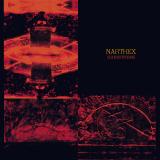
Narthex means railed-off western portico or ante-nave in earty Christian churches for women, penitents and catechumens.
Narthex is also a trio featuring (at the beginning) Daniel Denis (Universe Zero, Art Zoyd), Alain Neffe (Pseudocode, Human Flesh, Bene Gesserit) and Nicolas de Villemarqué (Nuwage Music). They had a very different musical background, mostly electric-electronic rock, and decided to work in the field of acoustic music recorded live (two microphones + portable DAT) in churches of their area. After several recording sessions, Nicolas de Villemarqué decides to leave the group. ln order to complete the trio, Daniel Denis and Alain Neffe ask the participation of some of their friends. Anna Homler, Michel Berckmans and Daniel Malempré have accepted the challenge and succeed to fit into their musical universe.
The instruments Church organ, harmonium, sitar, saxophone, oboe, bassoon, zither, valiha, senzas, tarang, voice, percussions, metal clarinet, classical guitar, mew's harp, ongolok, violin, dulcimer, mouth organ, etc.
The music Often dark, sometimes repetitive or experimental, sometimes rhythmical and exotic, always based on emotion inducted by the sound. One could define it as dark age music (as opposite to new age music), a sort of minimal come back to the roots and purity of acoustic sound without the cultural background linked to the 'academic' use of some instruments (for example African senzas are transformed and tuned to sound like Indonesian instruments, sitar or harmonium are used as rhythmical instruments, vahilla is played with a bow).
The places Churches located in an area of 20 kms in the region where Daniel Denis and Alain Neffe live for years and where they feel at home (and feel the vibrations. Every church, place emotionally loaded, has its own specific resonance and sound structure. Every church gave to the musicians a particular inspiration and fill the sound of the instruments with a natural reverberation/echo. The place but also the moment is important. They had the privilege to be allowed to record in the Ecaussines church at night lightened only by candles. lt was one of their most productive recording sessions.
Suche:the friend
- A1: Phantoms & Monsters (4 20)
- A2: A Witch & A Devil (3 56)
- A3: Truth Is For Losers (2 50)
- A4: Schmutzig (2 37)
- A5: My Friend The Monster (4 08)
- A6: The Madness Of The Summer (4 51)
- B1: Morn (4 39)
- B2: Noon (6 11)
- B3: Night (11 27)
- C1: Flight (Piano Solo) (20 30)
- D1: Break (Piano Solo) (7 30)
- D2: Moon (Piano Solo) (13 40)
Smokey Vinyl[27,52 €]
I fell into a deep sleep of reason Everything broken and hence when I woke up from that deep sleep of reason it all made sense
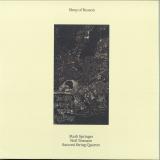
A Unique Artistic Partnership This project represents a distinct and carefully considered artistic endeavor. Developed by Mark Springer (Rip, Rig and Panic) and Neil Tennant (The Pet Shop Boys), it combines a suite for piano, quartet, and quintet with vocals, accompanied by lyrics offering thoughtful introspection. The collaboration explores the intersection of divergent creative approaches-one characterized by radical expression, the other by meticulous craftsmanship. The result is a work that invites reflection and demonstrates the potential of disciplined artistic dialogue.
The Sources of the Project Neil Tennant: I bought a book of Goya's print series Los Caprichos which had inspired Mark's music and saw that the artworks were a satirical, cruel, nightmarish portrayal of the politics, corruption and culture of his era, exploring his dreams - or nightmares - while exposing the double standards of the ruling establishment. The lyrics I wrote for "Sleep of Reason", in response to Los Caprichos, are intended to be sardonic and dreamlike, looking back to Goya's nightmares but then reflecting on my experiences in 21st Century popular culture and media in which I have located the "monsters" Goya saw in his dreams. It often feels like we're living in an era dominated by monsters with their grotesque egos hollering through social media, unfiltered and untruthful, leaving a trail of wreckage behind them. Maybe it's always felt like that.
Joyce Manor are California pop-punk legends and I Used To Go To This Bar is this epochal band operating at the top of their game. They continue to deliver relentlessly satisfying rock music in a manner that makes it look simply effortless. The Torrance, California-hailing trio of Barry Johnson, Chase Knobbe, and Matt Ebert are at a point in their career where their position as one of the most beloved rock bands is a foregone conclusion. Their seventh album finds the group continuing to find rich new veins to tap in their short-and sweet songcraft without losing an ounce of bite that gained them such repute in the first place. I Used To Go To This Bar further situates Joyce Manor in the rich lineage of their influences and inspirations. Think AFI"s rapid-fire burn, Weezer"s indelible power-pop acumen, and the dusky emotionalism of The Smiths while further establishing them as leading lights in the current rock landscape. The fresh burst of inspiration that fuels I Used To Go To This Bar proves that Joyce Manor are far from content to rest on such laurels, moving forward with their sound and style in a way that reminds you of how they got to this point in the first place. Catch them live at Coachella 2026.
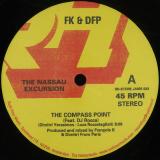
Some 30 years after they first met in the DJ booth of Tokyo’s Spacelab Yellow nightclub, close friends François Kevorkian and Dimitri From Paris have finally joined forces in the studio. The result is The Nassau Excursion, a dazzlingly good three-track EP inspired by their joint love of disco and boogie-era dance records made at Island Records’ Compass Point Studio in the Bahamas.
Across three essential tracks, François and Dimitri explore and celebrate this distinctive Caribbean post-disco sound – one where weighty basslines and heavy drum machine beats rub shoulders with early ‘80s synths, dub-style production, heady hand percussion patterns and arrangements drenched in space echo and tape delay.
Placid aka Paul Wise is the operator in chief at ‘We’re Going Deep’ – an online community and record label born out of a lifelong love affair with the many shades of electronic rhythm, and an obsession for collecting records since 1988. With a mission to share and release new music via his We’re Going Deep and We’re Going Back imprints, you’ll find only the best in underground Acid, Electro, IDM, Techno and House for the dance floor and your listening pleasure.
Up next in the label series, We’re Going Deep is excited to welcome 4 tracks of fresh material from pivotal electronic music maker Gerard Hanson, under his much prized E.R.P. alias. Renown for keeping his profile below the radar and letting the machines do all the talking for him. Hanson’s work as a producer has been much coveted since his debut back in the mid 90s as Convextion. Hailing from Dallas, Texas, he has become something of a hero in the underground Electro community. His work as E.R.P. has left a huge impression on labels such as Frustrated Funk, Bleep43 and Semantica over the years. Renown for his distinctive shimmering machine funk aesthetic, he ably summons the outer reaches of deep space listening thanks to his innate mastery of brooding, sci-fi soundscapes that few can equal.
Following releases for Apnea and Synchrophone, Hanson lifts off with a heartfelt tribute to our recently departed friend James Baker on ‘One4ReKab’. Ascending with the pulse of a steady kick drum, precision snares take hold as whispered vocals seep in and out of consciousness. Underpinned by trademark angular bass tones, soaring strings inject a deep sense of foreboding as all the parts fuse with a fierce glow. Stepping things a notch back as the sonic trajectory levels out, ‘Onward’ takes a more contemplative stance in a fusion of hypnotic drum programming that leads the fray whilst subtle arpeggios flow, all whilst wistful melodies wind you in.
Over on the flipside, Hanson revisits his 2008 composition “Multipole Vector” to launch yet another interstellar cruise by mission in the shape of “Multipole Vector II”. Leading with the simplest of bass progressions and metronomic beat programming, twinkling synth elements reach across the void as chords sweep to and fro to powerful effect. Ending out on the uplifting yet almost IDM inflected tones of “Self Unemployed”, this low tempo air rounds the EP off on an equally captivating note filled with playful charm, that makes this collection of music all the more pleasing.
Repress.
Just one week after the outbreak of the First Intifada in 1987, Riad Awwad brought his sisters Hanan, Alia and Nariman together in their living room and began recording The Intifada album on equipment he had made himself. One of these was co-written with their friend, the acclaimed Palestinian writer Mahmoud Darwish. Riad printed 3000 copies of the cassettes which he began distributing in the Old City of Jerusalem and across the West Bank. The Israeli Army immediately confiscated all the copies they could find, the vast majority of which remain in the military archives to this day. Riad was arrested, interrogated and detained for several months. Straight after his release, he formed a band, Palestinian Union, and put out a new album. He then founded a school, offering kids in the West Bank an alternative musical education, teaching them how to create their own electronic equipment. In 2005, Riad was tragically killed in a car accident. His legacy lives on through his family, his timeless music and his powerful story, which continues to inspire to this day.
Over several years, Mo’min Swaitat has amassed an archive of rare tapes and vinyl from Palestine and beyond. Many of these were acquired from a former record label in his hometown of Jenin, in the north of the West Bank. The Majazz Project is a research project and record label borne out of the archive, focused around sampling, remixing and reissuing vintage Palestinian and Arabic cassettes and LPs, shedding new light on the richness and diversity of Arabic musical heritage.
- Side A. Gypsy Song
- Side B. Never Land
After traveling through Mexico, Miami, the Bahamas, and New Orleans, Nishioka recorded his fourth album South American Journey in Los Angeles,
released in 1979. From this album, two of his most celebrated tracks—“GYPSY SONG”, a fan favorite with numerous cover versions, and “NEVER LAND”,
featuring the distinctive sound of steel pans and a Japanese reggae vibe are now being pressed on 7-inch vinyl for the first time in a limited edition!
The recording features members of the So What Review band, including Junshi Yamagishi (guitar) and Osamu Ishida (guitar), along with renowned steel pan
player Robert Greenidge, known for collaborations with Van Dyke Parks and Taj Mahal.
(FLATT THE LAIDBACK)
Kyozo Nishioka Profile
(Born May 7, 1948 – Died April 3, 1999)
Singer songwriter from the Shima Peninsula in Mie Prefecture, affectionately nicknamed “Zo-san”.
After enrolling at Kinki University and moving to Osaka, Nishioka became a regular at the folk cafe Dylan in Namba, opened in August 1969 by Masaji Otsuka
and Yoko Ishimura. Dylan was a gathering spot for folk music enthusiasts from all over Japan.
Nishioka formed the folk group The Dylan with Masaji Otsuka and You Nagai, performing at folk camps and the Nakatsugawa Folk Jamboree. In 1971, Nishioka
left the group, and Otsuka and Nagai continued as The Dylan II. Nishioka wrote and composed the song “Puka Puka” under the pen name Zokyozo, which became
one of his signature works. The song was first released in July 1971 as the B-side of The Dylan II’s single “Otoko rashii tte Wakarukai” on URC Records.
Nishioka began his solo career, releasing his debut album “Dylan nite” in July 1972, produced by Kinji Yoshino on Bellwood Records, which included his own
version of “Puka Puka”. In September 1973, he appeared at the farewell concert of Happy End titled CITY – LAST TIME AROUND at Bunkyo Public Hall in Tokyo.
His 1974 album “Machiyuki Murayuki” was produced by Haruomi Hosono, and his 1975 album “Rokka My Baby” featured support from Shigeru Suzuki’s band
HUCKLE BACK. Nishioka recorded three albums under Hosono’s production, deepening their friendship.
Together with his wife and lyricist KURO, Nishioka wrote songs for artists such as Eikichi Yazawa. The couple traveled the world, recording overseas albums such
as “Nanbei Ryoko” (1977), “Yoh-Sollo” (1979), and “New York to Jamaica” (1981), incorporating reggae, calypso, and other global sounds. In the 1980s, he released
works under the duo name KYOZO & BUN with Yoshifumi Okajima, and in the 1990s returned to solo projects with albums like “START” (1993) and “Farewell
Song” (1997).
After KURO’s passing in 1997, Nishioka continued his musical activities until his own death in 1999 at the age of 50. His music transcended the boundaries of folk,
blending jazz and tropical elements to create a unique world view, leaving an indelible mark on Japanese music history.
- 1: Tinkerbell
- 2: Lights On, Nobody Home
- 3: Coping
- 4: Astro Boy/Ochanomizu
- 5: Duuude
- 6: Friends Of Fire
- 7: A Chance Of A Lifetime
- 8: Turn Of Luck
Turquoise/Black Smoke Vinyl[24,33 €]
KALEIDOBOLT’s fifth album is pungent to the ears – KARAKUCHI out in March Karakuchi is one record you can judge by its cover. The first time Kaleidobolt’s faces have adorned an LP, they have been fused into a torpedoing biomechanical vehicle. Echoing The Birthday Party’s Junkyard or Motörhead’s Orgasmatron (…on acid?!), the illustration epitomises perfectly Kaleidobolt’s agenda of “hyperkinetic rock”. Their feverish, psych-prog sound is full of motion. It jerks around at different speeds, threatening to spin out of control and crash into flames at any given moment. What’s more, it isn’t taken too seriously. This is heavy and intricate music, yes. But as bassist and co-singer Marco Menestrina puts it, the Kaleidobolt attitude is “an ugly smirk more than an angry face with a fist.” On their fifth album since forming in 2014, the Helsinki-based outfit lean into their strengths as a formidable power trio. With their previous two records, 2019’s Bitter and 2022’s This One Simple Trick, they had thrown everything at their disposal into the recording with no expense spared on overdubs, effects and kitchen sinks. Produced again by Niko Lehdontie (Oranssi Pazuzu), Karakuchi comes from tightly rehearsed, live-in-the-studio takes. Kaleidobolt realise that greater sparsity can be a strength, and they’ve allowed their instruments extra space to breathe. It makes for their earthiest, purest and perhaps most authentic record to date. Karakuchi’s exuberant style emerges from the individual members’ contrasting listening habits. These span classic prog, Japanese city pop, noise rock, post-hardcore and historical podcasts. One record they can all agree is a masterpiece, the centre of the Venn diagram where all three members meet, is King Crimson’s Red. As for their new album’s title, that’s as suitable as the cover art. “Karakuchi” is the slogan of the Japanese beer brand Asahi Super Dry. Translated literally, this means “pungent to the mouth”. As drinkers of that product, Kaleidobolt acknowledge its parallels to their songs. “It’s very intense, right at the front, like at the first bite,” explains Menestrina. “And then it leaves your mouth feeling refreshed. The flavour doesn’t linger in your mouth, basically. It has a quick, hard finish. With a bit of a stretch, we thought that that could also be said of our music.” Karakuchi is Kaleidobolt at their hardest, fastest, tightest and super-driest. Pungent to the ears. -JR Moores, November 2025
- 1: Tinkerbell
- 2: Lights On, Nobody Home
- 3: Coping
- 4: Astro Boy/Ochanomizu
- 5: Duuude
- 6: Friends Of Fire
- 7: A Chance Of A Lifetime
- 8: Turn Of Luck
Black Vinyl[23,49 €]
KALEIDOBOLT’s fifth album is pungent to the ears – KARAKUCHI out in March Karakuchi is one record you can judge by its cover. The first time Kaleidobolt’s faces have adorned an LP, they have been fused into a torpedoing biomechanical vehicle. Echoing The Birthday Party’s Junkyard or Motörhead’s Orgasmatron (…on acid?!), the illustration epitomises perfectly Kaleidobolt’s agenda of “hyperkinetic rock”. Their feverish, psych-prog sound is full of motion. It jerks around at different speeds, threatening to spin out of control and crash into flames at any given moment. What’s more, it isn’t taken too seriously. This is heavy and intricate music, yes. But as bassist and co-singer Marco Menestrina puts it, the Kaleidobolt attitude is “an ugly smirk more than an angry face with a fist.” On their fifth album since forming in 2014, the Helsinki-based outfit lean into their strengths as a formidable power trio. With their previous two records, 2019’s Bitter and 2022’s This One Simple Trick, they had thrown everything at their disposal into the recording with no expense spared on overdubs, effects and kitchen sinks. Produced again by Niko Lehdontie (Oranssi Pazuzu), Karakuchi comes from tightly rehearsed, live-in-the-studio takes. Kaleidobolt realise that greater sparsity can be a strength, and they’ve allowed their instruments extra space to breathe. It makes for their earthiest, purest and perhaps most authentic record to date. Karakuchi’s exuberant style emerges from the individual members’ contrasting listening habits. These span classic prog, Japanese city pop, noise rock, post-hardcore and historical podcasts. One record they can all agree is a masterpiece, the centre of the Venn diagram where all three members meet, is King Crimson’s Red. As for their new album’s title, that’s as suitable as the cover art. “Karakuchi” is the slogan of the Japanese beer brand Asahi Super Dry. Translated literally, this means “pungent to the mouth”. As drinkers of that product, Kaleidobolt acknowledge its parallels to their songs. “It’s very intense, right at the front, like at the first bite,” explains Menestrina. “And then it leaves your mouth feeling refreshed. The flavour doesn’t linger in your mouth, basically. It has a quick, hard finish. With a bit of a stretch, we thought that that could also be said of our music.” Karakuchi is Kaleidobolt at their hardest, fastest, tightest and super-driest. Pungent to the ears. -JR Moores, November 2025
- A1: Song Of A Devil's Servant
- A2: Angelina
- A3: Pam Pam Poope Poope Loux
- A4: Hurry Hurry Hurry
- B1: My Baby Ruby
- B2: Judy
- B3: Goodbye Mama
- B4: Murdock 9-6182
- B5: Just A Little Bit Of Peace In My Heart
- C1: Sad Story Of Sam Stone
- C2: High In The Sky
- C3: Remember My Friend
- C4: Time Is A Book
- C5: Backbiting Baby
- D1: I'm A Running
- D2: I Sing My Song
- D3: Mitch Mover
- D4: God Bless The Day
- D5: Grand Piano
Our well received series of Golden Earring remastered and expanded editions continue with On The Double. The Red Bullet archive was turned inside out again by Wouter Bessels and he found the original first-generation quarter inch master tapes of this classic 1969 album. These particular tapes have never been used for any release before, as in the analogue days of mixing and mastering it was customary to run off a set of equalized tape copies - with compression and sometimes reverb added - for release on vinyl and cassette. Also, genuine stereo mixes of both ‘Dong-Dong-Di-Ki-Di-Gi-Dong’ and its B-side ‘Wake Up-Breakfast!’ were found.
As the On The Double album was mixed in glorious stereo, we've included these never-before released stereo mixes (instead of the original 1968 mono mixes), alongside the original stereo mixes of ‘Where Would I Be’/’It’s Alright, But I Admit It Could Be Better’, the single that came out after On The Double. All in all, this expanded release of On The Double contains everything released by Golden Earrings between the albums Miracle Mirror and Eight Miles High and, as it features all original stereo mixes, fills another important hole in the reissue programme of the band. On The Double (remastered and expanded) is now available as a individually numbered edition of 1000 copies on crystal clear vinyl. It contains an insert, printed inner sleeves with liner notes by acclaimed Golden Earring biographer & archivist Jeroen Ras and additional remastering notes and comes in a gatefold sleeve.
- 1: You Wanna Dance Or What?
- 2: Interlude - It Won't Always Be Like This
- 3: It Always Was
- 4: This Is The Place
- 5: Interlude - What You Need To Hear
- 6: Could Be Forever
- 7: Mum Does The Washing
- 8: Don't Let It Get You Down
- 9: My Love
- 10: Interlude - How I Found Forgiveness
- 11: Brother
- 12: Whatever Comes
- 13: Choose Yourself
- 14: Everything Everywhere All At Once
- 15: Everything Everywhere All At Once - Reprise
- 16: Turn It Around
- 17: What Is Redemption
Lately, it feels like the world is one endless bad news cycle. Joshua Idehen isn’t here to pretend otherwise – but on the spoken word artist’s new album, I Know You’re Hurting, Everyone Is Hurting, Everyone Is Trying, You Have Got To Try, he provides a phenomenal sonic, poetic space. Made with his creative partner, musician Ludvig Parment, the album (out 6 March 2026) is an urgent but transcendent collection that holds you through it all, filled with grief, euphoria and hope.
I Know You’re Hurting… comes after the virality of Idehen’s track Mum Does The Washing, a wry and whipsmart poem examining how the world works (which started life as a Twitter thread), set to Parment’s spacious beats. The song has seen the pair propelled beyond Idehen’s wildest dreams this past year.
Across the album, that means uplifting choirs, cozy samples and exuberant, sometimes house-tinged beats. “I am personally drawn to music that transports you to a place, or scene or mindset,” says Parment. This is topped with ruminative musings on morality and human connection; about the longer loves in life – like friendships, family – that sustain us. These come from Idehen and Parment, along with a host of friends and collaborators, including writers Leone Ross and Charlotte Manning, and vocalist Amanda Bergman, to help expand on the topics of the record without sounding preachy. Similarly, there are musical guests including saxophonist Pete Fraser and Shabaka Hutchings on flute, each helping to imbue the album with a rich warmth.
- 01: Architettura Industriale
- 02: Fabbrica - I Versione
- 03: Fabbrica - Ii Versione
- 04: Termomeccanica
- 05: Dinamica
- 06: Raffineria
- 07: Dinamica - Ii Versione
- 08: Meccanizzazione Agraria
- 09: Industria Metallurgica
- 10: Chimica Industriale
First-ever official reissue - 180g black vinyl edition
In the late 1960s, a distinctive musical movement began to flourish in Italy—while also gaining momentum abroad, particularly in France and the United Kingdom. Known as library music (or sonorization), this genre consisted of genuine music libraries created specifically to accompany audiovisual productions such as television programs, commercials, documentaries, and films.
Produced under conditions of complete artistic freedom, these recordings often defy clear categorization, as they are not tied to any single musical genre. This creative independence allowed composers—frequently working in total anonymity—to experiment boldly, crafting avant-garde and forward-thinking sounds that, in many cases, anticipated musical trends that would only become widespread years later.
Oronzo De Filippiis known not only for his contributions to library music, but also for being part of the projectThe Braen's MachinealongsideAlessandro Alessandroni, one of the most significant figures in this field.
Meccanizzazione is a fully instrumental album—as is typical of the genre—literally dominated by the distinctive sound of the harpsichord. The record essentially alternates between two main compositional approaches: on one hand, more accessible and "friendly" tracks with a refined jazz-lounge and bossa nova flavor; on the other, darker and more hypnotic pieces, whose repetitive structures vividly evoke the rhythms and mechanical pulse of the industrial world.
Any follower of Andrew Weatherall (a particularly fervent and erudite tribe) will be familiar with 'The Sons of Slough.' Comprising Andrew's brother Ian and Duncan Gray, they have produced music together for twenty years and throughout Andrew has been an avid supporter playing their records at his shows, helping Duncan set up his Tici Taci label and generally being a good friend.
Their mutual admiration for Factory Records made it an obvious place to seek inspiration for a tribute record. The influence of Factory on Andrew and Ian's lives is difficult to overstate. They spent a fair chunk of the 80s travelling all over the country to catch the label's artists perform.
New Order were pretty much top of the list and the Factory ethos of creativity over commercialism was to become Andrew's main drive throughout his career.
Ian and Duncan have reworked New Order's "In a Lonely Place" as a homage to Factory and the inspiration they were to a whole generation. David Holmes, Keith Tenniswood and Sean Johnston (all long time Weatherall collaborators) used the track as a jumping off point bringing Factory, New Order, their own musical perspective and most of all Andrew together in a unique tribute to shared times and fond memories.
Technokunst Records returns for a second chapter in the Split Series, pairing long-time friends Reeko and Claudio PRC for a package of highly effective grainy Techno excursions. This meeting is a perfectly weighted exchange with two originals and two reinterpretations shared between them.
The opener ‘Grainphase’ is a slowly morphing textural work building towards a masterfully executed release of energy in the latter half of the track. Reeko’s version reshapes the main elements and reveals a harder spine beneath the original’s fluid architecture. Flipping the record gives way to Reeko’s original, a tour de force in sound design. ‘Tierra De Nadie’ paints a desolate and hazy surface filled with glitched recordings of alien language. Finally, Claudio’s rework is built in a similarly dark tone but with an increase of visibility, drifting aboveground.
Mastered by Artefacts Mastering and cut by Simon at The Exchange. The artwork is based on a digitally scanned painting on canvas by Technokunst’s own Dorka Berkes.
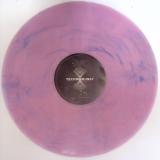
180gr pink & blue mixed coloured vinyl in poly sleeve w/ art print insert, LTD — 200 copies.
Technokunst Records returns for a second chapter in the Split Series, pairing long-time friends Reeko and Claudio PRC for a package of highly effective grainy Techno excursions. This meeting is a perfectly weighted exchange with two originals and two reinterpretations shared between them.
The opener ‘Grainphase’ is a slowly morphing textural work building towards a masterfully executed release of energy in the latter half of the track. Reeko’s version reshapes the main elements and reveals a harder spine beneath the original’s fluid architecture. Flipping the record gives way to Reeko’s original, a tour de force in sound design. ‘Tierra De Nadie’ paints a desolate and hazy surface filled with glitched recordings of alien language. Finally, Claudio’s rework is built in a similarly dark tone but with an increase of visibility, drifting aboveground.
Mastered by Artefacts Mastering and cut by Simon at The Exchange. The artwork is based on a digitally scanned painting on canvas by Technokunst’s own Dorka Berkes.
Diagonale des Yeux is the new band formed by two of France’s admired and adventurous artists. Laurène Exposito, we know as EYE, our longest regular contributor to the label — and friend Théo Delaunay, member and producer of Parasite Jazz, panoptique, De Klok & Violent Quand On Aime.
In Knekelhuis we have a particular fondness for artistic outputs that resist easy categorisation, and Diagonale des Yeux inhabits precisely that kind of territory.
Every aspect of the project is DIY/homemade. Their world drifts along the fringes of cabaret, strange 1980s French underground pop music to contemporary lo-fi scene — evoking the spirit of Nini Raviolette and The Residents — while delivering beautifully written songs that lodge themselves in your head almost immediately like a Cindy Lee ballad.
The tracks on Madeleine squeak and creak, wobbling on fragile hinges before suddenly opening onto moments of pure beauty.
Drums and guitars follow up synths and electronic percussions captured on tape between living rooms, studios and a concert space.
The band has a kink for choirs and playfully uses diverse languages. Their lyrics emerge through a homemade, patented four-hands cadavre exquis (Exquisite Corpse) process, where chance and dialogue shape meaning as much as intention.
Diagonale des Yeux is a singular project — equally strange and irresistibly pop-leaning. Music like weeds pushing through pavement cracks and, against all odds, turning into flowers.
- A1: Brut Thoughts Theme
- A2: Swordfight In A Chicken Shop
- A3: Putting On A Party
- A4: Rna
- A5: Generation Left On Read (Feat. Konopinksy)
- A6: Friends And Family (Interlude)
- A7: Brut Pop (Feat. Meme Gold)
- B1: Running Outta Road (Feat. Trainee)
- B2: Mortgage Guy (Interlude)
- B3: One 4 Me & U
- B4: Money Isn't Real (Feat. Kiddus)
- B5: Brut Thoughts Reprise
- B6: How To Subtly Disappear (Feat. Lauren Auder)
One of the UK’s most singular voices, Murkage Dave has spent the last decade crafting a body of work that refuses to fit neatly into any genre box. His music, loosely pop but informed by indie, outsider art, and an instinct for storytelling, is built on honesty, empathy, and fearless social commentary. Across his career, he has earned a cult following and praise from Pharrel Williams, Iggy Pop, BBC Radio 6 Music, The Guardian, Rolling Stone, Pitchfork, Clash, Complex, Highsnobiety, and Vogue. His debut album Murkage Dave Changed My Life (2018) amassed over 12 million Spotify streams, while follow-up The City Needs A Hero (2022) reached #10 on the UK iTunes Chart and #15 on the UK Independent Chart.
- A1: Why Is The Lion?
- A2: They Keep Trying To Find You
- A3: Strange Trouble
- A4: Life Is Scary Horses
- A5: (Everybody's Got A) Friend Named Joe
- B1: Vietnam Sunshine
- B2: Hey Little
- B3: Davey Dead
- B4: The Children Are Sick
- B5: Bride Of The Lion
Clear Vinyl[23,32 €]
Bonnie 'Prince`Billy kehrt am 6. März 2026 mit dem Album 'We Are Together Again' zurück. Das Album ist warm und persönlich und außerdem so angelegt, dass es mit denselben Worten beginnt und endet: 'Why is the lion still here, outside?'
Thematisch ist das Album tief in Louisville, der Heimatstadt von Bonnie „Prince“ Billy, verwurzelt. Es feiert die Kraft von Freundschaft, lokaler Gemeinschaft und gemeinsamem künstlerischem Schaffen. Damit setzt es bewusst einen Kontrapunkt zur Globalisierung und plädiert stattdessen für Lokalismus. Aufgenommen wurde es live im Studio End of an Ear mit lokalen Musiker:innen, Freund:innen und Familienmitgliedern. Jeder Ton ist direkt und unverfälscht – was im Raum passiert, hört man auch auf der Aufnahme. „We Are Together Again“ nimmt die Ängste einer sich verändernden Welt nicht weg, sondern begegnet ihnen mit Harmonie. Das Album erzählt von Zusammenhalt, von der Freude am Miteinander und davon, wie das gemeinsame Fragen selbst zur Quelle von Hoffnung wird."
Bonnie 'Prince`Billy kehrt am 6. März 2026 mit dem Album 'We Are Together Again' zurück. Das Album ist warm und persönlich und außerdem so angelegt, dass es mit denselben Worten beginnt und endet: 'Why is the lion still here, outside?'
Thematisch ist das Album tief in Louisville, der Heimatstadt von Bonnie „Prince“ Billy, verwurzelt. Es feiert die Kraft von Freundschaft, lokaler Gemeinschaft und gemeinsamem künstlerischem Schaffen. Damit setzt es bewusst einen Kontrapunkt zur Globalisierung und plädiert stattdessen für Lokalismus. Aufgenommen wurde es live im Studio End of an Ear mit lokalen Musiker:innen, Freund:innen und Familienmitgliedern. Jeder Ton ist direkt und unverfälscht – was im Raum passiert, hört man auch auf der Aufnahme. „We Are Together Again“ nimmt die Ängste einer sich verändernden Welt nicht weg, sondern begegnet ihnen mit Harmonie. Das Album erzählt von Zusammenhalt, von der Freude am Miteinander und davon, wie das gemeinsame Fragen selbst zur Quelle von Hoffnung wird."
- A1: Busy Girl / Prod. A.g.o
- A2: Dreamin' (Feat. Sumin (韓国),☆Taku Takahashi(M-Flo)) / Prod.☆Taku Takahashi(M-Flo)
- A3: Memories / Prod. 80Kidz
- A4: Old Friends (Feat. Sirup, Shin Sakiura) / Prod. Shin Sakiura
- A5: Moonlight Cruising (Feat. Kirinji) / Prod. Slom (韓国)
- A6: Sweet Vacation / Prod. Sam Is Ohm
- A7: Life Is Beautiful (Feat. Ariwa (Asound)) / Prod. Chaki Zulu
- B1: Life Is Beautiful (Feat. Ariwa) - Remix
- B2: U - Remix
- B3: Moonlight Cruising (Feat. Kirinji) - Grooveman Spot Remix
- B4: Busy Girl - Remix
- B5: Orange (Feat. Peavis) - Remix
- B6: Memories - Osamu Fukuzawa Remix
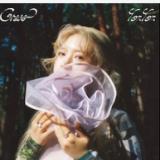
YonYon's commemorative 1st album ‘Grace’ shines with new brilliance through analog sound-the long-awaited LP release!
This album features 14 tracks in total, including 7 popular songs from the album “Grace”, plus 7 remixes.
Guest artists include KIRINJI, SIRUP, South Korea's leading R&B singer-songwriter/producer SUMIN, PEAVIS, and other artists resonating across generations
and styles. Sound production features top-tier creators active globally, including ☆Taku Takahashi (m-flo), Chaki Zulu, grooveman Spot, and South Korea's
rising producer Slom. The album effortlessly crosses genre and language boundaries, weaving diverse musical elements into a rich soundscape.