
Сделать предзаказ30.06.2024
он должен быть опубликован на 30.06.2024
12,19 €
он должен быть опубликован на 30.06.2024
он должен быть опубликован на 30.06.2024
он должен быть опубликован на 30.06.2024
он должен быть опубликован на 30.06.2024

он должен быть опубликован на 15.06.2024
он должен быть опубликован на 15.06.2024
он должен быть опубликован на 15.06.2024
он должен быть опубликован на 31.05.2024

он должен быть опубликован на 31.05.2024

Nestled somewhere between the soul jazz, spiritual jazz, fusion, and post-bop subgenres, 1974’s Cosmic Funk headed, as the title indicates, in a funkier direction, with Lonnie Liston Smith’s brother Donald contributing smooth vocal stylings to John Coltrane’s “Naima” among other tunes. A transitional work but a fascinating one, with surehanded production once again from Bob Thiele. Features the original gatefold album art… another “post-fusion” masterwork fro
он должен быть опубликован на 15.05.2024
он должен быть опубликован на 17.04.2024
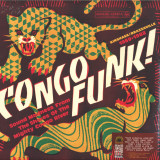
The making of Congo Funk!, our long-awaited journey to the musical heart of the African continent, took the Analog Africa Team on two journeys to Kinshasa and one to Brazzaville. Selected meticulously from around 2000 songs and boiled down to 14, this compilation aims to showcase the many facets of the funky, hypnotic and schizophrenic tunes emanating from the two Congolese capitals nestled on the banks of the Congo River.
On its south shore, the city of Kinshasa – capital of Democratic Republic of the Congo, the country formerly known as Zaïre – is often seen as Africa’s musical Mecca, the city that spawned such immortal bands as African Jazz, O.K. Jazz and African Fiesta, and the place to which aspiring musicians from throughout the continent would go to make a name for themselves.
But the city of Brazzaville on the north shore of the river – capital of the Congo Republic – played an equally important role in spreading Congolese sounds continentally. In addition to producing legendary bands such as Les Bantous de la Capital, it was the powerful transmitters of Radio Brazzaville that allowed the unmistakable groove of Congolese Rumba to be heard as far away as Nairobi, Yaoundé, Luanda and Lusaka thus turning the electric guitar into the continent’s most important instrument!
Although the musical landscape of these cities had been defined by a core group of bands in the late 1950s, the modernisation of Congolese music has been steadily evolving until the events surrounding the Muhammad Ali vs George Foreman boxing match marked a turning point. The promoter of that event known as “Rumble In The Jungle” was none other than the notorious Don King who needed 10 millions dollars to get Ali and Foreman into a boxing ring. The only candidate willing to put this kind of cash on the table was Mobutu Sese Seko, President of the Democratic Republic of the Congo.
Mobutu - the megalomaniac dictator who got to power with the support of the United States and Belgium in exchange for unlimited and affordable access to the riches of the country - had a soft spot for music and it doesn’t come as a surprise that he agreed to a three-day live music festival being organised prior to the “Rumble”. Zaïre 74 - as the festival was dubbed - was meant to hype the boxing match and many stars were invited.
Although a myriads of artists flocked in for the occasion, it was the performance of James Brown on Zairian soil that caused havoc among the younger generation, inspiring hundreds of would-be musicians to take up their electric guitars and reverbs cranked to the max in search of a new sound in which hyperactive Rumba was blended with elements of psych and funk. While the results were very different from the popular music of the three Musketeers - as Tabu Ley, Franco and Verckys were known - they weren’t a complete break with tradition.
These new sounds emerged at a time when the Congolese record industry – previously dominated by European major labels – was experiencing a period of decline due to rising production costs and needed a radical change. The void was filled by dozens of entrepreneurs willing to take chances on smaller scale releases. It was the beginning of a golden age for Congolese independent record labels, and the best of them – Cover N°1, Mondenge, Editions Moninga, Super Contact – preserved the work of some of the region’s finest artists, while launching a generation of younger musicians into the spotlight.
The movement was greatly helped by legendary radio shows but it was the dynamic productions of Télé-Zaïre that set the dynamite on fire. Legend has it that TV shows were so huge that president Mobutu himself ordered RTV du Zaïre to put on daily concerts since it halted criminal activities for the duration of the evening.
Congo Funk! is the story of these sounds and labels, but most of all it is the story of two cities, separated by water but united by an indestructible groove. The fourteen songs on this double LP showcase the many facets of the Congolese capitals, and highlight the bands and artists, famous and obscure, who pushed Rumba to new heights and ultimately influenced the musical landscape of the entire continent and beyond.
Закажите сейчас, и мы закажем товар для вас у нашего поставщика.

NO COVER!
Genetic Funk and Mr V present The Believe EP, a deep, soulful, spoken word groover that gets a sublime make-over from the mighty Atjazz. Jazz injected, ethereal business that instantly dissipates any worries as you float on the hypnotic tones of this celestial track. On the flip a stripped back, tougher beats, bass and vocal led dub for the dancers.
Закажите сейчас, и мы закажем товар для вас у нашего поставщика.

Africamore: The Afro-Funk Side of Italy (1973-1978)
Continuing Four Flies' dedication to delving into lesser-explored periods of Italian music, Africamore takes us on a captivating journey into the intersection of Afro-funk and the Italian soundscape during the six years between 1973 and 1978 - a time when disco was looming on the horizon and the nightclub market was rapidly expanding.
Before reaching Italian shores, the infectious sound originating from African and Afro-Caribbean roots traversed both the Mediterranean and the Atlantic, landing on New York dancefloors, where DJ Dave Mancuso discovered "Soul Makossa" by Manu Dibango. In 1973, from Mancuso's Loft parties, the song's hypnotic groove spread to the rest of the globe, including in Italy, where it sparked a wave of imitations and variations.
Tribal influences thus found their way into Italian soul-funk and early-disco productions released between 1973 and 1978 – from psychedelic-tinged tunes like Jean Paul & Angelique's "Africa Sound" to the Afrobeat-inspired club banger "Kumbayero" by composer/producer Albert Verrecchia (aka Weyman Corporation); and from groundbreaking Afro-cosmic songs like Chrisma's "Amore", co-written by Vangelis and featuring the rhythms of Ghanaian-British Afro-rock band Osibisa, to mind-blowing floor-fillers like Beryl Cunningham's "Why O", a re-write of Nat King Cole's "Calypso Blues" arranged by Paolo Ormi, with percussion breaks that sound pretty much like what would later become known as techno.
Combining feel-good vibes with driving rhythms, world-style percussion, and even synths, all these productions pushed the boundaries of dance music at a time when disco had not yet taken over. In doing so, they sowed many of the seeds of the later Italian cosmic scene and its unique mixture of African elements, disco-funk and electronic music.
This was a brief but nuanced period in Italian music history, one that deserves to be rediscovered, with love.
Africamore is due out on March 22nd and will be available as a gatefold 2LP and digipak CD. Both formats come with stunning artwork by Kathrin Remest and liner notes by Pierpaolo De Sanctis and Elena Miraglia.
Закажите сейчас, и мы закажем товар для вас у нашего поставщика.

German Funk, Rare Groove and 1970s Disco music (e.g. the highly regarded Munich scene around Italian producer Giorgio Moroder) have been widely recognized and featured on numerous reissues and compilations. However, the Boogie-ish post-disco side of German music history until now has remained undiscovered. One of the reasons might be that a broader national scene in Germany (unlike the UK for example) never existed. Even though tracks by US bands such as Dazz or Midnight Star were popular in discotheks in Germany around that time, bigger labels showed little interest in promoting German groups playing this new style of Disco Funk, now primarily known as "Boogie", that brought in electronical instruments and often lacked the iconic "four-on-the-floor" beat. Additionally, the number of bands that continued to play funky and soulful music in the 1980s diminished as other styles like Synth Pop, Punk, New Wave and NDW (New German Wave) ascended in popularity. Still, though German Boogie may have never existed as a national movement, great things were happening rather locally and each group featured on our compilation brings with them a particularly unique style and story.
Now, finally, "Boogie on the Mainline" sheds some light on 11 little-known German Disco gems that were released on small or even private labels. The album contains tunes by Imagination, Squish, Upstairs, Bernie L., The Poptown Syndicate, Peter Patzer, Ca$h, Trust, Publicity as well as classic tracks by Ströer and John Davis. It was compiled by John Raincoatman aka DJ Scientist
Закажите сейчас, и мы закажем товар для вас у нашего поставщика.

Das vierte Album von Ghost Funk Orchestra. Nach „A New Kind of Love“ (2022) taucht Ghost Funk Orchestra mit „A Trip To The Moon“ noch tiefer in die Welt der Filmmusik, der Exotica und des psychedelischen Surf-Rock ein. Ein vielschichtiges und collagiertes Hörerlebnis mit mehr Elementen, als man in einem einzigen Hördurchgang heraushören kann. Große Kompositionen mit Garagenrock-Attitüde. Die Einflüsse reichen von Eddie Palmieri und Esquivel bis hin zu The Lively Ones, Dusty Springfield und War. Die Tracks werden durch echte, aufgezeichnete Übertragungen der Apollo-Mondmissionen miteinander verbundenFür Fans von Orions Belte, Temples, Allah-Las, Unknown Mortal Orchestra, Khruangbin, David Axelrod, Man or Astro-Man?
он должен быть опубликован на 23.02.2024

Das vierte Album von Ghost Funk Orchestra. Nach „A New Kind of Love“ (2022) taucht Ghost Funk Orchestra mit „A Trip To The Moon“ noch tiefer in die Welt der Filmmusik, der Exotica und des psychedelischen Surf-Rock ein. Ein vielschichtiges und collagiertes Hörerlebnis mit mehr Elementen, als man in einem einzigen Hördurchgang heraushören kann. Große Kompositionen mit Garagenrock-Attitüde. Die Einflüsse reichen von Eddie Palmieri und Esquivel bis hin zu The Lively Ones, Dusty Springfield und War. Die Tracks werden durch echte, aufgezeichnete Übertragungen der Apollo-Mondmissionen miteinander verbundenFür Fans von Orions Belte, Temples, Allah-Las, Unknown Mortal Orchestra, Khruangbin, David Axelrod, Man or Astro-Man?
он должен быть опубликован на 23.02.2024

Das vierte Album von Ghost Funk Orchestra. Nach „A New Kind of Love“ (2022) taucht Ghost Funk Orchestra mit „A Trip To The Moon“ noch tiefer in die Welt der Filmmusik, der Exotica und des psychedelischen Surf-Rock ein. Ein vielschichtiges und collagiertes Hörerlebnis mit mehr Elementen, als man in einem einzigen Hördurchgang heraushören kann. Große Kompositionen mit Garagenrock-Attitüde. Die Einflüsse reichen von Eddie Palmieri und Esquivel bis hin zu The Lively Ones, Dusty Springfield und War. Die Tracks werden durch echte, aufgezeichnete Übertragungen der Apollo-Mondmissionen miteinander verbundenFür Fans von Orions Belte, Temples, Allah-Las, Unknown Mortal Orchestra, Khruangbin, David Axelrod, Man or Astro-Man?
он должен быть опубликован на 23.02.2024

This split release between Frustrated Funk and Indulge Records sees FF head honcho klen Ovatow reconnecting with Indulge's Oliver Kapp, a link that was established all the way back in the mid/late 90s. Celebrating with a remastered version of Kapp's Piston Rings (ME-01), one of the tracks that kickstarted the Indulge imprint in 1996. And on the FF side Ovatow reshaped Kapp's The Trail into a 12 minute deep dive. Obviously not your typical techno.. Beware!!..
Закажите сейчас, и мы закажем товар для вас у нашего поставщика.

The last of the Konduko series from Emotional Rescue arrives now and quite possibly it is the best of the lot from Noel Williams. His 'Fantasy' saw him work with Larry Dermer aka Der Mer on what is an effective and catchy electro jam that operates at the higher end of the tempo chart with some classic vocoder vocal action to really make it pop. Despite being released originally in 1984 this one still bangs with its emulated TR-808 beats and nagging melodies. The instrumental heightens that and then the Jonny Rock Discomix shuts down with long-form rework that shows why the DJ, editor and all-round amiable bloke is so well regarded.
Закажите сейчас, и мы закажем товар для вас у нашего поставщика.
