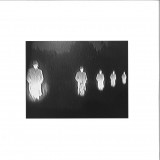
Heiko Voss has earned near mythical status as a torchbearer for the emotional, deeply felt and quietly radical style of electronic music. The blissed-out radiance of his Kompakt Pop single, “I Think About You” remains one of the label catalog highlights and a stellar run of collaborative singles as Schaeben & Voss; others might know him for his stewardship of the excellent, much-underrated Firm imprint. But with his new album, 3:30 Minutes To Live, released by Michael Mayer’s label Imara, Voss returns after a long silence with a beautiful collection of songs that hymn heartbreak with a lusciously melodic touch.
There is something definitive and newly confident in 3:30 Minutes To Live that has it feeling like a real statement of intent if compared to his earlier releases. “Although it’s not, 3:30 Minutes To Live feels like my debut album,” Voss reflects. “All releases before were more song sketches or electronic dance tracks.” Bunkering down in Teary Eyes Studio, Voss worked up somewhere between thirty and forty sketches of songs, which he whittled down to the twelve collected here, all of them situated in a unique space, but very much in accord with Voss’s defining aesthetic, which he describes as “indie pop music with a lot of guitar, electronic elements and a great love for melancholic ‘80s synth-lines.”
Voss is sensitive to both variety and consistency – 3:30 Minutes To Live sits together as an assured, vibrant collection of pop songs, but it’s marked by all kinds of surprising incident, like the guitar solo that erupts out of “This Is My Life”, or the acoustic guitar-led melancholy of the closing “This Summer”. It’s all borne of the alchemy of the studio process and the intimate romance of music-making. “If you constantly feel a little bit like you’re in love while writing and producing your music – simply because of the sound of the synth flowing warmly and gently through the room, or because the sequence of notes awakens something in you, or even a randomly arising groove in the loop of a guitar lick makes you shout, ‘Ha!!’ – then it usually becomes a beautiful song,” Voss nods. “Those moments make me happy.”
There’s also a delicious tension between the push of the music, its melodic lushness and gliding, ballerina-like movement, and the darker currents that pull through Voss’s lyrics, inspired by a “short, dramatic and toxic love affair.” This may read like familiar terrain for a pop album, but the way Voss weaves language through both the extra-linguistic joys of music and the inarticulate speech of the heart somehow allows for direct communication that is simultaneously plain-spoken and deeply profound. “Say It” is a simple, devastatingly effective plaint of alienation; “She Wasn’t Lonely” a simple portrait of everyday living set to chiming, clacking guitars, the music in the bridge taking astral flight as the titular character ‘lets herself go.’
A smart and sharp collection of songs that captures you with its gorgeous melodicism just as it blindsides you with its aching heart, 3:30 Minutes To Live is Heiko Voss at his most assured and open-hearted best.
Heiko Voss hat sich als Fackelträger einer emotionalen, von ganzem Herzen kommenden und nicht auf den ersten Blick radikalen Spielart von elektronischer Musik einen nahezu mythischen Status erarbeitet. Das schiere Glück, welches seine Kompakt Pop-Single "I Think About You" aus dem Jahr 2003 immer noch ausstrahlt, macht sie nach wie vor zu einem der Highlights des Label-Katalogs, wo sie neben einer ganzen Reihe hervorragender Singles als Schaeben & Voss steht; andere kennen Heiko vielleicht durch das tolle und vielfach unterschätzte Label Firm, für das er zusammen mit Thomas Schaeben verantwortlich war. Mit seinem neuen Album “3:30 Minutes To Live”, das am 4. März 2022 auf Michael Mayers Label Imara erscheint, kehrt Voss nun nach einer langen Pause mit einer wunderschönen Sammlung von Songs zurück, die den Herzschmerz – getragen auf den Schwingen unwiderstehlicher Melodien – ausgiebig besingen.
“3:30 Minutes To Live” kommt mit einer gehörigen Portion Überzeugung und Selbstbewusstsein daher, was im Vergleich zu seinen früheren Veröffentlichungen wie ein bewusstes Statement wirkt. "Obwohl es das nicht ist, fühlt sich ‘3:30 Minutes To Live’ wie mein Debütalbum an", meint Voss. "Alle meine vorherigen Veröffentlichungen waren eher Song-Skizzen oder elektronische Dance-Tracks."
Im Teary Eyes Studio arbeitete Voss zwischen dreißig und vierzig Songskizzen aus, die er auf die zwölf hier versammelten Songs reduzierte, die alle ihren eigenen Raum einnehmen, dabei aber sehr gut mit Voss' übergeordneter Ästhetik harmonieren, die er als "Indie-Pop-Musik mit viel Gitarre, elektronischen Elementen und einer großen Liebe für melancholische 80er-Jahre-Synthies" beschreibt.
Voss ist sowohl für Abwechslung als auch für Konsistenz empfänglich - “3:30 Minutes To Live“ ist eine selbstsichere, lebendige Sammlung von Popsongs, die aber auch von allerlei Überraschungen geprägt ist, wie dem Gitarrensolo, das aus “This Is My Life” herausbricht, oder die von einer Akustikgitarre getragene Melancholie des abschließenden “This Summer”.
Das alles ist entstanden aus der besonderen Alchemie des Studioprozesses und der intimen Romantik des Musikmachens. "Wenn du beim Schreiben und Produzieren deiner Musik ständig das Gefühl hast, ein bisschen verliebt zu sein – einfach weil der Klang des Synthesizers warm und sanft durch den Raum fließt, oder weil die Notenfolge etwas in dir weckt, oder sogar ein zufällig auftauchender Groove im Loop eines Gitarren-Licks dich ein 'Ha!' ausrufen lässt – dann wird daraus meist ein schöner Song", nickt Voss. "Diese Momente machen mich glücklich."
Es entsteht eine besondere Spannung zwischen dem positiven Elan der Musik, ihrer melodischen Verschwendungssucht, den gleitenden, Ballerina-artigen Bewegungen und den dunkleren Strömungen, die durch Voss' Texte ziehen, die von einer "kurzen, dramatischen und giftigen Liebesaffäre" inspiriert sind. Das mag sich wie ein vertrautes Terrain für ein Pop-Album anhören, aber die Art und Weise, wie Voss die Sprache sowohl durch die nonverbalen Elemente der Musik als auch durch den nicht artikulierten Ausdruck des Herzens verwebt, ermöglicht eine Art direkte Kommunikation, die gleichzeitig ausgesprochen klar und trotzdem tiefgründig ist. “Say It" ist eine erschütternd einprägsame Anklage von Entfremdung; "She Wasn't Lonely" ist ein einfaches Porträt des alltäglichen Lebens, untermalt von klappernden Gitarren, in dem die Musik einen astralen Flug unternimmt, während die Titelfigur sich "gehen lässt".
“3:30 Minutes To Live“ ist eine kluge und scharfsinnige Sammlung von Songs, die den Zuhörenden mit ihren wunderschönen Melodien fesseln, aber auch mit einer Menge schmerzenden Gefühlen konfrontiert. Ein Album, auf dem Heiko Voss ganz bei sich ist und Euch dabei mehr als nur sein Herz öffnet.
Buscar:the gift
Johnny Marr started his career with The Smiths, beginning an amazing history as one of the most influential songwriters and guitarists in British independent music. His subsequent creative journey has seen him at the heart of The The, Electronic, Modest Mouse and The Cribs, as well as working with such names as The Pretenders, Talking Heads, The Avalanches, and the musician and composer Hans Zimmer - with whom he recently recorded the score and soundtrack for the forthcoming James Bond film, No Time To Die, including the title track created with Billie Eilish.
In the wake of his time leading The Healers, Marr’s solo career has given rise to three UK Top Ten albums - The Messenger (2013), Playland (2014) and 2018’s Call The Comet, and he will be returning in February with his most expansive work to date, Fever Dreams Pts 1-4. It was created during the long, uncertain period that followed the arrival of the UK’s first lockdown, when his focus was pushed into both his interior life, and evoking the emotional states of others. “It’s an inspired record, and I couldn’t wait to get in and record every day,” he says. “But I had to go inwards.”
The upcoming album reflects his multi-faceted past, but takes his music somewhere startlingly new. “There’s a set of influences and a very broad sound that I’ve been developing - really since getting out of The Smiths,” he says. “And I hear it in this record. There are so many strands of music in it. I think it’s the most ambitious solo record I’ve done.”
Ichiko Aoba’s albums have only been available as expensive Japanese imports, until now. In November, Ba Da Bing will release Windswept Adan on 2xLP in North America, Europe and the United Kingdom, with deluxe packaging.
After creating her label, hermine, last year to celebrate her tenth
anniversary in music, Aoba released the most complex and rewarding
work of her career, 2020’s Windswept Adan. While audiences in
the west are only just learning she exists, her accomplishments are
unquestionable; she contributed to the soundtrack for The Legend of
Zelda: Link’s Awakening, was cited by Owen Pallett as an inspiration
(“I’ve never been so blindsided by a musician as I was by Ichiko
Aoba”), and has collaborated with the likes of Haruomi Hosono,
Cornelius (who met her only two years after she first picked up a
guitar and was blown away), Ryuichi Sakamoto, and recently Mac
DeMarco.
Ichiko Aoba’s iconic voice and classical guitar playing are
immediately recognizable, timeless sounds. Windswept Adan,
envisioned as a soundtrack for a fictional film, builds its own world with
sweeping co-production and arrangements from Taro Umebayashi,
which “recall the Wes Anderson scores of Mark Mothersbaugh or
the cinematographic swells of American composer Jherek Bischoff”
(Bandcamp). It’s the story of a young girl sent to the island of Adan, a
place where there are no words.
While international listeners of Aoba may not understand the words
she sings, and despite the central importance of lyrics in her writing,
it’s a testament to the power Aoba wields that one can resonate so
deeply with her work. No matter the breadth of her sonic palette, and
on Adan her scope is as wide and encompassing as Joanna Newsom’s
on Have One On Me, Aoba manifests an intimacy that makes one feel
in the room with her.
Ichiko Aoba’s work gained greater exposure in the past year as the
need for comfort grew while the world sequestered in solitude. She
has a rare musical gift that is matched only by her ability to hone it
into meticulous craft. Her music embraces and elevates alone time to a
generous and tranquil place. In it, listeners are invited to feel a sense of
consolation and possibility. The magic she imparts yields articles like
“Ichiko Aoba and the emotion of space during the pandemic;” in other
words, her effect is singular.
Annie Booth is an Edinburgh-based artist with a gift for mood-painting
and storytelling - A seasoned modern folk singer, performer and
songwriter - with a fair for the nostalgic and the melancholy - she wields
a unique voice in Scotland, bridging genre and infuence with ease, her
restless live performance and songs never cease to capture the listener
with their haunting melodies and infectious arrangements
Recorded over several months at Chem19 Studios and Green Door Booth's debut
album An Unforgiving Light (Last Night From Glasgow/ Scottish Fiction) was
released in 2017 to critical acclaim. It was lauded as Roddy Hart's Record of Note
(BBC Radio Scotland), featured in Vic Galloway's Best Albums of 2017 (BBC
Radio Scotland) and was praised by Jim Gellatly (Amazing Radio). 2018 saw her
perform at the BBC's Quay Sessions and festivals such as XpoNorth, Celtic
Connections and the Kelburn Garden Party.
Adopting a more introspective and atmospheric approach, Booth's 2019 EP
Spectral (Last Night From Glasgow/ Scottish Fiction) displays her poignant
lyricism and haunting vocals at their most raw. The EP was championed by BBC
Radio Scotland, The Skinny and The List, with Booth appearing for a live session
on the BBC's Janice Forsyth Show. Booth was subsequently nominated for a
Scottish Alternative Music Award in the Best Acoustic category late 2019.
The singer-songwriter is also known for her enthusiasm for collaboration. From
2015 to 2020 she performed backing vocals and guitar with prolifc dark- folk
collective Mt. Doubt, touring across Scotland, England and Wales and recording
on numerous records. 2020 saw the release of Clean Living (Last Night From
Glasgow) under the moniker Slow Weather: a vintage-infused EP of alt-rock cowritten with producer extraordinaire Chris McCrory. The release garnered praise
and spins from Steve Lamacq (BBC Radio 6), BBC Radio Scotland and Amazing
Radio as well as features and airplay in the US. Over the years Booth has also
collaborated on tracks with artists such indietronica outft Out of the Swim and
indie pop quintet Wojtek the Bear.
Annie Booth is an Edinburgh-based artist with a gift for mood-painting
and storytelling - A seasoned modern folk singer, performer and
songwriter - with a fair for the nostalgic and the melancholy - she wields
a unique voice in Scotland, bridging genre and infuence with ease, her
restless live performance and songs never cease to capture the listener
with their haunting melodies and infectious arrangements
Recorded over several months at Chem19 Studios and Green Door Booth's debut
album An Unforgiving Light (Last Night From Glasgow/ Scottish Fiction) was
released in 2017 to critical acclaim. It was lauded as Roddy Hart's Record of Note
(BBC Radio Scotland), featured in Vic Galloway's Best Albums of 2017 (BBC
Radio Scotland) and was praised by Jim Gellatly (Amazing Radio). 2018 saw her
perform at the BBC's Quay Sessions and festivals such as XpoNorth, Celtic
Connections and the Kelburn Garden Party.
Adopting a more introspective and atmospheric approach, Booth's 2019 EP
Spectral (Last Night From Glasgow/ Scottish Fiction) displays her poignant
lyricism and haunting vocals at their most raw. The EP was championed by BBC
Radio Scotland, The Skinny and The List, with Booth appearing for a live session
on the BBC's Janice Forsyth Show. Booth was subsequently nominated for a
Scottish Alternative Music Award in the Best Acoustic category late 2019.
The singer-songwriter is also known for her enthusiasm for collaboration. From
2015 to 2020 she performed backing vocals and guitar with prolifc dark- folk
collective Mt. Doubt, touring across Scotland, England and Wales and recording
on numerous records. 2020 saw the release of Clean Living (Last Night From
Glasgow) under the moniker Slow Weather: a vintage-infused EP of alt-rock cowritten with producer extraordinaire Chris McCrory. The release garnered praise
and spins from Steve Lamacq (BBC Radio 6), BBC Radio Scotland and Amazing
Radio as well as features and airplay in the US. Over the years Booth has also
collaborated on tracks with artists such indietronica outft Out of the Swim and
indie pop quintet Wojtek the Bear.
Bev Lee Harling returns with her first solo recording in almost a decade. She won the hearts and musical minds of DJs across the board with her 2012 debut LP, Barefoot In Your Kitchen, which BBC 6Music's Gilles Peterson made his Album of the Week. Now the gifted singer, violinist and composer returns with twelve beautiful pieces of music that tell a very personal story of the years since.
Having swapped the busy streets of North London for the calmer shores of Hastings in Sussex to bring up her young family, it's fair to say that Bev's priorities might have changed somewhat over the past few years, but the music was never far away. Her new environment, and musical family (including multi-talented partner and album co-producer Frank Moon) added plenty of fresh inspiration to her recordings, and we're very excited to share her new album, entitled Little Anchor, with you this Autumn.
The album is in some senses a travelogue, a 9 year journey of a creative womannavigating the landscape of parenting. Each song is a snapshot taken at a differentlocation in time, in a world where finding balance between creative freedom and motherhood is still a struggle, from the uplifting and euphoric Beautiful Life, to the heavy and harassed Only Got A Minute.
Between the unexpected joys of parenting, grappleswith mental health and feelings of inadequacy, and fighting for every second ofcreative time while slowly accepting a life very different to the one that existedbefore, this unedited family album emerged bursting with quirky childhoodmemories, dark musings and celebrations of musical passion and legacy.
Each song carries breakthrough personal moments in rebuilding strength as an artist, as a person, as a parent. Even down to a very emotional moment with Ray Davies of The Kinks, during a songwriting retreat, where album closer This Violin String, a deeply personal ode to her recently departed mum, was written…
"Everyone turned up writing on guitars and piano and I just had my battered old violin. I felt totally out of touch with my former confident musical self and had zero confidence in what I was doing after an intense period of car crash parenting. I wrote it, performed it on the same day and then sobbed my guts out in front of a bunch of total strangers (sorry Ray!). Something shifted for me in the act of being quite so vulnerable though and I found my mojo again in writing solo with my violin."
The personal nature of this record is self-evident, it bursts through every note and word in each song. We're very excited to be able to share such a special album,afresh foray into the always unpredictable, experimental and playful world of Bev Lee Harling.
"The core of confusion and upheaval that drove some of the band's most fiery earlier work, however, is replaced by a more stabilized undercurrent, a mentality that's reflected in songs not afraid to try new things and honestly explore uncomfortable feelings. When combined with exciting production and songwriting choices, that mindset helps make Feels So Good // Feels So Bad one of the Shivas' best albums.” - AllMusic "Portland, Oregon-hailing psych-surf band The Shivas accomplish another time-traveling, reverb-ridden sound that refuses to get boring. Jared Molyneux’s guitar work knows when to be bright or bashful at the right times, breaking into guitar solos that possess a late-’60s groove… The Shivas seem to blissfully flourish” - Paste "a consistent treat for the ears” - The Vinyl District "Though the psych-tinged guitar riff that drives 'Feels So Bad' was written while The Shivas were still on the road, its lyrics didn’t fall into place until the band was well into lockdown, unsure of when they’d be able to return to their most imperative true love: Live shows... Accordingly, 'Feels So Bad' permeates with a sense of urgent desperation, building off a chugging prog-rock instrumental.” - Consequence (on “Feels So Bad”) "They hooked the audience with their throwback rock sounds. The guitar strums and rhythmic drum beats were layered atop smooth and hallucinogenic vocals. The eyes can tell the take at times and there was a sparkle there that said that the band members just love doing live performances." - California Rocker "This single layers on the fuzz but keeps it dreamy, with an especially sticky guitar riff sure to lodge itself in your brain with minimal effort." - Portland Monthly (on “If I Could Choose”) “'My Baby Don’t' translates the genuine vibrant joy
of the live experience into the studio, bringing the band’s ‘60s garage rock roots, sharp pop vocal harmonies, and fervent performances along for the ride." - Under The Radar "Perfectly straddling the line between a solid-head bopping track and an introspective deep cut, The Shivas’ 'Undone' is a rock & roll gem. The track sounds straight out of the late 60s and fits seamlessly in the Portland band’s electrifying catalog." - The Luna Collective "The first time I clicked play on this track, I knew it was a yes for me." - Ear To The Ground Music (on “If I Could Choose”) "The harmonies would make the “Happy Together” Turtles blush, but the unsettling guitar doesn’t shy away from the woollier implications of the ’60s." - Willamette Week (on “If I Could Choose”) "'Undone' is just the perfect song for the good days and the bad ones." - GlamGlare "another hit" - Austin Town Hall (on “Undone”) "one of the best forthcoming albums of the year" - Austin Town Hall RADIO: #3 Most Added @ NACC - 50 official adds BIO Every working musician has had their life turned upside down by Covid-19. For The Shivas, who had recently released a new LP and normally keep a rigorous touring schedule, it was a particularly screeching halt. “We were about to go to SXSW, the following weekend was Treefort in Boise, and then we were going to open for our friends’ band on tour in the US before going to Europe,” Jared Molyneux remembers. Then everything just stopped. They were faced with a dilemma. “It forced us to adapt or just quit,” Molyneux says. “The reality is that shows are our job.” In truth, live shows aren’t just The Shivas job: they are the band’s greatest love. Shivas shows are bombastic, explosive and thoroughly communal live rock and roll experiences where barriers between the performers and their audience seem to dissolve into the sweat and sound. The stage—or the basement, or the living room—that’s The Shivas’ true element. It’s their raison d’etre. It’s their religion. The band’s live urgency may have been born in 2006, when the band’s young members—who began booking West Coast tours while still in high school—waited without fanfare on sidewalks or in parking lots, before being rushed onstage for their sets at 21-and-up clubs. Maybe it developed a little later, as The Shivas blasted their way through Portland’s storied and unsanctioned mid-aughts house show scene. Whatever the origin of their famously kinetic live experience, it’s the show that keeps them coming back after over 1,000 performances spread over 25 countries in 15 years. In those 15 years, The Shivas have grown tight-knit as a group. Guitarist/singer Jared Molyneux, bassist Eric Shanafelt and drummer/singer Kristin Leonard have all been with the band since its earliest days; guitarist Jeff City, another high school friend, joined in 2017. Together they’ve learned to thread a seemingly impossible needle: They’ve honed and tightened their performances without sacrificing the element of surprise that makes each show special. And despite touring and recording for most of their lives, they speak about their project with humility, in the DIY vernacular of their Pacific Northwest upbringing. They talk up their own favorite bands, play all-ages shows as much as possible, and bring a sort of blue-collar humanism to the live performances they relish so much. “We just want to make people feel good,” Molyneux says. “We want them to forget they have to work tomorrow.” Kristin Leonard elaborates, “The live show is all about that feeling of catharsis—in ourselves and in everyone who comes out. We’re creating this safe space where we can all let go. Where we can exhale. And it feels really good when we are able to facilitate that.” So when Covid hit, the band knew it was time for transformation. After a settling realization that live music would be grounded for the foreseeable future, The Shivas booked significant studio time with Cameron Spies, who also produced the 2019 Dark Thoughts LP. They also transformed their lives: three of the band’s four members found work with a local nonprofit serving unhoused Portland residents. They became engaged in protests and fundraisers for social justice. They spent a whole summer actually living in Portland, settling into the city they had always called home, but that sometimes felt like a temporary stop between tours. “We got into a more community-minded headspace,” Leonard says. “And that did give us some purpose. It felt cool to see everybody come together to stick up for what they believe in. It feels like an incredibly formative last twelve months.” The album that emerged from this new moment finds The Shivas reborn as a band that seems seasoned and perfectly at home with itself. There is a calm, even a hopefulness, to Feels So Good // Feels So Bad that sounds new. The Shivas didn’t write or record the album with a particular theme in mind, but one seems to have emerged: where Dark Thoughts was about confronting your demons with fearless self-examination, much of Feels So Good // Feels So Bad is about what happens once you find that peace: how being honest with yourself changes your relationships and your priorities. “I do think it’s about acceptance,” Leonard says. “There’s a weird relaxation that comes with being at peace with things you can’t control or have regrets about.” Maybe that’s why the squealing, riff-laden break-up song opener, “Feels So Bad,” is such a shock to the system. But it’s more of an exorcism than a melodrama: more a song about not being able to do the thing you love (in
this case, playing live shows) than splitting with a partner. “It’s like part of you goes to sleep,” Leonard says. As bandmates who are also in a long-term relationship, Molyneux and Leonard know that their songs might be seen as glimpses into their personal lives, but their songwriting is rarely autobiography. Leonard compares their process to something more akin to screenwriting. “There’s bound to be some autobiographical material in there,” she says. “But the common denominator is the exploration of universal feelings: ones that everyone experiences or can relate to.” The goal is to use the music to drill down into something genuine and sincere, beyond genre or stylistic affectation. That’s where The Shivas have arrived. Whatever growth led the band to Feels So Good // Feels So Bad, plenty of their fascinations remain. They’re still turning love songs into psychedelic, transcendent epics. “Tell Me That You Love Me” subverts doo-wop extravagance and dabbles in Flamenco rhythms. “Rock Me Baby” is a bubblegum anthem soaked in so much reverb that we might just be hearing it from the stadium nosebleeds. “Sometimes” is almost impossibly huge, like a witchy outtake from the Brill Building era. Those songs feel like logical expansions from a band that has always excelled at a timeless sort of rock and roll that tinkers with and explodes elements from every era. But on the towering and mournful “You Wanna Be My Man,” a slow-burning six-minute shoegaze prayer for a higher sort of love, there is a level of emotional nuance that feels like something altogether revolutionary. It’s there again in the stripped-down vulnerability of the album-closing elegy “Please Don’t Go.” Yes, Feels So Good // Feels So Bad is an album about acceptance. Sometimes that acceptance feels enlightened and sometimes it feels like the end result of a lot of kicking and screaming. The Shivas have adapted in both of those ways. With new tours scheduled and a new album on the way, they’re still hoping--like all of us--for a new era of vibrant, cathartic live music. The lessons they learned from having their normal upended, though, have only helped them grow
- 1: Introduction: Bow And Fire
- 2: Blazing Arrow
- 3: Sky Is Falling
- 4: First In Flight Feat. Gil Scott-Heron
- 5: Greenlight: Now Begin
- 6: 4000 Miles Feat. Chali 2Na And Lateef The Truth Speaker
- 1: Nowhere Fast Purify (Interlude)
- 2: Paragraph President Halfway Home (Interlude)
- 3: It’s Going Down Feat. Lateef The Truth Speaker And Keke Wyatt
- 4: Make You Feel That Way
- 1: Brain Washers Feat. Ben Harper & The Innocent Criminals Cool Aid Chemistry (Interlude)
- 2: Chemical Calisthenics Feat. Cut Chemist Of Jurassic 5
- 3: Aural Pleasure Feat. Jaguar Wright
- 4: Passion Featuring Rakaa & Babu Of Dilated Peoples Faith’s Fire (Interlude)
- 1: Purest Love
- 2: Release Feat. Saul Williams And Lyrics Born (Part 1, Part , Part 3)
- 3: Day One Bow And Fire (Outro)
The young and ambitious hip hop group Blackalicious emerged from the underground during the late Nineties. Their debut album established them as one of the West Coast’s top outfits, but it was the follow-up Blazing Arrow that earned them major acclaim. This second studio album was originally released in 2002 on MCA Records. The album features several guest appearances, including Zack de la Rocha (Rage Against The Machine), Gil Scott-Heron, Ben Harper & The Innocent Criminals, Cut Chemist and Chali 2NA (Jurassic 5) amongst others.
Blackalicious was known for their ‘positive tip’, in other words, their lyrics have often been spiritual and uplifting rather than violent or misogynous.The group consisted of DJ/producer Chief Xcel and rapper Gift of Gab.
Hailing from Rio de Janeiro, Marcela Dias Sindaco is formerly a classical piano and cello player. With early musical influences drawing from experimental German groups like Popol Vuh, Tangerine Dream, and Cluster, her electro productions encapsulate more than one sound palette. In 2021, she released her first EP on DEEPTRAX, and here we have her second gift of huge, thoughtful, vocalized electro ready to be received by heady listeners across the world.
Each track brings together unique pieces that fit into her cohesive vision of electro. There are big bass drums, panned hi-hats, and crunchy bass lines. Stabby pads, punchy piano licks, tantalizing but direct Portuguese vocals, loopy Rhodes progressions, and a touch of acid...bonafide DJ rewind material right here!
TIME magazine counts Gifted Gab amongst the top female rappers in America. "Cause & Effect" is her vinyl debut, showing off Gab’s singular style, mixing complexity with wit, confidence with seduction, bars-upon bars of rapping with R&B melodies. Half of the album is hard-hitting gangsta murder music, while the flip side is effortlessly smooth. "It's for the after-party, the kickback. When you finally got the one you’ve been vibing with all night up close and personal,” as DJ Mike Ramos describes in the liner notes. Seattle underground hip-hop label Crane City Music is proud to release a special, limited-edition vinyl version of “Cause & Effect” on transparent red wax. The record is the color of blood and love, both appropriate analogies for its twin sides. It has been specially mastered by Adam Straney, has liner notes from DJ Mike Ramos, and is limited to 1,000 numbered copies.
Fenne was born in London and moved to Dorset as a toddler,
where she grew up in the picturesque English countryside. She
was a ‘free range kid’, as she calls it, after her parents took her
out of school for a period at the age of seven. Over the following
year, they taught her while the family travelled Europe in a livein bus. Even after she returned to traditional school at 9, her
home education never ended, extending to music. Her mother
gifted Fenne with her old record collection, through which she
discovered her love for T-Rex and the Velvet Underground and
Nico. Soon after she fell for the strange genius of PJ Harvey
and came to worship Nick Drake, Joni Mitchell and the richly
crafted worlds of Feist, which inspired Fenne to pick up a guitar.
Fenne’s debut album, ‘On Hold’, has been highly sought after
and out of print since 2018. A tender collection of expressive,
open-hearted songs, the album was Fenne’s first foray into
songwriting, written during her teenage years. Writing her own
songs was initially a ‘therapy exercise’ for Fenne, who is
normally reserved when it comes to talking about her feelings.
The album, self-released in 2018, organically found a large
audience online, which grew after she opened for Lucy Dacus
and Andy Shauf’s North American tours last spring. Surrounding
‘On Hold’s release, The Line of Best Fit deemed Fenne “a new
and extraordinary voice capable of wringing profound and
resonant moments out of loss.”
In Fenne’s words, “To have this record physically re-released is
a big deal for me and the person I was when I made it. A lot’s
changed since then but these songs and what they’ve given me
will remain dependable reminders of beginnings and endings
that shaped me as a teenager. For an album whose title is half
‘hold’, it makes sense that now whoever wants to can finally do
that again.”
- A1: Kin'tro
- A2: Flysiifu's Voicemail
- A3: Suitcase Special
- A4: Runthafade
- A5: Foisey's Interlude (Feat $Ilk Money)
- B1: Richard Pryor (Feat B Cool-Aid)
- B2: Open Up Shop
- B3: Mind Right (Feat Liv E)
- B4: Shloww
- B5: One Hit Moo Skit
- C1: Rick James
- C2: Black Bitches Matter Hoe
- C3: Spades
- C4: 333Get@Me
- C5: Clean (Feat Liv E)
- C6: Creme's Interlude (Feat Foushe)
- D1: Waiting To Get Shot
- D2: Time Up
- D3: Demon Tyme Skit
- D4: Razberry
- D5: Pick Up Tf Phone
- D6: Dollar Dr Dream
- D7: Morph's Interlude
- D8: Blame
FlySiifu is a new collaborative project by Pink Siifu & Fly Anakin. Their debut album, ‘FlySiifu’s’, unites two prolific rappers with infectious chemistry.
The album mirrors their musical community, as they welcome guests into FlySiifu’s record store, with appearances from Liv.e, Foushe , $ILKMONEY, and producers Madlib, Jay Versace, Ohbliv, Awhlee, Budgie, Playa Haze, Animoss and more.
“Fly Siifu has all of our attention. The pair sound as soothing as a day spent sitting on the porch with your grandparents. Fly Siifu have found something special.” PITCHFORK.
The album’s lead singles have caught the attention of Vince Staples, Danger Mouse, KEXP, Hot97, Colors, Pitchfork, FADER, Hypebeast and i-D. Pink Siifu is a Baltimore based MC, singer and producer, originally from Alabama, whose diverse output ranges from soulful rap to punk.
He’s collaborated with The Avalanches, Mndsgn, Teebs, Quelle Chris, Anna Wise & Maxo. His 2018 album ‘Ensley’ featured in Pitchfork’s Album’s Of The Year list. 2019’s ‘NEGRO’ was described by Pitchfork as “intense and riotous, tapping into the anger at the heart of Black America.” “One of the most intriguing musicians in Black music.” THE FADER. Fly Anakin is a rapper from Richmond, Virginia, who was described by Madlib as “one of the illest MCs”, and has previously collaborated with Freddie Gibbs. He’s co-founder of the Richmond rap collective Mutant Academy. “Anakin’s detail isn’t a skill that could just be picked up from studying the legends of the genre, it’s a gift.” PITCHFORK
- A1: Image-Autumn-Womb (2021 Remaster) 03 09
- A2: In A Notebook (2021 Remaster) 02 16
- A3: Finding It There (2021 Remaster) 03 44
- A4: Subtle The Sum (2021 Remaster) 02 03
- A5: Threnody (2021 Remaster) 04 45
- A6: Now (2021 Remaster) 03 58
- A7: The Winter Of 1539-1540 (2021 Remaster) 02 19
- B1: John Harrington (2021 Remaster) 06 09
- B2: Apalachee (2021 Remaster) 05 00
- B3: Mound Builders (2021 Remaster) 02 55
- B4: Gifts (2021 Remaster) 04 18
- B5: Clement Danes (2021 Remaster) 04 12
Originally released in 2008 on CD and in a very limited vinyl edition, "The Malady Of Elegance" by Goldmund aka Keith Kenniff finally gets its long-deserved vinyl re-release, featuring a new artwork and remastered audio by Taylor Deupree.
Taking cues from 'Corduroy Road' Keith Kenniff (aka Helios) again restricts himself to the piano in conjuring up his humble soundscapes and again we are pulled into a deep, meditative and filmic world as the notes glide to a slow, pensive meter. Keith's precedent release was the challenging 'Two Point Discrimination' EP, released on the Western Vinyl label as part of their portrait series, but where that record was a collection of haunting experiments in form and sound, 'The Malady of Elegance' sees us back into the warming, homespun territory of 'Corduroy Road'. That's not to say these compositions are upbeat, far from it in fact, but there are lines to be drawn to folk music, and while Keith no longer draws on the American Civil War as a primary influence there is still the sense that the ghosts of old America haunt the keys.
On top of these references we see Keith tripping somewhat fittingly into a flickering filmic world somewhat in line with his taste in European film. There is a delicate narrative on show throughout the record from the opening hopefulness of Image-Autumn-Womb through the melancholy of Now to the sensitive romance of the album's closer Evelyn. Listening to the record almost creates its own cinematic accompaniment in the minds eye, and this is simply a testament to Keith's incredible talents as a composer.
Fans of Erik Satie, Sylvain Chauveau and Hauschka need look no further, 'The Malady of Elegance' is a deeply personal meditation which you cannot help but get lost inside.
The debut album from hotly tipped kiwi band Jamie and The Numbers, finally sees a release via Pete Brady’s Superfly Funk and Soul Records. After years of limited release 7”s being fought over worldwide by collectors and fans, this superb LP is the culmination of years of work for highly gifted Tongan-Kiwi Jamie Mavusa. Based in Wellington she can occasionally be seen singing soul tunes for Tapestry Music Promotions at many of their Music Reviews and also in her gospel choir at Church. It was at one of the Tapestry Music shows in Wellington that Jamie met Simon from Deltaphonic Records/The Numbers and after watching Jamie perform an amazing version of "Wade In The Water”. It was suggested they do some recording together with the view of doing some cool Soul classics and a bunch of originals too, the rest is now history.
The Numbers are an incredibly tight Wellington based band. Prolific writers of their own original material they are a 4 piece that consist of three brothers from Wainuiamata and a newly adopted Kiwi originally from Birmingham England. If you get a chance check these guys out they are brimming with cool retro tunes and some barnstorming original songs played with verve and passion and their shows are always fun, 2019 they supported "From The Jam" on their visit to New Zealand and after teaming up with Jamie have played Pasifika Festivals and open-air concerts to thousands of people. The Numbers collectively have played, sessioned, recorded for other artists on such labels as Gut Records, D-Star, EG Records, Imaginary Records and have in excess of 40+ published songs with Universal, Complete Music, KWS Records NYC and Cherry Red Records.
Deluxe LP features 140g virgin vinyl; heavy-duty board jacket, artwork by Art Rosenbaum + DL. RIYL: Bob Dylan, John Prine, Townes Van Zandt, Ry Cooder, Michael Chapman, Michael Hurley, The Youngbloods & Bonnie “Prince” Billy. Jake Xerxes Fussell’s 4th album finds the acclaimed folksong interpreter, guitarist, and singer navigating fresh sonic and compositional landscapes on the most conceptually focused, breathtakingly rendered, and enigmatically poignant record of his wondrous catalog. Produced by James Elkington and featuring formidable players both familiar (Casey Toll, Libby Rodenbough) and new (Joe Westerlund, Bonnie “Prince” Billy), it includes Jake’s first original compositions; atmospheric arrangements with pedal steel, horns, and strings. One of the most striking and strangely moving moments on Jake Xerxes Fussell’s gorgeous Good and Green Again an album, his fourth and most recent, replete with such dazzling moments arrives at its very end, with the brief words to the final song “Washington.” “General Washington/Noblest of men/His house, his horse, his cherry tree, and him,” Fussell sings, after a hushed introductory passage in which his trademark percussively fingerpicked Telecaster converses lacily with James Elkington’s parlor piano. That’s the entire lyrical content of the song, which proceeds to float away on orchestral clouds of French horn, trumpet, and strings, until it simply stops, suddenly evaporating, vanishing with no fade or trace, no resolution to its sorrowful minor-key chord progression, just silence and stillness and stark presidential absence. It feels like the end of a film, or the cold departure of a ghost, and is unlike anything else Jake has recorded. In all his work Jake humanizes his material with his own profound curatorial and interpretive gifts, unmooring stories and melodies from their specific eras and origins and setting them adrift in our own waterways. The robust burr of his voice, which periodically melts and catches at a particularly tender turn of phrase, and the swung rhythmic undertow of exquisite, seemingly effortless guitar-playing here he plays more acoustic than ever before pull new valences of meaning from ostensibly antique songs and subjects. On Good and Green Again, Jake not only ventures beyond his established mastery of songcatching and songmaking into songwriting, but likewise navigates fresh sonic and compositional landscapes, going green with lusher, more atmospheric and ambitious arrangements. The result is the most conceptually focused, breathtakingly rendered, and enigmatically poignant record of his wondrous catalog. It’s also his most deliberately premeditated album, representing his fruitful return to a producer partnership after two self-produced projects, What in the Natural World (2017) and Out of Sight (2019) (William Tyler produced his friend’s self-titled 2015 debut.) This time James Elkington produced and played a panoply of instruments, bringing to Jake’s arcane song choices his own peerless sense of harmony and orchestration, balance and dramatic tension. The pair enlisted a group of formidable players including regular bandmembers Casey Toll (Mt. Moriah, Nathan Bowles) on upright bass, Libby Rodenbough (Mipso) on strings, and Nathan Golub on pedal steel. They were joined by welcome newcomers Joe Westerlund (Megafaun, Califone) on drums, Joseph Decosimo on fiddle, Anna Jacobson on brass, and veteran collaborator and avowed Fussell fan Bonnie “Prince” Billy, who contributes additional vocals. Album opener “Love Farewell” (featuring some beautiful singing by Bonnie “Prince” Billy), an elliptical tale of the folly of war, set to the world’s most heartbreaking goodbye march for a lover left behind. “Carriebelle” and “Breast of Glass” each similarly concerns, in its own way, romantic love and leavings. All three songs highlight Jacobson’s diaphanous, understated brass parts, tying them together in a true lover’s knot. “Rolling Mills Are Burning Down,” with its distant keening strings and capacious sense of space, observes and mourns the loss of work and community in the wake of elemental disaster. Nine-minute tour de force “The Golden Willow Tree,” the sole explicitly narrative song herein, is a hypnotic, minimalist rendering of a tragic maritime ballad about scuttling an enemy ship in exchange for wealth and glory and a captain’s inevitable betrayal. “Fussell is creating his own legacy within the long lineage of traditional folk musicians and storytellers that have come before him.” The New York Times // “So elegant … It’s relaxing in the way that pondering a Zen koan is relaxing, and sweet in the way that the wounded, honey-voiced blues of Mississippi John Hurt are sweet.” Pitchfork // “Music that resides at the seams of Appalachia and the cosmos.”
Hamburg-based sludge metal act High Fighter are
gearing up for release of their first live album ever.
Soon after their sophomore album, the critically
acclaimed ‘Champain’ in 2019, the band were
forced to stop promoting the record live due to
obvious reasons, when they got invited by German
tv and iconic live format WDR Rockpalast to be
part of a special Offstage series.
Filmed in August 2020 at an industrial, breathtaking setting of the Landschaftspark DuisburgNord, Germany, High Fighter’s only show since the
beginning of the pandemic, without a crowd, was
aired on national television.
This live album was recorded by Dominik Schenke
with a pre-mix by Christoph Scheidel at 79 Sound
Studio, while Jan Oberg (Earth Ship / Grin) added
the final mix and mastering at Hidden Planet
Studio in Berlin.
With their vibrant blend of sludge metal, doom and
stoner blues, High Fighter‘s ‘Live At WDR
Rockpalast’ features a heavy set and collection of
songs taken from the band’s first three records: the
rough and raw 2014-debut EP ‘The Goat Ritual’,
their first full-length album ‘Scars & Crosses’
(2016, Svart Records) and the latest, fast-paced
and brutal sludge juggernaut ‘Champain’, released
in 2019, also on Argonauta Records.
White coloured vinyl.
Clear Vinyl Repress
After the unbridled success of her eponymous debut album, and the subsequent relentless touring schedule that took her to all corners of the earth, Nina Kraviz has finally found the time to get back in the studio and has bestowed another gift of musical material to the Rekids catalogue. 'Mr Jones' is a neat, 6-track package featuring Nina's first original output since her 2012 LP, which has since been pulled apart, re-imagined and remixed by the likes of Steve Rachmad, KiNK, Marcellus Pittman, Fred P, DVS1, DJ Qu and Radio Slave to name but a few. Now it's Nina's turn to get back behind the mixing desk, and fans of her slightly lesser-known B-side 'Tanya' will be pleased to hear the release kick off with 'Desire' - as Nina's seductive voice surges in and out over a hypnotically dissonant groove with slightly menacing undertones, much like her aforementioned track. On title track 'Mr Jones' Nina's voice is very much the star of the show - musing on the mysterious man himself, while a constant 'oom-pah' backbeat props up ticks and whirling textures generated by Nina's own vocal chords. Detroit's Luke Hess joins the fold on 'Remember', and certainly brings the flavour of his hometown, as the track builds in intensity with battering ram percussion and siren-like bleeps that are sure to land this one straight in Jeff Mills' record bag. Next up, it's back to House on the spicy 'Black White', where enchanted melodic cross-rhythms filter in and out through an Afro-Caribbean bounce, while Nina chants and calls over the top. 'So Wrong' is a more solemn affair, reminiscent of the more melancholic yet danceable tracks from her much lauded album, and 'Sheer' ends the release much like it starts, unnerving whistles and warbling textures combine to disorienting effect over a steady kick drum pulse.
Written and recorded over the past year, Penny and Sparrow’s remarkable new album, Olly Olly, is a work of liberation and revelation, a full-throated embrace of the self from a band that’s committed to leaving no stone unturned in their tireless quest for actualization. The songs here are fearless and introspective, embracing growth and change as they reckon with desire, intimacy, doubt, and regret, and the arrangements are similarly bold and thoughtful, augmenting the duo’s rich, hypnotic brand of chamber folk with electronic flourishes and R&B grooves. The duo — Andy Baxter and Kyle Jahnke — produced Olly Olly themselves, working on their own without an outside collaborator for the first time, and the result is the purest, most authentic act of artistic self-expression the pair have ever achieved. “Andy and I talk about the process of making this record like a sort of musical Rumspringa,” Jahnke says. “It was an opportunity to truly become ourselves, to evolve outside of the roles we’d been put in — or put ourselves in — because of the way we’d grown up.” Texas natives Baxter and Jahnke first crossed paths at UT Austin, where they developed a fast friendship and a deeply symbiotic musical connection. Jahnke was a gifted guitarist with an ear for melody, Baxter, an erudite lyricist with a mesmerizing voice and crystalline falsetto, and the duo quickly found that their vocals blended together as if they’d been singing in harmony their whole lives. Beginning with 2013’s ‘Tenboom,’ the staunchly DIY pair released a series of critically lauded records that garnered comparisons to the hushed intimacy of Iron & Wine and the adventurous beauty of Bon Iver, building up a devoted fanbase along the way through relentless touring and word-of-mouth buzz. NPR praised the band’s songwriting as a “delicate dance between heartache and resolve,” while Rolling Stone hailed their catalog as “folk music for Sunday mornings, quiet evenings, and all the fragile moments in between.” The duo’s most recent album, 2019’s Finch, marked a turning point in their career, pushing their sound to experimental new heights as it wrestled with notions of masculinity and religion and transformation in deeper, more personal ways than ever before. The record debuted at #2 on the Billboard Heatseekers Chart and was met with a rapturous response from critics and audiences alike, racking up more than 40 million streams on Spotify and earning the band their biggest headline tour to date.
For more than 20 years, Brad Barr has been counting the number 216. It’s a mysterious number that seems to show up everywhere—from clocks and license plates to Ouija boards and receipts—and now it’s also sewn the fabric of his new album, like the 216 stitches on a baseball. The Barr Brothers frontman has set aside his band, his microphone and even his lyric-sheet—picking up his instrument for a solo guitar album that ripples with immediacy, vulnerability, and the spell of six-cubed.
Barr spent decades developing his visceral approach to the guitar, first with The Slip and then across three LPs with the Barr Brothers. The Winter Mission—the follow-up to The Fall Apartment, Barr’s 2009 solo debut—had its origins in an instrumental commission for New York City’s All For One Theater. It “felt like a gift,” Barr recalls—to have a sound he could explore all by himself, away from the road, during COVID’s strange intermission.
What is techno if not a powerful conduit for energy? The movement of a sequence, the surge of an effects rush, the respondent reaction in every individual dancer and the moving mass of the crowd as a whole. Whether the frequencies transmit directly into the brain through the intimacy of a headphone reverie, reverberate through the architecture of a space or fill the formless void of the open air, techno’s potency to initiate and stimulate energetic events is profound. This is something Pfirter understands intimately, having spent more than 15 years exploring ways of manipulating the energy on a dancefloor.
Of course, energy is not just about volume and aggression. Tonality, spatial processing and composition can have just as profound an effect as the thump of the kick drum. On his new album Altered States, Pfirter proves that point by zeroing in on the cerebral, psychedelic elements of his craft across 10 incisive tracks. The Argentine producer consciously approached his second album (following 2019’s The Empty Space) with a minimal mindset, using a very focused set of drum machines and synths to achieve a consistency across the record. Captured over a short burst of creativity, it’s the sound of an artist pushing a limited array of tools as far as possible. Despite this concise palette, it’s not an album that repeats itself, but rather an extended trip that flows from one detailed, textured immersion to the next.
The dense, febrile waves of hard-oscillating ripples in ‘A Future In Chaos’ and the sparkling, off-key chimes adorning ‘Yearn’ all speak to Pfirter’s gift for extravagant, surrealist expression within his tracks. ‘Altered States’, by way of contrast, succeeds in its absolute immediacy – a piledriving statement of bleep-driven intent. ‘Boiler’ and ‘Convergence’ land somewhere in between, coiling around kinked rhythmic incantations which still push forwards with precision while offering a different angle from which to approach the dancefloor. Cementing the idea of the whole album as a listening experience, Altered States is bookended by ‘Venus’ and ‘Dissolution’, two minimal exercises in drone-oriented mood setting.
Pfirter understands the role of his music, and his own instincts as a performing artist. It’s crafted to be captivating for DJs as much as the attentive listener. Spanning linear rhythms and broken beats, moments of calm and writhing intensity, Altered States offers a multitude of energetic possibilities in the mix or as a standalone piece of music. Ultimately, it’s a masterful return from a leading light of the contemporary techno scene.
This is MindTrip!