Low Fidelity was commissioned by Anna Koch / Weld with support from the Swedish Arts Council for the performance Insisting On. Sneak premiere for Issue Project Room, Saint Vitus Bar, Brooklyn, USA in December 2015. First performance at Weld, Stockholm, Sweden in February 2016.
Invocation I is an excerpt from a live recording at Inter Arts Center, Malmö, Sweden, January 2017 based on Lindström’s ‘giant electronic feedback set-up. The True Laptop Quartet is named after a set of instruments built on electromagnetic feedback principles. Both the instruments and the piece were commissioned by Bergen Assembly 2016 for Tarek Atoui’s Within project. Track recorded at Sentralbadet, Bergen, Norway, June 2016 with September 1st 2016 with Tarek Atoui, Espen Sommer Eide, Mats Lindström and Kaya Molsen as the musicians. Light Vessel 21 was a collaboration with Anna Koch and presented as an A/V installation on board the historic LV21 vessel. LV21 saw most of her service off the Kent coast on the Varne and East Goodwin stations. The piece was commissioned by Töne Festival, Kent, England. World premiere: June 20th 2014. Sotto il Ponte was recorded live, with Alba G. Corall on live video, at Huset Under Bron, Stockholm, Sweden in February 2014. Shadow of the Dutchman was an overture to the Wagner opera in a version for three pianos and live electronics. The piece was commissioned by Folkoperan, Stockholm, Sweden. Its debut performance was in February 2013.
Поиск:the laptop
Все
Awareness Edition: Amber Galaxy Vinyl + Laptop Sticker. From the off, Sharon Van Etten & The Attachment Theory is sonically different from Van Etten's previous work. Writing and recording in total collaboration with her band for the first time, Van Etten finds the freedom that comes by letting go. The result of that liberation is an exhilarating new dimension of sound and songwriting. The themes are timeless, classic Sharon - life and living, love and being loved - but the sounds are new, wholly realized and sharp as glass. Reflecting on this new artistic frame of mind, Van Etten muses, "Sometimes it's exciting, sometimes it's scary, sometimes you feel stuck. It's like every day feels a little different - just being at peace with whatever you're feeling and whoever you are and how you relate to people in that moment. If I can just keep a sense of openness while knowing that my feelings change every day, that is all I can do right now. That and try to be the best person I can be while letting other people be who they are and not taking it personally and just being. I'm not there, but I'm trying to be there every day." Sharon Van Etten & The Attachment Theory is a quantum leap in that direction. - Lol Tolhurst
- A1: Just Bad Dreams
- A2: Don't Want You (To Go)
- A3: Plead
- A4: Fragments
- A5: The Hand With The Broken Nail
- A6: Deject
- A7: Silence
- B1: This Comfort
- B2: Retreat
- B3: Lakeside Lament
- B4: Drowning A Mirror
- B5: Sunshine
- B6: See Me
- B7: Eulogy
Recorded in its entirety using just a laptop, a pair of headphones and a midi sampler, Indentations is the debut full length album from New York based percussionist and producer Grant Chapman.
Indentations draws deeply on Chapman's personal experiences surrounding loss and betrayal. An intimate work reflecting the struggle of dealing with traumatic experiences, the album makes the case for equilibrium following life-altering experiences.
‘’The album is a meditation on the sheer weight a broken relationship can have on two people. A personification of the stages of grief one feels when growing apart from someone they love, for reasons they can’t seem to reckon with or comprehend.’’
Working from his East Village apartment, Indentations is a rich amalgam of intricately layered found sounds, almost all of which were found on YouTube, taking in influences that range from ASMR to acapella choral performance.
The effect is dizzying in its depth and scope. Chapman has created a boundless emotional musical journey that can feel both deeply intimate and cosmically vast.
Get to your destination in style and comfort with the Magma Riot Carry-On Trolley. Specially designed to meet international carry-on restrictions, the Riot Carry-On Trolley is the perfect companion for air travel. Featuring only the highest-grade materials, the Riot Carry-On Trolley provides smooth rolling precision inline wheels and solid construction to protect your valuable gear. It easily holds any battle or club mixer to 12”, or a mid-sized controller along with a laptop, records and accessories.
+ Fits
Laptop up to 17”
12’ vinyl
+ BASICS
Crafted from hardwearing and 100% waterproof PVC Tarpaulin
PVC-coated (waterproof zippers)
Smooth rolling, precision inline wheels and sturdy built-in tuck away handle
Integrated PVC body, 3 cm bottom and 1 cm side padding
Soft-fleece lining
Lockable zippers on main compartment
Main compartment includes 4 adjustment foams and 1 divider/protection panel
Built-in, fully padded laptop sleeve up to 19”
Large front compartment with mesh organizers for cables and small accessories + separate quick access pocket for traveling documents
Rubber corner protectors
Internal rain cover protects trolley handle access
Horizontal and vertical carrying handles
Hand luggage compatible
+ SPECS
+ Outer dimensions: 55 x 37 x 23 cm
+ Inner dimensions: 45 x 34 x 16 cm (Hauptfach)
+ Weight: 4,4 kg
Die große Tasche im Rucksack-Stil aus hochwertigem Nylon und mit gepolsterten Wänden kann aufgrund verstellbarer Trenner wunderbar dem eigenen Bedarf angepasst werden. Ingesamt sechs Außentaschen (jeweils zwei an der Seite, oben und vorne) bieten genügend Raum für jegliches Zubehör.
Für den komfortablen Transport sorgen ein Tragegriff sowie ergonomisch geformte, abnehmbare Schultergurte.
Mittels integriertem Zahlen-Schloss am Hauptfach besteht die Möglichkeit, den wertvollen Inhalt vor ungewünschten Zugriff zu schützen.
Spezifikationen
* Gepolstertes Fach für Midi Controller (z. B. Akai APC40/20, Vestax VCM-600 oder Denon MC600)
* Laptop Fach für bis zu 18,4" Modelle
* 6 Außentaschen für Accessoires
* 2 Tragegriffe oben
* Ergonomisch geformte und abnehmbare Schultergurte
* Integriertes Zahlenschloss
* Erhöhter Schutz vor Abnutzung durch verstärktes Material am Taschenboden
Maße (W x H x T):
Außen
cm: 46 x 56 x 25
inch: 18,1 x 22 x 9,8
Innen
cm: 32 x 46,5 x 15
inch: 12,6 x 18,3 x 5,9
Gewicht:
kg: 3,25
lbs: 7,2
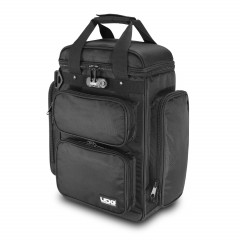
Inspired by the legendary UDG ProducerBag, the UDG Ultimate ProducerBag Large has been created to cater for those electronic musicians who crave more space for their performance equipment. The UDG ProducerBag Large offers increased space for performers using laptops up to 18.4" and larger MIDI Controllers. Constructed from high quality fabrics, the backpack style UDG ProducerBag Large features padded walls with an adjustable divider to create an internal partition to suit your own requirements. Available in black, the bag offers both comfortable transportation and padded protection for your valuable items.
''One Foot in the Rave'' is a vibrant collection that showcases Jonny's signature style--a blend of melodic, melancholic acid jams, bleepy funk, and warm analog electronics. Whether for the stereo or the sound system, the LP moves from the upfront bounce of ''The Apocalypse is Now'' and ''Raymond Tuesday's Big Day Out'' to the shimmering reverb of ''Starry Night'' and the birdsong-infused ''Ringfort.'' Listeners will find themselves in familiar Automatic Tasty terrain, rich with psychedelic exploration. According to Jonny, ''What to say about this record? I don't really know and it hardly matters. I wrote them on different bits of gear; ye olde faithful Roland SH101, my MC202 (pencil and paper de rigeur), a battered x0xb0x 1.0 (thx Daniel!), a beloved Yamaha Cs-5, a similarly beloved Roland SH5, a truly hammered Juno106, a Roland JX3P, a Nord something or other, an MPC2500, my TR606, and a Vermona DRM1 MKII being sequenced via a bedraggled TR626. Also Jay's TR808 is on there (thx Jay!) and a TR8 being squashed through a Mutronics Mutator (wheee Damo!) and a Zoom H4n recorder. I edited them on a dilapidated laptop, with no headphones or monitors, steering by the tiny speakers on the computer and playing them in my car, twiddling the mix as I went. But these are frivolous and unimportant details. All that matters is that these songs were made out of love. Cheerio, Jonny. P.S.: This record is dedicated to Jay 'Winthorpe' Kelly.'' ''One Foot in the Rave'' will be available on vinyl and digital platforms starting October 14th.
Brighton (UK) punks THE BAR STOOL PREACHERS have announced their new EP 'Below The Static', which features reimagined versions of songs from the bands 2022 album 'Above The Static'. The EP is out 13th September 2024 via Pure Noise Records. Speaking about the new EP the band said, "For this release, we really wanted to highlight how good the songwriting was. We were stoked with how well the album went down but we really wanted to expose some of the more vulnerable elements and fuck with the format a bit. To hear such strong fxmale vocals, and having heavy guitar riffs on cellos/violins etc. really got us excited about these songs again. Some of the versions are stripped right back to just a voice and one instrument. It's the band like you've never heard it before, and really breathes a different life into the songs."
Repress of Still House Plants’ second LP FAST EDIT on frosted clear vinyl with microtene inners. Cultivated over the course of 2019, the album switches the combativeness of previous releases for bare intimacy. FAST EDIT is a palette of qualities and curdled headspaces. Now living far apart and coming together only for intense periods of shows and touring, the band have come to rely on an archive of mp3s (quick recall overtakes stable long-term memory). Written on mobile phones, dictaphones, and laptops, FAST EDIT cuts rehearsals and schemas with tight, raucous tracks. This is most tenderly at play on ‘Shy Song’ – a cut'n’chase piece, in which all sounds are ghosts of another. ‘PredikateD’ is a phone on the ground: the voice is air, the guitar and drums meld with the plywood and sand-bag structure, the seams exposed.
"Vanatühi" by Kiwanoid is a technopagan concept album. Track titles refer to the word "nothing" in various languages.
The sonic landscape is crafted using deprecated tools: a first-generation 4-bit laptop, the DOS operating system, and a tracker program. Inspired by glitch aesthetics, the sound palette includes clicks, error noises, and low-bitrate techno sounds. Initially, the structures of the pieces may appear complex and chaotic. This electronic thicket might seem abstract, cold, and inaccessible, yet upon closer examination, it reveals a plethora of diverse species, coming across as somewhat nostalgic and warm, evoking surreal associations. From beneath towering sequoias peek pixelated ferns, LED eyes are blinking from below the undergrowth, and against the backdrop of a crackling campfire and cave paintings, a lively stomping of microchips unfolds.
Sudden contrasts, sharp cutting edges, a tachycardic bass drum engine, and irregular polyrhythms make themselves physically felt. Elsewhere, haunting lo-fi textures, hidden ambient drones, mysterious hums, and obscurely garbled samples offer introspective breathers. The dynamic range of the music is favourably extensive, and the raw imperfections of the sound are unmasked by reverb effects or other generic tools. Interwoven throughout are outsider rhythm loops, which could find a home at an alien rave party or a hobgoblin honky-tonk. Various human voice samples build a bridge to the listener, allowing them to embody a cyborg-like experience.
While each twist and turn remains unpredictable, these diverse approaches align in complementary patterns and stochastic regularities, making the whole surprisingly coherent, despite its chaos. The album doesn't bore the audience with intentionally irritating compositions or pseudocomplexity - it demands attention, but doesn't try to outrun its listeners.
forgive too slow, Avant Garde artist julia-sophie’s deeply personal debut album is testament to her ability to transform adversity into raw beauty, combining her traditional songwriting roots with her own take on experimental electronica. It features her intimate voice backed by warm and precise electronic sounds whose free spirited explorations give body to the carefully written personal songs julia-sophie comes off the drama of her 2010s rock band, Little Fish, which was signed to a major label. The surreal experiences (like being flown to Las Vegas in helicopters with a bag of slot machine money or given limousines for the day to go shopping), along with having to work in environments where she felt unsafe, drove her decision to leave the fame game. She turned down the offer to emigrate to America and engage with the machinations of the system as it did not feel “true or congruent with who I was”. Instead, she focused her attention on her hometown (Oxford, UK). She started recording lo-fi pop in her garage, using an old laptop, wonky microphones and hitting whatever was around for beats. Candy Says grew to be more of a collective than a band, and eventually co-wrote a film score for indie film Burn Burn Burn and recorded a cover of Running Up That Hill for the Netflix film Close (starring Noomi Rapace). Julia-Sophie soon started recording songs with her friend B, who had a studio stacked from wall-to-wall with analogue recording gear, vintage synths and drum machines. She decided to self-release and the music reached audiences beyond her expectations, including support from BBC Radio 6 and a feature in The Quietus. forgive too slow is Julia-Sophie’s debut solo album, and concerns relationships and the struggles we go through when we “forgive too slow” and can’t break out of patterns from the past. The songs narrate her story of self-destruction (“numb”), love (“falling”), and loss (“telephone”). By the end, embers are still burning and there is no telling if Julia-Sophie has found peace, but we do get a sense that she has gotten closer to the core of her being and is finally living authentically.
A true packing backpack designed to carry what you need.
Made from 120 recycled 0,5l (16oz) plastic bottles, the SOLID BLAZE PACK 120 is an all-purpose travel backpack with modular interior layout crafted for versatility. Whether you are hauling DJ or production gear, photo or video equipment, or other electronics, the SOLID BLAZE PACK 120 enables you to easily and conveniently organize your gear. The spacious and expandable main compartment features removable EVA padding and multiple dividers for ultimate packing experience. The customizable padded interior ensures your gear travels with you safely. Loads of additional compartments, pouches and zippered pockets offer intuitive accessory management and quick access to your belongings. The SOLID BLAZE PACK 120 is crafted from only the highest quality materials, such as its water-repellent RPET 900D shell and YKK® AquaGuard® zippers to protect your laptop, tablet, timecode records and other expensive gear from the elements. Travel comfortably knowing your gear is safe inside the MAGMA SOLID BLAZE PACK 120.
Fabrics made from recycled PET plastic bottles (Global Recycling Standard certified)
Outer material crafted from robust and water-repellent RPET 900D Polyester (with eco-friendly water-based PU-coating)
Lining made from RPET TC Polyester
Lockable dual PVC-coated YKK® AquaGuard® zippers (padlock not included)
Expendable equipment storage compartment with EVA side walls and bottom padding
Includes removable dividers to customize individual sections
Separate padded laptop and tablet compartment fits up to 17” laptops
Numerous internal pouches, compartments and zippered pockets to organize smaller gear
Quick-access front-compartment with internal pockets to organize smaller gear
Dedicated headphone-pocket (also holds cameras)
Side-pocket with pen and key-holder
Side-pocket with USB charger port (power bank not included)
Side-pocket for bottle or tripod storage
Comfortable air channel back padding with hidden document pocket
Carrying-handle with magnetic closure
Contoured and ergonomic riveted shoulder-strap with metal buckles
Adjustable chest-strap
Detachable hip-belt transfers heavy-loads to your hips
Trolley-Sling
Cabin luggage compatible
+ Outer dimensions: (H/B/T): 52 x 35 x 23-26*cm / 20.5” x 13.75“ x 9“-10.25“* (*extended)
+ Inner dimensions: 45 x 32 x 14 -17* / 17.75“ x 12.5“ x 5.5“-6.75“* (*extended)
+ Weight: 2,3 kg / 5lb
+ Color: black/grey (Item-No.: 47892 / EAN:4041212478924)
Looking for the perfect backpack for your next DJ gig or music production trip? Look no further than the SOLID BLAZE PACK 180, the ultimate tech backpack for pro-DJs, producers, and traveling artists. Crafted from 180 recycled 0.5l (16oz) plastic bottles, this backpack is not only environmentally friendly but also incredibly durable. Its water-repellent RPET 900D shell and YKK® AquaGuard® zippers ensure that your DJ and production gear stay protected from the elements. Its versatile interior layout is designed to make packing a breeze, with removable EVA padding and dividers that allow you to customize the interior to fit your gear perfectly. The spacious and expandable main compartment provides plenty of storage space, while additional compartments, pouches, and zippered pockets make it easy to keep your laptop and accessories organized and within easy reach. Whether you're hauling a battle-mixer, DJ-controller, MPC, midi keyboard, or other gear, the SOLID BLAZE PACK 180 makes it easy to hold and organize your equipment. With its thoughtful design, high-quality materials, and exceptional durability, this backpack is sure to become your go-to choice for all your travel needs.
Fabrics made from recycled PET plastic bottles - Global Recycling Standard certified
Outer material crafted from robust and water-repellent RPET 900D Polyester with eco-friendly water-based PU-coating
Lining made from RPET TC Polyester
Lockable dual PVC-coated YKK® AquaGuard® zippers
Expendable equipment storage compartment doubles the main compartment’s capacity
Includes multiple removable foam paddings and dividers to adjust then main compartment’s interior
Hanging mesh pocket inside the main compartment for headphones, cabels etc.
Separate padded laptop compartment fits up to 17” laptops + foldable laptop-stand
Two individual front pockets including internal pouches and zippered pockets to organize smaller gear
USB charger port (power bank not included)
Comfortable air channel back padding with hidden document pocket
Contoured and ergonomic riveted shoulder-strap with metal buckles + adjustable chest-strap
Detachable hip-belt transfers heavy-loads to your hips
Vertical and horizontal carrying-handle
Trolley-Sling
+ Outer dimensions (H/B/T): 56 x 37 x 23-31*cm / 22,05 x 14,57 x 9,06-12,20" (*extended)
+ Inner dimensions: 51 x 32 x 9 -16* cm / 20,08 x 12,60 x 3,54-6,29" (*extended)
+ Weight: 2,5 kg / 5,5 lbs
+ Color: black/grey (Item-No.: 47894 / EAN:4041212478948)
Released in 1999 on Taylor Deupree’s 12k label, »optimal.lp« was the debut album by Dan Abrams under his Shuttle358 moniker. For its 25th anniversary, Keplar presents it on vinyl for the first time with three previously unreleased tracks—the digital version also includes a alternative version of »Tank«—as well as a new artwork recreated by Daniel Castrejón and a remaster by Andreas LUPO Lubich based on the original pre-masters that were been restored and cleaned up for the reissue project by Abrams. »optimal.lp« was inspired by the rich tradition of ambient music and the rhythmic complexity of 1990s electronica while also sharing many traits with the then-emerging clicks’n’cuts movement, making it a true sui generis piece of work—both informed by tradition and visionary, idiosyncratic and seminal for many artists after him.
Abrams developed an interest in ambient music when he was still a child, scouring through cassette tapes of environmental sounds, new age music, and world percussion. Discovering Brian Eno’s »Thursday Afternoon« as a young teenager marked a turning point for him. »It gave me the idea that ambient music could be an intentional creative act, that tone itself is a legitimate form of expression,« he says today. During the 1990s, he increasingly immersed himself in the electronica scene and the output of labels such as Instinct, where Deupree worked as an Art Director and released his first records as Human Mesh Dance. Abrams found a home on 12k after sending Deupree a demo tape that would later evolve into »optimal.lp,« released as the label’s fifth catalogue number.
Abrams was still in college when he started experimenting with a sound module, his laptop and a mixer as well as a MIDI card and a small controller. »Each note was composed in MIDI and played back when I was ready to record,« he explains his working process at the time. »The tracks could be replayed, but the sound interactions with glitches and noise would be a little different each time. I decided to base the concept of the album on these interactions.« Each piece started with a single sound or tone that, as Abrams puts it, already contained the entire composition: »I let these interactions guide me, and tried to complement them as I added sounds. It’s a conversation of sorts with the medium.«
While refining this technique that he would go on to use on every album until 2004’s »Chessa,« reissued by Keplar in 2021, he also used the first-ever Native Instrument product, the Generator soft synth, to write the record’s title track—possibly making it the first album on which it was being used. »optimal.lp« is marked by this curious interplay of cutting-edge technology, the limitations with which every college student with a small budget is faced, and boundless creativity. »I’ve talked with other artists about how we feel about our early work,« Abrams says today. »We all agreed that there were elements that remain a part of us in a timeless way, despite our techniques—or lack thereof—at the time. ›optimal.lp‹ has a lot of things that will always be with me, that are me. I think I left some clues in there for my future self.«
This sense of timelessness remains tangible after a quarter of a century after the album’s original CD release and is even being expanded upon by the vinyl reissue, which is complemented by three pieces that were made while Abrams was working on the album. The digital release even features an entirely new take on the original album’s final piece, »Tank.« While Abrams let one of the masters go through his customised reverb unit when preparing the reissue, he started recording the results of this accidental dialogue between past and present. It’s a fitting tribute to an album whose delicate circular rhythms, rich textures, and ethereal melodies are precisely so exhilarating because their interplay seems to suspend the passing of time altogether.
* Sounds like a mix of Thom Yorke, Burial, Nils Frahm, all swirled together in a colorful yet creamy mix;
* A blend of Emikas neoclassical descending melodies, signature breathy, female vocals, icey pianos, heavy sub-bass vibrations and layered Hazy beats.
* Sat between her life in moving-boxes, wedged between them surrounding her upright piano in an unfurnished empty-sounding room in her in-laws house. Haze was made with voice-memo recordings of her piano and voice on her phone, edited and mixed on her laptop in headphones. Little loops in Ableton, lyrics, sadness and melodies, just like Emika’s real-life in boxes.
* Emika is set to launch a new event series, inspired by her memories of early Dubstep in the legendary Black Swan venue in Bristol (now closed) she saw her friend Mala play, with one table-lamp, it was all about this new sound, and meditating on the bass-weight. Something she plans to continue in her Haze Nights, where each guest will be gifted a little Haze Light with their ticket.
The RIOT DJ-Stashpack XL Plus is a versatile and lightweight gig bag that and was designed to be flexible in order to accommodate a variety of equipment. It features a practical, height-adjustable Rolltop opening to easily stash a battle-mixer, records, production gear or a DJ-controller. With its durable material, solid processing and a unique design, the new RIOT DJ-Stashpack XL Plus is perhaps the most versatile gear bag in the market.
+ FITS
Laptop up to 17"
Akai MPK-25
Akai MPC Renaissance
Denon MC-4000
NI Kontrol S4 MK3
NI Kontrol S2 MK3
NI Kontrol S5
NI Kontrol S4
NI Kontrol S2
NI Kontrol Z2
Numark NS6II
Numark NV2
Numark Mixtrack Pro 2
Numark Mixtrack Pro 3
Rane Seventy-Two
Rane Sixty-Two
Rane Sixty-Eigth
Reloop Elite
Reloop Terminal Mix 4
Roland DJ-202
Pioneer DDJ-REV1
Pioneer DDJ-SR2
Pioneer DDJ-RR
Pioneer DDJ-SB2
Pioneer DDJ-RB
Pioneer DJM-S11
Pioneer DJM-S9
Pioneer DJM-S7
Pioneer DJM-900 SRT/NXT
Vestax VCI-400
Vestax VCI-380
12“ Vinyl
Accessories
+ BASICS
Crafted from hardwearing and 100% waterproof PVC Tarpaulin
Soft-fleece lining
PVC-coated (waterproof zippers)
Lockable zippers on main and laptop compartment
Flexible height adjustment through variable Rolltop Closure
Main compartment includes removable bottom foam and padded side walls
The included (removable) Protection Panel protects jog wheels and faders and the folding top part works like an additional lid when e.g. battle-mixers are stowed.
Separate side entry compartment provides quick access to your laptop (up to 17’’)
Large front pocket with internal zip-pouches and organizers
1 side quick-access side pocket for small accessories and personal belongings
1 side bottle holder
Padded back panel with airflow system, ergonomic backpack straps and chest straps
Detachable trolley sling
Hand-luggage compatible (up to 56 cm height)
+ SPECS
+ Outer dimensions: (H/B/T): 49-65 x 38 x 26 cm
+ Inner dimensions: : 47-56 x 32 x 20 cm
+ Weight: 2,4 kg
The RIOT DJ-BACKPACK II is a compact and midsized model of the RIOT PACK line. It was especially designed for digital-DJs travelling with a basic DVS setup such as 15” laptop, Timecode records and accessories or small controllers.
The clever interior layout of the main compartment includes one padded, removable divider and multiple internal storage pouches for clear organization of your equipment. The featured “Zip-Around-Expansion-System” doubles the main compartment’s capacity, providing useful extra space for even more gear or clothing for overnight trips.
+ FITS
Laptop up to 15"
12“ Vinyl
Accessories
+ BASICS
Crafted from durable and 100% waterproof PVC Tarpaulin
PVC-coated (waterproof zippers)
Soft-fleece lining
Lockable zippers on main and laptop compartment
Rubber corner protectors and rubber feet
Main compartment includes one padded, removable divider
Clear organisation Layout and multiple Pockets
The “Zip-Around-Expansion-System” doubles the main compartment’s capacity, providing useful extra space for even more gear or clothing for overnight trips.
Separate side entry compartment provides quick access to your 15,4’’ laptop
One internal hanging mesh accessory pocket comfortably fill out the upper area of the backpack
Large front pocket with internal pouches and organizers
Padded back panel with airflow system, ergonomic backpack straps and chest straps
Detachable trolley sling
Hand luggage compatible
+ SPECS
+ Outer dimensions: (H/B/T): 53 x 33 x 16-22 cm
+ Inner dimensions: : 40 x 31 x 12-16 cm
+ Weight: 2,2 kg
About 20 years ago, Carlos Giffoni quickly made a name for himself both as a noise guitarist and a laptop noisician upon arriving in New York (via Florida and Venezuela). His expertly curated annual No Fun Festival, as well as his No Fun label, further solidified him as a key figure in the international noise scene. The festival's success proved the formula for experimental and improvised music fests could work with the noise underground as well, but it also capitalized on the faster rate of connections being made between geographically disparate artists as a result of the (still relatively nascent) internet. Back then Carlos would play his laptop like a pinball machine, in contrast to the static stage presence of most laptop performers, and his solo music, like many others' at that time, expressed a less dark and dour vision of the implications of harsh noise. By the close of the 2000s, he had stopped doing the festival, switched gears musically to playing the lighter No Fun Acid sets, and moved to LA. Now he has re-emerged in a big way with Dream Walker, his first full-length since 2018's Vain (and only his second since 2010). Inspired by the masterful performances and diffusions he heard at the February 2023 GRM electronic music festival in Paris, particularly sets by old friends Lasse Marhaug, Jim O'Rourke, and Eiko Ishibashi, he began conceptualizing new music of his own in response, turning to synthesizers and other hardware to produce a work more firmly in the tradition of European electronic music than anything else he's done. Intended as a late night listen that evokes the edge of consciousness, with Carlos getting as close as possible to a trance state during the actual recording and mixing, each of the eleven tracks transition into one another rather than being standalone discrete pieces, forming two side-long suites that proceed like stages of a dream. Unabashedly tonal and repetitive, the glistening opener "Now Dream," the droning "Sleep Walker," and the closing triptych of "Lost in Descanso," "Sunrise," and "The Hidden Path" occupy a power electronics-ambient nexus that feels spiritually close to the Mego label. Elsewhere, "Ticking Clock" is reminiscent of Stereolab's non-easy listening vintage electronic side, while the two-part arpeggiated "Euphoria" recalls early Oneohtrix Point Never (which Carlos released on No Fun). The contrast between "One Breath"'s crackling opening and its remarkably fluid and soaring sustained synthesized chords is a distillation of the album's lingering tension between electronics' ability to project mechanical rupture as well as the organic and the infinite _or "walking between dreams," as Carlos himself puts it. Produced by Lasse Marhaug (who also mastered Carlos' first solo album, Welcome Home, back in 2005), released by Stephen O'Malley (who I remember DJing at the No Fun fest), with cover art and photos by personal friends, Carlos considers the album a family affair. But Dream Walker most of all heralds a maturation of the artist, and stands as a record that exists out of pure desire, rather than obligation or force of habit; a statement of reconnecting with music not by merely revisiting it, but by building on what's come before, both in his own work and in the music he loves. -Alan Licht, New York, December 2023
Merzbow (aka Masami Akita), Animal Rights Activist, Writer, and Musician, an Iconic Figure in International Noise Scene
Renowned for his pioneering contributions to the noise music genre, Merzbow (aka Masami Akita) has solidified his position as one of its most significant and recognizable figures. From his groundbreaking utilization of tape loops to craft expansive industrial landscapes in the late 1970s, to his transition to laptop-generated static noise at the turn of the century, Merzbow has consistently pushed the boundaries of sonic experimentation.
Modern Obscure Music is delighted to unveil Merzbow's debut release on the label, "Tsubute Mosaic."
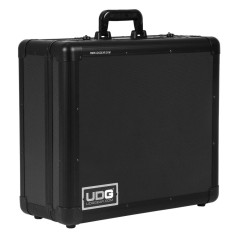
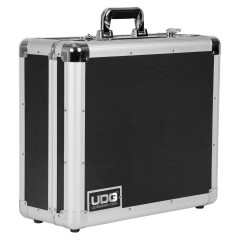
We, at UDG have further fined-tuned already a great design concept of our flight case into one specially for the most discerning DJ/producer. Constructed from aluminum thus providing an extremely stable structure with lighter weight compared to traditional flight cases. The inner sides are protected with pick & pluck foam that consists of two separate layers, each allowing user to create individualized adapted compartments. The pick & pluck foam allow you to pluck out any desired shape you require for various-sized DJ-controllers and providing the additional option of creating another slot underneath the controller for laptop or cable storage. This pick & pluck foam creating an easy, do-it-yourself customized system of case interiors.
The UDG Ultimate Pick Foam Flight Cases are designed to keep your gear protected from accidental damage when you transport it to and from gigs. They’re compact and lightweight yet tough enough to keep your gear safe.
EAN 8718969212229
Color Silver
Weight 4,55 kg / 10.01 lbs
Outer Dimensions (W x H x D) 49 x 42.3 x 21 cm | 19.3 x 16.6 x 8.3 inch
Inner Dimensions (W x H x D) 48 x 41.3 x 20 cm | 18.9 x 16.2 x 7.9 inch
Material Aluminum
Protection Corrosion resistant aluminium profiles with strong rounded corners
Fully-lined with high density foam protective padding & foam on lid
Two side strong butterfly lock & solid metal hinges
Rubber feet at the bottom for support in standing
Extra's Lighter weight than traditional flight cases
Black Diamond finishing surface
Ergonomic & sturdy carry handle
Pick & pluck foam with two separate layers
Replacement pick & pluck foam is available to purchase
Rear cable access hole with cover
Fits Technics SL-1200MK7, SL-1200MK6, SL-1200 MK5, SL-1200 MK4, SL-1200 MK3, SL-1200 MK2, SL-1200GR, SL-1200GAE,
Denon VL12 Prime,
Pioneer PLX-1000, PLX-500,
Reloop RP-8000 MK2, RP-8000 Straight, RP-8000, Reloop RP-1000M, RP-1000 MK2, RP-2000 MK2, RP-2000 USB MK2, RP-4000 MK2, RP-7000, RP-7000 MK2, RP-7000 MK2 GLD, RP-7000 MK2 Silver,
Audio Technica LP120-USB, LP120XUSB, LP1240-USBXP, LP1240-USB, LP140XP, LP3, LP5, LP7, LPW40WN,
Stanton STR8-150 M2, ST-150 M2, T.52, T.55 USB, T.62 M2, T.92 M2 USB,
Mixars STA, LTA,
Vestax PDX-3000, PDX-3000Mix, PDX-3000MKII,
or similar size turntable
Brownswood Recordings are proud to present the reissue of Toshio Matsuura’s 2017 cult classic LOVEPLAYDANCE, issued for the first time as a complete album on limited edition red and white double vinyl.
The project focuses on covers, presenting classics & influential tracks in a new context. This new edition includes a cover of the Rotary Connection’s classic "Black Gold of the Sun'' featuring Afro-Cuban singer Daymé Arocena and her prodigious Havana-based players, as well as the high energy re-lick of Byron Morris and Unity’s ‘Kitty Bey’, a classic from Gilles Peterson’s seminal afternoon session at Dingwalls in the 1990s; neither included on the original vinyl LP.
On ‘LOVEPLAYDANCE’, legendary Tokyo DJ and producer Toshio Matsuura charted a new direction by casting musical cornerstones in a fresh light. The TOSHIO MATSUURA GROUP features Tom Skinner (drummer for Smile, Sons of Kemet, amongst others) as its musical director, as well as some of the UK’s most exciting jazz-influenced musicians. Drawing on years of surveying and curating different corners of music, Matsuura deftly combined this talented pool of players into one singular, wide-ranging album. A co-founder of Japan’s United Future Organisation (aka U.F.O.), this record sees Matsuura reconnect with longstanding friend and collaborator Gilles Peterson. Releasing the album via Brownswood Recordings in the UK, it’s a continuation of a relationship which started as a bridge between London’s then-blossoming jazz scene and Tokyo’s new musical vanguard of the early ‘90s. This album continues that two-way dialogue between Japan and the UK.
The scope of the music reflects the breadth of Matsuura’s interests; It ranges from Bugges Wesseltoft’s Detroit-influenced, dancefloor-minded jazz, stretched out into a more meditative contemplation, to Flying Lotus’ LA-rooted, Brainfeeder beatmaking, translated from laptop-to-live, given a new, equally idiosyncratic lease of life. Elsewhere, Carl Craig’s iconic ‘At Les’ is taken in a looser direction, the overtones of euphoria cast in a different hue.
They’re touchpoints which hint at interests in the different, diffuse corners of electronic music, and how they connect to jazz and improvisation. Featuring an all star line up of some of the best players London has to offer, line up includes Nubya Garcia, Yazz Ahmed, Yussef Dayes and more.
Hand-numbered limited edition in 200 Black vinyl (PVC Bag, printed inner-sleeve and MP3 download card included).
Musica Automata is an album by the Italian composer Leonardo Barbadoro (formerly known by his electronic alias Koolmorf Widesen), comprised of music performed by the largest robots orchestra in the world: 70 automated instruments controlled by digital impulses from a laptop computer.
It is music that brings together two dimensions often perceived as incompatible, even antithetical: the boundless expressive possibilities of electronics implemented by an acoustic instrumental body in a sensory reality, beating, vibrating, and blowing.
The album received excellent media coverage from the international press (Clash, Billboard, Redbull, Vice, CNN and more), radios (BBC Radio 3, RAI, Radio 1, VRT, ERR, WFMU, NTS, etc) and has been selected by a few websites and stores (such as Soundohm) as one of the best album of the year.
“I like to work with a variety of instruments and set ups,” says Mark Van Hoen, sometimes known as Locust or Autocreation but here working under his own name on the excellent Plan For A Miracle, his first physical release of solo music since 2018’s Invisible Threads. ”Sometimes it’s literally in my studio, with all the hardware electronics available. Sometimes the laptop, using software instruments. Some of the tracks on this record were recorded in the desert (Joshua Tree) using a 4-track tape machine and small modular synthesiser set up. Each track was recorded in different location using different instruments, which accounts for the distinction between each piece. It’s also about my own reaction to my environment, and what’s going on in my life at the time.”
The Croydon-born Van Hoen started musical life in the early 1990s, signing for R&S records in 1993 but developing his own, myriad and distinctive style across a range of releases on Touch, Editions Mego and other labels, using a battery of instruments, including analogue synthesizers and taking a number of different approaches to recording, rather than ploughing a single sonic furrow. He has worked on a number of collaborations, including with Nick Holton and Neil Halstead of Slowdive, under the moniker of Black Hearted Brother - their Stars Are Our Home was released in 2013. “I have known Neil Halstead since 1992,” says Van Hoen. “He shared a house with me for a couple of years, and the music I was making and listening to along with clubs I was attending had an influence particularly on Pygmalion, the final Slowdive album on Creation.”
Each track on Plan For A Miracle does indeed sound like a world unto itself, a mini-environment, a weather condition, an ecosystem created for the moment. It’s a collection of tracks recorded over the past few years, released on Bandcamp - despite his apparent absence, Van Hoen works constantly. Opener “Climates”, in its exquisite limpidity, feels like a homage to Brian Eno, one of his most formative influences in his teen years, commencing with Music For Films, which he bought in 1979. “This Is For Them”, feels like a ghostlike throwback to early drum & bass or electronica, reminiscent of his own, earliest outings. “There have been a number of requests from labels to make some more music like my very early releases on R&S,” says Van Hoen. “This is part of ‘letting go’ and realising that there’s nothing less creative about going back to those styles again.”
“Pencil Of Spheres” is something else again, a magnificent, imaginary glass structure, shimmering, refracting, without visible means of suspension, a thing of impossible beauty. “Electric Lights” evokes an abandoned fairground, its lights still pulsating, its music lingering. “The Underpass”, meanwhile, insofar as it reminds of anything at all, is faintly reminiscent of Cluster or Neu’s! West German ambience, the urban mundane rendered magical, the sodium lights, the whitewashed walls. The reverberant, faintly oriental chimes of “Insight” transport us yet again, burgeoning and intensifying.
The landscapes, the skyscapes rendered on Plan For A Miracle feel unpopulated as a rule - but when he does introduce vocal elements, Van Hoen has a history of doing so to spectacular effect - think of “Real Love” from 1998’s Playing With Time, the seductive intonation of its title recurring throughout like a series of massive holograms, echoing, stuttering, breaking up, surging. Here, there are just the faintest of vocals, barely distinct, disquieting. “There’s been a bit of a game changer in recent times,” explains Van Hoen. “AI software that enables you to extract vocals and instrument parts from virtually any recording. That means sampling individual parts from existing sources is no longer limited to the original mix exposing certain parts soloed. The vocal parts I use are from multiple sources and often pitch shifted altered rhythmically and melodically.“ There’s further vocal chatter on “I Really Do”, proceeding at a faster pace as if giving chase, or being pursued - distant, enigmatic. “The Music”, meanwhile, its beat tolling, lost in its own fog of static, features a curious intonation, like the ghost of a lost Walker Brother.
Sadly, the album’s title is in reference to a personal tragedy on Van Hoen’s part - the loss of his wife. Titles such as “I Won’t Give Up”, which faintly reminds of another Eno masterpiece, Another Green World, in its nautical hurly-bury, or the pastoral strains of “Mrs Who”, heavily clouded with sadness, seem to allude to this. “In fact the record was recorded entirely before she passed away,” says Van Hoen, “most of it before she even became very ill. The title was given to the album when it started to look like she wasn’t going to make it beyond a few months. It was something Osho said - “plan for a miracle” - so it was a statement of hope. Unfortunately it was not to be.” Although the album is non-thematic, non-specific in its atmospheres, sound paintings, elegant structures it most certainly stands as a magnificent monument to Osho’s memory.
-David Stubbs.
Die kratzigen Gitarrenhooks, das eingängige Schlagzeugspiel und die ausgedehnten Codas klingen eindeutig nach Großstadt, doch bei WIDOWSPEAK gesellt sich ein trockener Minimalismus und eine an die Atmosphäre von David Lynch Filmen erinnernde Düsternis, die aus der Kleinstadt der Bandmitglieder stammt. Während der Grunge Seattle berühmt machte und die Riot Grrl und die DIY Einstellungen synonym mit Olympia sind, steht Tacoma für etwas Raueres und Düsteres. Berühmt-berüchtigt für den beißenden Gestank der Papiermühlen hat die Stadt es dennoch geschafft, eine fruchtbare Musikszene ihr Eigen zu nennen - nur wenige Außenstehende wissen das. Drei Jahre, nachdem sie schon bei einem kurzlebigen Sampler Label Projekt aufeinander getroffen waren, fragte Michael Molly, ob es nicht Zeit wäre, eine neue Band zu gründen. Molly fing trotz Bühnenangst an, zu schreiben und kurz darauf lud Michael den Gitarristen Robert Earl Thomas zu einer ersten Probe ein. Obwohl Robert seine Gitarre über die Musikanlage spielen musste und Michael auf nur zwei Trommeln spielte, zeigte die erste Stunde, dass alles passte. Sie suchten einen Namen aus, den Molly sich schon Monate vorher ausgedacht hatte und der Sound von WIDOWSPEAK begann, Form anzunehmen. Im Herbst hatte das Trio sechs Songs für eine Kassette names ,October Tape" zusammen, die sie nur mit einem Laptop Mikrophon und Garageband aufgenommen hatten. Das Tape fiel in die Hände von Captured Tracks und hier ist das selbstbetitelte Debüt. Aufgenommen mit Jarvis Taveniere von WOODS bekamen die noch zittrigen Probetracks im Studio Luft zum Atmen. ,Widowspeak" erschafft eine unheimliche Atmosphäre, die sich manchmal auf den Jukebox Pop der Fünfziger oder auf die Psychedelia der Sechziger gründet. Während WIDOWSPEAK mit ruhigeren Acts wie MAZZY STAR oder CAT POWER verglichen wurden, haben sie einen Sound definiert, der ernsthaft nostalgisch und zunehmend selbstbewusst ist.
Aiko T. is a concept, an entity, a ghost that appears only through her own music.
"I’ve released various materials over the years under other names, Aiko has been materialized in 2022 through self-published music and with IIKKI it's the first official release that I am very proud of. Despite this, Aiko has been publishing in other forms since 2020, but always within the sphere of ambient music.
This album was born as a long-lasting sound continuum. It was then cut, stitched together and reassembled to give shape and restore unity from the fragments, in order to have an album that shows its completeness halfway between the titles and the compositions themselves. Contrary to what it may seem, it is not born from a concept and does not want to be. The titles were chosen in a poetic, almost naïve way, the sounds of these creatures led me to believe that they could be divided into different distinct phases of the day. What I want to communicate with the titles is just what came to mind in a moment of reflection, a very simple thing, that sometimes time passes too quickly, and the moments we spend with our loved ones could always be better, it could have been a beautiful morning, afternoon, evening or night." - Aiko Takahashi
Music crafted by Aiko Takahashi with laptop and various music devices, analogue and otherwise
Following his first LP "Hafa" released by Soundway Records and a 12inch where he remixed Guts & Les Frères Smith (Pura Vida / Heavenly Sweetness), the nomadic producer iZem continues to blaze his own trail, offering a hybrid of Afro-Brazilian influences and electronic funk. After the release in 2022 of the EP "Yemamaya" composed with the Brazilian LuizGa, which was unanimously acclaimed by the public, he is releasing his second album "in Ze early morning", surrounded by artists and friends who have marked out his journey between South America, Portugal and France.
"in The early morning" is a fusion of musical aesthetics, the fruit of the artist's passionate quest to reveal links between cultures. iZem is constantly on the move, creating songs from loops and ideas initiated on the road, with his laptop as his companion. These first seeds are then developed with musicians from all over the world, to create innovative tracks that blend tropical trip-hop, Afro-Latin music and avant-garde electro beats.
- Unifactor - Dump
- Suspension Of Disbelief - Maxine Funke
- Spinnaker - A Happy Return
- Nei No Su - How To Count Planets
- Bad Luck Might Come - My Two Toms
- Mugwamp - Oro Swimming Hour
- Tail Grows - Jam Money
- Faunt - A Happy Return
- Chancelroy - Michael Tanner
- Torches - Jam Money
- Untitled 2 - Mouth Harp Ensemble
- A Lion - New North Wales
- Silfr Pocket - Jam Money
- Nriho - Tenniscoats
- Fuyu - Andersens
- Silly Season - The Gentlist
- Look At The East, Look At The West, Look At Where Your Mum Cooks - My Two Toms
- I Love You So - Benoît Pioulard
- An Arm For A Pillow - Matthew De Gennaro
Music compilation and art book. We open the GLITZERBOX again and look into a glittering kaleidoscope of music and illustration. Crossing genres, in handmade editions and with great attention to detail, Jimmy Draht fuses artistic ideas into a new whole.
The vinyl contains beautiful folk songs, experimental collages, field recordings and lo-fi pop. All tracks are exclusive or have never been released on vinyl before.
Featuring music by: Maxine Funke, Tenniscoats, Mouth Harp Ensemble, How to count planets, A Happy Return, Benoit Pioulard, New North Wales, Dump, My Two Toms, Oro Swimming Hour, Matthew de Gennaro, The Gentlist, Andersens, Jam Money, Michael Tanner.
The artists, whether they paint, draw, scribble or cut, whether analogue or digital, whether they are graphic artists, illustrators or visual artists: they combine image and sound, discover connections and show that music can create images and vice versa.
Art by Petra Péterffy, Laurent Impeduglia, Nadine Spengler, Michael Dumontier, Tomoko Mori and Nicholas Stevenson.
A limited and numbered edition of 300, with hand-printed 3 color silkscreen book. Compiled by Markus Acher (The Notwist) and Jimmy Draht.
Since the late 90s JIMMY DRAHT publishes elaborately designed music-graphic-comic-text hybrids, most of them handmade and screenprinted. Initiated by Marion Epp, often in cooperation with a music label, artists from various genres are invited to participate. Each release is accompanied by exhibitions and music events.
Bands such as Calexico, The Notwist, Lali Puna, Neoangin, Pram, Otomo Yoshihide, A Million Mercies, Ted Milton, MS John Soda, Schwermut Forrest, Tied & Tickled Trio have participated (to name a few).
In terms of design we were lucky to showcase the works of ATAK, Anna Sommer, Knust, CX Huth, Katz & Goldt, Judith Zaugg, Thomas Ott, Jochen Gerner, Martin tom Dieck, Jim Avignon, Le Denier Cri, Elvisstudio and many more.
ALIEN TRANSISTOR was founded in 2003 by Markus & Micha Acher of The Notwist. The concept of the label is to produce music that has a musical or personal reference to the Notwist microcosm: From electronic soundscapes to abstract hip-hop to laptop-treated contemporary, from processed oriental music to Nick Drake-inspired songwriting. Alien Transistor respects no musical boundaries.
A long-in-the-works project of ours, here comes A Tribe Called Kotori's first foray into full-length territories, as the immensely talented Rampue takes us on a melancholy-riddled ride across his phantasmatic mindscapes. A true sound explorer, deftly steering his ship down the junction of electronica, abstract and balearic-infused prog house, the Berlin-based vibist has us transfixed and elevated throughout the twelve cuts that form the backbone to this lushly textured promenade in sound - at times understatedly euphoric, at others rivetingly exotic.
Of the creative process that lead to 'Bubblebath Trance', Rampue explains "It all started and ended in the same moment: my cherished feline companion, my laptop awash with an unintended bath, and alas, a dearth of backups. The resultant calamity, an echo of chaotic tranquility." Under the generous layer of irony lies some unaltered truth about Rampue's debut long-player for A Tribe Called Kotori: this sense of serenity that goes with stepping into this warm and bubbling primitive chaos of sorts infuses the listening experience far and wide. Distantly emulating the "euphonious strains" of iconic PS1 video games soundtracks from his youth days, the album has us surfing a constant paradox of emotions, wistful but not abandoning itself to sorrow, dynamic yet suspended in some sort of mind-expanding stasis. As if you were looking at the world beneath you in exploded view, conscious of all thing, slowly moving up the many layers of our atmosphere towards uncharted skies.
A paragon of Rampue's most poignant take on classic electronica tropes, 'Harmonie' blazes with a poetic fire that engulfs about everything in its wake. Just figure yourself riding a chocobo across the sand-covered expanse of North Corel (toasting to the FFVII nerds here) as this blasts out in the distance. From this trancey bubblebath emerge lots of musical shades and nuances, from the nicely dubbed-out, brass-heavy coastal jazz of 'Schattenschranz' to the choppy, trip-hop-adjacent future electronics of 'Inside', via the exuberantly joyous mess of faux-organic number 'Tripomatic' and cinematic charisma of 'Ich hasse Sonne' high-flying orchestrations.
Connecting the dots between that trance-indebted ebullience and further downtempo-friendly attraction, 'Verfahren' perhaps encompasses best what 'Bubblebath Trance' is about: gracefully walking the tightrope in-limbo nostalgia-soaked inner movements and a powerful outward thrust, burning to let the feelings ooze out from the shell that holds them.Clad in purely 90s-compatible breaksy motion, 'Salz' is another attempt to reconcile emotional and physical dissonance, like kneading all states - solid, liquid and vaporous - into an impossible mega-vibe of its own; malleable, strong and enveloping in equal measure. Borrowing from two-step and UK garage, 'Take Away' is a definite high in Rampue's master unfolding of musical twists and turns, summoning a Boarder Community-esque atmosphere and clashing it alongside floor-ready footwork motifs to fascinating effect.
An ode to his studio companion, 'Buchla Trip' finds Rampue's exploring his machinic friend's quirky yet soulful array of electronic potentialities - making it sound like a conversation you'd have with R2-D2 in the heart of a Sandcrawler, whereas 'Kajal' beams us up to a fragmented headspace, halfway altered PC-Pop and arps-loaded electronica on amphetamines. Effusive and transporting, the title-track 'Bubblebath Trance' could well figure as the album's no.1 medley in essence: a bountiful lucid dream of dancing forms, colours and sentiments to wrap your head around, confidently drifting from a liminal state of consciousness down the rapids of one's troubled inner workings.
Rounding off the package, the languid ambient finale of 'Die Leiden des hungrigen Fruehstuecks' rubber-stamps the feeling that 'Bubblebath Trance' belongs to that rare category of albums. The ones that mint their own alphabet aside from typical norms and expectations, teaching you the ropes of their new language as it unreels between your ears - real and unreal, elusive to any other meaning than the one your guts and brains will be inclined to give it to, in real time. A crystal-pure object if you will, that shall not reveal its secrets, even after a thousand listens and just as many wowing moments.
"Hi there, I'm really happy to present my new EP "Kernel Panic" released on one of my favorite labels "Yuku". I've been discovering a lot of great music and new artists thanks to Yuku and I'm really happy to join the family.
My first release ever was a footwork release 8 years ago, and I wanted to experiment with this 160 bpm vibe again and merge it with a lot of different personal influences. I've been experimenting a lot with crazy polyrhythm sequencers and Euclidean algorithms for this EP. It was a lot of fun but my laptop didn't like it at all. During the whole process, I experimented a huge amount and experienced loads of bugs and laptop freezes, so I decided to dedicate this EP to "Kernel Panics".
It might be the most hybrid EP I've done. You can hear breaks, electro, footwork, grime, percussive, and dub ingredient within. I also had the pleasure to collaborate with the very talented Kenyan rapper, Nah Eeto, for Piga Makofi, and I can't wait to play this one live with her.
I asked my friend Vica Pacheco to create the artwork and she built this psychedelic 3d world based on "the hypnotic and dynamic energy" of the EP.
Big thanks to Yuku for following me into these new areas of experimentation."
- Le Motel
Ramona Lisa is the current alias of Chairlift's Caroline Polachek. Her new album Arcadia is Polachek’s first self-produced solo record and the first release by Pannonica, part of the Bella Union family. Completely composed in MIDI, it is a concept album of love songs that are nature allegories, and vice versa, which Polachek calls "Pastoral Electronic Music". The making of Arcadia was a year¬long process that began and ended in an empty studio in Rome's Villa Medici and while on tour with her band, Chairlift. The record was made entirely on a laptop without instruments or external microphones - all vocals were sung directly into the computer, making use of hotel closets, quiet airport gates, and spare dressing rooms. Although the album was created on a laptop, the result is a lush and uncannily tangible world of warm textures, reminiscent of analog tape processes rather than a hard drive. Virtual oboes and organs interweave with synthetic insects and quivering sine waves, animated by Polachek's vocal at it's most delirious and intimate yet.
Western Massachusetts band Landowner play abrasively clean minimalist-punk. Singer Dan Shaw began Landowner in 2016, writing and recording Impressive Almanac with a practice amp and a laptop drum machine. Those available tools would inform the band’s unapologetic sound—clean, confrontational, and absurdly stark. With a stated goal to sound like “Antelope playing Discharge”, Landowner’s diamond hard structures, repetitious instrumentals and caricatured hardcore make space for lyrics that reflect on the global systems our lives are tangled in and the dark absurdities we take for granted.
Landowner’s fourth Born Yesterday full length Escape the Compound focuses on the powerful grips manipulators and reality-deniers have on their victims, examining the social, political and interpersonal damage of cult-like influence and control. “A lot of the lyrics focus on cult manipulators and narcissists: falling victim to their toxic dynamics, and the difficulty of escaping their grip” says Shaw. From climate change deniers and conspiracy theorists to deceptive narcissists and actual cult leaders, Landowner explores the ubiquity of modern unreality through evocative imagery and a keen sense of awareness. The band’s plain instrumentation sheds and subverts hardcore punk’s noisy veil in favor of a direct, unswerving examination of these themes.
Written and recorded following the release of 2020’s Consultant, Escape the Compound finds Landowner leaning into the studio through deeper experimentation with a wider palette of sounds. The group’s lineup of Josh Owsley (bass), Elliot Hughes (guitar), Jeff Gilmartin (guitar), Josh Daniel (drums) and Dan Shaw played often since coming together in 2017. But with pandemic restrictions in place, the making of Escape the Compound became a much more insular pursuit, one where the mixing and mastering process helped turn the band’s most varied batch of material into a cohesive, thematic collection of songs.
Album opener “Witch Museum” is a collage of dark Massachusetts historical imagery. The song evokes a kind of cult dynamic travelling like a shadow through time, where dark absurdities are taken for granted, toxic behaviours are excused, and normalcy begins to shift. The line “Gail's behaviour has changed” casts fictional “Gail” as the dark manipulator, whose whim we’re at the mercy of. She sheds her toxic behaviour and the crisis finally ends - “and peace returns to the Commonwealth”- an absurdity, given that cult leaders and narcissists rarely seem to change.
By considering the past, Landowner sheds light on the present. The band challenges egomaniacs reluctant to accept an uncomfortable reality with both cynicism and concern. The literal landowner described in “Heat Stroke” collapses in exhaustion, cooked by a suffocating bass line and sizzling hi-hats. “You'd rather die of heat stroke than to let anybody see you change your mind,” Shaw gasps, later pleading with the character in “Floodwatch” to “please reconsider” their brazen stubbornness as they plunge through the rising waters of a flooded road.
The character in “Swimmer of Note” refuses to admit their miscalculations, instead doubling down on an ever-growing and increasingly-unsteady tower of lies. The sneering “Damning Evidence” sets a scene all too familiar: a smoking gun scenario with zero consequences. Shaw’s exaggerated vocal refrains and sarcastic inflections mock false hope: “how will they be expected to keep their minds intact, at the shock of simply hearing such damning evidence?”
“Beyond the Darkened Library” creaks open a secret passageway into a dimly lit, endless labyrinth of conspiracy theories, in which the character becomes hopelessly lost. “Aftermath” sounds the alarms: “stare so long that you start getting used to it; one glance says you should never get used to it.” The pair of “Tactics” tracks express what Shaw calls “an interpersonal microcosm of the album’s themes.”
Perhaps the most ambitious arc on Escape the Compound loosely begins with the title track. The subject in “Escape the Compound” gradually recognizes their own victimhood and plans a calculated flight from the “captivating shepherd” – hop the fence, flee, and regain autonomy. As the narrator escapes their stifling and abusive cult microcosm, a much grander existential timeline begins to appear. “Thousands of Years in Fast Forward” narrates a psychedelic surrender to the shared human experience through space and time, an ego-death adjacent to our ancestry, our own existence, and the before and after. “At the site of the crater, molecular hands unclasp molecular hands as you lose conditioning,” Shaw sings on the title track, “Your grandmother's garden. Your grandmother's kitchen. Your grandmother's primordial ocean.” It’s a profound actualizing glimpse into a true, forgotten reality and a startling reconnection with the self.
Western Massachusetts band Landowner play abrasively clean minimalist-punk. Singer Dan Shaw began Landowner in 2016, writing and recording Impressive Almanac with a practice amp and a laptop drum machine. Those available tools would inform the band’s unapologetic sound—clean, confrontational, and absurdly stark. With a stated goal to sound like “Antelope playing Discharge”, Landowner’s diamond hard structures, repetitious instrumentals and caricatured hardcore make space for lyrics that reflect on the global systems our lives are tangled in and the dark absurdities we take for granted.
Landowner’s fourth Born Yesterday full length Escape the Compound focuses on the powerful grips manipulators and reality-deniers have on their victims, examining the social, political and interpersonal damage of cult-like influence and control. “A lot of the lyrics focus on cult manipulators and narcissists: falling victim to their toxic dynamics, and the difficulty of escaping their grip” says Shaw. From climate change deniers and conspiracy theorists to deceptive narcissists and actual cult leaders, Landowner explores the ubiquity of modern unreality through evocative imagery and a keen sense of awareness. The band’s plain instrumentation sheds and subverts hardcore punk’s noisy veil in favor of a direct, unswerving examination of these themes.
Written and recorded following the release of 2020’s Consultant, Escape the Compound finds Landowner leaning into the studio through deeper experimentation with a wider palette of sounds. The group’s lineup of Josh Owsley (bass), Elliot Hughes (guitar), Jeff Gilmartin (guitar), Josh Daniel (drums) and Dan Shaw played often since coming together in 2017. But with pandemic restrictions in place, the making of Escape the Compound became a much more insular pursuit, one where the mixing and mastering process helped turn the band’s most varied batch of material into a cohesive, thematic collection of songs.
Album opener “Witch Museum” is a collage of dark Massachusetts historical imagery. The song evokes a kind of cult dynamic traveling like a shadow through time, where dark absurdities are taken for granted, toxic behaviors are excused, and normalcy begins to shift. The line “Gail's behavior has changed” casts fictional “Gail” as the dark manipulator, whose whim we’re at the mercy of. She sheds her toxic behavior and the crisis finally ends - “and peace returns to the Commonwealth”- an absurdity, given that cult leaders and narcissists rarely seem to change.
By considering the past, Landowner sheds light on the present. The band challenges egomaniacs reluctant to accept an uncomfortable reality with both cynicism and concern. The literal landowner described in “Heat Stroke” collapses in exhaustion, cooked by a suffocating bass line and sizzling hi-hats. “You'd rather die of heat stroke than to let anybody see you change your mind,” Shaw gasps, later pleading with the character in “Floodwatch” to “please reconsider” their brazen stubbornness as they plunge through the rising waters of a flooded road.
The character in “Swimmer of Note” refuses to admit their miscalculations, instead doubling down on an ever-growing and increasingly-unsteady tower of lies. The sneering “Damning Evidence” sets a scene all too familiar: a smoking gun scenario with zero consequences. Shaw’s exaggerated vocal refrains and sarcastic inflections mock false hope: “how will they be expected to keep their minds intact, at the shock of simply hearing such damning evidence?”
“Beyond the Darkened Library” creaks open a secret passageway into a dimly lit, endless labyrinth of conspiracy theories, in which the character becomes hopelessly lost. “Aftermath” sounds the alarms: “stare so long that you start getting used to it; one glance says you should never get used to it.” The pair of “Tactics” tracks express what Shaw calls “an interpersonal microcosm of the album’s themes.”
Perhaps the most ambitious arc on Escape the Compound loosely begins with the title track. The subject in “Escape the Compound” gradually recognizes their own victimhood and plans a calculated flight from the “captivating shepherd” – hop the fence, flee, and regain autonomy. As the narrator escapes their stifling and abusive cult microcosm, a much grander existential timeline begins to appear. “Thousands of Years in Fast Forward” narrates a psychedelic surrender to the shared human experience through space and time, an ego-death adjacent to our ancestry, our own existence, and the before and after. “At the site of the crater, molecular hands unclasp molecular hands as you lose conditioning,” Shaw sings on the title track, “Your grandmother's garden. Your grandmother's kitchen. Your grandmother's primordial ocean.” It’s a profound actualizing glimpse into a true, forgotten reality and a startling reconnection with the self.
- A1: German Trained Unit 1
- A2: Neoliberal Madness Offering I
- A3: Riyl Roma
- A4: Neoliberal Madness Offering Ii
- B1: German Trained Unit 2
- B2: New Bulgaria
- B3: German Trained Unit 3
- C1: Armchair Evader
- C2: Neoliberal Madness Offering Iii
- C3: German Trained Unit 4
- D1: Double Arm
- D2: Neoliberal Madness Offering Iv
- D3: Abhaengen
Repress!
Exceptional debut album of Military Space Music and / or Fluxus Techno rave drills from the inimitable, acronymic duo for Diagonal. RIYL Belgian Techno, SuperCollider, Powell, Lorenzo Senni,
the bleep test At long last N.M.O. execute their crazed debut album for Diagonal, distilling the playful calisthenics of their laptop and drum kit live show in a totally unique manner that somehow deconstructs and alliterates tracky acid techno with avant no-wave rock, computer music and the kind of snare-
driven tattoos coming out of Portugal's Príncipe label. Best just call it Military Space Music - Cleft as two corresponding but individual sides entitled Nordic Mediterranean Organisation
& Numerous Miscommunications Occur, it finds the Romantic Viking duo ratcheting the psychotomimetic intensity of their previous tape and trio of 12"s for Anòmia, The Death of Rave
and Where To Now according to their central mantra of As Strict As Possible, resulting in 5 alarming, powerful dancefloor raids intersected by infuriating locked grooves, or Neoliberal
Madness Offering #1-4, plus a series of barking trained Unit drills.
The razor sharp and raucous results don't sit comfortably in any pre-ordained category, preferring to scythe their own route thru the time-flattened field of contemporary music by employing
the fundamentals of physical pressure and precise psychoacoustic frequencies in a disciplined pursuit of new, syncretic sensations that toy with rave convention and serve to demystify notions of aerobic mysticism.
Nose to tail, they spell out their ideas with playfully pedantic attention to detail, whether physically making you get up to nudge the needle from its pervasive locked groove, putting you thru your
paces in their German Trained Unit challenges, or simply driving you to delirium in the album's full blown dance tracks.
Cut almost a side-a-piece for optimal intensity, those five dance cuts veer from the clashing sharp and wet, tight-but-distended dichotomies of RIYL Roma to the ploughing pneu-beta bass drum
and giddy top end tickle of New Bulgaria on the Nordic Mediterranean Organisation plate, to take
in the scuffling, compartmented swerve and teeth-chattering acid of Armchair Evader and what
Ghanas Linda Ayupuka spielt zeremonielle Fra Fra-Musik über schnelle Feuertempi und hypnotische Drumloops, die auf eine internationale Palette elektronischer Tanzstile verweisen, vom DJ-geführten Balani Show-Straßensound Malis über Electro-Acholi bis zu modernem Dancehall/R&B. Auf 'God Created Everything' fängt sie die Unmittelbarkeit früher Aufnahmen von Größen wie Oumou Sangaré und Rokia Traoré ein, um sich als neues westafrikanisches Gesangstalent zu präsentieren. Ihr Produzent Francis Ayamga (Top Link Studios), Live-Drummer von Ghanas King Ayisoba und Produzent der meisten Tracks auf dessen jüngstem Album für Glitterbeat, hebt Lindas Gesang mit seiner spielerischen Produktion von Laptop-DJ-Samples und abstürzenden Drum-Pads in den Himmel.
"(Linda) exists somewhere between the Malian singer Oumou Sangare´ and the lo-fi-to-the-future beats heard on the Nyege Nyege Tapes label." - NPR - All Songs Considered - Best Of 2022
"Combining traditional instrumentation and call-and-response vocals with sparkling synths, rapid-fire beats, and drum machine polyrhythms. Ayupuka achieves an electrifying syncretism on this album, giving Fra Fra gospel its rightful place on the global dance music stage." - BANDCAMP, Best Of 2022
"An uptempo blend of choral chants and sparkling, 80s electro synths." - THE GUARDIAN, Albums Of The Month
"Linda Ayupuka fait du gospel façon disco au Ghana et chante son amour de Dieu sur des synthés entêtants." - LE MONDE
"A mashup of gospel, disco and savannah sounds, produced with all the D.I.Y vim of Balani Show, Nyege Nyege Tapes and the Awesome Tapes roster." - PAN AFRICAN MUSIC - Best Of 2022
"Super interesting!" - GILLES PETERSON, BBC 6MUSIC
Vinyl release compiling both Nukuluk EPs on one LP. Curating their own unique sound and captivating crowds with their refreshing approach to hip-hop, electronica and indie, Nukuluk return with their new EP ‘SUPERGLUE’ on 21 April. The writing and recording process has never been executed in a conventional style for the group, a series of laptops and bedrooms manifesting the groups’ studio, aspiring to a fundamentally collaborative process as they piece their separate parts together in ever surprising ways. Respective members lead through a variety of formats, bringing a demo, a motif or concept in what can be a deeply stimulating process, ensuring the sound is ever-evolving. The EP acted as an educational vehicle that held the group together as they learned how to overcome certain challenges, and hold it together as one, hence the title SUPERGLUE. It presents a fractured journey and chaotic growth of five individuals trying to create the new together; honest vulnerable expression married with complex soundscapes, pulling from whatever genre feels natural and trying new combinations of internal collaborations in the group. The release spans genres from hip-hop to alternative rock, ambient to metal, dance music to r’n’b in what the band note as: “a kaleidoscope of sonics, songs, beats, noises and stories lurching between vulnerability and bravado, as a body of work growing in all directions at the same time.” Their latest single ‘I Just Wanna Luv U’, the follow up to the high octane ‘Covered In Gold’, marks a charged change of pace; an introspective, meditative trip-hop piece, with creeping synths, electronic drums and gruff vocals transitioning into acoustic guitars, live drums and rap verses. It tells the story of wrestling with childhood trauma, isolation and self-acceptance. Vocalist/producer Syd Nuku explores an eerie modern condition before conversing with an inner child’s trauma and memory - “be slow kid, go and take a place below the ceiling where it won’t fall”. The accompanying video was co-directed by Luke Kulukundis (Syd Nuku) and Iso Attrill, and takes reference from the likes of Michel Gondry, Charlie Kaufman and David Lynch. Nukuluk are Monika, Syd, Mateo, Louis and olivia. Entirely self made the collective successfully blend genres and styles to reach new spaces through a broad range of influences (including JPEGMAFIA, Jockstrap, SOPHIE, Wu-Lu and Yves Tumor as well as esteemed groups like Massive Attack, Portishead and Gorillaz). Formed in the midst of lockdown, the collective played their first show in July 2021 before releasing their debut EP DISASTER POP to critical acclaim in November, which subsequently led to multiple festival appearances and a 3-night sold out residency at Bermondsey Social Club in 2022. Their release campaign was littered with videos and creative visuals that were constructed by the collective and its extended family of artists - this multifaceted creative output of the group making them a unique prospect; directing and producing their own videos, exploring many avenues of creation and trying to exist in a unique contemporary DIY space. With nods across the spectrum of the music media – including The Quietus, CLASH, NME, Ransom Note, DIY, DORK, So Young and many more – Nukuluk are steadily carving out their own space in the British leftfield.
2023 Repress
Now in 2017 and after six years of touring the planet with the live band, Shpongle return with a new 6th studio album,- 'Codex 6'. Though much has changed, music production isn't something for just enthusiasts anymore, and the tools needed to make an entire album in your bedroom or on a laptop are becoming increasingly available and affordable... yet this just makes Shpongle's return all the more welcome. In a time where more and more focus is put on commercialization and churning out quick hits and floor fillers, Simon and Raja's latest work on Codex 6 is a welcome breath of fresh air wedded to nostalgia and the future at the same time, and proves that the group isn't ready to become stagnant anytime soon.
An intergenerational meeting of minds, Galaxy is the first collaborative EP from Meanjin, Brisbane musicians Sam Poggioli aka Sampology and Charlie Hill. Equal parts brain dance and body music, Galaxy’s seven tracks represent a vivid intermingling of 70s jazz-funk, fusion, machine-funk, Latin house and broken beat, accented by flourishes of minimalist composition. Considered as a whole, it evokes the possibility and potential of a space-age future where technology and nature exist in simpatico.
One of the most in-demand young jazz drummers in the Meanjin (Brisbane) music scene, Charlie started producing electronic music on his laptop three years ago. It was a vibe shift that hit him after several months spent immersing himself in Europe’s jazz and electronica scenes on the eve of the global coronavirus pandemic. After returning home, he approached Sam about recording some music together.
Sam, a well-travelled Australian DJ, producer and Worldwide FM radio host, was cautious about starting a new side project. However, when he heard his demos, he realised Charlie was blending rhythmic fundamentals he’d learned while completing a music degree with a beautifully wide-eyed approach to jazz-tinged electronica.
With Charlie on drums and Sam on MPC, they set about recording the songs on Galaxy, along the way discovering Sam’s mother taught Charlie visual art as a child. They also learned that Charlie’s mother plays with Sam’s father in the Queensland Symphony Orchestra, synchronicities which made their collaboration feel like it was meant to be.
As part of the Galaxy sessions, Sam and Charlie collaborated with fellow Australian vocalists Tiana Khasi and Merinda Dias-Jayasinha. On ‘Constant Call’, Tiana threads neo-soul/modern soul melodies through a backdrop that sounds like Burial on a future jazz tip. ‘Merinda’, on the other hand, sees Merinda laying a repeated Steve Riech-style vocal refrain over a man/machine instrumental accented by stargazed synths.
At the same time as they were creating Galaxy, Charlie was also busy recording his debut solo EP Yore, both of which are due for release in August 2023, respectively, through Middle Name Records.
Merzbow (Masami Akita), the seminal Japanese noise project since 1979, remains one of the most influential and prolific figures in modern electronic composition.
Originally a limited CD-only release on Waystyx in 2005, ‘Scene’ is now available on vinyl for the first time with remastering by Masami Akita and an exclusive bonus track from the original recording session.
Scene is revered by fans as one of Merzbow’s best surrealist works from the mid-2000s ‘laptop era’. The intro track, Part 1, immediately grabs listeners with hysteric carnival music. The ascending parts then warp into hallucinatory passages with rhythmic drum patterns, metalworks, echoing bird calls, and eerie wind chimes tinkling atonally in the gossamer moon.
Ultimately, Scene is a vital part of Merzbow’s ever-evolving experimentations with analog and digital manipulations. Limited to 300 copies, the long unavailable Scene is officially back in our hands.
Red Vinyl
ASSASSINS did what many bands do: they grabbed a moment out of the air and slammed it onto tape machines and hard drives with relentlessness, cunning, and an attitude.
It was in Chicago, mid 2000’s, and though there was energy in the music scene, it wasn’t coalescing into anything you could use as a heading in the musical encyclopedia. Drag City, Thrill Jockey, Bloodshot, Tortoise, Andrew Bird, 90 Day Men – amazing labels and bands, but discrete and siloed and separated by boundaries that weren’t very real.
In the midst of that complicated morass, ASSASSINS generated a collection of songs that became the album YOU WILL CHANGED US. And it did.
There was confidence built into the fabric of the project: 5 members, 2 singers, massive synced video walls and samples streaming from laptops swirling in three dimensions around the stage. They could go from subtle atmospheric moments to a gargantuan wall of sound instantly. It was hard to do- months in cold practice rooms troubleshooting sections of songs or reworking synthesizer patches put the band through a self-imposed boot camp. And it brought them together as a sort of hive-mind focused on one thing: that these songs could connect. They could cut through the noise and share a state of mind with other human beings.
And it worked. Those early shows were mind bending. It was fun, loud, drunken, and rewarding- that time together, before the record deal, before the tragic let down of being traded and gobbled up by the major label system. The years after that got more difficult, more complicated, more human.
Leading us here: the musical journey of the Assassins has ended. With the up-coming release of their second and final album THE YEAR THAT NEVER CAME, we finally get to hear, and feel, the final statements of their inspiring chemistry.
In July of 2021, founding member, songwriter and singer Joe Cassidy unexpectedly passed away. THE YEAR THAT NEVER CAME is the culmination and end point of a collaboration that started in the early 2000’s with a chance meeting and excited conversation with Aaron Miller at a gig in Chicago. Quickly joined by David Golitko on keyboards, Merritt Lear on vocals and guitar, and Alex Kemp on bass.
It was Miller who saw Joe Cassidy’s song writing in a new context. Cassidy had been known for his beautiful, post- pop inflected BUTTERFLY CHILD, a thoughtful, regal project where Joe’s emotions could soar. Miller saw a different context for that voice- not dreamy, but immediate, not just hopeful, but demanding. He took Joe’s open hand and suggested that it could be a fist, raised in the air, with a crowd of other people doing the same.
At the time of his death legendary composer and songwriter Jimmy Webb (who wrote such hits as ‘Wichita Lineman and MacArthur Park) said Joe ‘was a creative and generous producer but, more importantly, he was a creative and generous friend.’
With the release of THE YEAR THAT NEVER CAME, this band, this relentless creative force, has to finally relent. No one in the band could see a future ASSASSINS that doesn’t include Cassidy. So in one last act of will, for the love of their friend, they did the rigorous work of finishing the songs that they had started together for the second album.
Assassin’s obsession with the notion of time, from YOU WILL CHANGED US to THE YEAR THAT NEVER CAME, flows from the most natural question we all have to ask ourselves: what do I do now? Because: how we react today to life’s unpredictability - that is the tomorrow we build for ourselves.