Cerca:the little ones

Generi
Tutto
Hania Rani - On Giacometti

Hania Rani

On Giacometti

12inchGONDLP059
Gondwana Records
22.05.2023

Hania Rani announces "On Giacometti" a tender meditation on the life and art of Alberto Giacometti and family. "On Giacometti" is a collection of beautiful recordings inspired by the renowned artist and family and features some of Rani's most profoundly delicate compositions to date. Invited by film director Susanna Fanzun, to score her forthcoming documentary on the legendary artist Alberto Giacometti, Hania Rani took herself to the Swiss mountains to compose in blissful isolation. As Rani explains eloquently below the compositions are based on improvised melodies, simple harmonies and structures and inspired by the silence of the mountains as Rani returns to her main instrument, the piano. The results are beguilingly reminiscent of her beloved debut album Esja, but with subtle extra layers of synthesiser, and on two tracks cello from friend and long-running collaborator Dobrawa Czocher.

'On Giacometti' is presented as a limited edition LP with bespoke packaging featuring Les Naturals - Chocolat (Gmund) sustainable recycled paperboard made from 100 % recovered paper with Foil Artwork by Łukasz Pałczyński. Plus Double sided printed insert and download code inside.

Hania Rani "On Giacometti":
‘When I was asked to compose a soundtrack for a movie about the family of Giacometti I didn't think twice.

Alberto Giacometti, a Swiss artist, who worked mainly as painter and sculptor has been one of my favourite artists for a long time. His individual style, aesthetics and the character of his creative process is still fascinating to me on many levels, so being able to dive even deeper into his universe, getting to know not only him but also his family was an opportunity that I couldn't miss. Little did I know how far this "yes" will take me - not only mentally and on a creative level but also physically. Thanks to the director of the documentary - Susanna Fanzun and by a stroke of luck and a couple of extra questions I decided to move for a couple of months to the Swiss mountains, not far away from the place where Giacometti was born and where the place he called home was, although he didn't live there. Susanna showed me a place close to her hometown where I could rent a studio and work on the soundtrack but also for my other projects. It was the middle of a winter, the area was full of ice and snow, just like only it can happen still in the mountains. The residency house was located in a valley surrounded by high mountains and the sun in the winter season was not coming up for too long during the day. I remember she told me about it and added "that not everyone is feeling well there, but I hope you will". I did.

Being almost separated from reality, the city and its entertainments, people rushing and everything that usually takes my attention I could fully concentrate on the music and soundtrack, spending most of the day with my own thoughts and having enough space to experiment and be free in a creative process. This soundtrack would probably be a very different thing if composed in a place that I am usually living in. I took this a chance to explore something new about myself as a composer and human being, taking the opposite direction that I would usually choose for myself.

The album "On Giacometti" includes the excerpts from the soundtrack, the most representative tracks and those which became a strong voice itself. Based a lot on improvised melodies, simple harmonies, structures and silence it reminds me of my debut album "Esja" which was partly composed and recorded in another chilly place - Iceland. All these components, both mental and physical, guided me back to my main instrument - piano, which I tried to redefine again with a language of the space that I was working in. The space is usually the key element that gives me the answer about the arrangement or character of the project. Space seems to be the first to appear and music is the invisible power which is changing its angels.’ Living surrounded by mountains makes you change the perspective and understanding of scale as Alberto Giacometti once famously wrote in a letter: It gives an impression that things that are actually far away, like mountains, are close and the other ones that are not so far away, like people, seem small, watched from a distance. You feel like touching the mountain top with your finger could be as easy as touching the tip of your nose. The snow additionally protects the whole area from the noise, each sound lands softly on the ground accompanied by echoes of immeasurable space. Each scratch or whisper is becoming an autonomic entity, opening the gate to the world of ghosts and lost spirits. It's easy to think that time stands still there, while nothing is moving and changing at the first sight. But the ubiquitous ice and snow reveal the passage of time, transforming frozen paysage into the wild stream of water - each day, hour and second. Melting and vanishing, clearing the space from white powder and noise consuming surface. Invisible process for a one night traveller, becomes painfully real for longer time settlers. Time flows with each new wave of sound coming through the river, reminding us that we are part of the cycle, which endlessly repeats itself.

non in magazzino

Ordina ora e ordineremo l'articolo per te presso il nostro fornitore.

27,31

Last In: 2 years ago
GA-20 - LIVE IN LOVELAND

Ga-20

LIVE IN LOVELAND

12inchKCRLPC112016
Karma Chief Records
17.03.2023

As the momentum continues to build for old-school blues rock trio GA-20, the band takes their expanding fanbase by storm with the release its first full-length live LP, Live In Loveland!. Featuring 11 rowdy, blistering performances (including five songs from 2022's Crackdown, three from their 2019 debut Lonely Soul and three previously unrecorded tracks), Live In Loveland! captures GA-20 feeding off the energy of the wall-to-wall crowd and delivering each song with raw emotion and body-shaking force. Live In Loveland! mixes band originals and vintage covers, from early electric blues and honky-tonk country to proto rock 'n' roll, all performed live with deep feeling and punk energy. The album was recorded direct-to-tape on a vintage Tascam 388 at Plaid Room Records in Loveland, Ohio, home of the famous Colemine record label. Produced by Stubbs and engineered by Colemine owner Terry Cole, the band blasts out of the gate playing Harold Burrages' I Cry For You, before tearing into Little Walter's obscure gem My Baby's Sweeter. The previously unrecorded original Hold It One More Time proves to be an instant classic, sitting seamlessly next to the vintage covers on the album. According to guitarist Matthew Stubbs (whose resume includes playing with blues legends Charlie Musselwhite and James Cotton, among others), "There is a special type of energy that is exchanged when we play in front of a live audience, and we definitely feed off of that and wanted to capture that. I love the power and energy of the best live blues albums. Historically, some of the most iconic blues and jazz records have been live ones. B.B. King's Live At The Regal changed my life. So did Hound Dog Taylor's Beware Of The Dog!, and Albert King's Live Wire/Blues Power. We really wanted to continue that tradition and do one of our own."

pre-ordina ora17.03.2023

dovrebbe essere pubblicato su 17.03.2023

26,26
Now More Than Ever - Creatrix LP

After spending the past 20 years in the studio, on concert stages all over the world and at the literal top of the charts, All-American Rejects co-founder Tyson Ritter didn’t start Now More Than Ever in 2018 with the expectation it would turn into a real band – but a real band is very much what it has become. In tandem with veteran musicians/songwriters/producers Scott Chesak (All-American Rejects, Panic! At the Disco, Weezer) and Izzy Fontaine (Taking Back Sunday, Tegan & Sara, Glassjaw), Ritter has begun a meaningful and exciting new chapter in his music career with Now More Than Ever’s debut album Creatrix, which will be released March 17, 2023, by Thirty Tigers. Now More Than Ever shimmers with that spirit of freedom, its nine tracks gracefully surfing the peaks of the past four decades of pop and rock. These are the kinds of songs that used to be on the radio and certainly still should be today – the ones that make you dance, shake your ass and forget about everything else for a while. Now More Than Ever is here to help make sure the pillars of pop and rock will never fall, and they’re prepared to go down believing. “This is our little monolith,” Ritter says. “It might be six feet tall amongst giants, but it’s pure. And it’s truth for us. It’s saccharine as fuck, and I love it.”

pre-ordina ora17.03.2023

dovrebbe essere pubblicato su 17.03.2023

23,32
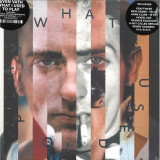
Sven Väth - What I Used To Play (12x12" boxset)
 
36

For this uniquely personal retrospective spread over twelve vinyl discs, Sven Väth takes us back to the early days of his DJ career. On What I Used To Play we meet great pioneers of electronic music, gifted percussionists, obscure wave bands, and innovative producers of a bygone 'new electronic' era. Rough beats and irresistible grooves from the identification stage of house, techno, and acid remind us not just how far electronic music has evolved over the past four decades, but how great it was to dance to EBM, techno, and house for the very first time.

If there is one protagonist of the electronic music scene who has remained curious, innovative and at the very cutting edge of music for over four decades, it's Sven Väth. His multi-layered artist albums and Sound of the Season mix compilations have been defining the genre for over two decades, and even today, he is constantly on the lookout for the next top tune to add to the highlights of his next set. At least, that's the case when he's not producing them himself as an artist or remixer. "Actually, it's always been part of my DNA to think ahead," and nothing had been further from his mind than looking back at his past, but when in spring of 2020 the international DJ circuit had to be scaled down to virtually zero, the 'restless traveler' suddenly had time. Time to stop and reflect on "how it actually was back then, at the very beginning of my career..."

"It was a great trip and with every track, beautiful memories came flooding back".
In the London apartment, he had just moved into, Sven has set up a "little music room", where he cocooned himself for several days, "to look way back for the first time and review my musical journey through the eighties, so to speak."

The interim result was six thematically oriented playlists with a grand total of 120 tracks from 'early 80s' to 'Balearic late 80s', together with excursions into afrobeat, European new wave, and EBM sounds and a few epochal techno/house tracks from the USA in between. From these 'Best of Sven Väth's favorites', the project What I Used To Play crystallized. Sven remembers how the Cocoon team reacted to his proposal: "They found the idea of making a compilation out of it MEGA from the beginning and everyone said 'Sven, go for it', but then, of course, the work really started, namely, to clear the rights and to get clean sounding masters of the up to 40-year-old tracks. There was also disappointment, of course. We couldn't clear certain titles because the rights holders in the USA had fallen out with each other or simply disappeared from the scene. In short, it wasn't easy, but now I can safely say we got the most important tracks."

Finally, after two years of research, curation, design, and administrative fine-tuning, the "little retrospective" from 1981 to 1990 is available. The exquisitely packaged, and three-kilo heavy box set is not only physically impressive, WIUTP is also the definitive record of Sven Väth's musical development. On each of the twenty-four sides of vinyl, you can trace track by track, what influenced him during which phase, and how he took off as a DJ from his parents' Queen's Pub straight into the spotlight at Dorian Gray. There and at Vogue (later OMEN), Sven became the style-defining player in the DJ booth that he still is today.


1981 - 1990: Future Sounds of Now

In the early eighties, the crowd in clubs like Vogue and Dorian Gray danced to what nowadays we call 'dance classics' - mainly disco, funk, soul, and chart pop. It was up to a new generation of DJs, including Sven Väth, the youngest protagonist in the Rhine-Main area at the time, to create their own club-ready music mix. Good new tracks and potential floor-fillers were rarities that had to be sought out and found, in order to prove oneself worthy.
Without MP3s, internet streaming, or other digital download possibilities, music didn't just gravitate to the DJ, instead, it had to be tracked down. In well-stocked record stores in Frankfurt and Wiesbaden or even in Amsterdam, London, or New York, Sven and friends sourced the material for countless magical nights. On WIUTP we can follow Sven's very personal journey through this wild, innovative era in which synth-pop, funk, hip-hop, and disco were successively replaced as 'club music' by house, techno, acid, and breakbeat. By the end of the decade, it was clear to see that these once exotic 'fringe' phenomena would soon become 'mass' phenomena.


Early 80s

Dirty Talk by the Italian-American duo Klein & M.B.O. represents the most innovative phase of the Italo-disco genre in the early eighties like no other track. Mario Boncaldo (I) and Tony Carrasco relied entirely on the original synthetic drum and percussion sounds of the Roland TR-808, coupled with the raunchy vocals of Rossana Casale and guitar accents of Davide Piatto. Of course, other tracks from this period were also influential in style, most notably Unit by Logic System, which worked as the perfect soundtrack to the laser lighting system at the legendary Dorian Gray club. With stomping beats and robotic rap interludes, Bostich by Yello also belongs on Sven's eternal playlist - after all, it caught the attention of Afrikaa Bambaataa, who invited the Swiss duo to perform at the Roxy in New York in 1983.


EBM Wave - Mid 80s

From today's point of view, the almost ten-minute-long, downtempo track Giant by Matt Johnson's band project The The, would probably not be considered an obvious club classic. However, a closer (re)listen reveals the rhythmic intricacies of the percussion overdubs by JG Thirlwell (aka Foetus) on Johnson's composition, and it becomes clear why this exceptional piece of music is one of Sven's absolute favorites. Other classics from this phase include Kaw-Liga by the mysterious The Residents, the hypnotic-synthetic Our Darkness by Anne Clark (and David Harrow), and last but not least, the somber, monotonous anthem Where Are You? by 16Bit, one of Sven Väth's projects together with Michael Münzing, Luca Anzilotti from 1986.


US House - Late 80s

You certainly can't talk about Chicago house without mentioning Frankie Knuckles. The resident DJ at the Warehouse not only gave the name to an entire genre, but also produced epochal floor fillers on the Trax label like the timeless Your Love, sung (and moaned) by Jamie Principle. Acid house protagonists Phuture also hail from Chicago, and on We Are Phuture (also released on Trax) we hear the chirping acid sounds of the legendary Roland TB-303 in full effect. Another featured classic is No UFO's by Detroit's Model 500 aka Juan Atkins, who is rightly considered the 'Godfather of Techno' even if the genre-defining track from 1985 still breathes with the spirit of hip-hop and electro from the first breakdance era.


Afrobeat

Le Serpent, by Algerian-born Abdelmadjid Guemguem, is a track that sounds completely different from everything else on WIUTP. Made in 1978, it's a monumental, rousing groove created without bass or synths, just with five congas! Even though Guem sadly passed away in 2021, his immortal, acoustic beats are understood all over the world and will continue to enrich many thousands of DJ sets for years to come. Another classic that not only Sven appreciates beyond measure is Hugh Masekela's Don't Go Lose it, Baby. In addition to being one of the most important jazz pioneers, the trumpeter and freedom fighter from Johannesburg was very experimental, integrating electronic sounds into his music in later years, in a similar vein to Miles Davis and Herbie Hancock. Dutch jazz pianist Jasper van't Hof's afrobeat project Pili Pili has also aged well. The trance-like, almost sixteen-minute-long track of the same name, manages to fill a whole side on the seventh of twelve vinyl discs in the WIUTP box.


UK-US-Euro - Late 80s

Time for a change of scene, in the truest sense of the word, and from a musical perspective, this section is like landing on another planet. First up is Andrew Weatherall's classic remix of Primal Scream's Loaded, featuring the iconic Peter Fonda sample (lifted from the 1966 biker film Wild Angels) that came to personify the mood triggered by the British Second Summer of Love in the late eighties: "We wanna be free to do what we wanna do, and we wanna get loaded...". This period also saw the emergence of M/A/R/R/S whose only single, 1987's Pump Up The Volume, became a club classic with support from DJ legend CJ Mackintosh. In this most eclectic of sections, we also encounter New York house and reggae producer Bobby Konders and his seminal Nervous Acid.


Balearic - Late 80s

Those who know him, know that Sven had already lost his heart to the 'magic island' of Ibiza as a teenager, so with that in mind, the WIUTP project couldn't end without a Balearic chapter. Inspired by Manuel Göttsching's E2-E4, the immortal, eponymously titled Sueño Latino belongs in there without question. Equally popular on the island was, and still is Break 4 Love by Raze, which thinking about it, would also fit perfectly into the house chapter. Last, but not least, there's an overdue reunion with Sven Väth himself, in his role as frontman of the successful Frankfurt trio OFF. Together with Michael Münzing and Luca Anzilotti (later of Snap!) this 'Organization For Fun' created the off-the-wall club hit Electric Salsa in 1986 which incidentally turned into an international chart smash, putting Sven in the enviable position of having to decide between pop stardom and a DJ career. Well, we all know how that decision turned out and the rest, as they say, is history. A not insignificant part of his story is What I Used To Play. Enjoy!

non in magazzino

Ordina ora e ordineremo l'articolo per te presso il nostro fornitore.

184,83

Last In: 9 months ago
The Gloom In The Corner - Trinity LP 2x12"

As three souls plunge down from the heavens, death and destruction can be felt hanging in the air like a foul stench. Red clouds swirl around a black sun that never sets and an erratic clock ticks off-tempo, moving faster and slower before rewinding and starting anew.

“Let me paint you a picture…” vocalist Mikey Arthur sings, welcoming listeners with a dramatic opening scene. It takes a skillful guide to navigate the darkest depths of hell. And, as The Gloom In The Corner depict in their second full-length album Trinity, death is merely the beginning of the series of chilling adventures

Purposefully aligning their song count with unlucky number thirteen – a reoccurring symbol in the ever-unfolding Gloom Cinematic Universe or GCU – it comes as little surprise to longtime fans that each of the Australian quartet’s enticing tracks intertwine to form an interlocking tale; this time centered around the appropriately labeled unholy trinity.

Comprised of previously deceased characters Rachel Barker, Ethan Hardy, and Clara Carne, the group’s bloody battle is woven throughout the album as the anti-heroes determinedly claw their way back to Earth from the Rabbit Hole dimension, slashing, shooting, and extinguishing anyone who dares to oppose their quest. Yet, for the Girl of Glass, Ronin, and Queen of Misanthropy, there is clearly more to the story than what can be contained within a single package.

Projecting a wide and complex web of lore, plot twists, and tongue and cheek humor, frontman Mikey Arthur, guitarist Matt Stevens, bassist Paul Musolino, and drummer Nic Haberle, have been producing highly detailed concept releases since their formation. And, consistently filling in more missing pieces of the puzzle with every body of work, the band equate each new record to a fresh season of The Umbrella Academy dropping on the streaming service of your choice. Because, just as a great TV series captivates viewers with its music and storytelling, the quartet’s work provides a complete experience designed to allow fans to check in with their favorite characters, all the while enjoying a cinematic new soundtrack.

For those just joining the GCU, as well as those looking for a quick refresh, 2016 debut album Fear Me introduced listeners to main protagonists Julian “Jay” Hardy, a Section 13 agent consumed by anger over his girlfriend Rachel’s death, and Jay’s gloom (later known as Sherlock Adaliah Bones), a demonic entity who at times takes over Jay’s body as a host vessel. 2017 EP Homecoming tells the tale of Jay’s brother Ethan, a war veteran suffering from PTSD, who upon discovering his brother’s struggle, kills himself as part of a Dante-style rescue mission to bring Rachel back to life. In 2019 EP Flesh and Bones, we’re introduced to Clara Carne, a past witness to one of Jay and Sherlock’s crimes, who instead of taking revenge, began a twisted love story with Sherlock, only to be murdered by his forced hand. And 2020’s Ultima Pluvia EP where we finally learn of Sherlock’s past as an ancient warlord under the tyrannical King Baphicho, and see Sherlock and Jay’s deaths ushered in by Section 13 opponent and New Order leader Elias DeGraver and his gloom Atticus Encey.

After 2016’s Fear Me, the band admit that their original intention was to jump straight into the events of Trinity before pivoting to create Homecoming, Flesh and Bones, and Ultima Pluvia. However, upon reflection, primary storywriter Mikey Arthur believes that pushing the timeline back actually provided greater opportunity for the group to properly flesh out the songs and plotlines for their sophomore studio record.

Indeed, while Trinity re-introduces the three central “heroes” of this new arc, it’s important to understand that while familiar, the characters are not carbon copies of who they were earlier in the story. And neither is the band who brought them to life.

Fully embracing the weird and whacky has never been a struggle for The Gloom In The Corner. Rather, it’s together with this attitude that the group come away with special moments such as the fascinating old and new dynamic between neighboring tracks “Red Clouds” – a song whose initial version predates the formation of The Gloom In The Corner as an official band – and “Gravity” in which a demo intended for future material was adjusted to fit the sonic drop.

Mirroring this evolution in the band’s musical approach, a sense of growth can also be seen projected in the characters and story that the quartet chronicle across the thirteen tracks.

Classifying their individual sound as an intricate form of “cinema or theater-core” due to the depth and breadth of their musical approach, features, samples, symphonic elements, and conceptual nature, The Gloom In The Corner continue to prove that they’re more than just a simple concept band.

In fact, similar to character theme music in movies and video games, the group seamlessly play off their diverse sonic story in a variety of ways. Continuing to breathe new life into older staples from their catalog, the quartet reworked their infamous “Oxymøron” breakdown from Fear Me into an impactful moment in Trinity’s “Nor Hell A Fury” and sprinkled audio easter eggs of this sort all throughout their new music for fans to discover.

Listeners are also brought further into the world of the GCU with the help of what The Gloom In The Corner call their “casting process.” Like picking actors for a musical, the band meticulously selected eleven different vocal features and several additional voice actors to bring the album and characters to life. Described as a 50/50 split between notable talents such as Ryo Kinoshita (Crystal Lake), Joe Badolato (Fit For An Autopsy), and Lauren Babic (Red Handed Denial), as well as talented friends and family like Elijah Witt (Cane Hill) and Mikey’s sister Amelia Duffield, each featured artist brought their own touch and realistic spark to the characters they portrayed.

For in the end, as much as Trinity and it’s cast live within the confines of their own supernatural worlds, themes such as falling out of love (Gatekeeper), battling depression (Obliteration Imminent), and standing behind women’s empowerment (Nor Hell A Fury), are ones that many can relate to or understand. And, while most individuals may avoid drowning their woes by way of transforming into full-on egotistical murderers like the Queen and King of Misanthropy and the gang, The Gloom In The Corner have illustrated that time and time again, life’s a little more fun when you can crack a smile. Taking a page from the trinity’s playbook: try to avoid the end of the world. But if you can’t…at least spend it with a killer soundtrack.

pre-ordina ora28.10.2022

dovrebbe essere pubblicato su 28.10.2022

53,36
What Are People For? - What Are People For?

What Are People For? make the perfect kind of dystopic dance music for our times. Born from a collaboration between artist Anna McCarthy and musician/producer Manuela Rzytki, the band could be the illicit lovechild of Tom Tom Club and Throbbing Gristle, displaying the ideal balance of hip shaking vibes and dark provocative content.

On their collaborative debut, McCarthy and Rzytki share songwriting duties. The album was produced by Rzytki herself. They are joined by Paulina Nolte on backing vocals and Tom Wu on drums, while Keith Tenniswood mastered the record.

The whole project stems from a publication and exhibition by McCarthy laying the foundations for the content and lyrics of the album, which is humorous, poetic and political. As a lyricist, McCarthy uses her storytelling ability to explore anxieties and desires, digging into free surreal word associations reminiscent of Su Tissues’ tongue in cheek experiments with Suburban Lawns, but also explosive and gripping like a Kae Tempest rap.
Rzytki’s precise sonic palette and talent at penning structured bangers perfectly complement McCarthy’s playful and subversive language manipulations. Rzytki's beats are rooted in old school Hiphop loop principles and an authentic love for the analog. Her use of an array of synthesizers and other "real" instruments adds to WAPF's depth, soul and sincerity.

The album opens with a joyful anthem, full of energy and melodic hooks. The audience is confronted with the quintessential titular question What Are People For? and told that they are just a mere disposable commodity. Throughout the album, lyrical themes revolve around underground aspects of society, violence, political ideologies, sexuality and mysticism. The content is deep but the album is as danceable as it is biting.

73, with its drum machine hysteria and hypnotic synth basses is a a text collage written on the 73 bus through London, consisting of situations and conversation snippets encountered along the way. Drones indulges in the narrator’s paranoia as they feel they are being watched by cigarette machines, whilst the haunting choir is half spoken, half sung, ending on the orgasmic chanting of the word “mummy”. Nursery Rhyme brings more soothing incantations. There is definitely an affinity for fairytales, albeit adult ones and especially the anarchistic ones such as The Moomins, who were a consistent influence on the band. The artwork for the record, created by McCarthy, is a beautiful children's book-style painting of the group in a forest, seemingly about to engage in a magical encounter to which we are invited.

WAPF? have absorbed and digested a variety of influences. Trip hop, Punk and Techno are rubbing shoulders on Party Time. 1977 was coined “Summer of Hate” in the UK and unsurprisingly in WAPF?’s Summer of War, ethereal singing alternates with a powerful marching Garage/Grime chorus reminiscent of street protests and UK culture.

Mz. Lazy starts like an invitation to meditation and references Gertrude Stein’s book Ida in which she develops the idea that publicity is a new religion and people are now famous for being famous. Repressed anger explodes into violence and freedom at the end of the song as our heroine eventually grabs an axe to destroy her oppressors.
Fantasize, on its part, is raw, sexual and liberating while the closing track Bring Back the Dirt is a welcome hymn into a world that is becoming more and more sanitised.

While exploring deep subject matters throughout their album, WAPF? manage to remain satirical, exciting and funny. Each and everyone of their songs have a cathartic quality.

The visual identity of the band is intrinsic to their appeal. Live, they are eccentric, wild and unapologetic, wearing see-through costumes, bright miniskirts and intricate headpieces while delivering their songs with sharp intensity. Their performances radiate queer sexiness and transcend B52's thrift store aesthetics, creating a space for collective dreaming.

WAPF? is a rare combination of contemporary punk energy, irresistible groove, absurdist dry humour and astounding depth of field. They have the mighty power to create a party with their music and soon you will find yourself lifting your arms as if controlled by an external force, to chant: WAPF? WAPF? WAPF?

– Marie Merlet (Malphino, Little Trouble Girls, London)

pre-ordina ora21.10.2022

dovrebbe essere pubblicato su 21.10.2022

18,45
Various - 60s Jukebox Hits Vol. 2
pre-ordina ora14.10.2022

dovrebbe essere pubblicato su 14.10.2022

14,66
DEATHPROD - SOW YOUR GOLD IN THE WHITE FOLIATED EARTH LP

Oslo's Ultima Festival for contemporary music in 2014. The idea was to give revered Norwegian experimental electronic musician Helge Sten, aka Deathprod, access to seminal avant-garde composer Harry Partch's self-designed, custom-made, specialized, invented instruments - an orchestra tuned to just intonation, using up to 43 intervals instead of the standard 12 for the most commonly used Western equal temperament. An artist with a 30+ year career and an uncompromising reputation that reflects the emotional specificity of his uneasy, yet compelling sound, maintained throughout his expansive discography, Sten was an intriguing choice for such a project. Although he attended art school, training in electronic music and sound art, he had little experience with acoustic instruments and can neither read nor write music notation. Yet he's been engaged with Partch's music, and outsider art more generally, since he was a teenager. His resulting piece/composition for the project was originally intended only for performance by Cologne-based Ensemble Musikfabrik, for a series of concerts in five European cities between 2015 and 2018. It's Musikfabrik that undertook the painstaking, expensive process of building an entire set of the composer's creations - the second only to the originals built by Partch himself. They are the professional musicians and virtuosic instrumentalists that had to re-train and re-educate on these unknown and experimental sound sculptures in non-standard tunings. And they house this large, gorgeous physical instrumentarium and deal with the enormous logistics of working with it, sometimes shipping the fragile pieces to other locales via semi-trucks or ships. Because of such monumental efforts, Musikfabrik are notoriously guarded with recordings of the instruments. And rightly so. They're the only ones allowed to perform on them, too. But Sow Your Gold isn't Musikfabrik playing. Instead, Sten spent days and nights alone with the instrumentarium in Cologne. He played the instruments himself while recording, layering the recordings and editing without effects to compose an `audio score' for Musikfabrik to work from in order for the ensemble to perform the piece. (Partch also regularly worked this way, although he would transcribe afterwards. Likewise, Sten worked with a professional arranger to create a detailed score, too.) So, that makes Sow Your Gold an even less likely rarity - partly why its release comes seven years after its creation. If you ask Sten about the album's title, he'll point you to the text he borrowed it from - Michael Maier's Atalanta Fugiens by H.M.E. De Jong, a 1969 study of a 1617 book of alchemical emblems - and notable passages dealing with alchemy, chemistry, and agriculture, all transformative processes. And while that may sound complicated, his takeaway is simple: "You have to break something down to create something new," - a lesson he felt related strongly to his own musical process, especially in this project. So, while Sow Your Gold in the White Foliated Earth is a piece written for specific, oddly tuned, extremely rare and unusual instruments, and for a certain ensemble - namely, some of the finest contemporary musicians in Europe - Sten grew fond of the audio score, recognizing it as coming directly from the creative process in its purest, most natural form. And so from a foliated earth, where obscure tradition, treasured scarcity, immense effort, and patient certainty layer and criss-cross, comes rugged gold, polished to shining by one outsider for another.

pre-ordina ora23.09.2022

dovrebbe essere pubblicato su 23.09.2022

25,17
JUAN IBARRA - ARCO LP

Juan Ibarra's jazz quintet blends hypnotic grooves, sonic landscapes and experimentalism with a cinematic touch. Jazz fusion and Avant-garde united with an unmistakable South American feel. Arco is inspired by an imaginary talk between Eduardo Mateo (Uruguayan Musician) and Thom Yorke (Radiohead) in a bar from deep Uruguay, while drinking cane and playing chess. The talk has its focus on the search for what is our "bow" to be able to launch our "arrow". At the same time they discuss calmly, while they think their movements, the different transformations they go through in life, what are the natural and which ones are necessary. The album seeks a sound between the electric guitar of Martín Ibarra and the acoustic guitar of Jeremías Di Pólito, imitating the voice with the trumpet of Juan Olivera supported by the improvised bases of Andrés Pigatto on double bass and Juan Ibarra on drums, thus opening a limbo to discover between the world Uruguayan folk and jazz.

pre-ordina ora23.09.2022

dovrebbe essere pubblicato su 23.09.2022

33,82
MOUNTAIN BREWS - MOUNTAIN BREWS LP 2x12"

Perpetual Doom is proud to present a special double-LP from Mountain Brews. Spearheaded by Jake Longstreth, Los Angeles-based painter and co-host of Apple Music’s Time Crisis with Ezra Koenig, Mountain Brews was founded around a vital American tradition: sippin’ cold ones to the “tasteful palette of seventies rock.” Full of warm melodies and guitars that evoke a Mojave glow, Mountain Brews occupy the sunny spot right between the studio-slick hits of early Eagles and the laidback jams of the Grateful Dead. And now that their four previous EPS are available in a single package, there’s nothing left to do but grab a seat, turn up the music, and crack one open.

Mountain Brews are pros at keeping things loose and light. Recorded by the same group of old pals that make up a LA based Grateful Dead cover band, Richard Pictures—including Longstreth, Aaron Olson, Ryan Adlaf, and John Nixon—these seventeen tracks celebrate the early seventies’ spirit of easy-going collaboration. You can hear it when a guitar slide greets the opening strum on the title track, an assuming ode to the pleasures of drinking and hiking: “As we get to the top of the mountain, there’s a view,” Longstreth sings. “Take a load off and crack a few mountain brews.” And while the song boasts virtuoso playing worthy of Desperado, the vibe is less barstool machismo than six-pack camaraderie.

It’s a self-aware R&R mindset that pulses through tracks like “You Eagled,” which ponders both a great golf score and the trials of becoming “classic,” and “It’s My Masterpiece,” with its tightly coiled licks and breezy nonchalance with regards to inevitable civilizational demise. Sure, the Brews know there’s a down for every up. “Raised in a Place” and “Big Bummer Hotel” acknowledge that even the chillest California cowboys get the middle-aged blues, resurrecting the heartland synthesizers of late eighties Don Henley and Bruce Hornsby to find a little meaning in the madness. And Ezra Koenig and Danielle Haim contribute vocals to help “The Worst Margarita of My Life” go down just a little easier.

These four EPs were recorded between 2019 and 2021 in various bedrooms and studios across California. “Uphill From Here” brings it all back around as guitarist Aaron “Bobby” Olson sings about meeting Jake on the trail once again: “And it’s all uphill from here,” he sings. “We may have to stop and down these beers.” But whether it’s uphill or down, Mountain Brews makes it clear—the journey is better with company.

pre-ordina ora21.09.2022

dovrebbe essere pubblicato su 21.09.2022

45,59
Ihor Tsymbrovsky - Come, Angel LP 2x12"

"Kontakt Audio and Infinite Fog Productions proudly present the 25-th anniversary reissue of the one of most unique albums on avantgarde/neoclassic music – Ihor Tsymbrovsky – Come, Angel.

Recorded in 1995 in Ukraine and released in 1996 just as a small run on cassette on Polish label Koka Records, the album without any promotion little by little became legendary and madly wanted by many fans all around the world. And from the first seconds, you can hear why it is so. Pretty hard to explain what songs play Ihor, moreover that would be senseless. “Come, Angel” is one of those albums which are so unique that takes you in a vacuum of verbal forms in an attempt to describe the record. In a few words, this is definitely very intimate and deeply emotional music with an absolutely incredible voice. The first associations could forward you to Antony Hegarty from Antony And The Johnsons, Marc Almond, Arthur Russell, Baby Dee, Bjork. Experienced listener familiar with these great artist knows that all of them are inimitable and Ihor Tsymbrovsky is totally inimitable as well.

In 2016 well-known German label Offen Music published 3 tracks from the album “Come, Angel” which brought a lot of attention to Ihor’s music. This time we’re excited to announce the first full album reissue on CD, Double vinyl, and tapes. Beside the full version of the album, you’ll find an exclusive bonus song from the cult compilation “Music The World Does Not See” – Nefryt Records 2000.

~

“For me, music is a certain way of cultural survival. Here I do not set myself theoretical problems or experiments.
The connotations of life are important: rhythms, melodies, their connection with language, poetry, real life, virtual or imaginary space. It is very important to me how the recitation of work sounds, how consonant and vowel sounds dissolve in singing, how they combine musically. I understand sound space as a field of my interpretations, preferences, priorities, and I do not use direct imitation. If I hear a melody or a musical phrase, and it is fixed in my memory, later I extract it in my own interpretation, as already formed by this field. In art, the goal is in the work itself, not outside it. For me, the expression “To be is to create a new reality” is another winged reality.” – Ihor Tsymbrovsky

~~

“Tsymbrovsky – an architect, musician, a poet, an artist; one of the most underestimated musicians in Ukraine’s artistic world. Many critics pulled their hair out trying to get to the bottom of Tsymbrovsky’s music. It has been inspired by jazz, minimal, modern, ethnic, and meditation music. Tsymbrovsky is not a virtuoso, however, he creates whole worlds with his astonishing falsetto. Although Cymbrovsky’s music is simple it is made of many elements. Filled with magic and unusual sensitivity and warmth it can be therapeutic for the listener. This is that kind of music, which can be listened to many times – in a different way each time.” – Koka Records.

~~~

“Igor Tsymbrovsky’s only album “Come Angel” (1995) still remains perhaps the most bizarre phenomenon in Ukrainian music since independence. The story of its author is a vivid example of cultural amnesia. In the pre-Internet era, Tsymbrovsky was a prominent figure in the Ukrainian underground, performed on the “Red Route”, went on tour in Germany. However, he left a minimum of evidence of his activity and became a silent legend for a few. We talked to Igor to find out where he came from and where he was going.

The album “Come Angel” is eight compositions performed with a falsetto to the accompaniment of a piano. (Tsymbrovsky’s falsetto is a legacy of the Lviv Dudaryk choir, where he sang as a child.) It would seem that it could be easier. But, despite such ascetic tools, Tsymbrovsky managed to create a phenomenon unique to Ukrainian culture. Some people compare him to Benjamin Clementine and Anthony Hegarty, but no comparison will be exhaustive. The lyrics of the songs attract special attention: two of them were written by Tsymbrovsky himself, the others demonstrate his remarkable literary knowledge. Here and Guillaume Apollinaire, and Mikhaijl Semenko, and even less obvious poets, such as Mykola Vorobyov or Jozsef Attila.

The young performer’s first performance took place in 1987 in the club of the Forestry Institute. It is quite symbolic that this room used to be a Jesuit church because such a chamber environment suits his songs about angels much better than the noise of big festivals. However, there were also many festivals in Tsymbrovsky’s career: in 1989, Chorna Rada and Chervona Ruta, in 1991, Kharkiv’s Nova Scena and Ukrainian Nights in Gdansk, Alternativa in Lviv. Ihor calls his first performances musical performances and notes that they sounded completely different. Unfortunately, we will never know exactly how.” – Amnesia

~~~~

“The magicians at Dusseldorf’s Offen Music pluck a madly beguiling pearl of late-night songcraft by Ukraine’s Ihor Tsymbrovsky to follow their vital releases by Toresch and Rex Ilusivii. Come Angel was first recorded in Lviv, Ukraine, in 1995, and issued on cassette by Poland’s Koka Records in 1996. There appears to be no prior mention of the release or artist on the internet and quite how it came into of Offen Music possession is not disclosed, and that only ratchets the record’s enigma to astonishing degrees once you’ve heard the music. In a quivering, high register, androgynous trill, Ihor Tsymbrovsky beckons heavenly beings in the remarkable A-side Come, Angel against a swirling backdrop of phasing, subtly delayed organ. It was recorded in one take (this is the 2nd version), and, if we’re not mistaken, you can hear the keys being pressed rhythmically in the background, which seems to be the song’s only tangible connection to this mortal world as Ihor vaults octaves high and close-in-the-mix with the sort of alien, dreamlike vocal that requires pinching oneself to make sure you’re awake. Spellbinding is definitely the word. On the other side he (we’re assured it is a ‘he’ in the promo text) sets two poems by Mykola Vorobyov and Mykhal Semenko, respectively, to emphatic piano keys, this time more shy of FX save for some delay, placing that willowing, avian vocal at a dreamy arms reach in Roses for the Poet, and with a sort of liturgical dark jazz feel, sorta like Lewis repenting his sins as a castrato monk, in the spare atmosphere in By the Sea. This is gold-seal business, we tell ya. Clock the clips and clear some swooning room.” – Boomkat

credits:
Music By – Ihor Tsymbrovsky
Lyrics By: Ihor Tsymbrovsky (tracks: C2, D1)
Atilla Joszef (tracks: B1)
Mychajl Semenko (tracks: B2, C1,C3, D2)
Mykoła Worobjow (tracks: A1,A2)
Engineer – Edward Hryhorjew
Remastering – Ihor Tsymbrovsky"

non in magazzino

Ordina ora e ordineremo l'articolo per te presso il nostro fornitore.

36,93

Last In: 3 years ago
Trouble - Plastic Green Head

We like what Trouble have done with this album, “Plastic Green Head”. The music sounds fairly dissimilar to the completely doom-laden, crushing riffs present on the earlier material, but what Trouble do here sounds every bit authentic. Not to mislead you, this definitely still sounds like Trouble, but they seem to have adopted a more laidback, stoner metal approach; sacrificing sinister atmospheres for more upbeat ones. The first few tracks are completely awesome offerings of vintage Trouble. The playful, thrashy riff of the title track, which opens the album, is a great introduction to the music at hand and Eric Wagner’s distinctive vocals sound powerful overtop. “Plastic Green Head,” “The Eye,” “Flowers,” these are all what you would expect from Trouble, huge churning riffs, 80 bpm drumbeats, Eric Wagners nasal yet powerful voice. They are simple, they are catchy, and they are just plain good. “The Porpoise Song” is a cover of a song by The Monkees, and strangely enough it’s very good. Big wall of guitar noise, and Eric singing in a less nasal and more melodic voice. “Opium Eater” sounds like it could easily be an Alice in Chains song. On this album there is silly plenty of Sabbath worship, but also more of an upbeat, hard rock feel. We would even say that a little grunge has crept into their sound (to be fair, it’s probably the other way around, Trouble influence crept into grunge.) If you’re looking for a nice dose of stoner metal, you’ll find just that right here. There’s plenty of memorable riffs which provide good replay value, and although you won’t find as much doom as you might expect from Trouble, it’s still there if you look for it.

pre-ordina ora29.07.2022

dovrebbe essere pubblicato su 29.07.2022

31,89
Joyful Joyful - Joyful Joyful LP

Having initially met more than a decade ago at a local community radio station, sometimes doing guest slots on each other’s live, improvised noise shows, Cormac Culkeen and Dave Grenon knew they had a mutual interest in working with sonic textures. They listened to each other’s bands for a handful of years, and in 2017, “made good on a threat” that they’d been making for quite a long time: to start a band. At Cormac’s gentle but clear urging—declaring that they’d gone ahead and booked a space in which to record a video—the two wrote their first song, “Sebaldus,” an ambitious 12-minute trip, which also serves as the fireworks finale to their self-titled debut album. With surges of pathos that smooth out into something more soothing in turn, Cormac goes: “The hunter, you’ve seen him / The archer, his arrows are strong / And hunger, you’ve known her / I know the winter is long.” The track is as much about enduring a Canadian winter as it is about the eponymous 8th century hermit, shot through with sublimated desire. As Cormac put it, Joyful Joyful’s songs are “a little bit outside of time.” But while the lyrics beg close, oblique reading unto themselves, there’s also a distinct sense that they’re only one of many more ways that the duo shapes sound. Cormac, whose voice is like a sea with irregular tides, lights up about an idea in traditional sean-nós Irish music that songs already exist and are out there; it’s up to the singer to become the conduit. This belief in music as something to be channelled, and something more than sound, resonates with the singer’s fundamentalist religious past. To paraphrase: lots of group singing, harmonies, no instrumentation, totally unmediated, no priest, congregational—not choral, not a performance, not about talent, the spirit moves through people. “Of course that informs how I think about singing,” Cormac says. So, when they were exiled from the church because of their queerness, they took the music with them, dislocating it from its dogmatic bounds but not from its transcendent potential. This record might be thought of, then, as a kind of queering of sacred, devotional traditions—or at the very least, a space where all of these things can be held at once. Perhaps perceivable by some as contradictions, these intersecting influences create the conditions for an incredibly singular sound. Dave is steady and exploratory in his handling of this multiplicity, arranging sounds as they’re revealed, corralling them, coaxing them into form. “Because Dave is there,” Cormac says, “I get to sing three times higher, and three times lower, and faster, and backwards, and all of these sounds! That are there. They’re all there.” When asked about early musical memories, Cormac recalled an immediate fascination with harmony: from demanding that the first person they ever heard singing it explain what they were doing, to always (still, to this day) singing in harmony with their twin sister around the house, to being part of a children’s choir that sang soprano in Handel’s Messiah—not realizing until they entered the room with all the other ranges that their learned melody was but one part of the whole. Just as tellingly, Dave reflects on his early attraction to “abstraction and becoming abstract,” describing childhood afternoons messing with microphone and speaker feedback loops, producing long, enduring sounds with almost undetectable variations. In a way unique to the coalescing of these two listeners, notions of harmony are central to their output. Dave samples field recordings, old keyboards and synths, and vocal drones, running the live singing through four or five parallel effects chains, sampling and treating everything again in the moment. “Another way to put it is that Cormac’s voice comes into the board and then comes back out shifted, delayed, and shattered; Cormac and I hear it, live with it, and respond,” Dave says. This work is contingent not only on a deep intuition (neither of them read sheet music) of polyphony and due proportion (something St Thomas Aquinas famously listed as an attribute of beauty) but also on their connection to each other and ability to read subtle cues. Dave says they’d hold each other’s hands while performing if it was more convenient to do so, riffing on something else Cormac mentioned about traditional Irish singing: that someone would always hold the singer’s hand, for fear that without a tether to the ground they might find themselves utterly lost, unsure how to return. Joyful Joyful doesn’t shy away from offering such experiences of departure; they’re willing to unsettle their audiences because they themselves are unsettled. Their shared penchant for spooky, heavy music, and self-described “omnivorous” listening practices equip them with an array of sonic concepts that support this effort; Diamanda Galás, The Rankin Family, Pan Sonic, Pauline Oliveros, Keith Fullerton Whitman, Yma Sumac, and Catholic hymnody were just a few that came up. Observing their audience gives them insight about the effect of each song—something they considered while arranging the album. Its arc is marked by soft, sometimes sudden oscillations between cacophony and euphony, day and night (listen for insects), and from sexual, visceral entanglements to more ephemeral, celestial ones. Front to back, it arouses expansion, unraveling. Of lightning, Vicki Kirby writes: “quite curious initiation rites precede these electrical encounters. An intriguing communication, a sort of stuttering chatter between the ground and the sky, appears to anticipate the actual stroke.” By all accounts, something similar seems to happen at Joyful Joyful shows, between those on the stage and those off it, between what’s earthly and what’s beyond. “A lightning bolt is not a straightforward resolution of the buildup of a charge difference between the earth and a cloud … there is, as it were, some kind of nonlocal communication effected between the two,” writes Karen Barad, extrapolating on Kirby’s thought. Cormac acknowledges that while they and Dave play a role in this mysterious charge that comes about, they’re not solely responsible. However ineffable it may be, it’s undoubtedly a form of communion—and a sensuously shocking one at that

pre-ordina ora10.06.2022

dovrebbe essere pubblicato su 10.06.2022

23,32
Prince and The Revolution - Live LP (3x12") LTD BOX

James Brown hatte das Apollo. Jimi Hendrix hatte das Monterey Pop Festival und Prince hatte den Carrier Dome in Syracuse, New York - den Auftritt der "Purple Rain Tour", der per Satellit live an Millionen von Menschen übertragen und im für den Grammy Award nominierten Konzertfilm "Prince and The Revolution. Live" für die Nachwelt festgehalten wurde, und seitdem als eine der kultigsten Live-Aufnahmen in die Pop/Rock-Geschichte einging. Zum ersten Mal wurde dieser kraftvolle Auftritt von Prince und The Revolution von den originalen 2"-Multitrack-Masters komplett neu abgemischt, das Bild wurde auf Blu-ray Video mit wählbarem Stereo-, 5.1-Surround- und Dolby-Atmos-Sound neu restauriert und der Ton wird zum ersten Mal physisch verfügbar gemacht. Die neue Version von "Prince and The Revolution. Live" ist erhältlich als: 2CDs+1Bluray und auf schwarzem Triple-Vinyl - beide Versionen enthalten Booklets mit noch nie gezeigten Fotos der Purple Rain Tour und neue Linernotes. James Brown a son Appolo Theatre, Hendrix son Royal Albert Hall, Prince c'est le concert à Syracuse: la tournée Purple Rain de 1985. L'artiste et son groupe légendaire The Revolution au sommet de leur art. Retrouvez tous les tubes de la période Purple Rain de Prince, tels que ''Purple Rain'', ''When Doves Cry'' et ''Little Red Corvette'', en live avec une image restaurées en HD pour la première fois sur le Live in Syracuse.

non in magazzino

Ordina ora e ordineremo l'articolo per te presso il nostro fornitore.

40,38

Last In: 21 months ago
Clever Square - Secret Alliance

Giacomo D’Attorre – lead singer of Clever Square – has been through a lot of late. With his band. In his personal life. Even just with the state of the world. This fire has fuelled Clever Square’s new record Secret Alliance, eleven tracks that explore feelings of frustration, disillusionment, and disconnection, and chronicle what it’s like to be swept along by a world that “gets noisier everyday”. The record was inspired by a creeping realisation; of coming change, and a sense that D’Attorre was “losing contact with who I was before, for the good and the bad.” New needs and desires surfaced; old ones disappeared. Thus he began writing around ideas of rethinking yourself, and “acquiring a new conscience of mutation”. The darker realms of science fiction informed much of D’Attorre’s thinking here; Philip K Dick, Ray Bradbury – ‘Mr. & Mrs. K’ was inspired by The Martian Chronicles – and Flannery O’Connor, whose The Violent Bear It Away proved particularly inspiring. All of this is perfectly framed by Clever Square’s shuffling, quirky indie, and cute melodies. Soft and worn around the edges, like the perfect flannel shirt, there’s a gentle, shambling quality to the music; “blue collar”, D’Attorre calls it. Guitar lines gently bloom, Fender Rhodes organ is sprinkled throughout, and the acoustic strumming sounds easy and unhurried. From the relaxed bustle and acoustic picking of ‘Hail The Proper Karl’, to the joyous, bouncy ‘Little Flaws’; from the stripped back melancholy of ‘Obsolete Epsilons’ to the arena-ready vibes of indie classic ‘Golden Wires’, D’Attorre has crafted a spell-binding, mesmerizing set of songs that delight on first listen and reward deeper inspection. “It’s a hymn to privacy, to the joys of secrecy, and solitude,” he says of Secret Alliance. That he wraps such heartfelt, profound topics in gloriously laid-back indie adds to the charm, and cements Clever Square’s status as one of Italy’s finest contemporary bands. The world might seem increasingly complex and be spinning ever faster, but Secret Alliance slows it down just enough to savour the scenery and think about charting a path back to something a little more manageable.

pre-ordina ora12.05.2022

dovrebbe essere pubblicato su 12.05.2022

25,00
SISTER COOKIE - IN THE BLUE CORNER LP

Having scooped the prestigious Record Store Day Unsigned 2020 award, her debut album 'In The Blue Corner' was released as a limited edition run on turquoise sparkle vinyl in November 2021. Now available on a full digital and physical release including a new vinyl pressing on dusk blue coloured vinyl. "Loving this. Really cool voice_ love the voice!" Craig Charles (6Music) // "The most original sound. Like Little Richard, Mark Ronson, Nina Simone and Nick Cave all got locked in a New Orleans speakeasy" Record Store Day Unsigned Panel 2020 // "Wow, I mean what's not to like about that? That is sensational! How groovy is that?! Mark Radcliffe, BBC 6Music // "What a voice!" Robert Elms, BBC London // "Her voice is stunning, powerful and unique, and her stage presence hits the back of the room at any venue she plays" DJ Anne Frankenstein, Jazz FM // Included in Craig Charles' Funk and Soul 'Ones to Watch 2022' list. From London via Lagos, charismatic chanteuse Sister Cookie will take you on an eclectic excursion into the roots & fruits of black music. Old sounds, new tricks. Sensuous, seductive and moody. As well as possessing a distinctive voice that's tender and sweet when it needs to be, she's a composer and self-taught pianist who writes honest and raw songs about pain, heartbreak, suffering - all that bad (meaning-good) stuff. A mainstay on the vintage Soul & R'n'R circuit since 2015 with slots at Wilderness, Latitude, Red Rooster, Port Elliot and more under her belt - as well as touring across Europe with her band - Sister Cookie has so far been supported by Craig Charles, Mark Radcliffe & Cerys Matthews at 6Music, Robert Elms on BBC London plus plays on Resonance, Jazz FM and Amazing Radio. Craig Charles is a big supporter on BBC 6 Music and has played current single 'Ain't No Good (But It's Good Enough For Me)' several times. Steve Lamacq and Lauren Laverne have also given the track multiple plays. The track has also been playlisted at Jazz FM. Singles from the album have been played many times across European radio stations including France Culture, Rock Radio (Greece), Radio Nova (Portugal), Mach 5 (Italy), HR Radio Sijeme (Croatia). She's performed at some of the UK's most esteemed venues including the 100 Club and Union Chapel, The Round Chapel and has enjoyed a number of stints as a guest vocalist with The Soulful Orchestra, Jim Jones & The Righteous Mind, Future Shape Of Sound & MFC Chicken. Sister Cookie Is going to be part of the judging panel for Record Store Day Unsigned competition in April, the competition she won in 2020.

pre-ordina ora06.05.2022

dovrebbe essere pubblicato su 06.05.2022

24,33
Various - Collection Cinézik - Tarantino
 
23

Double LP of classic tracks from all your favourite Tarantino flicks.

non in magazzino

Ordina ora e ordineremo l'articolo per te presso il nostro fornitore.

27,44

Last In: 4 years ago
Cliff Dalton - Blue City EP

LDI Records serves up a celebration of The Hague's famous electro sound with native Cliff Dalton aka Sander Evers behind four originals and fellow West Coast legends Legowelt and Rude66 both remixing. Cliff Dalton is a relatively new project from a long-time Dutch music great. Sander Evers is the drummer in psychedelic stoner rock band Monomyth and has played with other notable groups including 35007 and Gomer Pyle. Next to those projects, he has always had his ear tuned into the region's enduring techno and electro scene and now offers up his own fresh take on it. The EP's title refers to the fact that all these artists are bound by geography, but is also a nod to the fact that The Hague is the largest Dutch city by the sea. The opener 'We Are The Little Ones' is about an evil robot factory in a futuristic dystopian city. It is a coruscated electro-funk workout with crisp analogue drums and nimble bass overlaid with withering sci-fi melodies. 'We Don't Need A Real World' is a superbly cinematic eight-minute excursion with widescreen synth work taking you to the stars as you ride an elastic bassline. The majestic 'City Under The Sea' then layers up neck-snapping snares with cosmic arps and plunging bass and 'Cleopatra's Matrix' soundtracks an ancient Egyptian city with its mystic leads and eerie pads luring you into a late-night electro trance. West Coast pin-up and hugely prolific electronic innovator Legowelt remixes 'We Are the Little Ones'. His version has plenty of his textbook intrigue, lo-fi texture and magical synth charm, and finally key Bunker Records associate Rude 66 flips 'City Under The Sea' into a snaking dub rhythm with hypnotic acid lines and seductive vocal whispers woven in deep. The Blue City EP is a timeless package of West Coast electro direct from the source.

non in magazzino

Ordina ora e ordineremo l'articolo per te presso il nostro fornitore.

10,50

Last In: 3 years ago
Paul T & Edward Oberon - Strange Days 2x12"

* Strictly limited-edition 2x12” vinyl in full colour sleeve. Includes card to download full album in WAV format.
* ‘Strange Days’ the debut album from one of the standout Drum & Bass acts of recent years, due for release on the legendary V Recordings on 3rd December 2021.
* Features collaborations with Serum, Makoto, MC Fats, Lorna King, 2shy MC, Cleveland Watkiss, Blak, Riya, A Little Sound, Elipsa & T.R.A.C.
* With support already secured from the likes of Shy FX, Bryan Gee, Fabio & Grooverider, Rene LaVice, Hybrid Minds, Serum, Randall and with a growing international fanbase at their back, Paul T & Edward Oberon's new album 'Strange Days' is set to be one of 2021's defining drum & bass releases.
* Their recent run of singles, including two Beatport number ones and collaborations with vocal talents like Cleveland Watkiss, MC Fats, A Little Sound & Lorna Kings have given us a flavour of this monumental project. An eclectic array of influences from jazz to jump up have been filtered through the unique musical perspective of this duo to bring us something that we've never quite heard before.
* Drum & bass has the capacity to deliver, on the one hand, soulfully emotive musicality and, on the other, sheer rave-inflaming filth. Paul T & Edward Oberon, however, have consistently performed the alchemical magic of bringing together both the music and the mayhem without compromising either.
* But of course they have. Paul and Edward have years of experience creating music for some of the most prestigious labels in the scene and drawing from a myriad of influences. Individually, they have credits stretching back decades, and, as a combo, they've been dusting dances around the world since 2011.
* Having won an army of new-gen fans with anthems like 'Stomp', 'Look for the Light' and the absolutely huge scene smashing Serum-collab 'Moon in Your Eyes', these veteran artists have wasted no time in stepping things up to even greater heights as they gear up to drop their album.
* Balancing vibes and viciousness, 'Strange Days' lays out the definitive manifesto for Paul T & Edward Oberon's dirty soul sound. Operating as both a self-contained audio journey and a collection of rave-ready deejay weapons, this LP is a piece of work that demands your attention!

non in magazzino

Ordina ora e ordineremo l'articolo per te presso il nostro fornitore.

20,80

Last In: 7 months ago
The Shivas - Feels So Good // Feels So Bad

"The core of confusion and upheaval that drove some of the band's most fiery earlier work, however, is replaced by a more stabilized undercurrent, a mentality that's reflected in songs not afraid to try new things and honestly explore uncomfortable feelings. When combined with exciting production and songwriting choices, that mindset helps make Feels So Good // Feels So Bad one of the Shivas' best albums.” - AllMusic "Portland, Oregon-hailing psych-surf band The Shivas accomplish another time-traveling, reverb-ridden sound that refuses to get boring. Jared Molyneux’s guitar work knows when to be bright or bashful at the right times, breaking into guitar solos that possess a late-’60s groove… The Shivas seem to blissfully flourish” - Paste "a consistent treat for the ears” - The Vinyl District "Though the psych-tinged guitar riff that drives 'Feels So Bad' was written while The Shivas were still on the road, its lyrics didn’t fall into place until the band was well into lockdown, unsure of when they’d be able to return to their most imperative true love: Live shows... Accordingly, 'Feels So Bad' permeates with a sense of urgent desperation, building off a chugging prog-rock instrumental.” - Consequence (on “Feels So Bad”) "They hooked the audience with their throwback rock sounds. The guitar strums and rhythmic drum beats were layered atop smooth and hallucinogenic vocals. The eyes can tell the take at times and there was a sparkle there that said that the band members just love doing live performances." - California Rocker "This single layers on the fuzz but keeps it dreamy, with an especially sticky guitar riff sure to lodge itself in your brain with minimal effort." - Portland Monthly (on “If I Could Choose”) “'My Baby Don’t' translates the genuine vibrant joy


of the live experience into the studio, bringing the band’s ‘60s garage rock roots, sharp pop vocal harmonies, and fervent performances along for the ride." - Under The Radar "Perfectly straddling the line between a solid-head bopping track and an introspective deep cut, The Shivas’ 'Undone' is a rock & roll gem. The track sounds straight out of the late 60s and fits seamlessly in the Portland band’s electrifying catalog." - The Luna Collective "The first time I clicked play on this track, I knew it was a yes for me." - Ear To The Ground Music (on “If I Could Choose”) "The harmonies would make the “Happy Together” Turtles blush, but the unsettling guitar doesn’t shy away from the woollier implications of the ’60s." - Willamette Week (on “If I Could Choose”) "'Undone' is just the perfect song for the good days and the bad ones." - GlamGlare "another hit" - Austin Town Hall (on “Undone”) "one of the best forthcoming albums of the year" - Austin Town Hall RADIO: #3 Most Added @ NACC - 50 official adds BIO Every working musician has had their life turned upside down by Covid-19. For The Shivas, who had recently released a new LP and normally keep a rigorous touring schedule, it was a particularly screeching halt. “We were about to go to SXSW, the following weekend was Treefort in Boise, and then we were going to open for our friends’ band on tour in the US before going to Europe,” Jared Molyneux remembers. Then everything just stopped. They were faced with a dilemma. “It forced us to adapt or just quit,” Molyneux says. “The reality is that shows are our job.” In truth, live shows aren’t just The Shivas job: they are the band’s greatest love. Shivas shows are bombastic, explosive and thoroughly communal live rock and roll experiences where barriers between the performers and their audience seem to dissolve into the sweat and sound. The stage—or the basement, or the living room—that’s The Shivas’ true element. It’s their raison d’etre. It’s their religion. The band’s live urgency may have been born in 2006, when the band’s young members—who began booking West Coast tours while still in high school—waited without fanfare on sidewalks or in parking lots, before being rushed onstage for their sets at 21-and-up clubs. Maybe it developed a little later, as The Shivas blasted their way through Portland’s storied and unsanctioned mid-aughts house show scene. Whatever the origin of their famously kinetic live experience, it’s the show that keeps them coming back after over 1,000 performances spread over 25 countries in 15 years. In those 15 years, The Shivas have grown tight-knit as a group. Guitarist/singer Jared Molyneux, bassist Eric Shanafelt and drummer/singer Kristin Leonard have all been with the band since its earliest days; guitarist Jeff City, another high school friend, joined in 2017. Together they’ve learned to thread a seemingly impossible needle: They’ve honed and tightened their performances without sacrificing the element of surprise that makes each show special. And despite touring and recording for most of their lives, they speak about their project with humility, in the DIY vernacular of their Pacific Northwest upbringing. They talk up their own favorite bands, play all-ages shows as much as possible, and bring a sort of blue-collar humanism to the live performances they relish so much. “We just want to make people feel good,” Molyneux says. “We want them to forget they have to work tomorrow.” Kristin Leonard elaborates, “The live show is all about that feeling of catharsis—in ourselves and in everyone who comes out. We’re creating this safe space where we can all let go. Where we can exhale. And it feels really good when we are able to facilitate that.” So when Covid hit, the band knew it was time for transformation. After a settling realization that live music would be grounded for the foreseeable future, The Shivas booked significant studio time with Cameron Spies, who also produced the 2019 Dark Thoughts LP. They also transformed their lives: three of the band’s four members found work with a local nonprofit serving unhoused Portland residents. They became engaged in protests and fundraisers for social justice. They spent a whole summer actually living in Portland, settling into the city they had always called home, but that sometimes felt like a temporary stop between tours. “We got into a more community-minded headspace,” Leonard says. “And that did give us some purpose. It felt cool to see everybody come together to stick up for what they believe in. It feels like an incredibly formative last twelve months.” The album that emerged from this new moment finds The Shivas reborn as a band that seems seasoned and perfectly at home with itself. There is a calm, even a hopefulness, to Feels So Good // Feels So Bad that sounds new. The Shivas didn’t write or record the album with a particular theme in mind, but one seems to have emerged: where Dark Thoughts was about confronting your demons with fearless self-examination, much of Feels So Good // Feels So Bad is about what happens once you find that peace: how being honest with yourself changes your relationships and your priorities. “I do think it’s about acceptance,” Leonard says. “There’s a weird relaxation that comes with being at peace with things you can’t control or have regrets about.” Maybe that’s why the squealing, riff-laden break-up song opener, “Feels So Bad,” is such a shock to the system. But it’s more of an exorcism than a melodrama: more a song about not being able to do the thing you love (in


this case, playing live shows) than splitting with a partner. “It’s like part of you goes to sleep,” Leonard says. As bandmates who are also in a long-term relationship, Molyneux and Leonard know that their songs might be seen as glimpses into their personal lives, but their songwriting is rarely autobiography. Leonard compares their process to something more akin to screenwriting. “There’s bound to be some autobiographical material in there,” she says. “But the common denominator is the exploration of universal feelings: ones that everyone experiences or can relate to.” The goal is to use the music to drill down into something genuine and sincere, beyond genre or stylistic affectation. That’s where The Shivas have arrived. Whatever growth led the band to Feels So Good // Feels So Bad, plenty of their fascinations remain. They’re still turning love songs into psychedelic, transcendent epics. “Tell Me That You Love Me” subverts doo-wop extravagance and dabbles in Flamenco rhythms. “Rock Me Baby” is a bubblegum anthem soaked in so much reverb that we might just be hearing it from the stadium nosebleeds. “Sometimes” is almost impossibly huge, like a witchy outtake from the Brill Building era. Those songs feel like logical expansions from a band that has always excelled at a timeless sort of rock and roll that tinkers with and explodes elements from every era. But on the towering and mournful “You Wanna Be My Man,” a slow-burning six-minute shoegaze prayer for a higher sort of love, there is a level of emotional nuance that feels like something altogether revolutionary. It’s there again in the stripped-down vulnerability of the album-closing elegy “Please Don’t Go.” Yes, Feels So Good // Feels So Bad is an album about acceptance. Sometimes that acceptance feels enlightened and sometimes it feels like the end result of a lot of kicking and screaming. The Shivas have adapted in both of those ways. With new tours scheduled and a new album on the way, they’re still hoping--like all of us--for a new era of vibrant, cathartic live music. The lessons they learned from having their normal upended, though, have only helped them grow

pre-ordina ora18.02.2022

dovrebbe essere pubblicato su 18.02.2022

23,91
Articoli per pagina:
N/ABPM
Vinyl