Gargantuan volcanoes erupting with primal force, fountains of molten lava bursting sky high and massive boulders hurtling capriciously through the air. These potent and violently alluring images in the documentary series The Living Planet captivated Raoul Björkenheim's imagination in 1986. The search for a band name had come to an end. -”I was mesmerised. The name Krakatau sounded like a drum fill to me”. After studying at the Helsinki Conservatory for a year and the Berklee College of Music in Boston for three, Björkenheim relocated to Finland where he played in bands with Jone Takamäki, Antti Hytti and Tom Nekljudow, and later went on to work with composer and drummer Edward “Eetu” Vesala (1945-1999). His always original and highly demanding Sound & Fury workshops were a pivotal hotbed in the local improvised music scene, but after four years of Vesala's strict leadership Björkenheim felt a need to leave Sound & Fury behind and direct all of his attention towards Krakatau. The lineup on the first album “Ritual” consisted of reed virtuosos Jorma Tapio and Tapani Rinne, the bassist Sampo Lassila and two drummers, Michel Lambert and Heikki “Lefty” Lehto. “Krakatau’s debut album was very challenging to make, as I felt that it might be my one and only chance to record my own music, so I wanted it to be as intense and effective as possible”, says Björkenheim, “I was lucky enough to work with an incredibly talented cast of musicians. I can still listen to the album and feel satisfied that it really works. The first guitar solo illustrates what was to become my modus operandi: to try and play the electric guitar in unexpected ways.” Svart Records will release an expanded double LP version of Krakatau’s Ritual. Limited to 500 copies and due out on March 24th, the album contains an album’s worth of previously unheard material recorded in 1987 in Studio Helsinki and at the Finnish Broadcasting Corporation studio.
Поиск:the living
Все
One of Rio de Janeiro's most exciting singer-songwriters of the last fifteen years is now living in Los Angeles, where he stands on the verge of an overdue American breakthrough. Before the move, Latin Grammy nominee Rogê (pronounced haw-zheh) was the prince of Lapa, the bustling downtown center of Rio's nightlife. Charismatic and scruffy, with a distinctively raspy yet boyish voice, Rogê_born Roger José Cury_gained an avid following for his swinging samba-funk, tinged with Brazilian Soul. His acclaim rose when he cowrote the theme song for the 2016 Olympic Games in Brazil. Lavishly produced by the Budos Band's Thomas Brenneck, a top session guitarist and collaborator with the stars (Lady Gaga, Beyoncé & Jay-Z, Amy Winehouse), Curyman will launch Brenneck's new label, Diamond West.
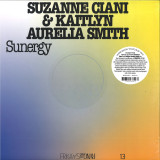
Sunergy brings together synthesists Kaitlyn Aurelia Smith and Suzanne Ciani for the thirteenth installment of FRKWYS, RVNG Intl.'s intergenerational collaboration series. For this edition, a panorama of the Pacific Coast provides the place and head space for a musical appreciation and consideration of a life-giving form vast and volatile with change. Fortuitously (as is the freaky way), Smith and Ciani were discovered to be neighbors in the small coastal community of Bolinas, California. The two had become close friends, bonding over their experience as woman musicians and, more unusually, their shared passion for the Buchla synthesizer. The music of Sunergy embraces this kinship, with Ciani and Smith respectively performing on the Buchla 200 E and the Buchla Music Easel, two modern configurations of the innovative instrument developed in the '60s by Don Buchla.
Sunergy was recorded in the Bolinas home where Ciani has lived for the last twenty-four years. Her living room overlooks the Pacific Ocean from a cliffside perch, creating an idyllic, inspired setting for music making. Setting up their synths side-by-side, Ciani and Smith took turns keeping time and freely improvising for the album sessions. As a complete piece, Sunergy is shaped by slow, pulsing forms and sinuous, melodic sequences that conjure both an oceanic world and the unlimited sound made possible by modular processing.For her part, Ciani has long been a Buchla voyager. Suzanne proselytized the potential of Don's synthesizer instruments in the '60s and '70s, performing her own compositions before introducing synthesized jingles and sound effects to household audiences. Ciani then achieved wide recognition for her debut album Seven Waves, a collection of colorful, classical song-like melodies fluidly working with harmonic textures and sounds of the ocean shore. Since its 1982 release, Seven Waves has become an important chapter of the ambient canon within which contemporary artists like Smith have developed their own synth syntax. Smith was born just a few years after the appearance of Seven Waves, growing up in Orcas Island, Washington. A place of profound natural beauty, the islands would inform Tides, her first instrumental collection from 2014. Smith composed Tides as an accompaniment for Yoga classes, ultimately freeing her from conventional songwriting into the exploratory, synth-based compositions demonstrated in ecstatic variety on 2016's Ears. Despite the serene setting where Sunergy was realized, the album does not romanticize a complete oneness with nature. Smith and Ciani use their collaborative ground to reflect on the unstable forces at play across the Bolinas horizon. Sunergy takes stock of Bolinas in the 21st century, a once-thriving artist's refuge now vulnerable to real estate pressure extending from affluent San Francisco, and more irreparably, the specter of climate change erasing its many waterfront habitats.
A diametric dynamic is present in Sunergy, a somber meditation amidst the intense cultural and solar forces transforming the landscape, and a hopeful assertion of the surviving creative culture of Bolinas. Far from rehashing the gentle grace of the artists' seminal works, Sunergy instead seeks to awaken and bear witness, employing the Buchla waveforms to mirror the infinite rhythms of the ocean and our essential relationship to it.
Kaitlyn Aurelia Smith and Suzanne Ciani's Sunergy will be released on September 16, 2016 on LP, CD, and digital formats. An accompanying documentary by Sean Hellfritsch will be offered in tandem.
Traxmen, legendary Chicago label created by the very own Robert Armani presents an exclusive capsule collection on vinyl of the artist greatest hits honoring his 30th Anniversary in the music industry.Robert Armani is a living legend and he is loved from Chicago to Belgium. It’s the ultime collection and an unique opportunity to celebrate the artist’s outstanding career.
Gold Vinyl
Since 2008, "438Hz As It Is, As You Are" is "only" the third solo release from Tomoyoshi Date. The last one dates from 2011. Less is more.
In parallel, from 2013 to 2021, he has recorded some releases in collaborations with Toshimaru Nakamura, Ken Ikeda, Stijn Hüwels, Asuna and Federico Durand.
"This record was recorded on Diapason's upright piano made in the 1950s at the house of his maternal grandmother's sister (*). The piano has moved and tuned many times, and now it has arrived at my living room. It was a pre-mass production piano with a thick board and good sound, but I couldn't tune it without replacing the screws and the weakened base. After consulting with the tuner, I decided to tune the whole tune to the sound of the strings wound around the loosest and most inseparable screws. "As it is"
*Mikiko Yamada: A performer who formed a Japanese music group of contemporary Japanese music in 1964 and made Biwa the first five-line score. She also had a samisen, so I called her "Aunt Pen Pen". Her husband was a shakuhachi player, so she was "Uncle Boo Boo".
When I tuned in the summer, I tried to tune at 442kHz, but I changed the tune in the winter to 438kHz. From now on, the pitch of this piano will decrease year by year as the material ages. I will play the decaying piano and continue to record music that can only be done at that time.
When you drop a needle on a record, a sound is produced on the spot, and the sound constantly changes depending on the air, temperature, and humidity around the needle. The sound also affects all of the listener's life, affecting the frequency of the person's body and mind. The effect of the sound once generated will last forever.
This work was created with the intention of having the listener adjust the pitch at the desired speed according to the mood and frequency of the listener at that time. With a little faster 45 turns, you can listen to this dilapidated piano at 440kHz or 442kHz. You can slow it down, or adjust the number of rotations as you like, whether it is 33 rotations early or late. I really like the stretched sound of the recorded piano. When you want to relax, use slow music to adjust the pitch of the space around you, the creatures, and your own body and mind. "As You Are"
Tomoyoshi Date
Dear Friends, it's 2023 and the future of Leftfield Bass, Trap, and Hybrid Grime is here... RATIONAL SOUL's debut EP, "SELF TITLED", is going to define a new era on the dance floor, reimagining 140 beats that typically are stereotyped into narrow catagories. "SELF TITLED" will become the worldwide definition of a style never heard before, sought after and inevitably copycatted by those inspired.
With no surprise, 2023 is set off to a paramount start for the German SATURATE! label, with an EP that “is the future of Leftfield Bass, Trap, and Hybrid Grime” and “it’s going to define a new era on the dance floor, reimagining 140 beats that typically are stereotyped into narrow categories.” The mastermind behind such a project, called SELF TITLED, is RATIONAL SOUL a Virginia-based, veteran electronic music producer. The EP is coming out in full on January 13, digitally and on vinyl, and it features six originals and four remixes. What sounds like a disorienting emptiness at the beginning, makes perfect sense when read as part of the overall narrative of the composition. “One moment you’re living happy-go-lucky, almost like it’s the script of a Disney movie, the next moment you’re questioning why you exist- how is it you’ve become a slave to the 9 to 5? Phone by your side as digital anti-anxiety medication, entertaining yourself with something nostalgic to remind yourself of better times…war against yourself, to reset your identity.” The fight against this subconscious condition was RATIONAL SOUL’s starting point while writing SELF TITLED. The artist’s attempt to light a lighter to ignite a spark in our consciousness and thus reveal the void in which we are immersed. “Wake up” he seems to want to tell us. Don’t be a pawn, be a player of your life. Let’s riot against this status quo and, quoting RATIONAL SOUL himself, “Let’s be gangsta and fuck shit up because we are mad at why our world is falling apart: twerk on a cop car with a fine cigar in your mouth type beat.” He then concludes by spilling one, big truth, “what better genre of music could describe these feelings than bass music?” How could we not agree?
Third times a charm, Plush III is presented to you by our fav Underground Popstar™ Regularfantasy, casting her web out to friends all over the globe in the name of lavish collaboration. First up, in cahoots with fellow Canadian icon Big Zen, the quintessential hit - Call U When I’m Done, a phone talk fantasy with a bonus beatdown remix from living legend Priori.
Plush royalty Chrysalis returns with regfant, a jam Down Under manifesting as a flirty kiss on the cheek to Aqua, Life in Plastic. The B side raises the roof back to Montreal with larger than life references and partnerships for tried and tested chart toppers Sweet Emotion & Sucks To Be You.. Kristian North, D. Tiffany, Steven Tyler, Prozzak and Oprah to name a few. A crowded house party at Le Chateâu; make sure you’re on the guestlist!
Sometimes, a change of view can transform a person’s world. On ‘Don’t Come Down’, the artist formerly known as Matt Pond PA can be found with his “shoulder on the concrete” of a pavement, scoping out the world anew. This granular realignment of perspective serves as an open door to the debut album from The Natural Lines. At once clearly Pond’s work yet a huge leap forward in its measured songcraft, melodic immediacy, collaborative detail and wryly questioning lyrics, the result is a gorgeous album of intimate reflections from a relocated, renamed, revivified talent.
Recorded with close collaborators and friends over a period that saw Pond make vital adjustments to his life, its stealth emergence reflects his desire to set a fresh pace for himself and come from somewhere new, somewhere more open.
Now based in Kingston, New York, with his partner and wild dog Willa, Matt explains the album’s gestation thus. “It was something different from the start. I wanted to write as purely as I could. Instead of getting stuck in the ‘tour, write an album, release an album, tour’ cycle, which is not a natural way of writing or living, I wanted to write an album and when it was done I wanted to make sure it was done. I didn’t want this feeling of, ‘Oh, we didn’t have time’, or, ‘I don’t know whether I believe in the songs but it’s coming out anyway.’ I used to be always racing to the finish line, but I’m not anymore.”
For Matt, the call to ring the changes came with the recognition of “a certain nihilism or narcissism” involved in making music. “In some ways, you have to get in your own head and I think I went too far with that, with drinking and shutting people out. In something that I believe is collaborative, it’s not helpful.”
“I quit lying,” he adds. “I checked my harsher tones. I cut my drinking down. I went to therapy and figured out how to stop shouting at cars.”
Car troubles inspire ‘No More Tragedies’, the album’s standout second track, where he wryly details his desire to dampen his twinned impulses to take pictures of license plates blocking his parking space or take bricks to said car windshields. Warming melodies and harmonies soothe his rage, a balance maintained elsewhere on the album.
A need for connection underpins the lilting ‘Alex Bell’, where Matt’s lyrics playfully reference the inventor of the telephone over a plaintive cello and bubbling keyboards – evidence of the album’s carefully nurtured arrangements. With nimble sequencing, ‘My Answer’ follows with a question: do artists really need to get messed-up to create? Matt may not have the answer, he admits, but he articulates the question beautifully, channelling the influence of Blue Öyster Cult’s ‘Don’t Fear The Reaper’ into a song of fleet, melodic electric-folk drive.
Featuring 17-year-old MJ Murphy on misty backing vocals, the softly insistent ‘Don’t Come Down’ is an album centrepiece, detailing a need to see things anew. Like The Flaming Lips writing a classicist piano ballad, the twinkling ‘Artificial Moonlight’ finds Matt writing late at night, illuminated by the lights from streetlamps. Finally, ‘Mahwah’ closes the album on a note of arrival. While Matt Pond PA’s albums emerged from the disconnection of touring and living in vans, Pond is now happily – cruel winters aside – ensconced in Kingston. “I have found a place I love. Mercury Rev lives near here. It is a cool place to be, an artistic, mountainous, wild place to live. So – maybe this is it.”
In the case of The Natural Lines, a sense of arrival suggests itself. For Matt, the album follows two decades’ worth of Matt Pond PA records and soundtrack works. In a career he once described as “a series of benign mistakes,” Matt travelled far, moving from his band’s starting point in Philadelphia to Florida, Oakland and beyond while releasing 14 well-received albums. In 2017, he declared his intent to retire the Matt Pond PA name, though it lived on briefly in the reissue of The State Of Gold and EPs such as Free Fall, a tribute to Philadelphia.
Now, the name change honours his collaborators. Among a revolving cast, one constant presence in his work has been Chris Hansen, who plays guitar, bass, keys, saxophone and vocals on The Natural Lines’ debut. Matt’s partner, Anya Marina, contributes vocals. Other band members number Hilary James (cello/vocals), Kyle Kelly-Yahner (drums), Louie Lino (keys), Sarah Hansen (horns), Sean Hansen (drums/bass), Kat Murphy (vocals) and, also on vocals, MJ Murphy, for whom Matt brims with praise: “She can do anything she wants to musically.”
A heartening rebirth for Pond and his friends, the result also pays warming, witty, reflective and infectious testimony to the value of reconfiguring one’s outlook. “Once I took control of my mind, I could see what I wanted to say more clearly,” says Matt. “Instead of random floods of mania and panic, I felt like I was composed and composing. It has become as simple as reading the words of a sentence in the right order. As small as the pause before I hit ‘send’.” A development, you might say, conducted along the most natural of lines.
The incongruous, yet glorious, creative partnership between Nancy Sinatra and Lee Hazlewood was well underway when the two singular artists reunited to record 1972’s Nancy & Lee Again, a follow-up to their bestselling duet debut, Nancy & Lee. Nancy, the eldest daughter of Frank Sinatra, had been working with the Oklahoma-born songwriter since 1965, when she topped the pop charts with “These Boots Are Made For Walkin’.” Over the next five years, the two artists forged a prolific relationship in the studio, with Hazlewood writing and producing many of Nancy’s solo hits. Soon, the duo found success with a series of duets, including “Sand,” “Summer Wine,” and “Some Velvet Morning” – all of which appeared on their highly-influential 1968 debut.
Not long after the critical acclaim and chart success of Nancy & Lee died down, however, Hazlewood unexpectedly relocated to Sweden, leaving his musical partner in the proverbial dust. America, meanwhile, was in the midst of a cultural shift, as the Vietnam War waged on. By the turn of the decade, the musical landscape had changed significantly. “Trivial music and not profound music became unimportant,” recalls Nancy, speaking to Hunter Lea. “It was a tough time.” And yet, despite the circumstances, the stars somehow aligned for the duo to record some of their most magnificent music together.
Returning to Los Angeles for the project, Hazlewood – who reprised his role as producer – chose to take a new direction with the duo’s sophomore album. Nancy recalls, “It was more dramatic; it was more fun to do, more challenging to do…. It was more grandiose.” For the lush, orchestral arrangements, they collaborated with Larry Muhoberac (an original member of Elvis Presley’s TCB band, whose early ‘70s credits also included Barbra Streisand, Neil Diamond, and Lalo Schifrin) and Clark Gassman, who had worked on Hazlewood’s 1970 LP, Cowboy in Sweden. Backing vocals from brothers John and Tom Bahler, who remain two of the most recorded singers in history, added additional texture to several songs.
The big sound that Nancy describes above is exemplified in the album’s cinematic opener, “Arkansas Coal (Suite).” Clocking in at nearly six minutes long, the dynamic overture tells the tale of an ill-fated coal miner (sung by Hazlewood), while Nancy adjusts her vocals to sing as both the miner’s daughter and his wife. Hazlewood’s knack for vivid, nuanced storytelling shines throughout Nancy & Lee Again, particularly in “Paris Summer,” which details the conflict that a married woman faces, as she engages in a passionate affair. Another highlight is the country-inspired hit, “Did You Ever,” which was released as the album’s lead single. After it landed at No.2 on the U.K. pop charts, the song served as an alternate title track in several countries, including LP pressings in the U.K., Germany, and Canada.
One of the most emotionally-charged moments on Nancy & Lee Again is a cover of Dolly Parton’s “Down From Dover.” The heartbreaking tune tells the tale of a pregnant teenager, who has been abandoned by her lover and her family and ultimately gives birth to a stillborn baby. While Parton’s 1970 version was sung from the teenager’s point of view, Hazlewood and Sinatra transformed the country song into a duet. Hazlewood, who offers the man’s side of the story, sings in a notably deeper octave than his signature baritone.
Another poignant selection is “Congratulations,” which describes a soldier coming home from Vietnam. “His face has grown old and his eyes have grown cold/And they tell you of where he has been/Congratulations, you sure made a man out of him,” Hazlewood sings, pointedly. Nancy, who performs as the vet’s wife, argues that the song had a deeper meaning for her duet partner. “Lee started out a hawk, he was an army guy, so he was all for the war in the beginning. We didn’t talk about it, but at some point, he changed radically. ‘Congratulations’ was almost like an apology from him. I don’t want to put words in his mouth, but it was as though he was saying ‘I’m really sorry.’”
The song “Friendship Train” could also be interpreted as an apology of sorts – this time to Nancy. “You’ve been hurt and I’ve been hurt/Now we’re living pain,” the tune opens. When Hazlewood moved to Sweden without telling his longtime musical partner, Sinatra was understandably upset. “I felt pretty betrayed. I mean, who does that? Who just up and disappears like that? I’ll never understand it,” she reveals. But the uplifting duet – a slice of ‘70s pop perfection – offers reaffirming words of love between friends. “Lee felt things very deeply and tended to express his feelings in song instead of in real life,” explains Nancy.
The 10-track album closes with the stripped-down “Got It Together.” Backed by an acoustic guitar, the song is equal parts playful and candid, as the duo has an impromptu, spoken-word conversation about their lives. “I wish that we’d quit getting so old,” laments Nancy, who later shares her wish to have children (she would do so in the next few years). Hazlewood, meanwhile, attempts to remedy his past wrongdoings – this time asking his partner, “Can I go back to Sweden?” With that, Nancy gives her blessing.
This definitive reissue of Nancy & Lee Again also includes two bonus tracks. Both are stylistic departures for the duo – but fit right in with the psychedelic pop of the era. The first one, “Think I’m Coming Down,” is a harmony-filled reflection on a toxic relationship. “I think that was one of [Lee’s] drug things. I don’t mean that he used drugs; I mean that he was trying to be part of that culture. Trying to be hip,” explains Nancy, who delivers an emotive vocal performance on the solo track. Also included is “Machine Gun Kelly,” penned by a staple of the 70s singer-songwriter movement, Danny Kortchmar (James Taylor, Carole King, Linda Ronstadt). Recorded several months after the release of the album, the song found Nancy reuniting with Billy Strange, who arranged many of her solo albums, as well as Nancy & Lee. Sinatra and Hazlewood first performed “Machine Gun Kelly” during their residency at Las Vegas’ Riviera Hotel in February 1972 (later released as a concert documentary on Swedish television). While the recording has long remained a career favorite of Nancy’s, it would be decades before it was officially released.
Nancy & Lee Again remains a creative high point in the careers of Sinatra and Hazlewood and, upon its release, garnered rave reviews from Billboard, Record World, and Cash Box, among others. Yet, Nancy & Lee Again never received the spotlight it so utterly deserved. “We didn’t have label support at all in those days,” recalls Nancy. “Without the strength of a label, records die. We were old. We were old-fashioned. We were just not what was happening. It’s a very ageist kind of business.” Nevertheless, she adds, “I think it’s a very good album. I think it’s timeless.” Now, after years of being a sought-after rarity, this gem in the Sinatra-Hazlewood canon can finally get its due.
Five decades later, Nancy’s legacy only continues to grow, as new generations discover her impressive catalog (which boasts nearly 20 studio albums – her duets with Hazlewood among them – and dozens of charting singles, including the theme song to the 1967 James Bond film, You Only Live Twice). In 2020, Sinatra was recognized by her peers when “These Boots Are Made For Walkin’” was inducted into the GRAMMY® Hall of Fame. That same year, Sinatra partnered with Light in the Attic for Nancy Sinatra: Start Walkin’ 1965-1976, a definitive survey of her most prolific period. LITA has also reissued Sinatra’s classic debut, Boots, and her iconic, 1968 album with Lee Hazlewood, Nancy & Lee. The label looks forward to celebrating Nancy over the coming years with a variety of special releases, exclusive merchandise, and more.
The incongruous, yet glorious, creative partnership between Nancy Sinatra and Lee Hazlewood was well underway when the two singular artists reunited to record 1972’s Nancy & Lee Again, a follow-up to their bestselling duet debut, Nancy & Lee. Nancy, the eldest daughter of Frank Sinatra, had been working with the Oklahoma-born songwriter since 1965, when she topped the pop charts with “These Boots Are Made For Walkin’.” Over the next five years, the two artists forged a prolific relationship in the studio, with Hazlewood writing and producing many of Nancy’s solo hits. Soon, the duo found success with a series of duets, including “Sand,” “Summer Wine,” and “Some Velvet Morning” – all of which appeared on their highly-influential 1968 debut.
Not long after the critical acclaim and chart success of Nancy & Lee died down, however, Hazlewood unexpectedly relocated to Sweden, leaving his musical partner in the proverbial dust. America, meanwhile, was in the midst of a cultural shift, as the Vietnam War waged on. By the turn of the decade, the musical landscape had changed significantly. “Trivial music and not profound music became unimportant,” recalls Nancy, speaking to Hunter Lea. “It was a tough time.” And yet, despite the circumstances, the stars somehow aligned for the duo to record some of their most magnificent music together.
Returning to Los Angeles for the project, Hazlewood – who reprised his role as producer – chose to take a new direction with the duo’s sophomore album. Nancy recalls, “It was more dramatic; it was more fun to do, more challenging to do…. It was more grandiose.” For the lush, orchestral arrangements, they collaborated with Larry Muhoberac (an original member of Elvis Presley’s TCB band, whose early ‘70s credits also included Barbra Streisand, Neil Diamond, and Lalo Schifrin) and Clark Gassman, who had worked on Hazlewood’s 1970 LP, Cowboy in Sweden. Backing vocals from brothers John and Tom Bahler, who remain two of the most recorded singers in history, added additional texture to several songs.
The big sound that Nancy describes above is exemplified in the album’s cinematic opener, “Arkansas Coal (Suite).” Clocking in at nearly six minutes long, the dynamic overture tells the tale of an ill-fated coal miner (sung by Hazlewood), while Nancy adjusts her vocals to sing as both the miner’s daughter and his wife. Hazlewood’s knack for vivid, nuanced storytelling shines throughout Nancy & Lee Again, particularly in “Paris Summer,” which details the conflict that a married woman faces, as she engages in a passionate affair. Another highlight is the country-inspired hit, “Did You Ever,” which was released as the album’s lead single. After it landed at No.2 on the U.K. pop charts, the song served as an alternate title track in several countries, including LP pressings in the U.K., Germany, and Canada.
One of the most emotionally-charged moments on Nancy & Lee Again is a cover of Dolly Parton’s “Down From Dover.” The heartbreaking tune tells the tale of a pregnant teenager, who has been abandoned by her lover and her family and ultimately gives birth to a stillborn baby. While Parton’s 1970 version was sung from the teenager’s point of view, Hazlewood and Sinatra transformed the country song into a duet. Hazlewood, who offers the man’s side of the story, sings in a notably deeper octave than his signature baritone.
Another poignant selection is “Congratulations,” which describes a soldier coming home from Vietnam. “His face has grown old and his eyes have grown cold/And they tell you of where he has been/Congratulations, you sure made a man out of him,” Hazlewood sings, pointedly. Nancy, who performs as the vet’s wife, argues that the song had a deeper meaning for her duet partner. “Lee started out a hawk, he was an army guy, so he was all for the war in the beginning. We didn’t talk about it, but at some point, he changed radically. ‘Congratulations’ was almost like an apology from him. I don’t want to put words in his mouth, but it was as though he was saying ‘I’m really sorry.’”
The song “Friendship Train” could also be interpreted as an apology of sorts – this time to Nancy. “You’ve been hurt and I’ve been hurt/Now we’re living pain,” the tune opens. When Hazlewood moved to Sweden without telling his longtime musical partner, Sinatra was understandably upset. “I felt pretty betrayed. I mean, who does that? Who just up and disappears like that? I’ll never understand it,” she reveals. But the uplifting duet – a slice of ‘70s pop perfection – offers reaffirming words of love between friends. “Lee felt things very deeply and tended to express his feelings in song instead of in real life,” explains Nancy.
The 10-track album closes with the stripped-down “Got It Together.” Backed by an acoustic guitar, the song is equal parts playful and candid, as the duo has an impromptu, spoken-word conversation about their lives. “I wish that we’d quit getting so old,” laments Nancy, who later shares her wish to have children (she would do so in the next few years). Hazlewood, meanwhile, attempts to remedy his past wrongdoings – this time asking his partner, “Can I go back to Sweden?” With that, Nancy gives her blessing.
This definitive reissue of Nancy & Lee Again also includes two bonus tracks. Both are stylistic departures for the duo – but fit right in with the psychedelic pop of the era. The first one, “Think I’m Coming Down,” is a harmony-filled reflection on a toxic relationship. “I think that was one of Lee’s drug things. I don’t mean that he used drugs; I mean that he was trying to be part of that culture. Trying to be hip,” explains Nancy, who delivers an emotive vocal performance on the solo track. Also included is “Machine Gun Kelly,” penned by a staple of the 70s singer-songwriter movement, Danny Kortchmar (James Taylor, Carole King, Linda Ronstadt). Recorded several months after the release of the album, the song found Nancy reuniting with Billy Strange, who arranged many of her solo albums, as well as Nancy & Lee. Sinatra and Hazlewood first performed “Machine Gun Kelly” during their residency at Las Vegas’ Riviera Hotel in February 1972 (later released as a concert documentary on Swedish television). While the recording has long remained a career favorite of Nancy’s, it would be decades before it was officially released.
Nancy & Lee Again remains a creative high point in the careers of Sinatra and Hazlewood and, upon its release, garnered rave reviews from Billboard, Record World, and Cash Box, among others. Yet, Nancy & Lee Again never received the spotlight it so utterly deserved. “We didn’t have label support at all in those days,” recalls Nancy. “Without the strength of a label, records die. We were old. We were old-fashioned. We were just not what was happening. It’s a very ageist kind of business.” Nevertheless, she adds, “I think it’s a very good album. I think it’s timeless.” Now, after years of being a sought-after rarity, this gem in the Sinatra-Hazlewood canon can finally get its due.
Five decades later, Nancy’s legacy only continues to grow, as new generations discover her impressive catalog (which boasts nearly 20 studio albums – her duets with Hazlewood among them – and dozens of charting singles, including the theme song to the 1967 James Bond film, You Only Live Twice). In 2020, Sinatra was recognized by her peers when “These Boots Are Made For Walkin’” was inducted into the GRAMMY® Hall of Fame. That same year, Sinatra partnered with Light in the Attic for Nancy Sinatra: Start Walkin’ 1965-1976, a definitive survey of her most prolific period. LITA has also reissued Sinatra’s classic debut, Boots, and her iconic, 1968 album with Lee Hazlewood, Nancy & Lee. The label looks forward to celebrating Nancy over the coming years with a variety of special releases, exclusive merchandise, and more.
- A1: Same Old Blues (Don Nix)
- A2: Dust My Broom (Elmore James)
- A3: Worried Life Blues (Big Mayo)
- A4: Five Long Years (Eddie Boyd)
- A5: Key To The Highway (Bill Broonzy-Charles Segar)
- B1: Going Down (Don Nix)
- B2: Living On The Highway (Leon Russell-Don Nix)
- B3: Walking By Myself (Lane)
- B4: Tore Down (Sonny Thompson)
- B5: Palace Of The King (Leon Russell-Don Nix-Duck Dunn)
The first of for the tone for his work for the company: Leon Russell Freddie King ’s Shelter label set ’s three albums
superb electric blues with a prominent rock/ soul influence. The massive Texan and the longhaired Oklahoman got it right the first time
around with the aptly titled Getting Ready LP. Recorded at the legendary Chess studios in Chicago, it might well rank as Freddie King’s most creatively satisfying work.
An array of styles is assembled here, ranging from deep Texas Blues to touches of country church Gospel and hard sockin’ funk. Also, Freddie delved deep into blues history to give his spin on some classic pieces of the genre. Elmore James’ “Dust My Broom” is done acoustically, with just Freddie and his Spanish guitar. The production on Jimmy Rogers’ “Walking by Myself” is equally low-fi, adding Russell’s honky-tonk piano ramblings and a tambourine.
Willie Dixon’s “Worried Life Blues”, however, features King at his most powerfully expressive on this electric blues. The fast-paced stomper includes lightnin’-fast solos from King and he can be heard duelling with the studio guitarist Don Preston, as well.
It's often a good sign when one of your favorite musicians steps out from beyond the studio walls and past the stage lights to fulfill their own inspired and creative intent. And Caíto Sánchez is not just a favorite musician, but as his lengthy resume as a sideman shows, he's also one of your favorite musicians' favorite musicians, constantly working without fanfare as an essential ingredient in a larger music feast. Sánchez earned his stripes in the 2000s and beyond as a key session player and an integral touring band member, a quiet standout even among many oversized personalities. A dedicated drummer born in Panama and living in New York, Sánchez is quite capable of keeping time for legends like Charles Bradley, Lee Fields, and Brian Jackson, as well as supporting eclectic outfits like the live groups of Quantic, Chico Mann and Midnight Magic. For all the players who have shared a stage or studio with him it comes as no real surprise, and frankly as a long overdue development, that such a unique artistic force is finally stepping into the spotlight.
With this debut single we get a glimpse into Sánchez's creative and artistic personal space, more precisely a multi-instrumental discipline of not only drums, but also bass, guitar and lead voice. It's an intensely intimate recording debut, a fantastic studio concoction born from the heart of its creator, and later fostered and mixed down by the talented hands of NYCT and Daptone veteran Victor Axelrod. The defining result on this initial 7-inch offering are two heavy psychedelic and moody nuggets of rock enespañol, a decidedly new wave of sounds and style that are quite capable of shining on their own.
- A1: Paname (Leo Ferre)
- A2: Une Petite Fille (Claude Nougaro)
- A3: Que Reste-T-Il De Nos Amours (Charles Trenet)
- A4: La Fete Aux Copains (Jean Ferrat)
- A5: Les Prenoms De Paris (Jacques Brel)
- B1: Le Temps Du Tango (Leo Ferre)
- B2: A Paris (Francis Lemarque)
- B3: La Romance De Paris (Charles Trenet)
- B4: Sous Le Ciel De Paris (Juliette Greco)
- B5: La Foule (Edith Piaf)
- B6: I Love Paris (Annie Ross)
Paris remains the city of light, the city of lovers, the city of strollers, the city of artists. Each glance at the city gives off a perfume of history, invention, creation, nostalgia and energy. A thousand years of history, of a city that owes its place only to its inhabitants, its sovereigns, its artists and its struggles, will remain forever engraved in the memory of our humanity. A spirit reigns over Paris, which gives it this unspeakable charm, made of a mixture of sensitivity, pride, revolt and joy of living. The artists: composers, authors, interpreters, painters, pay here homage to the city which rocked them.
- A1: If I Were A Carpenter 2:41
- A2: Red Balloon 2:37
- A3: Black Sheep Boy 1:58
- A4: Lady Came From Baltimore 1:49
- A5: Baby Close Its Eyes 1:52
- B1: You Upset The Grace Of Living When You Lie 1:47
- B2: Speak Like A Child 3:15
- B3: See Where You Are And Get Out 1:12
- B4: It’s Hard To Believe In Love For Long 2:17
- B5: Tribute To Hank Williams 3:10
On October 21, 2022, Merge Records will release Pigments, the debut collaboration between New Orleans electro-revival dynamo Dawn Richard and multi-instrumentalist, producer, and composer Spencer Zahn. Pigments is a project about the power of self-expression through living art, through motion. It's also a love letter to New Orleans, Louisiana. Not strictly classical, jazz or ambient electronica but rather a body of "movements," Pigments is an expressive soundscape that is an immersive passage through the city as seen through the eyes of a young Black girl with dreams to paint her future with the pigments given to her. Richard explains: "Spencer wanted to create one long piece of music that would ebb and flow around my lyrics and emotions, which tell a story of growing to love my own skin. I wanted my voice to be moss surrounding the roots of Spencer's compo - sitions, never forcing the moment to fill every space but rather reveling in the openness of thought and breath." Zahn agrees, saying, "I wanted to work with all these different textures, tones, and colors to have a new sound to frame Dawn's voice and lyrics. To hear a lone clarinet as the breath fades and a cello continues its melody to cue Dawn's vocal entrance is unlike any other record she has made. These are things that excite me as a composer but more as a listener. I hope that other listeners feel the same." Coming on the heels of Dawn Richard's critically acclaimed Merge debut Line, Pigments will introduce listeners to a different facet of Richard's outrageous talent and bring Zahn's thoughtful creativity to a new audience.
Am 24.03. veröffentlicht der internationale Superstar Bella Poarch ihre mit Spannung erwartete Debüt-EP "Dolls" auf Vinyl.
Bella trat Anfang 2021 zum ersten Mal in die Musikszene ein, als sie ihre Debütsingle "Build a Bitch" veröffentlichte.
Das Musikvideo zum Song landete auf Platz 1 der globalen und US-amerikanischen YouTube-Videocharts und markierte mit bisher über 410 Millionen Aufrufen das bisher größte Debüt für einen neuen Künstler.
Die Platin-Single nähert sich schnell einer Milliarde globaler Streams.
Bella Poarch ist eine philippinisch-amerikanische Sängerin und Songwriterin, die als Teenager beim Militär gedient hat und seit ihrem Ausbruch auf TikTok im Jahr 2020 schnell aufgestiegen ist.
Ihr Video "M to the B" erreichte 50 Millionen Likes auf TikTok. Mit TikToks beliebtestem Video aller Zeiten ist Bella die Nummer 3 der YouTuber mit den meisten Followern auf der Plattform und die Nummer 1 der asiatisch-amerikanischen Influencer der Welt mit mehr als 90 Millionen Followern.
A fun, fresh and ~ freaky ~ record that will NOT leave your record bag... Originally hailing from Japan but currently living Berlin, SJT is known far and wide for his Teknobuskers project, a hardware DIY dance party hosted with friends and held regularly in 'Max-Koch-Passage’, Berlin. The energy from these dance parties can be felt and lived through his latest ep, ‘GG Allien’. SJT’s skilful use of mind melting background tape textures and moody pads provide the encapsulating canvas for otherworldly acid lines, driving hardware percussion and enlightening melodies. An ep primed to transcend the listener to a place of communal acidic dance appreciation.
2023 Repress
Based in the industrial harbour of Rotterdam, the fresh started 'Self Reflektion' techno imprint presents its first release. The person responsible for starting the label is stranger, who also goes by the not-so-mysterious name of Mitchel Polderman in daily life. His debut release 'Warehouse Memoires' reflects his passion and interest for the 90's warehouse rave sound in various ways, all produced while living in a Warehouse down the docks of Rotterdam.
Featured on the release are the original mix, a recording which can be marked as a 2014 warehouse techno track. The 'UK Rave mix' probably speaks for itself, breakbeat influenced techno, 90's UK warehouse material. The US Revival mix takes you from Chicago to New York in 4 minutes, and closing off the release is the Bergweg mix - an additional DJ Tool for the hoover freaks.
Release is expected to be available on 12" by the end of October, with its digital release a few weeks later.
Creating an introverted version of restrained electronic music Berlin-based artist Constantijn Lange releases his second album 'Liquide' on Heimlich Musik. The album is based on sketches created in isolation during the second pandemic year. The compositions are characterized by self-reflection and an attempt to translate the abstract experience of listening to oneself into a concrete form. The sound of personal isolation, the necessary withdrawal from the world and the restriction of all social contacts is, therefore, less club oriented and focused on functionality than an expressive concept of ideas, rather oriented on Trip Hop, Breakbeat, Ambient and Jazz. The collective rediscovery of shared experience results in arrangements of melancholic but optimistic melodies recorded with vintage synthesizers, supported by complex drum patterns and diverse percussions that create a signature sound as a new liquid amalgam.
Constantijn Lange is an electronic music composer originally from Ostfriesland now based in Berlin. Besides several releases on Laut & Luise since the early days, his productions appear on labels like Get Physical, Traum Schallplatten, Sinnbus, Platon Records, Egoplanet
and many more.
His passion for thick layered synth melodies, jazzy and kraut – like vibes, atmosphere recordings, deep basslines and selfmade percussion designs give his music a recognizable vibe which can be heard on nearly every production he was involved in so far. He spends a lot of time in his studio in Berlin, working on new music, remixing other artists and also engineering for other sound projects in the art scene. On top of that, he performs as a liveact in clubs and on festivals all over the planet where his music can be described as very emotional and personal. Repeatedly this amazed people in countries like Germany, Russia, Poland, Switzerland, South Africa, Austria, Belgium, Mexico and
many more.
Constantijn’s ambition as an artist is to constantly evolve his productions and create music
which carries emotions and energies into the clubs, to festivals and living rooms alike.
CVC (or Church Village Collective in full) hail from a sleepy village 10 miles north of Cardiff, nestling atop a hill in the Welsh valleys.
CVC is comprised of singer Francesco Orsi, bassist Ben Thorne, drummer Tom Fry, keyboardist Daniel ‘Naniel’ Jones and singing guitarists David Bassey and Elliott Bradfield. (It’s worth noting that the latter two, despite never having met them, are related to Welsh royalty Dame Shirley Bassey and Manic Street Preachers’ James Dean Bradfield.)
Maybe owing to genetics, Bassey states “I don’t think I’d be able to not do this, I don’t actively choose to, I’m just drawn to it.”
Their lush three-part harmonies echo the music they grew up on - contemporary pop’s building blocks: the Beatles, Neil Young and the Beach Boys - rich, melodic and pristine music that’s steeped in rock’s history.
‘Get Real’, CVC’s 11-track debut album, brings a touch of Laurel Canyon to the valleys. Made over four sun-baked weeks (once their time was up, Ross Orton Arctic Monkeys mixed the finished product), they kept it local by recording it in Bradfields’ living room.