The official soundtrack for Nomadland, a film by Chloe Zhao. This film has won 2021 Golden Globe awards for Best Director and Best Motion Picture - Drama. Film synopsis: After losing everything in the Great Recession, a woman embarks on a journey through the American West, living as a van-dwelling modern-day nomad. Music from Einaudi, Arnalds, Nat King Cole and more.
Search:the living
Rough Signal Records featured Johnny Clarke who is living legendary artist from Jamaica. This is the keyword in this release that is “UNITY”. We are describing reality some people disconnect from community and now we need it more “UNITY” in this world what we made it for. The riddim feels like 80s one drop roots and with sorrow mood of Johnny Clarke lyrics . And also we featured Colourman of youth promotion as the deejay cut. On the B side has wickedest dub mix and riddim by Dub Kazman.
- A1: The Sloths - Makin' Love
- A2: The Poor Souls - I'll Be Around
- A3: Trans Atlantic Train - You're Bringing Me Down
- A4: Living Children - Crystalize Your Mind
- A5: The Shillings - I'm Over You
- A6: The Dutch Masters - In My Way
- A7: Rear Exit - Excitation
- A8: The Others - I'm In Need
- A9: Butch Engle & The Styx - No Matter What You Say
- B1: The Mourning Reign - Satisfaction Guaranteed
- B2: Beaver & The Trappers - Happiness Is Havin
- B3: The Soul Owners - I'll Cry
- B4: The Mourning Reign - Our Fate
- B5: The Pullice - I'm A Lover Not A Fighter
- B6: The Chimney Sweeps - I'll Get My Way
- B7: The Second Helping - Let Me In
- B8: The Daisy Chain - Final Hour
Paul Butterfield was an iconic blues harmonica player and singer, famous for his in 1963 formed Paul Butterfield Blues Band. Their 1966 releases classic East West is one of the outstanding albums in which they integrated psychedelic rock in traditional blues music. The supergroup consisted at that time of guitar hero Mike Bloomfield, keyboardist Mark Naftalin, bassist Jerome Arnold, drummer Billy Davenport and, of course, the master himself, Paul Butterfield. The authentic blues sounds are woven in the sounds of jazz and raga music. It's an exciting trip in which you can hear the talented individuals, but also how they created their music together. The album proved to be one of the essential albums in the blues-rock movement of the 60s.
Paul Butterfield died in 1987 at the age of 44. During that time he was still recording new songs. In 2006 he was inducted into the Blues Hall of Fame and in 2015 again as part of his own Paul Butterfield Blues Band.
Jesus and Mary Chain, Shop Assistants, Black Tambourine, Sarah Records, My Bloody Valentine. Star Party began in March 2020 as a Seattle living room project between Carolyn Brennan and Ian Corrigan (Gen Pop, Vexx) - both sharing a love of high energy rock n roll music. The idea to start a band percolated during trips to the high deserts of eastern Washington to pick sage and see the sun as a brief reprieve from the misty and grey Pacific Northwestern Spring. A few months later, Star Party released Demo 2020 on Feel It Records, featuring two originals and covers of The Shop Assistants' "Something to Do" and the classic "All I Really Wanna Do" (in the vein of Cher's version). Over the course of 2021, Star Party wrote and recorded their debut LP, Meadow Flower, wherever and whenever they could. Employing like-minded Feel It label mate Caufield Schnug of Sweeping Promises (who also moonlights as one part of Melody Men Mastering) to mix and master the album, Meadow Flower follows a direct line from where Demo 2020 left off. Brennan's soft and clearly American vocals float over waves of feedback and drum machine racket like a delicate mist sitting just above a mountain lake. Melodies bob and weave inside an omnipresent static that fills in every nook and cranny of the recording. Drawing from a quiver of influences such as Black Tambourine, Confuse (JP), The Count Five, and of course The Shop Assistants (RIP Alex Taylor), Star Party's debut album seamlessly meshes together noise, melody, and harmony
From the shadows of Slovenia, Shadow Universe is an instrumental music project, creating breathtaking cinematic soundscapes from post-rock, neoclassical/ambient and post-metal elements. Their third album, Subtle Realms, Subtle Worlds is released on 11 March 2022 worldwide on Monotreme Records. Formed in 2017 by Peter Dimnik and Žan Šebrek, Shadow Universe merge contrasting textures of shimmering ambient soundscapes and heavy anxious darkness to portray the diversity of nature and life on earth and beyond. Subtle Realms, Subtle Worlds: Every person experiences the world differently, which puts us into our own unique bubbles, subtle worlds. Subtle Realms, Subtle Worlds finds the band turning their songs into living, breathing ecosystems, carefully dissecting every moment of peace and chaos alike. The album sees the building particles of the universe as separate worlds, with their own story, perception, rules and individual inner realm. Opening track Organism, which portrays the coherence of forming organisms; from a vast universe itself down to the tiniest building particles of it, sets the tone with its slow, tense build to crushing, exhilarating peaks. Don’t Look at It and You’ll See It evokes free-flowing spontaneity through beautiful cascading piano and emotive violin, towering guitars, and soaring synths. Masterfully harnessing both the quiet and the loud, Hymn for the Giants glorifies our almighty and precious trees, with moments of calm cut apart by vast swathes of brutal, yet considered, cacophony. Losing Home’s portentous, droning synths and trumpet ratchet up the suspense, while on Antares Goes Supernova the band carve out layer upon layer of affirming and effecting riffs, each one more powerful than the last. Season of Eternal Maze wraps up the album with a meditative piano and harmonium, wide guitar driven melodies and guides you to your inner maze.
Jesper Lindell’s second album is a creative tour de force! During two
years of setbacks – weathering label issues, a pandemic, cancelled tours, and a kidney disease to boot – Jesper and his band had little else to do but write and record music.
The result is a remarkable new album; “Twilights”, recorded in their own studio in Brunnsvik, outside of Ludvika, Sweden. The record is produced by Jesper Lindell and Björn Pettersson, but is at its core a collaborative effort from the heart and soul of the whole band. This was fundamental to the recording sessions from the get-go – to encourage ideas and influences from all six members of the band. As
the cherry on top, the album has three luminous guest singers; Swedish Klara Söderberg, one half of sister- duo First Aid Kit; French rockstar Theo Lawrence; and American singer Amy Helm, daughter of The Band’s Levon Helm.
- A1: Tribal War (Dub)
- A2: Creation Rock (Version)
- A3: United Africa (Dub)
- A4: Lord Of Lords (Dub)
- A5: Dub U So
- B1: Black Is Our Colour (Dub)
- B2: Vengeance In (Dub)
- B3: Heads A Roll (Dub)
- B4: Repatriation Rock
- B5: Death To All Racist
- C1: Aggression (Dub)
- C2: Warrior No Tarry Yah (Version)
- C3: Now I Know (Dub)
- C4: Mash Down Rome (Dub)
- C5: Babylon A Fall (Dub)
- D1: Man Of The Living (Dub)
- D2: Time Changing (Dub)
- D3: Turn Me Loose (Dub)
- D4: Chanting (Version)
- D5: Yabby U Sound
In the early 1970s the island of Jamaica, and in particular its reggae musicians, developed a love affair with small Japanese motor bikes. Honda bikes were eulogised in Big Youth’s ‘S90 Skank’ and Dillinger’s ‘CB200’, whilst their rival was lauded on Shorty The President’s ‘Yamaha Skank’, to name the most obvious examples. The plot of the film ‘Rockers’ revolved around how transformative a motorbike could be, providing a livelihood whilst projecting an image of success in the ghetto.
Vivian ‘Yabby You’ Jackson had been fiercely independent as a singer and producer, and the success of his early self-pressed productions, mostly on the Prophets or Vivian Jackson labels, had given him a sense of hard earned autonomy. A motorbike was one of the fruits of his labours, acquired as a way of zipping around the capital’s roads to deliver records and organise recording sessions. His wife Jean could often be see hanging on to the back. Twelve years after his death, she remembers various exploits on the pot-holed roads of Kingston.
Jean Vencella Williams: ‘His first motorbike was a Honda 50 and then a 100, a Yamaha. I remember the Yamaha, it was a dark blue colour, it must have been from the mid 70s til the early 80s. I used to ride around on the back and we ride all over, like we go to the country cos his mother lived in Clarendon. And he had a little carrier thing for boxes of records, so we go to Mandeville in Manchester, sometimes to Spanish Town fe sell records. Most of the time he sell them to the shops, like Randys, and the people them buy it from there. He had pressing plants like Byron Lee and later Tuff Gong, so when the records pressed we find out the time when we get back the records, which usually was at least a couple of days or about a week. And later when we living in Clarendon we come into Kingston to pick them up at the pressing plant. And when he book the studio he might book two or three days and we come in and usually stay til late.
‘He used to carry the records from the different pressing plants on the bike, but because of the rain and weather you know it not so good for the records, and also the sun beating down. Then Wayne Wade had an accident on the Yamaha, and he was hurt quite bad, and he had to go to the hospital for quite a while. Well Yabby didn’t ride it after that, cos it was getting dangerous with so many cars coming in. So he gave up the Yamaha and bought a Toyota Carina, and that car was very good to him. Then the Carina become a little shaky, so he got a Toyota Corolla which he drove until his death.’
This album presents a sample of the best of those ‘Dubs and Versions’ that Yabby was ferrying around town, whether rarities, B-sides or tracks culled from albums that showcase the breadth of Yabby’s productions between 1975 and 1982.
This release comes with sleevenotes original artwork.
2LP with a 4-page colour insert
As Guadeloupean vocalist and composer Marie-Line Dahomay writes in her liner notes to the compilation, gwoka is more than a style of music, it is “a way of living and thinking.” Rooted in the social, musical and ritual practices of enslaved African people and their descendants on Guadeloupe, gwoka has always sought to express the spirit of independence and resistance authentic to the island.Building on its traditional call-and-response form and the ideas of pivotal figures like Gérard Lockel and Christian Laviso, modern gwoka evolved throughout the second half of the twentieth century to include funk, jazz and electronic influences.
Defined by its propensity for innovation and experimentation, this compilation charts the most radical changes to modern gwoka, capturing a sensory riot of traditional répertoires, rhythms and makè techniques fused with genre-defying experimentation.Whether heard in the deeply cosmic, spiritual music of Dao, Freydy Doressamy and Gaoulé Mizik, or the jazz funk inflections of Gui Konket and Horizon, the music here is united by the feeling of santiman ka, crucial not only to gwoka music but the identity of Guadeloupe at large.
As co-curator Cédric Lassonde (Bueaty & The Beats) writes: “What unifies these selections is the depth of the compositions, the experimentation around the santiman ka, and the spirit of resistance and liberation against slavery, be it modern or ancestral. With a thirst for innovation typical of the island’s creole culture, the ka spirit is deeply rooted in collective history and in a quest for identity.”
Co-curator Brandon Hocura (Séance Centre) continues: “The creative energy of these musicians is powerful and demonstrates a universal pursuit of resistance, freedom and identity. Their voices are distinct, but the chorus rises high and carries their message far across the sea.”
Lèsprit Ka: New Directions in Gwoka Music from Guadeloupe 1981-2010 is the first compilation of its kind to bring the sound of modern gwoka to a wider audience, with many of the featured musicians still active today. Presented as a double LP, the release features a specially commissioned essay by Guadeloupean musician Marie-Line Dahomey, and extensive liner notes from Cédric Lassonde and Séance Centre’s Brandon Hocura.
True to the hybrid nature of the music, the compilation seeks not to provide a definitive sound, but express the variety of contemporary forms that have evolved from gwoka. Just as Guadeloupean trailblazers Kassav fused gwoka with funk and cadence to create zouk, so did the musicians on this collection push gwoka in new directions rarely heard beyond its shores.
In the words of Gérard Lockel, “gwoka is the soul of Guadeloupe”
Thomas Headon was born in London and raised in Melbourne but dreamt of moving back to the city to pursue music. Thomas’ mum told him he had a year to get a “proper job” otherwise he would have to return home. Arriving in London just before the pandemic hit, Thomas started to build a community online - blowing up on TikTok with 14.7M likes and over 400K followers to date - with his off-kilter live sessions, tongue-in-cheek charm and remarkable song writing ability. Learning to write and produce on his own in his late teens, Thomas has already released a self-written and self-produced debut EP, ‘The Greatest Hits,’ and dropped The Goodbye EP last year, amassing 50M streams world-wide. All before his 21st birthday.
On November 5th, Thomas will announce his brand-new EP, Victoria, due 11th March 2022 and available to pre-order from the announcement. Alongside the announcement, he drops new single ‘Strawberry Kisses’ a few days prior, kicking off the road to the EP officially.
Building an incredibly loyal fanbase over lockdown and amassing 100K followers on Instagram, Thomas’ blend of playful alternative pop that speaks to the Gen-Z experience, has been compared to the likes of the 1975’s Matty Healy, and critically praised by Triple J, naming him a “seriously impressive force in pop music”. Already performing a charmingly energetic live session on Jack Saunders’ BBC Radio 1 show, Thomas has just sold out two nights at London’s Heaven on a 17-date tour in November, following the “Living Room Shows” tour, where he played an intimate acoustic series to thousands of fans across the UK. One of the first artists to curate Spotify’s Our Generation playlist, the 21-year-old has also collaborated with American singer-songwriter Lizzy McAlpine on his single 'Bored’ and gained over 50M global streams.
Thomas will also be supporting Sigrid next year on her European Arena Tour.
If this word "music" is sacred and reserved for eighteenth and nineteenth century instruments, we can substitute a more meaningful term: organization of sound.
- John Cage
Kista returns from a long hiatus with his first ever all instrumental LP.
Songs From The Seas Edge takes us on a journey into the mind of producer and Graffiti Writer Kista.
It's an album where all his early influences or things that intrigued him, all come together, his love for Sc-Fi Movies, Hip Hop, 80's Arcade Games, John Carpenter Soundtracks and Films (you will notice a few vocal samples from his films nestled away among the songs) and many other things that influenced him growing up as a kid.
In a world now dominated by Playlists and the digital age, Kista took a step back to try and make an album that all fitted together, a concept album based around living on the coast as a kid in the 80's.
“ I started going through samples i put aside years ago and started to go back to them, to try and make them all fit and blend together to form an instrumental album”.
“It's kind of hard to explain where Songs From The Sea's Edge fits to my previous work” explains Kista
“ I wanted to make something for myself that I could then share, a journey, something to listen to from start to finish,with certain samples making an apperance in more than just one track.
Songs From The Sea's Edge has an hypnotic and haunting synergy to it, it's atmospheric, melodic but is still firmly rooted in Kista's love for Hip Hop.
Press play and enjoy.
“Boot licking, piss drinking, finger frigging, tit tweaking, love biting, arse licking, shit stabbing, motherfucking, spunk loving, ball busting, cock sucking, fist fucking, lip smacking, thirst quenching, cool living, ever giving…”
There’s no fairer introduction to ‘Fist’, Joshua James’ latest contribution to Phantasy, than to advise one simply to prepare themselves. Sampling iconic performance artist, club promoter and designer Leigh Bowery, James connects the expert dancefloor pressure he exacts each weekend as one of London’s best-loved club residents with the unapologetic, defiant legacy of a personal hero. None other than Peaches then takes up the remix mantle for ‘Fist’, intertwining the provocations of two radical performers and connecting three generations of underground queer culture in one sonic menage-a-trois, perhaps the straight-up rudest club record in recent memory.
On the original production, James shifts his sound in a heavier direction still since last summer’s euphoric Amber Rush, which was remixed by labelmate and friend Daniel Avery. A bouncing industrial tilt underscores the heavy-duty production, as Bowery, originally recording alongside Richard Torry in their band Minty, espouses a catalogue of sexual acts - some specialist, all sensational - as James pushes dancers further down into the belly of some revolting rave beast.
A multi-faceted match to Bowery themselves, Peaches continues a decades-long journey dedicated to genre and gender deconstruction with her wild and playful take on ‘Fist’. Dripping in cybernetic club juice, Peaches wraps herself around Bowery’s own teaches on the mic, easily matching his demands as she careens towards a system-rattling techno conclusion.
Bristol based band Cousin Kula announce their debut album Double Dinners. With co-signs from the likes of BADBADNOTGOOD and newly signed to Rhythm Section, Cousin Kula have created their own musical universe of otherworldly pop serenity with vastly distinct, but complementary elements: “the possibilities of jazz, the emphatic energy of club culture, and the sonic tapestries of psychedelia” CLASH Magazine remark.
Living and recording together, nestled in the sun-drenched hills on the outskirts of Bristol, Cousin Kula are masters of their craft, and also of restraint; widely regarded by their fans for their superior live show. Having performed live in various bands for the past 10 years since their early teens, not being able to hit the stage during lockdown took its toll on these musicians. Ever resourceful, however, Cousin Kula began a series of their own home-made live sessions, which lead in turn to a Boiler Room Session and further a request from XL signees BADBADNOTGOOD to record a live adaptation of their new single.
Now, Cousin Kula flutter into the collective consciousness with a timeless slice of psychedelic soul on debut album Double Dinners. The latest band to emerge out of the buoyant Bristol music scene,
they have stripped back all excess baggage for their most accomplished recordings to date. Existing on a similar plane to contemporaries such as Connan Mockasin, Mildlife, Toro Y Moi, Mac DeMarco and HOMESHAKE, the band caught the attention of renowned tastemaker Bradley Zero with their 'Casa Kula Cassette' EP at the end of 2020, with the Rhythm Section founder swiftly taking the 5 piece under his wing, with him commenting:
“The band balance an outsider approach with more hooks than you can shake a stick at... the result being a gently beguiling sound that effortlessly draws you in, revealing more character with each listen.”
For their next reissue, Parisian crew Discomatin picked one of the rarest and sought-after releases of the French Boogie scene, Lot'Vie / Y'a Du Blues by Marché Noir. The original 12" from 1984 gets a proper remastering and delivers its powerful mixture of Boogie, Jazz-Funk and West Indies influences. Two amazing titles finally reissued with a loud sound!
"Lot'Vie" is a perfect blend of powerful funky rhythms with tons of percussion, second to none slap bass and dope synths leads. With its infectious chorus ("son a bip bip!"), the track seems to irresistibly make you move your feet. Sung in creole, the track speaks about everyone going their own way, knowing that past, present and future are only one.
"Y'a Du Blues (Tant Pis, C'est La Vie)" is based on a monstrous boogie bassline. the song talks about melancholy and hope, but with joy. In these troubled times, lyrics surely get a special meaning: whatever happens, keep smiling because after all "c'est la vie" ("that's life").
Marché Noir brought together friends and family around keyboardist Max Marolany living in the south of France, with the band starting in the second part of the seventies. Excited by the new funky sound coming from the USA, they wanted to create Marché Noir to compose and sing their own French songs. With a full range of references, from Zouk to Soul, from Disco to Funk, Reggae and Pop, their first goal was to have fun! The band was playing in clubs and festivals around Marseille, Nice, Aix-en-Provence and Fréjus. With this local fame, they ended up doing the first parts of Touré Kunda and french rockstar Johny Halliday. Without a doubt, their live shows were a truly funky experience.
Thanks to Discomatin, the EP is now available to the real connoisseurs with an exclusive insert that contains lyrics, again with fantastic illustrations from French artist Camille de Cussac.
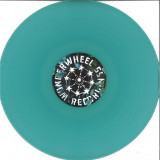
Arriving 6 years after the release of his breakout EP, El Búho returns to Wonderwheel with a very special Deluxe Version of said Cenotes EP including 3 previously unreleased tracks: "Manana Tepotzlan (feat. Gotopo) Vocal Version," "Tecolotin (Chancha Via Circuito Remix)," and "Tecolotin (Dub Version)." The EP is also set to be pressed to vinyl for the first time with a special splatter 12" invoking the cover art.
"Cenotes" was originally released in 2015 to widespread fan acclaim, firmly planting El Búho in the upper echelons of the Latin Electronic pantheon. Recorded in Mexico City after relocating from Amsterdam, "Cenotes" marries his influence of Dub, IDM and Electronic vibes with the rhythms, traditions and melodies of Latin American & Andean folk and the organic sound of waterfalls, birdsongs and crackling leaves, resulting in a dreamy, deep, melodic journey that entrances as much through headphones as it does on the dancefloor. Having studied Latin American Studies in Glasgow, El Búho (aka Robin Perkins) spent time living, studying and working in Argentina and travelling throughout the continent. Alongside his music, El Búho is also an environmental activist, having worked for over eight years at Greenpeace, being a member of DJs For Climate Action and coordinating the non-profit project "A Guide to the Birdsong" a series of albums that raise funds and awareness for endangered bird species through electronic music.
"Cenotes (Deluxe Version)" hits all digital streaming services December 3rd, with the vinyl 12" to follow shortly after.
- A1: Ricardo Bomba - Você Vai Se Lembrar
- A2: Vânia Bastos - Tabu (The Sweetest Taboo)
- A3: Rosana Mendes & Grupo Veneno - Reague
- A4: Grupo Controle Digital - A Festa É Nossa
- B1: Villa Box - Break De Rua (Versão Longa)
- B2: Batista Junior - Cheira
- B3: Dado Brazzawilly - Saramandaia
- B4: Anacy Arcanjo - Toque Tambor
- C1: Fogo Baiano - O Fogo Do Sol
- C2: Dodô Da Bahia & As Virgens De Porto Seguro - Africamerica
- C3: Via Negromonte - Love Is All
- C4: Electric Boogies - Electric Boogies
- D1: Os Abelhudos - Contos De Escola (Edit)
- D2: Nanda Rossi - Livre Pra Voar (Edit)
- D3: André Melo - Onda De Amor
- D4: Região Abissal - Feminina Mulher (Instrumental)
Some Crate-digging Compilations Are Often The Result Of Someone Hand-picking Their Choice Favourites From Another Country's Musical History, Perhaps Unaware Or Uninvolved With Its Cultural Lineage In The Process. On Soundway's Latest Release - A Treasure Trove Of Synth Jams, Pop, Samba Boogie, Balearic And Electro From 1980 & '90s Brazil - The Tracks Are Picked By Millos Kaiser, One Half Of The Brazilian Duo Selvagem, Who Are At The Helm Of Throwing Some Of The Country's Best Dance Parties. It's A Rare Compilation That Offers Brazilian Music Actually Picked By A Brazilian.
Whilst Names Such As Ricardo Bomba, Villa Box, Fogo Baiano, Electric Boogies And Batista Junior May Not Be Household Names, They Tell An Untold, Yet Rich And Important Part Of Musical History In Brazil. The Release Also Covers A Decade That Has Been Intentionally Forgotten And Brushed Aside By Many In The Country.
Onda De Amor Is A Release That Is Loaded With Smooth Grooves, Bubbling Bass, Glistening Synthesisers, Funk Strutting Guitar Lines And Sheen Of Production That Undeniably Marks It Of Its Time. For Kaiser This Compilation Is About Reintroducing Music During A Period Of Reappraisal, Catching A New Wave And Hoping Contemporary Listeners Will Ride It With Him. the Idea Is To Do Justice To These Songs. Songs That Combine All The Right Ingredients That Should Have Put Them On
Radio Playlists When I Was Growing Up Or At Least In The Cases Of More Adventurous Djs'.
Millos Kaiser Is A Dj, Digger, Vinyl Junkie/dealer Born In Rio De
Janeiro And Living In São Paulo For The Past 8 Years. He Launched The Dance Party/club Night Selvagem With Partner Trepanado In 2010, Bringing Thousands Of Dancers One Sunday A Month To A Public Square In The Heart Of São Paulo.
Nonesuch Records releases Ghost Song, the label debut of singer/songwriter Cécile McLorin Salvant. Ghost Song features a diverse mix of seven originals and five interpretations on the themes of ghosts, nostalgia, and yearning. Salvant says, “It’s unlike anything I’ve done before – it’s getting closer to reflecting my personality as an eclectic curator. I’m embracing my weirdness!” Cécile McLorin Salvant plays at Cadogan Hall on November 16 as part of the EFG London Jazz Festival, four shows at SFJAZZ in February, and two nights featuring the music of Ghost Song at Jazz at Lincoln Center in May. Salvant says of the title track, out now, “What if the love has gone, the love has left you and you have the emotions around that, and you’re still going through them, still engaging with the ghost of that love?” She continues, “Some songs are so painful to come out but this one came out pretty quickly. I’ve had some loss the last couple of years: my grandmother, the drummer in my band Lawrence Leathers.”
Ghost Song opens and ends with a sean-nós (traditional Irish unaccompanied vocal style) performance by Salvant, recorded in a church. On track one, she transitions into Kate Bush’s 1978 classic ‘Wuthering Heights’. Salvant says of the song, “Wuthering Heights is a book that really struck me to my core as I was making this album, during the pandemic. And the best interpretation of the novel is Kate Bush’s song.” She continues, “It’s the most classic ghost story. I decided I wanted to do an album called Ghost Song, and I knew that one had to be on it. Then I had the idea to mix it in with the sean-nós ‘Cúirt Bhaile Nua’, which binds it to the traditional ‘Unquiet Grave’, the last track on the album. The ghost is not haunting me; now I am haunting the ghost. They parallel each other so well and they’re such different time periods. I wanted the album to be a circle, with the sean-nós reference at the beginning and at the end. So it is the first track but it’s also the last track and it’s also the middle track, which is how I listen to music, walking around my neighborhood, on a plane, travelling somewhere, putting stuff on repeat.” “All the songs on the album kind of mirror each other. I tried to create this strange symmetry. So as you go in from both ends, the songs are sort of matched together,” Salvant says. “‘I Lost my Mind’ is the center of the Russian doll. I wrote that in the middle of the pandemic. There were nights when I wanted to just scream. It was this deeper part of me saying, ‘It’s OK if this sounds completely crazy, OK to just go with the completely crazy thing and not worry if people think you have lost your mind for doing it.’
“The bands also mirror each other from top to bottom. In terms of the instrumentation, everything,” Salvant explains. “That’s why the songs are there in that relationship: they match each other, they’re like fraternal twins, or one is the evil twin of the other. I, as the living, am visited by the ghost, and then I go visit the ghost in turn. I am haunting the ghost and annoying the ghost, which is saying, ‘Get out of here and go live.’” Of the sonic variety on Ghost Song, Salvant says, “Texture is a big part of how I sing, having multiple textures in one song. It’s almost a compulsion. I can’t allow myself to stay in one texture. The instrumentation creates that but the recording process as well. It’s something I like, even when I’m eating. You want the creamy and chewy and crunchy at the same time. Warm and cold.”
Cécile McLorin Salvant, a 2020 MacArthur Fellow and three-time Grammy Award winner, is a singer and composer bringing historical perspective, a renewed sense of drama, and an enlightened musical understanding to both jazz standards and her own original compositions. Classically trained, steeped in jazz, blues, and folk, and drawing from musical theater and vaudeville, Salvant embraces a wide-ranging repertoire that broadens the possibilities for live performance. Salvant’s performances range from spare duets for voice and piano to instrumental trios to orchestral ensembles. Her unreleased work Ogresse is an ambitious long-form song cycle based on oral fairy tales from the nineteenth century that explores the nature of freedom and desire in a racialized, patriarchal world. Salvant studied at the Université Pierre Mendès-France. She has performed at national and international venues and festivals such as the Newport Jazz Festival, the Monterey Jazz Festival, the Village Vanguard, and the Kennedy Center. Salvant is also a visual artist.
Heiko Voss has earned near mythical status as a torchbearer for the emotional, deeply felt and quietly radical style of electronic music. The blissed-out radiance of his Kompakt Pop single, “I Think About You” remains one of the label catalog highlights and a stellar run of collaborative singles as Schaeben & Voss; others might know him for his stewardship of the excellent, much-underrated Firm imprint. But with his new album, 3:30 Minutes To Live, released by Michael Mayer’s label Imara, Voss returns after a long silence with a beautiful collection of songs that hymn heartbreak with a lusciously melodic touch.
There is something definitive and newly confident in 3:30 Minutes To Live that has it feeling like a real statement of intent if compared to his earlier releases. “Although it’s not, 3:30 Minutes To Live feels like my debut album,” Voss reflects. “All releases before were more song sketches or electronic dance tracks.” Bunkering down in Teary Eyes Studio, Voss worked up somewhere between thirty and forty sketches of songs, which he whittled down to the twelve collected here, all of them situated in a unique space, but very much in accord with Voss’s defining aesthetic, which he describes as “indie pop music with a lot of guitar, electronic elements and a great love for melancholic ‘80s synth-lines.”
Voss is sensitive to both variety and consistency – 3:30 Minutes To Live sits together as an assured, vibrant collection of pop songs, but it’s marked by all kinds of surprising incident, like the guitar solo that erupts out of “This Is My Life”, or the acoustic guitar-led melancholy of the closing “This Summer”. It’s all borne of the alchemy of the studio process and the intimate romance of music-making. “If you constantly feel a little bit like you’re in love while writing and producing your music – simply because of the sound of the synth flowing warmly and gently through the room, or because the sequence of notes awakens something in you, or even a randomly arising groove in the loop of a guitar lick makes you shout, ‘Ha!!’ – then it usually becomes a beautiful song,” Voss nods. “Those moments make me happy.”
There’s also a delicious tension between the push of the music, its melodic lushness and gliding, ballerina-like movement, and the darker currents that pull through Voss’s lyrics, inspired by a “short, dramatic and toxic love affair.” This may read like familiar terrain for a pop album, but the way Voss weaves language through both the extra-linguistic joys of music and the inarticulate speech of the heart somehow allows for direct communication that is simultaneously plain-spoken and deeply profound. “Say It” is a simple, devastatingly effective plaint of alienation; “She Wasn’t Lonely” a simple portrait of everyday living set to chiming, clacking guitars, the music in the bridge taking astral flight as the titular character ‘lets herself go.’
A smart and sharp collection of songs that captures you with its gorgeous melodicism just as it blindsides you with its aching heart, 3:30 Minutes To Live is Heiko Voss at his most assured and open-hearted best.
Heiko Voss hat sich als Fackelträger einer emotionalen, von ganzem Herzen kommenden und nicht auf den ersten Blick radikalen Spielart von elektronischer Musik einen nahezu mythischen Status erarbeitet. Das schiere Glück, welches seine Kompakt Pop-Single "I Think About You" aus dem Jahr 2003 immer noch ausstrahlt, macht sie nach wie vor zu einem der Highlights des Label-Katalogs, wo sie neben einer ganzen Reihe hervorragender Singles als Schaeben & Voss steht; andere kennen Heiko vielleicht durch das tolle und vielfach unterschätzte Label Firm, für das er zusammen mit Thomas Schaeben verantwortlich war. Mit seinem neuen Album “3:30 Minutes To Live”, das am 4. März 2022 auf Michael Mayers Label Imara erscheint, kehrt Voss nun nach einer langen Pause mit einer wunderschönen Sammlung von Songs zurück, die den Herzschmerz – getragen auf den Schwingen unwiderstehlicher Melodien – ausgiebig besingen.
“3:30 Minutes To Live” kommt mit einer gehörigen Portion Überzeugung und Selbstbewusstsein daher, was im Vergleich zu seinen früheren Veröffentlichungen wie ein bewusstes Statement wirkt. "Obwohl es das nicht ist, fühlt sich ‘3:30 Minutes To Live’ wie mein Debütalbum an", meint Voss. "Alle meine vorherigen Veröffentlichungen waren eher Song-Skizzen oder elektronische Dance-Tracks."
Im Teary Eyes Studio arbeitete Voss zwischen dreißig und vierzig Songskizzen aus, die er auf die zwölf hier versammelten Songs reduzierte, die alle ihren eigenen Raum einnehmen, dabei aber sehr gut mit Voss' übergeordneter Ästhetik harmonieren, die er als "Indie-Pop-Musik mit viel Gitarre, elektronischen Elementen und einer großen Liebe für melancholische 80er-Jahre-Synthies" beschreibt.
Voss ist sowohl für Abwechslung als auch für Konsistenz empfänglich - “3:30 Minutes To Live“ ist eine selbstsichere, lebendige Sammlung von Popsongs, die aber auch von allerlei Überraschungen geprägt ist, wie dem Gitarrensolo, das aus “This Is My Life” herausbricht, oder die von einer Akustikgitarre getragene Melancholie des abschließenden “This Summer”.
Das alles ist entstanden aus der besonderen Alchemie des Studioprozesses und der intimen Romantik des Musikmachens. "Wenn du beim Schreiben und Produzieren deiner Musik ständig das Gefühl hast, ein bisschen verliebt zu sein – einfach weil der Klang des Synthesizers warm und sanft durch den Raum fließt, oder weil die Notenfolge etwas in dir weckt, oder sogar ein zufällig auftauchender Groove im Loop eines Gitarren-Licks dich ein 'Ha!' ausrufen lässt – dann wird daraus meist ein schöner Song", nickt Voss. "Diese Momente machen mich glücklich."
Es entsteht eine besondere Spannung zwischen dem positiven Elan der Musik, ihrer melodischen Verschwendungssucht, den gleitenden, Ballerina-artigen Bewegungen und den dunkleren Strömungen, die durch Voss' Texte ziehen, die von einer "kurzen, dramatischen und giftigen Liebesaffäre" inspiriert sind. Das mag sich wie ein vertrautes Terrain für ein Pop-Album anhören, aber die Art und Weise, wie Voss die Sprache sowohl durch die nonverbalen Elemente der Musik als auch durch den nicht artikulierten Ausdruck des Herzens verwebt, ermöglicht eine Art direkte Kommunikation, die gleichzeitig ausgesprochen klar und trotzdem tiefgründig ist. “Say It" ist eine erschütternd einprägsame Anklage von Entfremdung; "She Wasn't Lonely" ist ein einfaches Porträt des alltäglichen Lebens, untermalt von klappernden Gitarren, in dem die Musik einen astralen Flug unternimmt, während die Titelfigur sich "gehen lässt".
“3:30 Minutes To Live“ ist eine kluge und scharfsinnige Sammlung von Songs, die den Zuhörenden mit ihren wunderschönen Melodien fesseln, aber auch mit einer Menge schmerzenden Gefühlen konfrontiert. Ein Album, auf dem Heiko Voss ganz bei sich ist und Euch dabei mehr als nur sein Herz öffnet.