0860 is a project by Charlie Fieber aka Fracture inspired by London Pirate Radio. The project includes an album, radio station and interview series that explores the history and legacy of Pirate Radio and its importance in the development of UK underground music.
0860.fm has broadcast interviews with Bryan Gee, Eastman, DJ Flight, Scratcha, Dextrous, Uncle Dugs, Mantra, Missing, Eddie Peake, Om Unit & Laurent Fintoni, Naina & Sherelle, Stamina MC and more. It also broadcasts lost recordings of original 90s & 00s London pirate station broadcasts from the likes of Kool, Rinse, Pulse and more.
Search:the lost tape
2024 Repress
All in that stark contrast between ethereal spaciousness and steely, martial rhythms out the industrial spectrum, 'Far Field' takes us on a voyage across the board, from breaks-heavy machine stunts to washed-out tapestries, via EBM-laced detours and junglistic maneuvers. Investigating the nexus zone between dance functionality and limitless escapology, it extrapolates both artists' blends to further immersive, hypnotic effect. Taking over the A side, .VRIL gets the ball rolling with 'Lost Together', which sets the tone on a low-slung, nostalgia-drenched note; combining the syncopated swagger of downtempo techno with ambient-oid stasis and static-filled opacity. Like watching an all-metal sun sinking past the blazing skyline. Revving up the engines, 'Fnord' feat. RAeYN conjures up a way more muscular arsenal of big-room-ready wares, from aggro snare salvos to anthemic synth kinetics, through that replicant-hunting kinda vibe. One to have the Saturn rings go hula hoop, with all woofers and brains in the vicinity melting in XTC. Shutting the A side off, 'We Believe' returns to a lighter, more vaporous mindset but sure implements that signature heavy swing of .VRIL, flush with textured kicks and FX-soaked arps. True monster prog swell. Flip it over and there's HVL dishing out a textbook example of his vortical electronic furls with the title-track, 'Far Field' - an oneiric drift that slowly rises from its heavy-lidded slumber, ascending towards bleepin' n bloopin' experimental effervescence as bars fly by. A number bound to hack your body and mind into two distinct facets, and while one dances its way frantically across the ever buzzing space/time continuum, the other shall reach a state of healing calm and transcending ubiquity. Smoothly shuttling us off to the upper layers of the ionosphere, 'Lancet Mxi' clenches it on a trippy note, taxiing us midway zero-G UK bass territories and eerie ambient abstraction. HVL's total, widescreen vision at its most unhindered, all set at expanding your mind to yet uncharted horizons of sound and closing the gap between two distant, estranged galaxies. A fractured headspace to both dance and dream to. *Dressed in a fine piece of artwork courtesy of Daniel M. Diaz, 'RYCL021' comes pressed on 180g audiophile black vinyl for optimal playing and listening experience.
Nuron continues his journey on De:tuned with another selection of unearthed DAT tape gems! Nurmad Jusat aka Nuron / Fugue moved to the UK in the mid 80s. Soon after he went to his first warehouse party. A real eye-opening experience that inspired Nurmad to produce his own music. The first wave of early house and techno records from Chicago and Detroit influenced an entire generation. Nuron became one of the originators of the UK emotive techno sound with his unique and distinctive style. Fast forward a couple of years to when this compilation of archived DAT tape material was recorded. In the late 90s Nurmad was living back in Malaysia. House music was just starting to be played in the underground clubs over there. It was a great time and the vibe was very much like when Nuron went to raves in the UK in 1989-1990. House music all night long!
Al White created all the graphic work. Mastered by Matt Colton at Metropolis. A separate digital release will also be available at the usual digital shops. Stay tuned!
blue marbled vinyl
Nuron continues his journey on De:tuned with another selection of unearthed DAT tape gems! Nurmad Jusat aka Nuron / Fugue moved to the UK in the mid 80s. Soon after he went to his first warehouse party. A real eye-opening experience that inspired Nurmad to produce his own music. The first wave of early house and techno records from Chicago and Detroit influenced an entire generation. Nuron became one of the originators of the UK emotive techno sound with his unique and distinctive style. Fast forward a couple of years to when this compilation of archived DAT tape material was recorded. In the late 90s Nurmad was living back in Malaysia. House music was just starting to be played in the underground clubs over there. It was a great time and the vibe was very much like when Nuron went to raves in the UK in 1989-1990. House music all night long!
Al White created all the graphic work. Mastered by Matt Colton at Metropolis. A separate digital release will also be available at the usual digital shops. Stay tuned!
Zimmerman conjures up a kind of Arcadian folk surrealism that is utterly his own.” MOJO "Startling collection of intimate, home-recorded songs from the cult singer-songwriter adored by David Bowie and Big Thief alike. I eulogised the “Arcadian folk surrealism” of his 1974 ‘Over Here In Europe’ but, if anything, this informal collection of intimate home-studiorecordings is even better. Recorded between 1973 and76 whilst living in Belgium this is the kind of assured, organic freewheeling folk music that has the mellow, introspective rough-edged feel of some lost private-press LP, the kind rightly revered by Endless Boogie’s Paul Majors as “real people” music. A true find.” Andrew Male MOJO magazine Never released before collection featuring Ian A Anderson & Maggie Holland recorded 73-77 is among Tucker’s finest - Free-ranging, Playful, Intimate - his Songpoet imagination unbound and in full bloom. Recorded between 1973-76 this is the first ever release for ‘I Wonder If I’ll Ever Come True’ a stunningly beautiful, homegrown collection by Songpoet Tucker Zimmerman and friends. The range and depth is astonishing. From the heady surreal journey of ‘It All Depends’ Upon the Pleasure Man’, to the uplifting Gene Clark-esque 'So It Goes’, to some of his most beautiful & touching love songs in ‘Let’s Start Over Again’ & ‘Song’. Only one song has seen the the light of day before now - ‘Taoist Tale’ from his 1984 album ‘Word Games’. This recording from a decade earlier loses no power in its folkier stripped down style driven by Tucker’s strong narrative.
While living in bucolic seclusion in Belgium with Marie-Claire, Tucker invited visiting musicians (Derroll Adams, Wizz Jones, Maggie Holland, Dave Evans, Ian Anderson) into his home studio to play and live tape whatever songs he had at hand. Maggie Holland and Ian A Anderson feature, while Tucker found a freeing simplicity in just guitar, ’70s organ, bass and piano. We are so grateful to Ian A Anderson, who carefully kept and curated these recordings from 50 years ago. “Every time I would leave, Tucker would hand me another tape full of songs”. Ian worked with Tucker and ourselves to present this wonderful album. The collection is among Tucker’s finest - free-ranging, playful, intimate - his Songpoet imagination unbound and in full bloom. The ethos, the playing, the freedom, feels like Ronnie Lane’s time in the Welsh Borders. Unhurried, liberated, down-home and cosmic. Extraordinary music made among friends.
Amputechture Beneath the technical flash, the fury, the fearless creative brinkmanship of the first two Mars Volta albums lay a potent seam of the blues, an existential vexation that powered every twist and turn of Omar and Cedric’s imaginations. That mournful vibe would come to the surface of the group’s third full-length Amputechture, a simmering/blistering set that was unquestionably the group’s darkest yet. There was no overarching theme here, no interlinking concept binding the songs together, though Cedric concedes that, lyrically, the album was influenced “by a lot of stuff I was going through, a really bad break-up and a lot of other crazy stuff, and trying to put that feeling into the record.” But Amputechture – its name another of the late Jeremy Michael Ward’s invented words – was no downbeat bummer. Opener Vicarious Atonement might’ve been a deliciously gloomy, slow-burning thing, capturing Cedric in delirious duet with Omar’s swooning guitar lines, accompanied by squalling saxophone by Adrian Terrazas-Gonzales and dream-frequency fuckery by the group’s new sonic manipulator, former At The Drive- In member Paul Hinojos. But second track Tetragrammaton swiftly set pulses racing, an epic-in-miniature and containing more ideas within its 16 minutes than most bands manage over an entire career, its proggy, complex guitar figures tessellating in infinite configurations and converging as if conforming to mathematical formulae from another reality. The raw material Amputechture was hewn from started life on the road. Omar now travelled with his own mobile recording studio – a little Neve ten-channel tape recorder and an array of microphones – and was able to work on new ideas on tourbuses, in hotel rooms and during soundcheck (and, occasionally, after the show was done). After touring for Frances The Mute was complete, Omar relocated to Amsterdam, staying with his photographer friend Danielle Van Ark and her partner, Nils Post. It’s here that he demoed Amputechture, flying in engineer Jon DeBaun, drummer Jon Theodore and his brother, Chino, to work on these raw sketches. He later returned to Los Angeles, where the album was finally recorded. Omar ceded guitar duties to his dear friend and kindred spirit John Frusciante, instead assuming the role of musical director. “I wanted to hear the sound of the band,” he says. “I thought, I’ll be able to sit at the console, feel the air of the speakers moving, the unified sound of everything, and not feel distant from it. It was fun, but it was also challenging.” Part of Omar’s new method was to teach the musicians their parts only moments before the tapes rolled. “To keep things fresh, and to keep everyone on edge,” he says, before chuckling. “No, not on edge – on their toes. Amputechture would prove The Mars Volta’s most diverse set yet, drawing into the group’s tornado of influences moments of fiery jazz spirituality and esoteric folk introspection, finding space for passages of devastating subtlety and also their most fierce and full-on moments to date. The aforementioned Vicarious Atonement found its meditative mood echoed by Asilos Magdalena, an intimate, acoustic piece that invoked traditional Latin folk music, as Cedric sang in Spanish a sorrowful tale of a lost soul’s quest for sanctuary within a Magdalen Asylum, a refuge set up by the Catholic church for “fallen women”. The shadowy, sinister closer El Ciervo Vulnerado, meanwhile, tapped into the darker side of spiritual jazz to further explore the album’s themes of redemption and religious myth and magick. Elsewhere, the interplay between guitar and clarinet on Viscera Eyes created complex, unsettling counter-melodies, while the coiling, ornate Meccamputechture – Cedric’s wild fusion of sacred texts, occultism and dystopian science fiction – proved a great showcase for Ikey Owens’ swarming, infernal organ runs, in concert with Frusciante’s arcane guitar-play. But it was Day Of The Baphomets that would prove Amputechture’s most ambitious and most defining epic. Cedric’s lyrics tore into the hypocrisy of religious cant and myths of sin and punishment. “I wanted to make a song that was like the movie The Believers, where this cabal stole kids and did some occult shit with them,” he explains. “But I wanted it to be like, ‘What if the people you hire to do jobs you don’t wanna do rise up one day and then pull some shit like that?’ Like it was the guerrilla warfare, them taking over – wouldn’t that be some fucked up shit? And the music just lent itself to that – the big intro, the bass solo, and all of the ruckus that occurs.” That ruckus was some of the most thrilling Mars Volta music yet, as Omar directed his musicians to rumble through fiery modes of wild tribal groove, ransack-the-palaces riot- rock and supreme progressive experimentalism. Amputechture, then, is the sound of The Mars Volta in imperial mode: fearless, insatiable, unstoppable.
Once the last few copies of the 2LP version (BC013LP) have sold through it will be deleted, this new version will be the only vinyl version of this album available. Shrouded in mystery, hailing from Hamburg, Germany, Bacao Rhythm & Steel Band (BRSB) releases their long awaited debut '55' on Brooklyn's own Big Crown Records. Long time multi-instrumentalist and band leader Bjorn Wagner spent a few months in Trinidad & Tobago where he became fascinated with Steel Drums. His initial intrigue with local steel pan music culture led him to learning the instrument both through help of local players and on his own. After he became proficient on the pans Bjorn had his own instrument built from a used oil barrel by legendary pan man Louis C. Smith. Upon returning home to Germany, Bjorn set out to blend the Tropical Steel into his already sharply honed Funk, Soul, and Hip Hop sensibilities. The outcome is an updated take on a classic format, a truly unique sound. Their first two recordings were covers of The Meters 'Look A-Py-Py' & 'Ease Back' which they self-released on a 45. Looking back on these two sides you can tell they were just getting their chops up for what was to come next. This is evidenced by how all hell broke loose when they went on to cover 50 Cent's hit PIMP taking the DJ and vinyl collecting communities by storm. Many people thought the recording was the original sample and probably still do to this day when it is played. The original Mocambo pressing sold out quickly and is now a collector's item fetching heavy prices when it changes hands. It was this tune that made the introduction between Bjorn and Danny Akalepse of Big Crown. They immediately hit it off and starting making plans to do a full length project with the band. Keeping in the tradition of Steel Drum records, 55 is a journey through re-interpolations and covers with an updated approach, pushing Steel Pan music to uncharted territory. Flawlessly bringing previously untouched genres into the steel pan cannon ranging from Underground Hip Hop tunes to staple Funk tracks and some of all that falls in between. BRSB's 55 is reinvigorating tunes both well-known and helping to shed some light on tunes still largely undiscovered. However, some of the strongest tunes on the album are original compositions, from spaced out Disco vibes on 'Beetham Highway Ride' and 'Port Of Spain Hustle' to the ugly face inspiring drums of 'Laventille Road March'. Recorded to analog 8 track tape at The Mocambo Studios in Hamburg, 55 is a gritty, punchy journey in sound drawing on music from around the world, using production aesthetics from across both eras and genres, all coming together seamlessly. If the 45s that have already come out on Mocambo, Plane Jane, and Truth & Soul are an indication, this full length is going to be a staple to both casual listeners and Disc Jockeys alike.
Unreleased themes from Kornelije Kovac for commissioned documentary short 'Raport iz Sarajeva', directed by Miodrag Zdravkovic in 1982. This music themes precede the official songs, idents and audio logos for the XIV Winter Olympic Games Sarajevo 1984 opening ceremony made by Kornelije Kovac in his Belgrade based studio from 1982 to 1984. Sourced from the original master tapes with full color artwork by Eric Adrian Lee. Includes insert with photographs from Kornelije Kovac private collection and liner notes by Zeljko Luketic. XIV Winter Olympic Games in Sarajevo 1984 had immeasurable status in the history of Yugoslavia and is widely recognized by organizing committee to be the best in recent history of the Games. However, they were also the pop-culture melting pot of the times, with posters by Andy Warhol and famed local designers and the music by Kornelije Kovac, leading the selected best-of-the-best composers of the times. The recordings on this release share the same musical approach to melody and structure Kornelije Kovac (1942 - 2022) was using at the beginning and the mid of 1980s: while exploring the possibilities of synthesizer, fresh from his collaborations in London with famed composer Hans Zimmer, and almost a decade since he shared Eurovision Song Contest stage with ABBA in Brighton with his Korni Grupa, He also collaborated with Bernie Marsden (Whitesnake), Paul Jones (Manfred Mann) and Andy Pask (Landscape) among others. Kornelije Kovac always insisted on the freshness of the harmony layers combined with DJ friendly rhythm backing track. With the warm analogue feel that resonates in today's digital world this was chosen for a purpose to be an old-school 12'' maxi-single, as it was intended to be, cut loudly for the sakes of all lost and existing discotheques in Sarajevo and all over the world.
CO-OP REISSUE by NOT LOST RECORDS and RUGGER BUGGER !! ** Black Vinyl ** 500 Copies // The AK47's or the Tottenham AK47's formed in the late 80's / early 90's in North London. They turned up on the London squatting gig scene fully formed and ready to go, fusing punk, ska and reggae with a strong and simple political, socio-anarchist message. The band were instantly popular in London and sat very much next to Radical Dance Faction, Back to the Planet and Culture Shock. Their one and only release was the album "Don't call me Vanilla" which was originally released in 1991 by Rugger Bugger Discs. The album was recorded and produced at The Refuge studio in Reading by Jim Warren. Built around a solid dub-punk backdrop with some atmospheric flute squalls and FX's weaving in and out of the mix while lyrically remaining true to their anarcho roots. Over the years the album's legacy has grown and yet has never been reissued. Finally 32 years after its release the band, Sean from Rugger Bugger and Not Lost reissue this gem in an exact replica. No coloured vinyl - just black vinyl with the same Lyric Insert. This reissue has been remastered from the original tapes.
Ever-evolving the mythologies and magic of Dialect's sonic sphere, Andrew PM Hunt returns with Atlas of Green, elegantly molding unexacting details of memory and mistranslation into the framework of the British musician and composer's creative pursuit. The album imagines a young musician named Green working in a future dawning era where lost signals and enduring impulses are unearthed from the sediments of technology and time. Across twelve compositions, Green becomes the compass in an epoch of transition; one shaded with pastoral patinas and studded with the fragments of allegorical ruin. As tattered as it is tender, Atlas of Green is a patchwork of scavenged relics and bygone hues, cast through the iridescent shimmers of a mid-future in flux. Growing up on the Wirral Peninsula in North West England, Hunt was surrounded by stone age landmarks and rock carvings that infused the landscape with legend. It was beside those carvings on a residency at Bidston Artistic Research Center where he began the journey of Atlas of Green, experimenting with tape loops and exploring the center's library of sci-fi. Here Hunt also encountered the work of Italian philosopher Federico Campagna, a writer who believes we're at the end of our current world. This encouraged Hunt's exploration of how the fabric and fantasies of our current era might endure into the future of Green, as they try to make sense of the riddles of the past, utilizing broken electronics and simple acoustic instruments to create new mythic forms. This question of endurance led Hunt to inscribe Atlas of Green with its own lucid markings - sometimes almost anthemic adornments - which unfurl through the album's melancholic air as possible new metaphors for how the human spirit might persist through dark days and regain lost wisdom. As Hunt reflects, "We're not just on an endless procession through constantly better worlds. Our lack of action (on climate and inequality) feels hopeless at times. I find some comfort in the idea that maybe the world needs a new song in order to tell a new story about itself". The image of Green as a journeying adolescent in-between eras developed out of a burgeoning interest in the fantasy writing of Ursula K. Le Guin and Gene Wolfe and occurred at a point in Hunt's life where the question of starting a family was looming. Green became a device for thinking about the future, or futures, putting someone in another world and granting access to a slightly longer timeframe than one's own life. What would this person, in this as-yet-unsung world do with something as powerful as music? As Hunt notes, "I imagined them doing what we've always done with music - using it to build a map of feeling, providing boundaries and tracing the edges of our emotions, defining a space of possibility and giving voice to our intuition. This is an alternative future to the one of endless growth but one which still holds space for hopes and dreams." Mapping new folds in the passage of time, Atlas of Green is traced with an aura of sonic urgency which arises through its process-led construction. Following a series of live shows in early 2023, the record was created with an assemblage of analogue electronics and acoustic instruments, including scratched records and a broken four track, collaging studio work with recorded live recordings featuring work in progress. Where the indeterminate energies of Under~Between (2021) appeared through digital processing, Atlas of Green embraces chance encounters within the malfunctions of physical media and glitching gear. Within these interwoven clusters of organic and blemished sound, Dialect reclaims the joyfulness of the inner amateur and creates a soft landing for new seeds of magical possibility - rooted in the bounds and abundance of realism. "As a planet of people we have to deal one way or another with our finite existence. We have to deal with that loss with hope still in our hearts - our capacity to love cannot be contingent on things lasting forever, and so this image of Green is not a vision of dystopia, nor utopia but an expression of trust and an acceptance of limits."
The Lost third album from Venice, CA skate-thrash/punk crossover heroes.
Out of print since 1995. Guest vocals from HR of Bad Brains.
New artwork from cult Japanese artist USUGROW. Remastered from the original tapes by Nick Townsend / Townsend Mastering.
2024 Repress
Tone Def are from Bournemouth, UK and were signed to the legendary record label Moving Shadow in 1991, releasing 4 collectable releases. These two tracks were recorded in 1992 for the label but were never released.
28 years later they are available for the first time after being located on some lost DAT tapes that Rog Mogale from the band had found while relocating his studio to Gran Canaria. Rog Mogale is also well known as the man behind the famous Void Speakers that are used in the best clubs and biggest festivals around the world.
Step back into time and feel the rush!
Released in a Vinyl Fanatiks housebag on 180 gram heavyweight ACID YELLOW vinyl.
2024 repress
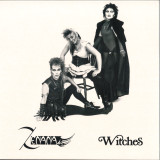
Rush Hour’s RSS series excels in unearthing buried treasure, offering a second chance for artists and releases that have long been overlooked. That’s certainly the case with ‘Witches’, the superb sole single by British 1980s wave trio Zenana.
Originally released on seven-inch by the tiny PRM label in 1986, ‘Witches’ was the product of a sister-brother songwriting team whose music was mostly recorded in the front room of a terraced house in Nanpean, a small industrial village in Cornwall, England’s most south-westerly county. While the single was infectious, impeccably produced and dancefloor-ready, it sold in limited quantities at the time.
Zenana’s story can be traced back to the early 1980s, when singer-songwriter Anita Tedder founded the all-female trio as a vehicle for her musical ambitions. To bring her songs to life, she joined voices with her brother Mike, an early adopter of electronic music who had built a studio – nicknamed MFR, short for ‘Mike’s Front Room’ – in his Cornish home.
Countless Zenana tracks were recorded at ‘MFR’ between 1984 and ’86, with the resultant demo cassette securing the band a management contract, a slew of live bookings, a video shoot and even a television appearance. Buoyed by this underground success, they headed to the remote Sawmills Studio in Cornwall – famously only accessible by boat – to re-record ‘Witches’, a song inspired by local folk tales of witches gathering near Mike’s home.
While this version of ‘Witches’ failed to make an impact at the time, it has become something of a cult classic following its’ rediscovery by crate digger Kiernan Abbott – and subsequent championing by other dusty-fingered DJs including Antal, Skyrager, Trevor Jackson and Luke Una – in early 2023. The buzz inspired Zenana to perform live again for the first time in decades, with the story of their surprise comeback being covered by British media outlets including the BBC and (more surprisingly) the Daily Mail.
Now presented in re-mastered form, ‘Witches’ is a genuinely slept-on gem. Propelled forwards by punchy drum machine beats, a killer synth bassline and fizzing keyboard sounds, the song benefits greatly from strong vocals and an extra-percussive middle eight layered with vocalisations, cosmic spoken word sections and swirling noises.
It comes backed by a brand-new extended ‘spell of love’ courtesy of Bristol duo Bedmo Disco, AKA music journalist Matt Anniss (author of Join The Future: Bleep Techno and the Birth of British Bass Music) and DJ/production partner Gareth Morgan. Anniss is a long-time friend of Mike and Anita Tedder who has fond memories of visiting Mike’s home studio with his family around the time that ‘Witches’ was recorded.
Working from Zenana’s original MFR eight-track recording (tapes of the single version were lost years ago), Anniss and Morgan have turned in the extended ‘dance mix’ the track never had first time around. More atmospheric, clandestine and dancefloor-focused, it offers authentic nods to New York proto-house, mid-80s Shep Pettibone dubs, and the pioneering synth-pop productions and dub mixes of Factory Records regular Martin Rushent.
Rain and experimental music have had an interesting connection for decades. Under the umbrella of American film music promotion, Hanns Eisler was already looking for "Vierzehn Arten, den Regen zu beschreiben” (fourteen ways to describe the rain) in 1941. A good 20 years later, The Cascades interpreted the periodicity of rain as a rhythm of mourning. For the Beatles ("If the rain falls, they run and hide their heads"), the precipitation inspired the band to use backward running tapes. However, it seems that there has always been a lot of rainfall in popular music. In the early seventies, David Toop and Paul Burwell even had a band project with the great name Rain In The Face...
That was a long time ago and today, rain, which in the age of climate catastrophe mainly occurs as heavy rain or an enervating endless loop, has lost a great deal of its inspiring quality. Perhaps as a reminder of the musical quality of rain, but knowing full well that it can only be enjoyed in theory, Razen call their new album "Rain Without Rain". In the music of the Brussels collective led by the two multi-instrumentalists Brecht Ameel and Kim Delcour, it certainly pours down on the roofs. In fact, the album opens with the sound of pouring rain before we hear the sequence of an oscillator played through a guitar amp on the first track „Lazy, Lazy Eye“.
The album is the captivating result of an one-night mobile studio field recording in an abandoned pedestrian tunnel in the centre of Düsseldorf, and it is finding beauty with brutal(ist) means: recorder, oscillator, guitar amp and reverberation, two musicians and four microphones, early electronics versus Early Music. “Suicide meet Hildegard von Bingen”, as Stefan Schneider, who recorded the session, admits. “Ghostly occurrences”, he adds.
Brecht Ameel states: “We do put a lot of weight and care on acoustics. On some of our recordings, the room acts as another band member, or as the main ‘mixing board’. Most of the albums we have recorded so far are not mixed in the traditional sense: they are simply „captured”, and we let the room decide what is left on the tapes. The studio recordings, then, give us the possibility of bringing other elements to the fore; precision of interplay, or tiny variations in breathing.”
The group Razen exists since 2010 and has since released numerous records on labels such as KRAAK, Marionette and Hands In The Dark. "Rain Without Rain" is their debut on the Düsseldorf label TAL. If there has been an increased international interest in experimental music from Belgium in recent years, this is not least due to musician collectives such as Razen. In terms of its electro-folkloristic intensity and instrumentation, Razen's music is quite unique worldwide. What does Razen actually mean? “We took the word from a poem by Paul Van Ostaijen, not specifically because of its meaning but because of the way it looked on paper”, Ameel explains. “But the meaning goes in the direction of ‘thundering / raging / speeding’ … although we prefer playing with a strong notion of restraint, building our world from (and with) silence.”
Olaf Karnik, Köln 2024
- Ocean Motion Mildew Mind
- Yes Sir Ree
- I Can’t Stand It
- Country Time
- If I Were A Poet
- Torero Piece
- Peachy Keen-O
Carving an unlikely and elaborate niche in the stoney academic landscape
which she once shared with the likes of Phill Niblock, John Cage and Sorel
Hayes, the excitable proto-punk poèmes sonores of the linguistic loose
cannon known as Beth Anderson first rolled through New York in the mid-
1970s (from Kentucky via San Francisco) like a jumbled tumbleweed of lost
Letterism, face paint and threadbare drummy funk to astonish gallery floors,
lecture theatres and loft apartment stages.
One thousand leagues under the radar of the commercial music industry,
with a sense of humour that elevated way above her highbrow peer group,
the music of Beth Anderson has successfully evaded the pressing plant for
most of her creative career, and not unlike fellow New York gallery actionist
Suzanne Ciani, it has taken decades to successfully collect and contextualise
these early recordings - expanding her elusive discography beyond the rare
and mysterious solo single entry in the process.
When uttered amongst the type of vinyl vampires that haplessly gravitate
between both art school vintage vanity pressings and family funded plunder
funk, there’s an outside chance that the name Beth Anderson might muster
some vague recognition on account of her one and only solo wax sojourn
into the expansive DIY market. In 1980 the 45rpm single, ‘I Can’t Stand It’,
combusted into the consciousness of adventurous participants with its deep
rhythmic backbeat (courtesy of future Sonic Youth / Dinosaur Jr producer
Wharton Tiers, member of the new wave band Theoretical Girls), climaxing
with two colourful and commanding linguistic tantrums before disappearing in
a puff of smoke leaving would-be fans dumbstruck without so much as a
label name or distribution contact to explain what they had just heard.
For those who have spent the subsequent years on the edge of that same
seat, it might come as some comfort knowing that somewhere out there,
there is also a contrasting world of gallery patrons and experimental sound
poetry enthusiasts that similarly didn’t know that their regular performance
poet Beth Anderson even made the ambitious pop record. For the uninitiated,
the enigmatic Beth Anderson has straddled both sides of the art / rock fence
placed between two equally niche pastures.
Hopefully this first ever vinyl compendium will succeed in joining the dots,
loops, yelps, squeaks, beats and repeats. Let us follow Beth’s lineage, along
her magnetic tape highways crossing multiple boundaries in a hope to bridge
unlikely anti-genres like ‘yoga punk’, ‘ramble rap’, ‘combustion pop’ and
‘formroom funk’… all of which were officially neatly bracketed under the
curious Text-Sound movement where Beth garnered utmost respect as a key
practitioner.
Dawson’s latest offering, The Tinnitus Chorus, is an album of wide-eyed collaborations. He is joined by an inspired cast of revered friends and kindred strangers including Suso Saiz, M. Sage (Fuubutsushi), Eli Winter, K. Freund, (Trouble Books / Lemon Quartet), Dasom Baek, Lina Langendorf (Langendorf United), Vumbi Dekula, Jairus Sharif, Yutaka Hirasaka, and his bandmates in Peace Flag Ensemble. The collection is bookended by two pieces with Michael Grigoni. From birdsong and decaying tape to Western sprawl, each of Dawson’s previous solo records have moved in a singular direction but here he approaches things through a kaleidoscopic lens. While his weathered ambient sketches serve as a through line, they are woven with all manner of instrumentation from clarinet and modular synth to steel guitars and flugelhorn. Improvised Congolese guitar nuzzles next to American experimental folk. Handmade electronics give way to spiritual sax. M. Sage contributes something referred to as a “mystic music box”. The result is a strange and beautiful journey that feels lost between genres and yet wholly unified. Dawson reflects on the genesis of album with a smirk and a shrug. He has been marred by ear troubles in recent years and had been struggling to complete an album of solo material. The clicks, ringing tones, and hiss in his ears had been drowning out the ringing tones, clicks, and hiss in his studio. When he reached out to We Are Busy Bodies to provide an update on the record he was met with an unsuspecting proposal that perhaps he shift focus to an album of collaborations. The truth is he had been ruminating on the idea for years and the nudge from WABB proved to be the motivation he needed to shelve his insecurities and invite artists he admires to join him for The Tinnitus Chorus.
Released in 1963 on the Contemporary Records label, “The Cry!” Is a free jazz album by saxophonists Prince Lasha and Sonny Simmons. Also featured are Gary Peacock and Mark Proctor (bass), and Gene Stone (drums). This new edition, released as part of the Acoustic Sounds Series, features (AAA) lacquers cut from the original master tapes by Bernie Grundman and is pressed on 180-gram vinyl at QRP, and presented in a tip-on jacket.
Alliyah Enyo’s genius 2022 ‘Echo's Disintegration’ album infused William Basinski's "Disintegration Loops" with choral smoke, and she now returns with an even more immersive followup alongside ambient enigma and Kelela producer Florian T M Zeisig, making heady and translucent loop-finding vocal soundscapes.
In 2022, Enyo worked with the Edinburgh Sculpture Workshop on an epic two-hour composition made from tape loops inspired by selkies, mythical creatures in Celtic folklore. Contemplating memory, grief and time itself, Enyo devised a "sonorous myth" installation and performance that drowned her voice in the deep sea, using echo to help parallel the communication of humpback whales. It was powerful enough for her to net the award for Sonic Arts at the Scottish Awards for New Music last year, and it's this material that she revisits here, entering into a dialog with Berlin-based producer Florian T M Zeisig, here adopting a new avatar - Angel R.
On the A-side, Enyo distills two hours of the original composition into 11 haunted fragments that ooze in and out of each other like a dream. Reworked at Glasgow's Green Door studio, she sculpts her voice into weightless Radigue-style incantations, leaning into the tape loops' corroded inconsistencies. Enyo's voice becomes the selkie's song: wordless echoes that sound as if they're being dragged slowly towards the sea bed. There are remnants of folk forms in there; we hear traces of church music and Celtic ballads - but she obscures her influences with dubbed reverb, distortion and repetition. Phrases disappear and re-appear, time becomes a loop, best absorbed in a single sitting to properly perceive its graceful, sinking bliss. By the end of the side, Enyo’s vocals are completely waterlogged, dimmed against Robin Guthrie-like shimmers, all brassy, blurred incantations emanating from the depths of a floatation tank.
Florian T M Zeisig responds on the B-side with three flooded, longer-form pieces that will appeal to anyone who devoured his album of corroded Enya loops a couple of years ago. Enyo's voice is now reduced to a whisper, blistered and gauzy expressions that float over dense pads on 'Untitled I' before getting lost in the weeds completely on the muggy 'Untitled II'. On the closing 'Gates of Heaven', he sculpts Enyo's voice until it's just an illusory, hypnotic reflection, slow-fading into the aether.
Alter is proud to present the debut full length release from devotional music outfit Unstern, a collaborative effort between deep ambient artist Arzat Skia and prodigal pianist Leo Svirsky. Co-mixed by Swedish electronic music luminary Civilistjävel! and Arzat Skia and mastered to tape by Stefan Betke, the album features lush electronics, two pianos refracting across the stereo field, processed recordings from the Peruvian Amazon, bowed percussion by Greg Stuart, alongside strings and renaissance meantone organ recorded at Orgelpark in Amsterdam.
The results are an abundant audio illusion where what seemingly repeats slowly over time morphs in a manner where the destination escapes the departure point with extreme discretion, a reverent nod to Morton Feldman's compositional method of "Crippled Symmetry."
Throughout Es Geht Der Tag there is a muted, refined melancholy imbued with a constantly fluctuating pulse which generates a sense of temporal disorientation, leaving the listener lost in a strange yet not at all unfamiliar sonic labyrinth. It is a journey whereby a glorious subtle tension exists between the grandiose and the restrained.
This is environmental music, not in the sense of capturing nature itself, more with regards to an unfolding of audio elements which move in a manner in tune with the multitude of flows in the world.
Unstern’s Es Geht Der Tag is a deep mental journey, rich in subtle transcendental tendencies and psychic liberation.